分类: sports

  • What to know about new rules and technology behind the World Cup’s most contentious calls

    What to know about new rules and technology behind the World Cup’s most contentious calls

    The 20XX World Cup has become defined not just by on-pitch brilliance and historic underdog runs, but by a string of controversial officiating decisions enabled by new rules and video technology that have directly altered the outcome of knockout-stage matches, leaving ousted teams furious and sparking widespread debate about the role of technology in soccer.

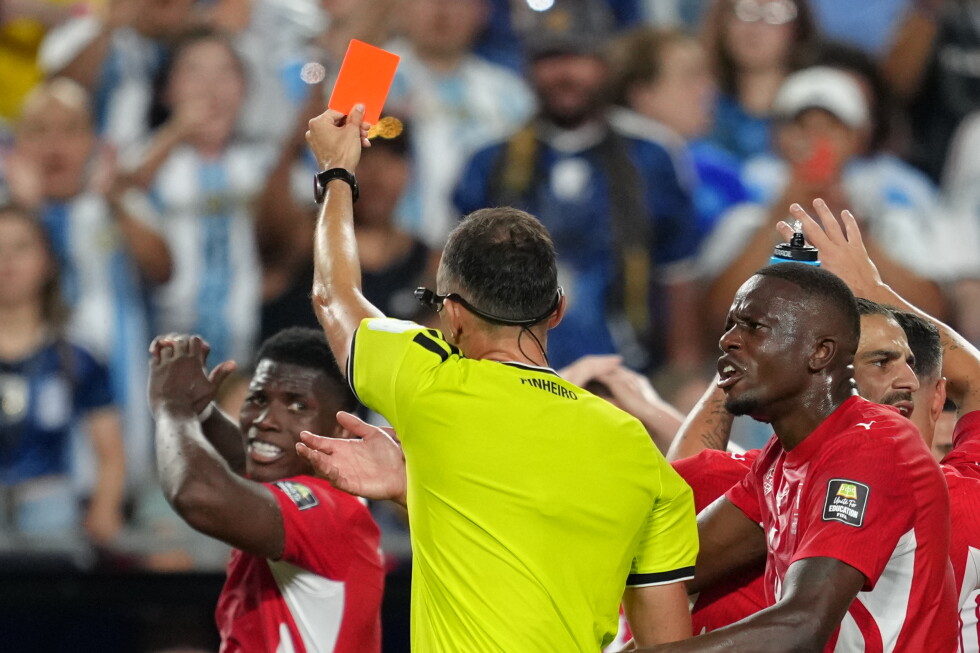
    The latest flashpoint came in Saturday’s quarterfinal clash between Argentina and Switzerland, where Swiss forward Breel Embolo was sent off just five minutes after his side had leveled the score at 1-1. The incident, which swung the momentum firmly in Argentina’s favor, has centered on a newly implemented regulation often called the “mistaken identity” rule – a name that has added to widespread confusion among fans and teams alike.

    In the moment of the challenge, on-field referee Joao Pinheiro did not catch Embolo’s simulation of a foul by Argentina’s Leandro Paredes, and initially issued a yellow card to Paredes instead. Under existing FIFA protocols, when a card is issued to the wrong player for an offense, the Video Assistant Referee (VAR) is permitted to intervene and ask the on-field official to review the play on the sideline monitor. After reviewing the replay, Pinheiro ruled Embolo had committed clear simulation, issued him a second yellow card, and dismissed him from the match. Argentina went on to secure a 3-1 victory in extra time, advancing to the semifinal.

    Switzerland’s head coach Murat Yakin did not mince words after the elimination, saying, “The referee made the wrong decision. I know they will protect their referee but this rule destroyed our game today, and it’s very painful, and to be eliminated in that way hurts a lot.”

    This incident is far from an isolated case at this tournament. Multiple high-profile exits have been tied to strict applications of new regulations and VAR checks, leaving eliminated sides and their fans questioning consistency and fairness.

    Germany became one of the first major teams to exit under controversial circumstances, ousted in the round of 32 following a disallowed game-winning goal. Jonathan Tah’s late extra-time strike against Paraguay was chalked off after VAR ruled a foul by German defender Waldemar Anton on Paraguay goalkeeper Orlando Gill. Replays showed only minimal contact between the two players, drawing sharp criticism of the decision. FIFA’s referees chief Pierluigi Collina defended the call, noting that officials had been instructed to penalize any contact where players block opponents without making an attempt to play the ball, particularly when goalkeepers are involved. Germany ultimately lost the match in a penalty shootout, with Tah missing the decisive spot kick. The early exit has already triggered major upheaval in German soccer: head coach Julian Nagelsmann has resigned, with former Liverpool manager Jurgen Klopp widely tipped to take over the role.

    Elsewhere, cutting-edge connected ball technology – fitted with advanced sensors that capture ball movement data 500 times per second – has already changed the course of one nation’s tournament. The high-tech system cost Croatia a dramatic late equalizer against Portugal in the round of 32, when Josko Gvardiol’s 90th-minute strike to level the score at 2-2 was ruled out for offside. The sensors detected the slightest touch from Croatia’s Igor Mantanovic in the build-up to the goal – a contact too subtle to be seen by the naked eye or even standard video replays. FIFA has defended the technology, saying it provides officials with an unprecedented level of accurate data to make faster, more precise calls. But Croatia head coach Zlatko Dalić, who stepped down from his role after the tournament exit, pushed back on the change, saying “All these decisions take the joy out of football.”

    A similar VAR-related controversy saw Egypt fall short of a historic upset against defending champion Argentina in the round of 16. The African side held a 1-0 lead in the second half and looked set to extend their advantage when Mostafa Zico finished off a sweeping counter-attack to score. Wild celebrations were cut short when VAR confirmed a foul on Argentina’s Lisandro Martinez earlier in the build-up – deep in Egypt’s own half, hundreds of yards from the goal – and disallowed the strike. Argentina went on to stage a stunning late comeback, winning 3-2 and eliminating Egypt. Egyptian head coach Hossam Hassan launched a fierce attack on the officiating, saying “We have suffered injustice.” The Egyptian Football Association released a formal statement echoing that anger, noting “Several key incidents raised serious concerns and left profound questions about the consistency and fairness of decisions that directly influenced the course of the game.” Collina responded to the criticism by confirming that FIFA does not set any limit on how far back an incident can be reviewed to overturn a goal, and defended the integrity of match officials at the tournament.

    The high-tech in-ball sensor was called into question again during England’s 2-1 quarterfinal victory over Norway. Norwegian players and staff insisted that Jude Bellingham’s first-half equalizer came after the ball hit an overhead camera suspension cable, which would have resulted in a stopped play and disallowed goal. But FIFA released a statement saying the sensor showed no change in the ball’s trajectory that would indicate contact, leaving Norway’s claim unaddressed. The side also had a late equalizer ruled out after VAR spotted a foul by Erling Haaland on England’s Elliot Anderson before a corner was taken. Under new rules designed to curb pre-corner fouls by attacking teams, VAR is permitted to intervene on incidents that occur before the ball is even put into play, a regulation that Norway’s camp has criticized as overly harsh.

    As the tournament advances to the semifinal stage, the debate over how technology and new rules shape the outcome of matches is only expected to intensify, with fans and stakeholders divided on whether the changes improve officiating accuracy or erode the spontaneous, human element that has defined soccer for more than a century.
  • Irrepressible Sinner outlasts Zverev to win second straight Wimbledon title

    Irrepressible Sinner outlasts Zverev to win second straight Wimbledon title

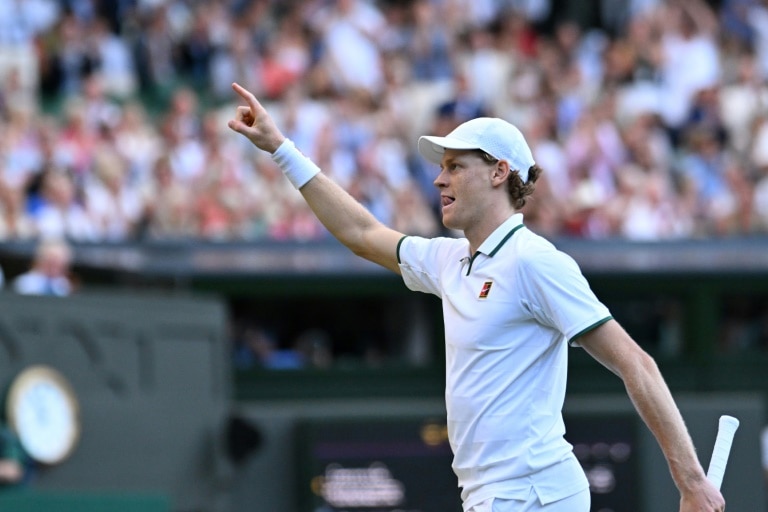
    On a sun-baked Centre Court Sunday, world number one Jannik Sinner delivered a masterclass in grit and clinical precision to defend his Wimbledon gentlemen’s singles title, outlasting French Open champion Alexander Zverev in a bruising four-set final that stretched three hours and 46 minutes.

    Sinner’s 6-7 (7/9), 7-6 (7/2), 6-3, 6-4 victory capped a remarkable run at the All England Club, where the 24-year-old Italian overcame early scares and a determined challenge from Zverev to lift his fifth career Grand Slam trophy. The match, defined by dominant serving from both competitors, saw Sinner drop the opening set in a tight tiebreak before clawing his way back to wear down his opponent, ending Zverev’s 13-match Grand Slam winning streak.

    Entering the final, Sinner carried the pressure of defending a major title for the first time in his career, fresh off a shocking second-round exit at the 2025 French Open where he squandered a two-set lead against Juan Manuel Cerundolo. His Wimbledon campaign got off to a rocky start too, requiring a five-set comeback against Miomir Kecmanovic in the first round to avoid an early exit. From that point forward, however, Sinner found his rhythm on grass, cementing his status as one of the most formidable players on the surface.

    The final opened with a tight first set, with neither player ceding a break point through 12 games. In a tense tiebreak, Zverev—who had never advanced past the quarterfinals in nine previous Wimbledon appearances—clinched the set with a blistering forehand winner, becoming the first player to take a set off Sinner in seven head-to-head meetings. The second set again went to a tiebreak, but this time Sinner raised his level, dominating the breaker to level the match.

    A pivotal moment came in the third set, when Zverev created his first break point of the match but slipped on the Centre Court turf while chasing a Sinner drop shot. After Sinner checked on his fallen opponent, Zverev returned to play but saw his serve break in the very next game, allowing Sinner to seize control of the set. Zverev, frustrated by the missed opportunity, threw his racket across the grass after netting a forehand, and Sinner closed out the set with a love service game capped by an ace.

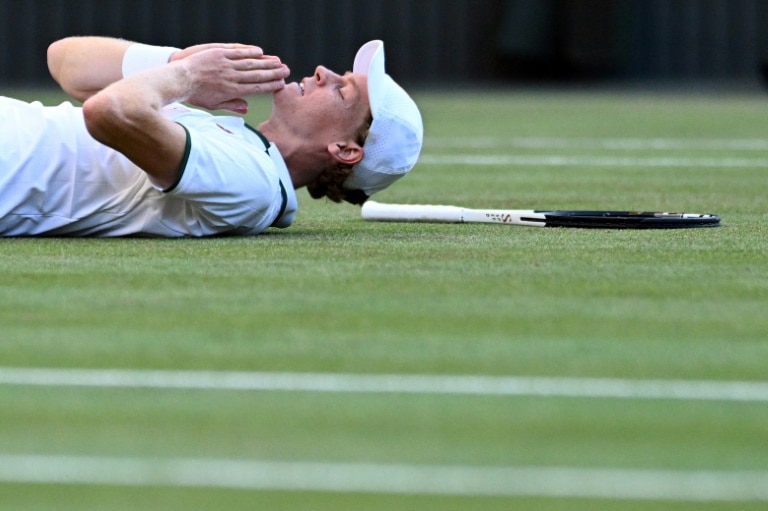
    In the fourth set, Sinner broke Zverev to take a 4-3 lead, and closed out the championship on his own serve. A dramatic final game featuring two of the match’s best rallies ended with Sinner slamming a forehand winner on his first match point, collapsing to the grass in celebration of his second straight Wimbledon title.

    Sinner finished the match with 58 winners and only 25 unforced errors, and saved the only break point he faced all afternoon on Centre Court. The victory marked his 100th career win at Grand Slam events, pushes his 2025 season record to a staggering 44-3, and gives him his sixth title of the year. He will take home £3.6 million ($4.8 million) in winner’s prize money for the victory.

    Reflecting on the win after the match, Sinner emphasized the weight of the moment and the quality of his opponent’s play. “You can feel the nerves on Sunday morning, it is a very special place,” he said. “You never know how many times you are going to come back. I never take it for granted. It has been an amazing final once again. It takes two players. I’m very happy about the win but I’m mostly very happy about the level we played.”

    For Zverev, the 29-year-old second seed, the result brings frustration but also a career milestone: he will climb above injured reigning world number two Carlos Alcaraz to claim second place in the ATP rankings when the new standings are released Monday. Zverev, bidding to become the first German man to win Wimbledon since Michael Stich in 1991, said the run left him believing he can claim a first Grand Slam on grass in future years. “At 29 years old, it’s the first time I actually believe I can win this trophy,” he said. Zverev’s 10-match losing streak against Sinner remains intact, with the German unable to snap his drought against the world number one despite his best performance at Wimbledon to date.

    With the victory, Sinner now has five Grand Slam titles, just two behind Alcaraz’s career major haul, and cements his position as the undisputed top men’s player in the world heading into the North American hard court swing this summer.

  • Wales U20s edge out Australia after late drama

    Wales U20s edge out Australia after late drama

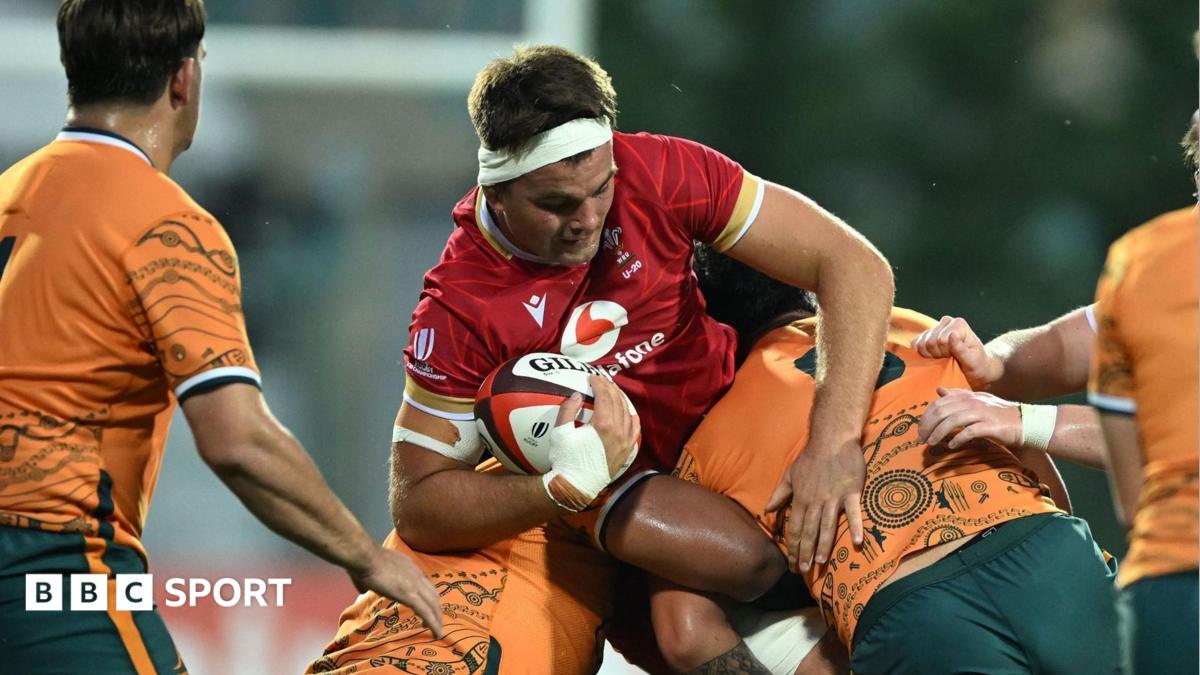
    In a rollercoaster, edge-of-your-seat clash at Tbilisi’s Avchala Stadium, Wales Under-20s pulled off a landmark 38-36 victory over Australia’s Junior Wallabies at the World Rugby Junior Championship, booking a fifth-place playoff against Scotland on July 17. This result marks Wales’ first win over Australia at the youth global tournament since 2018, and their first victory over a top-tier southern hemisphere nation at this level since downing New Zealand in the 2019 edition.

    Wales maintained their tournament-long trend of fast starts, extending their streak of opening-quarter tries across all four matches of the campaign, even after squandering three clear scoring chances in the first six minutes of play. The deadlock was broken in the 14th minute, when flying wing Rhys Cummings showcased sharp athletic awareness to keep Steffan Emanuel’s floating kick in play along the right touchline before diving over for the opening score.

    Disaster struck early for Australia, who lost three players to injury before the 15-minute mark, and found themselves further behind when center Osian Darwin-Lewis crossed the line after a blistering break from number eight Evan Minto. Carwyn Leggatt-Jones converted both tries to push Wales 14-0 up, but a costly yellow card for a deliberate knock-on shifted momentum Australia’s way. The infringement came during Australia’s attacking build-up, allowing Tom Farr-Jones to cross for his first try, and the speed winger added a second after scrum-half Sam Blank sniped over from close range, putting Australia up 17-14 by halftime.

    Wales reclaimed the lead just 60 seconds into the second half, when Cummings chased his own two hacked kicks to gather the loose ball and score his second of the game. Leggatt-Jones converted and slotted a long-range penalty to stretch the lead to 24-17, before captain Deian Gwynne – who has earned regular senior caps for Gloucester this season – crashed over from a short-range ruck to put Wales in a commanding position.

    Australia rallied back, with wing Riley Whitfeld finishing an acrobatic try in the left corner to cut the deficit to 31-22 in the 55th minute. When Wales lock Luke Evans was issued a 20-minute red card for a high tackle, the Junior Wallabies capitalized on the man advantage, with prop Edwin Langi scoring a close-range try to bring the sides even closer. Down to 14 players, Wales held firm and earned a penalty try after choosing to kick for a corner instead of taking a shot at goal, extending their lead to 38-29 while Australia’s Toby Brial was sent to the sin bin.

    Australia hit back once again, with John Greenfell sneaking over to cut the gap to just two points. In the 79th minute, Jonty Fowler raced down the left flank to score what Australian players and fans thought was a match-winning try, and the conversion was completed before Television Match Officials reviewed the play. The TMO spotted an earlier knock-on in the build-up, disallowing the try and confirming Wales’ narrow victory.

    Richard Whiffin’s young Welsh side will now face Scotland, who secured a 44-26 win over Argentina earlier in the tournament, in the fifth-place decider with a 17:30 BST kickoff on July 17. A repeat of Wales’ Six Nations victory over Scotland would secure the nation’s best finish at the Junior World Championship since they finished runners-up in 2013.

  • Irrepressible Sinner outlasts Zverev to win second straight Wimbledon title

    Irrepressible Sinner outlasts Zverev to win second straight Wimbledon title

    On a tense Sunday afternoon at the All England Club, world number one Jannik Sinner etched his name into Wimbledon history once again, edging out French Open champion Alexander Zverev in a bruising, four-set final to claim his second consecutive gentlemen’s singles title.

    The match, defined by relentless serving and grueling baseline rallies, pushed both athletes to their physical limits over three hours and 46 minutes of Centre Court action. After dropping a tightly contested opening set tiebreak 7-9, Sinner dug deep to level the match with a dominant 7-2 tiebreak win in the second set, before breaking Zverev’s resistance in the closing two sets to seal a 6-7 (7/9), 7-6 (7/2), 6-3, 6-4 victory.

    This title marks Sinner’s fifth career Grand Slam crown, pulling him just two major titles behind injured Spanish star Carlos Alcaraz, and caps off a remarkable comeback from his shocking second-round exit at the 2025 French Open, where he squandered a two-set lead against Argentine underdog Juan Manuel Cerundolo. The 24-year-old Italian also notched his 100th career win at Grand Slam events with Sunday’s result, extending his extraordinary 2025 season record to 44 wins and just three losses, with six titles already claimed this year.

    Sinner’s path to the final was far from smooth. He was pushed all the way to a five-set, come-from-behind win against Miomir Kecmanovic in the first round, the closest he came to an early exit from the tournament. From that point onward, however, Sinner found his rhythm on the grass courts of southwest London, evolving into an unstoppable force that no opponent could derail. His clinical performance in the final spoke to his champion mentality: he hit 58 winners alongside a mere 25 unforced errors, refusing to cave against a red-hot Zverev who entered the championship match on a 13-match Grand Slam winning streak.

    For Zverev, Sunday’s final marked a career-best run at Wimbledon, a tournament where he had never advanced past the quarter-finals in nine previous attempts. The German, who claimed his first ever Grand Slam title at this year’s French Open, entered the final with renewed confidence, and became the first player in seven meetings with Sinner to take a set off the Italian world number one. Despite the breakthrough, Zverev could not end his 10-match losing streak against Sinner, falling just short of becoming the first German man to lift the Wimbledon singles trophy since Michael Stich in 1991. He will, however, climb to second in the ATP rankings when the new standings are released on Monday, overtaking the injured Alcaraz.

    The first set unfolded as a masterclass in serving, with neither player facing a break point until the tiebreak. After 15 consecutive holds in the tiebreak, with both men saving set points, Zverev clinched the set with a blistering forehand winner. The second set followed a similar script, with no break opportunities for either competitor, but Sinner stepped up his aggression in the tiebreak to level the match at one set apiece.

    A dramatic turning point came in the seventh game of the third set, when Zverev created his first break point of the match but slipped while chasing a Sinner drop shot. The Italian immediately crossed the net to check on his injured opponent, who was able to continue after shaking off the knock. Sinner broke Zverev’s serve in the very next game, and closed out the set with an unblemished love service game, sealed with an ace to take a two-sets-to-one lead. A frustrated Zverev smashed his racquet into the grass after surrendering the break, a visible sign of his disappointment.

    Zverev fought gamely to extend the contest, but Sinner secured a decisive break to go up 4-3 in the fourth set. The Italian closed out the title on his own serve, wrapping up the win on his first match point with a forehand winner after two of the most thrilling rallies of the entire match, before collapsing to the Centre Court turf in celebration.

  • World Cup semifinals: Four previous champions, a bitter rivalry, Mbappé vs Yamal and Messi vs Kane

    World Cup semifinals: Four previous champions, a bitter rivalry, Mbappé vs Yamal and Messi vs Kane

    The 20XX FIFA World Cup has delivered a semifinal lineup unmatched in modern soccer history, bringing together the world’s top four ranked nations, all previous tournament champions, and a cast of global soccer royalty that has fans across the globe buzzing with anticipation. Only two matches now stand between Argentina, Spain, France, and England from lifting the sport’s most coveted trophy, and analysts agree that every matchup is too close to call. This year’s final four marks the first time since 1990 that every remaining contender has previously claimed the World Cup title, echoing a historic parallel that adds even more drama to the upcoming fixtures. France will face off against Spain in Arlington, Texas on Tuesday, a fixture that falls on France’s national Bastille Day holiday, before England and Argentina meet in Atlanta on Wednesday to cap off the semifinal round.

    The England-Argentina matchup is far more than a game for a spot in the World Cup final: it reignites one of the bitterest and most storied rivalries in international soccer, with tensions that have spilled beyond the pitch for decades, rooted in the 1982 Falklands Islands conflict between the two nations. The rivalry’s history on soccer’s biggest stage is littered with iconic controversial moments that are still debated by fans today. In the 1966 World Cup quarterfinals, Argentina captain Antonio Rattin — whose passing was announced just days before this year’s semifinal — was sent off in a fractious match that ended in a 1-0 English win; after the final whistle, then-England manager Alf Ramsey refused to let his players swap shirts with their Argentine opponents in a show of disrespect. Two decades later at the 1986 World Cup, Diego Maradona’s infamous illegal “Hand of God” goal secured a 2-1 quarterfinal win for Argentina, who went on to win the tournament that year. In 1998, David Beckham was sent off after kicking Argentina’s Diego Simeone, a moment that sparked widespread media fury in England, and Argentina won the match on penalties. Beckham earned his revenge four years later, scoring a match-winning penalty to knock Argentina out of the tournament in the group stage. Adding a new layer of history to this long-running rivalry: this will be Lionel Messi’s first ever competitive match against England at any World Cup.

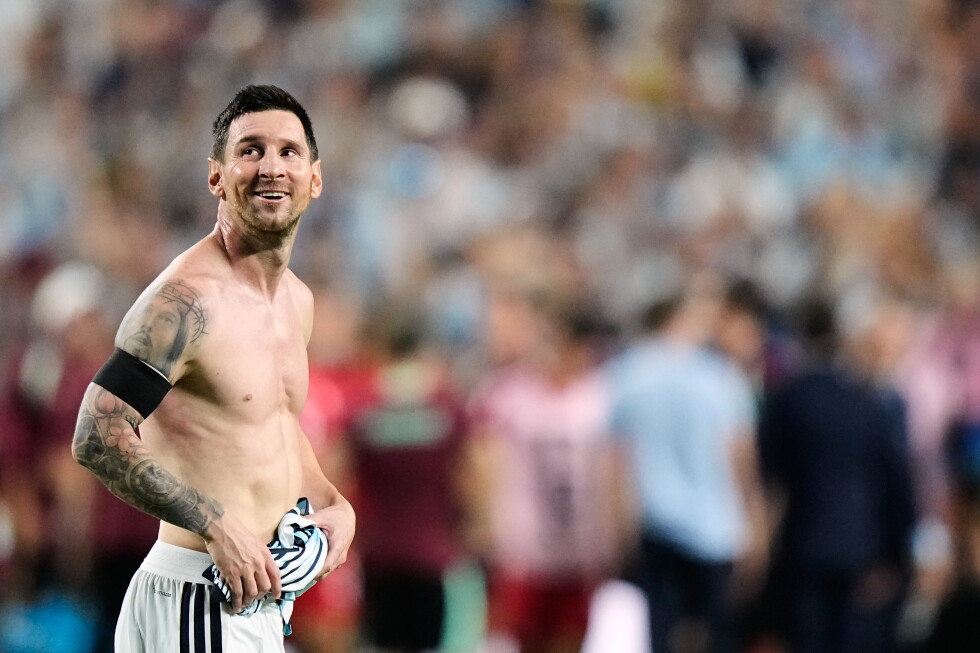
    Widely described as soccer’s greatest of all time (GOAT), the 39-year-old Messi is widely expected to be playing in his final World Cup, and his performances this tournament have only cemented his legacy. If he guides Argentina to a second consecutive title, he will surpass Maradona by becoming the second Argentine men’s player to win two World Cups, and Argentina will become the first national men’s team to win back-to-back World Cup titles since Brazil’s legendary squads of 1958 and 1962 led by Pelé. As the defending 2022 World Cup champions, Argentina already enters this semifinal with a historic parallel to the 1990 tournament, when Argentina was also the defending champion and reached the final before falling to West Germany.

    In the other semifinal, France will chase quick revenge against a Spanish side that knocked them out of the 2024 European Championship in a 2-1 semifinal win two years ago. That 2024 match saw 16-year-old prodigy Lamine Yamal score for Spain, who went on to lift the Euro title after beating England in the final. For France, that match was hampered by a broken nose injury that blunted star striker Kylian Mbappé’s impact, while young emerging talents Michael Olise and Désiré Doué had not yet broken into the senior national squad. Today, France enters this World Cup semifinal as the tournament’s most impressive team, boasting a deep, dynamic attacking roster that has overwhelmed opponents throughout the knockout stage.

    In contrast, Spain entered this World Cup already dealing with major injury setbacks, losing both Yamal and winger Nico Williams before the tournament began. The Spanish side has nonetheless fought its way to the semifinals, clinching narrow late wins against Portugal and Belgium, both off goals from substitute Mikel Oyarzabal. The two nations have a long tournament history: France defeated Spain to claim the Euro 1984 title.

    Beyond the race for the World Cup trophy, the tournament also features a thrilling tight race for the Golden Boot, awarded to the tournament’s top goalscorer. Five of the world’s six top goalscorers remain in the competition, with Erling Haaland the only eliminated top contender after Norway fell to England in the quarterfinals. Mbappé and Messi currently share the lead with eight goals each, followed by Jude Bellingham and Harry Kane with six, Ousmane Dembélé with five, and Oyarzabal with four, putting multiple players within striking distance of the award. The two superstars are also competing for the title of the all-time leading World Cup goalscorer: Messi has 21 career World Cup goals, just one ahead of Mbappé’s 20.

    If both France and Argentina advance to the final, the 2026 World Cup will host a rematch of the iconic 2022 final, adding another historic chapter to what is already the most anticipated final four in recent World Cup memory.

  • One Extraordinary Photo: Argentina’s Lautaro Martinez in the stands celebrating his goal with fans

    One Extraordinary Photo: Argentina’s Lautaro Martinez in the stands celebrating his goal with fans

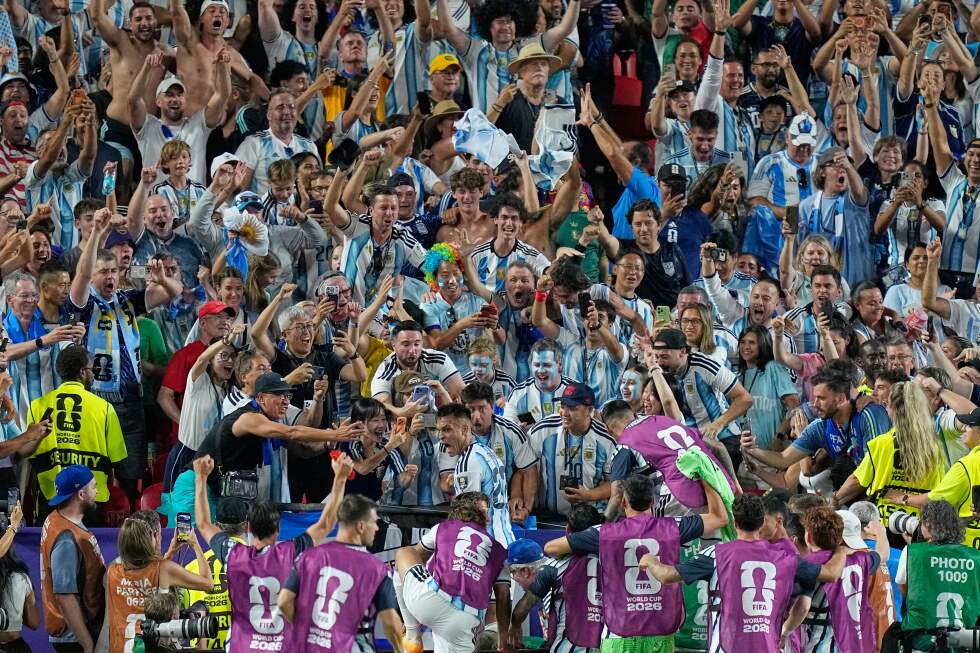
    For award-winning Associated Press photographer Ashley Landis, the 21-year veteran of visual journalism based in Houston, Texas, capturing those once-in-a-tournament split-second moments is what makes sports photography unforgettable. Over six of her two decades in the industry, Landis has built her career covering everything from breaking hard news to intimate human interest features, with a core focus on sports storytelling. In a behind-the-scenes breakdown, Landis has opened up about how she captured one of the most vivid images from the 2022 FIFA World Cup: the celebration of Argentina’s match-winning goal against Switzerland.

    It was a decisive overtime contest that would send Argentina through to the next round of the tournament, and when Inter Milan striker Lautaro Martinez slotted the game-winning goal past the Swiss defense, he reacted in a way few players do in the heat of the moment. Rather than immediately running back to join his teammates on the pitch, Martinez lept over the sideline’s LED advertising boards to share his joy with the Argentine fans packed into the front row of the stands. Recognizing that this unscripted, emotional moment would not come again, Landis made the split-second call to keep her lens locked on Martinez rather than panning back to the rest of the team’s celebration. As she recounts, Martinez stopped to share high-fives with the cheering fans in the front row before turning back to the pitch to join his squad, creating a candid frame that blends player joy and fan passion into one iconic shot.

    Landis explains the technical choices that allowed her to nail the shot from her position across the pitch. She had already captured the moment of the goal from her vantage point, and kept Martinez tracked through the celebration with a long 400mm f/2.8 telephoto lens — the go-to tool for sports photographers needing to isolate action from a distance. With crowds of players and fans swarming around the striker, Landis deliberately kept her camera’s focus locked on Martinez to ensure he stayed sharp amid the chaos.

    Looking at why the image resonates so strongly with viewers, Landis notes that Martinez’s unfiltered, explosive reaction was so clear it read even from her distant position across the field. Even with dozens of fans and teammates all clad in Argentina’s iconic albiceleste jersey filling the frame, Martinez stands out sharply thanks to his overjoyed facial expression and raw, peak emotion. The surrounding fans, their arms thrown high in celebration as they surround the striker, create a natural frame that draws the viewer’s eye directly to Martinez in the bottom center of the composition, anchoring the moment’s energy. This shot, which captures both the elation of a star player and the joy of the fans who supported him, stands as a perfect example of how sports photography can distill the raw emotion of global football into a single, unforgettable frame. More of The Associated Press’ full coverage of the World Cup is available to view on their official platform.

  • Van der Poel powers to victory on 9th stage of Tour de France and Pogacar keeps yellow jersey

    Van der Poel powers to victory on 9th stage of Tour de France and Pogacar keeps yellow jersey

    The 2024 Tour de France’s ninth stage delivered a thrilling climax in Ussel, France on Sunday, as Dutch cycling star Mathieu van der Poel executed a perfectly timed late attack to secure victory in a reduced sprint, while defending champion Tadej Pogacar successfully defended his overall race lead and retained the iconic yellow jersey.

    Originally planned as a 184.6-kilometer journey across central France’s hilly terrain from Malemort to Ussel, the stage was cut short by roughly 30 kilometers after organizers opted for a revision amid a red extreme heat alert issued by French meteorological services. The revised 154.6-kilometer undulating route played to the strengths of versatile all-around riders known in cycling circles as *baroudeurs*—hard-riding competitors capable of thriving across varied terrain.

    An early breakaway of five riders, including two-time world road race champion Julian Alaphilippe, was reeled in by the peloton early on. With 80 kilometers remaining in the stage, a new 8-rider breakaway group formed, featuring fan favorites van der Poel, two-time Olympic mountain bike champion Tom Pidcock of Great Britain, and Italian star Filippo Ganna. Though none of the breakaway riders threatened the overall standings of top general classification contenders, defending champion Pogacar positioned himself near the front of the chasing pack to protect his lead, drawing on his well-known reputation for aggressive attacks from any point on the course.

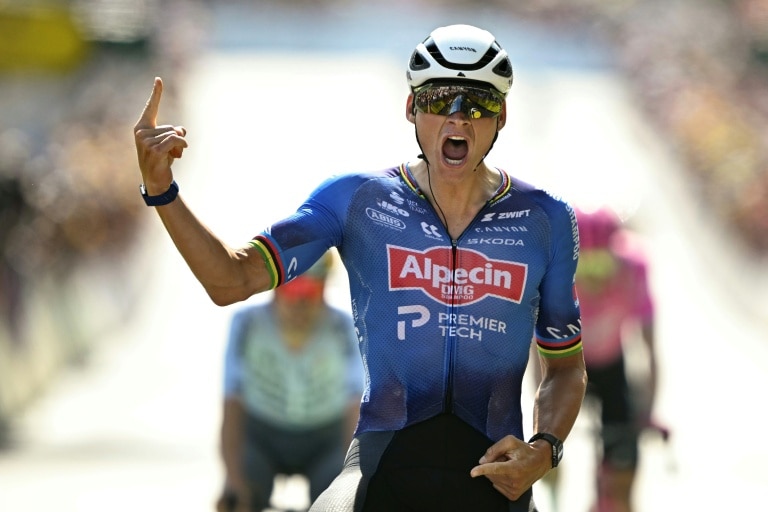
    Van der Poel made his decisive move with 25 kilometers left to race, whittling the leading breakaway group down to just four riders as rivals including Ganna were dropped. Entering the final sprint, the Dutch champion unleashed his acceleration with only 200 meters between him and the finish line, powering past Norway’s Tobias Johannessen and Britain’s Tom Pidcock to cross the line with arms outstretched in celebration. All three top finishers clocked the same official time of 3 hours 27 minutes and 51 seconds.

    The victory marks van der Poel’s third career Tour de France stage win, adding another accolade to a already legendary resume that includes multiple Cyclo-cross world championships, multiple one-day classic victories, and a former world road race title. Cycling is a multigenerational legacy for the 31-year-old: his maternal grandfather was beloved French cycling icon Raymond Poulidor, who competed in the Tour de France through the 1960s and 1970s, finishing second overall three times and third five times to earn the nickname “The Eternal Runner-up” and a permanent place in French cycling fans’ hearts. Poulidor died in 2019, and when asked if he thought of his grandfather during Sunday’s stage, van der Poel told French television: “Always. Every day on the Tour is special.”

    Speaking after the finish, van der Poel acknowledged the extreme heat that has marked the opening week of the race had taken a major toll on his fitness. “It was a really hard stage after a hard week for the team. The heat takes away a lot of energy and I had the feeling that I wasn’t recovering properly in the first few days. Today was the first stage when I felt I had the legs (to win),” he explained.

    Pogacar, a four-time Tour champion, crossed the finish line six seconds behind van der Poel in a front chasing group that also included his primary general classification rival, two-time champion Jonas Vingegaard of Denmark. The result left Pogacar’s overall lead unchanged: he holds a 2 minute 42 second advantage over Vingegaard going into the first rest day, with his teammate Isaac del Toro sitting 3 minutes 27 seconds back in third place overall.

    Monday marks the first of two scheduled rest days for the 21-day race. Competition will resume on Tuesday with the challenging mountain stage 10, and the 2024 Tour will conclude with its traditional ceremonial finish on the Champs-Élysées in Paris on July 26.

  • Van der Poel stays calm in the heat to win Tour de France stage nine

    Van der Poel stays calm in the heat to win Tour de France stage nine

    The 2025 Tour de France’s ninth stage delivered a thrilling display of endurance and tactics on Sunday, as Dutch cycling star and former world champion Mathieu van der Poel secured his third career Tour de France stage victory, overcoming extreme heat and grueling road conditions to claim the top spot on the podium. The stage, originally scheduled for a 184.6-kilometer route from Malemort to Ussel in France’s central Correze region, was cut by 30 kilometers after officials issued a red alert heat warning, bringing the total race distance down to 154.6 km. Temperatures across the stage climbed as high as 40 degrees Celsius, testing the limits of every rider in the peloton.

    A fierce fight for a spot in the day’s breakaway unfolded from the opening kilometer, with dozens of riders launching attacks to get clear of the main group. It was not until the midpoint of the stage, on the steep 3.8-kilometer Suc au May climb, that an eight-man breakaway finally managed to establish a gap over the peloton. Though their lead never stretched beyond one minute 30 seconds, the breakaway group cooperated smoothly to hold off the chasing main field.

    With 25 kilometers remaining on the day’s final categorized climb, the steep 900-meter Mont Bessou, van der Poel launched a decisive attack out of the breakaway. Only three riders could match his pace: Norway’s Tobias Johannessen, France’s Alex Baudin, and British standout Tom Pidcock. The leading quartet pushed hard to the finish, opening a 50-second gap over a sharply reduced peloton by the final kilometer. In a classic display of sprint tactics, the breakaway slowed in the final 1000 meters for a tense cat-and-mouse game, but when van der Poel kicked off his final sprint, his strength proved unmatchable. Johannessen crossed the line in second, with Pidcock taking third place.

    The win marked a satisfying turning point for van der Poel and his Alpecin Premier Tech team. In the two days prior to stage nine, the cobbled classics specialist had put his own ambitions aside to serve as lead-out man for teammate Jasper Philipsen, who notched fourth and fifth place finishes in previous sprint stages. “The start of the Tour was not great for our team, but like always, we stayed calm,” van der Poel told reporters after the race. “We have a really nice group here and we kept believing that it would turn around… it’s really nice to go to the first rest day with a win.”

    Van der Poel, a three-time winner of both the Tour of Flanders and Paris-Roubaix – the sport’s most prestigious one-day cobbled classics – previously won Tour de France stages in 2021 and earlier this 2025 edition. He acknowledged the extreme challenges of Sunday’s stage, noting: “I spent a lot of energy trying to keep the break alive. There was a lot of pressure from the bunch. The roads were horrible for a breakaway with a headwind the whole day. We fought for it and I’m happy to finish it off.”

    Reigning Tour champion Tadej Pogacar maintained his grip on the general classification lead, finishing in the chasing peloton just six seconds behind van der Poel ahead of Monday’s first scheduled rest day. The four-time champion holds a 2 minute 42 second lead over two-time winner Jonas Vingegaard, with Mexico’s Isaac del Toro sitting third overall, a further 45 seconds behind Vingegaard.

  • McCullum sacked as England Test coach but retains white-ball role

    McCullum sacked as England Test coach but retains white-ball role

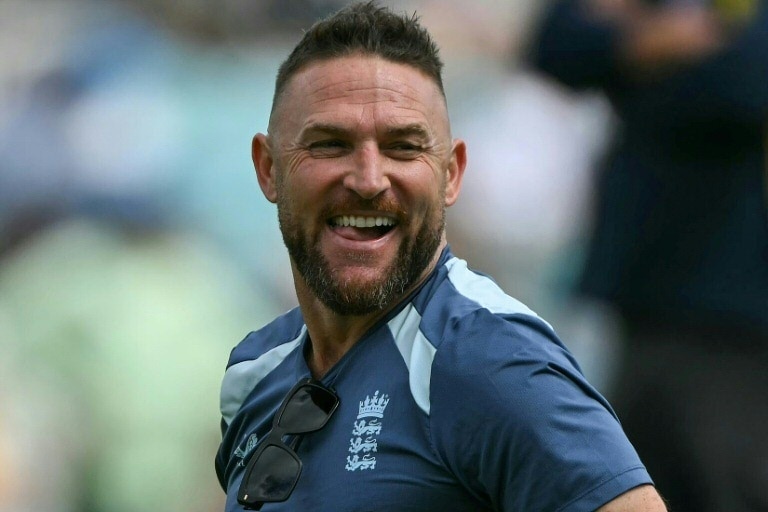
    The England and Wales Cricket Board (ECB) made a major leadership announcement Sunday, confirming that Brendon McCullum has stepped down from his position as head coach of England’s men’s Test cricket team, while he will retain his role leading the national limited-overs white-ball squads.

    The departure comes on the back of a disastrous slump in form for the red-ball side: England have dropped seven of their nine most recent Test matches under McCullum’s watch. The poor results include a lopsided 4-1 Ashes defeat during the 2025-26 tour of Australia, and a 2-1 home series loss to New Zealand just last month. Both campaigns were also marred by off-field controversy surrounding allegations of an unregulated team drinking culture.

    In a statement released by the ECB, McCullum expressed his affection for the Test coaching role and pride in the squad’s shared early accomplishments. “I’ve absolutely loved coaching the Test side and I’m incredibly proud of what we’ve achieved together,” he said, adding, “Of course I’m gutted not to be continuing, but I respect the decision.”

    McCullum’s final match in charge of the Test team overlapped with a landmark announcement from star captain Ben Stokes, who retired from international red-ball cricket mid-series during England’s heavy defeat in the third and final Test against New Zealand at Trent Bridge.

    McCullum’s tenure as Test coach got off to a sensational start. Alongside Stokes, he revolutionized England’s playing style with an aggressive, high-octane batting approach that delivered immediate success: the team notched 3-0 clean-sweep series wins over New Zealand and Pakistan, where they scored 500 runs in a single day of Test cricket, followed by a thrilling drawn 2-2 home Ashes series in 2023 that won global acclaim.

    But cracks began to show early on. A crushing 4-1 loss in India two years after McCullum took charge exposed fundamental flaws in England’s “one-size-fits-all” aggressive strategy, when the team was unable to bat its way out of challenging pitch conditions. The writing for his tenure became clear after the disastrous Ashes tour of Australia, where the series was wrapped up in a mere 11 days of play with a lopsided England defeat.

    Off-field issues compounded the poor on-field results during the recent home New Zealand series. After an opening win, captain Ben Stokes and fast bowler Gus Atkinson were dropped from the second Test for breaking a midnight curfew during a night out at a London bar, reigniting criticism of the team’s lax culture.

    With less than a month to go before England’s upcoming home Test series against Pakistan, the ECB has launched a search for both a new Test head coach and a new full-time captain. ECB chief executive Richard Gould paid tribute to McCullum’s contributions in his statement, noting: “Brendon breathed new life into England men’s Test team during an exciting period which saw some amazing victories and we’re grateful for all he has given to the role.” Gould added that the board views a change in leadership as necessary to position the team for an Ashes victory on home soil in summer 2027.

    Of the original Test leadership trio made up of McCullum, Stokes and managing director Rob Key, only Key remains in his post. Key has faced heavy public criticism for his role in England’s inadequate preparation for the 2025-26 Ashes tour, but he nonetheless praised McCullum’s legacy, saying the departing coach had left the red-ball program “well-set and poised to achieve great things.”

    Reaction to the leadership change from former England captains has been largely mixed but broadly supportive of the ECB’s decision. Ex-skipper Nasser Hussain credited McCullum for transforming the culture of the Test side early in his tenure, but agreed that a change was overdue given the recent run of poor results. “In recent times, with the Ashes and losing seven of their last nine Test matches, and the manner of those defeats, I think it is about the right time,” Hussain told Sky Sports.

    Notably, Sunday’s dismissal came just 24 hours after McCullum led England’s white-ball side to a dominant 56-run win over India in Southampton, completing a resounding 4-0 T20 series sweep over the current T20 world champions. McCullum, 44, took over the limited-overs coaching role in 2024, and says he will now turn his full attention to the white-ball program. “My focus now is on giving everything I’ve got to the white-ball teams and helping England keep moving forward,” he said.

    Speculation over McCullum’s replacement has already begun, with former England coach Andy Flower emerging as a popular candidate for a second stint in the role. The Zimbabwean cricket legend led England from 2009 to 2014, oversaw three successful Ashes campaigns including England’s most recent away Ashes win in 2010-11, and is renowned for his meticulous attention to detail. Hussain backed Flower for the role, noting that the meticulous preparation Flower brings is exactly what has been missing from the current England Test set-up. “Flower took England to number one in the world, pushed his team hard, some say at times too hard, but I loved Flower’s coaching ability,” Hussain said. “Everything (was) meticulous…and that is what has been lacking in this England Test match side –- the meticulous nature of what is needed behind the scenes.”

    Another former England Ashes-winning captain, Michael Vaughan, has called for far more sweeping change across the entire Test program, arguing that the current leadership has failed to get the best out of the squad’s talented player pool. “Enough is enough,” he told the *Stick to Cricket* podcast. “There is no way in a million years that this management group is maximising… and I hate using the word talent now because talent only takes you so far, and we keep saying there are a talented group of players –- well, they keep losing.”

  • McCullum stands down as England Test cricket coach

    McCullum stands down as England Test cricket coach

    The England and Wales Cricket Board (ECB) made a major leadership announcement Sunday, confirming that Brendon McCullum has stepped down from his post as England men’s Test cricket head coach. The 44-year-old will retain his position leading England’s limited-overs white-ball national teams, a role he first took on in 2024.

    McCullum’s tenure in charge of red-ball cricket got off to a sensational start when he took the helm alongside captain Ben Stokes. The pair revolutionized England’s Test cricket approach with a bold, ultra-aggressive batting philosophy that became known globally as ‘Bazball’. Early results backed up the revolutionary style: England stormed to a 3-0 clean sweep over New Zealand in McCullum’s first series in charge, followed by another dominant 3-0 victory on tour in Pakistan, where the side hit an extraordinary 500 runs in a single day of play. The 2023 home Ashes series against Australia also delivered a thrilling drawn 2-2 result that won praise worldwide for the brand of entertainment the new approach brought to the longest format of the game, with McCullum claiming 25 wins from his 44 Tests in charge overall.

    But the tide began to turn sharply for McCullum and England’s Test setup two years ago, when a crushing 4-1 away defeat in India exposed critical flaws in the team’s ‘one-size-fits-all’ aggressive approach. England proved unable to batter their way out of challenging spin-friendly conditions, revealing that the revolutionary strategy had clear limits on unfriendly pitches. Those struggles intensified in recent months: England have now lost seven of their most recent nine Test matches, including a dismal 4-1 Ashes defeat on Australia’s 2025/26 tour. The series was wrapped up by Australia in just 11 days of play, effectively ending any remaining public confidence in McCullum’s leadership. Last month, a 2-1 home series loss to New Zealand compounded the poor run of results, and both the Australian and New Zealand campaigns were overshadowed by persistent allegations of an unhealthy drinking culture within the squad. Off-field controversy hit a new peak when captain Ben Stokes and fast bowler Gus Atkinson were dropped from the second Test of the New Zealand series after breaking a midnight team curfew during a night out at a London bar.

    Stokes’ exit from the role followed days later. The former captain announced his full retirement from international cricket midway through the third and final Test against New Zealand at Trent Bridge, which ended in another heavy England defeat — that match would also prove to be McCullum’s final fixture in charge of the Test side.

    In a statement released following the announcement, McCullum expressed gratitude for his time leading the Test program. “I’ve absolutely loved coaching the Test side and I’m incredibly proud of what we’ve achieved together. Of course I’m gutted not to be continuing, but I respect the decision,” he said. The outgoing coach added that his full focus would now shift to defending England’s success in white-ball cricket, just one day after he led the side to a dominant 4-0 T20 series sweep over reigning T20 world champions India, a 56-run victory in Southampton. “My focus now is on giving everything I’ve got to the white-ball teams and helping England keep moving forward. I wish the Test team nothing but success. There’s a hell of a lot of talent in that dressing room and they’re a special bunch of lads,” he added.

    ECB chief executive Richard Gould praised McCullum’s transformative impact on the Test program. “Brendon breathed new life into England men’s Test team during an exciting period which saw some amazing victories and we’re grateful for all he has given to the role,” Gould said. He explained that the change in leadership was made to prepare for a critical 2027 home Ashes series, where the board is targeting a tournament victory: “We now believe that the time is right to make a change for the Test team as we target victory in the Ashes in England next summer.”

    With McCullum and Stokes both gone from the Test leadership setup, only England men’s cricket managing director Rob Key — who has faced heavy criticism for poor preparation ahead of the 2025/26 Australian Ashes — remains from the original leadership trio. Despite the criticism, Key offered a positive assessment of McCullum’s legacy, saying the coach had left the Test team “well-set and poised to achieve great things”.

    The ECB has now launched a search for a new Test head coach and a new captain, ahead of England’s home series against Pakistan next month. Several high-profile names have already been linked to the vacant role: former Australia captain Ricky Ponting has been cited as a potential candidate, while many cricket fans and analysts have called for a second tenure for former England coach Andy Flower. The Zimbabwean coaching great led England between 2009 and 2014, overseeing three successful Ashes campaigns including England’s most recent away Ashes victory in 2010/11.