分类: sports

  • Former stars differ on whether African team can win 2026 World Cup

    Former stars differ on whether African team can win 2026 World Cup

    As the 2026 FIFA World Cup, the first edition expanded to feature 48 participating nations co-hosted by the United States, Canada and Mexico, draws near, a heated debate has emerged among African football greats over a historic question: can an African national team finally lift the sport’s most coveted trophy this summer?

    The conversation was sparked by Morocco’s historic run at the 2022 Qatar World Cup, where the underdog Atlas Lions pulled off shocking upsets over European heavyweights Spain and Portugal to become the first African men’s team ever to reach the tournament semi-finals. That breakthrough has shifted expectations for the continent’s contenders, but opinions on whether 2026 will bring an historic title remain deeply divided.

    Former Senegal international striker El Hadji Diouf, a veteran of multiple World Cup campaigns, is among the most outspoken optimists. Asked by Agence France-Presse if an African captain would lift the trophy at the July 19 final outside New York City, Diouf simply responded: “Why not?”

    Pointing to the depth of talent across the continent, he highlighted his own nation’s roster: “We have amazing players like Sadio (Mane), Idrissa (Gueye) and Edouard (Mendy). They can match stars from any country. The 2026 World Cup — Africa is going there to win the tournament.”

    Diouf’s bullish outlook is fully shared by Confederation of African Football (CAF) president Patrice Motsepe, a South African billionaire who rose from leading top South African club Mamelodi Sundowns to the top of African football’s governing body. The 64-year-old administrator has made ending Africa’s World Cup title drought a core priority of his tenure.

    “We are confident that the 10 African national teams at the 2026 World Cup will make us proud and that an African nation will be champions,” Motsepe told AFP. “What we lacked in the past was self belief. Morocco changed that in Qatar four years ago. We can match the best in the world. I will work relentlessly until I see the captain of an African nation lifting the greatest football prize.”

    But not all African football icons share that confidence. Nigerian midfield legend Jay-Jay Okocha, who featured at the 1994 World Cup held in the United States, offered a more measured perspective, noting that expansion has raised the level of competition across all confederations.

    “Regarding the 2026 tournament, I am concerned about the chances of an African team going all the way,” Okocha said. “We talk a lot about the title contenders from Europe and South America, but what about the North Americans and Asians? They are improving rapidly. I will be very happy to be proven wrong. African footballers have shocked the world before. Let us hope it happens again.”

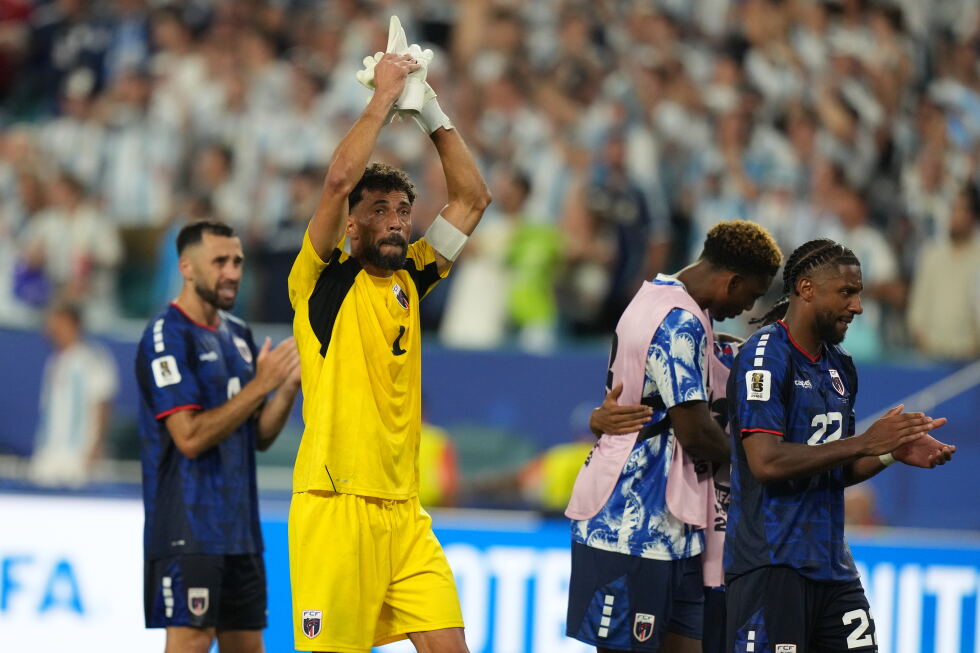
    Across the continent’s 10 qualified teams — Algeria, Cape Verde, Democratic Republic of Congo, Egypt, Ghana, Ivory Coast, Morocco, Senegal, South Africa and Tunisia — expectations vary widely based on recent form and historical performance. Most analysts and insiders rank Morocco and Senegal as the continent’s strongest contenders for a deep run, though both sides face tough group stage tests.

    Morocco, captained by Paris Saint-Germain star Achraf Hakimi, has been drawn into Group C alongside five-time world champions Brazil, Scotland and Haiti, a draw that most observers expect will see the Atlas Lions advance to the knockout round at minimum. Senegal, meanwhile, will face defending World Cup champions France, Norway and Iraq in Group I, widely labeled one of the toughest groups in the expanded 12-group format.

    The two sides recently faced off in the 2025 Africa Cup of Nations final in Rabat, where Senegal initially claimed a 1-0 win before CAF overturned the result on appeal after Senegal temporarily walked off the pitch over a controversial penalty decision. Senegal has since challenged the ruling at the Court of Arbitration for Sport, with a final verdict still pending.

    For Senegal’s head coach Pape Thiaw, the 2026 World Cup carries extra personal significance: he was an unused substitute in the Teranga Lions’ famous opening-game upset of defending champions France at the 2002 World Cup in Seoul. “That (2002) is history. We know the current French team well. It is going to be a special match and let us hope we win again,” Thiaw said from Dakar.

    Not all African coaches are publicly targeting the title, however. For smaller or historically less successful sides, just securing a first knockout round berth or tournament win represents a historic milestone.

    Egypt, which has won a record seven AFCON titles but has only qualified for three World Cups total since its first appearance 92 years ago, is still chasing its first ever win at the global tournament. Egyptian head coach Hossam Hassan, himself a former Egyptian star striker, said his side is focused on defying low expectations rather than planning a title run. “Reaching the World Cup is complicated and playing there is even harder. However, I see great ambition in my players. They want to achieve more than what Egypt did in the past,” Hassan said from Cairo.

    Tunisia, which has qualified for six World Cups but has never advanced past the group stage, is also keeping expectations grounded. Recently appointed head coach Sabri Lamouchi declined to make bold title promises. “I am not going to tell stories by pretending we will repeat what Morocco did in 2022. But who knows, maybe one day,” Lamouchi told Tunisian media.

    As the countdown to kickoff continues, the debate over Africa’s first World Cup title will only intensify, uniting fans across the continent in the shared hope that 2026 will finally be the year Africa writes football history.

  • Luke Beveridge calls on AFL to overhaul list rules amid injury crisis

    Luke Beveridge calls on AFL to overhaul list rules amid injury crisis

    With the AFL mid-season draft just around the corner, Western Bulldogs head coach Luke Beveridge has put forward a bold proposal aimed at easing the growing pressure of mounting injury lists across the league while opening up more opportunities for fringe players to earn their spot at the top level.

    The long-serving coach has publicly called on league officials to revise current list rules, pushing for expanded squad sizes and more flexible promotion pathways that would allow clubs to address sudden and severe injury outbreaks that have derailed multiple teams’ 2024 campaigns. At the core of Beveridge’s idea is the creation of a formal extended supplementary list, a reserve pool of players that clubs hit hard by injury – such as this season’s crisis-hit Richmond Tigers – can draw from at any point when their senior list is depleted.

    Beveridge argues that the current standard list size of 42 players, excluding category B development spots, is no longer sufficient to withstand the demands of a lengthening AFL season. With the introduction of the new Tasmania Devils expansion side, the league is set to add an additional round to the already packed 23-round regular season, plus retaining the existing pre-season fixture, putting even more physical strain on playing groups across the competition.

    Beyond solving the immediate problem of crippling injury tolls, Beveridge says the expanded supplementary list system would also create greater incentive for undrafted players to continue developing their careers in state leagues, rather than walking away from the sport after being overlooked in the annual national draft.

    “I understand we need key dates for drafts to allow clubs to prepare, plan and strategise in a sophisticated way to build their lists, but I also believe we need far more fluidity when it comes to bringing players onto an AFL list to get them on the field when injuries hit,” Beveridge said in comments this week. “Richmond is the perfect example right now of a club that would benefit from having a supplementary list to draw from as their injury crisis worsens. With 23 regular rounds, pre-season games still on the calendar, and an extra round coming when Tasmania joins the league, 42 players just isn’t enough, in my view.”

    Beveridge expanded on his proposal, suggesting that the supplementary list should be structured to match the 48-player squad size approved for the new Tasmanian Devils franchise, with a dedicated 4 to 6 additional supplementary spots available for all clubs. He added that clubs facing extreme injury strain, like Richmond this year, should even be allowed to expand that supplementary pool further if needed. While he acknowledges that key details – including rules around player retention at the end of the season and which players qualify to move off the primary list – still need to be thrashed out with league bosses, Beveridge stressed the change is a necessary adaptation for the modern game.

    “This is something we need to implement for the future, looking at the list structure that’s already been approved for Tasmania. Every AFL club should have the same flexibility to access a similar system when they’re dealing with a devastating injury toll,” he added.

    The Western Bulldogs themselves have been forced to navigate their own significant injury crisis earlier this season, losing a string of key senior players in quick succession, with young star Sam Darcy headlining the club’s injury list. The good news for Beveridge and Bulldogs fans, however, is that the club is finally starting to get key players back fit and available for selection.

    James O’Donnell is set to be available for selection this weekend, while key trio Tim English, Cody Weightman are on track to return to the line-up in the coming weeks. “We’re expecting James O’Donnell to be available this week. Tim is still probably another week away – we’re just being conservative with him, so he’s unlikely to play this round,” Beveridge confirmed. “Cody is a good chance to return next week. We’re expecting a handful of changes, but James is the main inclusion this week. We’ve always been a very cautious group when it comes to head injuries, so we’re just making absolutely sure Tim is fully fit and ready to go before we bring him back.”

  • Stylish Aston Villa win Europa League to end 30-year trophy drought

    Stylish Aston Villa win Europa League to end 30-year trophy drought

    On a historic night under the lights of Istanbul’s Besiktas Stadium, Unai Emery’s Aston Villa delivered a dominant 3-0 defeat of Germany’s Freiburg to lift the Europa League trophy, snapping a 30-year wait for major silverware and etching a new iconic chapter into the 152-year-old club’s history.

    The match played out like a script written for legend. Wearing the same white kit they donned for their famous 1982 European Cup upset of Bayern Munich — and with 1982 heroes Peter Withe and Dennis Mortimer watching from the stands — Villa turned clinical finishing into a masterclass that left first-time European finalists Freiburg outclassed from start to finish.

    The deadlock broke in the 41st minute, when Morgan Rogers teed up Youri Tielemans with a pinpoint cross from a clever short corner routine. The Belgian midfielder timed his run perfectly to hammer a thunderous volley past Freiburg goalkeeper Noah Atubolu from just inside the 18-yard box, a strike that shattered any resistance the German side had mustered to that point. Before the first half could even wrap up, Emiliano Buendia doubled Villa’s advantage with a sublime curled effort from the edge of the area, beating Atubolu into the far top corner after Freiburg failed to close him down. Rogers put the result beyond all doubt in the 58th minute, sliding to turn Buendia’s cross into the back of the net to seal the victory.

    For Aston Villa, the win is far more than just a trophy: it is the culmination of a stunning transformation that started when Emery took charge in October 2022. At the time, Villa languished just three points above the Premier League relegation zone, and the club had endured decades of heartbreak after their 1982 European triumph: relegations to the second tier in 1987 and 2016, and defeats in four consecutive domestic finals before this 2024 final run. Even this season got off to a disastrous start, with Villa opening their campaign with six winless matches, scoring just two goals in that dismal opening stretch. But a turnaround began with their first Europa League win of the season against Bologna, and the club rattled off 13 wins from 15 matches in the competition to reach the final.

    The triumph also cements Emery’s legacy as the undisputed master of the Europa League. Wednesday’s win marks his fifth title in the competition, adding to previous crowns he earned with Sevilla (2014, 2015, 2016) and Villarreal (2021). The result also completes an incredible six days for the club: just a week before the final, Villa secured qualification to next season’s Champions League with a vital win over Liverpool.

    The celebration stretched far beyond the pitch, with famous Villa fans including Prince William — who attended the match alongside 20,000 ecstatic Villa supporters — and Hollywood A-lister Tom Hanks, who sent a pre-match good luck message to the squad. For a generation of Villa fans who have never seen their club lift a major trophy, the unforgettable night on the banks of the Bosphorus banished decades of misery, and the current crop of Villa stars have now taken their place alongside the iconic 1982 side that defined the club’s greatest era for 42 years.

  • Jim Furyk and Keegan Bradley added as assistant captains for Presidents Cup

    Jim Furyk and Keegan Bradley added as assistant captains for Presidents Cup

    MEDINAH, Illinois — U.S. Presidents Cup skipper Brandt Snedeker has filled two of his assistant captain roles, announcing the appointments of Jim Furyk and Keegan Bradley this Wednesday. The hirings bring veteran leadership and recent top-level captaincy experience to Snedeker’s team ahead of the September tournament at Medinah Country Club.

    Furyk, who was named U.S. Ryder Cup captain just last month, holds the distinction of being the most recent winning Presidents Cup team skipper, having led the U.S. to victory at the 2024 edition hosted at Royal Montreal. Bradley, who competed in the 2024 Presidents Cup as a player, served as U.S. Ryder Cup captain at Bethpage Black in 2025, where his team fell to the European side.

    In his statement announcing the appointments, Snedeker highlighted the pair’s deep history leading American golf squads and their widespread credibility among tour players of all age groups. “Both guys have incredible experience as leaders representing the United States and they’ve each earned the respect of players across generations,” Snedeker said.

    The 45-year-old captain, who just claimed victory at the Myrtle Beach Classic two weeks prior, still has two additional assistant captain positions left to fill before the tournament kicks off. The 12-team match play event is scheduled to run from September 24 to 27 at Medinah’s championship course.

    First launched in 1994, the Presidents Cup pits the U.S. team against an International side composed of top players from across the globe, excluding Europe. In the tournament’s 30-plus year history, the U.S. has only suffered one defeat — a 1998 loss that remains the sole blemish on the side’s dominant record in the competition.

  • Could a football match soften North Korea-South Korea relations?

    Could a football match soften North Korea-South Korea relations?

    For nearly eight years, no official athletic delegation from North Korea has stepped across the heavily fortified inter-Korean border into South Korea. That long dry spell came to an end this week, when a North Korean women’s football team arrived in the South for competition, marking a small but symbolic breakthrough in a relationship that has remained locked in tension for most of the last decade.

    The fixture, which would be an unremarkable routine event in most other parts of the world, carries extraordinary weight on the Korean Peninsula. Decades of diplomatic estrangement, military posturing, and stalled cross-border talks have left almost all people-to-people exchanges between the two nations frozen. Against this backdrop, the simple act of a North Korean sports team entering South Korea has led observers and analysts to question whether this small sporting encounter could open the door to wider rapprochement between the two governments.

    Sports diplomacy has a long history of acting as a low-stakes confidence-building tool between nations with fraught political relationships. It creates space for informal interaction, builds familiarity between ordinary citizens on both sides, and can create momentum for higher-level political dialogue down the line. This historic visit is the first time any North Korean athletic group has crossed the inter-Korean border for a competition since 2017, making it the most significant people-to-people exchange between the two nations in years.

    While the match itself is just a single sporting event, it has already generated significant attention across the globe. Many watchers of inter-Korean relations are holding out cautious hope that this small step on the football pitch could translate to broader openings, from increased family reunions to renewed diplomatic talks aimed at reducing regional tensions. Even if no immediate political progress emerges, the visit itself stands as a rare small gesture of connection after years of separation.

  • Arsenal players in dawn celebrations after winning Premier League

    Arsenal players in dawn celebrations after winning Premier League

    For 22 long years, Arsenal football club and its global fanbase waited in the wings, enduring near-misses, criticism, and the weight of a title drought that stretched across generations. On Tuesday night, that wait finally ended, sending thousands of jubilant supporters flooding to the gates of Emirates Stadium before dawn to celebrate a historic Premier League crown that has eluded the club since the legendary Invincibles side of 2004.

    The title was secured in dramatic fashion, as Manchester City — the four-time defending champions who needed a victory at Bournemouth to keep their title hopes alive — dropped crucial points. While City fought back from an early Bournemouth lead to equalize in stoppage time, the final 1-1 draw left them one point short of Arsenal, handing the North London side the league trophy. Even as the match played out, fans began gathering outside Emirates Stadium, with crowds swelling as Bournemouth held on to their lead, and exploding in celebration when the final whistle confirmed Arsenal’s victory.

    By 5 a.m. Wednesday, Arsenal’s first-team players joined the throng of supporters to mark the occasion, after holding an initial private celebration with manager Mikel Arteta at the club’s London Colney training ground. Teammate Eberechi Eze shared early-hours images of star players Declan Rice, Bukayo Saka and Jurrien Timber celebrating with the crowd, while another video posted by Saka showed 19-year-old academy graduate Myles Lewis-Skelly brandishing a champagne bottle, poking fun at years of criticism that labelled Arsenal as “bottlers” for choking late in title races. “They called us bottlers,” Lewis-Skelly said in the clip. “And now we’re holding the bottle.”

    For Saka, the title win marks a full-circle moment for a side that finished as Premier League runners-up in each of the past three seasons, capping years of incremental progress under Arteta. Addressing critics who had mocked the club’s long drought, the England international stated, “Twenty-two years, 22 years. There was laughing, there was joking, they’re not laughing anymore.”

    Long-time supporters described the moment as surreal, decades in the making. “It doesn’t feel real. It feels like I’m going to wake up tomorrow and be like, yeah, it was a dream, but we did it. We actually did it. Wow. It’s going to be the best summer ever,” said 32-year-old fan George Owusu-Afriyie. Twenty-year-old supporter Julia Szumilas recalled the chaotic rush to the stadium after the final result was confirmed: “Everyone was running from all the pubs. We started running down to here. (Taking) bikes, running, driving their cars down… It was insane.”

    The celebration drew congratulations from Arsenal icons of the past. Arsene Wenger, the French manager who led the club to its last title in 2004’s undefeated Invincibles season, shared a heartfelt video message to the current squad posted on the club’s social media channels. “You did it! Champions go on when others stop. This is your time. Now, go on and enjoy every moment,” Wenger said. Club legend Ian Wright, who scored 185 goals during his time with the Gunners and was part of the 1998 domestic double-winning side, was mobbed by fans as he joined the celebrations outside the stadium.

    The side will formally receive the Premier League trophy on Sunday following their final regular season match against Crystal Palace. Beyond domestic glory, Arteta’s squad will now turn their full attention to a historic opportunity: the chance to claim the club’s first-ever UEFA Champions League title, when they face Paris Saint-Germain in the competition’s final in Budapest on May 30.

  • British PM Starmer congratulates Arsenal as title celebrations go deep into the night

    British PM Starmer congratulates Arsenal as title celebrations go deep into the night

    After 22 years of near misses, broken expectations, and relentless waiting, Arsenal Football Club has finally reclaimed the English Premier League title, outlasting defending champion Manchester City to seal soccer’s most coveted domestic trophy late Tuesday.

    The long-awaited victory drew an immediate, jubilant reaction from one high-profile lifelong Arsenal supporter: British Prime Minister Keir Starmer, who stepped away from a spiraling domestic political crisis to share his joy with the public. Taking to social platform X shortly after the title was confirmed, Starmer wrote, “22 long years for the Arsenal. But finally, we’re back where we belong. Champions!”

    For Starmer, the moment of celebration comes at a rare bright spot amid mounting pressure on his leadership. His Labour Party suffered devastating losses in May 7 local and regional elections, leaving his grip on power hanging by a thread. Dozens of Labour parliamentarians have publicly called for his resignation, one senior cabinet member has already stepped down, and popular potential challenger Andy Burnham, the Mayor of Greater Manchester, is preparing a leadership bid by contesting a parliamentary seat. In a neat twist of fate, the result that brought Starmer joy saw his home city’s Arsenal defeat Burnham’s region’s powerhouse Manchester City to the crown.

    The newly crowned champions did not hold back in their celebrations, with the party stretching long into the London night and through to early dawn. Arsenal midfielder Eberechi Eze shared behind-the-scenes photos of the festivities on his personal Instagram account as late as 5 a.m. local time. One image in particular drew wide attention: it shows Arsenal captain Martin Odegaard leaning back with an Arsenal-branded bottle held between his lips, a playful jab at critics who have labeled the squad “bottlers” — British slang for teams that crumble under high pressure. The dig hits close to home: Arsenal finished as league runners-up for three consecutive seasons and had not won a major trophy since 2020, leading to widespread claims they could not deliver when it mattered most.

    Social media platforms were flooded with amateur footage of the jubilant squad, including star players Eberechi Eze, Declan Rice, Bukayo Saka and Jurrien Timber, wandering the grounds of their home ground, the Emirates Stadium, as the sun rose over London on Wednesday morning.

    The official trophy lift is scheduled for Sunday, after Arsenal’s final league match of the season away to Crystal Palace at Selhurst Park.

  • Teenager makes Aussie history after becoming nation’s youngest person to reach the summit of Mount Everest

    Teenager makes Aussie history after becoming nation’s youngest person to reach the summit of Mount Everest

    An 18-year-old Melbourne native has etched her name into Australian mountaineering history after successfully reaching the summit of Mount Everest, the world’s highest peak, to claim the title of the nation’s youngest person to complete the formidable ascent.

    Bianca Adler, a Year 12 student, touched the 8,848-meter (previously commonly cited as 8,200 meters in early reporting) summit in Nepal in the early hours of Wednesday local time, arriving at approximately 2:30 a.m. — which translated to 6:30 a.m. back in her Australian hometown. Immediately after securing her place in the history books, Adler placed a triumphant radio call to her father Paul, a seasoned mountaineer who accompanied her on the early stages of the expedition.

    In the call, Adler shared that despite feeling generally well, she was contending with severe alpine conditions. “I feel really good, but the weather is really bad,” she told her father. Accompanied by her local Nepalese guides Pemba and Ngdu, Adler began her descent from the dangerous peak shortly after capturing quick photos at the summit, as the team prioritized a prompt exit from the high-altitude danger zone.

    Speaking to Australian Broadcasting Corporation after the call, Paul Adler opened up about the risks that come with high-altitude Everest expeditions. “It’s extremely dangerous up there and you feel very nervous for your life,” he said, adding that his daughter reported extreme cold and strong wind when they spoke. Paul Adler himself climbed Everest in 2007, and Bianca’s mother Fiona Adler — who became the third Australian woman to summit Everest in a previous climb — also joined the pair for the early segments of the expedition.

    Fiona Adler spoke of the family’s overwhelming pride in her daughter’s years-long effort to reach her goal. “She was very determined and motivated to do this. We are extremely proud of what she has done — just having a goal and a dream and working many years towards it. It is a very proud moment for us,” she said.

    Before launching their final ascent attempt, the whole family spent a full month acclimatizing on lower Nepalese peaks and visiting Everest’s Camp 2, before a one-week rest period at Everest Base Camp to prepare their bodies for the extreme altitude. The final push began with a 1 a.m. departure through the dangerous Khumbu Icefall, after which the team rested at Camp 1. They proceeded onward to Camp 2, where Paul Adler ended his participation in the climb. Two nights later, Bianca Adler continued her push toward the summit alongside her guides.

    Even as she made her way back down the mountain, Adler acknowledged the extreme physical toll of the expedition. In an audio recording shared after the summit, she said: “I feel pretty awful, but I still have to go to Camp 2. I’m just resting, I’m just trying to take it one step at a time. It’s really tough.”

    Adler’s achievement breaks the previous record for the youngest Australian Everest summiter, which was held by Gabby Kanizay, who reached the peak at age 19 in 2022.

  • LIV cash crunch hits Asian Tour as Korea Open prize money cut

    LIV cash crunch hits Asian Tour as Korea Open prize money cut

    Just weeks after celebrating a planned $500,000 prize money injection from LIV Golf, the Asian Tour has reversed course, slashing the total purse for this week’s Kolon Korea Open back to its original 2024 level of 1.4 billion South Korean won (approximately $1 million).

    The sudden change traces back to a bombshell announcement from Saudi Arabia’s Public Investment Fund (PIF), LIV Golf’s primary backer since the breakaway tour launched in 2021. Just one week after the Asian Tour trumpeted the Korea Open purse boost in late April, PIF confirmed it would end all financial support for LIV following the 2026 season, after sinking an estimated $5 billion into the rival circuit. The news has left LIV scrambling to secure new backing and thrown its long-term future into uncertainty, with ripple effects now spreading to its partner tours.

    First launched in 1958, the Korea Open is one of Asian golf’s most historic tournaments. The LIV-funded increase would have pushed the total purse to a record 2 billion won ($1.5 million), marking the largest prize pool in the event’s 66-year history. Organizers had even previously confirmed the champion would take home a 700 million won winner’s share. While the overall purse has been rolled back, the Asian Tour confirmed Wednesday that the defending champion will still receive a previously announced 200 million won bonus, per an update from title sponsor Kolon.

    Despite the funding shakeup, several high-profile LIV Golf players are still set to compete when the tournament tees off Thursday in Chuncheon. The field includes two-time Masters champion Bubba Watson, Mexican standout Abraham Ancer, and Korean-born New Zealander Danny Lee.

    The funding crunch also casts doubt over another key collaboration between LIV and the Asian Tour: the Asian Tour’s International Series, a slate of elevated mini-tour events that LIV has fully bankrolled to date. Each International Series stop currently offers a $2 million purse and serves as a direct qualification pathway for LIV Tour spots. The next event on the International Series calendar is scheduled to tee off in Morocco from June 11 to 14, leaving the golf world waiting to see if that tournament will proceed with its planned purse structure.

  • Fifa World Cup 2026: Is this the most exclusionary tournament in history?

    Fifa World Cup 2026: Is this the most exclusionary tournament in history?

    As the most anticipated global celebration of the world’s most beloved sport, the FIFA World Cup has long been framed as a unifying month-long spectacle that transcends national borders. For decades, billions of fans have gathered across living rooms, neighborhood cafes, local pubs, and packed stadiums to cheer on their teams and watch history unfold as the tournament’s most coveted trophy is lifted. But the 2026 edition, set to run from June 11 to July 19 across the United States, Canada, and Mexico, stands apart from all previous tournaments – and not for the better. Billed as the largest World Cup in history, with 48 competing nations and three co-hosts, the 2026 event has been overshadowed from its early planning stages by cripplingly high ticket prices, restrictive border controls, sweeping travel bans, and rising authoritarianism under the current U.S. administration, leaving fans across the globe disheartened and locked out.

    Unlike previous single-nation tournaments, the 2026 edition’s spread across three vast North American countries has created fragmentation from the start. Vast distances between host venues eliminate the cohesive geographic and cultural identity that defined past tournaments in South Africa, Brazil, and Qatar, where fans could move between matches without cross-border travel and the event felt rooted in a single shared host community. Still, diehard football fans have historically traveled across continents to support their teams, but 2026 presents barriers unlike any the sport has seen before.

    For international fans, journeying to North America begins with exorbitant baseline costs. Transatlantic flights to the U.S. are already long and pricey, with analysts warning costs could spike further amid potential jet fuel shortages linked to the U.S.-Israeli confrontation with Iran. Once inside the U.S., intercity travel between venues almost always requires additional plane or train tickets, and fans hoping to catch matches across all three host nations face even steeper compounding travel and accommodation costs.

    Despite these barriers, demand for the tournament remains high. In the first round of ticket sales in late 2025, FIFA received roughly 20 million ticket requests, a number that surged to 500 million requests by January 2026, with the largest volume of international applications coming from fans in Argentina, Brazil, Colombia, England, Germany, Portugal, and Spain. But affordability remains out of reach for all but the most wealthy fans, a stark contrast to past tournaments that offered subsidized ticket rates for local residents. There is no comparable federal subsidized ticketing program for 2026, and prices across all three host nations are at historic highs. During the second round of sales in April 2026, CNN reported opening match tickets in Mexico ranged from $3,000 to $10,000. Even with minor price drops in recent weeks driven by cooling resale market demand, the tournament remains completely unaffordable for even the most loyal local fans.

    “I know dozens of people who have travelled to World Cups around the world, or even to the Olympics in Paris, but very few people I know have bought tickets for this one,” Jennifer Muller, a board member of Cloud 9, the supporters group for Gotham Football Club based in New York-New Jersey, told Middle East Eye. Multiple reports from across the U.S. echo this sentiment: one Atlanta sports retail owner noted local fans were purchasing tickets that cost as much as a monthly mortgage payment.

    In response to mounting criticism, FIFA rolled out a small batch of $60 entry-tier tickets for all participating national team fans in December 2025, but analysts dismiss the move as a hollow publicity stunt, with only a few hundred discounted tickets allocated per match. New York City recently announced a similar gesture: 1,000 $50 tickets for local residents via lottery for matches at the 82,500-seat MetLife Stadium, which will host eight matches including the July 19 final. This works out to just 125 discounted seats per non-final match – roughly 0.15% of the stadium’s total capacity – a move that critics say only highlights the extent of predatory price gouging.

    Match tickets are only the first expense. Transportation costs have also reached absurd levels: the Associated Press reports train fares from New York City to MetLife Stadium have jumped to 12 times the standard rate. “I live 12 miles from the MetLife Stadium. Even if tickets fell into my lap, I have no idea how I would get to the stadium without spending over $100 for a 12-mile trip,” Muller added. Even traditional free public viewing events have been monetized: multiple U.S. cities initially converted popular fan parks into paid ticketed events, only rolling back entry fees in New York and other locations after widespread backlash, though premium fan park sections still cost $200 to $300 per person.

    For millions of fans across Africa, Asia, and the Middle East, the barriers extend far beyond cost. Strict U.S. visa rules, new social media vetting requirements, and sweeping travel bans have made attending the tournament all but impossible for supporters from the Global South. Unlike the 2018 Russian World Cup and 2022 Qatari World Cup, which created streamlined special entry systems for ticket holders, the U.S. has added layers of new hurdles. The Trump administration imposed a full travel ban on Haiti and Iran, and partial bans on Senegal and Ivory Coast – four participating nations that are now effectively locked out of direct U.S. match attendance. When Iran requested its scheduled fixtures be moved to Mexico to avoid these restrictions, the request was denied. The U.S. also mandated a $5,000 to $15,000 visa bond for travelers from 50 countries, though it later exempted ticket holders from participating participating nations following outcry.

    Even with the exemption, many fans and official delegations have already been denied entry. Cheikh Tham, a Senegalese community organizer in Atlanta, told Middle East Eye multiple members of the Senegalese Football Federation and the team’s official traveling fan entourage have already been denied U.S. visas. “So now we’re trying to work with the embassy to see how to help us get the ticket cheaper, so at least we can get the flights and go to support the team,” Tham said. The combination of pricing out local fans and blocking Global South supporters has created a tournament defined by exclusion – a reality that directly contradicts FIFA’s core branding of football as a unifying global force.

    “Gianni Infantino, the president of Fifa, talks all the time about how this World Cup will net 11 billion dollars for his organisation. I wouldn’t be surprised if, actually, it went more than $11bn,” said Jules Boykoff, author of *Red Card: The 2026 World Cup, Sportswashing, and the FIFA Greed Machine*. “That is more money than any sporting event in the history of the world. The travel restrictions slices mightily against the FIFA slogan that ‘football unites the world.’ This form of exclusion threatens to suck much of the joy from the tournament, given that visiting football fans bring zest and passion to the festivities. These exclusionary practices may well put a serious damper on the fun.”

    Critics also point out that this tournament fits a long history of large-scale sporting events being used for sportswashing – the practice of using a major tournament to launder a host’s global image amid widespread human rights violations. While sportswashing is most often associated with non-Western hosts such as Russia and Qatar, Boykoff argues the same dynamic is at play in 2026, with the Trump administration using the tournament to distract from rising authoritarianism and anti-immigrant policy. “That’s not to say that massive human rights problems don’t occur in Russia or Qatar. They’re well documented, so that’s for real, but oftentimes, people do turn a blind eye to the human rights violations in the United States, or they don’t call them human rights violations,” Boykoff noted. He added that the tournament could ultimately have an unexpected upside: “And quite honestly, the World Cup, if it has any positive effects, it could open a lot of people’s eyes to the double standard that we’re talking about here, and start looking at the United States and other so-called democracies with a more critical lens that also takes their human rights problems into consideration.”

    Under the Trump administration, the U.S. has seen a sharp rise in anti-immigrant enforcement, including mass immigration raids, expanded detentions, and aggressive deportation campaigns targeting immigrant communities across the country. The administration has refused to issue any guarantee that non-U.S. citizens will be safe from Immigration and Customs Enforcement (ICE) raids inside World Cup stadiums. Andrew Giuliani, executive director of the White House Task Force on the 2026 FIFA World Cup, told reporters in December 2025 that “the president does not rule out anything that will help make American citizens safer. This tense environment mirrors an incident at a 2025 FIFA Club World Cup match in New Jersey, where a father of two was arrested by ICE during the event.

    In late April 2026, the American Civil Liberties Union (ACLU) issued an unprecedented travel warning for the tournament, alerting international visitors to the risks of arbitrary detention, deportation, invasive social media screening, racial profiling, free speech suppression, surveillance, and even inhumane treatment or death in U.S. detention facilities. Jamil Dakwar, director of the ACLU’s human rights program, called the warning the first of its kind for a large-scale sporting event in modern U.S. history.

    “Over the past year, we have engaged with Fifa and raised these issues and concerns multiple times, particularly around abusive immigration enforcement,” Dakwar told Middle East Eye. “We alerted them to the deteriorating human rights situation under the Trump administration, including illegal and unconstitutional immigration practices where individuals were detained and deported without due process, [and] in some instances, attempts to deport even permanent legal residents in connection to their activism in support of Palestinian rights. The abusive deployment of armed federal forces, including the National Guard, is, in my view, unlike anything we have seen in many decades. It affects not only migrants or asylum seekers, but also bystanders, people observing events, reporters, and even lawful residents.”

    Activists are also specifically concerned about restrictions on political speech: after fans widely displayed Palestinian solidarity during the 2022 Qatar World Cup, there are no guarantees that similar displays will be tolerated in the U.S. “We have not been able to get binding assurances from Fifa or the federal government that people attending the World Cup will not be subject to the same kinds of abusive or authoritarian practices, including deadly use of force, profiling, inhumane detention and summary deportation without due process. If this can happen to permanent legal residents and even citizens, then it can certainly happen to visitors coming into the country as well,” Dakwar added.

    Beyond visitor rights, the ACLU and local labor groups are also raising concerns about the impact on communities already living in the U.S. Just this week, workers at SoFi Stadium in Inglewood, California, which will host multiple World Cup matches, publicly demanded that ICE have no presence at the tournament and that FIFA stop sharing worker and fan data with ICE and foreign intelligence agencies. “We cannot celebrate the World Cup while workers, tourists, immigrant families, and local communities are made to feel unsafe. Los Angeles should be a city of welcome – not fear,” Yolanda Fierro, a SoFi Stadium worker and member of Unite Here Local 11, said in a statement.

    Activists stress they are not calling for a boycott of the tournament, but rather for global fans to take precautions and hold FIFA accountable for enabling the current administration’s policies. “It is a call for precaution – for awareness of risks, for preparation, and for safety planning,” Dakwar said. “More than anything, it is also a signal to Fifa that they need to take responsibility and use their leverage to ensure that this World Cup does not become a space where abusive practices and widespread human rights violations are normalised, and where people are exposed to surveillance, deportation, arrest, detention, or other violations.”

    Despite the widespread criticism, inequity, and human rights concerns, the world’s biggest football show will go on. As Boykoff put it: “I believe that we can both appreciate the action on the field and support the worker-athletes on the field, and critique Fifa for the way that it is basically turning the people’s game into a game for plutocrats.”