As the 2026 FIFA World Cup, the first edition expanded to feature 48 participating nations co-hosted by the United States, Canada and Mexico, draws near, a heated debate has emerged among African football greats over a historic question: can an African national team finally lift the sport’s most coveted trophy this summer?
The conversation was sparked by Morocco’s historic run at the 2022 Qatar World Cup, where the underdog Atlas Lions pulled off shocking upsets over European heavyweights Spain and Portugal to become the first African men’s team ever to reach the tournament semi-finals. That breakthrough has shifted expectations for the continent’s contenders, but opinions on whether 2026 will bring an historic title remain deeply divided.
Former Senegal international striker El Hadji Diouf, a veteran of multiple World Cup campaigns, is among the most outspoken optimists. Asked by Agence France-Presse if an African captain would lift the trophy at the July 19 final outside New York City, Diouf simply responded: “Why not?”
Pointing to the depth of talent across the continent, he highlighted his own nation’s roster: “We have amazing players like Sadio (Mane), Idrissa (Gueye) and Edouard (Mendy). They can match stars from any country. The 2026 World Cup — Africa is going there to win the tournament.”
Diouf’s bullish outlook is fully shared by Confederation of African Football (CAF) president Patrice Motsepe, a South African billionaire who rose from leading top South African club Mamelodi Sundowns to the top of African football’s governing body. The 64-year-old administrator has made ending Africa’s World Cup title drought a core priority of his tenure.
“We are confident that the 10 African national teams at the 2026 World Cup will make us proud and that an African nation will be champions,” Motsepe told AFP. “What we lacked in the past was self belief. Morocco changed that in Qatar four years ago. We can match the best in the world. I will work relentlessly until I see the captain of an African nation lifting the greatest football prize.”
But not all African football icons share that confidence. Nigerian midfield legend Jay-Jay Okocha, who featured at the 1994 World Cup held in the United States, offered a more measured perspective, noting that expansion has raised the level of competition across all confederations.
“Regarding the 2026 tournament, I am concerned about the chances of an African team going all the way,” Okocha said. “We talk a lot about the title contenders from Europe and South America, but what about the North Americans and Asians? They are improving rapidly. I will be very happy to be proven wrong. African footballers have shocked the world before. Let us hope it happens again.”
Across the continent’s 10 qualified teams — Algeria, Cape Verde, Democratic Republic of Congo, Egypt, Ghana, Ivory Coast, Morocco, Senegal, South Africa and Tunisia — expectations vary widely based on recent form and historical performance. Most analysts and insiders rank Morocco and Senegal as the continent’s strongest contenders for a deep run, though both sides face tough group stage tests.
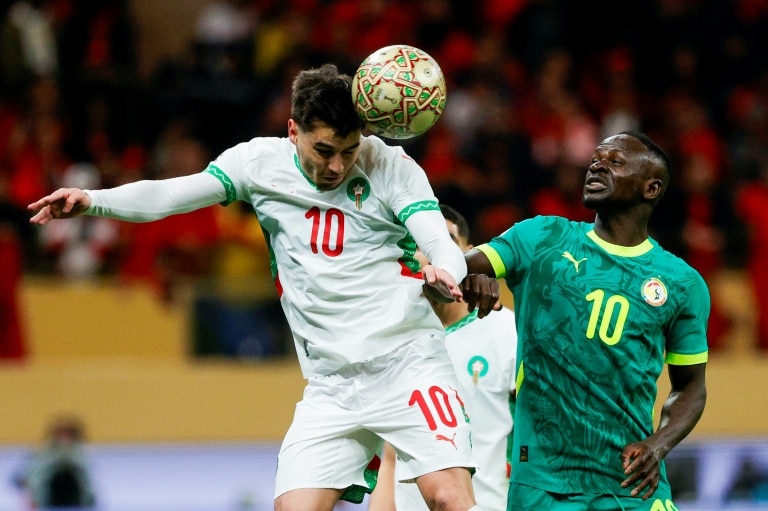
Morocco, captained by Paris Saint-Germain star Achraf Hakimi, has been drawn into Group C alongside five-time world champions Brazil, Scotland and Haiti, a draw that most observers expect will see the Atlas Lions advance to the knockout round at minimum. Senegal, meanwhile, will face defending World Cup champions France, Norway and Iraq in Group I, widely labeled one of the toughest groups in the expanded 12-group format.
The two sides recently faced off in the 2025 Africa Cup of Nations final in Rabat, where Senegal initially claimed a 1-0 win before CAF overturned the result on appeal after Senegal temporarily walked off the pitch over a controversial penalty decision. Senegal has since challenged the ruling at the Court of Arbitration for Sport, with a final verdict still pending.
For Senegal’s head coach Pape Thiaw, the 2026 World Cup carries extra personal significance: he was an unused substitute in the Teranga Lions’ famous opening-game upset of defending champions France at the 2002 World Cup in Seoul. “That (2002) is history. We know the current French team well. It is going to be a special match and let us hope we win again,” Thiaw said from Dakar.
Not all African coaches are publicly targeting the title, however. For smaller or historically less successful sides, just securing a first knockout round berth or tournament win represents a historic milestone.
Egypt, which has won a record seven AFCON titles but has only qualified for three World Cups total since its first appearance 92 years ago, is still chasing its first ever win at the global tournament. Egyptian head coach Hossam Hassan, himself a former Egyptian star striker, said his side is focused on defying low expectations rather than planning a title run. “Reaching the World Cup is complicated and playing there is even harder. However, I see great ambition in my players. They want to achieve more than what Egypt did in the past,” Hassan said from Cairo.
Tunisia, which has qualified for six World Cups but has never advanced past the group stage, is also keeping expectations grounded. Recently appointed head coach Sabri Lamouchi declined to make bold title promises. “I am not going to tell stories by pretending we will repeat what Morocco did in 2022. But who knows, maybe one day,” Lamouchi told Tunisian media.
As the countdown to kickoff continues, the debate over Africa’s first World Cup title will only intensify, uniting fans across the continent in the shared hope that 2026 will finally be the year Africa writes football history.