分类: sports

  • Injury carnage: Bulldogs lose superstar forward to broken arm, Storm winger forced off with rib issue

    Injury carnage: Bulldogs lose superstar forward to broken arm, Storm winger forced off with rib issue

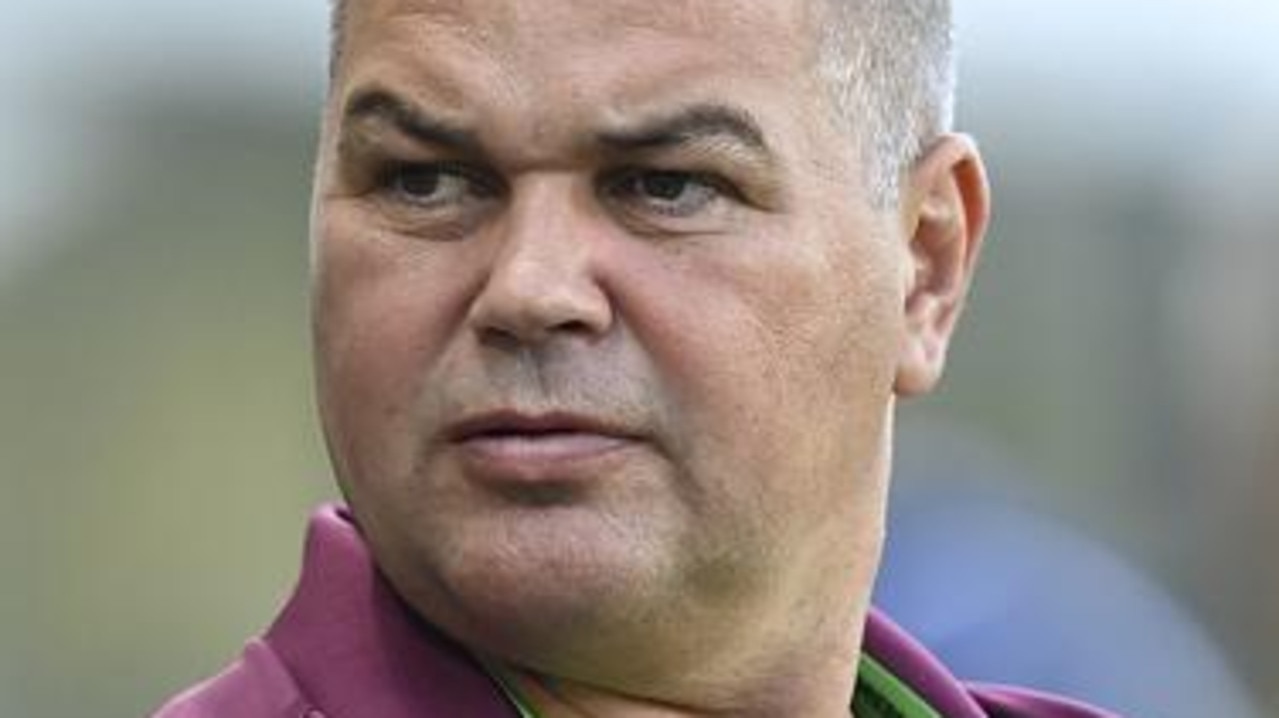
    The Canterbury Bulldogs’ already grim NRL season has taken another devastating turn, after their star starting forward Jacob Preston suffered a broken forearm in the opening minutes of their highly anticipated Friday clash against the Melbourne Storm, effectively dashing the club’s hopes of ending a five-match losing skid. Preston was forced to leave the pitch just 12 minutes into the first half of the game, after sustaining the injury that the club confirmed will rule him out of action for a minimum of several weeks. This latest setback comes at a brutal time for the Bulldogs, who have plummeted down the competition ladder after a shocking upset win over the premiers Panthers earlier in the season. The club has already been missing key forward Viliame Kikau for an extended period, after he suffered a season-disrupting torn pectoral muscle. With the State of Origin series approaching, which will pull top representative talent away from their NRL clubs, Canterbury’s recruitment and coaching staff now face an urgent scramble to find a replacement edge forward to fill the gap left by Preston’s injury. The Storm, who entered the match as clear favorites, were not immune to injury trouble of their own on Friday: starting winger Will Warbrick was pulled from the game midway through the first half after complaining of a rib injury. At the time of Warbrick’s exit, Melbourne held a comfortable 18-6 lead over the Bulldogs on the road.

  • Law changes and innovations to look out for at the World Cup

    Law changes and innovations to look out for at the World Cup

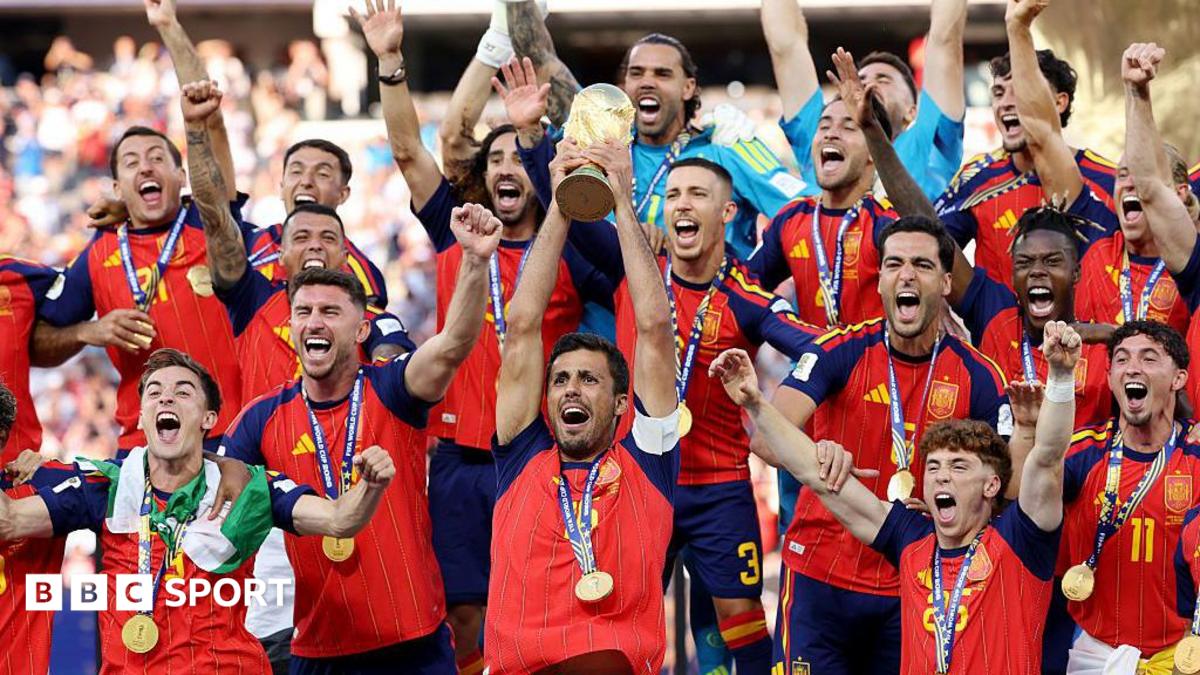
    For decades, the FIFA World Cup has served as a testing ground for transformative changes to international football’s rulebook, from the 1970 introduction of yellow and red disciplinary cards to the 2018 debut of the Video Assistant Referee (VAR) system, and the extended stoppage time framework rolled out at the 2022 Qatar tournament. As the 2026 edition – the first World Cup co-hosted by the United States, Canada, and Mexico – draws near, a new suite of law adjustments and procedural innovations is set to reshape how the game is played and officiated.

    The most surprising shift comes in the form of universal mandatory hydration breaks, a measure never before enforced for every match in World Cup history. While brief pauses for players to rehydrate have been used in past tournaments for matches played in extreme heat, 2026 will see three-minute breaks held at the midpoint of both the first and second halves, no matter the weather conditions inside the stadium. Even matches played in cool climates or under closed retractable roofs will include the scheduled stoppages.

    FIFA’s official rationale frames the rule as a commitment to prioritizing player welfare, ensuring all competing sides operate under equal match conditions regardless of their fixture’s scheduling or venue. Critics, however, have pointed out that splitting the 90-minute regulation into four distinct segments aligns World Cup match structure with popular North American professional sports, creating natural advertising windows that benefit U.S.-based broadcast partners.

    A second major expansion of existing technology comes to the VAR system, which was originally introduced only to review clear and obvious errors surrounding goals, penalty decisions, straight red cards, and cases of mistaken player identity. The International Football Association Board (IFAB), the global body responsible for setting football’s laws, has approved expanding VAR’s remit to cover two previously excluded scenarios for the 2026 tournament: second yellow card dismissals and corner kick awards.

    Going forward, VAR will now be able to review decisions to send a player off for a second bookable offense, alongside the existing scope for reviewing straight red card calls. For corner kicks, VAR can overturn what the IFAB defines as a clearly incorrectly awarded corner, as long as the review can be completed immediately without delaying the restart of play.

    To crack down on pervasive time-wasting tactics that have dragged out match durations in recent top-level competitions, new timed countdown rules will be enforced for restarts and substitutions. Following the introduction of an eight-second time limit for goalkeepers releasing the ball from hand – which results in an opposition corner if breached – 2026 will extend this framework to goal kicks, throw-ins, and substitution procedures.

    If a match official determines a team is deliberately delaying a goal kick or throw-in, a five-second visual countdown will be displayed for all spectators and officials to see. Should the restart not be completed before the countdown expires, possession will be switched to the opposing team: a delayed goal kick becomes an opposition corner, while a delayed throw-in is handed to the other side. For substitutions, players being substituted off have 10 seconds to exit the pitch after their number is displayed on the substitution board. If they fail to leave within the window, they must still exit immediately, but their replacement cannot enter the game until the next stoppage of play, at least one minute after the original substitution was called. Injured players who require play to be stopped for treatment must also leave the pitch for a minimum of one minute before they are permitted to return to action.

    The final high-profile new rule targets unsportsmanlike and disruptive behavior that has sparked controversy in recent club and continental competitions. Last month, FIFA announced that players who cover their mouths during confrontations with opponents will now be eligible for a straight red card. The rule change follows a 2024 UEFA Champions League incident where Benfica’s Gianluca Prestianni covered his mouth while speaking to Real Madrid’s Vinicius Junior, resulting in a six-match ban for discriminatory homophobic conduct. The new rule is designed to deter players from hiding abusive language from match officials and microphone systems.

    FIFA has also added new penalties for match protests, introducing red cards for any player who leaves the pitch in protest of a refereeing decision, with the same punishment applying to any team official who incites players to abandon play. In the most serious cases, FIFA states that any team that causes a match to be abandoned through protest will in principle forfeit the fixture. This clarification comes after the 2025 Africa Cup of Nations final, where Senegal players walked off the pitch in protest of a penalty awarded to Morocco. While Senegal went on to win the match after returning, the Confederation of African Football eventually stripped them of the title for violating tournament regulations by walking off.

  • ‘There’s a narrative’: Daniel Atkinson rubbishes halfback theory as he welcomes Luke Metcalf’s 2027 arrival

    ‘There’s a narrative’: Daniel Atkinson rubbishes halfback theory as he welcomes Luke Metcalf’s 2027 arrival

    The currently winless St. George Illawarra Dragons of the National Rugby League (NRL) have secured one of the biggest off-season recruitment coups of 2027, locking in dynamic playmaker Luke Metcalf on a three-year contract from the New Zealand Warriors. But the high-profile addition of the 2025 standout, whose season was cut short by a career-threatening knee injury, has ignited fresh discussion over who will fill the starting halves spots when Metcalf makes his debut for the Red V.

    Metcalf’s arrival marks the latest in a string of promising off-season additions for the rebuilding club, which has also poached Scott Drinkwater, Keaon Koloamatangi and Phil Sami from rival franchises ahead of the 2027 campaign. The roster overhaul signals the Dragons’ clear ambition to climb out of their current on-field slump and re-establish themselves as title contenders in coming seasons.

    However, the signing has thrown up a tricky selection puzzle for the head coach that will replace departing mentor Shane Flanagan ahead of 2027. Current Dragons playmaker Daniel Atkinson, who joined the club from Cronulla Sharks on a three-year deal earlier this year, was initially framed as the franchise’s long-term starting halfback. But after shifting to five-eighth in 2026, he now faces stiff competition for a starting halves spot alongside Metcalf, with young gun Kade Reed and incumbent Kyle Flanagan (son of outgoing coach Shane Flanagan) also in the mix for a role.

    Appearing this week ahead of his Round 12 start at five-eighth – his first game back after sustaining a fractured hand – Atkinson pushed back on the narrative that he joined the Dragons with the sole aim of securing the starting halfback job. The versatile playmaker argued he is solely focused on turning the club’s 2026 season around rather than worrying about selection battles 12 months away.

    “Everyone here’s got to earn the number on their back, but that’s a long time away,” Atkinson told reporters. “There’s a narrative there that I came here to be a halfback. I came here to be in the halves and to play my game, which is running, kicking, and tackling well. So all I’m thinking about is how I can benefit this team at the moment. I’m not thinking (about) 2027. Obviously, it’s very exciting for him coming here, but I’ve got a job to do for this club first in 2026.”

    Having spent the early years of his professional career rotating between the bench, reserve grade and five-eighth, Atkinson said he has embraced the pressure of being a starting playmaker at one of the league’s most high-profile clubs, even amid the team’s current winless drought. Entering Round 12, the Dragons hold the worst attacking record in the NRL, but Atkinson says the playing group is not shying away from the challenge of turning their form around.

    “I love it. It’s what I signed up for,” he said. “Obviously I’m not loving the circumstances we’re in at the moment, but then again, I’ve put myself in this circumstance and I’m going to face it head-on. I want us to be the ones who get us out of here, and I’m not going to shy away from that. I’m not proud of where we are. It’s a very passionate club with passionate fans, and everyone inside those doors are trying their arses off. The coaches, everyone from the top down, the players, we don’t want to be in this circumstance. Nobody does, so you can put money that we’re trying our arses off and we’re trying to turn the tide.”

    On Saturday, Atkinson will partner Kyle Flanagan in the halves, as Flanagan looks to rebuild form following a turbulent month that saw his father Shane step down as head coach and the young playmaker temporarily dropped from the starting side in favour of Reed. Atkinson praised Flanagan’s mental toughness through the upheaval, noting his halves partner’s relentless work ethic and on-field leadership that has remained consistent despite poor team results.

    “We started the season there and played well in Vegas. Obviously, results didn’t go our way after that, but we don’t like where we are at the moment,” Atkinson said. “We obviously want to be winning games, and he’s his own harshest critic. He tries there relentlessly. He’s been training well for a couple weeks now. I think he just knew what his job was and he’s a good defender and a good communicator on the field. His effort is second to none and I think he just focused on his job, his role for the team.”

    Atkinson will be aiming to add to his five try assists from nine opening matches this weekend, as the Dragons chase their first win of the 2026 NRL season.

  • Enhanced Games: the ‘Steroid Olympics’ hit Las Vegas

    Enhanced Games: the ‘Steroid Olympics’ hit Las Vegas

    The first iteration of one of the most controversial sporting events in modern history, the Enhanced Games — widely nicknamed the “Steroid Olympics” — is set to launch this Sunday at Las Vegas’ Resorts World arena. The unconventional competition brings together 42 elite sprinters, swimmers, and weightlifters who are permitted to use performance-enhancing substances banned from traditional international sport, with athletes vying to break existing world records for unprecedented cash payouts.

    Opinions on the event are deeply divided: supporters frame it as a groundbreaking experiment pushing the boundaries of human physical potential and technological integration in sport, while critics dismiss it as an irresponsible publicity stunt designed to market unregulated biohacking products to mainstream audiences. Long before the first starter pistol fires, the Enhanced Games has sparked heated global debate across the sporting and medical communities.

    Backed by high-profile deep-pocketed investors including Donald Trump Jr., Silicon Valley billionaire Peter Thiel, and Middle Eastern financiers, the competition has drawn decorated Olympic athletes away from traditional clean sport with life-changing prize incentives. Any athlete who breaks an existing world record will claim a $1 million bonus, while individual event winners take home $250,000 each — sums far outstripping what most elite competitors earn in years of traditional Olympic competition.

    Among the athletes lured by the payouts is former Irish Olympic swimmer Max McCusker, who retired from competitive swimming after the 2024 Paris Games. McCusker told AFP he was shocked to learn the top prize at the Enhanced Games is 25 times the total $10,000 he earned over his entire professional clean swimming career. Over the past four months, he has trained in Abu Dhabi under medical supervision, where he has taken anabolic steroids, testosterone, and human growth hormone, with clinicians closely tracking his body’s response via regular biomarker testing. McCusker says the results have been extraordinary: his body fat has dropped by nearly half to 6.4%, and he is posting faster swim times than he achieved at the peak of his Olympic career. He is confident multiple world records will fall during the Las Vegas event.

    Not all competitors are using enhanced substances: a small handful are competing clean, and organizers have not publicly disclosed the exact drug regimen for each athlete. Event organizers stress that all substances administered are approved by the U.S. Food and Drug Administration, and the entire process is overseen by an independent medical board. They also note athletes will receive long-term health monitoring to track any adverse effects.

    However, the event has faced fierce condemnation from global sporting and anti-doping bodies. The World Anti-Doping Agency (WADA) has called the competition dangerous and demanded it be called off entirely. World Aquatics has issued a permanent ban from all its sanctioned events for any athlete participating in the Enhanced Games, while World Athletics president Sebastian Coe famously dismissed the entire project as reckless and unethical. Medical experts also warn of severe unaddressed health risks.

    Ian Boardley, a professor of sport science at the University of Birmingham, explained that while biomarker tracking can reduce the risk of immediate acute harm, the long-term health impacts of sustained performance-enhancing drug use remain largely unstudied in this context. Even anabolic steroids alone, he noted, carry well-documented risks of life-shortening conditions including heart disease, liver and kidney failure, and permanent cognitive decline. Testosterone use can trigger dependency and clinical depression, while many of the peptides used in athletes’ regimens are an unregulated “Wild West” with even less data on long-term outcomes.

    Athletes like McCusker acknowledge the risks but argue they are taking all possible precautions to mitigate harm, drawing a comparison to the well-documented risks of common lifestyle choices like excessive caffeine consumption. Many participating athletes also share McCusker’s skepticism that traditional Olympic sport remains entirely clean, arguing the Enhanced Games simply brings open transparency to a practice they claim is already widespread behind closed doors.

    Beyond the on-field competition, the Enhanced Games is tied to the growing global biohacking movement, which has gained particular traction among Silicon Valley circles seeking experimental treatments for improved physical performance and longevity. The event’s official website already sells a range of supplements including peptides and testosterone directly to consumers, allowing members of the public to pursue their own “enhancement” alongside competing athletes. Organizers do not depend on a traditional lucrative television broadcast deal to turn a profit, instead leaning into direct-to-consumer product sales and online streaming. The competition will be available to view globally for free via streaming platforms including YouTube and Roku, with no major traditional broadcaster attached to the inaugural event.

    Medical experts warn that the event’s mainstream visibility is sending a dangerous message to the public that unregulated performance-enhancing treatments can be used safely, a claim they strongly reject. For proponents like McCusker, however, the Enhanced Games represents a shift in what modern audiences want from sport. “We’re living in a different age,” he said. “People want to see more excitement. People want to see faster times. And people want to see people break the world record and have incredible athletic bodies.”

  • Middlesbrough face Hull in football’s richest game after ‘spygate’ row

    Middlesbrough face Hull in football’s richest game after ‘spygate’ row

    Wembley Stadium is preparing to host what is widely known as the richest game in global football this Saturday, as Middlesbrough and Hull City go head-to-head in the English Championship play-off final for a coveted spot in the Premier League. But the build-up to this high-stakes fixture has been entirely overshadowed by the unfolding ‘spygate’ controversy that has rocked English football this week.

    The drama began earlier this month when Middlesbrough accused Southampton of sending an individual to covertly film their training session ahead of the first leg of their play-off semi-final. A photo soon circulated publicly showing a man positioned behind a tree, apparently capturing footage on his mobile phone. What followed was a swift investigation by the English Football League (EFL), which concluded this week with Southampton being expelled from the play-offs after the club admitted to multiple breaches of EFL rules prohibiting unauthorized filming of opposing teams’ training sessions. Southampton also confessed to carrying out similar spying operations against Oxford United and Ipswich Town earlier in the 2023-2024 campaign. As a result, in addition to their expulsion from the play-offs, the club has been handed a four-point deduction that will take effect when they compete in the Championship next season.

    Beaten semi-finalists Middlesbrough, who lost 2-1 on aggregate to Southampton before the ruling, have subsequently been reinstated into the final to face Hull. The off-field chaos has taken a visible psychological toll on both sides, whose managers have spoken out about the disruption to their preparations. Middlesbrough head coach Kim Hellberg joked about the impact of the scandal at his pre-match press conference on Thursday, saying, “I don’t sleep. I haven’t slept for one and a half weeks, I think, so there are no dreams. Hopefully, I get a good night’s sleep today, and then I will tell you about the dreams tomorrow.”

    For Hull City, the uncertainty over who their opponent would be throughout multiple legal hearings has left the club caught in the middle of a scandal they had no part in. Hull manager Sergej Jakirovic described his side as “collateral damage” in the saga, telling reporters that Southampton had clearly “crossed a line” while also questioning the actual benefit of the spying operation. “I know everything about every team, and this is my first season here, I know every player — but this is my job,” Jakirovic said, expressing confusion over why Southampton would need to resort to covert filming.

    The stakes of Saturday’s match could not be higher, with a massive financial reward on the line for the winner. According to analysis from Deloitte’s Sports Business Group, the promoted club, which will join already promoted Coventry City and Ipswich Town in the top flight next season, is guaranteed to earn at least £205 million ($275 million) over the next three years from increased broadcast, matchday and commercial revenue. That figure can jump to as much as £365 million if the club avoids relegation in its first season back in the Premier League. Tim Bridge, lead partner of Deloitte’s Sports Business Group, noted that even with the recent chaos, the Championship play-off final remains one of the most anticipated fixtures on the football calendar, as it carries the single biggest financial prize in the sport.

    Middlesbrough and Hull City share a recent shared history in the top flight, having both been relegated from the Premier League back in 2017, adding an extra layer of narrative to their clash at Wembley. Southampton, meanwhile, has pushed back hard against the sanctions: the club’s appeal against their expulsion was rejected by the EFL on Wednesday, but chief executive Phil Parsons maintains that the penalties are “manifestly disproportionate”. Southampton’s player of the season Leo Scienza described the ruling as “heartbreaking” in an Instagram post, writing, “For me, the dream of playing in the Premier League was something I fought for with everything I had. That’s why this pain cuts so deep.” The future of Southampton manager Tonda Eckert is now hanging in the balance, with unconfirmed reports suggesting that first-team players are already considering taking legal action against the club for the scandal. On Thursday, the Football Association announced it had opened its own separate investigation into Southampton’s conduct and is currently considering whether to bring additional charges against the club.

  • FIFA’s huge World Cup to generate unprecedented cash and CO2

    FIFA’s huge World Cup to generate unprecedented cash and CO2

    As the world prepares for the 2026 men’s FIFA World Cup — the first iteration of the tournament expanded to 48 competing nations, and the first co-hosted by three North American countries, the United States, Canada and Mexico — new research from environmental experts at the University of Lausanne (Unil) paints a stark dual picture: this edition will deliver unprecedented commercial revenue to FIFA, but it will also leave the largest carbon footprint of any international sporting event in history.

    Unlike the Olympic Games, which have recorded consistent reductions in tournament emissions across recent editions, the men’s World Cup is moving in the opposite direction, according to Unil geographer David Gogishvili, who shared the findings of the research with Agence France-Presse.

    Expansion from 32 to 48 teams combined with the unprecedented geographic spread of tournament venues across three countries creates unavoidable massive emissions, the research confirms. Unil’s calculations place total projected carbon dioxide emissions from the 2026 tournament between 5 million and 9 million tonnes. For context, that figure dwarfs the 1.75 million tonnes projected for the 2024 Paris Olympic Games, the 2.17 million tonnes estimated for the 2018 Russia World Cup (a 32-team event with 40 fewer matches), and the 3.17 million tonnes recorded for the 2022 Qatar World Cup, which was already criticized for its energy-intensive, hastily built, air-conditioned stadiums.

    While the bid organizers for United 2026 have emphasized that all 16 tournament venues already existed when hosting rights were awarded in 2018 — a point the bid framed as a sustainability advantage — experts say that pre-built infrastructure cannot offset the core problem: the enormous geographic distance between host cities. The straight-line distance between the southernmost host city, Miami, and the northernmost, Vancouver, measures more than 4,500 kilometers, forcing teams, officials, media, and an expected 5 million-plus fans to rely heavily on air travel, the single largest contributor to carbon emissions for major international sporting events. For example, Bosnia and Herzegovina, if it qualifies for the group stage, would need to travel a cumulative 5,040 kilometers across three group stage matches hosted in Toronto, Los Angeles, and Seattle.

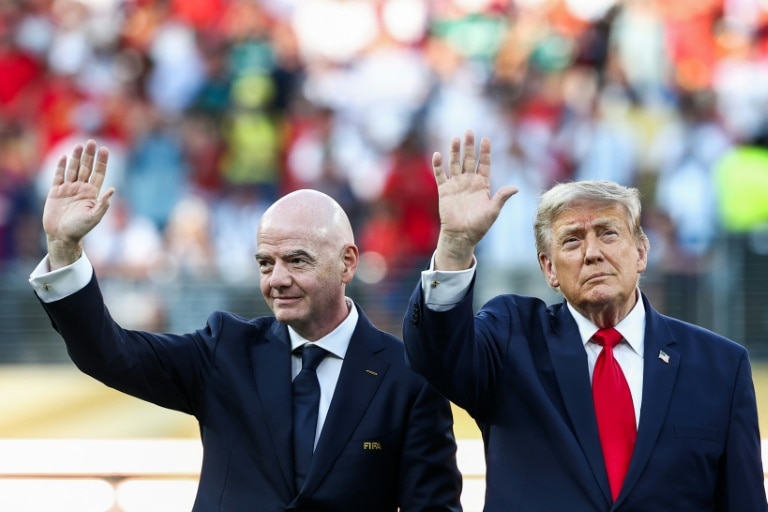
    FIFA leadership, including President Gianni Infantino, has publicly framed the organization as committed to climate action: Infantino proclaimed his personal “determination” to fight climate change at the 2021 COP26 summit in Glasgow, and the body has long stated a policy to “measure, reduce and offset” World Cup-related emissions. However, FIFA’s environmental claims have faced significant regulatory and academic pushback. In 2023, the Swiss Fairness Commission reprimanded FIFA for misleading consumers by marketing the 2022 Qatar World Cup as “climate neutral,” and the organization has declined to issue any similar emissions guarantees for the 2026 tournament.

    Environmental analysts argue that the most effective step to cut the climate impact of mega-sporting events is to limit their scale — a change the International Olympic Committee has already implemented by capping the number of athletes at 10,500 for Summer Games. But FIFA has moved in the opposite direction: expanding the men’s World Cup from 32 to 48 teams just one year after expanding the Club World Cup from 7 to 32 teams.

    A 2025 report from the UK-based New Weather Institute think tank and Scientists for Global Responsibility underscores the outsized carbon cost of this expansion. The report notes that a single men’s World Cup group stage match generates between 44,000 and 72,000 tonnes of CO2 — an amount equivalent to the total annual emissions of 31,500 to 51,500 passenger vehicles in the United Kingdom. International tournament matches, the authors add, produce 26 to 42 times more emissions than top-tier national club matches.

    Gogishvili argues that this growing carbon footprint stems from FIFA’s “insatiable appetite for growth,” which creates a self-reinforcing cycle: larger tournaments require more matches, which draw more athletes and fans, demand more hotel infrastructure, and require more long-distance travel, driving emissions ever higher. Critics warn this pattern is set to continue for future tournaments: the 2030 World Cup will be spread across six host nations on three continents, opening with three opening matches in South America before moving to Morocco, Spain, and Portugal for the rest of the tournament, while the 2034 edition will be hosted by Saudi Arabia — a country with a similar hot climate to Qatar, but a much larger landmass and 40 more matches than the 2022 tournament. In 2024, Aramco, Saudi Arabia’s state-owned oil giant and the world’s largest oil producer, became a top-tier FIFA sponsor.

    Writing in the Journal of Management Research in 2024, Aix-Marseille University professor Gilles Pache concluded that “it would seem that FIFA’s environmental denial will continue” as the organization prioritizes commercial expansion over climate action.

  • Ken Roczen creates fairytale ending with difficult ride to his first Supercross championship

    Ken Roczen creates fairytale ending with difficult ride to his first Supercross championship

    Under exploding stadium fireworks, Ken Roczen glided across the 2026 Supercross finish line, his body wracked with emotion as rival after rival pulled over to honor the newly crowned champion — a trailblazer who just claimed the oldest titleholder spot in the sport’s 50-plus year history. Down in the team paddock, tears of joy streamed down the faces of his loved ones, including his parents who traveled all the way from Germany to witness one of the most remarkable comeback stories motorsports has ever seen. This championship is legendary for far more than just Roczen’s age: it is the culmination of nine years of fighting back from near-career-ending injuries that threatened to take not just his racing dreams, but his left arm. Waiting for him on the track was Larry Brooks, his father-figure team manager, who had just finished cancer treatment to share in the moment with a hug that has already gone down in Supercross lore. “It’s one of the biggest, most complex stories our sport has ever seen. For it to finally all come together the way it did was a fairytale ending,” said Davey Coombs, president of MX Sports Pro Racing.

  • Nascar champion Kyle Busch dies aged 41

    Nascar champion Kyle Busch dies aged 41

    The world of NASCAR is in mourning Thursday after the sudden passing of legendary two-time Cup Series champion Kyle Busch, who died at 41 following an unexpected severe illness. The iconic driver, who holds the record for more career victories than any other competitor in NASCAR history, had his death confirmed in a joint official statement released by his immediate family, his racing team Richard Childress Racing, and the NASCAR organization.

    No cause of death has been made public to date. Earlier the same day, representatives for Busch confirmed that he had been admitted to a local hospital for treatment of a serious, unspecified illness, and that he would withdraw from all scheduled racing activities planned for the upcoming Memorial Day holiday weekend. He was originally set to compete in the Coca-Cola 600, one of the sport’s most high-profile annual events, at Charlotte Motor Speedway. Just hours after the initial announcement of his hospitalization, the joint statement confirmed his passing.

    Widely regarded as a once-in-a-generation racing talent and a lock for future induction into the NASCAR Hall of Fame, Busch leaves behind a decades-long legacy that reshaped the sport. At the time of his death, he was competing in his 22nd full-time season in NASCAR’s top racing division, where he accumulated two Cup Series championships and 63 total race victories. Beyond his success behind the wheel, Busch also made an indelible mark as a team owner in the NASCAR Truck Series, where he mentored and supported emerging young drivers looking to build their own careers in professional racing.

    The joint statement paid rich tribute to Busch’s singular impact on the sport, writing, “He was fierce, he was passionate, he was immensely skilled and he cared deeply about the sport and fans. … NASCAR lost a giant of the sport today, far too soon.” Known for his sharp, unapologetic wit and relentless competitive drive, Busch built an intensely loyal global fanbase that affectionately called themselves “Rowdy Nation,” a community that connected with his authentic persona across generations of racing fans.

    Busch is survived by his parents, his wife, and his two young children. The broader NASCAR community has already begun sharing tributes to the legendary driver, with fans and fellow competitors alike expressing shock and grief over the loss of one of the sport’s biggest icons taken far too early.

  • Sinner, Djokovic kept apart in French Open draw

    Sinner, Djokovic kept apart in French Open draw

    The 2025 French Open draw was unveiled Thursday, delivering one of the most highly anticipated outcomes for men’s singles: in-form world No. 1 Jannik Sinner and 24-time Grand Slam champion Novak Djokovic have been placed in opposite halves of the bracket, meaning the two title favorites will not face off before the tournament’s final match on Sunday, May 25. As the sport’s second Grand Slam of the year prepares to kick off this Sunday, the draw also set up tantalizing potential matchups in the women’s draw, including a potential semifinal clash between defending champion Coco Gauff and world No. 1 Aryna Sabalenka, while a simmering pay dispute between players and Grand Slam organizers has cast a shadow over pre-tournament festivities.

    For Sinner, who enters Roland Garros as the odds-on favorite to claim his first French Open crown following the withdrawal of injured Spaniard Carlos Alcaraz, his title run will get underway against French wildcard entry Clement Tabur, the world-ranked 165th player who earned his spot through domestic qualifying. The Italian has been on a historic hot streak as of late: earlier this month, he claimed his sixth consecutive ATP Masters 1000 title at the Italian Open, becoming just the second men’s player in tennis history — after Djokovic himself — to win all nine active Masters 1000 events over his career. If Sinner advances as seeded, he is projected to face fifth-seeded American big hitter Ben Shelton in the quarterfinals, with a potential semifinal showdown against Russian star Daniil Medvedev, who pushed Sinner to three tight sets in the Italian Open semifinals earlier this month before ultimately falling.

    On the opposite side of the men’s bracket, third-seeded Djokovic will begin his bid for a record-breaking 25th Grand Slam singles title against French home player Giovanni Mpetshi Perricard. The 38-year-old Serb, who turns 39 the day after the tournament kicks off, is tied with Margaret Court for the most Grand Slam singles titles in tennis history, and has not won a major since the 2023 US Open. Projected to meet Djokovic in the semis is second-seeded Alexander Zverev, who will open his campaign against Frenchman Benjamin Bonzi. Zverev has fallen to Djokovic in French Open quarterfinals twice before — in 2019 and 2024 — and is still chasing his first career Grand Slam title after multiple deep runs in majors.

    The draw also featured emotional storylines for veteran players set to retire after the tournament. The standout opening-round men’s match pits in-form French No. 1 Arthur Fils against 41-year-old former champion Stan Wawrinka, who will play Roland Garros for the final time before hanging up his racket. Fan-favorite Frenchman Gael Monfils, a 2008 Roland Garros semifinalist, will also play his farewell tournament, opening against compatriot Hugo Gaston.

    In the women’s draw, defending champion and fourth-seeded Gauff will open her title defense against American compatriot Taylor Townsend, looking to repeat her 2024 final upset victory over Sabalenka. For Sabalenka, who has never claimed the French Open singles title, the draw handed her one of the toughest paths to the final in the field. A potential third-round matchup against four-time Grand Slam champion Naomi Osaka is on the cards, even though Osaka has never advanced past the second week of Roland Garros in her career. Fifth seed Jessica Pegula or rising Canadian prospect Victoria Mboko could await Sabalenka in the quarterfinals, with a projected semifinal against Gauff if both advance.

    Other key women’s projected matchups see third-seeded four-time champion Iga Swiatek of Poland potentially facing Italian Open winner Elina Svitolina in the quarterfinals, while second-seeded Elena Rybakina — the 2025 Australian Open champion — is projected to meet Swiatek in the semis. Swiatek opens against 17-year-old Australian wildcard Emerson Jones, while Rybakina starts her campaign against Slovenia’s Veronika Erjavec. A rare all-Southeast Asian second-round matchup is also on the cards, between Indonesia’s Janice Tjen and the Philippines’ Alexandra Eala, with the winner set to potentially face Osaka in the third round.

    Beyond the on-court draw projections, the pre-tournament period has been marred by unrest, as a group of players has threatened to boycott select media obligations over an ongoing pay dispute with Grand Slam organizers. Tournament director Amelie Mauresmo pushed back on the threats Thursday, saying organizers would not change their stance on the issue. “We are not going to budge,” Mauresmo told reporters at the draw ceremony in Paris, adding that she was “a little saddened” by the player unrest. She noted that Grand Slam prize money has doubled over the last 10 years and has seen significant increases in recent years, pushing back on player claims that compensation for media work and player support is inadequate.

  • Mane named in Senegal’s World Cup squad

    Mane named in Senegal’s World Cup squad

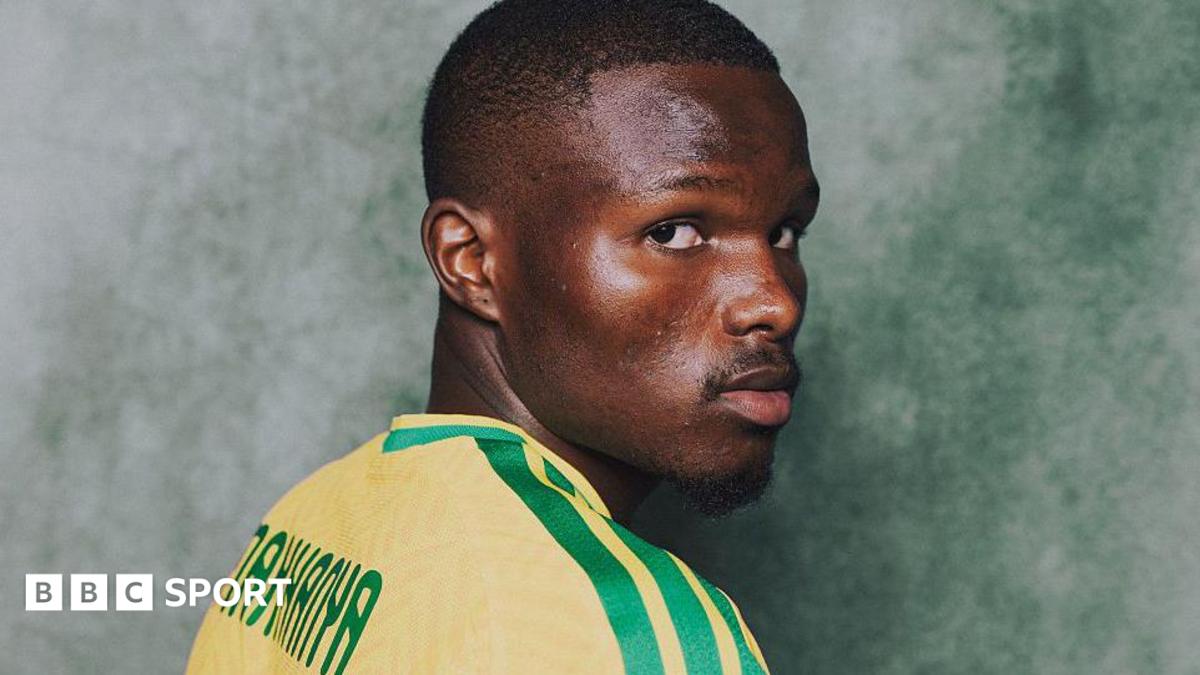
    Four years after a devastating knee injury ruled him out of the 2022 Qatar World Cup, Senegalese football star Sadio Mane has earned a spot in his nation’s preliminary 28-man squad for the 2026 FIFA World Cup co-hosted by the United States, Canada, and Mexico.

    The 34-year-old Al-Nassr forward, who boasts top-flight experience across Liverpool and Bayern Munich, is no stranger to last-minute World Cup heartbreak: he was originally named to Senegal’s 2022 squad before a pre-tournament knee injury forced him to withdraw entirely, leaving the West African nation without its talismanic attacking leader.

    Beyond his World Cup story, Mane has recently been at the center of one of African football’s most controversial moments. In January 2025’s Africa Cup of Nations final against Morocco, most of Mane’s Senegalese teammates walked off the pitch in protest after Morocco was awarded a stoppage-time penalty. It was Mane who remained on the field and convinced his protesting teammates to return to complete the match, which Senegal went on to win 1-0 via an extra-time goal from Pape Gueye. However, a subsequent appeal from the Confederation of African Football (CAF) overturned the result, awarding Morocco the tournament title in a decision that remains widely debated.

    Mane will lead a star-studded attacking group that includes Bayern Munich’s Nicolas Jackson, Everton’s Iliman Ndiaye, and Crystal Palace winger Ismaila Sarr. Head coach Pape Thiaw’s preliminary squad also features high-profile names across other positions: Everton midfielder Idrissa Gueye, Sunderland rising star Habib Diarra, and Tottenham Hotspur fan favorite Pape Matar Sarr all earned call-ups, alongside key defensive leaders Kalidou Koulibaly of Al-Hilal and Chelsea’s Mamadou Sarr.

    Under FIFA regulations, Thiaw is required to cut his preliminary squad down to the mandatory 26-player maximum by the final registration deadline of June 2, 2025.

    Senegal will kick off their 2026 World Cup campaign in New Jersey on June 16, with a tough opening group stage clash against defending champions France. They will then face Norway on June 22 before wrapping up group play against Iraq on June 26. This edition of the World Cup marks a historic milestone as the first expanded 48-team tournament, running across the three North American host nations from June 11 to July 19, 2026.