分类: sports

  • Fergie’s former racehorse enjoying a retirement with beaches and beer

    Fergie’s former racehorse enjoying a retirement with beaches and beer

    When Sir Alex Ferguson, the legendary former Manchester United manager, hung up his football coaching boots, he continued to find success across another sport: elite horse racing. Many of Ferguson’s former sporting champions have gone on to high-profile post-competition lives — from football icon Gary Neville’s prominent career as a television pundit to Eric Cantona’s unexpected turn as a Hollywood actor. But for one of Ferguson’s most decorated equine champions, retirement looks very different: quiet, relaxed days spent wandering Irish beaches and a small daily treat to cap off his dinner.

    Spirit Dancer, the powerful thoroughbred sired by racing legend Frankel, built a career that cemented his place as one of Ferguson’s most successful racehorses, racking up back-to-back victories at the Bahrain International Trophy in 2023 and 2024, and earning more than $2 million in total prize money along the way. But a career-ending fetlock sprain — an injury equivalent to a human ankle sprain — cut his racing days short in late 2024. After months of rest, rehabilitation, and medication, it became clear that the joint would never withstand the intensity of professional racing again, and the decision was made to retire the champion early.

    Rather than sending the gelding to a pasture in England, a personal connection brought him across the Irish Sea to the quiet coastal village of Rathmullan in County Donegal. That connection is Oisín Orr, the top jockey who partnered with Spirit Dancer for all of his biggest wins, and stepson of Donegal-based trainer Rachel Carton, who now cares for the horse. Orr, who grew up riding at Carton’s Rathmullan stables before taking a job with Spirit Dancer’s former English trainer Richard Fahey, arranged for the champion to retire at his childhood training grounds.

    Since arriving in Donegal, Spirit Dancer has adapted seamlessly to his new low-pressure life. Carton says the horse, who inherited the mellow, good-natured temperament of his famous sire Frankel (often called the “Usain Bolt of horse racing”), has settled in beautifully. He spends his days exploring the coastal countryside and strolling along sandy beaches, and has even picked up a unique new daily ritual: a few drops of locally brewed beer mixed into his dinner. Carton, who works at a well-known local brewery alongside training horses, says all of her horses enjoy the small treat, and Spirit Dancer is no exception.

    Carton describes Spirit Dancer as a step above most horses, noting that his steady temperament was just as much a key to his racing success as his natural talent. “Oisín was able to keep him calm and relaxed settled out the back of the field,” she explained. “He wasn’t using up any unnecessary energy, but when he was asked to go he would give it his all.” That same easygoing adaptability has made his transition to retirement smooth, with Carton saying he is curious, affectionate, and a pleasure to care for once he is out of the stables.

    Sir Alex Ferguson, who bred Spirit Dancer and watched him grow from a foal to a champion, has maintained a close connection to the horse. Carton says Ferguson, who spent decades working with elite human athletes in football, immediately recognized Spirit Dancer’s exceptional talent and temperament. Videos of the horse’s relaxed new routine are regularly sent back to Ferguson and former trainer Richard Fahey, and Carton says they’re sure the former football manager will be delighted to see his champion enjoying a well-earned retirement.

    For Orr, who credits his wins on Spirit Dancer with opening doors to international racing opportunities, moving the horse to Donegal was a natural choice. “Spirit Dancer has been a big part of my career since moving from Ireland to the UK. I was very fortunate to get on him,” Orr said, adding that he always knew the champion would love his new life on the Irish coast.

  • ‘I channelled a bit of Victor’: Club hatred put to the side as Cameron Murray and Victor Radley reunite for the Blues

    ‘I channelled a bit of Victor’: Club hatred put to the side as Cameron Murray and Victor Radley reunite for the Blues

    The State of Origin rugby league series has long been defined by its iconic “mate against mate, state against state” ethos. Nowhere is this dynamic more apparent than in the 2026 opening clash, where two of the National Rugby League’s most storied club rivals are putting decades of inter-club animosity aside to share the blue jersey for New South Wales for the first time.

    Cameron Murray of the South Sydney Rabbitohs and Victor Radley of the Sydney Roosters have grown up competing against each other, their clubs’ century-long rivalry ingrained in them from the earliest stages of their junior careers. Yet for the upcoming three-game series, that decades-long hatred is taking a backseat to shared state pride as the pair prepares to take the field as teammates.

    For Murray, a mainstay of the Blues lineup since his 2019 State of Origin debut, the 2026 series marks a much-anticipated return to representative rugby. A devastating Achilles injury forced him to miss the entire 2025 campaign, an experience that gave him a new perspective on how much the jersey means. “You don’t really know how much you miss something until it’s gone,” Murray shared in pre-series comments. “Sitting out and watching from the sidelines was always hard. It makes you miss everything – the good and the bad bits, the highs and the lows. It’s all part of what makes rugby league such a great game, and what we do so special. I missed it a lot, I’m grateful that I’m back in, and I’m just working hard to do my best and prove to everyone – but more so prove to myself – that I’m ready to be back in the Origin arena.” The NSW side has openly missed Murray’s signature leg speed and rapid play-the-ball ability during his absence, and his return adds a critical dimension to the team’s forward lineup.

    For Radley, the series marks a long-awaited debut. A recent change to State of Origin eligibility rules cleared the way for the English-born international to represent the state he has always called home, fulfilling a lifelong dream. The 28-year-old enforcer has built a reputation over his career as a fearless, boundary-pushing player whose aggressive style and relentless tenacity have made him a nightmare for opposition offenses.

    The pair’s history stretches back to their childhood: they have been competing against and occasionally alongside each other since they were 8 years old, and shared a Junior Kangaroos lineup back in 2017, when Murray started at lock and Radley came off the bench. Even so, Murray says he has only played one or two representative games alongside Radley across their entire careers, with almost all of their matches seeing them on opposite sides of the field.

    “I’ve had a lot of respect for Victor and what he’s been able to achieve and the type of footy that he plays,” Murray said. “I don’t think I’d be alone in saying that he’s built for an arena like this, and he’ll bring his best and he definitely deserves his shot. I’m really looking forward to running out alongside him.”

    Both players have been named as reserves for next Wednesday’s series opener at Accor Stadium in Sydney. NSW Blues coach Laurie Daley selected the pair specifically for their above-average mobility and strong ball-playing skills, attributes that he views as critical to matching the frenetic pace of modern top-flight rugby league in 2026.

    When asked about how evolving NRL rule changes might impact the pace and structure of next week’s Origin clash, Murray noted that the high-intensity representative fixture often looks different from regular season club play. “It’ll probably be a bit of a guessing game because the club competition has shown one thing, and Origin might show another,” he explained. “I’m not sure if Origin is going to be similar to the regular NRL season or the same old Origin that we all know it can be. You can overthink it a little bit if you try to plan for every outcome, but we’re all just going to be trying to bring our best, and I think we’ve got the talent in the team that if we can all play to our strengths and if we can play to our best ability, we’ll be able to get the job done.”

    While the two forwards have very different on-field personas – with Radley’s aggressive, edge-of-the-rules play contrasting with Murray’s more controlled style – Murray says he has full confidence that Radley will find the right balance for Origin, where a single costly penalty can swing the result of a tight match. Murray himself knows the risk of overstepping the line: he was sin-binned for involvement in a melee during the 2024 series, an incident he jokes saw him channelling Radley’s signature intensity. “I think Victor’s been around the game long enough now and I think his maturity levels are at an all-time high, and he’ll just go out there and be Victor,” Murray said.

    Blues star halfback Nathan Cleary got a firsthand look at Radley’s toughness during a training session this Thursday, and said he is equally excited to share the field with the Roosters forward. “It wasn’t much fun wrestling with him, I’ll tell you that,” Cleary laughed. “But Victor’s another one that I’ve never been able to play alongside him, but I’ve always admired him from afar. Just his competitive nature, his tenacity, and his will to win has always impressed me. Now getting to take the field with him, I’m really looking forward to it. He’s not afraid of putting his body on the line and doing what’s best for the team, and that’s shown so far.”

  • Japanese woman who scaled the world’s 14 top peaks says she wants to share joy

    Japanese woman who scaled the world’s 14 top peaks says she wants to share joy

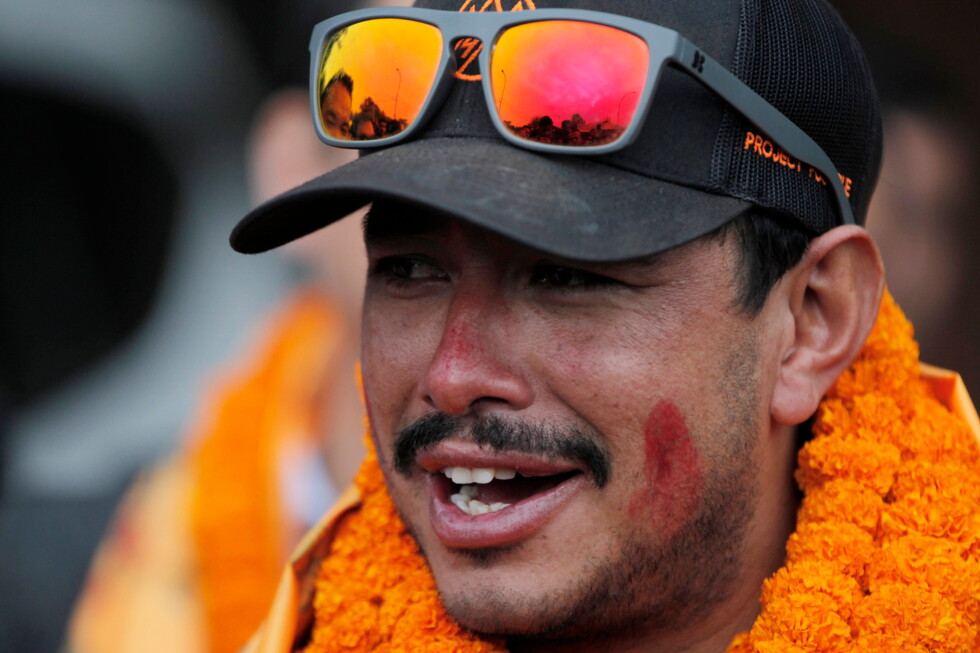
    Tucked in a Tokyo interview with the Associated Press, 44-year-old Japanese mountaineer Naoko Watanabe opens up about a journey that has cemented her place in climbing history — while rejecting the idea that her legacy is built on stacking records. Watanabe, the first woman ever to summit K2, the world’s second-tallest peak, three times, just added another groundbreaking milestone to her resume: she has now reached the top of all 14 of the planet’s 8,000-meter-plus peaks. For the Tokyo-based nurse who funds every expedition through her medical work, though, climbing has never been about trophies.

    “I’m just an ordinary person who happened to rack up records while climbing the Himalayas during my vacations,” Watanabe said. “I don’t even consider myself a professional mountaineer.”

    Watanabe’s connection to high-altitude adventure began long before her record-breaking climbs. Born in 1981 in Onojo City, a southern Japanese community, Watanabe was introduced to outdoor exploration at the age of 3, when her mother signed her up for a children’s adventure club. By 12, she had already tackled her first snowy Pakistani peak, cut her teeth on expeditions across China’s islands and Mongolia’s grasslands, and developed a lifelong love of the wild that would help her navigate the intense social pressure of growing up in Japan’s conformity-focused culture.

    Her first 8,000-meter summit came in 2006, when she was still a student nurse. That year, she successfully topped out on Cho Oyu, the world’s sixth-highest peak straddling the Nepal-China border. After taking a full-time position as a university hospital nurse in 2009, Watanabe struggled to balance the demands of her medical career with her climbing schedule. To make more time for the Himalayas, she eventually switched to per diem temporary nursing work — a shift that let her pursue her passion while still funding every expedition herself.

    Far from being a separate part of her life, Watanabe says her nursing background has been a critical advantage on the mountain. Across 31 expeditions over two decades, her medical training has helped her make split-second, life-saving decisions during emergencies, whether assessing rapidly shifting weather or evaluating her own health mid-climb. That quick judgment saved her life during a 2011 attempt on Mount Everest: just 150 meters from the summit, a sudden weather turn led her to turn back, even as her tearful Sherpa guide insisted the top was only an hour away. Watanabe correctly predicted that worsening conditions would drain her oxygen supply, and despite losing her vision on the descent and developing pneumonia after the retreat, she made it back to safety. Two years later, she returned and summited Everest safely, even as other climbers turned back amid harsh winds.

    In 2024, Watanabe claimed two of the most notable achievements of her career. In July, she became the first woman to summit 8,611-meter K2 three times, a feat officially recognized by Guinness World Records. Then, in October 2024, she topped out on China’s 8,027-meter Mount Shishapangma, becoming the first Japanese woman to complete all 14 of the world’s highest peaks.

    Today, Watanabe sees climbing as a much-needed escape from the constant stress and rigid expectations of everyday life in Japan, and she is committed to sharing that joy with new climbers. This coming June, she will lead a group of amateur trekkers to Nanga Parbat, the world’s ninth-highest peak in Pakistan, which she calls her favorite climb. Nicknamed the “killer mountain” for its deadly history, Nanga Parbat was first summited by Watanabe on her second attempt in 2022, and she says its base camp offers some of the most stunning scenery in the entire Himalayas.

    Unlike competitive climbing expeditions that prioritize reaching the summit at all costs, Watanabe’s upcoming trek is designed to let participants set their own pace. Amateurs will stay mostly at base camp, with no pressure to push further than they are comfortable. Watanabe wants to challenge the common stereotype that high-altitude climbing is only for elite athletes chasing records.

    “They are not supposed to be working hard,” she said of the upcoming participants. “I want climbers to break free from stereotypes and realize that the Himalayas can be fun… and to know there are more important things than reaching the summit.”

    Looking ahead, Watanabe has no plans to slow down. She expects to clock around 100 Himalayan climbs before she retires from the sport, and says any future records that come from that journey will just be a happy side effect of doing what she loves. For Watanabe, the true reward of climbing has never been a trophy or a world record — it is the adventure, the joy, and the chance to meet new people, experience new cultures, and try new things along the way.

  • ‘Life can be pretty cruel’: Origin stars call for ‘Try for Jai’ campaign after Arrow’s MND diagnosis

    ‘Life can be pretty cruel’: Origin stars call for ‘Try for Jai’ campaign after Arrow’s MND diagnosis

    The Australian National Rugby League community has been thrown into mourning after beloved 30-year-old forward Jai Arrow announced an early retirement this week, following a life-altering diagnosis of motor neurone disease. Now, current and former players from across the league are rallying around the former South Sydney Rabbitohs and Queensland Maroons star, pushing league officials to launch a new national fundraising initiative to support Arrow and his young family. The proposed ‘Try for Jai’ campaign would revive the spirit of the league’s old Try July fundraising drive, which was scrapped earlier this year over ties to gambling sponsorship.

    Cameron Murray, captain of Arrow’s former club the Rabbitohs and a representative for NSW Blues, could barely contain his emotion when speaking about his ex-teammate ahead of a Blues training session in Gosford. Murray, who has worked alongside Arrow since the forward joined South Sydney in 2021, said Arrow has displayed extraordinary resilience in the months since he first began experiencing symptoms.

    “What I will say is that over the last couple of months he’s shown an incredible amount of strength, and it’s really unbelievable what he’s been going through,” Murray shared. “And the strength that he’s shown in the face of such a cruel disease has been amazing. He’s definitely left his mark on rugby league for sure, and particularly since he got here in 2021 at the club, he’s left his mark on all of us. We’re all better people for knowing Jai and we’re all right behind him, and it’s really good to see the support that he’s got throughout the wider rugby league community and even past that. I think it just speaks about his character and the impact that he’s had on everyone that he’s come into contact with. There’s no better bloke and we’re all behind him. We all love him, so we’ll be there with him through this fight. Life can be pretty cruel sometimes.”

    Arrow, a fan favorite respected across both the Queensland and NSW representative sides, has earned widespread respect for his decades of commitment to the sport, and players across all clubs have rushed to express their support. Blayke Brailey, a young rising star for the NSW Blues, says he is eager to join the proposed ‘Try for Jai’ campaign, calling on league officials to move forward with the initiative quickly.

    “I think that would be a great initiative,” Brailey said. “I think if we can all do our part and help out in some small or big capacity, I would love to get on board with that. Hopefully the NRL and the clubs can sort something out because I think that’ll be an amazing initiative for him. I haven’t had too much to do with him, but just like everyone else, I’m really shocked and saddened by the news. I know Cam and everyone’s getting around him and the Souths staff there, so he’s got all our support. No matter if you’re a Souths fan or if you know Jai, you’ll send your love and your prayers to him and hopefully he can get through this tough time.”

    NSW Blues superstar Nathan Cleary echoed the widespread shock across the league, noting that Arrow’s diagnosis has served as a sobering reminder that professional football is secondary to what matters most in life. “I just want to pass on my best wishes to Jai and also his family. It’s devastating news and you never want to see anyone go through that, just as human beings. So I want to definitely pass on my best wishes to him and his family,” Cleary said. “I think it’s rocked not only our team, Queensland’s team, the whole NRL, but also just everyone in general. It just goes to show how precious life is and you’ve got to make the most of it. There are moments that happen throughout life that make you realise that there are things bigger than football and this is one of those. It’s just what we do at the end of the day, but there’s definitely more to life.”

    The original Try July campaign, which raised millions of dollars for ailing former players over its five-year run, was cut by the NRL this year due to its sponsorship partnership with gambling company Sportsbet. Proponents of the new ‘Try for Jai’ campaign say a reworked, gambling-free version of the annual initiative would provide critical financial support for Arrow and his family as he navigates treatment, and current stars have already pledged their full participation.

  • North Korea’s powerhouse women footballers are in Seoul to fight for title

    North Korea’s powerhouse women footballers are in Seoul to fight for title

    Despite torrential downpours and gusty winds that would have driven less dedicated fans indoors, more than 5,000 football supporters packed into Suwon World Cup Stadium, just south of Seoul, on Wednesday night. Clad in waterproof ponchos and clutching crumpled team flags, they roared, cheered, and jeered in equal measure as a nearly unprecedented matchup unfolded on the soaked pitch: a continental club semi-final pitting North Korea’s Naegohyang Women’s Football Club against South Korea’s home side Suwon FC Women. What made the occasion even more extraordinary was the crowd’s composition: hundreds of South Korean fans had organized through local non-governmental organizations to cheer for both teams, raising loud chants of the visiting club’s name, a small but striking act of goodwill amid decades of frosty cross-border tensions.

    Few expected the North Korean side to even travel to the match. Relations between Pyongyang and Seoul have deteriorated sharply in recent years, amid a record-breaking string of ballistic missile tests conducted by North Korean leader Kim Jong Un and the regime’s unwavering pursuit of nuclear capabilities. In 2023, Kim formally abandoned Pyongyang’s decades-long official goal of peaceful reunification with the South, and re-designated Seoul as an outright hostile state. But against widespread skepticism, the Naegohyang squad crossed the border as planned, marking the first visit of North Korean athletes to the South since 2018. The team made their historic return count, clinching a 2-1 come-from-behind victory over Suwon FC, with second-half goals from Choe Kum Ok and Kim Kyong Yong earning them a spot in the Asian Women’s Champions League final, where they will face Japan’s Tokyo Verdy Beleza.

    For analysts and long-time football observers, the North Korean side’s win came as no surprise. North Korea has cultivated a formidable global reputation in women’s football for decades, currently sitting 11th in the official FIFA world rankings – the second-highest ranked Asian nation, outplaced only by Japan. Founded in Pyongyang in 2012, Naegohyang claimed the North Korean domestic league title in 2022, and its roster features multiple starters from the North Korean women’s national team, led by a former head coach of the national program.

    Experts attribute this consistent success to a decades-long, state-driven focus on athletic excellence, rooted in the leadership’s ambition to position North Korea as a global sporting powerhouse. When Kim Jong Un took power in 2011, he quickly reiterated his father’s long-held priority of building the country into a “sports stronghold,” investing in elite training infrastructure such as the Pyongyang International Football School, opened in 2013 on Pyongyang’s Rungna Island, which scours the country for promising young talent to train full-time. “Even back in the 1990s, when I was training in North Korea, there was already a fully developed system in place at the school level to nurture young athletic talent,” explained Kim Sang-yoon, a former North Korean national boxer who defected to the South in the 2000s. “At elite sports schools, talented athletes are typically selected and begin full-time training as early as elementary or middle school.”

    This state-led investment has delivered outsized results even against the backdrop of severe economic headwinds. Years of Western sanctions imposed over North Korea’s nuclear program have gutted the country’s economy, leaving it one of the poorest in the world, with most ordinary citizens earning very little in the state-controlled system. Yet the top-down focus on women’s football has paid enormous dividends, both for the regime and the athletes themselves. For the Pyongyang government, international football wins act as rare, high-profile propaganda victories on the global stage, highlighting the regime’s capabilities despite international isolation. For the players, standout performance offers a unique path to improved social standing in North Korea’s rigidly hierarchical society: top athletes have been reportedly rewarded with luxury apartments, high-end vehicles, and even coveted membership in the ruling Workers’ Party of Korea, a status that transforms social and economic prospects for recipients and their families. The sport’s popularity has also grown among ordinary North Koreans, boosted by the national team’s recent string of youth-level global titles: North Korea won the 2024 FIFA U-20 Women’s World Cup, the 2025 FIFA U-17 Women’s World Cup, and the 2026 AFC U-17 Women’s Asian Cup, a record of success that far outstrips the performance of the country’s men’s program.

    Analysts point to multiple factors behind the gender gap in North Korea’s international football results. For men’s football, the biggest barrier is a lack of resources for physical development: to compete with larger-bodied Western opponents, male athletes require high-nutrition, protein-heavy diets that remain out of reach for most programs in North Korea. For women’s football, by contrast, observers note that the global competitiveness gap was far wider when Pyongyang first prioritized expanding women’s programs in the 1990s and early 2000s, allowing the centralized North Korean system to build an early advantage. “North Korea cannot compete with major global powers in economics, science, or most other fields,” explained Brigitte Weich, a documentary filmmaker who spent five years following the North Korean women’s national team for a 2024 project. “But in a sport like this, a centralized system can focus all resources on training, with no other distractions – that gives them a clear edge.”

    It remains unclear how the win has been received by ordinary North Koreans, as most citizens have limited access to unfiltered international media and the open internet. But the match has already sparked heated discussion and cautious optimism in South Korea. The South Korean Unification Ministry has provided funding for a cross-partisan cheering squad for the final on Saturday, a decision that has drawn criticism from hardline opponents of engagement with Pyongyang. Still, many South Koreans remain hopeful that this small sports exchange could open the door to wider, more productive dialogue, and begin to rebuild trust after years of escalating tensions. For Choi Jong-dae, a 91-year-old who was separated from his mother and four siblings in North Korea during the Korean War, the match was a deeply personal moment of connection. “I see these North Korean players as my own granddaughters,” he said from his seat in the stands on Wednesday. “Who knows? One of them could be the daughter of one of my siblings or relatives. I just hope they do well.”

  • ‘Totally unfair’: Cameron Ciraldo lets loose as he calls out ‘bull—t’ coverage of Bulldogs players

    ‘Totally unfair’: Cameron Ciraldo lets loose as he calls out ‘bull—t’ coverage of Bulldogs players

    It was a night to remember for the Canterbury Bulldogs at their home ground on Friday, as a ferocious second-half comeback overturned a 12-point deficit to claim a vital win over the Melbourne Storm – snapping a frustrating five-match losing skid that had dominated rugby league headlines for weeks. Now, head coach Cameron Ciraldo is hitting out at what he calls unfair and overblown external commentary that has hammered his club, players and staff throughout their losing run.

    For the better part of 12 months, Canterbury’s attacking structure and overall on-field performance has been under intense scrutiny from fans and pundits alike. After crashing out of last year’s finals and dropping down the ladder in 2026 – despite a stunning upset victory over the reigning premier Panthers earlier in the season – every loss has amplified calls for roster and coaching changes. Friday’s win, however, has silenced many of those critics, at least temporarily, while piling more defeat-fueled pressure on the struggling Storm.

    The match itself was sealed by winger Jacob Kiraz, who marked his return from injury with a dominant performance: racking up 256 running metres, seven offloads and crossing for the match-winning try, a play highlighted by the NRL as its Telstra Moment of the Match. While the victory came at a cost, with promising back-rower Jacob Preston ruled out after suffering a broken forearm, it was the standout displays from two under-fire players that defined the result: Bronson Xerri and Matt Burton, whose futures at the club have been the subject of constant off-field speculation for months. The pair combined for a massive 420 running metres, controlling the tempo of the game after halftime to power the Bulldogs’ comeback. Ciraldo called Friday’s effort the best game both men have turned in all season, amid ongoing rumours linking Burton to a move to the expansion Perth Bears.

    Speaking to reporters post-match, Ciraldo made clear his frustration with the toxic external noise that surrounds the club during losing runs, saying the constant speculation and unfair criticism takes a particularly heavy toll on the team’s younger players. “That’s probably the hardest thing around this club is that when we do lose a game, there’s a lot of outside noise,” Ciraldo said, adding he was also frustrated by some of referee Wyatt Raymond’s on-field decisions during the clash. “So for us (we need) to manage that and try to keep the boys off their phones and off TV because our wins are extreme. Our wins are awesome. We just get so much energy out of them, but our losses are even more extreme. Even when we perform well and lose, the outside noise becomes quite debilitating for young guys.”

    To combat the constant barrage of criticism, Ciraldo said the club has worked hard to keep the squad focused on internal goals rather than outside commentary. “What we’ve done really well is try to focus on what opinions matter within our four walls. That’s going to be really important after a win – a really good win tonight – that we don’t listen to what’s being said on the outside and we focus on what we did well tonight, which was a lot, and what we can do better, which is still a bit as well.”

    Halfback Lachlan Galvin, who joined the Bulldogs from the Wests Tigers last year, has been a particularly frequent target for critics during the losing streak, while the club’s recruitment and retention strategy has also faced constant public scrutiny. While the coaching staff has encouraged players to step back from social media to avoid unsubstantiated stories and personal attacks, Ciraldo admitted it is impossible to shield the squad from outside noise entirely.

    “As much as we say to try to block it out, I think it’s hard to ignore all of it. Not just the outside noise, but the rumours that circulate and the bullshit that gets made up,” he said. “I feel really proud of this group that they just kept turning up and trusting in what we were doing. But I felt a lot for them that they’ve had to sort of go through that as well.

    “I think these five weeks we’ve been through will be a blessing in disguise. You find out a lot about people. What I’ve found out about our group – players and staff – is that we’ve got a really tough group. Some of the stuff that’s been said about some of our players and our staff is totally unfair. I’m just glad we got a performance tonight that we can enjoy, and hopefully some people get a lot of credit for that.”

    Addressing the constant rumours surrounding Burton’s future, Ciraldo hit out at the made-up speculation that follows the club during losing runs. “People make up rumours about players on the outer and getting sold here,” he said. “Matt Burton’s one that gets tossed up a lot, doesn’t he? So it’s really disappointing when you’re going through a losing streak and people decide to make up rumours about your players, and it’s hard for us to defend them. When Burton plays like that, we win a lot of games.”

    Ciralaldo also reserved praise for his under-fire coaching staff, who have faced their own share of public criticism during the five-match skid, adding: “Some people are copping a lot of unfair criticism as well. I feel really proud of our coaching staff with how connected they’ve stayed together and how much they’ve trusted in what we’re doing and how hard they’ve been working.”

  • Sabalenka cuts media short as French Open players protest

    Sabalenka cuts media short as French Open players protest

    Ahead of the 2025 French Open, elite tennis players have launched a coordinated, limited protest to draw attention to a years-long disagreement with Grand Slam organizers over fairer revenue sharing, improved player welfare, and greater decision-making input.

    The protest centers on a deliberate 15-minute cap on all pre-tournament media appearances, a symbolic choice: the 15% of total event revenue that the French Open currently allocates to player prize money. World No. 1 Aryna Sabalenka, one of the most vocal leaders of the player movement, cut her news conference short after hitting the 15-minute limit, becoming the most high-profile face of the industrial-style work-to-rule action.

    Sabalenka, a 28-year-old Belarusian star who has previously warned that players could boycott a Grand Slam over the dispute in the future, completed a five-minute on-camera interview with the host broadcaster before wrapping her meeting with written media after 10 minutes, ending the English-language segment early to reserve remaining time for journalists from her home country. “We just wanted to make our point and we are united — 15 minutes is better than zero,” Sabalenka told reporters, adding that she retained deep respect for the media while pushing for structural change.

    Sabalenka was far from alone in the action. Men’s world No. 1 Jannik Sinner and four-time French Open champion Iga Swiatek also joined the work-to-rule directive during Friday’s pre-tournament media day. Reigning women’s French Open champion Coco Gauff praised the unified action, a rare display of collective bargaining in an inherently individual sport. “I’m proud that we were all able to get on the same page,” the 22-year-old American said, highlighting the depth of anger and frustration across the player pool.

    Sinner argued that the protest stemmed from a fundamental lack of respect toward players, while world No. 8 Taylor Fritz added that players felt their repeated requests for change had been ignored by Grand Slam organizers. 24-time Grand Slam champion Novak Djokovic, one of the most long-standing advocates for player rights, did not participate in the planned protest — he was not involved in the pre-action discussions or planning — but he openly backed the players’ demands. “I have always been on the players’ side and tried to advocate for players’ rights and better future for players,” Djokovic said, noting that only a tiny fraction of professional tennis players actually earn a sustainable living from the sport.

    This coordinated protest marks the latest escalation in a dispute that has been simmering for more than a year. Players first held formal talks with Grand Slam governing bodies in 2024, but subsequent negotiations have failed to deliver the tangible progress the athlete community demands. Three core issues are at the heart of the disagreement: first, a larger share of tournament revenue allocated to prize money, with a greater portion of funds reaching lower-ranked players who struggle to cover travel and training costs; second, increased investment in player welfare programs including pensions, healthcare, and maternity support; and third, greater player consultation on key decisions that impact athlete workloads, such as scheduling, late-match finishes, and elongated tournament formats.

    The player coalition has called for Grand Slams to raise prize money allocations to 22% of total revenue by 2030, arguing that the current 15% figure offered by the French Open is far too low to reflect the value players bring to the sport’s commercial success. While this year’s Roland Garros prize pool increased by 9.5% year-over-year, that raise lags behind the 20% increase implemented by the 2024 US Open and the nearly 16% bump at the 2025 Australian Open.

    French Open tournament director Amelie Mauresmo said she was “very sad” to see players take collective action, but expressed confidence that the two sides can reach a mutually acceptable resolution. Mauresmo and French Tennis Federation president Gilles Moretton scheduled a meeting with Larry Scott, the former WTA chairman who serves as the players’ representative in the dispute, on the same day as the protest.

    When asked whether a full Grand Slam boycott could be the next step if talks continue to stall, participating players declined to rule out the possibility, but also refused to issue an explicit threat. “I don’t think we should really make big threats like that unless we’re fully ready to do it,” Fritz said. “But if it gets to a point where something does have to change if we are ignored, that’s a conversation to have.”

    Under current Grand Slam rules, all main-draw players are required to complete mandatory core media commitments before and during the tournament to maintain fan and media engagement. Players who skip required media appearances entirely face fines of up to £50,000, unless they have a pre-approved valid excuse. Because all participating players completed their mandatory core requirements before ending their sessions after 15 minutes, no penalties will be issued to any of the protesting athletes.

    The 2025 French Open runs from May 24 to June 7, with live coverage and commentary available across BBC Sport platforms.

  • ‘We’re playing dumb’: Craig Bellamy unable to work out why the Storm keep falling away in second halves as brutal schedule takes its toll

    ‘We’re playing dumb’: Craig Bellamy unable to work out why the Storm keep falling away in second halves as brutal schedule takes its toll

    The NRL’s most consistently dominant franchise of the last two decades is facing a crisis of consistency that even its long-serving, highly successful head coach cannot explain, after the Melbourne Storm suffered yet another late collapse to drop a 30-20 result against the Canterbury Bulldogs at Accor Stadium in Sydney on Friday night. Friday’s defeat follows a now-familiar pattern for the Storm that stretches all the way back to last season’s grand final, where they surrendered a comfortable first-half lead to the Brisbane Broncos to lose the premiership decider at the same Sydney venue. That bitter déjà vu hung over the club’s latest loss, which marked the fourth time this campaign that the Victorian side has blown a double-digit lead to fall to defeat.

    In a stark contrast to their dominant opening 40 minutes, the Storm carried an 18-6 advantage into the halftime break, only to implode completely after the interval. The side managed just a single penalty goal for two points across the entire second half, while leaking 24 unanswered points to the Bulldogs. Compounding their poor performance were nine unforced errors and 30 missed tackles, statistics that paint a picture of a completely disconnected side during the final 40 minutes.

    While a single upset loss during the State of Origin representative window – when top clubs are frequently missing several of their best players – can be written off as an anomaly, this collapse is the latest in a string of identical results for the Storm this season. The club has already surrendered double-digit first-half leads against the Brisbane Broncos, North Queensland Cowboys and the Dolphins, making the second-half slump a season-defining problem.

    Speaking after the final whistle, a clearly frustrated Craig Bellamy, the Storm’s veteran long-time coach, said he had no answer for the repeated collapses that have derailed his side’s season. “It’s nothing new. Our second halves have been really poor. I’m not quite sure why (but) I wish I was,” Bellamy told reporters. The coach pointed to a small handful of mitigating factors – a handful of mid-game injuries, and an lopsided 5-0 count in six-again calls that went against his side – but admitted the core issue was one the club has known about for months, yet cannot seem to fix.

    “We played some good footy in the first half. But the second half, we just couldn’t get out of our own 30-metre area,” Bellamy explained. “We aren’t getting run down; we’re getting steamrolled. We’ve always prided ourselves on if we get a lead, we’ll protect it. And we’ll protect it hard and with a bit of ferocity. But we just sort of laid down belly up and let them come and get us.”

    The Storm were already without starting stars Cameron Munster and Harry Grant, who were away on State of Origin duty for Queensland, forcing star halfback Jahrome Hughes to carry the entire load of the club’s attacking structure. Hughes, who was equally as frustrated as his coach after the full-time siren, pulled no punches in criticizing his side’s second-half attitude and decision-making.

    “I just think we’re playing dumb. We’re just doing dumb things at the wrong time,” Hughes said. “You look at our first half, it was really good and we played really well. And then we want to come out in that second half and play a completely different style of footy. You can’t do that. On top of that, we made errors – unforced errors. It was stuff that didn’t need to happen, and you can’t be doing that in today’s game. It’s just too hard to keep up if you make that many errors.”

    Bellamy admitted he still cannot identify whether the repeated collapses are rooted in physical fatigue or a mental block, but did outline a series of challenges his side has navigated through the first half of the 2026 season. The two-time defending grand final runners-up have yet to receive their first bye of the campaign, while many other competing clubs have already had two scheduled byes. The Storm have their first bye in Round 15 this year, a stark contrast to last season when the club had all three of their scheduled byes completed by the same round.

    Bellamy acknowledged that an earlier break would likely have helped his fatigued squad, but stopped short of blaming the club’s draw for the ongoing collapses. “I think if we’d had a bye by now, that would have helped, but I don’t know whether it would have solved the problem,” the coach said. “We’d be looking forward to a bye without a doubt, but we’re going to get three pretty close together by the look of it. It’d be nice if the byes were evenly spread out, but we can’t blame that on what our draw is. It probably has been a little bit tougher the last couple of weeks. We’ve had two six-day turnarounds, and they’ve been both away, so we’ve had to travel. We’ve had some injuries too, so that obviously hasn’t helped. But as I say, we should be able to do it for 80 minutes if we can do it for 40 minutes.”

    Beyond fatigue from a congested draw, the Storm have also had to navigate a devastating string of long-term injuries to key personnel that have gutted the club’s starting depth. Star edge forward Eli Katoa has missed the entire season to date after suffering a serious brain injury in pre-season, while veteran prop Tui Kamikamica remains sidelined after suffering a stroke earlier this year. In another major blow, star winger Xavier Coates has also missed every game of the 2026 campaign while recovering from an Achilles injury, with Bellamy confirming on Friday that the winger’s recovery has hit a small setback.

    Bellamy told reporters that a recent follow-up scan revealed Coates’ injury was more severe than initial assessments suggested, but added that the winger is still on track to return to the field within a month. “I think he had a second scan, and it showed up that it was worse than what they could see from the other (scan),” Bellamy said. “It’s been a long, long time. And I know X (Coates) has been getting frustrated as well. But he should be back sooner rather than later at the moment, so I think they’re thinking about three or four weeks.”

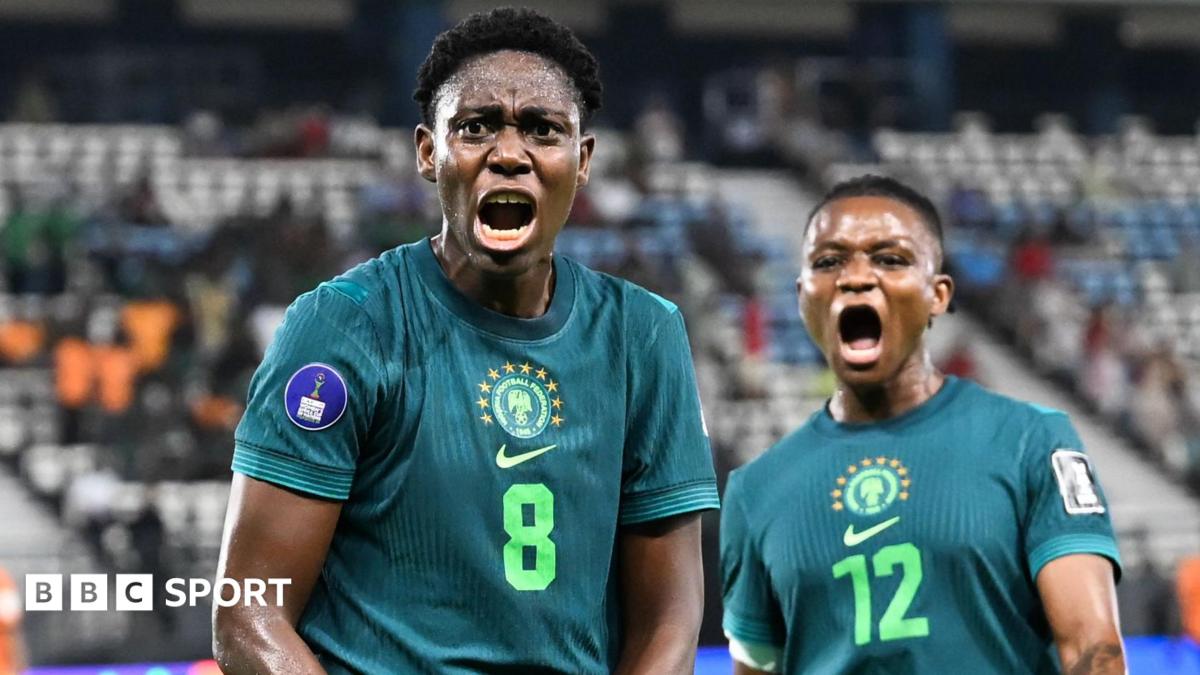
  • Plymouth striker Oseni’s ‘disbelief’ at Nigeria call-up

    Plymouth striker Oseni’s ‘disbelief’ at Nigeria call-up

    For 23-year-old forward Owen Oseni, the 2025-26 League One campaign has already exceeded every possible expectation he held when he joined Plymouth Argyle last summer. The first-year EFL striker, who wrapped up his debut season with 10 goals in 33 appearances for the third-tier side, has earned a surprise call-up to Nigeria’s senior men’s national team, and he says the news left him utterly stunned.

    Oseni, who will join the Super Eagles for a pair of upcoming 2026 FIFA World Cup warm-up friendlies against Poland and Portugal next month, is also set to feature in the upcoming Unity Cup hosted in London later this month, where Nigeria will face off against India, Jamaica, and Zimbabwe. In an exclusive interview with BBC Sport, the rising forward opened up about his reaction to the call-up, describing the honor as a life-changing moment he never dared to anticipate.

    “I know I put together a solid season, but to get selected for a country of more than 240 million people, where roughly half the population would jump at the chance to represent the Super Eagles, this is a huge deal for me – I was absolutely buzzing,” Oseni said. “The national coaching staff had been scouting me, and they clearly took notice of the form I found in the closing stretch of the club season.”

    That late-season form was impossible to miss: Oseni found the back of the net three times in Plymouth’s final four League One matches, a hot streak that almost dragged the club into the promotion play-offs before they ultimately fell just short of a spot. Before joining Argyle, Oseni plied his trade at Scottish Premiership side St Mirren, following a stint with National League outfit Gateshead. The forward was one of the first signings made by current Plymouth head coach Tom Cleverley, the former Manchester United and England international midfielder, shortly after Cleverley took the helm at the club.

    Born in Ireland, Oseni holds complex international eligibility: he qualifies for Nigeria through his Nigerian father, and can also represent the Republic of Ireland and Ivory Coast (his mother’s home country). When the Super Eagles reached out to secure his commitment, the striker says the opportunity was too good to turn down, even with other options on the table.

    “Representing any nation at the international level is a dream for any player, it would be massive for my development and my entire career,” Oseni explained. “When the Super Eagles came calling, it was a decision I simply couldn’t say no to. I never even thought this kind of opportunity was on the table for me this early in my career. All I’ve ever focused on is putting in the hard work and trusting that good things would follow – but I never imagined I’d be the one getting this call so soon.”

    In the coming weeks, Oseni will share a training pitch with some of the biggest names in global football, including Nigeria stars Victor Osimhen and Ademola Lookman. When Nigeria faces Portugal in their pre-World Cup friendly, he could even share the field with Cristiano Ronaldo, while a match-up against Poland will pit him against Bayern Munich legend Robert Lewandowski. That high-level experience is something Oseny believes will give him a huge confidence boost heading into Argyle’s 2026-27 League One campaign, where he aims to lock down a permanent starting spot at the Home Park.

    “Going into pre-season next term, this call-up will definitely raise my confidence levels,” he said. “My goal now is to come back to Plymouth and cement a starting place for next year, and this opportunity is going to help me so much to reach that.”

    Oseni also used his call-up as a chance to push back against common misconceptions about the quality of England’s third tier. Many football followers dismiss League One as a lower-standard competition, but Oseni insists the division is packed with top talent that deserves more recognition.

    “A lot of people look at League One, as England’s third tier, and write it off as not the highest standard because of where it sits in the pyramid,” he said. “But there are so many great players in this league, and so many current internationals plying their trade here who go on to perform incredibly well for their national teams. I think this call-up shows that League One gets the recognition it deserves – the individual quality across the league this season has been really high, and the division is much stronger than people give it credit for.”

  • Tennis players ‘ignored’ but ‘united’ in Grand Slam pay dispute

    Tennis players ‘ignored’ but ‘united’ in Grand Slam pay dispute

    As the 2025 French Open prepares to kick off at Roland Garros this Sunday, professional tennis is facing a growing rift between the sport’s top athletes and Grand Slam organizers, centered on long-simmering discontent over unfair revenue sharing for tournament prize money. The growing movement for reform has led dozens of the tour’s biggest names to organize a coordinated protest that will cut short their media commitments during the clay-court major, demanding a larger, more equitable slice of the multi-billion dollar Grand Slam revenue pie. Currently, players say they only receive 15 percent of the total revenue generated by the four Grand Slam tournaments — the Australian Open, French Open, Wimbledon and US Open — and are pushing for that share to be raised to a more just 22 percent, a change that would particularly benefit lower-ranked and emerging players.

    World number eight Taylor Fritz, one of the leading voices of the protest, told reporters in Paris on Friday that players have made repeated moderate, patient efforts to engage organizers in dialogue, only to have their concerns completely dismissed. “It’s not about greed, it’s about getting what we are owed,” Fritz said. “We have been incredibly mild and patient with our requests, and it feels deeply disrespectful to be ignored at a time when tennis has never been healthier, when the partnership between players and tournaments should be built on open communication.”

    The push for change has drawn support from across the top ranks of both men’s and women’s tennis. Men’s world number one Jannik Sinner was among the first high-profile players to call out organizers, demanding they show basic respect to the athletes who draw global audiences and revenue to the sport. Women’s world number one Aryna Sabalenka went a step further earlier this month at the Italian Open, warning that players could ultimately escalate to a full boycott of all four Grand Slam events to defend their collective rights. While Sabalenka acknowledged that top-ranked players like herself already earn a comfortable living, she emphasized the protest is first and foremost for lower-ranked competitors, young emerging athletes, and players recovering from injury who struggle to cover travel and training costs on their current earnings. “It’s not easy to make a stable living in tennis with the small share of revenue we currently get,” she said. “As the top player in the world, I have a responsibility to stand up for those who don’t have the platform to speak out for themselves.”

    Fritz noted that a full boycott has not yet been seriously debated among players, but he stopped short of ruling out the action as a potential next step if organizers continue to refuse to negotiate. “If our concerns keep being ignored, change has to happen, that conversation will have to happen eventually,” he said. “I don’t want to throw the word boycott around lightly; I only want to say it when I mean it.”

    Not all top players are joining the demonstration, however. 24-time Grand Slam champion Novak Djokovic, who is not participating in the protest, suggested tennis could learn lessons from how golf navigated the emergence of the breakaway LIV Golf circuit, noting that change in professional sports is inevitable, and expressing hope that tennis can resolve its current dispute with minimal disruption to the sport.

    French Open organizers have already made their position clear: tournament director Amelie Mauresmo announced Thursday that Roland Garros would not increase the total prize pool for this year’s event, sticking to its existing payout structure. Russian star Andrey Rublev, a consistent Grand Slam contender who has joined the protest, slammed organizers for their complete lack of communication in response to players’ concerns. “They don’t hear you, they don’t answer,” Rublev said. “When we send official inquiries, no one responds for months. We just want one thing: are we in this together, or do you not care enough about us to even talk?”

    Four-time French Open women’s champion Iga Swiatek, who confirmed her participation in the protest, explained the specific terms of the action: players will cap all media interviews at 15 minutes, a symbolic limit chosen to represent the 15 percent revenue share they currently receive. She stressed that the protest is not targeted at media outlets, but at tournament leadership. “We have nothing against the media, this is just our way to show we need change,” Swiatek said. “We are ready to step up our action if organizers don’t step up to meet our demands.”

    Nineteen-year-old women’s world number eight Mirra Andreeva said the most striking part of the movement is how unified players are across ranks and generations. “We all have a clear, fair reason for this, and every single one of us is on the same page,” Andreeva said. “It’s really powerful to see all players stand together with the same goal.”

    For this year’s tournament, the French Open has raised the men’s and women’s singles champion prize to 2.8 million euros ($3.3 million), up from 2.55 million euros in 2024. While that payout is higher than the champion’s prize at the Australian Open, it remains lower than the top purse at both Wimbledon and the US Open, underscoring the gaps that exist even between the four Grand Slam events as players push for broader industry-wide reform.