分类: sports

  • Nahid Rana takes five wickets as Bangladesh beats New Zealand to level ODI series

    Nahid Rana takes five wickets as Bangladesh beats New Zealand to level ODI series

    On a sluggish, low-bouncing pitch in Mirpur, Bangladesh, young pace bowler Nahid Rana delivered a career-defining performance on Monday, claiming a spectacular 5 wickets for just 32 runs to power the hosts to a six-wicket victory over New Zealand in the second One Day International. The result levels the three-match series at one win apiece, setting up a highly anticipated decider scheduled for Thursday in Chattogram.

    New Zealand captain Tom Latham won the toss and made the call to bat first, a decision that quickly came under pressure as Nahid’s blistering express pace – clocked at a maximum of 144.7 kilometers per hour – tore through the visitors’ top order on the slow playing surface. The 22-year-old seamer notched his first breakthrough early, dismissing Henry Nicholls, and followed up with a second wicket in consecutive overs to remove Will Young. By the middle of the innings, New Zealand’s batting lineup was in disarray, with only opening batter Nick Kelly able to withstand Bangladesh’s bowling attack.

    Kelly, playing in just his third ODI, notched a maiden half-century and went on to score an 83 off 102 balls, laced with 14 fours, to anchor New Zealand’s innings and drag the side to the brink of a 200-run total. But he received almost no meaningful support from the rest of the batting order: no other New Zealand batter managed to cross the 20-run mark, leaving the tail exposed to Bangladesh’s pace attack. Nahid continued his rampage through the middle and lower order, clean-bowling Jayden Lennox for a duck to secure his second five-wicket haul in his short international career. He came close to a sixth wicket when Will O’Rourke survived a close review, but Taskin Ahmed cleaned up the innings soon after, leaving New Zealand all out for 198 in 48.4 overs. Fellow Bangladeshi pacer Shoriful Islam chipped in with two key wickets – including Kelly, removed by a well-directed short delivery – to finish with figures of 2 for 32.

    Needing just 199 runs to level the series, Bangladesh got off to a rocky start that gave New Zealand a faint glimmer of hope. Pacers Nathan Smith and Will O’Rourke removed openers Saif Hasan and Soumya Sarkar (returning to the side in place of Afif Hossain) for single-digit scores, leaving the hosts reeling at 21 for 2 after just four overs. But a transformative 120-run third-wicket partnership between opener Tanzid Hasan and captain Najmul Hossain Shanto flipped the match entirely in Bangladesh’s favor.

    Tanzid played a fluent, aggressive innings, reaching 76 runs off just 58 balls, while Shanto built a patient innings to anchor the chase. Just after Shanto hit his 12th career ODI fifty – his first since February 2025 – a sudden muscle cramp forced him to retire hurt, but by that point Bangladesh held unchallenged control of the run chase. Left-arm spinner Lennox did manage two late wickets, removing Tanzid and Bangladesh wicketkeeper Litton Das (playing his 100th ODI) for 7, but it was too little too late. The hosts reached the winning target of 199 with four wickets in hand and 87 overs remaining, closing out the win and setting the stage for a series decider in Chattogram later this week.

  • AFL 2026: St Kilda CEO Andrew Bassat defends Ross Lyon’s media style

    AFL 2026: St Kilda CEO Andrew Bassat defends Ross Lyon’s media style

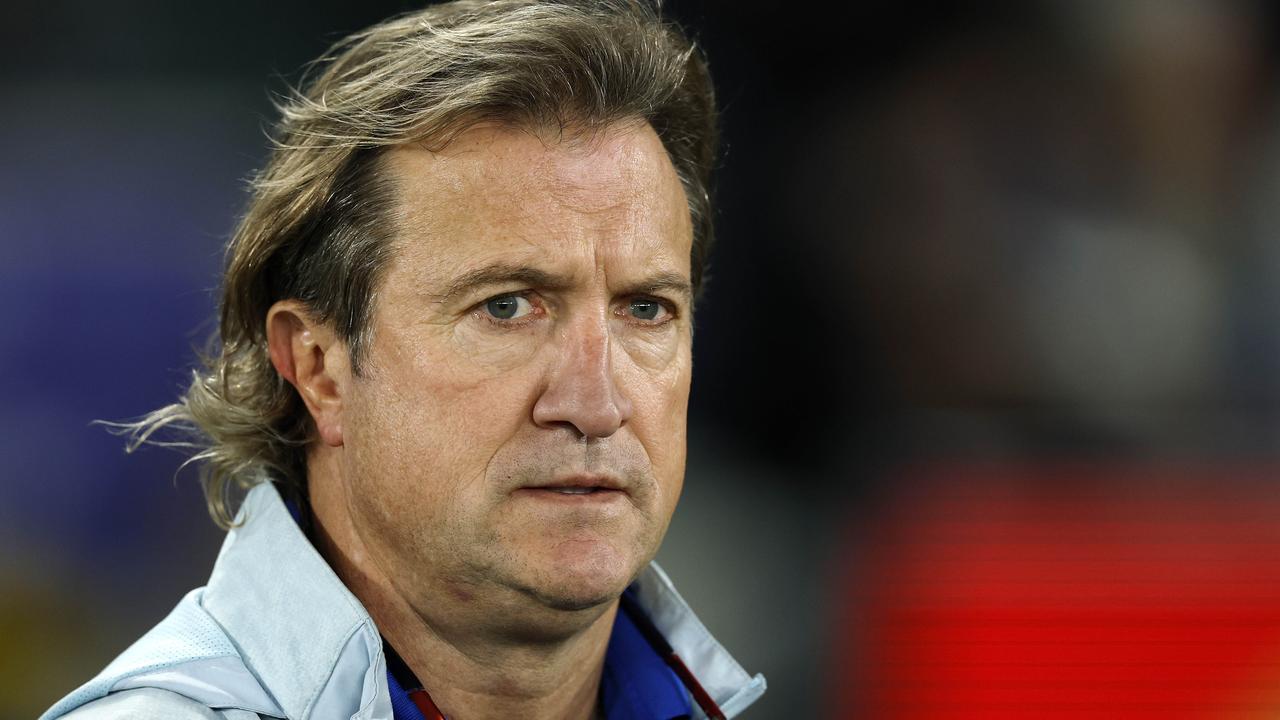
    A fresh controversy has erupted in Australian Football League (AFL) circles following a fiery post-match exchange between coach Ross Lyon and reporters, with St Kilda’s top executive stepping forward publicly to back the embattled coach. The drama unfolded after the Saints suffered a gut-wrenching one-point defeat to Adelaide on Saturday night, where Lyon pushed back against media questioning in a tense press conference that quickly divided opinion across the football community.

    In the tense press briefing, Lyon stood by his claim that the St Kilda side had shown clear improvement despite underwhelming early season results that leave the club with a 2-5 win-loss record halfway through the opening round of fixtures. The coach went as far as pressing reporters to recall the final ladder positions of each of the Saints’ opponents from the previous season, a standoff that sparked widespread debate across the sport.

    The criticism reached a peak when former AFL player and prominent player agent Liam Pickering called on sports journalists to boycott Lyon’s future press conferences in response to the coach’s confrontational approach. But St Kilda president Andrew Bassat has doubled down on the club’s support for Lyon, defending both the coach’s stance and his unfiltered style of media engagement in an interview with ABC Melbourne on Monday.

    “Ross is a fascinating guy, and I personally love working with him. He’s incredibly driven, hungry to win, and has that relentless edge every top coach needs,” Bassat explained. “It’s worth remembering just how unforgiving the position is: we walked away from a one-point heartbreaker, with almost no luck down the stretch, and immediately he has to stand in front of a room of reporters to answer questions.”

    Bassat acknowledged that Lyon reacts very differently depending on the quality of questioning he receives, confirming that the coach’s famous line — “ask stupid questions, win stupid prizes” — is a genuine reflection of his approach to media interactions. “He’s far more responsive when the questions are intelligent and fair, that’s no secret. I’ve been on the receiving end of that sharpness myself when I’ve asked a question he thinks misses the mark,” Bassat said. “The truth is, he’s just more honest than most coaches when he thinks a question isn’t worth answering. That’s just who he is.”

    Beyond the controversy over the press conference, Bassat also opened up about his mixed views on the AFL’s new Opening Round concept, which gave selected clubs early starts to their home-and-away season this year. St Kilda was chosen to feature in the opening round, drawing the club’s largest ever home-and-away crowd for a match against Collingwood at the Melbourne Cricket Ground. The big turnout was a win for the club, even if they walked away with a loss, but Bassat still has lingering reservations about the restructured opening to the season.

    “I’m a bit torn on the whole idea, to be honest,” Bassat admitted. “I don’t love that it creates an uneven start to the season for different clubs and messes with the structure of bye rounds later in the year. That said, if the league is going to have an Opening Round, we absolutely wanted to be part of it — we asked the AFL for a spot, and they agreed. It gave us a fantastic chance to play in front of a huge crowd, even if we didn’t get the result we wanted. If I’m being honest, I’d rather we didn’t have the concept at all, but if we’re going to have it, I’m glad we were included.”

  • ‘See what happens’: Matt Burton addresses Bulldogs future as club seeks answers following shock loss to Parramatta

    ‘See what happens’: Matt Burton addresses Bulldogs future as club seeks answers following shock loss to Parramatta

    The National Rugby League (NRL) side Canterbury Bulldogs are still searching for answers after their stunning upset defeat to the Parramatta Eels over the weekend, while star five-eighth Matt Burton has moved to shut down persistent speculation linking him to a future exit from the Belmore-based club.

    Burton, one of the Bulldogs’ most high-profile players, enters this week of competition with 12 months remaining on his current contract at Canterbury. However, industry whispers have persisted for months that a potential move to a Perth-based expansion side could materialize as early as 2026, a shift that would free up critical salary cap space for the Bulldogs to reshape their roster.

    Speaking to reporters at a public event on Monday, the left-footed playmaker declined to give further credence to the off-field rumours, emphasizing he remains fully focused on fulfilling his current commitments to Canterbury. He also reaffirmed his willingness to adapt his position for the good of the team, saying he would happily shift from the halves to left centre if the coaching staff required the adjustment.

    “Right now, my only priority is playing my best rugby for the Bulldogs, and we’ll see what the future holds down the line. I’ve left all contract discussions to my manager and the club’s leadership to work through,” Burton explained. “I don’t pay too much attention to the outside noise. I hear about the rumours from other people who follow the media, but I have a job to do here at Belmore, and that’s all that matters to me. Whatever position the team needs me to fill, I’ll give 100% effort – that’s the team-first culture we’ve built here, and I fully buy into it.”

    The Bulldogs’ backline structure is set to undergo a major shake-up this week ahead of their Friday night clash with the Brisbane Broncos, with the club set to confirm team selections on Tuesday afternoon. Skipper Stephen Crichton is widely expected to make his return from a short-term shoulder injury layoff, while starting winger Jacob Kiraz is poised to be sidelined with a knee injury.

    If Crichton is cleared for a full return, utility Bronson Xerri is expected to shift to right centre – a positional change that stirred internal tension earlier this season when Xerri was dropped from the starting side. Burton welcomed Crichton’s potential comeback, noting the leader’s impact on the team regardless of selection challenges.

    “I think he’s got a really good shot at playing this week, and it would be huge to have him back out there,” Burton said. “He’s such a massive boost for us if he’s available, but I know whoever gets called up to fill the gap will do the job required.”

    Regardless of the final team sheet, the biggest challenge for the Bulldogs this week remains addressing their frustrating inconsistency, which has seen the side deliver wildly contrasting performances over the past fortnight. In Round 6, the blue-and-whites pulled off one of the upsets of the season, ending reigning premiers Penrith Panthers’ long-running winning streak. Just seven days later, they turned in a disjointed performance to fall to a struggling Parramatta side missing multiple key starters to injury.

    Bulldogs head coach Cameron Ciraldo made his frustration clear in post-match press conference following the Eels defeat, but veteran forward Kurt Mann rejected claims that the side had grown complacent after their high-profile win over Penrith.

    “I don’t think complacency was the issue at all,” Mann said ahead of this week’s road trip to Brisbane to face an injury-depleted Broncos side. “We just made far too many unforced errors, and that put us under constant pressure playing out of our own end. We didn’t execute our game plan the way we planned to, and that hurt us.

    “When you give up field position and possession that cheaply, it’s almost impossible to stick to your game plan. It’s really disappointing – after the performance we put in against Penrith, to come out and play like we did is a letdown for all of us. We’re going to review every minute of this game, take the lessons on board, and move forward.

    “The NRL is all about consistency, you have to bring your best effort every single week. Right now, we’re up and down, and we’re still working to find that steady level of performance. We’re going to keep working on that this week, and all season long.”

  • Blues blow: Payne Haas to miss Origin opener as Broncos reveal horror injury list

    Blues blow: Payne Haas to miss Origin opener as Broncos reveal horror injury list

    Defending National Rugby League premiers the Brisbane Broncos are facing an unprecedented injury crisis following their narrow one-point victory over the Wests Tigers in Campbelltown on Saturday night, with one of the sport’s biggest stars ruled out of the upcoming State of Origin series opener.

    Prop forward Payne Haas, widely regarded as the best forward in global rugby league, was forced off the field in the first half of Saturday’s clash after suffering a knock to his knee. Early assessments from club medical staff ruled him out of the remainder of the match immediately, and follow-up scans conducted in the days after the game confirmed the worst-case scenario: a full tear of his medial collateral ligament, classified as a Grade 3 MCL sprain.

    Medical experts confirm the injury will not require surgical intervention, as the MCL has strong natural healing potential. Haas will instead wear a locked knee brace that can be adjusted to different ranges of motion to support optimal recovery, according to sports physiotherapy specialists. Current projections place his recovery timeline at 6 to 8 weeks on the sidelines, which will see him miss the opening State of Origin match between New South Wales Blues and Queensland Maroons scheduled for May 27.

    The injury is a double blow for the Blues, who already lost Manly Warringah Sea Eagles superstar Tom Trbojevic to a hamstring injury last week. Trbojevic is also expected to miss up to two months of play, leaving the interstate representative side severely depleted ahead of the annual series.

    For Brisbane, Haas’ injury is just the start of a grim medical update released by the club on Monday. The defending premiers already entered Saturday’s match with a lengthy injury and suspension list: star fullback Reece Walsh, playmaker Ben Hunt, hooker Blake Mozer, winger Grant Anderson and five-eighth Billy Walters were already sidelined with injuries, while hardworking lock Pat Carrigan is still serving a one-match suspension that will keep him out of Brisbane’s next fixture.

    The new round of injuries leaves Brisbane incredibly thin on the ground for their upcoming Friday night showdown against the Canterbury-Bankstown Bulldogs. In addition to Haas, the club confirmed three more key players have picked up significant injuries in the Campbelltown clash. Center Kotoni Staggs was diagnosed with a plantar fascia strain, while winger Jesse Arthars suffered a tear to his interosseous membrane. Both players are currently working with Brisbane’s medical team to map out their rehabilitation and confirm potential return-to-play timelines, which have not yet been finalized.

    The most serious of the new injuries is prop Corey Jensen, who underwent scans after Saturday’s game that detected a pulmonary embolism. Jensen remains hospitalized for treatment, and while his recovery timeline is still unclear at this early stage, the club confirmed he is expected to miss at least several weeks of competition as he recovers.

    The full extent of Brisbane’s injury crisis has left the NRL community shocked, with the defending premiers facing one of their most challenging stretches in recent memory as they navigate a stacked schedule without nearly half of their starting side.

  • ‘It wasn’t trained’: Evolution of Roosters attack should terrify rest of NRL

    ‘It wasn’t trained’: Evolution of Roosters attack should terrify rest of NRL

    As the National Rugby League (NRL) 2024 season kicks into high gear, Sydney Roosters utility Hugo Savala has delivered a statement performance against the Newcastle Knights at Allianz Stadium on Sunday afternoon that has sent shockwaves through the competition. The 24-year-old’s off-script, game-changing play late in the first half has left rival coaches and analysts warning that the Roosters have a dangerous new weapon at their disposal.

    Savala’s role at the club has been the subject of intense speculation throughout the off-season. Following the high-profile signing of veteran playmaker Daly Cherry-Evans from Manly Sea Eagles, the young talent who anchored the Roosters’ push to the 2023 finals with his elite kicking game found himself without a guaranteed spot in the club’s halves pairing. For months, questions swirled around his future: would he shift to the forward pack, settle for a bench role, or depart the club entirely in search of a starting playmaking position elsewhere?

    On Sunday, Savala answered every single one of those questions with authority. Finishing the match with two tries and a rock-solid defensive effort that shut down Knights star Dane Gagai, it was his spontaneous decision to take up first receiver position in the final five minutes of the first half that stole the show. Moving from his starting spot at left centre to drift infield, Savala hesitated behind the ruck before executing two sharp plays that completely bamboozled the Knights’ defensive line, creating what should have been a try for Mark Nawaqanitawase – denied only by a marginal foot-in-touch call.

    Roosters head coach Trent Robinson was openly glowing about Savala’s initiative after the full-time siren. “I think that was an outstanding set of play,” Robinson said. “He goes down there, has a look down the short side, he sort of hesitates just behind the ruck … I’m not sure whether [halfback] Sam [Walker] said something or not. And then he plays two really clear plays about getting us into a point and then creating the opportunity on the next one. I love the fact that he had the confidence to do that, and then he also had the style of play to do that as well. I thought he was so good today out there at left centre and doing the role that he’s been asked to do there.”

    What makes the play even more remarkable? It was never drawn up in training. Savala explained after the match that the entire sequence was a spontaneous call based on what he saw unfolding on the field. “I saw Sammy take the hit-up there and go, and I just thought it was a good opportunity to get my hands on the ball and create a little bit of space for the boys out wide,” he said. “Honestly, it wasn’t trained all week; it was just off the cuff. I did that role last year, so I thought it would be a good time to use that. Teddy [skipper James Tedesco] and the leadership group give you a lot of confidence. A lot of the young boys get a lot of confidence from doing the reps in the week. They have the belief in all us young boys to do what we do. I’m just doing my job out there, and they believe in me, so I can just do my role and do it well.”

    Right now, Savala is filling in at left centre while regular starter Billy Smith recovers from injury, a role he has embraced fully as he bides his time for another opportunity in the halves. For the upcoming Anzac Day blockbuster against St. George Illawarra Dragons, the towering utility is set to retain his spot in the centres, and he says he is fully focused on executing the job the coaching staff has given him.

    “I’m just working hard and still working on my skills. I’m still working on my kicking at training and my ball playing, but the majority of the time at training, I’ve been doing the role that I needed to do on the weekend,” Savala explained. “Robbo’s big on mindset and how you prepare for the game. He’s been really clear with us as a group, and I’ve been clear knowing that I’m playing left centre this week. That’s the role that I have to play. Obviously, there’s a half and a five-eighth inside me, but I was playing left centre today and that’s the role I was doing.”

    For the rest of the NRL, Savala’s combination of raw talent, adaptive versatility, and willingness to take spontaneous risks on the field makes him a nightmare to prepare for. With the Roosters clicking into form early in the season, their emerging utility’s breakout performance has confirmed they are a force to be reckoned with in 2024.

  • Top boss vows ‘no sitting still’ as rugby bids to conquer US

    Top boss vows ‘no sitting still’ as rugby bids to conquer US

    Against a backdrop of rising challenges in rugby’s long-established traditional markets, World Rugby chair Brett Robinson has reaffirmed the governing body’s commitment to aggressive global expansion, singling out the United States — the upcoming host of the 2031 men’s Rugby World Cup and 2033 women’s edition — as a critical priority for long-term growth.

    In an interview with AFP on the sidelines of the Hong Kong Sevens tournament, the former Australian international player pushed back against growing narratives that rugby is facing a period of broad decline, arguing that the sport’s global foundations are stronger than critics claim. Recent high-profile setbacks have fueled public debate about the sport’s standing in the global pecking order, from folding professional franchises in Super Rugby to slipping public interest in traditional heartlands. Last week, All Blacks legend Michael Jones warned that rugby union is losing the battle for fan attention to rugby league in New Zealand, a comment that came just days after Auckland-based Super Rugby side Moana Pasifika announced it would cease operations at the end of the current season, becoming the second Super Rugby franchise to collapse in three years due to crippling financial pressure. In Wales, another historic rugby stronghold, the men’s national team has suffered a dramatic slump in on-pitch form, while football has overtaken rugby as the primary focus of public sporting interest.

    Robinson pushed back on this narrative of decline, pointing to global participation data that shows 2 million women playing the sport worldwide, making rugby a truly global game rather than one confined to a handful of historical markets. “We have to protect our core markets, but we can’t sit still and believe that the game will thrive if we don’t continue exploring new pathways for growth,” he said.

    That search for growth leads directly to the United States, which is set to become the first North American nation to host the men’s Rugby World Cup in 2031, followed by the women’s tournament in 2033. The upcoming 2026 men’s FIFA World Cup, co-hosted by the US this summer, has already offered a preview of the logistical and commercial challenges awaiting rugby’s governing body, with soaring ticket and transportation costs drawing widespread criticism and raising questions about large-scale event delivery in the American market.

    Skepticism around the 2031 project has grown in recent months: Major League Rugby, the top domestic professional men’s competition, has shrunk to just six teams after four clubs exited the league in recent years, while the men’s national team has struggled with inconsistent performances. British media reports have also raised questions about the US’s ability to deliver a commercially successful 2031 World Cup.

    Robinson countered that World Rugby has laid out a long-term strategy to build fan momentum ahead of the 2031 tournament, rather than rushing to deliver a fully formed event overnight. “We have worked with top national unions to bring iconic, high-profile matches to the US over the coming years to build deeper connections with new fans,” he explained, noting that the governing body is currently evaluating 27 potential host cities, a list that will be narrowed to 12 to 14 ahead of a formal announcement following the 2027 World Cup.

    To build early excitement for the 2031 tournament, World Rugby has already arranged a blockbuster Test match between two-time world champions South Africa and three-time winners New Zealand in Baltimore this September, following on from a sell-out 2024 match between Ireland and the All Blacks in Chicago. “We’re working really hard to build a long-term play,” Robinson said. “We aren’t sitting still in terms of preparing, and we fully acknowledge that it’s a challenging market.”

    He added that the 2033 women’s Rugby World Cup will be a equally important milestone for the sport, noting that women’s rugby has seen rapid, sustained growth across North America in recent years.

    Looking ahead to the next major global rugby event, the 2025 men’s Rugby World Cup in Robinson’s native Australia, he shared that initial ticket sales have already “exceeded all expectations”, with more than 750,000 tickets sold for the expanded 24-team tournament, the largest edition of the competition in history. While Robinson acknowledged that global geopolitical uncertainty stemming from the ongoing conflict in the Middle East has created some headwinds for major international events, he said World Rugby remains optimistic about the tournament’s success. “It’s a really good signal about the World Cup,” he said. “We’re really optimistic and excited.”

  • History haunts Arsenal as Man City take control of title race

    History haunts Arsenal as Man City take control of title race

    After a tense 2-1 defeat to Manchester City at the Etihad Stadium on Sunday, Arsenal’s 22-year wait for a first Premier League title has grown even more agonizing, as Pep Guardiola’s side took a decisive stranglehold on the 2025/26 season’s championship race. Mikel Arteta’s Gunners still cling to the top spot of the table for the moment, but their place at the summit is set to be taken as early as this Wednesday, when City travel to face relegation-bound Burnley with a game in hand on their title rivals.

    What has made this late-season slump so familiar to Arsenal’s long-suffering fanbase is the pattern that has repeated itself for four straight seasons. Before a League Cup defeat to City last month, Arteta’s side had dropped just three matches across 49 games in all competitions this term. But in the six outings that have followed, Arsenal have only managed a single win, including four straight losses across domestic competitions – a run that leaves them facing the prospect of another empty trophy season. This collapse mirrors the events of the 2022/23 and 2023/24 campaigns, where Guardiola’s relentless City side hunted down and overtook Arsenal in the final stretch, with the Gunners finishing outside the top spot once again last season behind a resurgent Liverpool side.

    A stark statistical contrast highlights the historic trend of late-season struggle for Arsenal and surge for City: across Guardiola’s 10-year tenure in Manchester, the City boss has claimed 31 wins from 39 Premier League games played in April, as he chases a seventh league title. By comparison, Arteta has only notched 11 April league victories from 27 matches across his six-and-a-half year spell in charge of the Gunners.

    Arteta argued after the match that fine margins and bad luck had cost his side, and the run of play backed up that claim. In contrast to their nervy home defeat to Bournemouth the previous weekend, Arsenal started strongly, fought back quickly after Rayan Cherki gave City an early opening goal. Kai Havertz charged down an attempted clearance from City keeper Gianluigi Donnarumma to equalize just minutes after falling behind, and the Gunners created a string of good chances to take all three points. A strike from Eberechi Eze bounced off the post and rolled along the goalline rather than crossing, while Gabriel Magalhaes saw a deflected late header also hit the woodwork in a frantic closing 10 minutes.

    But ultimately, Arsenal’s repeated failure to convert clear chances – a long-unresolved flaw in the side – proved their downfall. Havertz, who was handed a full 90 minutes by Arteta despite 18 months of injury struggles, missed two gilt-edged second-half chances: he failed to beat Donnarumma in a one-on-one situation, then nodded over the bar from an unmarked position deep into stoppage time, leaving Arteta collapsed to his knees in despair on the technical area. The German forward’s inclusion ahead of summer signing Viktor Gyokeres raised further questions; the Sweden international, signed last summer to solve Arsenal’s long-running search for a prolific starting striker, is the club’s top scorer this season with 18 goals across all competitions, but he was left on the bench until the final minutes, and has repeatedly struggled to deliver against top opposition.

    For City, the difference came down to the clinical finishing that Arsenal lacked, with world-class striker Erling Haaland delivering the decisive moment. Haaland was tightly marked for most of the match in a physical battle with Gabriel, but the Norwegian got ahead of his marker to slot home the 72nd-minute winner – his 47th goal for club and country across the 2025/26 season.

    Speaking to Sky Sports after the match, former Arsenal captain Patrick Vieira said the gap in quality between the two sides’ top talent decided the match. “You can see the difference today on the field and those top players made a difference today,” Vieira said. The ex-Gunner also questioned Arteta’s side’s mental fortitude following the defeat, adding: “They will feel the pressure more now. I always question the mental strength of the team and I will question it more now regarding the result today.”

    Arteta acknowledged after the game that City were simply more clinical in front of goal, admitting: “We proved that we are there, but the reality is that in the two boxes there was a difference. That’s what we think is the difference between the two sides, the finishing in the boxes. There is an element of luck, there is an element of timing, of execution. There are a lot of things that have to be your way. At the end, winning or not winning is going to come down to this moment. There are certain individual moments that you need in order to achieve what we want.”

  • AFL 2026: Collingwood captain Darcy Moore poised for return, Essendon defender Jordan Ridley sidelined

    AFL 2026: Collingwood captain Darcy Moore poised for return, Essendon defender Jordan Ridley sidelined

    The annual Anzac Day AFL blockbuster between Collingwood and Essendon is just days away, and two of the league’s key defenders are facing drastically different fitness outcomes as their clubs finalize round six lineups. For Collingwood captain and star backline leader Darcy Moore, the next week brings a make-or-break pair of training sessions that will determine whether he can take the MCG stage for one of the season’s most anticipated matches.

    Moore’s 2024 campaign has been plagued by a string of soft tissue injuries and setbacks, starting with pre-season niggles to his calf and hamstring, followed by an aggravated bursa injury that has disrupted his build-up. Despite the rocky start to the year, Moore says he has turned a corner in his recovery, posting a strong, full training session last Friday that has left him confident of meeting the fitness benchmark this week.

    Speaking to reporters Monday during a remembrance event at the Shrine of Remembrance, Moore outlined his path to selection: “In great news, I had a really good session last Friday. I made a couple of really big breakthroughs, so body feels awesome coming into this week. We’ve got two sessions before the game, Tuesday and Thursday. I am in a really great position to train fully this week and hopefully put my hand up. I’ve got to back up and be feeling good going into the weekend to be selected.”

    This isn’t the first time Moore has fought back from an early-season injury to push for selection: he returned to the field in round three against GWS Giants, but faced widespread criticism after he was seen grimacing through every kick across the entire match, prompting questions about whether he was rushed back too soon. He missed at least a month of game time following that outing, but Moore has rejected claims he was underprepared for that round three clash, saying he takes full accountability for the decision to play.

    “I put my hand up, I was ready to go and I am accountable for that decision. Absolutely was ready to go,” Moore said.

    Across town, the outlook is far less positive for Essendon counterpart Jordan Ridley, who is all but certain to miss the Anzac Day clash after picking up yet another calf injury during Saturday’s match against the Gold Coast Suns. Ridley has endured a brutal run of soft tissue injuries in recent seasons, and the latest setback comes just as he had worked his way back to full fitness after a previous layoff.

    Essendon captain Andy McGrath told reporters on Monday that the seven-day turnaround between Saturday’s match and this weekend’s blockbuster is far too quick for Ridley to recover, given his well-documented history of recurring calf issues. The club plans to take a cautious approach to avoid a longer-term injury.

    “I don’t think so at this stage, Jordan has got a little calf injury and with his history there, we’re just being cautious with his approach,” McGrath said. “We’ll see how he presents today and throughout the week, but I don’t think this weekend will be realistic. Obviously, Jordan is a really important member of our team, culturally and on the field. He’s a super player, we’ve loved having him back. We’ll see how the injury unfolds but I feel for Ridds at the moment. It’s been a tough run, but I am sure we’ll have him back soon.”

    With the Anzac Day clash drawing millions of viewers and drawing a capacity crowd to the MCG, both clubs will confirm their final lineups ahead of the iconic annual fixture, with Moore’s fitness progress set to be tracked closely by Collingwood fans through the week.

  • Axe falls: Dragons expected to sack Shane Flanagan after horror start to the year

    Axe falls: Dragons expected to sack Shane Flanagan after horror start to the year

    The St George Illawarra Dragons are bracing for a major coaching shakeup just days out from their iconic annual Anzac Day clash against the Sydney Roosters, with incumbent head coach Shane Flanagan poised to become the second National Rugby League (NRL) mentor dismissed in 2025 following a catastrophic opening to the season.

    Club officials have called an urgent press conference for Thursday morning, slated to be led by chairman Andrew Lancaster and chief executive Tim Watsford, confirming long-circulating speculation that Flanagan’s tenure at the helm of the Red V will come to an abrupt end just eight months after he signed a contract extension promising long-term stability.

    Flanagan, who led the Cronulla Sharks to their first and only drought-breaking premiership title a decade ago, has overseen a completely winless run through the opening seven rounds of the 2025 NRL season. The club’s poor form extends even further back, with the Dragons having dropped 11 consecutive matches dating back to the closing stages of the 2024 campaign, effectively eliminating any chance of postseason football this year before the season hit the one-quarter mark.

    He follows Manly Sea Eagles coach Anthony Seibold out the door, who was sacked earlier this season after just three straight losses. In a stunning turn of events for Manly, Seibold’s departure immediately sparked an extraordinary turnaround for the side, leaving long-suffering Dragons fans hopeful that a similar coaching change can reverse the club’s lingering slide down the competition ladder.

    Flanagan took over the Dragons role ahead of the 2024 season, and notched a mediocre 19 wins from 56 total matches in charge during his tenure. The club has been plagued by persistent issues with player recruitment and retention for months, a problem that has gutted the side’s attacking power after key representative stars Ben Hunt and Zac Lomax departed the club in recent offseasons.

    In August 2024, the organization extended Flanagan’s contract for two additional seasons, releasing a statement that now rings hollow amid the crisis: “This extension reaffirms the club’s commitment to stability, growth, and a long-term vision for success both on and off the field.” That public commitment to long-term planning has now collapsed entirely, as growing fan frustration boiled over after seven straight opening losses.

    The Dragons’ current struggles extend far beyond the coaching box, with a litany of on-field and off-field disruptions plaguing the squad through the early rounds. Star second-rower Jaydn Su’A was sent off during the club’s most recent round seven clash, and is staring down a lengthy suspension that will rule him out for multiple weeks. Adding insult to injury, Su’A has already confirmed he will leave the club at the end of the season to join rivals Parramatta Eels in 2027.

    Other recent on-field struggles have piled up too: star back Valentine Holmes missed 13 tackles in the round seven loss to South Sydney Rabbitohs, young playmaker Daniel Atkinson has failed to register a try assist across his last three appearances, and the club is still uncertain whether experienced utility Clint Gutherson will be able to return to his fullback position once he recovers from a current injury spell.

    Off the field, the club has also had to manage growing discontent within its playing ranks. Young forward Loko Pasifiki Tonga’s request for an early release from his contract was rejected earlier this month, prompting the player’s management to leak private internal club emails to the national media in an embarrassing breach of internal confidentiality.

    As the club prepares to formally announce Flanagan’s departure ahead of Thursday’s Anzac Day blockbuster, all eyes will be on the Dragons to see who will step in as interim head coach and attempt to revive the proud club’s fading 2025 campaign. More details are expected to emerge following the morning press conference.

  • A crowd scientist is helping the Boston Marathon manage a growing field of 30,000-plus runners

    A crowd scientist is helping the Boston Marathon manage a growing field of 30,000-plus runners

    The Boston Marathon, one of the world’s most iconic and grueling road races, faces a unique, longstanding challenge: balancing its centuries-old historic character with the needs of a modern, massive field of athletes. Stretching 26.2 miles across eight Massachusetts cities and towns, much of the course runs along narrow Colonial-era streets that cannot be widened or re-routed to accommodate growing participant numbers. This year, race organizers are turning to data-driven crowd science expertise to refine crowd flow, improve athlete experiences, and even explore controlled future expansion without altering the race’s beloved core identity.

    Leading the overhaul is Marcel Altenburg, a senior crowd science lecturer at Britain’s Manchester Metropolitan University and an ultramarathon runner with a background as a German army captain. Altenburg has spent years advising major global events, airports, and large-scale exhibitions on safe, efficient crowd management, and he brings a deep respect for what makes the Boston Marathon unique. “There are certain things that we can’t change — that we don’t want to change — because they make the Boston Marathon,” Altenburg explained. “As a scientist, I can’t be overly rigid about applying research here; the race needs to stay what it is, because that’s what runners and fans love.”

    First held in 1897, the Boston Marathon traces its roots to the 1896 inaugural modern Olympic marathon, itself inspired by the legend of Greek messenger Pheidippides, who ran from the battlefield of Marathon to Athens to deliver news of victory over Persia before collapsing and dying. From just 15 participants in its first running, the race grew to a peak of 38,000 runners for its 100th edition in 1996, and has stabilized at roughly 30,000 participants annually since 2015. This year’s field includes more than 32,000 runners, plus hundreds of thousands of spectators that line the course, putting massive strain on the narrow New England roads and forcing local communities to close key thoroughfares for hours, disrupting daily commerce and commutes.

    Race director Dave McGillivray noted that the race’s biggest constraints have always been time and space. “It would be kind of great someday to be able to grow the race a little bit more,” he said. “The problem with this race is that it’s about two things: time and space. We don’t have either. … So, we’re trying to be innovative.”

    To solve these constraints, Altenburg ran more than 100 computer simulations of the race, testing different configurations within the existing event time window to identify adjustments that would improve the athlete experience. Organizers granted him wide creative latitude to test everything from extra starting waves to repositioned aid stations, evaluating every change at key points along the course to measure whether it would benefit runners.

    The most visible change for this year’s race is the shift from three starting waves to six, with groups segmented by runners’ qualifying times. This adjustment, which builds on a wave system first introduced in 2011, spreads participants out along the narrow 39-foot-wide starting stretch on Hopkinton’s Main Street, eliminating the slow, crowded walking that many runners experienced in the opening miles in past years. Less visible but equally impactful changes include revised bus unloading procedures at the starting area, repositioned water and aid stations, and redesigned finish line chutes where runners collect medals, refreshments, and medical care. Even porta-potty lines are expected to be shorter with the new crowd layout.

    Lauren Proshan, chief of race operations and production for the Boston Athletic Association (BAA), which organizes the event, said the data-driven refresh has allowed the 130-year-old race to reinvent itself while preserving its legacy. “For an event that’s as old as ours, 130 years, it allowed us to be a startup all over again,” Proshan said. “The change isn’t meant to be earth-shattering. It’s to be a smooth experience from start to finish. It’s one of those things that you work really, really hard behind the scenes and hope that no one notices — a behind-the-curtain change that makes you feel as if you’re just floating and having a great day.”

    Altenburg emphasized that the BAA approached every change with extreme care to protect the race’s historic identity, with detailed planning that began immediately after last year’s race concluded. “What I loved about working with the BAA was how aware they are of what the Boston Marathon is. And they won’t change anything lightly,” he said. “That we check every single option. That we really make sure that if we change something about this historic race, then we know what we’re doing.”

    Over the next three years, the BAA will collect feedback from participants to evaluate whether the new layout works, before making any decisions about future expansion or additional adjustments. “Fingers crossed, hope for the best, but we’ll get feedback from the participants,” McGillivray said. “And they’ll let us know whether or not it worked or not.”

    Even with the latest data and crowd science insights, there are hard limits to what adjustments can achieve: extending course closure time is off the table, and the historic route will remain unchanged. At the end of the day, Altenburg noted, the hard work of running the marathon still falls to the athletes themselves: “I can talk. I’m a scientist. I just press a button and it’s going to be. But the runners still have to do it.”