分类: sports

  • PGA chief says ‘no current plans’ for LIV stars to return

    PGA chief says ‘no current plans’ for LIV stars to return

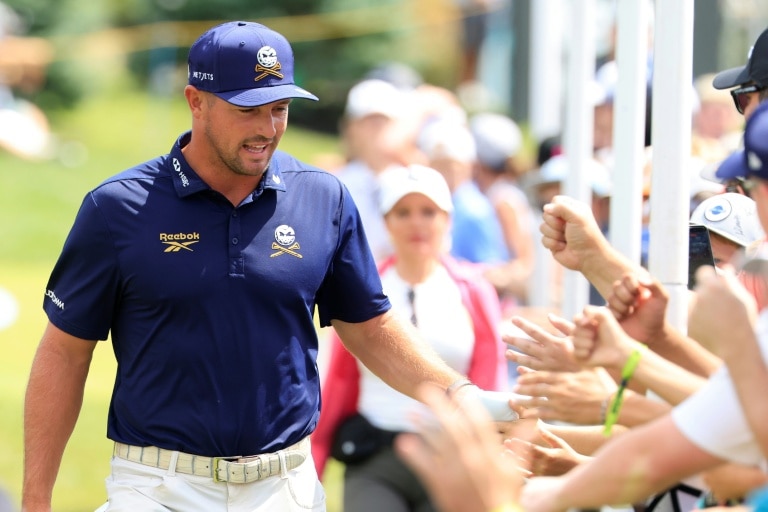
    As the future of the Saudi-backed breakaway LIV Golf circuit hangs in serious doubt, the PGA Tour has confirmed there are no active plans to reopen a path for top defectors such as Bryson DeChambeau and Jon Rahm to return to the traditional tour, chief executive Brian Rolapp announced Tuesday.

    When LIV Golf first launched in 2022, it upended the global golf ecosystem by injecting billions of dollars in lavish signing bonuses and prize purses to poach dozens of the sport’s biggest names from the PGA Tour. Today, however, the breakaway league’s long-term survival is in question after it lost backing from its original Saudi investors. LIV leadership has attempted to right the ship by announcing a scaled-down “2.0” iteration for 2025, anchored by new financial backers, but persistent speculation has swirled that several high-profile players are exploring exits from the struggling circuit.

    Earlier this year, the PGA Tour rolled out a one-time program that allowed some LIV players to apply for readmission, provided they cut all contractual ties to the breakaway league and pay substantial financial penalties. Five-time major champion Brooks Koepka was the most high-profile name to take advantage of that opportunity, returning to the PGA Tour in January. But speaking to reporters ahead of this week’s season-ending Tour Championship in Atlanta, Rolapp made clear that pathway will not be extended to additional players for the foreseeable future.

    “Currently there’s no current plans for a Returning Member Program like you saw earlier this year,” Rolapp told the press conference.

    The PGA Tour has maintained a blanket ban on players who hold active contracts with LIV Golf, requiring any athlete seeking readmission to fully extricate themselves from all contractual obligations to the breakaway league before their case can be considered. Rolapp doubled down on that stance Tuesday, emphasizing that upholding organizational rules is critical to protecting the integrity of both the tour and the sport of golf as a whole.

    “Accountability and discipline are essential to any organization, and certainly for the integrity of the TOUR and for the game,” he said.

    Rolapp added that it is impossible to predict whether the door will reopen for LIV players down the line, in large part because the long-term trajectory of LIV Golf itself remains unclear. “I don’t know the future of LIV,” he said, adding that the PGA Tour’s stance has been consistent from the start of the split: “Anyone who’s interested in coming to the PGA TOUR needs to demonstrate that they are relieved of their contractual commitments or any tail obligations they might have in that legacy model.”

    “Brooks certainly did that, and until then, we weren’t really able to consider anything seriously. I would say the same thing here,” he noted.

    The news comes amid growing uncertainty around LIV Golf’s next chapter, and conflicting signals from one of the breakaway’s biggest stars, Bryson DeChambeau. DeChambeau, who has been named a core asset to LIV Golf’s planned 2025 reboot, struck an optimistic tone Sunday while speaking at LIV’s own season-ending event in Indianapolis. He told reporters he was “proud” of what the breakaway tour has accomplished since launching, and that he held “great thoughts about what could happen next year.”

    Just 24 hours later, however, DeChambeau sparked widespread speculation about his future with an ambiguous post to his Instagram account. The post featured a collection of photos from his LIV Golf tournament victories, paired with the caption: “It was a good run.”

  • AFL: Sam Mitchell confident Hawks’ game style is ‘built for finals’ footy

    AFL: Sam Mitchell confident Hawks’ game style is ‘built for finals’ footy

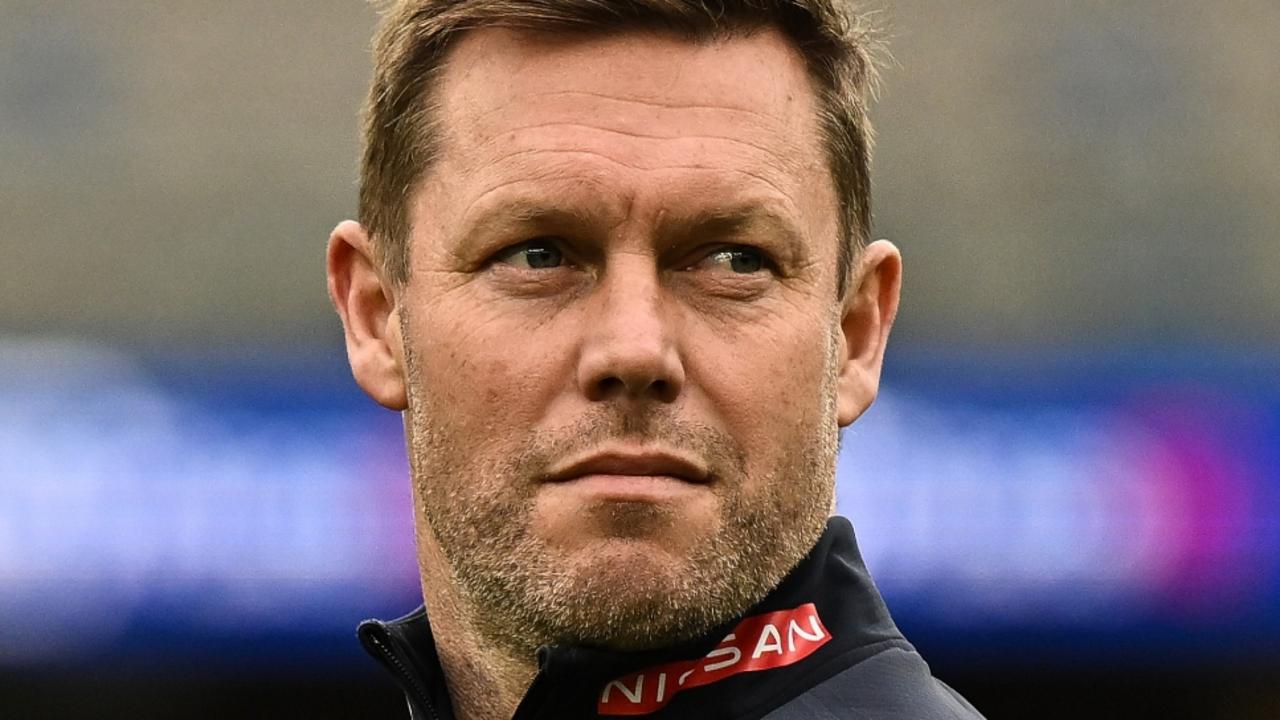
    As the 2026 AFL finals series rapidly approaches, Hawthorn Football Club head coach Sam Mitchell carries a calm, measured confidence that his side’s carefully built game style is perfectly primed to compete for the sport’s biggest prize on the last Saturday in September. The Hawks currently sit fourth on the league ladder, their highest finish since Mitchell took the head coaching role, but their first postseason test presents a massive challenge: they will face off against minor premiers Fremantle, who remain undefeated at their home Perth Stadium venue through the entire 2026 regular season.

    Mitchell explained that for years, Hawthorn’s program has been built with the unique pressures of finals football in mind, noting that while the regular season requires a flexible game plan, the club has prioritized developing a style that can hold up under the intensity of September football. “All coaches understand that different playing styles and player profiles land differently across the course of a season versus high-stakes finals matches,” Mitchell said during a promotion for the ‘Always respect, always DrinkWise’ public education campaign. “You can’t structure your entire annual game plan around finals intensity, because that’s not how 90% of the season is played. But when the intensity does step up in the postseason, you need your game style to be compatible with that pressure. That’s been a core filter for every major decision we’ve made over the past five years, and we truly believe our style will stand up when it counts. We’ll just have to wait and see how it plays out.”

    When the two sides met earlier in 2026 at Perth Stadium, Fremantle claimed victory, breaking open a tight game with a dominant fourth quarter to extend their home winning streak to 12 matches. Mitchell, who has enjoyed a rare week of rest during the wildcard round, has used the break to spend time with his family ahead of the hectic finals schedule, and he noted that both sides have evolved significantly since that earlier meeting three months prior. “We haven’t rewatched that game yet, we’ll get to it over the coming days, but we know Fremantle at their best is extremely good,” Mitchell said. “We played pretty solid footy that day, we just couldn’t sustain our level of play for a full four quarters. Both teams have changed a lot in three months, so we need to prepare for the threats they’ll bring this time around, while also bringing our own new challenges to them.”

    Mitchell’s history as Hawthorn’s head coach shows clear, steady progress: his first finals campaign ended in a gut-wrenching semi-final exit, while his second saw the club climb from eighth place all the way to the preliminary final. This year’s squad has already ticked off multiple key milestones on their journey, with only the grand final spot and a premiership trophy left to claim. Mitchell pointed to last year’s deep run as a key turning point for the club’s culture. “This time last year we finished eighth, hit the road immediately for interstate finals, and came away with two wins – something we hadn’t managed to do in a long time,” he said. “That was a huge feather in our cap, proving we can perform on the big stage. We’ve got the confidence that our best football is good enough to compete with anyone, we just need to bring that form when it matters most.”

    One of the biggest advantages for Hawthorn heading into this finals series is the full fitness of dynamic young midfielder Will Day, who will feature in September action for the first time in his career. Mitchell said no one is more thrilled about that opportunity than Day himself. “I don’t think anyone is more excited to see Will out there than he is – I’m not even as excited as he is,” Mitchell said with a laugh. “He’s never made it this far into a season fully fit, he’s been building great form lately and looked really solid against the Eagles in our final round. I’m so pleased he’s gotten back to full fitness and good form, and I can’t wait to watch him wear the brown and gold in September for the first time.”

    Beyond the on-field preparation, Mitchell is also using the finals period to promote the DrinkWise initiative, which encourages responsible alcohol consumption at football matches to keep the sport a safe, welcoming space for all fans, including families. Mitchell, who plans to attend the wildcard round in Melbourne as a spectator with his children, said he values the family-friendly culture of Australian rules football and wants to help that culture thrive. “I’m really happy to be back supporting the Always respect, always DrinkWise campaign,” he said. “With the extra wildcard round this year, we want everyone to enjoy every minute of finals footy. One of the best things about this sport is that it’s a safe place for everyone, you can bring your kids, sit in the stands, and have a great day out. We just want to remind people that if you do choose to drink, do it responsibly, and respect yourself and everyone around you.”

  • How football’s governing bodies support illegal Israeli settlement clubs

    How football’s governing bodies support illegal Israeli settlement clubs

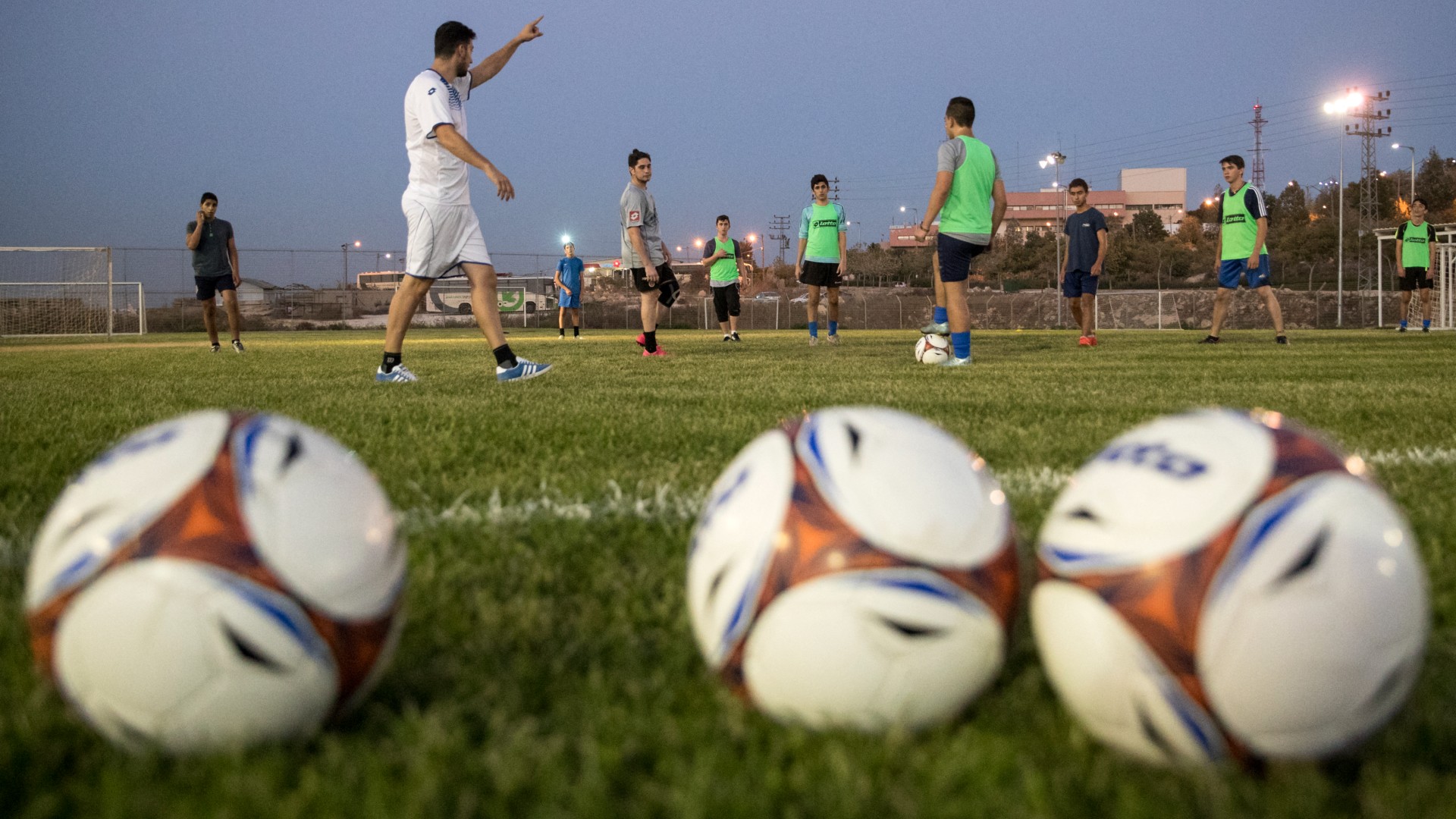
    Since Israel launched its military campaign in Gaza in October 2023, football across the occupied West Bank has been pushed to the brink of collapse. Palestinian players face crippling barriers to even basic training and competition, while Israeli football clubs operating in illegal West Bank settlements continue to expand, train, and compete with open backing from global football governing bodies, a joint investigation by Arab Reporters for Investigative Journalism (ARIJ) and Bridges Investigations for Middle East Eye has revealed.

    For Palestinian athletes like Mahdi al-Assi, a goalkeeper with the Palestinian national youth team, the journey to training has become a daily ordeal. Travel between Palestinian communities is blocked by a sprawling network of Israeli military checkpoints and sealed electronic gates, forcing players to leave hours early only to be turned away without explanation. Training sessions themselves are regularly disrupted by military raids and tear gas exposure. “More than once, I’ve set off three or four hours before training, only for them [Israeli soldiers] to turn us back at the checkpoint for no reason at all,” al-Assi told Middle East Eye.

    The scale of destruction to Palestinian sporting infrastructure is staggering. Data from the Palestinian Football Association (PFA) confirms that 292 sports facilities across Gaza and the occupied West Bank have been partially or completely destroyed since the war began, and the entire Palestinian league has been suspended indefinitely. “It became too dangerous to keep the league going,” explained PFA vice-president Susan Shalabi. “There are more and more checkpoints, and towns are sealed off by electronic gates, trapping people inside. We can’t schedule the league; the gates could be shut at the time of a match, so it gets cancelled.” Deprived of official training opportunities, al-Assi has turned to a private coach to maintain his fitness – a choice that imposes extra financial strain, though he remains determined to keep playing in the hope of representing Palestine at the international level.

    Just a few kilometers from al-Assi’s restricted training routine, a starkly different reality unfolds inside Israeli settlements built illegally on occupied Palestinian land. Clubs based in these settlements are actively expanding their facilities and competing fully in Israeli national competitions, with unwavering support from the Israel Football Association (IFA). In the settlement of Ariel, founded in 1978 on stolen Palestinian land near Salfit, local mayor Yair Shatbon launched a major multi-year development plan last year to upgrade local sports infrastructure, including a new stadium, additional football pitches, and a FIFA-standard artificial turf renovation for FC Ironi Ariel’s main pitch. Today, nine IFA-affiliated clubs operate across occupied West Bank settlements, with some directly based on seized Palestinian land and others leveraging settlement facilities.

    Despite repeated complaints from the PFA and clear findings from human rights groups that settlements violate international law, global football bodies FIFA and UEFA have failed to take meaningful action, and continue to provide formal recognition and substantial funding to the IFA. The investigation found that FIFA’s own streaming platform, FIFA+, actively broadcasts and archives matches played by settlement clubs, including matches from the Har Homa settlement in occupied East Jerusalem that are featured on the platform’s Israel Youth League and IFA pages. This activity continues despite a 2016 Human Rights Watch report that criticized FIFA for funding matches in illegal settlements, noting that such activity violates the Fourth Geneva Convention, which prohibits an occupying power from transferring its own civilian population into occupied territory.

    In March 2026, FIFA’s Disciplinary Committee dismissed a PFA complaint first submitted during the 2024 FIFA Congress, claiming it could not act due to “the unresolved legal status of the West Bank under public international law.” The committee only issued a token fine of 150,000 Swiss francs ($190,000) to the IFA for documented grave and systematic abuses, including discrimination, racism, and exclusion of Palestinians from sports infrastructure. Amnesty International’s head of Economic and Social Justice Steve Cockburn called the ruling a shameful failure to uphold international law and FIFA’s own rules. “FIFA had a clear opportunity to both defend the rights of Palestinians and uphold international law. But by taking this decision, it has shamefully chosen to abandon both,” he said, noting that the International Court of Justice has already ruled Israel’s occupation and settlements are unlawful under international law.

    FIFA and UEFA’s financial support for the IFA has continued uninterrupted even after the outbreak of the 2023 Gaza war. A 2026 Amnesty report confirmed both bodies continue to transfer funds to the IFA, with UEFA’s 2024-2028 HatTrick development program allocating €17 million ($17.3 million) to the IFA – a 21% increase from the previous funding cycle. Even the UEFA Foundation for Children, chaired by UEFA president Aleksander Ceferin, provided €320,000 between 2020 and 2023 to a project run by an association registered in the Har Adar settlement, which hosted matches in settlements until 2025.

    Illegal settlement sports infrastructure has also received substantial public funding from Israel’s national lottery Mifal HaPais, which is a member of European Lotteries and the World Lottery Association. Around 51% of Mifal HaPais profits go toward sports facility development, and the organization allocated 18.7 million shekels ($6.23 million) to build the Sababa Sports Centre in the Efrat settlement, including an Olympic-sized swimming pool. The organization’s board includes current and former leaders of Israeli municipal governments, settlement councils, and the ruling Likud Party, with no separation made between funding for communities inside Israel and those in illegal settlements.

    The contrast between global football bodies’ treatment of Israeli settlements and Russia’s 2022 invasion of Ukraine has drawn widespread criticism of blatant double standards. Just months after FIFA and UEFA suspended all Russian clubs from international competition, European football institutions hosted a delegation from Beitar Ma’ale Adumim, a club based in the illegal Ma’ale Adumim settlement, including visits to La Liga headquarters and Atletico Madrid’s facilities. Former UN Special Rapporteur on human rights in the Palestinian territories Michael Lynk pointed out that there is no legal difference between the two situations, calling the construction of Israeli settlements a war crime under the Rome Statute and repeated UN resolutions. “There is no fundamental difference between Russia’s illegal invasion and Israel’s ongoing 58-year-long effort to occupy and annex the Palestinian territories,” he said.

    Critics also reject the long-standing claim from global sporting bodies that sport should remain separate from politics. “Sport is big business. To say that sport is separate from politics flies in the face of what’s happened in sport over the last 45 years,” Lynk said. International football policy researcher James Dorsecy describes sport and politics as “inseparable twins,” while sport sociology scholar Mark Doidge notes that the neutrality invoked by FIFA and UEFA always benefits powerful actors: “Neutrality is never neutral. It always goes along with the powerful.”

    As political pressure grows for action – with Irish parliament members passing a motion in June 2026 calling for Israel’s suspension from international sporting bodies – Israel continues to expand settlement infrastructure in the occupied West Bank. Earlier this year, the Israeli government approved a new corridor linking the Ma’ale Adumim settlement to East Jerusalem, an area home to three IFA-affiliated settlement clubs, a move aligned with Prime Minister Benjamin Netanyahu’s public rejection of any future Palestinian state. For Palestinian players like al-Assi, however, the fight to keep the game alive continues against all odds. “I try to train and I push myself, despite the circumstances,” he said. “They can’t easily stand in our way.”

  • London follows Dublin as college football host city. Are more European locations in game plan?

    London follows Dublin as college football host city. Are more European locations in game plan?

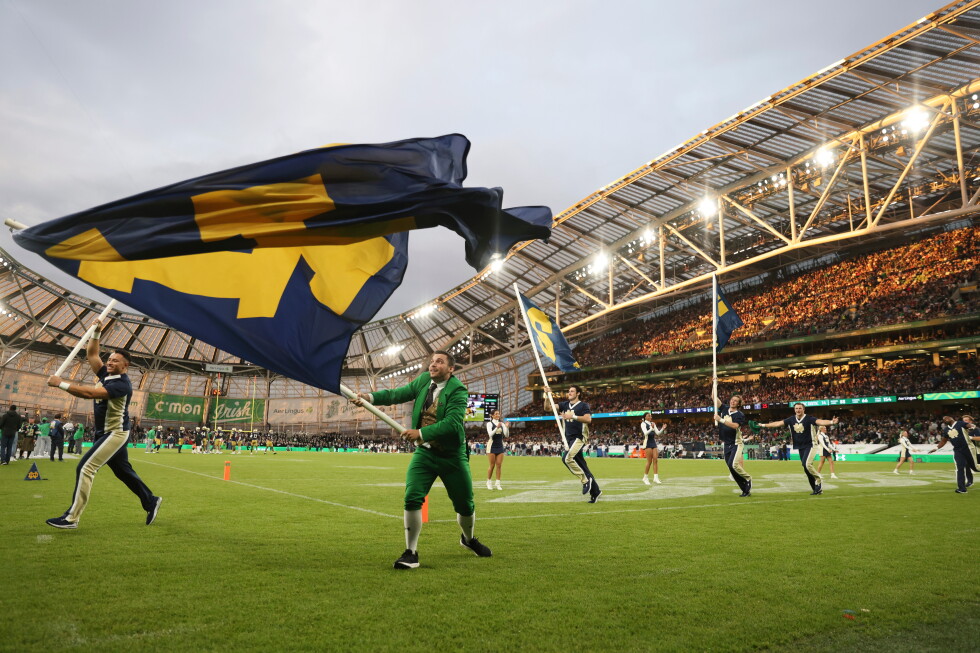
    For Brian Dubiski, bringing top-tier NCAA college football to London is not just a business venture—it is a full-circle moment that traces back to a legendary 1988 matchup in Tokyo. Three and a half decades ago, Dubiski was a defensive back for Texas Tech, set to face off against a freshly-minted Heisman Trophy winner Barry Sanders and his powerhouse Oklahoma State team. Just hours after claiming college football’s most prestigious individual award, Sanders delivered a historic performance, rushing for 330+ yards and four touchdowns to secure a 45-42 win for the Cowboys. Now, decades later, Dubiski is returning to the international college football stage in an entirely new role: chief executive of the first-ever Union Jack Classic, a landmark Big 12 Conference matchup between Arizona State and Kansas scheduled to kick off at London’s iconic Wembley Stadium next month.

    International college football is not a new concept—teams have competed outside the United States for more than 100 years, with early matchups mostly held in neighboring countries like Canada and Cuba. The first post-season game outside the Americas was held in 1976, according to the NCAA, but in recent years, organizers have shifted scheduling to early-season matchups rather than holiday-style postseason games that functioned more as extended team vacations.

    Dubiski and his team are betting that Europe is ready to embrace the full college football experience, pointing to the NFL’s decades-long presence in the region as proof that fan appetite already exists. “The NFL’s been there for two or three decades now,” Dubiski notes. “The appetite is there.” But breaking into a new market comes with steep hurdles: organizers must educate local fans on the unique traditions that define college football—from the passionate school spirit to the iconic marching band performances—and convince them to purchase tickets.

    So far, Dublin has emerged as the most successful blueprint for international college football. What started as a one-off experiment has grown into a staple of Week Zero of the college football season, with the Aer Lingus College Football Classic drawing thousands of American travelers each year to the welcoming Irish capital. This weekend, TCU and North Carolina will face off at Dublin’s Aviva Stadium, marking the latest edition of the annual series. It has already delivered iconic moments, including Georgia Tech’s stunning upset of No. 10 Florida State just two years ago.

    For participating programs, the Dublin game offers far more than just a unique on-field experience. “There is cachet in playing in Ireland, having an international game,” UNC athletic director Steve Newmark told the Associated Press. “It just draws intrigue, kind of curious onlookers to see Carolina blue and TCU purple playing in Dublin, and everything that goes with it.” TCU head coach Sonny Dykes, however, has echoed a common concern among coaches: the disruptive impact of international travel on a team’s season. He pointed to last year’s matchup between Iowa State and Kansas State, noting that the travel took a visible physical and mental toll on both programs early in the season, even as both recovered to play strong football down the stretch. For Dykes and TCU, a scheduled bye week immediately following the Dublin game has been a critical compromise to offset that disruption.

    Despite growing enthusiasm for expanding college football to new global markets—with destinations like Germany, Brazil, and Saudi Arabia all touted as potential future hosts—many planned international matchups have fallen through in recent years. Michigan ultimately moved a planned matchup against Western Michigan from Frankfurt back to Ann Arbor, while Virginia relocated a scheduled game against ACC rival NC State from Rio de Janeiro back to its home campus in Charlottesville. ACC Commissioner Jim Phillips says the missing piece for most failed international games is local support and sponsorship. “You need to have a sponsor,” Phillips explained. “There has to be some support in another country to be able to pull this game together.” Still, Phillips remains bullish on the long-term future of international college football, adding that “the international piece is big. We’ve gone to Ireland several times. We want to go to a couple other places. We talked to the Holiday Bowl about maybe going to Saudi Arabia. To sprinkle the college game out internationally is great.” The 2027 Dublin matchup is already locked in, pitting Pittsburgh against Wisconsin.

    Back in London, Dubiski and his team have already secured a multi-year agreement with Wembley Stadium, which can hold more than 86,000 fans, and Fox Sports’ popular “Big Noon Kickoff” program will travel across the Atlantic to broadcast the September 19 game. Dubiski has set a realistic inaugural target of 60,000 fans, with an estimated 15,000 supporters traveling from the U.S. to attend. Organizers have also introduced discounted group ticket packages to boost local sales. While Dubiski says the Union Jack Classic is in ongoing talks with airline and hospitality partners, a title sponsor will likely not be secured until 2025 at the earliest. “Year one is always a heavy lift, and so from the aspect of selling tickets to bringing in good partners and doing that sort of thing, it’s been a lot of hard work,” Dubiski said. “Everyone likes to be safe from that aspect and (say) ‘let’s see how this really goes down.’”

    To avoid operational missteps in this first year, organizers have intentionally overinvested in logistics for the teams. “We’ve rented out full properties for the teams. We could have just put them in a hotel like normal,” Dubiski said. “We’ve rented two triple-seven jumbo jets for each team.” Dubiski’s team brings deep existing experience in American sports promotion in Europe: chief operating officer Thomas Hensey previously worked on marketing the World League of American Football, which later evolved into NFL Europe. Longer term, the organization has ambitions beyond a single annual game in London, with plans to expand to other European markets and even add other collegiate sports, starting with college basketball.

    The growing push for international expansion aligns with shifting priorities across major college football conferences, with many seeing global games as a key to growing media rights revenue, expanding brand reach, and capitalizing on the rising importance of Name, Image, and Likeness (NIL) revenue for programs. “With the rising importance of NIL revenue for collegiate programs, international games are viewed as a critical area of growth with tremendous upside,” said John Anthony, co-founder of the Aer Lingus College Football Classic and executive vice president of hospitality provider On Location.

    Pac-12 Commissioner Teresa Gould, whose conference sent Stanford to Australia for a 2017 matchup against Rice, says international games align with the conference’s long-term strategic goals. “The motivation for it and the reason it’s such an attractive option is international distribution in terms of television and media rights, brand reach and just really providing global exposure for our institutions,” Gould explained. Big 12 Commissioner Brett Yormark echoed that sentiment, noting that his conference already has deep experience with the Dublin model and has clear global ambitions. “We have global ambitions as a conference,” Yormark said. “I do like the NFL model and where they’re going. I like the NBA and where they’re going. There’s a lot of interest in Europe for what we do here at the Big 12.”

    Beyond revenue and branding, participating programs also emphasize the non-athletic benefits of global exposure. Arizona State head coach Kenny Dillingham noted that the experience creates lifelong memories for the 18-to-22-year-old student-athletes who participate, while UNC has built a full itinerary of off-field engagement around its Dublin matchup, including a joint medical summit with Irish healthcare leaders. “It’s an opportunity to showcase Carolina on a global stage,” Rick Wernoski, UNC’s associate vice chancellor for operational excellence, told the AP. “It truly is much more than a game for us.”
  • Ethiopia submits official bid to host Afcon 2028

    Ethiopia submits official bid to host Afcon 2028

    One of African football’s founding nations has thrown its hat into the ring to host the 2028 edition of the continent’s flagship football competition, the Africa Cup of Nations (Afcon). Ethiopia’s football governing body, the Ethiopian Football Federation (EFF), confirmed that its government-endorsed bid to host the 2028 tournament formally asserts the East African country is fully prepared to welcome Africa’s largest sporting event.

    Ethiopia’s history with Afcon stretches back to the tournament’s earliest days: it claimed the continental title on home soil in 1962, and went on to host again in 1968 and 1976, marking three total host stints in the competition’s history. Despite this deep legacy, the country’s modern football infrastructure has fallen far behind that of many other African nations, creating major uncertainty around its 2028 bid.

    As recently as last season, Ethiopia had only one stadium that met the Confederation of African Football (Caf)’s strict standards for international competition. Currently, the country is putting the finishing touches on a new international stadium and multi-purpose sports complex in its capital, Addis Ababa, which will serve as a core venue if the bid is successful. But a 24-team Afcon requires multiple compliant venues spread across host locations, and that remains a significant unmet need for Ethiopia.

    Industry reports indicate that most of the country’s existing regional football facilities do not meet Fifa or Caf requirements for infrastructure, player amenities, and match-day operations. Even in recent World Cup qualifying, Ethiopia was forced to play its 2026 Fifa World Cup home qualifying matches at neutral venues in Morocco and Rwanda, though it did successfully host smaller matches in Dire Dawa earlier this year. Only one current Ethiopian venue, the 52,000-seat Bahir Dar Stadium in the country’s north, holds current Caf approval. The new 62,000-capacity Adey Abeba International Stadium in Addis Ababa is on track to be completed in 2025, but three other proposed host venues remain in early development and would require massive rushed upgrades to meet 2028 deadlines.

    Beyond stadium construction, hosting a major international tournament requires robust support infrastructure: adequate training facilities, athlete accommodation, entertainment options for fans, reliable urban transportation, and consistent security. Security, in particular, stands out as a top concern for the bid. While Addis Ababa remains relatively stable, multiple regions across Ethiopia continue to face armed conflict, political unrest, and other persistent security threats that would need to be addressed before the tournament.

    Ethiopia’s men’s national team, nicknamed the Walia Ibex, currently sits 143rd in the global FIFA rankings and 43rd among African nations. The side has only qualified for Afcon three times since it last hosted the tournament in 1976, with its most recent appearance coming at the delayed 2021 edition, where it finished at the bottom of its group without earning a single win. For the 2025 Afcon, Ethiopia defeated Sao Tome and Principe in the preliminary qualifying round and has been drawn into Group J alongside defending champions Senegal, Mozambique, and Sudan.

    Ethiopia is not the only contender for the 2028 hosting rights. Earlier this year, Botswana, Namibia, South Africa, and Zimbabwe announced a joint four-nation Southern African bid for the tournament. Despite widespread speculation that Morocco, the already confirmed host of the 2025 Afcon, could move up to host 2028 as well, BBC Sport Africa has confirmed that Morocco will not submit a bid, opting instead to focus its resources on co-hosting the 2030 Fifa World Cup.

    Caf president Patrice Motsepe confirmed last month that the confederation has received multiple “exciting bids” for the 2028, 2032, and 2036 Afcon tournaments. Notably, the 2028 edition will be the last held on the current two-year cycle, after which the tournament will shift to a once-every-four-years format. Three West African nations led by military governments — Burkina Faso, Mali, and Niger — have already announced their joint intent to bid for the 2032 edition.

    The 2027 Afcon is already scheduled to be co-hosted by Kenya, Tanzania, and Uganda from June 19 to July 17 2026, marking the first time Afcon has returned to East Africa since Ethiopia last hosted in 1976. Ethiopia’s bid has drawn mixed reactions from football stakeholders across the continent, with many supporters celebrating the chance to return the tournament to one of its founding homes, while critics continue to question whether the country can address infrastructure and security gaps in time for 2028.

  • Brain disease in ex-NFL players ‘higher than previously shown’

    Brain disease in ex-NFL players ‘higher than previously shown’

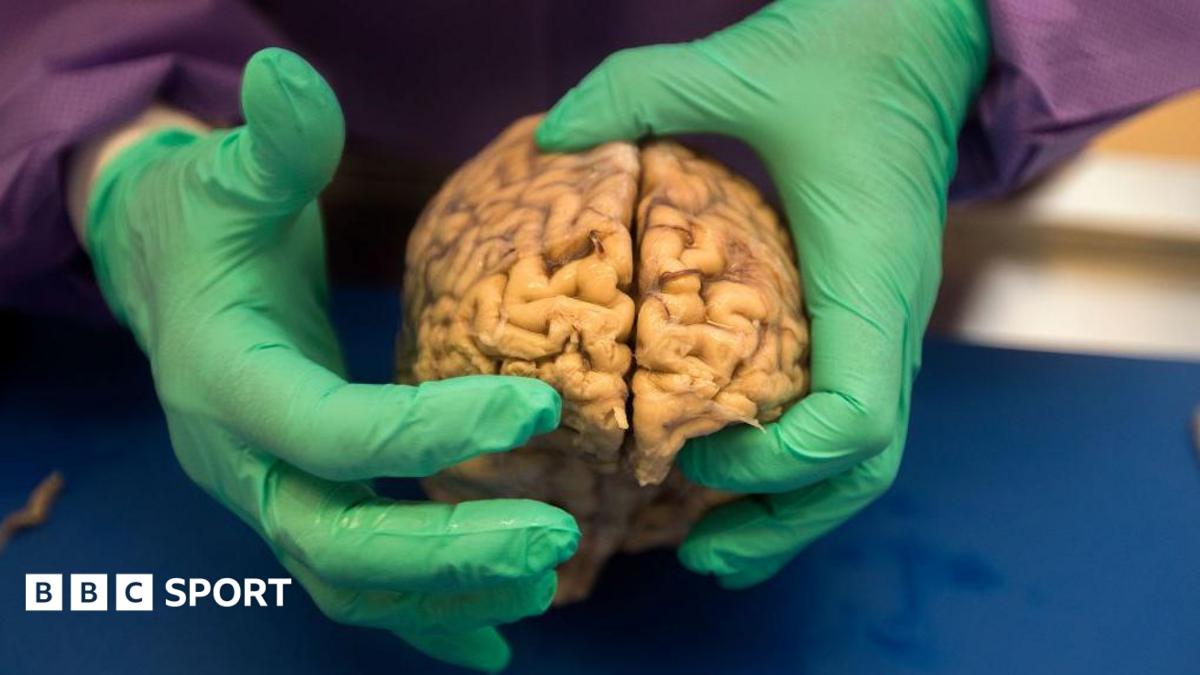
    A landmark new study published in the British Medical Journal has uncovered an alarming correlation between a career in the National Football League (NFL) and development of chronic traumatic encephalopathy (CTE), a degenerative brain disorder that can only be formally diagnosed post-mortem. The research, led by a team from Harvard Medical School, offers one of the most comprehensive assessments of CTE prevalence among former NFL players to date.

  • Leeds and Rangers co-owner jailed after prostitution arrest

    Leeds and Rangers co-owner jailed after prostitution arrest

    One of the most high-profile figures in global professional sports ownership is facing legal consequences following an arrest in eastern Ohio that has sent ripples across the NFL, British soccer, and the wider sports industry. Jed York, 46, the CEO and principal owner of the NFL’s San Francisco 49ers and a co-owner of top-tier soccer clubs Leeds United and Rangers FC, entered a no contest plea to two reduced charges during a Monday arraignment at Columbiana County Municipal Court. Under Ohio law, a no contest plea does not constitute a formal admission of guilt but allows the court to record a conviction against the defendant.

    Court documents filed by the East Palestine Police Department outline the sequence of events that led to York’s arrest. According to records from the Ohio Human Trafficking Task Force, York responded to an online prostitution advertisement placed by undercover law enforcement. He then allegedly arranged to pay $140 in exchange for sexual activity with an individual he believed was a sex worker. As part of a negotiated plea deal, the initial solicitation charge was downgraded to two offenses: disorderly conduct and possession of criminal tools, which law enforcement has confirmed refers to the mobile phone York used to contact the undercover advertisement.

    Following the guilty finding from the court, York was sentenced to one day of jail time for each charge, to be served concurrently. He received full credit for time already served in custody following his arrest, meaning he did not spend additional time behind bars. The executive was also ordered to pay $150 in fines for the disorderly conduct conviction and an additional $1,000 fine for the possession of criminal tools charge. On the same day as his plea and sentencing, York’s legal team filed a request to expunge the conviction from public court records—a motion that was immediately denied by the court.

    York’s cross-ownership portfolio spans three major North American and European sports properties. He has led the San Francisco 49ers as principal owner and CEO for nearly two decades, with the franchise remaining one of the most valuable and competitive in the NFL. Through 49ers Enterprises, the NFL franchise’s dedicated investment arm, York has built major stakes in British soccer: the group took full ownership of Leeds United in 2023, after years of incremental investment that began back in 2018 when the club competed in England’s second-tier Championship. More recently, in May 2025, 49ers Enterprises joined a consortium led by American businessman Andrew Cavenagh to acquire a controlling 51% stake in Scottish Premiership side Rangers, placing the historic club under majority American ownership for the first time. A spokesperson for 49ers Enterprises confirmed that York has no involvement in the day-to-day operational management of either Rangers or Leeds United.

    In the immediate aftermath of the court proceedings, all three affected organizations have released limited statements. Both Rangers and Leeds United declined to comment on the legal matter, while the San Francisco 49ers noted that the case has now been resolved and would not issue any further public comment. The National Football League, which oversees the 49ers as a member franchise, confirmed that it is reviewing the conviction under the league’s official personal conduct policy, which outlines standards of behavior expected of all team owners, executives, and players.

  • Special rule change to help Jai Arrow reach 100 games for Rabbitohs in National Rugby League

    Special rule change to help Jai Arrow reach 100 games for Rabbitohs in National Rugby League

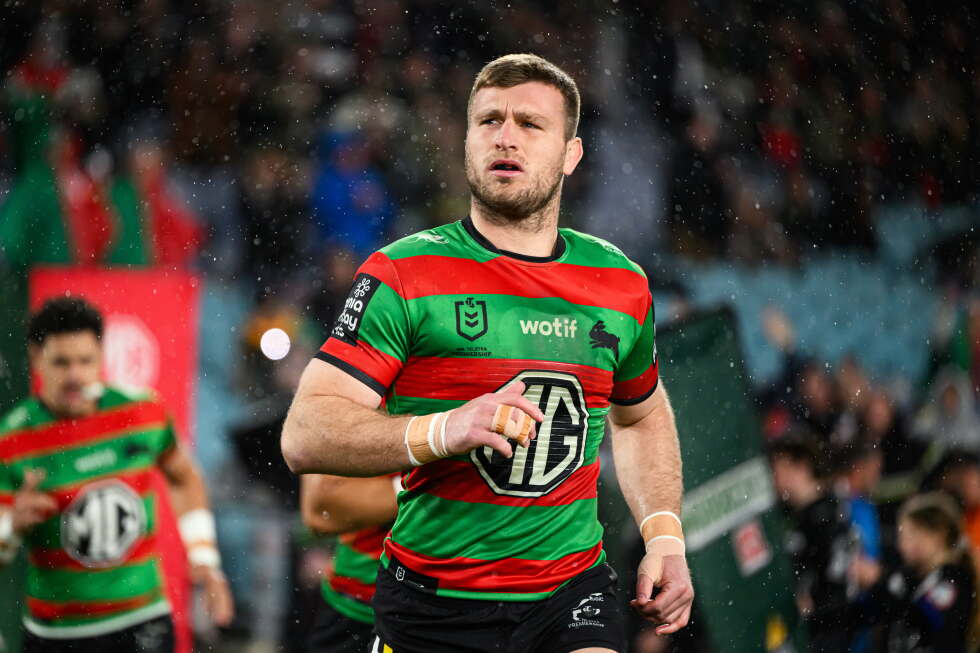
    For 31-year-old rugby league forward Jai Arrow, an unexpected motor neurone disease (MND) diagnosis in May cut his professional playing career short, forcing him to step away from the pitch to focus on treatment and his family. Now, Australia’s National Rugby League (NRL) is bending its rules to give the beloved veteran the chance to check off a defining career milestone he thought he would never reach: 100 top-flight games for the South Sydney Rabbitohs.

    MND, a progressive neurological condition characterized by the degeneration of nerve cells that control voluntary muscle movement, encompasses several forms, the most common being amyotrophic lateral sclerosis (ALS), also widely known as Lou Gehrig’s disease. After his diagnosis, Arrow never anticipated stepping onto a professional rugby league pitch again. But in a unanimous, heartfelt decision announced Tuesday, the NRL approved South Sydney Rabbitohs’ request for special exception to rulebook requirements, allowing Arrow to be named as an extra player on the team’s match squad for two upcoming fixtures: this Saturday’s clash against the Gold Coast Titans, and the club’s final regular season match against the Sydney Roosters.

    Under the terms of the dispensation, Arrow will take part in pre-match traditions that few players get to experience when they hang up their boots. He will suit up in the Rabbitohs’ official playing kit in the team dressing room, lead the entire squad out onto the pitch ahead of kickoff, and come on as the game’s first substitution within the opening seconds of play. While he will not be required to take part in active gameplay, he will remain on the interchange bench in his kit for the full duration of both matches. The two brief appearances will push his career total to 180 NRL games, and push his club tally for the Rabbitohs exactly to 100, adding to his existing resume that includes representative appearances for Queensland in the annual State of Origin series.

    Australian Rugby League Commission Chairman Peter V’landys emphasized that the gesture is far more than a rule exception—it is a celebration of character and community within the sport. “This thoughtful gesture by the South Sydney Rabbitohs shows the true heart of our game,” V’landys said. “Jai has inspired millions of people around the world with the courage and strength he has shown in his fight with MND. He is not only a great player, but an extraordinary person.”

    V’landys added that reaching the 100-game milestone for a single club is a rare and prestigious achievement, one that Arrow, his family, and his legions of supporters deserve to honor publicly. “Reaching 100 games for the Rabbitohs is a special achievement, one that Jai, his family and everyone who has supported him should be incredibly proud of. The entire rugby league community stands with Jai and is honored to celebrate this remarkable milestone with him,” he said.

    Arrow’s fight with MND comes as the rugby world has already mourned the loss of two high-profile sports figures to the disease in recent years: legendary rugby league player Rob Burrow and celebrated Scottish rugby union star Doddie Weir both died after public battles with the condition.

  • Prasidh Krishna takes 3-35 for India. Sri Lanka reaches 130-4 at lunch on Day 3 of 2nd cricket test

    Prasidh Krishna takes 3-35 for India. Sri Lanka reaches 130-4 at lunch on Day 3 of 2nd cricket test

    COLOMBO, Sri Lanka – The second Test match between India and Sri Lanka entered its third day on Tuesday with Sri Lanka in a precarious position, holding a score of 130 for four wickets at the first interval. The result of the match remains under threat from persistent wet weather, after just 58 overs of play were possible on Day 2 due to rain, and additional precipitation was forecast to cut further into playing time on Tuesday.

    India dominated the second day of the match, posting a strong first-innings total of 503 for nine wickets before declaring their batting innings closed. The visitors’ standout performers were opener Devdutt Padikkal, who notched a century of 117 runs, and wicket-keeper batter Druv Jurel, who closed out the innings with an undefeated 115 to push India’s total deep into the 500s.

    Sri Lanka’s response got off to a disastrous start, with the home side slipping to just 8 runs for the loss of two wickets by the end of Day 2. The batting collapse continued early on Day 3, when the team lost overnight batter Kamil Mishara for 19 runs with the total only at 35, leaving Sri Lanka’s innings in trouble at 3 wickets for 35 runs.

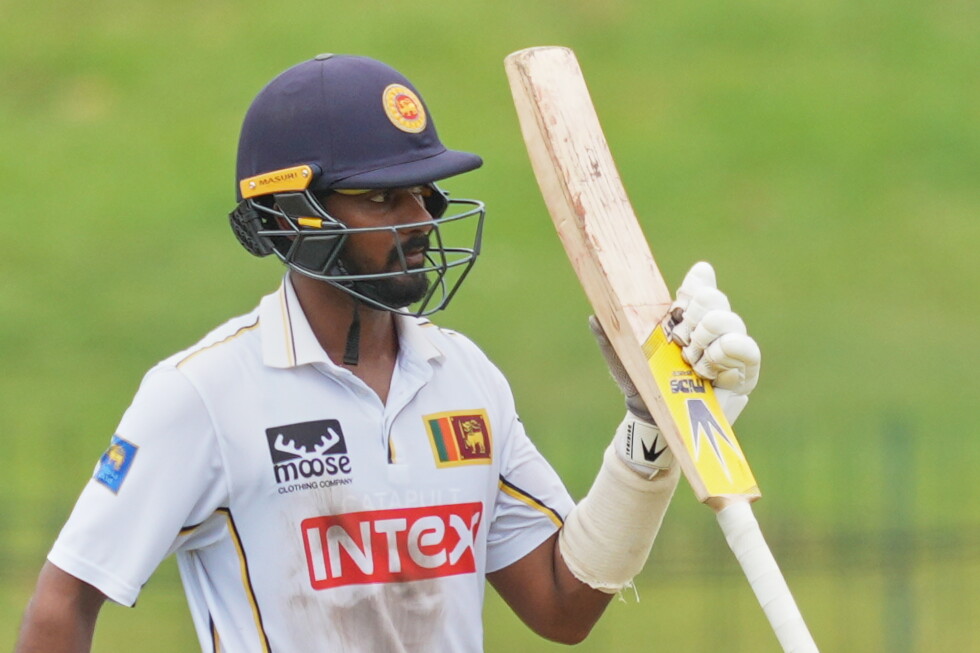
    Pasindu Sooriyabandara, the young Sri Lankan batter who endured a humiliating first-ball duck as a concussion substitute in the first Test in Galle, stepped up to steady the innings alongside middle-order batter Kamindu Mendis. The pair built a steady 87-run partnership off 126 deliveries to revive Sri Lanka’s hopes and pull the team out of early trouble. Sooriyabandara, in particular, displayed impressive composure through a mix of careful defense and controlled attacking shots, reaching an unbeaten half-century off 93 deliveries, decorated with 9 boundaries.

    The partnership was broken shortly before lunch by India’s fast bowler Prasidh Krishna, who claimed the vital wicket when Mendis hit a loose shot straight to Ravindra Jadeja at the midwicket position. Mendis departed for 32 runs, leaving Sri Lanka 130 runs for the loss of 4 wickets at the interval. At lunch, Sooriyabandara remained unbeaten on 65, with Sri Lankan captain Dhananjaya de Silva yet to score at the other end, holding an unbeaten total of 4 runs.

    Prasidh Krishna has emerged as India’s leading bowler in the Sri Lankan first innings, claiming three wickets for just 35 runs. Spin bowler Manav Suthar added a further wicket for India to keep pressure on the home side.

    Heading into the second Test, India already holds a 1-0 lead in the two-match series, after securing a 165-run victory over Sri Lanka in the opening Test at Galle.

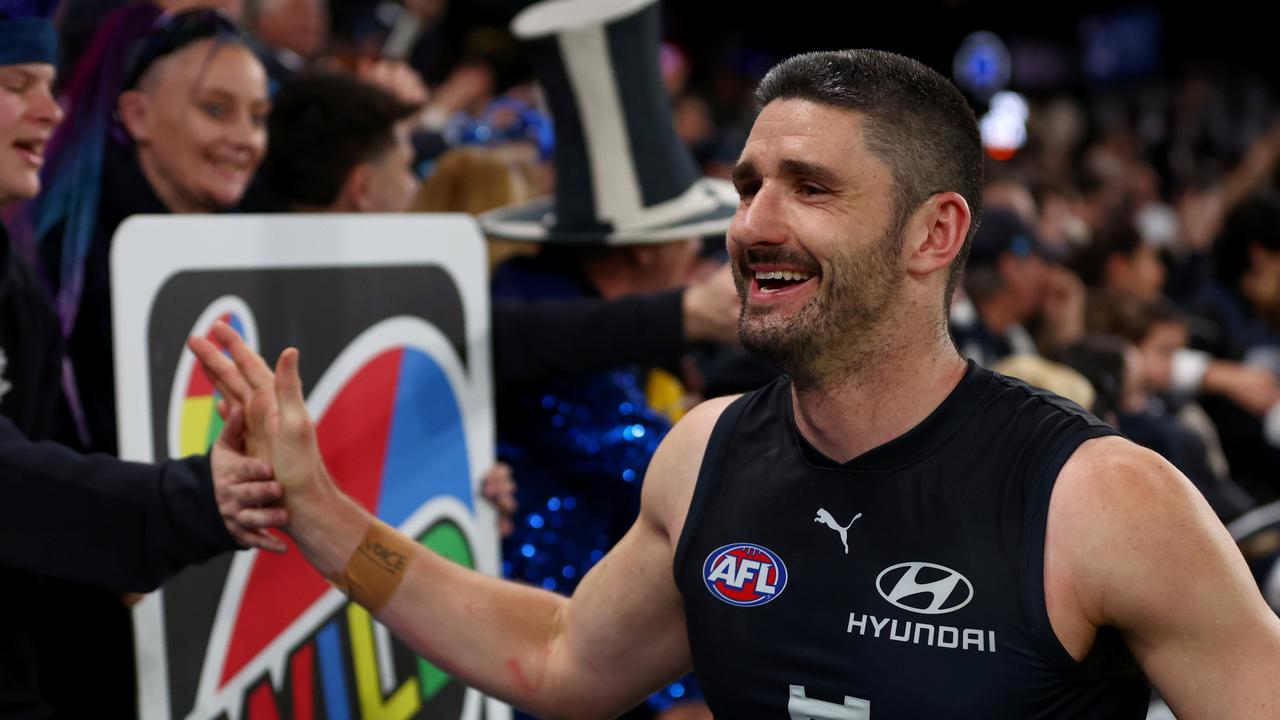
  • AFL Finals: Carlton ruckman Marc Pittonet lifts the lid on ruck analytics ahead of Max Gawn battle

    AFL Finals: Carlton ruckman Marc Pittonet lifts the lid on ruck analytics ahead of Max Gawn battle

    Ahead of one of the most anticipated AFL clashes of the season, Carlton ruckman Marc Pittonet, a self-described “ruck nerd” obsessed with the granular tactical details of his position, is gearing up to face the man he calls the greatest ruckman to ever play the game: Melbourne’s Max Gawn. When the two heavyweights meet at the packed Melbourne Cricket Ground this Saturday, the outcome of their individual matchup is widely expected to go a long way in determining whether Carlton claims victory over the reigning contenders.

    Pittonet’s obsession with ruck craft extends far beyond on-field physicality. The Blues big man has dedicated countless hours to breaking down every possible variable that can shift the tide of a centre bounce, a facet of the game that has shifted dramatically in recent years. Early in the current season, he shared concerns that new rules forcing ruckmen to jump immediately at centre ball ups would erase the nuanced, strategic side of the sport that has defined veteran ruck careers like his and Gawn’s. But as the season has progressed, he has watched the game adapt, arguing that tactical awareness and precise execution have never been more critical to gaining an edge over an opponent.

    “Early in the year I had an idea of where I thought it would go and it didn’t quite go to where I thought,” Pittonet explained. What gives him a unique competitive advantage is his rare versatility: he can jump equally well off either leg and tap the ball effectively with either hand. He also spends every centre bounce assessing dozens of small details that most fans and even casual observers would never notice. From the height and angle of the umpire’s throw, to which side of the ruck circle the ball will land, to the opposing ruckman’s preferred jumping foot and movement patterns, every small detail is calculated to disrupt the opponent’s timing.

    “If you can then vary that up so the other guy’s timing is not the same, it can give you an advantage even if the other guy is taller, jumping higher,” he said. He points to Gawn’s signature two-hand push as an example of the kind of specialized, fine-tuned skill that separates elite veteran ruckmen from the rest of the pack. “At the start it was a matter of ‘Have we taken away the art of ruck work at centre bounce?’… (but) we’re starting to find ways.”

    This level of obsession with tactical detail has earned Pittonet the “ruck nerd” label he happily embraces. Even Carlton’s midfields have joked that his ruck strategy conversations with former teammate Matthew Kreuzer sound like a completely foreign language to outsiders. Fortunately for him, newly appointed Carlton coach Josh Fraser – a star ruckman during his own playing career at Collingwood and Gold Coast – speaks that language fluently. Pittonet recalled a halftime conversation during a recent match where Fraser shared a nuanced tactical insight that no previous coach had ever passed along to him, calling it “just great ruck coaching” that has already elevated his game.

    As he prepares to face Gawn, Pittonet is under no illusions about the challenge ahead. He admits he has never truly beaten the Melbourne champion in their previous matchups, and this year Gawn is turning in what may be the best season of his already legendary career. At 35 years old, Gawn just posted a dominant performance of 28 hitouts and 10 clearances just last week, a stat line that cements his status as a freak of the sport in Pittonet’s eyes. “I think he’s the best ever – I think he’s a freak,” Pittonet said. “The fact he’s been this good for this long is just incredible.”

    To stand a chance against Gawn this weekend, Pittonet says he will have to set his own personal stats aside and prioritize the team’s success over his own individual performance. “There will be times on the weekend where I will have to put my ego on the hook for the team and just go, ‘It’s not about my hit-outs, my marks, my touches, my goals’,” he explained. “If I can do what I need to do on him, limit his impact, then we’ll go a fair way to winning.” For the self-proclaimed ruck nerd, Saturday’s clash at the MCG is the ultimate test of his years of studying the craft – against the greatest to ever do it.