分类: sports

  • ‘Nightmare from start to finish’ for South Africa in opener

    ‘Nightmare from start to finish’ for South Africa in opener

    The 2026 FIFA World Cup’s Group A opening match delivered far more than a three points for co-hosts Mexico, who wrapped up a comfortable 2-0 victory over South Africa at Mexico City’s iconic Estadio Azteca in a game marred by two red cards for Bafana Bafana, tactical criticism, and rising continental tension over South Africa’s recent anti-migrant violence.

    South Africa’s match unraveled within the opening 10 minutes, when midfielder Sphephelo Sithole lost possession on the edge of his own penalty area, allowing Mexico to convert the early chance and take a 1-0 lead. The second half delivered more setbacks: Sithole was shown a red card, followed by a second dismissal for forward Themba Zwane in the 84th minute after a VAR review upgraded a potential foul to a straight red for violent conduct. The sending-off marked only the second time in World Cup history that an African side has had two players dismissed in their opening finals match, a statistic last recorded by Cameroon against defending champions Argentina in 1990 – a match the Indomitable Lions famously won 1-0, a result South Africa never came close to matching.

    Former South African captain Dean Furman, commentating for BBC Radio 5 Live, described the performance as “a nightmare from start to finish.” He argued that no Bafana Bafana player could claim to have performed to their potential, saying “Mexico were in total control from minute one. They looked more assured, they were calm in possession. It was just turnover after turnover after turnover, and when you’re playing against quality opposition you get punished.”

    On the contentious second red card, South Africa head coach Hugo Broos – the oldest coach at this year’s tournament at 74 – disputed the call, claiming Mexican winger Roberto Alvarado blocked Zwane and went down unnecessarily. However, Furman, who played alongside Zwane for several years, said the call was justified under modern rules: “I know it’s incredibly soft but it’s the modern game, you can’t lash out. It’s going to be an interesting World Cup if that’s what we’re giving red cards for but that is the game today. You can’t do that.”

    South African captain Ronwen Williams acknowledged the disappointing result but sought to highlight his side’s resilience, even with two players down. “Obviously the opening game of the World Cup comes with so much emotion,” the 34-year-old said. “We knew they were going to have the atmosphere, the energy behind them and we didn’t want to concede in the opening few stages. And then that’s exactly what happened. As difficult as it was with two guys sent off, we didn’t give up. It shows the mentality that we have and the character that we kept fighting.”

    Domestic fans in Johannesburg were far less forgiving. Relebogile Lairi called the performance a “very disappointing start,” saying supporters “expected a lot more from the boys” and blamed widespread “stage fright.” Nicholas Makomene criticized Broos’ defensive 5-3-2 setup, saying there was “no need to park the bus” against the co-hosts.

    Beyond the pitch, the result exposed deep divides across the African continent, 16 years after South Africa made history as the first African nation to host the World Cup, a moment that unified the continent behind African teams. This year, many fans across Africa backed Mexico over South Africa, in response to recent anti-migrant protests and violence in South Africa that has led multiple African nations to repatriate their citizens. South African officials have condemned the violence and rejected accusations of xenophobia, but that has done little to ease tensions.

    In Nairobi, Kenyan organizer Elisha Kamau held a “hate-watch” party that drew nearly 200 attendees, almost all of whom supported Mexico. “The second reason I think is just the timing of the xenophobic attacks. It depends who is playing South Africa, but I think most people would support the other team,” Kamau explained. Congolese fan Daniel Kaniki, watching from a fan park in Atlanta, echoed that sentiment: “Africa is like one country and if one is chasing others, we are not a family any more. That’s why I’m supporting Mexico.” Not all fans across the continent aligned with this view, however: Ghanaian fan Vanlare Quist said he rooted for South Africa, arguing that anti-immigrant sentiment was driven by a small minority of bad actors, not the entire nation.

    Looking ahead, South Africa faces a must-win second Group A match against the Czech Republic on June 18. Both teams enter the fixture winless, after the Czechs dropped a 2-1 opening match result to South Korea. Furman is pushing for a major tactical shift, urging Broos to abandon the defensive 5-3-2 setup he used against Mexico in favor of the more attacking 4-3-3 formation that fits South Africa’s traditional style of play.

    “They have to put this to bed very, very quickly,” Furman said. “I know you’re playing against better opposition in a big match and you’re probably looking to soak up the pressure and go a little bit more defensive, but that’s just not our style at all. For me, going forward, you’ve got two games left to save yourself, to try and get a victory to get yourself into the next round. Go with our 4-3-3. Put your attacking players on, put your number 10s on, your more imaginative players. Let’s see what South African football is all about.”

  • Ethiopia’s Tsegay handed four-month doping ban

    Ethiopia’s Tsegay handed four-month doping ban

    One of Ethiopian long-distance running’s most decorated champions, Gudaf Tsegay, has been issued a four-month competition ban following a positive doping test that detected a banned aromatase inhibitor in her system. The 29-year-old, a two-time world champion and Olympic bronze medalist, has not competed since last October, months before the case became public.

    Tsegay’s athletic resume includes a 5,000m world title in 2022, a 10,000m world championship crown in 2023, and a bronze medal in the women’s 5,000m at the 2020 Tokyo Olympic Games. She also claimed bronze in the 10,000m at the 2023 World Athletics Championships held in Tokyo, her last major competitive appearance before stepping off the track.

    The positive result emerged from an out-of-competition doping test conducted last December, where analysts found a metabolite of Letrozole, a substance classified as a prohibited aromatase inhibitor on the World Anti-Doping Agency (WADA) banned list. Clinically, Letrozole is primarily used to treat breast cancer by reducing estrogen levels in the body.

    When the Athletics Integrity Unit (AIU) notified Tsegay of the positive finding in late January, the runner responded within 24 hours to confirm she had been prescribed the drug to treat a officially diagnosed medical condition, and submitted full supporting medical documentation to back up her claim. In February, Tsegay filed an application for a retroactive therapeutic use exemption (TUE) with World Athletics, the governing body for international track and field. World Athletics confirmed that her ongoing treatment aligned with WADA’s international standards for approved TUEs, but WADA ultimately rejected her request for a retroactive exemption granted under exceptional circumstances.

    Following the rejection, Tsegay entered a formal case resolution agreement with both WADA and the AIU to settle the violation without extended litigation. In an official statement announcing the ban, the AIU noted that the four-month sanction was deemed appropriate under anti-doping rules governing cases where the athlete bears minimal to no fault or negligence.

    The length of the ban was determined based on multiple mitigating factors: Tsegay’s limited degree of fault, her immediate and honest admission of the violation, the confirmation that her use of Letrozole met WADA’s TUE standards for medical need, and the formal finding that she would have been approved for a TUE if she had submitted the application before taking the medication. The ban has been backdated to 1 June 2024, and will remain in effect through 30 September 2024.

  • New Zealand great Williamson says ‘right time’ to retire from international cricket

    New Zealand great Williamson says ‘right time’ to retire from international cricket

    One of international cricket’s most respected modern stars and New Zealand’s all-time leading run-scorer Kane Williamson has shocked the global cricket community by announcing his immediate retirement from all forms of international cricket on Friday. The 35-year-old made the announcement mid-way through New Zealand’s ongoing three-Test series against England, just days out from the series’ second Test scheduled to begin at The Oval next week.

    Williamson featured in the opening Test of the series at Lord’s last week, where the Black Caps fell to defeat, posting scores of 0 and 18 in the two innings. The veteran batsman explained that his decision to step away had come after months of reflection, and that the timing felt right to close out his 14-year international career.

    “I’ve thought about it for a while, but over the last few days it’s become clear now is the right time,” Williamson said. “I’ve always felt a strong drive and hunger for international cricket, and I take pride in knowing I’ve given it my all in every match I’ve played for New Zealand. Continuing with anything less wouldn’t be right and I feel fortunate to step away on my own terms.”

    The unexpected timing of the announcement, which came just one match into a planned series and with future home series against India and Australia already scheduled for the 2026/27 season, caught many fans and analysts off guard. But speaking to reporters in London after the announcement, Williamson said he was confident his departure would clear the way for the next generation of Black Caps talent to step up and thrive.

    “When I look at the dressing room now and I see the talent, and the journey that I think this team’s looking to go on, it just feels like the right time for me to step away. I feel really good about it,” he added.

    Widely regarded as one of the four best batsmen of his generation, Williamson is part of the so-called ‘Fab Four’ alongside modern greats Virat Kohli of India, Australia’s Steve Smith and England’s Joe Root. He made his international debut for New Zealand in 2010, and went on to represent the Black Caps across 378 matches, finishing his career with an unprecedented 19,346 international runs. His record includes 48 centuries and six double-centuries across all formats, making him New Zealand’s most prolific run-getter in the history of the sport.

    In Test cricket, the format where he earned his greatest acclaim, Williamson played 110 matches, amassing 9,515 runs at an elite average of 54.06 with 33 centuries to his name. Beyond his on-field batting prowess, he earned widespread praise for his calm, thoughtful leadership, serving as captain across all three formats from 2016 to 2024, a golden era for New Zealand cricket. Under his captaincy, the Black Caps reached two 50-over World Cup finals, three World Cup semi-finals, and claimed the title of the inaugural ICC World Test Championship in 2021.

    Current New Zealand head coach Rob Walter paid warm tribute to Williamson’s legacy, emphasizing that his impact extended far beyond his statistical achievements. “Anyone who’s had the privilege of working with Kane understands he is a very special player and person. His numbers and batting skills speak for themselves, but it’s what he means to this Black Caps team, as well as world cricket — that will be his legacy,” Walter said.

    Walter acknowledged that Williamson’s departure would leave a gaping hole in the New Zealand line-up for the upcoming second Test against England. “You don’t lose Kane Williamson off the team sheet and get stronger, because he’s a legend,” he added. When asked who would replace Williamson in his traditional batting spot at number three for the Oval Test, Walter declined to confirm a replacement. The likely candidates are reserve batsman Henry Nicholls, who is already in the touring squad, or rising star Rachin Ravindra, who could move up one position from his current spot at number four.

    Williamson’s career is decorated with some of the highest honours in the sport: he was named ICC Cricketer of the Year in 2015 and ICC Test Player of the Year in 2019, and won New Zealand cricket’s most prestigious domestic award, the Sir Richard Hadlee Medal, a record four times.

    Sir Richard Hadlee himself, one of New Zealand cricket’s all-time greatest icons, issued a statement praising Williamson’s career and leadership. “He’s demonstrated a willingness to continually advance his game to the highest level in all three formats and he rightfully finishes as one of the best players of his era,” Hadlee said. “The way he prepared himself physically and mentally was perhaps the most impressive part. He was always committed to working hard and developing his technique to ensure he was ready to be a world class player. He’s been an unflappable leader and the architect of some of our greatest moments in cricket.”

  • New Zealand great Kane Williamson announces immediate retirement from international cricket

    New Zealand great Kane Williamson announces immediate retirement from international cricket

    On Friday, New Zealand cricket icon Kane Williamson brought an abrupt end to his celebrated 16-year international career, announcing his immediate retirement from all forms of global competitive cricket that cemented his status as one of the finest batters of the modern era.

    The formal announcement was first shared by New Zealand’s men’s national cricket team, the Black Caps, on the social platform X, before a full statement detailing the decision was published on New Zealand Cricket’s official website. “New Zealand’s most prolific all-format run scorer and arguably greatest ever batsman Kane Williamson has confirmed his retirement from international cricket effective immediately,” the official statement read. “Williamson’s announcement brings an end to a glittering 16-year international career that has seen him play 378 games for his country (in all formats), setting countless batting records and earning the respect and admiration of the cricketing world.”

    At 35 years old, Williamson leaves the international stage with a historic statistical legacy that will stand the test of time. Across 92 Test matches, he accumulated 9,515 runs at an elite average of 54.06, with a career-high score of 251 notched against South Africa. His one-day international record is equally impressive: 15 centuries and 7,256 runs at an average of 48.69, while he added a further 2,575 runs in Twenty20 international cricket. In total, he scored 33 Test centuries, the most by any New Zealand batter in the format’s history, and also contributed with occasional off-break spin bowling, picking up 30 Test wickets and 37 ODI wickets throughout his career.

    Widely regarded as one of the “Fab Four” of modern batting – alongside Virat Kohli of India, Australia’s Steve Smith and England’s Joe Root – Williamson built his reputation on a technically flawless, graceful style marked by unrivaled concentration. His signature playing traits, including the ability to play fast bowling late with soft hands and devastatingly timed back-foot drives, made him a nightmare for even the most elite bowlers across all conditions.

    Beyond his on-field talent, Williamson earned global acclaim for his exceptional sportsmanship and calm leadership. He became a symbol of fair play following New Zealand’s heart-wrenching, last-ball loss to England in the 2019 50-over World Cup final, where he consoled opposing players and handled the devastating defeat with extraordinary grace. Just two years later, he captained the Black Caps to a historic first-ever World Test Championship title, beating India in a tense final to etch his name into cricket folklore.

    In his retirement statement, Williamson noted that he had weighed the decision for an extended period, and concluded the timing was right to step away from the international game. “I’ve thought about it for a while, but over the last few days it’s become clear now is the right time,” he said. “I’ve always felt a strong drive and hunger for international cricket, and I take pride in knowing I’ve given it my all in every match I’ve played for New Zealand.”

    “It’s a team I love, and I feel incredibly fortunate to have been part of it for so long. It will continue to be dear to my heart,” he added. “I leave feeling optimistic about where this group is heading. There’s a huge amount of talent, and a real desire to do something special with this New Zealand team.”

    Black Caps head coach Rob Walter paid tribute to Williamson’s far-reaching impact on both the national team and global cricket, emphasizing that his legacy extends far beyond his on-field statistics. “Anyone who’s had the privilege of working with Kane understands he is a very special player and person,” Walter said. “His numbers and batting skills speak for themselves, but it’s what he means to this Black Caps team, as well as world cricket that will be his legacy.”

    “Kane’s always put the team first and although we’re disappointed to see him go, we’re happy to know he’s content and at peace with his decision,” Walter added.

    Williamson’s retirement announcement comes in the middle of New Zealand’s three-Test tour of England, with the second Test scheduled to get underway next Wednesday at London’s Oval. His final appearances for the Black Caps came in the opening Test at Lord’s, where he scored zero and 18 on a challenging pitch as New Zealand fell to a defeat. The Black Caps confirmed that a replacement for Williamson for the remainder of the series will be announced in the coming days.

  • South Africa trolled by African fans in wake of World Cup loss

    South Africa trolled by African fans in wake of World Cup loss

    As the final whistle blew on the opening match of the 2026 expanded FIFA World Cup between South Africa and co-host Mexico, the 2-0 defeat for Bafana Bafana left South African supporters heartbroken — but what unfolded across social media revealed a far deeper rift than a disappointing on-pitch result. In a break from the long-held tradition of pan-African unity that defines continental participation in major global tournaments, fans across the continent threw their support behind Mexico, linking their choice to ongoing deadly xenophobic violence targeting African migrants in South Africa.

    The 2026 World Cup, co-hosted by the United States, Canada and Mexico, features 10 African teams in its expanded 48-team format, marking a historic high for continental representation. Ahead of Thursday’s Group stage opener, many African football fans already made clear their decision to back Mexico, directly tying the choice to simmering anti-migrant tensions that have roiled South Africa in recent weeks.

    Social media was flooded with playful but pointed content after the match: users changed their profile pictures to Mexican flags, adopted Spanish pseudonyms, and shared memes featuring sombreros under the trending tagline “Mexico versus xenophobia.” One user on platform X, referencing widespread reports of migrant mistreatment, asked bluntly: “You want people to cheer for you when you play soccer just because we’re African?” Another echoed the sentiment, leaning into the baseless narrative that foreign workers drive South Africa’s unemployment crisis to joke: “We’re supporting Mexico so that South Africa can go back home early to protect their jobs.” Prominent Kenyan lawyer Ahmednasir Abdullahi added a sharp, satirical take: “I hope South Africa is not blaming African migrants for the 2–0 defeat and two red cards in the match against Mexico.”

    In-person fan sentiment reflected the same divide. Daniel Kaniki, a Congolese supporter who attended a public fan viewing event in Atlanta, Georgia, told reporters the split came down to basic solidarity. “Africa is like one country and if one is chasing others, we are not a family any more. That’s why I’m supporting Mexico today,” he explained.

    Not all fans from across the continent sided against South Africa, however. Vanlare Quist, a Ghanaian fan also at the Atlanta viewing park, said he remained firmly in Bafana Bafana’s corner. As a proud African, he argued that anti-immigrant sentiment is driven by only a small minority of South Africans, not the nation as a whole. In Juba, the capital of South Sudan, public viewing center attendees uniformly backed South Africa, rooted in shared historical struggle: South Sudan’s fight for independence from Sudan has long drawn ideological connection to South Africa’s fight against apartheid white-minority rule.

    “It was unfortunate that on social media we saw some African countries supporting Mexico and even wearing Mexico jerseys. As South Sudanese, we are behind South Africa and will continue to support South Africa – because they are representing Africa. So, all African countries must support South Africa during this World Cup,” 23-year-old student George Kenyi Charles Rehan told reporters from Juba.

    Back in South Africa, supporters pushed back against the wave of online trolling after the defeat, doubling down on their pride in the national team. The South African government also released a statement commending Bafana Bafana for their “spirited performance,” noting that “while the final score was not what the nation had hoped for, the team represented South Africa with unity, determination, and a sense of pride on the world’s biggest stage.”

    Many South African social media users rejected criticism of the country’s immigration policies, with one writing: “We qualified for the World Cup alone without your support and whether we win or lose we will remain South Africans who love their country. And illegal immigrants will still leave our country whether you hate us or not.”

    The continental rift exposed by the World Cup opener is rooted in a years-long surge of anti-migrant sentiment that has escalated dramatically in recent weeks. Migrants from other African nations have faced targeted violence and intimidation, with extremist anti-migrant groups issuing a 30 June deadline for all undocumented foreign nationals to leave the country.

    South African President Cyril Ramaphosa has publicly condemned vigilantism, stressing that “only authorised government officials can act against violations of our law.” But he has also acknowledged that public frustrations over immigration “deserve to be heard, and they deserve to be addressed.”

    In response to the escalating threats, multiple African nations have begun repatriating their citizens from South Africa. Nigeria became the latest country to announce evacuations this week, joining Ghana, Zimbabwe and Malawi, all of which have already moved to bring their citizens home amid safety concerns.

    The roots of the current crisis stretch back to the end of apartheid in 1994, when thousands of people from across the continent moved to South Africa seeking greater economic opportunity. Today, however, South Africa struggles with an official unemployment rate exceeding 30%, a crisis that has fueled scapegoating of foreign workers and sparked regular anti-migrant protests and deadly xenophobic attacks in major urban centers.

    Despite the opening defeat, South Africa still has two remaining Group stage matches to climb out of the bottom of the table and qualify for the knockout round of the expanded tournament, leaving the nation with an opportunity to prove its quality on the pitch even as tensions off the field continue to simmer.

  • Australia coach Popovic signs contract extension ahead of Socceroos’ opener at World Cup

    Australia coach Popovic signs contract extension ahead of Socceroos’ opener at World Cup

    On the eve of Australia’s opening 2026 FIFA World Cup Group D clash with Turkey, Football Australia has announced a major vote of confidence in men’s national team head coach Tony Popovic: a contract extension that will keep him at the helm through the start of 2027.

    The 52-year-old manager, a former Socceroos player himself, only took the position in September 2024, but quickly guided the Australian side through a successful qualification campaign that booked their spot in the expanded 48-team World Cup tournament. Under the new terms of the deal, Popovic will also lead Australia through the 2027 AFC Asian Cup, scheduled to be held across Saudi Arabia in January and early February of that year.

    Speaking ahead of his side’s first World Cup group stage match Saturday, Popovic emphasized that his full focus remains on the tournament at hand, rather than the new contract. “I’m proud to lead my country into a World Cup, but most importantly, I want to ensure that our team is fully prepared and focused on our group matches against Turkey, the United States, and Paraguay,” he said, outlining the three tough opponents Australia will face in the opening round of the competition.

    The contract extension announcement comes amid significant anticipation for the Socceroos’ World Cup run, with fans and governing body officials alike signaling approval of Popovic’s early work rebuilding the national squad following his appointment last year.

  • Dzeko’s last dance could be Bosnia’s new beginning

    Dzeko’s last dance could be Bosnia’s new beginning

    For 40-year-old football legend Edin Dzeko, a career brimming with silverware—including two Premier League titles won with Manchester City, plus honours earned across stints with Inter Milan and Wolfsburg—may end up being remembered most for a quiet, iconic moment of grit: immediately after Bosnia-Herzegovina knocked Italy out on penalties to secure only the second World Cup qualification in the nation’s history, Dzeko celebrated gently, his arm strapped in a sling from injury.

    That image, observers say, encapsulates everything Dzeko has stood for across nearly two decades carrying the hopes of a nation still healing from the devastating scars of the 1990s Bosnian War. “His career is connected to the country’s own image—resilience, persistence and proving people wrong,” explains Bosnian journalist Sasa Ibrulj. Drawn into an even 2026 World Cup group alongside Canada, Switzerland and Qatar, Dzeko’s final tournament as a player is poised to open an exciting new chapter for Bosnian football.

    Dzeko’s own story of survival begins amid the chaos of war. When the Bosnian War broke out in 1992, he was just six years old. Around 80,000 Bosnian Muslims lost their lives in the conflict, and the Srebrenica Genocide—perpetrated by Bosnian Serb forces—stands as the worst mass killing in Europe since the Holocaust. Dzeko’s family stayed in Sarajevo through the nearly four-year siege, where Serbian snipers targeted civilian residents including children. After their family home was destroyed, Dzeko moved in with his grandparents, cramming 15 family members into a 35-square-meter apartment. “It was very hard. We were stressed every day in case somebody we knew died,” Dzeko recalled in a past interview with The Guardian. As a young boy, he often played football on a local pitch—one day his mother forced him to stay home, a decision that saved his life: a shell struck the pitch that same day, killing several children playing there.

    After the war ended, Dzeko launched his professional career at local Sarajevo club Zeljeznicar, where he was underestimated early on. His lanky frame earned him the local nickname “Kloc”, meaning “lamp-post”, and club executives jumped at the chance to sell him to Czech side Teplice for just €25,000. What followed was a historic top-flight career: Dzeko became the first player in history to score at least 50 goals in the Premier League, Bundesliga, and Serie A. Even as he rose to global superstardom, he never turned his back on his roots. He has donated repeatedly to fund renovations at Zeljeznicar, and became Bosnia’s first UNICEF ambassador in 2009. “People remember that he did not come from privilege or from a powerful football system,” Ibrulj says. “What makes him different is that people in Bosnia have never experienced him as distant or untouchable.” Mirza Trbonja, a close friend of Dzeko’s, told AFP that the star never turns down autographs or photos: “When he comes, you need a lasso to catch 10 minutes with him. When someone asks him for a photo or autograph, he never refuses.”

    Dzeko made his senior international debut in 2007, and today holds Bosnia’s all-time records for caps (148) and goals (73). After devastating play-off defeats to Portugal for the 2010 World Cup and Euro 2012, Dzeko led Bosnia to qualification for their first major international tournament as an independent nation, the 2014 World Cup in Brazil. That tournament marked the high point for Bosnia’s “golden generation”, with more play-off heartbreak following for Euro 2016, 2020, and 2024. Twelve years after that first historic qualification, Bosnia finally exorcised their play-off demons: after overturning deficits against both Wales and Italy to win both knockout ties on penalties, the nation secured its return to the world’s biggest football stage.

    Ibrulj notes that the 2026 qualification carries even more emotional weight than the 2014 breakthrough. “2014 felt historic because it was the first generation that truly gave Bosnia international sporting legitimacy after independence,” he says. “This second qualification feels even heavier emotionally. Bosnia spent more than a decade failing to return, and over those years there was disappointment, pessimism, and a growing feeling that the country had missed its moment. For many younger supporters, this is the first team that feels like their team in the same way older generations emotionally belonged to the side of Dzeko, Miralem Pjanic and Emir Spahic.”

    For Bosnian musician Alen Dokic, who released an official 2026 World Cup song under his alias Doppelganger, the qualification is a perfect example of “Bosanski Inat” — a deeply rooted cultural spirit of defiance and overcoming hardship. “Never forget, never forgive – this is one of the mottos that reminds us who we are, what we have been through, and how resilient we Bosnians are,” Dokic says. Dokic, born in Rome to Bosnian parents, is part of a global Bosnian diaspora that numbers as many as two million people, a connection that is reflected in head coach Sergej Barbarez’s 2026 World Cup squad: 17 of the 26 squad members were born outside of Bosnia-Herzegovina, raised across the globe but united by their choice to represent their ancestral nation.

    “It’s a unique dynamic of players growing up all over the world but coming back to represent Bosnia,” says former Bosnia goalkeeper Asmir Begovic. One shining example is 21-year-old Esmir Bajraktarevic, who scored the decisive penalty against Italy that booked Bosnia’s spot at the tournament. Bajraktarevic was born and raised in Wisconsin, after his parents fled the Srebrenica genocide. “That common interest, common goal, the passion of representing Bosnia plays a big role. What the country has been through, there’s still lingering effects from the conflict and the past. When everyone comes together in Bosnia, it’s a pretty unique feeling and really special. For a country so small to compete at this stage is a really big thing,” he says.

    In the hours after the play-off win over Italy, thousands of Bosnian fans flooded the streets of Sarajevo, celebrating long into dawn. Ibrulj explains that these moments of shared national joy carry unique weight for a country still fractured by political division, economic instability, and the unhealed shadow of war. Even with limited investment in sporting infrastructure for a population of just three million, the future of Bosnia’s national team looks bright — and it feels only fitting that Dzeko, the man who has been a constant through decades of change, will captain the side as they enter this new era.

    “In a country where people often struggle to trust institutions, figures like that become larger than sport itself. For younger players he became a constant. Coaches changed, federations changed, generations came and went, but Dzeko remained there,” Ibrulj says. When a video of Italian players reportedly celebrating getting to face Bosnia instead of Wales in the play-off final went viral before the decider, Dzeko once again showed the quiet leadership that has defined his career: he urged Bosnian fans to respect the Italian national anthem ahead of kickoff, reminding supporters that Italy was the first national team to visit Bosnia after the war.

    “He is someone who has big pressure and expectation on him. He galvanises everybody. When I played with him he certainly wasn’t the most vocal of leaders but he definitely led by example and I think a lot of people fed off that,” Begovic says. Far from being at the tournament to simply make up the numbers, Dzeko has already proven he still has a critical role to play: he scored a late equaliser against Wales to force the penalty shootout, then set up Bosnia’s equaliser against Italy to send that tie to penalties as well. The 40-year-old says even he never expected to still be playing at the top level at his age: “I didn’t think I would be playing at 40 – 10 years ago I would’ve said ‘no’, but I’m listening to my body and doing a lot of work before and after training to help my body. I am so happy I can do it [go to the World Cup]. It is so amazing for the young players. They don’t know it yet, but it will change their lives for sure.”

    Bosnia’s 2026 World Cup campaign kicks off this Friday against co-hosts Canada, kicking off what is already the most emotional chapter in the nation’s modern football history.

  • ‘Best Canada team ever’ bid to shine at home World Cup

    ‘Best Canada team ever’ bid to shine at home World Cup

    As the 2026 FIFA World Cup kicks off, much of the global spotlight has fallen on political shifts in the United States and ongoing infrastructure and scheduling controversies in co-host Mexico. But few have turned their attention to the tournament’s third, often underrepresented host nation: Canada. For Canadian football observers, this quiet invisibility is nothing new. “Canada is often overlooked, and we are comfortable with that,” veteran Canadian football journalist Har Johal told BBC Sport in an exclusive interview. “We will smile, be polite, and let our co-hosts to the south dominate the headlines. But that does not mean we do not have big ambitions of our own.”

    Beneath the widely held stereotype of Canadian politeness lies a steely, growing confidence: this iteration of the men’s national team is widely considered the most talented in the country’s history, and they are poised to deliver a breakout performance on home soil this summer, starting with their tournament opener against Bosnia-Herzegovina in Toronto on Friday at 20:00 BST.

    ### Off the Pitch: Hosting Success, With Some Growing Pains
    Unlike several proposed U.S. host venues that have drawn criticism for exorbitant travel costs and remote locations, Canada has avoided major off-pitch controversy. Both of its host cities – Vancouver and Toronto – boast centrally located, accessible stadiums that eliminate the need for long-distance commutes for fans. That said, the nation is not immune to the cost-of-living strains hitting the 2026 tournament overall.

    FIFA’s standardized ticketing pricing structure has left many local fans facing similarly expensive seat costs to their counterparts in the U.S. and Mexico, and hotel prices have skyrocketed to unprecedented levels. Downtown Vancouver hotels currently charge more than $1,000 per night during the tournament, with some peak match-night rates exceeding $2,000. When Vancouver hosted the 2010 Winter Olympics, the average downtown hotel rate sat at just $359 per night. Compared to standard 2025 off-tournament rates, prices have surged by more than 300% in some blocks.

    ### A History of Waiting, and Growing Talent on the Pitch
    This 2026 tournament marks just Canada’s third appearance at the men’s World Cup finals, following debut runs in 1986 and 2022. The nation’s World Cup record is far from intimidating: across six total matches, Canada has yet to earn a win, scoring only two goals while conceding 12. At the 2022 Qatar World Cup, Canada entered the tournament labeled a potential dark horse after a stunning qualification campaign, but was outclassed in a brutal group that featured eventual semi-finalists Croatia and Morocco, alongside Belgium.

    Four years later, with four additional years of top-flight international experience and the undeniable energy boost of a home crowd, expectations around the team have shifted dramatically. Johal notes that momentum for Canadian football has been building for decades, as more young Canadian talent earn spots at top European clubs. “The timing is fantastic, but it has been building for Canada – we have seen more players in top European leagues, the talent is there,” she explained. “At Qatar, expectations were already high, and they are just as high again this year. People are getting excited, momentum is slowly building. The whole country is really behind Team Canada, and excitement ramps up every single day. This is a great generation, the best Canadian team we have ever had.”

    On paper, Canada’s 2026 group is far more manageable than their 2022 draw. They will face Switzerland, Qatar, and Bosnia-Herzegovina – the latter of which upset powerhouse Italy on penalties to qualify for the tournament. “People are saying there is no reason Canada cannot top this group, especially after Italy choked,” Johal said. “Now maybe the Swiss are our biggest rivals.”

    That confidence has yet to fully translate to recent match results. Canada were eliminated from the 2025 Concacaf Gold Cup quarter-finals by underdog Guatemala on penalties, and their recent friendly form has been inconsistent. The March 2026 international break brought two consecutive draws against Iceland and Tunisia on home soil in Toronto, and goals have been hard to come by: the team has failed to score in four of their last nine outings, leaving manager Jesse Marsch with work to do to meet lofty home expectations.

    ### The Golden Generation Led By a Talisman Returning From Injury
    While Marsch works to solidify his starting eleven, the entire nation is holding its breath for star talisman Alphonso Davies, who is set to miss the opening Bosnia-Herzegovina match through injury but hopes to return later in the tournament. The 25-year-old Bayern Munich winger, now Canada’s captain, made history at the 2022 World Cup as the first Canadian man to score a World Cup goal, even as the team bowed out in the group stage. Now the undisputed face of Canadian football, Davies has missed 15 club matches this season through a series of injury setbacks, including a hamstring strain that kept him out of the March 2026 international window. If the winger can return to full fitness, it would be a transformational boost for the host side.

    “We saw Davies come back and score for Bayern recently, he is an integral part,” Johal said. “Davies is 100% the face of the team, it’s just we have not seen that face so often with the injuries.”

    Davies anchors what is widely called Canada’s golden generation, alongside Juventus striker Jonathan David and Villarreal midfielder Tajon Buchanan. If all three can reach peak form for the tournament, analysts agree Canada has the quality to compete with any side in their group.

    Toronto-based national team midfielder Jonathan Osorio credits the rising quality of Canadian football to decades of growing popularity and investment in the sport at all levels. “The exposure to other leagues around the world being shown on TV here was also a factor,” Osorio told BBC World Service. “I think Canadian club teams in MLS being successful helped, and all those things helped that next generation really believe and dream big, and believe that it is possible to one day help Canada reach a high level. Our grassroots began to improve. Everything began to improve as far as the sport in our country and that’s what led us to finally getting over that hump and qualifying for multiple World Cups. I think this team represents Canada more than any other national team in any sport. We really show how diverse Canada is.”

    ### Ambition Meets Expectation: A First Win Awaits
    For a nation that has never won a World Cup match, the bar for success is clear. “Success has to be getting out of the group, or even topping the group,” Johal said. “There is no reason why they can’t, they are strong all over the field. Yes, we have never won a game, but as hosts it is a good time to do that now. If they don’t get out the group, heads will roll.”

    The first head expected to be on the chopping block if Canada underperforms is manager Marsch, a former Leeds United boss appointed in May 2024 specifically to lead the host side into the home tournament. While Marsch’s time in England ended in sacking and Leeds relegation in the 2022-23 season, he has built strong support in Canada for his straightforward style and experience coaching at the top club level. Osorio argues Marsch’s tactical approach is a perfect fit for this Canadian side.

    “His football is very intense and physical, which suits our strengths as a team,” Osorio said. “But at the same time, it doesn’t take away from playing attractive, confident football. It’s been a perfect match honestly, and his experience coaching at the highest level has already had a huge impact on a lot of players in terms of their development and growth. It’s probably the best squad we’ve ever had in our history, and the player pool is deeper than it’s ever been.”

    Marsch, an American, has already dismissed off-field speculation about him leaving the Canadian job to take the vacant U.S. national team role in 2024, and has publicly pushed back on U.S. President Donald Trump’s controversial comments calling for the annexation of Canada, calling the remarks “ridiculous”. Johal says Canadian fans appreciate Marsch’s no-nonsense, transparent approach, and do not take issue with an American leading their national side.

    “People like Marsch, they like his no-nonsense approach,” Johal said. “He is an open book and gives long answers at media conferences – what you see is what you get. People just want the best results.”

    As for the style of play fans can expect from the 2026 hosts, Johal says it matches the country’s beloved national sport of ice hockey: high-tempo, physical, and aggressive, with no willingness to back down from opposition. “Canada are aggressive, they get on the ball and want to take the game to the opposition. It is similar to hockey – physical play and high pace. Players are not afraid to get stuck in. I would not be surprised to see a few cards – they do not want to be pushed around.”

    So for fans expecting the stereotypical quiet Canadian politeness on the pitch this World Cup: think again.

    Fans across the UK can watch Canada’s opening match against Bosnia-Herzegovina on BBC One, BBC iPlayer, and the BBC Sport website and app from 19:00 BST on Friday, with full live commentary on BBC Radio 5 Live and BBC Sounds.

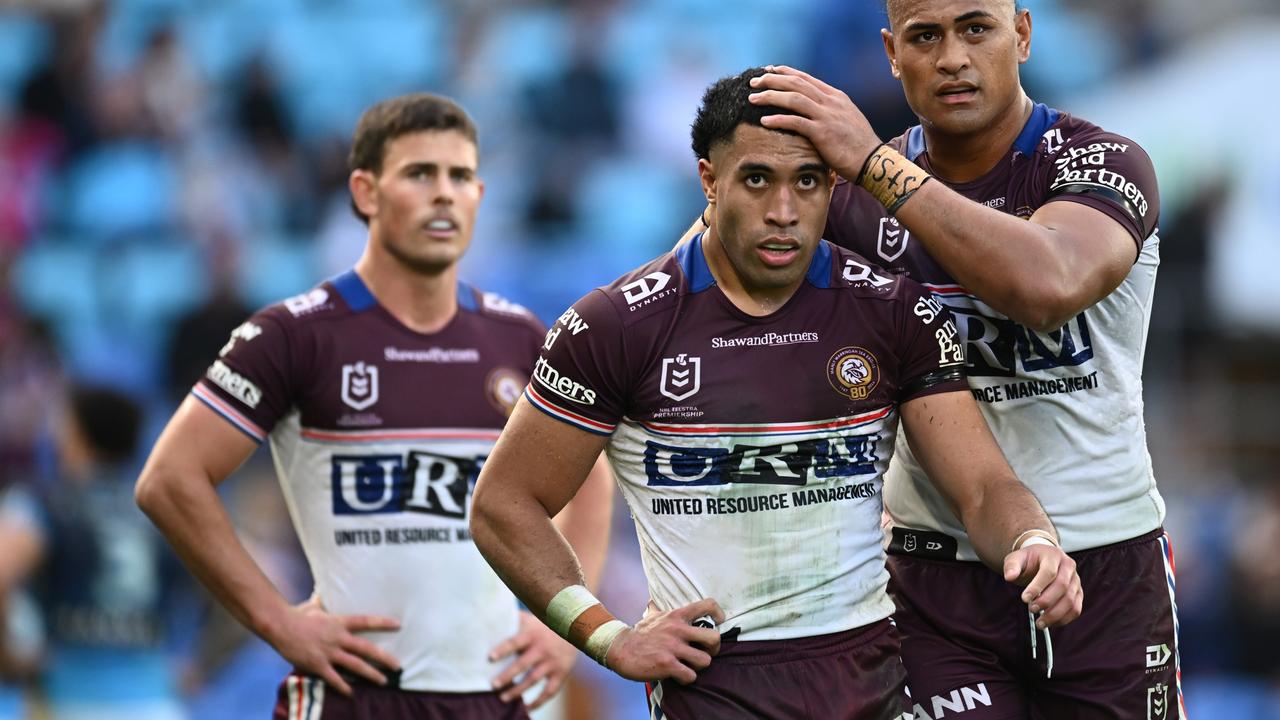
  • ‘Natural leaders’: Jake and Tom Trbojevic to serve as co-captains as Kieran Foran continues to make changes at Manly

    ‘Natural leaders’: Jake and Tom Trbojevic to serve as co-captains as Kieran Foran continues to make changes at Manly

    The Manly Sea Eagles, one of the National Rugby League’s most storied franchises, have announced a major off-field shakeup to their leadership group, with head coach Kieran Foran confirming that club fan favorite Jake Trbojevic will step into a permanent co-captaincy role alongside his younger brother Tom.

    Tom Trbojevic was named the club’s sole captain earlier this year, taking over from club legend Daly Cherry-Evans who departed for the Sydney Roosters at the end of the 2024 season. The star fullback has been sidelined in recent weeks with a hamstring injury, but is on track to make his return to the field next Thursday when Manly faces off against the Canterbury-Bankstown Bulldogs.

    The 2025 NRL season got off to a disastrous start for Manly: the club dropped its first three consecutive matches, resulting in the immediate dismissal of former head coach Anthony Seibold. Foran, who originally joined the club’s staff as an assistant coach, stepped into the interim head coaching role and quickly turned the team’s on-field fortunes around. Impressed by his rapid turnaround of the squad, Manly’s front office signed Foran to a three-year permanent head coaching contract just weeks into his interim tenure.

    During Tom Trbojevic’s injury absence, Jake Trbojevic stepped up to lead the side with remarkable composure and results. That strong performance laid the groundwork for Foran’s decision to share the captaincy between the two brothers, a move that aligns with the team’s current chemistry.

    In addition to the co-captaincy appointment, powerful back-rower Haumole Olakau’atu has been named the club’s sole vice-captain. The appointment comes at a pivotal moment for Olakau’atu, who was recently dropped from the New South Wales Blues State of Origin side and will be eager to prove his selection worth against the Bulldogs next week.

    Speaking on the leadership changes, Foran emphasized that the move was a natural fit for the evolving squad. “Tom and Jake are the natural leaders of this group, and it makes sense to have them as co-captains,” Foran told reporters. “Jake has done an amazing job in Tom’s absence and we knew he would. He stepped up when the team needed him. That’s what leaders do. Haumole has also been wonderful this year, not only in his performances but also in the leadership he brings to the group.

    Right now, what’s best for the team is to have both Tom and Jake sharing the captaincy, supported by Haumole as vice-captain. It’s a pretty straightforward decision to be honest. We are lucky as a group to have two legends of the club leading the way.”

    For Jake Trbojevic, the new role caps off a positive stretch that has cleared up uncertainty around his future in the NRL. Earlier this year, widespread speculation suggested 2025 would be his final season in top-flight rugby league, but the forward has confirmed he will remain with Manly through the 2027 season. A long-time fan favorite and one-club man, Trbojevic said he was eager to take on the new responsibility.

    “I’ve just loved the past few months, and I’ll do whatever is best for the team,” he said. “If Foz (Foran) and Tom want this, then I’m all in. Leading this amazing group of players and playing for this great club is a privilege.”

  • ‘It’s a fit man’s game’: How Cameron Murray changed Origin as calls grow louder for him to start for the Blues

    ‘It’s a fit man’s game’: How Cameron Murray changed Origin as calls grow louder for him to start for the Blues

    Nearly a decade after he entered the National Rugby League, Cameron Murray has emerged as the public face of a sweeping transformation reshaping Australian rugby league’s most iconic competition, State of Origin. Once known as a proving ground for oversized power athletes, where 34 massive players from New South Wales and Queensland would trade brutal hits across 80 minutes of nonstop physical play, the elite representative series is now seeing a clear evolution: while team benches have grown in size, the average build of starting forwards has shrunk, with speed and endurance now prioritized over raw bulk.

    When Murray made his NRL debut in 2017, he lined up alongside the sport’s signature giants: the 100+ kilogram Burgess brothers and other heavy-boned forwards who dominated the era. Just 20 years earlier, the 2006 State of Origin series featured a roster of legendary heavyweights including Steve Price, Willie Mason, Petero Civoniceva and Brent Kite, all tipping the scales well above Murray’s current listed weight of 96 kilograms. Today, that 96kg frame fits perfectly into the new-look game shaped by rule changes designed to speed up rucks and open up play.

    Looking back on his career, Murray recalled early pressure to bulk up to match the sport’s old guard. “When I was coming in, it was the era of the Burgess boys, Ben Te’o, John Sutton and Dave Taylor — all big fellas,” Murray said. “In your mind, you’re like ‘I’ve got to put size on. I’ve got to make sure that I’m as big as these guys’. But as luck would have it, I came in at the right time. The fatigue and the speed of the game started going up, and it probably suited me a little better.”

    Murray credits incremental rule tweaks over the past decade with shifting the sport’s trajectory toward a faster style of play that caters to smaller, more agile forwards. “Some little tweaks in the rules over the years and then the way that the NRL are wanting the game to be played now, they kind of catered that to suit the rules,” he explained. “It’s the way that they want the game to go based on the speed of the game and bringing back the smaller guys. I think that’s suited me well, so I’m not complaining.”

    The impact of Murray’s unique skill set has not gone unnoticed among teammates and analysts. Former rugby league star Braith Anasta is among those calling for Murray to take the starting lock position for the NSW Blues, pushing current captain and long-time standout lock Isaah Yeo to shift to prop or move to the interchange bench. That arrangement already proved successful during the 2024 series, when Murray delivered a dominant performance wearing the number 13 jersey in games two and three.

    Data from Fox Sports Lab underscores how transformative Murray’s presence is for the Blues: the team holds an undefeated 3-0 record when Murray starts at lock. Across 16 total Origin appearances for NSW, the Blues have outscored opponents by 174 points when Murray is on the field, while posting a negative 48-point differential when he sits on the bench. That gap was on full display in 2024’s game one, where Queensland jumped out to an 18-0 lead before Murray entered the game off the bench.

    Even Yeo, who has been the Blues’ starting lock for six years, openly praised Murray’s game-changing ability. “He’s been outstanding for a long time, and we’ve definitely missed him in the Origin arena when he had the achilles (injury) last year and when he had a concussion in another game,” Yeo said. “He’s just one of those players who makes every team he’s in better, whether that’s at lock, coming off the bench or playing in the back row. He’s the ultimate professional. I thought what he and Victor Radley brought into the game off the bench was really important. They brought a point of difference for us.”

    NSW halfback Nathan Cleary, who plays alongside Yeo weekly at club level and teams up with Murray annually for Origin, highlighted the unique dynamic the two forwards create. “The world’s best playmaker loves working with two of the most effective link men in rugby league, with Murray providing a point of difference that Yeo can’t match. He just adds a different type of leg speed,” Cleary said. “I’ve seen Cam play in the centres before, and that speaks volumes to what he brings with his leg speed. He’s got great ball-playing ability as well, so I think the mix of him and ‘Yowie’ is so dynamic. It’s a pleasure to play alongside those two guys.”

    For Murray himself, the debate over whether he deserves a starting spot is irrelevant. His only goal is helping the Blues claim the State of Origin shield after an injury forced him to miss the entire 2023 series. “When I play Origin, I just try to be myself out there. I try to go out and play to my strengths and do what I know needs to be done to get the job done in Origin,” he said. “Origin’s all about effort and going out and doing your best for your teammate, and so that’s what I try to do. If I’m coming off the bench, then I try to bring energy. If I start, I try to start with a level head and I just go out there and try to be the best version of myself and play as best I can in a Blues jersey.”