分类: sports

  • England crush Sri Lanka in Women’s T20 World Cup as Wyatt-Hodge’s 105 powers record total

    England crush Sri Lanka in Women’s T20 World Cup as Wyatt-Hodge’s 105 powers record total

    BIRMINGHAM, England — Host nation England got its 2024 Women’s Twenty20 World Cup campaign off to a historic, electrifying start on Friday, cruising to an overwhelming 87-run victory over Sri Lanka in front of a sold-out-feeling crowd of 14,865 cheering fans at Edgbaston.

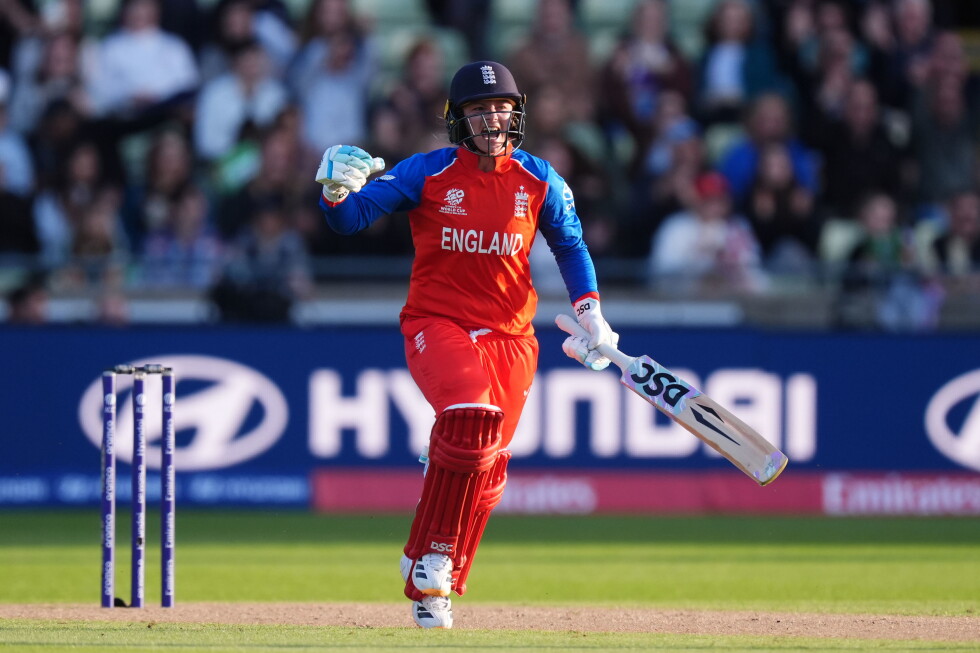
    The story of the match was written by England’s batters, who delivered a tournament record-breaking performance to post the highest total in Women’s T20 World Cup history: 219 runs for the loss of just one wicket at the close of their 20 overs. The standout of the innings was opening batter Danni Wyatt-Hodge, who recently returned to international cricket after maternity leave, finishing an unbeaten 105 runs off 62 deliveries.

    Wyatt-Hodge shared the crease for a game-changing opening stand with Amy Jones, who was promoted up the batting order to open the innings. The pair put on 135 runs together, a new record for England’s highest opening partnership in T20 World Cup history, hitting 100 runs inside the first 10 overs. Jones survived two dropped catches on 12 and 48 before finally being dismissed for 53 runs off 38 balls, cementing her role in the dominant opening display.

    England captain Nat Sciver-Brunt, who only recently made her return to competitive cricket after suffering a torn calf injury in April, also made history during the innings. She survived a dropped catch when she was on 14, and went on to score an unbeaten 46 runs off just 22 deliveries. This knock pushed her career T20 World Cup run total to 784, overtaking former captain and current England head coach Charlotte Edwards’ previous record of 768 to become the nation’s all-time leading run-scorer in the tournament.

    In the final over of England’s innings, Sciver-Brunt gave the final two deliveries to Wyatt-Hodge, who was stuck on 97 runs at the time. The opener wasted no time, hitting the first of the two behind square for a boundary to bring up her century — just the seventh hundred in Women’s T20 World Cup history, and only the second ever scored by an English player. She followed that with another four off the final delivery, closing her innings on 105 not out with 13 fours, marking her third career T20 century.

    After reaching the milestone, Wyatt-Hodge punched the air in celebration before re-creating the iconic baby-rocking celebration first made famous by Brazilian soccer star Bebeto at the 1994 men’s FIFA World Cup. The celebration was a tribute to her newborn daughter Daisy, who was born on May 20 to Wyatt-Hodge and her wife. “It was great fun out there,” Wyatt-Hodge told reporters after the match. “My century celebration was for my daughter Daisy. I hope TV got it.”

    Wyatt-Hodge’s impact extended far beyond her batting performance. In the fourth over of Sri Lanka’s chase, she ran from deep square leg, dove over her shoulder, and pulled off a spectacular one-handed catch to remove Chamari Athapaththu — Sri Lanka’s dangerous captain and biggest batting threat — for just 4 runs. Though she dropped two subsequent catching chances, neither miscue proved costly for England.

    Left-arm fast bowler Freya Kemp turned in a career-defining performance with the ball as Sri Lanka’s chase collapsed. Kemp finished with career-best figures of 4 wickets for just 21 runs, including three wickets in a single over that crumbled Sri Lanka’s batting order and reduced them to 92 runs for 8 wickets. Sri Lanka was eventually bowled out for 132 runs, sealing England’s 87-run opening win.

    The tournament continues Saturday with three group-stage matches: Ireland faces Scotland, Australia takes on South Africa, and defending champion New Zealand meets the West Indies.
  • David Beckham gets Hollywood star as World Cup begins in US

    David Beckham gets Hollywood star as World Cup begins in US

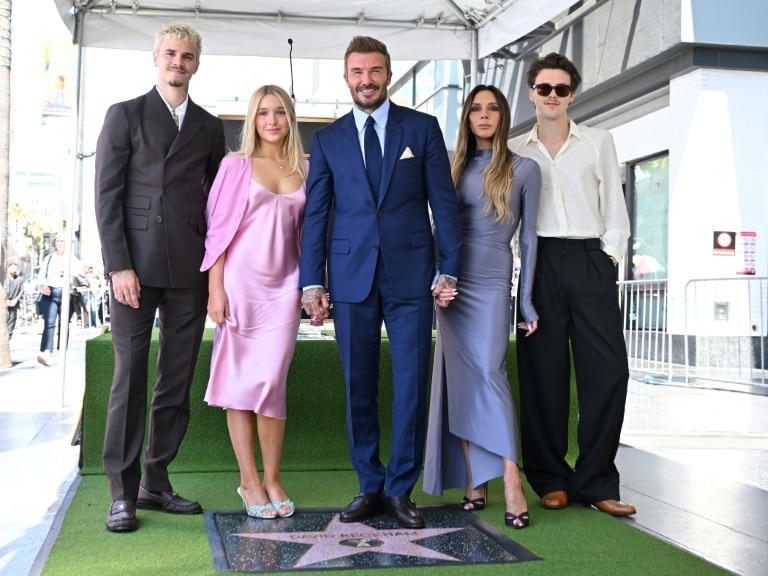
    As the 2026 FIFA World Cup prepared to kick off its first match on U.S. soil, global football icon David Beckham received one of entertainment’s most prestigious honors – a star on the Hollywood Walk of Fame. The 51-year-old former Manchester United and England captain, who cemented his legacy as one of football’s most recognizable global ambassadors, received the honor on a sun-drenched Los Angeles boulevard Friday, with A-list friends, family and adoring fans in attendance.

    Hollywood legend and Beckham’s close personal friend Tom Cruise took to the stage to celebrate the English footballer’s transformative impact on soccer in the United States, an achievement he said deserves far more recognition than a star on a sidewalk. Reflecting on Beckham’s 2007 move to LA Galaxy, where he spent six seasons raising the profile of Major League Soccer (MLS), Cruise noted how the star’s arrival shifted American public perception of the sport forever.

    “When David arrived, Major League Soccer had just 13 teams. Today, it has 30. That’s the impact we’re celebrating today: not just an extraordinary playing career, but a legacy that changed the trajectory of a sport across North America,” Cruise told the gathered crowd. “People who had never watched soccer suddenly had a reason to tune in. Beckham changed this game in this country.”

    For his part, a humbled Beckham called the honor a surreal moment that he never could have imagined as a working-class kid growing up in England. “I’ve always been a dreamer, but I could never have imagined that an honor like this would come to a working-class English soccer player like me,” he said. “How fitting then that I am here today as we prepare to celebrate the opening here in the US of the 2026 World Cup. It’s a powerful moment to recognize how the sport I love so much has grown in this country over the past three decades.”

    Beckham also paid tribute to Cruise, who first welcomed him to Los Angeles nearly 20 years ago, calling the opportunity to be honored by one of Hollywood’s biggest stars “mind-blowing.” “To stand here in front of my friend Tom Cruise, the greatest movie star of our time, is quite frankly overwhelming,” he said. “You welcomed us to LA 20 years ago, and you have been a loyal friend and an inspiration to me ever since.”

    Victoria Beckham, David’s wife, former Spice Girls member and now successful fashion designer and entrepreneur, emphasized that the honor comes at a pivotal moment for American soccer. “Soccer in America is entering one of the most exciting chapters in its history, which makes this incredible honor feel all the more timely,” she said, echoing the widely held view that the 2026 World Cup will cement the U.S.’s status as a major global soccer market.

    This year’s World Cup is co-hosted by the U.S., Mexico and Canada, marking the second time the U.S. has hosted the tournament after its debut as host in 1994. The U.S. men’s national team was set to play its opening match of the tournament against Paraguay in Los Angeles later the same day Beckham received his star.

    After retiring from professional playing in 2013 following a 20-year career stints with global powerhouses including Real Madrid, AC Milan and Paris Saint-Germain, Beckham has continued to shape the growth of American soccer. He co-founded Inter Miami CF, which shocked the global sports world in 2023 when it signed Argentine megastar Lionel Messi, leading the expansion club to its first-ever MLS title last season. Beyond sports, Beckham has also built a successful career in media and entertainment, launching content production company Studio 99 in 2019.

  • World Cup kicks off in Canada with Alanis Morissette and Michael Bublé performing in opening ceremony

    World Cup kicks off in Canada with Alanis Morissette and Michael Bublé performing in opening ceremony

    The historic 48-nation 2026 FIFA World Cup, the largest edition of the global football tournament in history, officially entered its North American co-host phase on Friday, as Canada stepped into the international spotlight with a vibrant, diversity-focused opening ceremony in Toronto ahead of its opening group stage match against Bosnia and Herzegovina.

    A day earlier, the tournament kicked off in Mexico City with its own star-studded opening ceremony featuring global superstars Shakira and Nigerian Afrobeats icon Burna Boy. Later Friday, the United States will play its first match of the tournament in Los Angeles, with a pre-game performance lineup headlined by pop star Katy Perry and Atlanta rapper Future, plus additional sets from Brazilian hitmaker Anitta, South African Grammy winner Tyla, and Blackpink alumna LISA.

    The 2026 World Cup marks the first time the tournament has been split across three host nations: Canada, Mexico, and the United States. The expanded format, which grew from 32 to 48 competing teams, has already cemented its status as the most expansive World Cup ever staged.

    For Canadian football fans, Friday’s opening match in Toronto represented a long-awaited milestone in the country’s sporting history. Thousands of supporters flooded the streets and stadium stands, turning the area around Toronto Stadium into a sea of Canadian red, with fans breaking into an impromptu, heartfelt performance of *O Canada* as they entered the venue. Two local fans, Peter Giacobbe and Robert McIntosh, planned to attend all three of Canada’s group stage matches across the country’s two host cities, Toronto and Vancouver. “We’ve very excited. This is a long time coming,” Giacobbe told reporters, with McIntosh adding, “We woke up this morning realising that this is making Canadian history together.”

    Bosnia and Herzegovina fans brought just as much enthusiasm to the match, marking the team’s first World Cup appearance since 2014. Hundreds of supporters marched to the stadium separately from Canadian fans, with some traveling all the way from the Balkans to cheer on their team, while others with dual roots embraced the unique moment of competing in North America. Layla Mesic, a Bosnian-Canadian who attended the game with her Canadian mother (who wore a Canada jersey), proudly wore Bosnia’s iconic yellow and blue kit. “To even qualify to the World Cup, it’s a big point of pride for us,” Mesic said. “Today I’m 100% Bosnian. It might have cost an arm and a leg, but I’m here, and this is a once-in-a-lifetime experience.”

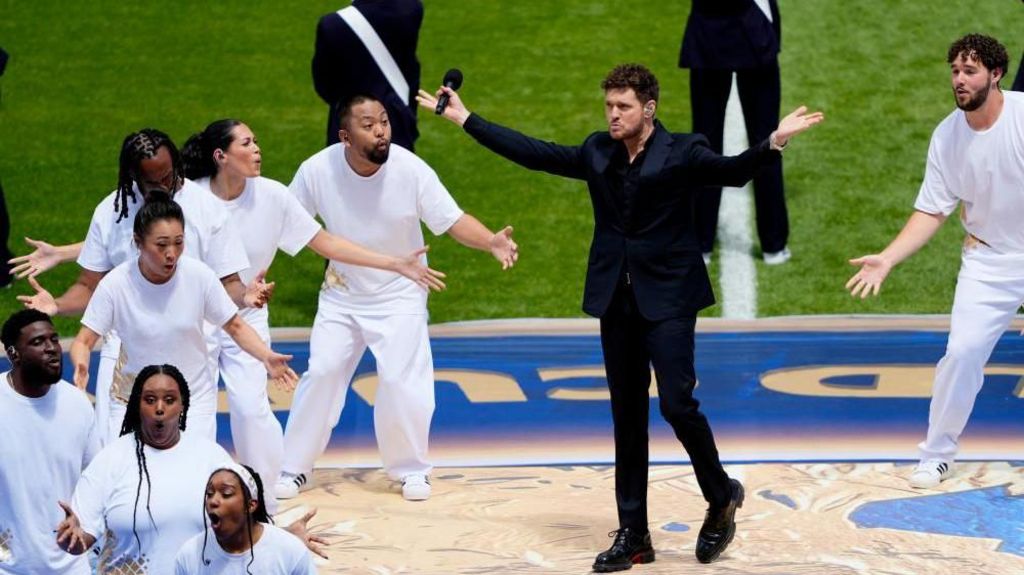
    Canada’s opening ceremony lineup leaned heavily into homegrown talent and the country’s commitment to cultural diversity, as highlighted by organizers. Iconic Canadian artists Alanis Morissette and Michael Bublé headlined the event: Morissette delivered a powerful, crowd-pleasing performance of the Canadian national anthem, while Bublé joined a local choir to lead fans in a rousing rendition of Sam Cooke’s *Bring It on Home to Me*. Additional performers included Grammy-winning singer Alessia Cara, Palestinian singer-songwriter Elyanna, Toronto-born artists Jessie Reyez and Nora Fatehi, and William Prince, an acclaimed Indigenous artist from Manitoba. Organizers noted the curated lineup was intentionally designed to reflect Canada’s diverse communities and rich cultural tapestry. Before kickoff, the stadium announcer invited the entire crowd to join in a round of applause for peace, a quiet moment of unity ahead of the match.

    For fans unable to secure the high-priced match tickets, Toronto offered a free alternative fan zone located just across the street from the stadium, open to attendees on a first-come, first-served basis. Many local fans gathered there to watch the ceremony and match, embracing the energetic atmosphere even with heavier-than-usual traffic disruptions across the city. “Getting tickets for the actual game wasn’t even a consideration for us because of the high cost,” said Torontonian Angela Aco, who attended the fan zone to cheer on Canada. “It’s great to see people from all over the place. We just roll with the punches,” she added, noting that Michael Bublé’s performance was her favorite part of the opening ceremony.

    Notably, top political leaders from all three host nations are skipping their respective countries’ opening matches. U.S. President Donald Trump will not attend the Los Angeles match, with Secretary of State Marco Rubio attending in his place. Canadian Prime Minister Mark Carney is currently on a working trip to France ahead of next week’s G7 summit, where he is scheduled to meet with French President Emmanuel Macron on Friday. Mexico’s President Claudia Sheinbaum also skipped her country’s opening match on Thursday, announcing she was staying away in protest of the tournament’s exorbitant ticket prices.

    Looking ahead to the end of the tournament, FIFA has planned a historic first for the World Cup: a Super Bowl-style halftime show during the July 19 final at MetLife Stadium in New Jersey, the first of its kind in the tournament’s nearly 100-year history. The closing ceremony and halftime show will feature an all-star lineup headlined by Coldplay’s Chris Martin, Madonna, and Shakira, capping off the month-long global sporting event.

  • Partey denied entry to Canada for Ghana’s World Cup opener

    Partey denied entry to Canada for Ghana’s World Cup opener

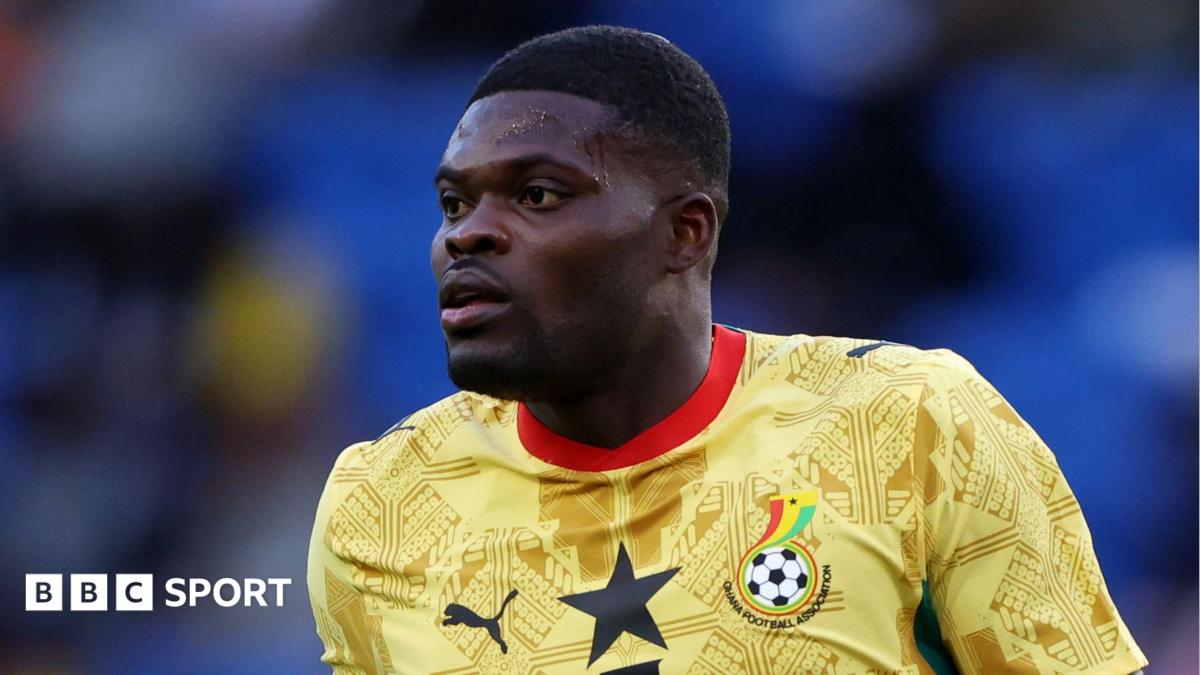
    As the 2026 FIFA World Cup co-hosted by the United States, Mexico and Canada gets underway, a high-profile eligibility dispute has emerged: Ghanaian star midfielder Thomas Partey has been barred from entering Canada, forcing him to miss the Black Stars’ opening group stage match against Panama in Toronto.

    The 32-year-old Villarreal playmaker, who previously featured for English Premier League side Arsenal, was selected by Ghana for his second consecutive World Cup appearance. Partey currently faces seven counts of rape and one count of sexual assault filed by four separate complainants over allegations that date back to the period between 2020 and 2022. He has formally pleaded not guilty to all charges, and his trial is scheduled to begin next year; he has not been convicted of any offense as of the tournament’s opening.

    In an official statement confirming the development, global football governing body FIFA explained that Partey, who was with Ghana’s squad at their pre-tournament training base in Boston, had his visa application rejected by Canadian immigration authorities. “FIFA is not involved in the immigration processes of host countries, including the adjudication of visas,” the statement read. “The host government ultimately determines who receives a visa and is admitted into the country.”

    Under Canadian immigration regulations, individuals who have been charged with or convicted of criminal offenses may be deemed inadmissible to enter the country. Even though Partey has not been found guilty of any crime and is awaiting trial, the policy still led to his entry being blocked.

    Ghana head coach Carlos Queiroz, who selected Partey to the 2026 squad despite the pending legal issues, has stood firmly by his decision ahead of the tournament. “If the player is here with me, my answer is clear,” Queiroz said. “I don’t have any comments about my own decisions. He is here so what are we talking about? This is not for me or you to make a judgement about. Let the events run their normal course; let the river flow and one day when the river meets the ocean we are going to find the truth.”

    While Partey will sit out Ghana’s opening clash, he remains eligible to feature in the team’s two remaining Group L matches, which will both be held on U.S. soil. Ghana is scheduled to face England at Boston Stadium in Foxborough on June 23, before taking on Croatia in Philadelphia four days later.

    This is not the first instance of immigration issues affecting teams and officials ahead of the 2026 co-hosted World Cup. Iraqi striker Aymen Hussein was detained for multiple hours of questioning at Chicago O’Hare International Airport before being granted entry to the U.S. Iran’s national team was forced to relocate their pre-tournament training base from the U.S. to Mexico, after multiple members of the Iranian delegation had their visa applications rejected, and hundreds of Iranian fans had their match tickets revoked. Separately, Somali referee Omar Artan was denied entry to the United States, with a source from the former Trump administration citing his alleged “association with suspected members of terror organisations” as the reason for the ban.

  • ‘Nightmare from start to finish’ for South Africa in opener

    ‘Nightmare from start to finish’ for South Africa in opener

    The 2026 FIFA World Cup’s Group A opening match delivered far more than a three points for co-hosts Mexico, who wrapped up a comfortable 2-0 victory over South Africa at Mexico City’s iconic Estadio Azteca in a game marred by two red cards for Bafana Bafana, tactical criticism, and rising continental tension over South Africa’s recent anti-migrant violence.

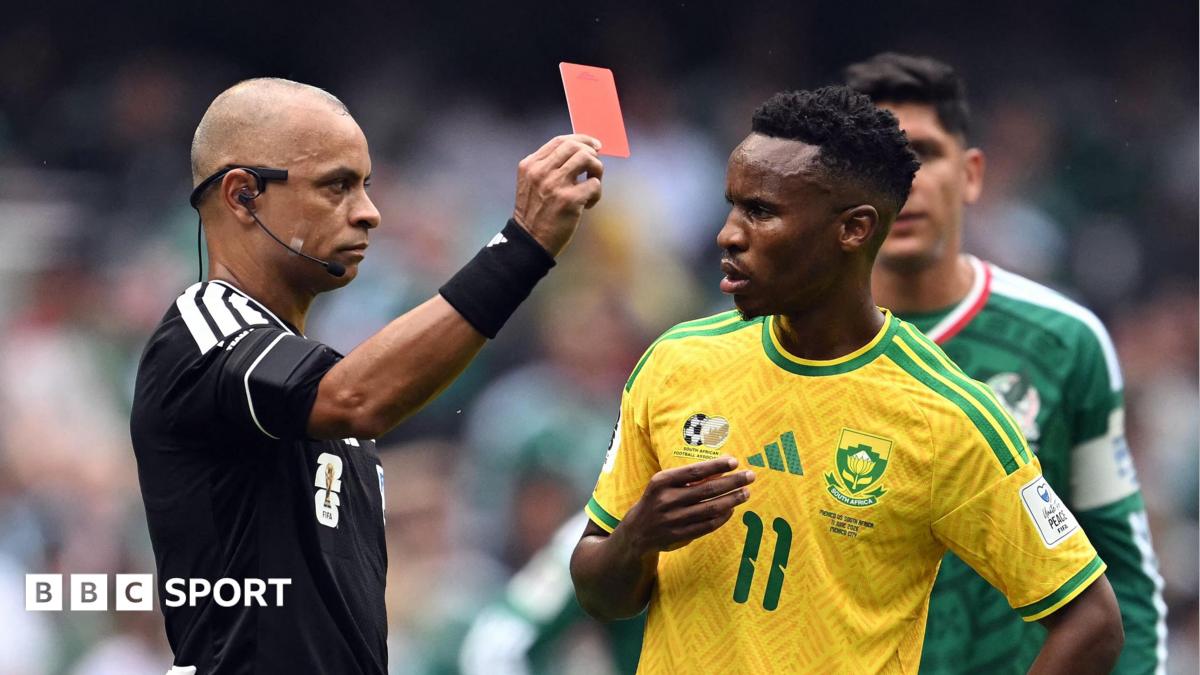
    South Africa’s match unraveled within the opening 10 minutes, when midfielder Sphephelo Sithole lost possession on the edge of his own penalty area, allowing Mexico to convert the early chance and take a 1-0 lead. The second half delivered more setbacks: Sithole was shown a red card, followed by a second dismissal for forward Themba Zwane in the 84th minute after a VAR review upgraded a potential foul to a straight red for violent conduct. The sending-off marked only the second time in World Cup history that an African side has had two players dismissed in their opening finals match, a statistic last recorded by Cameroon against defending champions Argentina in 1990 – a match the Indomitable Lions famously won 1-0, a result South Africa never came close to matching.

    Former South African captain Dean Furman, commentating for BBC Radio 5 Live, described the performance as “a nightmare from start to finish.” He argued that no Bafana Bafana player could claim to have performed to their potential, saying “Mexico were in total control from minute one. They looked more assured, they were calm in possession. It was just turnover after turnover after turnover, and when you’re playing against quality opposition you get punished.”

    On the contentious second red card, South Africa head coach Hugo Broos – the oldest coach at this year’s tournament at 74 – disputed the call, claiming Mexican winger Roberto Alvarado blocked Zwane and went down unnecessarily. However, Furman, who played alongside Zwane for several years, said the call was justified under modern rules: “I know it’s incredibly soft but it’s the modern game, you can’t lash out. It’s going to be an interesting World Cup if that’s what we’re giving red cards for but that is the game today. You can’t do that.”

    South African captain Ronwen Williams acknowledged the disappointing result but sought to highlight his side’s resilience, even with two players down. “Obviously the opening game of the World Cup comes with so much emotion,” the 34-year-old said. “We knew they were going to have the atmosphere, the energy behind them and we didn’t want to concede in the opening few stages. And then that’s exactly what happened. As difficult as it was with two guys sent off, we didn’t give up. It shows the mentality that we have and the character that we kept fighting.”

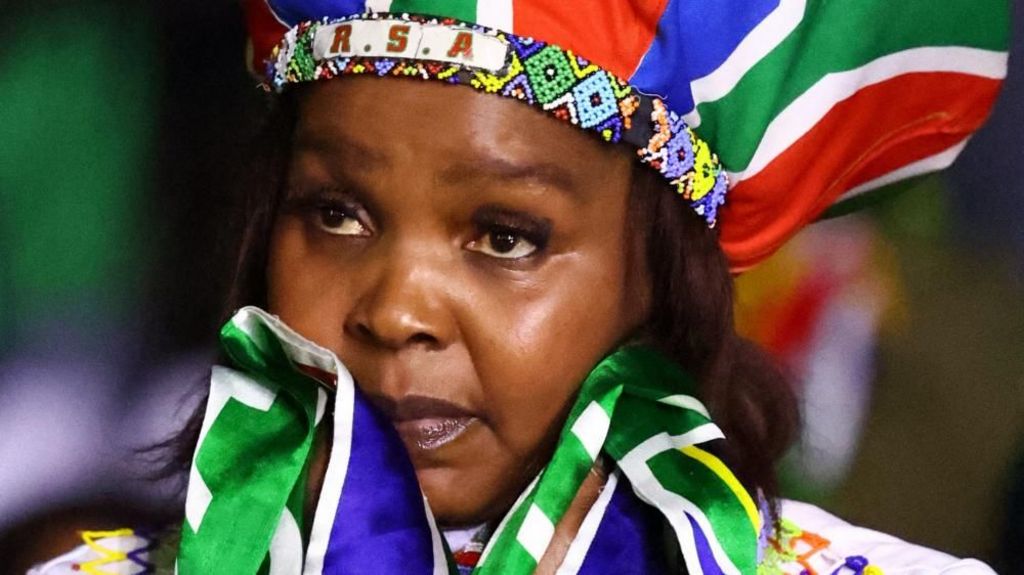
    Domestic fans in Johannesburg were far less forgiving. Relebogile Lairi called the performance a “very disappointing start,” saying supporters “expected a lot more from the boys” and blamed widespread “stage fright.” Nicholas Makomene criticized Broos’ defensive 5-3-2 setup, saying there was “no need to park the bus” against the co-hosts.

    Beyond the pitch, the result exposed deep divides across the African continent, 16 years after South Africa made history as the first African nation to host the World Cup, a moment that unified the continent behind African teams. This year, many fans across Africa backed Mexico over South Africa, in response to recent anti-migrant protests and violence in South Africa that has led multiple African nations to repatriate their citizens. South African officials have condemned the violence and rejected accusations of xenophobia, but that has done little to ease tensions.

    In Nairobi, Kenyan organizer Elisha Kamau held a “hate-watch” party that drew nearly 200 attendees, almost all of whom supported Mexico. “The second reason I think is just the timing of the xenophobic attacks. It depends who is playing South Africa, but I think most people would support the other team,” Kamau explained. Congolese fan Daniel Kaniki, watching from a fan park in Atlanta, echoed that sentiment: “Africa is like one country and if one is chasing others, we are not a family any more. That’s why I’m supporting Mexico.” Not all fans across the continent aligned with this view, however: Ghanaian fan Vanlare Quist said he rooted for South Africa, arguing that anti-immigrant sentiment was driven by a small minority of bad actors, not the entire nation.

    Looking ahead, South Africa faces a must-win second Group A match against the Czech Republic on June 18. Both teams enter the fixture winless, after the Czechs dropped a 2-1 opening match result to South Korea. Furman is pushing for a major tactical shift, urging Broos to abandon the defensive 5-3-2 setup he used against Mexico in favor of the more attacking 4-3-3 formation that fits South Africa’s traditional style of play.

    “They have to put this to bed very, very quickly,” Furman said. “I know you’re playing against better opposition in a big match and you’re probably looking to soak up the pressure and go a little bit more defensive, but that’s just not our style at all. For me, going forward, you’ve got two games left to save yourself, to try and get a victory to get yourself into the next round. Go with our 4-3-3. Put your attacking players on, put your number 10s on, your more imaginative players. Let’s see what South African football is all about.”

  • Ethiopia’s Tsegay handed four-month doping ban

    Ethiopia’s Tsegay handed four-month doping ban

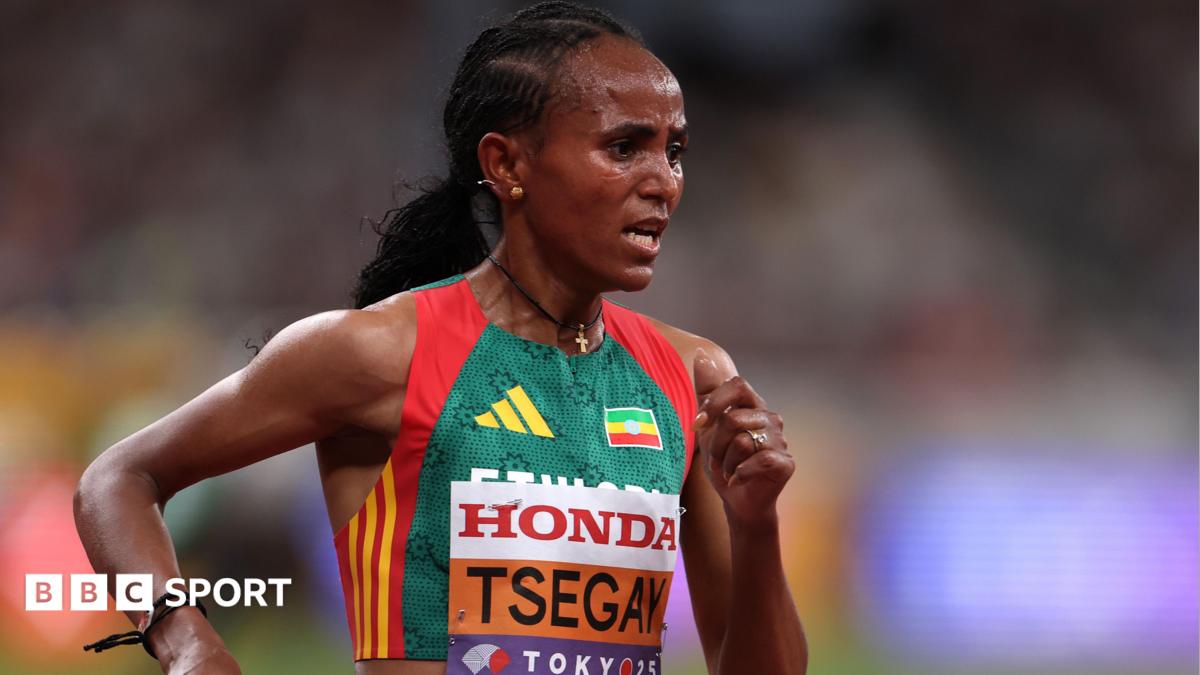
    One of Ethiopian long-distance running’s most decorated champions, Gudaf Tsegay, has been issued a four-month competition ban following a positive doping test that detected a banned aromatase inhibitor in her system. The 29-year-old, a two-time world champion and Olympic bronze medalist, has not competed since last October, months before the case became public.

    Tsegay’s athletic resume includes a 5,000m world title in 2022, a 10,000m world championship crown in 2023, and a bronze medal in the women’s 5,000m at the 2020 Tokyo Olympic Games. She also claimed bronze in the 10,000m at the 2023 World Athletics Championships held in Tokyo, her last major competitive appearance before stepping off the track.

    The positive result emerged from an out-of-competition doping test conducted last December, where analysts found a metabolite of Letrozole, a substance classified as a prohibited aromatase inhibitor on the World Anti-Doping Agency (WADA) banned list. Clinically, Letrozole is primarily used to treat breast cancer by reducing estrogen levels in the body.

    When the Athletics Integrity Unit (AIU) notified Tsegay of the positive finding in late January, the runner responded within 24 hours to confirm she had been prescribed the drug to treat a officially diagnosed medical condition, and submitted full supporting medical documentation to back up her claim. In February, Tsegay filed an application for a retroactive therapeutic use exemption (TUE) with World Athletics, the governing body for international track and field. World Athletics confirmed that her ongoing treatment aligned with WADA’s international standards for approved TUEs, but WADA ultimately rejected her request for a retroactive exemption granted under exceptional circumstances.

    Following the rejection, Tsegay entered a formal case resolution agreement with both WADA and the AIU to settle the violation without extended litigation. In an official statement announcing the ban, the AIU noted that the four-month sanction was deemed appropriate under anti-doping rules governing cases where the athlete bears minimal to no fault or negligence.

    The length of the ban was determined based on multiple mitigating factors: Tsegay’s limited degree of fault, her immediate and honest admission of the violation, the confirmation that her use of Letrozole met WADA’s TUE standards for medical need, and the formal finding that she would have been approved for a TUE if she had submitted the application before taking the medication. The ban has been backdated to 1 June 2024, and will remain in effect through 30 September 2024.

  • New Zealand great Williamson says ‘right time’ to retire from international cricket

    New Zealand great Williamson says ‘right time’ to retire from international cricket

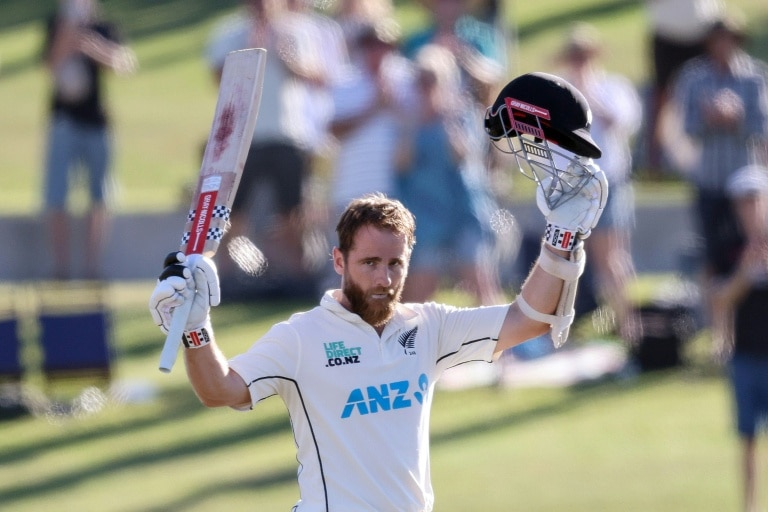
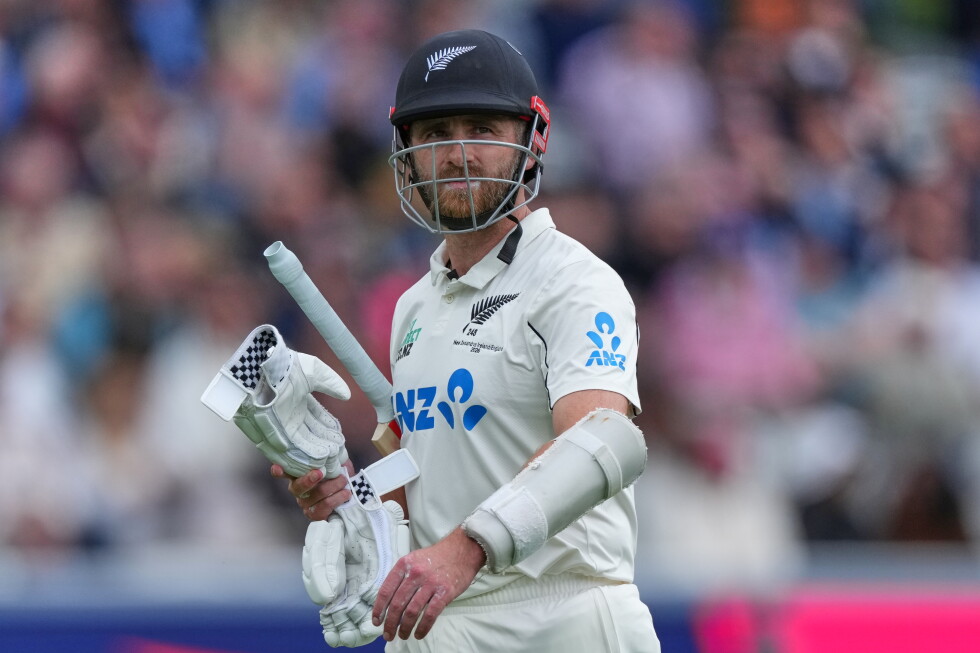
    One of international cricket’s most respected modern stars and New Zealand’s all-time leading run-scorer Kane Williamson has shocked the global cricket community by announcing his immediate retirement from all forms of international cricket on Friday. The 35-year-old made the announcement mid-way through New Zealand’s ongoing three-Test series against England, just days out from the series’ second Test scheduled to begin at The Oval next week.

    Williamson featured in the opening Test of the series at Lord’s last week, where the Black Caps fell to defeat, posting scores of 0 and 18 in the two innings. The veteran batsman explained that his decision to step away had come after months of reflection, and that the timing felt right to close out his 14-year international career.

    “I’ve thought about it for a while, but over the last few days it’s become clear now is the right time,” Williamson said. “I’ve always felt a strong drive and hunger for international cricket, and I take pride in knowing I’ve given it my all in every match I’ve played for New Zealand. Continuing with anything less wouldn’t be right and I feel fortunate to step away on my own terms.”

    The unexpected timing of the announcement, which came just one match into a planned series and with future home series against India and Australia already scheduled for the 2026/27 season, caught many fans and analysts off guard. But speaking to reporters in London after the announcement, Williamson said he was confident his departure would clear the way for the next generation of Black Caps talent to step up and thrive.

    “When I look at the dressing room now and I see the talent, and the journey that I think this team’s looking to go on, it just feels like the right time for me to step away. I feel really good about it,” he added.

    Widely regarded as one of the four best batsmen of his generation, Williamson is part of the so-called ‘Fab Four’ alongside modern greats Virat Kohli of India, Australia’s Steve Smith and England’s Joe Root. He made his international debut for New Zealand in 2010, and went on to represent the Black Caps across 378 matches, finishing his career with an unprecedented 19,346 international runs. His record includes 48 centuries and six double-centuries across all formats, making him New Zealand’s most prolific run-getter in the history of the sport.

    In Test cricket, the format where he earned his greatest acclaim, Williamson played 110 matches, amassing 9,515 runs at an elite average of 54.06 with 33 centuries to his name. Beyond his on-field batting prowess, he earned widespread praise for his calm, thoughtful leadership, serving as captain across all three formats from 2016 to 2024, a golden era for New Zealand cricket. Under his captaincy, the Black Caps reached two 50-over World Cup finals, three World Cup semi-finals, and claimed the title of the inaugural ICC World Test Championship in 2021.

    Current New Zealand head coach Rob Walter paid warm tribute to Williamson’s legacy, emphasizing that his impact extended far beyond his statistical achievements. “Anyone who’s had the privilege of working with Kane understands he is a very special player and person. His numbers and batting skills speak for themselves, but it’s what he means to this Black Caps team, as well as world cricket — that will be his legacy,” Walter said.

    Walter acknowledged that Williamson’s departure would leave a gaping hole in the New Zealand line-up for the upcoming second Test against England. “You don’t lose Kane Williamson off the team sheet and get stronger, because he’s a legend,” he added. When asked who would replace Williamson in his traditional batting spot at number three for the Oval Test, Walter declined to confirm a replacement. The likely candidates are reserve batsman Henry Nicholls, who is already in the touring squad, or rising star Rachin Ravindra, who could move up one position from his current spot at number four.

    Williamson’s career is decorated with some of the highest honours in the sport: he was named ICC Cricketer of the Year in 2015 and ICC Test Player of the Year in 2019, and won New Zealand cricket’s most prestigious domestic award, the Sir Richard Hadlee Medal, a record four times.

    Sir Richard Hadlee himself, one of New Zealand cricket’s all-time greatest icons, issued a statement praising Williamson’s career and leadership. “He’s demonstrated a willingness to continually advance his game to the highest level in all three formats and he rightfully finishes as one of the best players of his era,” Hadlee said. “The way he prepared himself physically and mentally was perhaps the most impressive part. He was always committed to working hard and developing his technique to ensure he was ready to be a world class player. He’s been an unflappable leader and the architect of some of our greatest moments in cricket.”

  • New Zealand great Kane Williamson announces immediate retirement from international cricket

    New Zealand great Kane Williamson announces immediate retirement from international cricket

    On Friday, New Zealand cricket icon Kane Williamson brought an abrupt end to his celebrated 16-year international career, announcing his immediate retirement from all forms of global competitive cricket that cemented his status as one of the finest batters of the modern era.

    The formal announcement was first shared by New Zealand’s men’s national cricket team, the Black Caps, on the social platform X, before a full statement detailing the decision was published on New Zealand Cricket’s official website. “New Zealand’s most prolific all-format run scorer and arguably greatest ever batsman Kane Williamson has confirmed his retirement from international cricket effective immediately,” the official statement read. “Williamson’s announcement brings an end to a glittering 16-year international career that has seen him play 378 games for his country (in all formats), setting countless batting records and earning the respect and admiration of the cricketing world.”

    At 35 years old, Williamson leaves the international stage with a historic statistical legacy that will stand the test of time. Across 92 Test matches, he accumulated 9,515 runs at an elite average of 54.06, with a career-high score of 251 notched against South Africa. His one-day international record is equally impressive: 15 centuries and 7,256 runs at an average of 48.69, while he added a further 2,575 runs in Twenty20 international cricket. In total, he scored 33 Test centuries, the most by any New Zealand batter in the format’s history, and also contributed with occasional off-break spin bowling, picking up 30 Test wickets and 37 ODI wickets throughout his career.

    Widely regarded as one of the “Fab Four” of modern batting – alongside Virat Kohli of India, Australia’s Steve Smith and England’s Joe Root – Williamson built his reputation on a technically flawless, graceful style marked by unrivaled concentration. His signature playing traits, including the ability to play fast bowling late with soft hands and devastatingly timed back-foot drives, made him a nightmare for even the most elite bowlers across all conditions.

    Beyond his on-field talent, Williamson earned global acclaim for his exceptional sportsmanship and calm leadership. He became a symbol of fair play following New Zealand’s heart-wrenching, last-ball loss to England in the 2019 50-over World Cup final, where he consoled opposing players and handled the devastating defeat with extraordinary grace. Just two years later, he captained the Black Caps to a historic first-ever World Test Championship title, beating India in a tense final to etch his name into cricket folklore.

    In his retirement statement, Williamson noted that he had weighed the decision for an extended period, and concluded the timing was right to step away from the international game. “I’ve thought about it for a while, but over the last few days it’s become clear now is the right time,” he said. “I’ve always felt a strong drive and hunger for international cricket, and I take pride in knowing I’ve given it my all in every match I’ve played for New Zealand.”

    “It’s a team I love, and I feel incredibly fortunate to have been part of it for so long. It will continue to be dear to my heart,” he added. “I leave feeling optimistic about where this group is heading. There’s a huge amount of talent, and a real desire to do something special with this New Zealand team.”

    Black Caps head coach Rob Walter paid tribute to Williamson’s far-reaching impact on both the national team and global cricket, emphasizing that his legacy extends far beyond his on-field statistics. “Anyone who’s had the privilege of working with Kane understands he is a very special player and person,” Walter said. “His numbers and batting skills speak for themselves, but it’s what he means to this Black Caps team, as well as world cricket that will be his legacy.”

    “Kane’s always put the team first and although we’re disappointed to see him go, we’re happy to know he’s content and at peace with his decision,” Walter added.

    Williamson’s retirement announcement comes in the middle of New Zealand’s three-Test tour of England, with the second Test scheduled to get underway next Wednesday at London’s Oval. His final appearances for the Black Caps came in the opening Test at Lord’s, where he scored zero and 18 on a challenging pitch as New Zealand fell to a defeat. The Black Caps confirmed that a replacement for Williamson for the remainder of the series will be announced in the coming days.

  • South Africa trolled by African fans in wake of World Cup loss

    South Africa trolled by African fans in wake of World Cup loss

    As the final whistle blew on the opening match of the 2026 expanded FIFA World Cup between South Africa and co-host Mexico, the 2-0 defeat for Bafana Bafana left South African supporters heartbroken — but what unfolded across social media revealed a far deeper rift than a disappointing on-pitch result. In a break from the long-held tradition of pan-African unity that defines continental participation in major global tournaments, fans across the continent threw their support behind Mexico, linking their choice to ongoing deadly xenophobic violence targeting African migrants in South Africa.

    The 2026 World Cup, co-hosted by the United States, Canada and Mexico, features 10 African teams in its expanded 48-team format, marking a historic high for continental representation. Ahead of Thursday’s Group stage opener, many African football fans already made clear their decision to back Mexico, directly tying the choice to simmering anti-migrant tensions that have roiled South Africa in recent weeks.

    Social media was flooded with playful but pointed content after the match: users changed their profile pictures to Mexican flags, adopted Spanish pseudonyms, and shared memes featuring sombreros under the trending tagline “Mexico versus xenophobia.” One user on platform X, referencing widespread reports of migrant mistreatment, asked bluntly: “You want people to cheer for you when you play soccer just because we’re African?” Another echoed the sentiment, leaning into the baseless narrative that foreign workers drive South Africa’s unemployment crisis to joke: “We’re supporting Mexico so that South Africa can go back home early to protect their jobs.” Prominent Kenyan lawyer Ahmednasir Abdullahi added a sharp, satirical take: “I hope South Africa is not blaming African migrants for the 2–0 defeat and two red cards in the match against Mexico.”

    In-person fan sentiment reflected the same divide. Daniel Kaniki, a Congolese supporter who attended a public fan viewing event in Atlanta, Georgia, told reporters the split came down to basic solidarity. “Africa is like one country and if one is chasing others, we are not a family any more. That’s why I’m supporting Mexico today,” he explained.

    Not all fans from across the continent sided against South Africa, however. Vanlare Quist, a Ghanaian fan also at the Atlanta viewing park, said he remained firmly in Bafana Bafana’s corner. As a proud African, he argued that anti-immigrant sentiment is driven by only a small minority of South Africans, not the nation as a whole. In Juba, the capital of South Sudan, public viewing center attendees uniformly backed South Africa, rooted in shared historical struggle: South Sudan’s fight for independence from Sudan has long drawn ideological connection to South Africa’s fight against apartheid white-minority rule.

    “It was unfortunate that on social media we saw some African countries supporting Mexico and even wearing Mexico jerseys. As South Sudanese, we are behind South Africa and will continue to support South Africa – because they are representing Africa. So, all African countries must support South Africa during this World Cup,” 23-year-old student George Kenyi Charles Rehan told reporters from Juba.

    Back in South Africa, supporters pushed back against the wave of online trolling after the defeat, doubling down on their pride in the national team. The South African government also released a statement commending Bafana Bafana for their “spirited performance,” noting that “while the final score was not what the nation had hoped for, the team represented South Africa with unity, determination, and a sense of pride on the world’s biggest stage.”

    Many South African social media users rejected criticism of the country’s immigration policies, with one writing: “We qualified for the World Cup alone without your support and whether we win or lose we will remain South Africans who love their country. And illegal immigrants will still leave our country whether you hate us or not.”

    The continental rift exposed by the World Cup opener is rooted in a years-long surge of anti-migrant sentiment that has escalated dramatically in recent weeks. Migrants from other African nations have faced targeted violence and intimidation, with extremist anti-migrant groups issuing a 30 June deadline for all undocumented foreign nationals to leave the country.

    South African President Cyril Ramaphosa has publicly condemned vigilantism, stressing that “only authorised government officials can act against violations of our law.” But he has also acknowledged that public frustrations over immigration “deserve to be heard, and they deserve to be addressed.”

    In response to the escalating threats, multiple African nations have begun repatriating their citizens from South Africa. Nigeria became the latest country to announce evacuations this week, joining Ghana, Zimbabwe and Malawi, all of which have already moved to bring their citizens home amid safety concerns.

    The roots of the current crisis stretch back to the end of apartheid in 1994, when thousands of people from across the continent moved to South Africa seeking greater economic opportunity. Today, however, South Africa struggles with an official unemployment rate exceeding 30%, a crisis that has fueled scapegoating of foreign workers and sparked regular anti-migrant protests and deadly xenophobic attacks in major urban centers.

    Despite the opening defeat, South Africa still has two remaining Group stage matches to climb out of the bottom of the table and qualify for the knockout round of the expanded tournament, leaving the nation with an opportunity to prove its quality on the pitch even as tensions off the field continue to simmer.

  • Australia coach Popovic signs contract extension ahead of Socceroos’ opener at World Cup

    Australia coach Popovic signs contract extension ahead of Socceroos’ opener at World Cup

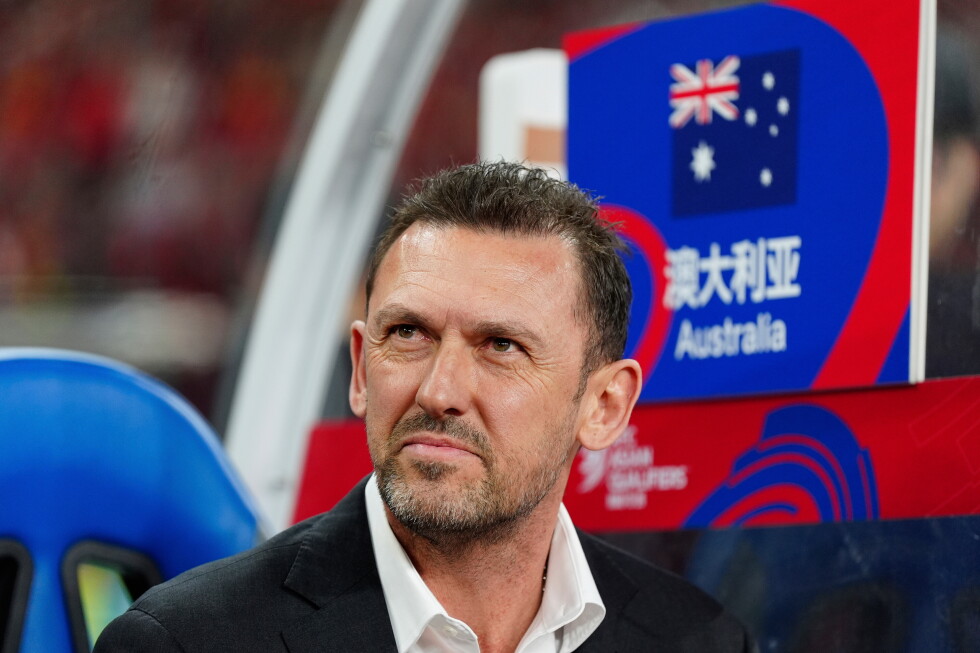
    On the eve of Australia’s opening 2026 FIFA World Cup Group D clash with Turkey, Football Australia has announced a major vote of confidence in men’s national team head coach Tony Popovic: a contract extension that will keep him at the helm through the start of 2027.

    The 52-year-old manager, a former Socceroos player himself, only took the position in September 2024, but quickly guided the Australian side through a successful qualification campaign that booked their spot in the expanded 48-team World Cup tournament. Under the new terms of the deal, Popovic will also lead Australia through the 2027 AFC Asian Cup, scheduled to be held across Saudi Arabia in January and early February of that year.

    Speaking ahead of his side’s first World Cup group stage match Saturday, Popovic emphasized that his full focus remains on the tournament at hand, rather than the new contract. “I’m proud to lead my country into a World Cup, but most importantly, I want to ensure that our team is fully prepared and focused on our group matches against Turkey, the United States, and Paraguay,” he said, outlining the three tough opponents Australia will face in the opening round of the competition.

    The contract extension announcement comes amid significant anticipation for the Socceroos’ World Cup run, with fans and governing body officials alike signaling approval of Popovic’s early work rebuilding the national squad following his appointment last year.