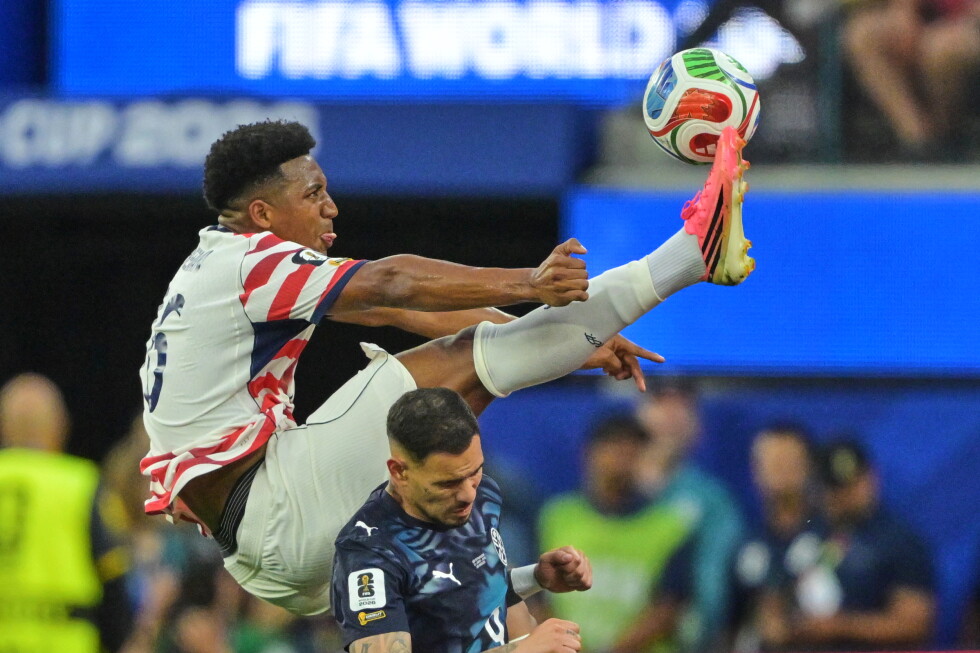
LOS ANGELES, INGLEWOOD — With nearly five decades of experience capturing iconic sports moments behind the camera, veteran Associated Press freelance photographer Jayne Kamin-Oncea has built a decades-long career documenting athletic competition, including 10 years covering major events in Southern California for the AP and 27 years with the *Los Angeles Times*. Her career traces back to 1978, when she got her start as an AP stringer in Miami while still earning her degree at the University of Miami. This tournament, she captured one of the most talked-about images from the opening match of the 2026 FIFA World Cup hosted on U.S. soil, the Friday matchup between the U.S. Men’s National Team and Paraguay. In a first-person breakdown, Kamin-Oncea walked through how the standout shot came together. From the opening kickoff, the energy inside SoFi Stadium was palpable, with U.S. forward Alex Freeman and his teammates locking in on their opponent from the first whistle. For Kamin-Oncea, the goal of any sideline coverage is to capture the raw intensity of players fighting to keep the ball in play, moments that often leave them teetering on the edge of the out-of-bounds line, walking a figurative tightrope between maintaining possession and turning the ball over. As the play unfolded, she immediately recognized she was framing a shot that would stand out for its raw tension. The final frame that made the cut shows Freeman airborne, elevated well above Paraguay’s Antonio Sanabria’s head and shoulders — a composition that many have interpreted as a visual metaphor for the U.S. team’s dominant performance over Paraguay in the matchup. To capture the shot, Kamin-Oncea relied on her trusted setup: a Nikon Z9 paired with a 400mm f/2.8 lens. With the action unfolding deep downfield, she activated the camera’s crop sensor button to get a tighter framing of the play, a choice that let her zoom in on the moment without sacrificing image quality. While many sports photographers critique the natural lighting conditions inside SoFi Stadium, Kamin-Oncea says the light works perfectly with her camera configuration, making it easy to get sharp, vivid shots. Her go-to settings for fast-paced soccer action include a 30 frames per second continuous shooting speed, with a one-third second pre-release buffer that lets her capture moments starting just before she fully presses the shutter. She always uses an extremely high shutter speed of 1/4000 of a second to eliminate any motion blur from fast-moving players, and adjusts the ISO on the fly to match shifting light conditions throughout the match. When evaluating what makes the shot work so well, Kamin-Oncea points to the striking composition: Freeman’s dramatic vertical jump above Sanabria, with his leg extended high, creates a dynamic visual that immediately draws the eye. She added that the sequence of shots from the play improved steadily through the final frames, with the last shot capturing the peak of the action perfectly. The image is just one of hundreds of shots from AP’s ongoing 2026 FIFA World Cup coverage, which can be accessed via the AP News hub.
分类: sports
-
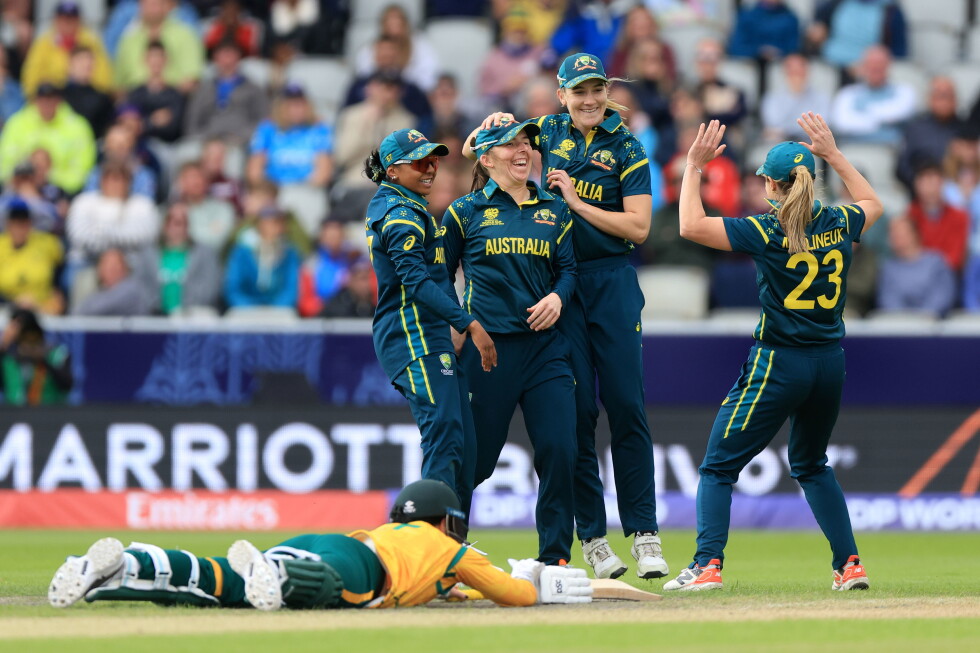
Australia thumps South Africa by 65 runs in Women’s T20 World Cup opener
The 10th edition of the Women’s Twenty20 World Cup kicked off its opening round of group-stage matches in blustery, overcast Manchester on Saturday, delivering two dramatic results that have already shaken up early tournament standings. Seven-time world champions Australia delivered a statement 65-run victory over two-time consecutive runner-up South Africa at Old Trafford, while Scotland notched its first-ever win in Women’s T20 World Cup history at Ireland’s expense.
Australia, bidding for an unprecedented seventh global crown, got off to a rocky start in its innings. Opener Georgia Voll fell for a duck on her World Cup debut, and star batter Beth Mooney was sent back to the pavilion in just the fourth over. Young phenom Phoebe Litchfield, who had missed Australia’s final warm-up match with a quad strain and was only cleared to play hours before kickoff, stepped up early after being thrown into the fray in the first over. Undaunted by the high-stakes stage and South Africa’s star pace attack, Litchfield attacked from ball one: she charged at seasoned seamer Marizanne Kapp, pulled veteran pacer Shabnim Ismail for a maximum, and used deft touches—including a scoop and a sweep—against Ayabonga Khaka to race to a 23-ball half-century. She fell the next delivery for 61, leaving Australia reeling at 61-3, but a 58-run partnership between Ellyse Perry and Georgia Wareham, with both batters contributing 30-plus runs, dragged the side to a final total of 172-8 off 20 overs.
South Africa, which knocked Australia out of the 2024 tournament in the semifinal, faced early setbacks of its own, collapsing to 7-2 before captain Laura Wolvaardt and Nadine de Klerk rebuilt the innings. The chase turned once again on spin, as leg-spinner Georgia Wareham bowled de Klerk, then helped run out a sluggish Kapp. Wolvaardt kept the Proteas in contention, even as the required run rate climbed to 11 per over, but after smashing Australian captain Sophie Molineux for a six over long off, she was caught out in the covers by Wareham the very next ball for a 49-ball 44. From there, South Africa’s batting line-up folded completely: the final five wickets added only 11 runs, and the side was bowled out for 107. Australia’s four-person spin attack collectively took eight of the 10 South African wickets, with Wareham turning in a match-winning performance of 3 wickets for just 13 runs, alongside a catch and a run-out. She was named Player of the Match, and gave credit to captain Molineux for setting the tone for the side: “Soph’s been awesome, instilling a lot of freedom within the group and making the group believe we are a good team and can take on this tournament, and that’s pretty awesome.”
Notably, South Africa’s veteran pacer Shabnim Ismail, who came out of retirement at 37 following the 2023 World Cup to return to the tournament, took an early wicket but was unable to complete her full quota of overs due to a finger injury. She did bat at the end of the innings once the result was already decided. With the defeat, South Africa now faces a do-or-die clash against India on June 21: only a win will guarantee the side a spot in the tournament semifinals.
In the earlier group match at the venue, Scotland made history with a comfortable 40-run win over Ireland, marking the first Women’s T20 World Cup win in the nation’s history. Ireland, who had not secured a World Cup win in 12 years going into the match, won the toss and elected to bowl first, and got off to a promising start by removing both Scotland openers inside the powerplay. That early breakthrough brought together sisters Kathryn and Sarah Bryce, who shared a stunning 106-run partnership off just 10.4 overs—the first 50-run partnership Scotland has ever recorded at a Women’s T20 World Cup. Sarah fell just short of a century, caught behind for 49 off 35 balls in the 17th over, while captain Kathryn finished with 60 off 39, lifting Scotland to a competitive total of 161-5.
Scotland’s bowlers carried that momentum into Ireland’s chase, which stuttered from the very first over. Kathryn Bryce picked up a caught-and-bowled wicket in the opening over, and medium pacer Rachel Slater conceded only three runs across two tight powerplay overs, piling early pressure on the Irish batters. The game was all but decided in the 13th over, when spinner Kristie Gordon claimed three wickets to leave Ireland reeling at 70-6. Off-spinner Katherine Fraser finished with 3 wickets for 19 runs, while Kathryn Bryce added two more wickets for 19 runs of her own, bowling Ireland out for 121 with five balls remaining. After the match, Sarah Bryce downplayed the fairytale of the sibling partnership: “Me and Kathryn know each other well. It’s nice working together.” The defeat leaves Ireland winless in World Cup play with an 0-18 all-time record.
Defending T20 World Cup champions New Zealand were scheduled to take on the West Indies in the final match of the day in Manchester, with results set to further shape the early group standings.
-
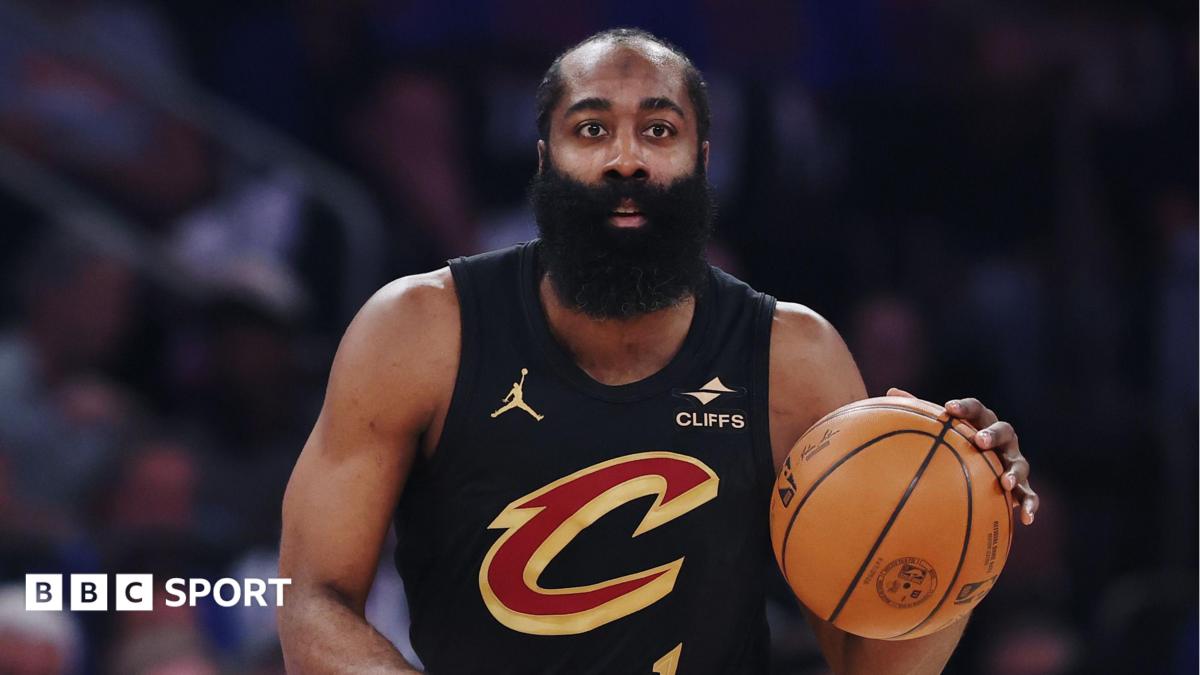
Cleveland’s Harden arrested on gun charge
Star Cleveland Cavaliers shooting guard James Harden has been released from custody at Houston’s Harris County Jail just hours after his Saturday morning arrest on a charge of unlawful carrying of a weapon. Court documents show that local law enforcement detained the 10-time All-Star at 3:41 a.m. local time after an officer spotted an unconcealed handgun resting in the cup holder of Harden’s Mercedes-Benz sedan.
The arrest unfolded as Harden was passing through downtown Houston, when he pulled up behind another vehicle stopped by police, giving the responding officer a clear view of the weapon. After Harden confirmed the firearm was registered to him, he was placed under arrest and processed into the county jail system. He was able to secure release shortly after processing by posting a $100 bail bond, with his first court hearing scheduled for June 22.
In the wake of the arrest, the Cleveland Cavaliers organization issued a brief, measured statement acknowledging the incident. “We are aware of the arrest of James Harden this morning and are in the process of gathering additional information,” the team said, adding that it remains in contact with Harden and his legal team. “We will continue to monitor developments as they become available. At this time, we will have no further comment.”
One of the most decorated NBA players of his generation, Harden joined the Cavaliers in February 2026 via a trade with the Los Angeles Clippers. In that deal, the Clippers acquired young starting guard Darius Garland from Cleveland along with a 2026 second-round draft pick in exchange for Harden.
Since joining the Cavaliers, Harden has put up solid veteran numbers for the franchise, averaging 20.5 points, 7.7 assists and 4.8 rebounds per game across 26 starting appearances this season. A third overall pick in the 2009 NBA Draft, Harden has built a Hall of Fame-caliber career across stints with the Oklahoma City Thunder, Houston Rockets, Brooklyn Nets, Philadelphia 76ers, Los Angeles Clippers and now Cleveland. The 36-year-old is a six-time All-NBA First Team selection and claimed the NBA’s Most Valuable Player award for the 2017-2018 season.
-
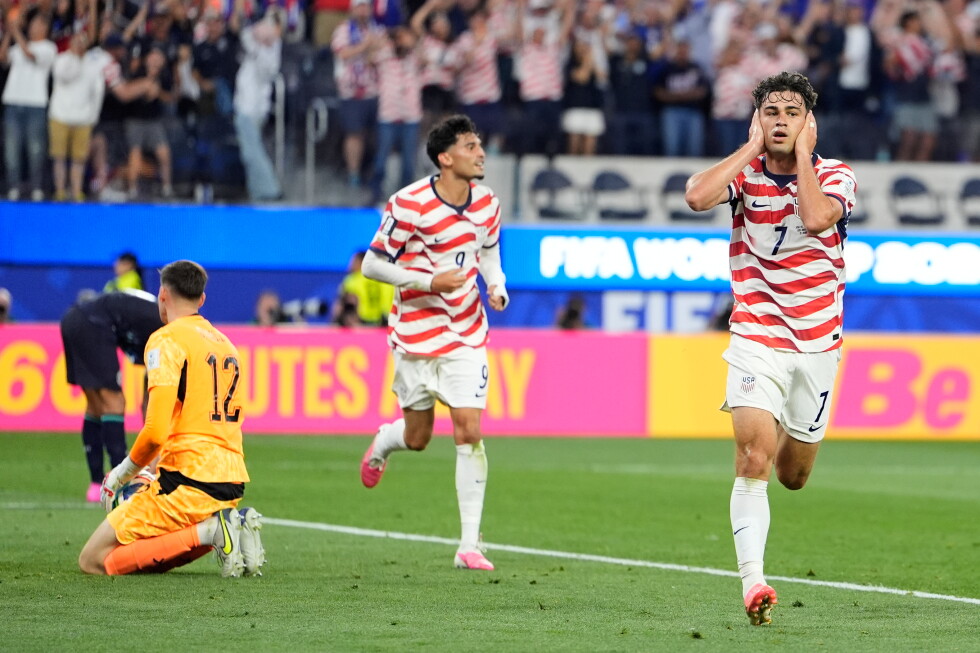
70 seconds, 26 passes and an iconic World Cup moment for the US and Gio Reyna
Three days into the 2026 FIFA World Cup co-hosted by the United States, one moment already stands out as a potential tournament icon — and it will take something extraordinary to unseat Gio Reyna’s masterful late finish as the goal of the competition. The stunning strike capped a dominant 4-1 opening match victory for the U.S. Men’s National Team over Paraguay at Los Angeles Stadium, and it was the perfect encapsulation of the free-flowing attacking soccer manager Mauricio Pochettino has built this squad around.
With the match deep into second-half stoppage time, clocked at 96 minutes and 10 seconds, the USMNT only needed to hold possession to kill the clock and secure their win. Paraguay had already pulled one goal back in the second half, and any late lapse could have sparked an unwanted rally for the South American side. What unfolded over the next 70 seconds, though, was nothing short of soccer brilliance: Pochettino’s side strung together 26 consecutive passes, moving the ball from their own left defensive end all the way across the pitch to the attacking final third. Not a single Paraguayan defender managed to get a touch on the ball, left gasping and chasing shadows as the American side shifted the play with clinical precision.
The sequence ended with Gio Reyna, an 82nd-minute substitute brought on to replace the standout Malik Tillman, collecting a well-weighted pass from Alexander Freeman just outside the 18-yard box. The attacking midfielder took one calm touch to control the pass, a second to carry the ball into the penalty area, and curled a perfectly placed strike with the outside of his right boot past Paraguay goalkeeper Orlando Gill into the far corner of the net. The goal sent the capacity crowd of American supporters into a frenzy, and the celebration quickly spilled off the field: as Reyna wheeled away, hands pressed to his ears in a widely interpreted nod to years of criticism following his 2022 World Cup controversy, he was mobbed by teammates, on-pitch substitutes and even Pochettino, who sprinted from the touchline to join the historic moment.
Pundits were quick to draw parallels between Reyna’s strike and the most iconic team goal in World Cup history: Carlos Alberto’s late finish for Brazil against Italy in the 1970 World Cup final. That legendary goal, which also came in a 4-1 win, featured a similarly smooth multi-pass sequence finished by the Brazilian captain late in the match. While the 1970 strike came with a world title on the line, the 2026 opening goal carried enormous stakes of its own for the USMNT: it served as a resounding opening statement against a Paraguay side that boasted one of the strongest defensive records among South American qualifiers. For context, the USMNT has already scored more goals in this single opening match than they managed across the entire 2022 Qatar World Cup, where they netted just three times before bowing out in the Round of 16.
The moment also carried deep personal significance for Reyna, who returns to the World Cup stage after a highly public controversy in 2022. Four years ago in Qatar, then-manager Gregg Berhalter publicly revealed that he nearly sent Reyna home from the tournament over allegations of a lack of effort in training and matches. The fallout dominated the USMNT’s lead-up to this cycle, and Pochettino made a notably bold choice to include Reyna in his 2026 squad despite the player making just four league starts for Borussia Mönchengladbach in the 2025-26 season, with none coming after December 19.
Political figures even weighed in on the historic win: former U.S. President Donald Trump offered public congratulations via his social media platform on Saturday, writing, “Congratulations to Team USA on their Big Win, 4-1, over a very good Paraguay team. Keep it going!”
The result marks a major milestone for the USMNT project Pochettino has built since taking over as manager in 2024, after previous successful stints leading Paris Saint-Germain, Chelsea and Tottenham Hotspur. The side reached the Gold Cup final in 2025, and Pochettino has never hidden his ambition to compete for the 2026 title on home soil, with “Why not us?” adopted as the team’s unofficial tournament motto.
The Argentine manager emphasized that the extended preparation window ahead of the World Cup has allowed him to implement his system fully, something that is rarely possible for international managers ahead of major tournaments. “When you only have few days to reunite and to play, you only select players, but you cannot coach players,” he explained after Friday’s match. “Only in this type of tournament like the Gold Cup or now the World Cup, because you have preparation, two, three, four weeks, I think that is the only moment that we can coach.”
Reyna’s goal, he added, was the perfect example of his philosophy of prioritizing collective play over individual stardom. “One thing we need to praise is the collective effort,” Pochettino said.
Fans will long debate whether this is the greatest goal in USMNT World Cup history, with several iconic strikes standing out from decades past. In 1989, Paul Caligiuri’s long-range volley against Trinidad and Tobago secured the U.S.’s first World Cup qualification berth since 1950. At the 1994 World Cup, the last time the U.S. hosted the tournament, Eric Wynalda’s memorable free kick against Switzerland earned the Americans their first World Cup point since 1950. More recently, Benny Feilhaber’s match-winning volley claimed the 2007 Gold Cup title for the U.S. But few can deny that Reyna’s spectacular team goal has set an early high bar for the 2026 tournament, both for the USMNT and for the rest of the competing nations.
-
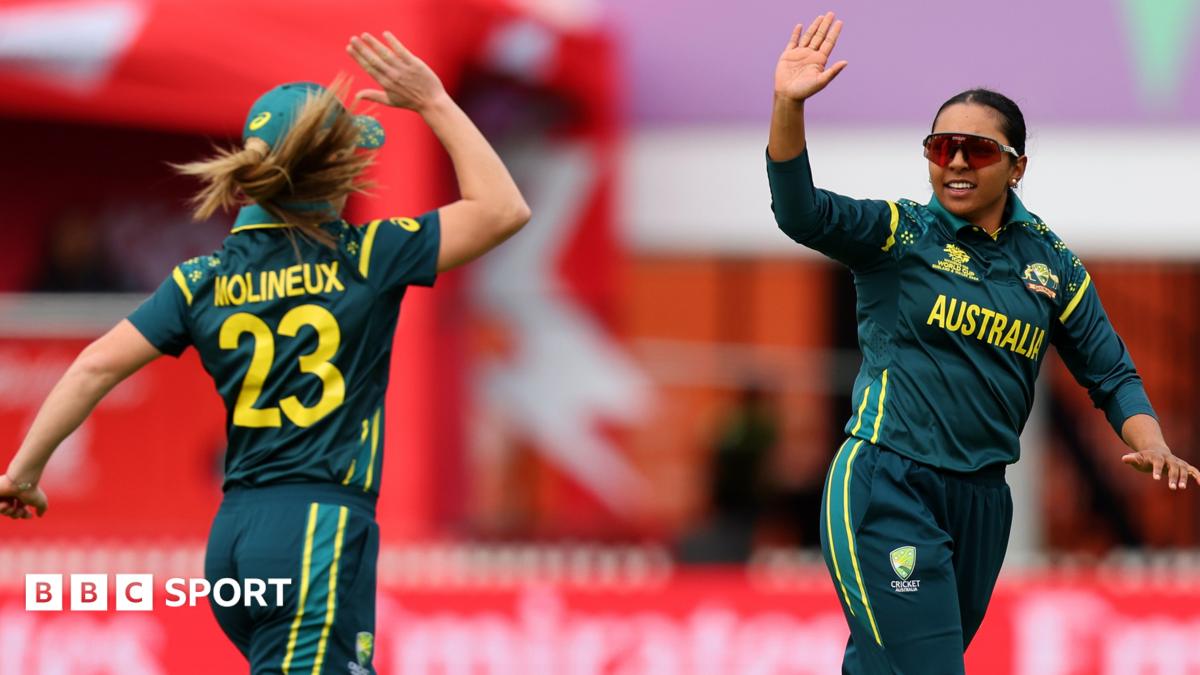
Australia begin World Cup with win over South Africa
Reigning as one of international women’s cricket’s most formidable programs, Australia kicked off their 2024 Women’s T20 World Cup Group 1 campaign with a statement 65-run victory over pre-tournament favorite South Africa at Edgbaston, sending an early warning to fellow title contenders in the highly competitive pool.
With 50-over world champions India also vying for one of the two available semi-final spots from Group 1, three points from the opening fixture gives Australia a critical early advantage in what was already projected to be a grueling fight for knockout stage qualification. Chasing a competitive 173-run target, South Africa crumbled to 107 all out in 16.4 overs, undone by disciplined Australian bowling and sharp fielding that broke their batting order early.
Australia’s innings got off to a rocky start, with the batting line-up losing wickets at regular intervals and teetering at multiple shaky points: 62-4 in the middle overs, and 133-6 late in the spell. But the side’s celebrated depth carried them to a defendable total, with rising star Phoebe Litchfield leading the charge with a blistering 50 runs off just 24 deliveries. Litchfield, who timed her attack on South African pace spearhead Shabnim Ismail better than any other batter on the pitch, was supported by Ellyse Perry’s 36 runs from 26 balls and a valuable late innings 32 from all-rounder Georgia Wareham. Even when six wickets fell, Australia still had established Test match star Annabel Sutherland, holder of four Test hundreds, step in at number seven, highlighting the team’s unrivaled depth across the order. The innings closed on 172-8 after 20 overs, a total that quickly proved too much for South Africa to chase.
Australia’s bowling attack put immediate pressure on the Proteas, removing top-order batters Sune Luus, Annerie Dercksen and Nadine de Klerk within the first seven overs to put South Africa on the back foot. When Laura Wolvaardt and Marizanne Kapp began a steady rebuild, it was Wareham who proved the difference-maker, both with ball in hand and in the field. The all-rounder delivered an accurate long-range throw to run out dangerous all-rounder Kapp for 12, then pulled off a smart low catch at cover to dismiss Wolvaardt, South Africa’s top scorer, for 44. Finishing with bowling figures of 3 wickets for just 13 runs, Wareham’s all-round performance was the backbone of Australia’s win. Australia’s spinners dominated the Edgbaston pitch, with captain Sophie Molineux and Alana King each picking up two wickets and Ashleigh Gardner adding a third to wrap up the South African lower order, dismissing the Proteas for 107 all out.
Leading Australia in her first major tournament as captain, Molineux’s side showcased the program’s new era while retaining the same winning quality that has made Australia the team to beat in women’s cricket for decades. Though the side was not at their clinical best with the bat, their ability to post a competitive total under pressure and defend it confidently has underlined their title credentials once again.
For South Africa, who entered the tournament as a top contender after reaching the final of the last three ICC world cup events across all formats, the defeat leaves them in a must-win situation for their next group fixture against India, scheduled for 21 June at the same Edgbaston ground. Ahead of the tournament, many analysts tipped South Africa to finally claim their first world title after three consecutive runner-up finishes, while others backed India following their 50-over world cup breakthrough in 2023. Saturday’s opening win serves as a clear reminder that Australia, despite missing out on the podium in the last two world cup events, remains the side every other contender must overcome to lift the trophy.
-
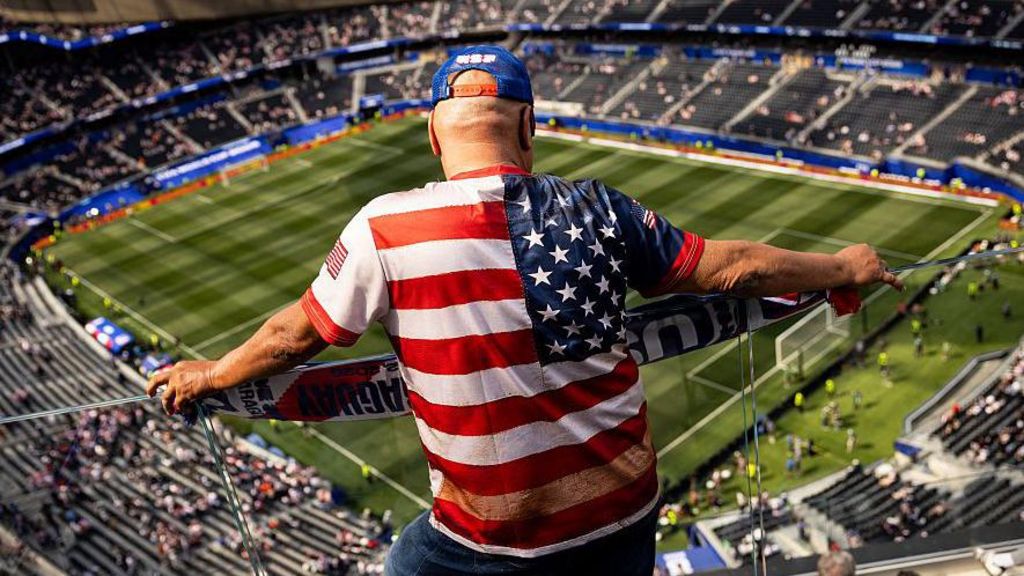
Why is football called ‘soccer’ in the US and Canada?
As the 2026 FIFA World Cup, co-hosted by the United States, Canada and Mexico, draws near, a longstanding linguistic debate has reemerged for football fans across the globe: why do U.S. and Canadian fans call the world’s most popular sport soccer, rather than football? For one sports academic who grew up in 1960s and 1970s England, this debate always felt deeply odd. Stefan Szymanski, emeritus professor at the University of Michigan, recalls that “soccer” was a completely unremarkable, acceptable term during his childhood in Britain, prompting him to dig into the little-known history behind the word.
Szymanski’s research traces the origin of “soccer” back to the very founding of modern organized football in 19th century Britain. When elite Oxford-educated graduates founded the Football Association in 1863 to standardize the sport’s rules, the new code was formally named “association football” to clearly separate it from the other dominant mainstream 19th century football variant: rugby football.
By the 1880s and 1890s, wealthy students at top British universities had developed a popular slang trend: shortening common nouns and adding an “-er” ending to the end of the truncated word. This habit turned breakfast into “brekker” and rugby football into “rugger” — and it was this same trend that gave birth to soccer. Students extracted “soc” from the middle of “association,” added the characteristic slang “-er” suffix, and created the term we know today. While Szymanski notes that no historian can claim absolute certainty over the word’s earliest origins, multiple documentary sources confirm it was coined by Oxford students. Sports historian Andy Mitchell supports this timeline, having identified at least three printed instances of “soccer” (or its variant “socker”) in British school publications dating back to late 1885, with evidence suggesting the term was already in common verbal use even earlier.
As the sport of association football spread across the world throughout the 20th century, the term “soccer” traveled with it. Today, the name remains in common use in countries including Australia, New Zealand, South Africa, Canada, and of course the United States, where “football” had already been adopted to describe the distinctly American gridiron variant of the sport that evolved from rugby in the same 1880s-1890s period that “soccer” was coined in Britain. Szymanski points out that American football and association soccer are actually close sporting cousins, and the parallel rise of both games in the late 19th century cemented the use of “soccer” for the global game in the U.S.
What many modern fans do not know is that “soccer” remained in widespread use across British media for decades after it caught on in North America. Analysis conducted by Szymanski and his colleague Silke-Maria Weineck shows that major British newspapers continued to use “soccer” alongside “football” well into the 1960s and 1970s, only phasing it out gradually to leave “football” as the universal dominant term in Britain by the 1990s.
Today, it is common for American fans to feel awkward about using the word “soccer” around international supporters, often apologizing for the term out of a belief that it offends British fans. Szymanski says this unnecessary awkwardness is rooted in a modern misconception: “soccer” is not an American corruption of the proper name — it is a uniquely British invention from the sport’s earliest days. For the professor, there is no reason for North American fans to hesitate to use the term that has been part of the sport’s linguistic history for more than 130 years.
-
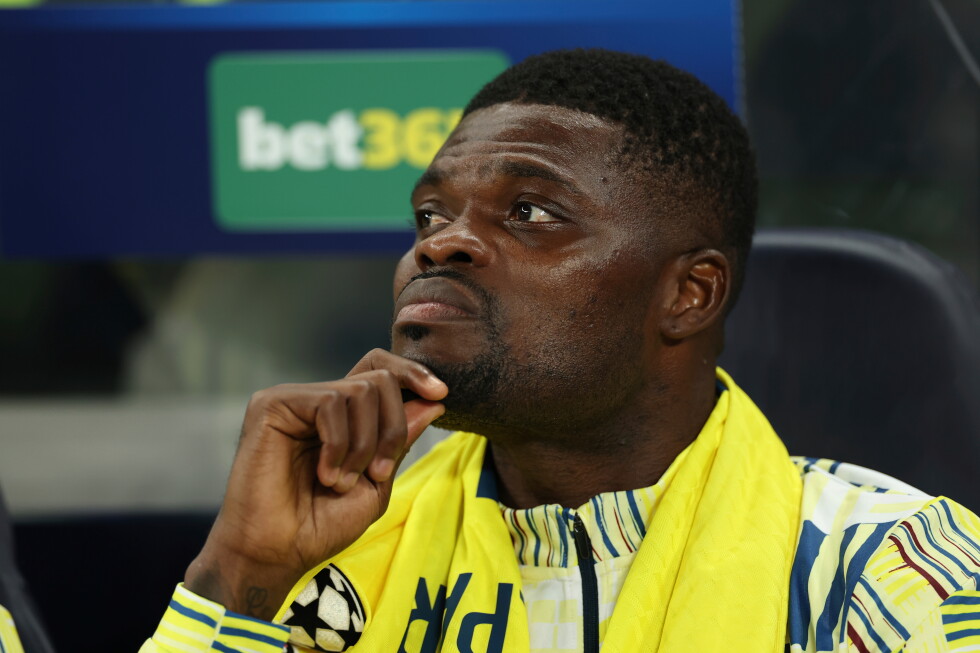
Ghana slams Canada’s decision to deny World Cup visa for Partey, who faces rape charges
A diplomatic and legal dispute has erupted after Canada rejected a visa application from Ghanaian star midfielder Thomas Partey for his team’s FIFA World Cup group stage match in Toronto, drawing sharp condemnation from the Accra government over what it calls an “extremely unfair” ruling that violates the core legal principle of presumption of innocence.
The 32-year-old Arsenal loanee, currently plying his trade at Spain’s Villarreal, is scheduled to face trial on multiple rape and sexual assault charges in London later this year. All allegations date back to his tenure at Arsenal between 200 and 2025, and Partey has repeatedly maintained his not-guilty plea across all counts. He was forced to withdraw from Ghana’s pre-match camp and return to the team’s base in Rhode Island after the visa refusal left him unable to enter Canada for the World Cup opener against Panama this past Wednesday.
In an official statement released Saturday, Ghana’s Ministry of Foreign Affairs lambasted the Canadian decision as “high-handed and extremely unfair”, noting that the refusal was based solely on unproven allegations that have not received any formal judicial ruling. “We reaffirm the fundamental legal principle of the presumption of innocence, a cornerstone of justice and due process in democratic societies,” the statement read.
While Ghana acknowledged Canada’s sovereign authority to enforce its own immigration regulations, the government argued that basing a visa denial on unadjudicated charges raises serious questions about basic fairness and proportionality. “Accordingly, Ghana is pursuing active diplomatic engagements with the relevant Canadian authorities on this matter,” the statement added.
The Accra administration has already submitted an official note of protest requesting a formal review of the visa decision, and confirmed it is “determined to explore and pursue all available diplomatic, legal and administrative remedies under Canadian and international law” — including filing for judicial review at the Federal Court of Canada if necessary — to secure a full, fair reassessment of the case consistent with due process principles.
The statement added that ongoing discussions are already underway between Ghanaian and Canadian officials, and that Ghana “remains committed to constructive engagements” with Canadian counterparts to reach a timely, amicable resolution of the dispute.
Ghana national team head coach Carlos Queiroz already stood by Partey’s inclusion in the 2026 World Cup squad, explicitly citing the principle of presumption of innocence when announcing the roster. The midfielder will still be eligible to take part in Ghana’s remaining group stage matches: he will be allowed to enter the United States for the team’s June 23 clash against England in Massachusetts, and the final group match against Croatia on June 27 in Philadelphia.
The controversy comes as Partey faces a total of eight charges: five counts of rape connected to two separate alleged victims, one count of sexual assault involving a fourth woman, and two additional rape charges added in March stemming from an allegation by a fifth woman who claims Partey raped her twice on a single day in December 2020. The new charges were filed after the initial set of allegations were made public. Partey’s legal team confirmed in March that the midfielder would enter a not-guilty plea to all new charges.
In closing, the Ghanaian government’s statement invoked the unifying values of international football: “May the beautiful game of football continue to live up to its reputation of uniting nations, forging lasting bonds of friendship, playing by the rules, and promoting fair play both on and off the field.”
-
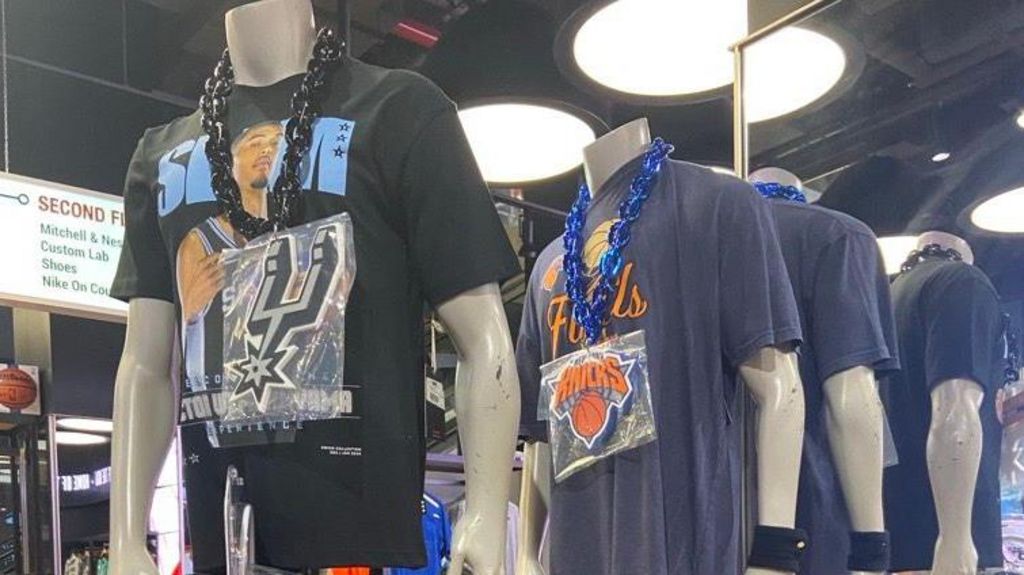
Surrounded by Knicks fever, Spurs fans in New York need to celebrate, too
As New York City buzzes with unprecedented excitement ahead of tonight’s decisive Game 5 of the NBA Finals between the New York Knicks and San Antonio Spurs, local Spurs supporters find themselves navigating a city swept up in overwhelming Knicks championship fever — and a small group of local venues are stepping up to create welcoming, safe spaces for outnumbered Texas fans.
The matchup carries historic stakes for the Knicks: a win tonight in the best-of-seven series would hand the franchise its first NBA championship in more than 50 years, a milestone that has sent the city’s already rabid fanbase into a frenzy. But for transplants and lifelong San Antonio supporters who call New York home, that intense local passion has turned hostile in isolated, alarming cases. Local media reports have documented multiple assaults on Spurs fans in the city, including one incident that left a fan hospitalized and another attack on a fast food employee who wore a Spurs jersey to work.
Amid this tension, Manhattan’s Yellow Rose, a Texas-themed restaurant owned by San Antonio native Dave Rizo, has emerged as a quiet refuge for local Spurs fans. Decorated with a cardboard cutout of Spurs star Victor Wembanyama, an official Spurs team flag, a hand-painted fan banner, and a signed greeting from Spurs owner Peter Holt, the restaurant has opened its doors to stream every Finals game for supporters, while intentionally keeping the atmosphere low-key to avoid stoking conflict. “I don’t want to unintentionally add more fuel to any of the fire that’s going on,” Rizo explained to the BBC. “I want this to be a safe space for people that are Spurs fans. Spurs fans that live in New York City are just as much part of the city as anyone else.”
Rizo, who has lived in New York for a decade, got a first-hand taste of the hostility facing visible Spurs fans when he walked around Manhattan in a Spurs jersey ahead of Game 3. Multiple passersby stopped to warn him he was putting himself at risk, commenting on how “bold” his choice of clothing was. At the time, he brushed off the warnings, but seeing reports of harassment and violence against fellow fans on social media left him disheartened. Still, the lifelong Spurs fan who now calls New York home remains upbeat: even if the Knicks take the title tonight, he says, “Either way, I win.”
Both teams’ top players have publicly condemned the fan violence and harassment, calling for respectful competition between supporters. Spurs phenom Victor Wembanyama emphasized at a recent press conference that the game should stay on the court. “We’re just playing a game out there. And I’m all for passion, but with respect for each other. It’s unacceptable,” he said. Knicks star Karl-Anthony Towns echoed that call, urging fans to “leave the physicality to everyone on the court.”
Across the city, other venues have worked to foster unity between opposing fanbases, showing that friendly coexistence is possible even amid the high stakes of a championship race. At Manhattan’s Whiskey Tavern, which has drawn packed crowds on every Finals game night, manager Alex told the BBC the bar has hosted a healthy mix of both Knicks and Spurs fans, with zero reported clashes between the groups. “It’s fun, it’s good energy. Everybody’s here just having a good time and celebrating either team. It is definitely heavily mixed,” Alex said, adding that she has even seen Knicks fans reserve seats for attending Spurs fans. “It’s all just people here together.”
Other spots lean into their preference for the Spurs while still welcoming all comers. Brooklyn cocktail bar Doris, for example, rebranded as a makeshift Finals sports bar when the series began, openly advertising its support for San Antonio while still extending an invite to fans of any team. Its Instagram page features photos of Texas’ iconic Lone Star Beer, highlights a Manu Ginobili jersey that has hung on the wall since 2013, and proclaims “GO SPURS GO” in bold all caps, with a playful addendum: “Doris loves the Knicks, too! We just LOVE the SPURS more!”
As tip-off for the most consequential game of the season approaches, New York remains divided: swept up in a historic, city-wide celebration of the Knicks’ underdog run, but also holding space for the small, passionate community of Spurs fans who call the five boroughs home.
-
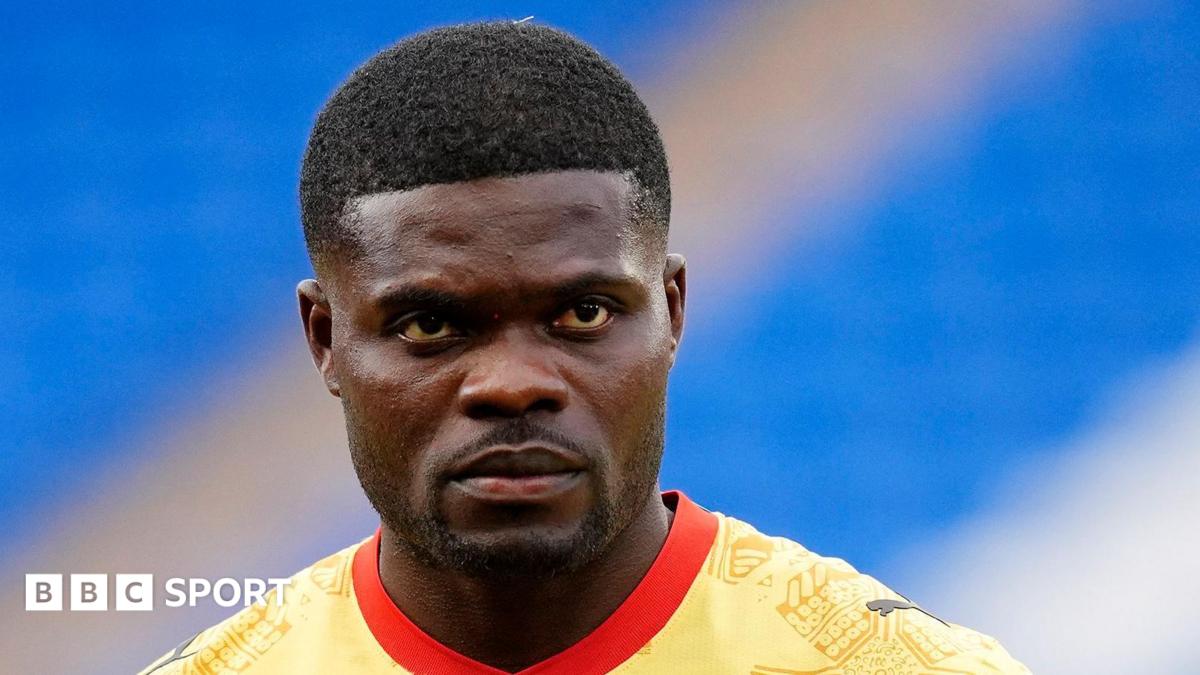
Ghana government wants review of Partey Canada ban
Ahead of the 2026 FIFA World Cup group stage, a diplomatic dispute has erupted over Canada’s decision to bar Ghanaian international midfielder Thomas Partey from entering the country, a move that has already forced the 32-year-old to miss Ghana’s opening Group L clash against Panama in Toronto this Wednesday.
Partey, who recently left Arsenal for Villarreal in August 2025 following the expiration of his contract with the Premier League side, currently faces pending criminal proceedings in the United Kingdom linked to allegations from four women. The former Arsenal anchorman has entered a plea of not guilty to seven counts of rape and one count of sexual assault, which date back to incidents alleged between 2020 and 2022. His trial is scheduled to begin in 2026, and he has not been convicted of any wrongdoing to date.
The Ghanaian government has publicly denounced the Canadian entry ban as “high-handed and extremely unfair”, and has launched active diplomatic negotiations with Canadian authorities in a bid to overturn the controversial decision. In an official statement, the government emphasized that Canada’s ruling is rooted solely in unproven pending criminal charges that have not resulted in a conviction, reaffirming its commitment to the core legal principle of presumption of innocence, a foundational standard of global justice systems. The statement added that Ghana will exhaust all available legal and diplomatic remedies to ensure a fair and full review of all facts related to Partey’s case.
Current Canadian immigration regulations explicitly state that foreign nationals with pending or past criminal convictions may be deemed inadmissible to enter the country. However, the situation stands in stark contrast to the United States’ treatment of Partey: U.S. Customs and Border Protection confirmed that while the agency is aware of the pending UK case, Partey was granted a U.S. visa and admitted to the country without issue. He currently remains at Ghana’s pre-tournament training camp based in Boston, Massachusetts.
Ghana’s subsequent group stage matches against England on June 23 at Boston Stadium in Foxborough and Croatia on June 27 are both hosted in the U.S., meaning Partey will be eligible to feature in those fixtures if selected by head coach Carlos Queiroz. Queiroz previously expressed full confidence in his decision to call up Partey ahead of the tournament, dismissing any concerns over the pending case. If Ghana finishes second in Group L, they would advance to the round of 32, where a potential knockout match could be held in Canada – a outcome that would reignite the entry ban dispute if Partey is part of the squad.
BBC Sport has reached out to the Ghana Football Association for additional comment on the situation, but has not yet received a response.
-
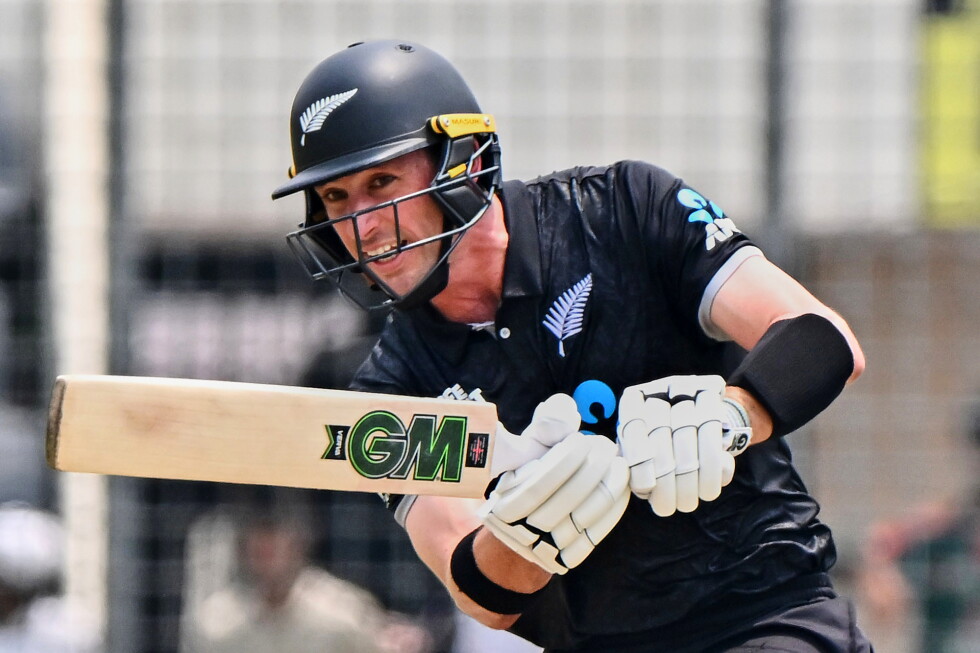
New Zealand adds Will Young to test squad after Kane Williamson retires from international duty
In a sudden announcement that has sent ripples through the international cricket community, star New Zealand batsman Kane Williamson has brought an end to his decorated international career, stepping away from the game with immediate effect during an ongoing test series against England in the United Kingdom. The 35-year-old’s retirement came on Friday, just days after he took the field in the Lord’s test match where New Zealand fell to a defeat, with Williamson managing scores of zero and 18 across the two innings of the encounter.
Following the match at Lord’s, Williamson had already withdrawn himself from the remaining fixtures of the three-match series, ahead of the third test that is scheduled to get underway at London’s iconic Oval cricket ground this coming Wednesday. Moving quickly to fill the gap left by Williamson’s unexpected departure, New Zealand Cricket confirmed on Saturday that uncapped call-up Will Young has been added to the side’s test squad for the final two matches of the series.
Young is set to complete his travel to the United Kingdom, with an expected arrival in Britain scheduled for Sunday, where he will link up with the rest of the New Zealand squad ahead of the upcoming matches against England. Williamson’s retirement mid-series marks an unexpected end to a decades-long international career that cemented his status as one of modern cricket’s greatest batsmen and most respected team leaders.