分类: sports

  • Matheus Cunha scores 2 goals as Brazil eliminates Haiti from World Cup with 3-0 win

    Matheus Cunha scores 2 goals as Brazil eliminates Haiti from World Cup with 3-0 win

    PHILADELPHIA — In a dominant World Cup Group C clash at Lincoln Financial Field on Friday night, five-time tournament winners Brazil secured their place in the knockout stage with a comfortable 3-0 victory over debutant underdogs Haiti, eliminating the Caribbean side from competition. This result pulls Brazil back on track after an underwhelming opening draw against Morocco, silencing early criticism of the side’s slow start to the campaign.

    Haiti, the poorest nation in the Western Hemisphere, was making its first World Cup appearance since 1974. With two defeats from two matches, they became the first team confirmed to exit the tournament before the group stage concludes. For Brazil, known globally as the Seleção, the convincing win delivered exactly the statement performance the squad needed to rebuild momentum heading into their final group fixture.

    The night belonged to Matheus Cunha, the Manchester United attacker who got a rare starting opportunity after being only a late substitute in Brazil’s lifeless 1-1 opening match against Morocco. Cunha seized his chance, netting two goals and proving why many had argued he deserved a place in the starting XI from the tournament’s opening game.

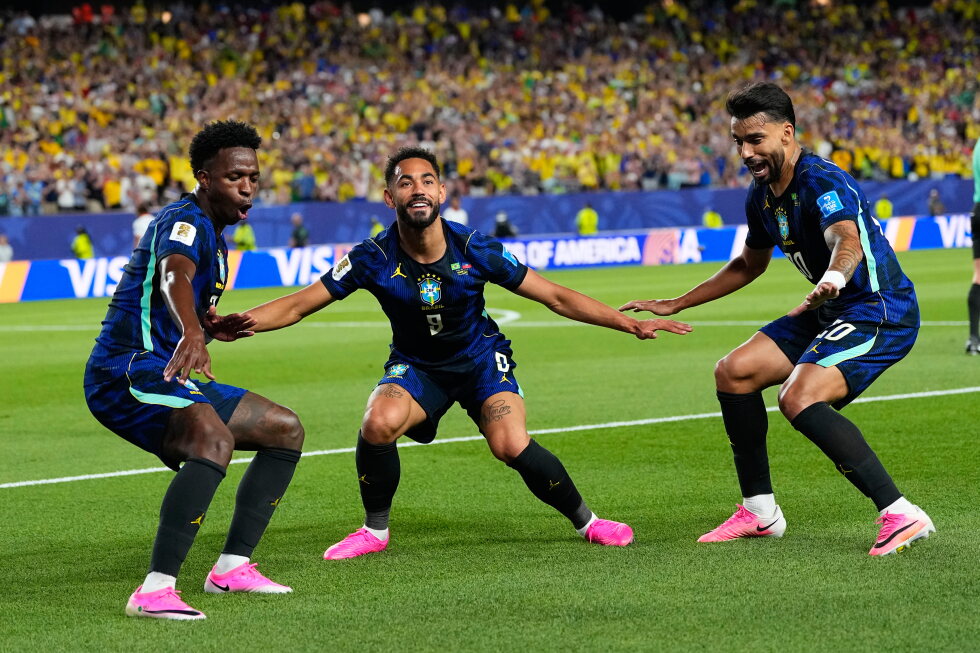
    Playing in front of a sold-out crowd of 68,324 spectators, the vast majority of whom were clad in Brazil’s iconic yellow kit, Cunha opened his senior World Cup scoring account in the first half when he tapped in a rebound after Vinícius Júnior’s initial shot was stopped by Haitian goalkeeper Johny Placide. He doubled his tally and Brazil’s lead shortly after, curling a clinical left-footed strike into the top-left corner that Placide had no hope of stopping. After each goal, the forward repeated his viral surfing goal celebration, sliding across the turf to mimic catching a wave, much to the delight of the passionate Brazilian fanbase in attendance.

    An early goal from Brazilian winger Raphinha was ruled out for offside in the opening minutes, but the momentary setback did little to dampen the festive atmosphere inside the home of the NFL’s Philadelphia Eagles, where Eagles cheerleaders even joined in to energize the crowd. Haitian supporters did not let the scoreline kill their spirit, singing their national team’s traditional battle cry *“Grenadye Alaso”* (“Grenadiers to the Attack”) throughout the 90 minutes, while Brazilian fans chanted back in celebration of their nation’s soccer legacy, repeating refrains honoring Pelé, Brazil’s legendary “king of soccer” who holds the record for most goals in World Cup history.

    Philadelphia, which is home to nearly 6,000 Brazilian immigrants, embraced the match, and local fans even opted against following the local tradition of dressing the iconic Rocky Statue in Brazil team gear, an old superstition that dressing the statue in a side’s kit brings bad luck. Their choice did not disappoint the Seleção.

    Vinícius Júnior, who had scored Brazil’s equalizer in the Morocco draw, capped off the first-half scoring with a goal of his own, rounding off a dominant 45 minutes for the South American side. The Real Madrid star was the creative engine for Brazil all night, first creating Cunha’s opening goal from his blocked shot before playing a perfectly weighted through pass between Haitian defenders to set up Cunha’s second. By halftime, the 3-0 scoreline was already locked in, and no further goals changed the outcome in the second half.

    Brazil, which is chasing its first World Cup title since 2002, will close out Group C play against Scotland next Wednesday in Miami Gardens, Florida. Star forward Neymar remained sidelined for a second consecutive match, still recovering from a persistent calf injury that has kept him out of action since the opening fixture.

  • The Super Bowl winner’s son stepping into spotlight with USA

    The Super Bowl winner’s son stepping into spotlight with USA

    Almost 30 years ago, in September 1996, NFL star Antonio Freeman delivered a career-defining performance in Seattle, scoring two touchdowns to lead the Green Bay Packers to a statement win over the Seattle Seahawks. Just months later, he claimed the ultimate prize in American football: a Super Bowl ring, cementing his name in Seattle sports history.

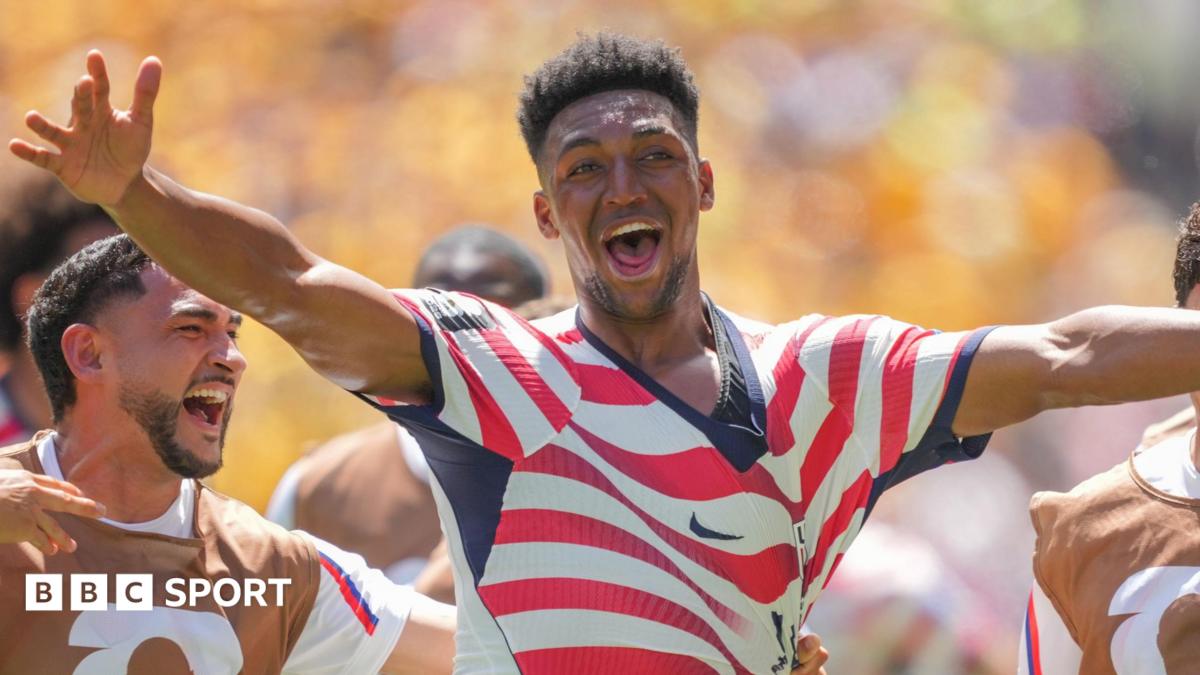
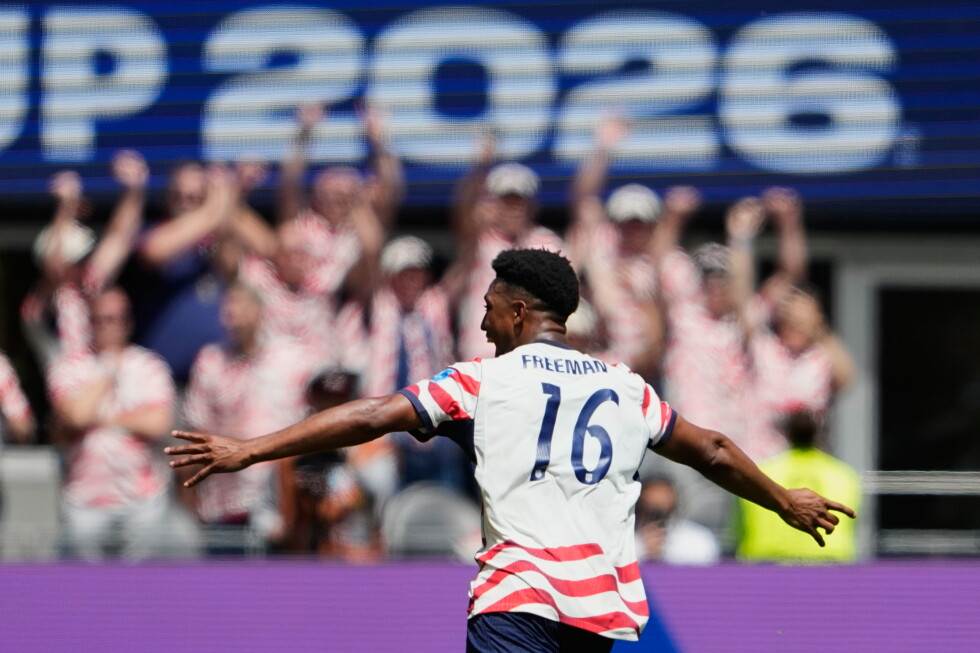
    Now, three decades on, the Freeman name is back in Seattle headlines — but this time, it is for association football, the global game that has long lived in the shadow of the NFL in the United States. On Friday, 21-year-old defender Alex Freeman, Antonio’s son, scored his first ever World Cup goal to help the USA secure a comfortable 2-0 win over Australia, punching his nation’s ticket to the tournament’s round of 16 at the 2026 home World Cup.

    For Alex, the moment felt like a poignant full-circle moment for his family. “It shows how great the family tree is,” he reflected after the match. “It shows he can be great but I can be great in my own way, and how amazing it is to have a dad that is successful and can mentor me to be ready for moments like these.” The elder Freeman has been front and center for his son’s World Cup run, spotted beaming with pride from the stands at every USA match, watching his son carve out his own sporting legacy.

    But Alex’s path to the World Cup was never straightforward. Growing up in a country where American football dominates the cultural and athletic landscape, the young athlete hid his love of soccer early on, uncertain how his NFL star father would react to his choice of sport. It was his mother and stepfather who first encouraged him to pursue his passion, even stepping in as his first coach when he began playing. As a child, he split his time between both American football and soccer, but ultimately chose to follow his heart for the global game — a decision he says has paid off beyond his wildest dreams.

    “It just shows how quick stuff can change and to not doubt yourself,” he said. “Now I’m here, it shows you can never give up. Keep pushing and you never know what chance you’re going to get and how you can go and make stuff happen. You don’t know when this chance will come again.”

    Indeed, just four years ago, a World Cup appearance for Alex Freeman seemed like an impossible fantasy. At the 2022 Qatar World Cup, he was still playing reserve soccer for Major League Soccer’s Orlando City, and as recently as 18 months ago, he was barely considered a prospect for the senior US national team. That all changed when iconic manager Mauricio Pochettino took over as USMNT head coach in 2024, a turning point that reshaped Alex’s career.

    Pochettino, the former Tottenham Hotspur manager, set out to build a youthful, dynamic squad for the 2026 home World Cup, and he quickly identified Alex as a core talent. The defender earned his first senior international call-up last year, and his rise since has been nothing short of meteoric. He was a key starter for the US at last year’s Gold Cup, and now he is one of the first names on Pochettino’s teamsheet at the World Cup.

    Pochettino was quick to praise Alex’s work ethic and potential, crediting both the player and his MLS club for his rapid development. “If you don’t have the support of the coaches at Orlando and you can’t build that relationship and trust, it is difficult based on just some clips,” the manager said. “This is one example of how the people deserve the credit and of course so does the player. He has an amazing profile, he wants to learn, he always listens. He is a player you really enjoy being with, not just coaching but is a lovely guy also. He has the potential to be one of the best players in his position in the world.”

    Off the pitch, Alex has also won over a new generation of soccer fans across social media, after a TikTok post from his stepsister Diamond Spaulding went viral ahead of the USA’s opening group stage match against Paraguay. Ahead of the game, as Spaulding traveled to a fan festival in Houston, she responded to a viral post from a user who was unaware the World Cup was even starting by writing: “My lil brother playing for the US so cheer for #16.”

    After Alex notched an assist in the USA’s 4-1 opening win over Paraguay, the post blew up, and fans quickly adopted the affectionate nickname “Diamond’s Little Brother” for the young defender. After his goal against Australia, the nickname went viral again, with many fans updating it to “America’s Little Brother” as he cemented his status as a breakout star of the tournament.

    For a player who once questioned whether he could ever build a sustainable career in soccer in the US, the moment is more than just a personal victory. Alex is not only forging his own path separate from his father’s NFL legacy, but also helping draw a wave of new fans to the sport in a country where American football has long reigned supreme. Standing on the pitch in Seattle after securing his nation’s knockout stage spot, Alex said the moment still feels like a dream come true.

    “It shows how I have made it in my way,” he said. “I’ve worked my whole life to be able to get to this moment, to sing the national anthem in front of a home crowd. It just makes me so happy.”

  • World Cup what to know: Netherlands, Sweden face off as group stage reaches halfway point

    World Cup what to know: Netherlands, Sweden face off as group stage reaches halfway point

    The 2025 expanded 48-team men’s FIFA World Cup, the first iteration of the tournament’s new supersized format, is poised to hit the midpoint of its group stage this weekend. By the close of Saturday, 36 of the total 72 group stage contests will have been completed, with another 36 matches remaining before the 32-team knockout round kicks off on June 28. The tournament will crown its first expanded-format champion on July 19.

    Four high-profile matches highlight Saturday’s packed fixture list, each carrying massive implications for knockout round qualification across multiple groups. The day’s action opens at 1 p.m. EDT in Houston, where world No. 8 Netherlands faces a do-or-die Group F clash with Sweden, followed by a Group E top-of-the-table battle between Germany and Ivory Coast at 4 p.m. EDT in Toronto. The evening session kicks off at 8 p.m. EDT in Kansas City, Missouri, with Ecuador taking on underdog Curaçao, before the day closes with Tunisia versus Japan at midnight EDT in Monterrey, Mexico. All matches will be broadcast across Fox Sports networks, Telemundo, and Peacock.

    The three co-host nations of the 2025 World Cup have entered the second round of group stage play riding high after strong opening results. On Friday, the United States secured a second consecutive 2-0 victory over Australia, booking an early spot in the knockout round. The U.S. will claim the Group B top seed if Paraguay and Turkey play to a draw, or Paraguay claims a win in their late Friday fixture. Host Canada sits in an excellent qualifying position after a dominant 6-0 rout of debutante Qatar on Thursday, while Mexico has already sealed the Group A title following a 1-0 win over South Korea.

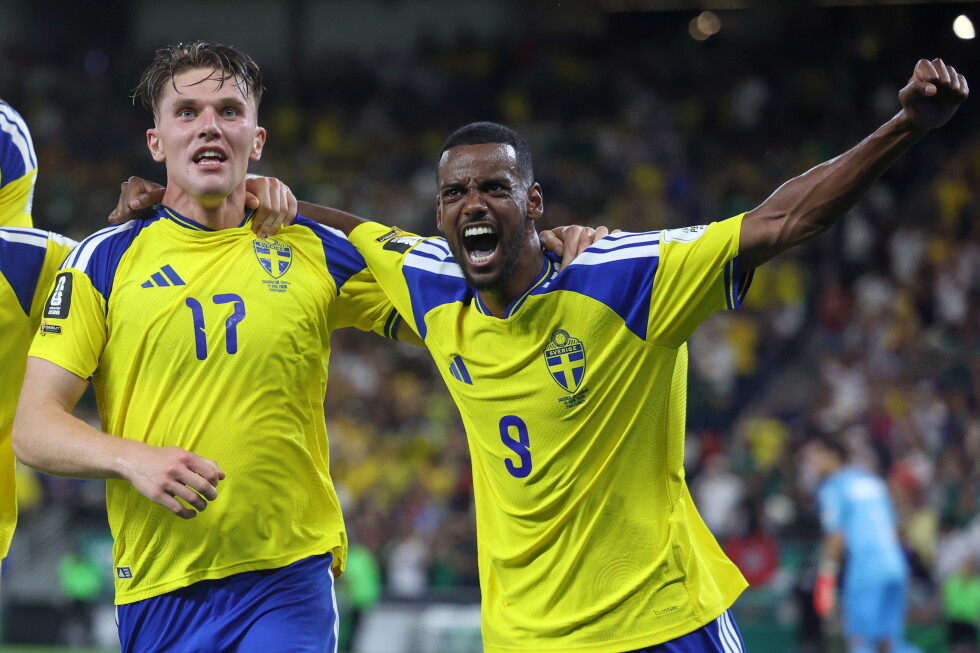
    One of Saturday’s most anticipated matchups pits a pressure-plagued Dutch side against a confident Sweden team in Group F. Long labeled the most talented men’s soccer nation never to lift the World Cup trophy, Netherlands enters the contest on the back of a disappointing 2-2 draw with Japan, where it squandered two separate match leads. Dutch head coach Ronald Koeman faced intense scrutiny over his tactical choices after the opening game, giving only cryptic, defensive replies to reporters’ questions. In contrast, 34th-ranked Sweden turned heads with a dominant 5-1 opening win over Tunisia, marking a triumphant return to the World Cup after failing to qualify for the 2022 tournament. “We know we are a work in progress and we’re improving,” Sweden manager Graham Potter said Friday. “We have to play better against a better opponent and I think we’re ready to do that.”

    In Group E, four-time World Cup champions Germany look to build on their blistering 7-1 opening win over Curaçao as they face a far stiffer test in Ivory Coast, which also notched a three points from its opening fixture with a late 1-0 win over Ecuador. The Elephants received a major boost earlier this week when star striker Elye Wahi, who was under investigation for alleged betting-related offenses, was cleared to enter Canada for the tournament. “He hasn’t really shown any signs of being annoyed or being discouraged,” Ivory Coast head coach Emerse Fae said of Wahi. “He’s happy. He had a good trip over here. He’s going to do everything he can to help out the team.”

    For Ecuador, Saturday’s matchup with Curaçao is nothing short of a must-win. La Tricolor carried a 19-match unbeaten streak into the tournament, but saw that run snapped by a 90th-minute Amad Diallo winner for Ivory Coast in their opener. With a final group stage matchup against powerhouse Germany awaiting next week, three points against Curaçao are critical to keep their knockout round hopes alive. “What follows,” Ecuador manager Sebastián Beccacece said, “must be faced with the same way we have faced it so far: with great strength, with great integrity, with great intensity and with a clear idea of the game.” For Curaçao, the tournament has already been a fairytale: the smallest nation by both land area and population ever to qualify for the World Cup, the side’s opening 7-1 loss to Germany brought the feel-good underdog story back to reality. Rounding out Saturday’s fixtures, Japan looks to carry the momentum of its opening comeback draw with Netherlands into a matchup with a reshuffled Tunisia side. Tunisia parted ways with manager Sabri Lamouchi following its 5-1 opening loss to Sweden, appointing veteran French coach Hervé Renard – a two-time Africa Cup of Nations winner with Zambia and Ivory Coast, renowned for his success leading African and Arab national sides.

    Off the pitch, the tournament has continued to generate breaking news around the competing squads. Canadian star Ismaël Koné underwent surgery for two broken leg bones sustained in the Qatar win, while Mexico goalkeeper Raúl Rangel has emerged as a breakout star after recording two consecutive shutouts to open the tournament. Young Spanish phenom Lamine Yamal confirmed he is not fully fit and is unlikely to start his side’s second group stage match, while 21-year-old Alex Freeman, son of former NFL standout Antonio Freeman, notched a goal for the U.S. in their opening round win to earn viral acclaim. One statistical note headlined Saturday’s tournament roundup: the U.S. became the first team in World Cup history to benefit from opposing own goals in consecutive matches, and marks the first time the Americans have opened a World Cup with two straight wins since the inaugural 1930 tournament.

  • New Zealand edge Ireland by 4 runs to keep Women’s T20 World Cup hopes alive

    New Zealand edge Ireland by 4 runs to keep Women’s T20 World Cup hopes alive

    SOUTHAMPTON, England – A dramatic, last-ball finish at the Women’s Twenty20 World Cup kept New Zealand’s faint hopes of defending their crown alive on Friday, as the defending champions squeezed out a four-run victory over a valiant Ireland side that came agonizingly close to a historic win.

    The tournament had gotten off to a disastrous start for New Zealand, which stumbled to back-to-back defeats against the West Indies and Sri Lanka, undone by 10 dropped catches across both opening matches. Heading into Friday’s group stage clash, elimination was staring the side in the face: with only two group matches remaining, a loss would end their campaign before the knockout rounds, against an Ireland side that had also failed to pick up a win in their opening fixtures.

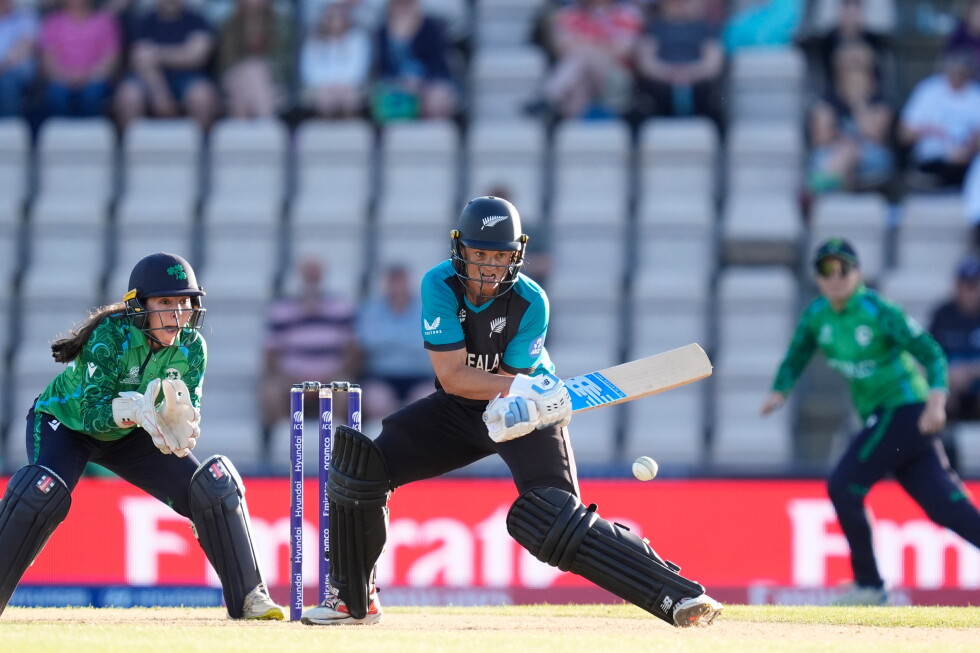
    Ireland got off to a dream start after winning the toss and opting to bowl first, reducing New Zealand to a shaky 10 for three wickets inside just four overs, with tight early work from bowlers Orla Prendergast and Aimee Maguire. But the defending champions clawed their way back into the innings, with captain Melie Kerr grounding out a valuable 30 runs, before a 62-run fifth-wicket stand between Brooke Halliday and Izzy Sharp off just 50 balls steadied the New Zealand innings.

    The turning point of the entire match came in the final over of New Zealand’s batting, when veteran all-rounder Suzie Bates – who only made her first tournament appearance after fellow soon-to-retire star Sophie Devine fell ill – stepped in at number seven, an uncharacteristic spot for Bates in T20 career. The veteran delivered a stunning cameo of 19 runs off 12 balls, capping her innings with a six off the final ball that cleared the long leg boundary, pushing New Zealand to a final total of 140 for six wickets.

    In the chase, Ireland’s batting lineup got a late boost from a massive 110-run partnership between captain Gaby Lewis and Prendergast that stretched into the 18th over, weathering strong early bowling from New Zealand pacer Bree Illing, who finished with impressive figures of one wicket for just 18 runs off her allocation. The stand put Ireland on the cusp of breaking a 19-match World Cup losing streak to claim their first ever win at the tournament.

    But New Zealand struck back when Prendergast was caught near the boundary for 59 runs, followed just one over later by Lewis, who was caught at cover by Bates for a polished 58. The wickets left Ireland requiring 15 runs from the final over to pull off the upset. Bates, who stepped up to bowl the final over, restricted Ireland to just 10 runs off the six balls, finishing the match with Ireland all out for 136 runs, four runs short of the target.

    Captain Melie Kerr, who was named player of the match, said after the game that the win marked a critical mental shift for her side after their poor start. “It has been a disappointing start to the tournament so today was just about body language and turning up,” Kerr said. “We need to turn and believe we can still win games of cricket.”

    The group stage of the Women’s T20 World Cup continues Saturday with three fixtures: Australia faces Netherlands, Pakistan takes on Bangladesh, and hosts England play Scotland.

  • US reaches World Cup knockout round and wins its group with 2nd straight victory, 2-0 over Australia

    US reaches World Cup knockout round and wins its group with 2nd straight victory, 2-0 over Australia

    SEATTLE — When star forward Christian Pulisic was ruled out of Friday’s must-win World Cup group stage match against Australia with a calf injury, many expected the United States men’s national team to stumble. But in a display of squad depth that signals how far the program has come, the Americans picked up a dominant 2-0 win, clinched their spot in the expanded 48-team tournament’s knockout round, and secured first place in Group D.

    The victory marked the Americans’ second consecutive win in group play, a first for the US program at a men’s World Cup since 1930. Later the same day in Santa Clara, California, Paraguay’s 1-0 win over Turkey locked in the US’s position atop the four-team group. Pulisic, the AC Milan forward who has notched 33 goals across 87 senior international caps, was sidelined by the soft tissue injury, a blow that would have derailed past US World Cup sides.

    But this year’s squad is built for depth, and rising stars stepped up to fill the gap left by Pulisic’s absence. Folarin Balogun, who bagged a brace in the team’s opening 4-1 win over Paraguay on June 12, highlighted the team’s collective strength after the final whistle.

    “C.P. is a fantastic player — the quality and the leadership that he gives us,” Balogun said. “We didn’t have him today, but I think you saw we’re still capable to go out there and get a result and put up a performance.”

    The US got off to a flying start in the 11th minute, when Balogun made a threatening run down the left flank and played a cross toward Ricardo Pepi, who got the starting nod in place of Pulisic. The ball never reached the striker, instead deflecting off Australia defender Cameron Burgess and sliding into the back of the net for an own goal that put the US ahead early.

    “I want to be dangerous, I want to create opportunities,” Balogun said of the play. “It might not always be myself that scores, but if I can force an error that gives us the lead, then for me it’s like a goal as well. It was a special start to the game to give us the momentum.”

    The Americans doubled their lead in the 43rd minute from a set piece, when 21-year-old Alex Freeman — the youngest player on the squad, and son of former NFL Super Bowl champion wide receiver Antonio Freeman — nodded home a deflected shot from Sergiño Dest to score his first career World Cup goal. The goal was confirmed after a lengthy video assistant referee review.

    Head coach Mauricio Pochettino praised the young winger’s rapid development and professional attitude after the match. “(He) is doing a fantastic job,” Pochettino said. “The evolution is massive. He’s so humble. He wants to learn. He always listens. He’s a player that you really enjoy being with him. Not only coaching, but being with him.”

    The US failed to add to their lead in the second half, but their dominant first-half performance left a lasting impression on Australia head coach Tony Popovic, who said the result was no surprise given the Americans’ clear quality.

    “It did not surprise us because their quality is clear,” Popovic said. “Their power is clear. Their athleticism is clear. They are not surprising in what they did.”

    Heading into the knockout round, the US will face a third-place group finisher in their round of 32 match on July 1 in Santa Clara. With six goals through two group games — just one goal short of the program’s all-time record for a single World Cup — the team’s momentum is building, and expectations for a deep run are growing. But Pochettino said the strong start has not changed his outlook on what his squad can achieve.

    “I think it’s much better when you show good performances and win the games,” Pochettino said. “I think that makes it easier, everything. But, at the same time, it’s (important) to keep believing.”

    For Freeman, the team’s ability to overcome Pulisic’s absence is proof that the roster has the talent and depth to compete with any side in the tournament. “We know how vital Christian is to the team and how much he can contribute in the game,” Freeman said. “For us it was, we have Ricardo Pepi, who came in and had an amazing game. I think that just shows how (good) our roster is.”

  • Five-try Leinster rout Bulls to retain URC title

    Five-try Leinster rout Bulls to retain URC title

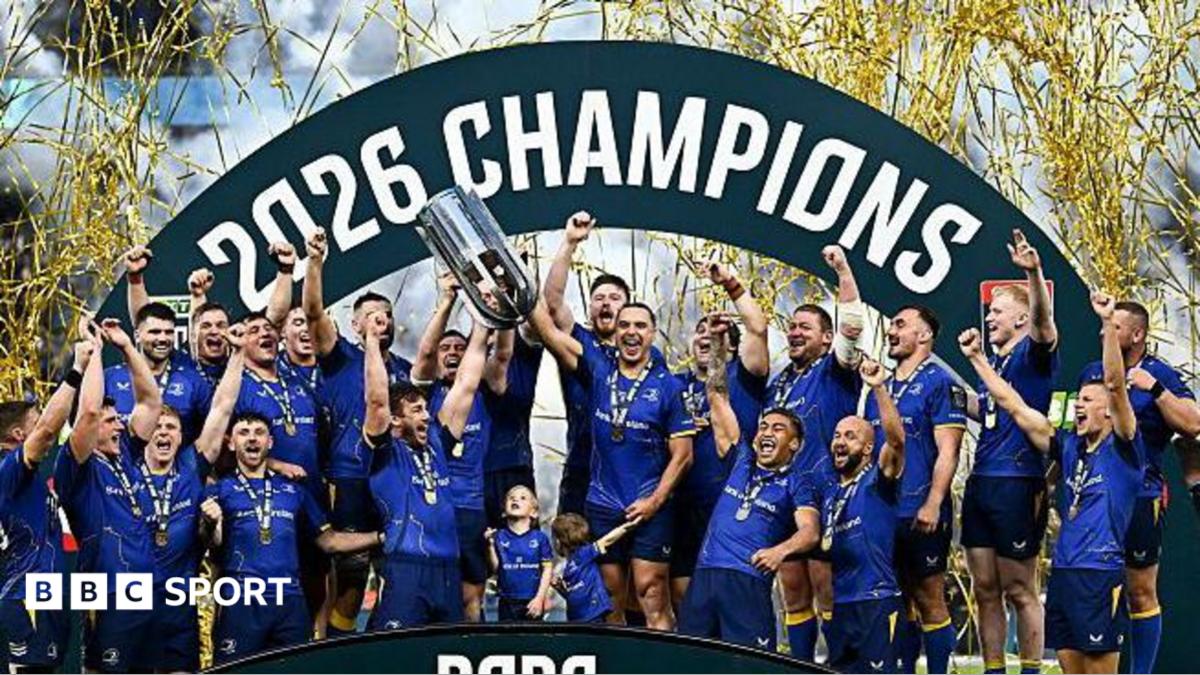
    Dublin’s iconic Croke Park played host to a one-sided United Rugby Championship (URC) final on Saturday, where Irish side Leinster produced a masterclass of clinical rugby to claim back-to-back titles with a resounding 36-7 victory over South Africa’s Bulls.

    The dominant win marks a significant redemptive moment for Leinster, just one month after they fell to a heartbreaking defeat against Bordeaux-Begles in the European Champions Cup final, where they missed out on what would have been their fifth continental crown. For the Irish province, this title further cements their status as the most successful side in the history of the tournament, now holding 10 league titles across all iterations of the competition, and becoming the first team to defend the URC crown since the tournament’s 2021 rebrand. For the Bulls, the result extends a painful run of final heartbreak, marking their fourth URC final defeat in the last five editions of the championship.

    Leinster seized control of the match from the opening whistle, capitalizing on early disciplinary chaos from the South African side to build an unassailable 22-0 halftime lead. Within the first two minutes of kickoff, Bulls centre Canan Moodie was sin-binned for a deliberate knock-on that stopped a promising Leinster line break, forcing his side to play with 14 men. Just four minutes later, Leinster turned the error into points: winger Tommy O’Brien pounced on a sloppy loose pass from Bulls fly-half Handre Pollard inside the opposition half, kicked the ball 30 meters upfield, collected it and sprinted clear to score under the posts, opening the scoring for the home side.

    A second try followed quickly. Jamison Gibson-Park’s quick hands set up a surging run from fullback Hugo Keenan, who shrugged off two would-be tackles before shifting the ball left to centre Rieko Ioane. Ioane stepped inside Bulls defender Kurt-Lee Arendse and dived over in the corner to extend Leinster’s lead.

    The Bulls produced some staunch goal-line defense to hold back further waves of Leinster attack, but indiscipline struck again when fullback Willie le Roux was also yellow-carded for a deliberate knock-on as Leinster pressed hard on the South African side’s line. Leinster converted their sustained pressure into a third try just before halftime, when Jack Conan, an early substitution brought on to replace the injured starting captain Caelan Doris, picked up the ball from a close-range ruck and barged over the line. Fly-half Sam Prendergast knocked over a penalty shortly after, when the Bulls failed to release a tackled Leinster player, sending the sides into halftime with the home side holding a 22-point advantage.

    Leinster picked up exactly where they left off in the second half. Prendergast darted over from one meter out at the base of a ruck to score his own try, then converted the score to push Leinster’s lead out to 29-0. The Bulls thought they had their first try shortly after, when Harold Vorster appeared to ground the ball over the line, but referee Andrea Piardi disallowed the score following a Television Match Official (TMO) review, in a call that sparked controversy for the South African side.

    Leinster were reduced to 14 men for 10 minutes shortly after, when winger James Lowe received a yellow card for a deliberate knock-on in his final appearance for the Irish province. The Bulls finally broke through Leinster’s defense after the 60-minute mark: Moodie accepted a perfectly timed offload and stretched over the line to score, with Pollard adding the conversion to put the Bulls on the board at 29-7.

    Any hopes of a dramatic comeback were quickly snuffed out, however, when the Bulls had a second try disallowed for a forward pass from Moodie in the build-up, after another TMO review. Leinster replacement fly-half Harry Byrne put the final nail in the coffin in the closing minutes of the match, rumbling over between the posts and converting his own try to seal the 36-7 final score.

    Speaking after the match, the result was a testament to Leinster’s depth and consistency across the season, turning a near-miss in European competition into domestic glory, while the Bulls were left to reflect on a tournament that ended in familiar disappointment for the side.

  • Thumping win cements Canada’s place as a ‘soccer nation’

    Thumping win cements Canada’s place as a ‘soccer nation’

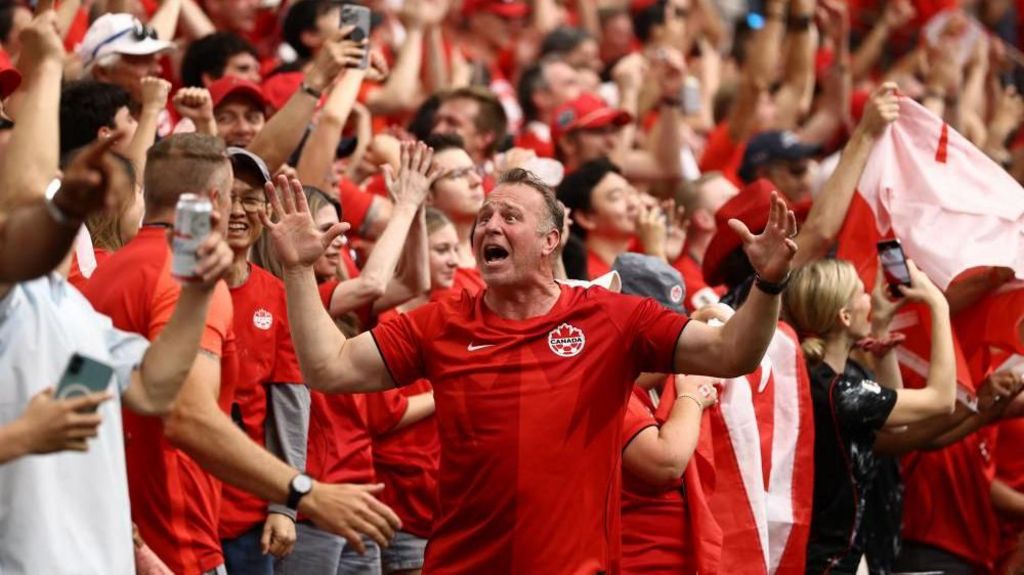
    On a red-and-white swept Thursday at Vancouver’s sold-out BC Place Stadium, the Canadian men’s national soccer team etched its name into the country’s sports history books, delivering a sensational 6-0 blowout victory over Qatar in their opening match of the tournament. What fans had only dared to hope for a narrow, solid win turned into a rout that has redefined Canada’s standing on the global soccer stage, even as the nationwide celebration was softened by a devastating injury to star midfielder Ismaël Koné that cut his tournament short.

    In the hours before kickoff, the energy building across Vancouver was palpable. Thousands of diehard Canadian supporters marched the so-called “last mile” to the stadium, their path thick with red smoke flares, turning the streets of the west coast city into a sea of the nation’s signature colors. Across the country, from downtown Vancouver’s Granville Street to tiny neighborhood bars in Toronto, thousands more gathered at public watch parties, crammed together to cheer on Les Rouges, as the squad is nicknamed. For long-time Canadian soccer fan Dave Di Cola, who joined dozens of fellow supporters at a Toronto watch party, the mood heading into kickoff was cautious: he described his outlook as “reserved optimism”, knowing how unpredictable international soccer can be.

    That uncertainty evaporated almost as soon as the first whistle blew. Canada dominated from the opening minutes, netting three goals before halftime to put the game out of reach. Qatar’s challenge was further complicated when two of their players were sent off, opening the door for Canada to extend their lead to a final 6-0 score. Star striker Jonathan David bagged a hat-trick, cementing his place as the hero of the historic night – a moment memorialized in one viral social media photo that perfectly captured Canada’s shifting soccer identity: a fan wore an ice hockey jersey for Canadian hockey legend Connor McDavid, with the “Mc” covered by a hand-drawn “J” to honor David, blending the country’s long-held hockey obsession with its new passion for soccer.

    But the elation of the win was immediately dimmed when Koné suffered a severe leg break that forced him out of the tournament. The Ottawa-native has been a core piece of Canada’s midfield, and coach Jesse Marsch called him “a big part of the heart of our team.” After Koné went down, his teammates rushed to his side to support him as medics treated him on the pitch. Just minutes after coming on as substitute for Koné, Nathan Saliba scored Canada’s fourth goal – and held up Koné’s jersey to the crowd in a moving tribute. After undergoing successful surgery overnight, Koné posted a message on Instagram Friday morning saying, “What you guys did yesterday will stay with me forever.”

    In a heartfelt post-match pep talk in the locker room, Canadian Prime Minister Mark Carney praised the entire squad for the extraordinary character they displayed in the face of adversity. “They showed a level of character that some people never achieve,” Carney told the team, speaking in front of a packed, cheering locker room. “You showed it when the entire country and a good part of the world is watching.”

    For long-time observers and fans of Canadian soccer, the lopsided win is far more than just three tournament points. For decades, Canadian soccer was sidelined, seen as a secondary sport behind hockey, basketball, and baseball. Di Cola, who has followed the team for years, noted that “Canada soccer has always been kind of a joke. It’s always always secondary.” But the outpouring of support across the country – from the sold-out stadium to packed watch parties from coast to coast – changed that narrative: Di Cola admitted the scene “nearly brought a tear to my eye.”

    Canada now joins a pantheon of iconic recent Canadian sports moments that includes Sidney Crosby’s 2010 Vancouver Olympic golden goal, the Toronto Raptors’ 2019 NBA Championship, and the Canadian women’s soccer team’s 2020 Tokyo Olympic gold medal. While Di Cola acknowledges that the team still has “a long way to go” to cement its status as a global soccer power, Thursday’s rout has already cemented the moment as one that transformed Canadian soccer. Fans across the country now look ahead with renewed momentum as Canada prepares to face Switzerland in their next group stage match.

  • Cape Verde’s star goalkeeper Vozinha gets a family boost before Uruguay clash

    Cape Verde’s star goalkeeper Vozinha gets a family boost before Uruguay clash

    TAMPA, Florida — For 40-year-old Cape Verde goalkeeper Vozinha, the 2024 FIFA World Cup has already delivered far more than he ever could have dreamed. Fresh off a man-of-the-match performance in his nation’s historic goalless draw against Spain that turned the veteran shot-stopper into a global social media sensation, he will step onto the pitch Sunday against Uruguay with his entire immediate family in the stands, a happy resolution to early visa complications that once threatened to keep his mother away.

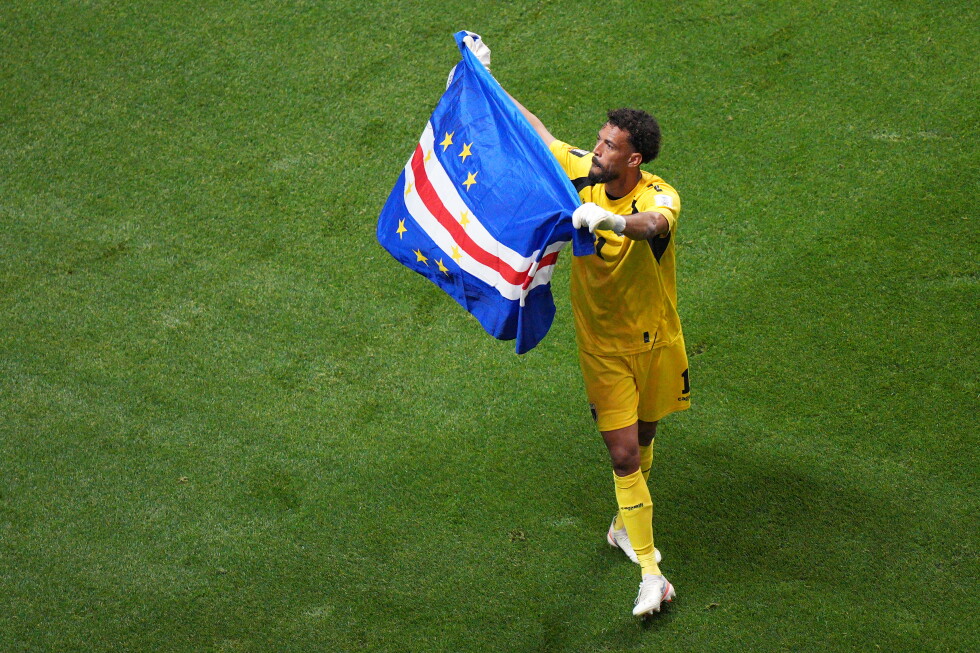
    Born Josimar José Évora Dias, Vozinha earned global acclaim for his tenacious defensive display against European powerhouse Spain, a result that made Cape Verde the only debuting nation at this year’s tournament to avoid an opening-match defeat. The unexpected point has sparked wild celebrations among Cape Verdean fans at home and across the diaspora in the United States, with Vozinha’s standout play turning him into the face of the underdog nation’s historic World Cup run.

    Speaking to reporters ahead of Thursday’s training session at Cape Verde’s Tampa training base, Vozinha called the presence of his family one of the most meaningful parts of his first World Cup experience. His father Jose Pedro Dias and brother Delmiro Évora Nascimento, a professional footballer himself, have already joined him in Florida, and his mother — who initially faced bureaucratic hurdles securing a U.S. travel visa — is confirmed to arrive before kickoff against Uruguay.

    “They always support me in everything I do, so having my mother here is something special,” Vozinha said. “My father is here too, and my brother as well, so I’m very happy.”

    Vozinha’s name carries its own World Cup legacy: his father told reporters he named his son after Josimar, the star Brazilian right-back who netted two goals and became a breakout star at the 1986 Mexico World Cup. “I watched the matches and fell in love with the Brazilian national team,” Dias explained. “There were a few players who stood out; one of them was Josimar, a right-back, who scored two goals and really made his mark at that World Cup.”

    Like thousands of Cape Verdean supporters who have traveled to the U.S. for the tournament, Dias said he is overcome with pride to see his son and his nation compete on soccer’s biggest stage. This marks Cape Verde’s first ever qualification for the World Cup, a milestone that once seemed unthinkable for the small archipelago nation of just 500,000 people off the west coast of Africa.

    “As a father, I feel immense pride. All Cape Verdeans right now feel proud to be Cape Verdean and of Cape Verde’s current performance; it’s something we could never have imagined would be possible,” he said.

    Vozinha’s brother echoed that sentiment, calling the moment a once-in-a-lifetime opportunity for the entire team. “I’ve no words to describe this moment,” he said. “We just have to live it because it’s a once-in-a-lifetime moment for a professional footballer – to be at the World Cup, to play against Spain, to put in the performance he did.”

    Outside the Tampa training ground on Thursday, caravans of supporters packed into RVs, all dressed in the royal blue of Cape Verde’s flag and decked out in team merchandise, gathered to cheer on the team. For many of the fans in attendance, like Benjamin Ferrera, a Cape Verde-born resident of Massachusetts — home to the largest Cape Verdean diaspora community in the U.S., often nicknamed the nation’s “11th island” — the draw against Spain already feels like a win.

    Ferrera, who works on the security team at Foxborough’s Gillette Stadium, one of this tournament’s host venues, said growing up he constantly heard that Cape Verde would never reach a World Cup. Today, that narrative has been completely upended.

    “I don’t have words for it, because nobody expected it. We are just 500,000 people on small islands. To be on this type of stage with the world watching us is just magnificent,” he said. “When I grew up, I always heard that Cape Verde doesn’t have football, that we would never make a World Cup. Today I’m proud to say we’re here and we are going to make history.”

    Andreia Levy, an organizer for the Cape Verde supporters’ group 12 Sharks, said the historic opening result felt preordained. “Of course, I trusted the guys,” she said. “We knew that it was possible to do something here.”

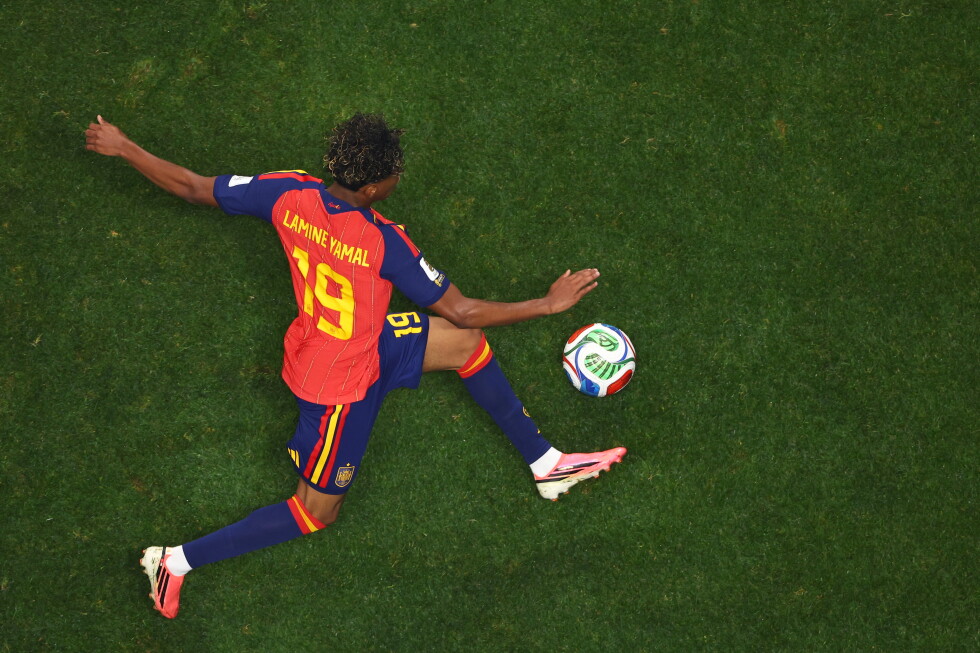
  • Lamine Yamal says he’s not fully fit and is unlikely to start in Spain’s second World Cup game

    Lamine Yamal says he’s not fully fit and is unlikely to start in Spain’s second World Cup game

    As the FIFA World Cup group stage progresses, 18-year-old soccer prodigy Lamine Yamal will almost certainly not earn a starting spot for Spain in Sunday’s highly anticipated Group H matchup against Saudi Arabia, as the teen star continues working through rehabilitation for a lingering left hamstring injury that has limited his fitness heading into the tournament.

    Yamal, one of the most high-profile young talents in global soccer and a key contributor to both Spain’s 2024 European Championship triumph and Barcelona’s La Liga title last season, entered the 2026 World Cup already managing the hamstring issue. He only featured as a late substitute in Spain’s opening group fixture against Cape Verde this week, a contest that ended in a underwhelming 0-0 draw for the European side against the first-time World Cup qualifier.

    In an interview with Spanish public broadcaster RTVE, Yamal opened up about his recovery timeline, emphasizing that rushing his return would carry unnecessary risk for both the player and the national team. “I’m fine, I feel good, but it’s still too soon,” Yamal said. “It’s unnecessary to take risks. I’m going through an adaptation process, it’s not the time to play a full match yet. But I can play as many minutes as the coach wants.”

    The 18-year-old entered the game against Cape Verde in the 71st minute, replacing a starter to add attacking spark to a stagnant Spanish offense, but he could not break through the Cape Verdean defense to secure three points for La Roja. Following Sunday’s matchup in Atlanta against Saudi Arabia, Spain will move to Guadalajara for a pivotal Group H clash with Uruguay, a match that is widely expected to decide which team tops the group, and a full-fit Yamal is viewed as critical to Spain’s success in that decisive fixture.

    Yamal also noted that fellow Spanish winger Nico Williams, who also arrived at the tournament managing an injury, is further along in his recovery than he is. “Physically he’s even better than me,” Yamal said. “We’re not in a rush. We have a great team with top-level players and we have to go step by step.”

    Despite his young age, Yamal has already established himself as one of the biggest drawcards of this World Cup, with his global popularity particularly visible on the ground in the United States, where the tournament is being hosted. A massive promotional billboard featuring Yamal’s image dominates the skyline outside Atlanta’s Mercedes-Benz Stadium, the site of Spain’s opening match of the tournament. When asked about his outsized popularity at just 18, the teen star said he has acclimated to the attention and remains focused on performing for fans. “I’m taking it naturally, it’s something I’m used to,” Yamal said. “I know what I represent both outside of Spain and in Spain. I try to always give my best, that’s what the fans want. If you have your image on that building, it’s because you can do things on the field that people like, things that excite them when they see you play.”

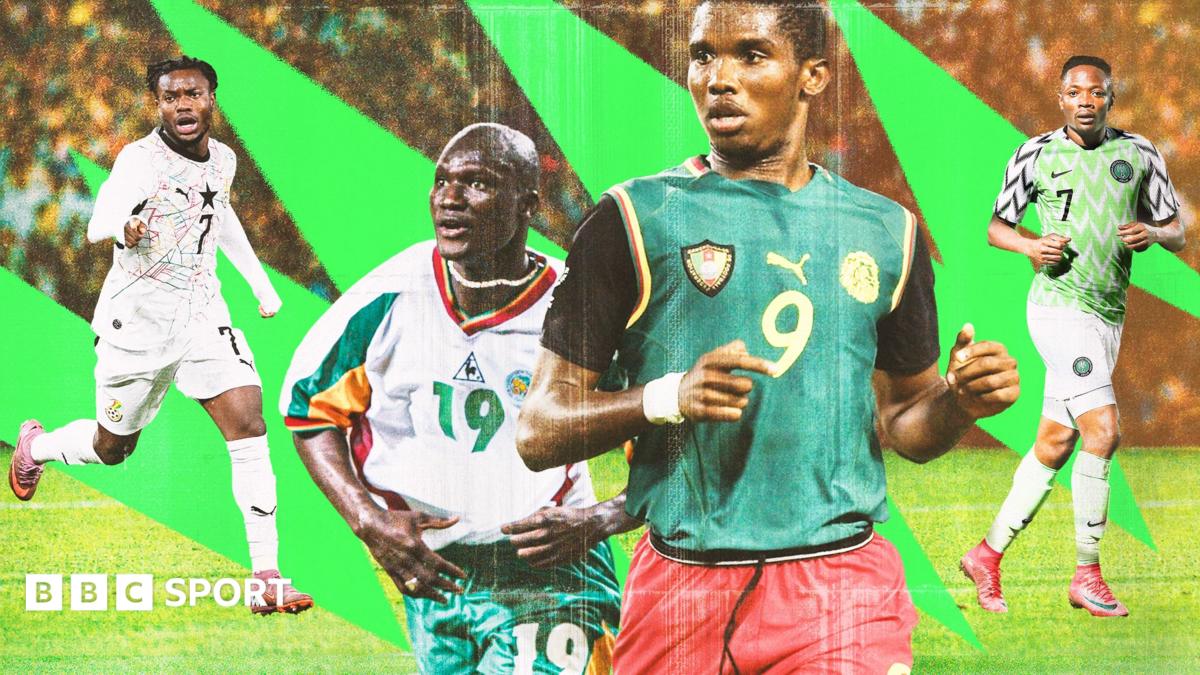
  • Africa’s greatest World Cup kits – pick your favourite

    Africa’s greatest World Cup kits – pick your favourite

    The FIFA World Cup is globally celebrated for its breathtaking goals, last-minute drama, and raw emotional moments — but it is also a stage where memorable football fashion is born. When it comes to bold, culturally rooted, and instantly recognizable kit designs, African national teams have produced some of the most iconic looks in the tournament’s history. BBC Sport Africa has curated a list of 10 standout designs from the continent, spanning more than 50 years of World Cup participation, inviting fans to weigh in on which they rank as the all-time greatest.

    The oldest entry on the list hails from 1974, when Zaire (now the Democratic Republic of the Congo) took to the World Cup stage in a striking yellow and green ensemble that perfectly embodied the fashion sensibilities of its era. Featuring a wide collar and a dramatic deep V-neck, the kit made its biggest statement by emblazoning both the country’s name and the national team’s Leopards nickname and logo directly across the chest. While Zaire’s 1974 tournament ended in disappointment — including a lopsided 9-0 defeat to Yugoslavia — the kit itself has gone down in history as a bold classic. Even contemporary Congolese designers draw inspiration from it: Alvin Junior Mak, who went viral recently for creating the current DRC squad’s viral leopard-print arrival suits, says he looked back to 1974 to ground his work. “When you are in Africa, we say if you want to move forward, you have to see where you come from,” Mak explained to BBC Sport Africa.

    Next on the list is Algeria’s 1982 kit, created for the country’s first ever World Cup appearance. Mirroring Zaire’s 1974 design choice, the kit featured the country’s name printed across the chest, written in elegant Arabic script. Like the Zaire kit, it also boasts a deep neckline and oversized collar that marked it as a product of early 1980s fashion. Produced by Sonitex, Algeria’s defunct state-owned clothing manufacturer, the design is no longer bound by copyright protection — a detail that has made it widely reproduced by small local brands for both domestic fans and the Algerian diaspora. This accessibility has cemented its cult status among Algerian football fans, particularly self-described football hipsters, says Algerian sports journalist Maher Mazahi.

    Cameroon’s 1990 kit is forever tied to one of the most iconic runs in African World Cup history. That year, the Indomitable Lions became the first African nation to reach the tournament’s quarter-finals, stunning defending champions Argentina 1-0 in the opening match and capturing global attention with Roger Milla’s iconic corner flag dance celebration. The 38-year-old striker, who was called out of retirement by Cameroon’s President Paul Biya, scored four unforgettable goals during the run. The kit’s centerpiece was a roaring lion emblazoned across the chest, a symbol that still stands for national pride, courage, and determination for Cameroonians, explains Paul Njie, BBC World Service’s Yaounde correspondent. “Many people believe that was the best ever performance of the Cameroon national team and some of them attribute that to the luck which came with the kit,” Njie says.

    For Nigeria’s 1994 World Cup debut, the Super Eagles debuted an away white kit that would become legendary. In that tournament, Nigeria claimed 3-0 and 2-0 wins over Bulgaria and Greece respectively while wearing the white jersey, dropping only their matches against Argentina and Italy when wearing their traditional green home kit. That coincidence has only added to the kit’s mythos among Nigerian football fans. “We see the legends, the players that made the difference for Nigerian football, and if I close my eyes that’s the first shirt that comes to mind,” former Super Eagles captain William Troost-Ekong told BBC Sport Africa. “Nigeria’s greatest set of Super Eagles have worn that shirt and all of us strive to be able to imitate that.”

    South Africa’s 1998 kit, worn during the country’s first ever World Cup appearance after the end of apartheid, is a geometric-designed classic from Italian sportswear brand Kappa. The design was an updated iteration of the kit Bafana Bafana wore when they won the 1996 Africa Cup of Nations on home soil, a moment that remains a touchstone of national pride. Though South Africa failed to win any of their three group stage matches in their 1998 debut, the kit has endured as a fan favorite. “These days South Africa tend to wear yellow, but back in the 1990s their shirts were much more fun,” said Josh Warwick, co-founder of the Cult Kits website. “In our opinion, Kappa were one of the great brands from that era.”

    One of the most controversial entries on the list is Cameroon’s 2002 sleeveless kit. Originally designed as a basketball-style vest, the Indomitable Lions wore the sleeveless version to win the 2002 Africa Cup of Nations title just months before the World Cup, and it instantly won over players and fans alike. “When we came to the dressing room we said, ‘Wow, this is a new generation of shirt’. When we went on to the pitch the world was watching and it became famous. Everybody in Africa wanted to wear that shirt,” former Cameroon midfielder Eric Djemba-Djemba recalled in a 2023 interview. However, FIFA ruled the sleeveless design violated World Cup competition rules, forcing Cameroon to add awkward black sleeves for the tournament — a decision many fans still see as an unnecessary spoiler.

    Senegal’s 2002 kit is tied to one of the biggest upsets in World Cup history: the Teranga Lions’ 1-0 opening match win over defending champions France, courtesy of a winning goal from the large, imposing midfielder Papa Bouba Diop, nicknamed “The Wardrobe” for his massive frame. The kit’s signature baggy fit even became part of its iconic look, and it remains wildly popular among Senegalese fans decades later. “Of all our kits, 2002 is the best,” said Mamour Insa, a Senegal fan who followed his team at a recent World Cup watch event in New York. “All our generation, they wear just that kit. A lot of young people wear it more than new designs. It is very difficult to find.”

    Ghana’s 2010 red and gold kit is forever linked to one of the most gut-wrenching moments in African World Cup history: Asamoah Gyan’s late penalty miss against Uruguay that would have sent the Black Stars into the tournament semi-finals, the first for any African side. With the match tied 1-1 in the final moments of extra time, Luis Suarez was sent off for a deliberate handball that stopped a sure Ghana goal, but Gyan’s penalty clipped the crossbar and went over; Uruguay went on to win the match in a penalty shootout. Despite the heartbreaking outcome, the kit itself remains a fan favorite. “I think it was a great shirt, the players loved it,” former Ghana midfield legend Michael Essien told BBC Sport Africa, jokingly adding that its tight, figure-hugging cut required a well-built physique to pull off.

    Nigeria’s 2018 neon green kit became a global viral sensation before the tournament even kicked off, with fans queuing for hours outside retailers to get their hands on the popular design. The Nike design pays deliberate homage to Nigeria’s 1994 debut kit, creating a modern classic that circles back to the Super Eagles’ first World Cup moment. “The best football shirt ever,” Troost-Ekong said of the design. “Everyone was trying to get hold of it, I had so many calls and messages.” Despite its massive popularity, the Super Eagles only got to wear it once during the 2018 tournament, in a 2-0 group stage win over Iceland.

    The newest entry on the list is Ghana’s 2026 home kit, which features a striking spiderweb design inspired by Kwaku Ananse, the iconic trickster spider figure from Ghanaian folklore. The bold design has drawn comparisons to Spider-Man’s suit for its bright, web-patterned look, but it may never get its moment on the World Cup stage: FIFA has already ruled that Ghana will not be allowed to wear the home strip for any of its 2026 group stage matches, leaving fans to wonder if this will go down as a would-be classic that never got its spotlight.