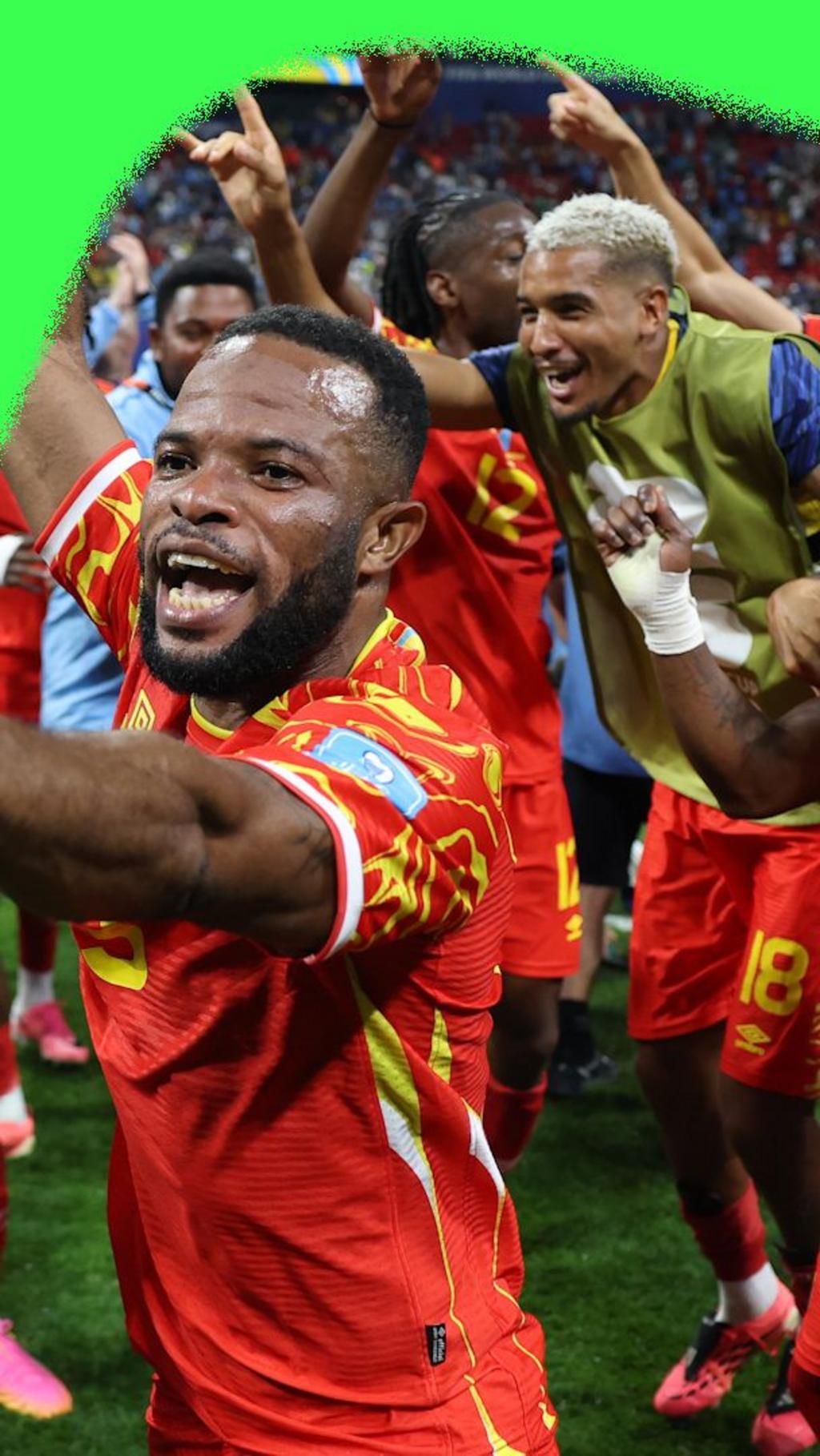
Ahead of England’s crucial World Cup Round of 32 fixture against DR Congo this Wednesday, BBC Sport has announced it will deliver comprehensive pre-match coverage, including all key details fans need to prepare for the contest. The preview coverage, rolled out under the outlet’s England Men’s national team section, was published just one hour before this report, making the latest updates available to football supporters around the globe. As fans gear up for the knockout stage clash, the platform is also highlighting additional World Cup video content to give audiences deeper insight into both teams, their form heading into the match, and what is at stake for either side when they step onto the pitch. Viewers can access the full coverage, share the preview with other football fans via link sharing or social media, and access supplementary on-demand video content to enhance their pre-match experience.
分类: sports
-
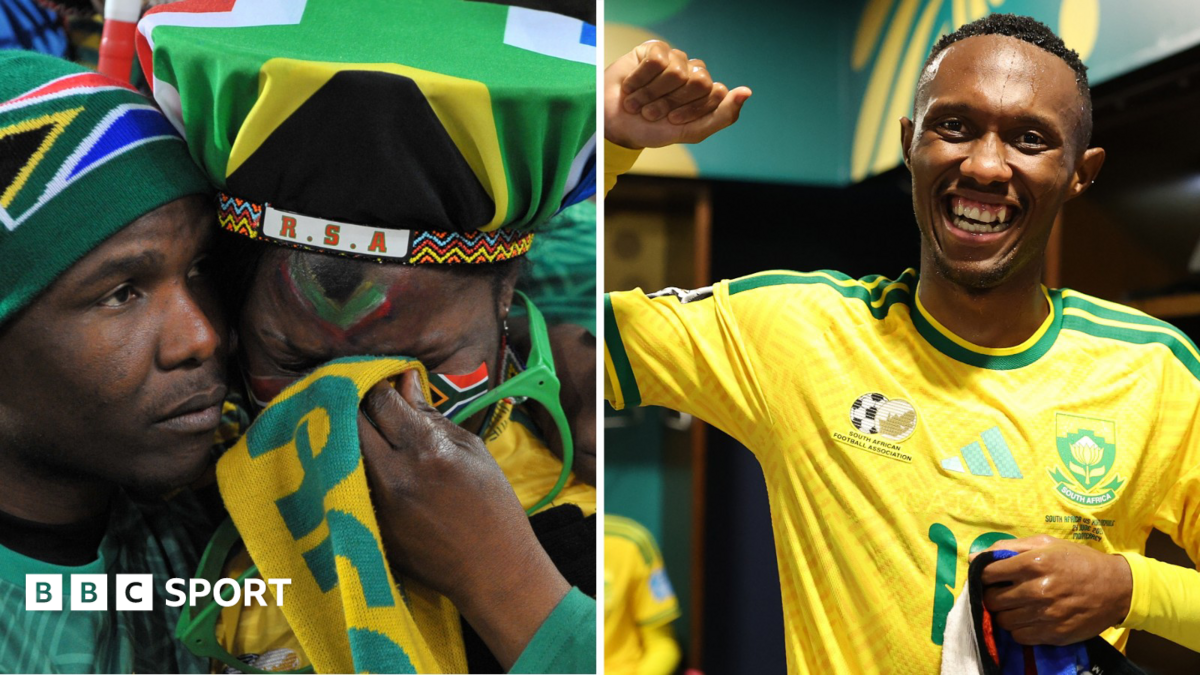
South Africa look to lay ghosts of 2010 to rest
Sixteen years after a crushing early exit as the first African host nation of the FIFA World Cup, South Africa’s men’s national football team, Bafana Bafana, has rewritten its story by reaching the knockout stage of the 2026 World Cup for the first time in the country’s history.
The 2010 tournament remains a bitter memory for South African football supporters. Then, Siphiwe Tshabalala’s iconic opening-game opener against Mexico was hailed by a television commentator as “a goal for all of Africa”, but the moment quickly faded into disappointment. A 1-1 draw with Mexico and a final-group win over France were not enough to save Bafana Bafana from elimination on goal difference, making South Africa the first host nation in modern World Cup history to crash out in the group stage. That missed opportunity cast a long shadow over South African football for more than a decade.
Cape Town-based veteran sports journalist Mark Gleeson told BBC World Service that domestic football entered a period of stagnation after the 2010 tournament, exacerbated by a national economic downturn that drained sponsorship and funding from the local game. “There was much excitement in the build-up to 2010, but then it all went a little bit dead, combined with an economic downturn,” he explained. “There are not many sponsors in the domestic game. There’s not a lot of money floating around.” In the years that followed, South Africa missed out on three Africa Cup of Nations (Afcon) tournaments in 2012, 2017 and 2021, marking a prolonged lean spell for the national side.
In recent years, however, signs of a revival began to emerge. Top domestic club Mamelodi Sundowns claimed its first African Champions League title in 2016, then secured a second continental crown in May 2026, one year after finishing as runner-up. The national team’s qualification for the 2026 World Cup, paired with Sundowns’ continental success, has delivered a transformational boost to football across the country, Gleeson noted. “Hopefully this is the start of a new era for South Africa, maybe 16 years too late. This is how things should have been in 2010,” he said.
The turnaround for Bafana Bafana traces back to a key coaching change after the team failed to qualify for Afcon 2021. The South African Football Association sacked head coach Molefi Ntseki and turned to 74-year-old Belgian manager Hugo Broos, who had previously guided Cameroon to the 2017 Afcon title. A former defender who played for Belgium at the 1986 World Cup in Mexico, Broos set about overhauling the squad, prioritizing young domestic-based talent over aging veterans. His rebuild quickly bore fruit: Bafana Bafana finished third at the 2023 Afcon, then topped its 2026 World Cup qualifying group ahead of fan-favorite Nigeria to secure a spot in the tournament.
A rocky opening match against Mexico — a rematch of the 2010 opener — sparked fresh criticism of Broos’ conservative tactics. Bafana Bafana finished the game with nine players and dropped a 2-0 defeat, leading many fans and analysts to call for a change in leadership. The team quickly bounced back, however: they fought back from a deficit to earn a draw with the Czech Republic, then secured a crucial 1-0 win over South Korea to claim second place in Group A and a spot in the round of 32. After sealing qualification, Broos hit back at his critics, saying his side had silenced the “big mouths” that had questioned his approach.
Team captain and goalkeeper Ronwen Williams says Broos deserves the highest honor for transforming the team’s fortunes. “He deserves a statue. He deserves the highest recognition for the belief he has shown in this team. When our backs are against the wall and people don’t believe in us, he is always there,” Williams said.
Even Dean Furman, a former South Africa national team captain who was cut from the squad by Broos shortly after the Belgian took over, has praised the coach’s squad remodeling. “The first thing he did was get rid of the older players of the group and develop a younger team,” the former Oldham Athletic and Rangers midfielder told BBC Sport Africa. “I never got the chance to work with him, disappointingly. But in hindsight, it was the best decision. What he’s done with the team, to go third place in the Afcon, qualify for the World Cup and get to the knockouts, I think he’s done a phenomenal job.”
This breakthrough marks the first time Bafana Bafana has advanced past the group stage in four World Cup appearances, after early exits in 1998 and 2002 in addition to the 2010 heartbreak. Yet the achievement comes as South Africa faces significant socio-political unrest, with recent anti-migrant violence prompting several African nations to repatriate their citizens. While South African officials have condemned the violence and rejected accusations of xenophobia, some football fans across the continent celebrated Mexico’s opening-game win over South Africa at organized “hate-watch” gatherings.
Williams has called for pan-African unity, urging fans across the continent to put political tensions aside to support the team. Furman echoed that call, noting that South Africans have long celebrated the success of other African sides at the World Cup. “Despite the political unrest in the country I’m hoping that Bafana, on the football pitch, have given the continent a team to be proud of,” Furman said.
Furman also praised Williams, who he called an “incredible leader” for steadying the squad after the opening loss to Mexico. “I know how deflated the boys were, and then the added scrutiny and pressure that comes with playing in a World Cup,” he said. “Massive credit to him as captain to galvanize the team — to get the mood back in the camp and ultimately deliver the performances that have led the team to the knockouts.”
A striking feature of Bafana Bafana’s 26-man 2026 squad is its deep roots in domestic football: 16 of the 26 players come from just two top South African clubs, eight from Mamelodi Sundowns and eight from reigning league champions Orlando Pirates, with only seven players based at foreign clubs. Furman says this signals a bright future for South Africa’s domestic league, noting that the national team’s success will draw more international attention to local talent and open up more opportunities in top European leagues.
Now, South Africa prepares to face another knockout stage debutant, Canada, in their round of 32 clash at Los Angeles Stadium on Sunday at 19:00 GMT. The two sides have never faced each other in international competition, with both looking to add another historic chapter to their 2026 World Cup runs. Canada lost its final group match to Switzerland and lost its planned home advantage as co-hosts, creating a clear opening for South Africa to advance further, Gleeson said. “All of a sudden, from being outsiders and not really being given much of a chance of making it through to the knockout phase, they are perhaps staring at a possible place in the last 16,” he added.
With Broos expected to retire from management after the 2026 tournament, the squad has extra motivation to deliver a strong performance for the coach who engineered their remarkable comeback. Broos says his side is ready to fight for another historic result. “I know the players will be ready again and try to achieve the third round,” he said. “You will see a team that will believe and fight for the 90 minutes, and more if we have to. It should be even more historic.”
-
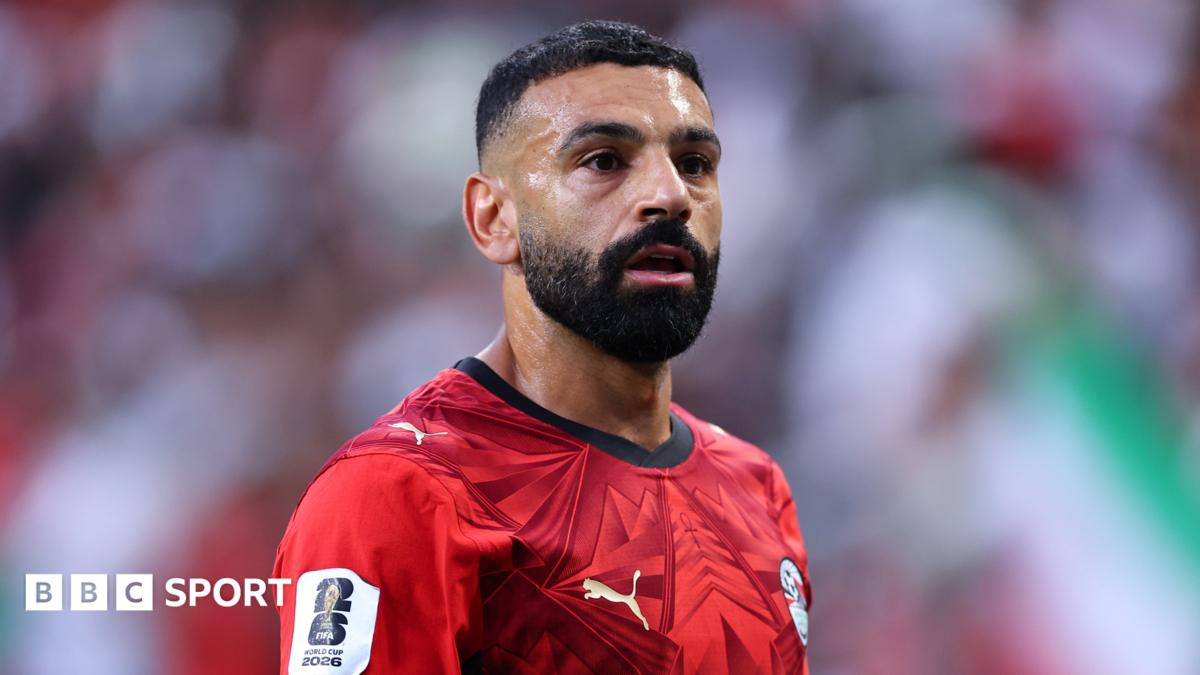
Salah an injury doubt for Egypt’s last-32 tie
As the 2026 FIFA World Cup enters its knockout stage, Egyptian football icon and national team captain Mohamed Salah faces an uncertain race to be fit for his side’s last-32 fixture against Australia this Friday, after sustaining a hamstring strain during the team’s final group stage match.
The 34-year-old Liverpool star was pulled from the pitch early in Egypt’s 1-1 draw with Iran, the result that secured the Pharaohs’ spot in the knockout round as Group G’s second-place qualifier. Following the substitution, team doctor Mohamed Abou confirmed that Salah had reported discomfort to medical staff before scans officially diagnosed a hamstring strain, according to an official statement released by the Egyptian Football Association (EFA).
The EFA added that Salah has already started an individualized treatment and rehabilitation program to manage the injury, but the governing body has not released any official update on whether the star forward will be available for the Dallas, Texas kickoff scheduled for 19:00 BST on 3 July.
In comments made immediately after the Iran match, Egypt head coach Hossam Hassan downplayed the severity of the injury, saying: “I spoke with Salah and, God willing, the injury doesn’t seem serious. He assured me it would be fine, that it’s not a serious injury.”
This is not the first hamstring setback Salah has dealt with this calendar year: a prior hamstring issue kept the winger sidelined for three weeks starting in late April, though he recovered in time to feature in Liverpool’s final two matches of the 2025-2026 English club season.
So far in the 2026 World Cup, Salah has been a key playmaker for Egypt, notching one goal and two assists to help the North African nation advance out of the group stage. He has also built an extraordinary legacy with his national side, scoring 68 goals in 119 appearances for Egypt dating back to his senior team debut.
All eyes in global football will now turn to Salah’s rehabilitation progress over the coming days as Egypt waits to confirm whether their biggest star will take the pitch against Australia.
-
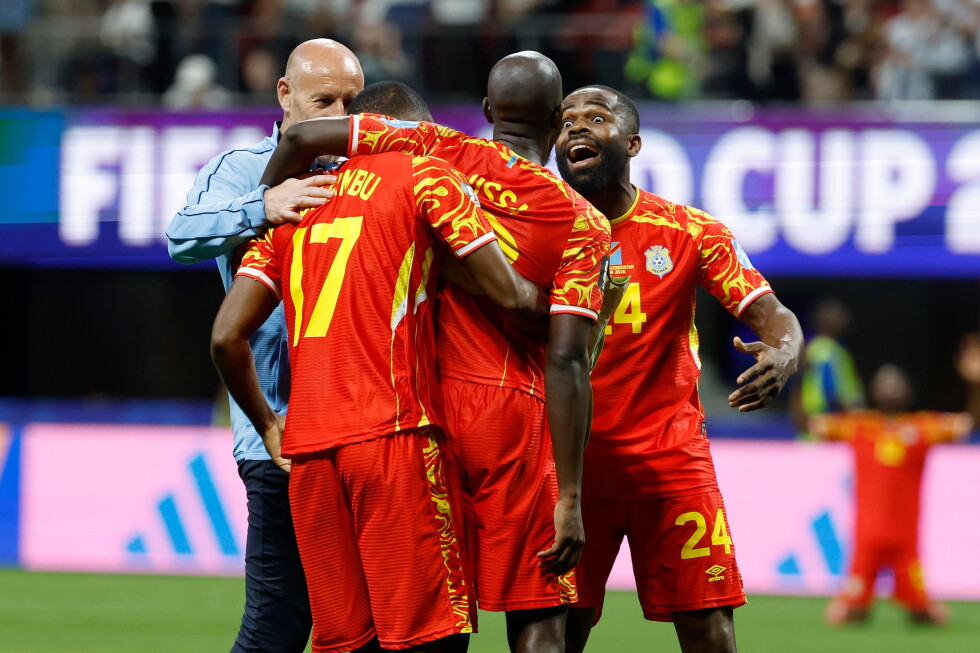
Congo rallies to a 3-1 win against Uzbekistan to seal place in the World Cup knockouts
For more than half a century, the Democratic Republic of Congo carried only one painful memory from its brief appearance on soccer’s global grandest stage: a demoralizing 9-0 thrashing at the hands of Yugoslavia during its only prior World Cup run, when the nation competed under the name Zaire in 1974. That outdated, humiliating legacy has been permanently rewritten by a bold new generation of Congolese talent, who etched their names into the country’s history books by sealing a first-ever trip to the World Cup knockout round, setting up an eagerly awaited round of 32 matchup against England.
Saturday’s night’s decisive group stage clash against tournament debutants Uzbekistan looked to be heading the wrong way for Congo early on. Just 10 minutes into the fixture, striker Eldor Shomurodov put Fabio Cannavaro’s side ahead with a clever lobbed finish, putting Sébastien Desabre’s squad on the brink of elimination — a draw would not be enough to send them through, meaning a win was the only acceptable outcome.
The turning point came in the 68th minute, when striker Yoane Wissa, who would end the night as his side’s hero, was fouled in the box by defender Abdukodir Khusanov to earn a penalty. Wissa stepped up to the spot himself, sending goalkeeper Abduvohid Nematov the wrong direction with a calm roll into the bottom corner to level the score, unlocking a late flurry of game-changing goals.
Ten minutes after the equalizer, substitute Fiston Mayele put Congo in front, flicking a finish past Nematov at the near post. The goal sparked chaotic, jubilant celebrations, with substitute players sprinting off the bench and across the pitch to mob their match-winning teammate. Wissa put the result beyond all doubt in stoppage time, curling a precise strike into the bottom corner to seal a 3-1 comeback win, sending Congo into the knockout round alongside Cape Verde as one of the tournament’s biggest surprise packages.
This historic result follows an earlier shocking upset for the Congolese side, which held Cristiano Ronaldo’s star-studded Portugal to a 1-1 draw earlier in the group stage — the nation’s first ever World Cup point. Saturday’s win marked Congo’s first ever victory at the tournament, enough to advance as one of the best third-placed teams, and made it the eighth African nation to progress to the knockout round at this year’s tournament.
Speaking after the final whistle, Wissa reflected on the magnitude of the moment, noting the heavy expectations the squad carried heading into the fixture. “The weight on our shoulders was hard to bear,” he said. “We told ourselves we can’t give up, we have to get that win because getting a tie would kick us out. So we got that win.” Head coach Desabre highlighted his side’s characteristic resilience, adding: “We’re a team that knows how to respond when we concede a goal; we keep fighting with determination.”
Wissa emphasized the national significance of the achievement, saying: “We’re going to savor this moment because it’s been tough. All the guys — the substitutes, those who’ve worn the jersey before, and those who’ll wear it tomorrow — we should be proud. Thank you to all the Congolese people; it’s for moments like these that we do what we do. We did it!”
For Uzbekistan, the first World Cup appearance in the nation’s history ended in disappointment with three consecutive losses. Cannavaro, the former World Cup-winning captain with Italy, framed the campaign as a foundational experience for his young side. “I hope this tournament will give us big experience. I hope this experience will give us more motivation for the future,” he said.
-
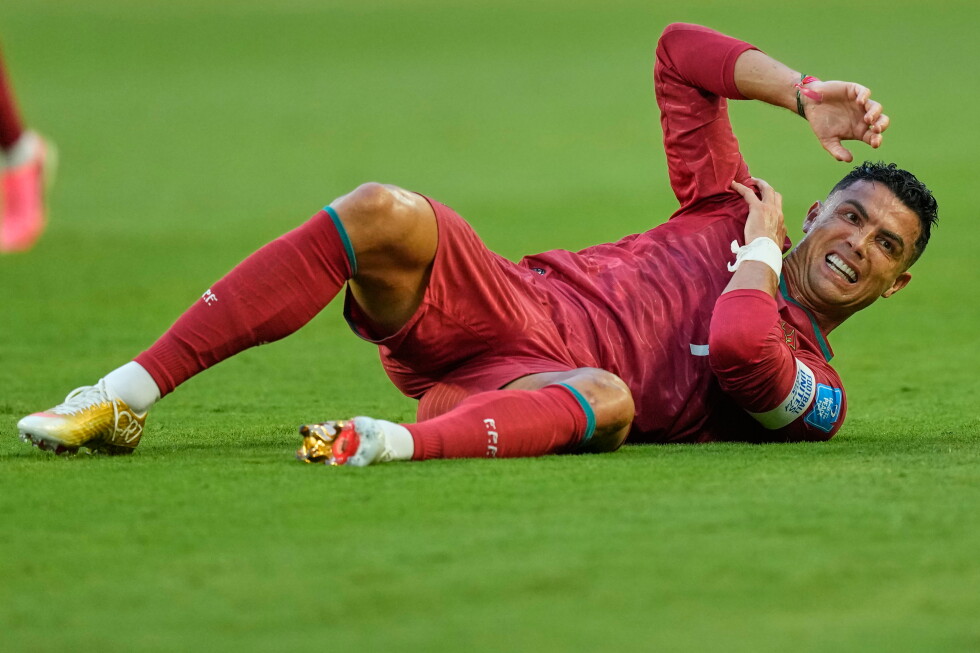
Colombia wins Group K after 0-0 draw with Portugal; both squads already into World Cup knockouts
MIAMI GARDENS, Florida – The final match of Group K play at the expanded 48-team World Cup delivered a tense, action-packed stalemate Saturday night, with Colombia securing first place in the group following a 0-0 draw against Portugal at Hard Rock Stadium, the home of the NFL’s Miami Dolphins.
Both nations had already locked their places in the tournament’s knockout round heading into the final group fixture, with the result only serving to set their next opponents in the knockout bracket. Colombia, who missed out on qualification for the 2022 Qatar World Cup, will face Ghana in the round of 16, while Portugal, one of the pre-tournament favorites to lift the trophy, will go up against Croatia. Ghana dropped a 2-1 defeat to Croatia earlier the same day.
Despite the fact that knockout progression was already guaranteed for both sides, neither team took the match lightly, producing a lively, competitive 90 minutes of play. In the first half, Portugal playmaker Bruno Fernandes nearly broke the deadlock to put his side ahead, but a standout save from Colombian goalkeeper Camilo Vargas kept the sheet clean. At the opposite end of the pitch, Portuguese keeper Diogo Costa turned in an exceptional performance, notching six saves – more than he recorded in Portugal’s first two group matches combined. Just one minute into second-half stoppage time, Colombian defender Davinson Sanchez thought he had snatched a late winning goal with a header at the back post, but the offside flag negated the effort, leaving the scoreline level at full time.
For Portugal, the result capped off an uneven group stage for Cristiano Ronaldo’s side, who entered the tournament chasing their first-ever World Cup title. Portugal opened group play with an unexpected 1-1 draw against Congo, drawing criticism to Ronaldo after he failed to find the back of the net in that fixture. He responded emphatically in the second match, becoming the first player in history to score at six consecutive World Cup tournaments, notching two goals in a dominant 5-0 rout of Uzbekistan.
Colombia’s road to the top of Group K followed a strong run of form in their opening two fixtures: they opened with a 3-1 win over Uzbekistan, then secured a 1-0 victory over Congo to lock in their knockout spot early.
Saturday’s high-profile clash drew a sold-out crowd of 64,478 fans to Hard Rock Stadium, with a star-studded guest list in attendance. Notable spectators included legendary former Colombian playmaker Carlos Valderrama, FIFA President Gianni Infantino (who watched from a private suite alongside FBI Director Kash Patel and U.S. Secretary of State Marco Rubio), NFL quarterback Jameis Winston, Miami Heat NBA star Jimmy Butler, Hollywood actor Matt Damon, and former NFL wide receiver Chad Johnson. Demand for tickets was so high that local organizers hosted multiple public watch parties across South Florida for fans unable to secure entry to the stadium, including one gathering that drew thousands of attendees at the BB&T Center, home arena of the NHL’s Florida Panthers.
-
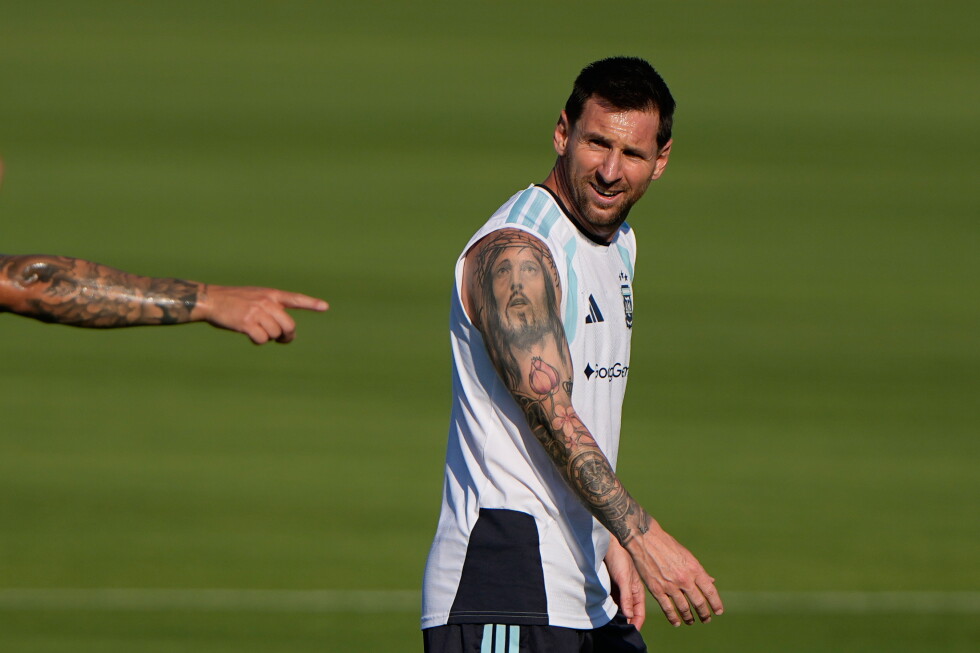
Messi is out of the starting lineup but could play in Argentina’s group finale against Jordan
ARLINGTON, Texas — With Group J’s top spot already locked in and Jordan eliminated from knockout round contention, Lionel Messi was predictably left out of Argentina’s starting 11 for their final group stage matchup at AT&T Stadium on Saturday night. The international soccer icon, who celebrated his 39th birthday just three days prior, may still see action off the bench, per head coach Lionel Scaloni.
The match brings a major rotation for Argentina, with nine fresh starters taking the field compared to the squad’s 2-0 win over Austria earlier in the group stage. Among the new starting players is Nicolás Paz, who made his World Cup debut as a late substitute for Messi in Argentina’s opening 3-0 victory against Algeria.
This tournament has already cemented Messi’s place as one of the greatest World Cup players in history. Entering the final group match, the Argentine captain holds the tournament’s leading goal tally with five strikes, all of Argentina’s goals so far. He notched his first-ever World Cup hat trick against Algeria, then bagged his fifth goal of the competition in late stoppage time against Austria.
That fifth goal against Austria pushed Messi’s all-time World Cup goal total to 18, breaking the previous record of 16 that he had shared with Germany’s legendary striker Miroslav Klose. This marks Messi’s sixth World Cup appearance, having first competed in the tournament more than two decades ago. Klose, who played in four World Cups between 2002 and 2014, scored his record-breaking final goal against Argentina in the 2014 World Cup final, handing Germany a 1-0 win over Messi’s side.
Messi’s historic run also includes a six-game consecutive World Cup goal scoring streak, a feat only achieved by two other players in men’s World Cup history: France’s Just Fontaine and Brazil’s iconic Jairzinho. Across his entire international career, Messi has now earned 201 caps for Argentina, 28 of which have come at the World Cup — a new FIFA record for men’s tournament appearances.
Just hours after Messi broke Klose’s all-time scoring record, France’s star striker Kylian Mbappé matched the old benchmark of 16 goals with a brace in France’s 3-0 win over Iraq. Mbappé currently sits second in this tournament’s goal rankings with four goals, one behind Messi, and did not add to his tally in France’s final group match against Norway, which ended in a 4-1 French win.
As Group J’s winners, Argentina will advance to the round of 32, where they will face Cape Verde, a tiny island nation making its first ever World Cup qualifying appearance. The knockout round match is scheduled to take place next Friday in Miami, the home city of Messi’s current MLS club Inter Miami.
-
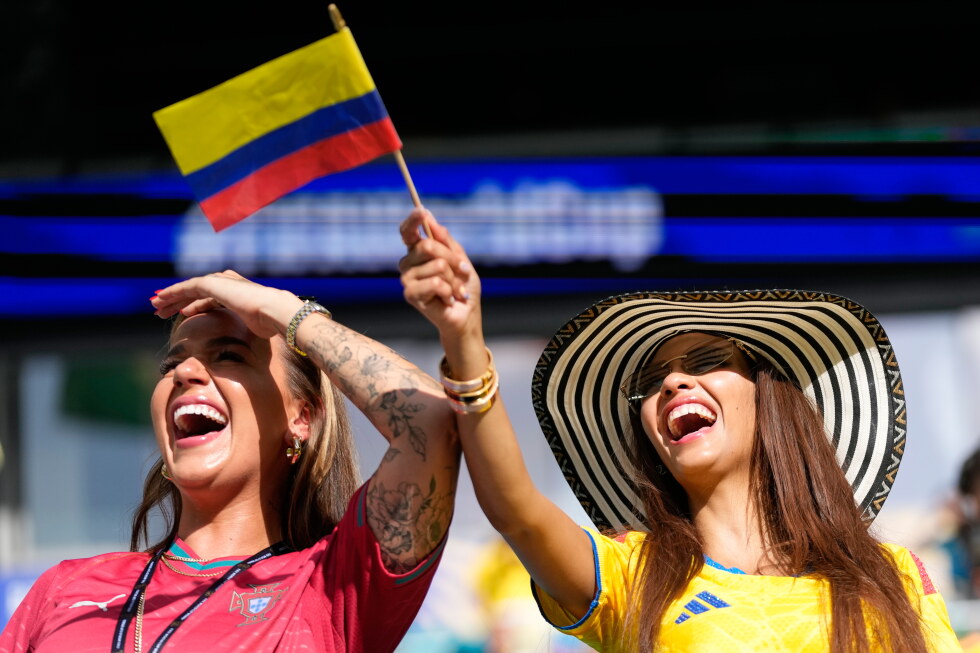
Colombia-Portugal World Cup match draws sky-high ticket prices, some fans make financial sacrifices
MIAMI GARDENS, Florida — When the 2026 FIFA World Cup group stage draw locked in a matchup between Colombia and Portugal at Miami’s Hard Rock Stadium, football fans across the globe immediately marked the contest as a can’t-miss event. Few understood just how high demand would climb, not even Portugal’s head coach Roberto Martínez, who secured his family’s seats months in advance, long before most fans even tried to purchase entry. What makes Martínez’s story stand out? As the Portuguese national team manager, he had one of the easiest paths to a ticket — a privilege nearly no other fan in the sold-out crowd of 64,000 could claim.
By kickoff on Saturday, the scale of fan demand had sent resale market prices soaring to unprecedented levels for a group-stage World Cup match. Early Saturday, the cheapest available entry hovered around $3,500 per seat, and data from major ticketing platform StubHub showed prices ranging from $2,676 to more than $22,000 on the day before the match. Even with those exorbitant costs, nearly every attendee interviewed said the experience was well worth the investment, with many traveling thousands of miles and saving for months just to be in the stands.
For many fans, the draw of the match came down to one historic factor: this could be one of the final World Cup appearances of Portuguese football legend Cristiano Ronaldo, who at 41 continues to compete at the highest level of international football. Pablo Ceballos, a 40-year-old Mexico native and lifelong Ronaldo supporter, dropped $3,000 on a single ticket for his first ever World Cup match, calling the opportunity a decades-long dream. “I am old — 40 — and this is the last time I will get to see Cristiano,” Ceballos said. “I cried when I stepped in the stadium. Forty years for this, that’s why I paid that.”
Brothers Juan and Felipe Ramirez, Colombian expats living in Europe, made a multi-day trip to Miami specifically for the match, paying $2,400 per ticket. They framed the expense as an investment in a once-in-a-lifetime experience they would never get again. For lifelong Colombian supporter Gustova Borda and his wife, the match carried extra personal meaning: Miami is the city where she received breast cancer treatment two years prior, making the trip to watch their national team a meaningful celebration of her recovery. The pair paid $8,300 total for their two tickets, and Borda said every dollar was worth it.
Even fans who paid lower prices described getting a deal worth celebrating. Colombian supporter Gina Barrios paid $1,500 per ticket through a family friend, a price she called a bargain compared to public resale rates. “This is my country … so I was very excited to see them here again,” she said.
Martínez, who got to watch the match from the sidelines rather than the stands, said the outpouring of passion from fans of both nations reinforced the unifying power of global football at a time of widespread uncertainty around the world. “I think it’s fascinating, the passion of the game in a difficult moment in the world,” Martínez said. “Football still brings unity, it brings passion, it brings inspiration for the kids, all the values that you want to see in a human being. It makes me extremely proud.”
FIFA confirmed that this matchup was one of the most sought-after group-stage matches in the entire tournament during initial ticket sales, cementing its status as a must-see event even before the first ball was kicked.
-
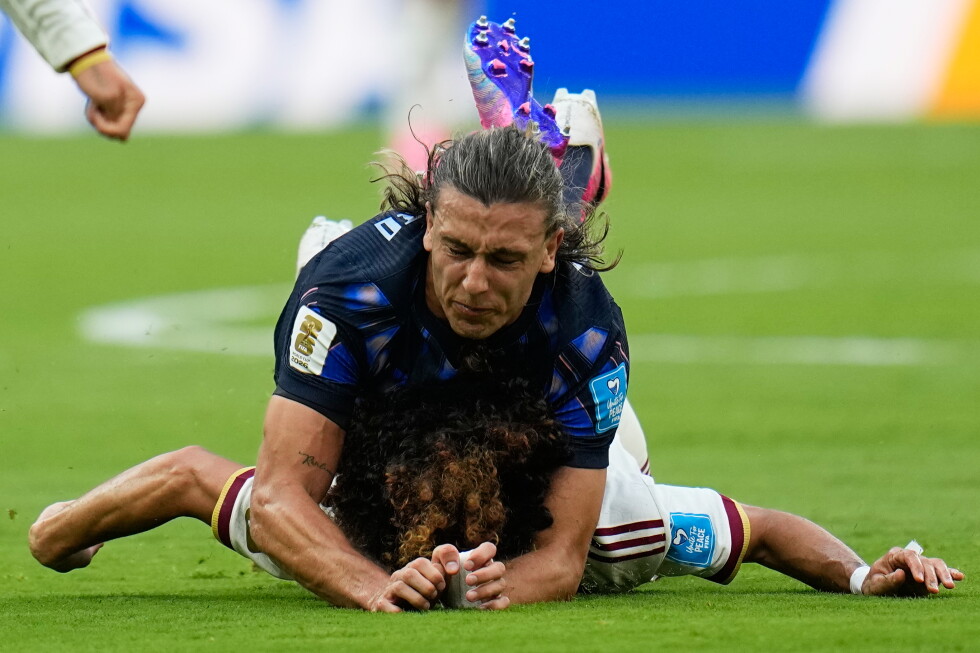
One Extraordinary Photo: Capturing the physicality of the Spain-Uruguay match
GUADALAJARA, Mexico — For Ricardo Mazalan, the Associated Press’ deputy director of storytelling and photography for Latin America, FIFA World Cup coverage is nothing new. The seasoned photojournalist has documented every iteration of the world’s biggest soccer tournament since the 1998 competition hosted by France, and he has also brought his lens to multiple Olympic Games across his decades-long career.
In a behind-the-scenes reflection, Mazalan opened up about the creative process and narrative power of one standout photograph he captured during a recent World Cup group stage encounter between two historic champions, Spain and Uruguay.
This matchup carried unique stakes: it was the only opening-round game that pitted two prior World Cup winners against one another, making it one of the most highly anticipated fixtures of the tournament’s early slate. With Uruguay’s hopes of advancing to the knockout stage hanging in the balance, Mazalan went into the match expecting a tightly contested, physically grueling battle. He set out not just to capture generic on-pitch action, but to create images that distilled the raw emotion and unforgiving physicality that defined the high-stakes contest. The moment he landed on — a hard challenge for the ball between Uruguay’s Agustin Canobbio and Spain’s Marc Cucurella — perfectly encapsulated just how intense the 90 minutes would become.
Mazalan emphasizes that the final, powerful image was not a product of his work alone. One of the greatest advantages of covering global elite sporting events for a major news agency is the opportunity to collaborate with seasoned, respected editors who shape work into its strongest form. For photographers, there is always a quiet thrill mixed with anticipation when a veteran photo editor or top agency photographer reviews your shots. That excitement becomes even more rewarding when an editor immediately sees the same narrative in a frame that the photographer spotted through the viewfinder. For Mazalan, the partnership between photographer and editor has always mirrored a tango: one partner feels the moment in real time, the other identifies and interprets that energy, and together they craft a story neither could create independently.
So what makes this particular image resonate more than countless other match snapshots? It succeeds because it captures far more than a routine tackle — it captures the entire soul of the match. Early in the first half, as Canobbio and Cucurella collided and fell to the turf, Mazalan knew the moment summed up the entire contest that was unfolding. What was supposed to be a showcase of fluid attacking soccer devolved into a gritty, physical battle, and by the final whistle, the outcome matched that scrappy energy: Uruguay had been eliminated from the tournament, and Canobbio had been shown a red card and ejected from the match. Mazalan notes that iconic sports photography rarely hinges on capturing the winning goal or a game-saving stop. More often than not, one quiet, visceral moment can reveal the full unwritten story of a match long before the final whistle blows.
-
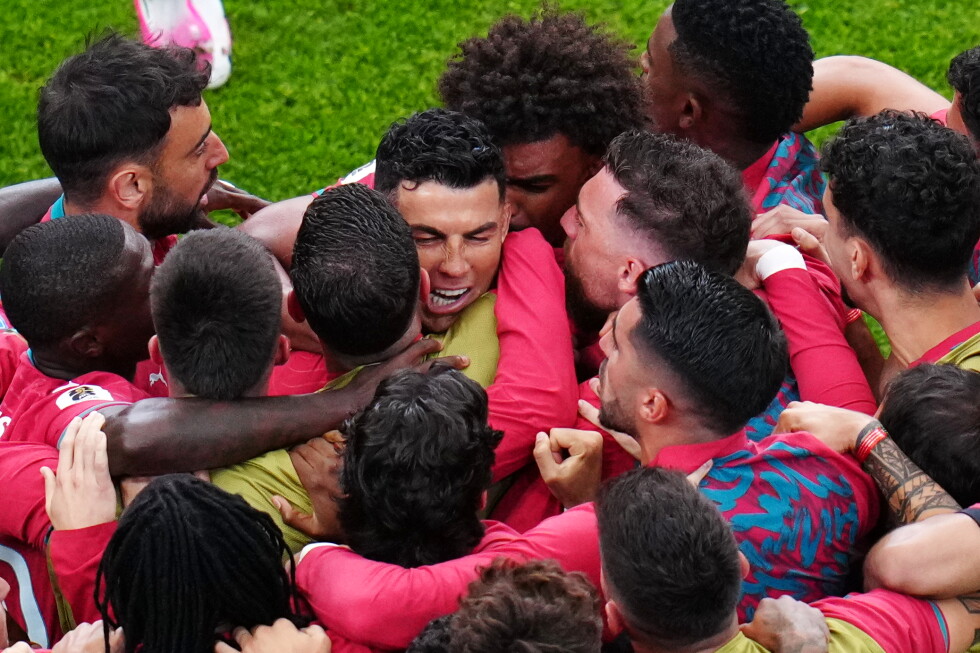
Ronaldo, Portugal set to learn Round of 32 matchup in World Cup
MIAMI GARDENS, Florida — Under scorching 38-degree Celsius heat that has gripped south Florida this weekend, global football icon Cristiano Ronaldo led his Portuguese national team into their final Group K World Cup showdown against Colombia, with the side already guaranteed a spot in the tournament’s Round of 32 ahead of kickoff Saturday.
Despite the oppressive near-100-degree Fahrenheit temperatures that had many locals and fans seeking shade, Ronaldo cut a composed figure as he made his way from the team bus to the stadium’s player entrance. Dressed in a combination of a light outer jacket, a casual tee and athletic shorts, the five-time Ballon d’Or winner took a moment to acknowledge waiting supporters along his route, offering a cheerful thumbs-up to the small crowd gathered to catch a glimpse of the star.
The match carries high stakes for the group’s final standings: a Portuguese victory would see Jorge Santos’ side claim the top position in Group K, while any result other than a win hands the group lead to Colombia. As widely anticipated by football pundits and fans alike, Ronaldo was named in Portugal’s starting XI for the decider, bringing his years of big-match experience to the critical encounter.
Heading into Saturday’s fixture, Ronaldo has already cemented his place in World Cup history, with two strikes in this year’s tournament pushing his all-time men’s World Cup goal tally to 10 across six tournament appearances. He remains the only male player in the history of the competition to find the back of the net in six separate World Cup editions, a record that highlights his unprecedented longevity and consistency at the sport’s biggest stage.
Beyond group standings, the outcome of the match carries extra narrative weight for the tournament. If Portugal emerges victorious, they will land in the same half of the Round of 32 draw as Lionel Messi’s Argentina. That alignment would open the door for a dream quarterfinal showdown between two of the greatest players in football history on July 11, a matchup that has been anticipated by football fans across the globe for years.
-
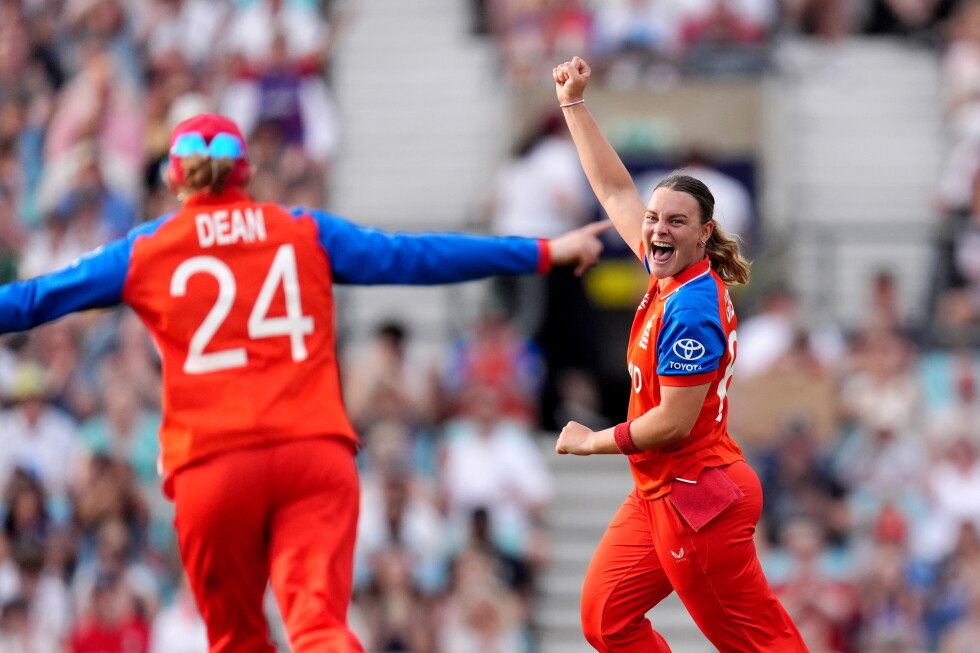
England end New Zealand’s reign of Women’s T20 World Cup and Ireland finally win
The 2024 Women’s Twenty20 World Cup delivered a dramatic day of group-stage cricket at London’s iconic Oval and Bristol’s County Ground on Saturday, as defending champion New Zealand saw their title defense end in a nine-wicket defeat to host England, while Ireland pulled off two historic upsets to end a 12-year winning drought.
Heading into the final round of group matches, New Zealand’s path to the semifinal was already a long shot: the White Ferns had dropped three of their previous five matches, and only stayed in contention when Ireland defeated the West Indies by six wickets earlier the same day. That result set up a do-or-die clash between New Zealand and England, with the winner claiming the group’s second semifinal spot behind the already-qualified hosts.
New Zealand won the toss and opted to bat first, getting off to a promising start with a 70-run opening partnership between Isabella Gaze and Melie Kerr. But a sudden mid-innings collapse turned the tide: Gaze, Kerr and Izzy Sharp were all dismissed in the space of just four deliveries. A 74-run stand between Brooke Halliday and Sophie Devine steadied the innings, only for both batters to be out in the same over just a few overs later. Late hitting from Maddy Green and Suzie Bates pushed New Zealand to a final total of 163 for six, a score that ultimately proved too small to defend.
England’s chase got a lucky break early, when Danni Wyatt-Hodge was dropped behind the stumps before she had scored, then missed a stumping opportunity when she was on 13. She made New Zealand pay dearly for those mistakes, bludgeoning an unbeaten 89 off just 53 balls, decorated with 15 fours and one six. Wyatt-Hodge shared an unbroken 128-run opening partnership with stand-in Sophia Dunkley, who contributed 49 not out off 38 balls, filling in for injured England captain Nat Sciver-Brunt. England reached the target of 164 for the loss of just one wicket with 16 full overs balls to spare, in front of a crowd of 21,018 spectators — a new tournament record for attendance at a group-stage match.
With the win, Wyatt-Hodge also cemented her place in T20 World Cup history: she now sits atop the tournament’s run-scoring rankings with 282 runs, breaking the previous record of 259 runs set by Australia’s Beth Mooney at the 2020 edition, with potentially two more matches still to play. Speaking after the match, Wyatt-Hodge paid tribute to the Oval pitch and her batting partner, saying: “I knew it was a beauty of a pitch, and I loved batting out there with Dunks.”
For New Zealand, the defeat marked the end of an era: star veterans Sophie Devine, Suzie Bates, and bowler Lea Tahuhu, who have accumulated a combined 900 international appearances for the White Ferns, played their final matches in a New Zealand uniform. England honored their careers with a traditional guard of honour as they walked off the field for the final time.
Ireland’s victory over the West Indies earlier in the day was equally historic, ending a 12-year, 21-match losing streak across five T20 World Cup tournaments for the Irish women. It also marked a landmark 24 hours for Irish cricket, coming just one day after the Irish men’s team secured their first ever T20 win over India in Belfast.
Batting first, the West Indies struggled to find momentum on a slow, tricky pitch in Bristol, finishing their 20 overs at 128 for seven. Irish spinners Cara Murray and Aimee Maguire kept the West Indies batters pinned down, with only captain Hayley Matthews (22), Deandra Dottin (21), and a late quickfire 27 not out from Chinelle Henry reaching double figures. Three dropped catches by Irish fielders did gift the West Indies three unnecessary boundaries, but the total remained within reach for the Irish side.
Orla Prendergast led Ireland’s chase, anchoring the innings with an aggressive 63 off 44 balls that included her second fifty of the tournament. She survived an early lbw dismissal after a successful review, and shared a 62-run partnership with opener Amy Hunter before being caught in the 16th over, just 21 runs short of the target. Lower-order batters Rebecca Stokell and Louise Little finished the job, with Little hitting the winning boundary to seal a six-wicket win with 11 balls remaining. A visibly relieved Prendergast said after the match: “We have had the belief throughout but it had not come together just yet. Just so much relief to have that win and so much happiness.”
In the final match of the day in Bristol, Pakistan picked up their first win of the tournament, beating debutant Netherlands by 37 runs in a clash between two previously winless sides. The Dutch had high hopes for their first ever World Cup win, and restricted Pakistan to 126 for six after a strong bowling performance, led by Iris Zwilling, Heather Siegers and Hannah Landheer. Only opener Gull Feroza prevented an even lower total: dropped on 10, she made the most of her second chance to carry her bat through the innings, scoring an unbeaten 52-ball 63 — her first T20 World Cup half-century — and shared a 79-run stand with Ayesha Zafar (32).
Pakistan’s bowlers responded with a dominant performance, dismissing the Netherlands for just 89 runs in 18 overs. Zafar starred with the ball, taking a career-best three wickets for just 13 runs, before captain Fatima Sana wrapped up the win by taking three wickets in the final over, including the dismissal of Dutch top-scorer and captain Babette de Leede (30).
The remaining two semifinal spots will be decided on Sunday, when Australia, South Africa and India face off to claim their places in the knockout stage of the tournament.