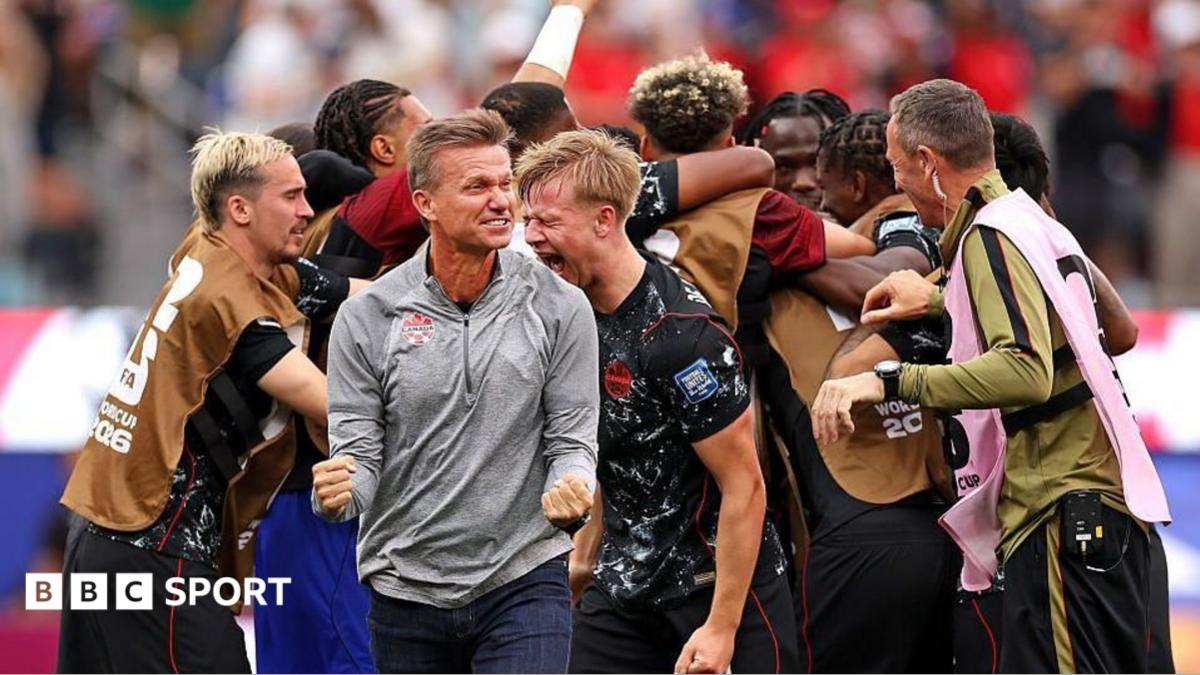
As the final whistle echoed across Los Angeles Stadium on Sunday, a new chapter of Canadian football was officially written. A last-gasp winner from midfielder Stephen Eustaquio secured a 1-0 knockout victory over South Africa, sending the co-host nation through to the Round of 16 at the 2026 FIFA World Cup for the first time in its history. Immediately after the full-time whistle, head coach Jesse Marsch pulled his entire squad and coaching staff into a tight, jubilant huddle, addressing his players as nothing less than “Canadian heroes.” \n\n”The future of the sport in this country is huge because of you,” Marsch told the group, words that carried far more weight than the coach’s famously impassioned rhetoric. For a nation long defined by ice hockey as its national sporting obsession, this breakthrough run has already shifted the cultural conversation around the game. Long referred to as “soccer” in Canadian public life, fans now openly embrace the global term “football” — a small linguistic shift that signals a far larger cultural change. \n\nWhen Marsch took charge of the Canadian national team two years ago, his goal of turning Canada into a recognized football nation sounded like a distant dream. As one of three North American co-hosts for this 2026 tournament, Canada spent much of the pre-World Cup buildup overshadowed: Mexico took the spotlight for the opening match, the United States claimed attention for hosting the final, and Canada was widely dismissed as the forgotten co-host. But the squad and its growing fanbase built momentum steadily, quietly cultivating domestic passion ahead of the tournament. \n\nThat growing enthusiasm has not gone unnoticed by the team’s star captain, Alphonso Davies, a veteran of packed stadiums playing for European giants Bayern Munich in the Champions League. Even Davies was overwhelmed by the shift in domestic support ahead of the tournament. Ahead of Sunday’s knockout clash, he recalled crying after watching thousands of Canadian fans pack viewing events in Toronto, clad in the national red and white, for the team’s opening draw against Bosnia-Herzegovina. \n\n”It was surreal because I’ve never seen so many Canadians at a football match before,” Davies said. “It brought tears to my eyes.” \n\nCanada’s historic run has already defied every pre-tournament expectation. Before this 2026 World Cup, the nation held a winless record across six previous World Cup matches, never picking up so much as a single point or victory. That drought ended in their opening fixture, with a hard-fought draw against Bosnia-Herzegovina that secured Canada’s first ever World Cup point. The team followed that breakthrough with a stunning 6-0 rout of Qatar, the tournament’s defending champions, to lock in their knockout stage spot — the first ever for Canada. \n\nA final group stage defeat to Switzerland forced the knockout match against South Africa to be played on American soil, marking the first time in World Cup history that a host nation has played a knockout match outside its own borders. That did nothing to dampen Canadian support, however: thousands of fans crossed the border to pack the stands, turning Los Angeles into a de facto home ground with chants and cheers that drowned out South Africa’s supporters. \n\nFor most of the 90 minutes, South Africa set out to grind out a result and force the game to penalties, putting Canada under persistent pressure to find a breakthrough. The Canadian side stayed composed, though, and it was Eustaquio who delivered the moment of magic in stoppage time, slotting home the winner to spark wild celebrations. \n\nMarsch later defended his decision to gather the entire squad for a full-time huddle on the pitch, a move some critics dismissed as performative. For Marsch, the moment was about pausing to celebrate the historic milestone together, amid the chaos of post-match media requests that pull players and staff in dozens of directions. \n\n”All I care about is our team and what we do together,” Marsch said. “I wanted to be able to voice to them how important a moment this will prove to be for the sport in the country. It is a shame we couldn’t do it in Vancouver, in front of our fans, but nevertheless I think you saw the character of the team, the quality of the team, the mentality of the team and the togetherness of the team.” \n\nUp next, Canada faces a stiff test in the Round of 16, with a clash against either Morocco — ranked 6th in the world — or the Netherlands, ranked 7th. But fans and players alike agree that regardless of the result of that upcoming match, the landscape of Canadian football has already changed forever. \n\nLong-time fan Harry, who attended matches in the 1990s when Canadian fans were often the minority at even home fixtures, marvelled at the turnout of supporters for the South Africa match. “It is incredible to see how many fans have come down into the USA to watch us, hopefully that energy can help improve us back home,” he said. \n\nFellow supporter Sean added that while large urban centers like Toronto have long held a dedicated soccer following, the hope now is that this World Cup run will expand interest across smaller cities and provinces, where ice hockey has long reigned supreme. \n\nWhile advancing past the Round of 16 will be no easy feat for Canada, the team has already surpassed every expectation placed on it heading into the tournament, making a upset far from unthinkable. Marsch echoed that confident mindset ahead of the next clash, framing the match as a free opportunity to test the team against global giants. \n\n”Given Morocco’s last six years they are a modern giant and given the success of the Dutch team for what feels like centuries that is a traditional giant,” Marsch said. “I feel like it is a free hit and we will go after it and do whatever we can to get a win.”
分类: sports
-
Conspiracy or chaos? Algeria & Austria defend ‘unexpected’ draw
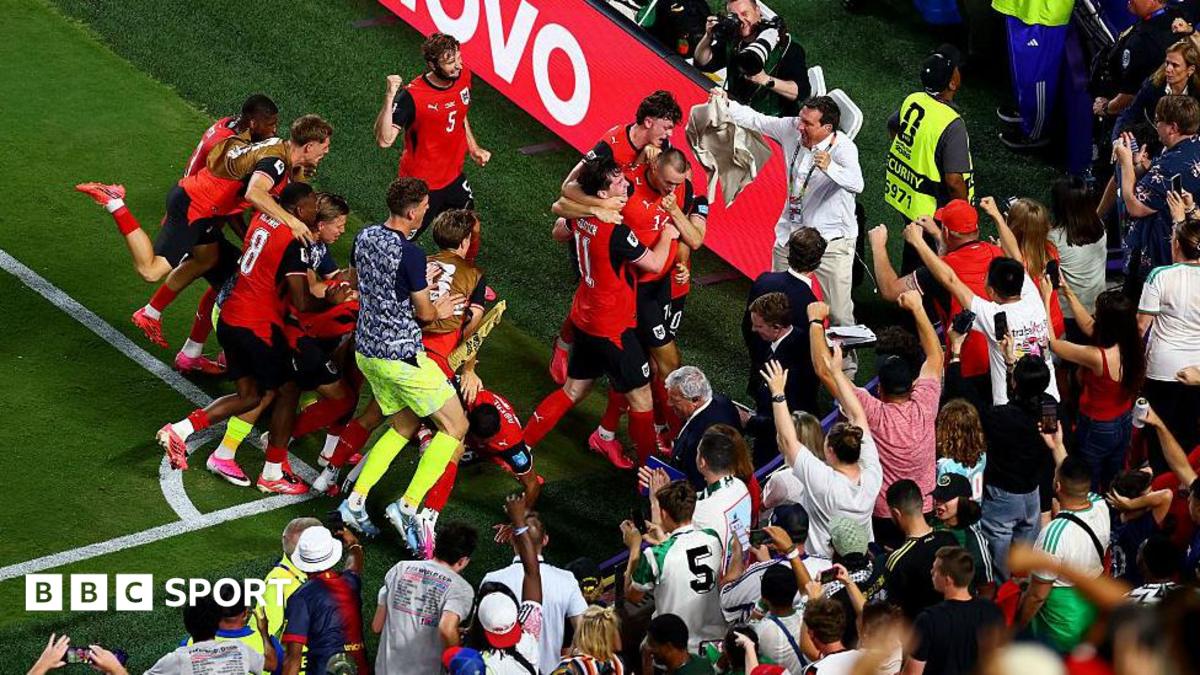
Forty-four years after the infamous 1982 ‘Disgrace of Gijon’ left Algeria eliminated from the World Cup amid accusations of a pre-arranged result between West Germany and Austria, history looked set to repeat itself for the two nations on the 2026 global stage. When Algeria and Austria entered their final Group J matchup on a June Sunday, a single point apiece from a draw would see both progress to the knockout round, eliminating Iran in the process—an eerie parallel to the 1982 incident that has hung over both teams for decades. What followed was a chaotic, high-drama 96 minutes of football that ended in a 3-3 draw, but the chaotic finish featuring two last-minute injury-time goals has left conspiracy theorists and angry Iranian fans questioning whether the result was carefully scripted.
The match opened at a surprisingly sedate pace, with Austria’s veteran striker Marko Arnautovic notching the first shot on target to open the scoring in the 28th minute. Just before halftime, Rafik Belghali equalized for Algeria with a powerful finish, setting the stage for a frantic second half. Marcel Sabitzer restored Austria’s lead in the 55th minute, only for Algeria captain Riyad Mahrez to level the score again just five minutes later. For a stretch after the match went to 2-2, circulated clips appeared to show both sides easing off the pace rather than pushing for a decisive winning goal, feeding early speculation of a quiet arrangement.
In the third minute of stoppage time, Mahrez slid home what appeared to be a match-winning goal for Algeria. The result would have sent Iran through to the knockout stage at Austria’s expense, upsetting the projected outcome that saw both Algeria and Austria progress. With just seconds left on the clock in the sixth minute of stoppage time, Austrian striker Sasa Kalajdzic powered a header into the back of the net, locking the score at 3-3 and securing progress for both teams.
Circulated social media clips have added fuel to conspiracy claims: one clip shows an apparent confrontation between the two teams’ benches after Mahrez’s go-ahead goal, with some observers claiming it stemmed from frustration that the pre-planned draw had been disrupted. Another shows Algerian defender Aissa Mandi leaning toward Mahrez, speaking while covering his mouth, with one fan claiming Mandi warned Mahrez that a win would pit Algeria against Spain in the Round of 32 rather than the more favorable matchup against Switzerland.
Iranian fans have been among the loudest critics, taking to social media to call on FIFA to launch a formal investigation, claiming the result was rigged against their national side. Football fans around the world have also echoed the accusations, with some describing the match as a second ‘Disgrace of Gijon’ and calling it the most obviously scripted game in recent World Cup history. Some accusers claimed Austrian players eased off attacking pressure for large stretches of the match before forcing the late equalizer when the pre-planned result was at risk.
Both national team managers have forcefully rejected all claims of a pre-arranged result, describing the dramatic finish as a natural example of football’s unpredictable nature. Austrian head coach Ralf Rangnick argued that the chaotic final 90 seconds of the match, played in Kansas City, clearly disproved any conspiracy theories. “In this match, when you have a 3-3, nobody can assume that it was an agreement, especially after what we saw during the last 90 seconds,” Rangnick said. “If, with three minutes to play, somebody had said this would happen, you would have told them they were mad. I’ve been a coach for about 40 years and I don’t even remember a match that had such a dramatic course and such an unexpected trajectory. Most people anticipated a 0-0 or 1-1, and now it’s 3-3. It’s incredible—the dressing room is madness. If Alfred Hitchcock had written such a drama, I probably would have said he was completely mad.”
Algeria manager Vladimir Petkovic also dismissed all talk of a fixed arrangement, noting that the high-scoring, unpredictable result spoke for itself. “I’m extremely happy that, at the end, it was football that won, that prevailed—3-3 as a score says it all,” he said.
Now, both sides advance to the knockout round of the 2026 World Cup. Austria is set to face Spain in Los Angeles on July 2, while Algeria will take on Switzerland in Vancouver early on July 3.
-
South Korea leaves World Cup in turmoil as early exit prompts fierce criticism from president
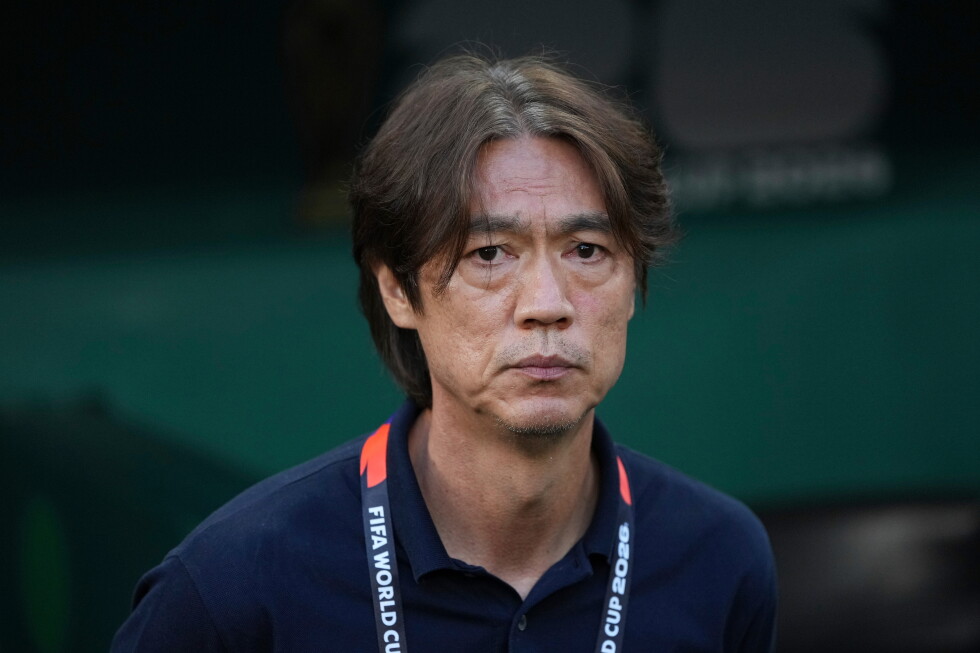
South Korea’s 2024 expanded World Cup campaign has ended in early turmoil, with the national side crashing out of the group stage, triggering fierce public and political backlash that culminated in head coach Hong Myung-bo’s resignation. The Korean side got off to a promising start, securing a victory over Czech Republic in their opening Group A fixture. But successive losses to South Africa and Mexico derailed their hopes of progressing, leaving their fate dependent on other results going their way. That last glimmer of hope was extinguished on Saturday when Congo claimed a 3-1 win over Uzbekistan, eliminating South Korea from contention for one of the expanded tournament’s third-place knockout spots.
For a nation with such a storied World Cup pedigree, the early exit has come as a profound shock. South Korea has qualified for 11 consecutive World Cup tournaments, and reached the historic semi-final when it co-hosted the competition back in 2002. This marks the second time Hong, 57, has overseen a group-stage exit for South Korea — he also led the team at the 2014 Brazil World Cup, where they failed to advance past the opening round.
The fallout has drawn direct criticism from South Korea’s President Lee Jae Myung, who did not hold back in his scathing assessment of the national team’s failure in a detailed public statement. A self-identified long-time football fan and honorary former chairman of a professional club, and a supporter of the Korean national supporters’ group the Red Devils, Lee said he felt far more than simple surprise at the underperformance. “I feel not just surprise but deep bewilderment at this unexpected result,” he stated, targeting the broader structural flaws in the national team’s governance, oversight, and the initial decision to appoint Hong to the role.
“Once again, it has been proven that personnel decisions determine everything. If loyalty and factionalism are valued over competence and an incapable person is appointed as a leader, the outcome is as predictable as fire,” Lee added, leveling sharp accusations that inappropriate selection criteria led directly to the team’s failure. The president called on South Korea’s Ministry of Culture, Sports and Tourism to launch a full review of the national team program and address the systemic failures that led to the early exit. He also issued a public apology to Korean football fans for the widespread disappointment caused by the result. “I sincerely apologize to the public for the deep disappointment caused by this absurd situation. We will move swiftly to reform sports administration to ensure this does not happen again,” he said.
-
Inside the World Cup knockout stage bracket: Some teams have an easier path than others
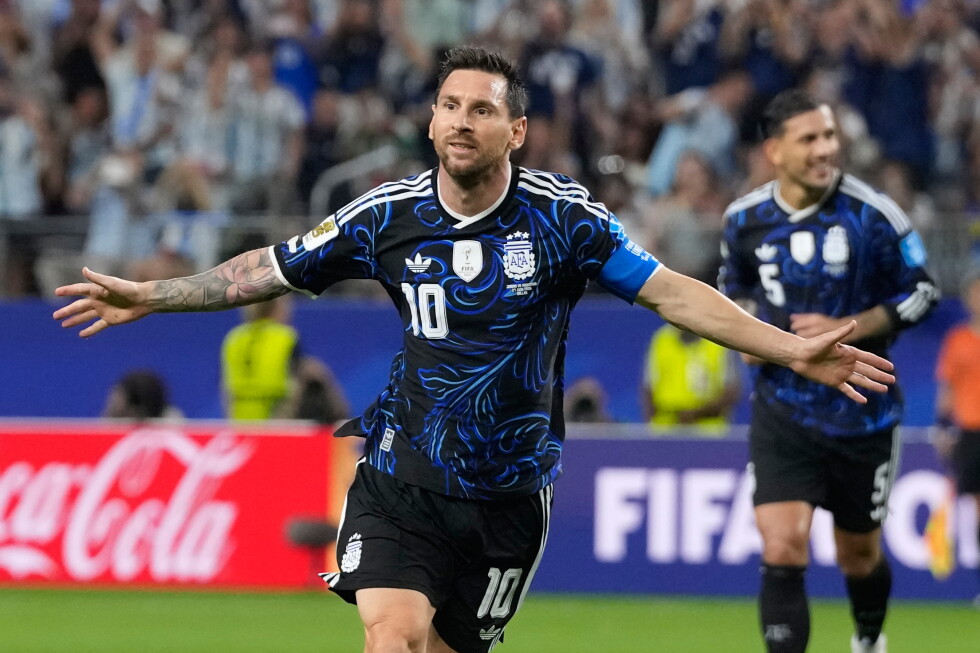
MIAMI GARDENS, Fla. – The 2026 FIFA World Cup knockout round bracket is finalized, and a side-by-side comparison with the seeding structure of the NCAA Men’s Basketball Tournament highlights just how lopsided the draw has turned out for some of the tournament’s highest-ranked contenders. If the World Cup used the same ranking and seeding framework as college basketball’s iconic March Madness, several fan-favorite sides would already be pointing fingers at a hypothetical selection committee for their unforgiving early paths. Among those stuck with the toughest early draws are Morocco and the Netherlands, with England, Mexico, Portugal, and Spain also sharing their disappointment over their bracket positions. The only clear winner in the structure? Lionel Messi’s Argentina, which walks into the knockout stage with one of the most accessible routes to the tournament’s semifinal round.
Unlike the NCAA Tournament, which relies on a selection committee to assign seeds and build matchups, the World Cup’s knockout bracket is predetermined based on group stage results: group winners face runners-up from opposite groups in a fixed structure. FIFA also does not adjust seeds between rounds like many North American sports leagues, which guarantees that several lower-ranked sides will advance past the first knockout round at minimum. To examine how the bracket stacks up against a traditional seeding model, AP ranked all 32 remaining knockout teams 1 through 32 based on pre-knockout FIFA live rankings, revealing sharp disparities in difficulty across the tournament’s four regional brackets.
### Foxborough Region
The Foxborough Region, which hosts its quarterfinal match on July 9 in Foxborough, Massachusetts, opens with a brutal opening round clash that dooms one high-ranked team to an early exit. The first round matchups pit 12th-ranked Germany against 27th-ranked Paraguay, second-ranked France against 26th-ranked Sweden, 29th-ranked South Africa against 25th-ranked Canada, and a showdown between two of the tournament’s top seven teams: seventh-ranked Netherlands and sixth-ranked Morocco. This early matchup guarantees that at least one elite contender will be eliminated before the Round of 16. If both top seeds advance, European powerhouses France and Germany would face off in the Round of 16 in what amounts to a premature elite clash. Travel also favors the top regional seeds: the winner of South Africa vs Canada faces two cross-country time zone changes en route to the quarterfinal, while Germany, Paraguay, France and Sweden all play their first two knockout rounds in the Northeast U.S., in Massachusetts, New Jersey or Pennsylvania. If seeds hold true to form, France will advance to face Morocco in the Foxborough quarterfinal.### Inglewood Region
Hosting its quarterfinal on July 10 in Inglewood, California, the Inglewood Region brings a favorable draw for the host United States men’s national team, but a tough start for Portugal and Spain. First round matchups are 8th-ranked Portugal vs 13th-ranked Croatia, third-ranked Spain vs 18th-ranked Austria, 14th-ranked U.S. vs 30th-ranked Bosnia and Herzegovina, and 10th-ranked Belgium vs 17th-ranked Senegal. The U.S. opens against one of the lowest-ranked teams in the knockout field and gets to stay in the Pacific time zone all the way through the regional final, a major logistical advantage. For Ronaldo and Portugal, however, the draw is far from gentle: a tough opening match against Croatia, followed by a potential Round of 16 clash with Spain – a matchup that leaves Spain equally unhappy with their seeding. The winner of the Belgium-Senegal opening match in Seattle gets to stay in the city for their second round matchup against the U.S.-Bosnia winner, a much-appreciated break for fatigued squads. If seeds hold, Spain will advance to face Belgium in the Inglewood quarterfinal.### Miami Gardens Region
The Miami Gardens Region plays its quarterfinal on July 11 at the host site in Miami Gardens, Florida, with first round matchups: fifth-ranked Brazil vs 16th-ranked Japan, 24th-ranked Ivory Coast vs 19th-ranked Norway, ninth-ranked Mexico vs 20th-ranked Ecuador, and fourth-ranked England vs 28th-ranked Congo. Both Mexico and England enter their opening matches as heavy favorites, and a win for both would set up an all-elite Round of 16 clash – which would technically count as a road game for England, played in Mexico City. Mexico enters the knockout stage as one of only two teams that did not allow a single goal through the group stage, joining Spain in that rare defensive achievement. For Brazil, the path to the quarterfinal is far more open: the five-time world champions open against Japan, and would face the low-seeded winner of Ivory Coast vs Norway in the second round if they advance. If seeds hold, Brazil will face England in the Miami Gardens quarterfinal.### Kansas City Region
The Kansas City Region also hosts its quarterfinal on July 11 in Kansas City, Missouri, and boasts the most lopsidedly favorable draw for the tournament’s top-ranked team: top-ranked Argentina opens against 31st-ranked Cape Verde, followed by matchups between 22nd-ranked Australia and 21st-ranked Egypt, 15th-ranked Switzerland vs 23rd-ranked Algeria, and 11th-ranked Colombia vs 32nd-ranked Ghana. While there is no official selection committee for the World Cup, this draw lines up as a dream opening for Messi and Argentina: the eight-time Ballon d’Or winner gets to open knockout play just miles from his club home at Inter Miami’s stadium in nearby Miami Gardens. The winner of Argentina’s opening match faces the winner of Australia vs Egypt in the second round, while the Switzerland-Algeria matchup is projected to deliver high-scoring action, and Colombia faces a motivated Ghana side playing with no pressure as a low seed. If seeds hold, Argentina will advance to face Colombia in the Kansas City quarterfinal.### Key Bracket Takeaways
Beyond the regional breakdowns, several key notes stand out for the Round of 32: France, Mexico and Argentina are the only three teams to exit the group stage with perfect 3-0-0 records. Four opening round matchups pit two unbeaten teams against each other: Netherlands vs Morocco, both 2-0-1; Belgium vs Senegal, both 1-0-2; Brazil vs Japan, 2-0-1 vs 1-0-2; and Argentina vs Cape Verde, 3-0-0 vs 0-0-3.Football fans can expect a flurry of goals in several opening round matches: France vs Sweden saw the two sides combine for 17 goals across group play, while Netherlands-Morocco combined for 16, Belgium-Senegal for 14, Brazil-Japan for 14, and U.S.-Bosnia and Herzegovina for 13. On the opposite end of the spectrum, the first goal in Mexico-Ecuador will almost certainly decide the matchup: Mexico did not allow a single goal in group play, while Ecuador conceded just two across their three group matches.
Looking ahead to the later rounds, the 2026 World Cup semifinal matchups are set: the winner of the Foxborough quarterfinal will face the winner of the Inglewood quarterfinal in Arlington, Texas on July 14, while the Miami Gardens winner will take on the Kansas City winner in Atlanta on July 15. The 2026 World Cup final is scheduled for July 19 at MetLife Stadium in East Rutherford, New Jersey.
-
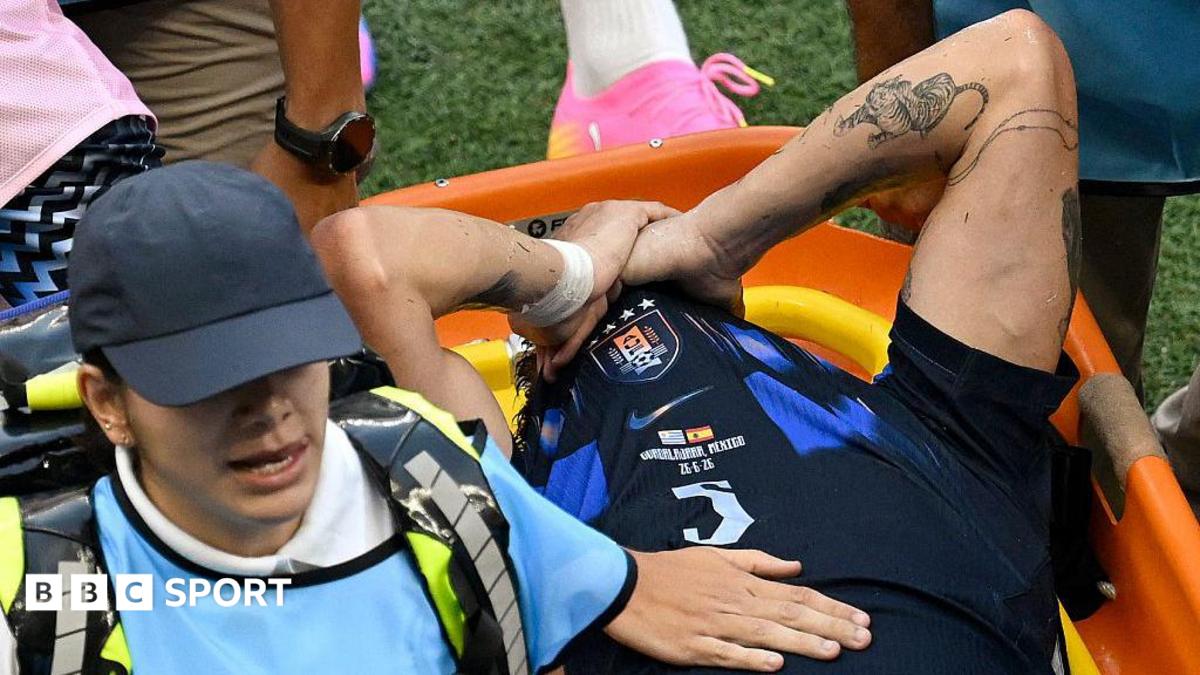
Ugarte has ‘most serious injury footballer can face’
The 2026 FIFA World Cup has delivered a devastating blow to Manchester United midfielder Manuel Ugarte, who suffered a career-altering knee injury while on international duty with Uruguay, leaving both the player and his club facing months of uncertainty. The 25-yearold sustained the ligament damage during Uruguay’s group-stage defeat to Spain in Guadalajara on Friday, when he twisted his knee awkwardly while attempting a tackle in the build-up to Spain’s match-winning goal. Ugarte was immediately carried off the pitch on a stretcher, sidelining him before he could see out the critical contest.
After initial evaluations by Uruguay’s medical team on Saturday, Ugarte is now set to return to Manchester to undergo comprehensive scans and specialist assessments that will determine the full extent of the injury and the next steps for his treatment. Multiple Uruguayan media outlets have reported the injury is a torn cruciate ligament – a damage that typically keeps footballers out of action for six to nine months – and Ugarte’s own social media statement has reinforced these grim projections.
In an Instagram post published Sunday, Ugarte opened up about the devastating turn of events, calling the injury “the most serious injury a footballer can face”. “Suffering this in one of the most important matches in my country’s history, and seeing it end this way without being able to stay on the pitch and support my team-mates until the final whistle, is something that will stay with me for the rest of my life,” he wrote. Despite the disappointment, the midfielder struck a defiant tone, vowing to comeback stronger than before. “Hitting rock bottom will make me stronger in every sense, and I truly believe that’s the case here,” he added. “Without a doubt, when life wants you to stop, it finds a way to let you know. It’s up to me to take the positives from this. Success in life is about starting again every time you fall.”
While Manchester United has not confirmed the full diagnosis, waiting for their own clinical team’s assessment, club officials are privately preparing for the worst-case scenario. In an official statement, the club said: “Manchester United can confirm that Manuel Ugarte has suffered a knee ligament injury whilst representing Uruguay in Friday’s World Cup group-stage match against Spain. Assessment of the injury is ongoing to determine the best course of treatment and the rehabilitation timescale. Everyone wishes Manuel a successful recovery and we will be supporting him every step of the way.”
The injury comes at a pivotal moment for Ugarte, who joined Manchester United from Paris Saint-Germain for a £50.8 million transfer in 2024. The midfielder has failed to live up to the expectations placed on him at Old Trafford, with his last appearance coming in a home Premier League defeat to Leeds United on April 13. Ahead of the World Cup, it was widely expected that Ugarte would be moved on this summer – either via a permanent transfer or a loan deal – as United prioritized a complete overhaul of their midfield. Those plans are now in serious doubt, with the club’s immediate focus shifting to the player’s recovery.
The injury to Ugarte adds another layer of complication to Manchester United’s already turbulent summer transfer plans, which have already faced multiple delays. The club had already agreed a £35 million deal to sign Atalanta midfielder Ederson, but plans for his pre-medical ahead of the July 9 start of pre-season training were scrapped after the 26-year-old earned a late call-up to Brazil’s 2026 World Cup squad. Ederson will now complete his medical once Brazil’s World Cup campaign concludes, before joining the club’s training complex at Carrington after a mandatory three-week rest period.
United’s other midfield targets have hit their own snags: the club walked away from a potential move for Nottingham Forest’s Elliot Anderson after sticker shock over the combined cost of transfer fee and wages, while negotiations with West Ham United for Portugal international Mateus Fernandes have stalled over disagreements on transfer valuation, with Tottenham Hotspur also in the race for the player. United retains an interest in Bournemouth’s Alex Scott, and saw a bid rejected by Brighton & Hove Albion for Cameroonian midfielder Carlos Baleba last summer.
The biggest unanswered question now is how a long-term injury for Ugarte will impact the club’s available transfer budget for the summer window. With Ugarte’s expected departure off the table for the foreseeable future, United’s hierarchy will need to reevaluate their financial plans as they aim to bring in at least two or three new midfield faces this window.
-
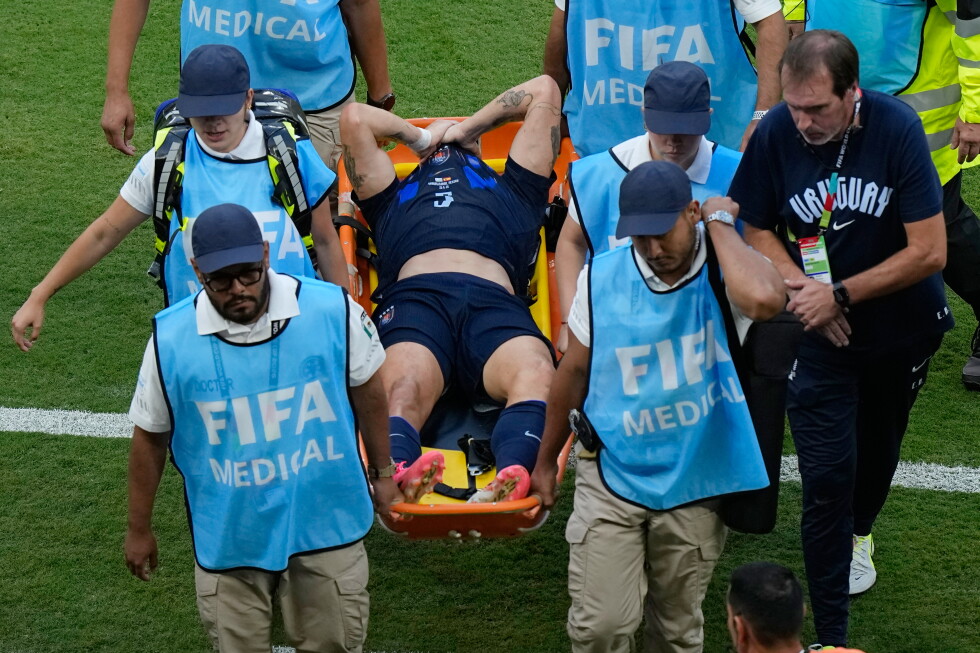
Uruguay and Man United midfielder Manuel Ugarte sustains knee ligament damage at the World Cup
ATLANTA – Fresh off Uruguay’s early elimination from the 2022 FIFA World Cup, English Premier League side Manchester United has confirmed disappointing injury news for one of their key midfield signings: Uruguayan international Manuel Ugarte has been diagnosed with knee ligament damage sustained during his nation’s final group stage match.
The injury occurred in the opening 45 minutes of Uruguay’s 1-0 defeat to Spain on Friday, a result that sealed the two-time World Cup champions’ exit from the tournament before the knockout round. Ugarte, a consistent starter for Uruguay throughout the group stage, featured in all three of the side’s group matches, but the campaign ended in disappointment for both the player and his national team.
In an official statement released Sunday, Manchester United confirmed that medical teams are still conducting further assessments to finalize a treatment plan and map out an expected timeline for Ugarte’s rehabilitation. “Everyone at the club wishes Manuel a successful recovery and we will be supporting him every step of the way,” the statement added.
Ugarte’s injury caps off a thoroughly underwhelming tournament for Uruguay, which failed to secure a single win across its three group fixtures. The underperforming side was forced to share points with lower-ranked underdogs Cape Verde and Saudi Arabia, a result that left the squad outside the top two of their group. The disappointing campaign even prompted outgoing head coach Marcelo Bielsa to publicly admit he felt he had left no meaningful positive impact on Uruguayan soccer during his tenure in charge of the national team.
Beyond the disappointment for Uruguay’s World Cup run, Ugarte’s injury also creates unexpected disruption for Manchester United’s pre-season preparations. The club is set to return to UEFA Champions League competition for the upcoming season after a two-year absence from the tournament, and the defensive midfielder was expected to be a critical piece of manager Erik ten Hag’s squad for the domestic and European campaign.
-
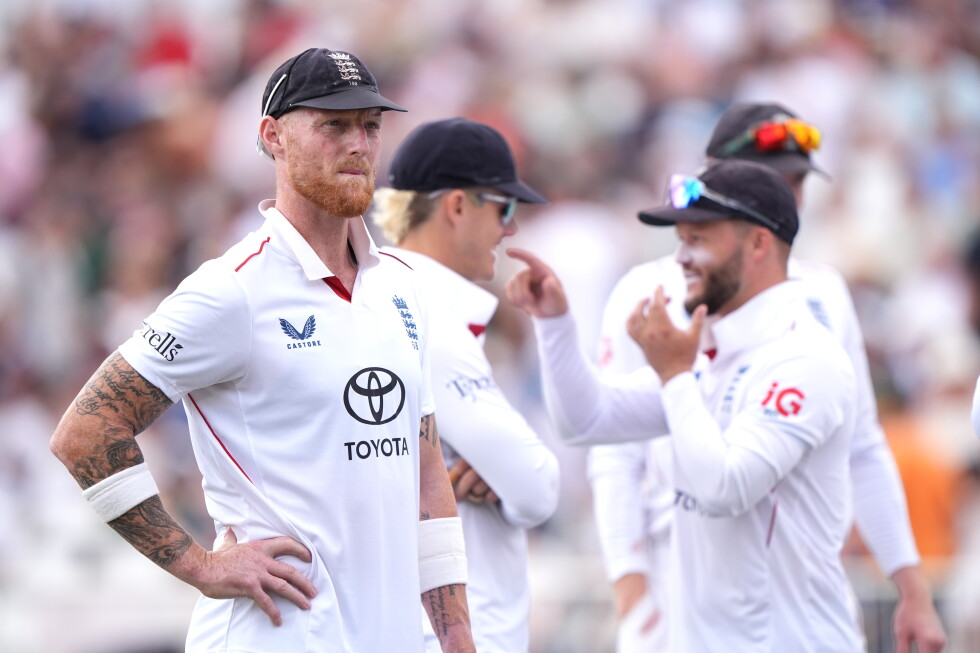
England cricket captain Ben Stokes makes dramatic retirement announcement during test match
In a stunning announcement that has sent shockwaves through the global cricket community, England men’s cricket captain Ben Stokes revealed Sunday that he will retire from all forms of international cricket within days, making the surprise declaration in the middle of the series-deciding third Test against New Zealand at Trent Bridge.
In a video of the dressing room address shared publicly by England Cricket, Stokes told his assembled teammates ahead of Day 4 play: “This is my last two days as your captain and my last two days representing England.” The declaration came with the three-match series deadlocked at 1-1, with the match set to extend into a fifth and final day on Monday to determine the series winner.
Stokes’ bombshell announcement landed just 15 minutes before the afternoon tea break on Day 4. In a moment that encapsulated his legendary career, the all-rounder picked up a New Zealand wicket just moments after his revelation, and received a thunderous standing ovation from the packed Trent Bridge crowd as he led the England team off the pitch at the end of the session. When addressing his teammates, Stokes kept the specific motivations behind his early exit private for the time being, saying: “The reasons can wait (about) why. But I’ve had many trips to the well before for this team and I’ve got one more trip to do.”
Over a 15-year international career, Stokes has cemented his status as one of the most iconic and successful cricketers of his generation. His most legendary performances came in two global title wins: he was the standout star of England’s dramatic, last-ball victory over New Zealand in the 2019 50-over World Cup final at Lord’s, widely regarded as one of the most thrilling matches in cricket history. He then repeated that championship success three years later, playing a pivotal role in England’s 2022 T20 World Cup triumph — the same year he took on the role of Test captain for the national side.
The retirement announcement caps a turbulent series for Stokes off the pitch. After the opening Test at Lord’s, Stokes and teammate Gus Atkinson made headlines when they were dropped from the squad for the second Test. The pair had spent an evening at a London nightclub, where an England team security official was reportedly assaulted by a player from professional rugby side Saracens. The England and Wales Cricket Board (ECB) initially stated the pair had “breached specific contractual obligations”, issued them written warnings, and launched a formal investigation. The independent Cricket Regulator oversight panel later concluded there was “insufficient evidence to establish that any regulatory breach occurred”, and Stokes was reinstated to the side for the deciding third Test.
ECB chairman Richard Thompson paid tribute to Stokes’ transformative career, calling him “one of England’s greatest ever cricketers and one of the defining figures of his generation.” Thompson added: “His performances under pressure, his relentless competitiveness and his ability to produce the extraordinary when it matters most have given me and millions of other fans memories that will endure forever. Beyond his remarkable achievements on the field, his performances have inspired many youngsters to embrace cricket with positivity and belief. We are losing a batsman, a bowler, a captain and a talisman.”
-
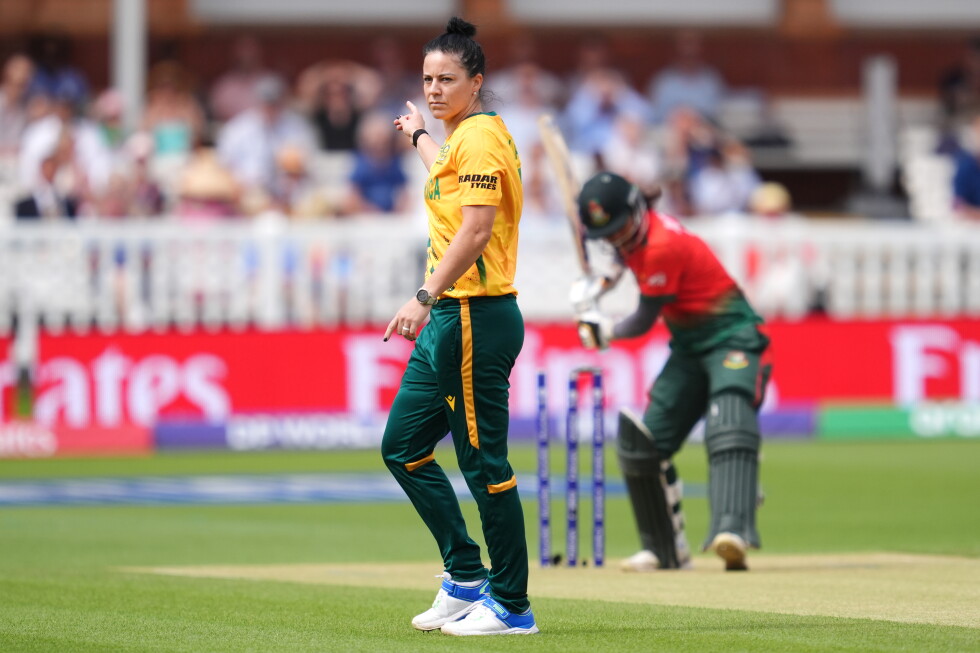
South Africa scrapes past Bangladesh and leaves India needing to upset Australia at Lord’s
LONDON — The final group stage matchday of the Women’s Twenty20 World Cup delivered a tense opening contest at Lord’s on Saturday, with South Africa securing a hard-fought four-wicket victory over Bangladesh that forced India into a do-or-die battle against unbeaten Australia for the last semifinal spot on Sunday.
Going into the final round of group matches, two elite sides — India, the reigning 50-over ODI world champions, and South Africa, runners-up at the previous two T20 World Cup tournaments — were locked in a tight fight for the fourth and final remaining place in the knockout round. Australia, having won every match it has played so far in the competition, had already secured its own place in the semifinals barring an unprecedented catastrophic collapse, leaving the final knockout spot down to the contest between South Africa, India and Bangladesh.
The historic London ground hosted a day-night doubleheader, and the opening fixture brought no shortage of drama even before the first over of play concluded. In an extremely rare statistical quirk, both teams lost their star top batters to the very first delivery of their respective innings. Opening batter Juairiya Ferdous of Bangladesh swung and missed at a fast ball from South African pace bowler Marizanne Kapp, becoming the South African speedster’s 100th career wicket in T20 international matches. Just hours later, in South Africa’s batting innings, Proteas captain Laura Wolvaardt fell to Bangladesh seamer Marufa Akter, bowled through the gap between her bat and leg pad for a golden duck. This rare pair of opening golden ducks had only occurred once before in the history of the Women’s T20 World Cup, during a 2018 contest between Sri Lanka and Bangladesh.
Opting to bat first after winning the toss, Bangladesh struggled against South Africa’s well-rounded bowling attack. Led by Kapp’s tight 1-for-9, Shabnim Ismail’s 1-for-15, and spinner Nonkululeko Mlaba’s 2-for-22, Bangladesh could only post a total of 117 for 5 after their full 20 overs. Batter Sobhana Mostary top-scored for the side with 42 runs, while captain Nigar Sultana finished unbeaten on 32 runs from just 20 deliveries, pushing her to the top of Bangladesh’s run-scoring chart for the 2024 tournament.
South Africa got a solid opening start from Annerie Dercksen and Tazmin Brits in their chase, but regular wickets kept the result uncertain right up to the final overs. Dercksen was caught behind the wicket in the 15th over, Kapp was run out in the 18th, and Nadine de Klerk fell in the 19th, putting the result in doubt before all-rounder Chloe Tryon scrambled two unconvincing miscued shots to cross the finish line and secure the four-wicket win.
Following the hard-earned win, Kapp acknowledged the scrappy nature of the victory, telling reporters: “We seem to always do this but we take the win. A win is a win. Even if it was very scrappy.”
South Africa’s win puts pressure firmly on India, who currently hold a narrow advantage over South Africa on net run rate. To lock in their place in the semifinals, India must defeat Australia in the second match of the Lord’s doubleheader to claim the final knockout spot, in one of the most anticipated final group stage matches in recent Women’s T20 World Cup history.
-
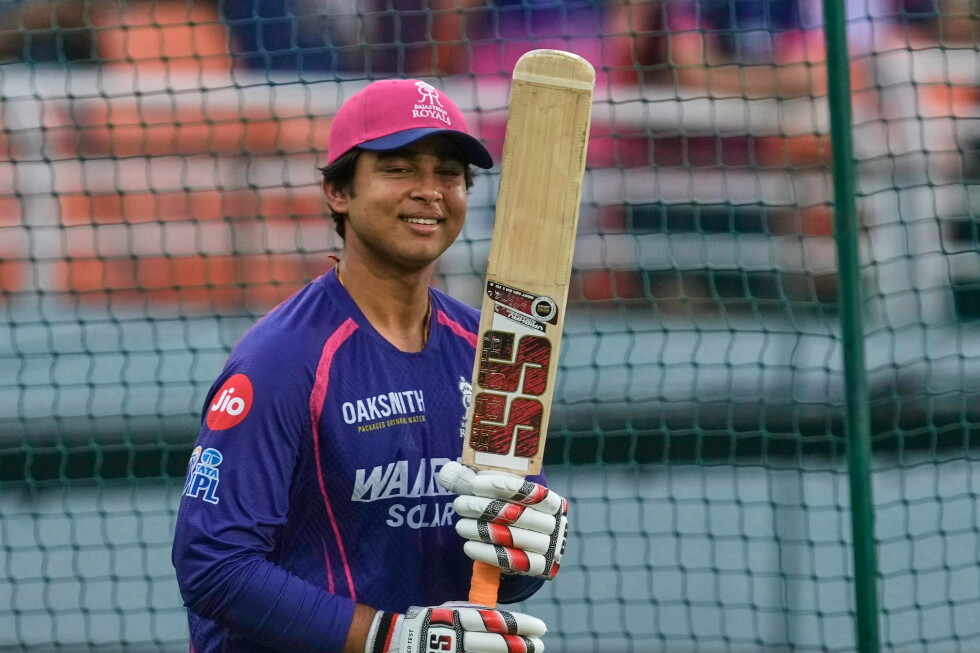
Sooryavanshi, 15, made to wait for India debut after being left out of T20 against Ireland
BELFAST, Northern Ireland — One of cricket’s most anticipated teenage prospects will have to wait a little longer for his senior international breakthrough. Vaibhav Sooryavanshi, the 15-year-old Indian batting sensation who finished as the highest run-getter in the 2025 Indian Premier League, was once again left out of India’s playing XI for the second and decisive T20I against Ireland in Belfast.
This omission marks the second consecutive match the young prodigy has missed out on, after he did not feature in the series opener on Friday. That first match ended in a historic 34-run victory for Ireland, the first time the nation has beaten India in any format of international cricket.
If given his cap in the upcoming five-match T20 series against England, which kicks off next Wednesday, Sooryavanshi — who will be 15 years and 93 days old on the date of the first match — will break the long-standing record for the youngest male player to debut in top-tier men’s T20 internationals. The current record belongs to Ireland’s own Joshua Little, who was 16 years and 309 days old when he made his first T20I appearance.
A debut for Sooryavanshi would also etch his name into Indian cricket history as the youngest player to ever represent the men’s senior national team. The legendary Sachin Tendulkar, widely regarded as one of the greatest batters of all time, holds the current record for India, having made his Test debut at 16 years and 205 days back in 1989, with his ODI debut following 33 days later.
Across all formats of men’s international cricket, the record for the youngest debutant still belongs to Pakistan’s Hasan Raza, who stepped out for his Test debut in 1996 at just 14 years and 227 days old, a mark that has stood unchallenged for nearly 30 years.
In the second T20I at Belfast’s Stormont ground on Sunday, India captain Shreyas Iyer won the pre-match coin toss and elected to bowl first against the hosts. India handed out senior debuts to two other young prospects: all-rounder Suryansh Shedge and 24-year-old fast bowler Prince Yadav.
National selectors opted to retain the established top-order batting trio of Sanju Samson, Abhishek Sharma and Ishan Kishan, choosing experience over the chance to introduce the teenage prodigy to the international stage on this tour.
Full Playing XI:
Ireland: Tim Tector, Ross Adair, Harry Tector, Lorcan Tucker (captain), Ben Calitz, Gareth Delany, George Dockrell, Matthew Humphreys, Matt Hollard, Liam McCarthy, Jai Moondra
India: Sanju Samson, Abhishek Sharma, Ishan Kishan, Shreyas Iyer (captain), Tilak Varma, Suryansh Shedge, Shivam Dube, Axar Patel, Arshdeep Singh, Harshit Rana, Prince Yadav -
New Zealand digs in and becomes a strong favorite to beat England in series-deciding 3rd test
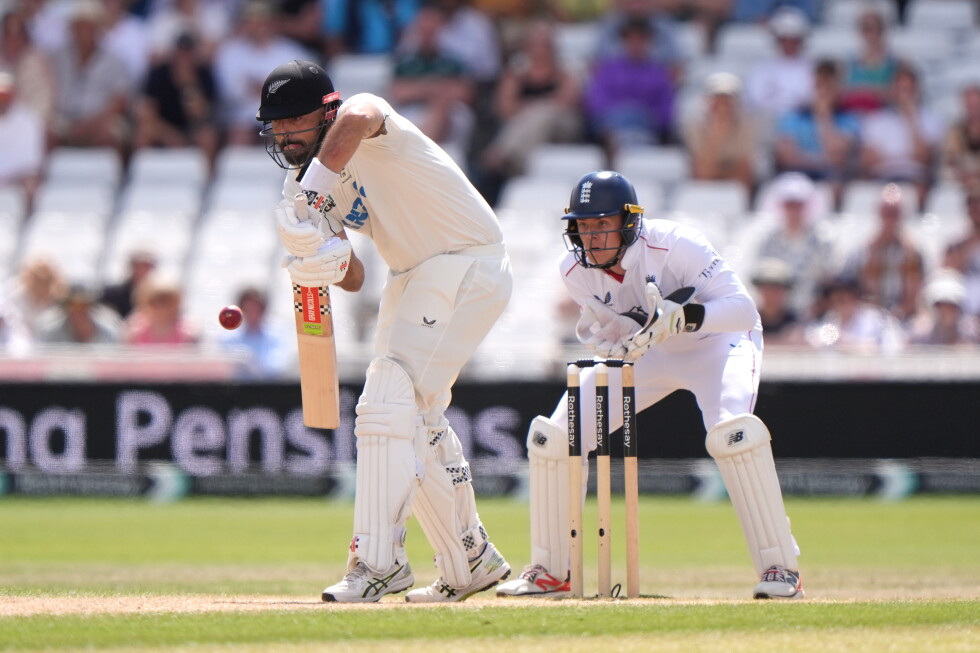
On Sunday at Trent Bridge in Nottingham, New Zealand seized firm control of the third and series-deciding Test match against England, closing the first session of Day 4 at 180 for four wickets. That score gave the side an unassailable 264-run lead heading into the middle period of the day, with young all-rounder Rachin Ravindra falling agonizingly short of a sixth international century just before the lunch break.
Resuming the morning at 120-3, Ravindra and veteran batsman Daryl Mitchell faced a challenging pitch that was producing increasingly inconsistent bounce, yet the pair managed to build a solid, match-changing partnership. Their 129-run stand for the fourth wicket came together when New Zealand was in a precarious position at 51-3 on Day 3, pulling the side out of early trouble to turn the tide of the match.
Ravindra, who had looked in imperious form throughout his innings, was finally trapped leg before wicket by England off-spinner Shoaib Bashir when he was just six runs away from a well-deserved century, ending his knock at 94. At the end of the opening session, Mitchell remained unbeaten on 47, while wicket-keeper Tom Blundell had not yet scored, sitting on 0 not out. Through 25 overs of tightly contested play, New Zealand added 60 runs to their overnight total.
Beyond the day’s play, the series itself carries historic stakes for both sides. New Zealand has not won a multi-Test series of three matches or more on English soil since 1999, a drought the side is keen to end on this tour. For England, the pressure is mounting: the side has not dropped a home multi-Test series since 2012, but a defeat here would heap significant additional scrutiny on the team’s leadership.
That pressure already builds after a humiliating 4-1 Ashes defeat to Australia last year, and ongoing questions about the squad’s culture and professionalism have lingered following the controversial disciplinary dropping of star all-rounder Ben Stokes and fast bowler Gus Atkinson ahead of the second Test of this series. With New Zealand firmly in the driver’s seat, England faces an uphill battle to avoid a historic home series loss.