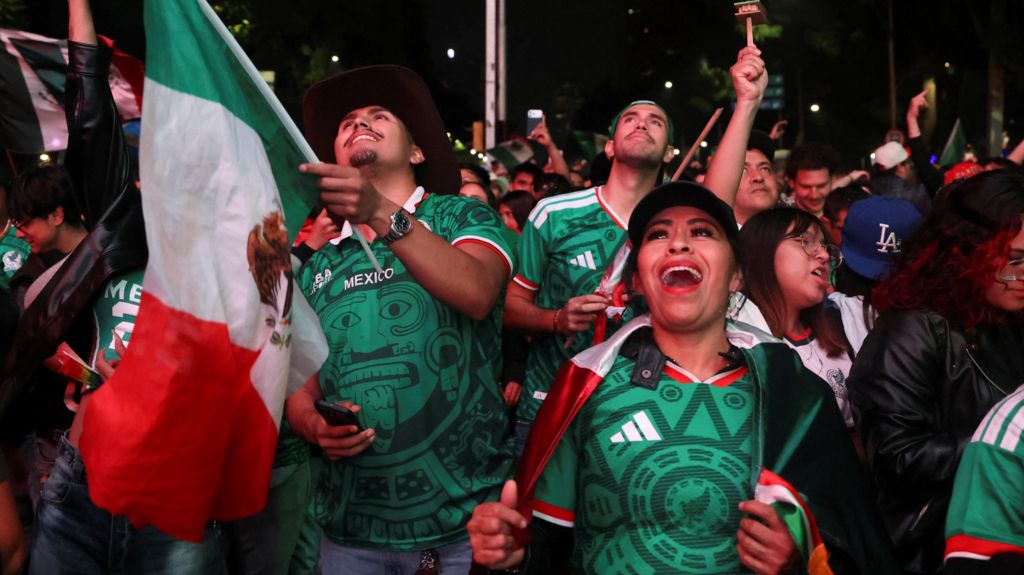
Across Mexico and fan hubs around the globe, jubilant supporters of the Mexican men’s national football team have poured into streets, packed stadium viewing parties, and flooded social media with celebrations after a historic milestone. El Tri secured a spot in the 2022 FIFA World Cup Round of 16, marking the first time the squad has claimed a knockout-stage victory at the tournament in 36 years. The last time Mexico advanced past the tournament’s opening knockout round came in 1986, when the country hosted the World Cup and went on to reach the quarterfinals, a drought that had hung over the program for decades. After the final whistle confirmed the result, fans waved green, white, and red flags, chanted team anthems, and set off fireworks in celebration, with many sharing personal stories of waiting their entire lives to see the national side break the long-standing knockout curse. The result sets Mexico up for a clash with one of the tournament’s top remaining contenders in the next round, with millions already gearing up to back El Tri as they chase a deeper run in the World Cup. For long-suffering fans who have watched the team fall in the knockout round time and again since their 1986 run, the win represents a long-awaited breakthrough that has reignited belief in the program’s ability to compete with the world’s best football nations.
分类: sports
-
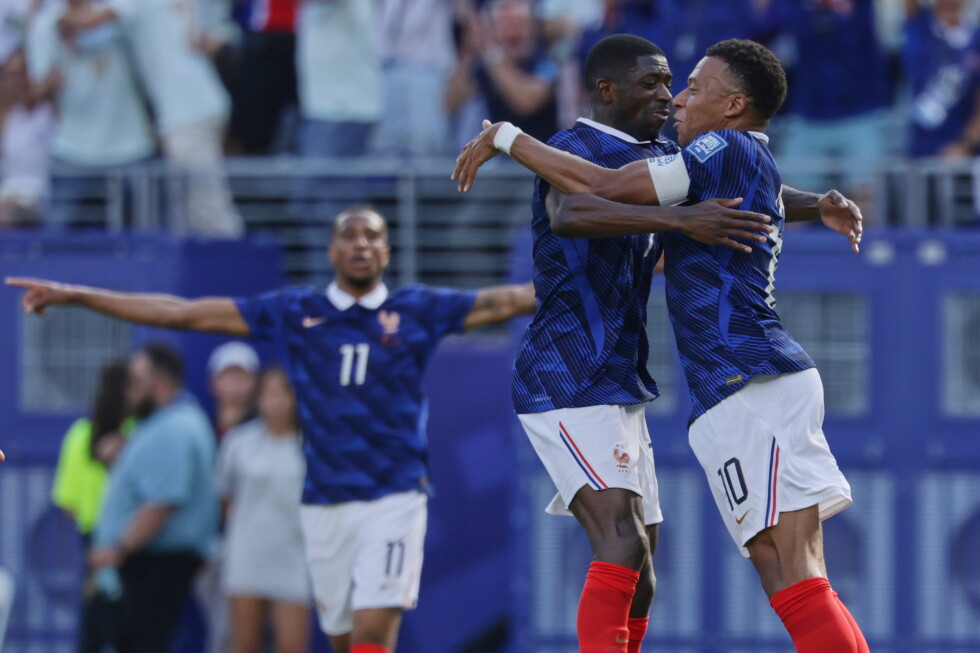
France looks like World Cup juggernaut with fearsome foursome of Mbappé, Dembélé, Olise and Barcola
As the current World Cup knockout stage approaches, the French men’s national football team has emerged as the overwhelming favorite to claim the global title, powered by an attacking quartet that has left rival coaches and players stunned by their relentless quality and creative chemistry.
Kylian Mbappé, Ousmane Dembélé, Michael Olise and Bradley Barcola — the fearsome foursome leading France’s front line — have redefined attacking football at this year’s tournament. Norway head coach Ståle Solbakken put their dominance plainly: this group of forwards is the best the competition has to offer, by a clear margin.
Their 3-0 victory over Sweden on Tuesday locked in Les Bleus’ place in the round of 16, where they will face Paraguay this weekend. More importantly, the win etched France into World Cup history: they are now the first national team to notch three or more goals in five consecutive World Cup matches. Heading into the knockout round, the side is targeting a spot in its third straight World Cup final, and is widely tipped to unseat defending champion Argentina from the throne.
French midfielder N’Golo Kanté acknowledged the team’s depth of talent, but emphasized the side remains grounded. “There is something that we cannot hide, that we have a lot of quality in the team,” he said. “But I think it’s the same for many other teams. We cannot see ourselves too beautiful or too strong.”
France’s tournament form so far has been nearly unbeatable: the side holds a 4-0 record, having outscored all group stage opponents by a lopsided 13-2 margin. This run follows a familiar pattern of French success at recent World Cups: the side claimed the 2018 title with a win over Croatia, before falling to Argentina in a penalty shootout in the 2022 final.
The individual statistics of France’s attacking stars tell a story of their dominance. Mbappé, who notched his second brace of the tournament against Sweden, now sits level with Argentina’s Lionel Messi atop the tournament goal-scoring chart with six goals. Mbappé’s career World Cup goal total now stands at 18 in just 18 matches, pulling him within one of Messi’s all-time career record of 19 goals across 29 matches. Dembélé trails just behind with four tournament goals, good for fourth place league-wide. Olise leads the entire tournament in assists with five, while Mbappé and Dembélé each add two, and Barcola has chipped in one goal and two assists of his own.
Mbappé said he remains focused on proving his quality on the sport’s biggest stage. “I know that I do have qualities but I do have to show them on the largest stage that is the World Cup,” he said.
France’s attacking success comes as much from tactical setup as individual talent. Manager Didier Deschamps deploys a fluid 4-2-3-1 formation that gives his forwards freedom to rotate position rather than staying pinned to fixed spots on the pitch. Swedish forward Viktor Gyökeres noted that this flexibility makes the attack incredibly difficult to defend. “They come in different positions. They’re not static,” he explained. “They know each other well in how they move and their connection between each other.”
Deschamps himself has been a constant anchor for French soccer success for more than a decade. A captain of France’s 1998 World Cup-winning side, Deschamps took over as senior team manager in 2012, and announced earlier this year that he will step down from his role this summer following the conclusion of the tournament. The win against Sweden marked his 18th World Cup victory as a manager, a new tournament record.
Under Deschamps’ leadership, France has evolved into a more attack-minded side than in past successful runs. “We’re very much more offensive than in 2018 and in 2022,” Mbappé said. “It’s the continuity of what we started to build throughout Didier Deschamps’ tenure over the last 14 years. You can see the evolution, his personal touch, and the arrival of a lot of young talent.”
This consistent success has lifted France to the top of FIFA’s global rankings, overtaking Argentina for the number one spot. All four of France’s wins at this tournament have come against ranked opposition: 18th-ranked Senegal, 63rd-ranked Iraq, 21st-ranked Norway, and 37th-ranked Sweden. Next up for Les Bleus is 34th-ranked Paraguay in the round of 16, with potential matchups against sixth-ranked Morocco or 30th-ranked Canada in the quarterfinals, and a potential semifinal showdown with third-ranked Spain.
Opposing managers have echoed the widespread praise for France’s standout form. Sweden head coach Graham Potter called France the best team he has seen at this year’s tournament, noting the multiple problems the side’s attack creates for defenders. “Because of the players in the wide areas, sometimes you have the double up on them because they could just beat you in 1-v.-1 situations,” he explained. “And then they’ve got not a bad striker in the middle. So you’ve got problems here and you’ve got problems here. And then it can also build up with good control, strong center backs, so direct football isn’t easy against them either.”
If France reaches the final once again, they will make history as just the third men’s national team to reach three consecutive World Cup finals, joining West Germany (which achieved the feat between 1982 and 1990) and Brazil (between 1994 and 2002). For French players who were part of the 2022 heartbreaking final loss, this tournament is a chance to rewrite that narrative.
“We have really good memories, also bad ones with what happened the last time that we played the World Cup,” said midfielder Aurélien Tchouaméni, a member of the 2022 French squad. “Everybody is ready to fight and to give everything to make sure that all the French people are going to be proud of us.”
-
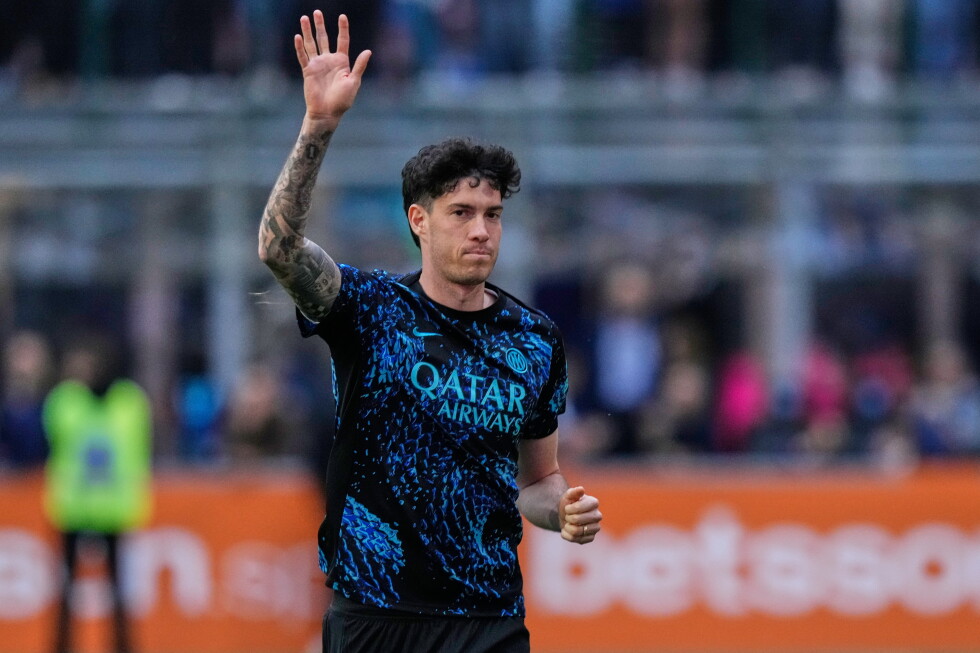
Prosecutors investigating Italy defender Bastoni for alleged child prostitution
MILAN – In a stunning development that has sent shockwaves through Italian soccer, Alessandro Bastoni, the starting center-back for both Serie A powerhouse Inter Milan and the Italian men’s national team, is currently facing formal investigation over allegations of child prostitution. The probe forms one strand of a broader, ongoing investigation led by the Milan Public Prosecutor’s Office into a suspected criminal ring that provides paid escort services.
Prosecutors have formally summoned Bastoni to appear for questioning this Friday, according to official documents related to the inquiry. The core allegation against the 27-year-old player claims he paid for sexual activity with a minor back in June 2020. The individual involved was 17 years old at the time of the alleged incident; under Italian law, any paid sexual encounter with a minor qualifies as child prostitution by legal definition.
Salvatore Scuto, Bastoni’s legal representative, has issued a forceful denial of all claims against his client. Speaking to reporters, Scuto stated that the athlete is deeply distressed by the allegations, adding: “I can rule out that he ever engaged in paid sexual relations, let alone with minors.”
Leading Italian sports daily Gazzetta dello Sport has confirmed that the underage individual at the center of the allegation has already been interviewed by investigators. The outlet reports that while the young woman has acknowledged staying overnight at Bastoni’s residential property, she has explicitly denied any sexual encounter with the soccer star.
The latest controversy caps a turbulent stretch of personal and professional challenges for Bastoni. Just a few years ago, he was a key part of the Italian squad that won the 2020 UEFA European Championship, but his national team fortunes took a major downturn during a decisive 2022 FIFA World Cup qualifying playoff match against Bosnia and Herzegovina. Bastoni was sent off early in that contest, and Italy eventually lost the match in a penalty shootout, failing to qualify for the World Cup for the third consecutive tournament.
More recently, Bastoni was the target of widespread online harassment from fans and critics after a high-profile incident in a February 14 league match between Inter and its long-time rival Juventus. In that game, Bastoni was accused of deliberately diving to draw a red card for a Juventus player, a tactic that ultimately worked for Inter but sparked fierce backlash across social media, with the player and his family receiving widespread abuse online.
As of this report, neither Inter Milan nor the Italian Football Federation (FIGC) has issued an official statement on the ongoing investigation against Bastoni.
-
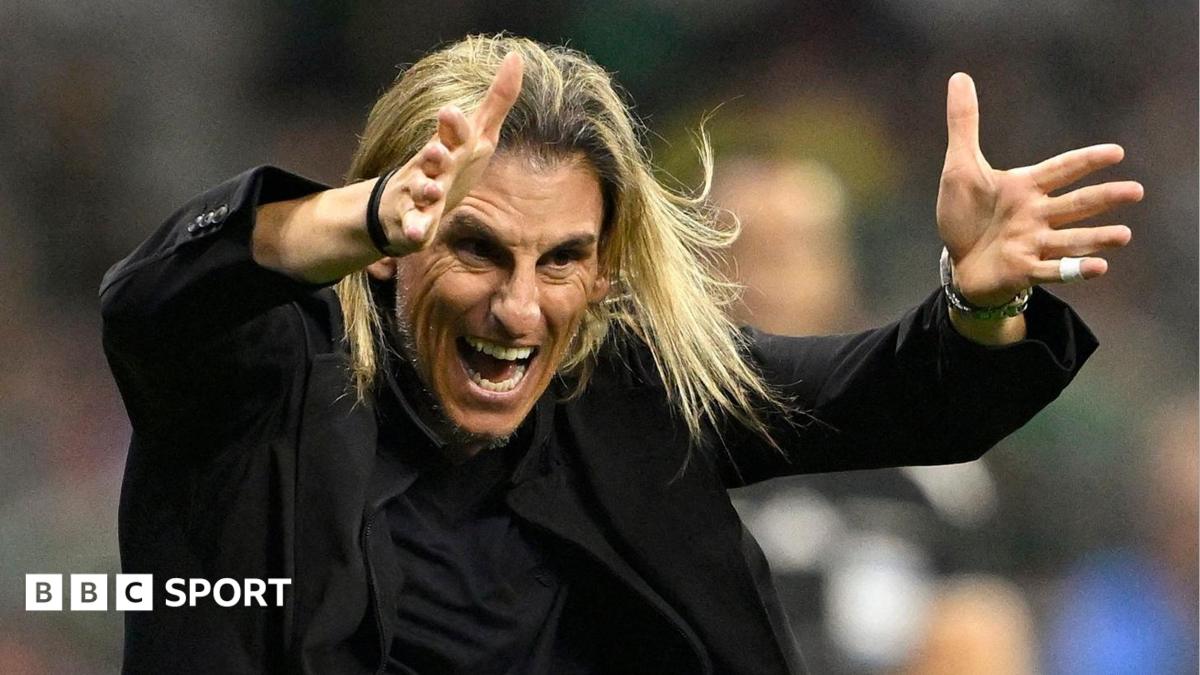
Beccacece reign as Ecuador manager over after exit
Just days after Ecuador’s 2026 FIFA World Cup campaign came to an abrupt end with a 2-0 Round of 32 defeat to co-host Mexico, national team manager Sebastian Beccacece has confirmed he will depart his post, bringing a close to his 11-month tenure leading the South American side.
Appointed to the role in August 2024, Beccacece originally signed a contract that tied his term specifically to the conclusion of the 2026 World Cup, an agreement that expired once Ecuador exited the tournament. In an official statement following the knockout stage defeat, the Argentine coach acknowledged that the side failed to hit the ambitious target the staff and squad had set before the tournament.
“I don’t think we were able to achieve the feat we promised: to make this the best World Cup ever for Ecuador. It’s my turn to say goodbye. That’s why I have to leave,” Beccacece said. He added that he would have been open to extending his tenure, citing the strong support he received from both players and the Ecuadorian Football Federation’s executive team during his time in charge. “But I understand how this works and it hurts, but I think the decision was clear,” he noted.
Beccacece’s departure makes him the seventh national team manager to step down following their team’s elimination from this year’s World Cup. He joins a growing list of departing coaches that includes Marcelo Bielsa of Uruguay, Steve Clarke of Scotland, Miroslav Koubek of the Czech Republic, Ronald Koeman of the Netherlands, Sabri Lamouchi of Tunisia, and Hong Myung-bo of South Korea.
Beccacece’s tenure oversaw a standout qualifying campaign that saw Ecuador finish second in the South American qualifying standings behind only Argentina, booking their ticket to the 2026 finals. Once in the tournament, Ecuador’s Group E campaign got off to a rocky start: they dropped a narrow 1-0 opening match defeat to Ivory Coast, followed by a goalless stalemate against Curacao that left their knockout stage hopes hanging by a thread heading into the final group fixture against four-time champions Germany.
Against all odds, the Ecuadorian side pulled off one of the most memorable comeback wins of this year’s group stage. After falling behind early to Germany, they fought back to secure a 2-1 victory that earned them a spot in the knockout rounds as one of the best third-placed finishers. That result marked only the second time in Ecuador’s history that the national side advanced past the group stage of a World Cup.
The comeback win set up a Round of 32 clash with tournament co-host Mexico, but Beccacece’s side could not replicate their earlier magic. The Argentine coach admitted his team was thoroughly outplayed in the first half, as Mexico’s Julian Quinones and Raul Jimenez both found the net before the halftime break, putting Mexico firmly in control. Though Ecuador pushed for a response after the break, they could not find the back of the net to spark a second consecutive comeback.
“We fought back, but we couldn’t find the goal that would have given us a boost,” Beccacece said of the defeat. The win for Mexico advances them to the Round of 16, where they are now set to face a potential match against tournament favorite England.
-
Police conduct raids in Germany to investigate possible corruption at Euro 2024
BERLIN — In a high-profile development that has sent ripples through European soccer, German law enforcement carried out a series of coordinated raids across the country on Wednesday, launching an official investigation into alleged corrupt practices tied to the upcoming 2024 European Championship.
Multiple premises connected to the tournament were targeted during the operation, including the central headquarters of the German Football Association (DFB), Germany’s top governing body for the sport, according to initial reporting from German tabloid Bild. The inquiry specifically centers on Euro 2024 GmbH, the event’s official organizing body, which operates as a joint venture between the DFB and European soccer’s governing body UEFA.
In a formal joint statement released Wednesday, the Bochum Public Prosecutor’s Office and the North Rhine-Westphalia State Office of Criminal Investigation (LKA NRW) outlined the core of the allegations. Investigations focus on claims of unapproved improper benefits received by a former employee of one of Euro 2024’s host cities. These benefits reportedly include, among other perks, complimentary access to a professional soccer match, provided by senior officials from the tournament’s organizing committee.
Prosecutors further detailed that organizing officials are accused of granting host cities unprecedented exclusive first-refusal rights to high-demand match tickets. Multiple host cities took advantage of these allocations, and the tickets were distributed for a range of unapproved uses, authorities say.
Bild, which first broke details of the scale of the raid operation, confirmed that Wednesday’s early-morning action deployed more than 150 law enforcement officers across multiple search sites. The investigation itself targets two suspects: a 66-year-old German citizen and a 46-year-old French national, who are both suspected of involvement in bribery schemes. The reporting adds that the probe has uncovered evidence suggesting thousands of Euro 2024 tickets may have been improperly diverted and allocated internally to hand-picked guests rather than sold to the general public as intended.
Alongside the DFB headquarters, search warrants were also executed at city hall buildings and municipal government offices across multiple host cities for the tournament, according to Bild’s reporting.
Prosecutors emphasized that as of Wednesday, the two named suspects have not yet been able to respond publicly to the allegations brought against them. Consistent with German legal procedure, the principle of presumption of innocence remains in effect for all parties involved in the ongoing investigation.
This developing story is part of Associated Press coverage of international soccer, with full updates available on the AP News soccer hub.
-
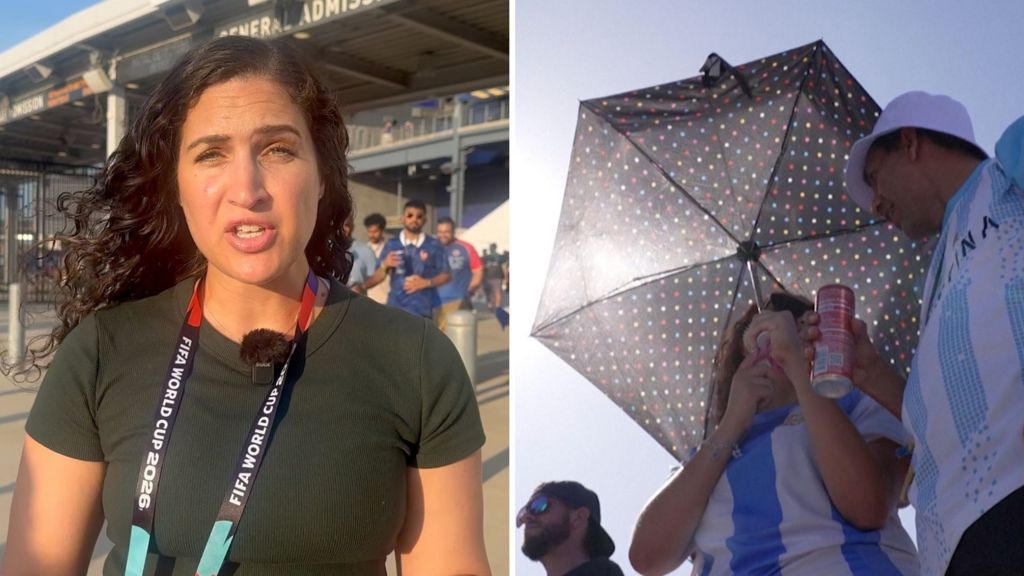
World Cup fans sweat through US ‘heat dome’
While the 2022 World Cup captured global attention, millions of soccer fans across the United States gathered to watch matches and cheer on their favorite nations. But this shared excitement came with an unexpected environmental challenge: a powerful heat dome parked over the U.S. East Coast, pushing temperatures to dangerous, record-breaking levels. As thermometers climbed well into the triple digits in many major cities, leaving infrastructure and local residents strained, devoted supporters refused to let the sweltering conditions keep them away from watch parties and public viewing events. A BBC reporting team on the ground traveled through several affected urban areas to speak with these fans, documenting their dedication as they pushed through oppressive heat to share the thrill of the world’s biggest sporting tournament with fellow supporters. Many fans came prepared with portable fans, bottled water, cooling towels and sun protection, huddling in shaded areas whenever possible to avoid the worst of the midday sun. Even as local weather services issued heat advisories warning residents to limit outdoor exposure, these supporters said the once-in-four-years event was worth the discomfort, highlighting the unique community and excitement that only a World Cup can bring. Local organizers of public watch events also adapted, adding extra cooling stations and extending access to indoor spaces to help fans stay safe while still enjoying the matches. The combination of a global sporting spectacle and an extreme weather event created a one-of-a-kind experience for East Coast fans, blending the joy of international competition with the grit of enduring a summer heat wave.
-
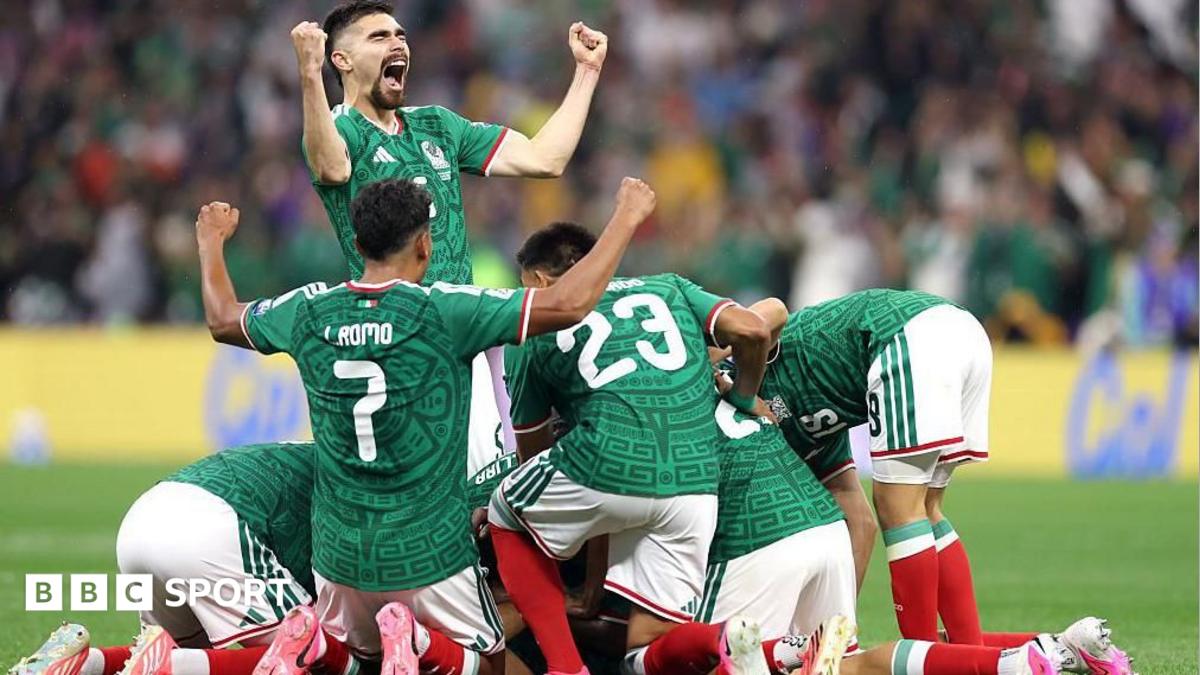
Mexico rampant at fortress Azteca – and England could be next
The 2026 FIFA World Cup on home soil has delivered a historic moment for Mexico, who brushed aside a 10-man Ecuador side to secure their place in the tournament’s knockout round and break a decades-long hoodoo that has held the nation back for generations. Now, El Tri stands just one win away from their first World Cup semi-final appearance, with a potential mouth-watering last-16 clash with England looming at the iconic, intimidating Estadio Azteca — a fixture that has fans across the globe buzzing and three-time World Cup winner England bracing for an almighty challenge.
Going into the final group stage match, Mexico had already picked up two wins without conceding a single goal, but a confident display against Ecuador cemented their status as one of the tournament’s most dangerous dark horses. The fixture was delayed by an hour after a stormy, lightning-laced evening over Mexico City, but the pause in play did nothing to cool the home side’s momentum. They came roaring out of the gates from the first whistle, with striker Julian Quinones opening the scoring with a blistering, unstoppable strike that left the Ecuador goalkeeper with no chance to save. Veteran Raul Jimenez, a familiar name to Premier League fans from his time at Wolves, doubled Mexico’s lead before halftime, putting the game out of reach before the break.
For Mexico, the result is far more than just another knockout round qualification: it ends the infamous ‘quinto partido’ curse that has plagued the national team for nearly 40 years. After Mexico reached the quarter-finals (the fifth match of the tournament) as hosts in both 1970 and 1986, every edition between 1990 and 2018 saw the side eliminated in their fourth game, falling at the first knockout hurdle. Their 2022 campaign ended even earlier, with a group stage exit. Now, El Tri have secured that long-elusive fifth match, and their undefeated, four-game run with zero goals conceded has fans dreaming of a first ever World Cup title.
Standing in the way of a historic run could be England, who face DR Congo in their final group stage fixture later the same day. Should Gareth Southgate’s side progress, they will face a challenge unlike any other at this tournament: a hostile, sold-out Azteca Stadium, where Mexico has built an almost unbeatable record. Across 89 competitive matches at the venue, Mexico has racked up 70 wins, 17 draws and just two defeats, and remains unbeaten in 10 World Cup matches played on its turf. Former Tottenham and Australia manager Ange Postecoglou warned that facing Mexico at home would feel like an entirely different tournament for any visiting side, noting that the entire nation is fully behind the in-form team.
It is not just the venue that opposing teams need to fear: Mexico’s current squad is delivering the most complete performances the national team has produced in decades. Quinones has emerged as a breakout star, notching three goals in four matches, while 17-year-old Gilberto Mora made history as the second-youngest player to ever start a World Cup knockout match — coming in just 20 days behind Pele’s 1958 record. Defensively, the side has been nearly impenetrable, facing just six shots on target across four group matches without conceding once. Former Nigeria striker Efan Ekoku praised Mexico as disciplined, skilled and tenacious, noting that a home side playing with this sort of momentum is incredibly difficult to stop.
Celebrations erupted not just across Mexico, but in major cities with large Mexican diaspora communities around the world, including Los Angeles, where thousands of fans gathered for downtown watch parties and set off fireworks after the final whistle. Fans in attendance called this the best Mexican side they have seen in decades, with many saying topping the group and reaching the last 16 far exceeded even their wildest pre-tournament expectations. Many noted the squad’s growing chemistry throughout the tournament, with previously criticized players stepping up to deliver critical performances. One fan summed up the mood, saying “this is a great year to be Mexican” as the team chases history on home soil.
For England, if they get past DR Congo, the prospect of facing Mexico at the Azteca is daunting, with the home side’s momentum and historic home advantage making them a dangerous opponent. For Mexico, a win in the last 16 would not only extend their run, but would make even the most skeptical fans believe that a first ever World Cup triumph could be on the cards.
-
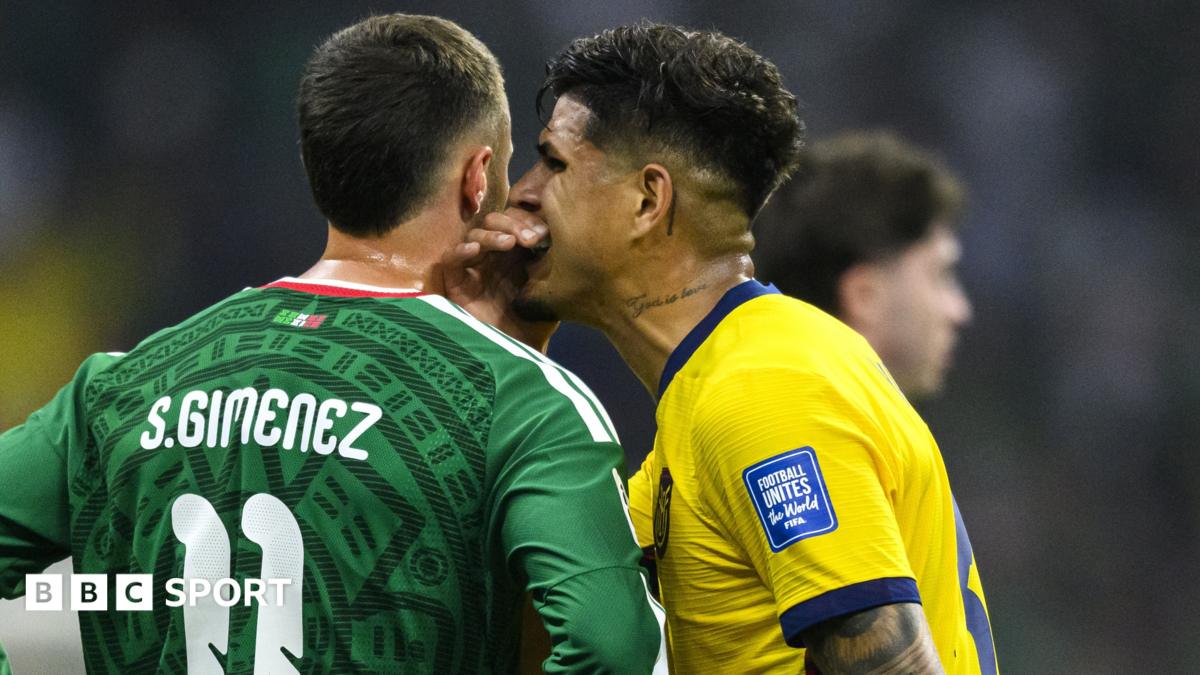
Hincapie becomes second player sent off for covering mouth
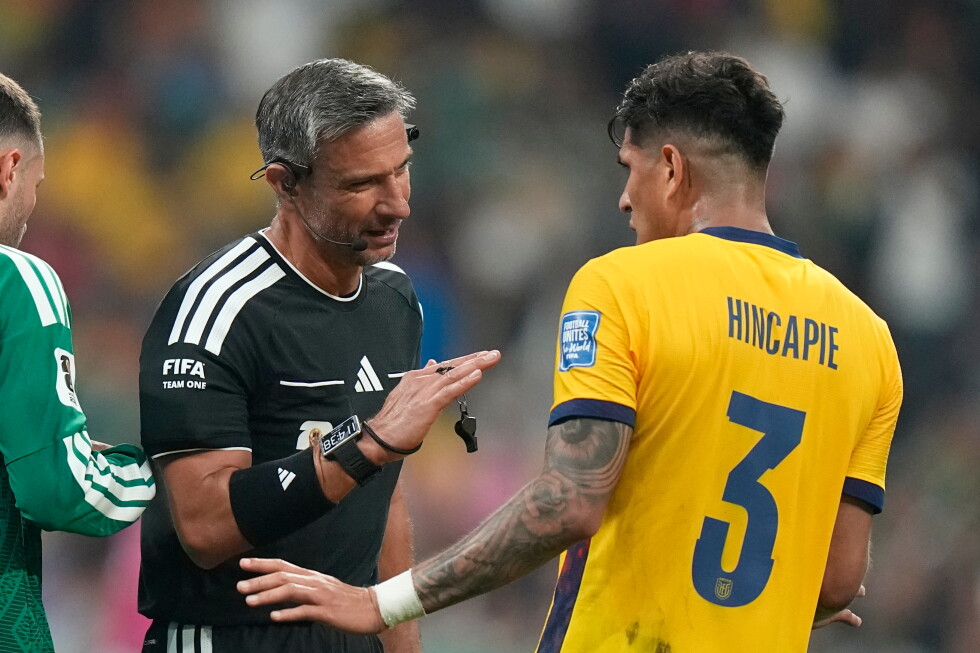
In a high-stakes 2026 FIFA World Cup group stage match that ended with Ecuador’s exit from the tournament, 24-year-old Arsenal defender Piero Hincapie has made history as the second player to receive a red card under football’s controversial new rule banning mouth covering during confrontations between players. The incident unfolded in second-half stoppage time on Tuesday evening, with Mexico already holding a 2-0 lead that would confirm their progression to the knockout round, as Hincapie entered a heated exchange with Mexico striker Santiago Gimenez and deliberately covered his mouth while speaking.
Slovenian head referee Slavko Vincic did not witness the interaction in real time, but the Video Assistant Referee (VAR) team flagged the incident and instructed Vincic to review the pitchside monitor replay. Following the review, Vincic showed Hincapie a straight red card, marking just the second time the new rule has resulted in a player dismissal at this year’s World Cup.
Hincapie’s expulsion mirrors an earlier incident in the group stage that saw Paraguay winger Miguel Almiron sent off for the same offense during a match against Turkey. Unlike Hincapie’s side, however, Paraguay held on to secure a 1-0 win despite the early red card. The ruling has already sparked debate this tournament after England midfielder Jude Bellingham avoided a red card last week despite covering his mouth during an exchange with Ghana’s Jordan Ayew. Refereeing officials have clarified that this discrepancy aligns with the specific wording of the rule: mouth covering is only penalized when it occurs during confrontational interactions, not friendly or casual exchanges.
Ahead of the 2026 tournament, FIFA Head of Referees Pierluigi Collina laid out the parameters of the new regulation explicitly, explaining that the ban was never intended to target private, amicable conversations between players. The rule was formally approved during a special gathering of the International Football Association Board (Ifab), football’s global law-making body, held in Vancouver back in April. FIFA President Gianni Infantino has repeatedly backed the new punishment, noting that referees should start from the presumption that a player covering their mouth during a confrontation is saying something that violates the sport’s rules of conduct.
The push for this new regulation gained traction after a high-profile incident during a February Champions League fixture between Benfica and Real Madrid. In that match, Benfica winger Gianluca Prestianni covered his mouth while speaking to Real Madrid star Vinicius Jr. Prestianni was initially accused of racial abuse, which he denied, and handed a provisional one-match ban. After a full investigation by UEFA, the winger was ultimately found guilty of homophobic conduct and issued a six-match ban, three of which were suspended.
Under the current framework, final decisions on red cards for mouth covering remain at the on-field referee’s discretion, with match officials required to weigh all contextual factors of an incident before issuing a dismissal. For Mexico, the 2-0 win over Ecuador sets up a potential round of 16 matchup against tournament favorite England, keeping their 2026 World Cup title push alive while ending Ecuador’s campaign early.
-
Ecuador’s Hincapié becomes the second player sent off for covering his mouth at the World Cup
MEXICO CITY – The 202X World Cup has marked another chapter in the enforcement of FIFA’s controversial new conduct rule, with Ecuador defender Piero Hincapié becoming the second player to receive a straight red card for breaching the regulation. The rule, introduced this tournament to crack down on hidden verbal abuse between players, mandates an automatic sending off for athletes who cover their mouths during heated confrontations with opponents.
Hincapié’s dismissal came in the 95th minute of a tightly contested round of 32 knockout clash on Tuesday, where Ecuador ultimately fell 2-0 to host nation Mexico. The red card was issued immediately after the defender engaged in a tense verbal back-and-forth with Mexican striker Santi Giménez, during which Hincapié covered his mouth – a move that directly triggered the new regulation.
FIFA rolled out the new rule ahead of the tournament with a clear purpose: to eliminate the longstanding loophole that allowed players to hurl insulting or abusive language at rivals without being caught by match officials or broadcast microphones. By mandating a sending off for any mouth covering during confrontational exchanges, governing body officials hope to deter unsportsmanlike verbal conduct and improve transparency in on-pitch behavior.
Hincapié is not the first athlete to fall foul of the new regulation. Paraguayan playmaker Miguel Almirón claimed that unwanted distinction last week, when he was sent off during a group stage fixture against Turkey. Almirón’s dismissal sparked widespread debate across global football circles about the rigidity and fairness of the new rule, with pundits split on whether the punishment fits the offense.
For Hincapié and Ecuador, the red card carries immediate consequences. Ecuador’s exit from the knockout round means their World Cup campaign has already come to a close, but the suspension handed down alongside the red card will extend to the South American side’s next official international match in future FIFA competitions.
This report was contributed by Jack Little, a student journalist at the University of Georgia’s Carmical Sports Media Institute.
-
Super Rugby set for a longer 17-week regular season and revamped playoffs in 2027
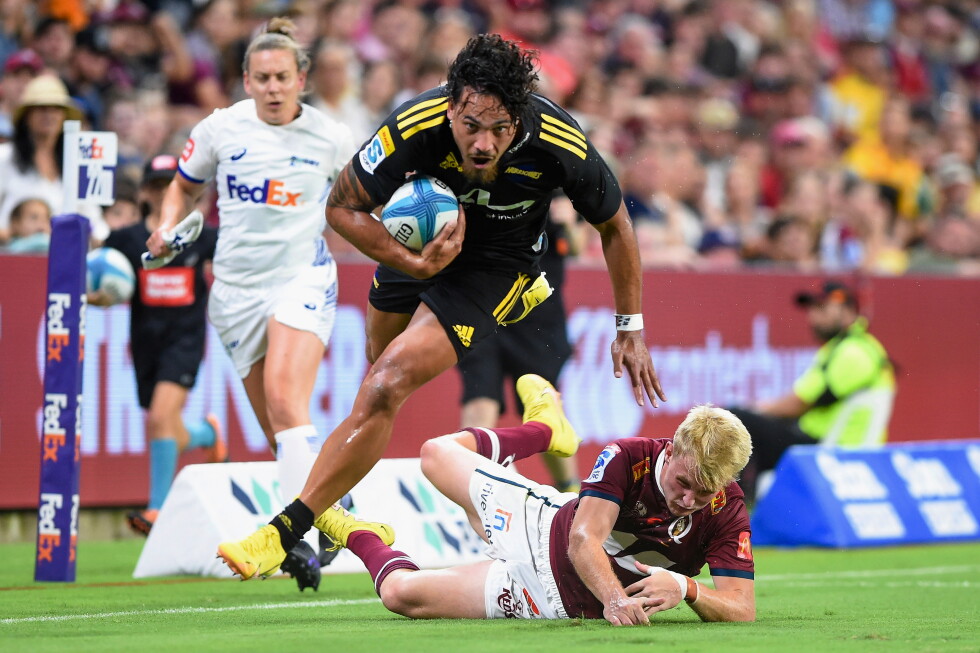
Organizers of the iconic Southern Hemisphere rugby competition Super Rugby have announced sweeping changes to the tournament structure set to take effect in 2027, introducing a longer regular season and a revamped playoff system under a new 10-team framework.
The reconfigured competition will distribute teams across three Pacific nations: five elite franchises from New Zealand, four from Australia, and one representative side from Fiji, marking an important expansion of the tournament’s footprint in the Oceania region. According to the official timeline revealed Wednesday, the 2027 season will open its doors on February 12, with the championship final scheduled to wrap up the 17-week regular season on June 26. This marks a notable extension from previous season structures, giving fans more consistent top-tier rugby action throughout the early months of the year.
The playoff round has also been redesigned to create more high-stakes matches while rewarding top-performing regular season teams. Under the new six-team finals format, the sides that finish first and second in the regular season standings will earn a direct bye into the semifinal round, avoiding an extra knockout match. Meanwhile, teams ranked third through sixth will compete in sudden-death quarterfinals to secure the two remaining semifinal spots, creating more exciting knockout drama for rugby audiences.
The announcement comes fresh off the conclusion of the 2026 Super Rugby season, which saw the Wellington-based Hurricanes claim the championship title in dominant fashion. Last month, the Hurricanes delivered a crushing 60-5 victory over the Hamilton-based Chiefs in the 2026 final, capping off a record-breaking campaign for the franchise. Over the course of their 17-match 2026 season, the Hurricanes crossed the try line 113 times, making them the first side in the competition’s entire 30-year history to hit the milestone of more than 100 tries in a single season.
In related rugby news coming out of New Zealand this week, the country’s national men’s squad has finalized its roster for the opening match of the World Rugby Nations Championship, scheduled to take place this Saturday against France. The team announcement came just days after the conclusion of the 2026 Super Rugby final, giving top club players a tight turnaround to transition from domestic competition to international test rugby.