分类: sports

  • Argentina v Cape Verde: Breaking down biggest World Cup knockout mismatch

    Argentina v Cape Verde: Breaking down biggest World Cup knockout mismatch

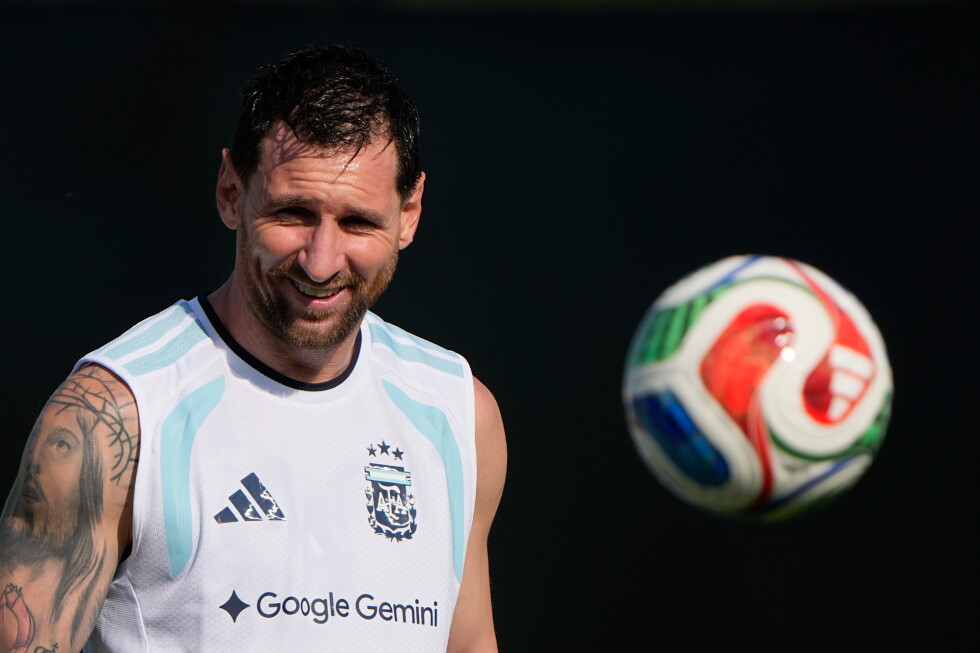
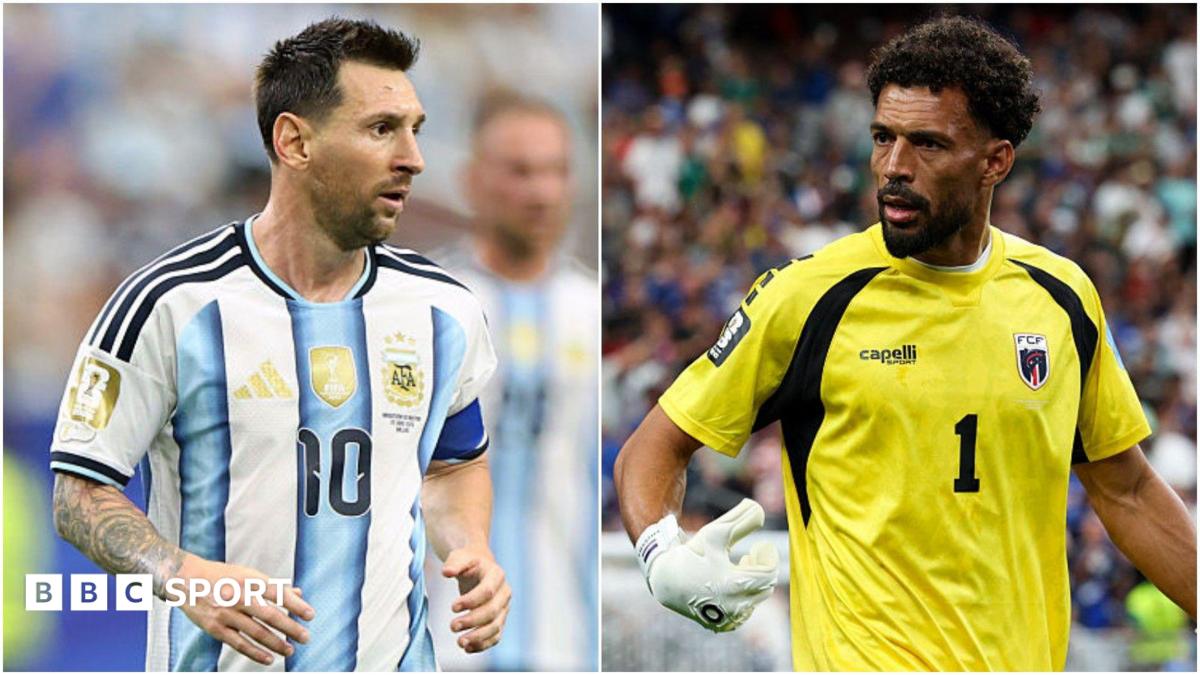
    When football fans around the world began making their predictions for the 2026 FIFA World Cup knockout stage, few could have imagined the mouthwatering underdog story that would dominate pre-match hype: Lionel Messi, widely regarded as the greatest player to ever step onto a football pitch, preparing to face 40-year-old Cape Verde goalkeeper Vozinha in one of the most lopsided but anticipated matchups in modern tournament history.

    The game will kick off Friday at Miami Stadium, kicking off what is already being framed as a classic meeting between tournament powerhouse Argentina and the smallest nation ever to reach a World Cup knockout round: first-time qualifier Cape Verde. What makes the matchup so captivating is not just the gulf in experience and resources between the two sides, but the incredible underdog journey that brought the African side to this point, a run that has already secured their place in World Cup folklore.

    Few gave Cape Verde any chance of progressing out of their group, even before they faced off against defending European champions Spain. But the Blue Sharks held the giants to a shock 0-0 draw, a result that already ranked among the biggest upsets in modern World Cup history – even without a win. Back-to-back draws against two-time winners Uruguay and Saudi Arabia followed, enough to secure a second-place group finish and a historic ticket to the round of 32. Their reward? A clash with the current world champions.

    On paper, it looks like one of the biggest mismatches World Cup football has ever seen. Argentina is one of the most storied national teams in the sport, with a legacy stretching back to the very first World Cup in 1930, where they finished as runners-up. The side has won the World Cup three times: first in 1978 with a 3-1 final victory over the Netherlands, again in 1986 against West Germany, and most recently in 2022 in Qatar, where they defeated France on penalties after a thrilling 3-3 draw. Beyond global success, Argentina hold the record for most Copa America titles with 16 wins, including the last two consecutive tournaments, and have ranked among the top three in the FIFA world rankings since March 2022, holding the number one spot for two years before France claimed the top position last year.

    Cape Verde’s football origin story could not be more different. The nation only gained independence from Portugal in 1975, its national football federation was founded in 1982, and it only accepted FIFA membership in 1986 – the same year Argentina lifted their second World Cup trophy. The Blue Sharks first entered World Cup qualifying in 2002, and did not come close to qualification until the 2022 cycle, when they missed out on Qatar by just one point, falling short after a 1-1 draw with Nigeria in their final group match. For 2026, despite being drawn into a qualifying group with eight-time qualifier Cameroon, Cape Verde finished top of the group with just one loss from 10 matches to secure their first ever World Cup berth.

    At the continental level, Cape Verde only made their first Africa Cup of Nations appearance in 2013, where they reached the quarter-finals, and have since qualified for three more tournaments, including another quarter-final run in 2023. They currently sit 64th in the FIFA world rankings, having hovered between 60th and 80th for the last nine years.

    Much of Cape Verde’s recent progress can be traced back to a 2010 strategic shift, when then-manager Joao de Deus began tapping into the nation’s large global diaspora to strengthen the national squad, a common tactic for small nations in modern international football. Today, 12 members of the 2026 World Cup squad were born in Cape Verde – including Kevin Pina, who scored the nation’s first ever World Cup goal in their 2-2 draw with Uruguay – but the side relies heavily on diaspora talent, with five players born in the Netherlands, three in France and three in Portugal. No players currently play in Cape Verde’s semi-pro domestic league, with 23 plying their trade across Europe. Only one, Villarreal defender Logan Costa, plays in one of Europe’s top five leagues.

    The squad’s surprise star, 40-year-old goalkeeper Vozinha, is currently an official free agent after his contract with Portuguese second division side Chaves expired earlier this week. Vozinha is one of seven squad members playing in Portugal, with only full-back Sidny Lopes Cabral, who is set to join Turkey’s Trabzonspor after leaving Benfica, playing at a top-tier club.

    The gap in squad value between the two sides is staggering. According to transfer market data site Transfermarkt, Cape Verde’s entire squad has a combined market value of just €54.5 million (£46.8 million), putting them in the bottom nine of the 48 teams at the 2026 tournament. Argentina, by comparison, boast a squad valued at €807.5 million (£693.7 million), the seventh most valuable squad in the tournament, with only 16-time winners France ranking higher. When comparing projected starting lineups, Argentina’s first XI carries a combined value of £360.3 million – more than 18 times the £19.77 million total value of Cape Verde’s entire matchday squad. Five individual Argentine players are each worth more than the entirety of the Cape Verde squad, with Chelsea midfielder Enzo Fernandez the nation’s most valuable player at £77.4 million.

    Beyond market value, the gulf in silverware is just as stark. Sixteen members of Argentina’s current squad are already World Cup winners, with countless domestic and continental titles across Europe’s top leagues between them. For Cape Verde, most of their players’ title success has come in lower-tier European leagues or smaller national competitions, with the highest profile honors being Jovane Cabral’s 2020-21 Portuguese league title with Sporting CP and Kevin Pina’s 2024-25 Russian Premier League title with Krasnodar.

    Even off the pitch, the gap between the two nations is almost impossible to overstate. Cape Verde is a 10-island archipelago in the central Atlantic, 450 kilometers off the west coast of Africa, with a total land area of just 4,033 square kilometers and a population of roughly 530,000 – smaller than the population of every U.S. state. It is the third-smallest nation ever to qualify for a World Cup, and now holds the record for the smallest nation to ever reach the knockout rounds, breaking a 68-year record held by Northern Ireland. Argentina, by contrast, is the eighth largest country in the world by area, with a population of 46 million and a GDP of $683 billion, compared to Cape Verde’s $3 billion GDP.

    For all the lopsided statistics on paper, though, Cape Verde has already defied every expectation placed on them at this tournament. Friday’s clash will not just be a game between the world champion and the debutant underdog: it will be a chance for the Blue Shores to write another shocking new chapter in World Cup history, with Vozinha set to take center stage against the greatest player of his generation. Football fans around the world will be tuning in to see if the ultimate underdogs can pull off one more upset.
  • Klopp ‘signals willingness’ to take over as Germany coach Nagelsmann resigns after World Cup failure

    Klopp ‘signals willingness’ to take over as Germany coach Nagelsmann resigns after World Cup failure

    Germany’s men’s national soccer program is facing a leadership shakeup after a historic third straight early World Cup exit, with head coach Julian Nagelsmann stepping down and former Liverpool manager Jürgen Klopp emerging as the leading candidate to take over the role, the German Football Federation (DFB) confirmed in an official announcement Friday.

    Nagelsmann’s departure comes four days after Germany suffered a stunning penalty shootout defeat to Paraguay in the round of 32, a result that extended the country’s decades-long drought of knockout-stage success at the world’s biggest soccer tournament. Germany has not won a World Cup knockout match since claiming its 2014 title in a final against Argentina, with the latest early exit following group-stage eliminations at the 2018 Russia World Cup and 2022 Qatar tournament.

    The 38-year-old coach, who took the reins of the national side in 2023 and extended his contract last year through Euro 2028, initially said he would honor the remaining two years of his deal — which reportedly made him one of the highest-paid coaches at this year’s tournament — and insisted after the exit that he was “not one to walk away.” But after returning to Germany for crisis talks with DFB leadership Thursday, he reversed course, saying a clean break was in the best interest of the team.

    “In the days since we went out I’ve done a lot of thinking and spoken with trusted people in my personal life and at the federation,” Nagelsmann said in a public statement. “This decision was anything but easy for me. My main aim has always been the team’s success. After such a bitter disappointment, they’ve earned the chance for a completely fresh start.”

    Nagelsmann faced intense public and media criticism throughout the tournament over his tactical choices and squad selection. Controversial calls included recalling 40-year-old veteran goalkeeper Manuel Neuer to the starting squad ahead of the tournament after using Oliver Baumann for all qualifying matches, repositioning regular Bayern Munich midfielder Joshua Kimmich to right-back instead of fielding a specialist in the role, and consistently starting winger Leroy Sane — a former Bayern colleague of Nagelsmann’s. The fallout from these choices was visible in Germany’s loss to Paraguay: amateur stand-in Waldemar Anton, a natural central defender, was forced to cover Kimmich’s right-back position late in the match, while in-form striker Nick Woltemade — who played every minute of Germany’s qualifying campaign — remained benched until the final minutes of the knockout fixture.

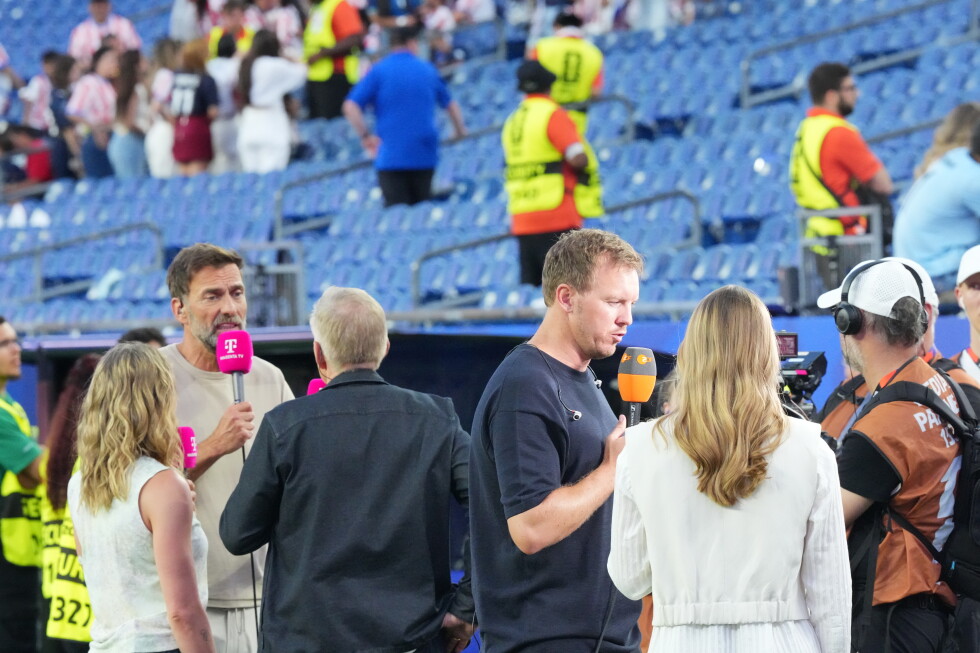
    The DFB confirmed Friday that it intends to open formal talks with Klopp, who has already privately signaled he is open to taking the national team job. This would mark Klopp’s first senior coaching position since he stepped down from Liverpool at the end of the 2023-2024 Premier League season. Currently, Klopp serves as global head of soccer for the Red Bull Group, and worked as a high-profile pundit for German television during this year’s World Cup, even conducting pitchside post-match interviews with Nagelsmann during the tournament. When asked about the vacancy earlier this week, Klopp downplayed the speculation, saying “I haven’t thought about it” and calling it “not the moment to really talk about it.”

    The news of Nagelsmann’s resignation drew a formal statement of recognition from German Chancellor Friedrich Merz’s office. “The chancellor thanks Julian Nagelsmann for his commitment and service in recent years as national team coach,” Merz spokesperson Stefan Kornelius told reporters during a scheduled press conference where the breaking news broke.

    Nagelsmann is far from the only high-profile men’s head coach to exit his post after an early elimination from this year’s World Cup. Just hours after Germany’s defeat to Paraguay, Netherlands manager Ronald Koeman stepped down following his own side’s surprise penalty shootout exit. Coaches leading Ecuador, South Korea, Scotland and the Czech Republic have all departed their roles after early exits, while Argentina legend Marcelo Bielsa moved forward with a pre-planned departure from Uruguay even before the team’s group-stage elimination was confirmed.

    Germany does not return to competitive action until a September 24 Nations League fixture against the Netherlands, giving the DFB time to finalize a deal for Klopp before the new national team cycle begins.

  • Mahrez retires from Algeria duty after World Cup exit

    Mahrez retires from Algeria duty after World Cup exit

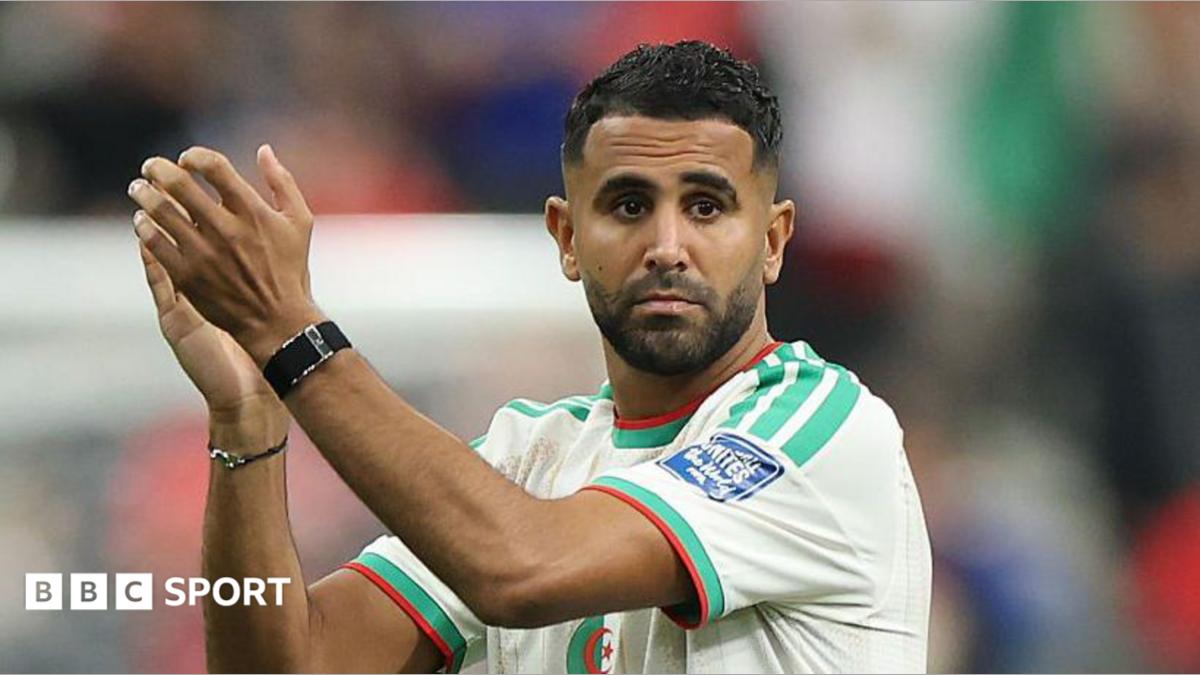
    One of the most decorated figures in Algerian football history has closed the book on his 12-year national team career. Riyad Mahrez, the long-serving captain of Algeria’s men’s national side, has formally announced his retirement from international football, just hours after his team crashed out of the 2026 FIFA World Cup with a 2-0 round of 32 defeat to Switzerland in Vancouver.

    At 35 years old, the winger made the confirmation directly to reporters following the final whistle, bringing an end to a storied international career that included 120 senior appearances and 40 goals for the North African side, nicknamed the Desert Foxes. Reflecting on the match that marked his final outing, Mahrez acknowledged that uncharacteristic errors cost his side a result they believed was well within their grasp. “The goal was to progress, and I think it was a game that was within our reach,” Mahrez said. “We conceded two goals on mistakes, and at this level, we pay dearly for that.” When pressed on whether the Vancouver clash would be his last World Cup appearance, he made his retirement clear: “It’s my last appearance even with the national team. It was my last game.”

    Mahrez leaves international football as one of the most statistically accomplished players in Algeria’s men’s football history. His 120 caps rank him second on the nation’s all-time appearance list, only three behind his current national team teammate Aissa Mandi, who has 123. On the scoring charts, his 40 international goals also place him second, just nine goals behind Islam Slimani’s all-time record of 49.

    The high point of Mahrez’s captaincy came at the 2019 Africa Cup of Nations, where he led Algeria to their first continental title in nearly three decades. His performance in that tournament remains one of the most iconic moments in Algerian sport: he scored a dramatic stoppage-time free-kick to defeat Nigeria in the semi-final, before the side overcame Senegal in the final to lift the trophy. It stands as the crowning achievement of his international career.

    Even in his final World Cup campaign, Mahrez turned in a record-breaking performance for Algeria. This tournament marked his most productive World Cup outing ever, with three direct goal contributions across four matches: two goals against Austria and one assist against Jordan. No other Algerian player has ever notched more goal involvements in a single World Cup edition. He also earned a place in the history books as the second-oldest African player to ever start a World Cup knockout stage match, with only Senegal’s Idrissa Gueye recording an older starting appearance earlier in this same tournament.

    Born and raised in France, Mahrez made the decision to represent his ancestral Algeria at the international level back in 2013. He earned his first senior cap for the side in early 2014, just ahead of that year’s World Cup in Brazil, where he helped Algeria reach the round of 16. Over the following 12 years, he cemented his status as one of the greatest footballers to ever wear the Algerian national jersey, becoming one of just a small group of Algerian players to hit the 100-cap milestone for his country. Off the international pitch, Mahrez also built a legendary club career in the English Premier League, winning a league title with Leicester City in 2016 before claiming multiple domestic and European honours during a spell at Manchester City. He currently plays for Saudi Pro League side Al-Ahli.

  • Alex Eala makes Grand Slam history for Philippines at Wimbledon

    Alex Eala makes Grand Slam history for Philippines at Wimbledon

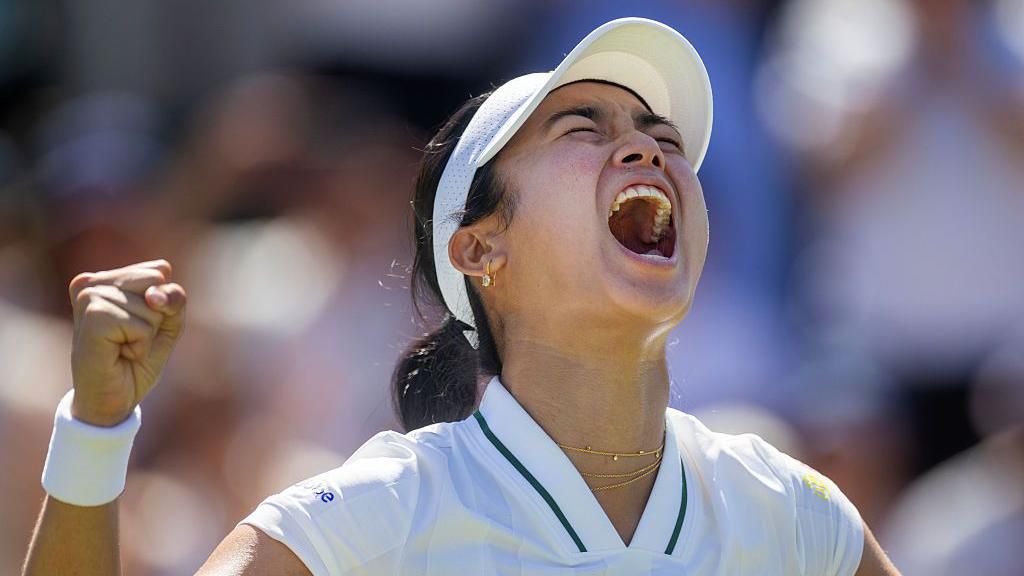
    Twenty-one-year-old Filipino tennis player Alexandra Eala has etched her name into the history books of Philippine sports after securing a spot in the third round of Wimbledon’s women’s singles, marking the deepest run any competitor from the Southeast Asian nation has ever made at a Grand Slam tournament. The trailblazing 29th seed, who is coming off a hard-fought victory over Australia’s rising star Maya Joint, is set to face off against defending champion Iga Swiatek of Poland this coming Saturday.

    Eala’s unprecedented breakthrough at one of tennis’ most prestigious majors has sent shockwaves of excitement across her home country, where basketball and boxing have long dominated the national sporting landscape. In a nation where tennis has traditionally remained a niche, marginal pastime, the young athlete’s success has reignited widespread public curiosity and enthusiasm for the sport.

    In remarks to reporters following her second-round win, Eala emphasized the profound meaning of her achievement, noting that representing the Philippines on the world’s biggest tennis stage is a privilege beyond measure. “I have been working extremely hard. My team has been working extremely hard. I really feel that it’s paying off. This win means a lot,” she shared. Throughout her 2026 Wimbledon campaign, Eala has deliberately honored her Filipino roots through subtle, meaningful details in her on-court attire: she wears a white Nike sun visor printed with a Tagalog phrase that translates to “once it grows, it cannot be stopped”, and sports a hair tie adorned with a white ornament shaped like sampaguita, the national flower of the Philippines also known as Philippine jasmine.

    According to a Reuters report, Eala spoke to the central role her heritage plays in her career and identity. “It’s a huge reason as to who I am. I think where I come from is a big part of who I am and a big part of who I want to become in the future,” she said. “It’s an amazing thing for me to be able to do that for my country, but I guess it’s also very emotional every time I’m able to pass a new step or break new ground, just because it’s also personal goals and personal achievements.”

    Eala’s rise to international prominence has been years in the making. After honing her craft at Spanish tennis great Rafael Nadal’s eponymous academy in Mallorca, she climbed steadily up the Women’s Tennis Association global rankings. It was not until last year, however, that she catapulted to global fame after pulling off a stunning upset victory over former world number one Swiatek in the quarterfinals of the Miami Open.

    Today, every one of Eala’s matches draws massive viewership across the Philippines, with organized viewing parties popping up across the archipelago and mainstream national media devoting extensive coverage to her run— a level of attention rarely afforded to tennis in the country. This shift in public interest has already yielded tangible progress for the sport: in January of this year, the Philippines hosted its first ever WTA-sanctioned event, the Philippine Open.

    Fans across the nation have flooded social media with messages of support for Eala. “Thank you for putting my first love tennis on the map and inspiring us all,” wrote Mafae Yunon-Belasco, an author and former Miss World finalist, in a comment on Eala’s Instagram post. Another commenter added, “I am crying with jubilation. Thank you, Lord God, this is for the Philippines’ pride.”

    As anticipation builds for Saturday’s high-stakes match against the defending champion, Eala struck a balanced, confident tone ahead of the showdown. “I think it’s going to be tough for me. I’m going to try to make it tough for her, as well,” she said. “I’m expecting a great challenge. But I think I’m ready for it.” Millions of Filipino fans will tune in from across the globe this weekend to see if Eala can pull off another historic upset and keep her Wimbledon championship dream alive.

  • Embolo, Ndoye score and Switzerland moves on at the World Cup with a 2-0 win over Algeria

    Embolo, Ndoye score and Switzerland moves on at the World Cup with a 2-0 win over Algeria

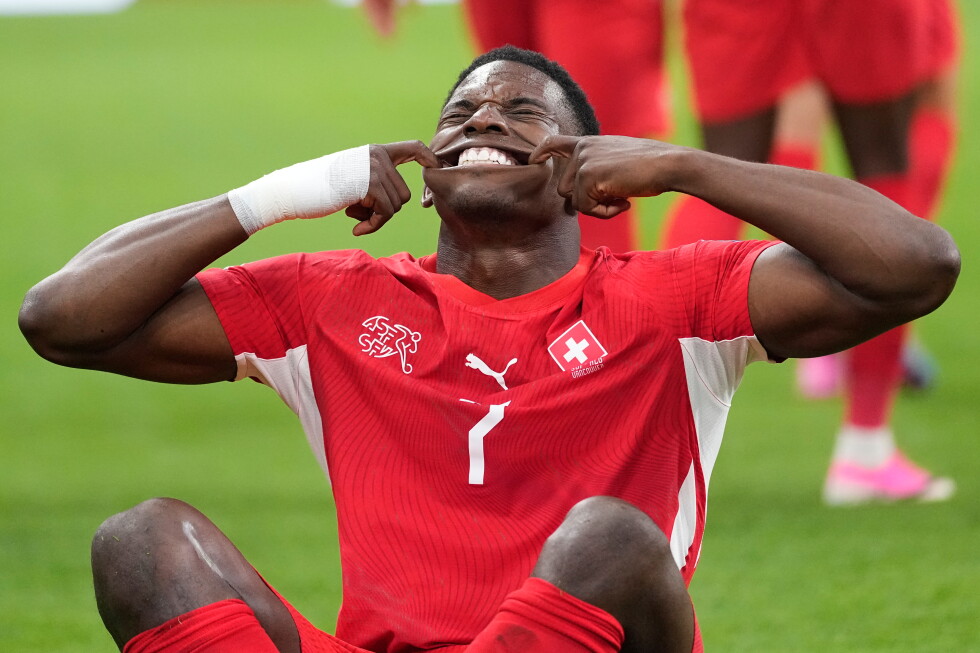
    VANCOUVER, British Columbia – A clinical 2-0 victory over Algeria on Thursday night has carried Switzerland through to the World Cup’s knockout stage, with first-half striker Breel Embolo and second-half winger Dan Ndoye securing the decisive goals to set up a round-of-16 clash next Tuesday. The Swiss will face the winner of Friday’s Group H decider between Colombia and Ghana, with their next knockout fixture set to be hosted right here in Vancouver.

    Thursday’s result marks the fourth consecutive World Cup where Switzerland has advanced to the round of 16, a consistent run that hides a long-standing knockout-stage drought for the European side. The Swiss have not claimed a win in a knockout round fixture since the 1938 tournament held in France, though they did win a placement playoff in 1954 to punch their ticket to the quarterfinals. In their past three 32-team World Cup appearances, Switzerland reached the round of 16 each time but failed to progress any further, a monkey they will be eager to throw off next week.

    For Algeria, the defeat brings an early end to their first World Cup return since 2014. The North African side had broken a 10-year tournament drought to qualify for this year’s expanded 48-team field, and eight years ago they advanced to the knockout round before falling to eventual tournament champion Germany.

    The match unfolded with a surprising early momentum shift: Algeria controlled possession and created the majority of dangerous chances in the opening 10 minutes, but were caught out on a rapid Swiss counterattack. 20-year-old wing back Johan Manzambi broke free down the right flank, delivering a pinpoint low cross into the six-yard box that left Embolo with a simple tap-in to open the scoring. The finish marked Embolo’s 26th international goal, and the striker celebrated the opening tally with a sliding knee celebration in front of the traveling Swiss fan section.

    Less than 60 seconds into the second half, Switzerland doubled their advantage to put the game out of reach. Ndoye collected a loose clearance just outside the 18-yard box and hit a blistering full-volley that diving Algeria goalkeeper Luca Zidane could not reach, even with a full extension. The shot rocketed into the top corner, securing what would prove to be the final margin of victory.

    Switzerland came close to adding a third goal in the 81st minute, when Fabian Rieder found himself unmarked in front of an open goal for another tap-in. The midfielder’s effort skidded just wide of the far post, keeping the final scoreline 2-0.

    In a side note, FIFA President Gianni Infantino was in attendance for the fixture, his second match of the day after earlier watching Spain face off against Austria in Inglewood, California.

    Algeria secured their knockout stage spot earlier in the group stage as one of the tournament’s third-place qualifiers, coming out of a dramatic 3-3 draw with Austria last Saturday in Kansas City. The result sent both Algeria and Austria through to the knockout round, while eliminating Iran from contention. 35-year-old Algeria captain Riyad Mahrez proved pivotal in that draw, notching two goals to keep his side’s tournament hopes alive.

    For Switzerland, Thursday’s win follows a dramatic 2-1 victory over co-host Canada just one day earlier. Goals from Rubén Vargas and Manzambi spoiled Canada’s bid to become the first co-host to reach the knockout round on home soil, and instead earned the Swiss a return trip to Vancouver for their round-of-16 fixture. The side also benefited from a rare seven-day break after their final group stage match, which allowed the squad to return to their pre-tournament training base in San Diego to recover and prepare for knockout play.

    Manzambi has emerged as the breakout star of Switzerland’s tournament so far, with Thursday’s assist marking his fourth goal contribution of the competition – two goals and two assists overall. The young winger began the tournament coming off the bench as an impact substitute, but has earned a starting spot in the side’s last two consecutive matches after a string of standout performances.

    The fixture also carried a subplot of a homecoming for Algeria head coach Vladimir Petkovic, who managed the Swiss national team from 2014 to 2021. During his tenure, Petkovic led Switzerland to the knockout stage of the 2018 World Cup and guided the side to a historic quarterfinal run at the 2020 European Championships.

  • Huge VAR call prolongs Ronaldo’s last dance but ends Modric’s

    Huge VAR call prolongs Ronaldo’s last dance but ends Modric’s

    The 2026 FIFA World Cup knockout stage delivered one of the most dramatic and debated finishes in tournament history on Wednesday, as a last-gasp VAR ruling eliminated Croatia in cruel fashion and sent Portugal through to the quarter-finals. What unfolded over 90-plus minutes at Toronto Stadium packed in every element of high-stakes football: last-minute goals, offside disputes, generational career milestones and a technology-driven controversy that has reignited debate over the role of VAR in the modern game.

    Portugal entered the match as marginal favorites, but the first half was largely underwhelming until Croatia broke the deadlock early in the second half through veteran winger Ivan Perisic. What followed was a chaotic second half that shifted momentum repeatedly. Portugal captain Cristiano Ronaldo, appearing in his sixth World Cup, had a stunning equalizer ruled out by a tight offside call before converting a controversial penalty to level the score at 1-1. The strike marked Ronaldo’s first ever knockout-stage goal at a World Cup, a milestone that added extra narrative to a night already thick with subplots.

    Ronaldo was substituted in the 81st minute, leaving a dejected figure on the bench, but his evening was far from over. Portugal substitute Goncalo Ramos netted a go-ahead goal in the fourth minute of stoppage time, putting Portugal up 2-1 and prompting Ronaldo to sprint onto the pitch to celebrate with his teammates. With seconds remaining, and extra time seeming inevitable, Croatia thought they had forced an additional 30 minutes when defender Josko Gvardiol tapped home from close range in the 13th minute of stoppage time. Croatian players erupted in wild celebration, while Ronaldo sat stunned on the Portuguese bench.

    That celebration was cut short when VAR intervened. Premier League official Jarred Gillett, the video assistant referee for the match, called for a full offside check, centered on whether Croatian forward Igor Matanovic had made contact with the ball in the build-up to Gvardiol’s finish. If Matanovic had touched the ball, he was in an offside position and the goal would be ruled out; if no contact was made, the goal would stand. Referee Espen Eskas reviewed multiple replay angles, which looked visually inconclusive, but a Snickometer-style ball-tracking technology, adapted from cricket and integrated with a microchip in the official Adidas Trionda match ball, detected a faint touch. The goal was disallowed, drawing immediate fury from the Croatian camp and fans in attendance.

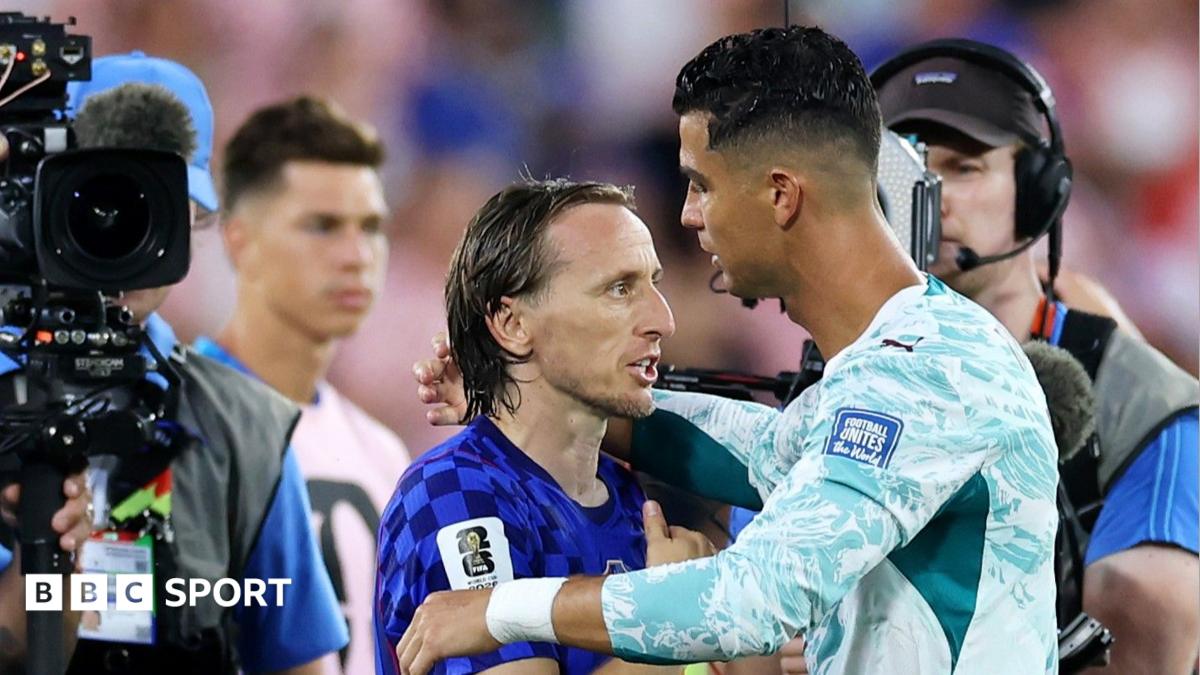
    Angry Croatian supporters threw plastic bottles onto the pitch in protest, as the final whistle blew moments later, ending the Balkan nation’s World Cup campaign. The result also brings a close to what is almost certainly the final World Cup appearance for Croatian legend Luka Modric, the 40-year-old Real Madrid midfielder who made his tournament debut in 2006. Modric, who hit the 200-cap milestone for his country earlier in the tournament, was consoled by his former Real Madrid teammate Ronaldo after the final whistle, ending an era for one of the game’s most decorated midfielders.

    Post-match reactions highlighted the deep divide over the controversial call. Croatian manager Zlatko Dalic launched a scathing attack on officiating and the impact of VAR on the sport. “I will not comment much about it but I will say the refereeing was very bad,” Dalic told reporters. “No fouls, no set-pieces on our side which should have been but that’s no reason to talk about the defeat. It was very bad refereeing. You were able to see to what extent emotions had been killed, and altogether all these decisions take you back and actually take the joy out of football. VAR kills emotions, it kills everything within you. We have gone too far with VAR.”

    Portuguese manager Roberto Martinez defended the call, pointing to the precision of the in-ball sensor technology. “It’s a shame one of the two teams had to lose,” Martinez said. “But there is no bad decision or lucky decision. It was a clear moment. The balls now have a chip and the sensor shows the ball was touched.”

    Pundits and former players were split on the ruling. Former England defender Matt Upson, commentating for BBC Radio 5 Live, said he remained unconvinced of a touch after reviewing multiple angles. “From what I can see, I don’t see any change in direction of the ball. What the telling thing is, is the spin on the ball doesn’t change and it looks like Matanovic has touched that ball but it’s interesting that they’re saying beyond any reasonable doubt he has. I can’t quite see that,” Upson said. Former Premier League assistant referee Darren Cann, however, backed the decision, saying the Snickometer technology “100% proves that he touched it with the flick-on.”

    For Ronaldo, the result keeps his World Cup dream alive, just days after his sister labeled the tournament his “last dance”. The Portuguese captain had played every minute of his side’s tournament up to the knockout clash, and his substitution has reignited debate over whether he should retain his starting spot for the quarter-finals. Former England forward Theo Walcott backed Martinez’s call to withdraw Ronaldo, saying: “I think it was the right decision in the end, it really was.”

    Tributes poured in for Modric after the match, with former Brazil midfielder Lucas Leiva calling the result a harsh end to an iconic career. “It is very harsh for Croatia to go out like this, for Luka Modric, probably his last game in the World Cup,” Leiva told BBC Sport. “A legend of the game. I think he has shown for 20-odd years how good he is. You feel sad for him, but he has had a great career. He took Croatia to the highest level in the World Cup. A great player.”

  • Spain goalkeeper Unai Simón sets World Cup record with 519 straight scoreless minutes in net

    Spain goalkeeper Unai Simón sets World Cup record with 519 straight scoreless minutes in net

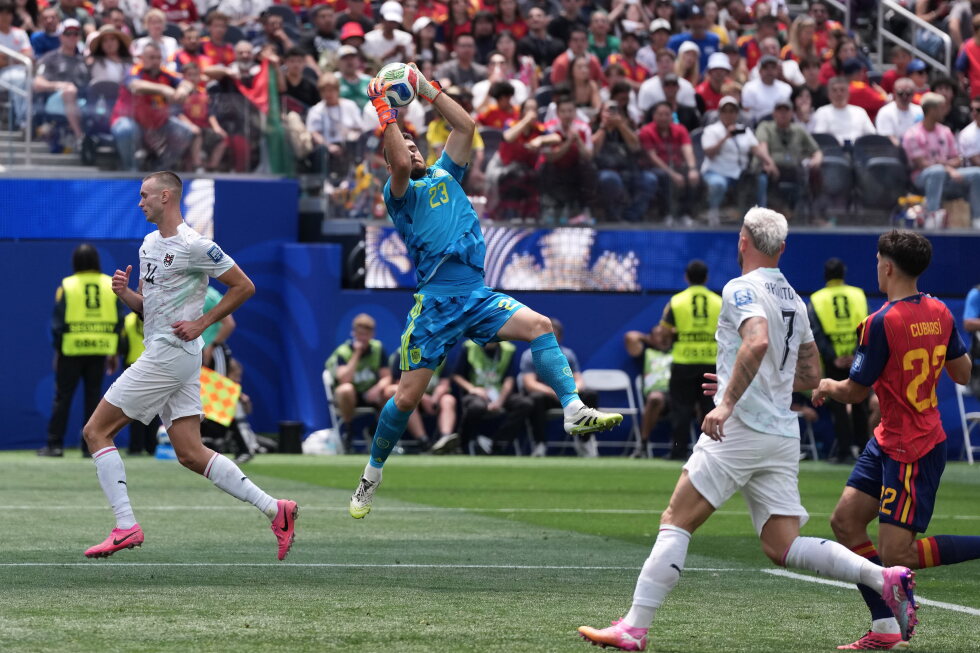
    INGLEWOOD, California — Unai Simón, Spain’s standout starting goalkeeper, has cemented his place in World Cup history after breaking one of the tournament’s most enduring records, posting the longest consecutive shutout streak across men’s World Cup competition. The historic milestone came during Spain’s dominant 3-0 Group Stage victory over Austria on Thursday, which marked Simón’s fourth consecutive clean sheet at the ongoing tournament.

    Across the last two editions of the World Cup, Simón has not conceded a single goal across 519 consecutive minutes of play. That two-game streak surpasses the 517-minute record set 36 years ago by iconic Italian goalkeeper Walter Zenga, who notched five straight shutouts while Italy hosted the 1990 World Cup. The 29-year-old, a lifelong starter for Spain’s Athletic Bilbao, has long flown under the radar compared to other global soccer stars — even within his own national squad — but his elite command of Spain’s backline, paired with the team’s standout defensive organization, has pushed him into the record books.

    Heading into the knockout round, Spain has yet to allow a single goal at this tournament, and Simón has only been called on to make four total saves through four matches. Against Austria, he did not need to make a single stop, as none of the Austrian side’s five shot attempts found their way on target.

    Spain head coach Luis De La Fuente, who has stood by Simón as his starter through years of calls to promote higher-profile backup goalkeepers, expressed nothing but pride for his goalkeeper after the record-breaking win. “I feel proud of him,” De La Fuente said. “I feel like he is a member of my family. I’m very happy for him.”

    Simón has served as Spain’s first-choice goalkeeper for the majority of the past five years, holding onto his starting spot despite fierce competition from two of the most successful keepers in top European club soccer: David Raya, who just claimed a Premier League title with Arsenal, and Joan Garcia, Barcelona’s breakout young starter. Unlike his two backups, Simón has spent his entire club career at the less prominent Athletic Bilbao, who only qualified for the Champions League for the first time in his tenure last season.

    Simón’s long-running trust with De La Fuente dates back nearly a decade, a bond that has been central to his continued place as the national team’s starter. The pair first worked together in 2015, when a then 18-year-old Simón helped De La Fuente’s Spanish squad win the European Under-19 Championship in Greece. They continued working together through Spain’s youth national team program, before reuniting in early 2023 when De La Fuente took over the senior men’s squad, kicking off one of the most successful runs in Spanish soccer history.

    Under De La Fuente’s leadership, Spain has dropped just one loss across 37 competitive matches, going unbeaten in 35 consecutive outings — a run that includes a penalty shootout defeat to Portugal in the 2025 Nations League. With Simón in goal, Spain claimed the 2023 Nations League title and the 2024 European Championship, and have now advanced to a World Cup knockout round for the first time in 16 years.

    Simón’s record-breaking shutout streak traces back to the 2022 Qatar World Cup, where Spain conceded just three goals in four matches before bowing out in an early upset. The streak began during Spain’s 2-1 group stage loss to Japan, and continued through a regulation scoreless draw with Morocco in the round of 16 — a match Spain ultimately lost on penalties, with Morocco converting three of four spot kicks against Simón.

    At this year’s tournament co-hosted in North America, no side has managed to put the ball in the back of the net past Simón. Among Spain’s four group stage opponents, only Uruguay managed to register more than one shot on target. De La Fuente was quick to emphasize that Simón’s historic milestone is a testament to the entire team’s defensive effort, not just individual brilliance. “(Simón) played a very big role in the victory, but it’s not just about individuals,” De La Fuente said after beating Austria. “It’s about the whole group coming together for that defensive effort.”

    Early in the second half against Austria, Simón also surpassed another iconic record: the consecutive World Cup shutout streak set by Spanish legend Iker Casillas across the 2010 and 2014 tournaments. His consistent elite performance has been more than enough to fend off his two high-profile challengers as Spain advances to the round of 16.

    Raya, who has won three consecutive Premier League Golden Glove awards for leading the league in clean sheets, backstopped Arsenal to their first top-flight title since 2004 and a Champions League final appearance this season — yet he remains confined to a backup role for La Roja. Garcia, meanwhile, has emerged as one of the most promising young goalkeeping talents in world soccer after taking over Barcelona’s starting job last season, but he is also expected to remain on the sidelines for the duration of the tournament.

  • World Cup what to know: Messi looks to add to career goals lead when Argentina faces Cape Verde

    World Cup what to know: Messi looks to add to career goals lead when Argentina faces Cape Verde

    As the FIFA World Cup knockout stage kicks into high gear, three intriguing round of 32 matches are set to unfold across the United States on Friday, headlined by defending champion Argentina and superstar Lionel Messi squaring off against surprise qualifier Cape Verde at Hard Rock Stadium in Miami Gardens, Florida. A win for the South American giants will book their spot in the tournament’s round of 16, continuing Messi’s quest for a second World Cup title.

    At 36, Messi continues to rewrite World Cup history, putting in a tournament performance for the ages. He currently sits level atop this tournament’s goal-scoring table with six strikes, tied with France’s Kylian Mbappé. With 19 career World Cup goals, Messi holds the all-time leading scorer mark, though Mbappé sits just one goal behind after his brace in France’s 3-0 group-stage rout of Sweden. Crucially, Messi has played one fewer match than Mbappé at this year’s tournament, giving him a clear path to extend his lead and strengthen his bid for the Golden Boot when Argentina faces a Cape Verde side lacking the big-name star power of the tournament’s elite.

    The matchup has widely been framed as soccer’s modern David vs. Goliath, but Cape Verde has already proven that underestimating the African side leads to trouble. The underdogs held Spain to a 0-0 draw in group play, a result that pushed them into the knockout round and sent two-time champion Uruguay packing earlier than expected. Even as massive underdogs, Cape Verde’s camp says they have no intention of simply showing up to make up the numbers.

    Calling this the most significant match in the nation’s soccer history, Cape Verde head coach Bubista emphasized that his side’s knockout berth was no fluke. “We did not reach this stage by chance. It was on our own merits and we want to show the world our qualities, our values, and that there is a lot of quality in Cape Verdean football,” he told reporters Thursday. Backup defender Stopira echoed that confidence, saying “I believe we can do a great thing here… this match is no exception.” A Cape Verde upset would send shockwaves across the global soccer community, but the side has already earned the respect of Argentina’s coaching staff.

    Argentina manager Lionel Scaloni said his side has no plans to overlook their opponents. “We are not surprised, to be honest. They are a good team. And they are not here by chance. We must respect them. And that’s what we will do,” Scaloni said.

    Friday’s action kicks off at 2 p.m. EDT at AT&T Stadium in Arlington, Texas, where Australia will face Egypt in the day’s first knockout tie. Egypt is holding out hope that star forward Mohamed Salah, who picked up a hamstring injury in the team’s 1-1 group-stage draw with Iran that secured their knockout spot, will be available. Salah came off in the 57th minute of that match and only participated in limited training sessions in the lead-up to the game, with head coach Hossam Hassan saying he is still unsure whether Salah will feature in the starting lineup.

    This is only Egypt’s fourth World Cup appearance, and just their first trip to the knockout round. One more goal from Salah will tie the Liverpool icon’s career national team tally at 69, equaling the Egyptian all-time record held by his current national team coach. For Australia, the Socceroos are chasing their first ever knockout round win, having fallen in their two previous appearances at this stage — including a 2-1 loss to Messi and Argentina in the 2022 Qatar World Cup round of 16. Australia advanced out of their group after a 2-0 win over Turkey, a 2-0 loss to the United States, and a conservative 0-0 draw with Paraguay that saw both sides protect their position to advance.

    The nightcap will be held at GEHA Field at Arrowhead Stadium in Kansas City, Missouri, where Colombia faces Ghana with a round of 16 spot on the line. Colombia enter the match as heavy favorites after a dominant group-stage run, where they picked up wins over Uzbekistan and Congo, and held Cristiano Ronaldo’s Portugal to a hard-fought 0-0 draw. Across three matches, Los Cafeteros only conceded one goal, and head coach Nestor Lorenzo’s side has carried quiet confidence into their final training sessions this week.

    Even Spain head coach Luis de la Fuente named Colombia as a legitimate contender to win the entire tournament. Lorenzo downplayed the favorite label, saying “I know that is a complement from Coach De La Fuente, and I thank him for saying so, but I prefer not to be considered a favorite. Every single time we’ve had to take over the reins, our team has done so. That’s shown growth on behalf of Colombia.” A win Friday will see Colombia advance to face the winner of Saturday’s Switzerland-Algeria matchup on July 7.

    For Ghana, the moment is already something of a surprise. The Black Stars failed to qualify for the 2023 Africa Cup of Nations for the first time in more than 20 years, but a win over Panama and a draw with England were enough to push them into the knockout round. Now they are aiming to reach the round of 16 for the first time since 2010, adding another chapter to this tournament’s run of upsets. “It’s very important,” Ghana center back Derrick Luckassen said. “We are through and that’s the most important, and we hope we can come even further. That is what we want. We will give our best to come through.”

    One of the biggest storylines entering Friday’s action remains Messi’s historic goal chase. While the Inter Miami star already holds the all-time career World Cup goal record, he remains far off the mark for the most goals scored in a single edition of the tournament: that 13-goal record set by France’s Just Fontaine all the way back at the 1958 World Cup in Sweden. Fontaine is one of only three men to hit double-digit goals in a single World Cup, alongside Hungary’s Sándor Kocsis (11 goals in 1954) and West Germany’s Gerd Müller (10 goals in 1970), and Fontaine’s record came in his only ever World Cup appearance — while Messi is playing in his sixth.

    The tournament’s round of 16 is set to begin Saturday, with eight more knockout ties scheduled to decide the quarterfinal field over the coming days. This story was compiled with reporting from AP Sports Writers Tim Reynolds, David Skretta and Schuyler Dixon.

  • Lamine Yamal without a goal, yet Spain’s young superstar is attacking threat in a 3-0 knockout win

    Lamine Yamal without a goal, yet Spain’s young superstar is attacking threat in a 3-0 knockout win

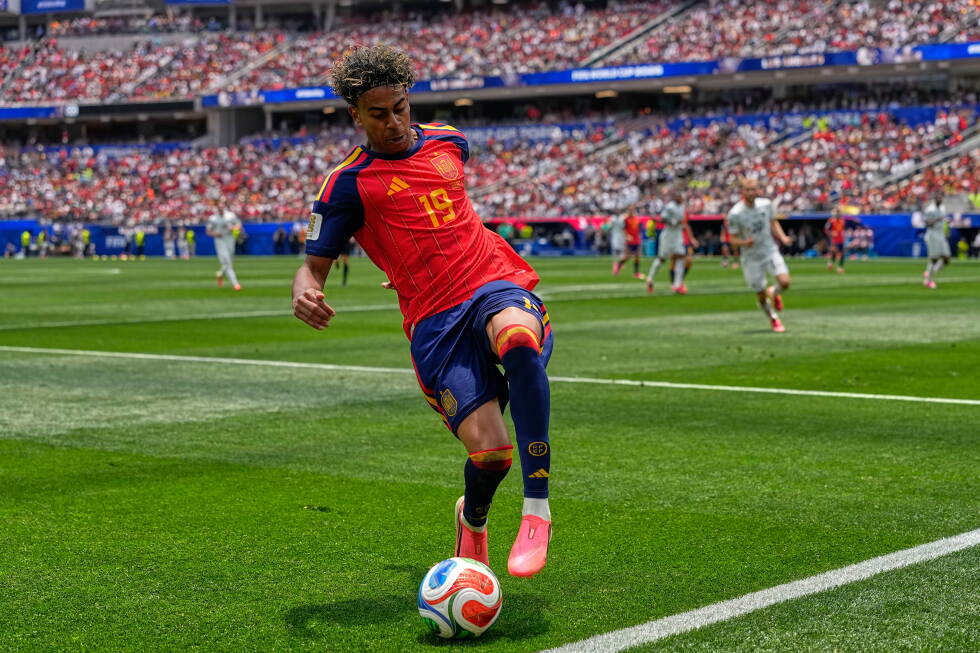
    INGLEWOOD, Calif. — Eighteen-year-old Spanish winger Lamine Yamal is steadily regaining his match sharpness at his maiden World Cup, turning in a dynamic attacking performance even as he walked away without a goal in Spain’s commanding 3-0 knockout round win over Austria.

    The young superstar, one of the most anticipated emerging talents in global football, has spent the past two months working to rebuild full fitness after pulling his hamstring during a Barcelona La Liga fixture — an injury that left him fearing he would be forced to miss the entire tournament entirely.

    Despite his recent recovery, Yamal put on an unforgettable attacking display for the sellout crowd of 72,492 spectators at SoFi Stadium on Thursday. The match, which ended with Spain advancing to the next round without conceding a single goal through their first four tournament matches, earned Yamal the Player of the Match honors, a silver trophy he clutched proudly after the final whistle. He finished the game with six total shots, constantly testing Austria’s backline and creating space for his teammates with his relentless movement.

    “I didn’t get on the scoresheet today, but I’m over the moon that we’re through to the next round,” Yamal told reporters after the match.

    The sold-out crowd leaned heavily in support of La Roja, and counted A-list celebrities Penelope Cruz and Javier Bardem among its attendees. Yamal’s 3-year-old half-brother Keyne was also in attendance, wrapped in the Spanish flag celebrating the team’s third goal as the stadium erupted.

    “It means the world to me to see my mom and my little brother living the life we always dreamed of together,” Yamal said. “My brother is like my son; I adore him more than anything.”

    Across Spain’s three group stage matches, Yamal only logged 141 minutes of playing time, notching one goal as global headlines focused on veteran superstars like Lionel Messi, Harry Kane and Kylian Mbappe. But the teen says he is steadily getting back to his best form ahead of the tournament’s knockout stages.

    “Little by little, I’m starting to feel like myself again — I can make the runs, pull off the dribbles, and take on defenders just like I usually do,” Yamal explained. “I’m at 100% fitness now, whatever the coach needs from me I’m ready. I just need to keep resting and taking care of my body to stay sharp.”

    This knockout clash marked Yamal’s longest appearance of the tournament, with the winger playing 85 minutes before being substituted off. He came inches away from scoring on multiple occasions, each time denied by impressive Austrian defending.

    His closest chance came just before he came off the pitch: a left-footed strike cleared off the goal line by Austrian captain David Alaba, keeping Yamal off the scoresheet. In first-half stoppage time, after Alex Baena’s 25-yard free kick hit the post and the Austrian defense failed to clear the loose ball, Yamal latched onto the chance at the back post only for goalkeeper Alexander Schlager to block his close-range effort. Early in the first half, Yamal found himself unmarked in front of goal only to send his shot sailing over the crossbar, and he even opened the game with a long solo run that ended with a shot straight into Schlager’s arms.

    Austria manager Ralf Rangnick acknowledged Yamal’s elite ability, while praising his side’s defensive organization to keep the teen from finding the back of the net. “Lamine Yamal is an incredible talent, one of the best we’ve ever seen at his age, and we knew what we were up against today,” Rangnick said. “But I think we defended him really well, and we managed to stop him from scoring.”

    With the win, Spain advances to the next round of the World Cup, where they will face higher stakes as they chase the tournament title — and Yamal says he is ready to step up when his team needs him.

  • The one club man who is Spain’s under-the-radar hero

    The one club man who is Spain’s under-the-radar hero

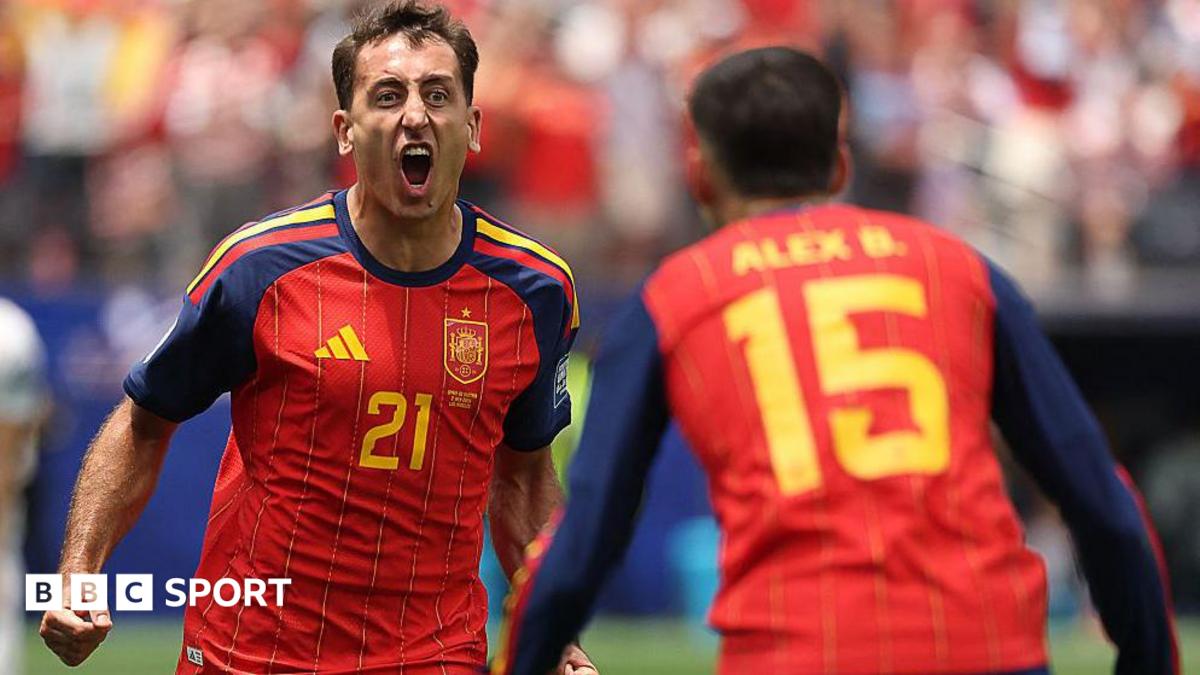
    As the world’s attention fixated on teen sensation Lamine Yamal ahead of Spain’s 2026 FIFA World Cup round-of-32 clash against Austria at Los Angeles Stadium, it was an unsung veteran of the squad who stole the show to secure the European champions’ place in the last 16. While fans packed the stands with Yamal’s name on the back of their match shirts, and cameras followed the 18-year-old Barcelona star everywhere from his team bus arrival to pre-match warmups, it was 29-year-old Mikel Oyarzabal who delivered a masterclass in finishing, scoring two unanswered goals to anchor a comfortable 3-0 victory over Austria.

    This result marks Spain’s first knockout stage win at a men’s World Cup in 16 years, a milestone that cements La Roja’s status as one of the tournament’s leading title contenders. For Oyarzabal, the moment is the culmination of a long, hard-fought road back to top-level competition. A product of Real Sociedad’s youth academy who has never played for another top-flight club, the striker missed the 2022 Qatar World Cup after suffering a ruptured anterior cruciate ligament in his left knee. Four years on, he has entered the peak of his career, bringing blistering scoring form to his long-awaited World Cup debut.

    Going into the Austria clash, Oyarzabal had already notched 12 goals in 12 international appearances, and his double on Thursday extended that incredible run to 17 goals in his last 16 starts for Spain, bringing his total tournament tally to four. Since the start of 2025, only Norwegian superstar Erling Haaland has scored more international goals among all European players than Oyarzabal. He also made history with his performance, becoming the first Spanish player to net twice in a World Cup knockout match since Emilio Butragueno did so against Denmark in the 1986 tournament’s round of 16.

    Many football pundits have highlighted that Oyarzabal’s understated profile allows him to exploit the space created by defenders’ focus on Yamal. Speaking to BBC Radio 5 Live, prominent Spanish football analyst Guillem Balague called Oyarzabal the side’s “invisible match-winner”, noting that the striker has a historic track record of scoring in major finals. “He is one of the most intelligent players we have, and our most decisive player at this tournament, no doubt,” Balague added. Former Spain defender Cesar Azpilicueta echoed that sentiment, telling BBC One that Oyarzabal has solved longstanding questions about La Roja’s centre-forward position, after transitioning from a wide right role to a central starting spot. Former Germany midfielder Thomas Hitzlsperger also pointed to the dynamic between Yamal and Oyarzabal: “When you have someone in your team like Lamine Yamal who attracts so much attention, you know you will get more space. Oyarzabal uses that space, gets the ball, and scores goals.”

    Off the pitch, Oyarzabal credits his innate goalscoring instinct to his early childhood playing hockey, a sport that taught him to shake off missed chances and keep hunting for more. “I always had this voice in my head, ‘It doesn’t matter if you missed one – there will be more,’” he explained. “I could smell goals, and that voice was always in my head.” Playing as a central striker fits that mentality perfectly, he added: “If you play higher up the pitch, and especially if you’re a striker like myself, it all comes down to a few moments. We often have to smell where the ball might drop or where you have to stand to have a chance at goal.”

    This victory extends Spain’s incredible unbeaten run to 34 matches, just one game short of the national team’s all-time record. La Roja got off to a slow start in the tournament with an unexpected goalless draw against first-time qualifiers Cape Verde, but have grown in strength with each match, now scoring eight goals across four games without conceding a single goal. They will next face a tough last-16 test against either Portugal or Croatia, and pundits warn that the side has not even hit top gear yet. Former England striker Dion Dublin told BBC Radio 5 Live: “They were comfortable playing in third or fourth gear against Austria because they knew the opposition didn’t have anything to offer. When they are playing against France or Portugal, whoever it may be, they will just up their game again. I think they have a lot more to offer which is a frightening thing for the rest of the teams in the competition.”