分类: sports

  • World Cup semifinals: Four previous champions, a bitter rivalry, Mbappé vs Yamal and Messi vs Kane

    World Cup semifinals: Four previous champions, a bitter rivalry, Mbappé vs Yamal and Messi vs Kane

    The 20XX FIFA World Cup has delivered a semifinal lineup unmatched in modern soccer history, bringing together the world’s top four ranked nations, all previous tournament champions, and a cast of global soccer royalty that has fans across the globe buzzing with anticipation. Only two matches now stand between Argentina, Spain, France, and England from lifting the sport’s most coveted trophy, and analysts agree that every matchup is too close to call. This year’s final four marks the first time since 1990 that every remaining contender has previously claimed the World Cup title, echoing a historic parallel that adds even more drama to the upcoming fixtures. France will face off against Spain in Arlington, Texas on Tuesday, a fixture that falls on France’s national Bastille Day holiday, before England and Argentina meet in Atlanta on Wednesday to cap off the semifinal round.

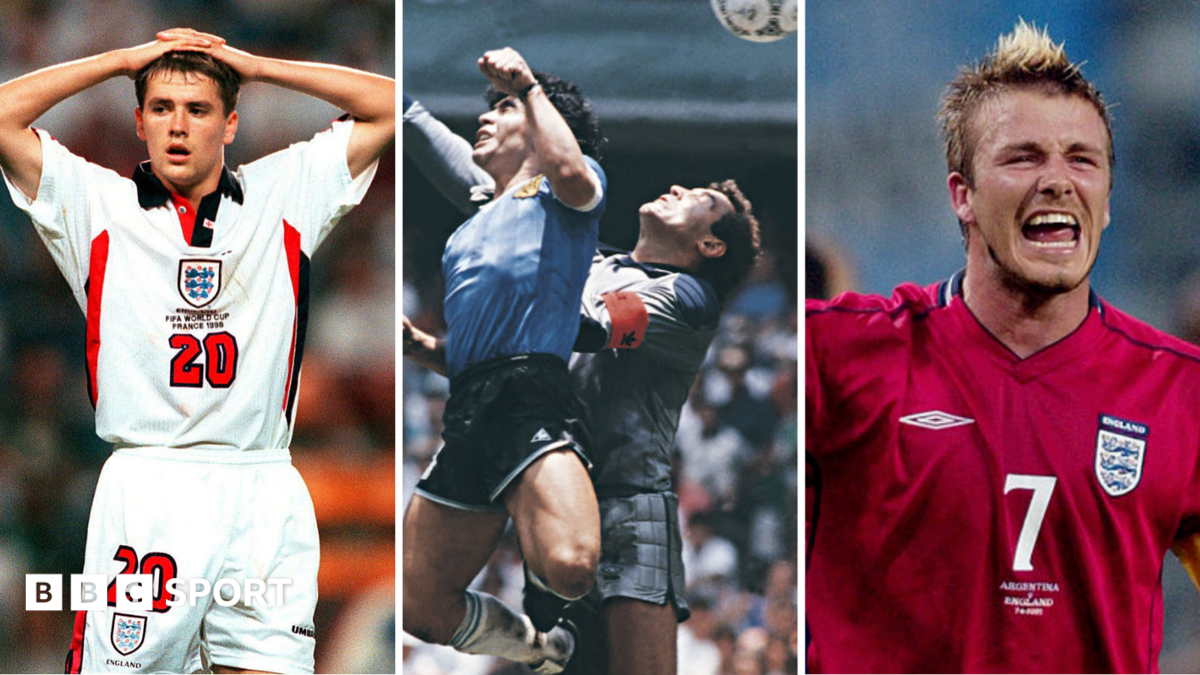
    The England-Argentina matchup is far more than a game for a spot in the World Cup final: it reignites one of the bitterest and most storied rivalries in international soccer, with tensions that have spilled beyond the pitch for decades, rooted in the 1982 Falklands Islands conflict between the two nations. The rivalry’s history on soccer’s biggest stage is littered with iconic controversial moments that are still debated by fans today. In the 1966 World Cup quarterfinals, Argentina captain Antonio Rattin — whose passing was announced just days before this year’s semifinal — was sent off in a fractious match that ended in a 1-0 English win; after the final whistle, then-England manager Alf Ramsey refused to let his players swap shirts with their Argentine opponents in a show of disrespect. Two decades later at the 1986 World Cup, Diego Maradona’s infamous illegal “Hand of God” goal secured a 2-1 quarterfinal win for Argentina, who went on to win the tournament that year. In 1998, David Beckham was sent off after kicking Argentina’s Diego Simeone, a moment that sparked widespread media fury in England, and Argentina won the match on penalties. Beckham earned his revenge four years later, scoring a match-winning penalty to knock Argentina out of the tournament in the group stage. Adding a new layer of history to this long-running rivalry: this will be Lionel Messi’s first ever competitive match against England at any World Cup.

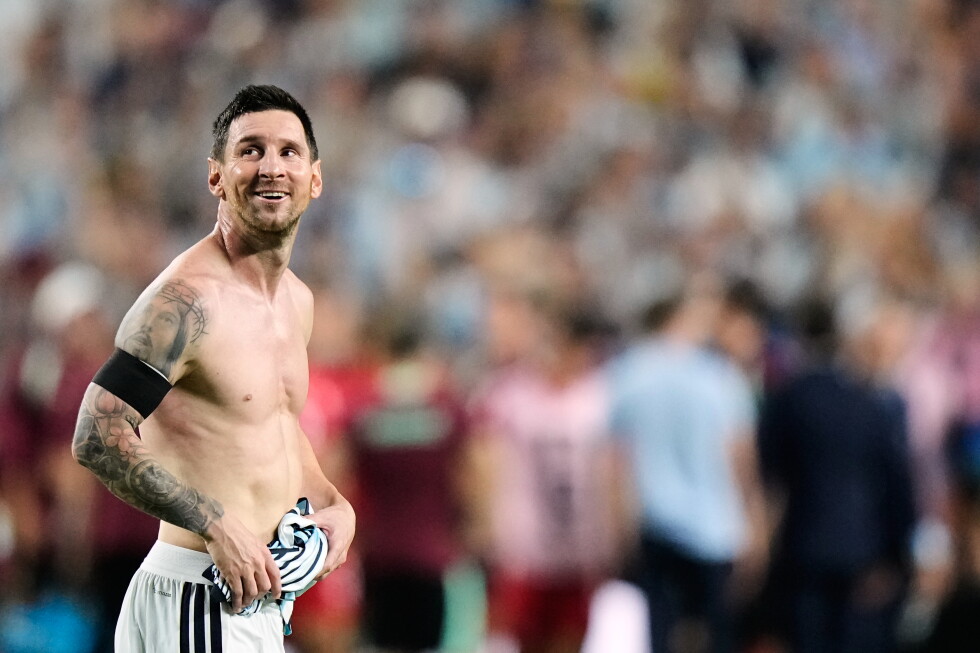
    Widely described as soccer’s greatest of all time (GOAT), the 39-year-old Messi is widely expected to be playing in his final World Cup, and his performances this tournament have only cemented his legacy. If he guides Argentina to a second consecutive title, he will surpass Maradona by becoming the second Argentine men’s player to win two World Cups, and Argentina will become the first national men’s team to win back-to-back World Cup titles since Brazil’s legendary squads of 1958 and 1962 led by Pelé. As the defending 2022 World Cup champions, Argentina already enters this semifinal with a historic parallel to the 1990 tournament, when Argentina was also the defending champion and reached the final before falling to West Germany.

    In the other semifinal, France will chase quick revenge against a Spanish side that knocked them out of the 2024 European Championship in a 2-1 semifinal win two years ago. That 2024 match saw 16-year-old prodigy Lamine Yamal score for Spain, who went on to lift the Euro title after beating England in the final. For France, that match was hampered by a broken nose injury that blunted star striker Kylian Mbappé’s impact, while young emerging talents Michael Olise and Désiré Doué had not yet broken into the senior national squad. Today, France enters this World Cup semifinal as the tournament’s most impressive team, boasting a deep, dynamic attacking roster that has overwhelmed opponents throughout the knockout stage.

    In contrast, Spain entered this World Cup already dealing with major injury setbacks, losing both Yamal and winger Nico Williams before the tournament began. The Spanish side has nonetheless fought its way to the semifinals, clinching narrow late wins against Portugal and Belgium, both off goals from substitute Mikel Oyarzabal. The two nations have a long tournament history: France defeated Spain to claim the Euro 1984 title.

    Beyond the race for the World Cup trophy, the tournament also features a thrilling tight race for the Golden Boot, awarded to the tournament’s top goalscorer. Five of the world’s six top goalscorers remain in the competition, with Erling Haaland the only eliminated top contender after Norway fell to England in the quarterfinals. Mbappé and Messi currently share the lead with eight goals each, followed by Jude Bellingham and Harry Kane with six, Ousmane Dembélé with five, and Oyarzabal with four, putting multiple players within striking distance of the award. The two superstars are also competing for the title of the all-time leading World Cup goalscorer: Messi has 21 career World Cup goals, just one ahead of Mbappé’s 20.

    If both France and Argentina advance to the final, the 2026 World Cup will host a rematch of the iconic 2022 final, adding another historic chapter to what is already the most anticipated final four in recent World Cup memory.
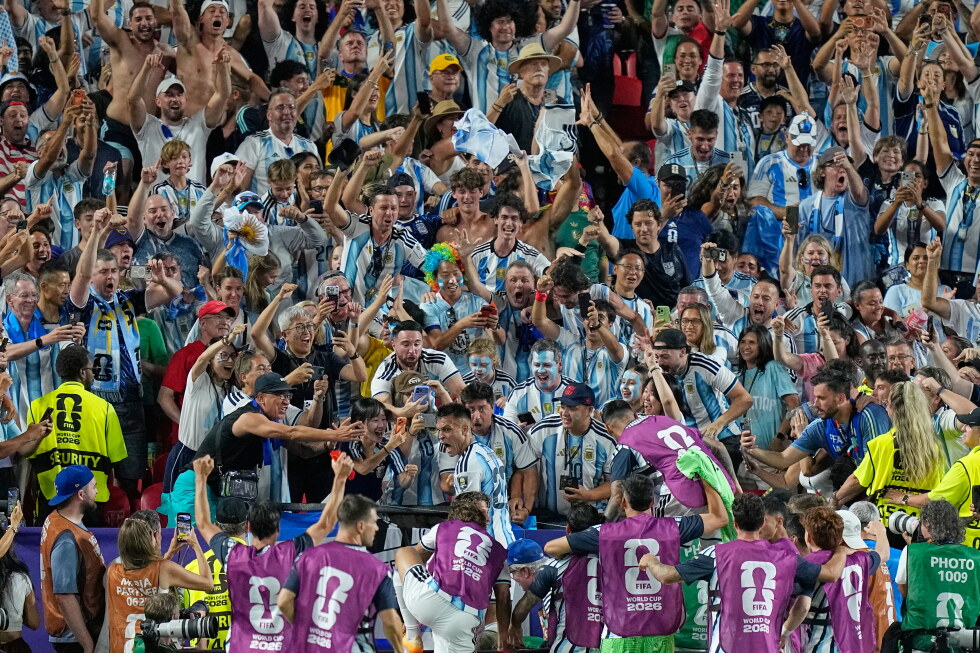
  • One Extraordinary Photo: Argentina’s Lautaro Martinez in the stands celebrating his goal with fans

    One Extraordinary Photo: Argentina’s Lautaro Martinez in the stands celebrating his goal with fans

    For award-winning Associated Press photographer Ashley Landis, the 21-year veteran of visual journalism based in Houston, Texas, capturing those once-in-a-tournament split-second moments is what makes sports photography unforgettable. Over six of her two decades in the industry, Landis has built her career covering everything from breaking hard news to intimate human interest features, with a core focus on sports storytelling. In a behind-the-scenes breakdown, Landis has opened up about how she captured one of the most vivid images from the 2022 FIFA World Cup: the celebration of Argentina’s match-winning goal against Switzerland.

    It was a decisive overtime contest that would send Argentina through to the next round of the tournament, and when Inter Milan striker Lautaro Martinez slotted the game-winning goal past the Swiss defense, he reacted in a way few players do in the heat of the moment. Rather than immediately running back to join his teammates on the pitch, Martinez lept over the sideline’s LED advertising boards to share his joy with the Argentine fans packed into the front row of the stands. Recognizing that this unscripted, emotional moment would not come again, Landis made the split-second call to keep her lens locked on Martinez rather than panning back to the rest of the team’s celebration. As she recounts, Martinez stopped to share high-fives with the cheering fans in the front row before turning back to the pitch to join his squad, creating a candid frame that blends player joy and fan passion into one iconic shot.

    Landis explains the technical choices that allowed her to nail the shot from her position across the pitch. She had already captured the moment of the goal from her vantage point, and kept Martinez tracked through the celebration with a long 400mm f/2.8 telephoto lens — the go-to tool for sports photographers needing to isolate action from a distance. With crowds of players and fans swarming around the striker, Landis deliberately kept her camera’s focus locked on Martinez to ensure he stayed sharp amid the chaos.

    Looking at why the image resonates so strongly with viewers, Landis notes that Martinez’s unfiltered, explosive reaction was so clear it read even from her distant position across the field. Even with dozens of fans and teammates all clad in Argentina’s iconic albiceleste jersey filling the frame, Martinez stands out sharply thanks to his overjoyed facial expression and raw, peak emotion. The surrounding fans, their arms thrown high in celebration as they surround the striker, create a natural frame that draws the viewer’s eye directly to Martinez in the bottom center of the composition, anchoring the moment’s energy. This shot, which captures both the elation of a star player and the joy of the fans who supported him, stands as a perfect example of how sports photography can distill the raw emotion of global football into a single, unforgettable frame. More of The Associated Press’ full coverage of the World Cup is available to view on their official platform.

  • Van der Poel powers to victory on 9th stage of Tour de France and Pogacar keeps yellow jersey

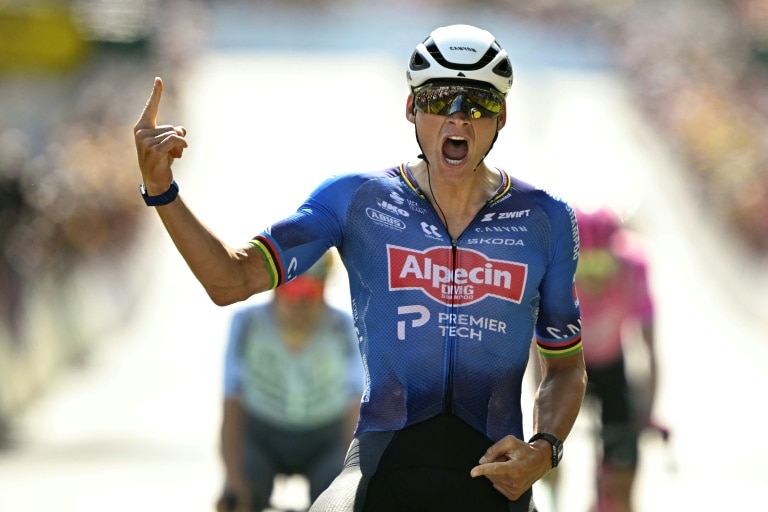
    Van der Poel powers to victory on 9th stage of Tour de France and Pogacar keeps yellow jersey

    The 2024 Tour de France’s ninth stage delivered a thrilling climax in Ussel, France on Sunday, as Dutch cycling star Mathieu van der Poel executed a perfectly timed late attack to secure victory in a reduced sprint, while defending champion Tadej Pogacar successfully defended his overall race lead and retained the iconic yellow jersey.

    Originally planned as a 184.6-kilometer journey across central France’s hilly terrain from Malemort to Ussel, the stage was cut short by roughly 30 kilometers after organizers opted for a revision amid a red extreme heat alert issued by French meteorological services. The revised 154.6-kilometer undulating route played to the strengths of versatile all-around riders known in cycling circles as *baroudeurs*—hard-riding competitors capable of thriving across varied terrain.

    An early breakaway of five riders, including two-time world road race champion Julian Alaphilippe, was reeled in by the peloton early on. With 80 kilometers remaining in the stage, a new 8-rider breakaway group formed, featuring fan favorites van der Poel, two-time Olympic mountain bike champion Tom Pidcock of Great Britain, and Italian star Filippo Ganna. Though none of the breakaway riders threatened the overall standings of top general classification contenders, defending champion Pogacar positioned himself near the front of the chasing pack to protect his lead, drawing on his well-known reputation for aggressive attacks from any point on the course.

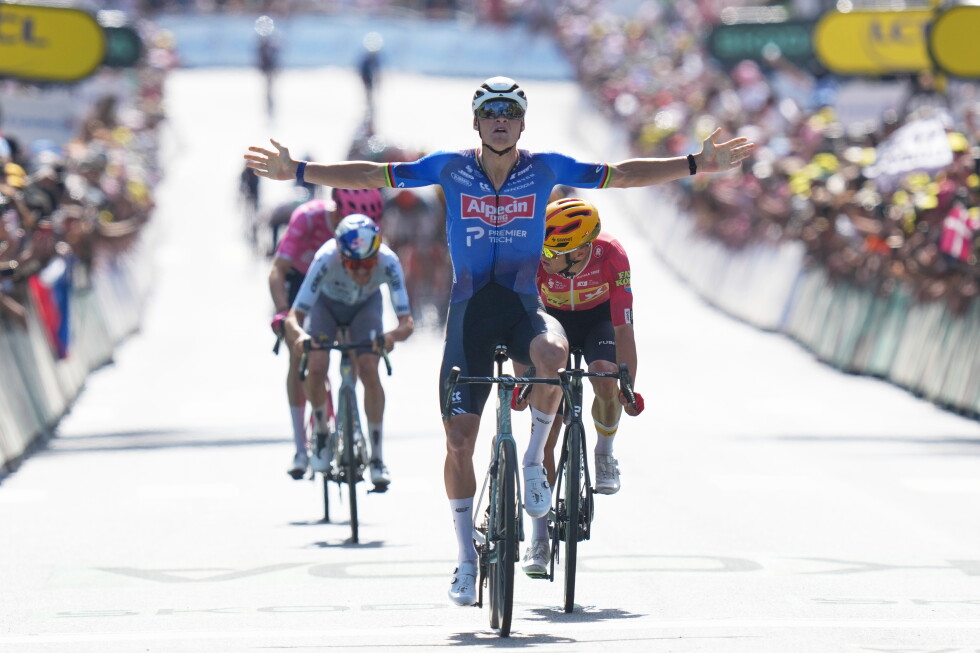
    Van der Poel made his decisive move with 25 kilometers left to race, whittling the leading breakaway group down to just four riders as rivals including Ganna were dropped. Entering the final sprint, the Dutch champion unleashed his acceleration with only 200 meters between him and the finish line, powering past Norway’s Tobias Johannessen and Britain’s Tom Pidcock to cross the line with arms outstretched in celebration. All three top finishers clocked the same official time of 3 hours 27 minutes and 51 seconds.

    The victory marks van der Poel’s third career Tour de France stage win, adding another accolade to a already legendary resume that includes multiple Cyclo-cross world championships, multiple one-day classic victories, and a former world road race title. Cycling is a multigenerational legacy for the 31-year-old: his maternal grandfather was beloved French cycling icon Raymond Poulidor, who competed in the Tour de France through the 1960s and 1970s, finishing second overall three times and third five times to earn the nickname “The Eternal Runner-up” and a permanent place in French cycling fans’ hearts. Poulidor died in 2019, and when asked if he thought of his grandfather during Sunday’s stage, van der Poel told French television: “Always. Every day on the Tour is special.”

    Speaking after the finish, van der Poel acknowledged the extreme heat that has marked the opening week of the race had taken a major toll on his fitness. “It was a really hard stage after a hard week for the team. The heat takes away a lot of energy and I had the feeling that I wasn’t recovering properly in the first few days. Today was the first stage when I felt I had the legs (to win),” he explained.

    Pogacar, a four-time Tour champion, crossed the finish line six seconds behind van der Poel in a front chasing group that also included his primary general classification rival, two-time champion Jonas Vingegaard of Denmark. The result left Pogacar’s overall lead unchanged: he holds a 2 minute 42 second advantage over Vingegaard going into the first rest day, with his teammate Isaac del Toro sitting 3 minutes 27 seconds back in third place overall.

    Monday marks the first of two scheduled rest days for the 21-day race. Competition will resume on Tuesday with the challenging mountain stage 10, and the 2024 Tour will conclude with its traditional ceremonial finish on the Champs-Élysées in Paris on July 26.

  • Van der Poel stays calm in the heat to win Tour de France stage nine

    Van der Poel stays calm in the heat to win Tour de France stage nine

    The 2025 Tour de France’s ninth stage delivered a thrilling display of endurance and tactics on Sunday, as Dutch cycling star and former world champion Mathieu van der Poel secured his third career Tour de France stage victory, overcoming extreme heat and grueling road conditions to claim the top spot on the podium. The stage, originally scheduled for a 184.6-kilometer route from Malemort to Ussel in France’s central Correze region, was cut by 30 kilometers after officials issued a red alert heat warning, bringing the total race distance down to 154.6 km. Temperatures across the stage climbed as high as 40 degrees Celsius, testing the limits of every rider in the peloton.

    A fierce fight for a spot in the day’s breakaway unfolded from the opening kilometer, with dozens of riders launching attacks to get clear of the main group. It was not until the midpoint of the stage, on the steep 3.8-kilometer Suc au May climb, that an eight-man breakaway finally managed to establish a gap over the peloton. Though their lead never stretched beyond one minute 30 seconds, the breakaway group cooperated smoothly to hold off the chasing main field.

    With 25 kilometers remaining on the day’s final categorized climb, the steep 900-meter Mont Bessou, van der Poel launched a decisive attack out of the breakaway. Only three riders could match his pace: Norway’s Tobias Johannessen, France’s Alex Baudin, and British standout Tom Pidcock. The leading quartet pushed hard to the finish, opening a 50-second gap over a sharply reduced peloton by the final kilometer. In a classic display of sprint tactics, the breakaway slowed in the final 1000 meters for a tense cat-and-mouse game, but when van der Poel kicked off his final sprint, his strength proved unmatchable. Johannessen crossed the line in second, with Pidcock taking third place.

    The win marked a satisfying turning point for van der Poel and his Alpecin Premier Tech team. In the two days prior to stage nine, the cobbled classics specialist had put his own ambitions aside to serve as lead-out man for teammate Jasper Philipsen, who notched fourth and fifth place finishes in previous sprint stages. “The start of the Tour was not great for our team, but like always, we stayed calm,” van der Poel told reporters after the race. “We have a really nice group here and we kept believing that it would turn around… it’s really nice to go to the first rest day with a win.”

    Van der Poel, a three-time winner of both the Tour of Flanders and Paris-Roubaix – the sport’s most prestigious one-day cobbled classics – previously won Tour de France stages in 2021 and earlier this 2025 edition. He acknowledged the extreme challenges of Sunday’s stage, noting: “I spent a lot of energy trying to keep the break alive. There was a lot of pressure from the bunch. The roads were horrible for a breakaway with a headwind the whole day. We fought for it and I’m happy to finish it off.”

    Reigning Tour champion Tadej Pogacar maintained his grip on the general classification lead, finishing in the chasing peloton just six seconds behind van der Poel ahead of Monday’s first scheduled rest day. The four-time champion holds a 2 minute 42 second lead over two-time winner Jonas Vingegaard, with Mexico’s Isaac del Toro sitting third overall, a further 45 seconds behind Vingegaard.

  • McCullum sacked as England Test coach but retains white-ball role

    McCullum sacked as England Test coach but retains white-ball role

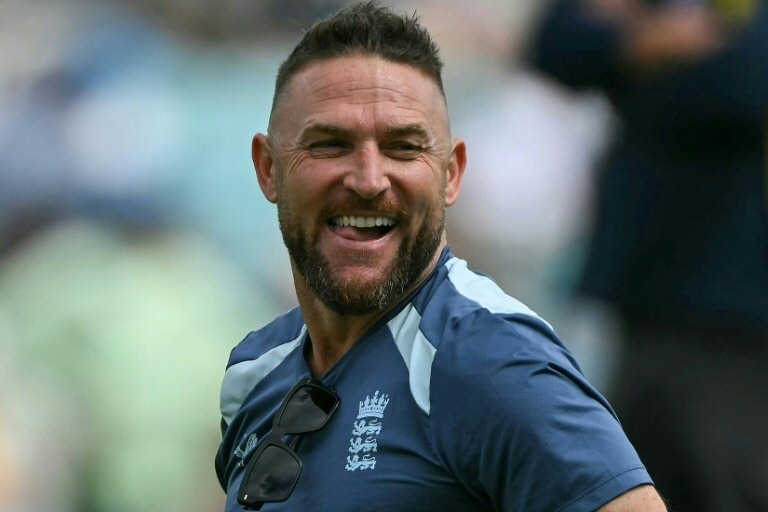
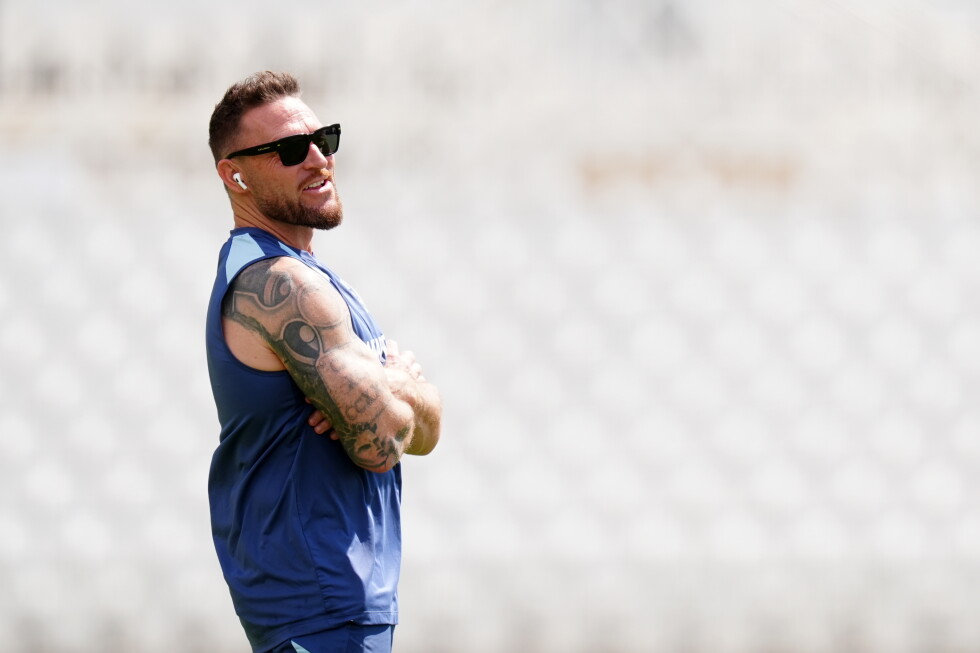
    The England and Wales Cricket Board (ECB) made a major leadership announcement Sunday, confirming that Brendon McCullum has stepped down from his position as head coach of England’s men’s Test cricket team, while he will retain his role leading the national limited-overs white-ball squads.

    The departure comes on the back of a disastrous slump in form for the red-ball side: England have dropped seven of their nine most recent Test matches under McCullum’s watch. The poor results include a lopsided 4-1 Ashes defeat during the 2025-26 tour of Australia, and a 2-1 home series loss to New Zealand just last month. Both campaigns were also marred by off-field controversy surrounding allegations of an unregulated team drinking culture.

    In a statement released by the ECB, McCullum expressed his affection for the Test coaching role and pride in the squad’s shared early accomplishments. “I’ve absolutely loved coaching the Test side and I’m incredibly proud of what we’ve achieved together,” he said, adding, “Of course I’m gutted not to be continuing, but I respect the decision.”

    McCullum’s final match in charge of the Test team overlapped with a landmark announcement from star captain Ben Stokes, who retired from international red-ball cricket mid-series during England’s heavy defeat in the third and final Test against New Zealand at Trent Bridge.

    McCullum’s tenure as Test coach got off to a sensational start. Alongside Stokes, he revolutionized England’s playing style with an aggressive, high-octane batting approach that delivered immediate success: the team notched 3-0 clean-sweep series wins over New Zealand and Pakistan, where they scored 500 runs in a single day of Test cricket, followed by a thrilling drawn 2-2 home Ashes series in 2023 that won global acclaim.

    But cracks began to show early on. A crushing 4-1 loss in India two years after McCullum took charge exposed fundamental flaws in England’s “one-size-fits-all” aggressive strategy, when the team was unable to bat its way out of challenging pitch conditions. The writing for his tenure became clear after the disastrous Ashes tour of Australia, where the series was wrapped up in a mere 11 days of play with a lopsided England defeat.

    Off-field issues compounded the poor on-field results during the recent home New Zealand series. After an opening win, captain Ben Stokes and fast bowler Gus Atkinson were dropped from the second Test for breaking a midnight curfew during a night out at a London bar, reigniting criticism of the team’s lax culture.

    With less than a month to go before England’s upcoming home Test series against Pakistan, the ECB has launched a search for both a new Test head coach and a new full-time captain. ECB chief executive Richard Gould paid tribute to McCullum’s contributions in his statement, noting: “Brendon breathed new life into England men’s Test team during an exciting period which saw some amazing victories and we’re grateful for all he has given to the role.” Gould added that the board views a change in leadership as necessary to position the team for an Ashes victory on home soil in summer 2027.

    Of the original Test leadership trio made up of McCullum, Stokes and managing director Rob Key, only Key remains in his post. Key has faced heavy public criticism for his role in England’s inadequate preparation for the 2025-26 Ashes tour, but he nonetheless praised McCullum’s legacy, saying the departing coach had left the red-ball program “well-set and poised to achieve great things.”

    Reaction to the leadership change from former England captains has been largely mixed but broadly supportive of the ECB’s decision. Ex-skipper Nasser Hussain credited McCullum for transforming the culture of the Test side early in his tenure, but agreed that a change was overdue given the recent run of poor results. “In recent times, with the Ashes and losing seven of their last nine Test matches, and the manner of those defeats, I think it is about the right time,” Hussain told Sky Sports.

    Notably, Sunday’s dismissal came just 24 hours after McCullum led England’s white-ball side to a dominant 56-run win over India in Southampton, completing a resounding 4-0 T20 series sweep over the current T20 world champions. McCullum, 44, took over the limited-overs coaching role in 2024, and says he will now turn his full attention to the white-ball program. “My focus now is on giving everything I’ve got to the white-ball teams and helping England keep moving forward,” he said.

    Speculation over McCullum’s replacement has already begun, with former England coach Andy Flower emerging as a popular candidate for a second stint in the role. The Zimbabwean cricket legend led England from 2009 to 2014, oversaw three successful Ashes campaigns including England’s most recent away Ashes win in 2010-11, and is renowned for his meticulous attention to detail. Hussain backed Flower for the role, noting that the meticulous preparation Flower brings is exactly what has been missing from the current England Test set-up. “Flower took England to number one in the world, pushed his team hard, some say at times too hard, but I loved Flower’s coaching ability,” Hussain said. “Everything (was) meticulous…and that is what has been lacking in this England Test match side –- the meticulous nature of what is needed behind the scenes.”

    Another former England Ashes-winning captain, Michael Vaughan, has called for far more sweeping change across the entire Test program, arguing that the current leadership has failed to get the best out of the squad’s talented player pool. “Enough is enough,” he told the *Stick to Cricket* podcast. “There is no way in a million years that this management group is maximising… and I hate using the word talent now because talent only takes you so far, and we keep saying there are a talented group of players –- well, they keep losing.”

  • McCullum stands down as England Test cricket coach

    McCullum stands down as England Test cricket coach

    The England and Wales Cricket Board (ECB) made a major leadership announcement Sunday, confirming that Brendon McCullum has stepped down from his post as England men’s Test cricket head coach. The 44-year-old will retain his position leading England’s limited-overs white-ball national teams, a role he first took on in 2024.

    McCullum’s tenure in charge of red-ball cricket got off to a sensational start when he took the helm alongside captain Ben Stokes. The pair revolutionized England’s Test cricket approach with a bold, ultra-aggressive batting philosophy that became known globally as ‘Bazball’. Early results backed up the revolutionary style: England stormed to a 3-0 clean sweep over New Zealand in McCullum’s first series in charge, followed by another dominant 3-0 victory on tour in Pakistan, where the side hit an extraordinary 500 runs in a single day of play. The 2023 home Ashes series against Australia also delivered a thrilling drawn 2-2 result that won praise worldwide for the brand of entertainment the new approach brought to the longest format of the game, with McCullum claiming 25 wins from his 44 Tests in charge overall.

    But the tide began to turn sharply for McCullum and England’s Test setup two years ago, when a crushing 4-1 away defeat in India exposed critical flaws in the team’s ‘one-size-fits-all’ aggressive approach. England proved unable to batter their way out of challenging spin-friendly conditions, revealing that the revolutionary strategy had clear limits on unfriendly pitches. Those struggles intensified in recent months: England have now lost seven of their most recent nine Test matches, including a dismal 4-1 Ashes defeat on Australia’s 2025/26 tour. The series was wrapped up by Australia in just 11 days of play, effectively ending any remaining public confidence in McCullum’s leadership. Last month, a 2-1 home series loss to New Zealand compounded the poor run of results, and both the Australian and New Zealand campaigns were overshadowed by persistent allegations of an unhealthy drinking culture within the squad. Off-field controversy hit a new peak when captain Ben Stokes and fast bowler Gus Atkinson were dropped from the second Test of the New Zealand series after breaking a midnight team curfew during a night out at a London bar.

    Stokes’ exit from the role followed days later. The former captain announced his full retirement from international cricket midway through the third and final Test against New Zealand at Trent Bridge, which ended in another heavy England defeat — that match would also prove to be McCullum’s final fixture in charge of the Test side.

    In a statement released following the announcement, McCullum expressed gratitude for his time leading the Test program. “I’ve absolutely loved coaching the Test side and I’m incredibly proud of what we’ve achieved together. Of course I’m gutted not to be continuing, but I respect the decision,” he said. The outgoing coach added that his full focus would now shift to defending England’s success in white-ball cricket, just one day after he led the side to a dominant 4-0 T20 series sweep over reigning T20 world champions India, a 56-run victory in Southampton. “My focus now is on giving everything I’ve got to the white-ball teams and helping England keep moving forward. I wish the Test team nothing but success. There’s a hell of a lot of talent in that dressing room and they’re a special bunch of lads,” he added.

    ECB chief executive Richard Gould praised McCullum’s transformative impact on the Test program. “Brendon breathed new life into England men’s Test team during an exciting period which saw some amazing victories and we’re grateful for all he has given to the role,” Gould said. He explained that the change in leadership was made to prepare for a critical 2027 home Ashes series, where the board is targeting a tournament victory: “We now believe that the time is right to make a change for the Test team as we target victory in the Ashes in England next summer.”

    With McCullum and Stokes both gone from the Test leadership setup, only England men’s cricket managing director Rob Key — who has faced heavy criticism for poor preparation ahead of the 2025/26 Australian Ashes — remains from the original leadership trio. Despite the criticism, Key offered a positive assessment of McCullum’s legacy, saying the coach had left the Test team “well-set and poised to achieve great things”.

    The ECB has now launched a search for a new Test head coach and a new captain, ahead of England’s home series against Pakistan next month. Several high-profile names have already been linked to the vacant role: former Australia captain Ricky Ponting has been cited as a potential candidate, while many cricket fans and analysts have called for a second tenure for former England coach Andy Flower. The Zimbabwean coaching great led England between 2009 and 2014, overseeing three successful Ashes campaigns including England’s most recent away Ashes victory in 2010/11.

  • Marc Marquez cruises to Germany MotoGP Grand Prix victory

    Marc Marquez cruises to Germany MotoGP Grand Prix victory

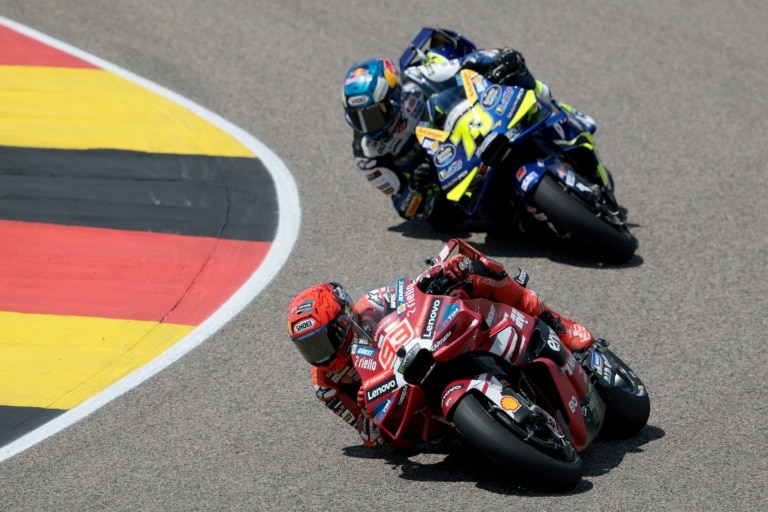
    Motorcycle racing legend Marc Marquez delivered a masterclass performance at the Sachsenring circuit on Sunday, claiming a commanding victory at the German MotoGP Grand Prix and etching his name deeper into the sport’s history books by equaling Giacomo Agostini’s long-standing record of 10 premier-class wins at a single venue.

    The 33-year-old Spanish racer, a seven-time MotoGP world champion, entered the weekend starting from pole position and never looked threatened for the top spot throughout the 10-lap contest. He crossed the finish line with a comfortable 1.996-second gap over second-place finisher Ai Ogura of Aprilia-Trackhouse, with Ogura’s Spanish teammate Raul Fernandez rounding out the top three to complete the podium.

    Marquez’s dominant weekend did not end with Sunday’s main race victory: he also took the checkered flag in Saturday’s sprint event, a result that only reinforces his widely accepted nickname as the “King of the Ring” among fans and competitors alike for his unrivaled success at the German track.

    In a post-race interview, Marquez expressed his elation over the historic milestone, saying, “Super, super happy. You know, it was a special weekend. I was super concentrated because… if I want to have any chance to win the championship, I need to attack here. It’s what we did these last races. And yes, super happy to achieve 10 victories in MotoGP class here in the Sachsenring.”

    The victory has reignited Marquez’s title push heading into the sport’s summer break, putting him firmly back in contention for the 2024 crown. He has now closed the points gap to just 18 points behind standings leader Jorge Martin, his fellow Spaniard who finished fifth in Sunday’s race.

    The early stages of the grand prix saw a tight on-track battle between Marquez and his younger brother Alex Marquez, who started the race from second position on the grid. The fight for the lead ended abruptly after 10 laps, when Alex Marquez, riding for Ducati-Gresini, suffered a crash and slid off the track, exiting the race early.

  • McCullum fired as England test coach but will continue with T20 and ODI teams

    McCullum fired as England test coach but will continue with T20 and ODI teams

    Southport, England – In a significant shake-up to English cricket leadership announced Sunday by the England and Wales Cricket Board (ECB), Brendon McCullum will step down from his position as head coach of England’s men’s Test cricket team after four years in the role. The New Zealand-born coach will, however, retain his leadership posts for England’s T20 and One Day International (ODI) white-ball sides.

    McCullum’s departure comes on the heels of back-to-back disappointing Test results for the national side, beginning with a 4-1 Ashes series loss to Australia last winter, where the team faced widespread public scrutiny over questions of inconsistent professionalism. Just two weeks before the ECB’s announcement, England suffered a home Test series defeat to New Zealand – that result marked England’s first home series loss in a three-Test or longer format since 2012. The shake-up also comes shortly after former Test captain Ben Stokes announced his retirement from international cricket following the New Zealand series, closing the chapter on the aggressive, high-risk style of play coined “Bazball” that defined McCullum and Stokes’ tenure together.

    In the official ECB statement, McCullum expressed clear disappointment over the decision to part ways with the Test program, saying he was “gutted not to be continuing” with the side – a phrasing that indicates the change was initiated by ECB leadership, not McCullum himself. “But I respect the decision,” he added. “My focus now is on giving everything I’ve got to the white-ball teams and helping England keep moving forward.”

    Even as the governing body opted for a change ahead of the 2025-26 Ashes series in Australia, ECB leaders were unanimous in praising McCullum’s transformative impact on English Test cricket. ECB CEO Richard Gould highlighted the New Zealander’s role in revitalizing the national program: “Brendon breathed new life into England men’s test team during an exciting period which saw some amazing victories, and we’re grateful for all he has given to the role.” Gould added that the decision to make a change now was rooted in the board’s goal of securing Ashes victory next summer.

    The ECB described the Bazball era, defined by McCullum’s emphasis on aggressive, fearless batting and match-risking strategy, as one of the most exciting and progressive periods in the history of England’s Test cricket. Rob Key, ECB’s men’s cricket director, echoed that praise, noting McCullum’s lasting legacy in reshaping the team’s mentality and developing a new cohort of young cricketing talent that will lead England’s program for years to come. “He leaves the test team well-set and poised to achieve great things,” Key said.

    Reflecting on his four-year tenure leading the Test side, McCullum struck an optimistic tone about his time in the role. “It’s been an absolute privilege to watch him shape the mentality of the team, to one the players have loved, and see him develop a new generation of talent who will be at the heart of England men’s teams for years to come,” he said. “There have been some unbelievable highs and a few tough days along the way, but that’s all part of taking on a challenge like this. I wish the test team nothing but success. There’s a hell of a lot of talent in that dressing room and they’re a special bunch of lads. I’ll always be backing the boys, with a smile on my face, and hoping they keep taking the game on. I know they’ll continue to make people proud.”

    McCullum has held combined red-ball (Test) and white-ball coaching roles for England since January 2025. Notably, his white-ball regime has just delivered a standout result: England’s T20 side completed a dominant 4-0 home series sweep over India earlier this month, catapulting the team to the top of the ICC men’s T20 world rankings. England’s next Test match campaign is scheduled to begin next month against Pakistan, with the ECB expected to name McCullum’s replacement for the Test role in the coming weeks.

  • ‘Animals’, Hand of God and Beckham – Argentina and England’s World Cup rivalry

    ‘Animals’, Hand of God and Beckham – Argentina and England’s World Cup rivalry

    For more than six decades, the World Cup rivalry between England and Argentina has stood as one of the most storied, contentious, and culturally significant matchups in global football. Woven through with iconic individual moments, fiery on-pitch confrontations, and deep-seated geopolitical tension, the fixture has produced memories that still define generations of football fans on both sides of the Atlantic. This Wednesday in Atlanta, the two nations will meet for the sixth time at a World Cup, with defending champion Argentina facing off against England for a spot in the 2026 World Cup final – a matchup that marks Lionel Messi’s first ever career appearance against the Three Lions.

    The origins of this bitter rivalry trace back to the 1962 World Cup group stage, where goals from Ron Flowers, Bobby Charlton, and Jimmy Greaves secured England a 3-1 win. While both nations finished the group with one win and one loss, England advanced to the knockout round at Argentina’s expense thanks to a superior goal difference. This early result laid the groundwork for what would become one of the most infamous matches in football history four years later, on home soil for England at the 1966 World Cup.

    In that 1966 quarter-final, controversy erupted just 33 minutes in when Argentine captain Antonio Rattin was sent off for a trip on Bobby Charlton and repeated dissent toward referee Rudolf Kreitlein. Rattin refused to leave the pitch for nearly eight minutes, delaying the match and inflaming tensions that boiled over off the pitch too. England manager Alf Ramsey famously labeled the Argentine side “animals” and refused to let his players swap shirts after they held on to a 1-0 win secured by Geoff Hurst’s controversial winner, which Argentina still claims was an offside. The match was so chaotic that it directly prompted the introduction of the red and yellow card system, which debuted at the 1970 World Cup to replace referees’ informal verbal warnings. Rattin, who led Argentina through the 1962 and 1966 tournaments, passed away at the age of 89 just days before this 2026 semi-final clash.

    The rivalry reached a new peak of intensity at the 1986 World Cup in Mexico, played just four years after the two nations fought the Falklands War. Political tensions spilled onto the pitch, with Argentine media and fans framing the quarter-final clash as a chance to avenge the military defeat, while British outlets leaned into nationalistic rhetoric to stoke animosity. That match produced two of the most iconic moments in World Cup history: Diego Maradona’s “Hand of God” – an illegal hand punch that beat England goalkeeper Peter Shifton to open the scoring, unseen by officials – and just four minutes later, a 60-yard solo goal that saw Maradona dribble past half the England team to double Argentina’s lead. Gary Lineker pulled a late goal back for England, but Argentina held on to advance, eventually going on to win the tournament. Maradona would not apologize for the Hand of God until 2005, an apology Shilton never accepted.

    The 1998 World Cup in France delivered another chapter of drama, this time centered on a young David Beckham. After Gabriel Batistuta and Alan Shearer traded early penalties, 18-year-old Michael Owen scored one of the greatest goals in England’s World Cup history – a blistering solo run past the entire Argentine defense to put England up 2-1. Javier Zanetti equalized before half-time, but the match turned when Beckham, provoked by Argentine midfielder Diego Simeone, lashed out with a kick and was sent off. A late Sol Campbell header that would have won the match was ruled out for a foul, forcing the game to penalties. Argentina advanced after misses from Paul Ince and David Batty, and a year later Simeone admitted he had intentionally gone down to trick the referee into issuing a red card when only a yellow was deserved.

    The most recent World Cup meeting between the two sides came in 2002 in Korea-Japan, and it marked redemption for Beckham. Now England’s captain, Beckham scored the only goal of the game from the penalty spot shortly before half-time, after Michael Owen was fouled by Argentine defender Mauricio Pochettino – now a top club manager. The 1-0 win saw England advance to the knockout round, while Argentina were eliminated in the group stage for the first time since 1962. That result remains the last England win over Argentina at a World Cup, and with the last meeting 24 years in the rearview mirror, much of the younger generation of fans on both sides have no first-hand memory of the historic rivalry.

    Heading into Wednesday’s 2026 semi-final, the stakes could not be higher. Argentina is defending its 2022 World Cup title, aiming to book a second consecutive trip to the final, while England is looking to end a 60-year drought since its 1966 world title, led by manager Thomas Tuchel. For Messi, the game will be a historic first: the 39-year-old Argentine great has never faced England in his storied career, adding an extra layer of narrative to a clash that already carries six decades of drama, tension, and history.

    In the lead-up to the match, Three Lions manager Tuchel has publicly expressed frustration with his side’s recent performances, calling them lucky and sloppy, leaving fans to question whether England’s legendary big-match mentality will be enough to overcome the defending champions.

  • Senegal sack manager Thiaw in wake of World Cup exit

    Senegal sack manager Thiaw in wake of World Cup exit

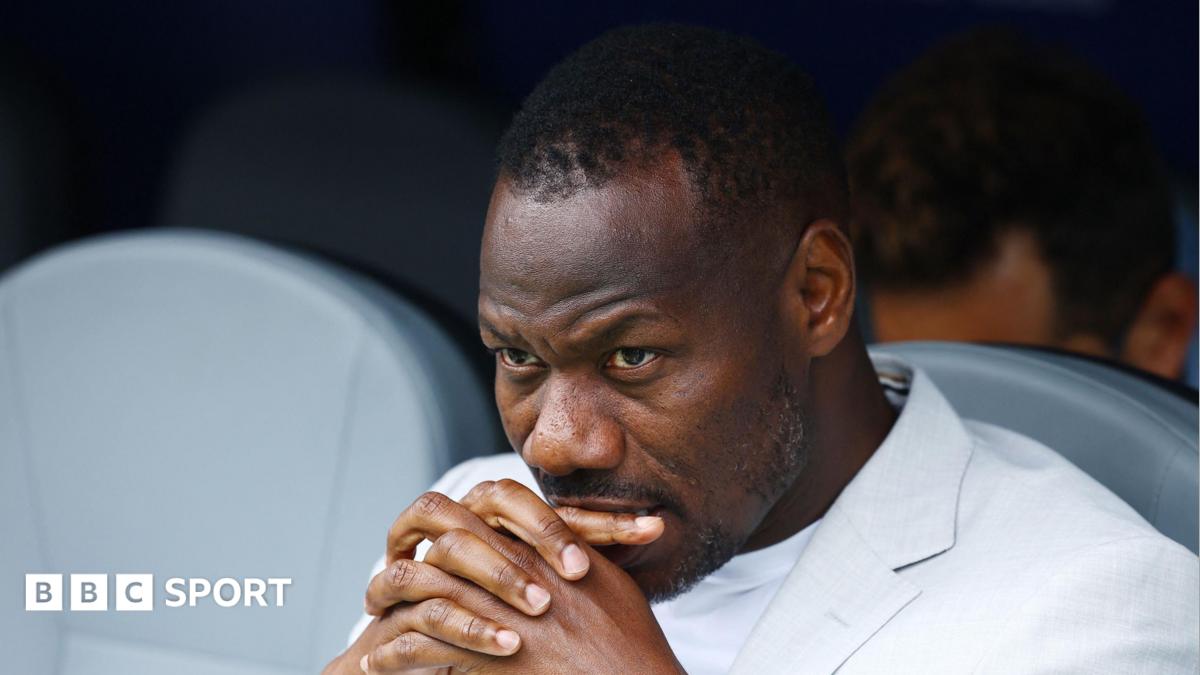
    Another major international football tournament has ended in disappointment for Senegal, with the national federation confirming the dismissal of head coach Pape Thiaw just days after the Teranga Lions crashed out of the 2026 FIFA World Cup in the knockout round.

    Thiaw had held the senior team’s top coaching role since December 2024, and his tenure was marked by controversy long before the squad arrived in North America for this year’s World Cup. The campaign got off to a shaky start: the side suffered back-to-back defeats to France and Norway in their first two Group Stage matches, leaving them on the brink of elimination heading into the final group fixture against Iraq. In a stunning turnaround, Senegal routed Iraq 5-0 to climb into third place in their group, and claimed the final available spot among the highest-ranked third-place teams to advance to the round of 32.

    What followed was a dramatic and heartbreaking exit against Belgium. Senegal held a commanding 2-0 lead late in regulation time, but allowed two late Belgium goals to force the match into extra time. A controversial penalty converted by Youri Tielemans sealed a 3-2 win for Belgium, knocking Senegal out of the tournament.

    The fallout from the defeat was immediate. Key Senegal midfielder Pape Gueye publicly announced just hours after the loss that he would step away from international football, and would not return to the national side as long as Thiaw and the current coaching staff remained in charge.

    After days of internal review, the Senegal Football Federation (FSF) announced Thiaw’s departure in a formal statement. The body said the decision came “after a thorough evaluation of the sporting results and prospects of the national team”, adding that the dismissal was made “in the best interests of Senegalese football”.

    This World Cup exit is the second major setback for Senegalese football in 2026, and cements a period of turmoil that began earlier this year at the 2025 Africa Cup of Nations (AFCON). In that tournament’s final against Morocco in January, Thiaw led his entire squad off the pitch in protest after Morocco was awarded a stoppage-time penalty. After a 17-minute delay, the team returned to the field; Brahim Diaz’s penalty was saved, and Gueye scored an extra-time winner that appeared to give Senegal the title. But in March, the Confederation of African Football (CAF) overturned the result, stripped Senegal of the title, and awarded the win to Morocco due to Thiaw’s walk-off protest. Senegal has since filed an appeal with the Court of Arbitration for Sport to challenge the decision and reclaim the title.

    Thiaw, a former Senegal international, was part of the country’s 2002 World Cup squad that reached the quarter-finals in one of the nation’s most famous tournament runs.