分类: society

  • Man charged with intent to maim after teen, 17, allegedly stabbed in Gold Coast suburb of Molendinar

    Man charged with intent to maim after teen, 17, allegedly stabbed in Gold Coast suburb of Molendinar

    Five months after a 17-year-old was left critically injured in a reported stabbing on Queensland’s Gold Coast, law enforcement have taken a 33-year-old suspect into custody, with newly released police bodycam footage documenting the full arrest process.

    The violent incident unfolded just after 7:30 p.m. on November 6 last year, when emergency dispatch received multiple calls about a stabbing on Batchworth Road in Molendinar, a residential suburb of the Gold Coast. Responding officers found the wounded teenager at the scene with severe, life-threatening injuries, and immediately rushed him to Gold Coast University Hospital in critical condition.

    In an official statement following the recent arrest, Queensland Police outlined that investigators believe two attackers fled the stabbing site in a white Mercedes-Benz utility vehicle before officers arrived at the property. The suspect vehicle was first spotted roughly an hour after the attack at 8:50 p.m. traveling along Cotlew Street in the nearby Gold Coast suburb of Ashmore. By 9:15 p.m., authorities located the utility abandoned at a commercial property on Marine Parade in Labrador, but the two suspects had already fled the area.

    After five months of ongoing investigative work, Queensland Police executed an arrest operation on Monday, taking the 33-year-old male suspect into custody. He has since been charged with one count of acts intended to maim, disfigure or disable, a serious offense under Queensland criminal law.

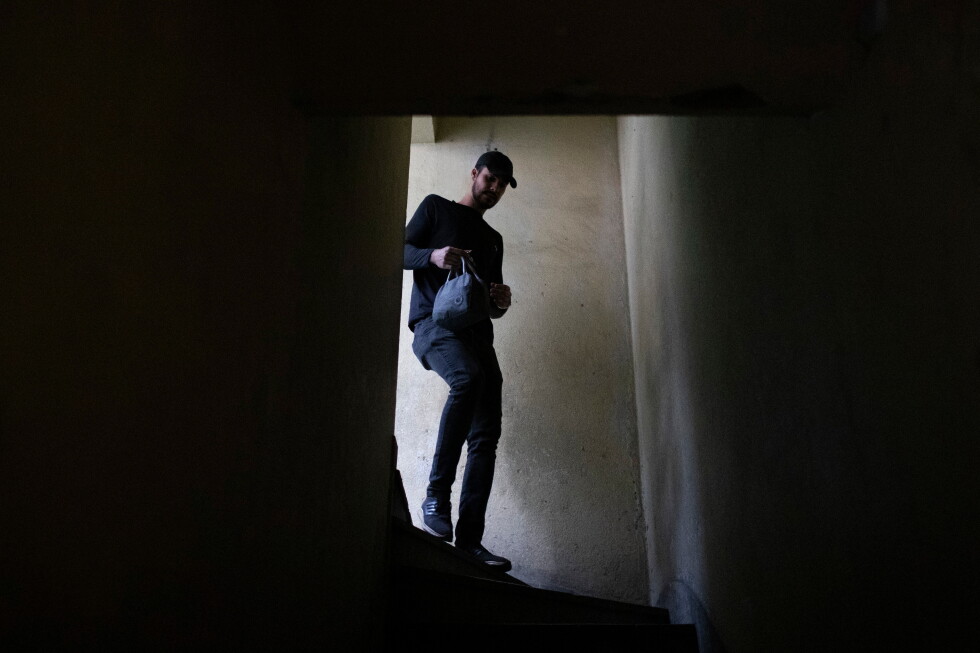
    Released police bodycam footage, which has blurred the suspect’s face for privacy reasons, shows officers restraining the man on an outdoor veranda, bringing him to the ground before securing his wrists with handcuffs. The footage continues as officers escort the suspect away from the property and load him into the back of a marked police transport van.

    The accused made a brief first appearance at Southport Magistrates Court on the same day as his arrest. Authorities confirmed that investigations into the November 6 stabbing remain active, with a second suspect still at large. Police have not yet released additional details about the motive for the attack or any updates on the 17-year-old victim’s current condition following his initial hospitalization.

  • Major track closures spark hours-long delays, massive queues across Brisbane

    Major track closures spark hours-long delays, massive queues across Brisbane

    Brisbane’s northern commuter corridors descended into transport chaos on Monday, when scheduled rail track upgrades combined with an extended shutdown from industrial action over the Easter holiday created widespread disruption that left thousands of passengers waiting for up to 45 minutes in snaking queues hundreds of meters long for overcrowded replacement buses.

    Photographs captured at Brisbane’s Northgate Station on Monday morning show commuter lines stretching roughly 300 meters along the station’s exterior, as travelers waited for shuttle buses to carry them into Brisbane’s central business district. Multiple passengers reported wait times close to 45 minutes before a replacement bus even arrived, with many describing a total breakdown in trip timing that upended regular work and personal travel schedules.

    Joanne McCarthy, one local commuter caught up in the chaos, told the Australian Broadcasting Corporation that her typical one-hour daily commute swelled to more than two hours on Monday. She added that there was little to no on-site information for passengers about service adjustments, and even alternative ride-hailing options were impossible to access due to the massive backlog of people at the station. “There were no buses there waiting for us,” McCarthy said. “We had no communication whatsoever about what was happening. I was thinking about jumping in an Uber, but you couldn’t even get to the front of the line to get down the stairs to get an Uber.”

    The disruptions are the result of a month-long program of infrastructure upgrades to southeast Queensland’s aging rail network, which TransLink, Queensland’s public transport authority, announced would require major track closures across Brisbane throughout April. The agency initially scheduled bus replacement services for four key stations – Northgate, Bowen Hills, Varsity Lakes and Boggo Road – through Wednesday, but industrial action over the Easter weekend forced Queensland Rail to extend full network track closures through April 30.

    To meet the surge in demand for replacement services, Queensland’s transport department contracted private operator Thomson Coachlines to add extra capacity. The firm pulled in additional buses and drivers from as far as Melbourne, as well as regional Queensland centers including Goondiwindi, Gympie and the nearby Sunshine Coast to reinforce existing shuttle routes.

    In a public statement addressing the extended shutdown, Queensland Rail Chief Executive Kat Stapleton confirmed that rail replacement buses would continue operating at the highest possible frequency alongside regular local bus services to keep passengers moving through the end of the month. “Due to the extension of the closure, rail replacement buses will need to be allocated across multiple closure areas, so some services may run at a reduced frequency,” Stapleton explained. A TransLink spokesperson had earlier advised passengers to reevaluate their travel plans, book trips in advance where possible, and budget for significantly longer travel times throughout the upgrade period.

    The extended disruptions have underscored the strain that critical infrastructure upgrades place on urban commuters in Queensland’s capital, with officials continuing to urge flexibility as work progresses to modernize the region’s rail network for long-term improved service.

  • Eight to be awarded for bravery in Bondi Junction stabbing

    Eight to be awarded for bravery in Bondi Junction stabbing

    Two years to the day after a horrific mass stabbing tore through Sydney’s busy Bondi Junction Westfield shopping center, eight people who risked their lives to protect complete strangers during the deadly attack will receive formal national recognition for their extraordinary courage. The 2024 tragedy left six innocent people dead and 10 others wounded, shocking communities across Australia and the globe.

    The attack was carried out by Joel Cauchi, a man who had first been diagnosed with schizophrenia as a teenager. On the day of the attack, Cauchi was unmedicated and experiencing a severe psychotic episode, and was homeless when he entered the crowded shopping mall armed with a knife. After the attacker wounded multiple people and lunged toward responding New South Wales Police Inspector Amy Scott, Scott made the split-second decision to shoot Cauchi dead, ending the rampage and preventing further loss of life. Scott is one of the recipients of the prestigious Australian Bravery Decorations, set to receive a Bravery Medal for her actions that day.

    Several awards will be bestowed posthumously to victims who gave their lives to protect others. Ashlee Good, a 38-year-old mother, was stabbed from behind by Cauchi as she pushed her infant daughter in a stroller. When the attacker turned to her child, Good shoved him away, sustaining a second fatal stab wound, but successfully got her baby to safety before she died. Faraz Tahir, a 30-year-old security guard working his very first shift at the shopping center, also suffered a fatal stab wound to the stomach when he and colleague Muhammad Taha responded to a “code black” alert and confronted Cauchi. Both Tahir and Taha will receive Bravery Medals; Taha survived his injuries and called the honor a meaningful tribute to everyone who stood against the attacker that day.

    Two French tourists, Silas Despréaux and Damien Guerot, also stepped up to intervene, arming themselves with heavy metal bollards to block Cauchi’s path, and they will also receive bravery honors. Two other Australians round out the list of honorees: Noel McLaughlin, the husband of victim Jade Young, who rushed to the scene after a call from his daughter and shouted warnings to others to retreat before administering first aid to his fatally wounded wife, and Catherine Ann Molihan, an experienced nurse who left her safe hiding place in a retail store to stabilize the wounded security guards as they waited for emergency services.
    In a statement announcing the honors, Australia’s Governor-General Sam Mostyn highlighted the extraordinary selflessness of all eight recipients. Hailing from across Australia and around the world, each person prioritized the safety of strangers over their own in an unimaginably violent situation. “Every one of them showed strength, and profound courage, as they placed the safety of others above their own, demonstrating ultimate care for others,” Mostyn said.

    In the wake of the attack, a coronial investigation into the tragedy uncovered systemic gaps in mental health care. The coroner referred Cauchi’s long-time psychiatrist to state health regulators, raising concerns that the provider missed critical opportunities to restore the attacker’s antipsychotic medication after he was weaned off the treatment. The inquiry also produced 23 formal recommendations, calling on the New South Wales government to expand community mental health outreach services and fund emergency short-term housing for vulnerable people living with mental illness, many of whom face unstable housing like Cauchi did at the time of the attack.

  • Queensland due for soaking as ex-tropical cyclone Maila downgrades into tropical low

    Queensland due for soaking as ex-tropical cyclone Maila downgrades into tropical low

    Australia’s Queensland is bracing for days of widespread rainfall this week, as a moisture-laden low-pressure system spawned by weakening ex-tropical cyclone Maila tracks toward the state after forming off northern Southeast Asia. While most of the country is set to see mild, stable conditions over the coming days, Queensland residents will face steady, soaking rain starting Tuesday, driven by tropical moisture carried by the former cyclone system. Though Maila remains active far off Australia’s northeast coast, bringing disrupted conditions across Micronesia and the Philippine Sea, its residual atmospheric moisture is set to push across northern Queensland over the coming days, senior Bureau of Meteorology (BOM) meteorologist Dean Narramore confirmed. The system, which is currently generating heavy rain storms near Willis Island, will move steadily westward to cover most of northern Queensland north of the Rockhampton corridor, Narramore explained. “It will generally be a widespread soaking rain for many communities across the region,” he noted, adding that while Mt Isa is forecast to see the bulk of precipitation, officials do not anticipate widespread severe flooding from the event. Forecast data from the BOM shows wet conditions will persist through the weekend for most regions north of Rockhampton. Over the four-day period from Tuesday to Friday, most affected areas can expect total rainfall between 25 and 50 millimeters. Further north, stretching from the Whitsundays through Cairns, Townsville, the Gulf of Carpentaria, and the Cape York Peninsula, totals are expected to reach between 50 and 100 millimeters. By the end of the week, the rain system is projected to drift west into the Northern Territory. Across the rest of Australia, conditions will remain far drier than in Queensland. Western Australia is forecast to see a mostly warm, dry week, with only isolated thunderstorms that may reach Perth on Tuesday and Wednesday. South Australia, Victoria, and Tasmania will all see cool, dry conditions through the week, while eastern Australia and most of New South Wales will experience mild temperatures below the seasonal average. This report was updated most recently on the day of publication, by reporter Jack Nivison.

  • Police remove fuel protesters from Dublin center as disruption over soaring costs continues

    Police remove fuel protesters from Dublin center as disruption over soaring costs continues

    DUBLIN, Ireland – A week of widespread national disruption sparked by fuel price protests has reached a critical turning point, with Irish law enforcement clearing a major demonstration blockade in central Dublin Sunday, just hours before the Irish government planned to vote on new cost-reduction measures aimed at ending six days of unrest driven by skyrocketing pump prices.

    By Sunday morning, the tractors and heavy trucks that had occupied O’Connell Street, Dublin’s busiest central thoroughfare, were already being withdrawn from the capital. However, demonstrations persisted across other regions of the country. On the opposite coast in Galway, clashes broke out between police and protesters at the city’s docks, where authorities deployed a military vehicle to tear down a makeshift barrier erected by demonstrators.

    Over the past six days, the protests have upended daily life across Ireland. Blockades at the country’s only commercial oil refinery and multiple key fuel depots have halted tanker deliveries to service stations, leaving more than one-third of all gas pumps dry across the nation. Slow-moving convoys of protest vehicles have also caused crippling traffic congestion on major intercity highways, disrupting travel and commerce.

    Law enforcement launched a coordinated crackdown on the blockades starting Saturday. At the Whitegate refinery in County Cork, officers used pepper spray to disperse protesters blocking access, and officials pledged to clear all demonstrations that threaten critical infrastructure and public safety. Authorities warn that widespread fuel shortages could disable emergency response vehicles, putting ordinary residents at direct risk.

    Irish Police Commissioner Justin Kelly emphasized Saturday that the blockades are not a protected, legitimate form of protest. “We gave the blockaders fair warning that we were moving to enforcement, and they chose to ignore it and continue to hold the country to ransom,” Kelly said.

    But Christopher Duffy, a farmer who serves as a spokesperson for the Dublin protest bloc, accused police of ambushing what he called a peaceful demonstration overnight. Duffy said officers gave protesters an ultimatum: move their heavy vehicles or have them towed. He added that protesters had no choice but to comply, because towing the expensive specialized vehicles with their engines off could cause severe mechanical damage that would leave farmers facing crippling repair bills.

    “These vehicles are very expensive with automatic transmissions and everything, and if they drag them with the engine not on they could wreck them,” Duffy said. “So we have no choice, financially we have to move the vehicles.”

    The protest movement first emerged last Tuesday, spreading rapidly across social media to draw participation from truckers, small-scale farmers, taxi drivers, and bus operators. Demonstrators are calling for urgent government intervention — including fuel price caps and cuts to fuel taxes — to bring down costs that many small business owners and independent operators say will force them to shut down.

    Irish government officials note they already introduced a package of relief measures for rising energy costs two weeks ago, and have expressed confusion over the continued protests, pointing out that the current global fuel price surge stems from the Middle East conflict that has disrupted global oil exports, a factor outside the Irish government’s control.

    Irish Prime Minister Micheál Martin has called the ongoing blockades “illogical,” warning that the disruption has left the country on the cusp of being unable to accept incoming oil tankers at ports, which could lead to a total collapse of domestic fuel supplies.

    While the government was widely expected to approve a new set of targeted relief measures for gas and diesel costs Sunday, it remained unclear whether the proposed concessions would be large enough to end the protest movement entirely.

  • John Donaldson, the father of Denmark’s Australian-born Queen Mary, dies at 84

    John Donaldson, the father of Denmark’s Australian-born Queen Mary, dies at 84

    The Danish Royal Household confirmed in an official statement released Sunday that John Donaldson, the Australian-born father of Queen Mary of Denmark, has passed away at his home in Tasmania at the age of 84. According to the announcement, Donaldson died in Hobart, the capital of Tasmania, with no additional details surrounding his death provided to the public. The statement noted that Donaldson’s health had slowly deteriorated over the course of several years, and that Queen Mary traveled to Tasmania to visit her father for the last time at the end of March this year.

    Born in Scotland in September 1941, John Dalgleish Donaldson built a long, respected academic career as a professor of applied mathematics. His daughter Mary first met Frederik, then Crown Prince of Denmark, during the 2000 Sydney Olympic Games. The pair married four years later in 2004, and Mary spent 20 years as crown princess before ascending to the role of queen consort in January 2024, when her husband succeeded his mother, Queen Margrethe II, following her abdication to become King Frederik X of Denmark.

    In a heartfelt quote included in Sunday’s royal statement, Queen Mary spoke publicly about her loss, sharing that “my heart is heavy.” She went on to reflect on her father’s legacy, saying, “But I know that when the grief settles, the memories will brighten my day, and what will remain strongest is love and gratitude for everything he gave me and taught me.”

    Donaldson’s first wife, Henrietta Clark Donaldson, Mary’s mother, passed away in 1997. He remarried to Susan Moody in 2001, four years before Mary’s royal wedding. According to the statement, Donaldson’s immediate family will hold a small, private memorial service to honor his life at a future date that has not yet been announced.

  • The prophet and the mysterious death of Charmain Speirs

    The prophet and the mysterious death of Charmain Speirs

    More than a decade after 40-year-old Scottish woman Charmain Speirs was found dead in a Ghanaian hotel bathtub just six months after marrying self-proclaimed prophet Eric Adusah, a new BBC Disclosure documentary has uncovered critical omissions and unresolved inconsistencies in the official investigation into her death, alongside long-hidden accounts of abuse and manipulation from Adusah’s former partners.

    Charmain’s life, shaped by early hardship, led her to embrace Pentecostal Christianity as a source of comfort after struggling with post-natal depression as a single mother. Having weathered turbulent romantic relationships and personal tragedy — including the loss of one brother to a car crash and another to heroin addiction — she craved a partner rooted in faith, according to close friends. In spring 2014, she met Adusah, a Ghana-born prominent Pentecostal pastor who led the Global Light Revival Church and appeared regularly on Christian television, via a Christian dating platform. What followed was a whirlwind romance: the pair announced their engagement within weeks and married that September, shocking Charmain’s family who had not even known she was dating.

    After the wedding, Charmain stepped into the role of “first lady” of Adusah’s congregation, a position that transformed her social status within the movement. But cracks in the marriage quickly emerged. During a visit, friend Anne-Marie recalled Charmain confiding that her relationship lacked any love or affection. Pregnant with Adusah’s child, Charmain returned to her hometown of Arbroath, Scotland, to stay with her mother Linda, admitting the marriage was failing and that she planned to move home permanently. Just days later, she traveled to Ghana with Adusah, a trip that would be her last. Linda never saw her daughter alive again.

    According to police statements obtained by the BBC, Adusah told investigators that after a day of sightseeing with Charmain, he left the hotel just after midnight to travel to Accra for a 6 a.m. meeting ahead of a return flight to the UK, claiming Charmain had chosen to stay behind longer. But a hotel night worker, speaking to the documentary under the pseudonym Edward, revealed a key detail Adusah never disclosed to Ghanaian detectives: two unknown men arrived at the couple’s room 112 with Adusah late that night, stayed for nearly an hour, and helped him load bags into his car before he left. Adusah instructed hotel staff not to disturb his wife after his departure. Edward told the BBC he saw Charmain alive roughly five hours before Adusah and the men left the property.

    Ghanaian police documents confirm three men were present at the hotel that night, and two of the visitors have since been traced — both confirmed their presence through Adusah’s ministry, claiming they were only in the room to pray. One claimed Charmain was lively and active during the visit, while the other only confirmed she was present. A third man has never been located or interviewed by investigators.

    The BBC commissioned retired Scottish Detective Superintendent Allan Jones to review the entire Ghanaian police case file. Jones described Adusah’s failure to mention the late-night visitors as deeply suspicious. “If you’ve got that many people coming to that room, even as potential defence witnesses, you should absolutely mention them,” Jones noted. Further, when the BBC tracked down the reverend Adusah claimed he was meeting in Accra that morning, the cleric did not confirm Adusah’s alibi. Jones added that this critical alibi check was never conducted by Ghanaian investigators, a major gap in the probe. The Ghana Police Service did not respond to the BBC’s requests for comment on the investigation’s shortcomings.

    After Charmain’s body was found, Adusah framed his wife as a suicidal, long-term drug user — a narrative that secured his release from police custody on suspicion of murder due to insufficient evidence. The lead pathologist on the case, Dr. Afua Abrahams, recorded a probable cause of death as heroin overdose after finding heroin metabolites in Charmain’s blood and liver samples, and noted no obvious signs of violent trauma. But the case raises immediate red flags: heroin is extremely rare in Koforidua, the small Ghanaian city where Charmain was staying, and police found no drug paraphernalia, no traces of heroin in the hotel room, and no drugs among her personal belongings.

    More than 20 of Charmain’s close family and friends uniformly deny that she used drugs or was suicidal. Her mother Linda told the BBC Charmain despised drug use, often saying she could not understand why anyone would harm their body that way. Bridesmaid Mehrunissa Thomas added that Charmain would never have used drugs while pregnant, calling the claim totally out of character. A subsequent second post-mortem examination conducted in the UK tested Charmain’s hair for opioids and returned a negative result, confirming she was not a long-term drug user.

    The BBC’s investigation also uncovered that Adusah uses multiple aliases: he is known as Eric Adu Brefo in Ghana and Eric Isaiah Kusi Boateng in Maryland, the U.S. state where he currently resides and still preaches. Multiple former partners came forward to describe patterns of coercive control, emotional abuse, and manipulation rooted in his religious authority. One former partner, speaking under the pseudonym Emily, recalled Adusah controlling every aspect of her life, from her hairstyle and clothing to restricting her contact with family and confiscating her phone. He used religious doctrine to manipulate her, she said, framing his control as God’s will to avoid resistance.

    Charmain’s now 19-year-old son Isaac, who lived with the couple for a time, recalled firsthand witnessing physical and psychological abuse. “I heard my mum screaming and crying, and when he came to hit me, she stepped between us and he punched her in the face,” Isaac told the documentary. “He controlled every part of her life: her phone, her money, her clothes, even what she ate. That wasn’t a marriage — it was him dictating every part of her existence. What prophet hits a child and abuses their wife? He’s not a man of God, he’s an evil person.”

    Linda Speirs also said she discovered evidence of abuse when she found multiple bald patches on the back of Charmain’s scalp, which her daughter admitted came from Adusah pulling her hair. A church insider who gave a statement to UK police also revealed that shortly before her death, Charmain had obtained a secret second phone after Adusah confiscated her primary device. She had discovered Adusah was using a false name, lying about his age, and had another wife living in Ghana, and was planning to file for divorce. The insider told police she received a call from Charmain the night before she died, during which she could hear Adusah shouting and slamming his hand on the table, before a final bang cut the call short. This statement was never shared with Ghanaian investigators because UK authorities declined to share evidence with a country that retains the death penalty.

    When the BBC tracked Adusah to his current home in Maryland, he acknowledged the investigation but claimed the repeated questions had caused him severe emotional distress, saying he had already endured profound trauma after losing his wife and unborn child. He declined to answer any specific questions about the allegations of abuse, the gaps in his statement, or the multiple aliases.

    The full, three-part documentary *Charmain and the Prophet* is set to premiere on Monday 13 April, airing on BBC Two at 10 p.m. GMT and BBC One Scotland at 8 p.m. GMT, with all episodes available on BBC iPlayer following the broadcast. To this day, the full truth of what happened in hotel room 112 remains unconfirmed, and Isaac continues to search for answers about his mother’s death.

  • At least 30 feared dead in crush at Haitian tourist site

    At least 30 feared dead in crush at Haitian tourist site

    A devastating crowd crush at one of Haiti’s most iconic cultural landmarks has left at least 30 people dead, with officials warning the final death toll may climb higher in the wake of the Saturday incident. The tragedy unfolded at the Laferrière Citadel, a UNESCO World Heritage Site and enduring symbol of Haitian independence located near the northern town of Milot, during an annual Easter community gathering.

    Jean Henri Petit, head of civil protection for Haiti’s Nord department, confirmed the initial casualty count, and emphasized that recovery efforts were still ongoing to account for all impacted visitors. Haitian Prime Minister Alix Didier Fils-Aimé confirmed the incident occurred during a public tourist-focused event that drew a large crowd of young attendees. He announced in an official statement that a full investigation into the disaster has been launched, and all relevant government agencies have been mobilized to provide support to injured victims and the families of those deceased. “The government sends its sincere condolences to the affected families,” Fils-Aimé added.

    Local Haitian media outlets, citing senior officials, report that the site became dangerously overcrowded after the annual event—held to commemorate the 19th-century fortress’s founding—was widely promoted on social media. The crush began near the main entrance of the large hilltop fortress, and emergency responders say the dangerous conditions were made far worse by a sudden onset of heavy rain that panicked the crowd of visitors and students.

    The initial death toll was first reported by Haiti’s leading newspaper Le Nouvelliste, which sourced the figure from Petit. The Haitian government’s official public statement did not include a specific casualty number, as officials continue to verify the extent of the tragedy.

    Completed more than two centuries ago shortly after Haiti won its independence from French colonial rule, the Citadelle Laferrière—also called Citadelle Henry—was built by revolutionary leader Henri Christophe. The massive stronghold took more than 10 years to complete, and formed a core defensive position in a network of fortifications designed to protect the newly independent Caribbean nation from foreign invasion. Today, it stands as one of Haiti’s most visited tourist sites and a powerful national symbol of freedom.

    This deadly crowd disaster comes as Haiti already faces a protracted crisis of widespread gang-related violence that has claimed thousands of lives across the country this year, straining already limited public safety and emergency response capacity.

  • Police clear protesters from Dublin’s O’Connell Street

    Police clear protesters from Dublin’s O’Connell Street

    DUBLIN — Six days of widespread anti-fuel price protests that have paralyzed key infrastructure across the Republic of Ireland entered a new phase Sunday, as Irish national police (An Garda Síochána) successfully cleared the main protest encampment on Dublin’s iconic O’Connell Street in an early-morning multi-unit operation.

    The demonstrations, led by farmers and hauliers, erupted in response to skyrocketing fuel prices driven by the ongoing conflict between the United States, Israel and Iran, which has disrupted global oil supplies via the closure of the Strait of Hormuz — a chokepoint that carries roughly 20% of the world’s daily oil trade. In recent weeks, diesel prices in Ireland have jumped from an average of €1.70 per litre to €2.17, while petrol has increased by as much as 25 cents per litre at retail forecourts, pushing already strained transport and agricultural sectors to breaking point.

    To clear O’Connell Street, Gardaí deployed approximately 200 uniformed officers, supported by the elite public order unit, mounted police on horseback, and a waterborne patrol along the River Liffey, with a police helicopter providing aerial surveillance. Shortly after 3:30 a.m., authorities issued a formal order for demonstrators gathered in tractors and trailers to evacuate the area. All protesters complied with the request and left the site peacefully, with many departing voluntarily ahead of the operation and remaining individuals exiting under Garda escort. As of Sunday morning, a small number of vehicles remained parked on the street, but state broadcaster RTÉ reports most vehicle owners have agreed to move their assets in the coming hours with police cooperation.

    Alongside the O’Connell Street clearance, Gardaí also lifted a blockade on the northbound lane of Dublin’s M50 motorway, one of the country’s busiest orbital routes. However, demonstrations continue at other key sites: protesters have erected a new barricade on the access bridge to Galway Port on Ireland’s west coast, and blockades of three major fuel distribution hubs in Cork, Galway and Limerick counties have been in place since the protest movement began Tuesday.

    The ongoing blockades have already triggered severe fuel shortages across the country, with hundreds of retail petrol and diesel forecourts reporting they have completely run out of stock. Over the weekend, authorities warned that fuel supplies for critical emergency services, including ambulance fleets and fire brigades, are facing growing strain. The National Emergency Coordination Group, the inter-agency body tasked with managing national crises, confirmed emergency service fuel reserves are under “increasing pressure” amid the ongoing disruptions. Taoiseach Micheál Martin, Ireland’s prime minister, warned Saturday that the blockades have left the country “on the precipice of turning oil away from the country” at a time of already strained global supply.

    Progress emerged at one key site Saturday, when fuel trucks regained access to the Whitegate Oil Refinery in County Cork after a days-long blockade. Gardaí pushed back protesting demonstrators using pepper spray during the clearance operation, which received logistical support from the Irish Defence Forces. Garda Commissioner Justin Kelly confirmed that multiple arrests were made during the operation, and issued a firm warning to continuing protesters that blockades are illegal and will not be tolerated.

    “We gave these blockaders fair warning that we were moving to an enforcement phase and they chose to ignore that and continue to hold the country to ransom,” Kelly said in a statement released Sunday. The commissioner also confirmed that police have received multiple reports of intimidation against fuel tanker drivers, noting that serious offences including threats of harm carry maximum prison sentences of up to 10 years. “My message is clear: blockaders must immediately cease blockades of critical infrastructure and road networks or face the full rigours of the law,” he added.

    Opposition politicians have criticized the government’s handling of the crisis. Mary Lou McDonald, leader of Ireland’s largest opposition party Sinn Féin, said Saturday that the sitting government allowed a localized difficult situation to escalate into a national crisis, and urged officials to accelerate good-faith negotiations with protest leaders to end the disruptions.

    Irish government officials have been engaged in talks with protest representatives from the farming and haulage sectors since Friday, focused on finalizing a new government support package to offset rising fuel costs. A full cabinet meeting is scheduled for Sunday to receive an official update on the ongoing crisis negotiations, as authorities work to resolve the standoff and restore normal fuel supply chains across the country.

  • India refuses to criminalise marital rape. This new series shines a light on it

    India refuses to criminalise marital rape. This new series shines a light on it

    In a media landscape where many taboo topics remain buried under social and cultural norms, a breakout Hindi web series on India’s JioHotstar streaming platform has thrust a long-ignored injustice into the national conversation: marital rape, a crime still not outlawed in the world’s largest democracy.

    Titled *Chiraiya* – Hindi for ‘little birds,’ a quiet nod to the women who are often caged and silenced by patriarchal norms – the series premiered in March 2025 and has already amassed an audience of millions, ranking among the streamer’s most popular Hindi original series in recent months. Widely praised by critics for its unflinching portrayal of a topic widely sidelined in Indian popular culture, the show has reignited social media discussions around sexual consent, systemic misogyny, and the failure of Indian law to protect married women from violence. At the same time, it has drawn sharp pushback from conservative and men’s rights groups, who have labeled the series ‘anti-men’ and claim it undermines the perceived ‘sanctity of marriage.’

    Adapted from the successful Bengali series *Sampoorna* and reimagined for the deeply patriarchal cultural context of northern India, *Chiraiya* centers on the intersecting lives of two women shaped by opposing views of gender roles. The first is Pooja, an educated, socially conscious young advocate for gender equality played by actor Prasanna Bisht, who marries Arun – a man widely seen as an ideal match, raised like a son by middle-aged homemaker Kamlesh, portrayed by award-winning veteran actor Divya Dutta. Kamlesh, a lifelong housewife who has internalized the belief that a woman’s place is in the home, initially holds the traditional view that sexual consent is automatically implied by marriage.

    The story unravels dramatically on Pooja and Arun’s wedding night, when Arun rapes Pooja. When Pooja confronts him, he dismisses her complaint, declaring he has only ‘taken what is mine’ – and points out that under Indian law, marital rape is not a criminal offense, leaving her with no legal recourse. When Pooja dares to speak out about the abuse, even her own family pressures her to stay silent and adjust to the situation, arguing that public discussion of the issue would only bring shame to the entire family. As the series progresses, Kamlesh is forced to confront her own deep-seated beliefs, choosing between staying in her comfortable, socially approved bubble or standing with a woman she initially dislikes. By the story’s midpoint, she undergoes a gradual transformation, emerging as a loyal ally to Pooja.

    In comments to the BBC, Dutta explained that the core theme of *Chiraiya* is the concept of consent, specifically within the institution of marriage, which is widely framed as an inherently sacred, unbreakable bond in Indian culture. ‘Marital rape is very difficult to talk about. Every woman who goes through it thinks it’s just her story. She thinks if she speaks about it, there will be social stigma, the harmony of the house will be disrupted,’ she said. Director Shashant Shah added that the creative team intentionally avoided framing the show’s male characters as one-dimensional villains. Instead, he noted, they are ordinary people molded by a deeply entrenched patriarchal system that normalizes misogyny, often without people even recognizing their own harmful biases. ‘They are not monsters – they are just regular people we encounter in our daily lives. Patriarchy is so deeply entrenched that most people are not even aware they are being misogynistic,’ Shah said. Unlike the original Bengali series, which centered an already radicalized feminist protagonist, *Chiraiya* follows Kamlesh, a woman so immersed in patriarchal conditioning that she does not even recognize the misogyny shaping her life. Through her gradual awakening, the creative team hoped to craft a character that millions of women across India could see themselves in. ‘We wanted to raise this question to the society – how do you look at it? We wanted to make people aware,’ Shah explained, adding that while Pooja’s story is fictional, it reflects the lived reality of millions of married women in India.

    The series arrives amid a long-running national battle over the criminalization of marital rape in India. Official Indian government data shows that 6.1% of ever-married women in the country have experienced sexual violence at the hands of their spouses. Despite decades of advocacy from women’s rights activists, India remains one of roughly three dozen countries around the world – alongside Pakistan, Afghanistan, and Saudi Arabia – that have not criminalized marital rape. A colonial-era law still in force today exempts men from criminal prosecution for forced sex with an adult wife, and successive Indian governments, along with conservative religious groups and men’s rights organizations, have repeatedly blocked efforts to amend the legislation. Public outrage erupted last year after a man convicted of raping his wife (who died within hours of the assault) was released on appeal, after judges ruled that India does not legally recognize marital rape as a crime.

    For *Chiraiya*’s scriptwriter Divy Nidhi Sharma, the gap in Indian law and social acceptance of marital rape made telling this story a moral imperative. ‘This injustice is happening within our homes, in our neighbourhoods. What I find most troubling is that there’s no legal or social recourse. So, as a writer I felt I should do my bit about it,’ he told the BBC. While critics and opponents have slammed the series for its portrayal of marital abuse, Sharma says the creative team’s only goal was to drag a taboo topic into public view. ‘But our aim was to just start a conversation. We are artists, we can’t make laws, we can’t curb crimes, we can’t change society rapidly, but we can use art to make a taboo topic mainstream,’ he said.

    Reception to the series has been overwhelmingly positive, according to Dutta, who says the response has been ‘absolutely overwhelming.’ ‘I’ve been getting midnight messages and calls and personal notes on Instagram and Twitter. Everyone’s watching it. Veteran actors are calling me to say thank you for doing this. Someone sent me a sari with a heartfelt note, somebody’s sent a poem they’ve written. I think it really stirred something within everyone,’ she said. Though a small minority of viewers have reacted negatively, Dutta says she chooses to focus on the widespread support for the show’s message. Dutta added that she believes stories like *Chiraiya* carry unique power to drive social change, starting with conversations within households. ‘I think this will make a difference in more ways than one because it is telling us where we are going wrong. And rather than just putting the onus on the outside, for someone else to do something for us, this show just emphasises that let’s start from home first. And that is a first step, but it is a very strong step,’ she said.