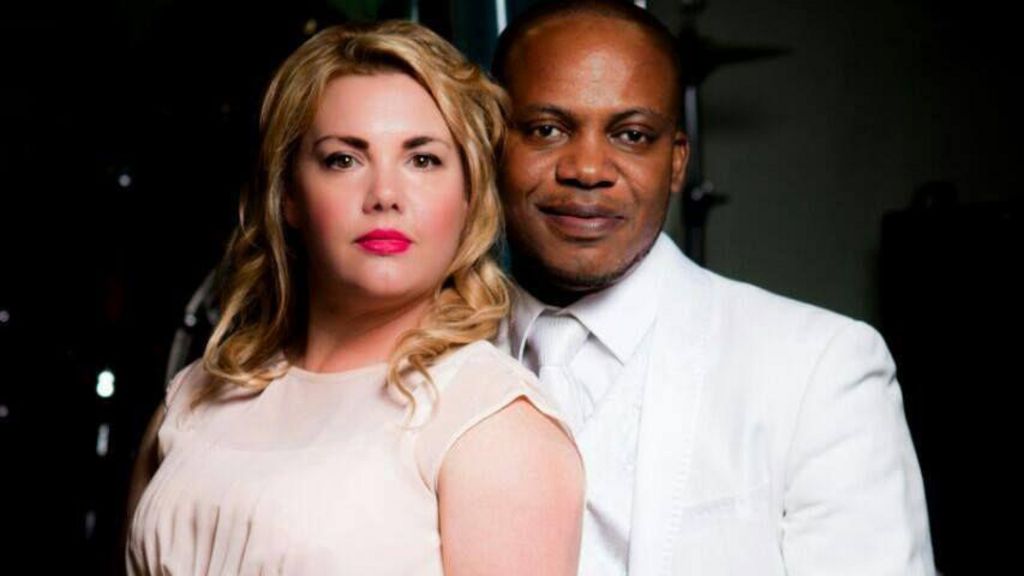
More than a decade after 40-year-old Scottish woman Charmain Speirs was found dead in a Ghanaian hotel bathtub just six months after marrying self-proclaimed prophet Eric Adusah, a new BBC Disclosure documentary has uncovered critical omissions and unresolved inconsistencies in the official investigation into her death, alongside long-hidden accounts of abuse and manipulation from Adusah’s former partners.
Charmain’s life, shaped by early hardship, led her to embrace Pentecostal Christianity as a source of comfort after struggling with post-natal depression as a single mother. Having weathered turbulent romantic relationships and personal tragedy — including the loss of one brother to a car crash and another to heroin addiction — she craved a partner rooted in faith, according to close friends. In spring 2014, she met Adusah, a Ghana-born prominent Pentecostal pastor who led the Global Light Revival Church and appeared regularly on Christian television, via a Christian dating platform. What followed was a whirlwind romance: the pair announced their engagement within weeks and married that September, shocking Charmain’s family who had not even known she was dating.
After the wedding, Charmain stepped into the role of “first lady” of Adusah’s congregation, a position that transformed her social status within the movement. But cracks in the marriage quickly emerged. During a visit, friend Anne-Marie recalled Charmain confiding that her relationship lacked any love or affection. Pregnant with Adusah’s child, Charmain returned to her hometown of Arbroath, Scotland, to stay with her mother Linda, admitting the marriage was failing and that she planned to move home permanently. Just days later, she traveled to Ghana with Adusah, a trip that would be her last. Linda never saw her daughter alive again.
According to police statements obtained by the BBC, Adusah told investigators that after a day of sightseeing with Charmain, he left the hotel just after midnight to travel to Accra for a 6 a.m. meeting ahead of a return flight to the UK, claiming Charmain had chosen to stay behind longer. But a hotel night worker, speaking to the documentary under the pseudonym Edward, revealed a key detail Adusah never disclosed to Ghanaian detectives: two unknown men arrived at the couple’s room 112 with Adusah late that night, stayed for nearly an hour, and helped him load bags into his car before he left. Adusah instructed hotel staff not to disturb his wife after his departure. Edward told the BBC he saw Charmain alive roughly five hours before Adusah and the men left the property.
Ghanaian police documents confirm three men were present at the hotel that night, and two of the visitors have since been traced — both confirmed their presence through Adusah’s ministry, claiming they were only in the room to pray. One claimed Charmain was lively and active during the visit, while the other only confirmed she was present. A third man has never been located or interviewed by investigators.
The BBC commissioned retired Scottish Detective Superintendent Allan Jones to review the entire Ghanaian police case file. Jones described Adusah’s failure to mention the late-night visitors as deeply suspicious. “If you’ve got that many people coming to that room, even as potential defence witnesses, you should absolutely mention them,” Jones noted. Further, when the BBC tracked down the reverend Adusah claimed he was meeting in Accra that morning, the cleric did not confirm Adusah’s alibi. Jones added that this critical alibi check was never conducted by Ghanaian investigators, a major gap in the probe. The Ghana Police Service did not respond to the BBC’s requests for comment on the investigation’s shortcomings.
After Charmain’s body was found, Adusah framed his wife as a suicidal, long-term drug user — a narrative that secured his release from police custody on suspicion of murder due to insufficient evidence. The lead pathologist on the case, Dr. Afua Abrahams, recorded a probable cause of death as heroin overdose after finding heroin metabolites in Charmain’s blood and liver samples, and noted no obvious signs of violent trauma. But the case raises immediate red flags: heroin is extremely rare in Koforidua, the small Ghanaian city where Charmain was staying, and police found no drug paraphernalia, no traces of heroin in the hotel room, and no drugs among her personal belongings.
More than 20 of Charmain’s close family and friends uniformly deny that she used drugs or was suicidal. Her mother Linda told the BBC Charmain despised drug use, often saying she could not understand why anyone would harm their body that way. Bridesmaid Mehrunissa Thomas added that Charmain would never have used drugs while pregnant, calling the claim totally out of character. A subsequent second post-mortem examination conducted in the UK tested Charmain’s hair for opioids and returned a negative result, confirming she was not a long-term drug user.
The BBC’s investigation also uncovered that Adusah uses multiple aliases: he is known as Eric Adu Brefo in Ghana and Eric Isaiah Kusi Boateng in Maryland, the U.S. state where he currently resides and still preaches. Multiple former partners came forward to describe patterns of coercive control, emotional abuse, and manipulation rooted in his religious authority. One former partner, speaking under the pseudonym Emily, recalled Adusah controlling every aspect of her life, from her hairstyle and clothing to restricting her contact with family and confiscating her phone. He used religious doctrine to manipulate her, she said, framing his control as God’s will to avoid resistance.
Charmain’s now 19-year-old son Isaac, who lived with the couple for a time, recalled firsthand witnessing physical and psychological abuse. “I heard my mum screaming and crying, and when he came to hit me, she stepped between us and he punched her in the face,” Isaac told the documentary. “He controlled every part of her life: her phone, her money, her clothes, even what she ate. That wasn’t a marriage — it was him dictating every part of her existence. What prophet hits a child and abuses their wife? He’s not a man of God, he’s an evil person.”
Linda Speirs also said she discovered evidence of abuse when she found multiple bald patches on the back of Charmain’s scalp, which her daughter admitted came from Adusah pulling her hair. A church insider who gave a statement to UK police also revealed that shortly before her death, Charmain had obtained a secret second phone after Adusah confiscated her primary device. She had discovered Adusah was using a false name, lying about his age, and had another wife living in Ghana, and was planning to file for divorce. The insider told police she received a call from Charmain the night before she died, during which she could hear Adusah shouting and slamming his hand on the table, before a final bang cut the call short. This statement was never shared with Ghanaian investigators because UK authorities declined to share evidence with a country that retains the death penalty.
When the BBC tracked Adusah to his current home in Maryland, he acknowledged the investigation but claimed the repeated questions had caused him severe emotional distress, saying he had already endured profound trauma after losing his wife and unborn child. He declined to answer any specific questions about the allegations of abuse, the gaps in his statement, or the multiple aliases.
The full, three-part documentary *Charmain and the Prophet* is set to premiere on Monday 13 April, airing on BBC Two at 10 p.m. GMT and BBC One Scotland at 8 p.m. GMT, with all episodes available on BBC iPlayer following the broadcast. To this day, the full truth of what happened in hotel room 112 remains unconfirmed, and Isaac continues to search for answers about his mother’s death.