分类: society

  • Big change exposes past sexual misconduct among medics

    Big change exposes past sexual misconduct among medics

    A landmark change to Australian health regulation law has pulled back the curtain on more than 100 historical sexual misconduct findings against registered health practitioners across the country, marking a major shift toward greater transparency for patient safety.

    Before the new national law reform took effect, public access to professional disciplinary records was heavily restricted. Members of the public could only view active disciplinary sanctions against medical workers, meaning any completed or expired disciplinary action for sexual misconduct was hidden from view, leaving patients unaware of past violations by practitioners they might see for care. Under the updated rules, any proven finding of sexual misconduct against a registered health worker will remain permanently listed on the practitioner’s public record, eliminating the secrecy around historical offenses.

    This week, an initial record review completed by the Australian Health Practitioner Regulation Agency (AHPRA) identified 107 practitioners with past sexual misconduct findings that have now been added to the public searchable register. Breakdowns by region show New South Wales has the highest number of newly disclosed cases at 35. Of the 107 practitioners whose records have been updated, 21 are still actively practicing in Australia, while the remaining 86 hold cancelled or lapsed registrations.

    The disclosure of these first 107 cases is only the first step in a broader retrospective review. AHPRA confirmed it is currently processing roughly 5,000 additional historical records to identify and publish other unreported sexual misconduct findings. The new transparency rules apply to every health profession regulated by the agency, covering not just doctors, but also nurses, dentists, psychologists, pharmacists, physiotherapists, and other registered health care workers.

    In a statement on the reform, AHPRA Chief Executive Justin Untersteiner emphasized that the new policy puts decision-making power directly in the hands of patients, allowing them to make fully informed choices about their own health care. “Sexual misconduct by registered health practitioners is an unacceptable breach of trust that undermines public health and safety,” Untersteiner said. He noted that the patient-practitioner relationship is uniquely built on trust, as patients often seek care when they are at their most vulnerable. A breach of that trust does not just harm the individual patient, he explained – it causes lasting damage to the entire health care system.

    Untersteiner added that sexual misconduct violations leave permanent, deep harm for survivors. To support patients who wish to report concerning behavior by a practitioner, AHPRA has assigned dedicated staff and specific resources to handle concerns, and he encouraged anyone with information to come forward.

  • Study-abroad program bears fruit for nation

    Study-abroad program bears fruit for nation

    The 2026 China Study Abroad Forum, which kicked off Friday in Beijing, has released fresh data outlining evolving trends in overseas education and talent mobility for Chinese students, revealing a consistent pattern of skilled graduates returning home to build their careers after completing international study programs.

    According to figures presented by Wang Daquan, director of the Chinese Service Center for Scholarly Exchange, 570,600 Chinese students enrolled in overseas higher education programs during 2025, marking sustained strong interest in international academic experience despite shifting global geopolitical and economic conditions. Most notably, the number of graduates returning to China after finishing their studies overseas climbed to 535,600 last year — an increase of 40,600 compared to 2024, and a jump of 120,000 from 2023 levels.

    Cumulative data stretching back to the launch of China’s reform and opening-up policy in 1978 underscores the long-term scale of this mobility: between 1978 and 2024, a total of 8.88 million Chinese students pursued education overseas, 7.43 million completed their programs, and more than 6.44 million ultimately chose to return to China after graduation.

    A new employment trends report released alongside the official data confirms that the flow of high-skilled talent back to China is accelerating, with more than half of all current overseas graduates reporting increased intent to launch their careers in China. Geographically, traditional major talent hubs including Beijing, Shanghai, and the Guangdong-Hong Kong-Macao Greater Bay Area continue to attract the majority of returning graduates. However, emerging new first-tier cities such as Hangzhou, Chengdu, Suzhou, and Chongqing have rapidly grown in popularity, fueled by targeted pro-talent policies and rapid local industrial upgrading that creates high-quality professional opportunities. When it comes to industry choice, the report identifies finance, information technology, and education as the three most popular sectors for returning Chinese graduates.

    International stakeholders emphasized the mutual value of cross-border academic exchange at the forum. Jo Johnson, former UK Minister of State for Universities, Science, Research and Innovation, highlighted that global education must evolve beyond the historic one-way flow of students moving from East to West, and instead embrace a circular, reciprocal model of mobility that benefits all nations. “One thing remains constant, and that’s the fact that education is the most durable bridge between countries,” Johnson said. He added that cross-border student mobility delivers three core, lasting benefits: it drives academic growth through exposure to diverse teaching methods, research cultures and intellectual traditions; it builds deeper intercultural understanding; and it fosters long-lasting professional and personal networks that span borders.

    Ren Youqun, Vice-Minister of Education of China, noted that China’s education sector has grown into an increasingly influential global player, characterized by rising academic quality, greater openness to international collaboration, and a strong focus on cultivating social responsibility in students. He described overseas study as a critical infrastructure for cross-civilizational mutual learning and a core pillar of global talent exchange, calling on all nations to strengthen communication, deepen collaborative partnerships, and build more welcoming, inclusive environments for international students worldwide.

    Li Peng, president of Zhengzhou University and a longstanding beneficiary of China’s national study abroad policy, shared her personal experience to illustrate the transformative impact of international education. In autumn 1988, Li traveled from Beijing to the United States to pursue her first overseas academic program on a Chinese government scholarship. After completing her master’s degree and doctorate in the U.S., and gaining additional work experience in Singapore and Hong Kong, Li returned to take up a position at Tsinghua University in 2005. “My study and work experiences overseas have been invaluable assets, expanding not only my knowledge but also my mindset, allowing me to understand and see the world from a broader perspective,” she said.

  • Peony culture and industry take center stage in Shandong’s Heze

    Peony culture and industry take center stage in Shandong’s Heze

    One of China’s most anticipated annual celebrations of floral heritage and agricultural innovation, the 2026 World Peony Conference alongside the 35th Heze International Peony Cultural Tourism Festival, officially launched on Friday in Heze, a northeastern Chinese city in Shandong province long known as China’s peony capital.

    As spring settles over the region, hectares of peony plants are bursting into full bloom across the city, drawing flocks of tourists, botanists, and industry stakeholders to iconic sites such as Caozhou Peony Garden, where vivid carpets of pink, white, crimson, yellow and gold blossoms have become a global draw for nature and culture lovers.

    Decades of dedicated cultivation and research have positioned Heze as an unrivaled national hub for peony development. Today, the city grows an extraordinary 1,308 distinct peony varieties, spanning nine official color groups and 10 unique flower forms. This extensive collection not only reflects the region’s deep historical roots in peony cultivation dating back more than 1,400 years, but also cements its reputation as China’s leading center for peony production, genetic innovation, and cultural preservation.

    The dual event is designed to shine a global spotlight on Heze’s unique peony heritage, while creating new opportunities for cross-border cultural exchange, agricultural trade, and tourism growth. Organizers note that the conference and festival will showcase how Heze has transformed its traditional floral heritage into a thriving, multi-billion-dollar industry that spans cut flower production, seed oil extraction, traditional Chinese medicine, cosmetics, and cultural tourism, supporting livelihoods for hundreds of thousands of local residents.

    Visitors attending the event can explore sprawling garden displays, attend academic seminars on peony breeding and sustainable cultivation, experience local folk arts centered on peony culture, and sample regional cuisines that feature peony as a core ingredient. For industry leaders, the event offers a platform to forge new partnerships, showcase cutting-edge products, and map out future directions for global peony industry development.

  • UK doctor suspended for sending Islamophobic messages about Gaza to colleague

    UK doctor suspended for sending Islamophobic messages about Gaza to colleague

    A UK doctor has been handed a four-month suspension from medical practice after a medical tribunal found her guilty of serious professional misconduct for making explicitly Islamophobic comments toward a Muslim colleague who criticized the British government’s pro-Israel stance, a case that has reignited debate over political speech and regulatory bias within the UK’s national healthcare system.

    The incident dates back to the days immediately following the October 7, 2023 attacks led by Hamas in Israel. Roghieh Dehghan, a Muslim doctor, shared a petition in a private WhatsApp group for medical colleagues, asking peers to consider opposing the UK Department of Health and Social Care’s decision to display the Israeli flag in government health facilities in solidarity with Israel.

    Cinderella Nonoo-Cohen, a London-based locum general practitioner who also holds a seat in the European Jewish Parliament, launched a hostile verbal attack against Dehghan in response to the shared petition. “Typical of you Muslims to gaslight,” Nonoo-Cohen wrote, adding that Dehghan should not bring political discussion to the professional group and that she was “disappointed” in Dehghan as a physician.

    After Dehghan reported the comments to group administrators and labeled them Islamophobic, Nonoo-Cohen escalated her attack. She accused Dehghan of being antisemitic, claimed the Muslim doctor supported “barbaric acts of beheading, murdering, and burning of civilians” in Israel, and repeated the false conspiracy theory that Hamas intentionally bombed Gaza’s al-Ahli hospital to frame Israel – despite widespread confirmation that an Israeli strike on the facility killed hundreds of Palestinian civilians in October 2023.

    The case was referred to the General Medical Council (GMC), the UK’s national medical regulator, and ultimately heard by the Medical Practitioners Tribunal Service (MPTS). The tribunal ruled that Nonoo-Cohen’s messages were “objectively Islamophobic” and described the remarks as “seriously offensive.” It further found that her false claims painting Dehghan as an antisemite and Hamas sympathizer significantly compounded the severity of her professional misconduct. The panel also separately reviewed another social media post Nonoo-Cohen shared on X (formerly Twitter) claiming that “minorities had precedence over the Whites,” finding the remark demonstrated racial hostility, though it did not rule it was driven by explicit racial or religious prejudice.

    During cross-examination, Nonoo-Cohen claimed her use of the collective term “Muslims” was an accidental mistake, and argued her comments were sent in the early morning hours, when she was acting defensively out of emotional distress. While the tribunal acknowledged that Nonoo-Cohen had issued an apology and completed diversity training, and found she posed a low risk of repeating the behavior, it ruled she had failed to demonstrate full insight into how her harmful remarks impacted her colleague and the wider medical community. The panel ultimately handed down a four-month suspension from medical practice.

    The British Islamic Medical Association (BIMA) has welcomed the tribunal’s ruling holding Nonoo-Cohen accountable, but raised sharp criticism over both the investigation process and the broader regulatory landscape for doctors in the UK. In a statement following the decision, BIMA noted that healthcare workers around the world have openly condemned what multiple UN experts, leading human rights organizations and genocide scholars have classified as genocide in Gaza. “Speaking out in that context, calling for a ceasefire, or attending a demonstration, is not provocation, but a human act of conscience,” the organization added.

    The case comes amid controversial sweeping changes to UK medical regulation that many critics warn will target doctors who express pro-Palestine views. Last month, UK Health Secretary Wesstreeting backed the largest overhaul of medical regulation in 40 years, granting top regulators extraordinary new powers to suspend doctors more quickly. The proposed legislative changes would allow the GMC and the Professional Standards Authority, the body that oversees medical regulators, to override independent decisions made by MPTS panels – which previously served as a check against overreach by regulatory bodies.

  • Guangdong police punish man over online abuse of Olympic champion

    Guangdong police punish man over online abuse of Olympic champion

    In a high-profile case highlighting China’s crackdown on online harassment targeting elite athletes, Guangdong provincial police have penalized a 31-year-old man for sustained cyber abuse against Olympic gold medal-winning diver Quan Hongchan, authorities announced Friday.

    According to an official statement from the Yuexiu District Branch of the Guangzhou Public Security Bureau, the suspect, surnamed Xu, is a diving enthusiast who repeatedly posted derogatory, defamatory remarks targeting Quan in a WeChat chat group that he founded. The abusive content generated widespread negative repercussions for the athlete, prompting law enforcement action. Following a formal investigation, Xu was sentenced to 10 days of administrative detention and issued a financial fine. Additional group members who engaged in similar harassing behavior also received legal penalties proportional to their actions, the statement confirmed.

    The case emerged earlier this week after Quan’s training facility, the Guangdong Ersha Sports Training Center, filed an official police complaint on Wednesday. The center emphasized that Quan, who has earned significant national honor through her international athletic achievements, had been subjected to “unwarranted public pressure and severe psychological harm” as a result of the ongoing online attacks.

    Hours after the complaint was filed, the Swimming Management Center under China’s General Administration of Sport announced it was collaborating with local sports and law enforcement authorities to fully investigate the incident, issuing a clear pledge of zero tolerance for all forms of cyberbullying targeting athletes.

    Friday’s police statement reinforced a core message: the internet is not a lawless space, and Chinese authorities are committed to upholding the legal rights and personal well-being of all citizens, including public-facing athletes. Law enforcement will continue to take strict, decisive action against individuals who engage in online insult or harassment, holding all violators accountable under the law, the statement added.

    Public concern over Quan’s well-being surged in recent weeks following a candid media interview, where the 19-year-old Paris Olympic champion opened up about the intense mental toll of persistent public scrutiny. Quan revealed that fluctuations in her competitive weight and ongoing invasive public commentary pushed her to consider retiring from the sport prematurely. The prolonged stress of the harassment triggered chronic insomnia and recurring nightmares, including frequent dreams of falling from the diving platform, she shared.

  • Colorado officials trying to identify woman struck by lightning

    Colorado officials trying to identify woman struck by lightning

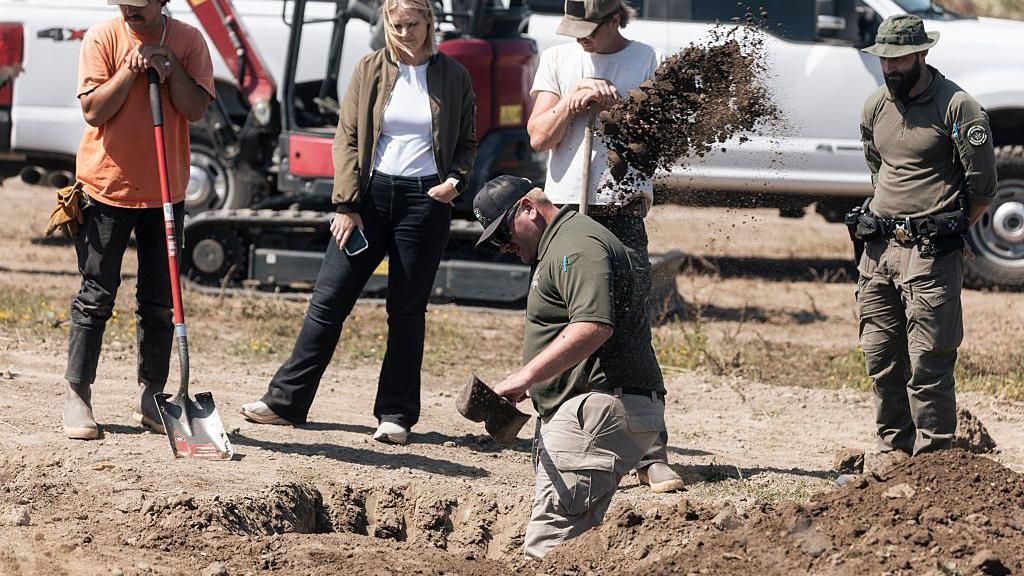
    A public appeal has been launched by law enforcement in Colorado to identify an unidentified young woman who was left critically injured after being struck by lightning on a suburban walking trail earlier this week. The incident unfolded in Superior, a small community located roughly 32 kilometers northwest of Denver, on Thursday evening.

    According to local law enforcement officials, a group of bystanders who heard a loud thunderclap connected to the lightning strike went outside to investigate, where they discovered the unresponsive woman. The Good Samaritans immediately initiated cardiopulmonary resuscitation (CPR) and continued life-saving efforts until emergency response teams could arrive at the scene. First responders were dispatched to the location at approximately 17:39 local time.

    When first responders arrived, the woman had no detectable pulse and was not breathing. After sustained resuscitation work, she eventually regained a weak pulse and began breathing independently, though she remained unconscious. She was quickly airlifted to a major trauma center in Denver for urgent medical care.

    As of mid-morning Friday, the patient has stabilized slightly, with a regular heart rate and continued independent breathing, but she remains in critical condition, per an update from the Boulder County Sheriff’s Office shared on Facebook. Officials have not been able to confirm her identity, as she was carrying no form of identification when found, and her mobile phone was completely destroyed by the lightning strike. Her fingerprints also do not match any records on file in law enforcement databases.

    Law enforcement has released a detailed description of the victim to aid in identification. She is believed to be between 20 and 30 years old, a white woman standing 5 feet 5 inches tall and weighing roughly 54 kilograms, with distinctive red or auburn hair. She has three butterfly tattoos on her upper right arm, and was wearing a green running top, black running shorts with white trim, white or pink running shoes, and a grey or black windbreaker jacket at the time of the strike. No photo of the woman is being released to the public at this time, officials confirmed, as she has sustained significant facial trauma from the strike and does not resemble her typical appearance.

    Authorities have already cross-referenced the description with active missing person reports across the region, but have not yet found a matching case. The primary goal of the public appeal is to connect the injured woman with her family members, who can be with her at the hospital as she receives care.

    “Obviously, we want to connect her with her loved ones and family, so they can be there at the hospital with her,” said Carrie Haverfield, public information officer for the sheriff’s office, in an interview with the BBC. “So we’re asking the community if they have anyone fitting the description put out, a loved one, family member, who they’ve been unable to get ahold of.”

    Haverfield noted that while Superior sits on Colorado’s Front Range, an area of prairie and foothills rather than the high elevation mountain terrain where lightning strikes are more commonly reported, the state as a whole experiences a high volume of lightning activity annually. National Weather Service data estimates that roughly 500,000 lightning strikes hit the ground across Colorado each year. Between 2006 and 2024, the Lightning Safety Council ranks Colorado third in the United States for total lightning-related fatalities, only behind Florida and Texas which claim the top two spots. Nationwide, the U.S. Centers for Disease Control reports that around 40 million lightning strikes hit U.S. ground every year, though the annual odds of an individual being struck remain less than one in a million.

    Anyone with information that could help identify the victim is asked to contact the Boulder County Sheriff’s Office immediately.

  • Village murals bring Beijing dreams closer

    Village murals bring Beijing dreams closer

    Nestled in Wuying Village, a quiet rural community in Shangqiu, Henan Province, a striking 18-meter-long, 8-meter-high mural of Beijing’s Tian’anmen Square has turned the once-overlooked village into an unexpected travel destination for elderly travelers from across China. Created by local 39-year-old artist Wu Chengyan, the hyper-realistic artwork has fulfilled a decades-long unmet dream for hundreds of seniors who never had the chance to visit the iconic capital landmark due to health, financial or mobility barriers.

    During this year’s New Year holiday, crowds of elderly visitors lined up for photos in front of the mural, many dressed in their finest new clothing, some arriving in wheelchairs or assisted by family members on three-wheeled carts. The narrow roads leading in and out of the village were filled end-to-end with parked vehicles. For many visitors, the lifelike depiction felt as authentic as standing in Tian’anmen Square itself. “It is exactly the same as seeing Tian’anmen Square on TV,” shared a 70-year-old female visitor, echoing the sentiment of dozens of other guests.

    Wu’s journey to creating this viral work of community art has been marked by personal persistence and a deep commitment to giving back to the village that raised him. A lifelong art lover who grew up in Wuying, Wu dreamed of attending China’s top art school, the Central Academy of Fine Arts, during his high school years. Between 2006 and 2010, he took the national college entrance exam (gaokao) five times, but fell short of admission each time due to low English scores. Undeterred, he continued to hone his craft while building a life with his wife Chang Lihua: the pair opened a local kindergarten in Shangqiu in 2015, and by 2018, Wu earned a place as a member of the Henan Provincial Art Association, a milestone he called a “high recognition of my life’s work.”

    A series of financial setbacks followed, however, as operational challenges left the couple with substantial debt from the kindergarten. Wu’s creative path shifted in 2015, when he painted his first village mural as a personal gift for Chang’s grandparents, who were unable to travel for leisure due to advanced age and limited mobility. To bring them the joy of a hiking experience without leaving home, Wu painted a vivid natural landscape across an exterior wall of their house.

    Word of Wu’s skill spread quickly through the village, and soon other elderly residents began asking for custom murals of their own. Wu accepted every request, completing more than 40 large-scale works for villagers entirely free of charge. Chang began sharing short videos of Wu’s process and finished murals on Chinese short-video platform Douyin, and the account quickly gained a national following. Over the past year, two of their posts went viral: the first for a dynamic Nezha-themed mural in March 2025, and the second for the Tian’anmen mural, which drew more than 100,000 visitors to Wuying Village over the 2026 New Year holiday alone.

    Wu initially focused his murals on sweeping landscapes and beloved animation characters, but shifted to include more culturally meaningful themes after local elders expressed interest in “red stories” of China’s revolutionary history. Today, his village works include depictions of the People’s Republic of China’s founding ceremony, Japan’s surrender in World War II, the founding of the Communist Party at the Red Boat, and historical exposures of the atrocities committed by Unit 731. To prepare for the Tian’anmen mural, Wu asked a friend living in Beijing to take new, high-resolution reference photos of the landmark, and spent five days refining the work. He even adjusted his technique to accommodate seniors with age-related farsightedness, using bolder outlines and exaggerated three-dimensional effects to make the image clear and easy to see.

    For Wu, the project is deeply personal. “I was raised by the elders in the village. After my mother passed away in 2019, they took even better care of me. I always feel I owe them something,” he explained. “Many of them regret not being able to visit places they dreamed of. My mother had such dreams, too. When I paint for other elders, I feel like I’m making up for that regret.”

    His work has now attracted invitations from across China, with community groups in Anhui, Jiangxi, Guizhou, Shanxi and Shandong provinces asking Wu to bring his art to their rural areas. Today, Wu earns his primary income from these off-site mural commissions, and he and Chang are experimenting with livestream e-commerce to supplement their income. Even as his career grows, however, Wu remains committed to his original mission: he plans to continue painting free murals for rural elders, and even extend the offer to his online followers. “We wouldn’t be where we are without the villagers lifting us up,” Chang said. “We’ll never forget our roots. The village and its people are the foundation of everything we do.”

  • Great at gaming? US air traffic control wants you to apply

    Great at gaming? US air traffic control wants you to apply

    Facing a years-long staffing crisis that has already contributed to high-profile aviation disasters, the U.S. Federal Aviation Administration is launching an unconventional new recruitment drive: targeting skilled video game players to fill thousands of vacant air traffic controller roles. The agency’s hiring window opens next week, and the new marketing campaign builds on similar outreach efforts launched during the Biden administration to attract a new generation of qualified candidates.

    The campaign’s core pitch leans into an intuitive alignment between gaming expertise and the demands of air traffic control. The opening of the campaign’s promotional video spotlights the Xbox logo before cutting to a dynamic montage, alternating between clips of gamers competing in online matches and working air traffic controllers monitoring flight data on their screens. The tagline cuts straight to the point: “You’ve been training for this.” In addition to leaning into the transferable skills gamers already hold, the ad also highlights the role’s lucrative compensation, noting that controllers can earn up to $155,000 annually after just three years on the job.

    U.S. Transportation Secretary Sean P. Duffy emphasized that the outreach strategy is a necessary adaptation to connect with younger workers who already possess the core competencies the role requires. “This new strategy taps into a growing demographic of young adults who have many of the hard skills it takes to be a successful controller,” Duffy explained in an official statement. This approach is not entirely new: it echoes the Biden administration’s 2021 “Level Up” recruitment campaign, which used popular gaming terminology to draw experienced players into applicant pools for open controller roles.

    Air traffic control is one of the most safety-critical roles in commercial aviation. Controllers are responsible for monitoring all aircraft moving through airport airspace, on taxiways, and on runways, directing movements to prevent mid-air collisions, ground incidents, and other safety hazards. Industry guidance for the role notes that it demands rapid, calm decision-making under high pressure, sharp spatial awareness, and advanced technical proficiency – skills that many experienced video game players develop through hours of interactive gameplay.

    Yet despite the critical nature of the role, persistent staffing shortages have plagued the industry for years, and the problem is projected to worsen over the coming decade, according to data from the U.S. Bureau of Labor Statistics. Last year, the FAA reported it needed 14,663 active controllers to operate at full capacity, but was already short at least 3,000 workers. The agency also projected that twice that number – roughly 6,000 current controllers – will retire or leave the profession by 2028. While Duffy noted Friday that current staffing levels are the highest they have been in six years, he did not release updated specific numbers to confirm the improvement.

    Labor leaders who represent working controllers have expressed support for the innovative approach, so long as strict safety and qualification standards remain in place. Nick Daniels, president of the National Air Traffic Controllers Association, the union that represents U.S. air traffic controllers, said the organization backs efforts to expand the candidate pool by targeting groups with existing relevant skills. “Our union welcomes innovative approaches to expanding the candidate pool, including outreach to individuals with high-level aptitude skills such as gamers, so long as all pathways maintain the rigorous standards required of this safety-critical profession,” Daniels said.

    The new recruitment push comes in the wake of two deadly high-profile aviation incidents linked to air traffic control operations in recent years. In early 2025, a mid-air collision between an army helicopter and a commercial passenger jet near Washington DC’s Ronald Reagan Washington National Airport killed 67 people. Earlier this year, an Air Canada passenger jet collided with an airport fire truck on the ground at New York’s LaGuardia Airport, killing two commercial pilots. These incidents have amplified public pressure on the FAA to resolve its persistent staffing shortfall and strengthen aviation safety across the U.S. national airspace system.

  • French man charged with locking son in van for more than a year

    French man charged with locking son in van for more than a year

    A shocking case of child neglect has emerged in eastern France, where a 43-year-old man has been formally charged after holding his nine-year-old son captive in a parked van for more than 12 months. The disturbing discovery was made on Monday in the residential town of Hagenbach, located in the Alsace region, after attentive neighbors alerted authorities to suspicious sounds of a young child coming from the vehicle, which was parked in a shared communal space of a local apartment block.

    Local state prosecutors have released harrowing details of the boy’s condition when first responders entered the van. The child was found lying naked beneath a thin blanket, resting on a heap of garbage piled beside human waste. He was severely malnourished, and long-term confinement to a fixed position left him unable to walk upon discovery.

    Under official questioning, the father—who has not been publicly identified to protect the identity of the minor victim—claimed he locked his son in the vehicle starting in November 2024. He told investigators he took this extreme step to block his 37-year-old partner, who he said intended to place the boy in psychiatric care. The father also maintains that his partner was unaware the child was being held in the van.

    At the time of the discovery, the couple resided in the apartment block alongside the boy’s two siblings: a 12-year-old full sister and a 10-year-old half-sister. All three children have since been moved into temporary protective care, where they will remain while a children’s court judge deliberates on long-term placement arrangements.

    French newspaper Le Parisien has published the child’s firsthand account of his year-long confinement. According to the boy, his father brought him food two times each day and left bottles of water for him to drink. With no access to bathroom facilities, he was forced to urinate into empty plastic bottles and defecate in plastic bin bags. The child also told investigators he had not taken a shower since the end of 2024.

    Neighbors told law enforcement that the nine-year-old had seemingly vanished from the community abruptly around the end of 2024. When residents asked about his absence, the couple told neighbors the child had been placed in formal foster care. Some residents reported hearing faint, irregular noises coming from the parked van over the months that followed, but when they raised questions, the pair told them the sounds were coming from a stray cat, discouraging further investigation.

    Following the investigation, the father faces multiple serious charges including sequestration and arbitrary detention of a minor, as well as deliberate deprivation of adequate nutrition and necessary medical care. He has been ordered to remain in pre-trial custody. His partner has also been charged on two counts: failure to provide assistance to an endangered minor, and failure to report known child mistreatment to authorities. She has been released from custody on conditional bail as the case moves through the French judicial system.

  • South Korea deploys thermal imaging cameras in search for escaped zoo wolf

    South Korea deploys thermal imaging cameras in search for escaped zoo wolf

    A large-scale multi-agency search is entering its fourth day in central South Korea, after a young gray wolf escaped a city zoo by burrowing under an enclosure fence last week, sparking public safety alerts and unexpected viral attention online.

    Two-year-old male wolf Neukgu broke out of Daejeon O-World, a combined zoo and theme park located in the central South Korean city of Daejeon, on Wednesday, April 8, according to local zoo officials. After completing mandatory daily pre-opening enclosure inspections, staff noticed the wolf was absent from its habitat. A review of closed-circuit security footage confirmed Neukgu had damaged the base of the enclosure’s fence and dug through the underlying soil to escape, a zoo representative told local outlet *The Korea Times*.

    Since the escape, authorities have mobilized over 300 personnel to track the animal, including trained firefighters, local police officers, and military troops. Search teams initially deployed thermal imaging cameras and drones to cover the wooded hillsides surrounding the zoo; thermal footage captured by the Korea Wildlife Protection Association on Wednesday did confirm Neukgu was moving through forested terrain within a few kilometers of the zoo. However, search efforts were hampered early Thursday when sudden heavy rain forced operators to ground all drones, an official told AFP.

    As a precautionary public safety measure, a nearby elementary school suspended in-person classes on Thursday, and local government officials have issued repeated warnings to area residents to stay vigilant when outdoors, avoid isolated wooded areas, and immediately report any potential sightings of the wolf to search command.

    South Korean President Lee Jae Myung publicly addressed the incident in a post on the social platform X Thursday, saying, “I hope no human casualties occur and I pray that Neukgu also returns home safely.”

    What makes this search particularly notable is Neukgu’s role in a critical conservation initiative: the wolf, born in captivity in 2024, is part of a long-running program working to restore the Korean wolf, a subspecies that is officially classified as extinct in the wild across the Korean peninsula. A successful recapture would help protect the progress of this ongoing conservation work.

    The high-profile escape has already captured the public’s imagination, drawing comparisons to a viral 2023 incident where a zebra named Sero escaped from a Seoul zoo and remained at large for several days. In an unexpected twist, the runaway wolf has already inspired a new meme cryptocurrency named after Neukgu, which launched on decentralized crypto exchanges within 24 hours of the escape being reported, local media confirmed.