分类: society

  • UAE weather: Light rains expected; temperatures to dip to 7ºC

    UAE weather: Light rains expected; temperatures to dip to 7ºC

    Meteorological authorities in the United Arab Emirates have issued a weather advisory indicating a significant drop in temperatures accompanied by precipitation across coastal regions. According to the National Centre of Meteorology (NCM), Thursday, January 15 will witness light rainfall alongside progressively cooler conditions, particularly in western areas.

    Weather patterns are forecast to range from fair to partly cloudy, with increased cloud coverage expected intermittently over northern and coastal territories. Accompanying these conditions will be light to moderate winds that may intensify periodically, becoming particularly vigorous over maritime zones. These stronger gusts pose potential challenges including blowing dust and sand, which could substantially reduce horizontal visibility in exposed areas.

    Maritime conditions are anticipated to deteriorate, with the Arabian Gulf expected to experience moderate to rough seas that may become very rough overnight. Similarly, the Oman Sea will see moderate conditions turning rough during nighttime hours.

    Temperature variations will be considerable across the Emirates. The mercury is predicted to plunge to a brisk 7°C in interior regions such as Raknah, while simultaneously reaching highs of 28°C in other parts of the country. Major population centers will experience more moderate ranges: Dubai anticipates temperatures between 17°C and 27°C, Abu Dhabi between 16°C and 27°C, and Sharjah between 15°C and 26°C.

    Residents and visitors are advised to monitor updated forecasts and exercise caution, especially in areas prone to reduced visibility and maritime travelers facing potentially hazardous sea conditions.

  • Hong Kong pledges all-out efforts in fire aftermath, mulls reform to strengthen building safety

    Hong Kong pledges all-out efforts in fire aftermath, mulls reform to strengthen building safety

    Hong Kong’s government has initiated sweeping safety reforms and pledged full support to victims in the aftermath of a catastrophic residential fire that engulfed multiple buildings in the Tai Po district. Chief Executive John Lee Ka-chiu announced the comprehensive response during his address to the newly convened eighth-term Legislative Council on January 14, 2026.

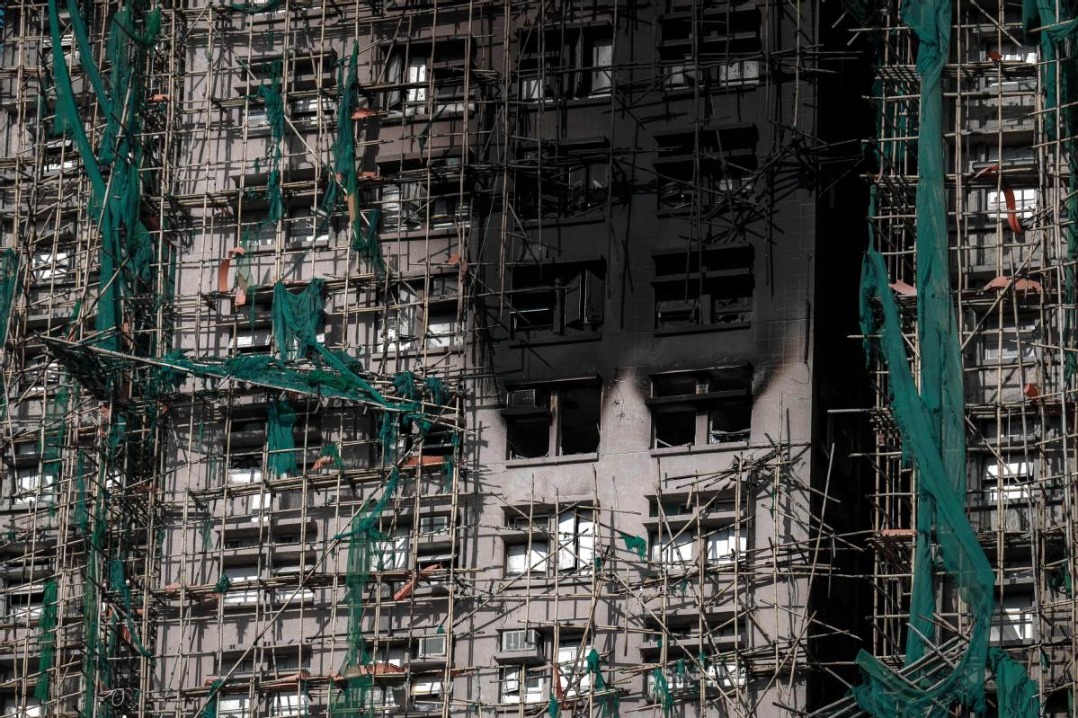
    The tragic November 26 blaze at Wang Fuk Court residential complex, which resulted in multiple fatalities, has prompted immediate action from Hong Kong authorities. Law enforcement agencies have made several arrests related to suspected manslaughter and corruption charges, while the Development Bureau has mandated the removal of all scaffolding nets from buildings undergoing maintenance and completely restructured approval protocols for such safety installations.

    The government has simultaneously activated emergency support systems, providing substantial subsidies and relief measures to affected residents. An independent investigative committee has been established with a nine-month deadline to determine the exact causes of the incident and establish accountability frameworks. Chief Executive Lee emphasized that the government will implement all recommendations from the committee, initiating systematic reforms across multiple sectors to prevent similar tragedies.

    This multi-faceted approach represents one of Hong Kong’s most significant building safety initiatives in recent years, addressing both immediate concerns and long-term structural improvements to urban safety protocols and emergency response systems.

  • In pictures: Fog and frozen lakes as cold weather sweeps northern India

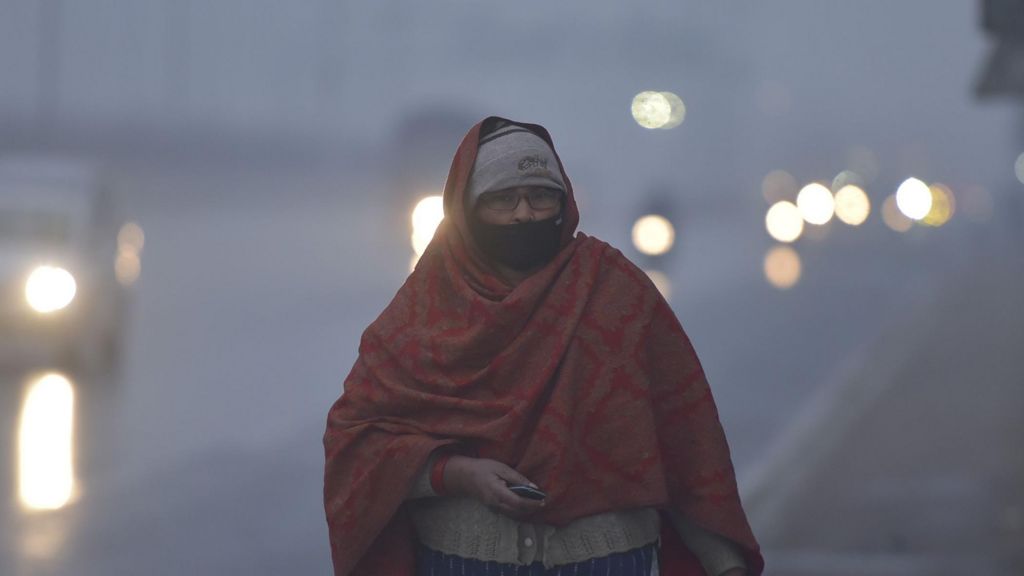
    In pictures: Fog and frozen lakes as cold weather sweeps northern India

    A severe cold wave continues to paralyze vast regions of northern India, bringing life to a near standstill as temperatures plummet to near-freezing levels. The intense chill, characterized by dense fog and icy winds, has persisted for four consecutive days, with meteorological departments forecasting its continuation until Friday.

    Delhi experienced its coldest morning of the season on Thursday, with temperatures dropping to a brisk 2.9°C (37.2°F). The cold proved even more extreme in neighboring Haryana state, where readings fell below 1°C (33.8°F) in several areas. Social media platforms have been flooded with striking images of frost-encrusted vehicles and frozen landscapes, illustrating the unusual severity of this winter event.

    The extreme conditions have significantly disrupted transportation networks. Delhi Airport issued advisories warning passengers of substantial flight delays due to severely limited visibility caused by thick fog. Multiple train services across the region have been canceled or are operating with significant delays, compounding travel chaos.

    This weather event exposes critical infrastructure vulnerabilities. Most residential buildings in India’s plains lack central heating systems, leaving millions unprepared for such harsh winter conditions. The crisis disproportionately affects homeless populations, who have been forced to light makeshift fires on city streets for warmth during frigid nights.

    Compounding the situation, the cold wave has exacerbated already dangerous air quality levels across northern Indian cities. Meteorological experts note that low winter temperatures create atmospheric conditions that trap pollutants close to ground level, significantly worsening air pollution and creating serious respiratory hazards, particularly for children, the elderly, and those with pre-existing health conditions.

    In Indian-administered Kashmir, the cold has reached even more extreme levels, with reports of completely frozen water pipes and partially frozen bodies of water, including sections of the famous Dal Lake in Srinagar. Several waterfalls in the region have transformed into icy formations as temperatures dropped below zero.

  • Tour trend takes students to factories

    Tour trend takes students to factories

    Across China, an emerging educational trend is transforming industrial facilities into dynamic learning environments as factory tours gain unprecedented popularity among students. The movement represents a significant shift in educational tourism, moving beyond traditional cultural and recreational activities to showcase the nation’s technological advancements in manufacturing.

    At Geely Auto’s Jinzhong facility in Shanxi province, middle school students witness robotic arms performing precision welding operations that challenge conventional perceptions of industrial environments. “My whole concept of manufacturing involved heat, noise and crowded spaces,” remarked 8th-grader Zhang Heyuan. “Instead, I discovered a clean, quiet, and highly automated facility that feels like stepping into the future.”

    The phenomenon extends beyond automotive plants to include electric vehicle manufacturers, robotics laboratories, dairy producers, and traditional craft workshops. Demand has surged to remarkable levels, with Beijing’s Xiaomi electric vehicle plant reporting over 100,000 registrations for tours in the first ten months of 2025. The facility has expanded its winter schedule to accommodate 126 sessions this month alone.

    These industrial visits function as interactive classrooms where theoretical knowledge meets practical application. At Nio’s Second Advanced Manufacturing Base in Hefei, Anhui province, students observe innovative systems including three-dimensional storage solutions and intelligent assembly lines that resemble elevated highways. Since opening to the public in 2018, Nio’s Hefei facilities have welcomed approximately 300,000 visitors who participate in automotive science lectures and hands-on model building activities.

    The trend coincides with China’s ascent in global manufacturing, where the nation maintains its position as the world’s largest manufacturer for 15 consecutive years. With over 500,000 high-tech enterprises and commanding more than 40% of global “Lighthouse Factories”—benchmarks for smart manufacturing and digitalization—China’s industrial landscape offers substantial educational value.

    Educational experts emphasize the tours’ multifaceted benefits. “These experiences enhance scientific literacy while helping students intuitively understand China’s position in the global technological ecosystem,” explained Yang Yi, Public Affairs Director at Nio Manufacturing. The exposure frequently inspires career aspirations, as evidenced by high school student Ma Hexuan’s reaction after visiting Siasun Robot & Automation: “Witnessing technological innovation’s power has motivated me to contribute to such industries.”

    According to Xiong Bingqi, Director of the 21st Century Education Research Institute, these experiences help students align academic choices with societal needs. The movement also fosters broader cultural appreciation for innovation, with Chinese Academy researcher Han Junhui noting that “smart factories becoming tourist attractions epitomize China’s transition from traditional to intelligent manufacturing.”

  • UAE: Death of friends, family impact children differently; how parents can help

    UAE: Death of friends, family impact children differently; how parents can help

    In the wake of recent tragedies across the United Arab Emirates, mental health professionals are shedding light on the complex ways children process grief and loss, emphasizing that young minds require specialized support mechanisms distinct from adult coping strategies.

    The emotional landscape of childhood grief has come into sharp focus following a devastating road accident that claimed the lives of four siblings, prompting educators and psychologists to reexamine support systems for bereaved children. Unlike adults who typically express grief overtly, children often internalize their pain, manifesting through behavioral changes that may persist for years without proper intervention.

    Clinical psychologist Dr. Reena Thomas of Medeor Hospital, Dubai, explains: “Children’s responses to mortality vary significantly based on developmental stage, temperament, and comprehension capacity. While some exhibit immediate emotional outbursts, others retreat into silence that parents frequently misinterpret as resilience. This silence often represents profound internal struggle rather than healthy adaptation.”

    Two contrasting cases illustrate this psychological complexity. Fatima S. (pseudonym) discovered her daughter had silently mourned a close friend’s death for over two years, exhibiting diminished school engagement and persistent questioning. Conversely, an Abu Hail family witnessed their son develop pervasive anxiety about mortality after losing both an elderly grandfather and young cousin within months, demonstrating how consecutive losses can fundamentally alter a child’s perception of safety.

    Educational institutions are increasingly implementing proactive measures. Numerous UAE schools have established dedicated spaces for emotional expression, with teachers facilitating peer support networks recognizing that classroom grief requires as much attention as home-based mourning. These initiatives have gained urgency following recent tragedies, including the quadruple sibling fatality and a sudden death at a Sharjah educational institution.

    Dr. Thomas recommends parents monitor behavioral indicators including sleep pattern alterations, appetite changes, academic performance declines, and newfound anxieties about loved ones’ mortality. She emphasizes: “Children frequently grieve in non-linear stages across extended periods. Parental presence and stability provide more therapeutic value than perfectly crafted explanations. Maintaining routines while permitting emotional expression in whatever form it takes proves most beneficial.”

    The psychological community stresses that societal support systems must evolve to address childhood grief’s unique characteristics, particularly as communities process collective tragedies. With proper understanding and intervention, professionals believe children can develop healthy coping mechanisms that serve them throughout life.

  • 71-year-old braves icy river to rescue drowning man

    71-year-old braves icy river to rescue drowning man

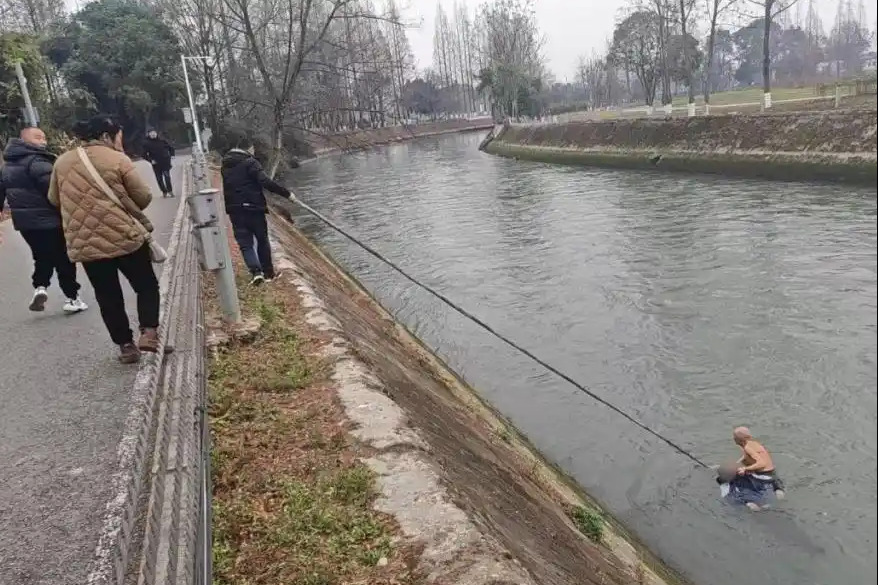
    In an extraordinary display of courage and selflessness, 71-year-old Liu Guiyuan from Chengdu has become an internet sensation after saving a drowning man from an icy river on January 7th. The dramatic rescue occurred along the banks of Fangqiao village’s river where swift currents threatened to sweep the victim away.

    The chain of events began when Wu Ke, a local village official patrolling the riverbank, spotted the struggling man being carried downstream. Wu immediately grabbed a life ring and shouted for assistance while running along the shore. Liu, who happened to be cycling nearby, heard the distress calls and responded without hesitation.

    Demonstrating remarkable presence of mind, the senior citizen turned his bicycle around, removed his clothing, and plunged into the frigid waters. Battling against the powerful current, Liu reached the drowning individual and maintained a secure hold while attempting to return to shore. The rescue operation faced additional complications due to the steep and slippery riverbanks, which prevented direct exit from the water.

    With strategic coordination, Liu began swimming across the river while carefully keeping the victim’s head above water. Wu provided crucial support from the opposite bank, first throwing a life ring and then utilizing a rescue pole when the initial attempt failed. Despite showing signs of exhaustion from the strenuous effort in cold conditions, Liu successfully grasped the pole, enabling both men to be pulled to safety.

    The entire rescue operation lasted approximately ten minutes, concluding as firefighters arrived to provide additional assistance using ropes. Medical personnel transported the rescued man to a nearby hospital where he made a full recovery.

    In subsequent interviews, Liu displayed characteristic humility regarding his actions. ‘I wasn’t afraid at all; my only thought was to save him,’ the septuagenarian stated. He further revealed his personal philosophy: ‘I often tell myself that as long as it’s a good thing I can do, I will definitely do it.’

    Local authorities have officially recognized Liu’s heroic actions, praising his demonstration of selfless kindness and community spirit that transcends age limitations.

  • Intel-sharing aids HK’s drug trafficking crackdown

    Intel-sharing aids HK’s drug trafficking crackdown

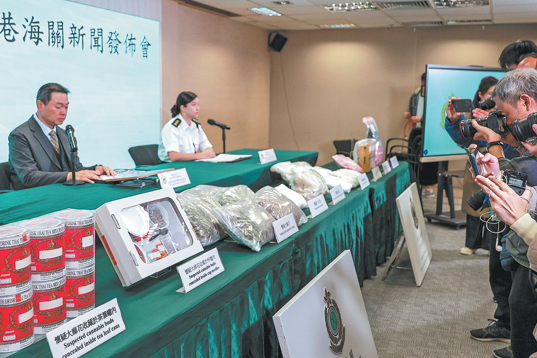
    Hong Kong authorities have announced a major breakthrough in combating international drug trafficking through expanded cross-border intelligence sharing. From October to December, a sophisticated collaboration network spanning 17 jurisdictions enabled the seizure of 1.4 metric tons of suspected narcotics with an estimated street value of HK$431 million (approximately $55.3 million).

    The operation, detailed at a Wednesday media conference at Hong Kong International Airport, resulted in 183 identified drug-smuggling cases involving aviation transportation and led to the apprehension of 62 suspects across multiple jurisdictions. The arrested individuals, ranging from 19 to 77 years old, included a significant number of foreign nationals residing outside both Hong Kong and mainland China.

    This successful crackdown followed the strategic expansion of Hong Kong Customs’ intelligence-sharing network to include law enforcement agencies from 16 partner jurisdictions, including mainland China, Macao, Germany, and Thailand. The enhanced collaboration framework facilitates joint intelligence analyses and comprehensive risk assessments.

    Wong Ngar-lun, Head of Airport Investigations for Hong Kong Customs, emphasized the effectiveness of prompt intelligence exchanges in disrupting drug-trafficking syndicates. Noting that approximately 70% of the city’s total drug seizures in 2025 were intercepted at the airport, Wong highlighted the aviation pipeline’s continued appeal to smugglers and pledged ongoing “multipronged, multilayered” enforcement strategies.

    Authorities also announced intensified security measures for transit passengers and cargo, aiming to systematically dismantle Hong Kong’s exploitation as a global transshipment hub for narcotics. The recent operation identified 18 transit-related cases demonstrating this concerning trend.

    Under Hong Kong’s Dangerous Drugs Ordinance, convicted drug traffickers face severe penalties including maximum sentences of life imprisonment and fines up to HK$5 million.

  • Short videos shine spotlight on rural life

    Short videos shine spotlight on rural life

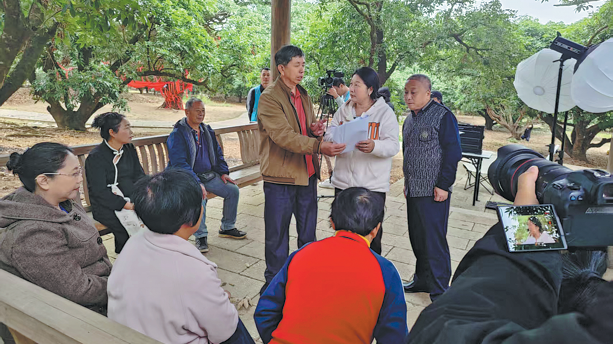
    The remote village of Tandi in Gaozhou, Guangdong province, has emerged as an unexpected digital media sensation through its innovative production of short-form dramas that showcase authentic rural life. This transformation represents a pioneering economic development model combining agricultural heritage with digital storytelling.

    At the forefront of this cultural movement stands the series ‘New Dreams in Lychee Land,’ which received prestigious nominations for Best Director and Best Actress at the 4th Hong Kong Bauhinia International Film Festival. The production has achieved remarkable digital penetration, accumulating over 150 million views across major Chinese platforms including Douyin, Kuaishou, and WeChat.

    What distinguishes this production is its complete integration with the local environment. The drama was filmed entirely within Tandi village, utilizing the region’s renowned lychee industry as both backdrop and narrative foundation. This approach has successfully transported authentic rural stories to massive urban audiences while celebrating agricultural traditions.

    According to local officials, the project exemplifies Gaozhou’s innovative development strategy that synergizes short-form media production with agricultural promotion, farmer participation, and rural cultural preservation. The initiative has generated substantial economic benefits for the community of approximately 1,000 residents.

    Village Party Secretary Guo Zhiyu reported significant growth in complementary industries including homestay accommodations, local restaurants, and cultural tourism. ‘During weekends and holidays, visitors must book homestays and restaurant meals well in advance due to overwhelming demand,’ Guo explained, noting substantial income increases for local farmers.

    The village has responded to this tourism surge by upgrading infrastructure and facilities to enhance visitor experiences while maintaining the community’s authentic character. This digital-to-physical economic model demonstrates how rural communities can leverage digital media to create sustainable development while preserving cultural identity.

  • HKSAR govt pledges full probe into fire

    HKSAR govt pledges full probe into fire

    Hong Kong’s government has committed to a comprehensive investigation into November’s catastrophic Tai Po fire that resulted in 161 fatalities and displaced approximately 2,000 households. Chief Executive John Lee Ka-chiu addressed the eighth-term Legislative Council, vowing to hold all responsible parties accountable regardless of their position or affiliation.

    The tragic incident at Wang Fuk Court housing complex has prompted the administration to propose significant legislative reforms targeting fire safety protocols. Chief Secretary for Administration Eric Chan Kwok-ki revealed plans to integrate fire safety measures into property managers’ statutory duties, effectively establishing property management companies as legal gatekeepers for building safety.

    The proposed reforms include mandatory safety distances for large-scale maintenance projects, requiring Fire Services Department approval before disabling critical safety equipment, and accelerating amendments to construction safety regulations. The revised rules would impose clear legal responsibilities on contractors and subcontractors while implementing strict smoking prohibitions at all construction sites.

    Lee emphasized the government’s commitment to long-term housing solutions for affected families, with working groups analyzing resident surveys to formulate appropriate accommodation plans. The nearly nine-hour legislative session featured 90 lawmakers providing input on recovery efforts, with suggestions ranging from government acquisition of property rights at pre-fire values to enhanced psychological support for displaced residents.

    The administration pledged to implement systemic reforms across all necessary areas while maintaining focus on economic and social development through improved executive-legislative collaboration.

  • Horrific footage captures moment Melbourne truck driver bashed outside Clyde North home while family sleeps

    Horrific footage captures moment Melbourne truck driver bashed outside Clyde North home while family sleeps

    A disturbing violent incident unfolded in Melbourne’s southeastern suburb of Clyde North early Thursday morning, leaving a local truck driver with significant injuries. At approximately 5:30 a.m., a 42-year-old man was preparing to depart for work from his Brumich Way residence when two unidentified assailants launched a surprise attack.

    Closed-circuit television footage obtained by authorities depicts the harrowing sequence of events. The visual evidence allegedly shows one individual striking the victim in the head with sufficient force to propel him backward onto the roadway. A second assailant then joined the assault, with both men proceeding to punch and kick the defenseless victim while he lay incapacitated on the ground.

    Despite sustaining a fractured skull and broken nose in the brutal beating, the victim demonstrated remarkable resilience by managing to return to his household where family members remained asleep during the altercation. His sister, Suman, provided a chilling account to Nine News, describing extensive blood distribution throughout the home and on the victim’s face. She characterized the assault as potentially lethal in intent, stating the attackers appeared determined to ensure his demise through targeted head trauma.

    Victoria Police representatives confirmed the victim received hospital treatment for injuries classified as non-life threatening. Law enforcement officials conducted comprehensive area searches but failed to locate the perpetrators. Although the precise motivations remain undetermined, authorities have explicitly stated they are not treating this as a random act of violence. The criminal investigation continues with police urging residents possessing relevant information or additional surveillance footage to contact Crime Stoppers immediately.