分类: society

  • Ghana official rejects ‘Detty December’ label

    Ghana official rejects ‘Detty December’ label

    Ghana’s tourism authorities have initiated a rebranding effort for the country’s massive December tourism season, currently known colloquially as “Detty December.” Kofi Okyere-Darko, Ghana’s Director of Diaspora Affairs, expressed reservations about the term’s association with the country, stating he is “not very comfortable” with the label despite its popularity among younger visitors.

    The term “Detty,” derived from West African Pidgin English meaning “dirty,” has evolved to signify unrestrained celebration and entertainment. The phrase gained prominence approximately eight years ago following Nigerian artist Mr Eazi’s Detty Rave festival in Accra. However, government officials now prefer the officially sanctioned “December in Ghana” tourism initiative.

    This branding debate occurs against the backdrop of remarkable tourism growth. Last December witnessed over 125,000 international visitors, primarily from the diaspora community, marking a significant increase compared to other months and continuing a three-year upward trend. The seasonal influx represents a substantial economic boost for the West African nation.

    The December experience has expanded beyond pure entertainment. While Accra continues to host major events featuring international artists like Busta Rhymes and Giggs alongside local legends Samini and Reggie Rockstone, the calendar now incorporates investment seminars, networking sessions, and cultural showcases. This diversification offers diaspora visitors opportunities in property, minerals, fashion, and textiles.

    Ghana’s strategic positioning as a diaspora destination began intensifying in 2019 with the “Year of Return” initiative, encouraging people of African descent to invest and connect with their heritage. While the tourism surge brings economic benefits, some locals report challenges including price inflation, overcrowding, and traffic congestion during peak season.

    Mr Okyere-Darko acknowledged the need for branding that resonates with younger audiences, proposing the initials “D.I.G.” for December in Ghana with the accompanying slogan “Let’s dig it!” This compromise attempts to bridge the gap between official preferences and organic cultural terminology while maintaining Ghana’s appeal as a premier December destination.

  • University students explore seal engraving art in Shanghai

    University students explore seal engraving art in Shanghai

    SHANGHAI – The Shanghai Library is currently hosting the National Exhibition of University Students Seal Engravings 2025, presenting a remarkable display of traditional Chinese artistic heritage through contemporary academic interpretation. The exhibition, which opened on December 19, represents a significant cultural initiative to engage young scholars in exploring the origins of Chinese characters while strengthening cultural confidence and preserving intangible cultural heritage.

    This year’s edition demonstrates substantial growth in both scale and quality, attracting 637 participants from 166 universities across China, including international students pursuing studies in the country. The geographical diversity encompasses all 31 provincial-level regions plus Hong Kong and Macao Special Administrative Regions. After rigorous evaluation by expert panels, 288 exceptional works were selected for display, marking a considerable advancement from the inaugural exhibition.

    The exhibition series originated from East China Normal University’s initiative in July 2018, with the first successful showcase held simultaneously at Shanghai Library and ECNU on New Year’s Day 2019. This pioneering effort established China’s first national-level independent seal engraving exhibition exclusively for university students.

    Shanghai’s role as host carries profound cultural significance, as the city has historically served as both a crucial cultural hub and artistic center within modern China. The metropolis boasts deep-rooted connections to seal engraving traditions, having nurtured numerous renowned artists within this discipline throughout history.

    Professor Zhang Suo, Director of the College of Fine Arts at East China Normal University, emphasized the art form’s enduring relevance: ‘Seal engraving constitutes a traditional art form grounded in ancient Chinese seal script that continues to captivate contemporary audiences. As a living fossil that has remained actively used long after ancient Chinese characters receded from everyday usage, it provides a vital bridge for modern individuals to comprehend historical writing systems. The concise nature of seal engraving texts holds particular significance for practicing socialist core values in today’s society.’

    The exhibition not only demonstrates the vitality of traditional art among younger generations but also highlights academic institutions’ growing commitment to preserving and innovating within China’s rich cultural legacy.

  • China’s draft law on childcare services submitted for first reading

    China’s draft law on childcare services submitted for first reading

    China has taken a significant legislative step toward establishing comprehensive childcare standards with the submission of a draft law to the National People’s Congress Standing Committee for initial review. The proposed legislation, comprising eight chapters and 76 articles, represents a systematic approach to enhancing and regulating childcare services for children under three years old.

    The legislative initiative, formally commenced in 2023, follows extensive field research conducted across multiple regions including Beijing, Guangdong, Heilongjiang, and Inner Mongolia. These investigations enabled lawmakers to identify critical challenges within the current childcare landscape and develop targeted solutions through statutory measures.

    The draft legislation adopts a problem-oriented methodology addressing fundamental concerns regarding service quality, provider qualifications, and institutional oversight mechanisms. Central to its objectives is the creation of a diversified childcare system that prioritizes safety, affordability, and accessibility while reducing the financial burden on families.

    Notably, the proposed law emphasizes the establishment of robust supervision frameworks to ensure compliance with safety protocols and safeguard children’s welfare. By strengthening legal protections for young children, the legislation aims to complement existing policies supporting childbirth and parenting, addressing demographic concerns through improved family support systems.

    The submission of this draft law marks a pivotal development in China’s ongoing efforts to reform childcare services and respond to evolving population needs through comprehensive legal frameworks.

  • Winter solstice golden magic illuminates Beijing’s 17-Arch Bridge

    Winter solstice golden magic illuminates Beijing’s 17-Arch Bridge

    On December 21, 2025, Beijing’s historic Summer Palace witnessed a breathtaking astronomical phenomenon as the winter solstice sunset aligned perfectly with the iconic 17-Arch Bridge. The precisely calculated positioning of the sun created a stunning visual effect where the golden rays illuminated all seventeen arches simultaneously, casting a warm, ethereal glow across the ancient structure.

    This annual celestial event attracted hundreds of visitors and photography enthusiasts who gathered along the banks of Kunming Lake to witness and capture the spectacular sight. The bridge, originally constructed during the Qing Dynasty between 1736 and 1795, serves not only as a functional passage but also as a masterpiece of Chinese architectural engineering.

    The phenomenon occurs due to the specific alignment of the bridge’s design with the sun’s position during the winter solstice, the shortest day of the year in the Northern Hemisphere. This architectural-astronomical harmony demonstrates the sophisticated understanding of celestial patterns possessed by ancient Chinese builders, who intentionally designed the structure to create this dramatic annual occurrence.

    Photographers patiently waited for the optimal moment when the sinking sun positioned itself directly behind the bridge, transforming the structure into a silhouetted masterpiece against the fiery sunset. The resulting images showcase how traditional Chinese architecture harmonizes with natural phenomena, creating a temporary artistic installation enhanced by nature’s own illumination.

    The event has grown increasingly popular in recent years, drawing both domestic tourists and international visitors interested in experiencing this unique combination of cultural heritage and astronomical wonder. Park authorities maintained orderly viewing conditions while preserving the tranquil atmosphere of the UNESCO World Heritage Site.

  • Making it count

    Making it count

    Hong Kong’s contemporary art scene reveals a compelling narrative of female artists navigating complex market dynamics while maintaining artistic integrity. Despite global progress in gender representation, these creators continue to face distinctive challenges in finding sustainable commercial footing for their ambitious works.

    Jaffa Lam, an established artist with international recognition including collections at M+ and Centre Pompidou, creates large-scale installations using recycled materials in collaboration with Hong Kong’s women workers. Her socially-engaged practice, featuring expansive fabric canopies up to 14 meters long, remains difficult to place with conventional collectors due to size and logistical constraints. “The situation hasn’t fundamentally changed,” Lam acknowledges, though representation by Axel Vervoordt Gallery has expanded her clientele.

    Galleries like Alisan Fine Arts have consciously championed women artists for over a decade. Director Daphne King notes her ongoing mission to “balance the narrative” through exhibitions like Women + Ink and international showcases at New York’s China Institute. The gallery represents emerging talents like Angel Hui, whose immersive installations transform traditional cultural motifs into contemporary experiences, including an upcoming Venice Biennale collateral event.

    The path proves particularly challenging for late-career artists. Lindsey McAlister returned to painting after a 40-year hiatus directing youth theater programs. Her vibrant abstract works, now represented by two galleries, attracted attention at Art Central and international fairs despite slower commercial traction. “People seem curious about the journey itself,” McAlister observes, noting her story resonates with women considering creative reinvention.

    Many artists supplement incomes through academic positions and selective commercial collaborations. Angela Yuen’s kinetic sculptures using found objects led to a Hermès commission where she transformed hardware into light installations. Fashion partnerships with luxury brands provide exposure, though artist Man Fung-yi cautions younger colleagues to “know their value and maintain professionalism” in commercial dealings.

    Beyond commercial success, these artists find fulfillment through educational roles and community engagement. Lam describes how teaching at Chinese University of Hong Kong provided meaningful connection following local tragedies, creating space for “quieter, slower, and more human” responses than creating objects alone could achieve.

  • Pope offers gentle critique of Vatican culture in Christmas greeting reminiscent of past

    Pope offers gentle critique of Vatican culture in Christmas greeting reminiscent of past

    In a significant address to Vatican cardinals on Monday, Pope Leo XIV delivered a thoughtful critique of the Holy See’s administrative culture, urging officials to prioritize authentic relationships over personal ambitions. The American pontiff posed a fundamental question to the Roman Curia: “Is it possible to be friends in the Roman Curia? To have relationships of genuine fraternal friendship?”

    While maintaining a more diplomatic tone than his predecessor Pope Francis, who famously described problematic behaviors as “spiritual Alzheimer’s” and “cancerous cliques,” Leo XIV acknowledged persistent institutional challenges. He expressed disappointment that “certain dynamics—linked to the exercise of power, the desire to prevail, or the pursuit of personal interests—are slow to change” despite years of service.

    The pope emphasized the transformative power of trustworthy friendships within the bureaucracy, where “masks fall away, no one is used or sidelined, genuine support is offered, and each person’s worth and competence are respected.” This approach marks a continuation of Francis’s tradition of using Christmas addresses for institutional reflection while adopting a more conciliatory tone.

    Leo XIV, who worked within the Vatican for two years before his election, called for curial officials to foster communion both within the Church and in the wider world. He connected this internal reform to broader global challenges, noting that “in a world wounded by discord, violence and conflict, where we also witness a growth in aggression and anger, often exploited by both the digital sphere and politics, Christmas invites everyone to work for peace and universal fraternity.”

    The address reflects the pontiff’s balancing act between maintaining reform momentum and healing divisions within the Church hierarchy following Francis’s sometimes tumultuous 12-year pontificate.

  • Australia falls silent for Sydney shooting victims

    Australia falls silent for Sydney shooting victims

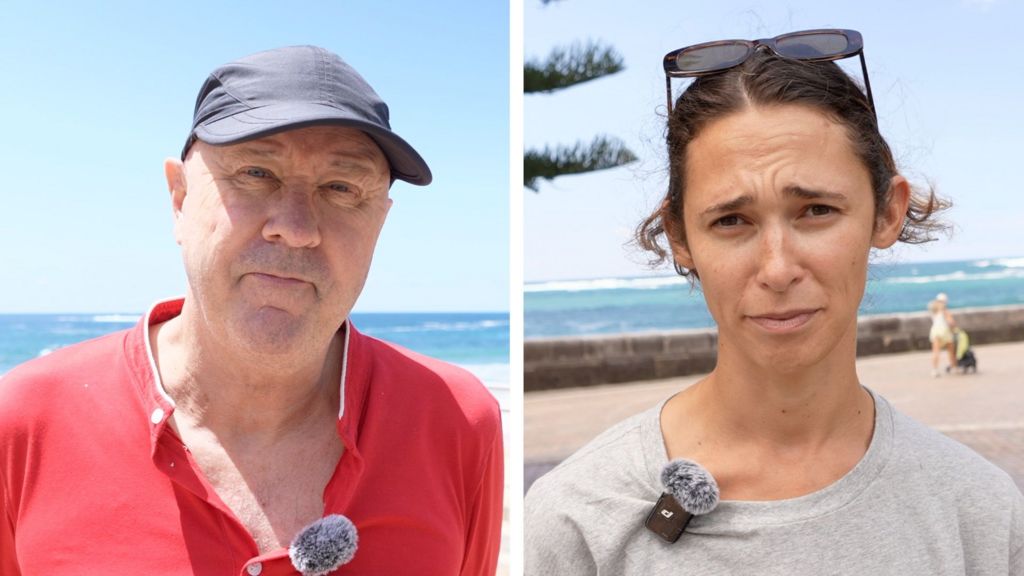
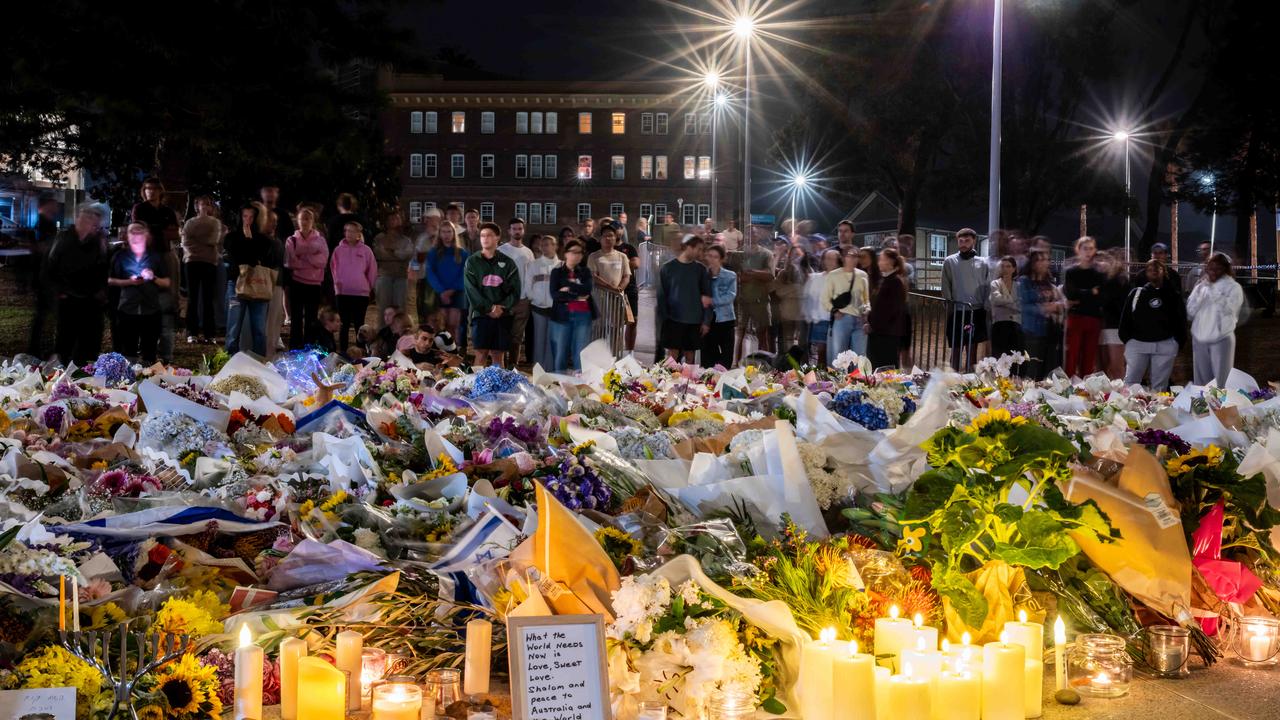
    Nationwide silence descended across Australia on Sunday evening as citizens gathered in solemn remembrance of the 15 victims killed in the Bondi Beach mass shooting exactly one week prior. The country observed a minute of silence at 6:47 pm, synchronizing with the moment gunfire first erupted during a Jewish Hanukkah celebration on December 14, 2025.

    The commemorative events unfolded with profound symbolism as countless Australians lined their windowsills with flickering candles, embodying the Hanukkah theme of ‘light over darkness.’ Flags flew at half-staff nationwide, including above the iconic Sydney Harbour Bridge, while summer winds whispered through silent gatherings from urban centers to rural communities.

    At Bondi Beach, the epicenter of the tragedy, thousands participated in a candlelight vigil where projected images honored victims ranging from 10 to 87 years old. The emotional ceremony included a rendition of ‘Waltzing Matilda’ dedicated to the youngest victim, whose Ukrainian parents had chosen what they considered ‘the most Australian name’ for their daughter.

    The somber remembrance was occasionally punctuated by expressions of public frustration. Some attendees voiced disapproval toward Prime Minister Anthony Albanese’s presence, reflecting growing anger over perceived governmental inadequacies in addressing rising antisemitic incidents preceding the attack.

    Federal and New South Wales governments officially designated December 21 as a national Day of Reflection, marking Australia’s deadliest mass shooting event since the 1996 Port Arthur massacre that claimed 35 lives. The accused perpetrators, identified as a father and son, allegedly targeted the beachside Hanukkah celebration in what authorities describe as a deliberate antisemitic attack.

  • Expressway expands regional linkage

    Expressway expands regional linkage

    In a monumental infrastructure achievement, China’s Xinjiang Uygur Autonomous Region prepares to inaugurate a transformative 319.7-kilometer expressway by December’s end, featuring the world’s longest expressway tunnel that conquers the formidable Tianshan Mountains.

    The centerpiece of this engineering marvel is the 22.13-kilometer Tianshan Shengli Tunnel, an unprecedented bore through the east-west mountain range that has historically divided northern and southern Xinjiang. This strategic corridor connects regional capital Urumqi, north of the mountains, with Yuli County in the Bayingolin Mongolian Autonomous Prefecture to the south through a complex network of 265 bridges and 17 tunnels constructed since 2019.

    The transportation revolution will dramatically compress travel times across the region. The mountain crossing that once took hours will now require approximately 20 minutes through the Shengli Tunnel, while the journey from Urumqi to Korla—Bayingolin’s major urban center—will be slashed from seven hours to just three.

    According to Guo Sheng, Party Secretary of Xinjiang’s Transport Department, this infrastructure breakthrough addresses persistent transportation bottlenecks that have hindered coordinated regional development for decades. The project represents significant technological innovation in constructing ultra-long highway tunnels under extreme high-altitude, cold-weather mountain conditions, establishing new benchmarks for similar challenging projects globally.

    The enhanced connectivity promises substantial economic and tourism benefits. Liu Heping, head of Bayingolin’s tourism association, reports that local authorities, scenic sites, and hospitality providers are preparing for anticipated visitor surges to the prefecture’s renowned attractions including the UNESCO World Heritage-listed Bayanbulak National Nature Reserve, Bayanbulak Grassland, and Bosten Lake.

    This expressway forms part of Xinjiang’s broader transportation modernization initiative. Several additional north-south transport projects commenced construction earlier this year, including the Yining-Aksu railway and the Kuitun-Dushanzi-Kuqa expressway. Over the past decade, Xinjiang has developed an integrated transport system spanning 9,557 kilometers of rail connections reaching all 14 prefecture-level regions and over 80% of county-level administrative areas.

    By year’s end, Xinjiang’s total road network will extend approximately 237,000 kilometers, with nearly all county-level areas accessible via expressway or first-class highway. The region boasts comprehensive transportation access with paved roads, bus services, and postal coverage reaching every township and eligible administrative village. Complementing this ground transportation network, Xinjiang operates China’s highest number of regional airports (28) with 665 air routes, handles over half of China-Europe freight trains, and maintains 119 international road transport routes plus 37 international cargo air connections.

  • Why India’s Aravalli hills are at the centre of growing protests

    Why India’s Aravalli hills are at the centre of growing protests

    Northern India has become a hotbed of environmental activism following a controversial Supreme Court decision to redefine the geographical parameters of the Aravalli mountain range. The judicial ruling, which adopted federal government recommendations, now classifies an Aravalli hill as any landform exceeding 100 meters (328 feet) in elevation relative to its surroundings. The definition further designates multiple such formations within 500 meters as constituting an Aravalli range.

    This reclassification has triggered widespread concern among environmental experts who warn that numerous ecologically vital but topographically lower hills risk losing protected status. These scrub-covered formations, while not meeting the new height threshold, serve critical functions in preventing desertification across northwestern India and replenishing groundwater resources that sustain agricultural communities.

    Peaceful demonstrations have emerged in urban centers including Gurugram and Udaipur, uniting residents, farmers, activists, and opposition politicians. Prominent environmental advocate Vikrant Tongad argues that global practice identifies mountain systems by their ecological functions rather than arbitrary elevation metrics. “Any landform geologically connected to the Aravalli system that performs crucial environmental services should receive protection regardless of height,” he emphasized.

    The federal government maintains the new criteria aim to standardize regulations across state boundaries. In official statements, authorities clarified that mining remains prohibited in protected forests, eco-sensitive zones, and wetlands, with only approximately 2% of the 147,000-square-kilometer range potentially eligible for regulated extraction after rigorous environmental review.

    Despite governmental assurances, protest organizations continue mobilizing while exploring legal avenues to challenge the court’s definition, setting the stage for continued confrontation over India’s ancient geological heritage.

  • Survivors, lawmakers slam partial release of Epstein files

    Survivors, lawmakers slam partial release of Epstein files

    Victims of Jeffrey Epstein and congressional leaders expressed profound frustration this weekend following the Justice Department’s heavily redacted release of case files related to the convicted sex offender. The disclosure, which contained numerous blacked-out pages and censored photographs, has ignited allegations of a systematic cover-up protecting powerful individuals connected to Epstein.

    The document trove, released by Trump administration officials, included social photographs featuring prominent figures such as former President Bill Clinton, music icons Michael Jackson, Mick Jagger, and Diana Ross. However, the conspicuous removal of certain images—including one featuring Donald Trump—shortly after publication raised immediate suspicions among lawmakers and victims alike.

    Senate Minority Leader Chuck Schumer characterized the situation as potentially “one of the biggest cover-ups in American history,” noting that the disappearance of documents only heightened concerns about what additional information might be concealed. Media reports indicated at least a dozen images were withdrawn from the online repository after initial publication.

    The Justice Department issued a statement defending its approach, explaining that “photos and other materials will continue being reviewed and redacted consistent with the law in an abundance of caution as we receive additional information.”

    For Epstein’s survivors, the partial disclosure represented another painful setback. Marina Lacerda, one of Epstein’s victims, described the redactions as “another slap in the face,” expressing disappointment that victims’ expectations for transparency remained unmet. Another survivor, Jess Michaels, reported being unable to locate her victim statement or FBI tip line communications within the released documents, questioning whether “even an act of Congress isn’t getting us justice.”

    Despite the extensive redactions, the files revealed new details about Epstein’s connections to powerful figures, including previously unseen photographs of Britain’s Prince Andrew (now Andrew Mountbatten-Windsor) lying across the legs of five women. Other images showed Bill Clinton in a partially redacted hot tub photograph and swimming alongside Ghislaine Maxwell, Epstein’s convicted accomplice. The collection also contained dozens of censored images depicting naked or scantily clad individuals.