分类: society

  • Wisconsin officials open investigation into fatal police shooting

    Wisconsin officials open investigation into fatal police shooting

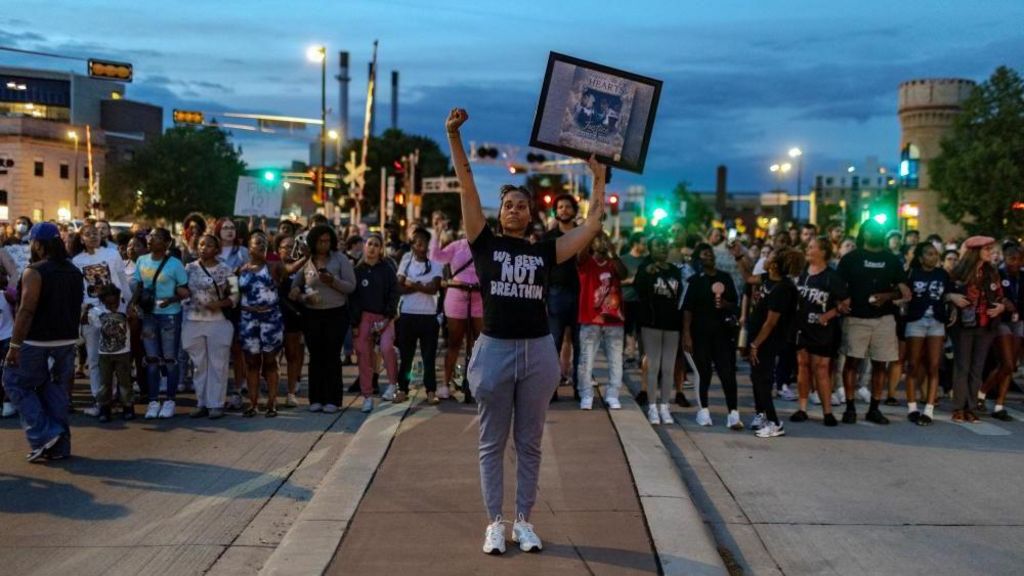
    A high-stakes homicide investigation is now underway in the U.S. state of Wisconsin following the fatal shooting of 38-year-old Corey Ruiz at the hands of a local law enforcement officer, an incident that has already ignited public anger and street protests after amateur footage of the encounter spread widely across social media platforms.

    Madison Police Chief John Patterson addressed reporters Thursday, confirming his department’s full commitment to cooperating with independent state investigators leading the probe. “We will not hide from any aspect of this investigation,” Patterson stated, reinforcing early promises of accountability amid mounting public pressure.

    The sequence of events that led to Ruiz’s death began Wednesday, when local residents called police to report a suspicious individual attempting to break into parked cars in a downtown Madison neighborhood. Authorities say Ruiz fled the area on a bicycle, but four responding officers quickly tracked him down, eventually stopping him when he fell or was pulled from the bike. In the ensuing physical struggle, Ruiz pulled out a knife and wounded one of the responding officers, according to official police accounts.

    One officer attempted to subdue Ruiz with a conducted energy taser, but the less-lethal weapon failed to stop him, Patterson confirmed. The injured officer then fired three rounds at Ruiz, who was transported to a local hospital and pronounced dead shortly after arrival.

    Notably, none of the four officers involved in the encounter were wearing activated body cameras at the time of the incident, a detail that has amplified calls for greater transparency from the community. The case has also drawn extra scrutiny due to its location: the shooting unfolded on the exact same Madison street where, 11 years earlier, a white police officer fatally shot Tony Robinson, a biracial man. That 2015 killing resulted in no criminal charges against the officer, a unresolved grievance that has added fuel to current public anger over the latest incident.

    Per standard protocol for officer-involved shootings, all four officers connected to the encounter have been placed on paid administrative leave. The Wisconsin Department of Justice’s Criminal Investigation Division will lead the independent homicide probe, a standard arrangement when law enforcement officers are involved in a fatal shooting. Chief Patterson also confirmed that investigators will publicly release the name of the officer who fired the fatal shots once initial procedural steps are completed.

    Madison Mayor Satya Rhodes-Conway has pledged that the inquiry into Ruiz’s death will leave no stone unturned. “It does not matter who you are or what your past is; you should not lose your life as a result of an encounter with law enforcement,” she said in a public statement this week, echoing widespread community demands for a thorough, impartial probe.

    Patterson acknowledged that bystander video circulating online captures one vantage point of the encounter, but noted that not all evidence and perspectives have been made public yet. His Thursday press conference was interrupted by a group of protesting community members, who challenged the integrity of the investigation and reiterated demands for full transparency around the shooting.
  • Teen pleads guilty in school shooting in Georgia that killed four

    Teen pleads guilty in school shooting in Georgia that killed four

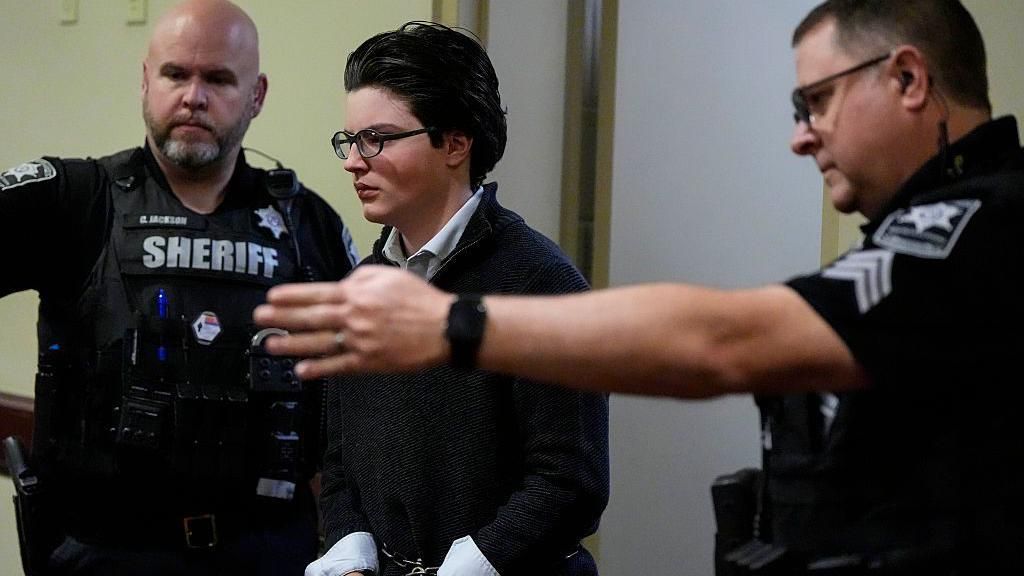
    In a stunning development that has closed off the prospect of a public trial, 16-year-old Colt Gray has formally pleaded guilty to four counts of murder and additional charges stemming from a 2024 mass shooting at Apalachee High School in Winder, Georgia, that took the lives of two students and two educators.

    Gray, who was just 14 years old when the shooting unfolded in September 2024, was tried as an adult on charges including malice murder, illegal weapons possession, and cruelty to children. Court documents confirm he entered a non-negotiated guilty plea, a legal move that eliminates the need for a jury trial and moves the case directly to the sentencing phase.

    The case has already drawn national scrutiny over the role of Gray’s father, who was convicted of murder in March 2025. The elder Gray was found guilty of providing the semi-automatic weapon used in the attack to his son as a Christmas gift, a decision that directly enabled the deadly violence at the suburban Atlanta high school.

    During Friday’s court hearing, grieving family members delivered raw, emotional victim impact statements to the court. Breanna Schermerhorn, mother of 14-year-old victim Mason Schermerhorn, spoke openly about the permanent trauma of losing her child, telling the court that she wakes every day forced to confront the reality that her son will never come home. Looking directly at the teen defendant, she stated plainly, “I do not forgive, Mr. Gray.”

    The shooting remains one of the deadliest K-12 school attacks in the United States in recent years, reigniting long-running national debates over gun control, parental responsibility for weapon access, and youth violence prevention. Sentencing for Colt Gray is scheduled at a later date, with prosecutors expected to push for the maximum penalty allowed under Georgia law for juvenile defendants tried as adults.

  • All passengers rescued after fiery seaplane crash

    All passengers rescued after fiery seaplane crash

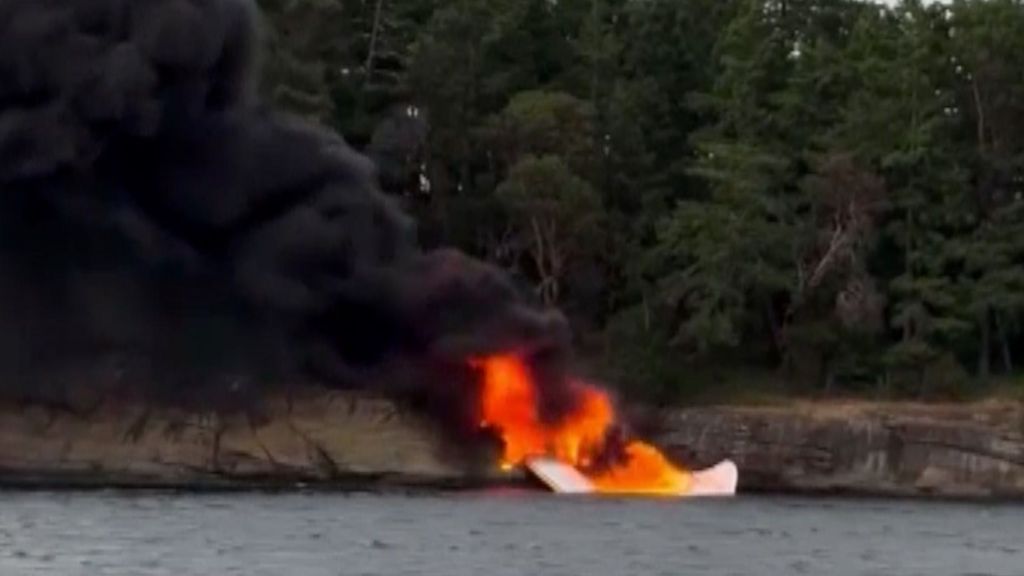
    A dramatic seaplane accident has ended with a positive outcome, after every passenger on board was successfully rescued before the aircraft was engulfed in intense flames. Footage captured during the incident reveals the seaplane struggled to stabilize as it touched down on the water surface, resulting in a clumsy, off-kilter landing that triggered emergency response efforts. First responders and nearby rescuers moved rapidly to reach the downed craft, pulling all passengers from the seaplane before the catastrophic fire broke out. The shocking on-the-ground video documents the entire sequence of events, from the unstable initial landing to the coordinated rescue operation, and finally the moment the aircraft is consumed by raging fire. While investigations into the root cause of the awkward landing and subsequent blaze are still in their early stages, the successful evacuation of all people on board has been widely hailed as a testament to the speed and efficiency of the emergency response teams that responded to the scene.

  • Woman charged over anti-Semitic slur at Bondi Beach terror site

    Woman charged over anti-Semitic slur at Bondi Beach terror site

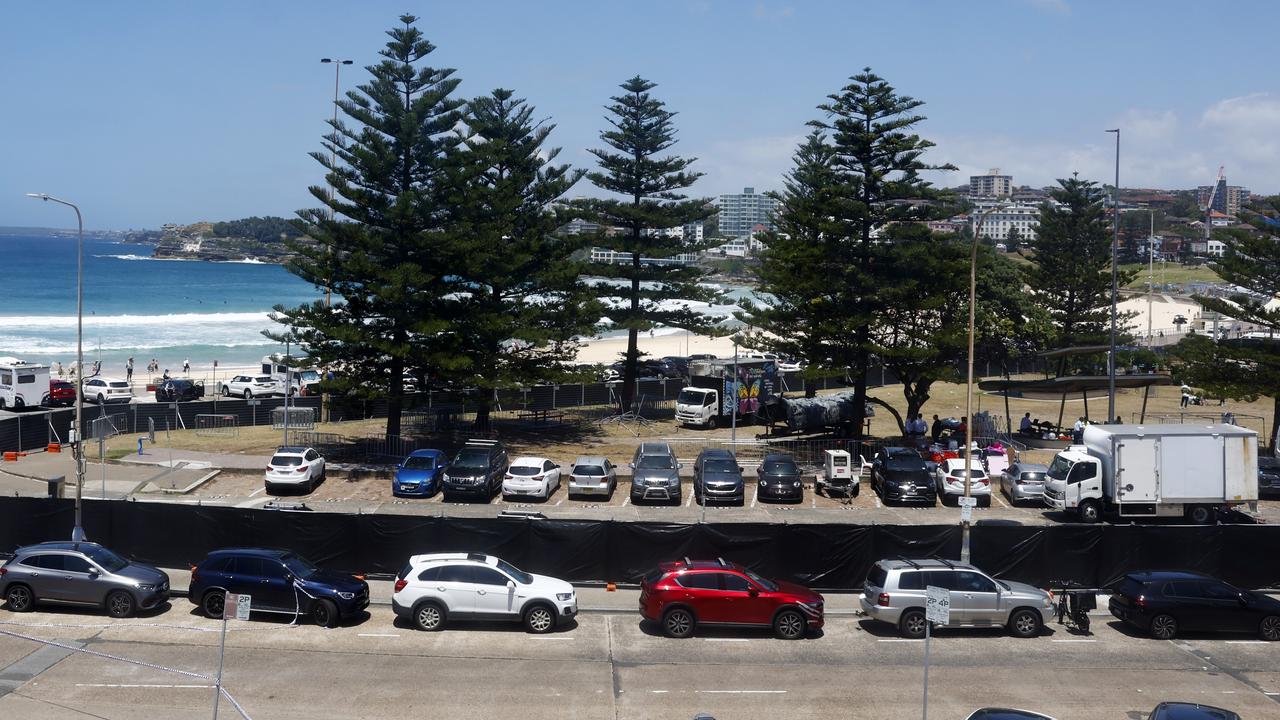
    Weeks after a deadly terror attack on Bondi Beach claimed 15 innocent lives, a shocking incident of hate speech has occurred meters from the massacre site, leading to a 67-year-old local woman facing criminal charges and an upcoming court appearance.

    On Wednesday afternoon, around 4:30 p.m., NSW Police received an emergency call about a woman aggressively confronting a gathered group at Archer Park, located adjacent to the Bondi Beach attack site. The confrontation unfolded at the same time that Jewish community leaders and Sydney Swans players were visiting the site to pay respects to the victims of the December terror attack.

    Following a prompt investigation into the incident, law enforcement officers arrested the 67-year-old Bondi resident and formally charged her with one count of using offensive language in public. In an official statement released this week, NSW Police confirmed that the woman has been issued a mandatory notice to appear before the court, adding that investigators will allege she launched a verbal tirade against the visiting group that included explicit anti-Semitic slurs.

    The incident has drawn widespread condemnation from Australian Jewish community leadership. Alex Ryvchin, co-chief executive of the Executive Council of Australian Jewry, released a formal response Friday praising the swift action of NSW Police. “We’re grateful to NSW Police for their professionalism in investigating and laying charges promptly,” Ryvchin said.

    He emphasized that the Jewish community would not tolerate attempts to spread hate in a space that has been turned into a de facto memorial for terror victims. “The Jewish community will not succumb to hatred and vilification. We will not allow the desecration of a sacred site,” Ryvchin stated. He went on to push back against attempts to normalize anti-Jewish sentiment disguised as political critique, saying: “And we will not allow the poison of antizionism, which places targets on the backs of virtually all Jews, to be passed off as benign political commentary. We cannot turn antisemites into good and rational people. But we can exact consequences when they endanger our society and break the law.”

    The accused woman is scheduled to make her first court appearance at Waverley Local Court on September 23, where the case will be formally heard.

  • Why have thousands taken to the streets? India’s ‘cockroach’ protest explained

    Why have thousands taken to the streets? India’s ‘cockroach’ protest explained

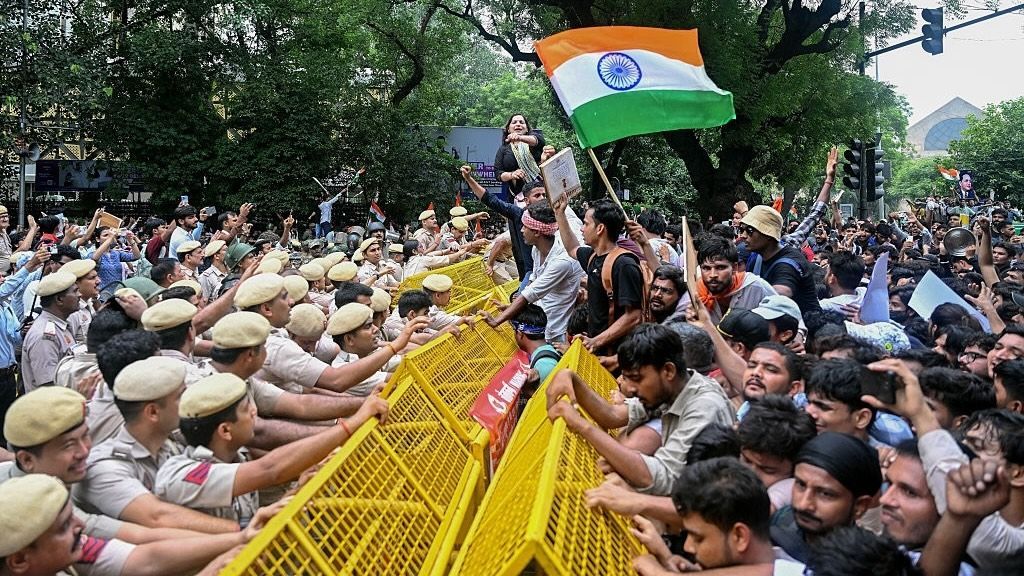
    Across India, tens of thousands of demonstrators have mobilized in public spaces in what has become one of the most significant grassroots protest movements the country has seen in recent years. What began as a localized outcry over unchecked corruption, bureaucratic negligence, and the exploitative practices of state-backed sand mining mafias in the southern state of Karnataka has quickly erupted into a nationwide movement that has captured public attention. The movement’s unconventional mascot – the humble cockroach – has become its most recognizable symbol, and its roots trace back to a controversial comment from a senior state politician. In a 2024 public address, Karnataka’s incumbent Chief Minister Siddaramaiah dismissively labeled opposition protestors who were criticizing his administration’s corruption as “cockroaches that need to be stamped out.” Instead of silencing critics, the insult backfired spectacularly: activists embraced the label, turning the disparaging comparison into a rallying cry. Protestors argue that just as cockroaches thrive in unhygienic, dark environments, systemic corruption festers in the hidden, unaccountable corners of state governance – framing themselves as the unwanted pests that will not be erased until the rot of corruption is rooted out. Demonstrations have stretched across major urban centers, from Bengaluru to New Delhi, with participants cutting across demographic lines: students, working-class laborers, civil society activists, and opposition party members have all joined the call for greater government accountability, an end to illegal resource extraction, and transparent policy making. While the movement began as a response to local grievances, it has tapped into a broader national frustration with persistent corruption across all levels of Indian politics, turning a regional dispute into a conversation about systemic change. The “cockroach” mascot has also spawned widespread viral engagement on social media, with users sharing memes, protest art, and calls to action that have expanded the movement’s reach far beyond Karnataka’s borders.

  • Eight health workers probed over ‘inappropriate’ access to AFL star’s health records

    Eight health workers probed over ‘inappropriate’ access to AFL star’s health records

    A former Australian Football League star, Tony Modra, is at the center of a growing privacy scandal after a near-fatal car crash left him recovering in a South Australian hospital, with eight hospital staff now under scrutiny for allegedly snooping on his confidential medical records.

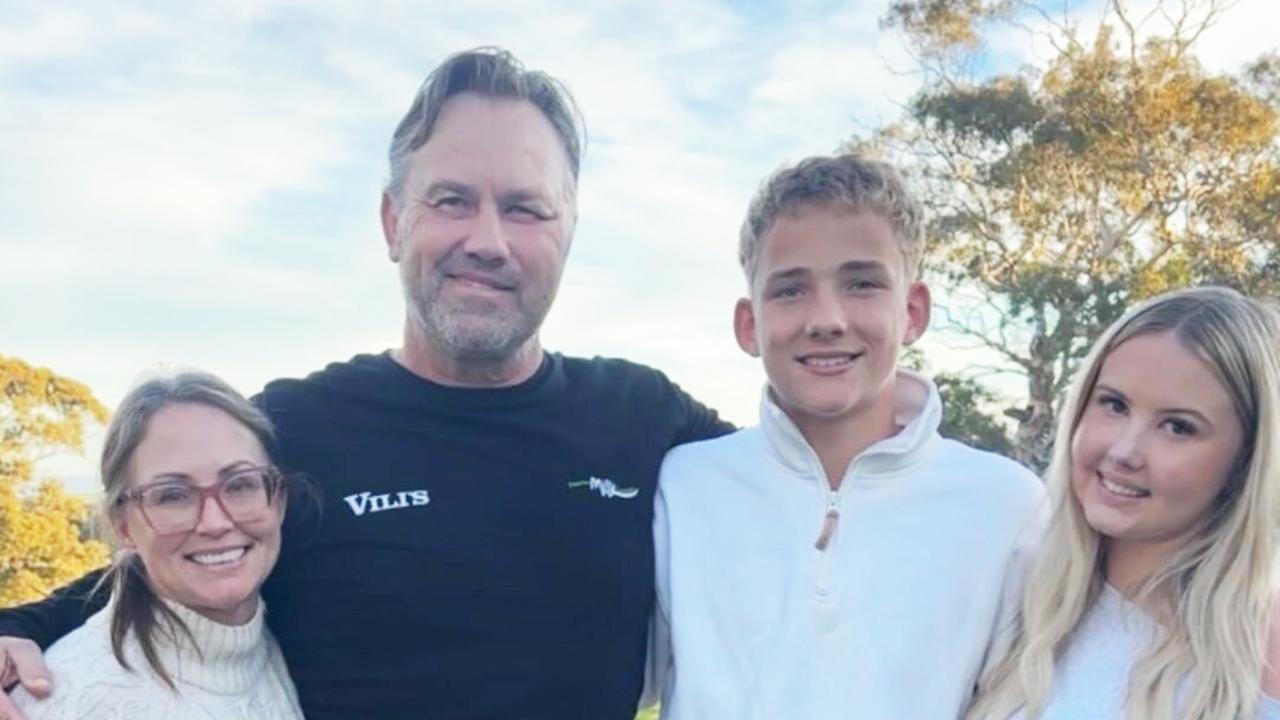
    Modra’s life-threatening accident unfolded earlier this year near Victor Harbor, when a falling tree branch crashed straight through the windscreen of his moving vehicle. The impact left him with severe injuries that required extensive surgery and a multi-week stay at Flinders Medical Centre for intensive care and recovery. Earlier this week, the beloved former Adelaide Crows player shared a heartfelt public update, thanking the clinical team that supported his recovery and confirming he had returned home to reunite with his wife Erica and their two children, Luke and Hayley. Images shared on social media showed Modra reunited with his family just one month after his life-saving surgery, offering fans a glimpse of his ongoing recovery journey.

    But the celebratory update has been overshadowed by the revelation of an official investigation into potential privacy breaches by hospital employees. SA Health, the government body overseeing public health services in the state, has confirmed that an internal probe is actively underway, and has issued a formal apology to Modra and his family for the unnecessary distress the incident has caused.

    In an official statement, SA Health emphasized that protecting patient confidentiality and private clinical data is one of its highest priorities. “Protecting patients and their private clinical information is a matter we take extremely seriously,” the statement read. The organization noted that it maintains strict internal policies and routine auditing processes to ensure staff only access patient information when it is clinically necessary for their work. “Any staff member who has accessed information inappropriately may be subject to disciplinary processes, which may include termination of their employment,” the statement added.

    According to SA Health’s update, the potential breach was uncovered during a routine compliance audit. Three members of staff are currently facing formal investigation for allegedly gaining unauthorized access to Modra’s patient records, while a further five employees are being assessed to confirm whether their access to the files was legitimate and work-related. While SA Health has not publicly confirmed Modra’s identity as the patient in question, multiple public reports and industry sources have confirmed he is the individual at the center of the probe. SA Health added that the investigation remains ongoing, and repeated its apology to the family for the privacy violation.

    The scandal has sparked renewed conversation about patient privacy protections in South Australia’s public health system, with advocates highlighting that even high-profile patients are entitled to full confidentiality during their medical care.

  • Christian Brothers makes new sexual abuse payout proposals after pause bid

    Christian Brothers makes new sexual abuse payout proposals after pause bid

    In a dramatic policy reversal that has ended weeks of crippling uncertainty for hundreds of historical child sexual abuse survivors, trustees of the Christian Brothers have announced a landmark new compensation plan that shifts responsibility for all current and future payouts to the organization’s private school network, Edmund Rice Education Australia (EREA).

    The reversal comes just weeks after the Christian Brothers triggered widespread outrage and anxiety when it requested a moratorium on all compensation payments to survivors, claiming the organization faced imminent financial insolvency that left it unable to meet outstanding abuse claims. That decision left survivors who had already won settlements or were waiting for judgements in limbo, with no guarantee they would receive the redress they had been awarded.

    Under the new proposal submitted to the Supreme Court, EREA – which manages more than 40 Catholic schools across Australia, serving a student population of over 44,000 – will take on full legal and financial liability for all existing abuse claims, all future legal proceedings, and all claims submitted through the federal National Redress Scheme. In a formal statement released Friday, Christian Brothers trustees confirmed that the two organizations had signed a binding memorandum of understanding designed to deliver a final resolution for all creditors, including abuse survivors.

    “This means that not only will current claimants with settlements or judgments be paid in full, but EREA will assume responsibility and liability for all current and future legal proceedings as well as for claims before the National Redress Scheme,” the statement read.

    EREA board chair Stephen Brown emphasized that the organization views the decision as both a moral obligation and a commitment to the long-term stability of its educational mission. “By supporting a revised scheme of arrangement we are committed to supporting those who have suffered abuse,” Brown said. “This decision will also support the long-term sustainability of the educational ministry, including more than 44,000 students entrusted to EREA’s stewardship. EREA is committed to supporting those who have suffered abuse, so today we are seeking to provide reassurance that we will step in to address future funding shortfalls.”

    The new arrangement has been broadly welcomed by Australia’s Albanese Labor Government, which harshly criticized the original pause on payments for the unnecessary distress it caused survivors. Social Services Minister Tanya Plibersek noted that the weeks of uncertainty between the Christian Brothers’ original announcement and the new plan have been an unneeded burden for people who already carried profound trauma from their abuse.

    “The past few weeks of uncertainty have been difficult for victim survivors of abuse in institutions run by the Christian Brothers,” Plibersek said. “They should never have been put in the position of wondering whether their claims would be met. No level of compensation can undo the profound harm experienced by victim survivors of child sexual abuse. But we know that redress – including counselling, apologies and financial compensation – can play an important role in helping survivors feel heard, believed and supported.”

  • A beach break in Nigeria’s Lagos is becoming too expensive for many

    A beach break in Nigeria’s Lagos is becoming too expensive for many

    For millions of residents across Nigeria’s bustling commercial capital Lagos, the Atlantic shoreline has long served as one of the only accessible escapes from the city’s relentless chaos, sweltering equatorial heat and year-round 80% average humidity. But a sweeping government-backed push to privatize most of the region’s 180-kilometer coastline has transformed this once-free public amenity into a luxury out of reach for low- and middle-income communities.

    Mukthar Oladunmade, a 27-year-old writer who has made weekend beach trips a lifelong ritual, says the transformation has turned a beloved pastime into an unaffordable burden in Lagos alone. Even after traveling across West Africa for work and enjoying low-cost or free beach access in Accra, Cotonou and Dakar, Oladunmade told reporters he spends an average of 25,000 naira ($18) every time he visits a Lagos beach — a sum that far outstrips the budget of most local residents.

    Takwa Bay, one of the last remaining stretches of shoreline not under private control, is where Oladunmade now travels to enjoy the ocean. For context, Nigeria’s federal minimum wage sits at just 77,000 naira ($56) per month, and more than 60% of Lagos’ 20 million residents work in the informal sector with irregular, low incomes. Entry fees alone now range from 2,000 naira ($1.50) to 60,000 naira ($44) across privatized beaches, with additional costs for seating, food, drinks and recreational activities adding hundreds of additional naira to each visit.

    The privatization trend comes as part of the Lagos state government’s long-running “megacity” initiative, which aims to position the metropolis as a leading global destination for international business and luxury tourism. The strategy has delivered clear financial gains: the state’s internal revenue hit 2.6 trillion naira ($1.9 billion) in 2025, marking a 16% year-over-year increase that outpaces every other Nigerian state. To expand the initiative, the government has also reclaimed coastal land for exclusive private developments including a new deep-sea port and the high-end Eko Atlantic residential neighborhood, with more luxury projects planned for the coming years.

    But critics argue these economic gains are coming at the steep cost of inclusive public access, pricing out generations of residents who have relied on beaches as their primary source of affordable recreation. “The approach of the Lagos state government for a long time has not been about the people, it is about the money,” explained Olamide Udoma-Ejorh, director of the Lagos Urban Development Initiative, a nonprofit focused on building an equitable, inclusive city. “It is about how do we build this city in a way that is making money?”

    Private operators defend the higher price points, noting that large upfront investments in beach infrastructure mean businesses only turn a profit for part of the year, requiring higher markup on entry, food and amenities. In past statements, Lagos government officials have also argued that privatization has delivered tangible improvements, leaving beaches cleaner and safer for visitors. Officials did not respond to requests for comment for this report.

    For ordinary residents, the monetization of Lagos’ beaches reflects a broader trend of displacing working-class communities to make room for elite development, even as the city’s daily hustle and chronic stress makes access to open public space more critical than ever. “I should have access to nature for free. This is a reflection of how everything is monetized,” said Esther Sorkpor, a final-year student at the University of Lagos. “Nigeria is already a very high-tension country, and it is just very stressful to navigate.”

    Analysts and urban justice advocates are calling for a full review of Lagos’ public space management policies, arguing that coastal shorelines should be treated as a core civic asset rather than a revenue-generating commodity. As the sun sets over Takwa Bay, the last holdout of free public beach access, visitors pack their belongings to leave, passing the private luxury shores of Eko Atlantic on their trip back to the mainland — a visible reminder of the city’s growing divide between its megacity ambitions and the needs of its ordinary residents.

  • Orthodox monks are the first to live and pray at a monastery in Estonia for 80 years

    Orthodox monks are the first to live and pray at a monastery in Estonia for 80 years

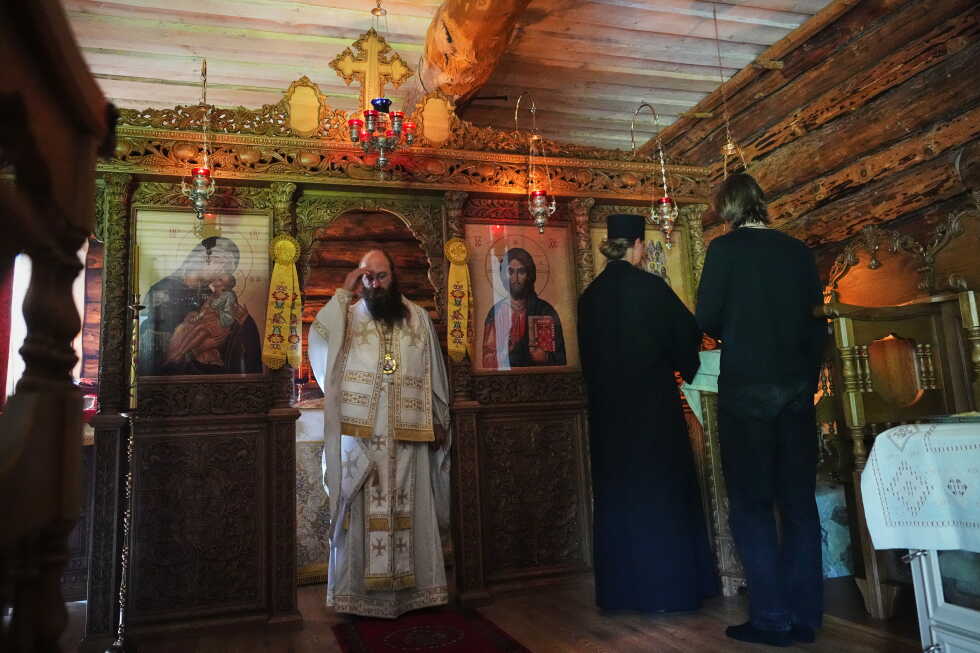
    Nestled 40 kilometers outside Estonia’s capital Tallinn, a converted farmhouse holds a quiet, historic milestone for one of Europe’s most secular societies: the launch of the first male Orthodox monastery launched by the Estonian Apostolic Orthodox Church in decades. Known as Kirikla Orthodox Monastery, the community marks the return of male Orthodox monastic life to Estonia after more than 80 years, a gap that stretches back to the interwar independence period before Soviet occupation.

    Inside the small, curtain-partitioned chapel, ancient words of the Divine Liturgy now ring out in the Estonian language, led by 41-year-old Bishop Damaskinos, the monastery’s founding abbot, who wears traditional flowing white and gold vestments during services. Damaskinos and 31-year-old Father Paisios are the community’s first two permanent monks, splitting their days between structured prayer, manual labor, and spiritual practice in line with traditions first honed at Greece’s Mount Athos, the 1,000-year-old global center of Orthodox monasticism.

    The founding of Kirikla comes amid a longstanding split in Estonian Orthodox Christianity, dating back to the collapse of the Soviet Union. The larger of the country’s two Orthodox jurisdictions remains affiliated with the Moscow Patriarchate, while the independent Estonian Apostolic Orthodox Church has worked for decades to rebuild its own monastic institutions after Soviet authorities closed most religious communities and stigmatized faith across the Baltic region. Today, the Estonian Apostolic Orthodox Church oversees more than 60 parishes and one women’s convent across the country, but has not hosted a community of male monks since before World War II.

    For Damaskinos, the monastery’s purpose extends far beyond Estonia’s borders. “The monastery’s meaning is also global in the sense that we pray for the whole world,” he explained during an interview with the Associated Press at the chapel in July 2026. The abbot emphasizes that spiritual quality of community members matters far more than raw numbers; even as only two monks currently reside at Kirikla, his focus remains on nurturing faithful commitment rather than rapid growth. “What we are worried about is the spiritual quality of the monks, that the monks actually take seriously their task of praying for the whole world,” he said.

    The monastery’s daily routine follows a steady, intentional rhythm that sets it apart from the fast-paced, digitally connected world outside. Days begin at dawn with solitary prayer, followed by a communal morning service, then hours of manual labor ranging from weeding garden beds and tending potato crops to small construction work. A second evening service wraps up the day, leaving only brief evening time for rest, with almost no access to cellphones or the distractions of modern life. Despite the demanding schedule, both monks report deep fulfillment: shielded from widespread external stress, they feel rested and grounded in their routine.

    This deliberate, purpose-driven way of life has struck a chord with young Estonian visitors and summer volunteers, who join the monks in their agricultural work. Religious scholars note that this growing interest in faith among young Estonians is a generational shift. Raised decades after the end of Soviet anti-religious campaigns, young Estonians carry none of the inherited prejudice against organized religion that shaped older generations. “They don’t have any bad experience with religion, they don’t have any experience with religion at all,” explained Priit Rohtmets, an associate professor of church history at the University of Tartu. “This, of course, gives a chance for religious communities.”

    Unlike married Orthodox parish priests, monastic vows require lifelong celibacy, poverty, and obedience; anyone seeking to join the community must first spend up to three years as a novice living the monastic routine before taking permanent vows. While other faiths already have small monastic communities in Estonia — including a Dominican Catholic community that returned to Tallinn in 1996 and a Theravada Buddhist monastery on Aegna Island — new monastic foundations are rare across 21st-century Europe, where many existing communities are shrinking and closing as fewer people take vows. That makes Kirikla’s launch a particularly hopeful development for religious observers and faithful alike.

    The monastery currently operates out of the donated farmhouse, gifted to the community by a local Estonian businessman, with no additional permanent buildings completed. Damaskinos says that while the community may eventually earn income by selling homegrown produce and handcrafted religious goods such as candles and incense, his top priority is not construction or expansion. “What interests me more, rather than finishing the buildings, is to finish building the brotherhood,” he said. “It’s a work that never finishes, but at least it creates a good basis for monastic continuation here in Estonia.”

    On selected days, the community opens its gates to visitors and pilgrims, promoting open days through social media to invite people seeking a break from the chaos of modern daily life to experience their routine. “Monastic life is difficult, but through all these difficulties we find true happiness,” Damaskinos said. “So I hope that when people come here they see the happiness that we represent.”

  • Perth bar owner says woman pestered him about entry to VIP area before she was allegedly raped: Court

    Perth bar owner says woman pestered him about entry to VIP area before she was allegedly raped: Court

    A sexual assault trial unfolding in Western Australia’s Perth District Court has heard key testimony from the owner of the nightclub where British rapper Yung Filly performed the night an alleged attack took place. The rapper, legally named Andres Felipe Valencia Barrientos, has entered not guilty pleas to five charges including multiple counts of rape, assault, and intentional choking.

    Malcolm Pages, who owns Bar1 Nightclub, the venue that hosted the performer’s event, told the court the alleged victim repeatedly pestered him over several hours to gain entry to the restricted VIP section reserved for the celebrity and his entourage. Pages explained that venue protocols require strict approval for fan access to artist spaces, and he consistently told the woman she would need to wait for official authorization, which he calls getting “green lit.”

    The 20-something accuser, who cannot be named for legal reasons, did not limit her requests to in-person asks: she also sent multiple direct messages to the nightclub’s official Instagram account pressing for access. Pages told the court the repeated asks eventually became overwhelming, noting he encountered the woman asking for entry four to five additional times as the night progressed.

    Later in the evening, Pages observed the woman interacting socially with Yung Filly inside the VIP section, where roughly 30 to 40 other attendees were also gathered. While Pages noted that after-parties for performing artists are a common occurrence at his venue, he testified he had no knowledge of any planned after-party for Yung Filly on the night in question.

    According to the accuser’s account, she left Bar1 in a van alongside the rapper and his team, under the impression she was heading to a scheduled after-party. Instead, the group traveled to Perth’s Intercontinental Hotel, where she accompanied Yung Filly back to his hotel room. The woman told the court she initially agreed to consensual sexual activity with the rapper, but the encounter turned violent without warning. She alleges Yung Filly began biting, hitting, and choking her, continuing the assault even after she explicitly told him to stop.

    Prosecutors laid out their case that seven hours after the woman first met her celebrity crush, she fled the hotel with visible bruises and injuries across her face, neck, and entire body, sustained during what they argue was a prolonged sexual assault. Prosecutors summed up the accuser’s account to the court: “It was consensual until it wasn’t.” The trial is ongoing as additional witnesses and evidence are presented to the court.