分类: society

  • Watch: Driver clad in Spider-Man outfit whisks man in a wheelchair across a busy road

    Watch: Driver clad in Spider-Man outfit whisks man in a wheelchair across a busy road

    A heartwarming small act of kindness has gone viral after dashcam and street surveillance footage captured an unusual good Samaritan stepping up to help a vulnerable road user at a crowded urban intersection. The video, which has spread rapidly across social media platforms, shows a driver who had stopped for a red light making an unexpected gesture: dressed head-to-toe in the iconic red and blue Spider-Man superhero costume, this driver exited his vehicle and rolled a man in a wheelchair across the heavy, multi-lane crossing, ensuring the disabled traveler made it to the other side safely amid moving traffic.

    The incident unfolded at a busy signalized intersection, where the wheelchair user had been stuck attempting to navigate the high-traffic crossing amid vehicles that had begun moving after a light change. The costumed driver, who was already stopped at the intersection, noticed the man’s struggle and acted immediately, moving quickly to guide the wheelchair through stopped and slowly moving cars before delivering him to the opposite sidewalk. Witnesses note that the entire exchange took just a few minutes, but the image of a person dressed as a beloved superhero carrying out a real act of heroism has resonated deeply with online audiences.

    While the identity of the Spider-Man-dressed driver has not been revealed as of yet, the footage has sparked a wave of positive reactions, with many social media users pointing out that the small, unplanned act of kindness fits perfectly with the core values the Spider-Man character is known for: with great power comes great responsibility, even for everyday good deeds.

  • Replica of the Virgin Mary’s House draws Catholic devotees in the Philippines

    Replica of the Virgin Mary’s House draws Catholic devotees in the Philippines

    Nearly 9,000 kilometers from the original House of the Virgin Mary in Ephesus, Turkey, a full-size, exact replica of the sacred shrine has opened its doors to pilgrims in the Catholic-majority nation of the Philippines. Inaugurated in early 2024, the site sits in a quiet field outside Alfonso, a small town in Cavite province roughly 70 kilometers south of the capital Manila, offering local devotees a accessible pilgrimage destination that has long required a costly trip across continents.

    The project was spearheaded by Dennis Paez, a Catholic priest and psychologist who works with vulnerable youth. From the earliest planning stages, Paez framed the replica as far more than a copy of a historic sacred site: it was conceived to be a judgment-free place of refuge for people facing hardship, grief, or uncertainty. “The idea began as a place of refuge,” Paez explained. “This is a place where no questions are asked.” For Paez, who specializes in supporting young people navigating life struggles, the space fills a unique emotional and spiritual need. “There is no therapy here. The therapist is our Mother,” he said, referring to the Virgin Mary.

    Construction of the 67-square-meter structure took roughly 10 months to complete, and mirrors every architectural detail of the original Ephesus site, from its overall dimensions and shape to the appearance of each individual stone. A particularly notable element of the build was the participation of workers from multiple different faith traditions across the Philippines — a reality Paez says embodies the unifying spirit of the site, demonstrating how the Virgin Mary brings people of all backgrounds together as one community.

    Per long-held Catholic tradition, the original House of the Virgin Mary in Ephesus is where Mary lived out her final years after the crucifixion of Jesus Christ. According to religious lore, the apostle John brought Mary to the region to protect her from religious persecution in Jerusalem, and she remained there until her assumption into heaven. For centuries, the site has been one of the most important Catholic pilgrimage destinations in the world, drawing millions of visitors annually from across the globe.

    The new replica fits seamlessly into the deep-rooted culture of Marian devotion that has defined Filipino Catholicism for more than 500 years. The Philippines is home to roughly 113 million people, nearly 80 percent of whom identify as Roman Catholic. Devotion to the Virgin Mary, widely referred to by Filipino faithful as the Blessed Mother, has been a core part of national religious life since Spanish colonizers introduced Christianity to the archipelago in the 16th century.

    Religious historian Michael Delos Reyes notes that this devotion has taken on unique national meaning through key moments of modern Philippine history. Many Filipinos credit the Virgin Mary’s intercession for the peaceful 1986 People Power Revolution that ousted authoritarian president Ferdinand Marcos. When Typhoon Haiyan, one of the most powerful tropical cyclones ever recorded, devastated the central city of Tacloban in 2013, survivors turned to the Blessed Mother as a source of hope and resilience amid overwhelming tragedy.

    Deirdre de la Cruz, a professor of history and Southeast Asian studies at the University of Michigan, explains that Mary’s maternal identity is the core of her deep resonance in Filipino culture. “To Jesus through Mary” is a common phrase that sums up her central role in Filipino spiritual life, with believers turning to her to intercede on their behalf before God. “Her maternal dimension is what Filipinos find meaningful, as well as her power to intercede on believers’ behalf,” de la Cruz said. “As someone who is known to provide comfort, Mary is a very familiar figure and someone to whom one can appeal in difficult times.” This deep cultural attachment is visible across daily life: Marian images and rosaries are common fixtures in Filipino homes, private altars, vehicles, public transport, and community spaces across both urban and rural areas.

    Inside the new Alfonso replica, donated Marian icons from across the country line the walls, with a statue of Mary modeled on the original Ephesus sculpture standing at the center, alongside a relic believed to be a fragment of the Virgin Mary’s veil. Most of the displayed icons were donated by Maritess Pineda, an art collector and Filipino culture advocate who had spent years building a private collection of Marian art, and welcomed the chance to give the collection a permanent public home at the new shrine.

    For many local faithful who had already visited the original Ephesus site, the project felt like a calling to contribute. Rupert Suarez and his wife traveled to Turkey to visit the original House of the Virgin Mary years ago, and when they learned about plans to build a local replica, they immediately joined the project. “It’s so very blessed that we already have this replica built,” Suarez said.

    Personal stories of comfort and renewal abound among early visitors. Daphne Oseña Paez, a recent pilgrim, said her devotion to Mary grew deeper in adulthood after a difficult high-risk pregnancy left her seeking spiritual refuge. “We don’t pray to Mary herself, but Mary intercedes for us,” she explained. “In my times of trouble, and I’ve had a lot, I really clung on to the love and comfort of her as a mother.”

    Despite minimal public promotion since its 2024 inauguration, the shrine has already drawn a steady stream of pilgrims seeking refuge and connection. For Paez, this organic growth is no accident. “I don’t at all think that it is me bringing them,” Paez said. “It’s The Blessed Mother asking them, inviting them to come.”

  • Brazil probe shows severe icing contributed to 2024 plane crash that killed 62

    Brazil probe shows severe icing contributed to 2024 plane crash that killed 62

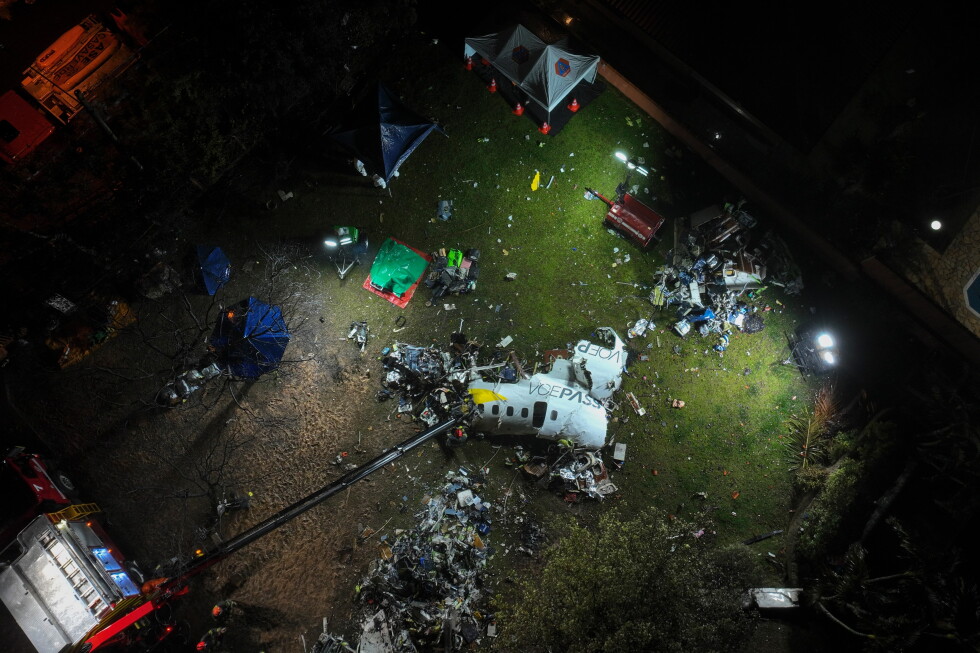
    Almost three months after Brazil’s deadliest aviation disaster in nearly 17 years killed 62 people outside São Paulo, Brazilian Air Force investigators released their official accident probe findings on Thursday, pinpointing a toxic combination of environmental hazards, mechanical failures, and human and procedural gaps as the root causes of the August 9 crash.

    The doomed flight, operated by regional Brazilian carrier Voepass, was an ATR 72-500 twin-turboprop traveling from the southern city of Cascavel to São Paulo’s Guarulhos International Airport when it went down in a residential neighborhood of Vinhedo, a small city located just outside the São Paulo metropolis. All 62 people on board were killed in the impact, marking the worst Brazilian aviation fatality event since 2007.

    Investigators’ detailed analysis confirmed the aircraft encountered extreme atmospheric icing conditions while cruising at an altitude of 17,000 feet. The rapid buildup of ice across the plane’s airframe quickly eroded its aerodynamic lift, pushing the aircraft into an irreversible “flat spin” that made recovery impossible before the crash.

    Data recovered from the plane’s flight recorders shows the flight crew did detect the heavy ice accumulation early in the emergency. However, the aircraft’s de-icing system suffered repeated technical malfunctions throughout the critical phase of the flight, forcing the crew to repeatedly toggle the system on and off as the situation deteriorated.

    Speaking at a press conference held in Brazil’s capital Brasilia, lead investigators added that deeper systemic issues within Voepass also set the stage for the disaster. The probe uncovered a long-standing internal “culture of normalizing deviations” at the airline, where preexisting mechanical faults — including known issues with the de-icing system on the accident aircraft — were allowed to go unaddressed before the flight departed.

    Investigators also identified crew distraction as a key contributing factor. At the time severe icing alerts activated in the cockpit, the flight crew was occupied with routine radio communications and administrative tasks, and failed to execute emergency corrective maneuvers before it was too late to reverse the spin.

    Per standard protocol for fatal accident investigations, the full findings were shared directly with the families of the victims before being released to the general public.

  • Indonesian babies were trafficked to Singapore. What happens to them now?

    Indonesian babies were trafficked to Singapore. What happens to them now?

    After months of high-profile legal proceedings that spanned two Southeast Asian nations, an Indonesian court handed down guilty convictions this Tuesday to 19 members of a transnational baby trafficking syndicate, closing one chapter of a disturbing case but leaving a critical, human-centered question hanging in the balance: what will become of the dozens of infants trafficked for illegal adoption?

    The syndicate, whose operations stretched from West Java to Singapore, was found to have trafficked at least 34 infants to sell through fraudulent adoption channels. Investigations confirm that at least 12 of those babies have already been placed with adoptive families in Singapore, a detail that has turned the case into a major bilateral controversy that has gripped public attention in both countries for months. Now, as the legal battle against the traffickers concludes, the unresolved status of the infants in Singapore has grown even more urgent, with anxious adoptive families waiting for clarity on whether they will be allowed to keep the children they have raised for years.

    For David, a Singaporean adoptive parent who spoke to the BBC on condition of anonymity to protect his family, the months of waiting have been an unrelenting period of fear and uncertainty. “It’s been almost a year of fear and anxiety from waiting,” he said following the verdict. “Since the case is concluded, how can we move on and what will happen to our son? I sincerely hope that both authorities can come to a decision based on the best interests of the children. We respectfully ask that, in making this decision, consideration be given to the fact that both our son and our family are victims of the circumstances surrounding this case.”

    David and his wife Ally insist they had no knowledge the child they adopted was trafficked, and say they completed all required background checks on their end, and passed multiple layers of vetting conducted by Singaporean government authorities before the adoption was approved. They maintain that those official screenings should have caught the fraudulent activity if proper protocols had been followed.

    To date, neither the Indonesian nor Singaporean governments have issued a definitive public statement on their plans for the infants already in Singapore. Following Tuesday’s verdict, the Indonesian Ministry of Foreign Affairs told the BBC that multiple key details remain under review, including the children’s legal status, the confirmed identities of their biological parents, and ongoing parallel proceedings in Singapore. The ministry reaffirmed its commitment to prioritizing “the best interests of the children” in any final decision, while Singaporean authorities have not yet responded to repeated requests for comment from the BBC.

    Experts and child welfare advocates hold conflicting views on the proper outcome for the infants, highlighting the messy legal and ethical complexities of the unprecedented case. Ni Made Martini Puteri, a criminologist and lecturer at the University of Indonesia, notes that public data on the post-rescue outcomes of trafficked children within Indonesia is already extremely limited, with almost no existing precedent for how to handle children trafficked across international borders.

    Indonesian anti-trafficking organizations and independent child rights groups have taken the firm stance that all trafficked children should be repatriated to Indonesia as a matter of principle. Ai Maryanti, a commissioner with Indonesia’s independent child protection commission, argued after the verdict that the children’s best interests have not been properly centered to date, because their true identities have still not been fully confirmed. She added that existing adoptions in Singapore should not be considered final, saying: “Of course, children who are victims of human trafficking must be returned. Even if they’re already adopted, what’s the legal basis for that? What we don’t want is Singapore saying that the adoptions complied with their law. According to our law, we found there was a high level of manipulation, resulting in Singapore easily accepting [the adoption applications].”

    During the trial, investigators uncovered that the trafficking ring systematically created falsified identity documents for the infants: they listed ring members as the children’s birth mothers to obtain fraudulent birth certificates and official family registration cards from local Indonesian officials. The ease with which the syndicate obtained these legal documents has sparked widespread criticism and raised serious questions about regulatory oversight and the failure of local officials to conduct required background checks.

    Legal experts in Singapore note that overturning the existing adoptions and repatriating the children would be an unprecedented and logistically complicated process, with no local precedent for revoking a finalized adoption order. Derek Choo, associate director at PKWA Law Practice, explained that Singapore’s adoption framework is built around extensive upfront safeguards, so finalized adoption orders are almost universally treated as irreversible.

    Lim Fung Peen, a legal consultant at Yuen Law, outlined the key factors a Singaporean court would consider if authorities move to revoke the adoptions. One critical factor is the severe long-term psychological harm that could come from separating young children from the only caregivers they have ever known, a risk child psychologists have repeatedly warned about. The court would also weigh how long each child has lived in Singapore, the stability of their current home environment, and the conditions they would face if repatriated to Indonesia. Because the birth certificates underpinning the adoptions have already been confirmed as fraudulent, Lim added that courts could also rule the original adoption basis is legally questionable.

    The infants were trafficked to Singapore between 2023 and 2025, meaning the oldest among them are already at least three years old, and have spent their entire lives with their Singaporean adoptive families. Compounding the complexity, Indonesian authorities have still not identified the biological parents of many of the trafficked infants, meaning some would have no family to return to even if repatriated, and would be placed in Indonesian state orphanage care. Eight other infants rescued from the same trafficking ring are already being cared for in an orphanage in Bandung.

    Puteri, the University of Indonesia criminologist, argues that the unique circumstances of each child must guide the final decision. “Suppose a child is recognised as a trafficking victim and returned to Indonesia, but nobody here knows who the biological parents are because our evidentiary system is weak,” she explained. “I would argue that if the child has only known life in Singapore since infancy, then it makes more sense for the child to remain in Singapore with the adoptive parents. However, if the biological parents are later identified, the child should still have the right to know who they are.” She added that Singapore should extend official victim protection status to both the children and their unwitting adoptive parents, who themselves were victimized by the trafficking ring’s fraud.

    For adoptive parents like David, the only goal is a swift resolution that gives their child the stability they need. “We only wish to live a normal family life, like any other couple hoping to raise a child in a safe, stable, and loving home,” David said. “We hope that this matter can now be brought to a resolution so that our son can move forward with certainty and security.”


  • Giant metal roosters spread autism acceptance in Maine after town zoning spat

    Giant metal roosters spread autism acceptance in Maine after town zoning spat

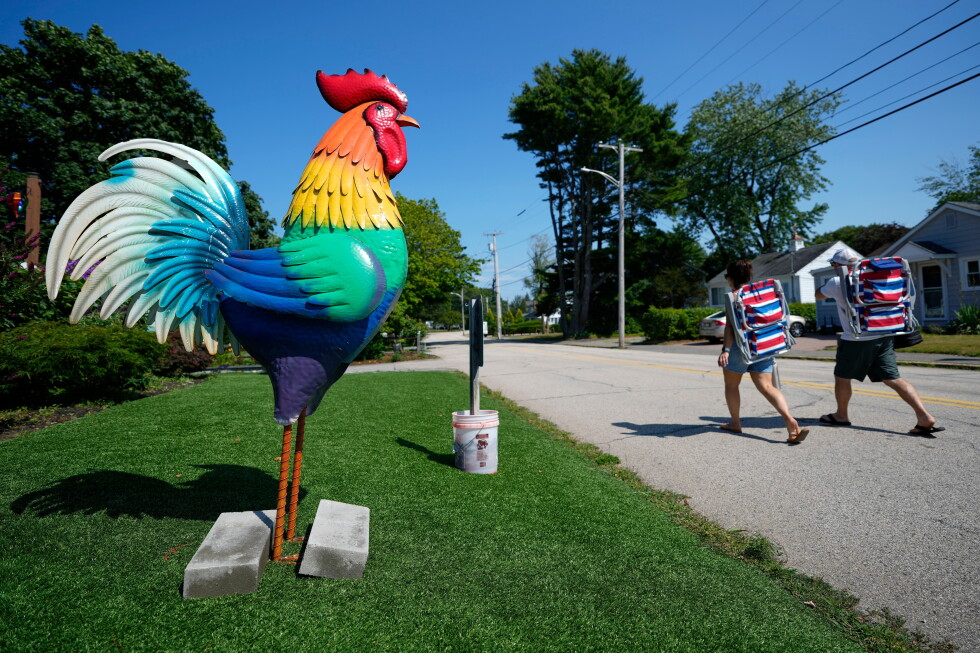
    In the quiet coastal town of Ogunquit, Maine, a viral community movement centered on six-foot-tall metal rooster sculptures has captured international attention, all launched to support a 6-year-old autistic girl and her deep connection to the giant decorative creations.

    The story begins with Pyper LeBlanc, a young girl adopted by David and Sara LeBlanc after joining their family as a foster child. When Pyper first arrived, she brought with her a beloved stuffed rooster, and the bird quickly became her favorite animal. During a family trip to a local Tractor Supply Store last year, Pyper spotted a large metal rooster sculpture for sale and asked her father what the statue was “saying.” David jokingly replied, “I think he wants to come home,” and the family brought the rooster home with them.

    Over time, the LeBlancs’ collection grew to more than two dozen giant roosters, which they rotated on their front lawn for seasonal and holiday displays. For Pyper, the roosters became far more than just yard decor: every morning while waiting for her school bus, she hides behind one of the giant statues, a routine that her parents say helps her regulate her emotions and navigate the transition from home to school. Comfort objects like these are widely recognized as beneficial for autistic children, explained Beverley Cush Evans, a special education professor at Lesley University, noting that familiar items support emotional regulation and create a sense of safety for neurodivergent youth during periods of change.

    Conflict emerged earlier this year, however, when Ogunquit code enforcement officer Tyler McOsker ruled that the lawn roosters counted as unpermitted advertising for the LeBlancs’ adjacent restaurant, The Omelette Factory. After the couple added a rooster graphic to their restaurant logo and branded merchandise, the town classified the lawn sculptures as commercial signage. McOsker issued $450 in fines in April and ordered all roosters removed, citing a 2025 local newspaper article that described the statues as an unconventional way to advertise the restaurant’s opening. David LeBlanc pushed back against this characterization, explaining that the quote was a misinterpretation of a customer’s joke, and that the roosters existed solely for Pyper’s comfort, not business promotion. McOsker later told the Zoning Board of Appeals he had no awareness of the roosters’ connection to Pyper’s autism until the couple appealed the fines.

    During a June zoning board meeting, some members raised questions about the necessity of the large collection, with one member asking for medical proof of the roosters’ benefit and questioning how many sculptures the family actually needed. Ultimately, the board ruled it did not have the authority to cancel the existing fines, but it approved a disability variance allowing the LeBlancs to keep two roosters on their property, with the caveat that the number would not be allowed to grow. The variance requires the roosters to be integrated into a home railing, however; since the family has so far only bolted the roosters to their front steps, they have been issued an additional $500 in fines for noncompliance.

    Rather than fighting the ruling, David LeBlanc chose to reframe the situation, offering the extra roosters to community members who wanted to foster them as a show of support for Pyper and autism acceptance. What started as a local gesture quickly spread into a global movement, amplified by local news coverage and the *Roosters of Ogunquit* Facebook page. Giant roosters have now appeared on front lawns across southern Maine, from motel properties in nearby Wells to the grounds of Ogunquit’s Memorial Library. Support has even reached as far as New Zealand, where one supporter shared photos of his own family’s rooster display in solidarity.

    Hetal Patel, owner of a motel in Wells who has a neurodivergent relative, was so moved by Pyper’s story that she drove all the way to New Hampshire to track down a rooster after local stock sold out. “We found the last one,” she said. “We couldn’t wait to put it out. People were so supportive, they were honking. It was so nice to see all the love for Pyper.”

    LeBlanc says Pyper understands the silver lining of the conflict: “She understands that the roosters being taken away were the lemons, and Sam and his friends, fostering them, are the lemonade. It’s a beautiful thing.”

  • Man fatally wounded in knife attack in German bank

    Man fatally wounded in knife attack in German bank

    A fatal knife attack at a regional bank in the southeastern German city of Regensburg has left one person dead, and prompted a multi-hour standoff that ended with the arrest of a 20-year-old German national suspect on Wednesday. The violent incident unfolded shortly before 3 p.m. local time (1 p.m. GMT), triggering an immediate large-scale emergency response that deployed heavily armed special police task forces to the scene. Initial reports raised urgent fears that the attacker was holding hostages inside the bank, forcing authorities to lock down the western district of the city and leave local residents in a state of prolonged anxiety. Over the course of more than three hours, tactical police negotiated and secured the building, eventually extracting two unharmed civilians from the site before taking the suspect into custody at approximately 6 p.m. local time. The victim, who was found with critical stab wounds, could not receive emergency medical care until the area was secured by law enforcement, and was pronounced dead shortly after arriving at a local hospital. Bavarian Interior Minister Joachim Herrmann confirmed that the killing was a “brutal unprovoked attack,” leaving authorities still working to unpack a clear motive for the violence. Regensburg Mayor Thomas Burger released a statement acknowledging that many local residents endured “hours of great uncertainty” during the standoff, adding that the entire community was deeply shaken by the senseless act of violence. German law enforcement officials confirmed on Wednesday evening that they are currently operating under the working theory that the suspect acted alone, with no indications of broader connections to extremist groups or organized criminal networks. The incident is currently being investigated as both a homicide and an attempted robbery, and the suspect is scheduled to appear before a judge for a preliminary hearing on Friday. No further details about the identity of either the suspect or the victim have been released to the public as of Thursday morning, as investigators continue to process evidence collected from the bank crime scene.

  • UK mosques attacked once every five days in last year, amid rising Islamophobia

    UK mosques attacked once every five days in last year, amid rising Islamophobia

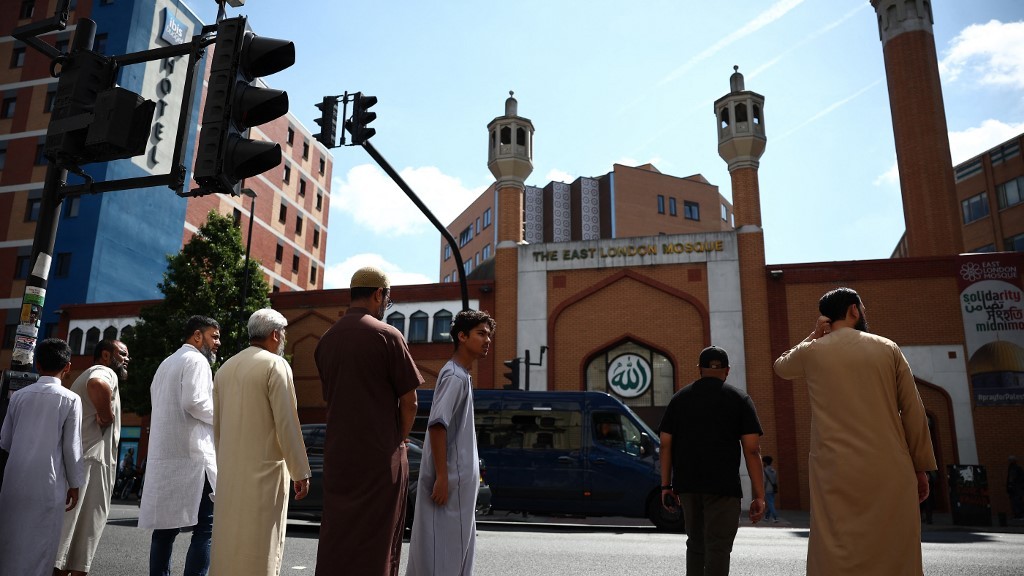
    Fresh official monitoring data has uncovered a disturbing pattern of targeted violence and hostility against Muslim places of worship across the United Kingdom, with an average of one attack on a mosque recorded every five days over the past 12 months. The surge in anti-Muslim vitriol has sparked sharp criticism from Muslim community leaders, who argue the national government has failed to address the growing crisis with the urgency it demands.

    The British Muslim Trust (BMT), the government’s official partner tasked with tracking and addressing anti-Muslim hatred, documented more than 70 separate attacks against mosques across the UK in the last year. These incidents span a wide spectrum of hate-fueled activity, ranging from physical violence, intimidation, and vandalism that damages community property, to in-person harassment, harmful hate speech, and sustained online abuse targeting worshippers and mosque leadership.

    Geographic analysis of the data shows three regions bear the brunt of these attacks: London, Greater Manchester, and the West Midlands. London recorded nine distinct incidents targeting mosques, while one Birmingham-based mosque was attacked three separate times within a single 12-month window.

    These localized attacks on places of worship align with broader national trends of rising anti-Muslim hostility. Official Home Office statistics confirm that recorded anti-Muslim hate crimes across England and Wales jumped 19% in the 12-month period ending March 2025. The total number of reported offences rose from 2,690 in the year ending March 2024 to 3,190 just one year later, marking one of the sharpest annual increases in recent years.

    Akeela Ahmed, chief executive officer of the BMT, emphasized the steady upward trajectory of these attacks and called for more decisive government action. “We are seeing a steady rise in the number of attacks against mosques, and we believe the government should be doing everything it can to help mosques protect themselves,” Ahmed said.

    In response to growing pressure, the UK government has committed up to £40 million (equivalent to $53 million) to fund security upgrades for mosques, Muslim faith schools, and Muslim community centers across the 2026-2027 funding cycle. Eligible sites can apply for grants to cover costs for critical security infrastructure including CCTV systems, intruder alarms, perimeter fencing, and on-site security personnel.

    However, BMT leaders say the program has been crippled by systemic issues that leave vulnerable communities exposed. Bureaucratic red tape, unmotivated refusals of well-founded security concerns, and processing delays that can stretch as long as 18 months have left many at-risk sites without the protection they need. Current government guidance requires applicants to submit extensive, concrete evidence that they face an imminent threat to qualify for funding.

    Ahmed argued that the requirement for specific threat evidence ignores the inherent risk Muslim places of worship face in the current hostile climate. “A mosque is vulnerable purely because it’s a mosque. Currently, they’re waiting for months while living in fear of another attack because of the backlog. In many cases, police aren’t even responding to low-level incidents, leaving people frightened and vulnerable,” she explained.

    Ahmed’s warning comes on the heels of a string of high-profile, alarming incidents across the UK that underscore the growing threat. In Northern Ireland, anti-Islam activists constructed a replica mosque and placed it on a large loyalist bonfire in a deliberate act of provocation. Earlier this month, a 14-year-old boy appeared in court charged with offences linked to extreme right-wing terrorism after police uncovered an alleged plot to attack two mosques in south London.

    Compounding these concerns, new joint research from the BMT and think tank British Future found that one in six British adults view the country’s growing Muslim population as a “foundational threat to UK culture”, reflecting the deep-seated anti-Muslim prejudice driving the rise in hate crime.

  • Toll from landslide in southwestern China rises to 11 dead, with 50 people still missing

    Toll from landslide in southwestern China rises to 11 dead, with 50 people still missing

    A week after a devastating landslide struck Pengshui County in southwest China’s Chongqing Municipality, rescue teams have recovered three more bodies from the mountain of debris, pushing the confirmed death toll to 11 while 50 people remain unaccounted for, local Chinese authorities announced Thursday.

    The massive slope collapse, which occurred last Friday, buried over 10 residential buildings in the mountainous county, leaving 10 people injured in its immediate aftermath. Eight fatalities were pulled from the rubble in the first 48 hours after the disaster, and the latest recovery operations have added three more names to the list of the dead.

    Despite ongoing search operations, local government officials confirmed in an official statement that no signs of life have been detected in recent days, after repeated attempts to locate trapped survivors across the disaster site.

    Pengshui County, located in southeastern Chongqing along the city’s borders with Hubei and Guizhou provinces, has posed extraordinary hurdles for first responders. The landslide deposited an enormous volume of rocky debris, including dozens of massive boulders that have blocked access to large sections of the impact zone.

    To overcome these obstacles, search teams have deployed heavy construction equipment and aerial drone technology to map the area and clear rubble. Crews have also carried out controlled blasts to break down oversized boulders into manageable fragments, a necessary step to continue the painstaking search for missing residents. Rescue leaders have emphasized that the scale and composition of the collapsed material make the entire operation exceptionally challenging, with teams working around the clock to advance through the debris field.

  • Teen jailed for exam cheating in Guinea dies after sickle cell complications, father says

    Teen jailed for exam cheating in Guinea dies after sickle cell complications, father says

    A tragic incident in Guinea has sparked public outcry and demands for official accountability after a 17-year-old student with a chronic genetic illness died days after being arrested for alleged exam cheating. Mamadou Djouma Bah, a social sciences student, was taken into custody on July 15 alongside multiple other students accused of fraud during Guinea’s national baccalaureate school-leaving examination, with authorities alleging he used a mobile phone to violate exam rules.

    Two days after his arrest, Bah was convicted of the cheating charge, handed a six-month prison sentence with five months suspended, and ordered to serve one month behind bars at a facility in Kindia, a city located roughly 137 kilometers northeast of Guinea’s capital Conakry. It was during his detention that Bah’s pre-existing sickle cell disease, a lifelong and life-threatening blood disorder common among people of African descent, began to deteriorate rapidly.

    Sickle cell disease is caused by a genetic mutation that produces misshapen red blood cells, which can become lodged in blood vessels and block healthy circulation. This blockage often causes extreme, debilitating pain episodes, increases the risk of life-threatening infections and anemia, and can lead to permanent organ damage or death if not properly managed. People living with the condition require consistent access to medical care, hydration, and monitoring to prevent acute health crises.

    After Bah’s condition worsened in custody, prison officials transferred him to Kindia’s regional hospital for emergency treatment. His father, Mamadou Saliou Bah, recalled the final moments he shared with his son in an interview with the BBC. When the elder Bah visited his son in the hospital, he said the teenager told him he could not breathe properly, asked to lean against his father for support, and uttered his final words: “Dad, I’m dying.”

    According to local government officials, Bah was discharged from the hospital after roughly two days of treatment and returned home, where he died shortly after. Speaking to the BBC, Bah’s father placed full blame for his son’s death on state authorities, saying the teenager did not receive adequate medical care while he was detained in prison. He has joined human rights organizations in calling for a full independent investigation into the circumstances of his son’s death.

    Beyond the demand for justice for his son, Saliou Bah is also calling for the immediate release of the other students still being held on exam fraud charges, warning that they face the same risk of preventable harm. “A student should not be sent to prison. These young people are the future of our country,” he said. “We lost our son; we lost our future.”

    Guinea’s Education Minister Alpha Bacar Barry issued a statement acknowledging the tragedy, saying he was “deeply saddened by the news” and extended “sincere condolences” to the Bah family. Human rights groups have echoed the family’s call for an independent probe, not only into Bah’s death but also into the prosecution of the other detained students. On Wednesday, hundreds of students held demonstrations across the country to protest the detentions and demand the immediate release of their classmates.

  • Ex-governor convicted of murdering a pregnant student in Kenya

    Ex-governor convicted of murdering a pregnant student in Kenya

    After a years-long legal process, a high-profile murder case that shocked Kenya has finally reached a guilty verdict: former Migori County Governor Okoth Obado has been convicted of orchestrating the 2018 killing of 26-year-old pregnant university student Sharon Otieno, with whom he had an extra-marital affair. Two other co-defendants—Obado’s ex-personal assistant Michael Oyamo and former county clerk Caspal Obiero—were also found guilty on Thursday for their roles in the premeditated killing. The verdict has been widely celebrated by activists fighting gender-based violence, who say it marks a rare moment of accountability for a powerful Kenyan political figure.

    The case dates back to September 2018, when Otieno contacted a Nation Media Group journalist, Barack Oduor, to disclose her affair with the sitting governor. The pair was abducted by armed assailants shortly after meeting, but Oduor managed to escape from the moving kidnap vehicle. Two days later, Otieno’s bloodied body was found dumped in a dense thicket outside a small town in western Kenya. A post-mortem examination found she had been raped and stabbed multiple times in the neck, abdomen and back while pregnant.

    In her nationally televised ruling, Judge Cecilia Githua laid out the court’s findings: Obado was the mastermind of the plot, having provided the motive, incitement, and financial resources to carry out the killing. Investigators found the pregnancy was the core trigger: Obado, a sitting governor at the time, refused to accept the pregnancy and arranged Otieno’s elimination to protect his political reputation and personal standing. Oyamo facilitated the execution of the plan, while Obiero handled logistical support and helped cover up the crime to avoid detection, the judge confirmed.

    Prosecutors built their case around 42 witness testimonies and strong circumstantial evidence, according to local Kenyan outlet *The Star*. Investigators were able to trace the getaway car used by the abductors, whose tracking device was deliberately deactivated on the day of the kidnapping to hide the vehicle’s movements, before being reactivated the next day—what then-chief prosecutor Noodin Haji described as a “well-calculated move by the killers” to cover their tracks. Oduor’s eyewitness account of the abduction also served as a critical early lead that pushed the investigation forward.

    During the trial, Obado’s legal team argued that the affair was an open secret, and that there was no reason for their client to resort to murder. But the court rejected this version of events entirely. All three convicted men are currently being held in custody ahead of their sentencing hearings.

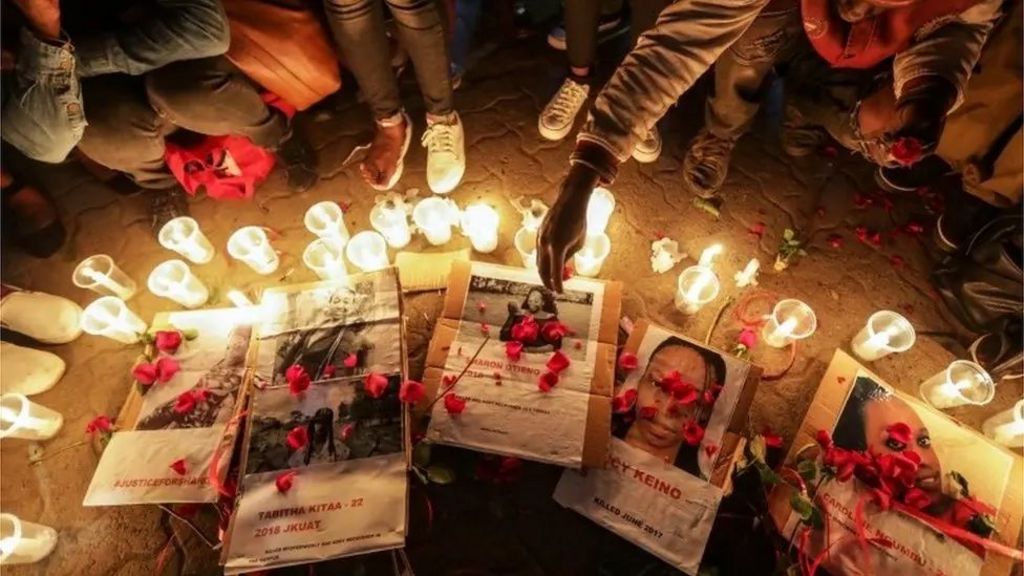
    In the immediate aftermath of Otieno’s death in 2018, the case sparked nationwide protests across Kenya and drew long-overdue public attention to the pervasive crisis of gender-based violence and femicide in the country. A 2022 national demographic and health survey found that at least 34% of Kenyan women have reported experiencing physical violence at the hands of intimate partners or other assailants. In the days following this week’s guilty verdict, community vigils were held across the country to honor Otieno and other women killed by gender-based violence.

    For Otieno’s family, the conviction represents the end of a years-long fight for accountability. “We are happy with the conviction. We believe that justice has at last been served to Sharon,” said the family’s legal representative. Activists now say the verdict sets an important precedent for holding powerful perpetrators of violence against women accountable in a country where such cases often go unpunished.