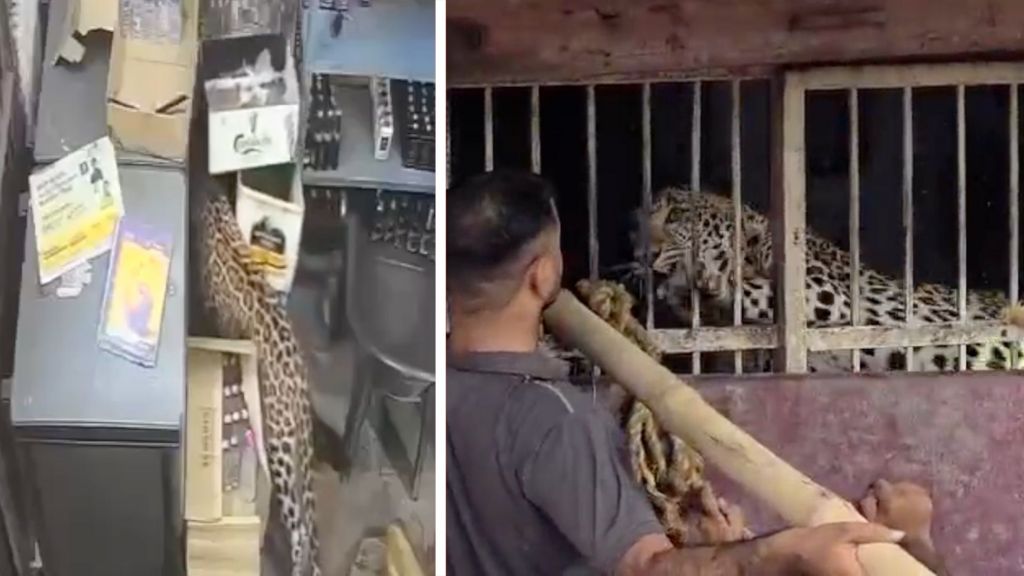
A close call for a liquor store employee in a wild animal encounter that unfolded in a populated area, as the worker escaped a leopard attack with only narrow margins to spare. Local authorities have confirmed that after a tense nearly five-hour operation to contain and secure the unrestrained animal, wildlife teams successfully captured the leopard. Following the capture, wildlife officials completed the process by releasing the big cat back into its natural wild habitat, following standard animal management protocols for unexpected urban-wildlife intersections. The incident highlights growing instances of wildlife venturing into human-populated zones as habitat boundaries shift, prompting local officials to reiterate guidance for residents on how to respond safely when encountering wild animals in developed areas. No serious injuries were reported beyond the fright of the encounter, and the leopard was confirmed to be unharmed during the capture and release process.
分类: society
-
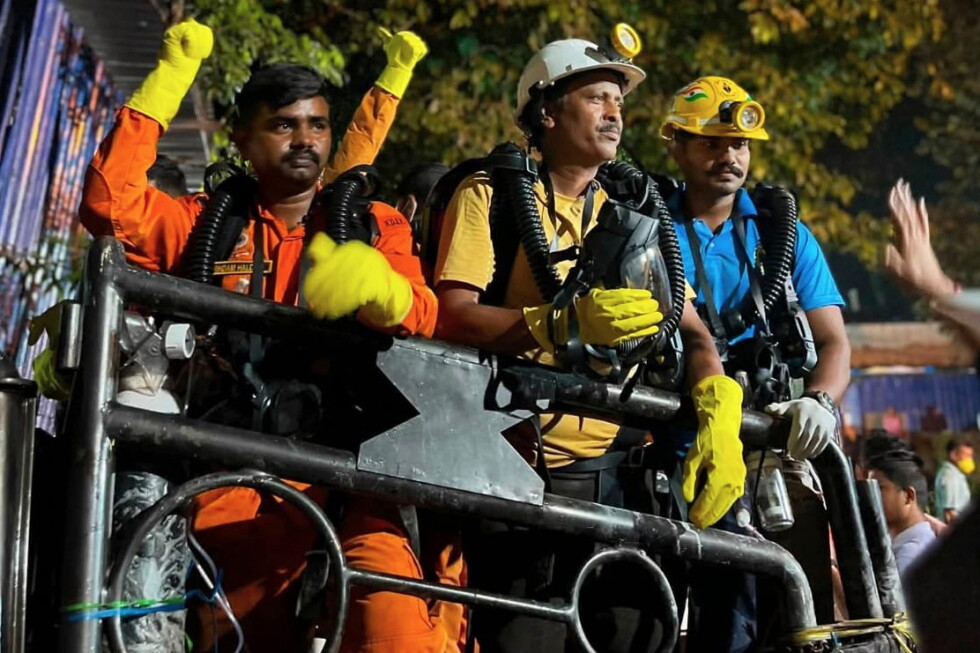
Death toll in India hydropower tunnel disaster rises to 25 as rescue effort ends
GUWAHATI, India – Rescue operations for trapped workers at a collapsed hydropower tunnel in India’s Himalayan state of Sikkim concluded Thursday, after recovery teams pulled the bodies of the final 13 missing workers, raising the total confirmed death toll to 25.
The tragedy unfolded on Monday, when a methane gas buildup ignited a powerful explosion inside the tunnel of the under-construction 500-megawatt Teesta Hydroelectric Project. The site sits roughly 40 kilometers south of Sikkim’s capital Gangtok, in the seismically active Teesta River basin. The blast trapped dozens of workers deep underground, leaving no chance of survival for those caught in the disaster. Multiple state and national agencies launched a coordinated four-day rescue effort, but operations were slowed significantly by high levels of toxic gas lingering inside the tunnel, according to official statements.
After all trapped workers’ remains were recovered, search teams conducted a full final structural inspection of the damaged tunnel, the Sikkim state government confirmed in an official release. In response to the disaster, authorities have assembled a high-level special committee to launch a full investigation into the causes of the explosion. The panel will also be tasked with outlining new regulatory safeguards to prevent similar deadly accidents on future infrastructure projects.
This latest industrial disaster has drawn renewed attention to systemic construction safety risks across India, where the country’s rapid push for large-scale infrastructure expansion frequently clashes with challenging geographic conditions, inconsistent safety oversight, and common construction lapses. Experts note that the Teesta River basin, where the hydropower project is located, presents uniquely high dangers for underground construction. The region is marked by young, geologically fragile rock formations intersected by frequent fractures and naturally occurring underground pockets that can trap ancient gases such as methane. Combined with ongoing seismic activity and unpredictable subterranean conditions, tunnel projects in the area carry inherently elevated risk.
This disaster is far from an isolated incident in India. Just this year, a coal mine explosion in neighboring Meghalaya state claimed the lives of 18 workers. In 2023, a major tunnel collapse on an infrastructure project in northern Uttarakhand state trapped 41 workers for 17 days before a dramatic multi-week rescue effort successfully freed all those stuck underground.
-

New multi-millionaire’s four-letter reaction to $40m Powerball win
After three straight weeks of no top-prize claimants, a middle-aged couple from Brisbane’s Kenmore neighborhood has walked away with one of Australia’s biggest recent Powerball jackpots, scoring a total windfall of $40,724,820.55.
The couple, who already had 19 additional lower-division wins to their name in the same Thursday evening draw, became the first jackpot winners since late June, when an unregistered Canberra man claimed an identical $40 million top prize. When lottery officials called to deliver the life-changing news, the winning husband gave a blunt, distinctly Australian reaction that captured the utter shock of the moment: “F**k no! What? You’re kidding me,” he shouted, unable to process the win at first.
His wife shared similar disbelief, recalling that she had joked with her husband moments before the call that the unknown contact could be the national lottery operator The Lott with good news. “This is unreal. This can’t be real,” she said. Unlike many jackpot winners who weigh long-term decisions about their careers, the pair immediately announced an end to their working lives, saying they had spent years questioning whether there was more to life than daily work routines.
“I’ve dreamt of this, but never imagined this happening to us,” the husband told lottery officials. The couple outlined their early plans for the massive sum: they will first clear their outstanding home mortgage, then set up long-term financial security for their children and extended family. Beyond that, they said they plan to embrace their newfound freedom and enjoy every moment of their unexpected good fortune.
Lottery officials confirmed that the winning numbers, ordered numerically, were 7, 11, 12, 18, 27, 30 and 34, with a Powerball of 16. Alongside the single top-division jackpot win, 20 players took home division two prizes of $38,148.45 each, and another 81 winners claimed division three prizes of $11,650.25 apiece. The win marks the end of a four-draw rollover that had built up the jackpot to its massive sum, making the Brisbane couple the envy of lottery players across the country.
-
A single photo captures the resolve behind India’s “Cockroach” protests
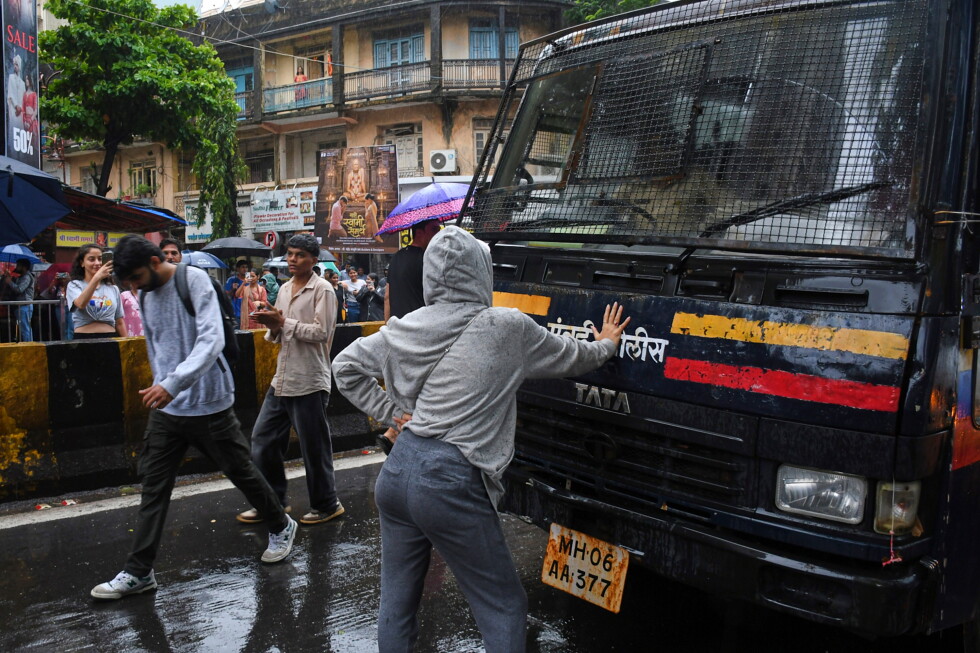
MUMBAI, India — A viral photo captured outside a Mumbai police precinct tells a story of quiet defiance that has come to define India’s spreading “Cockroach” protest movement: a blue police van fills the shot, and 27-year-old Rhiya Ahir plants herself in its path, her hoodie soaked through from a sudden downpour, one palm pressed firmly against the van’s cold metal exterior. Behind the windshield, uniformed officers look on. Inside the vehicle, a group of young demonstrators sat detained, swept up during a mass protest Wednesday in India’s financial and commercial hub. What began as a spontaneous act of solidarity for Ahir has turned her into an unexpected face of a movement that started more than a month ago and now resonates far beyond its original roots.
The protest movement, nicknamed the “Cockroach” protests by participants, first erupted over widespread allegations that highly competitive entrance exams for top medical school positions and coveted government jobs had been compromised by widespread question paper leaks. What started as outrage from young job and education seekers has rapidly swelled into a broader movement, drawing in working professionals, working-class families and longstanding critics of the government. It has become a public outlet for accumulated frustration across a wide swath of Indian society over systemic economic inequality, limited opportunities for young people, and perceived government indifference to widespread public concerns.
On the day of the Mumbai demonstration, Ahir told reporters she had only been waiting to meet friends before joining the planned protest when she spotted the police van carrying detained protesters. Instead of turning away, she approached the officers and asked a straightforward question: did they have the legal required paperwork to justify the detentions of the young activists?
Dissatisfied with the vague and inadequate response she received from the officers, Ahir first walked alongside the moving van as it prepared to depart, keeping pace to continue her challenge. When the vehicle accelerated and she could no longer keep up on foot, she made the split-second decision to step directly in front of the van, blocking its path completely.
Ahir recounted later that she could not stand by and watch as peaceful demonstrators, who were ordinary Indian citizens, were treated like common criminals simply for exercising their right to protest. In response to her blockade, the van’s driver revved the engine loudly, the sudden roar of power a clear attempt to intimidate her into moving. Ahir admitted that in that moment, she acknowledged the very real risks: she could have been arrested, detained alongside the other protesters, or even seriously injured if the driver followed through on the implicit threat. Even so, she refused to step back. She held her position firmly, refusing to move until police agreed to release the detained young protesters. Eventually, officers conceded, and the demonstrators were set free.
In an interview after the confrontation, which lasted roughly 40 minutes from start to finish, Ahir acknowledged she had been afraid throughout the standoff. But her conviction that she was acting in the right outweighed her fear. “I knew one thing,” she said. “If I had started this, I had to end it.” Her act of individual defiance is just one of many that have fueled the growing movement, which has now spread beyond Mumbai to other major Indian cities, with demonstrators holding mass sit-ins in the national capital even as police have stepped up efforts to crack down on gatherings.
-
Modi vows punishment for exam fraud fuelling India protests
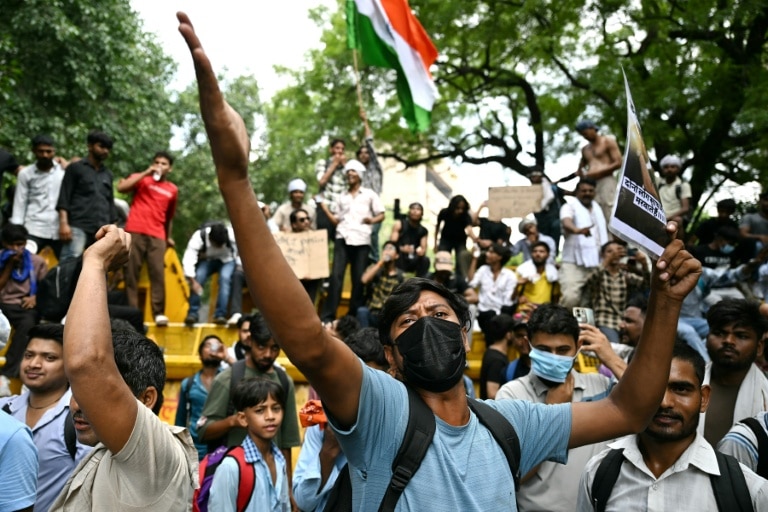
Weeks of growing youth unrest over widespread exam cheating and paper leaks in India has reached a fever pitch in New Delhi, drawing one of the sharpest challenges to Prime Minister Narendra Modi’s third-term administration yet. In his first direct public address addressing the protests that have paralyzed parts of the capital and spread across the country, Modi vowed Thursday that anyone involved in rigging recruitment and entrance exams will face harsh, swift consequences. “Nothing matters more than protecting the welfare and future of India’s young people,” the prime minister wrote in a social media post, announcing plans to establish fast-track special courts to rapidly prosecute those responsible for orchestrating question paper leaks. “Anyone who tries to destroy the future of our youth will not be spared,” he added. The prime minister’s comments came one day after thousands of demonstrators, organized under the banner of the viral social media movement Cockroach Janta Party (CJP), rallied at New Delhi’s iconic Jantar Mantar protest site, spilling into surrounding streets and triggering renewed violent clashes with local police. The CJP movement began unexpectedly in May, launched as a satirical rebuke after India’s Chief Justice Surya Kant was widely reported to have compared restless young Indians to “cockroaches” and “parasites” during a public court hearing. What started as an online joke quickly evolved into a mass grassroots movement that now counts millions of followers across major social platforms, expanding its demands to cover systemic youth issues: soaring youth unemployment, shrinking economic opportunity, and what organizers decry as Modi’s growing authoritarian turn in governing. The current wave of protests erupted earlier this month, snowballing into major unrest on Monday, the opening day of India’s annual monsoon parliamentary session. Tens of thousands of students attempted to march to India’s parliament building to demand action, prompting Delhi Police to deploy tear gas and baton charges to disperse the crowd. Protesters responded by throwing stones, in what became the largest mass street demonstration held in the national capital in nearly five years. Official police reports confirm at least 178 people, including dozens of security personnel, were injured in the day’s violent clashes. Protesters, most of whom are college students and young job seekers, are demanding the immediate resignation of India’s federal education minister over the government’s failure to stop repeated exam leaks and irregularities. CJP spokesperson Ashutosh Ranka accused Delhi Police of excessive force during Wednesday’s continued protests, writing in a social media post that authorities had shut down mobile internet access in the protest zone and “brutally beaten” peaceful demonstrators. Delhi Police, for their part, pushed back against the claims, saying protesters first attacked responding officers with stones and plastic bottles, leaving multiple officers with “serious injuries.” The protest movement has quickly gained broad political support from India’s fragmented opposition bloc, which has paralyzed parliamentary proceedings for days and demanded Modi issue a formal public apology for the violent police crackdown on Monday’s demonstration. Rahul Gandhi, leader of the main opposition Congress Party, directly attacked Modi in a social media post Thursday, arguing the prime minister was the ultimate party responsible for harming India’s young people. “You allowed and encouraged the total capture and destruction of our education system — and protected every person responsible for it,” Gandhi wrote. The unrest has now spread far beyond New Delhi, with smaller but coordinated demonstrations popping up across India on Wednesday in major population centers including Mumbai, Bengaluru and Patna. International solidarity has also emerged: student organizers in neighboring Bangladesh called for a mass “torch rally” Thursday evening to stand with the Indian protesters, a notable show of support just months after mass youth-led protests in Bangladesh toppled the long-ruling government of Sheikh Hasina earlier this year. The current unrest stems from a growing crisis of public trust in India’s national testing and recruitment system, which has been rocked by repeated high-profile cheating scandals in recent months. Earlier this year, a major medical entrance exam question paper leak forced more than two million registered candidates to retake the high-stakes test, delaying admissions for months. More recently, a dispute over flawed online grading for nearly two million high school leaving examinations has further stoked public anger at the government’s failure to reform the broken system. Political analysts note the youth-led protests represent one of the most significant domestic challenges to Modi’s Hindu nationalist government since he won a third consecutive five-year term in national elections held earlier this year, tapping into widespread frustration among India’s large youth population over stagnant economic opportunity and institutional corruption.
-
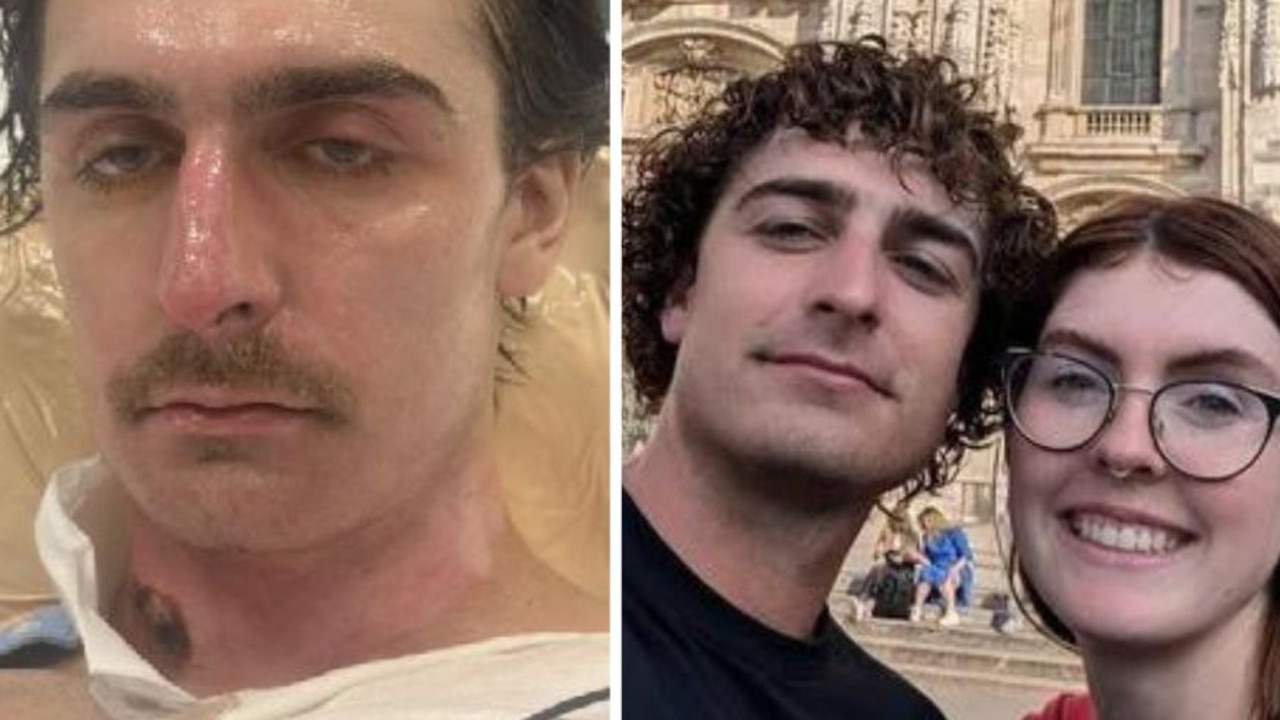
Mum of Perth man burned in robot vacuum explosion gives condition update
A 23-year-old Western Australian man seriously injured in a rare explosion of his domestic robot vacuum cleaner has reached an important new milestone in his hospital recovery, his mother has confirmed, as community support pours in to help the young victim rebuild his life.
Lachie Perrem, a resident of Brabham in Perth’s northern suburbs, suffered catastrophic burns across 75% of his body when the robotic cleaning device detonated unexpectedly in his kitchen on July 2 this year. Following the freak accident, Perrem was placed in an induced medical coma for several weeks to stabilize his critical condition, and he only recently regained consciousness to begin the long rehabilitation process.
In a new upbeat update shared this week, his mother Fiona Perrem said her son is beating expectations and making impressive strides in his recovery at the hospital.
“His skin grafts are healing very well, and the physiotherapy team is extremely happy with the progress he has made, particularly with regaining movement in his hands,” Fiona Perrem explained. “Today we hit another big milestone: his feeding tube has been successfully removed. His face and neck are also healing far better than we could have hoped at this stage.” She emphasized that every small step forward counts as a major victory for her son, and the family is deeply grateful for both the expert clinical care he is receiving and the overwhelming kindness from the local community.
The incident upended Perrem’s life entirely, destroying his rented home and leaving him facing a years-long journey of multiple surgeries, extensive rehabilitation, and ongoing specialist care. To help offset the enormous unexpected costs of his recovery, the family launched a public fundraising campaign on GoFundMe, which has already attracted donations from nearly 500 different people, raising more than $40,000 — three-quarters of the campaign’s $50,000 target.
In an earlier post on the fundraising page, Fiona Perrem explained that the campaign aims to remove financial stress from Perrem’s recovery, so he can focus entirely on healing. “While all our energy right now is going to helping him survive and heal, life outside the hospital doesn’t pause,” she wrote. “Bills keep coming, and he still has ongoing financial commitments, including car loan repayments. We want to lift as much of this burden as possible so when he is ready to start the next phase of recovery, he doesn’t have to worry about losing everything he worked so hard to build.”
The explosion not only caused life-altering injuries to Perrem but also left him, his fiancée, and their housemates homeless after severe damage to their property. “Along with his long road to recovery, they now face the heartbreaking task of rebuilding their lives from scratch,” Fiona Perrem added. “Every message of support gives our family strength during the hardest time of our lives, and every donation, no matter how small, helps cover the extra costs that come with this devastating journey. Thank you all for continuing to stand by Lachie and our family as he fights to recover.”
-
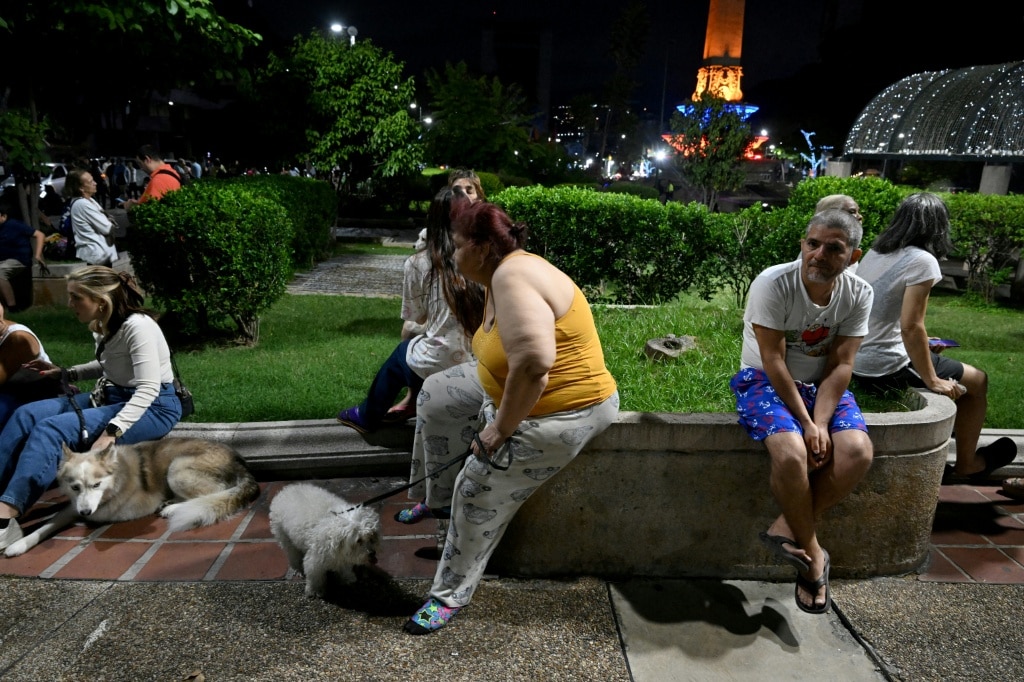
Venezuelans search for animal companions lost in the quakes
One month has passed since two powerful back-to-back earthquakes shook Venezuela’s coastal region, leaving a trail of human tragedy and a less-discussed crisis: hundreds of companion animals left homeless, separated from their displaced or grieving owner families.
On June 24, a 7.2-magnitude tremor and a 7.5-magnitude aftershock struck just 60 seconds apart, devastating the northern coastal state of La Guaira, located just north of the capital Caracas. Official disaster tallies confirm the quakes killed more than 5,000 people, injured roughly 17,000 others, and displaced over 23,000 people from their destroyed homes. For desperate survivors already reeling from the loss of loved ones and livelihoods, the disappearance of beloved pets has added another layer of heartbreak to the disaster.
Like thousands of other residents, 42-year-old Raquel Ramos was caught off guard by the sudden tremors while in the coastal neighborhood of Tanaguarena with her young son. As the ground shook and buildings began to crumble, the pair fled for safety—but her white-and-orange domestic cat Mia stayed behind. “When the earthquake happened, we ran out and she stayed behind. I haven’t been able to find her since that day,” Ramos told Agence France-Presse during a search of local emergency animal shelters. Today, Tanaguarena, like many coastal communities hit by the quakes, is reduced to nothing but piles of concrete rubble. Wiping away tears as she pulled up a photo of Mia on her mobile phone, Ramos said she would continue checking other emergency shelters across the region in hopes of bringing her cat home.
Across La Guaira, informal and official emergency shelters have popped up to house displaced pets, offering temporary care while workers connect animals with their owners or new adoptive homes. At one state-run facility, 326 displaced cats, dogs and other animals have been taken in, with roughly 50 already placed with new families. Among the visitors to the shelter was 17-year-old Astrid Ugas, who originally came looking to adopt one companion for her cat, whose original partner went missing during the quakes. She left with four orphaned kittens instead. “I want to help everyone who needs it,” Ugas explained of her decision.
In one remarkable moment that has renewed hope for separated owners, a rescue team pulled a live black cat from the rubble of a collapsed residential complex nearly four weeks after the disaster. The six 12-to-17-story housing developments in the area were completely leveled by the quakes, making the survival all the more extraordinary. Vets provided emergency care on site before moving the cat to an improvised shelter set up inside a closed local McDonald’s, which has also doubled as a community outpatient medical clinic in the disaster’s aftermath.
Yanier Veliz, a 20-year-old veterinary student who has volunteered at the shelter since the quakes hit, says the facility treats around 50 animals every day. The roster of patients ranges from common dogs and cats to unexpected survivors: “including dogs, cats, turtles and someone even brought a goat,” Veliz said.
Back at the state-run main shelter, the new temporary home has even seen litters of kittens born to displaced mother cats, who are now raising their young in the facility’s safety. Amanda Gonzalez, a 25-year-old veterinary student working at the shelter, says most visitors who come looking for lost pets leave with their furry companions. “The reunions have been very emotional. Everyone ends up crying,” she said. “These are animals they might have considered gone, and when they see that they’re here, they’re happy and so are we.”
-
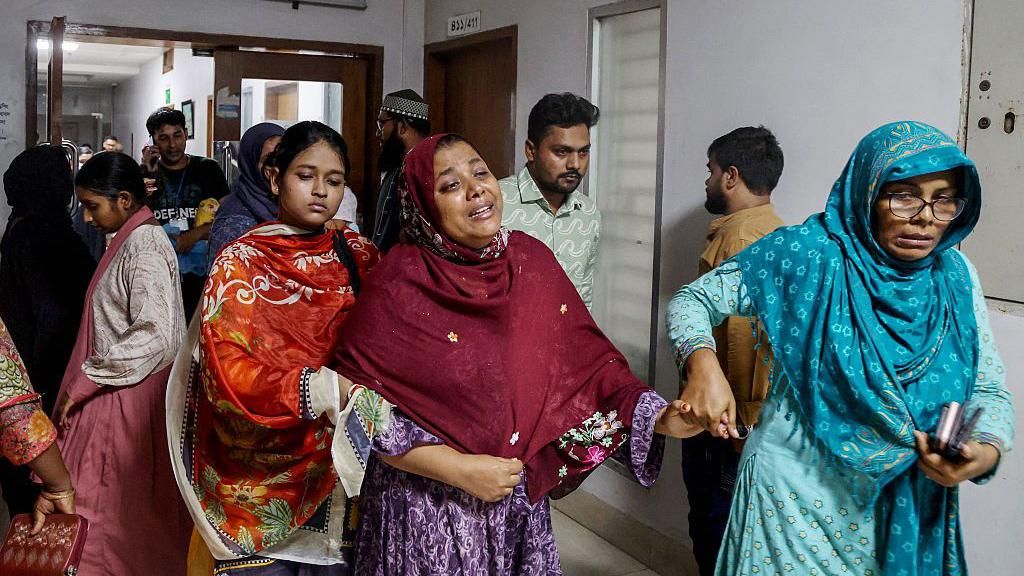
A year after deadly jet crash at Bangladesh school, families demand answers
On a seemingly ordinary school day in July 2025, catastrophe struck the busy Dhaka neighborhood of Uttara, when a Bangladesh Air Force training jet crashed straight into Milestone School and College — a private educational facility teeming with hundreds of active, unsuspecting students. The impact and subsequent raging fire turned a hub of learning into a scene of unthinkable chaos, leaving 34 dead and 160 more injured. Most of the casualties were children, making this the deadliest aviation disaster Bangladesh has witnessed in more than half a century.
Now, one year after the tragedy, survivors and grieving family members gathered in Dhaka this week to honor the lives lost — and to reiterate their desperate demand for long-overdue accountability and transparency. For many of the young survivors, the physical and psychological scars of that day remain a daily prison. Sixth-grader Nure Jannat Yusha, who suffered burn injuries in the crash, describes constant fear and trauma that has shattered her once-normal life. “Even now, if I go to school and see a plane, I feel afraid. I can’t sleep at night. In my dreams, someone is throwing me into the fire,” she told BBC Bengali. Once a student who dreamed of becoming a professional dancer, Yusha has abandoned that aspiration; she no longer has any interest in attending classes, gripped by constant paranoia that another plane will fall from the sky. Her story is far from unique.
Fifth-grader Mehreen, another injured student, can no longer attend school at all. Her injuries leave her in severe pain when exposed to even small amounts of sunlight, and the trauma has erased her once-sharp ability to learn and retain information. “Earlier, if I read something, I would memorise it in two minutes. Now I can’t memorise a line in two hours,” she explained. Like Yusha, she struggles with nightly insomnia and recurring nightmares, unable to outrun the memory of the crash.
In the immediate aftermath of the disaster, Bangladesh’s government established an investigative commission to unpack the causes of the crash. The committee submitted its final findings to state officials last November, but the full report has never been released to the public. A leaked copy obtained by BBC Bengali has revealed damning conclusions that contradict early official claims. Contrary to the Bangladesh Armed Forces’ initial statement that the crash was caused by an aircraft mechanical fault, the investigation found the jet itself had no technical failures. Instead, the report attributes the disaster to multiple systemic failures: the pilot lacked sufficient training, there was inadequate ground supervision for the training flight, Milestone School violated critical building safety codes (including only having a single exit for nearly 900 students), and hundreds of other buildings — including multiple schools and hospitals — located near Dhaka’s international airport have illegally violated height restriction rules, putting thousands of lives at risk daily.
Grieving family members say these unaddressed safety lapses mean the same disaster could happen again. Mansur Helal, whose wife Mahreen Chowdhury — a schoolteacher at Milestone who died saving trapped students from the burning building — told the memorial gathering that the status quo is unacceptable. “No one can give a guarantee that another plane will not fall onto this school in the future,” Helal said, noting that between 2,500 and 3,000 students still attend the campus daily. “This is truly a horrific situation.”
Helal and other attendees are demanding three core actions: the immediate public release of the full investigative report, full implementation of the compensation and support measures already recommended by the commission, and sweeping policy changes to restrict hazardous training flights over densely populated residential and educational areas and enforce building safety codes around the airport. While the commission already called for financial compensation and expanded care for survivors, none of these measures have been put into practice one year on.
At Tuesday’s memorial, Health Minister Sardar Sakhawat Hossain stated the government would provide support to survivors requiring ongoing medical care, and Zubaida Rahman, wife of Prime Minister Tarique Rahman, praised survivors for their courage, calling it “a source of inspiration for the nation.” But those words have done little to address the unmet needs of families still waiting for answers, and survivors still struggling to rebuild their lives shattered by a disaster that could have been prevented.
-

Blocked by censors, China’s animal lovers take fight against abuse offline and overseas
In late June, graphic footage of a horrific animal abuse incident in southern China’s Guangdong province ignited widespread public fury that has spilled across national borders, becoming a global rallying cry for long-overdue animal cruelty laws in China. The video, which shows four boys under the age of 14 beating three newborn stray puppies to death with sticks before burning their mother, a stray dog named Wang Wang, to death while the children laughed, quickly spread across Chinese social media platforms, triggering an immediate wave of shock and grief.
Chinese authorities responded to the outcry by moving to scrub most posts and mentions of the incident from domestic internet platforms, citing the need to protect the privacy and welfare of the underage perpetrators. In an official statement, local officials urged the public to stop sharing the disturbing footage, avoid so-called cyberbullying of the minors, and maintain a supportive environment for youth rehabilitation. Following the incident, Jieyang city authorities announced that the four boys would not face any criminal charges, and would instead be transferred to a specialized youth education facility; no further details on the placement or the facility’s programming have been released to the public.
This official response has not quieted public anger, and instead amplified calls for systemic change: China currently has no standalone national legislation that criminalizes animal cruelty, leaving abuse cases without consistent legal consequences. While Chinese censors have restricted broad circulation of the full video and removed high-profile posts from public figures that called for animal protection reform – including posts from Chinese actor Du Jiang and Taiwanese actress Joe Chen – discussion of the incident and the broader demand for animal cruelty laws persists. Trending keywords related to Wang Wang and animal protection remain accessible on major Chinese platforms, and many domestic users have found creative ways to keep the conversation alive, despite repeated content removal restrictions.
The censorship push has also driven animal rights advocates to organize action outside mainland China to amplify their cause, turning a local incident into an international movement. In New York City’s iconic Times Square, a large digital billboard now cycles images of Wang Wang every 35 minutes, bearing the moving caption: “She was loved. She wanted to live. She should still be here.” Near the Taipei 101 skyscraper in Taiwan, a second billboard displays Wang Wang nursing her puppies with the message: “This planet is their home too. Justice for Wang Wang.”
CK, a Taiwanese activist who contributed NT$30,000 (approximately $930) to fund the Taipei billboard, told reporters she was left unable to eat or sleep normally for days after seeing the killing footage. She explained that the cross-border campaign was organized to create collective momentum for change, saying, “It makes everyone feel like we’re speaking out together on this issue, rather than airing our individual opinions online. The world needs to know about the cruelty these dogs have been subject to.” CK has also set up public accounts on global social platforms including Reddit and X to share the incident with international audiences, while another Taiwanese activist named Elara used artificial intelligence to translate a full summary of the incident into more than 10 languages, including Japanese, Portuguese, and Russian, to widen global outreach. Activists in Hong Kong and Macau have also raised funds to place awareness posters on public buses and trains across both regions.
Within mainland China, grassroots action continues to gain traction across public and commercial spaces. During a recent professional football match in the northeastern city of Dalian, a large stadium screen displayed a cartoon tribute to Wang Wang and her puppies before kickoff, with the message: “Every life deserves respect and kindness.” Domestic Chinese brands including beauty label Amortals and streetwear brand Wah Yan Ching Nin have funded public awareness ads outside major shopping malls across the country, calling for an immediate end to animal abuse and passage of national anti-cruelty legislation. Even on e-commerce giant Taobao, sellers are offering stickers and car decals featuring Wang Wang and her puppies to raise awareness, while Weibo users continue to post calls for sustained action, urging supporters not to let public discussion fade.
International animal welfare organizations have also been drawn into the campaign. The Italy-based International Organisation for Animal Protection announced it has received more than 100 public reports from people across the globe calling for the group to intervene, and has formally requested additional information on the incident and broader animal protection policy from Chinese authorities.
The incident has sparked broader debate over competing ethical priorities: China’s decision to restrict identification of the underage perpetrators aligns with global standards that typically protect the identities of juvenile offenders to avoid long-term psychological harm from public exposure. Even so, many activists argue that the lack of national animal cruelty legislation is the core systemic failure that allowed this incident to occur without legal consequences, and that public outcry is necessary to force long-term reform. The Wang Wang killing is the latest in a string of high-profile animal abuse cases that have galvanized Chinese public opinion in recent years, with the graphic, visceral footage of the killing striking a particularly deep emotional chord with animal lovers across the country. One anonymous animal welfare advocate from eastern China told reporters, “We can’t make our voices heard, so many people outside China are actively helping us to share this message.”
-
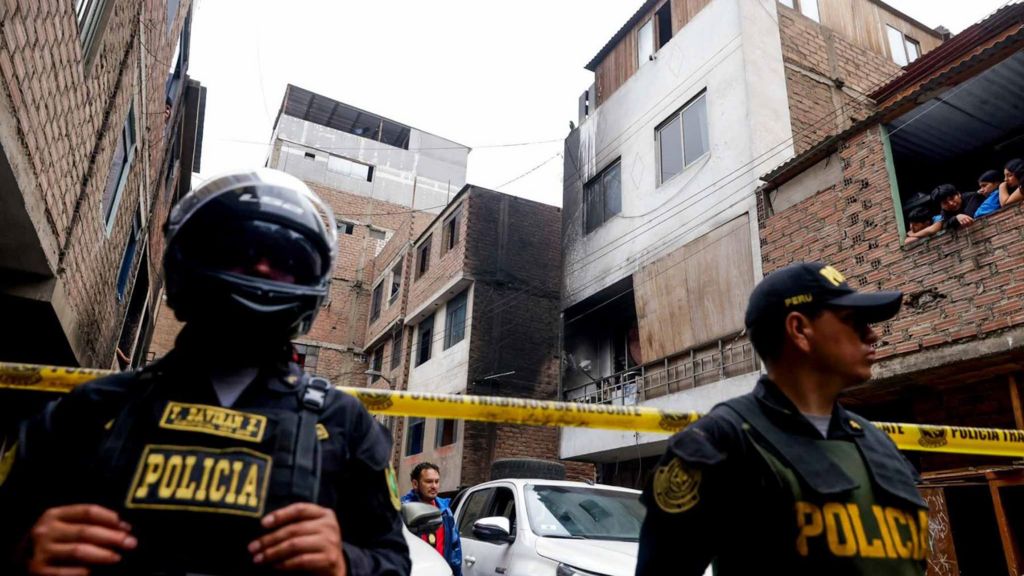
Fire kills 10 members of same family in Peru, police say
A devastating early-morning fire has claimed the lives of 10 people from a single extended family, five of them children, in a residential neighborhood of Peru’s capital city Lima, national law enforcement officials have confirmed. General Oscar Arriola, a senior leader with the Peruvian National Police, confirmed that the inferno tore through the family’s property in Lima’s southern La Victoria District in the early hours of Wednesday local time.
The toll of the disaster breaks down to five children between the ages of 3 and 15, four adult family members aged 29 to 72, and a 10th victim whose age has not yet been publicly released. Two additional people were hurt in the blaze, and authorities have detailed the severe destruction caused by the fire: all 10 victims’ bodies were burned beyond recognition, requiring additional forensic work to formally identify them.
When the fire broke out at approximately 3:00 a.m. local time (8:00 a.m. GMT), 17 members of the family were inside the multi-use property. Seven of those inside were able to escape the spreading flames without fatal injury, according to reporting from Infobae news outlet.
Investigators are now working to unpack credible leads that the fire was intentionally set, amid growing reports that the family was targeted in an extortion plot. Local reporting confirms the family operated a local mattress manufacturing business from the property and also owned a fleet of electric motorcycles. Neighbors told Peru’s official Andina News Agency that unknown attackers first set fire to the motorcycles parked outside the building. The flames quickly spread to the building itself, fueled by the large stock of flammable mattress-making materials stored on site.
Prior to the attack, family members had reportedly received repeated threats demanding they pay illegal extortion payments to criminal groups. In the wake of the tragedy, Peruvian National Police announced it would deploy a sustained, significant security presence around the burned property to prevent further criminal activity at the site. The force also released an official statement acknowledging the national impact of the mass killing, writing, “Today, all of Peru falls silent in the face of a tragedy that plunges our nation into mourning.”