分类: society

  • Judge sentences Ugandan man to death following speedy trial for killing 4 children

    Judge sentences Ugandan man to death following speedy trial for killing 4 children

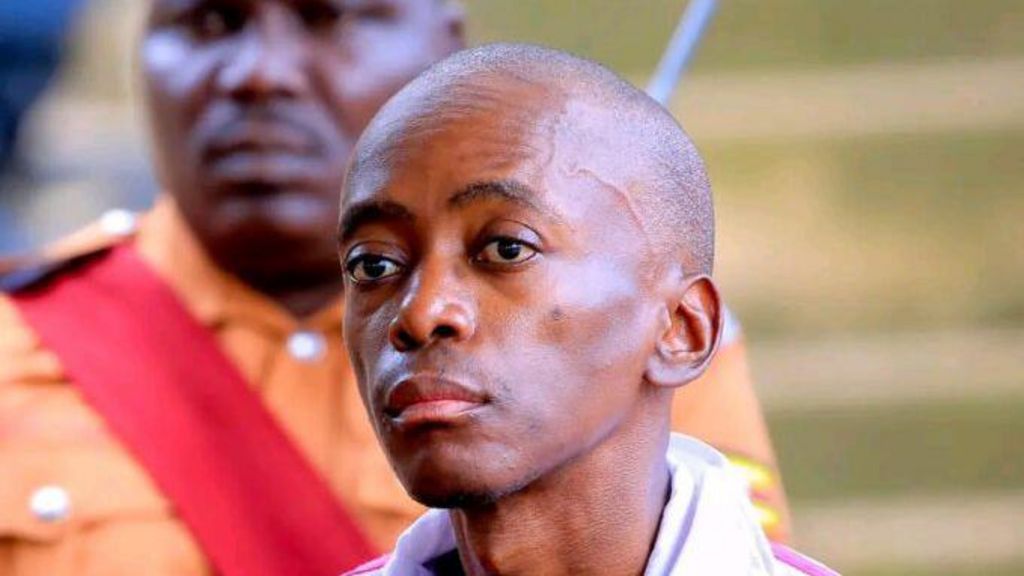
    WAKISO, Uganda — A high-stakes criminal case in Uganda concluded Thursday with a judge handing down a death sentence to 38-year-old Christopher Okello, turning down the defendant’s argument that he was legally insane when he carried out a brutal machete attack that left four nursery school children dead earlier this month. The ruling triggered immediate cheers from a crowd of hundreds of local residents who gathered to watch the open-air proceedings, a case that has shaken the East African nation since the killings unfolded on April 2.

    The attack targeted the Gaba Early Childhood Development Program, a nursery school located in a Kampala capital suburb. Witness accounts confirm Okello gained entry to the facility by disguising himself as a parent, engaged in a short conversation with school administrators, then locked the campus gate before launching his violent assault on the young children.

    In his ruling, the judge emphasized that Okello’s insanity claim failed on the basis of evidence: the defendant had not presented any verifiable proof to back up his assertion that he was not mentally competent at the time of the crimes, justifying the death sentence the court handed down.

    The fast-track, public proceedings were the result of a direct order from Ugandan President Yoweri Museveni, who instructed the judicial system to process the case through the country’s “mobile courts” mechanism. Unlike traditional closed courtroom trials, mobile courts hold sessions in open, outdoor spaces to allow members of the public to observe the justice process directly. In this case, hundreds of grieving local residents and other onlookers were able to watch the trial from start to finish.

    Even as the case moved quickly to a verdict, questions and controversy have persisted over Okello’s mental state and the fairness of the expedited public trial. Throughout proceedings, Okello displayed erratic behavior: he appeared visibly nervous and had unprovoked outbursts of laughter. The Uganda Law Society has publicly criticized the process, labeling it nothing more than “a judicial lynching rally.”

    Defending the approach, the Ugandan judiciary has stood by its decision to hold a quick, public trial, noting that the open-air mobile court model aligns with the institution’s commitment to bringing accessible justice directly to communities through innovative procedural approaches.

    It is important to note that while Uganda still allows the death penalty in law, actual executions are extremely rare in the country. Most individuals sentenced to death remain incarcerated for decades rather than being put to death, a common practice across much of modern East Africa.

    The Associated Press contributes international coverage of African current events, with additional reporting available via its dedicated Africa news hub.

  • Twitch streamer hit by car live on camera – ‘It felt like slow motion’

    Twitch streamer hit by car live on camera – ‘It felt like slow motion’

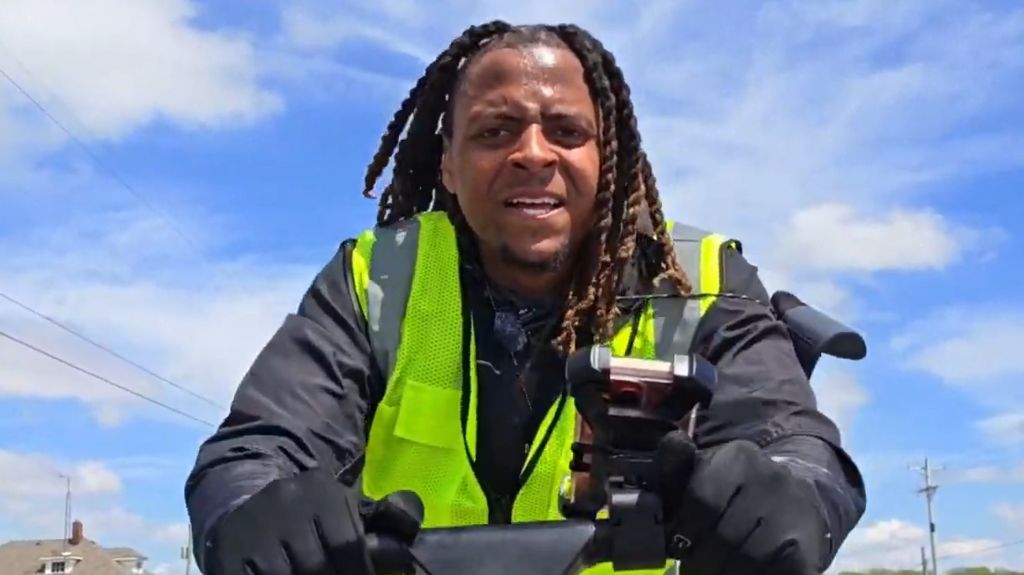
    A 27-year-old American Twitch creator who captured a shocking car accident on his live stream has opened up about the surreal, life-altering moment to the BBC, revealing he remains determined to complete his ambitious charity trek despite the terrifying collision.

    Known online by his handle “Humblezayy,” Isaiah Thomas launched the cross-country walking challenge with a heartfelt mission: to trek more than 3,000 miles from Philadelphia to Southern California, with every dollar raised going toward building a trade school for young people who cannot pursue traditional college education. The project has already struck a chord with donors, pulling in more than $50,000 in contributions by the time the accident happened.

    The incident unfolded on Day 34 of Thomas’s journey, as he traveled along Route 40 in Richmond, Indiana. Normally, Thomas follows strict safety protocols: he walks facing oncoming traffic, wears high-visibility reflective gear, and moves with a support cart ahead of him. On this particular day, however, a local fan who follows his stream offered to serve as a rear escort, driving behind Thomas with hazard lights active to warn approaching vehicles. After checking with local law enforcement and receiving official approval, Thomas began his day’s walk as planned.

    Tragedy struck mid-route when a car crashed into the escort vehicle traveling behind Thomas, sending the vehicle careening into the streamer from his right side. Recalling the split-second collision, Thomas described the experience as surreal. “It was so fast, but it felt like it was in slow motion; it was like I was just gliding in the air – it was crazy,” he told the BBC. In the moments immediately after impact, a flood of worries raced through his mind: “I’m like, I hope this isn’t over. I hope that my injuries aren’t too bad.”

    For Thomas, this close call carried extra weight: he had already survived a serious car accident just six months prior, and had spent months in intensive therapy just to relearn how to walk well enough to undertake his fundraising challenge.

    After the crash, Thomas was able to stand up and survey the damage. Both the escort vehicle and the car that caused the collision were completely totaled, though remarkably, neither driver suffered life-threatening injuries. When first responders arrived at the scene, Thomas was able to share footage of the exact moment of impact, pulled directly from his live stream by one of his content moderators. It was only when he rewatched the clip himself that he fully grasped the force of the collision. “When I watched the video, that’s when I was surprised, like, wow, this car really hit me that hard,” he said. “That’s when I realised the impact.”

    Thomas was transported to a local hospital for evaluation, and walked away with only minor injuries: sprained ankles and small soft tissue damage, a outcome he called pure luck. In the days since the accident, despite the lingering shock of the event, Thomas has reaffirmed his commitment to finishing the trek, saying he only plans to take a short recovery break before hitting the road again.

    “For the next three to four days, I’m going to be taking ice baths and really just putting my body through a lot just to get back to where I was,” he said. With roughly 2,000 miles still left to cover and three months to complete the journey, Thomas shows no sign of abandoning the cause that pushed him to take on the challenge in the first place.

  • King Charles III boosts his charity fundraiser with first appearance at gala joined by Lionel Richie

    King Charles III boosts his charity fundraiser with first appearance at gala joined by Lionel Richie

    NEW YORK — New York City’s annual spring gala season, a calendar of glitzy black-tie fundraisers that regularly draws A-list artists, fashion elite and high-profile public figures, kicked off its most anticipated event of 2024 Wednesday night: The King’s Trust Global Gala, held this year at Christie’s iconic Manhattan auction house. While the guest list already featured household names from across entertainment, fashion and business — including music legend Lionel Richie and Vogue doyenne Anna Wintour — the evening’s biggest draw was a surprise short appearance from none other than King Charles III, founder of the eponymous nonprofit.

    The monarch’s 3.5-minute keynote speech marked his first-ever appearance at the five-year-old global gala, drawing palpable excitement from the room. Even high-society attendees gathered along velvet rope barriers, craning to catch a glimpse of the British king during his first visit to the United States since his 2023 coronation. The four-day U.S. trip was already scheduled to mark the 250th anniversary of American independence and repair strains in the bilateral relationship, but the gala added a high-profile philanthropic centerpiece to his itinerary.

    Anticipation for Charles’ appearance rippled across the red carpet before the event. British beauty entrepreneur Charlotte Tilbury told lifestyle icon Martha Stewart — who arrived in a shimmering sapphire gown — to relay to the King that she had chosen the “royal blue” shade specifically to honor his visit. Natasha Poonawalla, executive director of the Serum Institute of India, the world’s largest vaccine manufacturer, summed up the mood of the room, noting “everyone’s been waiting for him.” Poonawalla added that Charles’ in-person appearance would significantly bolster the foundation’s global profile and mission.

    Those predictions held true: Organizers announced Wednesday night that the gala had raised more than $3 million, a new fundraising record for the event. The historic haul comes as The King’s Trust works to build a permanent endowment to support its programs in the United Kingdom and expand its reach across more than 20 other countries. Queen Camilla also joined Charles for the event, with organizers noting her presence further boosted donor interest.

    Founded 50 years ago by Charles, The King’s Trust delivers education and job training programs that have supported more than 1.5 million young people worldwide to secure stable employment. In his brief remarks before the gala dinner, Charles reflected on the organization’s five-decade impact, noting that many program graduates go on to pay the support forward to other disadvantaged young people facing similar barriers. He added a lighthearted touch to his remarks, joking that “Only now do quite a lot of them actually admit they got their start (with the trust).” Charles also exchanged playful banter with Lionel Richie after the singer announced he would not perform at the more intimate 2024 event, quipping that the Rock & Roll Hall of Famer “must gargle with port” to save his voice.

    Edward Enninful, former British Vogue editor-in-chief and gala co-chair, has witnessed the trust’s impact firsthand growing up in West London. He shared that his own cousins and brothers were able to build stable, successful lives despite being dismissed by mainstream society as “not worthy” of opportunity. Enninful called Charles’ New York appearance the nonprofit’s “glory moment.”

    “He’s set the example that philanthropy matters,” Enninful told the Associated Press. “No matter how well you are doing, you’re not doing enough unless you’re passing it on to a newer generation.”

    The 2024 gala was smaller and more intimate than previous installments, hosting just 160 guests with no scheduled musical performances. Other notable attendees included supermodels Karlie Kloss and Iman, *White Lotus* actors Leo Woodall and Meghann Fahy, and legendary fashion designers Donatella Versace and Stella McCartney.

    Martha Stewart, who built a billion-dollar media empire focused on lifestyle, cooking and homemaking, shared her own personal connection to the trust’s mission. Stewart recalled that scholarships paid for her higher education, and she credited early opportunities with her long-term success. “But I know today there’s a big challenge in getting a good job, a big challenge in getting a good education,” she said. “And we’re here to help those people.”

    This Associated Press philanthropy coverage is produced in partnership with The Conversation US, with support from Lilly Endowment Inc. The AP retains full editorial control over all content.

  • Man sentenced to death for murder of toddlers at Ugandan nursery

    Man sentenced to death for murder of toddlers at Ugandan nursery

    In a landmark ruling that drew public cheers, a Ugandan High Court judge has sentenced 38-year-old dual Ugandan-American citizen Christopher Okello Onyum to death by hanging for the brutal slaying of four one- to two-year-old toddlers at a Kampala nursery school earlier this year.

    The horrific attack unfolded on April 2, when Onyum gained entry to the Ggaba Early Childhood Development Program and fatally stabbed all four young children: Eteku Gideon, Keisha Agenorwoth, Sseruyange Ignatius and Odeke Ryan. The crime shocked communities across the East African nation, prompting authorities to hold the trial in a makeshift community courtroom located near the site of the killings to allow local residents to follow proceedings.

    During the trial, prosecutors laid out a overwhelming multi-source case against Onyum, built from 18 witness testimonies, forensic DNA evidence linking the defendant to the handle of the murder weapon (a kitchen knife), closed-circuit television footage that tracked his movements in the hours leading up to the attack, and telecommunications data that placed him at the nursery during the time of the killings. Two daycare workers also told the court they directly observed Onyum assaulting the defenseless children.

    Case records show Onyum initially confessed to the killings to investigators, claiming the attack was a deliberate human sacrifice he carried out in the belief it would bring him wealth. However, he later reversed that plea, entered a not guilty plea, and claimed he was suffering from a severe mental health crisis at the time of the attack that stripped him of the ability to form intent to kill. He urged the court to acquit him on the grounds of legal insanity.

    Delivering the final judgment, Justice Alice Komuhangi Khauka rejected the insanity defense, concluding that Onyum was fully legally sane when he carried out the attacks. In her ruling, she condemned the brutality of the crime, noting that Onyum deliberately targeted children in their most vulnerable state, slaughtered them in a cruel manner without any regard for human life, and had never shown any remorse for his actions. “I have also considered that the convict has not shown any remorse at all, because I would have at least expected an apology from him to the families of the babies,” Justice Khauka stated in her ruling, according to Agence France-Presse.

    Following the judge’s announcement of the death sentence, the crowd of local residents gathered in the courtroom erupted in cheers.

    Uganda has not abolished capital punishment, though the practice has been extremely rare in recent decades: the last officially recorded execution in the country took place more than 20 years ago, in 2005. Onyum now has a 14-day window to file an appeal against his conviction and sentence with a higher court.

  • ‘It’s just ridiculous’: Michigan residents react to gas prices

    ‘It’s just ridiculous’: Michigan residents react to gas prices

    In the region just north of Detroit, the beating heart of America’s automotive sector, local residents are growing increasingly frustrated with sky-high gasoline prices that are squeezing household budgets across the state. As the auto industry remains the primary engine of Michigan’s economy, most workers and families rely heavily on personal vehicles to commute to jobs, shuttle kids to school, and carry out daily tasks – leaving them disproportionately vulnerable to sudden spikes at the pump. What was already a tight financial situation for many working-class households has been made even worse by the unrelenting rise in fuel costs, prompting sharp pushback from community members. Many locals are describing the current price levels as simply unjustifiable, with one resident summing up the widespread frustration by calling the situation “just ridiculous”. The growing discontent among Michigan residents highlights how fuel price inflation hits regions built around auto manufacturing particularly hard, where car ownership is not a luxury but an absolute necessity for everyday life.

  • Trainee driver crashes bus into River Seine

    Trainee driver crashes bus into River Seine

    On a Thursday morning just south of Paris, a startling incident unfolded when a bus under the control of a trainee driver careened off the road, collided with a parked vehicle, and ended up submerged in the Seine River. The accident took place in the commune of Juvisy-sur-Orge, located roughly 20 kilometers outside the French capital, at a point when the trainee was approaching the final stages of her hands-on practical driving training, regional transport officials confirmed.

    Initial toxicology screenings for both drugs and alcohol have returned negative results, a spokesperson for Île-de-France Mobilités, the local transport governing body, announced. With no obvious impairment identified, the root cause of the sudden loss of control remains under active investigation as of the latest updates.

    At the time of the crash, the trainee was accompanied in the bus by an experienced lead driving instructor and two additional passengers, bringing the total number of people on board to four. Immediately after the vehicle plunged into the river, a massive multi-agency emergency response was launched, drawing in more than 90 personnel including firefighters, specialist divers, and police officers. France’s national river brigade also joined the rescue effort, with teams deploying multiple rescue boats, an aerial drone, and helicopters to search the site and extract those trapped inside the submerged bus.

    All four people on the bus were successfully pulled from the water, local mayor Lamia Bensara Reda confirmed in a public statement posted to Facebook. “Everyone was quickly rescued and, thankfully, is safe and sound,” Reda said, noting that the driver lost control of the vehicle near a riverside station before it dragged the parked car into the Seine with it. Local politician Claire Lejeune echoed this update in a post to social platform X, thanking first responders for their rapid, effective intervention.

    As of 11:00 a.m. local time on the day of the incident, the wrecked bus remained visible in the river, according to reporting from French news agency Agence France-Presse. Regional authorities from the L’Esson prefecture stated that details around potential casualties are still being finalized, while the head of Île-de-France Mobilités has ordered an internal administrative investigation alongside the official probe to unpack the full circumstances of the crash.

  • Massive sea lion makes rare appearance in San Francisco

    Massive sea lion makes rare appearance in San Francisco

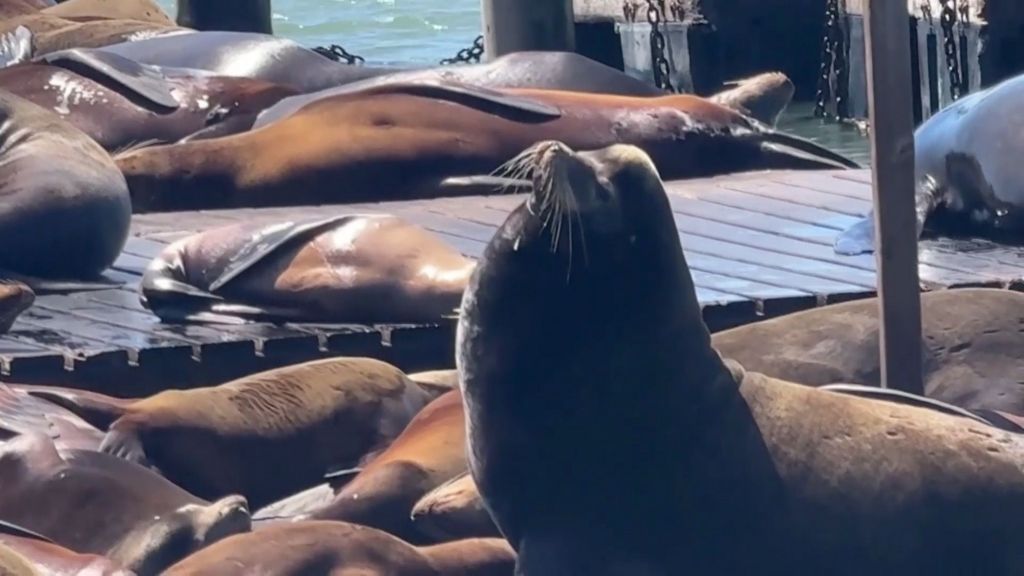
    On a surprising day along the Northern California coast, wildlife enthusiasts and beachgoers in San Francisco were treated to an extraordinary, once-in-a-blue-moon encounter: a massive Steller sea lion, a species rarely spotted this far south of its typical range, made an unexpected appearance in local waters.

    Native to the frigid, nutrient-rich waters stretching from Alaska down through the Pacific Northwest, Steller sea lions rarely venture as far south as the San Francisco Bay Area. Their natural habitat centers on colder coastal ecosystems, where abundant fish populations support their large size—adult males can grow up to 11 feet long and weigh more than 2,500 pounds, making them one of the largest sea lion species on Earth.

    Local marine biologists note that while individual Steller sea lions have been recorded occasionally wandering south for extended foraging trips, confirmed sightings of large adults in the Bay Area remain incredibly uncommon. The unexpected visitor has drawn crowds of curious onlookers, who have kept a respectful distance per local wildlife guidelines to avoid disturbing the animal during its stay. For many residents and visitors alike, the rare sighting offers a unique reminder of the diverse marine life that inhabits California’s coastlines, even in more populated urban areas.

  • French teen charged in Singapore over a vending machine straw-licking video

    French teen charged in Singapore over a vending machine straw-licking video

    A high-stakes public nuisance case centered on a reckless social media prank has drawn widespread attention in Singapore, where strict rules governing public hygiene and behavior are put to the test. The 18-year-old French national, Didier Gaspard Owen Maximilien, who is currently enrolled in a French business program based in the city-state, stands accused of two offenses – mischief and public nuisance – stemming from a March 12 incident at a local shopping mall.

    According to local leading English-language daily *The Straits Times*, the teenager posted a widely shared video to social media showing him licking a straw taken from an orange juice vending machine before placing the contaminated straw back into the dispenser for other customers. The clip spread rapidly across online platforms once it was made public, triggering widespread public outcry over its unsanitary and irresponsible nature. Maximilien was formally charged on April 24, and has not yet entered a plea in the case.

    In a recent court development, the judge granted the defendant permission to leave Singapore for a mandatory graduation school trip to Manila, with his travel scheduled from May 2 to May 25. He is required to return to the city-state to attend his next court hearing scheduled for May 29. Legal representatives for the teen declined to provide any comment on the details of the case when reached by reporters.

    Under Singaporean law, the mischief charge carries a maximum penalty of up to two years of imprisonment, a fine, or both. The lesser public nuisance charge can result in up to three months in jail, a fine, or both. Following the incident, IJooz, the company that operates the juice vending machine, took immediate action: it filed an official police report, fully sanitized the entire dispenser unit, and replaced all 500 straws held in the machine to eliminate any potential public health risk. In response to the incident, the company has also announced plans to upgrade all of its vending machines with new safety measures, including individually wrapped straws and locked storage compartments that only unlock once a customer completes their purchase.

    The incident highlights the strict approach Singapore takes to maintaining public order and cleanliness, a long-standing policy in the small, densely populated city-state. Singapore has long enforced tough regulations on public behavior, ranging from partial restrictions on the sale of chewing gum to harsh fines and penalties for littering, graffiti, and vandalism, all designed to preserve the country’s high standards of public hygiene and public space upkeep.

  • Marathon brothers run Ireland in race to find dementia cure

    Marathon brothers run Ireland in race to find dementia cure

    Just 24 hours after crossing the finish line of the London Marathon carrying a 25-kilogram fridge on his back to draw global attention to a devastating inherited disease, 30-year-old Jordan Adams kicked off an even more ambitious extreme challenge: running one full marathon a day for 32 days across every one of Ireland’s 32 counties, on both sides of the Irish border, to raise money for dementia research. The effort is deeply personal for Jordan and his 25-year-old younger brother Cian, who is supporting the run by cycling most of the route alongside him—both men carry a genetic mutation that gives them a 99.9% chance of developing the same early-onset frontal temporal dementia (FTD) that killed their mother when she was just 52.

    The Adams family’s battle with FTD stretches back more than a decade. In 2010, their mother Geraldine, a native Irish woman with family roots across the country, was diagnosed with the rare familial form of the disease at just 47 years old. Overnight, 15-year-old Jordan, 9-year-old Cian, their older sister, and their father stepped into the role of full-time caregivers, a responsibility they held until Geraldine’s death in 2016. Two years later, devastating genetic testing confirmed what the family had feared: Jordan carried the harmful MAPT gene mutation linked to the condition, and Cian soon received the same positive result. The brothers are expected to develop aggressive, terminal symptoms when they reach their 40s, leaving them in a race against time to accelerate research that could deliver a life-saving cure. To date, 12 members of their Irish extended family have died from the disease, including their grandmother. That history is why the pair chose Ireland for their latest challenge: to honor the relatives they have lost to FTD and raise awareness of the growing dementia crisis across the country.

    Jordan’s viral London Marathon fridge stunt, which he completed hand-in-hand with Cian, was designed to cut through public indifference and shine a spotlight on FTD. Calling the experience surreal, Jordan said that sharing the challenge with his brother—who shares both his diagnosis and his mission—made the achievement feel like a tribute to their late mother. This is not the first extreme endurance campaign the so-called “FTD brothers” have organized: two years ago, they completed a multi-marathon run across the entire United Kingdom, and Jordan previously conquered seven marathons in seven days as part of an earlier fundraising drive.

    As a physiotherapist, Cian has led the brothers’ six-month training plan for the Irish challenge, building strength, conditioning, and endurance to prepare Jordan’s body for 32 straight days of 42-kilometer runs. “We’ve put together a solid plan over the last six months, focusing on strength and conditioning, plyometrics, and targeted running training to get Jordan in the best shape possible,” Cian explained ahead of the run, adding that early on, Jordan’s legs have held up well to the strain. Unlike the London run, Jordan will not carry the 25kg fridge during the Irish challenge, saving his energy for the month-long daily effort. The pair launched the Irish run in County Antrim in Northern Ireland on Monday, and will finish in Dublin on May 28, with crowds of local supporters turning out at every stop to cheer them on.

    The brothers’ ultimate fundraising goal is £1 million to honor their mother and fund research into treatments and a cure for dementia that could ultimately save their lives. After the viral attention from the London Marathon stunt, they are already nearly halfway to their target. Half of all proceeds from the campaign will go to the Alzheimer Society of Ireland (ASI), which supports dementia patients and families across the country.

    Carol Molloy, a leader with the ASI’s local branch, highlighted the urgent need for more funding and awareness: currently, around 64,000 people in Ireland live with dementia, and roughly one in 10 receive a diagnosis of young-onset dementia before the age of 65. By 2050, that total number is projected to jump to nearly 150,000 as populations age. “What Jordan and Cian are doing is amazing, we are so grateful,” Molloy said of the brothers’ work.

    Dozens of local people affected by dementia have joined the brothers for portions of the daily marathon routes, standing in solidarity with their mission. Sean McFadden, a 50-year-old runner from Letterkenny who recently lost his father to dementia, is planning to run the entire route alongside the pair. “It’s a hard disease. For me today to be able to join in with the boys, it’s quite special,” McFadden said ahead of starting his run. “We have to hold our hearts out to the two lads and hope everything goes well.”

  • Police say they believe abducted child was murdered as body found in Outback

    Police say they believe abducted child was murdered as body found in Outback

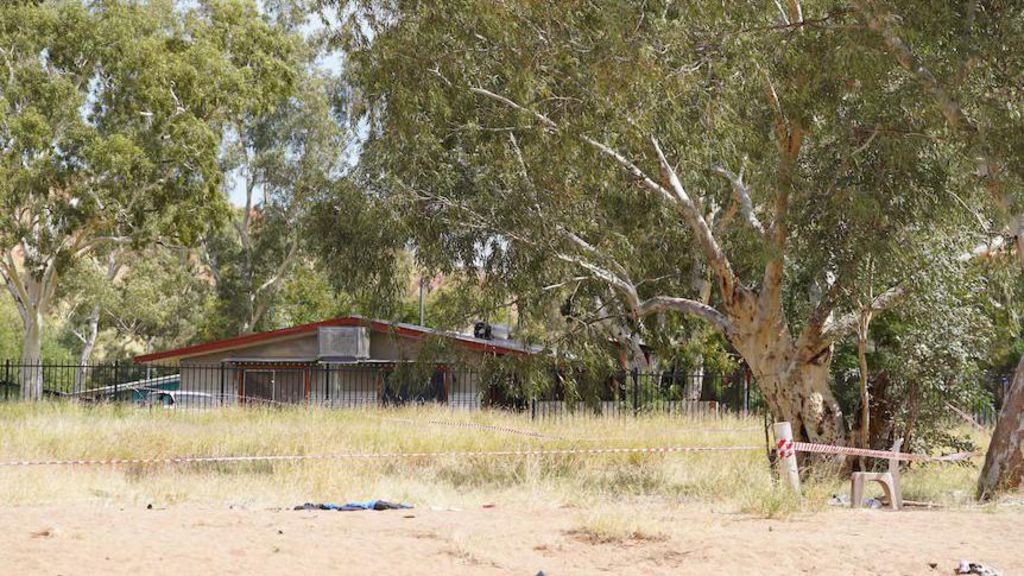
    A devastating search operation in Australia’s Northern Territory Outback has taken a grim turn, with law enforcement confirming they have located what they believe to be the remains of a 5-year-old Indigenous girl abducted from her home, as the hunt for her accused killer intensifies across remote desert terrain.

    Identified only as Kumanjayi Little Baby out of respect for cultural traditions, the non-verbal child was last seen late on Saturday night, when she was settled into bed at Old Timers Camp, a government-designated Aboriginal town camp located on the outskirts of Alice Springs, just before midnight. She was reported missing shortly after, triggering a large-scale multi-agency search that drew together local community volunteers and specialized police units.

    Northern Territory Police announced Thursday that search teams had recovered the body of a young child in the area. Formal forensic testing is currently ongoing to formally confirm the child’s identity and establish the exact cause of death, law enforcement officials confirmed.

    The primary suspect in the case is 47-year-old Jefferson Lewis, a man who investigators say is a distant relative of the girl. Lewis was released from prison just six days before Kumanjayi disappeared, and he vanished from the area around the same time the child was reported missing. He has a long documented criminal history, with repeated prior convictions for domestic and family violence-related offenses that saw him cycle in and out of correctional facilities for years. Eyewitnesses reported seeing Lewis holding hands with the young girl late on the night she vanished.

    Detective Superintendent Peter Malley, the lead investigator on the case, told reporters Wednesday: “We believed he has murdered this child.” He added that forensic investigators have already connected Lewis to the scene: a piece of children’s underwear recovered near the camp tested positive for DNA from both Kumanjayi and the suspect.

    The search effort has stretched across hundreds of square kilometers of harsh, remote bush and desert surrounding the camp. Dozens of local community members have joined the operation, alongside specialized police resources including a canine search unit, drone surveillance teams, and a police helicopter to cover the vast, sparsely populated terrain.

    Investigators noted that Lewis has no access to modern communication tools, no active bank account, and no vehicle, leading them to believe he has received assistance from third parties to evade capture. Law enforcement has issued a public appeal for any member of the community with information about Lewis’s possible location to contact authorities immediately.

    In a statement to the press, Northern Territory Police Commissioner Martin Dole confirmed that Kumanjayi’s family has been notified of the discovery of the child’s body. “Our thoughts are firmly with them at this devastating time,” Dole said. “This is an incredibly distressing development. This is the worst possible outcome.”

    Closing out the press briefing, Malley issued a direct message to the fugitive: “And I say to Jefferson Lewis, we’re coming for you.”

    Ahead of the report, Australian Broadcasting Corporation issued a content warning for Aboriginal and Torres Strait Islander readers, noting that the article references the death of an Indigenous person.