分类: society

  • An angry crowd riots outside Australian hospital treating suspect in 5-year-old girl’s death

    An angry crowd riots outside Australian hospital treating suspect in 5-year-old girl’s death

    In the remote Australian Outback, a shocking wave of public anger has boiled over into violent unrest outside a major regional hospital, triggered by the brutal murder of a young Indigenous child. The incident unfolded over four days starting on a weekend in the area surrounding Alice Springs, a remote hub in central Australia’s Northern Territory.

    Authorities allege that Jefferson Lewis, the 55-year-old primary suspect, abducted the 5-year-old child from her home in a nearby Indigenous community. Per cultural customs of the local First Nations people, a strict ban prohibits publicly naming deceased community members, so the young victim has been identified publicly only as Kumanjayi Little Baby. Her body was discovered by search teams on Thursday, four days after she was reported missing, sparking immediate, raw outrage across the local Indigenous community.

    Before law enforcement could take Lewis into custody, a large group of community members tracked the suspect down and beat him until he lost consciousness, in an act of vigilante justice. When police arrived at the scene to intervene, they extracted the unconscious suspect and rushed him to Alice Springs Hospital for emergency medical treatment.

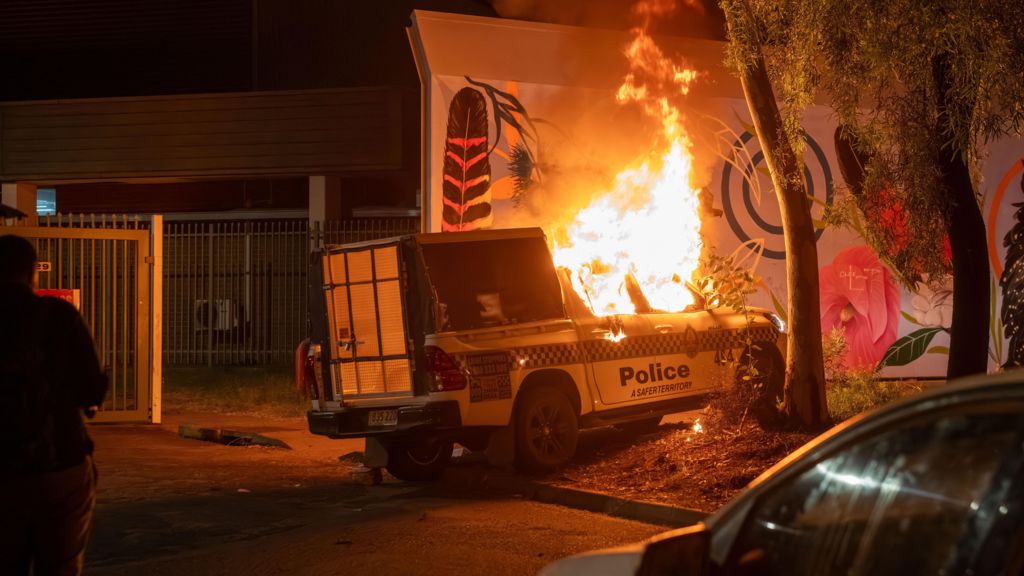
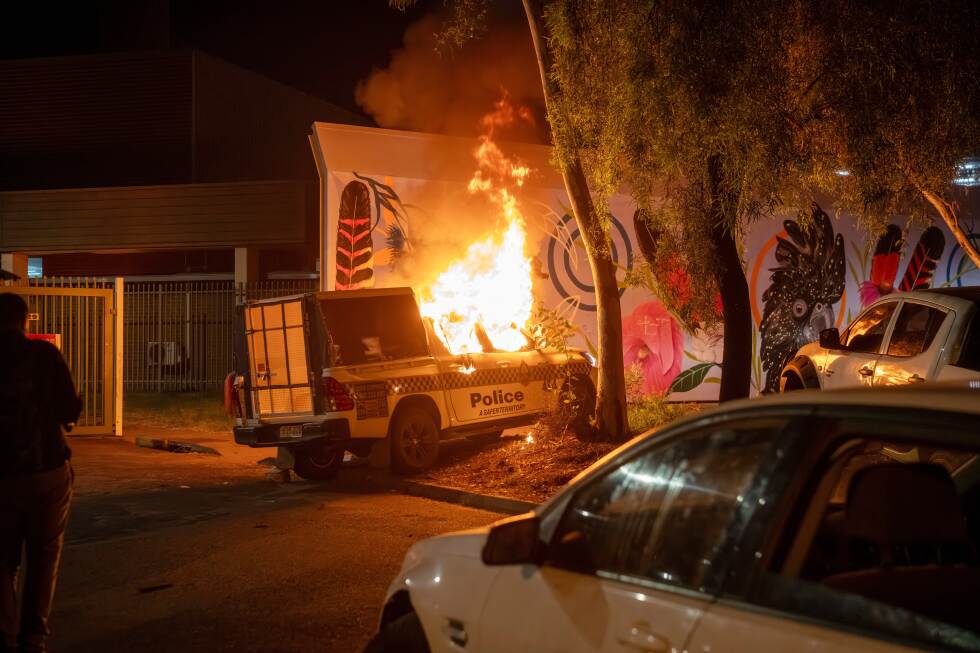
    That evening, hundreds of angry local residents gathered outside the hospital’s entrance to protest his presence there. Many in the crowd pushed for Lewis to be subjected to “payback,” a traditional form of customary Indigenous justice that can include corporal punishment such as beating or spearing. As the crowd refused to disperse and tensions escalated into rioting, law enforcement deployed less-lethal crowd control measures: officers fired rubber bullets and released tear gas to push the crowd back. In the chaos of the unrest, multiple police vehicles were damaged by members of the crowd.

    To de-escalate the situation and protect Lewis from further harm, hospital staff cleared him for transport into police custody shortly after the riot broke out. Authorities immediately arranged an air transfer 1,500 kilometers (more than 900 miles) north to Darwin, the capital of the Northern Territory, where Lewis will remain in pre-charge detention. Prosecutors confirm that formal charges against the suspect are expected to be filed on Friday.

    The incident has thrown a harsh spotlight on the deep tensions between formal Australian state law and traditional Indigenous customary justice in remote central Australian communities, where many First Nations residents continue to prioritize traditional governance systems for addressing serious harm.

  • Six injured in Washington state school stabbing

    Six injured in Washington state school stabbing

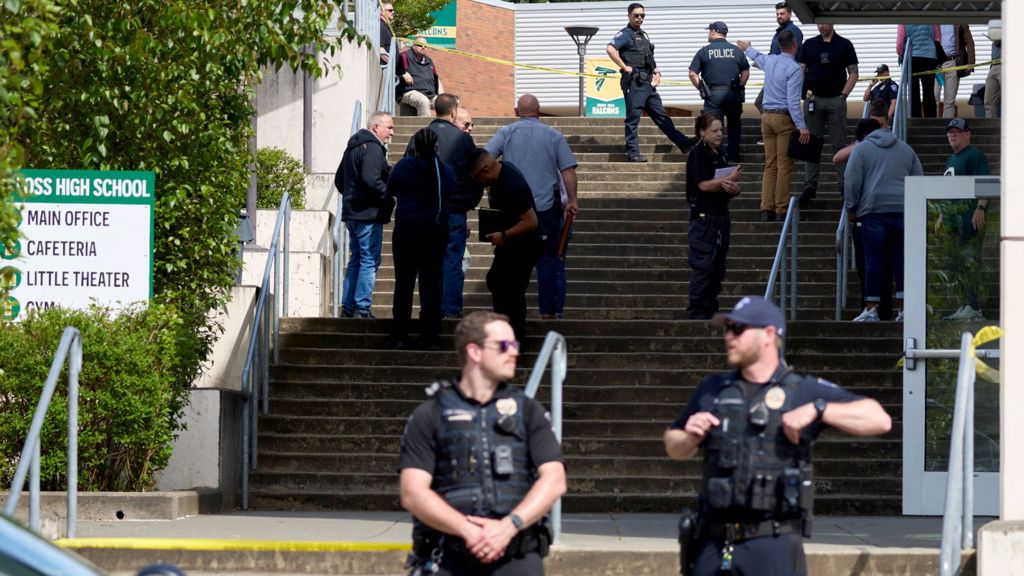
    A midday stabbing incident tied to a pre-existing dispute left six people wounded at Foss High School in Tacoma, Washington, on Thursday, according to local law enforcement and emergency response officials. Five student victims and one adult security guard were rushed to area hospitals shortly after first responders arrived at the campus, with emergency medical crews confirming Friday morning that all injured parties are now in stable condition.

    The Tacoma Police Department confirmed that the suspect taken into custody is a current student at Foss High School, who also sustained minor injuries during the altercation. Shelbie Boyd, public information spokeswoman for the Tacoma Police, told reporters the suspect has been formally charged with five counts of first-degree assault. Multiple law enforcement agencies were already processing evidence at the scene by mid-afternoon, with Boyd noting that responding officers arrived within minutes of the initial 911 call placed at 13:35 local time.

    “Officers moved quickly to locate the suspect, secure the entire campus, and make sure no further harm came to students or staff,” Boyd said in a press briefing Thursday. Initial statements from the Tacoma Fire Department had reported four critical injuries shortly after the incident, but authorities updated that status just two and a half hours later, confirming all six patients had stabilized by 16:00 local time. Boyd added that the investigation will remain active through the night, and investigators are asking any members of the public who captured cell phone video of the incident to submit that footage to the Tacoma Police to help piece together a full timeline of events.

    In an official update posted to the school district’s website Thursday evening, district officials announced Foss High School will remain closed to all students and staff on Friday, with plans to reopen the campus on Monday, May 4. Licensed mental health counselors will be available on site beginning Monday to provide emotional support for students, faculty and staff affected by the violence. The incident marks the second high-profile violent attack on the Foss High School campus in nearly 20 years: in 2007, an 18-year-old student fatally shot 17-year-old Samnang Kok in a school hallway, before being convicted of second-degree murder and sentenced to 23 years imprisonment.

  • UK police charge man with stabbing attack on two Jewish Londoners

    UK police charge man with stabbing attack on two Jewish Londoners

    A 45-year-old suspect has been formally charged by British police in connection with a broad-daylight stabbing attack that injured two Jewish men in north London’s Golders Green, an incident that has deepened anxiety among the UK’s Jewish community and triggered urgent government action to address a documented surge in antisemitism.

    The Metropolitan Police confirmed on Friday that Essa Suleiman, a British national who was born in Somalia and moved to the UK during childhood, faces three counts of attempted murder and one charge of carrying a bladed weapon in a public space. One of the attempted murder charges stems from an unrelated altercation Wednesday in south London, where Suleiman allegedly confronted a flat occupant while armed with a knife. The remaining charges relate directly to the Golders Green attack, an area known for its large, long-established Jewish population.

    The stabbing left two men — a 76-year-old and a 34-year-old — with non-life-threatening injuries. Both were treated on-site before being transferred to hospital for further care. Police confirmed the younger victim has been discharged, while the older victim remains in stable condition. Counter Terrorism Policing is leading the investigation, which was immediately classified as a terrorist incident.

    “We are determined to get justice for the victims,” said Commander Helen Flanagan, lead of the investigation team, in a formal statement. “Now that a person has been charged, I would urge everyone to avoid any further speculation in relation to this case so that justice can run its course.” Suleiman is scheduled to make his first court appearance at Westminster Magistrates’ Court later Friday.

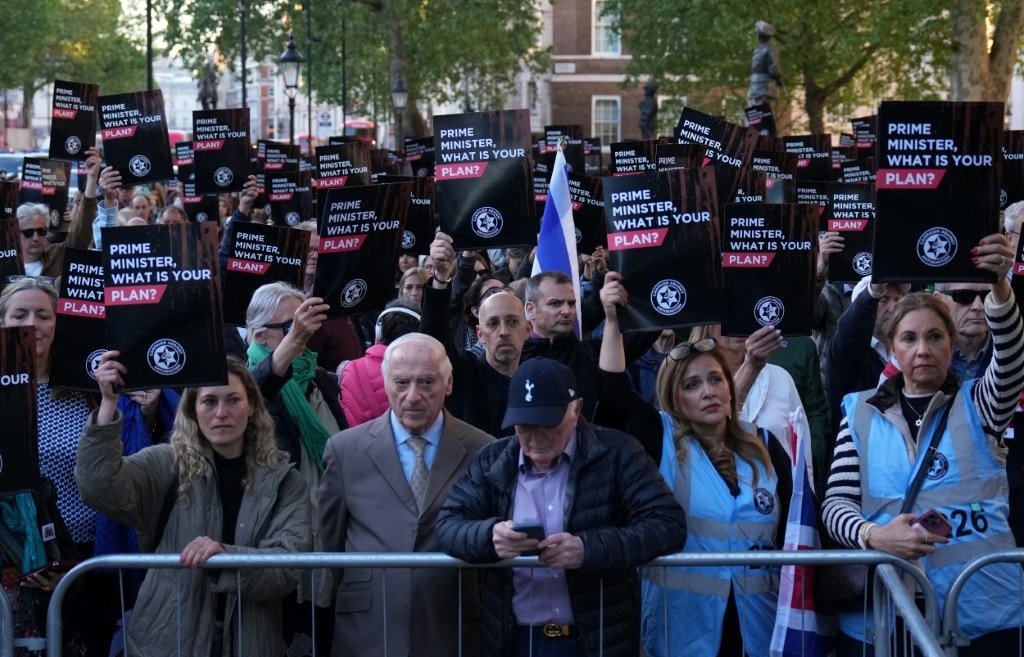
    The attack comes amid a sharp upward trend in antisemitic incidents across the United Kingdom, with monitoring groups recording a dramatic surge after the outbreak of the Israel-Hamas war in Gaza. The incident sparked widespread anger from British Jewish communities, who have repeatedly accused the national government of failing to provide adequate protection for Jewish people and sites. When Prime Minister Keir Starmer visited the attack site Thursday, he was met with boos and heckles from attendees.

    In response to growing public pressure, Starmer pledged a new wave of security enhancements for the UK Jewish community in a televised address from Downing Street. He called on all British citizens to stand together against antisemitism, saying, “everyone decent in this country to open their eyes to Jewish pain, Jewish suffering and Jewish fear.”

    Senior law enforcement officials have echoed warnings that antisemitism is becoming increasingly embedded in British society. Met Police Commissioner Mark Rowley told Times Radio on Friday that the country is “facing a building pandemic of antisemitism in society.” He added that policing is only addressing the immediate outcomes of hate-based extremism, arguing, “We need work done upstream to tackle those attitudes in society which are far too prevalent.”

    The UK Home Office has already implemented urgent policy changes in response to the rising threat. Officials confirmed this week that the national terrorism threat level has been raised to “severe” — the second-highest tier in the UK’s five-tier classification system — meaning another attack is highly likely over the next six months. The government also allocated an extra £25 million ($33 million) to fund increased protective security for Jewish sites across the country, including synagogues, schools, community centers, and other places of worship.

    This latest attack comes nearly seven months after a fatal attack on a synagogue in Manchester, and follows a string of recent arson incidents targeting Jewish properties in north London. Monitoring groups note that alongside the surge in antisemitism, Islamophobic incidents have also risen sharply in the same period. Starmer is facing growing pressure from opposition and conservative voices to introduce tighter restrictions on pro-Palestinian protests, which critics claim have become a breeding ground for antisemitic rhetoric. His government already expanded police powers to regulate public demonstrations last year. Nigel Farage, leader of the hard-right Reform UK party, also visited the attack site Thursday, accusing authorities of being overly lenient on what he described as discriminatory chants at protests.

  • Man charged with attempted murder after stabbings of Jewish men in London

    Man charged with attempted murder after stabbings of Jewish men in London

    LONDON – British law enforcement authorities have brought attempted murder charges against a 45-year-old London man accused of stabbing two Jewish residents in a largely Jewish neighborhood of north London, an attack that has amplified already mounting anxiety across Britain’s Jewish community following a recent wave of targeted assaults on Jewish sites across the capital.

    The defendant, Essa Suleiman, a Somalia-born British citizen residing in London, faces two counts of attempted murder connected to the stabbing attack in Golders Green — an area widely recognized as the demographic and cultural hub of Britain’s Jewish population. A third additional attempted murder charge was also filed against Suleiman, linked to a separate stabbing incident at another London location that occurred earlier on the same day as the Golders Green attack, which left a third victim with minor injuries.

    Authorities confirmed that Suleiman is scheduled to make his first formal court appearance before a London judge later the same day that charges were announced. The two stabbing victims in the Golders Green attack, aged 34 and 76 respectively, both suffered serious wounds in the assault. Officials have updated that one victim has since been released from hospital care, while the second remains in medical care in stable condition.

    The latest attack comes on the heels of a series of unsolved arson attacks targeting synagogues and other Jewish community spaces across London over the preceding weeks, events that had already stoked widespread concern over rising antisemitic violence in the United Kingdom. In response to the stabbings, Prime Minister Keir Starmer announced that his newly seated government would ramp up protective security measures for British Jewish communities and made a public pledge to root out antisemitic hatred across the country. “We will do everything in our power to stamp this hatred out,” Starmer said in a public statement following the attack.

    In the wake of the assault, UK officials have raised the country’s official national terror threat level from “substantial” to “severe.” The severe designation is the second-highest on the country’s five-tier threat ranking system, indicating that intelligence assessments judge a further terror attack to be highly likely over the next six months.

    Investigators also confirmed that Suleiman was first referred to the UK government’s controversial Prevent program in 2020, a counter-extremism initiative designed to intervene and divert at-risk individuals from embracing violent extremist ideology. Law enforcement officials confirmed that Suleiman’s case file with the program was closed before the end of 2020, but declined to release any details about the nature of the original referral or the reason for closing the file.

  • Afghans celebrate spring in bright red poppy fields

    Afghans celebrate spring in bright red poppy fields

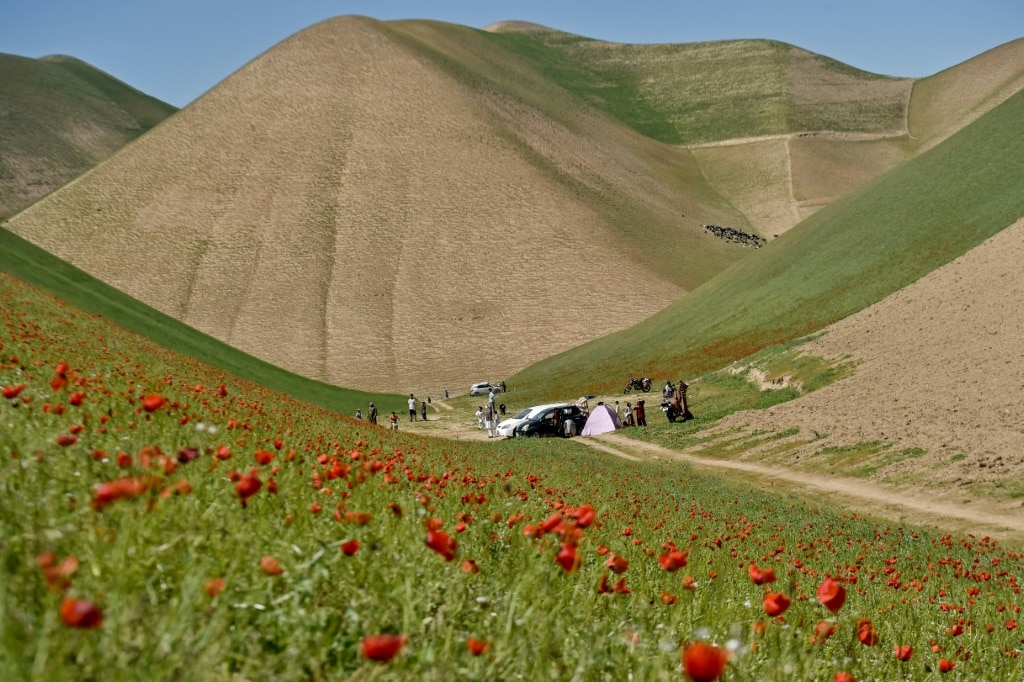
    After nearly a decade of crippling drought that parched northern Afghanistan’s landscapes and left hillsides barren of any greenery or blooms, this spring has brought a long-awaited transformation. Abundant seasonal rains have awakened rolling valleys near Shirin Tagab district, which sits along Afghanistan’s border with Turkmenistan, blanketing the terrain in sweeping swathes of vivid red common poppies. This has drawn hundreds of families back to the hills to revive a beloved local tradition that has persisted through years of hardship and political change.

    For many visitors, the sea of red blooms is a sight they never expected to see again in their lifetimes. Seventy-nine-year-old Ghawsudin, who goes by a single name, traveled three hours across rough terrain just to walk among the flowers. “There has been a drought for almost 10 years. No flowers or greenery grew,” he explained. “This year has been very good, and God is merciful.” Thirty-five-year-old Mohammad Ashraf echoed that sentiment, noting he had not witnessed such a dense, vibrant bloom of poppies for more than a decade. “Now there are so many red flowers, and you see people come here for picnics,” he told Agence France-Presse, as families spread blankets across the grass and children frolicked between the flower stalks.

    Crucially, the blooms attracting crowds are common poppies, not the illicit opium poppies that the ruling Taliban government has banned across the country. This annual gathering is a longstanding cultural practice tied to Nowruz, the Persian New Year that Afghans have celebrated for centuries. For generations, northern Afghans would travel out of the major city of Mazar-i-Sharif after their Nowruz festivities to see the poppy blooms. While the Taliban administration, which enforces a strict interpretation of Islamic law, has halted official public Nowruz celebrations in recent years, the quiet tradition of visiting the poppy fields has endured.

    Cultural observers note that flowers, and poppies in particular, hold a deeply embedded place in Afghan daily life. Oriane Zerah, a professional photographer who has published a full book documenting the connection between Afghans and flowers, emphasizes that floral culture is woven into nearly every part of society. “As soon as an Afghan has a little space in their garden, they plant a flower. Even in displacement camps, there’ll be a flower somewhere,” Zerah explained. “They put them on their pakol, one of their traditional hats, and there are desserts made with flowers.”

    Poppies also carry layered cultural meaning shaped by Afghanistan’s long history of conflict. Afghan writer Taqi Wahidi explains that for decades, poppies have been placed on the coffins of fallen fighters, a tradition that mirrors the use of poppies as a symbol of remembrance for war dead in countries including the United Kingdom, Australia, and New Zealand. In that context, the flower has long been tied to the idea of rebirth after sacrifice: “Dying in the path of the homeland, or in the path of religion and faith, was considered a kind of new resurrection and entry into a new life,” Wahidi said.

    Today, for Afghans gathering in these northern valleys, the poppy carries a new, hopeful meaning. Wahidi notes that the blooms now primarily “symbolise vitality and freshness. At the same time that nature is renewed, human beings also want to bring new colours into their lives.” For a community that has endured ten years of drought and ongoing political upheaval, this annual spring bloom is more than a recreational outing—it is a quiet celebration of resilience, cultural continuity, and the renewal of life after hardship.

  • Clashes erupt in Australian town over death of Indigenous girl

    Clashes erupt in Australian town over death of Indigenous girl

    Central Australia’s remote outback town of Alice Springs has been roiled by violent overnight confrontation between enraged community members and police, triggered by the discovery of a body confirmed to be that of a missing 5-year-old Indigenous girl, identified at her family’s request as Kumanjayi Little Baby.

    The young girl went missing from Old Timers, an Indigenous community camp on the outskirts of Alice Springs, late Saturday. Her disappearance sparked a massive, multi-day search effort that captured national attention, with hundreds of volunteers joining authorities to comb the surrounding outback on foot, horseback and by air. On Thursday, search crews located the child’s body roughly five kilometers (three miles) from the camp where she was last seen, and police confirmed a formal forensic autopsy will be conducted to determine the cause of death.

    Hours after the body was found, police announced the arrest of 48-year-old Jefferson Lewis, the prime suspect in the case. But before law enforcement could take him into custody, Lewis turned himself in to members of the Indigenous community Thursday evening, where he was severely beaten by community members until he lost consciousness. When police, ambulance and emergency response teams arrived to extract Lewis and provide medical care, they were attacked by the gathered crowd, Northern Territory Police Commissioner Martin Dole told reporters during a press briefing Friday.

    “At the time of his apprehension by us, he was unconscious and he was in the process of being treated by St John’s Ambulance when they were set upon, as were the police,” Dole said. Lewis was eventually evacuated to Alice Springs’ main hospital for treatment of his injuries, but a large, angry crowd soon gathered outside the medical facility demanding access to the suspect, with many calling for traditional Indigenous “payback” punishment against him, according to public broadcaster ABC.

    Local media footage from the confrontation shows tear gas lingering in the air, a police vehicle engulfed in flames, and crowds shouting at heavily armed officers who formed a perimeter to block access to the hospital. To contain the unrest, Commissioner Dole said authorities deployed all available local resources to quell the violence, which left multiple first responders injured. A number of police officers suffered minor injuries, including one officer who received a head wound during the initial arrest operation. One firefighter sustained a serious facial injury after being attacked, and one woman is now under investigation for allegedly attempting to set an unoccupied police car on fire.

    Commissioner Dole rejected any justification for the unrest, saying “the behaviour that we saw last night cannot be explained away, excused or accepted,” and called for widespread calm across Alice Springs. For their safety, police ultimately transferred Lewis from the Alice Springs hospital to a correctional facility in Darwin, the capital of the Northern Territory, and he is expected to be formally charged with criminal offenses in the coming days.

    Northern Territory Chief Minister Lia Finocchiaro described the little girl’s death as “the realization of our worst nightmares”, but echoed Dole’s call for calm, noting that the entire town had come together in an extraordinary show of unity to search for the child earlier in the week. “This week, we’ve seen this town come together like never before — hundreds of people walking shoulder to shoulder through the long buffel grass, through the bush, to make sure we left no stone unturned,” Finocchiaro said. “I don’t want last night to take away from that extraordinary effort.”

    Robin Granites, a Warlpiri Indigenous elder and family spokesman, also issued a public statement calling for peace as the community enters what Indigenous Australians refer to as “sorry business” — the traditional period of mourning and grief following a death. “It is time now for sorry business, to show respect for our family and have space for grieving and remembering,” he said. “We need to be strong for each other, we must respect family and cultural practice.”

  • A citizen campaign returns iconic kiwi birds to New Zealand’s capital after a century-long absence

    A citizen campaign returns iconic kiwi birds to New Zealand’s capital after a century-long absence

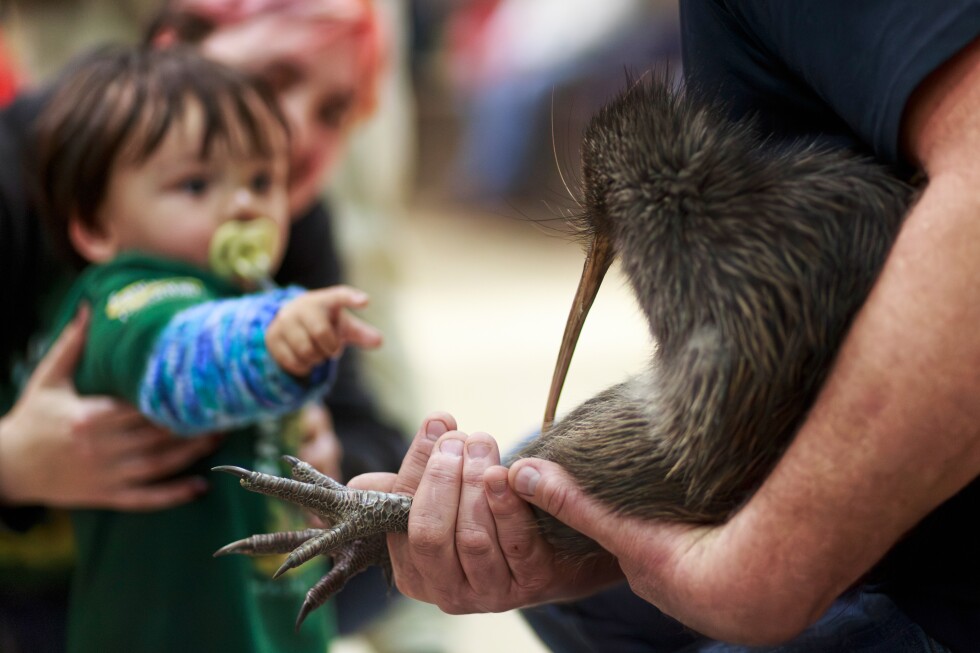
    WELLINGTON, New Zealand — More than 100 years after New Zealand’s flightless, culturally sacred national bird the kiwi disappeared from the rolling hills surrounding the nation’s capital, a grassroots community movement is working to reverse that historic loss, turning a once-improbable dream of urban coexistence with the endangered species into a growing conservation success story.

  • Former Chick-fil-A employee charged in $80,000 mac-and-cheese scheme

    Former Chick-fil-A employee charged in $80,000 mac-and-cheese scheme

    A shocking fraud case has unfolded in Grapevine, Texas, where a former employee of the popular fast-food chain Chick-fil-A stands accused of orchestrating an $80,000 theft scheme centered on unauthorized refunds for bulk catering orders of the restaurant’s signature mac and cheese. Local law enforcement has detailed how the ex-worker, identified by U.S. media as 23-year-old Keyshun Jones, returned to the Chick-fil-A location one month after his termination to carry out the scheme. According to official statements from the Grapevine Police Department, Jones made his way behind the restaurant’s service counter and processed orders for 800 large, catering-sized trays of Chick-fil-A’s famous three-cheese baked mac and cheese. Instead of fulfilling the actual orders, he then issued full refunds totaling $80,000 to his own personal credit cards. At a market rate of roughly $100 per large tray of the menu item, the total stolen amount matches the value of 800 full-sized servings of the popular side dish. Surveillance footage released by the store appears to confirm the sequence of events, showing Jones — dressed in a brown puffer vest, blue jeans and a backwards white cap, not the chain’s signature employee uniform — accessing the point-of-sale system at the counter to complete the unauthorized transactions. After the alleged scheme was uncovered, law enforcement attempted to take Jones into custody multiple times before a successful arrest on April 17. The capture was carried out through a joint operation between the Texas Attorney General’s Fugitive Task Force and the Fort Worth Police Department. Jones faces three formal charges: property theft, money laundering, and evading arrest. Court records indicate he is currently being held at the Green Bay correctional facility in Fort Worth. The New York Times reports that Jones’s legal representation has declined to comment on the charges against him. It remains unclear what led to Jones’s initial termination from the Chick-fil-A location one month prior to the alleged incident, and details about the timeline of the fraud investigation have not been fully released by authorities. The BBC has confirmed it has reached out to Chick-fil-A’s corporate media office to request a statement on the case, with no official response released as of yet. For context, Chick-fil-A’s large catering trays of mac and cheese clock in at nearly 10,000 calories per serving, making the 800 trays implicated in the scam a staggering total of 8 million calories — a detail that has drawn viral attention to the unusual case on social media.

  • What to know about May Day demonstrations as workers face rising energy costs due to Iran war

    What to know about May Day demonstrations as workers face rising energy costs due to Iran war

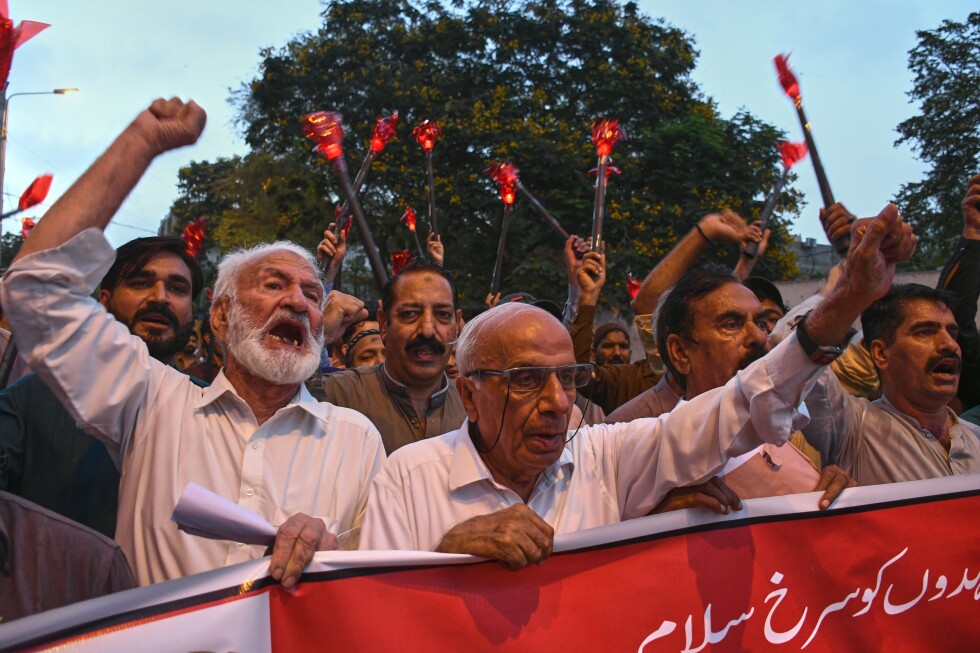
    As working populations across the globe grapple with skyrocketing energy costs and plummeting purchasing power linked to ongoing conflict in the Middle East, millions of labor activists and ordinary workers are set to march in annual May Day rallies Friday, uniting behind core demands for fairer pay, improved working conditions and an end to armed conflict.

    Celebrated as a public holiday in dozens of nations, May Day has long served as a platform for organized labor to highlight systemic economic and social inequities. This year’s gatherings, planned for major cities across every inhabited continent, carry heightened urgency as cost-of-living crises deepen in both developing and developed economies. Past editions of the demonstrations have occasionally seen isolated outbreaks of violence, and authorities across multiple regions are preparing for large-scale turnout.

    The European Trade Union Confederation, which represents more than 40 million workers across 41 European countries through 93 affiliate organizations, issued a sharp statement blaming geopolitical policy for working people’s hardship. “Working people refuse to pay the price for Donald Trump’s war in the Middle East,” the group said. “Today’s rallies show working people will not stand by and see their jobs and living standards destroyed.” In the United States, activists critical of the Trump administration’s policy agenda have organized nationwide marches, boycotts and work stoppages to amplify their demands.

    Spiking energy and consumer costs, directly tied to market volatility caused by the Middle East conflict, have emerged as the defining rallying cry for 2025’s demonstrations. In Manila, the capital of the Philippines, protest organizers anticipate massive turnout from workers grappling with record fuel price increases. “There will be a louder call for higher wages and economic relief because of the unprecedented spikes in fuel prices,” Renato Reyes, a leader of left-wing political coalition Bayan, told the Associated Press. Josua Mata, head of Philippine labor federation umbrella group SENTRO, added that workers across the country now recognize their domestic struggles are part of a broader global crisis.

    In Indonesia, national labor leaders have warned that existing economic pressures on working households are reaching a breaking point. “Workers are already living paycheck to paycheck,” explained Said Iqbal, president of the Indonesian Trade Union Confederation. The crisis hits even harder for low-income daily wage workers in countries like Pakistan, where May Day is an official public holiday but many cannot afford to skip a day of work. “How will I bring vegetables and other necessities home if I don’t work?” said Mohammad Maskeen, a 55-year-old construction worker based near Islamabad. Pakistan, which is heavily dependent on financial support from the International Monetary Fund and allied nations, currently faces headline inflation of roughly 16%, driven largely by rising global oil prices.

    Across Europe, demonstrations are planned in nearly all major European Union capitals, with many unions tying daily economic struggles to ongoing global conflicts. In France, organizing bodies have called for national demonstrations under the slogan “bread, peace and freedom,” explicitly linking worker hardship to conflicts in Ukraine and the Middle East. Ahead of the rallies, the Italian government approved a €1 billion ($1.17 billion) package of employment incentives this week, designed to boost stable hiring, curb labor exploitation, extend tax breaks for hiring young workers and disadvantaged women, and address abuse in platform-based gig work. The package was immediately dismissed as “pure propaganda” by opposition parties. In Portugal, tensions remain high after center-right government’s proposed labor law revisions sparked a general strike and widespread protests in 2024. After nine months of stalled negotiations with unions and employer groups, no agreement has been reached: unions warn the proposed changes would weaken core worker protections by expanding legal overtime limits and cutting key benefits.

    This year holds special symbolic meaning for May Day in France, where a heated debate has erupted over long-standing rules that grant most workers a mandatory paid day off on May 1 – the country’s most protected public holiday. Under current law, nearly all private businesses, shops and malls are required to close, with exemptions only for essential sectors including healthcare, public transport and hospitality. A recent parliamentary proposal to expand eligibility for work on May Day prompted massive backlash from unions and left-wing political parties, which issued a joint statement demanding “Don’t touch May Day.” Backtracking amid widespread public controversy, the government ultimately introduced a scaled-back bill that would only allow additional workers to staff bakeries and florists – two sectors where May Day work is rooted in long-standing custom, as the French traditionally gift lily of the valley flowers on the day as a symbol of good luck. “May 1 is not just any day,” said Small and Medium-sized Businesses Minister Serge Papin. “It symbolizes social gains stemming from a century of building social rules that have led to the labor code we know in France. It is indeed a special day.”

    In the United States, where May Day is not recognized as a federal public holiday, a coalition of labor unions and activist groups called May Day Strong has organized nationwide protests under the banner “workers over billionaires.” The coalition, which opposes multiple Trump administration policies including a hardline immigration crackdown, has listed thousands of independent actions across the country and called for a national economic “blackout” through a “no school, no work, no shopping” boycott. Key demands include higher taxes on the wealthiest Americans and an end to stricter enforcement against undocumented immigrants.

    The modern observation of May Day as International Workers’ Day has its roots in 19th century American labor history. In the 1880s, U.S. unions organized mass strikes and demonstrations to push for a standardized eight-hour workday. A 1886 rally in Chicago’s Haymarket Square turned deadly when an unknown assailant detonated a bomb, prompting police to open fire on the crowd. Multiple labor activists, most of them first-generation immigrants, were convicted of conspiracy; four were executed. In the years after the Haymarket incident, global labor bodies designated May 1 to honor the fallen activists and the broader struggle for worker rights, and the holiday is now observed across much of the world, from Europe to Latin America, Africa and Asia. A monument at Chicago’s Haymarket Square still bears the inscription: “Dedicated to all workers of the world.”
  • Violence in Australian town after arrest of man over girl’s murder

    Violence in Australian town after arrest of man over girl’s murder

    A wave of collective grief erupted into violent public unrest outside a regional Australian hospital this week, after authorities discovered the body of a 5-year-old Aboriginal girl who had been missing for five days. The incident has cast a harsh light on deep-seated community tensions in Central Australia’s Northern Territory, following the tragic death of the young child, identified publicly only as Kumanjayi Little Baby to respect Indigenous cultural mourning protocols that restrict using the full names of deceased people without family approval.\n\nThe girl was last seen alive late on Saturday night, when she was put to bed at Old Timers Camp, a government-designated Aboriginal accommodation camp on the outskirts of Alice Springs. Her body was recovered early Thursday, triggering immediate shock and anger across the local community. By Thursday evening, local residents had located Jefferson Lewis, the 47-year-old man who had been the prime suspect in the case, who had been released from prison just six days before the girl disappeared. Community members confronted Lewis, reportedly assaulting him before police arrived to take him into custody.\n\nWhen word spread that Lewis would receive medical treatment at Alice Springs’ main hospital, hundreds of local Aboriginal people gathered outside the facility to demand justice under traditional Indigenous law, a practice known locally as “payback”. Footage captured from the scene shows crowds of up to 400 demonstrators throwing projectiles at police officers, leaving multiple police vehicles damaged and several people—including emergency responders—with minor injuries. Northern Territory Police Commissioner Martin Dole told the Australian Broadcasting Corporation (ABC) that when officers located Lewis, he was already unconscious from the attack by community members. When police and paramedics attempted to move Lewis for emergency care, roughly 200 demonstrators confronted the emergency teams, forcing officers to deploy tear gas to disperse the crowd.\n\nProtesters repeatedly chanted that Lewis should be killed for the alleged crime, and accused police of deliberately protecting the suspect from traditional punishment. Commissioner Dole acknowledged the overwhelming grief that drove the unrest, but condemned the violence, saying the chaotic scenes outside the hospital “are not acceptable” and do not “reflect what we’ve seen from the community of Alice Springs in the last five days”. In a remark that echoed the shared devastation of everyone involved in the search, Dole added, “Everyone involved in the search for her had been holding out hope of finding her alive. When we made that discovery yesterday it was absolutely devastating for everybody involved.”\n\nShortly after the unrest, authorities airlifted Lewis from Alice Springs to a hospital in Darwin, where he is now formally in police custody. Prosecutors confirm formal murder charges are expected to be filed in the coming days, as forensic teams continue work to confirm the girl’s identity and exact cause of death, with examinations set to continue through Friday.\n\nIn a written statement released through authorities, Kumanjayi Little Baby’s mother, who has requested to remain anonymous, shared a heartfelt tribute to her daughter, saying, “It is going to be so hard to live the rest of our lives without you. We know you are in heaven with the rest of the family and Jesus. Me and your brother will meet you one day.” She also extended gratitude to the hundreds of local community members, police officers, and civilian volunteers who worked around the clock for five days to search the surrounding bush and outback terrain for the missing child.\n\nNorthern Territory Chief Minister Lia Finocchiaro echoed the widespread national sorrow over the tragedy, saying, “For five days every Territorian has had their heart in their throat waiting for the moment when we got the announcement that she had been found safe and well… Everyone is incredibly devastated.” As of Friday morning, no arrests have been made in connection with the violent unrest outside the hospital, and investigations into both the girl’s death and the public disorder are ongoing.