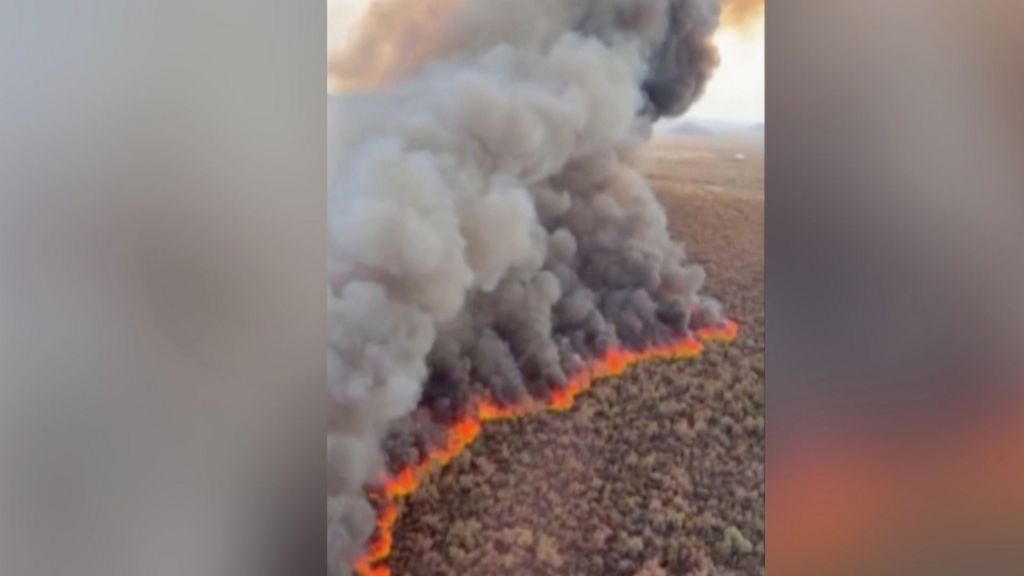
A fast-moving wildfire has swept across hundreds of acres of land in Arizona, triggering an urgent firefighting response from local emergency crews. Local authorities have conducted rapid aerial and ground assessments of the blaze, putting the total burned area at 558 acres, equal to roughly 2.3 square kilometers of terrain. At the time of reporting, firefighting teams were already on the ground working aggressively to contain the spread of the fire, clear affected boundaries, and prevent the blaze from extending into nearby populated areas or ecologically sensitive zones. While details on the cause of the wildfire and any reported injuries or structural damage have not yet been released, local emergency management departments have activated their standard wildfire response protocols to coordinate resource deployment across the affected region. Firefighters are expected to remain on site for coming days to fully extinguish hot spots and secure the burned area.
分类: society
-
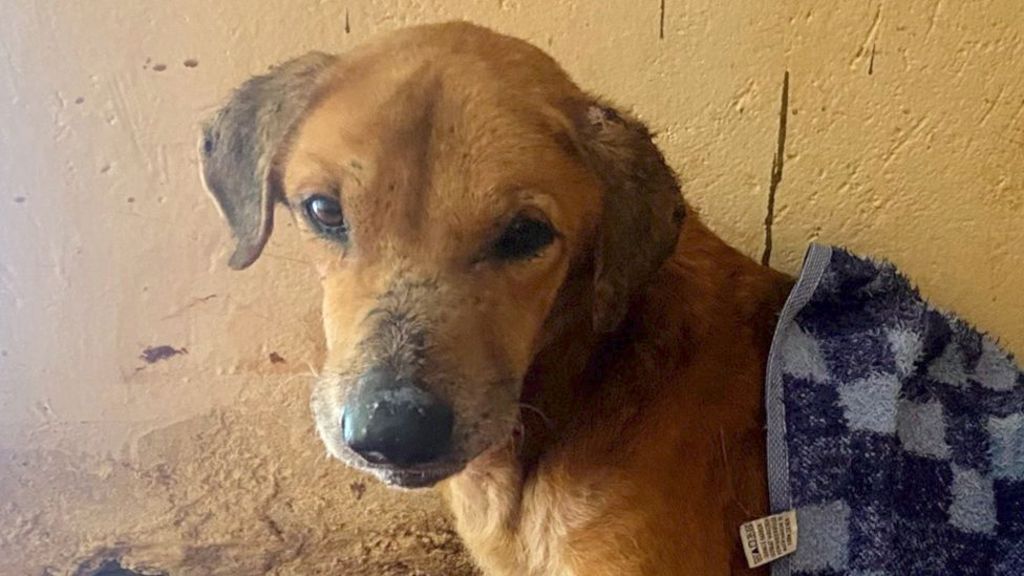
BBC uncovers the Ugandan scammers abusing dogs to elicit donations from animal lovers
On a dusty roadside in Mityana, a small Ugandan trading hub 70 kilometers outside the capital Kampala, a rust-furred dog named Russet lay panting in visible agony. His broken hind legs, hidden from initial view in a 15-second TikTok clip posted in January last year, became the centerpiece of hundreds of fraudulent fundraising campaigns that scammed thousands of dollars from animal lovers across Europe, North America and Australia. What looked like a plea to save an injured accident victim was actually part of a multi-million-dollar hidden industry built on animal cruelty, exploitation of Western stereotypes, and viral social media engagement, a year-long investigation by BBC Africa Eye has uncovered.
Mityana has become globally infamous among animal rescue activists as the global hub for fake online dog rescue operations. The scam relies on a simple, highly effective formula: local scammers exploit Western audiences’ widespread love for companion animals, lean into outdated stereotypes of African poverty and widespread animal neglect to trigger emotional giving, and convert viral social media content into untraceable donations that flow straight into the scammers’ pockets. Bart Kakooza, chairman of the Uganda Society for the Protection and Care of Animals, explained that the scam has flourished as unemployed young people in rural Uganda recognized they could turn global social media’s obsession with dogs into fast, easy income. “On one side, you have young people looking for any way to make money online, and on the other, you have Western donors who are deeply passionate about animal welfare,” Kakooza told the BBC. “These scammers quickly realized that putting those two together equals profit.”
Scammers operating out of Mityana have flooded major platforms including TikTok, Instagram, Facebook and YouTube with hundreds of thousands of emotionally charged clips featuring underfed, injured dogs and cats. A typical video shows a makeshift shelter, with a voiceover or on-screen text claiming dogs have gone days without food, face eviction, or need urgent life-saving veterinary care. The videos intentionally lean into harmful stereotypes about Africa, framing young local animal rescuers as fighting against a society that does not care about animals to elicit sympathy from foreign donors. BBC Africa Eye’s data analysis found the scam has been extraordinarily lucrative: over the past five years, more than $730,000 has been raised via the popular donation platform GoFundMe alone for fake Ugandan animal shelters, with nearly 40% of all fundraisers linked to operations based in Mityana. In Mityana, the fake shelter industry is an open secret: local residents told the BBC that scammers are easily identified by the new status-symbol Subaru cars they buy with stolen donations, and are among the most respected young people in the town. Few locals dare to speak out publicly, however, for fear of retaliation from criminal scam networks.
To uncover the inner workings of the industry, BBC Africa Eye sent an undercover reporting team to Mityana, posing as new operators looking to learn the fake shelter trade. The investigation revealed a structured, organized system: multiple content creators rent space at pre-established fake shelters, paying an entrance fee to film with the owner’s dogs. The same dogs and the same shelter are then used by dozens of separate accounts to run independent fundraisers, each claiming to be the sole caretaker of the animals. One shelter owner, Charles Lubajja, openly admitted to undercover reporters that the entire operation is a fraud built to steal money from foreign donors. He shared the common tricks scammers use to inflate donations: lying that a shelter faces imminent eviction to drive urgent giving, faking veterinary treatment by placing unused syringes on dogs’ fur without giving any actual care, and inflating the reported cost of dog food by more than 11 times. “Once you get the money from GoFundMe, you use it to buy a car or build a house,” Lubajja said in a secret recording. “Once you get a white donor, you don’t treat them like a brother. You squeeze them, you drain them dry.”
Inside the shelters, undercover reporters found dogs kept in horrific conditions: 15 dogs crammed into a single cage, lying in their own waste, most severely underweight and lethargic. Most disturbingly, Lubajja confirmed what activists have long suspected: some scammers deliberately injure dogs to create more emotional, high-performing content. When scammers run out of new content to post, they cut or break dogs to create new fundraising appeals, he explained. The practice only slowed after donors started recognizing the pattern of abuse and warning others, leading to falling donations. “When the white people realized what was happening, they stopped giving, so scammers don’t cut dogs as often now,” he said.
The death of Russet the dog exemplifies the full human and animal cost of this scam. After Russet’s video went viral and was shared across hundreds of accounts run by different scam groups, a British donor who wished to remain anonymous paid scammers to release the dog to a veterinary clinic in Kampala. Dr Isa Lutebemberwa, the vet who treated Russet, found his injuries were almost certainly not the result of a random traffic accident, as Lubajja claimed. An X-ray showed all of Russet’s leg bones were broken in the exact same spot – the weakest point of the bone, the place someone would target if they intended to break the leg on purpose. Though Lutebemberwa operated on Russet, the dog died a few days after the procedure, having endured weeks of unneeded suffering while scammers profited off his pain. “If you looked at his face, you could see how much he had been through,” Lutebemberwa said. “He did not deserve to die like that.” When contacted by the BBC for comment on the investigation’s findings, Lubajja denied owning Russet or harming any animals, though he did confirm that content creators pay to film at his shelter.
As the scam has grown, a global movement of activists has emerged to shut it down. The most prominent campaign, called We Won’t Be Scammed, is run by Nicola Baird, a 49-year-old activist from Yorkshire in the UK who became an anti-scam campaigner after she was scammed herself. Baird sent money to a Mityana scammer who claimed his dog needed emergency surgery, but when she received photos of the procedure, local vets confirmed the images showed abuse, not legitimate care. “I realized I had enabled this cruelty,” Baird told the BBC. “That’s when I became determined to stop it. These scammers are the epitome of evil.” We Won’t Be Scammed now has 20,000 followers on Instagram, where the group names and shames fraudulent accounts and warns potential donors about the scam. Lubajja named the campaign as the biggest threat to the scammers’ business.
Activists and Ugandan animal welfare leaders say the root of the problem is impulsive, unvetted giving from foreign donors, who unknowingly fuel the cycle of cruelty. “People who donate without checking are the ones causing this animal suffering – they keep fanning the fire,” Kakooza said. Baird echoed that assessment, pointing to Russet’s case as evidence: “Donations prolonged Russet’s agony. If people had not given money to those scammers, he would never have suffered as long as he did.” Activists agree that increasing awareness to cut off the flow of donations would reduce the profitability of the scam, discouraging new scammers from entering the trade and reducing the number of dogs captured for fake content. However, there is still no clear solution for the hundreds of dogs currently being held in Mityana’s fake shelters.
Local law enforcement has struggled to address the problem: a 2023 police operation rescued 24 severely injured dogs from a Mityana fake shelter and arrested three suspects on animal cruelty charges, but the case was eventually closed, the suspects were released, and they only received a warning. Now, a coalition of Ugandan and international activists is turning to private prosecutions to hold scammers accountable, with the first case already in preparation. “We hope this case will act as a deterrent for anyone who wants to get involved in this illegal trade,” Kakooza said. For Russet and the other dogs that have already died at the hands of scammers, however, any justice will come too late.
-

‘No Irish need apply’ – New exhibit shows how Irish immigrants have fared in England
For more than two centuries, the iconic and deeply hurtful phrase “No Irish need apply” hung over job postings across 19th and 20th century Britain and the United States, a public marker of systemic anti-Irish discrimination. Today, that phrase gives its name to a groundbreaking new exhibition at Dublin’s EPIC, the world’s only fully digital immigration museum, which unpacks the long, complex, and often painful history of Irish emigration to England across 200 years.
Centuries of cross-channel migration have shaped demographic and cultural landscapes on both sides of the Irish Sea. Today, roughly 500,000 people born in Ireland call England home, with peak numbers hitting 900,000 in the 1970s, a legacy of the mass emigration wave that swept Ireland in the 1950s. Even before the catastrophic Great Famine of the 1840s, more than 400,000 Irish-born people already resided in England; that number grew by more than 50% in the decades following the famine, and migration has remained a constant feature of Irish life ever since. Since the formation of Northern Ireland, between 25% and 35% of all Irish emigrants heading to England have come from the region, many fleeing economic hardship or political violence during the decades of the Troubles.
The exhibition draws on rigorous new research from the London School of Economics (LSE) that offers unprecedented insight into the socioeconomic conditions of Irish communities in England across generations. To build their dataset, LSE researchers analyzed more than 500,000 surnames from the 1911 United Kingdom Census to identify Irish family lineages, tracking outcomes for both first-generation immigrants and descendants born in England to Irish heritage. They also cross-referenced this data with core civil records including census returns, birth certificates, marriage registrations, and death records to measure living standards via infant mortality rates and life expectancy.
The study’s findings paint a stark picture of long-term disadvantage. Across the 19th and 20th centuries, Irish households in England remained, on average, 50% poorer than their English neighbors, a gap that persisted across generations even as native English families gradually accumulated intergenerational wealth. Professor Neil Cummins, one of the lead researchers on the project, attributes this persistent gap to two key factors. First, for most of the modern era, migration from Ireland to England was overwhelmingly made up of working-class people with lower levels of formal education. Second, multiple lines of evidence — from anecdotal accounts to new LSE statistical analysis — confirm that systemic discrimination against Irish workers was widespread in English labor markets, creating what Cummins terms an “Irish penalty” that held back economic progress for generations.
Despite this documented history of exclusion and hardship, the exhibition also highlights the dramatic social and economic transformation of Irish communities in England over the past 30 years. Cummins, who has lived in England for two decades, notes that modern London is a radically different space for Irish people than it was half a century ago. “It is a multicultural place where being Irish confers many advantages,” he explains.
Curator Dr Christopher Kissane echoes that observation, noting that shifting economic tides in Ireland — particularly the growth of the Celtic Tiger economy from the 1990s onward — have transformed both migration patterns and outcomes. Mass emigration from Ireland is no longer the norm it once was, and the highly skilled Irish professionals who do move to England today are among the highest earning groups in the country, integrating seamlessly into English society. “The Irish have gone from being one of the poorest groups in England to one of the best off,” Kissane says.
That personal experience of modern Irish migration to England is reflected in the stories woven through the exhibition, including that of Holly McGlynn, head of communications at EPIC. McGlynn moved to London with her partner following the 2008 Irish financial recession, lived there for 16 years, and raised three children in the city. Recounting her experience to BBC Northern Ireland, she said: “I had a very positive experience living in London. People were always very excited to hear that I was Irish.” The Covid-19 pandemic prompted her to re-evaluate her priorities and return to Ireland, but her experience reflects how far conditions have shifted for Irish people in England from the dark days of “No Irish need apply” job ads.
-

United flight landing in Newark strikes light pole on New Jersey Turnpike, FAA says
A routine commercial flight landing at one of the busiest air hubs on the U.S. East Coast took an unexpected turn on Sunday afternoon, when a United Airlines passenger jet made contact with a light pole along the adjacent New Jersey Turnpike before touching down at Newark Liberty International Airport. Federal transportation officials have since launched a full investigation into the collision, which surprisingly resulted in no injuries to anyone on board the aircraft.
-
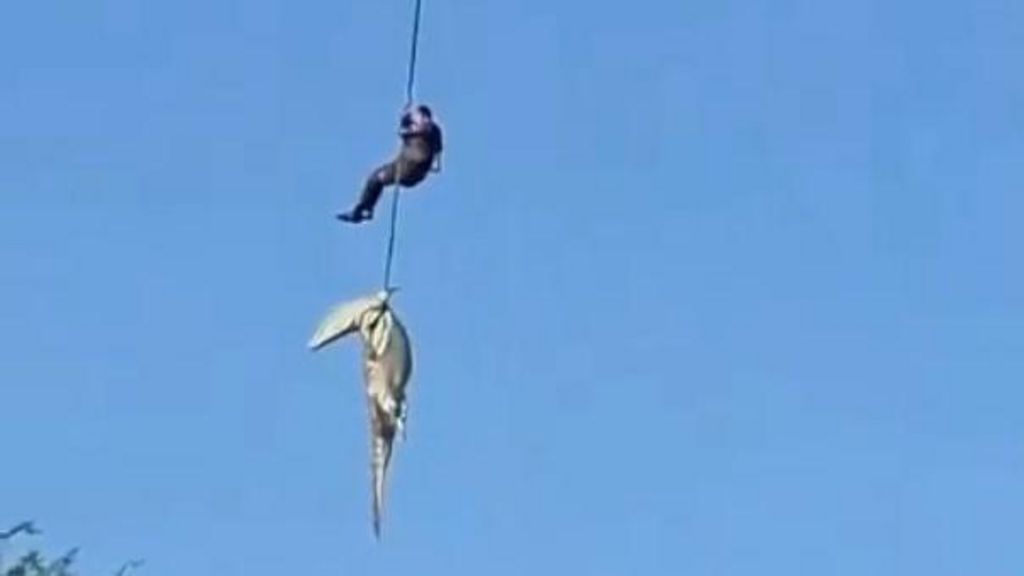
Police officer lowered into crocodile-infested river to recover human remains
In the aftermath of devastating floodwaters that swept through northeastern South Africa last week, a daring, high-stakes recovery operation led by elite South African police has yielded human remains from the belly of a massive 4.5-meter, 500-kilogram crocodile, in the search for a missing local businessman.
The ordeal began when the unidentified man attempted to cross a submerged low-water bridge over the Komati River, located in South Africa’s Mpumalanga province. His vehicle quickly became trapped in the rushing floodwaters, and by the time first responders arrived at the scene, the car was empty. Authorities concluded the man had been swept away by the powerful current, according to Mpumalanga provincial police spokesperson Colonel Mavela Masondo, who shared details with South African national broadcaster SABC.
Launching a large-scale search operation that deployed both drones and helicopters to cover the wide, fast-moving river, search teams spotted a cluster of crocodiles basking on a small exposed sandbar. As commander of the police diving unit, Captain Johan “Pottie” Potgieter told local news outlet News24 that years of field experience allowed his team to immediately identify one reptile as suspicious: unlike the other crocodiles that scattered at the noise of approaching aircraft, this giant animal stayed motionless on the bank, its abdomen visibly distended from a recent large meal.
Teams humanely euthanized the suspected reptile before planning the dangerous recovery. In an operation police have labeled “highly dangerous and complex”, Potgieter was lowered via rope from a hovering helicopter directly to the sandbar, where he secured the massive crocodile before both he and the animal were hoisted back into the aircraft and flown to nearby Kruger National Park for examination. Potgieter acknowledged to News24 that the mission was an inherently tense experience: “The sharp-end of a crocodile is not the best place to approach it,” he said.
Upon dissection, search teams recovered partial human remains from the crocodile’s digestive tract, along with six separate shoes. Potgieter noted that while the presence of multiple footwear suggests the crocodile may have claimed other victims in the past, crocodiles are opportunistic feeders that often swallow non-food debris that washes into their habitat, so the find does not confirm additional deaths.
DNA testing is now underway to formally confirm whether the recovered remains belong to the missing businessman. Following the successful completion of the risky operation, South Africa’s acting police chief Lieutenant-General Puleng Dimpane publicly recognized Potgieter for his extraordinary bravery in carrying out the high-risk task.
-

Second unexploded shell found at illegal French rave: minister
A massive unauthorized rave that drew tens of thousands of partygoers to a former French military firing range has sparked public safety outrage after officials confirmed a second unexploded World War II-era shell was discovered at the site, just one day after the first dangerous ordnance prompted an emergency bomb disposal response.
The unsanctioned gathering, commonly called a “free party” by organizers, launched Friday on the 10,000-hectare decommissioned firing range located near the central French town of Bourges, roughly 120 miles south of Paris. The rave was coordinated via encrypted messaging platforms, allowing crowds to converge quickly before authorities could block access, with conflicting estimates of attendance: organizers claim up to 40,000 people traveled to the site from France and nearby neighboring countries, while French Interior Minister Laurent Nunez pegs the total number at 17,000.
Local authorities had explicitly warned the crowd that holding a dance event on the former military site was an extreme safety risk, as the ground still holds unaccounted-for unexploded ordnance dating back to World War II. Despite repeated warnings, partygoers entered the site anyway. On Saturday evening, bomb disposal squads were called to the location after the first unexploded shell was unearthed near a main road cutting through the party grounds.
After conducting an aerial inspection of the site via helicopter Sunday, Nunez confirmed to reporters that a second unexploded shell had been located and that disposal experts were working to neutralize the new threat. “When the prefect warned that this was dangerous land, it was not a joke,” the minister emphasized.
In a surprising twist, organizers have openly acknowledged they deliberately selected this specific firing range—located in Nunez’s own hometown—to stage the protest against a pending national bill that would dramatically increase criminal penalties for people who organize and participate in unauthorized free parties.
Organizers have claimed the event has proceeded without major disruptions or safety incidents, but Nunez refuted this account. He told reporters that 12 attendees have already been transported to local hospitals, multiple for drug-related complications, and five participants have been taken into police custody. Authorities have so far issued more than 600 fines for trespassing on military land and participating in an illegal gathering.
Once a little-known underground tradition, illegal raves have become a growing issue for French law enforcement. Nunez reported that officials recorded 337 unauthorized music events across the country in 2025. Most of these gatherings draw around 300 attendees, but roughly four percent attract crowds of more than 1,000, creating major public safety and logistics challenges for local communities.
The gathering has already hardened the government’s commitment to passing stricter penalties for illegal rave organizers and participants. Back in April, France’s lower parliamentary house approved a draft bill that would impose up to six months of prison time for anyone directly or indirectly involved in organizing or facilitating unauthorised raves. The legislation’s broad definition of organizing extends even to sharing logistical information about planned events online. Nunez argued that current penalties are far too lenient, classifying violations as minor offenses that do little to deter organizers.
By early Sunday afternoon, an AFP journalist on the ground observed that many performance stages had been cleared out and a large portion of attendees had begun departing the site. The incident has reignited national debate over balancing personal recreation freedoms with public safety, and is expected to speed up passage of the stricter rave regulation legislation.
-
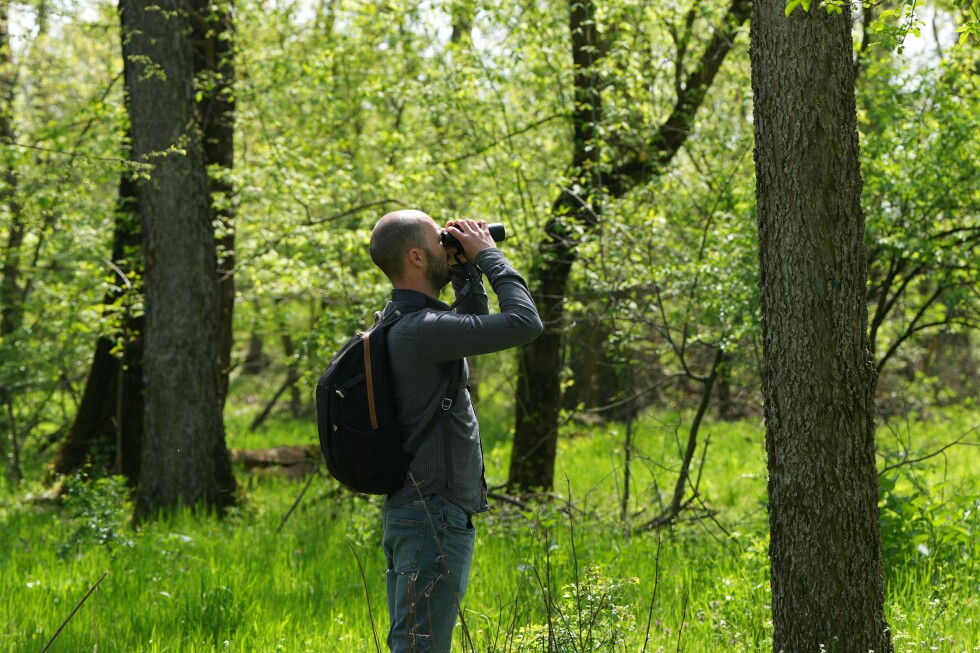
A Serbian bird-watching group uses crowdfunding to buy and preserve a woodland habitat
Nestled in the rolling farmlands of northeastern Serbia, a 2-hectare patch of dense old woodland called Nightingale’s Forest stands as a quiet triumph for grassroots environmental action. Today, bird song drifts through its towering tree canopies, and animal tracks wind across damp, mossy grass — a landscape that very nearly was cleared for timber.
Last year, Serbia’s Bird Protection and Study Society stepped in to purchase the private plot via a public crowdfunding campaign, saving it from being felled by a commercial buyer. Uros Stojiljkovic, a representative for the society, told the Associated Press that the market value of the forest’s timber already exceeded the land’s asking price, meaning logging was all but guaranteed if the group had not acted. “We protected it this way,” Stojiljkovic said.
The rapid success of the crowdfunding drive — which raised the full 8,000 euro ($9,500) purchase price in less than a month — has emerged as a telling indicator of shifting public attitudes toward conservation in Serbia, a nation grappling with a cascade of environmental threats. From widespread air and river pollution and failing waste management systems to unregulated profit-driven development that erases green spaces in urban centers, the country’s natural habitats face growing pressure.
While Serbian authorities have promised to strengthen environmental protections as a requirement for the country’s ongoing European Union membership bid, local conservation groups argue that tangible action has been almost nonexistent. Against this policy gap, the successful campaign for Nightingale’s Forest fills a void, led by ordinary citizens rather than state institutions.
Natasa Jancic, one of the organizers of the crowdfunding effort, noted that hundreds of donors have continued to contribute even after the purchase goal was met. Extra funds will be put toward ongoing maintenance of the existing forest and future purchases of at-risk green land. “Individually, we can’t do much, but as an active and stable community, we can achieve a lot,” Jancic said.
Founded three decades ago as a small group of specialized wildlife researchers, the Bird Protection and Study Society has grown dramatically into a broad community of casual and dedicated nature lovers, a shift Jancic says reflects rising public concern for the environment. “We have many families who are members, many nature lovers who may not be that active in the field but they want to contribute somehow,” she explained.
Nightingale’s Forest now supports a diverse array of native bird and mammal species, sustained by its unique moist undergrowth that is rare in Serbia’s predominantly agricultural northeastern lowlands. Conservationists next plan to conduct a full biodiversity survey to catalog all plant and wildlife species on the land, while leaving the woodland itself untouched.
Stojiljkovic acknowledges that protecting just 2 hectares of land will not reverse widespread environmental degradation across Serbia on its own. But he frames the project as a critical first step that can be replicated across the country. “Every village or town should have a Nightingale’s Forest of its own for a cumulative effect,” he said. “It is important to start somewhere.”
-
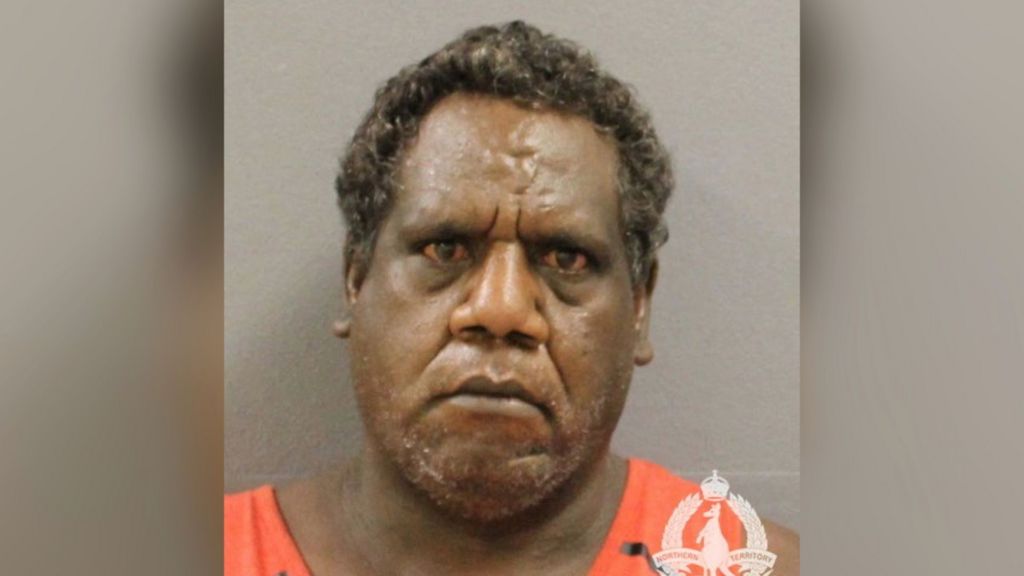
Man charged with murder and sexual assault of 5-year-old Australian girl
A devastating tragedy has unfolded in central Australia, where the death of a 5-year-old Indigenous girl has led to murder charges and widespread civil unrest in the Northern Territory (NT). For cultural reasons, the child is only publicly identified as Kumanjayi Little Baby, and a content warning has been issued for Aboriginal and Torres Strait Islander readers noting the mention of a deceased person.
Kumanjayi went missing last Saturday night, after being put to bed at an Aboriginal town camp on the outskirts of Alice Springs shortly before midnight. A multi-day large-scale search operation by NT Police concluded on Thursday, when officers located the child’s body. Jefferson Lewis, a 47-year-old local man, was taken into custody that same day, after being assaulted by community members in Alice Springs prior to his arrest. On Saturday evening, police formally charged Lewis with one count of murder and two counts of sexual assault. He is set to make his first court appearance in Darwin on Tuesday.
In the aftermath of Lewis’s arrest and injury, the suspect was transported to Alice Springs Hospital for medical treatment. That facility quickly became the site of violent civil unrest, as dozens of protesters gathered outside the hospital on Thursday night demanding traditional justice for Kumanjayi. Leaked and officially released police footage shows demonstrators throwing projectiles at officers, attacking police vehicles, and setting at least one police van on fire. Responding officers deployed tear gas to disperse the crowd.
The unrest spilled beyond the hospital grounds: additional footage captured crowds swarming a nearby petrol station, looting goods from retail shelves before fleeing the scene. Northern Territory Police Commissioner Martin Dole publicly condemned the violence in a press briefing Sunday morning, when he formally announced the charges against Lewis. Dole emphasized that the unrest could not be framed as a legitimate expression of grief over Kumanjayi’s death, calling the actions “criminal behaviour, plain and simple.” He described the riots as both “disgusting” and “abhorrent.”
To ensure the suspect’s safety and maintain order, police transferred Lewis more than 1,500 kilometers north to Darwin, the Northern Territory’s capital. As of Monday, five people have been arrested on charges linked to the riots. NT Police estimate that the widespread property damage and looting caused more than A$180,000 in total losses, equal to roughly $130,000 USD or £95,000 GBP.
Australian national broadcaster ABC reported that many protesters yelled calls for “payback”, a term referring to traditional punishment under Indigenous customary law in Central Australia, typically administered by elder groups to restore harmony between affected communities and families. Many demonstrators accused police of improperly protecting Lewis from traditional consequences.
Opening his statement Sunday, Commissioner Dole acknowledged the profound pain caused by the child’s killing. “This remains a deeply distressing matter and our thoughts are firmly with Kumanjayi’s family, loved ones and the wider community that have been deeply impacted by these events,” he said. Dole called on all community members to allow the formal judicial process to move forward without further unrest.
-

Man arrested in Austria after rat poison found in baby food jars
A major contamination scare that sparked a broad product recall and left public health officials on high alert across Central Europe has led to an arrest in Austria, law enforcement officials confirmed Saturday.
A 39-year-old man was taken into custody in connection with the scheme, which saw rat poison intentionally placed in multiple jars of German baby food manufacturer HiPP’s carrot and potato puree. The first contaminated container was discovered two weeks ago in Austria’s eastern Burgenland state, triggering an immediate recall of an entire product line from the brand.
In total, five poisoned jars have been safely recovered across three Central European countries: Austria, the Czech Republic, and Slovakia. All of these contaminated units were seized before any consumer could eat the product, preventing potential catastrophic harm to infants. But investigators warned that the threat has not been fully contained: at least one additional poisoned jar is believed to still be on store shelves or in homes across the region.
According to local Austrian newspaper Die Presse, the incident was an extortion plot that exploited a gap in the company’s internal monitoring. The perpetrator sent an email on March 27 demanding a €2 million ransom (equivalent to roughly £1.73 million), giving HiPP a six-day deadline to transfer the funds. However, the message was sent to a general company email address that staff only check every two to three weeks, meaning the demand was not discovered until after the deadline had already passed. HiPP CEO Stefan Milz confirmed the details of the missed ransom note in an interview with the outlet.
Burgenland police spokesperson Helmut Marban told the BBC that no additional details about the suspect or the process leading to his arrest could be released to the public at this stage, as the investigation is still active and ongoing.
To help consumers avoid potential exposure, public health authorities have issued clear guidance for identifying tampered jars. Consumers are warned to inspect HiPP glass baby food jars for signs of tampering including damaged or loose lids, missing safety seals, unusual or spoiled odors, and a distinct white sticker with a red circle on the bottom of the container. The Austrian Agency for Health and Food Safety has also advised parents who have already given their babies this batch of HiPP baby food to seek immediate medical attention if their child develops symptoms linked to rat poison exposure, including unexplained bleeding, extreme fatigue, or unusual paleness.
-

In China’s countryside, a Nigerian student found more than a story
Beneath the blazing summer sun of East China’s Zhejiang province, a young foreign woman wearing a woven straw hat steps barefoot into the muddy waters of a terraced rice paddy. One hand grips a handwoven fishing net, the other holds a chipped wooden bucket ready to hold her catch. She wades slowly through the shallow water, her toes sinking into soft silt as she searches for native carp raised in Yunhe county’s centuries-old rice-fish co-culture system. Within an hour, her fresh catch is carried to a village kitchen, where it is transformed into a fragrant, steaming traditional Chinese dish, ready to be shared with local hosts.
That woman is Ibeakamma Chinazaekpere Ugochinyere, a Nigerian scholar who goes by her Chinese name Wang Qian. Now a doctoral candidate at Zhejiang Normal University’s College of Education, she traveled to the mountainous Yunhe county in 2025 to take part in filming the documentary series *A Foreign Apprentice Comes to the Mountains*. What was originally scheduled to be a straightforward media assignment quickly evolved into a deeply personal journey that reshaped her understanding of Chinese culture and development.
Ugochinyere’s connection to China stretches back to her primary school years in Nigeria, when she first developed a fascination with the country’s long history and unique culture. That childhood curiosity became a reality when she earned a Confucius Institute scholarship, an opportunity that allowed her to move to China to pursue her education. A decade later, she says China has become more than a place of study — it is her second home. “What the Chinese government gave us was not only the opportunity to study, but also a deep affection that crossed mountains and seas,” she explained.
Over her 10 years in China, Ugochinyere has grown from a curious cultural explorer into an active bridge for China-Africa people-to-people exchange. Her immersive stay in Yunhe added an unexpected new layer of meaning to that work. On camera, she worked alongside local villagers to dig up sweet potatoes, handcraft traditional tofu, harvest rice and cook family-style meals. Off camera, she found herself slowly drawn into a way of life that felt both entirely new and unexpectedly intimate. Having spent most of her time in China living in bustling urban centers, the quiet rhythm of rural life opened her eyes to a side of the country she had never experienced before.
For Ugochinyere, the unassuming magic of China’s countryside lives in small, everyday moments: soft mist curling over forested mountain peaks when she opens her curtains at dawn, a warm bowl of hand-folded wontons shared by a local neighbor, a daily schedule shaped by the cycles of the land and seasonal weather, rather than the nonstop noise and rush of city life.
Again and again during her stay, she returned to one observation: China’s rural revitalization drive is extraordinary. What impressed her most, however, was not just the visible signs of new prosperity — cleaner infrastructure, newer public facilities, higher living standards. What stood out to her was that development in Yunhe, and later in Wuyi county of Jinhua, did not come at the cost of cultural heritage.
“This project made me understand that while we are advancing modernization, embracing new development, and promoting rural revitalization, we must also preserve old buildings, past history and traditional knowledge,” she said. In her view, the centuries-old wooden farmhouses, historic architecture and surviving traditional handicrafts she encountered across the countryside are not outdated relics to be bulldozed for new construction; they are the foundation that allows rural communities to hold onto their unique cultural identity. “These old buildings, these old crafts and the things that have been preserved are all telling the story of who they are,” she noted. That balance, she argues, is what makes China’s rural transformation distinct from development models she has seen elsewhere: “We welcome development and modernization, but we do not need to lose ourselves, our culture or our history.”
Another group that left a lasting impression on Ugochinyere was the cohort of young Chinese villagers who have chosen to leave urban careers to return home and rebuild their local communities. She met dozens of young entrepreneurs using digital tools to market local farm produce, redesign traditional product packaging, and sell village goods to national audiences via livestreaming e-commerce. This new wave of entrepreneurship has injected fresh energy into rural areas, where older generations previously lacked the resources and digital skills to reach broader consumer markets.
“I’m really proud of them. They are willing to go back home, bring development, start businesses and promote the products of their villages,” she said. What stuck with her most were not grand policy announcements, but small, human moments of connection: elderly villagers greeting the film crew with warm grins and homemade snacks, new family restaurants and small businesses popping up on every return visit to Yunhe, the clear sense that ongoing changes were being experienced and shared by every member of the community.
The experience also stirred warm childhood memories for Ugochinyere, who grew up surrounded by mountains, rivers and untouched nature in Nigeria. In quiet, unspoken ways, the rolling hills and lush landscapes of rural China felt strangely familiar. So when filming wrapped, she found she could not leave the experience behind.
“If I have time off in the future, I would love to go back, rent a house or stay in a homestay for a while, and spend more time walking around,” she said. “I want to work the land again, dig up potatoes again, and experience that feeling once more. I haven’t felt that way in many years.” Smiling, she summed up what the journey meant to her with a famous Chinese phrase that now feels personal: “Lucid waters and lush mountains are invaluable assets. China’s countryside is truly a treasure.”