分类: society

  • Around the island in 48 days: White-tailed eagle goes on Irish grand tour

    Around the island in 48 days: White-tailed eagle goes on Irish grand tour

    More than a century after white-tailed eagles vanished from Ireland, a landmark conservation initiative is bearing remarkable new fruit — and one young feathered adventurer has captured the public’s imagination with an unprecedented cross-country journey.

    Aspen, a juvenile white-tailed eagle hatched in 2024 at Glengarriff Nature Reserve in County Cork as part of Ireland’s ongoing white-tailed eagle reintroduction programme, embarked on a cross-island odyssey that began on March 22. Over the course of just seven weeks, a satellite tracker fitted to the bird recorded its extraordinary route: spanning all four of Ireland’s provinces — Leinster, Ulster, Connaught, and finally back to its native Munster — and touching 26 of the island’s counties along the way. In Northern Ireland alone, Aspen visited Armagh, Down, Tyrone, Londonderry, and Fermanagh, making her journey one of the most widely documented young eagle movements in recent Irish conservation history.

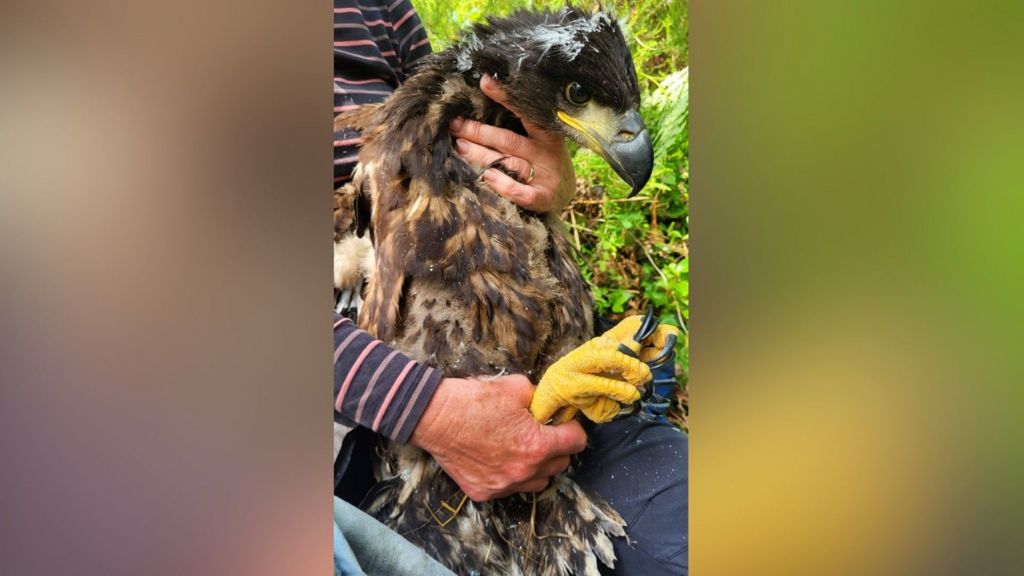
    This ambitious trek is no surprise to the ecologists who have monitored Aspen since the day she hatched. Clare Heardman, a National Parks and Wildlife Service (NPWS) ecologist who has tracked the reintroduction programme since its launch in 2007 and currently monitors roughly 90 tagged eagles, shares a unique bond with the young bird. “I helped tag her when she was eight weeks old, then she fledged when I was 13 weeks,” Heardman explained. “On her first solo flight, she already did a massive loop of Munster — that isn’t unheard of for young eagles, but it proved right away that travelling is in her personality.”

    Aspen’s name comes from an unusual aspen tree growing near her birth nest, a rarity among the untagged, unnamed eagles monitored by the programme. What makes her extra special for Heardman is her lineage: her mother is a Norwegian eagle brought into the programme as part of reintroduction efforts, while her father is the first generation of Irish-born eagles produced by the scheme — a milestone that marks the programme’s long-term success. Since the map of Aspen’s cross-country journey was shared on social media, the public has embraced the young eagle just as much as the conservation team, with Heardman noting “her route touched so many counties, it helped people across the island relate to her.”

    White-tailed eagles, also called sea eagles for their coastal habitat and nicknamed “flying barn doors” for their massive 2.5-meter wingspan, were driven to extinction across Ireland and the United Kingdom by the early 20th century. Decades of deliberate reintroduction work, using founder birds sourced from healthy Norwegian populations, have reversed that decline. In 2024, a breeding pair in County Fermanagh made history as the first white-tailed eagles to successfully raise chicks in Northern Ireland in more than 150 years, and established mating populations have now been confirmed across Kerry, Cork, Clare, Galway, and Donegal.

    Dr. Eimear Rooney, a member of the Northern Ireland Raptor Study Group which monitors birds of prey across Northern Ireland, explained that Aspen’s long wander is typical for young white-tailed eagles. “This time of year, it is common for sub-adult white-tailed eagles to go wandering. They catch thermal hot air currents, and with their size, they can cover hundreds of miles in a very short space of time,” Rooney said. The tracker’s data also reflects the species’ feeding habits: Aspen often stayed close to coastlines and wetlands, where the birds hunt for fish and marine prey, while her inland forays into higher ground like the hills of Donegal were likely driven by her scavenging instinct, as the eagles feed on carrion when it is available.

    While Aspen’s journey is a heartwarming win for conservation, Rooney also highlighted the ongoing risks facing young eagles during their nomadic adolescent years. White-tailed eagles do not reach breeding age until they are four or five years old, and the sub-adult stage is the most dangerous period of their lives. “The people tracking these birds during this part of their lives are biting their nails constantly,” Rooney said. Major threats include accidental poisoning from carcasses laced with toxins — two eagles were confirmed killed by poisoning in County Antrim in 2023 — collisions with wind turbines (three eagles died from turbine strikes in South Donegal alone that same year, per NPWS data), severe storms, and exposure to avian influenza.

    For now, Aspen has returned to her native Munster, but where she will settle long-term remains an open question. “Just because it was hatched in Cork doesn’t mean it’ll stay in Cork,” Rooney noted. “A very common path we see these birds follow takes them to the Antrim Hills, Rathlin Island, onto the Mull of Kintyre, then they’ll spend some time in Scotland before coming back. The point is, you can never be too sure where they’ll end up.”

  • Perth man Gregory John Welton, 57, pleads guilty to child exploitation charges linked to author Craig Silvey

    Perth man Gregory John Welton, 57, pleads guilty to child exploitation charges linked to author Craig Silvey

    A Western Australian man has entered a guilty plea on child exploitation-related charges, marking the second defendant connected to the high-profile criminal investigation centered on acclaimed Australian author Craig Silvey.

    Fifty-seven-year-old Gregory John Welton, a resident of Maylands, appeared before Perth Magistrates Court on Wednesday to admit to four total offences: producing child exploitation material, distributing child exploitation material, and unlawful possession of a restricted weapon. Court proceedings revealed that the illegal content Welton created was almost exclusively explicit written material, and he shared one graphic exploitative image across two months earlier this year, between January and February.

    When law enforcement officers executed their search of Welton’s home, they also uncovered an unlicensed firearm stored in his bedside table. Court documents confirmed the weapon came into Welton’s possession during his time working as a security guard years prior. For the weapons offence alone, the magistrate issued a $300 fine, and granted Welton bail ahead of his sentencing for the exploitation charges.

    During the hearing, Welton’s legal representation requested a modified bail condition that would allow the defendant access to the internet. The request specified that online access would be permitted for four key purposes: searching for fly-in fly-out (FIFO) work opportunities, obtaining legal counsel remotely, attending telehealth medical appointments, and general personal entertainment. The court granted this modified bail arrangement.

    Welton’s case has now been transferred to the Perth District Court for sentencing, with his next scheduled appearance set for July 10.

    This prosecution is the second to emerge from the wider investigation that first made headlines when police raided Silvey’s Fremantle residence in January, seizing multiple electronic devices as part of evidence gathering. Earlier this month, Silvey himself pleaded guilty in Fremantle Magistrates Court to charges of possessing and distributing child exploitation material.

    A third accused, 68-year-old grandmother Glenda Joy McGregor from Perth, also faces allegations of producing and distributing child exploitation material tied to the same network connected to Silvey. McGregor has not yet entered a plea on her charges, and remains in custody at Melaleuca Prison. She was remanded on the exploitation charges and an additional offence of failing to comply with mandatory sex offender reporting obligations.

  • Princess Catherine takes her first solo trip abroad after cancer goes into remission

    Princess Catherine takes her first solo trip abroad after cancer goes into remission

    LONDON – Almost five months after announcing her cancer is in full remission, Britain’s Princess of Wales, Catherine (commonly known as Kate), is preparing to step back onto the international stage for her first overseas trip since her 2024 cancer diagnosis. The two-day working visit to northern Italy will center entirely on deepening her work advancing early childhood education, a policy and advocacy area that has become the defining royal cause for the 44-year-old mother of three, who is set to become Britain’s queen in the future.

    The princess will travel to the city of Reggio Emilia, a global hub of innovative early education practice that has drawn attention from educators across the world for its decades-old child-centered learning framework. Kensington Palace confirmed the trip is structured as an official international fact-finding mission, designed to examine how alternative education models can better support young children and the caregivers who guide their early development.

    The choice of Reggio Emilia as the destination for Catherine’s first post-recovery international trip is no random selection. Early years development – focused on learning and growth from birth to age five – has been the signature issue of Catherine’s public work since she launched the Royal Foundation Centre for Early Childhood in 2021. The organization’s core mission is to raise widespread public awareness of how investment in early childhood lays the foundation for lifelong health, resilience and success.

    Joe Little, managing editor of Majesty Magazine, explained that the trip sends a clear signal about Catherine’s priorities moving forward. “She wants to make a point that she is going to keep making this her cause,” Little said, adding that the child-focused Reggio Emilia approach aligns perfectly with the launch of the center’s expanded international engagement work. A statement from Kensington Palace added that the visit will emphasize the critical role that supportive environments and positive human relationships play in building healthy, resilient futures for children.

    The Reggio Emilia approach to early education is rooted in the core principle that children express understanding and make meaning of the world through hundreds of unique modes of communication, and that educators must meet young learners where they are rather than enforcing rigid, one-size-fits-all curricula. This model has been adopted and adapted by early education programs in more than 120 countries around the world since its development in the years following World War II.

    Catherine’s return to international public duties comes after a highly personal, uncharacteristically open journey through cancer treatment that reshaped public discourse around royal health transparency. When she first announced her cancer diagnosis earlier this year, she broke with longstanding royal tradition of guarding personal health details closely by sharing her news in a warm, accessible social media video. Later, after completing chemotherapy and announcing her remission, she spent a full day meeting and supporting other cancer patients at London’s Royal Marsden Hospital, the facility where she received her treatment.

    In a public note shared after the remission announcement, signed with her initial “C”, Catherine wrote: “It is a relief to now be in remission and I remain focused on recovery. As anyone who has experienced a cancer diagnosis will know, it takes time to adjust to a new normal.”

    That new normal centers on expanding her advocacy for early childhood education in Britain, where advocates have long flagged systemic gaps: a nationwide shortage of accessible early education spaces and widespread gaps in specialized training for early years educators. Experts say Catherine’s high-profile engagement has already brought much-needed attention to an issue that is often overlooked in public policy debates.

    Edoardo Masset, associate research director at the National Institute of Economic and Social Research, noted that the princess’s focus on the issue is backed by robust academic research. “This relationship between early years education and success later in life is supported not only by strong theoretical arguments, but also by a large body of evidence on the effectiveness of programs for preschool children,” Masset explained. As one of Britain’s most popular royal figures, Catherine has a proven track record of drawing sustained public and media attention to the causes she champions, and her upcoming Italian trip is expected to generate global focus on early childhood education reform.

  • Man to stand trial over double fatal island crash

    Man to stand trial over double fatal island crash

    A 42-year-old South Australian man will face a District Court trial after pleading not guilty to two charges of dangerous driving causing death in a crash that claimed the lives of his uncle and a colleague last December.

    Wade Doyle, a resident of Hackham West, has formally denied both counts of causing death by dangerous driving while operating a vehicle with a blood alcohol content exceeding the legal limit of 0.08. The tragic incident unfolded on December 10 at Cuttlefish Bay, located on Kangaroo Island off South Australia’s southern coast, where 55-year-old Craig Doyle (Wade Doyle’s uncle) and 26-year-old Ed Burrows lost their lives.

    Authorities allege that Wade Doyle was behind the wheel of a utility vehicle carrying all three men when the vehicle rolled off Cape Willoughby Road and collided with a tree along the roadside. During a short procedural hearing at Adelaide Magistrates Court on Wednesday, the defendant entered his not guilty pleas to both charges laid against him.

    After the hearing concluded, Doyle left the courthouse accompanied by a group of supporters, shielding his face from press photographers with a sheet of paper. He declined to make any public statement to reporters waiting outside the court building. His trial is set to proceed in the South Australian District Court, with his next scheduled court appearance scheduled for August 14.

    In the wake of the fatal crash, tributes poured in for the two deceased men, who worked alongside each other at Sea Dragon Kangaroo Island, a five-star hospitality venue on the island. Kimberley Doyle, daughter of Craig Doyle, shared a heartfelt message on social media following the incident, writing: “Our hearts are absolutely broken. We currently have no words, but we wanted our friends and families to know. We love you so much dad and will miss you forever and ever.”

  • ‘Absolutely stupid’: NSW top cop slams daredevil who scaled Sydney’s tallest building

    ‘Absolutely stupid’: NSW top cop slams daredevil who scaled Sydney’s tallest building

    A reckless urban climbing stunt has drawn sharp criticism from senior New South Wales police in Australia, after an unidentified daredevil shared footage of his unsanctioned, safety gear-free ascent of a 300-metre crane at Sydney’s tallest under-construction building site. The incident unfolded at the 55 Pitt Street development in the heart of Sydney’s central business district, where the man climbed undetected past on-site security to reach the top of the towering construction crane.

    In the publicly released footage, the climber can be seen scaling the structure from underneath the construction site, before pausing at the summit to look out over the entire Sydney cityscape. In an interview with local broadcaster 9News, the daredevil described the unique experience of reaching the top, saying the feeling of being alone thousands of metres above the rest of the city cannot be put into words.
    The climber also made the surprising revelation that this stunt was not his first visit to the site. He claims to have successfully completed the same unauthorised climb four times previously. Pushing back against widespread criticism of his actions, the daredevil argued that labeling his climb as “absolutely stupid” was unfair. He drew a comparison to everyday road travel, noting that far more people are injured or killed in car crashes than in construction crane climbing accidents, implying his activity was no more inherently reckless than common activities that people accept as routine.

    New South Wales Police Commissioner Mal Lanyon has publicly condemned the stunt in the strongest terms, calling the climber’s reckless choice “absolutely stupid”. Lanyon emphasized that no social media clout or personal achievement is worth putting one’s own life at extreme mortal risk. As of the latest update, NSW Police confirm they are aware of the viral footage circulating online, but confirm no official reports about the climber’s unauthorized access to the site have been lodged with authorities. It remains unclear whether investigators will actively pursue charges against the daredevil, or whether site management will implement additional security measures to prevent future incursions.

  • Police reveal new focus in hunt for missing mother Trisha Graf

    Police reveal new focus in hunt for missing mother Trisha Graf

    Five months after 41-year-old mother Trisha Graf vanished in South Australia’s remote outback opal mining region, law enforcement has launched a new phase of the investigation, refocusing search efforts on an unexamined area of the outback to unlock the mystery of her disappearance.

    Graf was first reported missing to authorities on December 12, after she traveled to the small remote town of Andamooka, located roughly 600 kilometers north of the state capital Adelaide, for a visit. A timeline of her final confirmed movements places her at the Roxby Downs Hotel at 12:19 a.m. that day, when she left the premises just minutes later alongside a friend. Shortly after departing the hotel, her vehicle – a Ford Territory – collided with a kangaroo just outside Andamooka’s town limits, but she continued her trip regardless. She then stopped at a private residence in the town’s northwestern district before leaving shortly before 2 a.m., and was last observed driving along Dunstan Drive, leaving the Andamooka area.

    By midday that same day, her partner and traveling companion launched an independent search and located her abandoned vehicle perched on a dirt mound near the local Blue Dam landmark, triggering a large-scale law enforcement response. Since her disappearance first was reported, South Australian Police have carried out extensive search operations across the wider Andamooka region, combing through everything from abandoned opal mine shafts to local septic tanks in previous searches. Investigators previously searched a private residential property and a stretch of land on Andamooka’s eastern fringe, but those efforts turned up no critical evidence to clarify Graf’s fate or whereabouts, leaving investigators with few substantive leads for half a year.

    This week, specialist law enforcement teams have returned to the Andamooka region to renew their search, with a new targeted search area identified. In an official public statement released this week, a South Australia Police spokesperson confirmed that officers from the Major Crime Investigation Branch, STAR Group specialist operations and Far North local policing unit will spend the next several days searching a previously unsearched area on the western edge of Andamooka, looking for any physical evidence tied to the missing woman.

    Investigators are continuing to appeal for public assistance to move the case forward. Any member of the public with information about Trisha Graf’s current location, or details about her movements and activities in the hours before she vanished, is asked to contact Crime Stoppers anonymously at 1800 333 000 or submit tips via the official organization website at www.crimestopperssa.com.au.

  • Jilin’s ecological restoration spurs massive migratory bird wave

    Jilin’s ecological restoration spurs massive migratory bird wave

    Nestled in Northeast China, Jilin province has emerged as a glowing testament to what targeted environmental recovery can achieve, as years of systematic ecological restoration and species protection efforts have triggered a dramatic rise in the number of migratory birds that use the region as a resting stop during their annual journeys.

    As a critical hub along the globally important East Asia-Australasia Flyway, Jilin’s network of protected wetlands has become an irreplaceable refuge for long-distance migratory birds. Fresh government statistics released in early May confirm that this year’s migratory season has brought a remarkable wave of avian visitors: more than 1 million individual birds across 385 different species have already been recorded stopping over in the province’s wetland systems to rest and refuel.

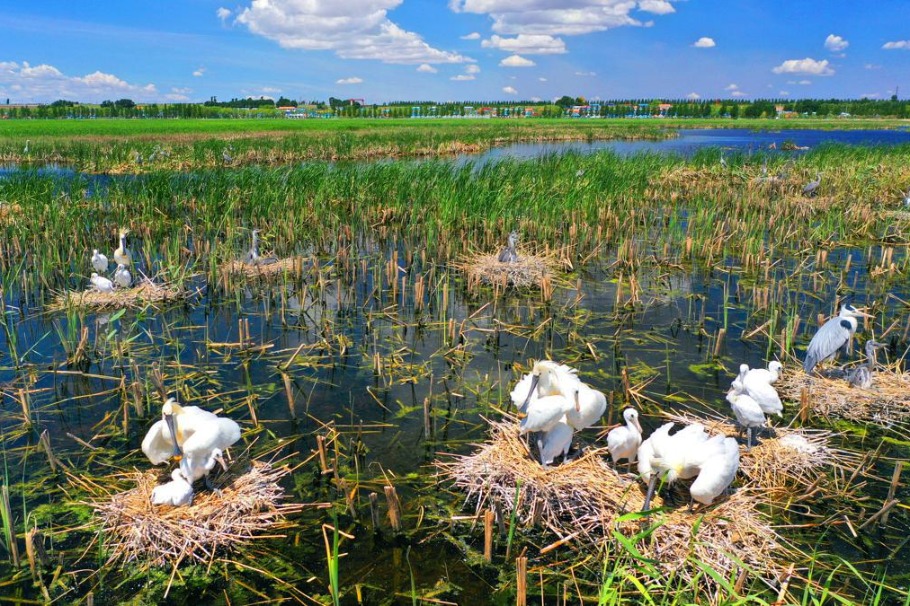
    Among the most striking recent observations is a large flock of vulnerable white-headed cranes foraging peacefully in the Boluo Lake Wetlands located in Nong’an County, a sight captured in official photographs shared by local authorities. This scene of abundant wildlife stands in stark contrast to conditions decades ago, when habitat degradation and human activity threatened the integrity of Jilin’s wetland ecosystems. Through targeted restoration projects that have restored wetland hydrology, reduced pollution, and limited disruptive human activity in key bird habitats, the province has rebuilt the critical stopover sites that migratory birds depend on to complete their long journeys between breeding and wintering grounds.

    Conservation officials note that the surge in migratory bird numbers and diversity is not just a win for biodiversity — it also serves as a powerful, tangible example of successful harmonious coexistence between human development and wildlife protection. Jilin’s ongoing work to protect its wetland networks continues to support global migratory bird conservation efforts, while providing a model for other regions working to reverse ecological damage and restore native habitats.

  • Protests in India after medical entrance test scrapped over leak claims

    Protests in India after medical entrance test scrapped over leak claims

    India’s highly competitive National Eligibility cum Entrance Test (Undergraduate), the mandatory gateway for admission to every medical college across the country, has been officially canceled following widespread allegations of a major pre-exam paper leak, triggering mass protests in the national capital New Delhi and leaving 2.28 million aspiring medical students reeling from the fallout.

    Held across more than 5,000 test centers nationwide on May 5, the exam faced immediate backlash within days of being administered, after rumors and evidence of a leaked question paper began circulating on social media. Student anger and political pressure mounted steadily through the following week, until the National Testing Agency (NTA), the federal body tasked with organizing the high-stakes exam, announced on Tuesday that the entire 2025 exam process would be scrapped. In a statement, the NTA said the decision was made because the compromised exam “could not be allowed to stand,” adding that the cancellation was necessary to uphold the integrity of India’s national examination system and protect the interests of test-takers.

    To date, no new date for a retest has been confirmed, leaving students and their parents in limbo over potential delays to the 2025-2026 medical college admission cycle. Investigative reports from Indian media outlets indicate the leak is believed to have originated in the western state of Rajasthan, several days before the exam was held. A senior Rajasthan police official told Asian News International (ANI) that probes are centered on a “guess paper” — a predicted question set commonly circulated by coaching institutes — that was shared privately before the exam. Of the roughly 410 questions included in the leaked guess paper, approximately 120 matched exactly to questions that appeared in the chemistry section of the actual NEET-UG exam, which is split into four different versions, each with 180 compulsory questions across physics, chemistry, and biology.

    The case has since been transferred to the Central Bureau of Investigation (CBI), India’s federal investigative agency, for a full national probe. For the millions of young aspirants who dedicated months, and in many cases multiple years, to rigorous preparation for the test, the cancellation has been a devastating blow. Many students attend costly private coaching classes outside of standard school education, adding 4 extra hours of study on weekdays and up to 9 hours of study on weekends, often forcing them to skip major family and social events to keep up with preparation.

    A 17-year-old Delhi-based test-taker, who requested anonymity, shared that her entire life for the past two years has revolved around NEET preparation. She even attended a mandatory mock exam the same week her grandfather passed away, turning down the chance to be with her family during the funeral. “I don’t know what to do now. We study so hard and spend days and nights working towards our goal and then the exam is cancelled,” she said, echoing the sentiment of thousands of fellow aspirants. Most students are calling for the retest to be held within 30 days to minimize disruption to their academic timelines.

    The scandal has also thrown a harsh spotlight on long-running systemic failures in India’s competitive examination system, which has faced repeated allegations of paper leaks and administrative irregularities over the past decade. Opposition political figures have been quick to condemn the ruling Bharatiya Janata Party (BJP) for failing to prevent the leak, accusing the government of enabling corrupt networks. Congress party leader Rahul Gandhi called the scandal “a crime against the future of the youth,” saying “the hard work, sacrifices and dreams of the students have been crushed by this corrupt BJP regime.” Former Delhi Chief Minister Arvind Kejriwal, leader of the Aam Aadmi Party, alleged the leak was enabled by “complete collusion” between paper leak gangs and ruling party politicians, claiming that these criminal networks “operating under political patronage are shattering these youths’ trust and morale.”

    Leading the ongoing protests in Delhi is the National Students’ Union of India (NSUI), the student wing of the opposition Congress party. Viral videos circulating on social media and broadcast on national television show student protesters climbing police barricades as officers attempt to disperse the crowd. Speaking to reporters at the protest site, NSUI president Vinod Jakhar said “the future of those who prepared for the NEET examination with utmost diligence and integrity has been sold off.” He and dozens of other protesters have also demanded the resignation of India’s Education Minister Dharmendra Pradhan, who has yet to issue a public response to the demands or allegations. BJP MP Jagdambika Pal responded to the criticism by stating that the “government holds those responsible accountable and ensures strict action against them so that such incidents do not recur.” The Federation of All India Medical Association, the national body representing practicing doctors across India, has also joined calls for immediate accountability for those behind the leak.

    This is not the first time NEET-UG has been mired in controversy: in 2024, the exam faced similar allegations of paper leaks, fraud, and irregularities in the awarding of grace marks, which triggered nationwide protests after thousands of candidates received unusually high, unearned scores.

  • Mexico cancels plans to end school year early for World Cup

    Mexico cancels plans to end school year early for World Cup

    A weeks-long controversy over proposed early school year closures tied to the upcoming 2026 FIFA World Cup and an expected extreme heatwave has come to an end, with Mexican authorities reversing their original plan following fierce public pushback from parents and education advocates across the country.

    The 2026 FIFA World Cup, which will be the first 48-team edition of the global football tournament, is set to run from June 11 to July 19, co-hosted by Mexico, the United States, and Canada. On May 7, Mexican Education Minister Mario Delgado announced a controversial proposal to wrap up the 2025-2026 academic year on June 5, more than five weeks ahead of the original scheduled end date, citing the need to reduce urban traffic congestion during the tournament and mitigate risks to student health from a projected extreme heatwave.

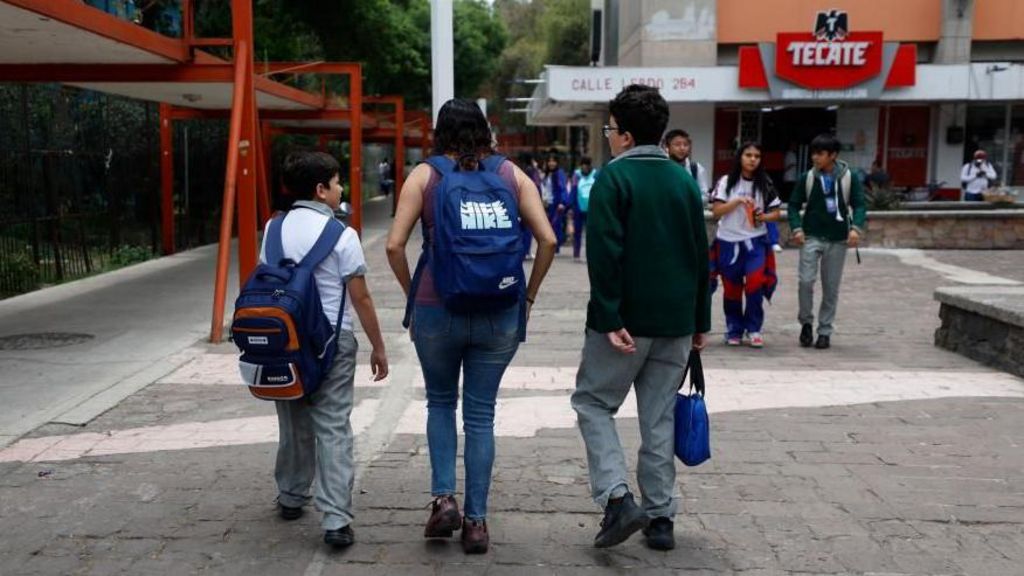
    The proposal immediately sparked a wave of public outcry. Parents across the country raised urgent concerns that cutting the school year short would disrupt consistent learning progress for children, while thousands of working households reported the sudden change threw their care arrangements into chaos. Many families struggled to find last-minute childcare to cover the five extra weeks of unexpected school closure, with limited time and resources to adjust their work and personal schedules. The National Union of Parents issued a particularly fierce rebuke, arguing that using the World Cup as a justification for cutting short classroom time was “inexcusable”.

    Days after the initial announcement, Mexican President Claudia Sheinbaum stepped in to clarify that the early closure had only ever been an internal proposal, not a final policy. Following additional rounds of consultations between the Ministry of Education, parent representative groups, and independent education think tanks, the administration formally scrapped the plan this Monday. Under the revised policy, the academic year will now conclude on its originally scheduled date of July 15, aligning with standard academic calendars.

    Beyond the school calendar controversy, President Sheinbaum has moved to reassure visiting football fans ahead of the tournament, confirming that Mexico will maintain full security conditions for all spectators and participants. Security preparations have faced intense international scrutiny in recent months, following a surge of organized violence across parts of the country two months prior. The unrest erupted after the death of notorious drug cartel leader Nemesio “El Mencho” Oseguera, who died from injuries sustained during a clash with Mexican military forces deployed to arrest him. In retaliation, members of El Mencho’s cartel carried out coordinated attacks that included burning civilian vehicles and spreading widespread panic across multiple regions.

    Sheinbaum also reaffirmed that all major infrastructure projects tied to the tournament, including renovations to Mexico City’s iconic Azteca Stadium and upgrades to the capital’s Benito Juárez International Airport, will be fully completed on schedule ahead of the first match kickoff. The president emphasized that Mexico is fully prepared to welcome fans from across the globe and deliver a safe, successful World Cup experience.

  • Indigenous Australians win record A$150m after billionaire mined without permission

    Indigenous Australians win record A$150m after billionaire mined without permission

    After a nearly two-decade-long legal fight over unauthorized mining on sacred traditional land, Australia’s Federal Court has ordered mining magnate Andrew Forrest’s Fortescue Metals to pay Indigenous traditional owners a historic A$150.1 million compensation package, the largest native title payout in the nation’s history.

    The Yindjibarndi people, who hold exclusive native title rights to a 2,700-square-kilometer stretch of the mineral-rich Pilbara region in remote north-western Australia, launched their legal challenge in 2017. That challenge came five years after the court first formally recognized Yindjibarndi Ngurra Aboriginal Corporation (YNAC) as the legitimate holders of native title over the area. Fortescue, the iron ore mining giant founded by billionaire Andrew Forrest that has built its multi-billion-dollar empire on Pilbara iron ore extraction, had already developed its highly profitable Solomon Hub mines on the land by that point. While the company secured approval for the project from the Australian government and a competing local Aboriginal representative body, it never secured the required consent from YNAC, the legally recognized native title holders. Failed negotiations for a formal land use agreement between the two sides eventually led to the drawn-out court battle that concluded this week.

    In his ruling, Federal Court Justice Stephen Burley explicitly acknowledged the Yindjibarndi people’s unbroken “deep and visceral connection” to their traditional country, which shapes every dimension of their cultural and social life. He divided the compensation into two parts: A$150,000 for proven economic losses suffered by the community, and A$150 million for profound cultural harm. Burley defined the cultural compensation as payment for the erosion of the Yindjibarndi’s traditional attachment to their land, damage to their cultural heritage, and the loss of their ability to draw spiritual sustenance from their country. In their original claim, the Yindjibarndi had sought A$1.8 billion in total compensation, a figure the group calculated as 1% of the tens of billions of dollars in revenue Fortescue has generated from the site since mining began in 2013, plus compensation for the destruction or damage of approximately 250 sacred cultural sites across the lease area.

    While the ruling marks a landmark moment for native title rights in Australia — with the payout nearly tripling the value of the previous largest court-ordered native title compensation award — many Yindjibarndi community leaders have expressed disappointment with the final sum. Speaking to reporters outside the courtroom, Yindjibarndi elder Wendy Hubert dismissed the award as “peanuts” compared to the massive ongoing profits Fortescue continues to pull from the land. The Solomon Hub mine is projected to remain in operation and generate revenue for the company for at least another decade, with closure not scheduled until the mid-2040s. The case has reignited national conversations about resource sovereignty, the protection of Indigenous cultural heritage, and the fairness of native title compensation frameworks in Australia’s booming mining sector.