分类: society

  • Hundreds of illegal motorbikes bulldozed in New York City crime crackdown

    Hundreds of illegal motorbikes bulldozed in New York City crime crackdown

    New York City has launched a high-stakes crackdown on unregulated two-wheeled vehicles, crushing hundreds of illegally operated motorbikes and mopeds in a dramatic show of force targeting linked criminal activity. The operation comes in direct response to a devastating tragedy that shook the Brooklyn community last month, when a 7-month-old infant was killed by a stray bullet fired during an incident connected to an unregistered moped, city officials confirmed.

    For months, New York law enforcement has documented a rising pattern of criminal actors leveraging unlicensed motorbikes and mopeds to facilitate illegal activity, from drug trafficking to reckless street activity that endangers innocent bystanders. These unregistered vehicles, often uninspected and unlicensed, allow perpetrators to evade police detection and escape quickly after committing crimes, creating a persistent public safety hazard across the city’s five boroughs.

    The mass destruction of seized illegal vehicles marks a significant escalation in the city’s ongoing effort to root out this threat. Officials emphasized that the operation is not an isolated action, but part of a sustained strategy to crack down on vehicle-related crime and prevent further senseless loss of life, particularly for vulnerable residents going about their daily lives. The killing of the 7-month-old child, an entirely innocent victim caught in crossfire, has galvanized city leaders to accelerate these enforcement efforts and send a clear message that the use of unregulated vehicles to enable violent crime will not be tolerated.

    Community leaders have echoed the city’s commitment, noting that the tragedy highlighted the urgent need for stronger action against illegal motorbike operation. While some transportation advocates have raised questions about enforcement tactics, the overwhelming public response to the infant’s death has underscored broad support for measures that improve public safety for New Yorkers of all ages.

  • Underwater memorial to wrecked slave ship draws pilgrims seeking to connect with their roots

    Underwater memorial to wrecked slave ship draws pilgrims seeking to connect with their roots

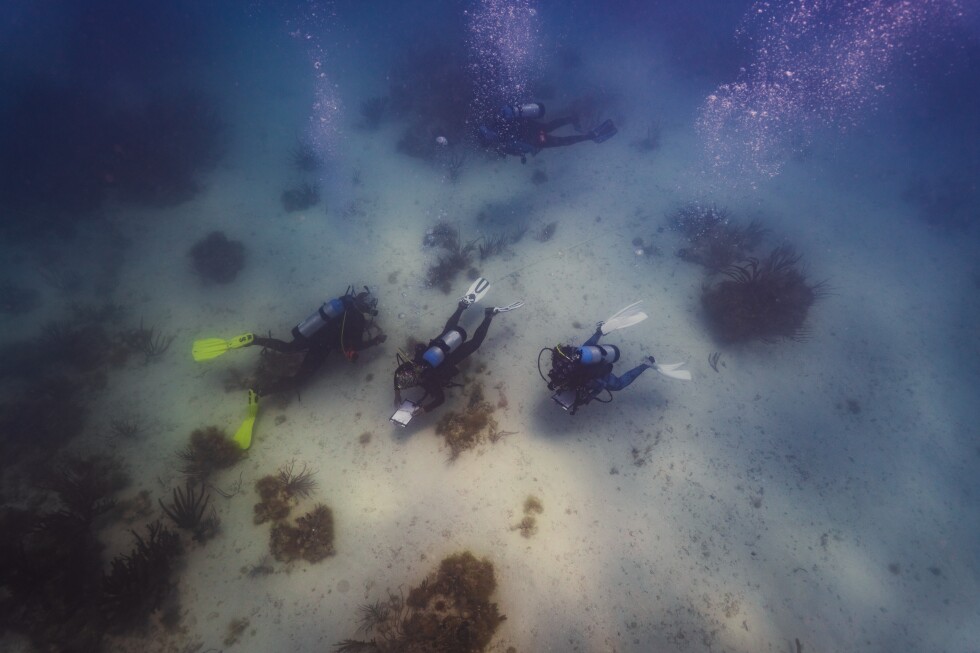
    Off the sun-dappled coast of Key West, Florida, Ruthie Browning slipped into the glassy Atlantic waters in early May, expecting nothing more than a quiet moment of respect at a sunken memorial. She had joined a cohort of Black divers and community advocates on a journey to a sacred maritime site: the final resting place of the Henrietta Marie, a British slave ship that sank 326 years ago, at the height of the brutal trans-Atlantic slave trade.

    The vessel’s tragic story is etched into the seafloor: after delivering 200 kidnapped West African people into chattel slavery in Jamaica, the ship set sail for Britain in 1700, only to be swallowed by a storm at New Ground Reef, where the Atlantic merges with the Gulf of Mexico. Today, a six-meter-deep concrete marker anchors the site, a permanent tribute to the lives stolen and forever altered by the trans-Atlantic slave trade. Browning arrived ready to observe, honor, and depart—but the moment she reached the marker, an unexpected wave of emotion overtook her.

    Staring at the memorial, now a thriving micro-reef draped in soft corals and sponges, tears flooded her eyes. As she quieted her mind to listen, she felt a gentle, unmistakeable connection to the ancestors whose stories the site holds: “My daughter, we’re so glad you’re here.” Overwhelmed by gratitude, she lingered at the marker, which bears the inscription: “Henrietta Marie. In memory and recognition of the courage, pain and suffering on enslaved African people. Speak her name and gently touch the souls of our ancestors.” “Without their stamina, their spirit and survival, I wouldn’t be here today. None of us would be here today,” Browning reflected after her dive.

    This pilgrimage was years in the making. The group’s 2023 attempt to reach the site was foiled by dangerously choppy waters, which group members framed as a sign the timing was not right. “The ancestors were not smiling down on us then,” said Jay Haigler, a master diving instructor with Underwater Adventure Seekers, the world’s oldest Black scuba diving club. “This year was different.”

    Michael Cottman, an author of two books on the Henrietta Marie and a member of the National Association of Black Scuba Divers that installed the memorial in 1992, noted that this journey was never supposed to be simple. The site carries what he calls “spiritual turbulence”: “Even if it wasn’t carrying enslaved people, it embodies the oppression of our people.” After annual pilgrimages in the 1990s lapsed, the 2024 trip was revived by an underwater oral history project led by Stanford University anthropologist Ayana Omilade Flewellen, who serves on the board of Diving With a Purpose, a Black-led nonprofit dedicated to documenting and preserving slave shipwreck sites.

    For Flewellen, the submerged interviews conducted during the pilgrimage became a deeply personal spiritual practice. “I felt a kind of tenderness in my heart,” she said. Processing the traumatic history of death and suffering that defines the site has long been a challenge, she explained: “It’s hard to attach your life with this history. The only way I could do that was turn toward what the divers were experiencing on this pilgrimage. That’s where it all bloomed and blossomed.”

    Beyond the underwater memorial, the pilgrimage also included a land-based ritual at Higgs Beach, where 297 African refugees who were rescued from three illegal slave ships in 1860 are buried. After the U.S. Navy intercepted the ships *Wildfire*, *William* and *Bogota*, the government housed more than 1,400 surviving refugees in a coastal compound, but hundreds died from the devastating health effects of their inhumane confinement on the crossing, explained Corey Malcom, lead historian at the Florida Keys History Center.

    Forgotten for nearly 150 years, the burial ground was rediscovered by researchers using ground-penetrating radar, and in 2010 a mass grave holding 100 additional bodies was found at a nearby community dog park, which has since been fenced off to protect the site. During this year’s pilgrimage, the group gathered at the cemetery to hold a traditional libation ceremony, an ancient Afro-Caribbean spiritual practice. One by one, members poured white rum—believed to act as a messenger between the living and ancestral worlds—onto the sand, tearfully honoring the lives lost. “To honor your ancestors and the road they’ve traveled is very, very important because we’re all connected,” said Addeliar Guy, a group elder and lifelong diver.

    For many participants, the most striking revelation of the pilgrimage was that the Henrietta Marie site is not merely a place of death and grief—it is a place of living history. Joel Johnson, president and CEO of the National Marine Sanctuary Foundation, trained for weeks to complete his first open-water dive at the site. He was surprised by the vibrant life that now surrounds the memorial: colorful fish dart through swaying corals, and seashells dot the sandy seafloor. Protecting these marine habitats, he said, is inextricably linked to protecting the history they hold. “This was not a place of death, but a place of life,” Johnson explained. “I didn’t feel like I was grieving for my ancestors. I felt like I was in the stream of history, recognizing that I’m a part of that. It made me happy.”

    Michael Philip Davenport, president of Underwater Adventure Seekers, left the site inspired to create new art depicting ancestors emerging from the memorial. “Their spirituality is still in that space,” he said. “I was feeling their lives and their tragedy.”

    For Dr. Melody Garrett, an anesthesiologist who has worked with Diving With a Purpose to locate another slave shipwreck, the Guerrero, this pilgrimage is more urgent now than ever. She pointed to recent political efforts to erase references to slavery and Black history from U.S. national parks and federal cultural institutions, including moves during the Trump administration that labeled teachings on slavery as divisive “anti-American propaganda.” As the United States prepares to mark its 250th founding anniversary, Garrett said the site reinforces a fundamental truth about American identity: “Black people have been here since before this country’s inception, longer than many other people have. This is our country.”

    Fragments of the Henrietta Marie’s wooden hull still rest beneath the sand at the wreck site. Discovered in 1972 by treasure hunter Mel Fisher, the wreck was fully excavated in 1983, yielding hundreds of intact artifacts. Out of an estimated 35,000 ships that transported more than 12 million enslaved African people across the Atlantic, only a handful have ever been located—most were destroyed intentionally to cover up evidence of the illicit trade. Today, the Henrietta Marie’s artifacts fill an entire floor of Key West’s Mel Fisher Maritime Museum, including more than 80 sets of iron shackles, many sized for children.

    When Kory Lamberts, who runs a nonprofit working to expand equitable access to aquatic recreation, first visited the exhibit, the wooden display planks creaked under his feet, and the gravity of the history hit him instantly. “It was visceral,” he said. “It took me to a place. It also tells me that these were young people — children. These are baby shackles. There’s no sugarcoating it. The truth really hits you.” After his dive, Lamberts brought back fish caught near the Henrietta Marie site—fish he believes carry the ancestral DNA of those who died there. The group ate the fish for dinner the night after their dives, a quiet sacrament of connection. “I don’t practice a faith, but isn’t this what people are doing every Sunday at church?” he asked. “I wasn’t just bonded with this site through the experience of being there, but at this molecular level with a full circle moment of connection with myself and my history.”

    This coverage of religious and cultural practice is supported by the Associated Press through a partnership with The Conversation US, with funding from Lilly Endowment Inc. The AP holds sole responsibility for this content.

  • Bone appetit: Paris pups lap up treats at dog-centric spots

    Bone appetit: Paris pups lap up treats at dog-centric spots

    Paris, the global capital of culinary art, is expanding its gourmet tradition beyond two-legged patrons, welcoming a wave of new establishments that cater first and foremost to the city’s four-legged canine residents, filling a long-unmet need for local pet owners.

    At Casa del Doggo, a canine-focused patisserie run by Parisian entrepreneur Clara Zambuto, fluffy one-year-old Pomeranian Loulou is a regular face. After finishing his €5 “Le Merveilleux” treat—crafted with dog-safe ingredients including banana puree, cream cheese, apple, and beef—Loulou lets out a satisfied woof, a response any restaurant owner would be thrilled to receive. Nearby, the glass display case holds a lineup of pet-friendly sweets that look nearly indistinguishable from human pastries, from heart-shaped “Le Mignon” made with sweet potato, cream cheese, and blueberry to croissant and baguette-shaped treats for pups who crave a classic Parisian snack vibe.

    Zambuto’s journey into opening the dog bakery grew out of her own experience as a dog owner. After adopting her three-year-old Pomeranian Hulk, she grew frustrated that she couldn’t bring her pet along for the quintessential Parisian ritual of stopping for coffee and a snack. “I’d often go for walks with him… pop into a cafe like a proper Parisian, but he’d soon get bored,” the 26-year-old explained. “I thought it was a shame there weren’t places in Paris where, while you’re having a quick coffee, you can also treat your pet. Now dogs are really like our children for most of us—we want to be able to take him everywhere.”

    What began as homemade treats in Zambuto’s kitchen eventually grew into a full storefront, with a trained professional pastry chef now helping craft pet-safe recipes that strictly avoid ingredients toxic to dogs, including chocolate, avocado, grapes, and onions. That doesn’t mean unlimited snacking, though: Lolita Sommaire, a veterinarian specializing in canine and feline nutrition, notes that moderation is just as important for dogs as it is for humans to prevent unhealthy weight gain. “If they’ve been to a patisserie, you need to adjust their next meal, cut back a little, or get them doing more exercise,” she advised. “But if it’s once a month, it’s not a big deal.”

    Casa del Doggo is far from the only dog-first spot popping up across the city, which is home to an estimated 100,000 registered and unregistered canines. At Le Bone Appart, a dog cafe named as a playful nod to French emperor Napoleon Bonaparte, dogs can roam freely across a bench-lined outdoor terrace while their owners relax. On a recent afternoon, Marley, an American shepherd sporting a tiny fashion beret, could be found lapping up the last bits of a chantilly-based “pup cup” off the pavement.

    Le Bone Appart owner Rebecca Anhalt, a US native who moved to Paris, launched her space after she received a steep fine for letting her five-year-old whippet Napoleon off-leash in a public park. “I wanted to create a place where people could come and not fear… being scolded for having your dog,” she said.

    Local advocacy groups have long pushed for more pet-friendly public spaces in Paris. The organization Paris Condition Canine points out that while the city does offer more than 40 off-leash areas for dogs, these existing spaces are “insufficient, unevenly distributed, and sometimes ill-suited” to meet the needs of the city’s large dog-owning population. The demand for more pet-friendly amenities has even seeped into local politics: during Paris’ 2026 mayoral race, incumbent mayor Emmanuel Gregoire launched an Instagram account dedicated to photos with local dogs, while rival candidate Rachida Dati hosted a dog-focused social aperitif to win over pet owners.

    For many regulars, these dog-centric spots offer more than just treats for their pups—they create a welcoming third space outside of work and home that strengthens bonds between owners and their pets, and builds community among fellow dog lovers. Sarah Elgamal, Loulou’s owner, describes herself as the Pomeranian’s “mother,” and says trips to the patisserie boost her connection with her pet. It “improves our connection, because we’re both in a third place that’s neither work nor home,” the 32-year-old pharmacist explained.

    Anhalt notes that even with dogs as the top priority, many human visitors come for the social connection with other pet owners as much as for their pups. “Dogs are a really good connector,” she said. One recent transplant to Paris now visits the cafe every day with his 17-year-old dachshund, just to “be part of the group and meet people.” After all, Anhalt adds: “you’ll talk to anybody about your dog.”

  • Paris’ Invalides is more than Napoleon’s tomb. For 350 years, it has been a home for war wounded

    Paris’ Invalides is more than Napoleon’s tomb. For 350 years, it has been a home for war wounded

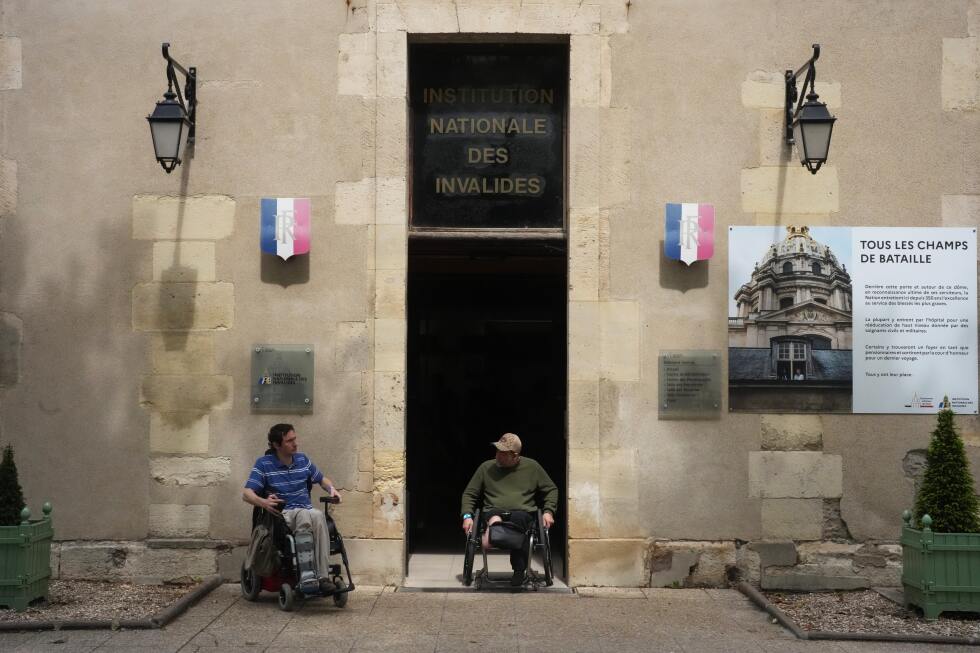
    Towering over the Paris skyline, the gilded dome of Les Invalides is recognized worldwide as the final resting place of French emperor Napoleon Bonaparte, drawing more than 1.4 million tourists to its historic museums and mausoleum every year. But few visitors understand that beneath the landmark’s iconic facade, a quiet, centuries-old core mission endures: for more than 350 years, this complex has served as a permanent home and specialized hospital for wounded veterans and civilian victims of war and terror attacks.

    First commissioned in the 17th century by King Louis XIV, the National Institution of Invalides welcomed its first group of retired and injured soldiers in 1670, marking the first time a European state took formal, long-term responsibility for caring for its war-wounded — a duty previously left entirely to religious orders. Today, the institution houses 64 residents, ranging from young combat veterans injured in overseas deployments to 90-plus-year-old Holocaust survivors who count themselves among the last living witnesses of Nazi atrocities.

    As the original facilities have aged, the French government has launched a major 100 million euro ($108 million) renovation project, with public funding covering core infrastructure and private donors invited to sponsor upgrades to individual residential rooms. This month, the institution granted exclusive access to Associated Press reporters, opening up the residential wings that sit just steps from Napoleon’s grand central sarcophagus — a rare look at the living community that shares space with one of Paris’ top tourist landmarks.

    “Les Invalides is a unique place — a magical, incredible and grand site,” explained General Christophe de Saint Chamas, the military officer who serves as the institution’s governor. He noted that from its inception, the project carried dual meaning: it demonstrated Louis XIV’s commitment to his soldiers, and it stood as one of the first formal acts of state-sponsored social care in modern history. “Before that, religious communities were taking in the wounded by obligation. Here, the state said: we’re taking care of them, over the long term, until their death,” de Saint Chamas said.

    Across its 350-year history, Les Invalides has tracked every turning point in French history: it was stormed by revolutionaries seeking weapons during the 1789 French Revolution, expanded to house thousands of veterans under Napoleon’s rule, and opened its doors to civilian war victims for the first time in the 20th century. Today, two of its most prominent residents are 101-year-old Ginette Kolinka and 98-year-old Esther Senot, both Auschwitz-Birkenau death camp survivors who have dedicated decades to educating young people about the Holocaust to ensure its atrocities are never forgotten.

    Senot, born to Polish Jewish parents in Paris, was just 15 when she was arrested by French police and deported to Auschwitz in 1943. Of the 1,000 people packed into her cattle car transport, only she and one other person survived. She spent 17 months in Nazi camps, returning to France after liberation weighing just 70 pounds, having lost 17 family members including her parents and six siblings. For decades after the war, she faced widespread indifference to the stories of deportees — it was only during a 1985 visit to Auschwitz that she began speaking publicly, after challenging a tour guide’s inaccurate account that erased the majority-Jewish identity of most camp victims.

    “When people asked me to share my story, I could not say no,” Senot recalled, showing the identification number the Nazis tattooed on her left arm. She moved to Les Invalides after her husband’s death and as her own medical needs grew, a choice shaped by her connection to the institution: her brother, a soldier in the French 2nd Armored Division that helped liberate France from Nazi occupation, lived at Les Invalides for 10 years in the 2000s. “I used to come visit him regularly, and I already knew the community here. When I found myself alone in old age, coming here felt natural,” she said.

    For younger wounded veterans, Les Invalides offers more than just medical care — it provides a ready-made community bound by shared experience of combat and injury. Master Corporal Mikaele Iva, who was left disabled after a parachute accident during a deployment to Gabon in 2021, has lived at the institution since his injury. He uses a wheelchair, but still competes in adaptive sports including fencing, archery and golf through the facility’s sports club, and represents Les Invalides at national ceremonies.

    “Over time, we become a second family here,” Iva explained. Residents gather to chat in the common coffee room, attend football matches and concerts together, and support one another through the challenges of living with disability. “We share both joyful moments and hard days. That’s the same as military life: we get back on our feet after injury, and we never leave each other behind, no matter what,” he said. Iva added that he finds deep meaning in the care France provides through Les Invalides: his former comrade, whom he pulled to safety after a severe injury during a deployment to Afghanistan, also lives at the institution, a tangible reminder of the nation’s promise to stand by those who serve.

    Caregivers share that same sense of national purpose. “We devote ourselves to them body and soul,” said Mustapha Nachet, a nurse coordinator who has worked at the residential center since 2014. “This is the nation’s way of giving back for everything they have given for our country.” Nachet noted that care at Les Invalides is deeply personalized, as the needs of a 30-year-old wounded combat veteran are vastly different from those of a 99-year-old civilian Holocaust survivor.

    Beyond residential care, Les Invalides operates a world-leading specialized hospital for people with severe war-related disabilities, with cutting-edge expertise in prosthetics and rehabilitation. Its medical teams conduct ongoing research to improve mobility for amputees and wheelchair users, and they have treated dozens of survivors of the 2015 terror attacks across Paris, including victims of the Bataclan concert hall massacre.

    General Sylvain Ausset, the institution’s medical director, notes that across centuries, the facility has documented how the nature of war injury has evolved with each new conflict. “Each conflict leaves its own mark, and none ever erases a previous one,” he explained. “In World War I, we saw severe facial injuries on a mass scale that people rarely survived before. In World War II, more soldiers with spinal cord injuries that caused paraplegia and quadriplegia began to survive. In more recent conflicts in Iraq and Afghanistan, we saw multiple amputations on a scale never seen before. Today, the defining injury we treat is psychological trauma.”

    For de Saint Chamas, the institution’s centuries-long mission remains as vital today as it was when Louis XIV broke ground in the 1600s. It is a tangible promise to active-duty troops: “It allows active-duty troops to deploy knowing that if something happens to them, France will be there.”

  • France blames stomach bug for new cruise outbreak, lifts lockdown

    France blames stomach bug for new cruise outbreak, lifts lockdown

    In the wake of a sudden illness outbreak aboard a British cruise ship anchored off western France, local authorities have cleared asymptomatic passengers to disembark, after confirming that a common gastrointestinal virus — not the internationally concerning hantavirus linked to a recent fatal outbreak on another vessel — is the cause of the illness. The incident, which sparked initial public alarm following the death of a 92-year-old British passenger, has been brought under control through targeted precautionary measures.

    The Ambition, operated by UK-based Ambassador Cruise Line, carrying 1,233 passengers (the vast majority from Britain and Ireland) and 514 crew members, first reported a spike in gastrointestinal symptoms among passengers when it docked in Brest, Brittany, on Monday. The 92-year-old passenger died before the ship reached the Brittany port, and initial reports of his death alongside dozens of sick passengers triggered swift action: French officials ordered a full temporary lockdown of the vessel, which later sailed to its scheduled stop in Bordeaux, where it remained anchored while health officials conducted testing.

    Local government and regional health authorities confirmed in an official statement Wednesday that testing ruled out any connection to the hantavirus outbreak that killed three people on the Dutch-flagged MV Hondius, an incident that had already stoked global public health anxiety. They confirmed the outbreak on the Ambition is a viral gastrointestinal infection, with no severe cases recorded among those affected. Officials also clarified that the 92-year-old passenger’s death was caused by a heart attack, and no link has been found between his death and the gastroenteritis outbreak. Per international conventions, the man’s body remains on the vessel pending next steps.

    French authorities noted that the full lockdown was implemented out of an abundance of caution, specifically to prevent unnecessary public panic amid ongoing attention to the Hondius hantavirus incident. As of Wednesday, asymptomatic passengers were permitted to leave the ship, while those showing symptoms of the virus remain in isolation aboard the vessel. The cruise line confirmed that cases of illness began rising after new passengers boarded in Liverpool, UK, on Saturday, during the ship’s scheduled itinerary.

    The Ambition departed the Shetland Islands, Scotland, on May 6, made stops in Belfast and Liverpool before arriving in Bordeaux, and was originally scheduled to sail from Bordeaux to Spain before returning to Liverpool on May 22. Passengers aboard the ship described a calm atmosphere despite the temporary lockdown, with many continuing routine activities. “We are onboard with extra sanitation guidelines in place. It is not as bad as it was during Covid. People just going about as normal,” Seos Guilidhe, a 52-year-old passenger from Belfast, told AFP via Facebook while playing bingo aboard the ship Wednesday, before confirming that restrictions had been lifted and asymptomatic passengers were allowed to disembark. For infected passengers, however, the experience has been far less comfortable: “Two of us in one cabin with the bug is a challenge,” one infected passenger wrote on social media.

  • Berlin launches scheme to swap trash for treats

    Berlin launches scheme to swap trash for treats

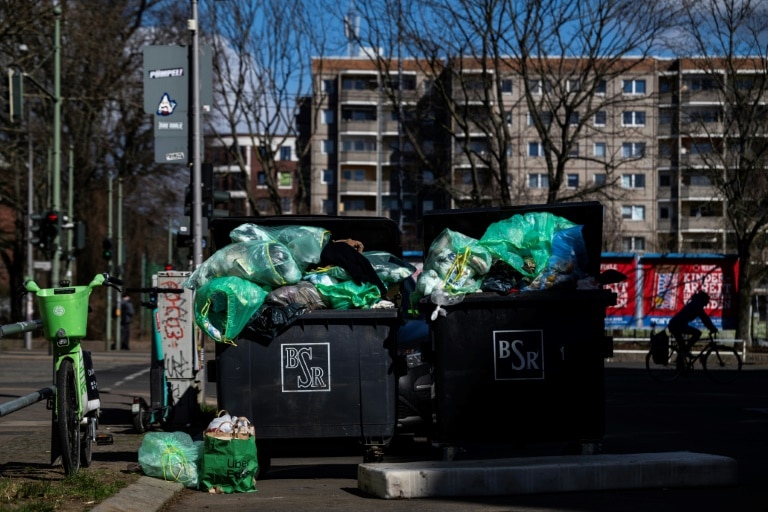
    Berlin has kicked off an innovative new pilot program that turns environmentally conscious actions into tangible perks for both residents and visitors, drawing inspiration from a successful trial launched earlier this year in Copenhagen. Dubbed BerlinPay, the initiative centers on encouraging sustainable behavior across the German capital, with a particular focus on cleaning up the iconic Spree River that cuts through the heart of the city and boosting sustainable water tourism. The pilot program will run through June 14, and invites participants to earn rewards by completing eco-friendly activities beyond litter collection, from planting native flowers and watering urban greenery to switching from car trips to cycling. The city’s extensive network of summer-popular lakes and waterways, a major draw for tourists each year, also stands to benefit from the scheme’s environmental goals. Deputy mayor Franziska Giffey noted that Berlin’s water tourism sector is currently experiencing strong growth and is a key contributor to the local economy, but the increasing popularity of these waterways also comes with measurable environmental costs. Speaking at Wednesday’s launch press conference, VisitBerlin CEO Sabine Wendt explained that the project aims to encourage both Berlin residents and out-of-town guests to engage with the city in a more thoughtful, environmentally aware way. To join the initiative, participants register for free through the official VisitBerlin platform, where they can choose from more than 5,000 available activity slots. Around 40 partner organizations including local businesses, cultural associations, and public museums have signed on to offer rewards for completed actions, ranging from discounted meals at local restaurants and free canoe tours on the Spree to complimentary entry to Berlin’s world-famous museum collections. The core mission of the program extends far beyond cleaning up local waterways: organizers hope to foster long-term environmental awareness among both residents and the millions of tourists who visit Berlin each year. BerlinPay is directly modeled after Copenhagen’s CopenPay program, which launched in 2024 and saw impressive early results: more than 75,000 tourists participated in the initiative’s first month, bike rentals across the city jumped 29%, and volunteers collected multiple tons of improperly discarded litter. If the Berlin pilot delivers similar positive outcomes, Giffey confirmed the city plans to make BerlinPay an annual recurring event for the capital.

  • Mass sex abuse allegations force closure of boarding school in Indonesia

    Mass sex abuse allegations force closure of boarding school in Indonesia

    On May 2, hundreds of angry demonstrators gathered at the Ndholo Kusumo Islamic girls’ boarding school in Tlogosari village, Central Java, to confront the institution’s 58-year-old founder and caretaker Kiai Ashari. Brandishing banners with slogans including “Women are not sexual objects” and “The Predator,” the crowd shouted insults at Ashari as local police escorted him off the property. The longtime school leader stands accused of years of sexual abuse against dozens of his female students, most of whom are low-income orphans.

    This shocking allegation is not an isolated incident in Indonesia. It has sparked nationwide public outrage and pulled back the curtain on deep-rooted systemic gaps that allow sexual abuse to thrive in the country’s network of independent Islamic boarding schools. Though most witnesses who initially spoke out against Ashari have since retracted their statements, one survivor has formally filed a police complaint, and her legal team says as many as 50 other girls may have been victimized.

    “Based on the victim’s account, the number of victims ranges from 30 to 50 children,” Ali Yusron, the attorney representing the complainant, told the BBC. “I am representing one victim, but the unfolding legal process confirms many more were harmed. One survivor’s courage has brought the full scope of these abuses to light.”

    Authorities first named Ashari as a suspect on April 28. Police initially claimed on May 4 that he had not yet been taken into custody but assured the public he would not attempt to flee. Ashari contradicted that assurance hours later, slipping out of the Pati regency and traveling across Java to Bogor, Jakarta, and Solo before law enforcement intercepted him on the night of May 6 at a mosque in Wonogiri, Central Java.

    Pati Police Chief Jaka Wahyudi confirmed the allegations against Ashari on May 7, detailing that the surviving complainant was abused 10 times across different locations between February 2020 and January 2024. According to the official account, Ashari would enter the victim’s dorm room under the pretense of requesting a massage, then coerce her to remove her clothing and commit multiple indecent sexual acts, including unwanted touching, squeezing, and kissing. After the 10th assault, the victim finally disclosed the abuse to her father, who filed an official police report.

    This is far from the first time Ashari has faced credible accusations of sexual abuse against his students. Court records and police investigations show the first allegations against him date back to 2022. “The victims are all female students, mostly attending intermediate religious school (MTs),” Ali explained. “Over three consecutive years, new victims were targeted as he cycled through students.”

    In early 2024, Pati Police’s Women and Children’s Services Unit received new reports of sexual offenses against underage teenage students at the school, but many of those initial claims were later dropped after witnesses withdrew their statements. Chief Jaka told the BBC that the 2024 investigation faced significant roadblocks, with four separate victims choosing to retract their testimonies.

    Chief Jaka explained: “The victims and their families said they wanted to resolve the matter privately and amicably. Many witnesses withdrew their statements out of concern for their children’s future safety and prospects in the community.” The case lay dormant for two years before investigators finally formally named Ashari as a suspect last month, and authorities are still working to identify and interview all potential victims.

    Beyond the individual accusations against Ashari, the case has exposed a repeating pattern of abuse enabled by problematic teachings and weak oversight. Many perpetrators in these boarding schools manipulate students through false religious doctrine: Ashari, for example, convinced his female students he was a saint with supernatural powers, and a descendant of the Prophet Muhammad who deserved unquestioned obedience.

    Imam Nahe’i, a member of the Nahdlatul Ulama (PBNU) Anti-Sexual Violence Unit (SAKA) and a former commissioner of Indonesia’s National Commission on Violence Against Women, told the BBC that most sexual abuse cases in Islamic boarding schools follow this same manipulative template. “Caretakers often spread teachings rooted in shamanism and mysticism, rather than rational religious doctrine,” he said. “Many claim to be spiritual guardians, and tell students if they disobey them, they will go to hell.”

    Worse, Imam Nahe’i added, many boarding schools normalize inappropriate physical contact with students – including touching, hugging, and kissing – creating a culture that tolerates escalating sexual violence. He cited an ongoing case in Sumenep where abuse continued unchecked from 2017 until it was exposed only recently, proof that surrounding communities and school leaders have long turned a blind eye to harm. A longtime educator at a large Islamic boarding school himself, Imam Nahe’i said he found most of his fellow teachers do not even correctly understand what constitutes sexual violence.

    “Many of them think sexual violence only counts if it involves penetration,” he explained. “If it doesn’t reach that point, they don’t see it as sexual violence – they just write it off as a sin, not a serious crime.”

    The broader systemic failure also stems from a profound lack of government oversight. While Indonesia’s Ministry of Religious Affairs passed formal regulations in 2022 to address sexual violence in educational settings, most Islamic boarding schools are privately founded by independent religious leaders rather than operated by the state, making them far harder to regulate. Many fall through the cracks of existing oversight frameworks, creating barriers to reporting abuse and protecting vulnerable students. As Imam Nahe’i put it, existing national regulations simply do not have jurisdiction to enforce standards at these independent institutions.

    “To create clear binding regulations and dedicated task forces for Islamic boarding schools, the Ministry of Religion needs to prioritize this issue urgently,” he said. “On top of that, supervision of newly established private boarding schools from both the ministry and local communities needs to be far stricter.”

    In response to the latest scandal, authorities have taken immediate action against Ndholo Kusumo, which first received its operating permit in 2021 and hosted 252 enrolled students before the allegations broke. The school has been shut down, all students have been sent to temporary housing or to their families, and the Ministry of Religious Affairs has permanently revoked the institution’s operating license. The ministry has confirmed that displaced students – particularly the orphaned students who make up a large share of Ashari’s alleged victims – will be able to continue their education via online learning or transfer to other accredited boarding schools.

    Basnang Said, Director of Islamic Boarding Schools at the Ministry of Religious Affairs, explained that the immediate closure was intended to let authorities prioritize the criminal investigation while protecting students and maintaining public order. New student admissions at the school are suspended indefinitely until all institutional reforms to child protection, student care, and governance are completed and independently audited. If the school fails to meet mandatory safety standards, its deactivation will become permanent.

    The ministry has also issued new nationwide guidance calling for any boarding school caretaker or educator accused of sexual abuse to be immediately removed from their post and evicted from school grounds. All Islamic boarding schools across Indonesia have been ordered to hire new teaching and care staff that meet strict standards of moral integrity, and are prepared to provide 24-hour supervised care for all enrolled students.

  • ‘Watermelon deaths’ in Mumbai puzzle investigators

    ‘Watermelon deaths’ in Mumbai puzzle investigators

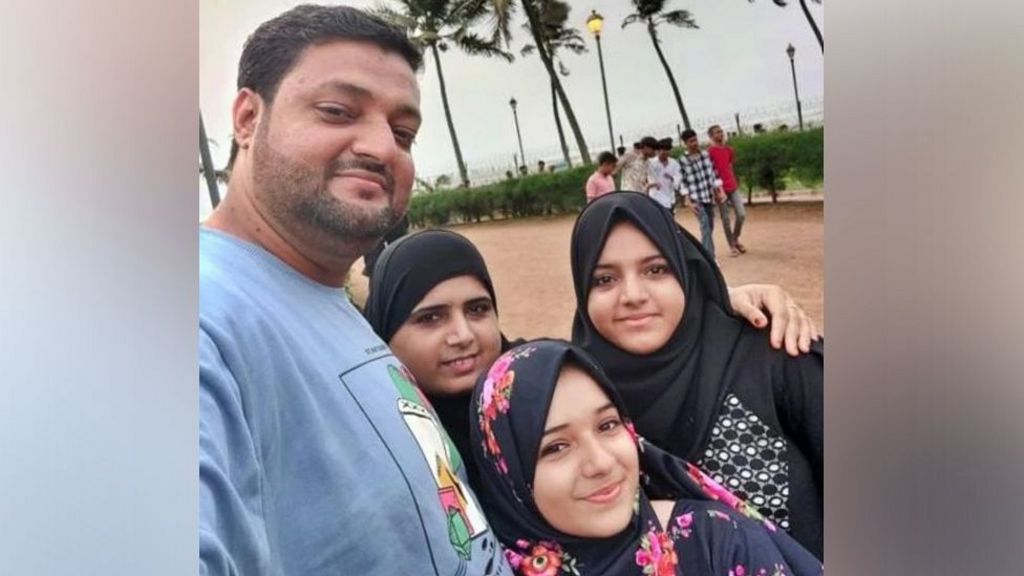
    It has been nearly three weeks since a family of four was discovered dead in their cramped Mumbai apartment, yet investigators have still not uncovered how the tragedy unfolded. The Dokadia family — 46-year-old Abdullah, his 42-year-old wife Nasreen, and their teenage daughters Ayesha, 16, and Zainab, 13 — were found unresponsive at their first-floor residence in the crowded Pydhonie neighborhood of south Mumbai on April 25, a case that has gripped India’s national media from the first hours of the tragedy.

    When news of the deaths first broke, local media immediately coined the haunting nickname the ‘watermelon deaths’, referencing the last meal the family consumed before falling fatally ill. Unsubstantiated early reports spread rapidly across news outlets and social media claiming the fruit had been intentionally poisoned or adulterated with toxic chemicals to extend its shelf life. Widespread public panic followed, sending demand for watermelon — one of India’s most beloved and widely consumed summer treats — plummeting and dragging local market prices down by nearly 40% in less than a week.

    Initial accounts from first responders show that on the night of the deaths, the Dokadias hosted extended family for dinner, serving the traditional spiced rice dish biryani. Guests left the apartment around 10:30 p.m., and a few hours later, the family ate a sliced watermelon as a late-night snack. Minutes after finishing the fruit, all four began suffering from severe vomiting and diarrhea. Neighbors, alerted by frantic calls, rushed to the apartment, where fourth-floor resident and doctor Zaid Qureshi immediately administered CPR to 13-year-old Zainab, who was struggling to breathe.

    “I did everything I could to stabilize her, but her condition just kept worsening,” Dr. Qureshi told BBC Marathi. All four family members were rushed first to a nearby local hospital, before being transferred to Mumbai’s larger JJ Hospital, where they were pronounced dead within hours.

    For weeks, investigative focus centered exclusively on the watermelon, as it was the final food the family consumed before becoming ill. Police seized all leftover food from the apartment, including the watermelon rind and leftover biryani, and sent samples to Mumbai’s Forensic Science Laboratory (FSL) for toxicology testing.

    Last week, FSL officials released a breakthrough finding: the deadly agent that killed the Dokadias was zinc phosphide, a highly potent rodenticide commonly used across India to control rat populations. FSL director Dr Vijay Thakare confirmed that the chemical was detected in tissue samples taken from the victims’ organs — including their livers, kidneys and spleens — as well as in their stomach contents, bile and abdominal fat. Critically, zinc phosphide was also found in the leftover watermelon samples, but not detected in any other food items from the meal, including the biryani.

    Local health experts explain that even small amounts of zinc phosphide can kill a human within hours. When the chemical comes into contact with moisture in the digestive tract, it releases phosphine gas, which blocks cells from absorbing oxygen, causing rapid organ failure. Mumbai-based physician Dr Bhushan Rokade notes that the symptoms reported by neighbors match a classic zinc phosphide poisoning: vomiting, chest tightness, severe respiratory distress, and catastrophic shock.

    The Dokadia’s apartment building has long struggled with a widespread rodent infestation, according to local reports, with many residents relying on zinc phosphide-based poison pellets to kill rats. But despite this context, the case remains frustratingly open, with investigators still no closer to answering the two biggest questions: how did the rat poison end up in the family’s watermelon, and what was the motive if foul play was involved?

    On Wednesday, senior Mumbai police sources told the BBC that all possible scenarios are still on the table, and none have been ruled out. “We are still collecting evidence and examining every potential angle,” a senior investigating officer said. “We have not eliminated homicide, accidental poisoning, or even collective suicide as possibilities.” So far, investigators have interviewed more than 40 to 50 people, including relatives, neighbors, friends, and Abdullah Dokadia’s work colleagues, and multiple investigative teams have been assigned to untangle the case.

    Three weeks after the tragedy shook the neighborhood, the family’s building remains quiet, and the Mumbai watermelon market has only just begun to recover from the demand crash. But for investigators, the core mystery of how four healthy people ended up dead from zinc phosphide poisoning remains unsolved. “We will keep working until we find the answers,” the senior officer said.

  • Watch: US Naval Academy’s freshman class completes annual ‘Herndon Climb’

    Watch: US Naval Academy’s freshman class completes annual ‘Herndon Climb’

    For nearly eight decades, one of the United States Naval Academy’s most grueling and beloved annual rites of passage has drawn crowds and tested the grit of incoming freshman classes: the iconic Herndon Climb. This year’s iteration of the 76-year-old tradition delivered another dramatic display of teamwork and determination, culminating in a memorable victory for the son of New Jersey’s governor.

    The challenge itself is as unforgiving as it is storied. Participants must work together as a cohesive unit to scale the smooth, 21-foot Herndon Monument, which has been fully coated in slippery vegetable oil to amplify the difficulty of the ascent. At the peak of the obelisk, a small midshipman’s hat is placed before the climb begins, and the first freshman to reach the top and retrieve the hat is declared the event’s official winner.

    Unlike many competitive events that prioritize individual achievement, the Herndon Climb inherently relies on collective effort. Most freshmen end up covered in grease and exhausted by the end of the challenge, as they form human pyramids and boost their classmates upward, step by step, toward the top. This year’s class stayed true to that collaborative spirit, working through repeated attempts and slips to ultimately push their winning teammate to the summit.

    The annual climb carries deep symbolic meaning for the Naval Academy, representing the transition of incoming plebes from civilians to military academy midshipmen, and the core values of teamwork, perseverance, and service that the institution was founded on. First held in 1940, the tradition has persisted through decades of change, becoming a defining experience that connects every incoming class to the thousands of midshipmen who came before them.

  • ‘Too dangerous to ever be free’ – Utah mother who poisoned husband sentenced to life

    ‘Too dangerous to ever be free’ – Utah mother who poisoned husband sentenced to life

    In a shocking case that blurred the lines between public grief and alleged criminal violence, 36-year-old Kouri Richins, a Utah mother of three who penned a bestselling children’s book about coping with loss after her husband’s 2022 death, has been sentenced to life in prison without the possibility of parole for his aggravated murder.

    A jury delivered a guilty verdict in March 2026, concluding that Richins poisoned her husband Eric Richins by slipping the powerful synthetic opioid fentanyl into one of his drinks. The sentencing, handed down on Wednesday, fell on what would have been Eric Richins’ 44th birthday, adding an extra layer of gravity to the court proceedings. Third District Judge Richard Mrazi emphasized the severity of Richins’ crimes in his sentencing statement, noting that a person convicted of such premeditated, harmful acts poses an unacceptable danger to the public if ever released.

    Prosecutors laid out a clear motive during the weeks-long trial that captured national attention. They told the court that Richins had accumulated millions of dollars in unsustainable personal debt, taken out multiple life insurance policies on her husband without his full knowledge, and was engaged in an extramarital affair. In addition to the murder conviction, the jury found her guilty of fraudulent insurance fraud after she wrongfully collected death benefits following Eric’s death at the couple’s home outside Park City, a popular ski resort town. Prosecutors also confirmed that Richins wrongly expected to inherit her husband’s entire estate, valued at more than $4 million, and had already made plans to build a new life with her extramarital partner. She was additionally convicted of attempted murder for a separate earlier incident where prosecutors say she laced Eric’s sandwich with poison in a first attempt to kill him.

    The case took a particularly jarring turn with the publication of Richins’ children’s picture book *Are You With Me?*, released in January 2023, just two months before her arrest. Richins marketed the book as a resource to help children and families navigate grief after losing a loved one, saying it was inspired by her own experience as a young widow raising three children alone. In a pre-arrest interview with local radio station KPCW, Richins said she hoped the book would bring comfort to her own family and other households going through similar loss, and she dedicated the book to Eric, calling him “my amazing husband and a wonderful father.”

    Richins, who chose not to testify during her trial, addressed the court for roughly 30 minutes during Wednesday’s sentencing hearing, directing most of her comments to her three children, according to CBS News, which partners with the BBC on U.S. crime coverage. “I know today you don’t want to speak to me and you hate me. That’s OK. When you are ready, I will be here for you,” she told her children in a emotional statement.

    The case has sparked widespread discussion about the manipulation of public sympathy and the hidden layers of domestic violence that often go unseen until a fatal outcome.