分类: society

  • Antony Catalano: Accused media boss excused from court appearance due to ‘potentially detrimental’ impact of media reporting

    Antony Catalano: Accused media boss excused from court appearance due to ‘potentially detrimental’ impact of media reporting

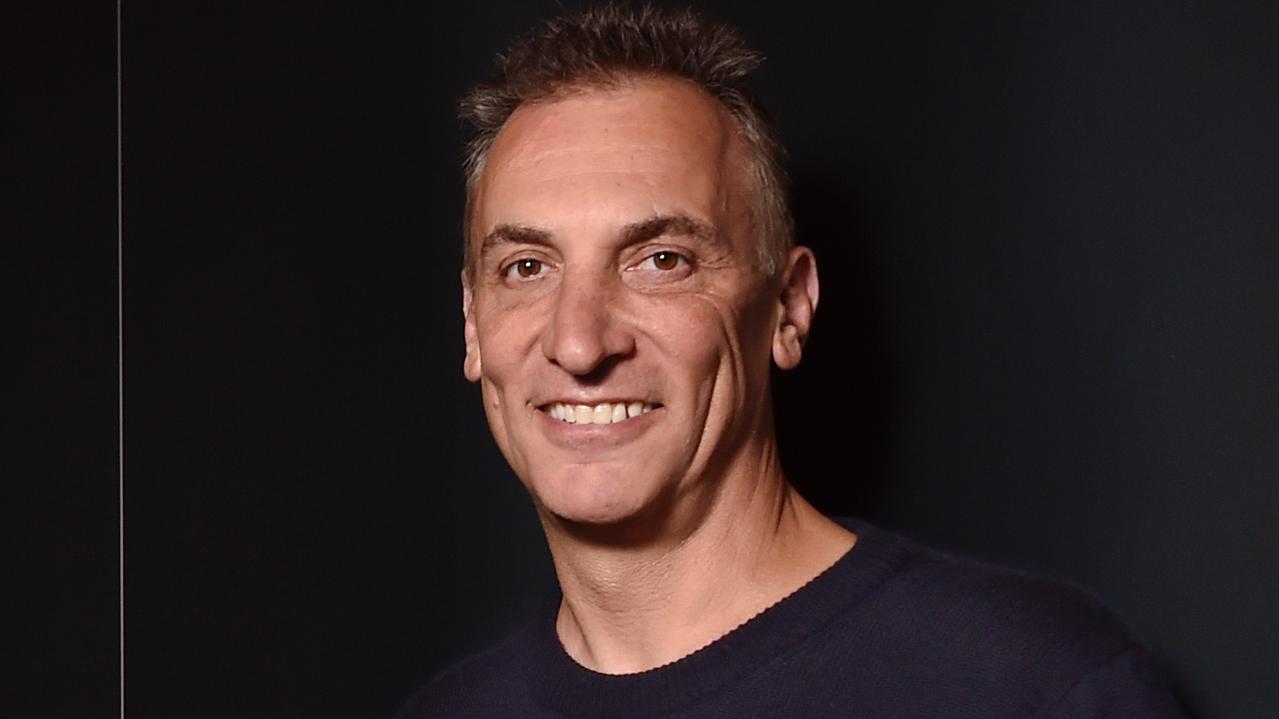
    Prominent Australian media executive Antony Catalano, the former chairman of Australian Community Media (ACM), has been permitted to skip in-person court appearances for his ongoing criminal case, after his legal team argued that intense public and media scrutiny would pose severe risks to his mental well-being. The 59-year-old industry leader faces three serious charges: common assault, threats to kill, and false imprisonment, all stemming from an alleged domestic incident involving his wife Stefanie Catalano at the couple’s St Kilda apartment on March 13.

    Authorities’ accounts of the incident allege Catalano confronted his partner in an acutely drug-impaired state during the early hours of that morning. The victim was reportedly able to escape the residential complex, and was found by a passing motorist while in a state of extreme emotional distress. Catalano was taken into police custody later the same day, with reports indicating he was wearing underwear torn during the confrontation.

    In line with his bail requirements, Catalano had initially been ordered to appear in person at the Melbourne Magistrates Court for the preliminary hearing held on Monday. However, his defense barrister Tony Hargreaves made an urgent application to allow his client to appear via video link from his legal team’s office, arguing that a crowd of waiting journalists gathered in the court building would worsen his client’s already fragile mental health.

    Hargreaves told the court that following his client’s arrest and charging, Catalano admitted himself to a rehabilitation facility to address his health, and only recently completed a 28-day inpatient treatment program. He added that the intense media interest in the case had already penetrated the facility, with photographers obtaining images of Catalano during his stay, and that his client was still in the early stages of recovery post-discharge. “Forcing him to walk through the pack of media waiting downstairs would be potentially detrimental to his mental health,” Hargreaves argued.

    The application went unopposed by Senior Constable Matthew Morris, the prosecuting officer representing police. Magistrate Nahrain Warda granted the request, excusing Catalano from in-person attendance not just for this preliminary hearing, but also for all future scheduled court appearances in the case.

    During Monday’s hearing, Catalano appeared via video link dressed in a dark formal suit, sitting with his arms crossed and was not required to make any statements to the court. Hargreaves told the court that his client has already expressed deep remorse for the events that took place, but the criminal proceedings remain in their early stages, and the defense team is awaiting two key medical reports to move forward with the case. One report is from Catalano’s treating physician, and the second from a consulting psychiatrist. Hargreaves noted that the first provider will not be able to complete their report until late June, while the second will not finish theirs until mid-July, prompting a request for an adjournment.

    Catalano’s bail conditions were extended ahead of the next hearing, scheduled for June 2. In a public statement issued the day after his arrest, Catalano publicly acknowledged his responsibility, saying he was “deeply ashamed and humiliated” by the alleged incident, and announced he would step down from all his professional leadership roles. “I know that my actions have caused hurt and concern for others, including the woman involved, my family, friends, colleagues and the many people connected to the businesses I have been privileged to lead,” he said in the statement, adding that he would not make any further public comments while the matter moves through the court system per his legal team’s advice.

  • ‘No friends left’: Jewish teen’s heartbreaking words after school kids targeted him with anti-Semitic abuse on Minecraft

    ‘No friends left’: Jewish teen’s heartbreaking words after school kids targeted him with anti-Semitic abuse on Minecraft

    Australia’s Royal Commission on Anti-Semitism and Social Cohesion has opened a critical window into the escalating crisis of anti-Jewish hostility across the country, with 56 witnesses sharing harrowing accounts of normalized abuse that has shaken communities in the months following the October 7, 2023 Hamas attack on Israel. Among the most moving testimonies came from a 15-year-old Jewish teen, identified only as ABB to protect his identity, who detailed relentless anti-Semitic bullying from peers at his own school that played out both in hallways and online in the popular sandbox game Minecraft.

    ABB told the commission that the targeted harassment began in late 2024, when fellow students in a school-connected Minecraft chat group unleashed a torrent of virulent, anti-Semitic slurs. On one occasion, a user posted the explicit declaration “I hate the Jews”; on another, a vicious comment laden with age-old anti-Semitic tropes left the teen physically ill. “It made my stomach turn upside down, I really just had to step away from my computer for a little bit and then, when I came back, I think I just closed and logged off for the day,” ABB recalled.

    Instead of ending the abuse after ABB confronted the group at school and explained the harassment was ruining his mental health, the bullying only intensified. The teen tried to handle the situation on his own for weeks before the pain became too much to bear. He ultimately walked into his parents’ room, tears in his eyes, and delivered a devastating line: “I have no friends left.” His mother ABD told the commission that the group of bullies even trapped ABB’s in-game character in a locked section of the Minecraft world and left him to die alone. Most disturbingly, ABD said her son had come to normalize the abuse, accepting it as an unremarkable part of his daily school life – a reality that leaves her constantly unsettled. While the school launched a formal investigation and three of the involved students apologized to ABB, the harassment continues: when ABB is near the group at school, he is still openly told to leave. The teen also shared that he recently overhead a group of Year 12 students casually remark in conversation that “Hitler was right to kill them all,” a comment that left him stunned.

    ABB’s father ABE told the hearing he no longer recognizes the Australia he once knew, where a cultural commitment to “a fair go” for all used to foster widespread tolerance. “All of those Australian idioms that we have for people having a fair go, that seems to have been lost,” he said. “I would like to see something come out of this commission where we can chart the course back towards that Australia, or that attitude that we had in Australia.”

    Witness testimony from other Jewish community leaders expanded on the teen’s account, painting a broader picture of a dramatic, unprecedented surge in anti-Semitic incidents across the country that has been supercharged by social media and public normalization of hate. Julie Nathan, research director for the Executive Council of Australian Jewry (ECAJ), told the commission that her organization’s 2024-2025 annual report documents a 316% jump in recorded anti-Semitic incidents since October 7 2023. Nathan, who herself was targeted with a horrifying, sexualized anti-Semitic caricature circulated online that relied on dangerous historical stereotypes of Jewish people, noted that this figure only counts offline and direct incidents – online abuse is so widespread that it is impossible to fully count, comparing the task to “trying to count the stars.”

    Nathan clarified that legitimate criticism of Israeli policy is not counted as anti-Semitism, noting that political discourse around the Israeli-Palestinian conflict remains protected even when it is harsh or offensive. Anti-Semitism is only recorded when rhetoric crosses the line into targeting Jewish people as a group, such as when pro-Palestinian messaging is placed directly on Jewish community sites like synagogues or Jewish schools. Even so, Nathan said modern anti-Semitism has become far more brazen, with perpetrators openly sharing hate without fear of social consequences. “We’re getting much more brazen and much more confident coming out and not ashamed or worried about it being anti-Semitic and inciting violence against Jews,” she said.

    Tahli Blicblau, chief executive of the Dor Foundation – an organization launched in 2024 to combat anti-Semitism – told the commission that the normalization of anti-Jewish hate began immediately after the October 7 attack, pointing to an October 8 2023 protest in Western Sydney where celebratory fireworks were set off as Israel was still counting its dead from the Hamas assault. “The glorification of violence that night at a time when Israel was still counting its dead really set the tone for a permissive environment in which glorifying violence was accepted and permissible,” Blicblau said. She added that anti-Semitic tropes are now often framed in the language of human rights, making them difficult for most Australians to recognize, while social media has allowed hate to move from the extreme fringes of society into mainstream public discourse, reaching millions of users in seconds. “The role of the internet and social media allows these hateful comments to reach millions of people within milliseconds, so in order to combat the new form (of anti-Semitism) … we need to operate there,” she said.

    The commission entered its second week of public hearings Monday, with eight additional witnesses scheduled to give evidence as the inquiry continues to gather evidence to address rising anti-Semitism across Australia.

  • How hotels are stopping the ‘dawn dash’ for sunbeds after man wins payout

    How hotels are stopping the ‘dawn dash’ for sunbeds after man wins payout

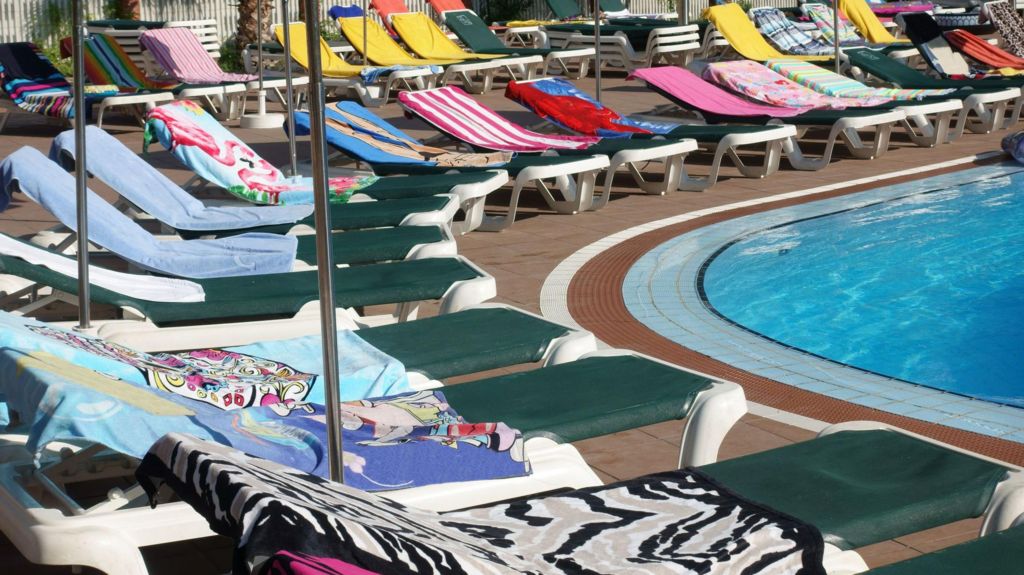
    The long-running, low-stakes but highly frustrating travel industry conflict known as the ‘sunbed wars’ has taken a dramatic new turn, after a German court awarded a substantial payout to a holidaymaker who spent an entire Greek vacation locked in a daily battle for available poolside lounging space. The ruling has already pushed resorts across popular European holiday destinations to re-examine and strengthen their policies around the controversial practice of reserving sunbeds with towels long before they are actually used.

    The case that sparked this shift dates back to a 2024 package holiday to the Greek island of Kos, booked by a 48-year-old commercial pilot from Dusseldorf, who traveled with his wife and two children. The family paid €7,186 for the trip, but their vacation quickly soured over the persistent issue of reserved but unused sunbeds. Even when the plaintiff woke as early as 6 a.m. every day to claim a shaded spot, he told the court he still spent roughly 20 minutes each morning searching for an available lounger, because every single one of the resort’s 400 sunbeds had already been claimed via the towel-reserving trick. Many guests staked their claim early, then left the pool area for hours to head into town or return to their rooms for more sleep, leaving perfectly good loungers sitting empty while other guests had nowhere to sit. At one point, his children were even forced to lie on the hard floor near the pool because no space was available.

    The pilot argued that his tour operator had failed to uphold the resort’s own stated ban on towel reservations, and after the initial €350 refund offered by the operator failed to resolve the dispute, the case went to the district court in Hanover. Judges ruled this week that the family was entitled to an additional €550, bringing the total refund to €900 (£850). While the court acknowledged that the tour operator did not directly manage the hotel and could not guarantee a sunbed to every guest at every time of day, it ruled that travel companies do have a legal obligation to ensure resorts maintain a structured system that guarantees a reasonable ratio of sunbeds to booked guests, and enforce their own policies against misuse.

    In the wake of the ruling, the plaintiff told the Daily Mail that the decision is a critical warning to tour operators and hotels across the industry that turn a blind eye to the practice. He argued that as the 2025 peak summer holiday season gets underway, other travelers who face the same frustration will now feel empowered to pursue similar legal action, which could add up to millions in costs for travel companies if widespread claims follow.

    The BBC has since spoken to dozens of holidaymakers across the UK and Europe, and many shared that they have faced identical problems on their own trips. Andrew Mills from Newcastle told the BBC that during a 2024 trip to Zante, he spent most of his vacation away from the pool entirely, because all sunbeds were reserved by 6 a.m. every day. Another traveler, who recently returned from a trip to Antalya, Turkey, said the early-morning sunbed reservation trend completely ruined the enjoyment of his holiday.

    However, a number of resorts have already begun implementing targeted policies to crack down on the practice, with mixed reviews from past guests. On France’s Mediterranean coast, some popular holiday camps have adopted a strict check system: staff sound a horn twice a day, and any unoccupied sunbed with personal items left on it has those items moved to lost property, opening the space up for new guests. Multiple resorts across Cyprus have gone even further, adopting permanent pre-allocation systems that assign sunbeds to guests when they first check in. One resort in Paphos allows guests to request their preferred location upon arrival, allocates spots fairly, and permits guests to request changes if they want to move during their stay. 73-year-old Colin Davison from Newcastle-upon-Tyne called that system ‘brilliant’ during his recent stay. Another allocation model used at a Cypriot hotel numbers parasols, assigns one per two guests at the start of the holiday, with two sunbeds per parasol, giving larger groups multiple allocated spots automatically.

    Not all attempts to solve the problem have been official policy, however: one traveler recalled a 2024 trip to Ibiza where guests were reserving sunbeds as early as midnight. A group of fed-up travelers responded by sneaking down to the pool area in the middle of the night and throwing all the reserved towels into the swimming pool, a makeshift solution that quickly put a stop to the early staking — though it is not a method endorsed by any resort or travel industry body.

  • Suspected boat explosion injures 11 in Miami

    Suspected boat explosion injures 11 in Miami

    A devastating boat explosion at one of Miami’s most frequented recreational destinations has left 11 people hospitalized with serious injuries, and US law enforcement and safety officials have launched a full investigation to pinpoint what caused the blast.

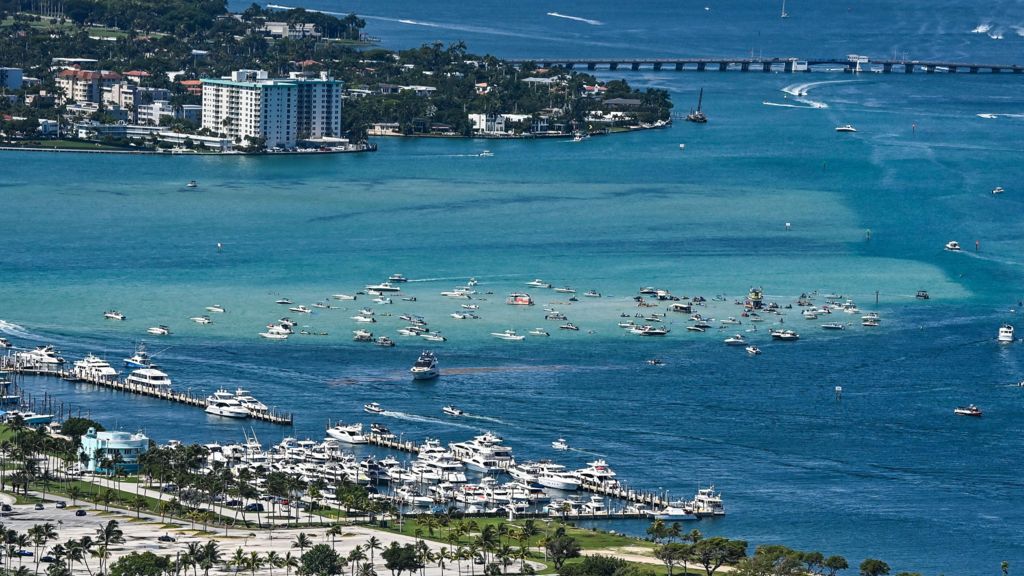
    The incident unfolded on Saturday at Haulover Sandbar, a well-loved shallow-water marina spot that draws thousands of tourists and local boaters every year for its calm, clear waters and accessible on-water gathering space. According to Miami-Dade Fire Rescue Battalion Chief Juan Arias, first responders were dispatched to the area immediately after multiple 911 calls came in reporting a large explosion aboard a private vessel anchored at the sandbar.

    All 11 injured individuals were transported by emergency teams to area medical facilities for treatment of a range of injuries, including severe burns and blunt-force trauma from the blast, Arias confirmed to reporters. As of the latest update, officials have not released any preliminary information on a potential cause, nor have they shared updated details on the current condition of the injured victims.

    Patrick Lee, a local boat charter operator who was on the water near the site of the explosion when it occurred, described the chaotic scene to CBS News, the US news partner of the BBC. “We saw three people fly out of the boat immediately after the blast,” Lee recalled. He added, “I could tell right away it was a really hot, fast-moving fire. It was high-octane gasoline, so it ignited almost instantly. A lot of people got badly burned before anyone could get to them. It was just pure chaos.”

    Footage captured by witnesses at the scene shows an emergency helicopter landing near the adjacent Miami marina, with first responders carrying at least one injured victim on a stretcher to receive urgent medical care. Multiple agencies joined the response effort alongside local fire and rescue teams, including the US Coast Guard and the Florida Fish and Wildlife Conservation Commission, which oversees boating safety across the state’s waterways.

    The BBC has reached out to Miami-Dade Fire and Rescue to request additional details on the investigation and the status of the injured, but has not yet received further comment.

  • Buddhist monk arrested over alleged rape of teen in Sri Lanka

    Buddhist monk arrested over alleged rape of teen in Sri Lanka

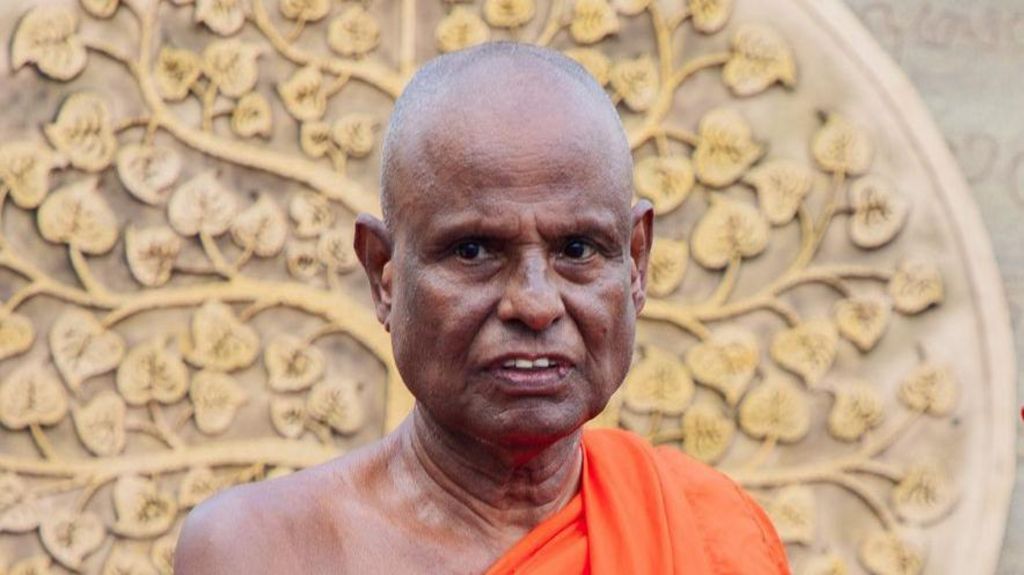
    In a highly unusual and shocking development that has sent ripples through Sri Lankan society, one of the island nation’s most senior and revered Buddhist monks has been taken into police custody and placed in remand prison, facing serious allegations of rape and sexual assault against a 15-year-old minor.

    The accused, Venerable Pallegama Hemarathana Thero, occupies one of the most prestigious roles in Sri Lanka’s Buddhist community: he serves as the chief prelate and custodian of eight of the country’s most sacred Buddhist religious sites. For months, his name had been linked to the alleged abuse, but law enforcement faced widespread criticism for failing to take action against the high-profile figure.

    The arrest finally moved forward after formal intervention from Sri Lanka’s national child protection authority, which had repeatedly called out police for their inaction in the case. At the time of his arrest on Saturday, Pallegama Hemarathana Thero was receiving medical care at a private hospital in Colombo, the nation’s capital. Following his detention, a local magistrate ruled that the suspect would be transferred to the Colombo prison hospital for ongoing care, rather than remaining in the private facility. The magistrate also issued a formal directive to Sri Lanka’s immigration authorities, placing a travel ban on the monk to prevent any attempt to flee the country ahead of his court proceedings.

    In addition to the monk’s arrest, the mother of the alleged minor victim has also been taken into custody and remanded. She faces charges of aiding and abetting the alleged sexual abuse, a detail that has added further complexity to the already high-profile case.

    Pallegama Hemarathana Thero has not yet issued any public statement addressing the charges brought against him, and he is scheduled to make his first appearance in court on May 12. The case marks a watershed moment for Sri Lanka, where Buddhist clergy hold enormous social influence and political power, and members of the clergy are widely venerated across the population. Arrests of Buddhist monks are rare in the country, and the detention of a figure as senior and well-known as Pallegaga Hemarathana Thero is unprecedented in recent history, bringing intense public scrutiny to how allegations of abuse against powerful religious figures are handled in the nation.

  • Mexican parents criticise ending school year a month early for World Cup

    Mexican parents criticise ending school year a month early for World Cup

    As the 2026 FIFA World Cup co-hosted by Mexico, the United States and Canada approaches, a controversial government plan to cut the academic year one month short has sparked fierce backlash from parents, business groups and regional authorities across Mexico, forcing President Claudia Sheinbaum to soften the original announcement and rebrand it as a non-final proposal.

    The initiative, first unveiled publicly by Mexican Education Secretary Mario Delgado last Thursday, would have wrapped up the current school year on June 5 – a full 3 weeks ahead of the traditional end date. Delgado justified the move by pointing to two key expected challenges during the tournament, which runs from June 11 to July 19 across the three North American nations: crippling traffic congestion from an expected surge in domestic and international travel, and an forecasted extreme heatwave across much of Mexico. He added that the decision had been reached “unanimously” together with state-level education authorities, and that the next academic year would still launch as scheduled on August 31, with a two-week pre-term learning reinforcement period designed to prevent students from falling behind on coursework.

    The policy change triggered immediate anger from Mexican families, who were suddenly forced to scramble to find last-minute childcare for an extra month of summer break. Many parents also raised concerns about disrupted end-of-year academic assessments and the heavy financial burden of unplanned summer activities for children. Speaking to local newspaper El Universal, one parent questioned the rushed handling of student evaluations, noting that students would now be graded based on incomplete coursework, while another criticized the policy for prioritizing tourist convenience over working families’ livelihoods, asking “They want the city empty for tourists, but what are we supposed to do for income?”

    The National Union of Parents issued a formal condemnation of what it called a “unilateral decision”, labeling the use of the World Cup as a justification for cutting classes “inexcusable”. The union pointed out that World Cup matches will only be held in three Mexican cities, questioning why the policy would disrupt the education of nearly 23 million students nationwide under what it called an “absurd pretext”.

    Business groups also joined the criticism. Coparmex, Mexico’s leading employers’ association, warned that the sudden unplanned schedule change would create widespread uncertainty for both working parents and businesses, and called on individual state governments to implement their own localized solutions to address heatwave and travel disruptions, while minimizing damage to household finances and national economic activity.

    Even Delgado’s claim of unanimous state support quickly fell apart. Three state governments publicly spoke out against the plan – including two that are actually hosting World Cup matches – with one state confirming it would retain the original academic calendar regardless of the federal proposal.

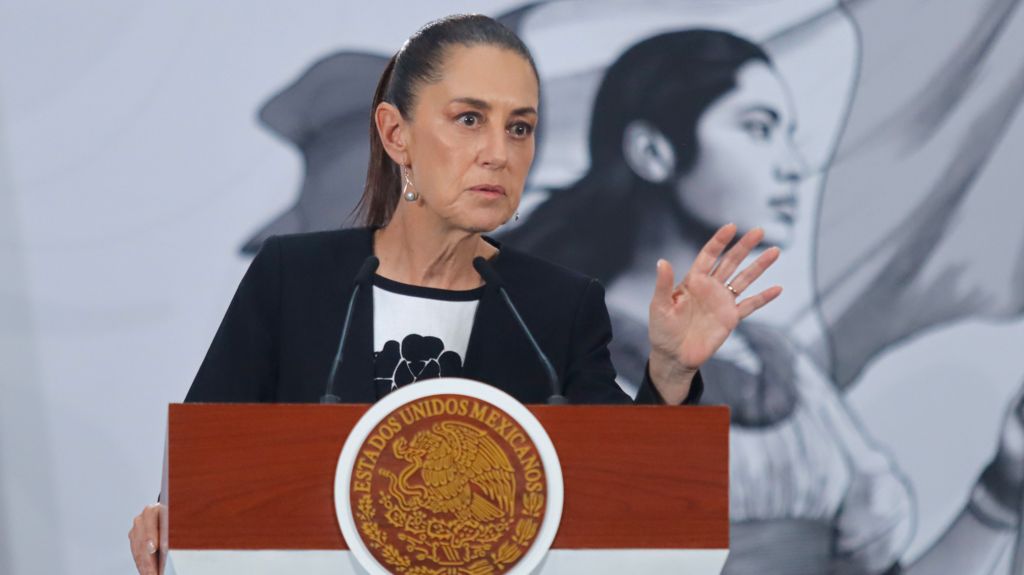
    Facing this broad wave of opposition, President Sheinbaum used her daily Friday press briefing to walk back the original announcement, reframing the plan as a draft proposal still open to review and revision. “Since many Mexicans love soccer and are looking forward to the World Cup, this proposal was put forward to bring forward the holiday break,” Sheinbaum told reporters. “But we also have to take into account the school days of our boys and girls. So it is just a proposal; the final schedule has not been set yet, and we will wait before making a definitive decision.” She also noted that the idea originated from teachers’ unions and state education authorities, rather than being initiated by the federal government.

    The controversy over the school calendar is not the only challenge Mexico has faced ahead of the 2026 tournament. Earlier this year, a government crackdown on violent drug cartels that resulted in the death of the leader of the Jalisco New Generation Cartel (CJNG) sparked a wave of retaliatory violence across the country, raising international concerns about visitor safety. One of Mexico’s host cities is Guadalajara, the capital of Jalisco state and the epicenter of the recent unrest. Sheinbaum has repeatedly stressed that there is “no risk” to visiting football fans, while FIFA President Gianni Infantino has said he feels “very reassured” by Mexico’s security preparations. To address safety concerns, the Mexican government plans to deploy thousands of additional security personnel to host city streets throughout the duration of the tournament.

  • Frontier Airlines plane hit and killed a person on the runway at Denver airport

    Frontier Airlines plane hit and killed a person on the runway at Denver airport

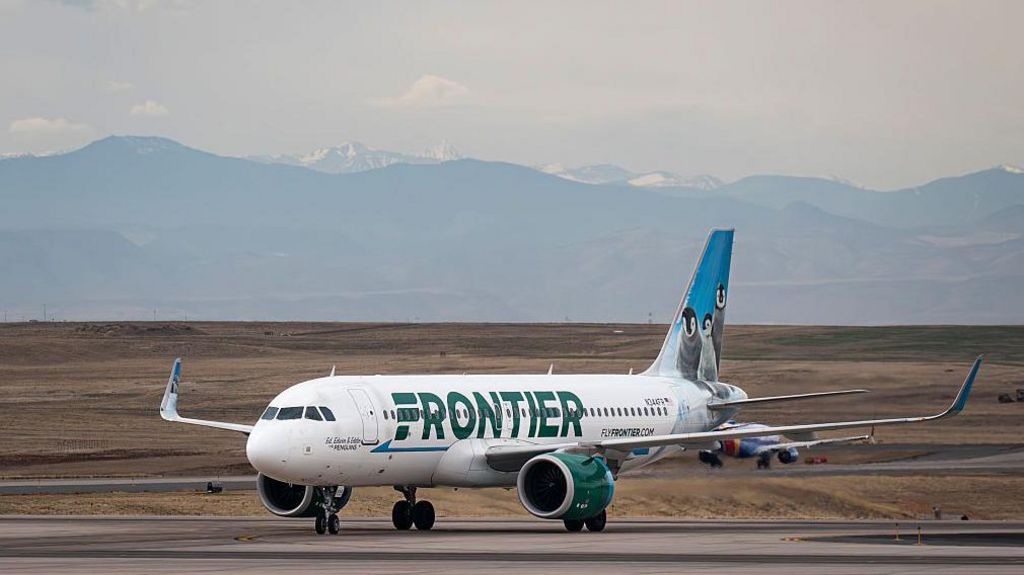
    Late Friday night, a fatal incident unfolded at Denver International Airport (DIA) when a Frontier Airlines commercial flight bound for Los Angeles International Airport struck and killed an unauthorized individual who had illegally accessed an active runway, United States aviation and transportation authorities confirmed.

    According to official statements from the airport, the unidentified person — who is not an airport employee, and has not yet been named by investigators — scaled DIA’s perimeter security fence roughly two minutes before walking onto the runway where Flight was beginning its takeoff roll around 23:00 local time (06:00 UTC+1 BST). A preliminary inspection of the fence after the incident found the main structure to remain fully intact, DIA officials added.

    Unsealed air traffic control audio from the incident reveals that moments after a controller cleared the flight for departure and wished the crew a good night, the pilot immediately radioed the tower to report a collision and an ongoing emergency. “We’re stopping on the runway,” the pilot told controllers. “We just hit somebody. We have an engine fire.” The pilot later confirmed there had been a person walking across the active runway as the aircraft accelerated to takeoff speed. U.S. Transportation Secretary Sean Duffy confirmed the plane was traveling at high speed at the time of the impact.

    The collision sparked a small engine fire that was rapidly extinguished by responding Denver Fire Department crews, per airport officials. Passengers reported visible smoke filling the aircraft cabin in videos and photos shared with CBS News, the BBC’s U.S. partner, which also showed visible damage including what appears to be blood on the affected engine.

    As a standard precautionary measure, all 224 passengers and crew on board were immediately evacuated via the plane’s deployed inflatable emergency slides. Once evacuated, passengers were transported by bus back to the main airport terminal. Twelve passengers sustained minor injuries related to the emergency evacuation, with five individuals transported to local medical facilities for evaluation and treatment. Most passengers have since re-booked onto alternate Frontier Airlines flights and departed Denver as planned, airport authorities confirmed.

    Both Frontier Airlines and DIA have released statements expressing profound sorrow over the fatal event. “We are deeply saddened by this event,” a Frontier spokesperson said. DIA’s official statement echoed that sentiment, noting: “We are extremely saddened by this incident and express our sympathies to those involved.” Secretary Duffy emphasized that runway trespassing poses unacceptable risk to all parties, saying: “No one should EVER trespass on an airport.”

    The active runway involved in the incident has been temporarily closed while two leading U.S. aviation safety agencies — the Federal Aviation Administration and the National Transportation Safety Board — conduct a full on-site investigation to determine the full timeline and circumstances of the event.

  • Macao university hosts smart tourism symposium featuring innovation

    Macao university hosts smart tourism symposium featuring innovation

    On Friday, the University of Macau (UM) launched the 2026 Smart Tourism Symposium, a high-profile gathering that united leading academic scholars and C-suite industry executives from the global tourism and hospitality sectors to explore cutting-edge advancements in the field.

    Titled “Smart Tourism Symposium 2026: Innovation and Impact”, the event centered its discussions on three core pillars: technological breakthroughs reshaping visitor experiences, large-scale transformation and upgrading of traditional tourism frameworks, and expanded collaboration between academic institutions and private industry players. Attendees delivered targeted insights designed to strengthen Macao’s ongoing push to establish itself as a leading international tourism and leisure hub, according to official statements from the organizing university.

    In his opening address at the symposium, UM Vice-Rector Ge Wei emphasized the unique value of cross-sector dialogue hosted by the institution. He shared his expectation that the connections and ideas forged at the event would inject fresh, transformative energy into the development and innovation of smart tourism across Macao, while also providing critical support for the long-term sustainable upgrading of the city’s core tourism economy.

    Rob Law, deputy director of UM’s Asia-Pacific Academy of Economics and Management, expanded on Macao’s strategic positioning for future tourism growth. He noted that the special administrative region benefits from substantial developmental advantages, rooted in its integration within the Guangdong-Hong Kong-Macao Greater Bay Area, its unbroken connectivity to the broader Chinese mainland, and its open access to global tourism markets.

  • Vatican sending new signals of openness but limitations in outreach to LGBTQ+ Catholics

    Vatican sending new signals of openness but limitations in outreach to LGBTQ+ Catholics

    Twelve years of Pope Francis’ pontificate brought unprecedented shifts in how the Catholic Church approaches LGBTQ+ believers, and now, under Pope Leo XIV, the Vatican is sending mixed, carefully calibrated signals about the future of pastoral outreach to this community, pairing new openness to listening with firm limits on doctrinal change.

    This week, LGBTQ+ Catholic advocates celebrated a milestone: an official Vatican working group report released as part of post-Francis synodal reform efforts included first-person testimonies from two openly gay, married Catholics detailing their experiences of faith, harm from the church’s longstanding negative teachings on homosexuality, and self-acceptance. The report, a non-binding synthesis of expert deliberations on contentious post-reform issues, marks the first time an official Vatican document has centered such detailed personal narratives from LGBTQ+ Catholics.

    One man, a Portuguese native, shared his journey of coming to terms with his sexuality, marrying his husband, and the ongoing harm he faced at the hands of church leaders — including insensitive comments from a spiritual director and pressure to undergo conversion therapy, the thoroughly discredited practice that claims to change sexual orientation. The second witness, an American man, criticized mandatory counseling he received from Courage International, a Catholic pastoral group that urges people with same-sex attraction to practice celibacy. “My sexuality isn’t a perversion, disorder, or cross; it’s a gift from God,” he wrote in his testimony.

    In response to the critical depiction of its work, Courage issued a statement Friday pushing back against what it called a false portrayal, denying it has ever participated in reparative therapy. “Courage has suffered calumny and detraction before, but usually from secular outlets,” the group said. “It is a great sadness and an additional wound to our members to have this false and unjust depiction in a Vatican document.”

    For leading American Jesuit advocate Father James Martin, who has spent decades pushing for greater church outreach to LGBTQ+ people, the development reflects strong continuity with Pope Francis’ agenda. “If the Catholic Church has begun to listen to LGBTQ Catholics as part of its methodology, the church has already moved forward in a significant way,” Martin noted, adding that the publication of the testimonies alone represents a major step forward in mending the rift between the church and the LGBTQ+ community.

    But the shift has already drawn fierce pushback from conservative Catholic leaders. Bishop Joseph Strickland, the former bishop of Tyler, Texas who was removed from his post by Francis, called the report “deeply alarming,” arguing it directly contradicts unchanging church teaching that defines homosexual activity as “intrinsically disordered.” In an online post titled “An Emergency in the Church,” Strickland argued that church teaching on homosexuality comes not from human prejudice, but from divine revelation. “To suggest that the sin does not consist in the same-sex relationship itself is not merely confusing language. It is a direct assault upon Catholic moral doctrine and upon the words of Scripture itself,” he wrote.

    The most contentious flashpoint in this new era remains the question of blessings for same-sex couples, an issue that has already split the global church and put the Vatican at odds with progressive regional bishops, most notably in Germany. In 2023, under Francis, the Vatican’s doctrinal office issued the declaration *Fiducia Supplicans*, which allowed priests to offer spontaneous, non-liturgical blessings to individual same-sex people, while clarifying such blessings cannot be confused with sacramental marriage, which the church defines as a lifelong union between one man and one woman. The declaration triggered widespread conservative backlash, including coordinated dissent from a bloc of African bishops, forcing the Vatican to clarify that blessings must be brief, around 10 to 15 seconds, and cannot be interpreted as approval of a same-sex union itself.

    Earlier this year, Germany’s Catholic bishops and a prominent lay organization issued their own national guidelines for implementing *Fiducia Supplicans* that go beyond the Vatican’s parameters. While the guidelines acknowledge the requirement for non-liturgical, spontaneous blessings, they frame the blessings as being for the couple’s relationship rather than just the individual people, and outline formal criteria for celebrations including liturgical readings, pre-event preparation, and congregational acclamation, prayer and song.

    During a return flight from a recent visit to Africa, Pope Leo made clear the Holy See disagrees with the German framework, and this week a 2024 letter articulating that position was published publicly. Signed by Vatican doctrine chief Cardinal Victor Manuel Fernández, the letter argues that the German guidelines’ inclusion of acclamation mirrors the structure of formal marriage rites, and “in this sense effectively legitimizes the status of these couples, contrary to what is stated” in the 2023 *Fiducia Supplicans* declaration. Fernández also noted that the guidelines’ focus on ceremony details like location, aesthetic design and music effectively creates a liturgical event that contradicts the Vatican’s limits. The letter stops short of an outright veto, offering only formal observations rather than punitive action.

    Vatican Secretary of State Cardinal Pietro Parolin recently noted that talk of sanctions against German priests who adopt the national guidelines is “premature,” adding that ongoing dialogue between Rome and the German bishops is the preferred path. “The hope is never to have to resort to sanctions, that problems can be resolved peacefully, as should be the case in the church,” Parolin said. Pope Leo met this week with German Cardinal Reinhard Marx, who has encouraged priests in his archdiocese to use the national guidelines for pastoral care.

    In the same airborne press conference that addressed the German dispute, Leo laid out his broader approach to the issue, making clear that he views core church teachings on social justice, equality and religious freedom as far more important than doctrines around sexual morality, signaling he does not intend to prioritize debates over LGBTQ+ issues during his pontificate. On the question of same-sex blessings, however, Leo confirmed he will not go beyond the limits set by Francis, reaffirming the Vatican’s opposition to regional efforts that deviate from the Holy See’s existing stance.

    For many LGBTQ+ Catholic advocates, Leo’s measured approach is still a welcome change. Francis DeBernardo, executive director of New Ways Ministry, a group that advocates for LGBTQ+ inclusion in the Catholic Church, praised Leo’s framing of priority issues. “It is good to hear from the pope that he is making a decisive turn away from the church’s obsession with sexual matters,” DeBernardo said. He added that Leo’s non-confrontational response to the German guidelines — declining to condemn church leaders, framing disagreement as not a cause for schism — marks a positive shift. “Both the new moral emphasis on social issues instead of sexuality, and the fostering of a more collegial church are good news for LGBTQ+ Catholics,” DeBernardo said.

    Martin echoed that balance, arguing there is no contradiction between the Vatican’s retention of existing limits on same-sex blessings and the synod’s new call to listen to LGBTQ+ Catholics. “Both ‘Fiducia’ and the synod report are steps forward in the church’s ministry to LGBTQ people,” he told the Associated Press.

  • Palestinian mountaineer is raising $10m for Gaza by climbing Mount Everest

    Palestinian mountaineer is raising $10m for Gaza by climbing Mount Everest

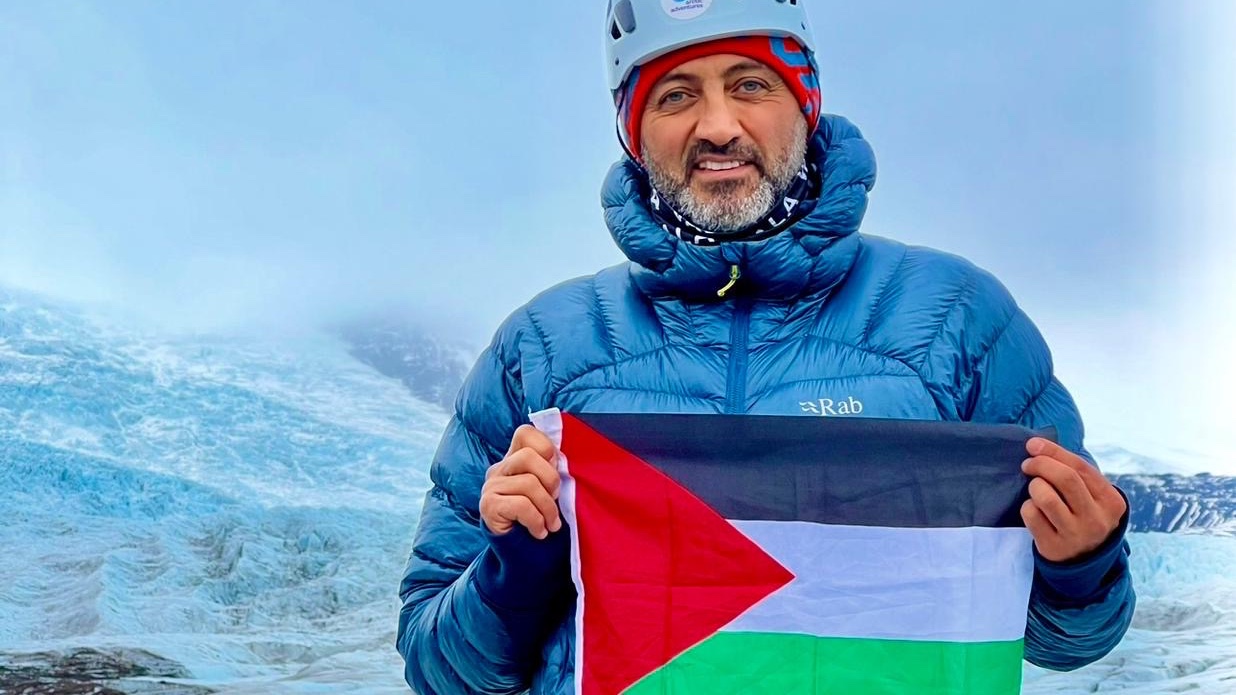
    As darkness falls over Everest Base Camp, 17,500 feet above sea level on a Friday evening, Mostafa Salameh sits inside his tent speaking to Middle East Eye over the phone. His tone is bright as he describes the clear, crisp night sky, a welcome change after a full week of continuous snowfall that slowed climbing progress across the Himalayan peak.

    This expedition marks Salameh’s sixth attempt to summit the world’s tallest mountain, which towers more than 29,000 feet above sea level. It is far from his first high-stakes journey to the top: he has successfully reached the summit on his last three consecutive climbs, and over the course of his mountaineering career he has raised more than $8 million for global charitable causes, ranging from life-saving cancer research to programs run by UNICEF, the United Nations’ children’s agency.

    But this trip carries a uniquely personal meaning for the 56-year-old British-Jordanian-Palestinian climber. “For the children of Gaza, [to] make them believe in their dream. And to tell them, listen, I’m one of you. If I was able to do it this way, I think anybody can do it,” Salameh explained.

    Dubbed the “Rising Dreams” mission, the expedition is staffed by Salameh, a videographer, a video editor, and five experienced Nepali Sherpa guides. The team’s goal is to raise $10 million for UK-based al-Khair charity, which has confirmed that 100 percent of all funds raised will go toward supporting children’s medical care, hygiene infrastructure, and mental health programs in war-torn Gaza. At the time of the interview, just over $5,300 had been raised toward the target.

    This year’s Everest climbing season has been fraught with unusual challenges. The season started later than it typically does, and rapid glacial melt driven by climate change has created unstable, dangerous terrain for climbing teams moving up the mountain’s slopes.

    For Salameh, a career as a professional mountaineer and motivational speaker was never a given. Born to parents expelled from Palestine in 1948 and 1976, he spent his childhood growing up in the al-Wehdat refugee camp in Jordan, with part of his youth spent in Kuwait. His first break came when he secured a cleaning job at the Jordanian ambassador’s official residence in London.

    One year into the role, he struck out on his own, working long shifts washing dishes at city restaurants to save enough money to enroll at a Scottish university in the late 1990s. His goal at the time was far from climbing: he dreamed of becoming a hospitality manager at a luxury hotel. He achieved that goal, too, leading food and beverage teams at high-profile venues across England and Scotland.

    Everything changed in 2004, when Salameh, who had never tried any extreme sport before, had a transformative dream that altered the course of his life. “I saw myself at the top of the world, making the Athan (Muslim call to prayer) and praying. I had no idea where this was,” he recalled.

    Determined to turn the dream into reality, he leveraged every connection he had, eventually earning the support of King Abdullah of Jordan, who sponsored his climbing training and his first ever attempt to summit Everest in 2005. That first attempt fell short, as did a second try in 2007. It was not until 2008 that he finally stood at the peak of Everest – a milestone that marked the start of a remarkable series of achievements, from completing the Seven Summits (climbing the highest peak on every continent) to finishing the Explorers’ Grand Slam. Before that run of success, he was knighted by King Abdullah for his advocacy and achievements.

    By 2016, Salameh had published a memoir titled *Dreams of a Refugee*, chronicling his journey from refugee camp to the top of the world. In 2022, he was awarded an honorary doctorate from his alma mater, Queen Margaret University in Edinburgh, in recognition of his humanitarian work and life achievements.

    Today, resting at base camp ahead of his final push to the summit, Salameh says his latest expedition draws inspiration from the activists of the Global Sumud Flotilla, the grassroots initiative that set sail last year with donated medicine and critical humanitarian supplies to demand an end to the Israeli siege on Gaza. A second flotilla voyage was organized just last month.

    Reflecting on his own mission, Salameh put it simply: “I thought, you know, if these guys [are] going through the sea, maybe I’ll go through the mountain.”