分类: society

  • Ted Bundy-obsessed killer’s jail term slashed on appeal

    Ted Bundy-obsessed killer’s jail term slashed on appeal

    A Sydney killer obsessed with notorious American serial killer Ted Bundy, who murdered one 17-year-old girl and left another seriously injured in a 2020 Parramatta hotel attack, has had his total prison sentence cut by seven years following a successful appeal ruling.

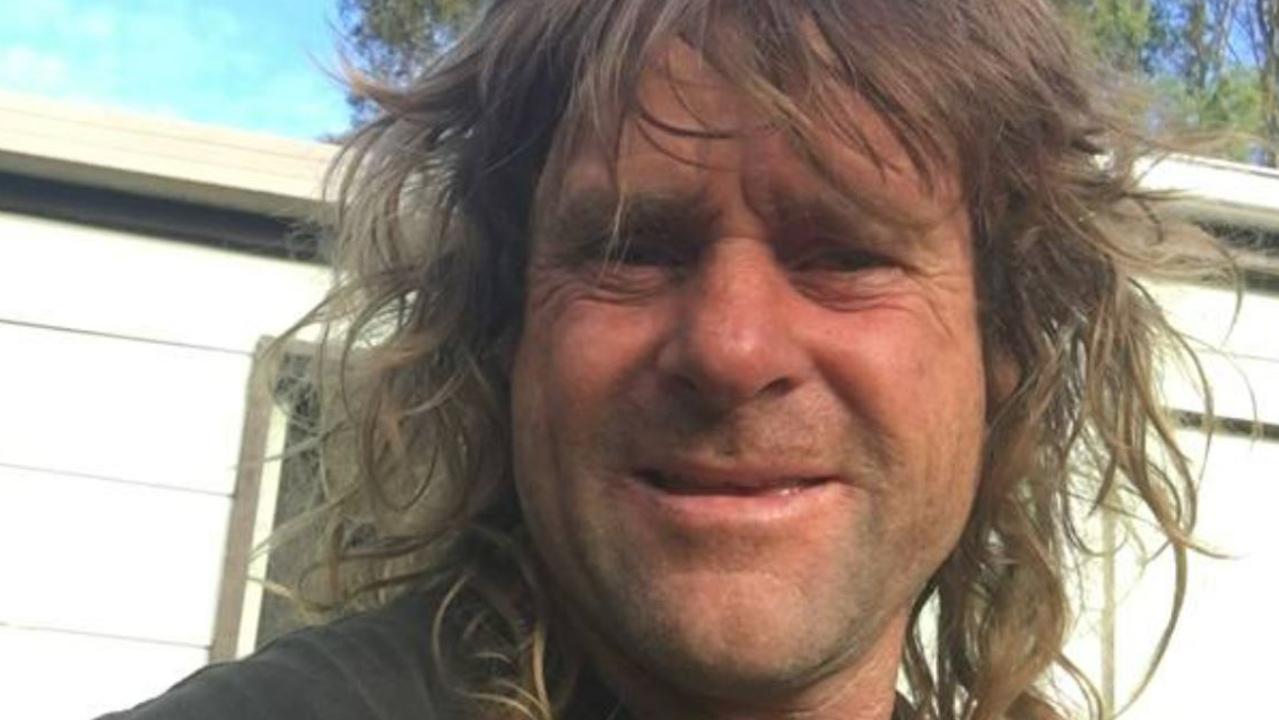
    Kristian Kovaleff was just 19 years old when he carried out the brutal, premeditated attack on two teenage friends who had booked an apartment at Parramatta’s Meriton Suites to celebrate one of the girls’ birthdays. The victims had only invited Kovaleff to join the gathering because they needed an adult over the age of 18 to complete the room check-in process, court documents confirm.

    Weeks before the attack, court records show Kovaleff developed a deep, pathological fixation on Ted Bundy, one of the most infamous serial killers in US history, and began plotting a murder to experience the “thrill” he believed killing would bring. He prepped for his attack by purchasing binding materials including rope and duct tape, acquiring a handsaw, and running repeated internet searches for potential weapons. He initially planned to kill just one victim a week before the birthday gathering, before expanding his plan to target both girls.

    On the night of December 13, 2020, at roughly 8:40 p.m., Kovaleff launched his attack. One of the teens was in the bathroom preparing for a swim when he entered and stabbed her repeatedly in the abdomen. He forced both teens into the bedroom, where he continued his assault on the first victim. When the second girl bravely stepped between Kovalev and her injured friend to block his path, he stabbed her in the stomach as well. Even as the surviving victim begged him to call emergency services, Kovalev refused to request help, instead pacing the room while muttering that he knew he would face life in prison for his crimes and singing a song with lyrics referencing being an explosive about to detonate. When the surviving victim regained consciousness after passing out from her injuries, she found Kovalev had loosely bandaged her wounds — a move the court confirmed was only to preserve her so he could sexually assault her. After the attack, Kovalev fled the apartment with both victims’ phones, turning himself in to local police the following morning. First responders found one victim dead in the bedroom, while the second was rushed to hospital for life-saving emergency surgery.

    After his arrest, Kovalev spent two years behind bars faking symptoms of psychosis and claiming he heard internal voices, in an attempt to build an insanity defense. A full assessment by a forensic psychiatrist ultimately ruled he did not suffer from any clinically significant mental illness. He later entered guilty pleas to one count of murder and one count of wounding with intent to cause grievous bodily harm.

    Initially, New South Wales Supreme Court Justice Stephen Rothman sentenced Kovalev to a 36-year total prison term, with a 26-year non-parole period that would have made him eligible for release in 2046. Justice Rothman only granted a 15% sentence discount for Kovalev’s guilty plea, citing the extreme severity of the crimes. Kovalev subsequently launched an appeal against his sentence, arguing the original penalty was too harsh.

    On Friday, the New South Wales Court of Criminal Appeal delivered a unanimous ruling to quash the original sentence and issue a reduced penalty. In their judgment, Justices Ian Harrison, Deborah Sweeney and Edward Muston agreed the original 36-year term was “manifestly excessive”, accounting for Kovalev’s age at the time of the crime. “Acknowledging the seriousness of the circumstances of the offending, I have concluded that when regard is had to Mr Kovaleff’s youth, immaturity, and emotional and intellectual dysfunction, the starting sentence of 40 years imprisonment, and the sentence after discount for the murder offence, was too high having regard to those personal characteristics,” Justice Sweeney wrote in the published decision. The appeal court also increased the sentence discount for Kovalev’s early guilty plea from 15% to 25%, ruling that the level of culpability did not justify restricting the discount that is typically granted for early guilty pleas in the state’s justice system.

    The new sentence hands Kovalev a 29-year total prison term, with a 21-year non-parole period that will make him eligible for release in December 2041, five years earlier than his original release date.

  • Children’s walkie-talkies recalled for interfering with licensed radio signals

    Children’s walkie-talkies recalled for interfering with licensed radio signals

    A mass recall of a widely sold children’s walkie-talkie model has been rolled out across Australia after a critical manufacturing oversight left the devices operating on radio frequencies legally reserved exclusively for licensed communication operators. The Australian Communications and Media Authority (ACMA) announced the public recall for Anko brand Long Range Walkie-Talkies, which were distributed through major national retail chains Kmart and Target. The affected units were sold between September 30, 2013, and February 6 of this year, putting tens of thousands of household devices potentially in violation of Australian communication regulations.

    According to ACMA’s official statement released Friday, a simple but consequential oversight during product configuration left the walkie-talkies calibrated to operate on the 467.425 MHz frequency band. This specific spectrum is designated as a licensed private band, reserved for use only by certified radio operators who have gone through official regulatory approval to operate on that range. The regulator has urged all consumers who purchased the affected devices to immediately cease use, warning that unlicensed operation on this frequency can create harmful, unintended interference for licensed services that rely on the band for critical communications.

    Retail partners Kmart and Target have backed the recall effort, confirming that any customer who returns the recalled walkie-talkies to any of their Australian store locations will receive a full refund, no receipt required for most cases. ACMA also noted that continued unlicensed use of the devices not only creates interference risks but could also put users at risk of violating federal communication laws, which carry penalties for unauthorized spectrum use in Australia. The recall comes as regulators across the country continue to crack down on misconfigured consumer communication devices that encroach on licensed frequency bands, a growing issue as more consumer-connected devices hit the market.

  • Albert Thorn loses court bid to overturn conviction for vigilante killing of Bradley Lyons

    Albert Thorn loses court bid to overturn conviction for vigilante killing of Bradley Lyons

    A self-appointed vigilante who killed a man based on unproven child abuse rumors has lost his legal bid to overturn his murder conviction and life sentence, after Victoria’s Court of Appeal rejected every ground of his challenge late last week.

    Sixty-year-old Albert Thorn was originally handed a mandatory life sentence in 2023 for the 2018 kidnapping, torture and execution-style murder of 30-year-old Bradley Lyons, a beloved young father and stepfather. The fatal violence grew out of baseless gossip that spread through the tight-knit coastal community of Lakes Entrance in regional Victoria, claiming Lyons had sexually abused local children.

    Lyons disappeared from his home on December 2, 2018, sparking a three-month manhunt that ended when police discovered his bound body, shot once in the back of the head, buried in a shallow unmarked grave in remote bushland. In total, seven people have been jailed for their roles in the coordinated vigilante plot that led to Lyons’ death, but Thorn was the only defendant to face a murder charge.

    Court documents detail the brutal hours-long abuse Lyons endured before his death: he was dragged from his home by a group of men including Thorn, stuffed into the boot of a Toyota Corolla and driven to Thorn’s rural property in Nyerimilang. For hours, he was held either trapped in the car boot or strapped to a massage table, where he was tortured in an attempt to force a false confession to the child abuse claims. Roughly 10 hours after he was abducted, Lyons was driven to isolated bushland near the town of Bruthen, executed, and buried.

    At his original trial, Thorn pleaded guilty to charges of kidnapping, causing intentional injury and false imprisonment, but repeatedly denied carrying out the murder. He claimed he was only involved in the abduction, and that Lyons left his property alive with two other co-accused, Jordan Bottom and Rikki Smith. The jury rejected this account, finding him guilty of murder. Bottom and Smith were acquitted of murder but convicted of assault and false imprisonment, for which they also received custodial sentences.

    When handing down Thorn’s original life sentence, Justice Andrew Tinny delivered a scathing rebuke of his actions, noting that Thorn had attempted to frame himself as a heroic citizen protecting vulnerable children after the killing, when his behavior actually exposed a complete lack of basic human decency. “Throughout the many hours of the terrifying ordeal leading up to his shocking death, (Mr Lyons) was treated by you with violence and disdain, reflecting the hatred you felt for him because of your belief that he was a pedophile,” Tinney said. “When speaking most dishonestly to the police in the aftermath of your crimes, you portrayed yourself as a benevolent citizen coming to the assistance of young children in need when, in reality, yours was conduct which showed a want of common human decency.”

    Thorn launched his appeal against the conviction and sentence in 2024, arguing two key legal errors had led to a substantial miscarriage of justice. First, he claimed the trial judge erred in allowing the jury to hear testimony from his own daughter, who told the court Thorn had admitted to her that he “killed somebody” the night of the murder. Second, he argued the decision to hold a joint trial for him, Bottom and Smith created unfair prejudice against him, as both co-accused had shifted blame for the murder onto him.

    Thorn also separately challenged his life sentence, arguing it was “crushing and manifestly excessive”, particularly given he would not be eligible for parole until he reaches 85 years of age.

    In an 88-page judgment published on Friday, Justices Karin Emerton, Kevin Lyons and Peter Kidd unanimously rejected all of Thorn’s grounds of appeal, upholding both the murder conviction and the original life sentence. The judges ruled that Thorn’s daughter’s testimony was legally admissible under evidence rules, and that while the joint trial created some level of prejudice for Thorn, it did not compromise the overall fairness of the proceeding.

    The judgment noted that the overlapping accusations of blame between the three co-defendants created a powerful public interest in holding a single joint trial: all three had pointed fingers at one another for the assault and murder, and a joint trial allowed the same jury to weigh all conflicting accounts and avoid the risk of inconsistent, contradictory verdicts across separate proceedings. “Bottom and Smith blamed the applicant for the assault on the deceased on the massage table in the shed and for the murder of the deceased. The applicant laid the blame upon Bottom and Smith,” the judges wrote. “There was therefore a direct conflict between the applicant on the one hand and Bottom and Smith on the other … there was thus a powerful public interest that their differences should be resolved by the same jury at the same trial so as to avoid the risk of inconsistent verdicts.”

    The appeal court’s ruling closes the first round of legal challenges to Thorn’s conviction, cementing the life sentence that will see him remain behind bars well into his 80s before he can even apply for parole.

  • Animal welfare group finds systemic neglect at public dog shelters in Romania

    Animal welfare group finds systemic neglect at public dog shelters in Romania

    Across a network of publicly funded stray dog shelters scattered across Romania, an undercover investigation has pulled back the curtain on widespread abuse, neglect, and systemic failure that has left tens of thousands of animals suffering in life-threatening conditions. The probe, conducted between January 8 and 18 by Four Paws — the global animal welfare organization also known by its original name Vier Pfoten — sent hidden-camera investigators to nine shelters in different regions of the country, uncovering grim conditions that leaders of the investigation describe as a national crisis.

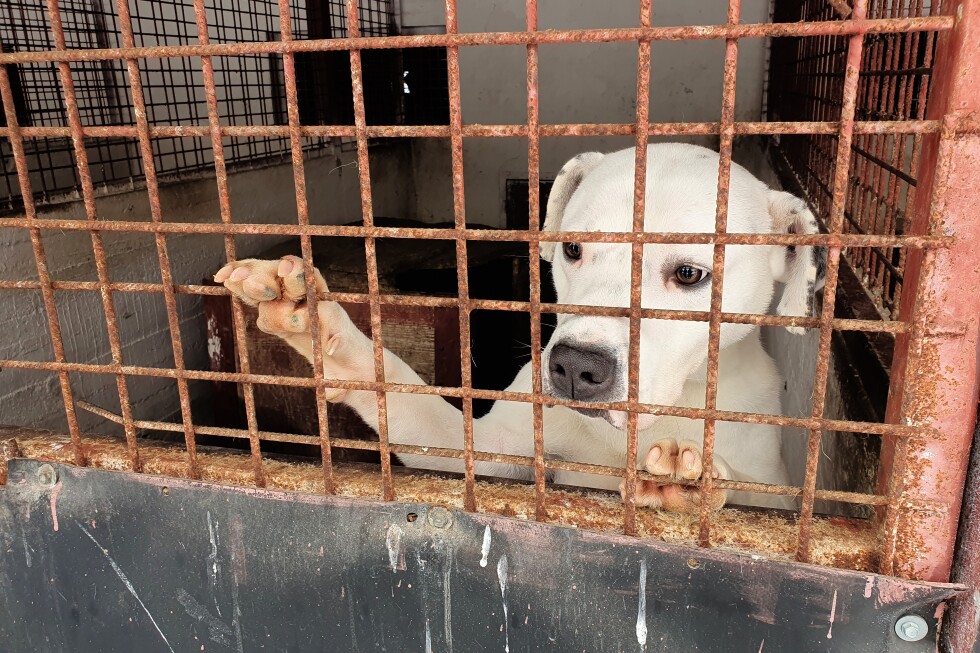
    Graphic footage captured inside one eastern Romanian compound shows a confined space enclosed by steel mesh: one dog struggles to lick ice from a frozen metal water bucket, while another chews apathetically on dried feces scattered across the unforgiving hard packed ground. Across all nine sites, investigators documented overcrowded kennels, dogs with untreated open festering wounds, and packs left exposed to subzero winter temperatures without insulation or heating. The report’s findings detail enclosures constantly caked in waste, overcrowding that sparks violent aggression and inter-dog fighting, and such extreme chronic stress that one dog was observed self-mutilating by biting off sections of its own tail.

    Even at one of the highest-quality facilities visited, a public shelter in western Romania’s Arad County, investigators found only cold concrete floors, no heated bedding, and no enrichment or toys for the hundreds of dogs held there. The organization did note that frontline staff at the facility worked diligently to improve outcomes and boost adoption rates, despite the systemic shortcomings that left them without resources to meet even basic animal welfare standards.

    Romania is home to an estimated 500,000 stray dogs, one of the largest unhoused canine populations in the entire European Union. Public and private shelters across the country hold thousands of these strays, where animals wait for potential adoption — or, in many cases, legal euthanasia. Four Paws’ investigation, however, found that most public shelters act as little more than holding facilities where dogs are confined to wait for death, with no access to the minimum standards of care required by international norms.

    Manuela Rowlings, a stray animal specialist with Four Paws, told the Associated Press that the problematic conditions uncovered are not isolated incidents of mismanagement, but the result of broken national policy that demands full systemic reform. “Public shelters are horrible places in Romania,” Rowlings said. “It’s simply places where dogs are locked up and where they wait to die, and they do not even receive the minimum care or minimum standards.”

    Beyond poor living conditions, the report also criticized most participating shelters for actively blocking adoption efforts, and freedom of information requests submitted by the organization revealed profound a lack of transparency around public funding, stray intake numbers, and official euthanasia statistics. To illustrate the scale of unreported mortality, Four Paws shared data from a northeastern Galati County shelter: of 644 strays admitted in 2024, only 134 were adopted, 28 were legally euthanized, and 412 died from what are listed as “other causes” — largely neglect and untreated illness.

    Worryingly, current Romanian law does not criminalize the poor conditions documented in the investigation, leaving activists with little recourse to hold facility operators accountable. “There is nothing that can be reported to the authorities, because it is not illegal to keep dogs in very, very poor conditions in the shelters,” Rowlings explained.

    The roots of Romania’s stray dog crisis stretch back more than a decade. In 2013, after a four-year-old boy was killed by a pack of strays in the capital city of Bucharest, national lawmakers passed a sweeping law that ordered mass roundups of stray dogs, requiring that any unadopted animal be euthanized 14 days after being taken into custody. But animal welfare advocates have long argued that targeted mass neutering is the only sustainable long-term solution to reduce the stray population humanely.

    So far, large-scale sterilization programs have failed to gain traction nationwide, and some insiders say that is no accident. Hilde Tudora, Director of Animal Protection at Ilfov County Council, told AP that the stray dog industry has become a profitable enterprise for private operators funded by public money, giving stakeholders an incentive to keep the population high rather than solving the crisis.

    “Private companies have swelled up with public money, and then it turned into a business,” Tudora said. “There must be dogs, because if you castrate en masse, there’s no more merchandise … No one really wants to solve the problem.”

    Recent legislative efforts aim to upend this status quo. A bill introduced to parliament in November 2024 would formally recognize animals as “living beings with rights and freedoms” and shift national policy away from mass euthanasia toward expanded sterilization and mandatory microchipping. Andrei Baciu, a National Liberal Party parliamentarian backing the bill, noted that Romania has spent more than 1.3 billion euros ($1.5 billion) on stray dog euthanasia over the past three decades. He pointed out that a single unsterilized pair of dogs can produce more than 67,000 puppies in just six years; capturing and euthanizing that entire resulting litter would cost roughly 13.4 million euros, a sum that could instead fund sterilization for more than 268,000 adult dogs.

    As of Tuesday, Romania’s National Sanitary Veterinary and Food Safety Authority, the government body that oversees animal welfare and shelter regulation, had not responded to AP requests for comment on the investigation’s findings.

  • Queensland Police senior constable charged with fraud, computer hacking offences

    Queensland Police senior constable charged with fraud, computer hacking offences

    A 45-year-old senior constable with Queensland Police’s Far Northern Region has been formally stood down from active duty after facing two criminal charges: one count of fraud and one count of unauthorized misuse of a restricted computer. Law enforcement officials have confirmed that both alleged offences were committed while the officer was off-duty.

    The veteran officer has been issued a notice to appear before the Cairns Magistrates Court, with his first court hearing scheduled for May 22. In an official public statement released following the charges, a Queensland Police spokesperson emphasized the force’s commitment to upholding strict standards of professional conduct, transparency, and public accountability.

    The spokesperson noted that the service proactively discloses serious misconduct allegations against serving personnel to maintain public trust, while clarifying that the announcement of charges does not equate to a finding of guilt. The charges against the senior constable remain unproven at this stage of the legal process, and the case will proceed through the Queensland court system in line with standard criminal justice procedures.

  • Takeaways from AP’s report on Jalue Dorje, the US-born teenage Buddhist lama

    Takeaways from AP’s report on Jalue Dorje, the US-born teenage Buddhist lama

    Nestled in the shadow of the Himalayas, thousands of Buddhist pilgrims recently received a blessing from a teenage lama whose life reads like a remarkable study in contrasts. Just six months before standing on the sacred monastery grounds, 19-year-old Jalue Dorje was a typical teenager pulling late-nighter gaming sessions on his Xbox, playing Madden NFL in his family’s Minneapolis suburb. Today, he balances a lifetime of spiritual training with the pop culture touchstones of his American upbringing, forging a unique path as one of the youngest reincarnated lamas of Tibetan Buddhism.

    Recognized as the reincarnation of a revered 17th-century Tibetan Buddhist master just months after his birth, Dorje’s dual identity was shaped from his earliest days. The process of identifying a reincarnated lama is rooted in spiritual signs and visions: when Dorje was only 4 months old, Kyabje Trulshik Rinpoche, one of the faith’s most venerated modern masters, identified him as the eighth Terchen Taksham Rinpoche. The recognition was later confirmed by senior Tibetan Buddhist leaders, and in 2010, when the Dalai Lama traveled to Wisconsin, the global spiritual leader formalized the recognition in a ceremony, cutting a lock of Dorje’s hair and advising his parents to let him grow up in the United States to master English before entering full monastic training.

    For nearly 18 years, Dorje wove two very different worlds into his daily routine. Growing up in Columbia Heights, Minnesota, he balanced sacred scripture memorization with high school football practice, traded spiritual tutoring for rap and Taylor Swift on his car radio after getting his driver’s license, and kept a portrait of the Dalai Lama above his DVD collection of *The Simpsons*, *South Park*, and *Family Guy*, right next to his copy of the graphic novel *Buddha*. To encourage his scripture studies, his father struck a deal: every set of passages he memorized earned him new Pokémon cards, a collection he often snuck into ceremonial robes as a child. On the football field, teammates remembered him for his gentle positivity, always reminding his peers to keep losses in perspective — though he cried after his final senior season game, knowing it would likely be his last as he prepared to leave for monastic life.

    After graduating high school in 2023, Dorje followed the path laid out for him decades earlier, moving 11,500 kilometers to the Mindrolling Monastery on the Himalayan foothills, near the Indian city of Dehradun. For his cross-continental move, he packed light: his headphones, a laptop, a Fantasy Football magazine, and a core text on the Tantric Buddhist master who first brought the tradition to Tibet. His parents accompanied him for his first day of training, fitting him with a larger bed suited to his 6-foot frame left over from his football days, painting his new monastic quarters, and setting up a personal shrine for his daily prayers.

    On a recent trip to Kathmandu, Nepal, where he participated in sacred rituals led by the abbot of Shechen Monastery — one of Tibetan Buddhism’s holiest sites, positioned steps from the 1,500-year-old Boudhanath stupa — the blend of his two lives was on full display. While he traded his signature hoodies and sweatpants for traditional maroon and gold monastic robes, he hid a pair of white Crocs decorated with *The Simpsons* Jibbitz charms beneath them. His daily routine now follows an ancient rhythm: he wakes at dawn for prayers, studies Buddhist philosophy, practices traditional calligraphy and chanting, and adapts to the simple ascetic life of hand-washed clothes and a basic diet of rice and lentils.

    Even thousands of kilometers from home, Dorje stays connected to his American roots. Through WhatsApp and text messages, he keeps in touch with high school friends, and on days off from study, he builds Lego sets, walks to a local arcade to play FIFA, watches Marvel films and NFL and NBA games on his laptop, and eagerly followed this year’s Super Bowl, praising Bad Bunny’s halftime performance as incredible. He gets along easily with fellow monks from across Asia, bonding over shared discussions of spirituality, global pop culture, and sports.

    After years of intensive study and contemplation, Dorje plans to return to Minnesota to lead the local Tibetan Buddhist community, with a clear long-term goal: to become a leader of peace, following in the footsteps of his role models Nelson Mandela, Mahatma Gandhi, and the Dalai Lama. For the 19-year-old who has spent his whole life balancing two worlds, this new chapter is only just beginning. “This is just the beginning,” he says, ready for the decades-long path that lies ahead.

    This reporting on religion is supported by the Associated Press through a collaboration with The Conversation US, with funding from Lilly Endowment Inc. The AP holds sole responsibility for this content.

  • Journey of a lifetime: A US teen Buddhist lama is now a monk studying in the Himalayan foothills

    Journey of a lifetime: A US teen Buddhist lama is now a monk studying in the Himalayan foothills

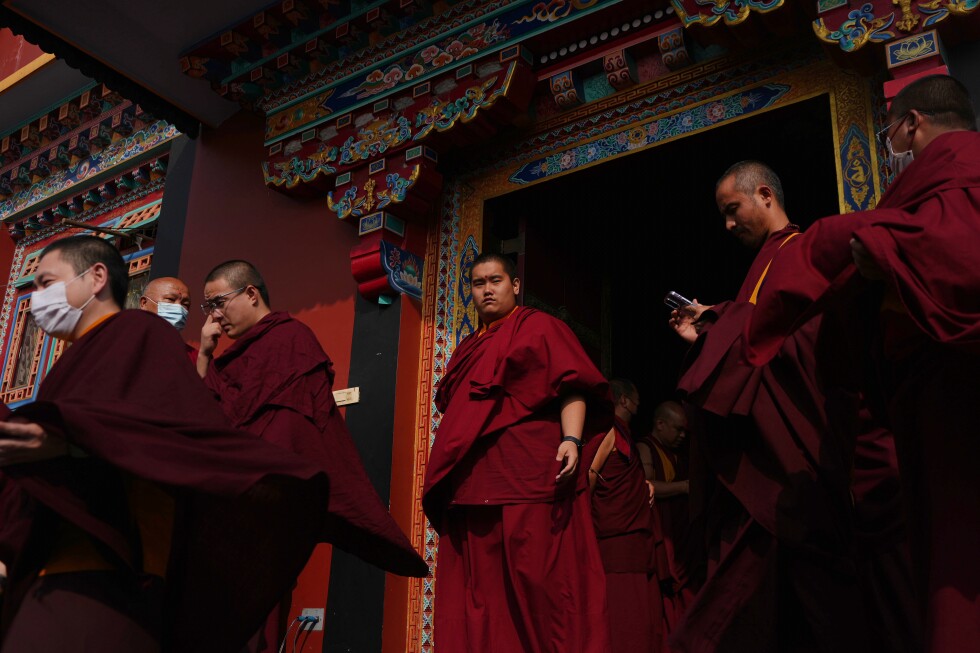
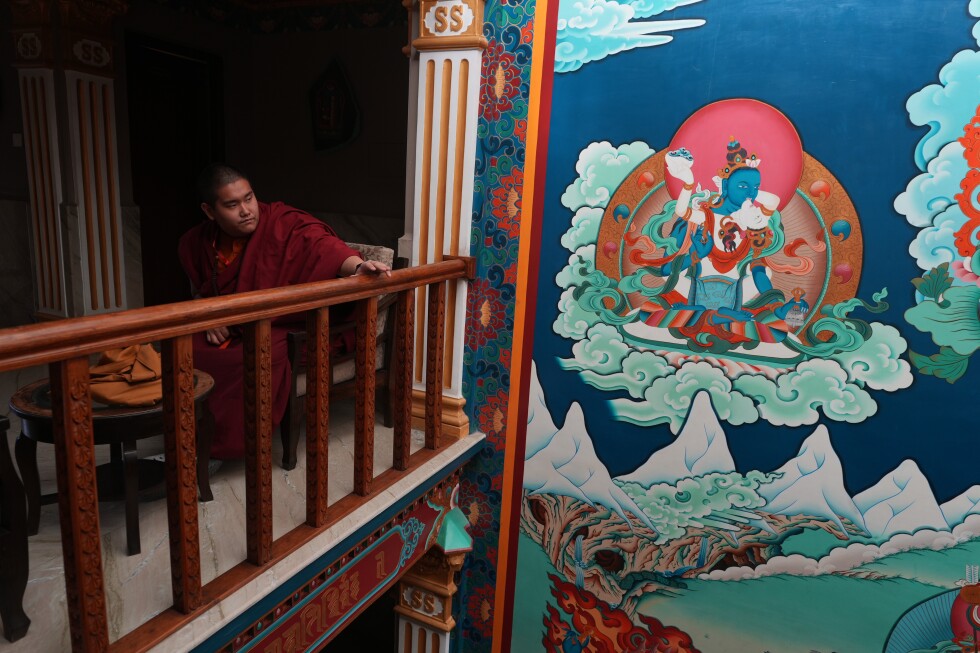
    At a quiet monastery tucked into Nepal’s Himalayan foothills, a 19-year-old Buddhist lama stood before thousands of pilgrims, one by one blessing bowed heads with a ceremonial vase and peacock feather, sprinkling holy water to grant protection, purification, and wisdom. He paused to grin at wide-eyed children who stared back at him with a mix of curiosity and reverence, working to keep pace with the small group of senior spiritual leaders chosen to deliver the ritual’s final blessing. Just six months before this sacred moment, this same young man — Jalue Dorje — was pulling all-nighters playing *Madden NFL* on his Xbox in his family’s home outside Minneapolis, pausing only to grab pizza rolls and Diet Coke, or text friends about upcoming meetups at TopGolf or Buffalo Wild Wings. Two seemingly incompatible worlds, and both are deeply his home.

    Recognized as a reincarnated lama by senior Tibetan Buddhist leaders, including the Dalai Lama, from infancy, Dorje grew up balancing a fully ordinary American teenage life with rigorous spiritual training that stretches back over 350 years. He graduated from his Columbia Heights, Minnesota high school in 2023, and just months later left his home state to begin full-time training at India’s Mindrolling Monastery, 7,200 miles from everything he had ever known. His recent trip to Nepal brought him together with his parents, who traveled from Minneapolis to see him, and allowed him to participate in sacred teachings led by Shechen Monastery’s abbot near Kathmandu.

    Where his everyday wardrobe once consisted of hoodies and sweatpants, maroon and gold monastic robes now mark his role — but traces of his American upbringing remain. He quotes both rapper Drake and 8th-century Buddhist scholar Shantideva in the same conversation, and under his traditional robes, he often wears white Crocs covered in *The Simpsons* Jibbitz charms. Each dawn, he wakes for morning prayers, then walks through Kathmandu’s bustling crowded streets, past street vendors selling fresh fruit, incense, and exotic spices, weaving around speeding mopeds as he approaches the Boudhanath Stupa, a 1,500-year-old sacred site ringed with colorful Tibetan prayer flags and marked by the iconic painted eyes of Buddha gazing out over the valley.

    On a recent ritual day, Dorje entered a prayer hall reserved for high-ranking lamas and doctorate-level monks, sliding off his Crocs before stepping onto the wooden floor. Incense drifted through the hall, and the deep, steady notes of traditional cymbals, bells, and drums cut through the low drone of monastic chants. Standing before three massive gilded Buddha statues, he bowed to Shechen Rabjam Rinpoche, the monastery’s spiritual leader, and presented a golden plate symbolizing the entire universe, along with a khata — a traditional white Tibetan ceremonial scarf. This was the first formal mandala offering Dorje had made since committing to his predestined spiritual path full-time, and the moment hit him with profound clarity. “This is the real one, you know? We’re here and this is really happening,” he said. “I’m doing what the prophecy fulfilled.”

    Dorje’s place in this lineage stretches back to 1655, when the first Terchen Taksham Rinpoche was born. Just four months after his birth, he was identified as the eighth reincarnation of the lineage by Kyabje Trulshik Rinpoche, one of Tibetan Buddhism’s most venerated modern masters, and later confirmed by multiple senior lamas. When he was 2 years old, his parents brought him to meet the Dalai Lama during a 2010 visit to Wisconsin, where the spiritual leader cut a lock of Dorje’s hair during an official recognition ceremony and advised his parents to let him grow up in the U.S. to master English before sending him to a monastery for full training.

    “From my parents’ end, educating me was a really big one,” Dorje explained. “They followed the words of his holiness; he laid the foundation, and they took that gamble.” For years, his parents — both working-class people who cleaned hotel rooms and did hospital laundry to support their only child — balanced secular education with early spiritual training. As a child, Dorje often wondered why he could not sleep in on weekends or watch cartoons like his friends, but his father would remind him that the early work was “like planting a seed that one day would sprout.” He remembers long early mornings spent memorizing sacred texts, and the stress that online skepticism about his status as a reincarnated lama put on his parents. “It wasn’t all rainbows and unicorns every day,” Dorje said. “We overcame a lot.”

    Fluent in both English and Tibetan, Dorje excelled in his public high school. Though he was officially enthroned as a lama during a 2019 ceremony in India, his parents let him remain in the U.S. to finish high school, honoring the Dalai Lama’s guidance. Growing up, his bedroom walls reflected his dual identity: a framed photo of the Dalai Lama hung above his DVD collection of *The Simpsons*, *South Park*, and *Family Guy*, right next to a copy of the graphic novel series *Buddha*. On his bedside table, he kept a journal full of diagramed football plays he hoped to run as his team’s left guard, and his living room held a senior year poster of him in sunglasses and his football uniform, striking a meditation gesture. He even made a deal with his father: memorize a section of Buddhist scripture, earn new Pokémon cards, and he often snuck the trading cards into his robes during formal ceremonies. “I remember when I first learned my Tibetan ABCs, when I was able to recite it all by memory, my dad was so happy,” he recalled.

    His daily routine reflected the balance he maintained: wake at dawn to recite sacred texts, attend secular high school, go to football practice, return home for tutoring in Tibetan history and Buddhist doctrine, and spend evenings practicing calligraphy or listening to hip-hop. After he got his driver’s license, he would cruise around town listening to Taylor Swift. When asked what he would have done if not called to spiritual life, he answered without hesitation: “Sports journalist would have been cool.” An avid sports fan, he roots for the Atlanta Hawks in basketball, Atlanta Falcons in football, and Real Madrid in soccer, and counts American figure skater Alysa Liu as his favorite athlete: “She brings so much swagger, but it doesn’t overshadow the sports.” He even won an award for a student newspaper story about Tibet he wrote in high school, and his teammates remembered him for his upbeat attitude that kept the team focused on having fun rather than fixating on losses. Still, he cried after his final senior season game, knowing it would likely be his last time playing organized football.

    For his 18th birthday, more than 1,000 people gathered at the Tibetan American Foundation of Minnesota for a farewell party before he left for India. On the long flight to New Delhi, he found himself thinking of one thing: “I was like, ‘Dang! I’m missing the first week of NFL!’” He packed light, bringing only headphones, a laptop, a fantasy football magazine, and a book on Guru Rinpoche, the master who brought Tantric Buddhism to Tibet. His parents traveled with him to his new monastery in Dehradun, near the Himalayan foothills — a moment equivalent to dropping a child off at college — helping him set up his room, buying a new bed, painting the walls, and building a personal shrine for his daily dawn and dusk prayers. As an only child who had never spent more than three days away from home on a northern Minnesota camping trip, saying goodbye was emotional for everyone, and his parents cried as they left.

    Dorje speaks of his parents with deep gratitude: “Everything leading up to this point in the history of all your lifetimes — the billions and billions of lifetimes you accumulated — leads to your family. To have such great parents is a result of a great past life’s merit. But not only past life merit, but the connection of karma — and love.” His mother, Dechen Wangmo, says she never stopped seeing him as her boy first, even as he embraced his role as a tulku, the Tibetan term for a reincarnated lama. “Would he be hungry? What if he fell asleep?” she remembered worrying about her toddler son during long prayer sessions. To her relief, Dorje has thrived in monastic life. While his American high school friends now study history, science, and literature at U.S. colleges, Dorje studies Buddhist philosophy, hones his calligraphy, and practices chanting daily. “He’s kind of found his groove at the monastery,” said Kate Thomas, one of his former tutors in Minneapolis.

    He still stays connected to friends back home through texts and WhatsApp, even with a 10-hour time difference. On his days off, he builds with Legos, walks to a local arcade to play *FIFA*, and watches Marvel movies and NBA/NFL games on his laptop — he still raves about Bad Bunny’s 2023 Super Bowl halftime show. It was his first experience with ascetic life, eating a simple daily diet of rice and lentils and washing his own clothes by hand, but he adjusted quickly, bonding with fellow monks from across Asia over conversations that mix spirituality, pop culture, and sports talk. “Dudes are dudes!” he laughed.

    For the first time, he is also living alongside other young tulkus, reincarnated spiritual leaders around his age. One is 13-year-old Trulshik Yangsi Rinpoche, believed to be the reincarnation of the same Kyabje Trulshik Rinpoche who first identified Dorje as a tulku when he was four months old. The pair bonded over their shared love of *Tintin* comics, and Dorje now serves as the younger lama’s English tutor. “I think of him as my spiritual teacher,” Dorje said after sharing a meal. “I’m profoundly grateful that I get to repay my debt to the one who found me and improving his English.” The younger lama simply smiled and called Dorje his best friend.

    Hours after Dorje blessed thousands of pilgrims — including his own parents — on the final day of the 12-day Nepalese ritual, the family woke before dawn to make an eight-hour bone-rattling drive over rutted dirt roads to the ancient Maratika Caves, a site sacred to both Hindus and Buddhists, 100 miles southwest of Mount Everest. After exploring the ancient caves in awe, Dorje sat cross-legged on the rocky ground next to his father, and the pair prayed together, just as they had done almost every day since Dorje was a small boy.

    After several more years of disciplined training and contemplation, Dorje plans to return to Minnesota to teach at the Nyingmapa Taksham Buddhist Center, with the goal of becoming “a leader of peace,” following the example of the Dalai Lama, Nelson Mandela, and Gandhi. This journey began just months after he was born, and now, at 19, he says he feels ready for what comes next. “This,” he said, “is just the beginning.”

  • Zimbabwe’s vivid English first names carry family histories, from Privilege to Shame

    Zimbabwe’s vivid English first names carry family histories, from Privilege to Shame

    In Zimbabwe, a country in southern Africa with a deep, layered cultural history, naming a newborn child is far more than a simple act of assigning personal identity. Unlike the common practice of picking names for aesthetic or familial tradition in many parts of the world, Zimbabwean naming conventions turn common English words into living, breathing narratives that capture the emotions, struggles, joys and circumstances of a family at the moment a child enters the world.

    For 37-year-old Harare bar manager Privilege Mubani, her name only revealed its full, meaningful backstory as she entered adulthood. Raised never questioning the moniker she carried from birth, Mubani finally asked her father to explain the choice behind her name. What she learned unlocked an unexpected story of stigma, resilience, and quiet gratitude.

    Mubani’s mother had become pregnant before marriage, a status heavily stigmatized in Zimbabwe’s conservative social landscape, where single motherhood is widely frowned upon. Having already resigned herself to a lifetime of unmarried status and public judgment, her mother was surprised when a suitor chose to marry her despite the social stigma attached to her pregnancy. The experience left her feeling redeemed after months of public mockery for carrying a so-called “fatherless” child. “Naming me Privilege was her own expression of gratitude,” Mubani explained with a grin.

    Zimbabwe’s widespread use of English words for given names traces its roots partially to the country’s history as a former British colony, as well as its status as a majority Christian nation, where English remains the official language and the dominant medium of instruction in schools and government operations. But experts explain that the practice of embedding personal and social narrative into names runs much deeper than colonial influence.

    David Chikwaza, a decolonization researcher at Dublin City University’s School of History and Geography, notes that pre-colonial African naming traditions have long carried deep symbolic weight, rooted in the region’s spiritually oriented cultural norms. “Parents would name their child as a way of addressing a societal or a personal issue,” Chikwaza explained. “Colonialism promoted English as a language of sophistication, so Africans simply turned to the English vocabulary for expression, but the meanings remain the same” as they did in pre-colonial naming practices.

    This one-of-a-kind naming culture has often caught the attention of international observers and outsiders. During the 2024 African Cup of Nations soccer tournament, Zimbabwe’s national men’s team went viral on social media worldwide, after users were struck by the striking, meaningful names on the team roster: players including Teenage, Godknows, Divine, Marvellous, Knowledge, Prince and Prosper sparked widespread amusement and fascination on platforms like TikTok, where one user commented she could barely believe the names were real.

    The unusual names have also become a source of comedy for international performers. Learnmore Jonasi, a Zimbabwean comedian who reached the finals of *America’s Got Talent* in 2024, regularly draws laughs from U.S. audiences by joking about his own name and the wide array of unconventional monikers common back home. Beyond Privilege and Learnmore, common names that raise eyebrows abroad include Givemore, Best, Promise, Guarantee, Anxious, Innocent, Confidence, and Hardlife—all of which are unremarkable within Zimbabwe.

    For many Zimbabweans, these narrative names are a source of deep personal pride, and many see their names as a standard to live up to. Lovejoy Mutongwiza, a 33-year-old journalist and chief executive of independent online news outlet 263chat, describes his name as a perfect reflection of his own identity and his parents’ experience. “My mum and dad said they were madly in love and in a happy place in their lives when they conceived me, so they aptly named me Lovejoy,” he said. “It’s a befitting name. I think I have lived up to it because I am rarely angry. I am naturally a bubbly person.”

    Even those with names that outsiders might see as burdensome or negative embrace their monikers as part of their cultural and family heritage. Fifty-one-year-old Shame Chikwana has never felt ashamed of his name, and turned down repeated pressure from his sister to change it to a more conventional name as an adult. “I would never trade it for any other name. I was named after my late grandfather so it’s a heritage I am carrying,” Chikwana said, adding that his parents have never shared why his grandfather received the name. “I hope it stays within the family for generations to come.”

  • Palestine Action prisoner with muscular dystrophy says he is forced to ‘crawl like a wounded dog’

    Palestine Action prisoner with muscular dystrophy says he is forced to ‘crawl like a wounded dog’

    A remand prisoner linked to the activist group Palestine Action has laid bare damning allegations of systemic medical neglect and degrading treatment at a high-security London prison, detailing how failures to provide adequate mobility support and care have left him crawling across cell floors to access basic needs.

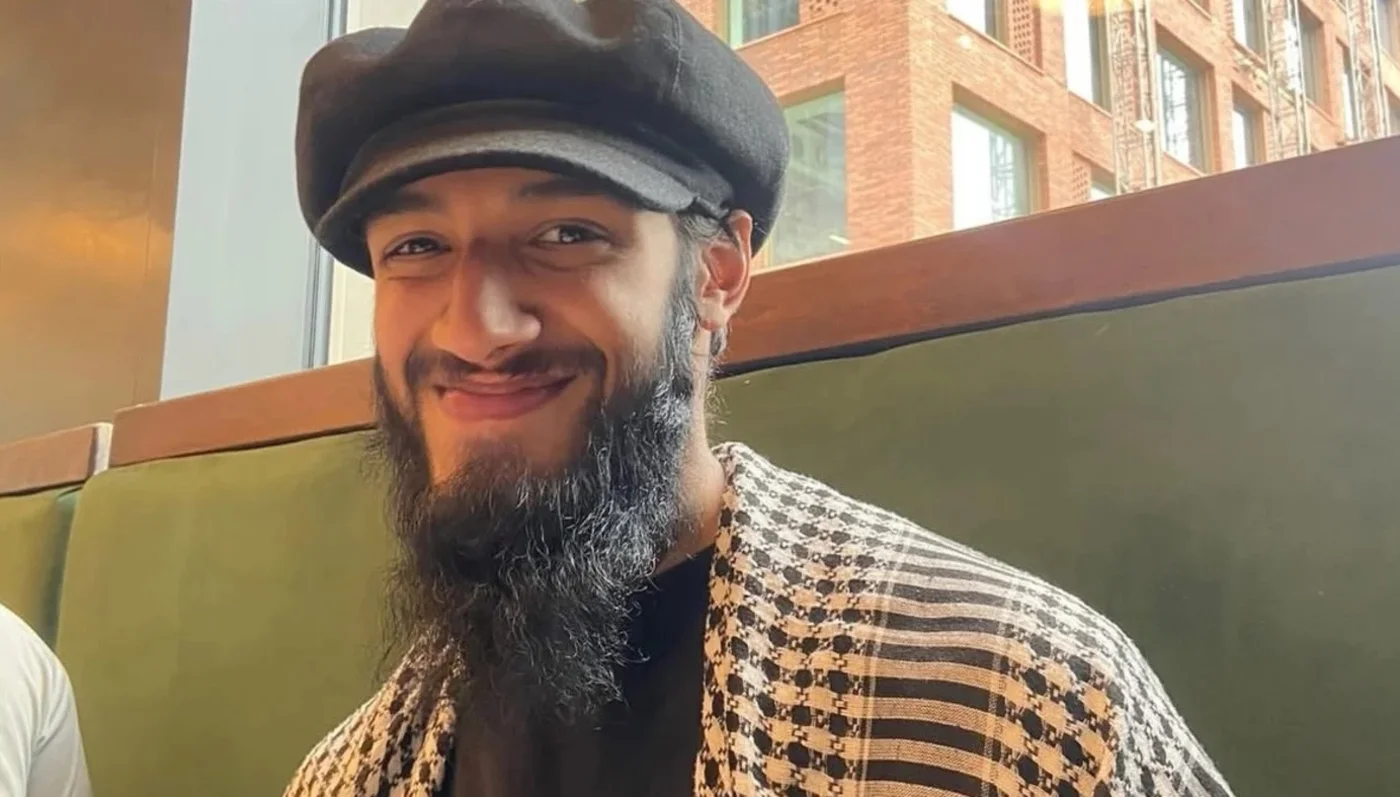
    Muhammad Umer Khalid, 23, is currently held at HMP Wormwood Scrubs awaiting trial over charges connected to a June 2023 break-in at a Royal Air Force base. Living with incurable progressive muscular dystrophy – a rare genetic condition that causes gradual muscle wasting, requiring consistent physical activity and specialized high-protein nutrition to slow deterioration – Khalid claims the UK prison service has systematically failed to meet his documented medical needs for months.

    Since being placed in 23-hour-a-day cell lockdown last October, Khalid says his mobility has declined sharply. What began as gradual weakness has progressed to a total loss of the ability to walk, forcing him to crawl through the prison to access medication, legal appointments, and family visits. In an interview with Middle East Eye (MEE) conducted through an intermediary, he described the humiliation of crawling past dozens of fellow inmates, saying staff treat him like a wounded animal rather than a human being entitled to dignity.

    Multiple failures in providing even basic adaptive equipment have compounded his condition. Khalid submitted repeated requests for a custom wheelchair, and even after a prison physiotherapist formally approved his need for the device on March 14, the prison only issued an ill-fitting chair two weeks later. The first wheelchair provided was too large to fit through his cell door or narrow prison corridors, leaving Khalid to crawl between his bed and toilet – a journey that can take up to an hour to complete. For more than 20 weeks, the prison also ignored requests for a shower chair, leaving him unable to bathe for nearly five months.

    Worse still, prison staff have cited internal health and safety rules to refuse any physical assistance to Khalid, and have barred fellow inmates from helping him. Staff cannot push his wheelchair, lift him, or support him with basic daily tasks, he says. During a facility-wide fire evacuation on April 23, Khalid was left locked in his cell alone while all other prisoners were moved to safety. Even after multiple requests, staff have refused to bring his daily medication to his cell, forcing him to crawl to the medication collection point regardless of his pain or mobility limits.

    Khalid added that prison staff, including a member of the facility’s medical team, have repeatedly accused him of faking his condition’s rapid deterioration, despite existing medical documentation confirming his diagnosis and progression. Over three months, he has only been seen by a doctor three times, and has missed two critical neurology appointments – one scheduled for April 7, which he was unable to attend because the prison failed to provide a wheelchair that could transport him to the clinic. Existing medical evidence submitted to courts confirms his condition has worsened dramatically since entering custody, directly linking the decline to his poor detention conditions.

    In April, Justice Cheema-Gubb denied Khalid’s most recent bail application, ruling that while there were legitimate concerns about the timeliness and quality of his care, his condition could still be managed in a custodial setting. The judge ordered that a copy of her ruling be sent to prison leadership, with instructions to urgently address the gaps in care identified in the medical evidence and conduct regular reviews. However, Khalid’s solicitor Laura O’Brien says little has changed in the weeks since the ruling.

    O’Brien told MEE that the full set of Khalid’s medical records were shared with the prison immediately after his remand, to help staff understand the needs of his progressive condition. “Despite incontrovertible medical evidence that he has a progressive genetic condition, and that it is getting worse, there has been a continued suggestion that he’s putting it on,” she said. O’Brien explained that prison officials have claimed they do not need to provide a full-time wheelchair because they have seen Khalid walking short distances, but they fail to understand that even small amounts of walking causes permanent micro-tear damage to his muscles that his condition prevents him from recovering from.

    “Those in a custodial setting have a right to be treated fairly and with dignity as much as anyone else,” O’Brien said. “With inadequate care from the prison, the damage could be significant if his medical needs, including being provided with a wheelchair, accessible spaces to shower, use of the toilet and access to physiotherapy, are not met.”

    In a minor update this week, the prison replaced the oversize wheelchair with a smaller model that can navigate prison corridors, though it still does not fit inside his cell. Prison officials have also finally issued a shower chair and ordered a new custom-sized wheelchair. O’Brien said the legal team welcomed the small steps but hopes further delays will not force Khalid to continue fighting for basic care.

    Khalid says that while he remains mentally resilient, he lives in constant pain and has begun experiencing breathing difficulties as the muscle wasting progresses to his arms. “My arms are beginning to waste away, which will stop me from even being able to operate my own wheelchair,” he said. The situation has also placed enormous strain on his family, who managed his condition carefully for nearly a decade after his 2014 diagnosis. His mother Shabana told MEE that during a recent visit, he showed her his legs, which had withered to the point of looking like “a skeleton with skin hanging off” – a sight she described as heartbreaking.

    Khalid was one of eight Palestine Action-linked prisoners who held a hunger strike last winter to protest poor detention conditions, ending the action in January. MEE reached out to the UK Ministry of Justice for comment on the allegations but did not receive a response ahead of publication.

  • Five Italians die during cave dive in Maldives

    Five Italians die during cave dive in Maldives

    A catastrophic recreational scuba diving incident in the Maldives has claimed the lives of five Italian nationals, marking the deadliest single diving accident in the history of the popular Indian Ocean tourist destination, Italy’s Ministry of Foreign Affairs confirmed this week.

    Authorities say the group of divers lost their lives while attempting to explore submerged cave systems off Vaavu Atoll, at depths reaching roughly 50 meters (164 feet). The Maldivian military, which is leading the recovery operation, announced that one victim’s body has already been recovered from a cave located around 60 meters underwater, and the remaining four victims are believed to be trapped within the same cave system. Specialized diving teams equipped with advanced deep-water recovery gear have been deployed to the site, but officials have stressed that the search and recovery mission carries extremely high safety risks for rescuers.

    According to local Maldivian media reports, the five Italian divers entered the water early Thursday morning. When the group failed to resurface at the scheduled time, the crew of their dive boat alerted authorities and launched an initial missing person alert. At the time of the incident, the Vaavu Atoll area, located roughly 100 kilometers (62 miles) south of the Maldivian capital Malé, was experiencing rough sea conditions. Local authorities had already issued a yellow weather warning for small passenger vessels and local fishing crews prior to the dive.

    Among the victims are members of Italy’s academic marine science community: the University of Genoa confirmed that the group included one of its veteran marine biology professors, the professor’s daughter, and two early-career researchers from the institution. In an official statement posted to the social platform X, the university offered its “deepest condolences” to the families, friends, and colleagues of the deceased, calling the incident an immeasurable loss for the global marine research community.

    While the Maldives draws millions of diving and snorkeling enthusiasts each year for its crystal-clear waters and vibrant coral reef systems, serious fatal diving accidents remain relatively uncommon, though a small number of fatal incidents have been recorded in recent years. In December 2024, a highly experienced British female diver drowned during a dive off the resort island of Ellaidhoo; her husband died five days later after developing a sudden illness linked to the incident. Earlier in 2024, a Japanese lawmaker died while snorkeling in Lhaviyani Atoll, another popular tourist region in the archipelago.