分类: society

  • Giant hissing cockroaches among $200,000 worth of illegal insects seized in Australia

    Giant hissing cockroaches among $200,000 worth of illegal insects seized in Australia

    In a landmark operation for biosecurity protection, Australian environmental officials have seized more than 100,000 prohibited exotic cockroaches from a commercial breeder in the Central West region of New South Wales, marking the largest seizure of illegal invasive invertebrates in the country’s history.

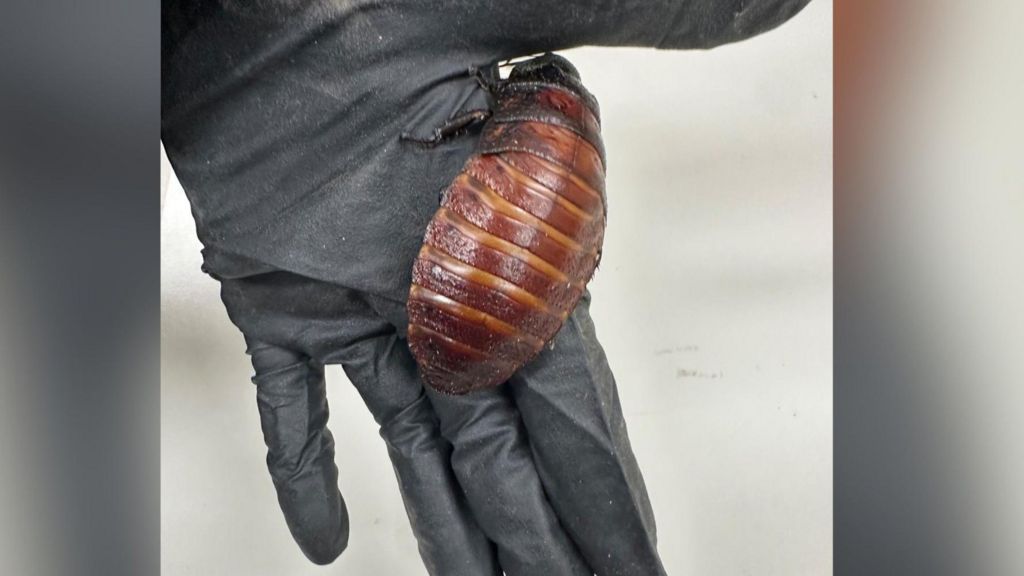
    The haul, which has an estimated black market value of 200,000 Australian dollars (equal to roughly 143,000 USD or 106,000 GBP), includes two high-risk species: Madagascar hissing cockroaches, one of the largest cockroach species on Earth that can grow to the size of an adult human’s palm and gets its name from the distinct loud hissing sound it produces, and dubia cockroaches. Under Australian federal law, neither species may be legally imported, kept, bred, or sold within national borders.

    The illegal colony was discovered at a breeding operation in Bathurst, a city located approximately 200 kilometers west of Sydney. Investigations into the operation found the trafficked cockroaches were being raised and distributed primarily as cheap, high-volume feed for captive pet reptiles. According to industry insiders, the exotic roaches have gained popularity among some reptile owners because of their large size — a single palm-sized specimen can serve as a full meal for a grown lizard, eliminating the need to feed multiple smaller, legal feeder insects like native wood roaches. Local Bathurst snake catcher Stefanie Lesser confirmed to the Australian Broadcasting Corporation that she has repeatedly observed these illegal invertebrates being openly sold via online marketplaces to reptile keepers across the country.

    Officials from the Department of Climate Change, Energy, Environment and Water (DCCEEW), which led the seizure operation, warn that unregulated invasive insects pose severe, long-term threats to Australia’s unique native ecosystems and agricultural industry. If released or escaped into the wild, these non-native cockroaches can spread harmful pathogens, outcompete local invertebrate species for resources, and disrupt native food chains. All seized cockroaches will be humanely euthanized and disposed of safely to eliminate any biosecurity risk.

    In a public statement following the seizure, DCCEEW issued a formal warning to unlicensed pet sector businesses and reptile owners across the country that it is cracking down on the illegal breeding and trade of prohibited exotic cockroaches. Anyone found in possession of, breeding, or trafficking these banned species will have their stock seized and can face significant fines and other penalties under federal biosecurity law. The department has urged reptile owners currently using dubia cockroaches as feeder insects to transition to legal, permitted alternatives such as crickets and native wood roaches immediately to avoid potential enforcement action.

  • ‘It looks black’ – Americans react to Reflecting Pool’s completed paint job

    ‘It looks black’ – Americans react to Reflecting Pool’s completed paint job

    After multiple weeks of intensive renovation work at one of Washington D.C.’s most iconic public landmarks, crews have started the process of refilling the Lincoln Memorial Reflecting Pool — a project that has already sparked heated discussion among visitors over its freshly applied coating. The material used to line the basin is a specially selected shade officially labeled “American flag blue”, but many casual observers stepping up to the edge of the partially filled pool are saying the finished surface reads as deep black to the naked eye.

    The Reflecting Pool, which draws millions of domestic and international tourists every year, has long been recognized for its mirror-like views of the Lincoln Memorial and Washington Monument, a feature that has made it one of the most photographed sites in the U.S. capital. This latest renovation was aimed at addressing long-standing issues with leaking and erosion that have plagued the structure for decades, with the new coating intended to improve durability and reduce maintenance needs moving forward.

    As water levels continue to rise slowly across the 1,668-foot-long basin, visitors have been sharing mixed reactions on social media and in on-the-record interviews, with many noting that the darker hue fundamentally changes the visual character of the landmark that generations have known. Others have pushed back, arguing that the true color will become more apparent once the pool is completely filled, and that the darker base will actually improve the clarity of the iconic reflections the site is famous for. Project managers have not yet issued an official comment addressing the public’s observations about the coating’s perceived color discrepancy.

  • Ferry search leads to €2.9m drugs seizure

    Ferry search leads to €2.9m drugs seizure

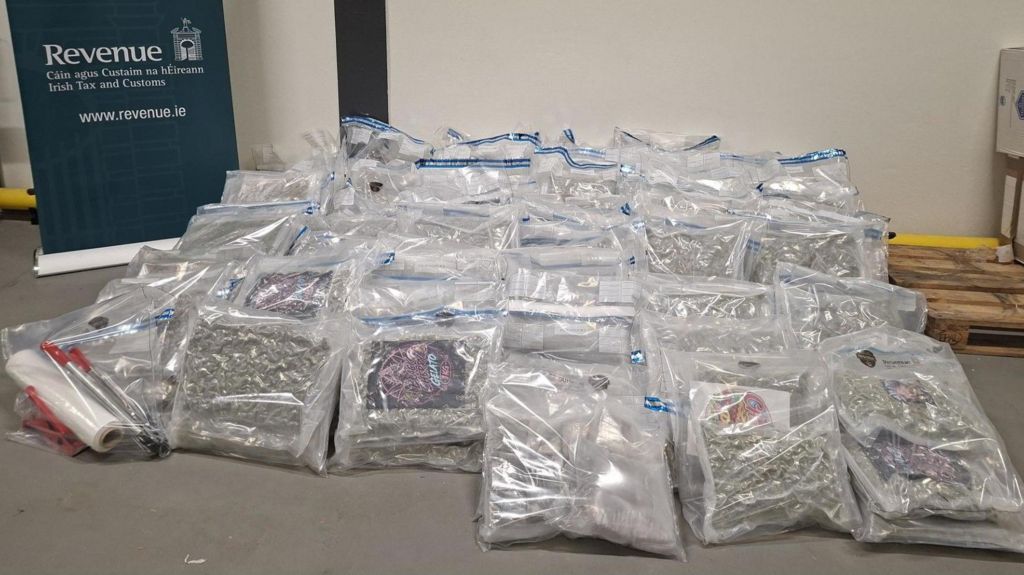
    In a major breakthrough against cross-border drug trafficking, Irish law enforcement and revenue officials have seized a massive shipment of illegal cannabis worth an estimated €2.9 million (£2.5 million) at a key southern Irish port. The bust unfolded Thursday at Rosslare Europort, located in County Wexford, after the contraband arrived aboard a cross-Channel ferry originating from Dunkirk, France.

    Officers from the Irish Revenue Commissioners stopped the sealed freight unit for inspection as part of ongoing anti-smuggling work. A mobile X-ray scanning device picked up anomalies hidden within the unit’s legitimate cargo, leading to the recovery of approximately 145 kilograms of suspected herbal cannabis and an additional 7.9 kilograms of compressed cannabis resin.

    The operation, which grew out of routine intelligence-led profiling of incoming freight, has resulted in the arrest of a man in his 20s, who remains in police custody at an Irish station as investigations continue. An Garda Síochána, Ireland’s national police service, confirmed the details of the seizure in an official statement following the bust.

    Authorities emphasized that the large-scale seizure is part of a sustained, coordinated campaign targeting transnational organized criminal networks that profit from the illegal importation, distribution, and sale of controlled substances across Ireland. Officials have published an official photograph of the seized drug haul to highlight the scale of the operation, part of ongoing efforts to disrupt illegal drug supply chains before they reach domestic communities.

  • Dutch police investigate suspected drugging and sexual assault of multiple women

    Dutch police investigate suspected drugging and sexual assault of multiple women

    Dutch national law enforcement has opened a sweeping criminal investigation into a suspected coordinated ring that drugged dozens of women and recorded sexual assaults, resulting in four arrests so far with more expected to come. The probe was triggered after police received critical tip-offs from law enforcement agencies in both England and Germany, which pointed to a pattern of abuse committed by people in the immediate social circles of targeted victims.

    Investigators confirmed that the four arrested men, all part of a network first uncovered through secret private social media groups, regularly shared tactics for drugging potential targets and circulated explicit, non-consensual images of their assaults among group members. In late May, police executed search warrants at eight properties across the country, targeting male suspects ranging in age from 21 to 51 who were identified through their activity in these online groups. Four of the eight suspects were taken into custody immediately following the raids.

    Alongside digital devices including laptops, mobile phones, SD cards and USB storage drives seized for forensic analysis, law enforcement also recovered illegal drugs and weapons at multiple searched locations. The charges facing the suspects cover a range of criminal activity, from participating in the abusive private online groups, creating and distributing non-consensual sexual content, to aggravated assault by drugging, and charges of both completed and attempted rape.

    Milou van der Kolk, a lead investigator with Rotterdam’s specialized sexual crimes unit, noted that the full scope of the abuse remains unknown, as victims are often left unable to recall the events due to being drugged and unconscious during the attacks. “This is a case with an enormous impact,” van der Kolk explained. “As a victim, you may not know what happened to you, because you may have been drugged and were unconscious. The news that your partner or an acquaintance may have drugged you and perhaps even raped you or attempted to do so can turn your life completely upside down.”

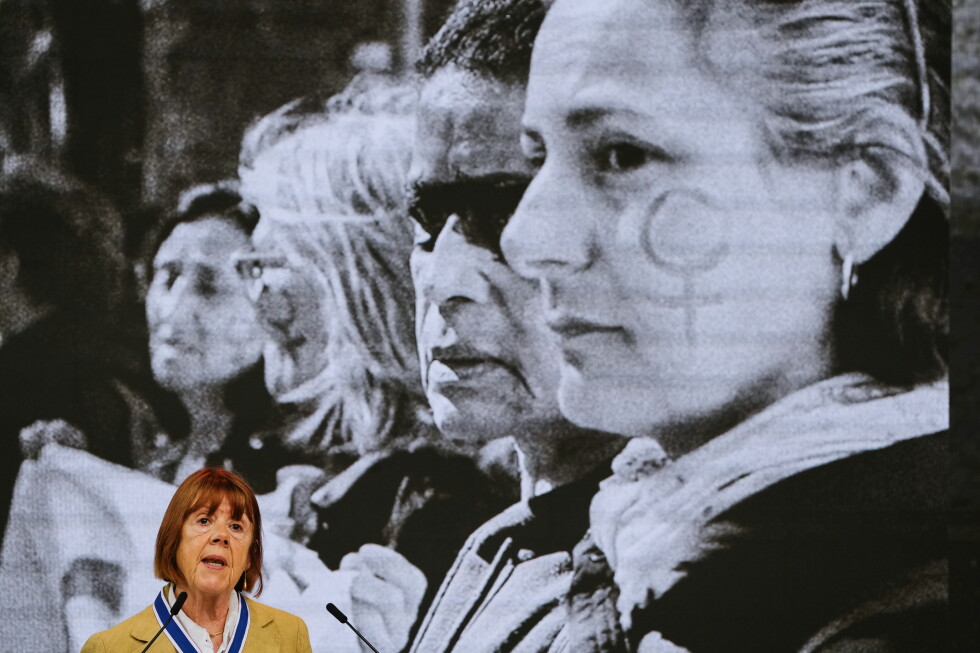
    Local Dutch media outlets have drawn public comparisons between this alleged ring and the high-profile Gisèle Pelicot case in France, where a man drugged his own wife for decades and invited dozens of outside men to rape her at their home. Dutch police have cautioned that the investigation remains active, and additional arrests are likely as forensic teams continue to process the large volume of digital evidence recovered in the raids. Support services for survivors of sexual abuse and violence are being coordinated through international and local support lines, including the BBC Action Line.

  • More than 20,000 fish killed after river polluted

    More than 20,000 fish killed after river polluted

    A devastating ecological disaster has unfolded in the Republic of Ireland, where a toxic pollution incident in the River Glyde has claimed the lives of more than 20,000 fish across multiple species. The large-scale fish kill was first uncovered on Tuesday near the village of Tallanstown, located in County Louth, according to Inland Fisheries Ireland (IFI), the state agency responsible for protecting Ireland’s inland fisheries resources.

    Post-mortem surveys of the affected waterway have found dead specimens spanning ecologically and commercially important species, including both mature and young Atlantic salmon, European eel, brown trout, and pike, alongside a range of common coarse fish. Ronan Matson, director of IFI’s eastern river basin district, confirmed in an interview with Irish public broadcaster RTÉ that the vast majority of the fatalities are minnows and sticklebacks, two small, widespread native freshwater species.

    Investigators have already zeroed in on a clear line of inquiry, with authorities suspecting the incident stems from illegal agricultural discharge that entered the river upstream of Tallanstown. Local government bodies have been notified of the ongoing investigation, and IFI has already collected water samples from the affected stretch of the river, which are currently undergoing laboratory testing to formally confirm the exact source and composition of the contaminant.

    On a walking survey of the riverbank, Matson noted that while a portion of the dead fish have already been washed downstream by currents, thousands of deceased fish remain visible concentrated in other sections of the waterway. While the harmful contamination itself is expected to flush out of the river system relatively quickly once the source is cut off, Matson warned that the ecosystem will not rebound overnight. It will likely take several years for affected fish populations to recover to their pre-pollution numbers, he said.

    Encouragingly, the pollution event appears to have occurred outside the river’s primary salmon and trout spawning grounds, meaning most existing egg stocks remain unharmed. Matson expressed cautious confidence that once the pollution source is fully contained – a step the agency says is already nearly complete – the river’s fish populations will be able to regenerate naturally over time.

  • Bondi Beach shooting hero charged with domestic assault

    Bondi Beach shooting hero charged with domestic assault

    One of the most celebrated heroes of Australia’s deadliest mass shooting in nearly three decades is now facing criminal allegations that have stunned the nation. Ahmed al Ahmed, 44, the man who risked his life to disarm an alleged terrorist during the December 2024 Bondi Beach attack on a Jewish community Hanukkah gathering, has been formally charged with multiple domestic violence offenses, local Australian media have confirmed.

    The shocking charges, which date back to an alleged incident in March this year, include common assault, stalking, and intimidation in relation to an attack on al Ahmed’s own father. The former hero has forcefully denied all allegations against him, telling national public broadcaster ABC in an interview that the claims are “not true at all.”

    Al Ahmed catapulted to national fame in December for his extraordinary act of bravery during the attack that left 15 people dead and dozens more wounded. Security footage from the community event captured al Ahmed charging one of the armed assailants and wrestling the attacker’s gun away, a move that is widely credited with preventing additional casualties. He sustained multiple gunshot wounds during the confrontation and was hospitalized for weeks of recovery.

    In the immediate aftermath of the attack, then-Australian Prime Minister Anthony Albanese visited al Ahmed in his hospital bed and publicly praised him as “the best of our country.” A national public fundraiser launched to cover his medical expenses and support his recovery ultimately raised more than 2.5 million Australian dollars, equivalent to roughly 1.7 million U.S. dollars, highlighting the outpouring of public support for his actions.

    The Bondi Beach attack remains Australia’s worst mass shooting event since the 1996 Port Arthur massacre, which prompted sweeping national gun law reform. Australian law enforcement quickly classified the 2024 incident as an act of terrorism, confirming the attack was deliberately targeted at the Jewish community gathered for the Hanukkah celebration.

    Al Ahmed is scheduled to make his first court appearance on June 29 at Sydney’s Bankstown Local Court, where he will formally respond to the charges against him.

  • Dutch police detain 4 suspects in probe into men who drugged, abused women they knew

    Dutch police detain 4 suspects in probe into men who drugged, abused women they knew

    THE HAGUE, Netherlands – Dutch law enforcement has taken four men into custody as part of a sweeping probe into allegations of systematic drug-facilitated sexual assault, where perpetrators allegedly targeted women they knew, recorded the abuse, and circulated graphic footage among private online groups. The investigation carries striking parallels to the high-profile Gisèle Pelicot abuse case that shocked France late last year.

  • A fire at a nursing home in Sri Lanka kills 12 people

    A fire at a nursing home in Sri Lanka kills 12 people

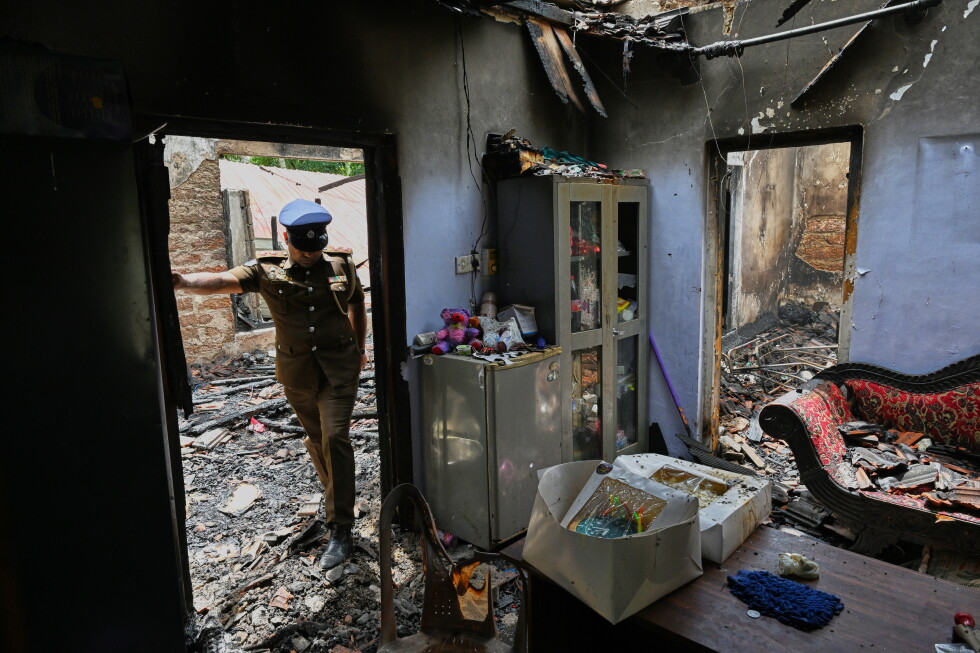
    A devastating blaze at a residential care facility in western Sri Lanka has claimed the lives of 12 residents and left eight others with injuries, national police confirmed in an official briefing on Thursday.

    The inferno broke out after hours on Wednesday at the facility located in the quiet town of Anguruwatota, roughly 50 kilometers east of the country’s capital Colombo. First responders and emergency teams were able to evacuate and save 51 residents from the burning structure, according to police spokesperson Fredrick Wootler. He added that the facility, which primarily serves elderly patients, also provides housing and care for people living with mental health conditions.

    In the wake of the tragedy, authorities have taken the nursing home’s director into custody. The arrest comes on allegations that the deaths were a direct result of negligence on the part of facility leadership, including suspected failures to maintain functional fire safety equipment and adhere to emergency evacuation protocols. A full formal investigation into the cause of the fire and any wider institutional failures is already underway.

    Visual footage captured by the Associated Press shows the full scope of the destruction: the two-story building has been completely gutted by the flames, leaving only blackened, charred remains of furniture, medical equipment, and interior structures. Victims’ bodies were recovered from the site in the immediate aftermath of the blaze.

    Local Sri Lankan broadcaster Hiru TV released on-scene footage showing a massive emergency response, with dozens of firefighters, police officers, and local civilians working together to bring the fast-spreading blaze under control. Videos show security forces and military personnel assisting evacuated residents, many of whom are elderly, to board waiting buses that transported them to temporary emergency shelter at a nearby safe location.

  • Four men fined for offensive behaviour after booing at Anzac Day Dawn Service in Melbourne

    Four men fined for offensive behaviour after booing at Anzac Day Dawn Service in Melbourne

    One year after a disruptive act of protest marred one of Australia’s most solemn national commemorations, a Melbourne court has delivered guilty verdicts and substantial fines to four men who interrupted an Indigenous Welcome to Country address during the 2023 Anzac Day Dawn Service.

    The disturbance unfolded shortly before 5:40 a.m. on April 25, as Indigenous Elder Mark Brown stepped forward to deliver his opening welcome to a crowd of thousands gathered at Melbourne’s Shrine of Remembrance. The group—three known members of the now-banned far-right white supremacist organization National Socialist Network, plus a fourth man affiliated with the movement—launched into coordinated booing that cut through the quiet of the dawn service. The heckling was picked up by live broadcast microphones, airing the disruption to television audiences across the nation.

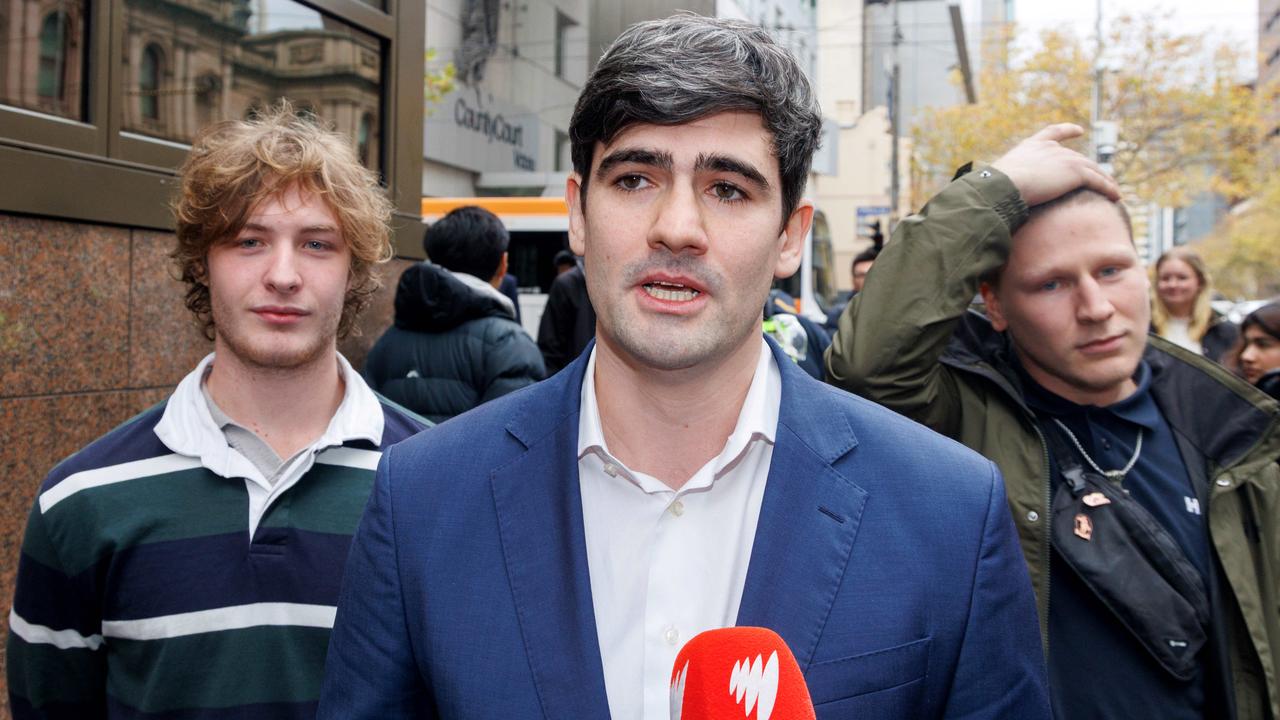
    On Thursday, Magistrate James FitzGerald found all four men—Jacob Hersant, 27, Nathan Bull, 24, Michael Nelson, 22, and Ian Lomax, 35—guilty of offensive behaviour. In his ruling, FitzGerald emphasized that the Dawn Service, a ceremony dedicated to honoring Australian and New Zealand soldiers who died in conflict, is not a platform for political grandstanding. While he acknowledged that Welcome to Country ceremonies remain a topic of public debate in some circles, he rejected the group’s claim that their views justified ruining the solemn occasion for thousands of attendees.

    Three of the offenders—Hersant, Bull and Nelson—are prominent adherents of the neo-Nazi ideology propagated by the National Socialist Network, which was formally designated a prohibited hate group and disbanded earlier this year. All three are currently unemployed. The fourth man, Lomax, a dentist from Ballarat, has already had his medical practice license suspended by the Australian Health Practitioners Regulation Agency over his ties to the extremist group, and he now works as a farmhand.

    Court documents detail that the men split into pairs to spread their disruption across the crowd: Hersant and Bull stood in one section, while Nelson and Lomax positioned themselves elsewhere. After the initial interruption, crowd members removed Nelson and Lomax from the service, but Hersant and Bull continued their heckling through subsequent portions of the ceremony. Hersant was captured on camera shouting vitriolic slogans including, “What about the Anzacs?” and “We don’t need to be welcomed to our own country”. Nelson, meanwhile, was recorded arguing with other attendees and claiming “The Anzacs fought for white Australians” and “The first heads of the RSL were pro-White Australia”.

    In their defense, the three younger men did not deny booing during the address, instead framing their actions as protected political activism. Lomax’s legal team argued that prosecutors had failed to produce sufficient evidence to prove their client participated in the booing. FitzGerald ruled that even though Nelson was removed from the service quickly, his offense was aggravated by deliberate goading of other attendees, noting “In other words you set out to be offensive and you succeeded in being highly offensive.”

    In sentencing, the judge handed down a AU$1,500 fine to Lomax, an AU$1,800 fine to Bull, and AU$3,000 fines to both Hersant and Nelson, with formal convictions recorded against the latter two. Prosecutor Ryan Mallia had previously pushed for a jail sentence for Hersant, citing his extensive prior criminal history tied to far-right extremist activity. Mallia stressed the severity of the offense, noting “It was heard by many people, likely most if not all that were in attendance … On the most sacred day for the Australian public to commemorate fallen soldiers.”

    Outside the courtroom following the verdict, Hersant, Nelson and Bull engaged in a verbal altercation with a female member of the public before police stepped in to separate the parties and de-escalate the conflict.

  • Ahead of papal visit, Spain pushes forward with reparations for church sex abuse victims

    Ahead of papal visit, Spain pushes forward with reparations for church sex abuse victims

    MADRID – More than half a century after she endured repeated sexual abuse at the hands of a Marist priest as an 8-year-old catechism student in Valladolid, northern Spain, Paula Alonso-Pimentel is finally pushing for accountability. Decades of buried trauma, followed by years of unmet demands for justice, have led her to this moment: a new joint reparations program between the Spanish government and the country’s Catholic bishops that aims to address long-unpunished abuse cases involving deceased or statute-barred perpetrators. For a nation that has lagged far behind other Western countries in confronting the clerical abuse crisis entrenched within its once-dominant Catholic institutions, this launch marks an unprecedented new chapter in a decades-long reckoning.

    Spain’s journey to this reparations framework began in 2018, when leading national newspaper El País published a searchable public database of alleged clergy sexual abuse cases, pulling back the curtain on a crisis the Catholic Church had hidden for generations. As public outrage mounted, Spain’s Parliament tasked the national ombudsman with conducting a full independent investigation. The resulting 2023 report, an 800-page exhaustive assessment, delivered a damning conclusion: based on a representative survey of 8,000 adults, the report estimated hundreds of thousands of people across Spain had experienced sexual abuse at the hands of Catholic clergy over the course of decades. The Spanish Bishops Conference immediately pushed back against the estimate, releasing its own internal count that documented just 728 identified abusive priests since 1945. Church leaders noted that 60% of those accused abusers were already deceased, and most of the alleged crimes occurred before 1990, placing them far outside the window for criminal prosecution.

    In 2024, the Spanish government threatened to mandate church-backed compensation, arguing the Church had consistently minimized the scope of the crisis. The bishops responded by launching their own unilateral victim assistance program, which critics quickly dismissed as toothless: run entirely by the Church, it lacked independent oversight, making it impossible to ensure fair outcomes for survivors. For many victims including Alonso-Pimentel, the idea of seeking compensation from the same institution that enabled and covered up their abuse was unacceptable. “You can’t be a judge and a jury in your own case,” Alonso-Pimentel put it, a sentiment shared by hundreds of other survivors who avoided the Church’s in-house process.

    The new joint reparations program, approved by both the bishops conference and the government months ahead of Pope Leo XIV’s upcoming visit to Spain, was designed to address that core criticism. Under the new framework, claims are first reviewed by an independent panel of experts convened by the national ombudsman, which proposes a package of compensation that may include symbolic recognition, psychological support, or financial payouts. The Church then reviews the proposal, and if no agreement can be reached, the case moves to a joint committee with representation from the Church, the ombudsman’s office, and victim advocacy groups. If the committee deadlocks, the ombudsman – an independent state official – retains final say over payout decisions, a landmark shift that gives government, not Church leaders, the final word on compensation. Survivors have exactly one year to submit claims, and as of the latest update, 420 people have already filed applications.

    For the Vatican, the program aligns with Pope Leo XIV’s recent public commitments to addressing clerical abuse. In his first encyclical, Leo wrote that listening to abuse survivors requires explicit acknowledgment of harm and delivery of “just reparation.” Josetxo Vera, communications director for the Spanish Bishops Conference, framed the new program as a natural expansion of the Church’s ongoing work to address past harm, while emphasizing that the bishops do not view the crisis as systemic within the Spanish Church. “We believe that, indeed, human nature is flawed, that it has a propensity for evil, and that it needs a great deal of reconciliation and forgiveness,” Vera said. “But I can’t say that it’s a systemic issue. We are part of this society. We share some of its virtues, and we also share some of its vices and crimes.” The conference has already paid out roughly 2 million euros ($2.3 million) to survivors through its earlier internal program, and leaders say they recognize why many survivors were uncomfortable engaging directly with the Church.

    Even with these reforms, the program faces widespread criticism from survivors and advocacy groups, who warn it retains critical structural weaknesses. A core point of contention is the one-year application window, which many argue is too short for survivors who have spent decades hiding their trauma to come forward. Critics also note the program lacks a standardized compensation matrix that ties payout amounts to the severity of abuse, meaning outcomes could be inconsistent across cases. Most alarmingly for opponents, the program is not legally binding, leaving no formal recourse for survivors who disagree with final decisions.

    Anne Barrett Doyle, co-director of Bishop Accountability, a U.S.-based nonprofit that tracks global clerical abuse cases and institutional cover-ups, called the new protocol “quite fragile.” “It has a very short time frame. It has no matrix to establish minimum awards for various categories of injuries,” she noted. “So will it be fair? Will it be consistent?”

    Those doubts are echoed by Spanish survivor activist Miguel Hurtado, who has spoken publicly about his own abuse at the hands of a monk at the iconic Montserrat Abbey, a historic Benedictine monastery outside Barcelona. As a 16-year-old Boy Scout in a group led by monk Andreu Soler more than 20 years ago, Hurtado says he was molested by Soler. He says the monastery immediately pressured his parents to not report the abuse to law enforcement, and decades later, after an independent 2019 report acknowledged Soler had abused multiple victims over decades, the monastery still refused to accept formal responsibility for compensation, arguing all claims were time-barred under criminal and civil law. Hurtado says he is disappointed that Pope Leo XIV will still visit the Montserrat Abbey during his trip, despite his detailed submission of the allegations to Vatican and church authorities. Like many other survivors, he fears the new reparations program will ultimately fail to deliver meaningful justice. “The problem is that it’s built on sand,” Hurtado said.

    For her part, Alonso-Pimentel shares that skepticism, but remains cautiously hopeful that the new independent model will deliver the accountability she has chased for 50 years. She declined to participate in the Church’s earlier internal program, distrustful of an institution that enabled her abuse and ignored her claims for decades. When she reached out to the Marist order in Valladolid after Pope Francis’ 2019 global summit on clerical abuse, all she received was the name of her abuser, with no further accountability. Now, she says she will file her claim under the new program no matter what, but is waiting to see if the process lives up to its promises. “It must cost them, the Church,” she said. “It must cost them because this cannot come for free. It cannot be that they can continue doing it without paying a huge price.”