分类: society

  • UK police arrest a man after a car hits pedestrians in the English city of Derby, injuring 7

    UK police arrest a man after a car hits pedestrians in the English city of Derby, injuring 7

    DERBY, England — A violent vehicular incident disrupted the evening calm in Derby’s city center on Saturday, resulting in multiple pedestrian casualties and triggering a significant police response. The episode unfolded at approximately 9:30 p.m. local time along Friar Gate, a renowned nightlife district in this Midlands city of 275,000 residents.

    Derbyshire Constabulary confirmed the arrest of a 36-year-old local man on suspicion of attempted murder following the collision. The suspect was apprehended near the scene and remains in police custody for questioning. Emergency services transported seven injured pedestrians to area hospitals for treatment, though their current conditions remain undisclosed.

    Chief Superintendent Emma Aldred addressed the public during a Sunday news conference, revealing that counterterrorism specialists have joined the investigation—a standard procedural measure for incidents of this nature. Despite this collaborative effort, authorities emphasized they have not classified the event as terrorism-related at this preliminary stage.

    “I must clarify that this procedural involvement does not indicate we are treating this as a terrorist incident,” Aldred stated. “Our investigators maintain an open-minded approach regarding potential motives as we continue gathering evidence.”

    The Derbyshire Constabulary has cordoned off the Friar Gate area for forensic examination while appealing to witnesses who might have captured footage or observed the events leading to the collision. The investigation continues as authorities work to establish the precise sequence of events and determine whether the act was intentional or accidental.

  • Two Australian states offer free public transport as war pushes up fuel prices

    Two Australian states offer free public transport as war pushes up fuel prices

    In response to skyrocketing fuel prices triggered by Middle East conflicts, two Australian states have announced unprecedented free public transport initiatives. Victoria and Tasmania are implementing temporary fare-free periods to alleviate financial pressure on commuters and reduce road traffic.

    Victoria Premier Jacinta Allan confirmed that all train, tram, and bus services will be completely free throughout April. “This immediate measure won’t resolve every challenge, but it provides crucial relief for Victorians during this difficult period,” Allan stated on Saturday. The initiative aims to decrease dependency on private vehicles as petrol prices continue their upward trajectory.

    Simultaneously, Tasmania announced an even more extensive program, eliminating fares on coaches, buses, and ferries from Monday through June’s end. Premier Jeremy Rockliff emphasized that “rising fuel costs significantly impact family budgets, prompting our decisive action to protect Tasmanians.” The island state will additionally waive school bus fees, generating approximately A$20 weekly savings for affected families.

    This policy divergence highlights regional variations in addressing the fuel crisis. New South Wales Transport Minister John Graham indicated his state reserves resources for potential extended disruptions, noting “this situation will likely persist beyond a single month.” Other states including South Australia, Queensland, and Western Australia have implemented alternative measures such as expanded senior travel benefits, previously introduced flat fares, or historical fare reductions.

    The national context reveals severe price inflation, with average petrol costs surging from A$2.09 to A$2.38 per litre within one month according to Australian Institute of Petroleum data. Although supply chain issues aren’t cited as primary concerns, international oil market volatility continues driving domestic price increases.

    Globally, Australia joins multiple nations implementing conservation measures following the effective closure of the Strait of Hormuz—a critical waterway handling 20% of global oil and gas shipments. Egypt has mandated early business closures and remote work policies, Ethiopia placed non-essential government staff on leave, and the Philippines declared a national emergency incorporating transport subsidies and reduced government operational days.

  • Bulgarian researcher: My mission to show a humane China

    Bulgarian researcher: My mission to show a humane China

    For many young observers abroad, China remains an abstract concept—a distant economic phenomenon or geopolitical entity. Yet for Jood Ghazwan Sharaf, a Bulgarian doctoral candidate at Tsinghua University, China has become a living tapestry of human stories and cultural richness. Her academic journey has transformed into a mission to showcase the nation’s profound humanity beyond statistical narratives.

    Sharaf’s connection to Chinese culture originated not in academic halls but through the vibrant world of Chinese television dramas. Encouraged by her grandmother—a computer science researcher—she developed a deep appreciation for wuxia (martial heroes) and xianxia (immortal heroes) genres, captivated by their artistic craftsmanship, narrative depth, and emphasis on familial bonds and female empowerment. This shared cultural consumption with her grandmother evolved into a life-changing academic pursuit.

    In 2022, Sharaf embarked on her PhD studies at Tsinghua University, transitioning from international relations theory to immersive cultural storytelling. Her early challenges were significant: navigating Mandarin-taught courses without prior language proficiency required developing a rigorous bilingual research methodology. She maintained parallel study materials—English literature on China studies alongside original Chinese academic works—while receiving substantial support from professors and peers.

    Her lived experience in China revealed what she identifies as a critical gap in Western scholarship: the tendency to analyze China through external frameworks rather than understanding its unique developmental approach. “Many western theorists try to apply their worldview to China without seeing it as it actually is,” Sharaf observed. She emphasizes China’s distinctive development model operates without imposing itself on other nations, embodying what she describes as “kaifang baorong” (open and inclusive) principles.

    Beyond academia, Sharaf has become an active documentarian of China’s cultural preservation efforts. Her fieldwork has taken her to Hainan province where she recorded Qiong opera performances, Li brocade weaving techniques, and artisans maintaining traditional crafts. This ethnographic work reinforces her conviction that behind geopolitical narratives exist individual stories worthy of recognition. “Everybody has a story. No matter if you’re from a village, from a big city, or from whatever country, that story is important,” she asserts.

    Sharaf’s mission culminates in bridging perceptual gaps between China and global audiences. “Living and studying in China, I have changed from a curious, distant observer to an integrated participant,” she reflects. “In the future, I am willing to continue being a devoted decoder and a warm connector between China and the world.”

  • French sinologist: Speaking Chinese isn’t sufficient – reading is essential

    French sinologist: Speaking Chinese isn’t sufficient – reading is essential

    At the themed forum “Telling Story Well: From Empathetic Communication to Cultural Identity” held on March 28, distinguished French sinologist David Gosset presented a compelling argument for comprehensive Chinese language acquisition. The founder of the China-Europe-America Global Initiative emphasized that true mastery of Chinese extends far beyond basic conversational abilities.

    Gosset, an authoritative voice in Sino-European cultural studies, articulated that linguistic proficiency must encompass reading comprehension and writing capabilities to achieve meaningful cultural engagement. He stressed that superficial language skills remain insufficient for grasping China’s philosophical depth and historical consciousness.

    “The Chinese language serves as the vessel for millennia of cultural accumulation,” Gosset explained during his address. “To truly understand China’s contemporary reality, one must access the classical texts and literary traditions that have shaped its civilizational trajectory.”

    The sinologist’s perspective challenges prevailing language education models that prioritize verbal communication over literary acquisition. His analysis suggests that cultural identity formation through language requires engagement with written historical narratives and philosophical concepts embedded in Chinese characters.

    This approach aligns with China’s broader cultural diplomacy efforts, emphasizing deeper mutual understanding rather than superficial cultural exchange. Gosset’s methodology advocates for linguistic study as gateway to comprehensive cross-cultural comprehension, particularly relevant as global interest in Chinese studies continues to grow.

  • Pope Leo XIV opens Holy Week with Palm Sunday that recalls final days of Pope Francis’ life

    Pope Leo XIV opens Holy Week with Palm Sunday that recalls final days of Pope Francis’ life

    VATICAN CITY — Pope Leo XIV inaugurated his inaugural Holy Week as pontiff with Palm Sunday celebrations in St. Peter’s Square, drawing tens of thousands of faithful in a ceremony marked by both tradition and remembrance of his predecessor. The event commenced with a solemn procession of cardinals, bishops, clergy, and laypeople carrying intricately braided palm fronds and olive branches, symbolizing Jesus’ triumphant entry into Jerusalem before his crucifixion.

    The liturgical celebration held particular significance as it evoked memories of Pope Francis’ final days. Last year, Francis had delegated Holy Week ceremonies while recovering from pneumonia but made a poignant final appearance on Easter Sunday before passing away from a stroke on Easter Monday. His nurse, Massimiliano Strappetti, revealed Francis’ moving last words: “Thank you for bringing me back to the square.”

    Pope Leo’s approach signals a return to traditional practices while acknowledging Francis’ legacy. The new pontiff will restore the Holy Thursday foot-washing ceremony to St. John Lateran Basilica, reversing Francis’ practice of performing the ritual in prisons and refugee centers. While Francis used the ceremony to emphasize service to society’s marginalized, including non-Christians, Leo will follow the tradition of previous popes by washing the feet of twelve priests.

    The Holy Week schedule includes Friday’s Good Friday procession at Rome’s Colosseum commemorating Christ’s crucifixion, followed by the Easter Vigil on Saturday where Leo will baptize new converts. The week culminates with Easter Sunday Mass in St. Peter’s Square and the traditional papal blessing from the basilica loggia.

  • Two sides of Luoyang: From tractors to hanfu dreams

    Two sides of Luoyang: From tractors to hanfu dreams

    The ancient city of Luoyang in Henan province reveals a fascinating dichotomy of modern industrial legacy and cultural renaissance. China Daily’s Xia Ji, accompanied by Italian friend Martina, recently embarked on an extraordinary journey showcasing the city’s contrasting identities within a single day.

    The exploration began with an unexpected agricultural experience as the visitors operated tractors, symbolizing Luoyang’s industrial significance in China’s manufacturing landscape. This hands-on encounter demonstrated the city’s contribution to modern agricultural machinery production and technological advancement.

    Transitioning dramatically from industrial to historical, the travelers then immersed themselves in Luoyang’s rich cultural heritage by donning traditional hanfu garments. Wearing these elegant historical costumes, they wandered through the city’s ancient streets, experiencing what life might have been like during Luoyang’s golden era as the ‘divine capital’ over a millennium ago.

    This remarkable day-trip illustrates how Chinese cities like Luoyang successfully preserve and celebrate their historical legacy while simultaneously embracing modern development. The hanfu movement, particularly strong in historically significant cities, represents a growing cultural phenomenon among Chinese youth who seek to reconnect with their traditional heritage through fashion and experiential tourism.

    The seamless transition between these two worlds demonstrates urban China’s unique ability to harmonize industrial progress with cultural preservation, offering both residents and visitors multifaceted experiences that span centuries of development within a single city’s boundaries.

  • Prison phone call recordings raise questions over ex-Abercrombie boss’ fitness for trial

    Prison phone call recordings raise questions over ex-Abercrombie boss’ fitness for trial

    A high-stakes legal drama unfolds in a New York federal court as former Abercrombie & Fitch CEO Mike Jeffries fights to prove mental incompetency ahead of his sex trafficking trial. The 81-year-old fashion executive, charged alongside his British partner Matthew Smith and alleged middleman James Jacobson, faces life imprisonment if convicted of operating a global sex trafficking operation.

    The courtroom has become a battleground for medical experts offering diametrically opposed assessments of Jeffries’ mental capacity. Defense experts Dr. Jacqueline Valdes, Dr. Alexander Bardey, and Dr. Miranda Rosenberg testified that Jeffries suffers from dementia, Alzheimer’s disease, and residual effects of a traumatic brain injury sustained in a 2018 fall in South Africa. They presented evidence of cognitive decline dating to 2013, with MRI scans showing mild brain atrophy.

    Prosecutors counter with prison medical experts Dr. Tracy O’Connor Pennuto and Dr. Cassondra Morris, who after four months of evaluation at the Federal Medical Center in Butner, declared Jeffries competent for trial. They argue his cognitive abilities remain superior to 95% of patients they assess and attribute improved test scores to alcohol abstinence and better medication management.

    The case took a dramatic turn with the introduction of 109 prison phone calls totaling over 22 hours of recordings. In these conversations, Jeffries is heard telling Smith ‘we’re screwed’ if found competent, explicitly stating ‘you better find me incompetent’ to doctors, and discussing defense strategies including witness discreditation techniques.

    Despite defense claims of severe cognitive impairment, recordings reveal Jeffries discussing sophisticated literary content, analyzing LGBTQ+ representation in media, and emotionally recounting his 22-year career at Abercrombie & Fitch, including detailed memories of store openings. Prosecutors highlighted the contradiction between remembering professional achievements while allegedly forgetting the ’50 to 60 wild orgies’ central to the charges.

    Judge Nusrat J. Choudhury must reconcile these conflicting medical opinions to determine if Jeffries understands the charges against him and can assist in his own defense. The decision, expected in May, will determine whether the October trial proceeds against all three defendants or continues without Jeffries if ruled incompetent.

    The case originated from a 2023 BBC investigation that exposed an alleged sophisticated operation recruiting young men for sex events worldwide during Jeffries’ tenure as CEO. Despite the serious charges, Abercrombie & Fitch remains financially responsible for Jeffries’ defense under an indemnification agreement signed upon his 2014 departure, with legal costs anticipated to reach millions.

  • 1 dead, 25 injured in building fire in Taiyuan

    1 dead, 25 injured in building fire in Taiyuan

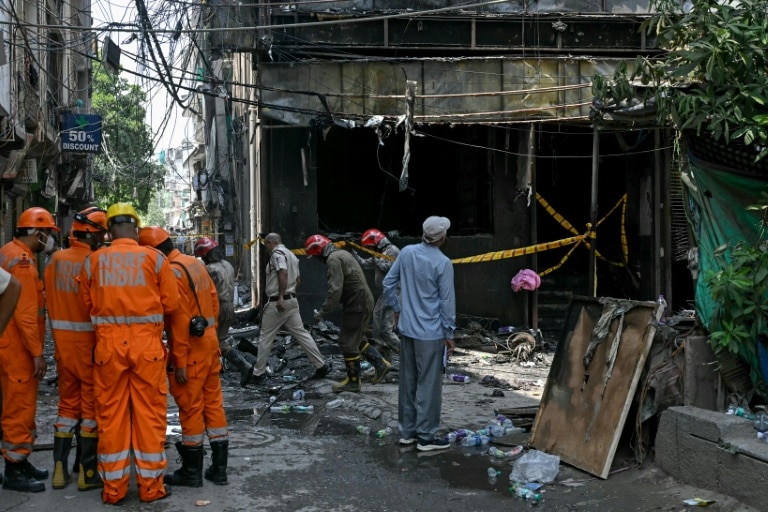
    A devastating fire erupted on the exterior facade of a commercial-residential building along Qinxian Street in Taiyuan, Shanxi province, on the evening of March 28, resulting in one fatality and 25 injuries. According to official reports from Xinhua News Agency, emergency response teams including firefighters, police, and medical personnel were immediately dispatched to the scene following the outbreak of the blaze.

    The inferno, which has since been fully extinguished, caused significant damage to the building’s external structure. Among the injured, seven individuals sustained severe burns and trauma, requiring immediate critical care. All casualties have been transported to nearby medical facilities where they are receiving comprehensive treatment.

    Rescue operations continued through the night as emergency crews worked to secure the building and ensure no additional individuals remained trapped within the affected structure. The rapid response by local authorities helped prevent further casualties despite the challenging nature of the facade fire, which can spread rapidly across building exteriors.

    An investigation into the cause of the fire has been initiated, with preliminary assessments focusing on potential electrical faults or external ignition sources. The incident has raised concerns about building safety standards and fire prevention measures in urban structures, particularly regarding exterior insulation and facade materials that may contribute to fire spread.

    The municipal government of Taiyuan has announced it will conduct a comprehensive review of fire safety protocols for high-rise buildings throughout the city to prevent similar tragedies in the future.

  • How deepfake porn scandal surrounding TV star rocked Germany

    How deepfake porn scandal surrounding TV star rocked Germany

    A high-profile scandal involving allegations of non-consensual deepfake pornography has captivated Germany, triggering widespread protests and prompting calls for urgent legal reforms. Television personality Collien Fernandes, 44, has become the focal point of this national conversation after publicly accusing her ex-husband, Christian Ulmen, of distributing manipulated pornographic content featuring her likeness.

    The controversy erupted when Fernandes detailed her allegations in Der Spiegel, claiming Ulmen confessed to disseminating the fabricated sexual images during Christmas 2024. The emotional impact was profound, with Fernandes describing the revelation as ‘like receiving news of a death.’ Her subsequent public appearances, including a Hamburg rally where she appeared in a bulletproof vest citing death threats, have galvanized public opinion.

    Ulmen, through his legal representatives Christian Schertz and Simon Bergmann, has categorically denied all allegations, stating he never ‘produced and/or distributed deepfake videos of Ms Fernandes or any other individuals.’ His legal team has initiated proceedings against Der Spiegel, asserting that reported details are ‘demonstrably incomplete and incorrect.’

    The case has exposed significant gaps in German legislation regarding digital sexual violence. Currently, German law only addresses the dissemination of such materials when they violate personal image rights, leaving creation largely unregulated. In response, Federal Justice Minister Stefanie Hubig has announced draft legislation that would explicitly criminalize both production and distribution of pornographic deepfakes, with proposed penalties of up to two years imprisonment.

    A coalition of 250 prominent women from politics, business, and culture has issued ten demands for legal reform, including clear criminalization of non-consensual sexualized deepfakes. The group includes Labour Minister Bärbel Bas, rapper Ikkimel, and climate activist Luisa Neubauer.

    The scandal has also entered the political arena, with Chancellor Friedrich Merz facing criticism for his response to questions about violence against women. His remarks attributing a ‘considerable portion’ of violence to immigrant groups drew mixed reactions, applauded by conservative and far-right lawmakers but criticized by others as misjudged and dismissive of structural issues.

    Meanwhile, police statistics reveal that reports of violence against women reached record levels in Germany during 2024, adding urgency to the ongoing debate about legal protections in both physical and digital spaces.

  • India restoring a centuries-old royal kitchen that never stopped serving food

    India restoring a centuries-old royal kitchen that never stopped serving food

    In the heart of Lucknow, Uttar Pradesh, a remarkable preservation project is breathing new life into a nearly two-century-old royal kitchen that continues to serve thousands despite its historical significance. Originally constructed in 1837 by Muhammad Ali Shah, the last ruler of the Awadh kingdom, this culinary landmark represents an enduring legacy of communal generosity that has outlived the monarchy itself.

    The kitchen, nestled within the Chota Imambara complex, stands as a testament to architectural ingenuity and cultural continuity. What makes this restoration extraordinary is the Archaeological Survey of India’s commitment to historical accuracy, employing traditional Mughal-era construction methods. Artisans are recreating authentic lime-based mortar—soaked for a month and mixed with wood apple pulp, black gram, natural gum (gond), jaggery, and red brick dust—while using period-appropriate ‘lakhauri’ bricks to maintain structural authenticity.

    Beyond architectural preservation, the kitchen maintains its original purpose of serving meals to the community. During Ramadan and Muharram, it feeds approximately 700 people daily through a coupon system, with meals distributed to 16 local mosques. The menus, meticulously detailed in Muhammad Ali Shah’s will nearly two centuries ago, continue to dictate portion sizes and dish specifications—from meat curries and kebabs during Ramadan to vegetarian offerings during Muharram’s initial mourning days.

    The restoration, scheduled for completion by March, addresses concerning structural decay while preserving intricate wall carvings and iconic brickwork. Funded through a unique historical endowment—originally 3.6 million rupees given to the East India Company in 1839 with the stipulation that interest would maintain Awadh monuments—the kitchen now operates under the Hussainabad Trust using the same financial mechanism.

    For descendants of the Awadh royalty and longtime community members like 80-year-old Syed Haider Raza, the kitchen represents living history. ‘The spirit of the place is still the same,’ Raza observes, ‘It feels as if the food is still being sent by Muhammad Ali Shah.’ This project demonstrates how functional preservation can maintain both physical structures and the cultural traditions they embody.