分类: society

  • 1 dead in Romania in a powerful storm after intense heatwave

    1 dead in Romania in a powerful storm after intense heatwave

    A devastating severe storm swept through Romania in the overnight hours leading into Wednesday, cutting through a weeks-long record-breaking heatwave and leaving one person dead, widespread flood damage and thousands of urgent calls for emergency response across 20 of the Eastern European nation’s counties.

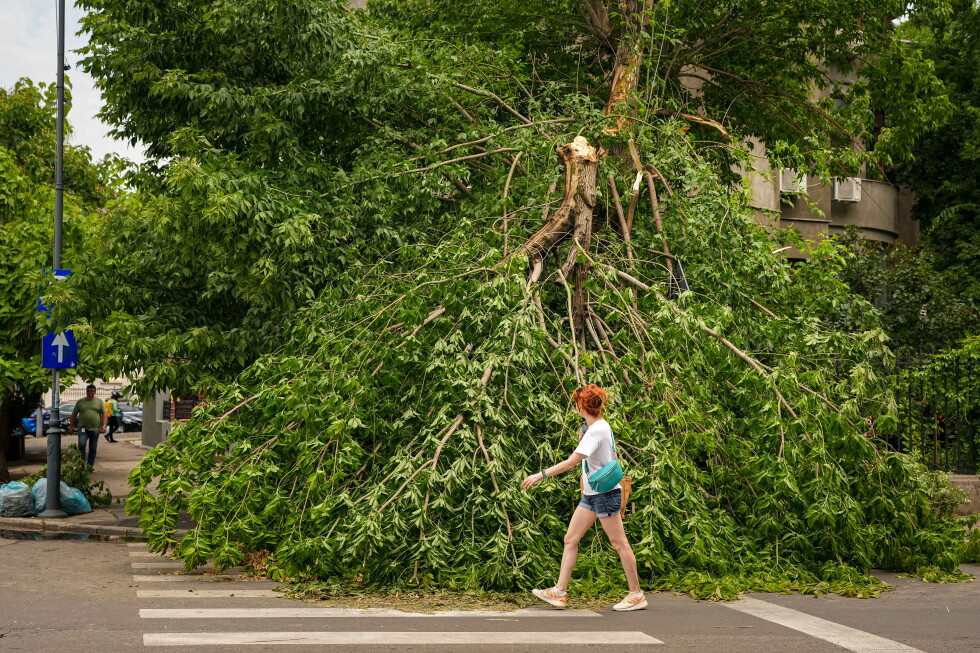
    According to Romania’s General Inspectorate for Emergency Situations (IGSU), the torrential downpour and high winds impacted a total of 60 localities across the country, with the capital Bucharest and its adjacent Ilfov County bearing the brunt of the extreme weather. The sole confirmed fatality occurred in the region when a large tree, uprooted by powerful gusts, collapsed onto a moving vehicle, killing the occupant inside.

    In the wake of the storm, IGSU teams worked around the clock to respond to more than 2,200 distress calls from residents trapped by floodwaters or dealing with storm-related debris. Crews pumped standing water out of more than 350 residential properties and 100 public streets that had been left submerged by the intense rainfall. To supplement local response efforts, emergency management officials deployed additional rescuers and heavy equipment—including water pumps, utility trucks and chainsaws—from neighboring unaffected counties to support recovery work.

    Preliminary damage assessments from the IGSU confirm that nearly 1,000 trees were felled across the hardest-hit regions, and 495 parked and moving vehicles suffered damage from falling debris or floodwaters.

    The extreme storm event comes as much of Continental Europe grapples with an intense summer heatwave, which has pushed temperatures in parts of Romania to forecast highs above 40 degrees Celsius (104 Fahrenheit). The sweltering conditions created the unstable atmospheric conditions that fueled the sudden severe storm, according to national weather officials.

    On Wednesday, Romania’s National Meteorological Administration extended its warning for additional extreme weather, noting that ongoing atmospheric instability would likely trigger more torrential rainfall and severe thunderstorms across the country’s western and southern regions in the coming hours.

  • Several killed and injured in fire at Antwerp apartment building

    Several killed and injured in fire at Antwerp apartment building

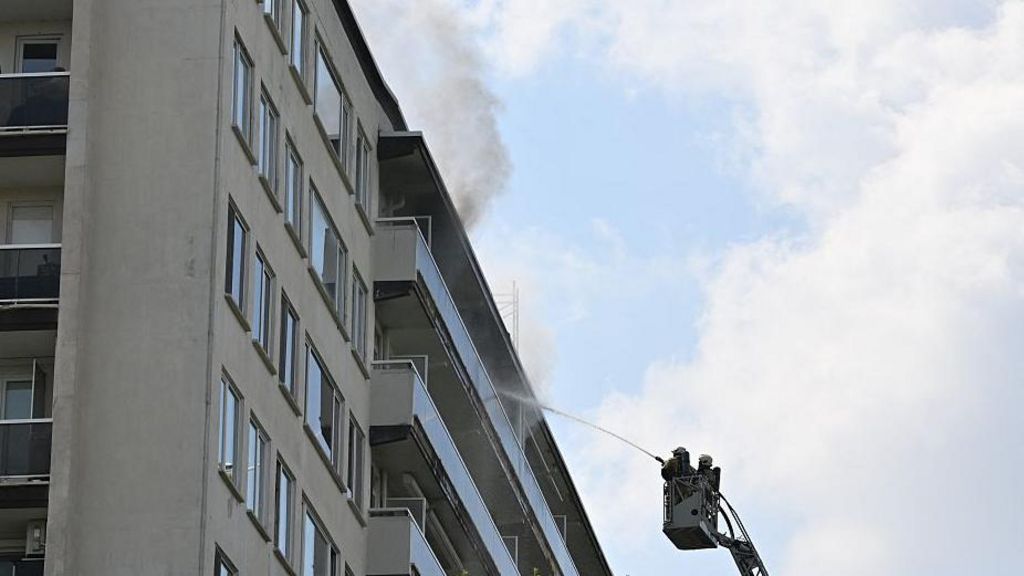
    A devastating residential fire has left multiple people dead and several others injured in the Belgian port city of Antwerp, local law enforcement confirmed Wednesday. The inferno ignited shortly before 10 a.m. local time (8 a.m. GMT) in the city’s Linkeroever district, with thick, acrid smoke quickly billowing out from the eighth floor of the 10-storey apartment building, visible for blocks around the site.

    Captured on dramatic on-the-ground footage, one resident was seen scrambling from his own balcony through a neighbor’s window to outrun the suffocating black smoke that was rapidly engulfing his unit. The building is home to more than 200 residents, according to local police data.

    Geert Dewulf, one of the building’s residents, shared his harrowing escape experience with Belgian public television. “Thick smoke blocked our path to the stairwell, so we couldn’t get out of our flat,” he explained. “We barricaded ourselves inside to keep the smoke out and waited on our balcony for help. The fire brigade showed up with their ladder and rescued us about 10 minutes later.”

    Emergency responders have been conducting a systematic door-to-door search of the entire building to locate any unaccounted-for residents. Fire department officials noted that the rapid spread of toxic smoke through the building’s corridors created major challenges for coordinated evacuation efforts immediately after the fire broke out.

    In one notable case, a local man confirmed that his parents-in-law — including Bob Cools, the former mayor of Antwerp — had been successfully pulled from the building and transported to a local hospital for evaluation. He added that despite desperate attempts to rescue his family cat from the burning unit, the crew could not reach the animal in time.

    As of Wednesday afternoon, investigators have not yet determined the official cause of the fire. Multiple witnesses told local newspaper De Standaard that renovation work was ongoing on the building’s roof at the time the blaze broke out, which is being examined as a potential contributing factor by authorities.

  • UK police who arrested teenage stabbing victim as he lay dying face gross misconduct probe

    UK police who arrested teenage stabbing victim as he lay dying face gross misconduct probe

    LONDON – Britain’s independent police oversight body announced Wednesday that two British law enforcement officers are facing a potential gross misconduct investigation after body camera footage captured them handcuffing an 18-year-old stabbing victim as he lay dying. The case, which has already sparked public outrage and rioting in southern England, also includes a parallel probe into whether racial or religious bias influenced the officers’ actions on the scene.

    The two officers are members of Hampshire Constabulary, the first emergency responders to reach the attack site in Southampton, a coastal city in southern England. The incident dates back to December 2025, when 18-year-old Henry Nowak, a white man, was fatally stabbed by 23-year-old Vickrum Digwa. Immediately following the attack, Digwa, who identifies as Sikh, fabricated a false narrative that he himself had been the target of a racist attack initiated by Nowak.

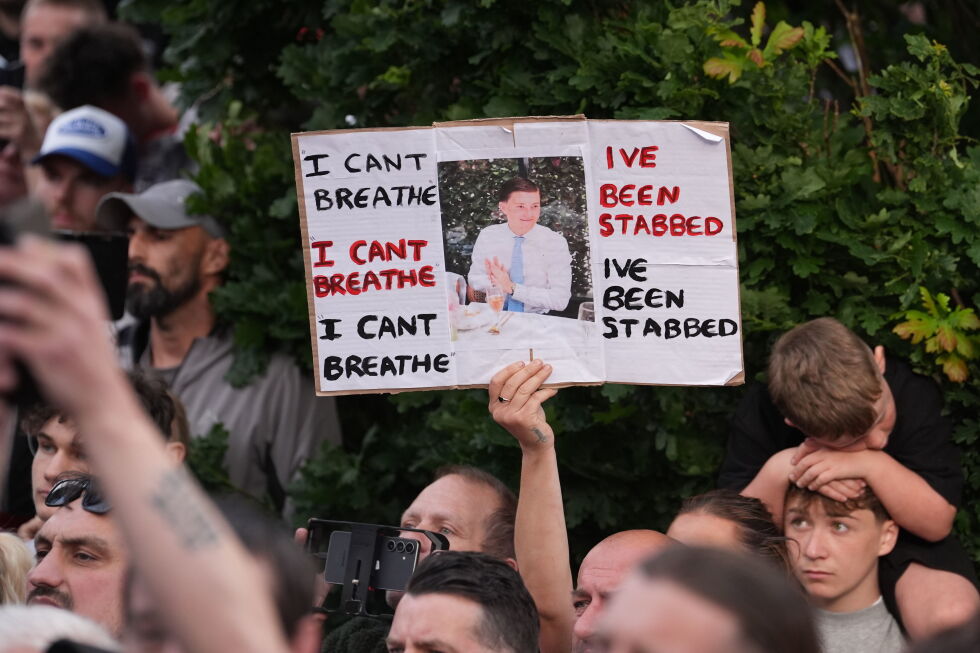
    Body-worn camera footage from the officers’ uniforms documented Nowak’s final minutes alive, showing the teenager in handcuffs as he told the responding officers he had been stabbed and was struggling to breathe. When the footage was made public, it sent shockwaves across the United Kingdom, drawing widespread condemnation of the officers’ response.

    The Independent Office for Police Conduct (IOPC), the national body that oversees allegations of police misconduct in England and Wales, confirmed that the two officers are suspected of violating multiple professional conduct standards. Alleged breaches include failures in meeting core duty and responsibility requirements, inappropriate use of force, and conduct that brings disrepute to the police service. The watchdog is also formally examining whether the officers’ decision to treat Nowak as a suspect rather than a victim was shaped by racial or religious prejudice stemming from Digwa’s false claim.

    Derrick Campbell, IOPC’s director of engagement, emphasized that the launch of an investigation does not guarantee disciplinary action will follow the probe. “At the end of our investigation, we will decide whether any officers should face disciplinary proceedings,” Campbell stated in an official release.

    The tragedy has already become a flashpoint for political unrest in the region. Following Digwa’s murder conviction last month, where he was sentenced to a minimum of 21 years in prison, far-right activists and politicians seized on Nowak’s death to push unsubstantiated claims that the British justice system holds inherent bias against white people. The rhetoric erupted into violent public disorder in Southampton in the wake of the sentencing, leaving communities on edge as the misconduct investigation unfolds.

  • Mourners attend funerals for 14 Pakistani children killed in tutoring center roof collapse

    Mourners attend funerals for 14 Pakistani children killed in tutoring center roof collapse

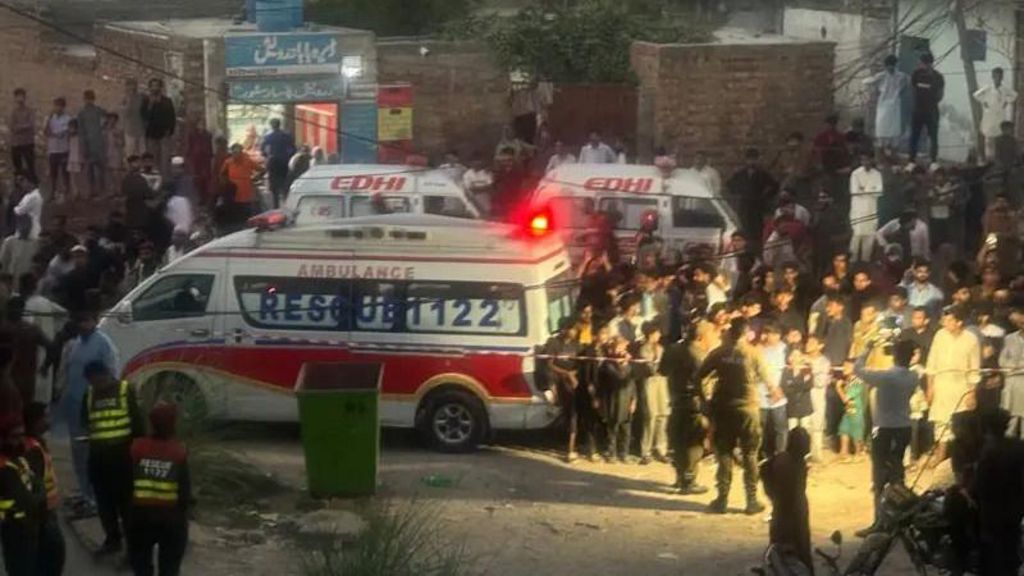
    On a somber Wednesday in Lahore, the eastern hub of Pakistan, hundreds of grieving mourners gathered to lay to rest 14 young schoolchildren killed in a sudden, devastating roof collapse at a local tutoring center that happened a day earlier. Eight other children who were pulled from the rubble sustained non-life-threatening injuries and remain hospitalized in stable condition, as law enforcement authorities launch a full investigation into the structural failure.

    Early findings from police and on-the-ground resident accounts confirm the tutoring center operated out of a decades-old aging structure, with ongoing construction work underway on the building’s second floor at the time of the collapse. Senior police official Kamran Faisal told reporters that investigators have linked the collapse to substandard, unfinished construction work, and negligence on the part of the building owner and contracted construction crews is the primary working theory. Authorities have already taken at least two people into custody, including the building’s owner, as they work to assign legal responsibility for the tragedy. “We are still working to pin down exactly whose negligence led to this terrible loss of life,” Faisal confirmed to reporters.

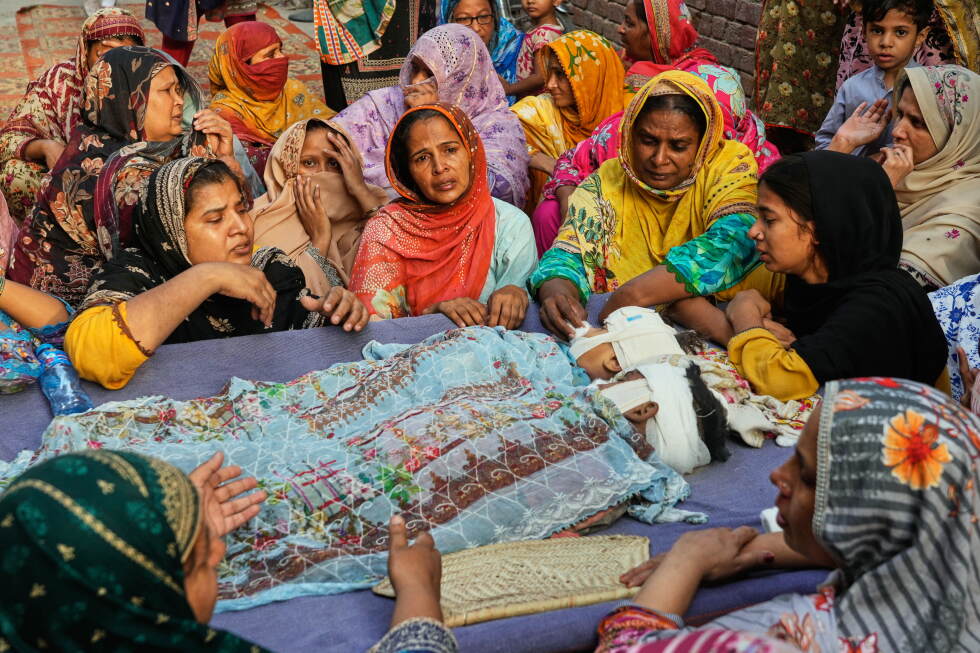
    The victims, all between elementary school age and 14 years old, received funeral prayers that started before dawn and stretched through Wednesday morning. Most of the children were interred in a local community graveyard, while a small number of families arranged to transport their loved ones’ remains to their ancestral hometowns for burial. Overnight, ambulances carried the victims’ bodies to their homes in Kahna, a residential neighborhood on Lahore’s outskirts. As the caskets arrived, the sound of anguished cries echoed across the neighborhood; female relatives and mothers sat vigil beside the bodies through the night, while tearful classmates and friends of the dead children stood in quiet mourning nearby.

    For many local families, the grief is overwhelming. Mohammad Ashfaq, a day laborer who lost both his 7-year-old son and his nephew in the collapse, was among the mourners Wednesday. “I cannot put this pain and grief into words,” he said through tears, as relatives surrounded him to offer what comfort they could. Not far away, Muhammad Farooq grieved for his young daughter, recalling the last hours before the collapse. “She left for her tuition class around 4 p.m. yesterday,” Farooq said. “Within 45 minutes, my family called me to say the roof had caved in, and there were children trapped under the debris. Fourteen were killed, and the hurt were taken to the hospital.”

    Local resident Mohammad Tahir, who was on the scene immediately after the collapse, shared that neighborhood residents were the first to launch rescue efforts. “First responders got here quickly, but before they arrived, neighbors ran in with shovels, and many even dug through the rubble with their bare hands,” Tahir explained. “We pulled as many children out as we could, but too many could not be saved.”

    This tragedy is far from an isolated incident in Pakistan: structural building collapses are a common occurrence across the country, thanks to chronically lax enforcement of construction safety standards. To cut construction and operational costs, developers often use cheap, substandard building materials and routinely ignore mandatory safety regulations. In the wake of the collapse, many local residents have turned their grief into anger, blaming the tutoring center’s building owner for operating a facility for children in an old, already unsafe structure while active construction was ongoing. They are calling for harsh, full legal punishment for all parties found responsible for the deaths. “We don’t even know whose funeral to attend first, or whose home to go to first to give our sympathy,” Tahir said, voicing the overwhelming sorrow of a shaken community.

  • Farming worries after India records driest June in over a decade

    Farming worries after India records driest June in over a decade

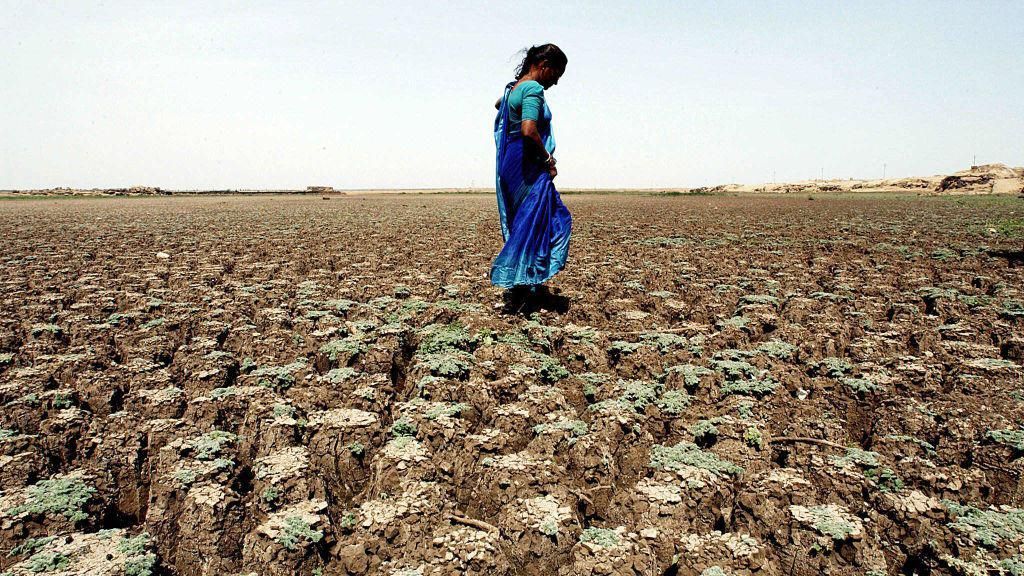
    India’s agricultural sector is grappling with growing uncertainty after the country recorded its driest June in 12 years, according to official data from the India Meteorological Department (IMD). Marking the fifth-driest June since consistent national rainfall tracking began in 1901, the unprecedented dry spell has cast a shadow over the 2026 summer cropping season, with early government data showing a steep drop in planted acreage across key crops.

    The southwest monsoon, which delivers roughly 70% of India’s annual total rainfall, is the backbone of the country’s agricultural economy. More than half of India’s net farmed land lacks reliable irrigation infrastructure, leaving hundreds of millions of smallholder farmers entirely dependent on the timing and volume of monsoon rains to plant and nourish their main summer crops, including rice, pulses, oilseeds, cotton, and sugarcane.

    This year, the monsoon got off to a troubled start: its arrival in the southern state of Kerala, the traditional first point of contact for the seasonal rains, was delayed by three days. Its northward progression across western India slowed dramatically for nearly two weeks, pushing back field preparation and sowing schedules across major agricultural regions. By the end of June, federal agriculture ministry data showed total summer crop planted area had fallen to 18.27 million hectares, a nearly 23% drop from the 23.65 million hectares recorded in the same period last year. The decline has been particularly sharp for rice, India’s staple food grain, where sown area has dropped by 25% year-on-year from 3.44 million hectares to just 2.58 million hectares.

    IMD Director General Mrutyunjay Mohapatra confirmed the severity of the June dry spell in comments to the BBC, noting that total rainfall last month was 39.8% lower than the long-period average – far off the department’s initial forecast of 92% of the average. Only four years since 1901 (1905, 1926, 2009, and 2014) have recorded drier June conditions.

    Compounding concerns, the IMD has also forecast below-average rainfall for July, which is typically the wettest month of the four-month monsoon season, contributing around one-third of total annual monsoon rainfall and aligning with the peak sowing window for most summer crops. Beyond domestic crop output, industry experts warn that weak monsoon rains will likely cut domestic oilseed production, forcing India to increase its already heavy reliance on imported edible oils, a move that could put upward pressure on national food inflation.

    For now, the full impact on end-of-season harvests remains uncertain. The monsoon season runs through September, leaving a window of opportunity for rainfall to rebound and allow farmers to catch up on delayed planting. India also enters the season with a robust buffer of government-held rice stocks: as of July 1, official stocks stood at 39.7 million tonnes, nearly three times the required 13.5 million tonne buffer. An additional 29.8 million tonnes of rice is expected to enter stockpiles once already procured paddy is processed, creating a strong safety net for short-term supply disruptions.

    Indian authorities have moved proactively to prepare for the risk of a prolonged weak monsoon and potential El Niño conditions, the climate pattern marked by abnormal warming of eastern tropical Pacific waters that is often linked to reduced monsoon rainfall in South Asia. Agriculture Minister Shivraj Singh Chouhan announced last week that officials have identified 315 districts at high risk of below-normal rainfall and developed detailed contingency plans. These plans include promoting short-duration crop varieties that require less water, expanding water conservation infrastructure, and providing guidance to farmers to adapt to dry conditions.

    Addressing public concern, Chouhan emphasized that the government is acting proactively rather than waiting for a crisis to unfold. “There is no need to panic,” he stated, reassuring the public that existing buffer stocks of rice and wheat remain sufficient to protect national food security despite the rocky start to the monsoon.

  • What to know about the breakaway traditionalist Catholics defying Pope Leo XIV

    What to know about the breakaway traditionalist Catholics defying Pope Leo XIV

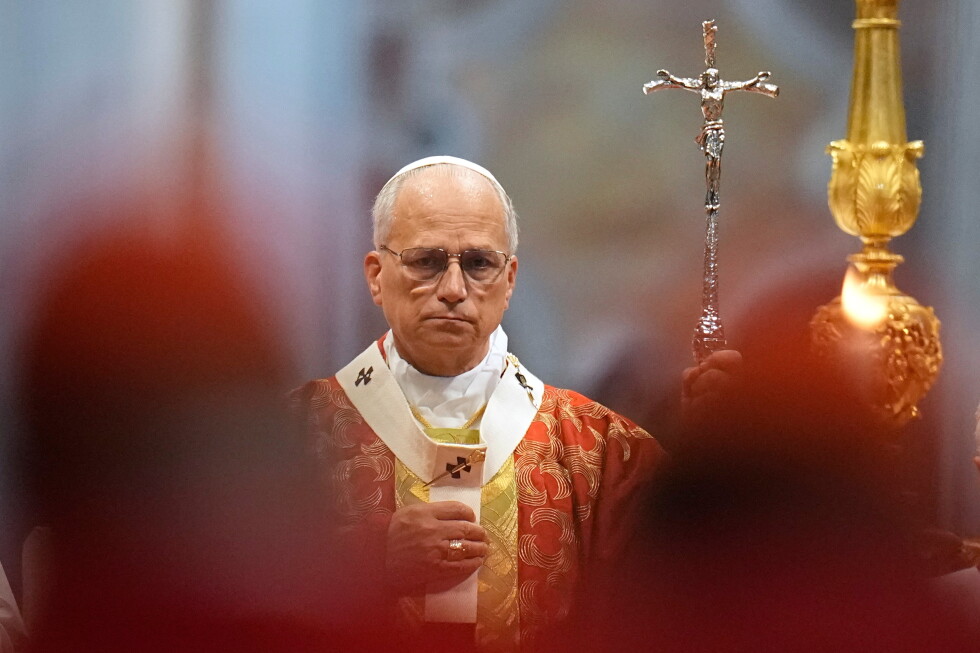
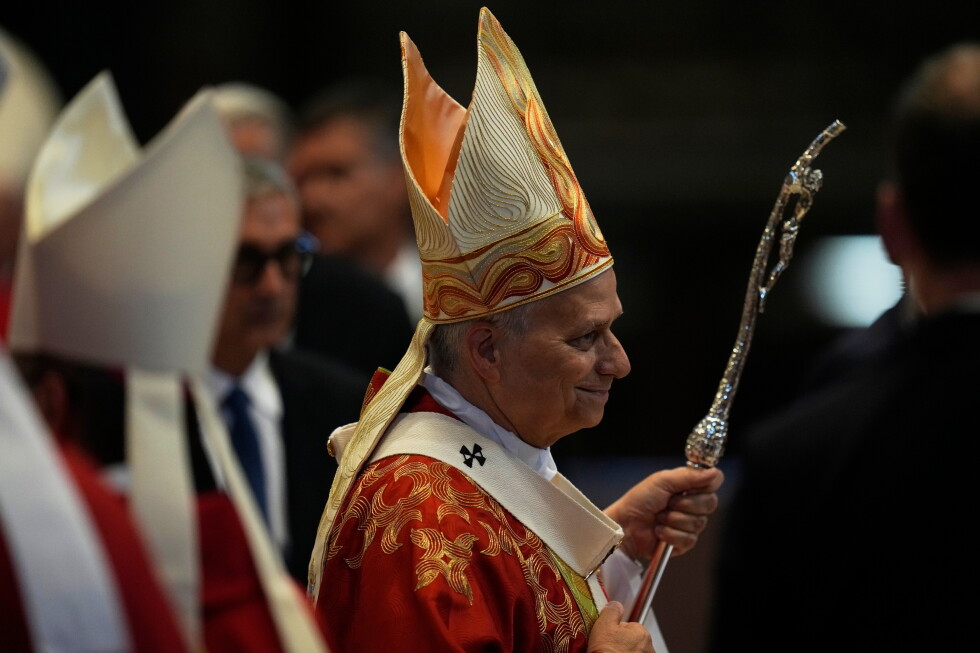
    The ultratraditionalist Catholic breakaway group the Society of St. Pius X (SSPX) is moving forward with a controversial plan to consecrate four new bishops without required papal approval, a direct act of defiance against Pope Leo XIV that church law defines as a schismatic rupture of Catholic unity, triggering automatic excommunication for all clergy involved in the ceremony.

    This unauthorized ordination represents the first significant test of authority for Pope Leo, who has centered his early papacy on repairing long-running divisions between the Holy See and traditionalist factions—tensions that deepened significantly over the course of Pope Francis’s pontificate. To understand the current standoff, it is necessary to trace the SSPX’s decades-long history of dissent from official church teaching.

    Founded explicitly to oppose the modernizing reforms of the Second Vatican Council, the 1960s ecumenical council that transformed Catholic life—revising the church’s relations with other faith communities including Judaism and Protestant Christianity, and allowing the celebration of Mass in local vernacular languages instead of the traditional Latin—SSPX has remained outside formal Vatican structures since the 1970s. In 1975, Vatican officials suspended SSPX founder Archbishop Marcel Lefebvre from priestly ministry and formally suppressed the society. The first major schism occurred in 1988, when Lefebvre consecrated four additional bishops without papal consent, leading the Holy See to immediately issue excommunications for all involved; to this day, the group holds no official legal status within the global Catholic Church.

    Despite this break from communion, the SSPX has grown steadily into a tangible alternative structure for ultratraditional Catholics, according to the group’s own internal statistics. Today it counts 2 active bishops, 751 priests, 264 seminarians across five formation houses, 145 religious brothers, 88 lay oblates, and 250 religious sisters, with members representing 50 nationalities worldwide.

    Under Catholic canon law, any act of consecrating a bishop without explicit papal approval triggers automatic excommunication for both the ordaining clergy and the individuals receiving ordination. Unlike formal penalties that require a public Vatican declaration, this penalty takes effect immediately the moment the consecration is completed. Canon law experts note that while the penalty is automatic, the Holy See will almost certainly issue a public response to the high-profile act of defiance to affirm its authority.

    Father Robert Gahl, a moral theology scholar at the Catholic University of America, explained that excommunication is the harshest penalty available under canon law, but it is framed as a “medicinal” measure rather than a permanent punishment. “The medicine may be bitter tasting, meaning that there’s a harsh feature of it because it’s a penalty, but it’s meant to bring about a change in the one who receives it,” Gahl noted. Crucially, the penalty does not invalidate the ordination itself: SSPX bishops and priests are considered validly ordained but minister illicitly, outside of church approval. While Pope Leo could extend excommunication to lay attendees of the ceremony, most church observers do not expect him to take that step.

    The current rift comes after decades of shifting outreach and tension between successive popes and the SSPX. Pope Benedict XVI, who made reconciliation with the breakaway group a core priority of his papacy, extended two major concessions to draw the SSPX back into full communion: in 2007, he relaxed longstanding restrictions on celebration of the traditional Latin Mass across the global church, and in 2009 he lifted the 1988 excommunications of the four SSPX bishops. That gesture quickly turned into a major diplomatic scandal, however, when it was revealed that one of the bishops, Richard Williamson, was an open Holocaust denier. Williamson had repeated his denial of Nazi gas chamber killings in a Swiss television interview just days before Benedict’s decree was made public. The pope later acknowledged that a basic online search would have revealed Williamson’s extreme views. Williamson was ultimately expelled from the SSPX in 2012 for insubordination after he refused to recognize the group’s leadership and called for its superior to step down; he died in 2025.

    Pope Francis, despite a general distrust of traditionalist factions and a broader crackdown on the spread of the traditional Latin Mass, which he framed as a source of division in the church, extended key concessions of his own to the SSPX. In 2015, as part of his Jubilee of Mercy initiative, he issued a decree allowing Catholics to receive valid sacramental absolution from SSPX priests, a gesture he later extended indefinitely. He also granted SSPX priests permission to officiate valid Catholic marriages. Analysts note that in response to the new unauthorized consecrations, Pope Leo could choose to revoke these concessions as part of the Vatican’s official response.

    Within global Catholicism, the SSPX is just one fringe traditionalist faction outside of communion with Rome; many other traditionalist Catholics remain in full communion with the Holy See. As part of his early push for church unity, Pope Leo already signaled his outreach to mainstream traditionalists by allowing a prominent American cardinal to celebrate the traditional Latin Mass in St. Peter’s Basilica during his first year in office.

    This reporting is part of the Associated Press’ religion coverage, produced in collaboration with The Conversation US and supported by funding from Lilly Endowment Inc. The AP holds sole editorial responsibility for the content.

  • Defying Pope Leo XIV and risking schism, traditionalists go ahead with planned consecrations

    Defying Pope Leo XIV and risking schism, traditionalists go ahead with planned consecrations

    A decades-long theological rift within global Catholicism is set to escalate this week, as the Society of St. Pius X (SSPX), a breakaway ultratraditionalist faction, plans to move forward with consecrating four new bishops without the mandatory approval of Pope Leo XIV — an act that carries the Catholic Church’s most severe penalty under canon law.

    The high-stakes ceremony is scheduled for Wednesday at the SSPX’s seminary in Econe, a remote mountain valley in southwestern Switzerland. Organizers expect thousands of attendees to gather, all drawn to the faction’s rejection of modern Catholic reforms and commitment to the pre-Vatican II Latin Mass, which has been largely replaced by vernacular-language liturgies across most of the global Church. Despite a last-minute public appeal from Pope Leo to cancel the ordination, the SSPX has refused to alter its plans. In an open letter released Tuesday, the American-born pontiff warned that ordaining bishops without papal mandate constitutes a “sin of extreme gravity” that inflicts lasting harm on the faction’s own followers.
    Under longstanding Catholic canon law, any unauthorized episcopal consecration triggers automatic excommunication for all parties involved: the four bishop-designates and the prelate who will administer the rite. The act is also formally classified as schism, a deliberate break from the institutional unity of the global Catholic Church.

    Oddly, the event has been framed by the SSPX as a joyous milestone rather than an act of rebellion. The group’s official consecration website has run a public countdown timer for days, and social media clips show seminarians cheerfully preparing event logistics. Registered attendees can purchase commemorative merchandise, including branded baseball caps marked with the “Econe2026” seal and a 75 Swiss franc ($92.50) souvenir wine set dubbed “Cuvee des Sacres.” The four-bottle gift set features four regional grape varieties, each bottle labeled with an episcopal symbol: a miter, bishop’s ring, cross, and crozier.
    For the SSPX, threats of schism and excommunication carry little weight. The faction has long held that it alone is defending the unchanging traditions of the Catholic faith against what it calls widespread heresy in the modern institutional Church. “We don’t fear it. It pains us immensely, but we believe that the good we seek is greater than the pain that will be inflicted upon us,” said Marc-André Mabillard, the SSPX’s media manager. In a formal response to Pope Leo’s appeal, SSPX superior General Rev. Davide Pagliarani asked the pontiff to delay imposing any formal penalties.
    The current confrontation is rooted in a split that dates back to the 1970s. The SSPX was founded by French Archbishop Marcel Lefebvre in explicit opposition to the modernizing reforms of the Second Vatican Council (Vatican II), the 1960s global church gathering that transformed Catholic outreach to other faiths, restructured church-state relations, and replaced the universal Latin Mass with local-language services. Thirty-eight years to the day before Wednesday’s planned ceremony, the Vatican declared the SSPX’s last set of unauthorized episcopal consecrations a schismatic act, imposing automatic excommunication on all involved bishops.
    Today, the SSPX rejects core tenets of Vatican II teaching, accusing the modern Church of being corrupted by modernism, liberalism, and ecumenism. The faction justifies its new ordinations by what it calls a “state of necessity”: only two of the SSPX’s original four bishops are still living, and the group says it needs additional bishops to serve its global community of 800 worship sites spread across 77 countries, ordain new priests, and administer confirmation via the ancient Latin rite. The SSPX denies the act is a direct challenge to Pope Leo’s authority, saying the sole purpose of the consecrations is to serve the pastoral needs of its followers. The four bishop-designates have been named as Pascal Schreiber (Switzerland), Michael Goldade (United States), and Michel Poinsinet de Sivry and Marc Hanappier (both France).
    The planned consecrations have drawn widespread criticism from across the Catholic community, even from many conservative and traditionalist Catholics, who frame the act as an unacceptable act of disobedience to the pope that damages the unity of the Church. “You can’t serve tradition while disobeying the church and her authority,” said Rev. Robert Gahl, an ethics scholar at the Catholic University of America.
    Prominent Catholic commentator and St. John Paul II biographer George Weigel noted that the dispute between the Vatican and the SSPX extends far beyond the language of the Mass. Writing in First Things magazine, Weigel explained the divide centers on “a rejection of the Second Vatican Council’s teaching on the church, salvation, religious freedom, church–state relations, and the church’s relationship to other religions.” Weigel also recalled that SSPX founder Lefebvre supported the collaborationist Vichy regime in Nazi-occupied France during World War II, and that one of the faction’s founding bishops publicly denied the Holocaust.
    Mabillard acknowledged the faction’s regret over the rift with the Vatican, telling reporters: “We have great sadness to not be understood by our leader,” before confirming: “We are changing absolutely nothing in our plans.”
    This report includes contributions from Keaten in Geneva. Associated Press religion coverage is supported via a collaboration with The Conversation US, with funding from Lilly Endowment Inc. The AP holds sole editorial responsibility for this content.

  • Dangerous heatwave to hit US ahead of holiday weekend

    Dangerous heatwave to hit US ahead of holiday weekend

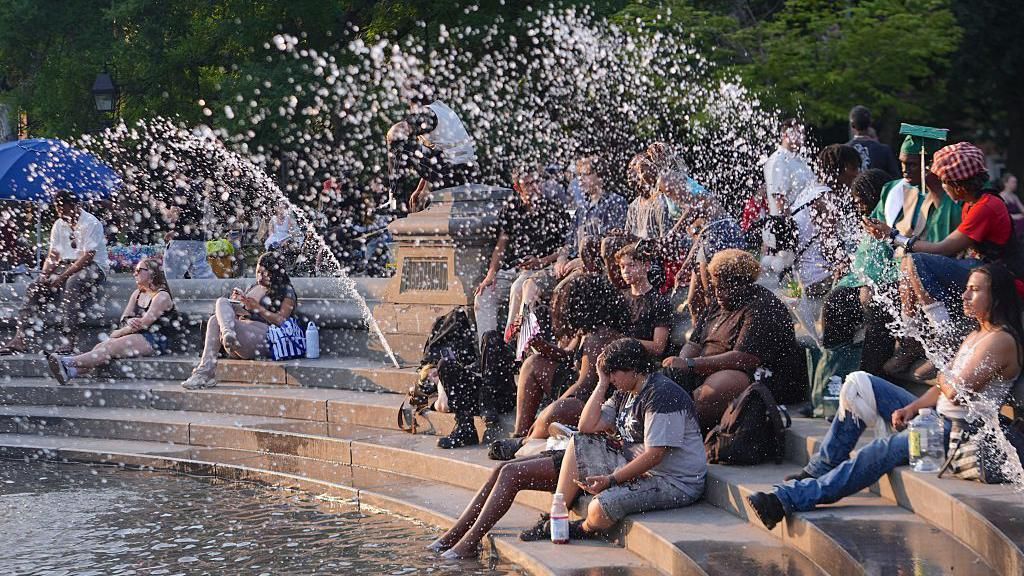
    As millions of North Americans prepare for holiday celebrations and international sports events, a sprawling, hazardous heatwave is rapidly intensifying across a vast stretch of the eastern and central United States, with a separate but equally oppressive heat system building across southern Canada. Forecasters warn the extreme weather event will bring dangerous combinations of blistering daytime highs, relentless humidity, and uncharacteristically warm overnight temperatures that will offer little reprieve from the heat through the Fourth of July holiday weekend. As of Tuesday, the U.S. National Weather Service (NWS) confirmed that more than 120 million people across the country are currently under active extreme heat warnings, marking one of the largest geographic heat alerts in recent memory ahead of the country’s major national holiday.

    The heat dome responsible for the extreme temperatures is projected to reach its peak intensity across the Midwest and Mississippi Valley by Thursday, before shifting eastward to the Ohio Valley and entire U.S. East Coast through the end of the week and into the holiday weekend. The system will affect an area stretching from the central U.S. all the way to the Atlantic coast, with forecasted air temperatures ranging between 95°F and 105°F (35°C to 40.6°C). When combined with suffocating high humidity, the feels-like heat index is expected to climb to between 100°F and 115°F (38°C to 46°C) across most affected zones. The NWS has cautioned that daily high temperature records will likely be broken across the region on Thursday and Friday, with the possibility of breaking monthly and even all-time temperature records in some locations.

    This North American heat event comes directly on the heels of an unprecedented early summer heatwave that swept across Europe in recent days, shattering temperature records across multiple European countries and signaling a pattern of early extreme heat across the Northern Hemisphere. Local governments across the U.S. have rolled out emergency measures to protect vulnerable populations from heat-related illness. New York City Mayor Zohran Mamdani officially activated the city’s heat emergency plan, scheduling hundreds of public cooling centers to open across the five boroughs starting Wednesday. In Detroit, where forecasted temperatures are expected to hit 100°F (38°C), 12 city recreation centers have already opened their air-conditioned doors to give residents a cool place to escape the heat.

    The extreme heat has also created significant disruptions for the ongoing FIFA World Cup being hosted across North America. Global players’ union Fifpro has established a safety threshold for match conditions, and forecasts show that heat indexes at several host cities will exceed that unsafe threshold. While most match venues are fully air-conditioned, traveling fans heading to and from stadiums in Houston and Arlington, Texas – where the hottest temperatures in the U.S. are concentrated – face major heat risks. The same danger applies to attendees of the Wednesday match between England and DR Congo in Atlanta, where conditions outside the climate-controlled stadium will be oppressively hot and humid. Organizers in Philadelphia have responded by moving portions of the city’s public FIFA World Cup Fan Festival into temperature-controlled cooling tents for Thursday and Friday.

    To the north, Canada is grappling with its own early heatwave that began on Tuesday, with the highest temperatures concentrated in the province of Ontario, where highs are forecast to reach 37°C (99°F) this week. High temperatures are expected to hold through Thursday across most of southern Canada, and Toronto is scheduled to host a World Cup match on the same day when local temperatures are projected to hit 35°C (95°F). Canadian officials have issued orange heat warnings, the second-highest alert level in the country’s three-tier warning system, across most of Ontario. Lower-level yellow heat warnings are also in effect across central and eastern Ontario and parts of Quebec including Montreal. Public health officials across both countries have issued consistent guidance for at-risk residents: limit unnecessary time outdoors, maintain steady hydration, and access air conditioning or public cooling centers whenever possible to avoid heat exhaustion and heat stroke.

  • Rio bus drivers and workers throughout Brazil demand shorter work week as lawmakers examine proposal

    Rio bus drivers and workers throughout Brazil demand shorter work week as lawmakers examine proposal

    On a busy Tuesday in downtown Rio de Janeiro, hundreds of striking bus drivers gathered in protest, bringing public attention to a growing national movement pushing for sweeping labor reform. The demonstrators are calling for improved working conditions, fairer wage increases, and the elimination of Brazil’s widespread six-day work schedule — a core demand of a broader campaign to guarantee all Brazilian workers two full days of rest each week.

    For many workers on the frontlines of this movement, the current schedule leaves little room for anything beyond constant labor. Alexandre Garrido, a 49-year-old bus driver with two decades of experience on Rio’s routes, spelled out the human cost of the six-day workweek. “You can’t spend quality time or go out with your family, give attention to your children, visit relatives, or have a day like going to a restaurant to have lunch together,” he explained.

    The protest comes as a landmark constitutional amendment to cap the national workweek at 40 hours, with no corresponding pay cut, advances through Brazil’s legislative process. The measure won approval from the country’s lower house in May and is currently under review in the Senate. It has earned the public backing of President Luiz Inácio Lula da Silva, who has included the reform as a key policy pledge in his October reelection campaign.

    Brazil’s current labor landscape allows for a 44-hour weekly work limit. For millions of workers, this translates to five standard eight-hour days plus an additional four-hour shift on a sixth day, while other workers fit 44 hours into a five-day schedule with two days off already. According to campaign organizers, the reform would transform daily life for an estimated 14 million Brazilians currently stuck on six-day schedules — a group that disproportionately includes low-income, low-skilled workers.

    Lower-wage workers and women in particular bear the brunt of the extended workweek. Fernanda Sousa, 26, is one of those millions. Every morning except Tuesday, she climbs out of bed before dawn to navigate the steep paths of Rocinha, Rio’s largest favela, drop her 6-year-old son off with his godmother, and commute to a bistro in the upscale neighborhood of Gavea, where she serves pão de queijo and other snacks to customers. “Going to work on Sunday when everyone is with their families breaks my heart,” Sousa shared, as she headed home with her young son on a recent Friday evening. Like many women around the world, she struggles to balance formal employment with unpaid housework, a burden made far heavier by the longer work schedule.

    For younger workers seeking to advance their careers, the grueling schedule also blocks opportunities for education and growth. Matheus Paulo Costa da Silva, a 28-year-old home goods store supervisor in Rio, recently tried to enroll in an evening information technology course to boost his job prospects — but constant exhaustion from his 44-hour week forced him to drop out. “I can’t see my family, I can’t go to the gym, I can’t study. I live to work,” he said.

    Workplace reform advocates frame the end of the six-day workweek as a long-overdue correction of Brazil’s history of exploitative labor. Rick Azevedo, a Rio city councilor who attended Tuesday’s protest and founded Life Beyond Work, one of the main grassroots groups driving the amendment, put it bluntly: “Those who support working six days a week are in favor of modern slavery.” Erika Hilton, the lawmaker who shepherded the amendment through the lower house, echoed that framing, noting that even some conservative opponents have now come around to supporting the reform, even as others work to block it in the Senate. “Ending the six-day workweek allows us to care for workers who are under attack since Brazil’s slavery days,” she said, referencing the country’s 400-year history of chattel slavery that only ended in 1888.

    Tuesday’s industrial action by bus drivers, organized by a local union that lists higher wages as its top demand, was just one part of a national day of protest coordinated by Azevedo’s movement across the country.

    Not everyone supports the change, however. Brazil’s business community has raised sharp alarms about the potential economic costs of cutting working hours. The National Confederation of Industry argues that the reform could push annual labor costs up by as much as 267 billion reais ($52 billion), a 7% increase that would slow Brazil’s economic growth by an estimated 0.7 percentage points.

    Industry analysts and small business advocates warn that micro, small and medium enterprises would face the steepest challenges from the reform. Sebrae, Brazil’s public small business support institution, notes that small businesses make up 97% of all enterprises in the country and account for half of all formal private sector jobs. For small business owners with already thin profit margins, the change presents an impossible choice.

    Marcelo Pierini, a 52-year-old cafe and pie shop owner in downtown Sao Paulo, currently has five employees and only closes one day a week on Sunday. “This change could mean one of two things: closing on Mondays and losing some profit or sharing my bill with the customers,” he said. “It is hard. I want some rest too, but I can’t afford it.”

    While the reform faces headwinds in the Senate, it follows a growing trend across Latin America, where multiple nations have already adopted similar 40-hour workweek reforms. Argentina stands out as an outlier in the region, having recently moved in the opposite direction to extend working hours for some sectors.
  • Roof collapse kills 14 children at Pakistan tuition centre

    Roof collapse kills 14 children at Pakistan tuition centre

    A tragic structural collapse has claimed the lives of 14 children in a suburban area of Pakistan’s second-largest city, Lahore, leaving emergency responders and local communities reeling from the preventable-seeming disaster. The incident unfolded on Monday afternoon at an unregulated private tuition center located in Kahna, a densely populated suburb on the outskirts of Lahore, when the building’s roof caved in unexpectedly while dozens of young students were attending classes.

    Official statements from Pakistan’s leading emergency response agency Rescue 1122 confirm that most of the fatalities are children between the ages of 7 and 11, with multiple victims under 10 years old pulled from the rubble. Five additional people, most also young students, were injured in the collapse and have been transported to local hospitals for urgent medical care.

    Rescue 1122 spokesperson Farooq Ahmed told reporters from the BBC that the emergency agency received the first distress call about the incident at 16:45 local time, which translates to 12:45 BST. First responders rushed to the scene immediately and were able to clear the rubble and complete the entire search and rescue operation within just 60 minutes of the initial call, a timeline that speaks to the speed of the response but also to the scale of the disaster.

    In the wake of the collapse, Pakistani provincial authorities have launched a full formal investigation into the incident, focusing on potential structural negligence, unapproved building modifications, and failure to comply with local construction safety regulations. As part of the preliminary inquiry, two people linked to the tuition center and the building’s ownership have been taken into police custody for questioning.

    This disaster has reignited longstanding concerns in Pakistan about lax enforcement of building safety codes in informal suburban settlements, where many private educational institutions operate in converted residential structures without adequate structural inspections or safety certifications.