分类: politics

  • India and UAE agree to deepen nuclear cooperation in mega defence pact

    India and UAE agree to deepen nuclear cooperation in mega defence pact

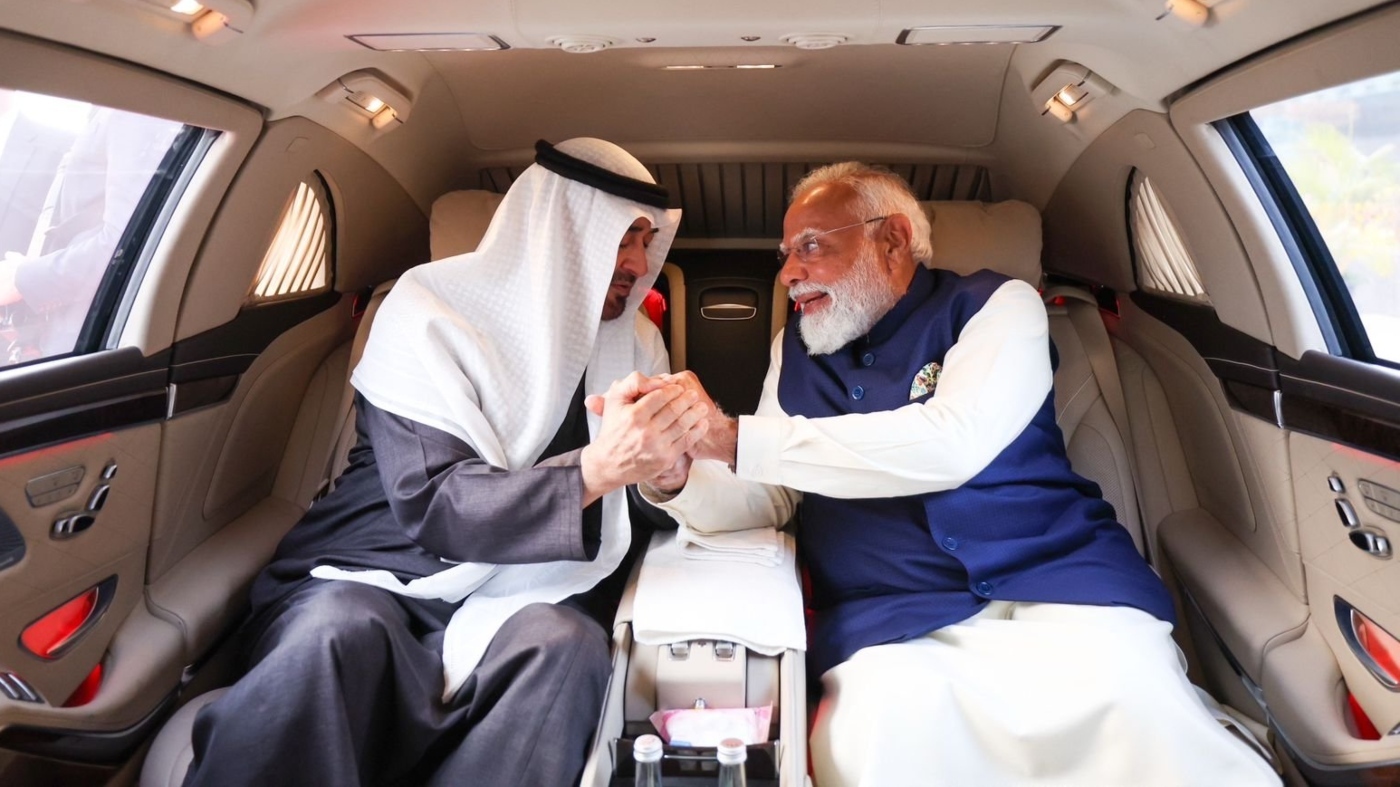
    In a significant diplomatic development, the United Arab Emirates and India have solidified a comprehensive partnership aimed at strengthening defense cooperation and energy security. The landmark agreement, finalized during UAE President Mohamed bin Zayed Al Nahyan’s three-hour visit to New Delhi, includes a substantial $3 billion liquefied natural gas deal that establishes India as Abu Dhabi’s largest LNG customer.

    The bilateral pact extends beyond energy to encompass nuclear cooperation, featuring joint development and deployment of large nuclear reactors alongside enhanced nuclear safety protocols. Both nations have established an ambitious target of doubling their bilateral trade to $200 billion by 2032, signaling a substantial deepening of economic ties.

    The leadership discussions addressed multiple regional security concerns, including the situations in Yemen, Gaza, and recent protests in Iran. These talks occurred against a backdrop of shifting geopolitical alignments in the Middle East, particularly as Turkey seeks to join a defense agreement between Saudi Arabia and nuclear-armed Pakistan—a development that could potentially establish a new military bloc in the region.

    The India-UAE agreement emerges amid growing regional tensions following Pakistan’s expanding defense exports, including a $4 billion arms deal with Libya and potential weapons sales to Sudan. Saudi Arabia and Pakistan are concurrently negotiating the conversion of $2 billion in Saudi loans into a fighter jet procurement agreement, highlighting the complex realignment of Middle Eastern alliances.

    Indian right-wing media has characterized the UAE-India partnership as a strategic counter to Pakistan’s defense outreach, with Network18—owned by billionaire Mukesh Ambani, who maintains close ties to Modi’s government—describing it as ‘India’s counter through strategic depth.’

    The joint statement issued by both nations emphasized regular security chief exchanges and joint military exercises, while explicitly condemning ‘terrorism in all its forms, including cross-border terrorism’—a clear reference to India’s longstanding allegations against Pakistan.

    Indian Foreign Secretary Vikram Misri characterized the defense partnership as a ‘natural evolution’ of existing cooperation rather than a direct response to specific regional events, though the agreement undoubtedly signals India’s growing strategic engagement with Gulf states amid regional realignments.
  • Yale professors: Trump’s assault on international law is dangerous

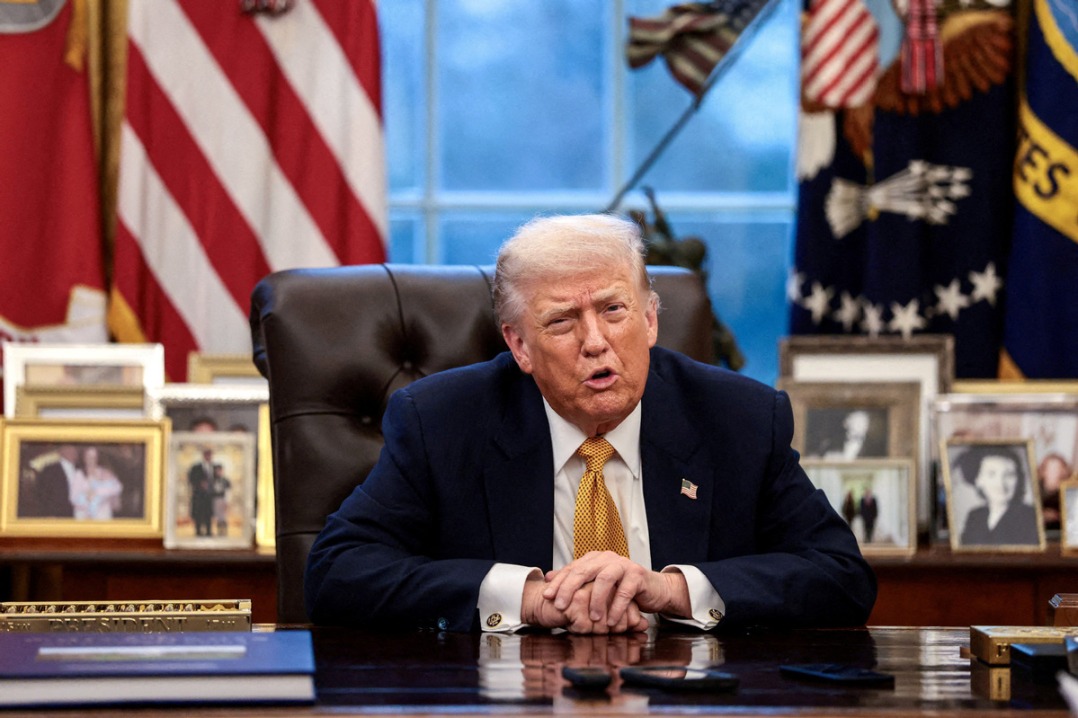
    Yale professors: Trump’s assault on international law is dangerous

    Two distinguished Yale Law School professors have issued a stark warning about the current US administration’s systematic assault on international legal norms, characterizing it as a dangerous departure from eight decades of established global order. In a comprehensive Foreign Affairs commentary published January 13, Professors Oona A. Hathaway and Scott J. Shapiro presented a compelling analysis of how the administration’s actions transcend mere violations of specific laws and represent a fundamental rejection of the United Nations Charter-based system that has governed international relations since World War II.

    The legal experts articulated that the post-WWII international framework rests on the foundational principle that unilateral force between states is prohibited unless exercised in self-defense or under collective UN Security Council authorization. They documented a pattern of behavior that demonstrates the administration’s wholesale abandonment of this principle, citing specific examples including attempted interventions in Venezuela and Iran, along with controversial statements regarding the Panama Canal, Canadian sovereignty, Greenland’s status, and control over Gaza.

    What particularly alarms the Yale scholars is not simply the legal breaches themselves, but the administration’s overt dismissal of the very concept of legal constraints in international affairs. They emphasized that the absence of any legitimate legal justification for these actions, coupled with the rejection of diplomatic persuasion, represents a form of nihilism that threatens to unravel the entire international rules-based system. The professors concluded that this approach—replacing multilateral cooperation with unilateral coercion—risks returning the world to an era where might alone determines right, fundamentally undermining global stability and security.

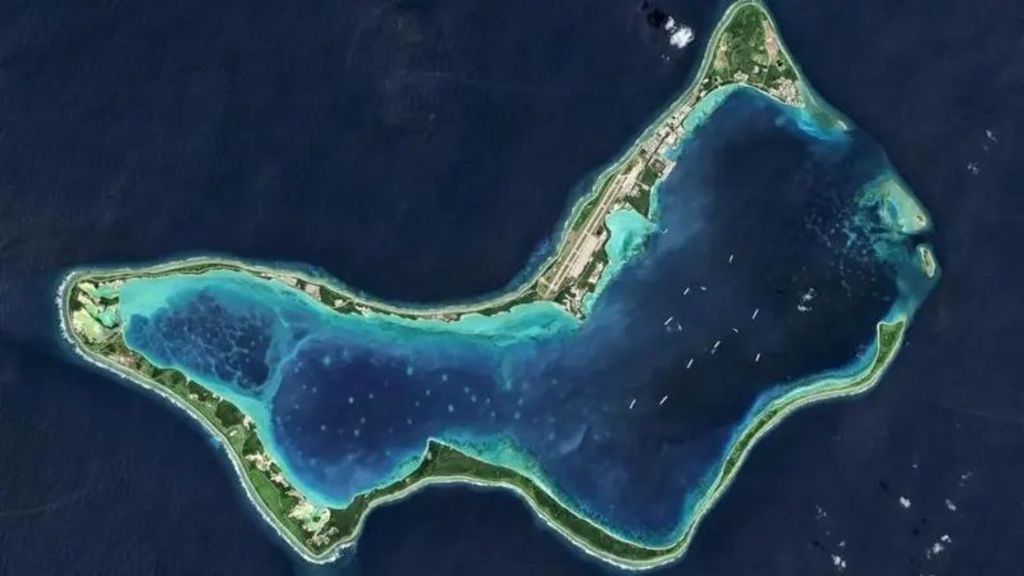
  • UK defends Chagos deal after Trump calls it ‘act of great stupidity’

    UK defends Chagos deal after Trump calls it ‘act of great stupidity’

    The UK government has firmly defended its sovereignty agreement with Mauritius regarding the Chagos Archipelago, following unexpectedly harsh criticism from former US President Donald Trump. The £3.4 billion arrangement, finalized in May, transfers administrative control of the islands to Mauritius while maintaining UK authority over the strategically vital Diego Garcia military base through a 99-year leaseback agreement.

    In a Tuesday morning social media post on Truth Social, Trump condemned the arrangement as an ‘act of great stupidity’ and ‘total weakness,’ claiming it would be noticed by geopolitical rivals China and Russia. These remarks directly contradict his administration’s previous endorsement of the deal during Prime Minister Keir Starmer’s Oval Office visit last February.

    UK officials responded by emphasizing unwavering commitment to national security interests. A government spokesperson stated that the agreement emerged from legal necessity, as court decisions had threatened the base’s operational continuity. The arrangement reportedly includes robust provisions to safeguard the joint UK-US facility’s unique capabilities while excluding adversarial influence.

    The Foreign Office confirmed plans to engage with Trump’s representatives to reaffirm the agreement’s strategic merits, noting that the deal enjoys support from Five Eyes intelligence partners—Canada, Australia, and New Zealand alongside the UK and US.

    Mauritius’ Attorney General Gavin Glover emphasized the bilateral nature of the sovereignty arrangement, noting international law already recognizes Mauritian sovereignty over the archipelago. Meanwhile, British opposition leaders seized on Trump’s comments to criticize the government’s approach, with Conservative leader Kemi Badenoch calling the arrangement ‘complete self sabotage.’

    The controversy unfolds as Chagossian natives express concerns about exclusion from negotiations, with community members advocating for their right to determine the islands’ future.

  • Ex-president accused of murder plot expelled from Togo to Burkina Faso

    Ex-president accused of murder plot expelled from Togo to Burkina Faso

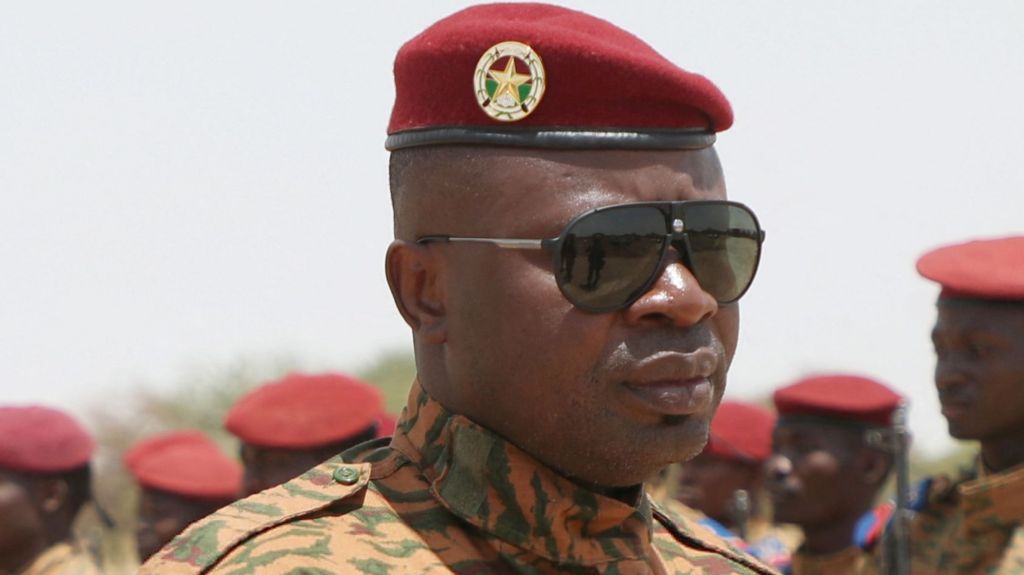
    In a significant development for West African politics, Togolese authorities have arrested and extradited former Burkina Faso president Paul-Henri Sandaogo Damiba to face serious charges in his home country. The ousted leader, who held power for less than a year after seizing control in a January 2022 coup, now confronts allegations of orchestrating an assassination plot against his successor, current military ruler Ibrahim Traoré.

    According to an official statement from Togo’s justice ministry, Damiba was transferred to Burkinabè authorities on Saturday following extensive diplomatic negotiations. The extradition agreement includes specific safeguards requiring Burkina Faso to guarantee Damiba’s “physical integrity, dignity and fair-trial rights” while excluding the possibility of capital punishment in his case.

    The charges against the former president extend beyond the assassination conspiracy to include substantial financial crimes. Burkina Faso’s military government has accused Damiba of “criminal embezzlement of public funds, illicit enrichment, corruption, aggravated receiving of stolen goods and money laundering.” These allegations emerge amid ongoing political instability in the country.

    The most severe accusations involve a recently foiled assassination scheme. Earlier this month, Security Minister Mahamadou Sana announced on state television that security forces had prevented targeted killings designed to destabilize the nation, including the “neutralization” of Traoré. Officials have consistently identified Damiba as the mastermind behind such plots from exile, labeling him as head of the “military wing” of a broader conspiracy in late 2024.

    Damiba’s political trajectory reflects Burkina Faso’s turbulent recent history. He initially seized power citing frustration with the elected government’s inability to contain Islamist violence, only to be overthrown eight months later by Traoré, then a 34-year-old artillery officer who similarly criticized Damiba’s security performance.

    The current junta under Traoré has pursued increasingly assertive policies, including expelling French forces, adopting nationalist positions, and controversially reinstating the death penalty for crimes of high treason. Despite these measures, the country continues to grapple with one of the world’s most severe security crises as jihadist attacks persist across large regions.

    Political analysts suggest Damiba’s extradition and impending trial may exacerbate existing tensions within Burkina Faso’s military and political establishment. The situation highlights the fragile stability of a government simultaneously combating internal rivalries and a brutal insurgency, raising questions about the nation’s political future.

  • Sheikh Mohammed announces UAE tops global government trust index

    Sheikh Mohammed announces UAE tops global government trust index

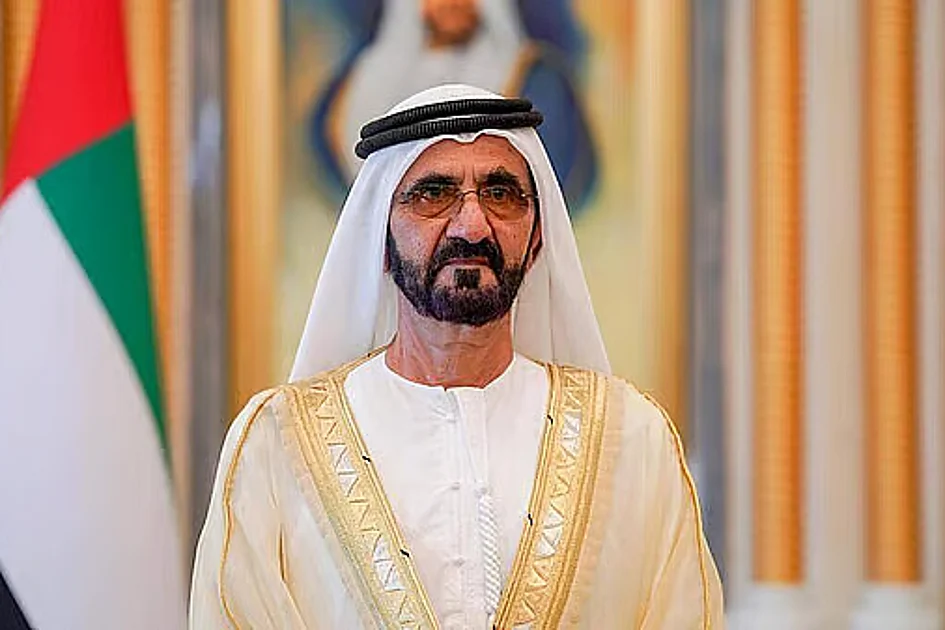
    In a significant development for global governance metrics, the United Arab Emirates has achieved the premier position in the 2026 Edelman Trust Barometer, marking a notable ascent of three positions from the previous year. The announcement was formally made by His Highness Sheikh Mohammed bin Rashid Al Maktoum, Vice President of the UAE and Ruler of Dubai, who emphasized that institutional trust represents a cumulative achievement built through consistent performance rather than momentary accomplishment.

    The comprehensive trust assessment, conducted annually by the New York-based Edelman organization, places India in the second position globally, followed by other nations in the closely watched ranking of public confidence in governmental institutions. Sheikh Mohammed articulated that the foundation of this trust rests upon three critical pillars: consistent promise fulfillment, integrity within legal frameworks, and genuine respect for citizenry.

    Beyond governmental trust, the UAE demonstrated exceptional performance across multiple metrics within the comprehensive study. The nation leads globally in public confidence that future generations will experience improved quality of life, reflecting optimistic national sentiment. Additionally, the Emirates tops international rankings for trust in employers’ ethical conduct and corporate decision-making processes.

    Media trustworthiness represents another area of notable achievement for the UAE, with the country ranking among the top five nations globally and registering a substantial 15-point increase in public confidence. The broader global context reveals education and technology sectors maintain the highest trust levels across industries, with social media platforms showing improved trust metrics despite previous challenges.

    The Trust Barometer results emerge during the World Economic Forum meetings in Davos, where governance and institutional trust feature prominently in global leadership discussions. The UAE’s achievement signals a broader shift in global trust patterns, with emerging economies demonstrating strong performance in public confidence metrics.

  • Australia’s lower house passes tougher gun control laws in response to Bondi mass shooting

    Australia’s lower house passes tougher gun control laws in response to Bondi mass shooting

    In a decisive legislative response to the nation’s deadliest mass shooting in decades, Australia’s House of Representatives has approved sweeping gun control measures. The legislation, passed on Tuesday with a 96-45 vote, establishes a national firearm buyback program and enhances background verification processes for gun licenses.

    The bipartisan effort faced opposition from conservative lawmakers who criticized the government’s approach to addressing rising antisemitism. The new framework empowers federal authorities to utilize intelligence data from the Australian Security Intelligence Organisation during license screenings and creates mechanisms for purchasing surplus and newly restricted weapons.

    Home Affairs Minister Tony Burke emphasized the urgency of these measures following the December 14 Bondi Beach attack that claimed 15 lives. “The tragic events at Bondi demand a comprehensive response from government,” Burke stated during parliamentary proceedings. “We must counter both the motivation and the method.”

    The legislative action coincides with concerning statistics revealing a record 4.1 million firearms currently in circulation across Australia, with New South Wales—the site of the recent tragedy—accounting for over 1.1 million weapons. This development follows New South Wales’ own recent reforms limiting individual gun ownership to four firearms (ten for agricultural purposes) and shortening license renewal cycles from five to two years.

    The proposed legislation now advances to the Senate for consideration, while Parliament concurrently debates additional measures that would lower prosecution thresholds for hate speech offenses.

  • In their words: Trump’s threats over Greenland draw warnings and profanities at global forum

    In their words: Trump’s threats over Greenland draw warnings and profanities at global forum

    DAVOS, Switzerland — The World Economic Forum became an arena of diplomatic confrontation on Tuesday as international leaders delivered stark warnings against U.S. President Donald Trump’s pursuit of Greenland and escalating trade measures. The annual gathering of global elites witnessed unusually blunt language and grave concerns about the erosion of international norms.

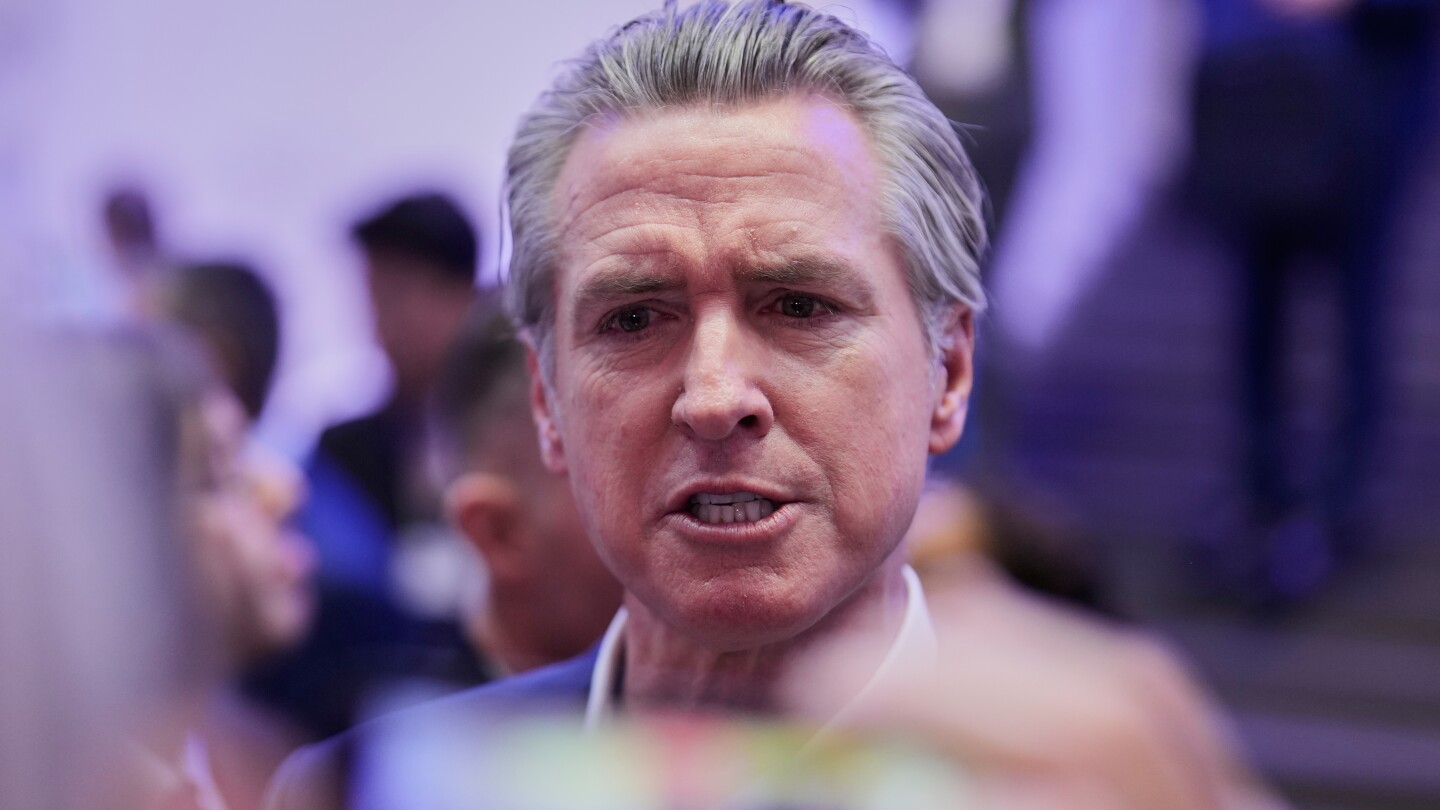
    California Governor Gavin Newsom, a prominent Democratic figure, unleashed a profanity-laden critique of global leadership, accusing world diplomats of excessive compliance with Trump’s policies. “I can’t take this complicity. People rolling over,” Newsom declared. “I hope people understand how pathetic they look on the world stage. At least from an American perspective, it’s embarrassing.” The governor employed visceral metaphors, comparing diplomacy with Trump to interacting with a Tyrannosaurus Rex: “You mate with him or he devours you.”

    European Commission President Ursula von der Leyen addressed the trade tensions with measured diplomacy but firm resolution. She characterized the proposed additional tariffs as “a mistake, especially between long-standing allies” and emphasized that “in politics, as in business, a deal is a deal.” Von der Leyen warned against a diplomatic “downward spiral” that would ultimately benefit adversaries of Western nations, while signaling Europe’s readiness to pursue greater independence in response to persistent international pressure.

    French President Emmanuel Macron, appearing with aviator sunglasses due to an eye infection, delivered a sophisticated critique of what he termed a “new colonial approach” in international relations. The president cautioned against a emerging global framework where “international law is trampled underfoot and where the only law that seems to matter is that of the strongest.” Macron specifically condemned American trade practices that “undermine our export interests, demand maximum concessions, and openly aim to weaken and subordinate Europe,” particularly when combined with “an endless accumulation of new tariffs that are fundamentally unacceptable.”

    The collective responses from European leadership and American state governance revealed deepening transatlantic tensions and growing resistance to Trump’s unconventional diplomatic methods. The Davos discussions highlighted a critical juncture in international relations, with traditional alliances being tested and global power dynamics undergoing significant transformation.

  • Syria accuses SDF of ‘political blackmail’ after Islamic State inmates freed

    Syria accuses SDF of ‘political blackmail’ after Islamic State inmates freed

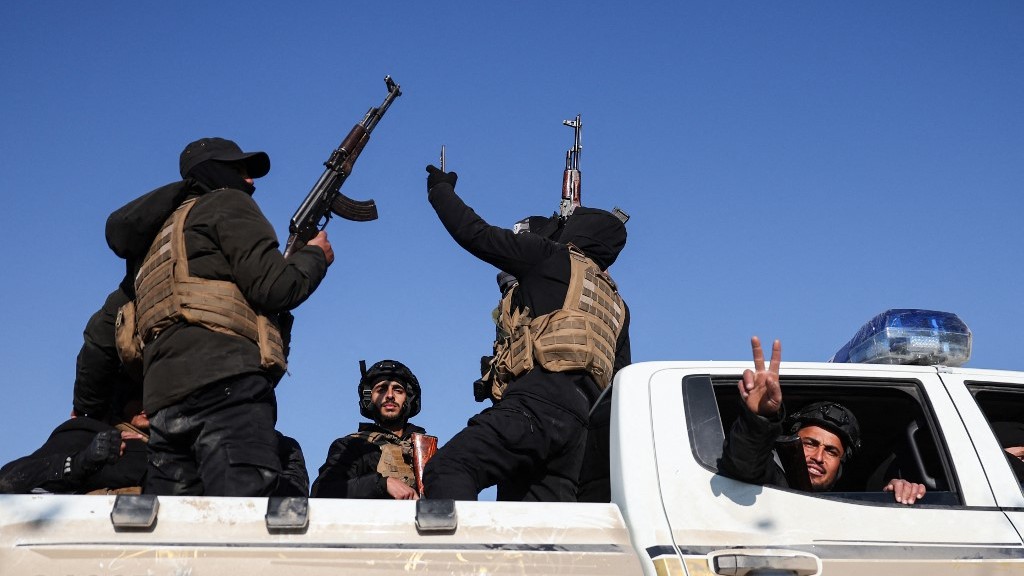
    The Syrian Interior Ministry has leveled serious allegations against the Syrian Democratic Forces (SDF), accusing them of orchestrating the intentional release of Islamic State fighters from al-Shaddadi prison in northeast Syria. Damascus characterized this action as an act of ‘political and security blackmail’ in an official statement released Tuesday.

    According to ministry reports, Syrian government forces successfully recaptured 81 of approximately 120 detainees who escaped during the incident. The ministry revealed that Syrian army units had previously avoided entering the al-Shaddadi facility during recent military operations based on an understanding that the SDF would subsequently transfer control of the prison to Damascus.

    Official accounts indicate that Syrian military commanders engaged mediators and SDF leadership to coordinate the transfer of the detention facility to state internal security forces. The ministry claims the SDF ultimately rejected this request and subsequently issued statements that allegedly ‘sought to mislead international opinion.’

    The Syrian government’s statement contained a stark warning: ‘The Syrian government warns the SDF leadership against taking any reckless steps that would facilitate the escape of ISIS detainees or open prisons for them as a retaliatory measure or as a political pressure tactic.’

    The SDF, which maintains control over numerous sensitive detention sites despite previous agreements, has vehemently disputed the government’s narrative. The Kurdish-led forces contend that the prison break occurred following an attack by tribal fighters affiliated with the Syrian army, asserting that government forces lost operational control of the facility.

    This escalating dispute emerges amid heightened tensions following recent ceasefire negotiations that included provisions for SDF withdrawal from areas west of the Euphrates River. On Tuesday, SDF commander Fawza Youssef accused President Ahmed al-Sharaa’s government of failing to uphold the terms of the agreement.

    The ongoing conflict highlights the complex security situation in northeastern Syria, where the SDF controls more than a dozen prisons holding approximately 9,000 IS suspects who have remained detained for years without formal judicial proceedings.

    Recent diplomatic efforts, including Monday’s talks between President al-Sharaa and SDF leader Mazloum Abdi, concluded without agreement. Damascus proposed deploying internal security forces to Hasakah, offering Abdi the position of deputy defense minister, appointing a governor, and removing Kurdistan Workers’ Party members from the region.

    In a significant diplomatic development, President al-Sharaa subsequently communicated with former U.S. President Donald Trump, with both leaders emphasizing the importance of Syria’s territorial integrity and the protection of Kurdish rights within the country.

  • Togo says it has extradited Burkina Faso’s former junta leader

    Togo says it has extradited Burkina Faso’s former junta leader

    LAGOS, Nigeria — Togolese judicial authorities have approved the extradition of Burkina Faso’s former military leader Paul-Henri Sandaogo Damiba to face multiple criminal charges in his home country. The decision, announced Tuesday by Togo’s Ministry of Justice, follows a formal request from Burkina Faso’s current military government.

    The Lomé Court of Appeal granted the extradition based on reciprocal assurances from Burkinabè authorities and specific guarantees that Damiba will not face capital punishment. The former junta leader, who had been residing in Togo since his overthrow in September 2022, was apprehended on January 16 amid allegations of his involvement in a recently foiled coup attempt.

    Damiba faces serious charges including criminal misappropriation of public funds and incitement to commit crimes. His brief tenure from January to September 2022 ended when current junta leader Ibrahim Traoré deposed him, marking consecutive military takeovers in the volatile West African nation.

    This development occurs against the backdrop of escalating regional instability. Since 2020, West Africa has witnessed a disturbing pattern of military interventions, with soldiers justifying power seizures by citing deteriorating security conditions. Armed group attacks have proliferated across the Sahel region and increasingly threatened coastal areas.

    Burkina Faso now stands among three West African nations under military rule that have severed ties with the Economic Community of West African States (ECOWAS), further complicating regional diplomacy and security cooperation.

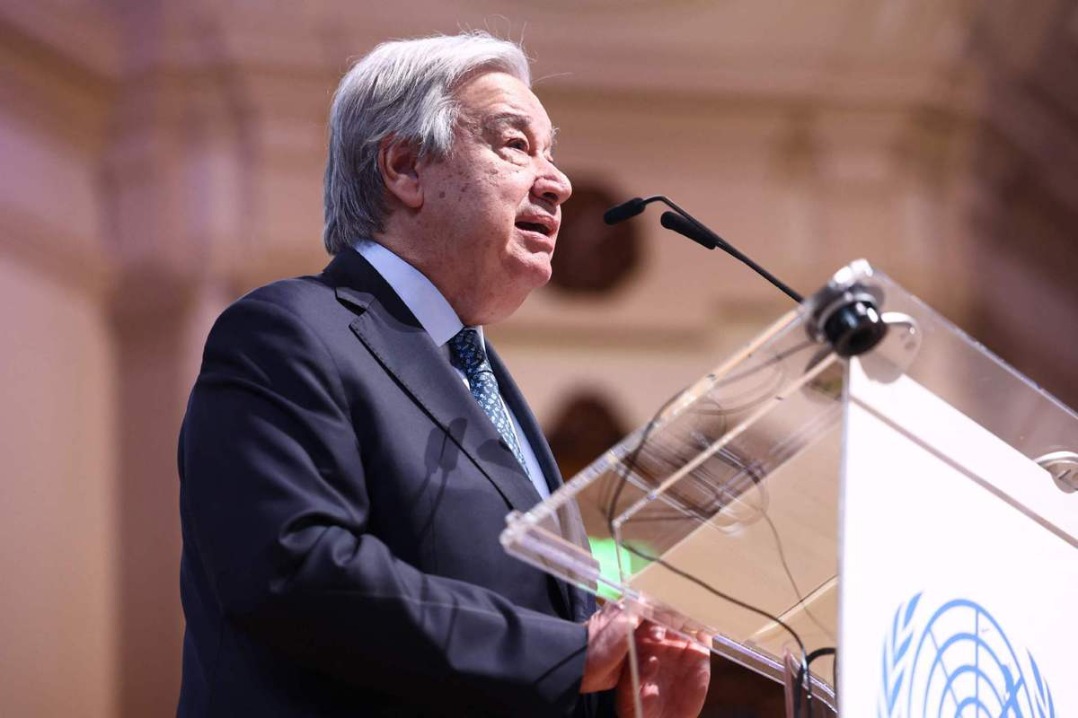
  • UN chief warns of global chaos as US prioritizes power over intl law

    UN chief warns of global chaos as US prioritizes power over intl law

    United Nations Secretary-General Antonio Guterres has delivered a stark warning about the deteriorating global order, directly criticizing United States foreign policy for systematically eroding international legal frameworks. Speaking at the UNA-UK conference in London—the historic venue of the inaugural UN General Assembly—Guterres articulated profound concerns about Washington’s shifting approach to global governance.

    In his address marking the UN’s 80th anniversary, the Secretary-General highlighted a dangerous trend where powerful nations increasingly disregard multilateral institutions in favor of unilateral actions. Guterres specifically referenced recent geopolitical developments, including the controversial US seizure of the Venezuelan president and former President Donald Trump’s persistent assertions regarding Greenland’s annexation, as emblematic of this troubling shift.

    The 76-year-old diplomat, who concludes his term in late 2026, presented a sobering assessment during his BBC interview: “There are those that believe the power of law should be replaced by the law of power.” He acknowledged the UN’s current limitations in compelling major powers to adhere to the organization’s founding charter, particularly the principle of sovereign equality among member states.

    This tension represents a historic nadir in UN-US relations, exacerbated by the previous administration’s frequent questioning of the organization’s relevance. The current global landscape, Guterres argued, demands updated mechanisms for international cooperation, noting that “1945 problem-solving” proves inadequate for addressing 2026’s complex challenges.

    Despite recognizing “brazen violations” of international law, the Secretary-General maintained his call for collective resistance against unilateralism, asserting that confrontation with powerful nations remains essential for creating a better world order. His remarks underscore a pivotal moment in international relations where the very foundations of postwar diplomacy face unprecedented strain.