分类: politics

  • Trump says he’s instructed US officials to reopen Venezuelan airspace for commercial travel

    Trump says he’s instructed US officials to reopen Venezuelan airspace for commercial travel

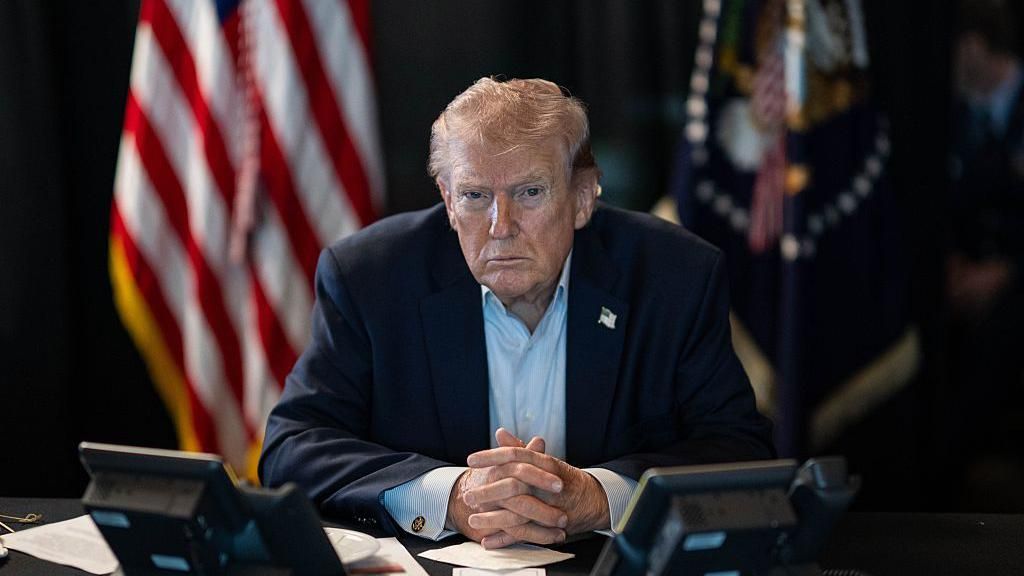
    WASHINGTON — In a significant diplomatic shift, the Trump administration has initiated steps to normalize relations with Venezuela. President Donald Trump confirmed Thursday that he has directed authorities to reopen all commercial airspace over Venezuela, with American citizens expected to gain travel access shortly.

    Trump stated he personally communicated this development to Venezuelan official Delcy Rodríguez and has tasked Transportation Secretary Sean Duffy alongside military leadership with executing the airspace reopening by day’s end. “American citizens will be very shortly able to go to Venezuela, and they’ll be safe there,” the President asserted.

    This announcement coincides with broader efforts to restore diplomatic ties severed in 2019. Earlier this week, the State Department notified Congress of its intention to implement a phased approach toward potentially resuming operations at Embassy Caracas. Official correspondence to ten House and Senate committees revealed plans to deploy temporary staff for selective diplomatic functions, marking the initial phase of this normalization process.

    The diplomatic rupture originated from the 2019 U.S. military operation that ousted former President Nicolás Maduro. Since then, travel advisories have remained at the highest alert level, with explicit warnings against travel due to risks including wrongful detention, torture, and kidnapping. As of Thursday, the State Department’s “Do Not Travel” advisory remained officially active despite the announced policy changes.

    This policy reversal represents one of the most substantial developments in U.S.-Venezuela relations in recent years, suggesting a potential thaw in longstanding tensions between the nations.

  • Trump’s wide ambitions for Board of Peace sparks new support for the United Nations

    Trump’s wide ambitions for Board of Peace sparks new support for the United Nations

    In a significant diplomatic setback, former President Donald Trump’s ambitious proposal to expand his ‘Board of Peace’ beyond Gaza mediation has encountered widespread international resistance. Major global powers including China, France, Russia, and the United Kingdom have unanimously declined participation in what many perceive as an attempt to undermine the United Nations’ authority.

    The board, initially conceived as a limited framework for overseeing Gaza’s post-conflict future, underwent substantial mission creep under Trump’s direction. The controversial charter granted Trump permanent leadership with veto powers over membership and actions, while envisioning a global conflict mediation role that directly challenged the UN Security Council’s mandate.

    Secretary of State Marco Rubio attempted damage control, emphasizing that “this is not a replacement for the UN” and narrowing the board’s immediate focus to Gaza ceasefire implementation. However, Trump’s simultaneous promotion of the board as a potential UN alternative created diplomatic friction that overshadowed its original purpose.

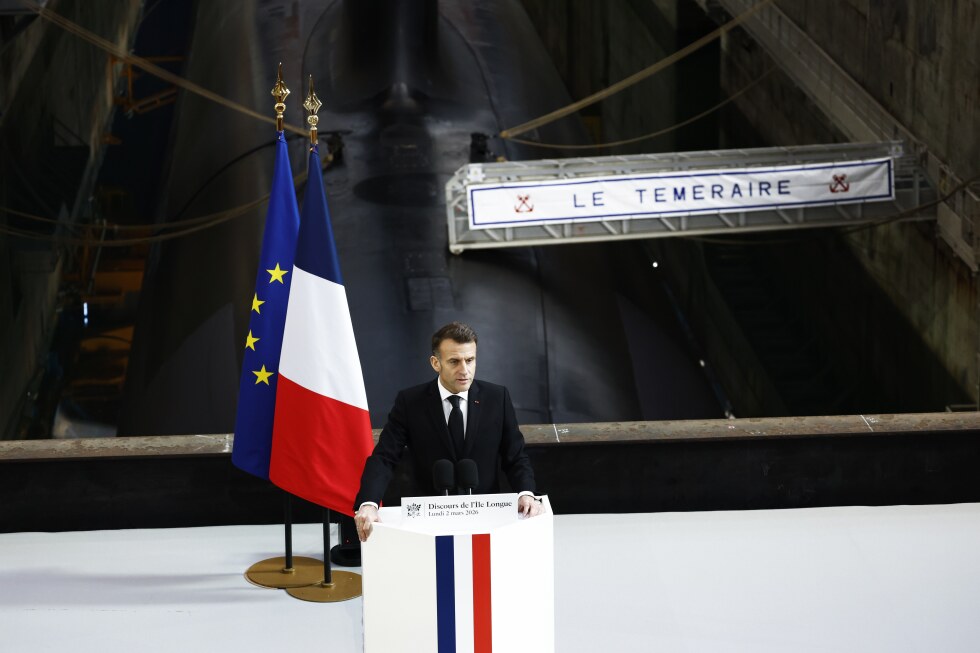
    The rejection manifested through multiple channels: formal Security Council statements, public declarations, and private diplomatic communications. French President Emmanuel Macron characterized the initiative as raising “serious questions regarding UN principles,” while Spain’s refusal cited the exclusion of Palestinian Authority representation. British Prime Minister Keir Starmer explicitly reaffirmed Britain’s “enduring support for the UN and international rules-based system” before declining membership.

    Despite attracting approximately 26 of 60 invited nations—primarily Muslim countries seeking influence in Gaza discussions—the board failed to secure endorsement from any permanent Security Council members or major European economies. Human Rights Watch’s UN director Louis Charbonneau dismissed the initiative as a “pay-to-play club of human rights abusers” rather than a legitimate international organization.

    Analysts from the International Crisis Group suggest the expansion fundamentally compromised the board’s credibility, transforming what might have been a viable Gaza-focused initiative into a perceived “Trump fan club” that deterred potential supporters. While eight Muslim nations joined to advance Palestinian interests, experts doubt the board’s capacity to evolve into a meaningful alternative to UN mechanisms.

  • US Senate vote to avert government shutdown expected to fail

    US Senate vote to avert government shutdown expected to fail

    The United States Senate faces an imminent legislative deadlock as Democrats pledge to obstruct a critical government funding package, escalating tensions over immigration enforcement policies. The Republican-controlled chamber requires 60 votes to advance a comprehensive six-bill spending measure designed to fund approximately 75% of federal operations through fiscal year 2026. However, Democratic opposition remains steadfast unless Homeland Security funding undergoes separate consideration with enhanced restrictions on Immigration and Customs Enforcement (ICE) operations.

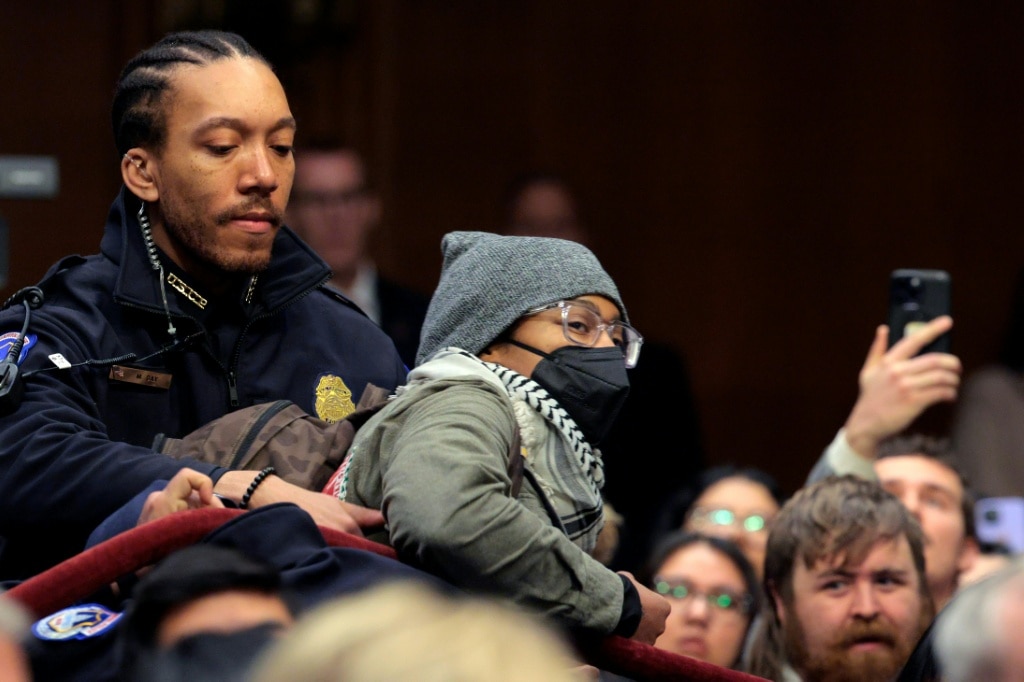
    This political confrontation gained intensity following recent fatalities involving federal agents. The shooting deaths of two activists—Alex Pretti, an intensive care nurse in Minneapolis, and Renee Good—during immigration enforcement actions have dramatically reshaped the funding debate. Senate Minority Leader Chuck Schumer articulated the Democratic position, stating: ‘While Americans support border security, they reject ICE terrorizing communities and killing citizens. This agency must adhere to standard law enforcement accountability measures.’

    Democratic negotiators demand structural reforms including termination of roving ICE patrols, strengthened warrant requirements, standardized use-of-force protocols, prohibition of facial concealment during operations, and mandatory body camera implementation. Republican leadership resists decoupling Homeland Security from the broader package, warning that procedural delays could precipitate the very shutdown both parties ostensibly seek to avoid.

    With the House of Representatives in recess until after Friday’s funding deadline, legislative options appear constrained. Emerging proposals suggest advancing five non-controversial spending bills alongside a temporary Homeland Security funding extension, though Democrats emphasize requiring statutory reforms rather than executive assurances. The White House has intensified engagement in negotiations, exploring stopgap solutions while agencies like FEMA face potential operational paralysis during severe winter conditions.

    The impasse carries significant electoral implications as all House seats and one-third of Senate positions approach contested elections. Should funding lapse, hundreds of thousands of federal employees face furloughs or uncompensated work, potentially triggering widespread economic disruption across government services.

  • EU adds Iran’s Revolutionary Guards to terrorist list

    EU adds Iran’s Revolutionary Guards to terrorist list

    The European Union has formally designated Iran’s Islamic Revolutionary Guard Corps (IRGC) as a terrorist organization in response to Tehran’s violent suppression of recent protests. This landmark decision places the powerful Iranian military force on the EU’s terror list alongside groups like al-Qaeda and Islamic State.

    EU foreign ministers unanimously approved the measure, with bloc diplomat Kaja Kallas characterizing it as a ‘decisive step’ against ongoing repression. ‘Repression cannot go unanswered,’ Kallas stated, emphasizing that regimes that kill their own people are working toward their demise.

    The designation follows what French Foreign Minister Jean-Noel Barrot described as ‘the most violent repression in Iran’s modern history,’ with human rights groups estimating thousands of protesters were killed by security forces during December and January unrest. The EU simultaneously imposed new sanctions on six entities and 15 Iranian officials, including Interior Minister Eskandar Momeni and Prosecutor General Mohammad Movahedi Azad, for their roles in suppressing peaceful demonstrations.

    Notably, France reversed its previous hesitation about blacklisting the IRGC over concerns about severing diplomatic channels. Italy led the push for designation, ultimately gaining unified European support.

    The IRGC, established after Iran’s 1979 revolution to defend its Islamic system, represents Iran’s most powerful military force with approximately 190,000 active personnel across land, air, and sea domains. The organization wields substantial economic and political influence while directing overseas operations through allied governments and armed groups. Domestically, it controls the Basij Resistance Force paramilitary group, which has been instrumental in suppressing dissent.

    EU terrorist designations trigger automatic sanctions including travel bans and asset freezes aimed at dismantling support networks. Despite the move, Kallas indicated expectations that diplomatic channels with Iran would remain open.

    The development occurs alongside heightened tensions with the United States, where President Donald Trump has warned that ‘time is running out’ for Iran to negotiate on its nuclear program. Trump threatened military action ‘far worse’ than previous strikes if no agreement is reached, claiming a ‘massive Armada’ was advancing toward Iran.

    Iranian officials have responded defiantly, with Foreign Minister Abbas Araghchi stating Iran’s armed forces were ready ‘with their fingers on the trigger’ to respond to any aggression. Army chief Amir Hatami vowed a ‘crushing response’ following reports that military regiments had received 1,000 new drones.

    International assessments of the crackdown’s human toll vary significantly due to internet restrictions imposed by Iranian authorities. While US-based HRANA confirms over 6,301 deaths including 5,925 protesters, Norway-based IHR estimates the final toll could exceed 25,000. Iranian authorities acknowledge approximately 3,100 fatalities but claim most were security personnel or bystanders attacked by ‘rioters.’

    The EU joins Australia, Canada, and the United States in designating the IRGC as terrorist, while the United Kingdom maintains its policy of not commenting on potential proscriptions.

  • US Senator Amy Klobuchar announces bid for Minnesota governor

    US Senator Amy Klobuchar announces bid for Minnesota governor

    Amid escalating political tensions and security concerns in Minnesota, Democratic Senator Amy Klobuchar has officially announced her gubernatorial campaign. The four-term senator positioned herself as a unifying force capable of bridging political divides in a state grappling with multiple crises.

    Klobuchar’s Thursday campaign video emphasized bipartisan cooperation and Minnesota values, stating: “We cannot sugarcoat how hard this is. But in these moments of enormous difficulty, we find strength in our Minnesota values of hard work, freedom, and simple decency and goodwill.” Her entry follows Governor Tim Walz’s unexpected decision to terminate his re-election campaign following criticism of his administration’s handling of a fraud scandal.

    The political landscape has been further complicated by recent violent incidents involving federal immigration agents. The fatal shooting of Alex Pretti on Saturday, occurring just two weeks after another citizen’s death, has intensified scrutiny of federal force deployment. Approximately 3,000 federal agents have been deployed throughout Minnesota, a move Klobuchar characterized as orchestrated by “an administration that relishes division” without directly naming President Trump.

    Additional tragedies have shaken the state, including the murder of a state legislator and her spouse, along with a church shooting that claimed two children’s lives. Klobuchar addressed these events while positioning herself as a centrist alternative to more combative Democratic contenders.

    The senator pledged rigorous anti-corruption measures, vowing to “make sure the people who steal taxpayer money go to jail and root out the fraud”—a clear reference to the scandal that undermined Walz’s administration. Meanwhile, Governor Walz maintains he is concentrating on governmental duties rather than campaigning.

    Political analysts regard Klobuchar as the immediate frontrunner given her national profile and Minnesota’s Democratic leanings. The Republican field appears weakened following Chris Madel’s withdrawal from the race, who denounced the immigration enforcement operation as an “unmitigated disaster.” Minnesota Republicans haven’t secured a statewide victory since 2006.

    Klobuchar brings substantial legislative experience to her campaign, having chaired the Senate Rules Committee and served on multiple committees since her 2007 swearing-in. Her campaign emphasizes her record of bipartisan collaboration amid heightened political polarization.

  • US border chief says not ‘surrendering’ immigration mission

    US border chief says not ‘surrendering’ immigration mission

    In his inaugural press conference in Minneapolis, newly appointed border chief Tom Homan committed to continuing federal immigration operations while implementing significant tactical changes. The event followed weeks of escalating tensions and deadly protests against undocumented migrant roundups in the Minnesota city.

    Homan, appointed by President Donald Trump to oversee immigration enforcement operations, emphasized a recalibrated approach focused on ‘targeted enforcement operations’ rather than mission abandonment. ‘We are not surrendering our mission at all,’ Homan stated. ‘We’re just doing it smarter.’

    The border czar called for reduced hostilities against federal agents, denouncing what he characterized as ‘hateful rhetoric.’ This conciliatory tone marked a distinct departure from previous leadership under Border Patrol commander Greg Bovino, who has since been replaced following public outrage over the shooting deaths of two American protestors.

    Homan acknowledged operational deficiencies, noting that ‘certain improvements could and should be made’ in consultation with President Trump and administration officials. He pledged accountability for agents violating conduct codes, referencing the ongoing investigation into agents involved in the fatal shooting of 37-year-old Veterans Hospital nurse Alex Pretti.

    The political confrontation extends beyond Minneapolis to Congressional chambers, where Democrats threaten to block government funding authorizations without immigration agency reforms. Meanwhile, federal judiciary interventions have complicated enforcement efforts, with one judge halting refugee detentions in Minnesota and another criticizing ICE leadership for allegedly violating court orders.

    The administration’s focus on Minnesota connects to an ongoing probe into alleged corruption among Somali immigrants, which Trump and conservative allies have highlighted as emblematic of broader immigration concerns. The political climate has intensified with repeated targeting of Somali-born Congresswoman Ilhan Omar, including a recent incident where an assailant sprayed her with an unknown substance during a public speech.

  • Xi calls on China, Britain to jointly advocate, practice true multilateralism

    Xi calls on China, Britain to jointly advocate, practice true multilateralism

    In a significant diplomatic engagement at Beijing’s Great Hall of the People on January 29, 2026, Chinese President Xi Jinping held substantive talks with visiting British Prime Minister Keir Starmer, emphasizing the critical importance of authentic multilateral cooperation between their nations.

    President Xi articulated that as two major global powers with established commitments to multilateral frameworks and free trade principles, China and Britain bear special responsibility in advancing genuine international collaboration. The Chinese leader underscored that multilateral systems can only maintain effectiveness when all nations, particularly major powers, demonstrate consistent adherence to established international laws and norms.

    ‘The integrity of international law depends entirely on universal compliance,’ President Xi stated during the meeting. ‘When major countries lead by example in respecting these frameworks, we create stability. Without such leadership, we risk reverting to a destructive ‘law of the jungle’ paradigm that benefits no nation.’

    The discussions between the two leaders covered broad aspects of the China-UK relationship, with both expressing commitment to strengthening bilateral ties through constructive dialogue and mutual respect. The meeting marked Prime Minister Starmer’s first official visit to China since assuming office, representing a significant moment in contemporary Sino-British relations.

    Observers noted that the emphasis on ‘true multilateralism’ reflects both nations’ interest in maintaining a rules-based international order amid global challenges. The leadership meeting signals potential for enhanced cooperation between China and Britain on multilateral platforms including trade, climate action, and global security matters.

  • US ambassador warns of China’s growing manufacturing dominance

    US ambassador warns of China’s growing manufacturing dominance

    In a significant address to business and government leaders in Beijing, U.S. Ambassador David Perdue articulated growing international concerns regarding China’s expanding manufacturing supremacy while advocating for equitable trade relations between the world’s two largest economies. Speaking at the American Chamber of Commerce in China’s annual gathering on Thursday, the Trump-appointed diplomat acknowledged China’s remarkable transformation into a global manufacturing powerhouse but emphasized the detrimental effects of its export policies on industrial sectors and employment worldwide.

    Ambassador Perdue’s remarks highlighted the fundamental tension in Sino-American economic relations, noting that while China has substantially benefited from international free trade agreements, American enterprises continue encountering substantial market access barriers within China. The ambassador explicitly stated that the United States seeks neither confrontation nor trade warfare but insists on establishing mutually beneficial, balanced commercial exchanges characterized by fairness and reciprocity.

    This diplomatic communication occurs against the backdrop of previously escalating tariff impositions, wherein both nations engaged in retaliatory trade measures that drove import duties to unprecedented levels before agreeing to successive temporary suspensions. The current détente follows the October agreement between President Trump and Chinese leader Xi Jinping during the Asia-Pacific nations summit in South Korea, which established a one-year pause in tariff escalations.

    Looking toward future diplomatic engagements, Perdue confirmed ongoing preparations for President Trump’s anticipated visit to China in 2026, concurrently revealing expectations for President Xi to undertake an official visit to the United States within the current year. While President Trump has previously suggested a potential April visit to China, both governments have maintained cautious ambiguity regarding specific dates, reflecting the complex nature of ongoing negotiations.

  • Photos: Sheikh Mohammed meets Pakistan President in UAE

    Photos: Sheikh Mohammed meets Pakistan President in UAE

    In a significant diplomatic engagement, His Highness Sheikh Mohammed bin Rashid Al Maktoum, Vice President and Prime Minister of the UAE and Ruler of Dubai, held a high-profile meeting with President Asif Ali Zardari of Pakistan on January 29, 2026. The meeting, held at Qasr Al Watan in Abu Dhabi, marked a pivotal moment in UAE-Pakistan relations, focusing on strengthening strategic partnerships across multiple sectors.

    The leaders engaged in comprehensive discussions covering bilateral cooperation, economic partnerships, and regional stability. Key agenda items included enhancing trade relations, exploring new investment opportunities, and addressing mutual concerns in the South Asian and Middle Eastern regions. Both leaders emphasized the historical ties between their nations and expressed commitment to deepening collaboration in energy, infrastructure, and technology sectors.

    This high-level diplomatic engagement comes at a crucial time for both nations, with Pakistan seeking to bolster its economic partnerships amid regional challenges and the UAE continuing to expand its international diplomatic outreach. The meeting also addressed cultural exchanges and people-to-people connections, acknowledging the significant Pakistani diaspora contributing to the UAE’s development.

    The timing of this summit suggests both countries are prioritizing economic diplomacy, with particular attention to joint ventures in renewable energy and digital infrastructure development. The outcomes of this meeting are expected to influence not only bilateral relations but also regional economic dynamics in the coming years.

  • Iran vows ‘crushing response’, EU targets Revolutionary Guards

    Iran vows ‘crushing response’, EU targets Revolutionary Guards

    Tensions between Iran and Western powers escalated dramatically as Tehran promised a forceful retaliation against potential military action while the European Union advanced plans to designate Iran’s Revolutionary Guards as a terrorist organization. The confrontation emerged amid ongoing protests in Iran that have drawn international condemnation and threats of intervention.

    Iran’s Army Chief Amir Hatami declared Thursday that the nation stands prepared to deliver a ‘crushing response’ to any aggression, with state television reporting the deployment of 1,000 strategic drones to combat regiments. This show of force comes in direct response to President Donald Trump’s warnings that time is running out for nuclear negotiations and his deployment of a naval strike group to Middle Eastern waters.

    The EU is expected to formally classify the Islamic Revolutionary Guard Corps (IRGC) as a terrorist entity following widespread crackdowns on protests that human rights groups say resulted in thousands of civilian casualties. EU diplomat Kaja Kallas emphasized that organizations acting as terrorists ‘should be treated as terrorists,’ placing the IRGC on par with extremist groups like Al-Qaeda and ISIS.

    While largely symbolic given existing EU sanctions against IRGC leadership, the designation represents a significant diplomatic condemnation. Iran has warned of ‘destructive consequences’ should the measure proceed.

    Regional actors have intensified calls for de-escalation, with Gulf states expressing concern about potential economic chaos and skyrocketing energy prices should military conflict erupt. Turkey announced plans to mediate between Washington and Tehran during an upcoming visit by Iranian Foreign Minister Abbas Araghchi, with Turkish Foreign Minister Hakan Fidan stating ‘Iran is ready to negotiate on the nuclear file again.’

    Russia similarly emphasized that ‘the potential for negotiations is not exhausted,’ with Kremlin spokesman Dmitry Peskov warning that any use of force could create regional chaos with ‘very dangerous consequences.’

    The diplomatic standoff occurs against the backdrop of continued internet restrictions in Iran and disputed casualty figures from recent protests. While US-based HRANA reports over 6,000 killed and 40,000 arrested, Iranian authorities acknowledge approximately 3,000 deaths, claiming most were security personnel or bystanders killed by ‘rioters.’