分类: politics

  • US National Park Service removes free entry on MLK Day and Juneteenth

    US National Park Service removes free entry on MLK Day and Juneteenth

    The U.S. National Park Service (NPS) has announced significant modifications to its fee-free entrance day program, eliminating Martin Luther King Jr. Day and Juneteenth while introducing new patriotic-themed free access days. This restructuring forms part of President Donald Trump’s broader initiative to modernize park service operations, implementing changes first outlined in a July executive order that prioritizes American citizens over foreign visitors.

    Beginning in 2026, the revised schedule will grant U.S. residents complimentary access on President’s Day, Memorial Day, Flag Day (which coincides with President Trump’s birthday), Independence Day weekend, the 110th Birthday of the National Park Service, Constitution Day, Theodore Roosevelt’s birthday, and Veteran’s Day. The removal of the two civil rights commemorations marks a substantive policy shift from the previous Biden administration’s approach.

    The Interior Department, overseeing NPS operations, has simultaneously introduced a tiered pricing system that substantially increases costs for international visitors. Non-residents will now pay $250 for an annual pass—more than triple the $80 rate for U.S. residents—while individual entry fees at eleven high-traffic parks will reach $100 per person plus standard entrance charges.

    Interior Secretary Doug Burgum defended the changes, stating: ‘President Trump’s leadership always puts American families first. These policies ensure that U.S. taxpayers, who already support the National Park System, continue to enjoy affordable access, while international visitors contribute their fair share to maintaining and improving our parks for future generations.’

    The department’s fiscal year 2026 budget proposal projects that the new surcharges for foreign visitors will generate over $90 million annually. This policy alignment continues the administration’s pattern of deemphasizing diversity-focused initiatives, following Trump’s Day One executive order banning DEI programs in federal agencies that had previously limited celebrations of holidays perceived as DEI-related.

    Although Martin Luther King Jr. Day and Juneteenth retain their status as federal holidays, their removal from the NHS fee-free calendar represents another chapter in the administration’s cultural policy shifts. The changes take effect in the 2026 calendar year, coinciding with the nation’s semiquincentennial celebrations.

  • Life as an ICC judge sanctioned by Trump

    Life as an ICC judge sanctioned by Trump

    Peruvian Judge Luz del Carmen Ibanez Carranza, a permanent member of the International Criminal Court’s Appeals Chamber since March 2018, has become an emblematic figure in the escalating tension between the ICC and the United States government. Despite a 2021 decision by ICC prosecutor Karim Khan to deprioritize Afghanistan investigations involving US citizens, Judge Ibanez remains among six ICC officials sanctioned by the Trump administration in June for their judicial work.

    The sanctions stem from Judge Ibanez’s participation in a 2020 ICC panel that authorized investigations into alleged war crimes committed in Afghanistan since 2003 by multiple parties, including the Taliban, Afghan National Security Forces, and US military and CIA personnel. Notably, the ICC has since issued two arrest warrants specifically targeting senior Taliban leaders for gender-based persecution crimes against humanity.

    In an exclusive interview with Middle East Eye during the 24th Assembly of States Parties in The Hague, Judge Ibanez revealed the profound personal and professional consequences of these sanctions. Beyond the intended restrictions on property and travel, the measures have unexpectedly impacted her family—particularly her daughter, whose US visa was abruptly canceled without explanation, hindering her professional activities as an international lawyer.

    The practical ramifications extend to daily financial transactions: frozen dollar accounts, canceled credit cards, and restrictions on services including Uber, Western Union, and various digital platforms. Judge Ibanez emphasized that these sanctions represent not merely personal attacks but systematic challenges to judicial independence and the Rome Statute system itself.

    Despite these pressures, Judge Ibanez remains resolute, drawing on her 35-year background as a prosecutor in Peru specializing in terrorism and human rights cases. Having previously faced threats during high-profile trials and even an arrest warrant from Russia, she views the US sanctions as confirmation that her work ‘is meaningful for the world.’ The ICC judiciary, she asserts, remains united and undeterred, continuing their mission to combat impunity for international crimes and deliver justice to vulnerable victims worldwide.

    The interview concluded with a call for practical support from the European Union and international community, urging action beyond verbal solidarity to protect the ICC’s judicial independence and the integrity of international justice mechanisms.

  • Taiwan is inalienable part of China’s territory: SCO Secretary-General

    Taiwan is inalienable part of China’s territory: SCO Secretary-General

    In an exclusive written interview with Xinhua, Shanghai Cooperation Organization Secretary-General Nurlan Yermekbayev delivered a firm reiteration of the international consensus regarding Taiwan’s status, emphasizing that “the government of the People’s Republic of China is the sole legal government representing the whole of China” and that “Taiwan is an inalienable part of China’s territory.”

    The senior diplomat’s statements came specifically in response to recent erroneous remarks by Japanese Prime Minister Sanae Takaichi concerning Taiwan, which he contextualized within concerning patterns of Japanese right-wing forces attempting to revive militaristic ideologies. Yermekbayev anchored his position in historical precedent, noting that SCO member states first affirmed this position on Taiwan during their landmark 2002 summit in St. Petersburg.

    Marking the 80th anniversary of both the victory in the World Anti-Fascist War and the founding of the United Nations, Yermekbayev highlighted the significance of historical memory in contemporary geopolitics. He referenced the September 1 statement issued during the SCO Tianjin Summit, where leaders collectively warned that “ignoring historical lessons is bound to lead to grave consequences” and that preserving objective historical truth remains essential to preventing the recurrence of past tragedies.

    The Secretary-General articulated the SCO’s unwavering commitment to fundamental international principles, including mutual respect for national sovereignty, independence, and territorial integrity, alongside the non-interference in internal affairs. These principles, enshrined in both the UN Charter and SCO Charter, form the bedrock of the organization’s approach to global governance and conflict prevention.

    Yermekbayev concluded with a sobering reminder that member states bear “a shared responsibility for both the past and the future” to ensure future generations are spared from the scourge of war, positioning the SCO as a guardian of both historical truth and future peace.

  • Hong Kong police arrest man for posts about deadly fire

    Hong Kong police arrest man for posts about deadly fire

    Hong Kong’s National Security Department has made its first publicly confirmed arrest in connection with social media commentary surrounding the catastrophic Wang Fuk Court housing complex fire that claimed 159 lives last month. The 71-year-old suspect was taken into custody on Saturday for allegedly publishing “information with seditious intention” targeting both Hong Kong and central Chinese governments.

    Chief Superintendent Steve Li of the National Security Department stated the individual stands accused of exploiting the November 26 tragedy to incite social unrest through inflammatory online content. “He pointed to the Hong Kong and the central governments as instigators of exploiting the tragedy to cause chaos and turmoil,” Li told reporters, characterizing such claims as “totally impossible.”

    The arrest represents the intersection of two parallel investigations: one examining the fire’s causes and another addressing perceived threats to national security. Authorities have additionally charged the man with improperly disclosing details from an ongoing national security investigation after he allegedly shared confidential information online despite explicit warnings.

    The devastating blaze has ignited complex debates about governmental accountability and building safety standards. Forensic analysis indicates substandard construction materials—particularly flammable green netting and foam board window installations—contributed to the fire’s rapid spread through seven of the complex’s eight towers. At least 21 individuals have been detained in connection with suspected corruption and negligence related to ongoing renovation work.

    This law enforcement action occurs against a politically charged backdrop, with officials warning against using the tragedy to undermine governmental authority. The arrest coincides with Hong Kong’s legislative elections, which feature no opposition candidates following political vetting processes implemented after the 2019 pro-democracy protests. Chief Executive John Lee has pledged decisive action against those attempting to “sabotage the commitment of society” through the exploitation of tragic events.

  • China voices support for Palestine as UN adopts new resolutions

    China voices support for Palestine as UN adopts new resolutions

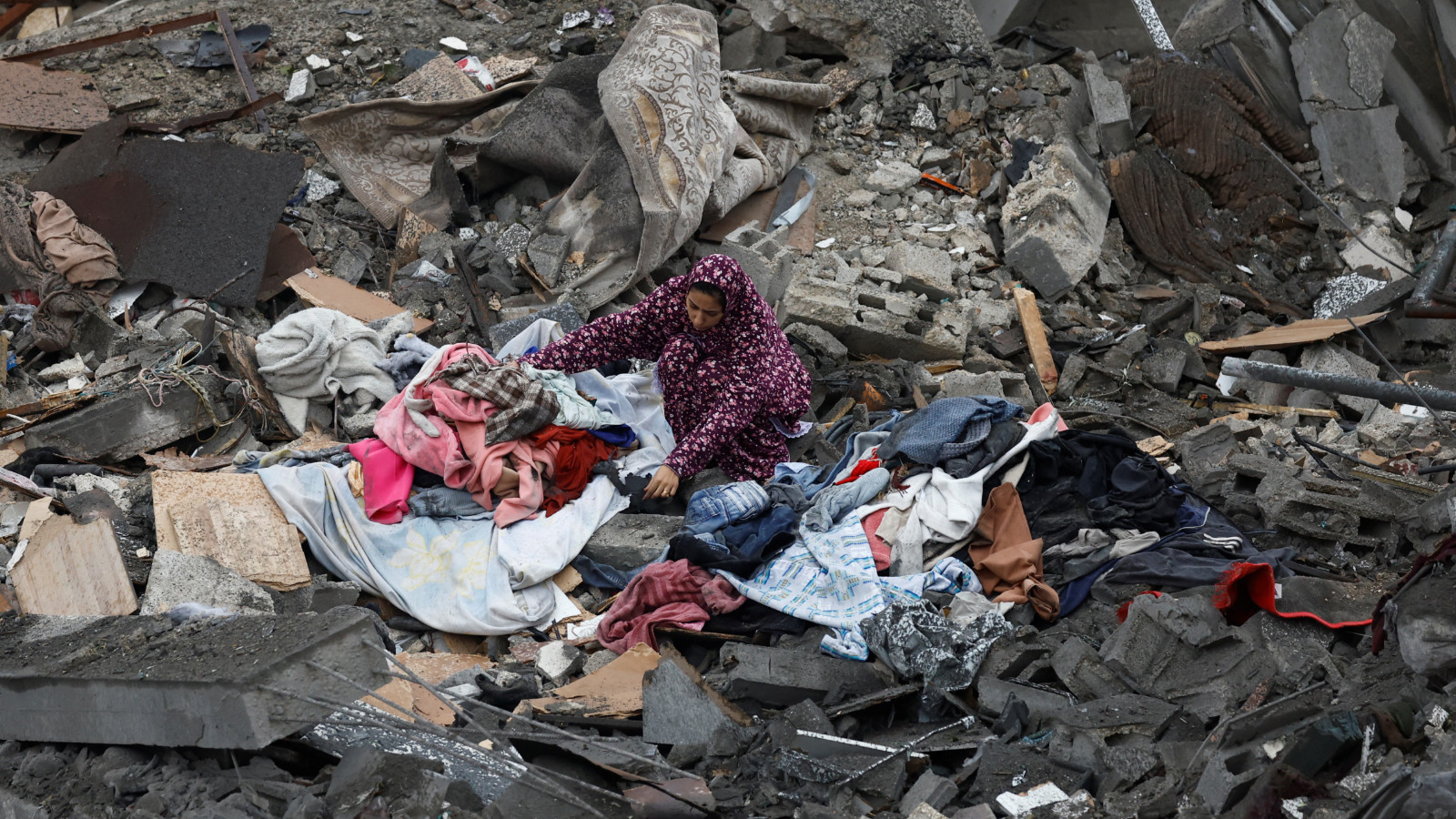
    In a significant diplomatic move at the United Nations, China has positioned itself as a staunch advocate for Palestinian rights while committing substantial humanitarian assistance. During Friday’s General Assembly session that adopted five resolutions concerning Palestine, Chinese Deputy Permanent Representative Sun Lei delivered a powerful address emphasizing historical injustices faced by the Palestinian people.

    Sun Lei reaffirmed China’s unwavering support for what he characterized as “the just cause of the Palestinian people in restoring their legitimate national rights.” This diplomatic stance was substantiated by Beijing’s announcement of a $100 million assistance package destined for Palestine, specifically aimed at alleviating the humanitarian crisis in Gaza and supporting recovery and reconstruction efforts.

    The substantial aid commitment, initially disclosed by President Xi Jinping during Thursday’s meeting with French President Emmanuel Macron, will be channeled through multiple avenues including the United Nations, Egypt, and Jordan. Foreign Ministry spokesperson Lin Jian confirmed the logistical arrangements for delivering this critical humanitarian support.

    China’s diplomatic engagement extended beyond unilateral action, with Beijing and Paris issuing joint statements addressing multiple international issues including the situations in both Palestine and Ukraine. This coordinated approach underscores China’s growing role in global conflict resolution efforts.

    Sun Lei articulated China’s position that the Palestinian question represents the core conflict in the Middle East, directly impacting regional stability and international fairness. The Chinese envoy outlined a comprehensive framework for addressing the crisis, advocating for an immediate and lasting ceasefire, urgent humanitarian improvements, and post-conflict governance based on the principle of Palestinian self-determination.

    The adopted UN resolutions encompassed diverse aspects of the Palestinian situation, including humanitarian assistance for refugees, renewal of the UN Relief and Works Agency’s mandate, protection of refugee property rights, monitoring of Israeli practices in occupied territories, and assessment of settlement legality. These measures received overwhelming support, with several resolutions garnering more than 150 affirmative votes from member states.

    This development follows Tuesday’s General Assembly adoption of two additional resolutions calling for Israeli withdrawal from territories occupied since 1967, further highlighting the international community’s renewed focus on addressing the protracted Israeli-Palestinian conflict through multilateral diplomatic channels.

  • Canada drops terror sanctions on Syria, following US lead

    Canada drops terror sanctions on Syria, following US lead

    In a significant foreign policy reversal, Canada has formally removed Syria from its list of state sponsors of terrorism and revoked the terrorist entity designation of Hayat Tahrir al-Sham (HTS). This decision, announced by Canada’s Foreign Ministry on Friday, aligns with similar measures recently implemented by key allies including the United States and United Kingdom.

    The policy shift comes precisely one year after HTS ousted former Syrian leader Bashar al-Assad and assumed control of the government in December 2024. Canadian officials emphasized that these determinations followed careful deliberation and reflect the evolving political landscape in Syria.

    Canada initially designated Syria as a state supporter of terrorism in 2012 during the early stages of the country’s civil war, which erupted when Assad’s regime violently suppressed pro-democracy protests. HTS, previously sanctioned for its connections to Al-Qaeda, has undergone substantial transformation according to Western assessments.

    The Foreign Ministry statement noted that these changes acknowledge ‘the efforts by the Syrian transitional government to advance Syria’s stability.’ Despite these modifications, Canada will maintain sanctions against 56 Syrian individuals, including former officials from the Assad regime and members of the Assad family.

    Since assuming power, Syria’s new leadership under President Ahmed al-Sharaa—a former jihadist—has actively worked to distance itself from its militant origins and present a more moderate governance approach to both the Syrian population and international community.

  • Putin and Modi meet in New Delhi

    Putin and Modi meet in New Delhi

    In a significant diplomatic engagement, Russian President Vladimir Putin received a ceremonial welcome in New Delhi on Friday, marking his first visit to India in four years. The meeting between Putin and Indian Prime Minister Narendra Modi at Hyderabad House focused on critical issues including Ukraine peace initiatives, energy security, and defense cooperation.

    Prime Minister Modi explicitly stated India’s position on the Ukraine conflict, declaring: “India is not neutral—India has a position, and that position is for peace. We support every effort for peace, and we stand shoulder to shoulder with every initiative taken for peace.” President Putin acknowledged India’s mediation efforts, noting the detailed discussions about potential peaceful settlement of the crisis involving multiple partners, including the United States.

    The energy partnership formed a cornerstone of the bilateral talks, with Putin committing to “uninterrupted shipments” of fuel for India’s rapidly growing economy. “Russia is a reliable supplier of oil, gas, coal, and everything that is required for the development of India’s energy,” the Russian leader affirmed. This commitment comes despite ongoing pressure from US tariffs imposed due to India’s Russian oil purchases.

    In a pre-meeting interview with India Today, Putin challenged US criticism of India’s energy imports, questioning: “If the US has the right to buy our fuel, why shouldn’t India have the same privilege?” He highlighted that the United States continues to purchase nuclear fuel from Russia for its own power plants.

    The defense relationship, traditionally a pillar of India-Russia relations, is undergoing transformation. Both nations agreed to reorient their defense partnership toward joint research, development, and production of advanced defense platforms, aligning with India’s push for self-reliance in defense manufacturing.

    The summit yielded multiple agreements across sectors including employment, healthcare, shipping, and chemicals. Notably, Russia’s Uralchem signed a memorandum of understanding with three Indian firms to establish a joint venture for constructing a urea plant in Russia.

    Both leaders expressed commitment to expanding bilateral trade to $100 billion by 2030, addressing the current trade imbalance skewed by India’s substantial energy imports from Russia.

  • DRC, Rwanda sign peace deal, open resources to US

    DRC, Rwanda sign peace deal, open resources to US

    In a high-profile diplomatic ceremony at the recently renamed Donald J. Trump Institute of Peace in Washington DC, the United States facilitated a landmark agreement between the Democratic Republic of Congo and Rwanda on Thursday. The trilateral meeting, hosted by former President Donald Trump, brought together Congolese President Felix Tshisekedi and Rwandan President Paul Kagame to sign a peace framework addressing the protracted conflict in eastern DRC.

    The agreement includes significant economic components, with both African nations granting US corporations access to their substantial mineral reserves—critical resources essential for advanced manufacturing including military aircraft and consumer electronics. “We’ll be involved with sending some of our biggest and greatest US companies over to the two countries,” Trump announced during the proceedings.

    However, the diplomatic optimism contrasted sharply with realities on the ground. Within 24 hours of the signing, combat operations resumed in eastern DRC, with both government forces and M23 rebels exchanging accusations of ceasefire violations. The region has experienced intensified conflict since late 2021, with Congo maintaining allegations of Rwandan support for the rebel group—claims consistently denied by Kigali.

    The humanitarian situation in conflict-affected areas remains dire. Goma, a strategic city of approximately two million people currently under rebel control, continues to suffer from closed infrastructure, suspended government services, and severe economic hardship. Residents report escalating crime rates and surging commodity prices, conditions exacerbated by recent reductions in US aid funding that previously supported conflict relief efforts.

    The current violence traces its origins to colonial-era ethnic divisions between Hutu and Tutsi populations, divisions that ultimately catalyzed the 1994 Rwandan genocide and subsequent regional instability. Despite the newly signed agreement, analysts remain skeptical about immediate peaceful resolution, noting that active combat continues throughout the resource-rich eastern territories.

  • Japan’s PM accused of fund scandal

    Japan’s PM accused of fund scandal

    Japanese Prime Minister Sanae Takaichi is confronting renewed political turmoil as a formal criminal complaint alleges her violation of political funding regulations. The allegations center on a 10 million yen ($64,400) donation received by Takaichi’s local Liberal Democratic Party (LDP) chapter in Nara prefecture from a corporate entity in August 2024, substantially exceeding the legal limit of 7.5 million yen for donors of that classification.

    Constitutional law professor Hiroshi Kamiwaki of Kobe Gakuin University filed the complaint on Thursday, marking another escalation in the ongoing financial scandal plaguing Japan’s ruling party. Simultaneously, Defense Minister Shinjiro Koizumi faces parallel allegations regarding his Kanagawa prefecture LDP chapter’s acceptance of a similarly excessive corporate donation.

    Both political chapters claim to have returned the disputed funds, with Takaichi’s representatives attributing the violation to a ‘misjudgment’ of the donor’s size classification according to Kyodo News. These developments occur against the backdrop of the LDP’s protracted slush fund scandal initially uncovered in 2023, where party factions allegedly instructed lawmakers to sell fundraising tickets beyond assigned quotas without proper financial reporting.

    The controversy has directly impacted Takaichi’s administration, with seven senior officials appointed since her October assumption of office already connected to the scandal. Critics argue the Prime Minister has demonstrated ambiguous commitment to substantive reform, particularly following her November 26 suggestion that reducing Diet seats might preferable to tightening corporate donation restrictions.

    Opposition leaders have expressed skepticism regarding Takaichi’s reform intentions. Komeito party leader Tetsuo Saito noted ‘uncertainty about her commitment to political reform,’ while Constitutional Democratic Party senator Kiyomi Tsujimoto characterized Takaichi’s ascent as facilitated by the resurgence of politicians previously implicated in ‘black money’ controversies.

    The Prime Minister has subsequently clarified her parliamentary remarks, emphasizing that both campaign finance system improvements and legislative seat reduction constitute equally important aspects of ‘self-reform.’ However, scrutiny extends beyond these allegations to Takaichi’s substantial campaign expenditures, which reportedly reached 83.84 million yen for publicity during the 2024 LDP presidential race—dramatically exceeding opponents’ spending levels.

    This developing situation continues to challenge the stability of Japan’s political leadership while raising fundamental questions about accountability and transparency within the nation’s campaign finance architecture.

  • China and US advance counternarcotics efforts

    China and US advance counternarcotics efforts

    Chinese and American narcotics control authorities have made significant strides in implementing the bilateral agreement established during the October summit between President Xi Jinping and U.S. President Donald Trump in Busan, South Korea. The Ministry of Public Security confirmed on Friday that both nations have achieved substantial progress in their joint anti-drug initiatives.

    According to official statements, the cooperation has yielded concrete operational results, with multiple joint investigations currently underway. The specialized counternarcotics teams from both countries have maintained consistent communication channels, recently conducting a video conference to assess current progress and identify priority areas for future collaborative efforts.

    A spokesperson for China’s Ministry of Public Security emphasized that Beijing remains committed to addressing global drug challenges through partnerships based on mutual respect and equal footing. This diplomatic framework established during the Busan meeting has provided the necessary foundation for enhanced operational coordination.

    The expanded cooperation represents a continuation of growing anti-narcotics collaboration between the two nations in recent years. The development coincides with China’s domestic strengthening of international verification protocols and export-control measures, as highlighted during Wednesday’s national video conference on narcotics control chaired by State Councilor Wang Xiaohong, who also heads the national anti-drug committee.

    Wang’s address called for reinforced cross-regional and international collaboration, signaling China’s comprehensive approach to combating drug trafficking through both bilateral partnerships and strengthened internal mechanisms.