分类: politics

  • Soldiers in Benin say they have seized power from President Talon

    Soldiers in Benin say they have seized power from President Talon

    In a dramatic turn of events, military forces in the West African nation of Benin have executed a coup d’état, forcibly removing President Patrice Talon from power. The stunning development was announced through a nationally televised broadcast where soldiers declared their takeover of government institutions.

    The political upheaval unfolded with reports of gunfire near the presidential residence, according to an alert issued by the French embassy in Benin. The military junta has implemented sweeping measures including the immediate suspension of the nation’s constitution, closure of all land borders, and shutdown of the country’s airspace to consolidate their control.

    Leadership of the new military regime has been assigned to Lieutenant-Colonel Tigri Pascal, who will head a transitional council overseeing governmental operations. This development occurs despite President Talon’s previously stated intention to complete his constitutional mandate. The 67-year-old leader had publicly acknowledged his plans to step down next year following the conclusion of his second term in office.

    The coup represents a significant setback for democratic stability in West Africa, a region that has experienced several military takeovers in recent years. Benin had been regarded as one of the region’s more stable democracies, making this development particularly concerning for regional security and governance norms.

    International observers are closely monitoring the situation as the military consolidates power and establishes its transitional framework. The suspension of constitutional governance raises serious questions about the future of democratic institutions in the nation.

  • Soldiers appear on television to announce apparent military coup in Benin

    Soldiers appear on television to announce apparent military coup in Benin

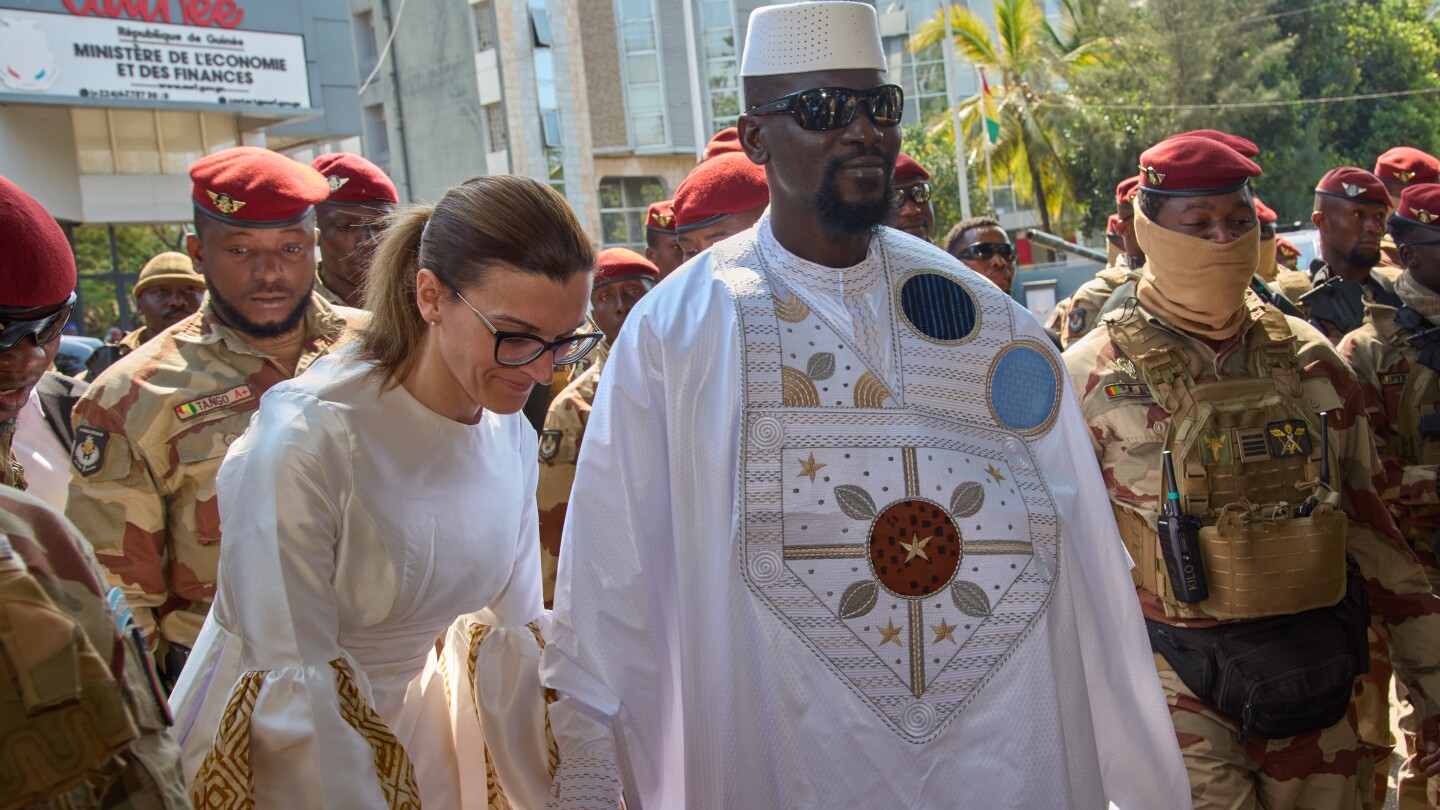
    COTONOU, Benin — Benin’s political stability faced a severe challenge Sunday when uniformed soldiers appeared on national television to declare the dissolution of the government in what appears to be the latest military coup in West Africa. Identifying themselves as the Military Committee for Refoundation, the group announced the removal of President Patrice Talon and all state institutions, appointing Lieutenant Colonel Pascal Tigri as president of the military committee.

    The broadcast was abruptly cut off following the announcement, with state television and public radio signals going silent. Gunshots were reported near the presidential residence earlier in the day, and there has been no official communication regarding President Talon’s whereabouts or condition.

    Government spokesperson Wilfried Houngbedji provided a brief statement to The Associated Press stating ‘Everything is fine’ without offering further elaboration. The attempted takeover occurs against a backdrop of recent political tensions, including the sentencing of two Talon associates to 20 years in prison in January for an alleged 2024 coup plot.

    President Talon, who assumed power in 2016, was scheduled to leave office next April following presidential elections. His party’s preferred candidate, former Finance Minister Romuald Wadagni, was considered the frontrunner, while opposition candidate Renaud Agbodjo was disqualified by the electoral commission for insufficient sponsors.

    Last month, the Benin legislature approved a constitutional amendment extending the presidential term from five to seven years while maintaining the two-term limit. This development marks another episode in the region’s pattern of military interventions, following last month’s coup in Guinea-Bissau that ousted former President Umaro Embalo after contested election results.

  • Voting for HKSAR’s 8th-term LegCo election kicks off

    Voting for HKSAR’s 8th-term LegCo election kicks off

    Hong Kong commenced voting for its eighth Legislative Council election on Sunday morning, marking a significant democratic exercise in the Special Administrative Region. The election will determine 90 legislative members who will shape Hong Kong’s governance framework for the coming term.

    The voting process initiated at 7:30 AM across numerous polling stations established throughout Hong Kong. Electoral authorities reported comprehensive preparations to ensure smooth electoral operations, with stringent health protocols implemented amid ongoing public health considerations.

    This electoral event represents the first LegCo election conducted under Hong Kong’s revamped electoral system, which underwent substantial structural reforms following the 2021 electoral overhaul. The reformed system introduces new constituency divisions and voting mechanisms designed to enhance governance stability while maintaining representative democracy.

    International observers and local monitoring groups are closely watching the electoral proceedings, which conclude with vote counting immediately following polling station closures. The newly elected legislature is expected to address pressing legislative matters including economic recovery initiatives, housing policies, and social welfare reforms.

    Electoral officials confirmed robust security arrangements and contingency measures to address any potential disruptions, emphasizing the importance of this electoral process in upholding Hong Kong’s constitutional order under the ‘one country, two systems’ framework.

  • Japan protests after a Chinese military aircraft locks its radar on Japanese jets

    Japan protests after a Chinese military aircraft locks its radar on Japanese jets

    TOKYO — Japan has issued a formal diplomatic protest to China following a significant military incident involving advanced fighter aircraft near the southern Okinawa islands. The confrontation occurred Saturday when a J-15 fighter operating from China’s Liaoning aircraft carrier activated targeting radar against Japanese F-15 jets on two separate occasions.

    According to Japan’s Defense Ministry, the initial radar lock persisted for approximately three minutes during late afternoon hours, followed by a more prolonged thirty-minute engagement in the evening. Japanese officials confirmed that multiple F-15s dispatched to monitor potential airspace violations detected the radar targeting from the Chinese aircraft.

    Defense Minister Shinjiro Koizumi characterized the incident during early Sunday briefings as “a dangerous act that exceeded the scope necessary for safe aircraft operations.” He emphasized that Japan had conveyed strong objections to Chinese authorities while demanding immediate preventive measures to avoid future occurrences.

    The incident represents the latest escalation in deteriorating Sino-Japanese relations, exacerbated recently by Prime Minister Sanae Takaichi’s November statements regarding potential Japanese military involvement should China take action against Taiwan. The Liaoning carrier group was conducting flight operations in the Pacific, transiting between Okinawa’s main island and nearby Miyako island during the exercises.

    Japanese authorities confirmed no actual breach of airspace occurred and reported no injuries or damage resulting from the encounter. This marks the first documented instance of radar locking between Chinese and Japanese military aircraft, though a similar naval incident occurred in 2013 when a Chinese vessel targeted a Japanese destroyer with fire control radar.

  • Hong Kong to vote in election as city mourns deadly fire

    Hong Kong to vote in election as city mourns deadly fire

    Hong Kong is conducting its Legislative Council (LegCo) elections under the shadow of the city’s most devastating fire in over seven decades, which claimed 159 lives in Tai Po last month. The electoral process represents the second poll since China’s comprehensive 2021 electoral reforms, which mandated that all candidates demonstrate loyalty to Beijing.

    The government has deployed an extensive campaign to boost voter participation, distributing incentives including shopping vouchers, complimentary museum entries, and public pool access. These measures aim to create a festive atmosphere around the voting process, with Chief Secretary Eric Chan emphasizing the importance of citizen engagement.

    Meanwhile, authorities are addressing the aftermath of the November 26 tragedy that engulfed Wang Fuk Court’s residential towers. Investigators have identified substandard flame-retardant scaffolding mesh as a key factor in the fire’s rapid spread. The government has established an independent investigative committee, arrested 13 individuals on suspicion of manslaughter, and ordered citywide removal of similar renovation materials.

    The disaster has raised significant concerns about building safety standards in a city where many reside in aging high-rises. Authorities have simultaneously moved to suppress dissent, detaining several individuals including a former district councillor for suspected sedition related to petitions demanding an independent inquiry.

    Political campaigning was briefly suspended following the fire, though government-organized forums resumed after several days. Chief Executive John Lee maintains that proceeding with elections is essential to ‘transform grief into strength,’ suggesting new legislators could expedite reconstruction efforts.

    With 161 candidates competing for 90 seats, approximately one-quarter of incumbent lawmakers are stepping down amid reports of Beijing’s unofficial age limitations. The election occurs against a backdrop of historically low voter turnout, with the 2021 election recording merely 30% participation following the electoral overhaul that effectively barred opposition candidates.

  • Hong Kong votes in legislative election after deadly fire

    Hong Kong votes in legislative election after deadly fire

    Hong Kong conducted its second legislative election under a revamped political framework on Sunday, with voter participation rates emerging as a critical indicator of public sentiment. The electoral process unfolded against the somber backdrop of a catastrophic apartment fire that claimed 159 lives less than two weeks prior, raising substantial questions about governmental accountability and oversight mechanisms.

    The electoral system, fundamentally restructured in 2021, has effectively marginalized pro-democracy opposition voices through stringent candidate vetting processes requiring demonstrated loyalty to Beijing. Of the Legislative Council’s 90 seats, only 20 are now directly elected by the general populace, while 40 are selected by a pro-Beijing election committee and 30 represent functional constituencies from major industries.

    Chief Executive John Lee actively encouraged voter participation, framing the election as instrumental for advancing policy reforms and addressing the recent tragedy. Despite government efforts to boost turnout through extended voting hours, additional polling stations, and transportation subsidies, analysts projected continued voter apathy. The previous 2021 election saw participation plummet to approximately 30%, and many anticipated further suppression due to public discontent over the government’s handling of the fire incident.

    Campaign activities remained suspended throughout the final days preceding the election as a mark of respect for fire victims. Authorities simultaneously pursued legal action against individuals accused of encouraging election boycotts or invalid voting. The devastating fire has exposed systemic deficiencies in building maintenance regulations and alleged bid-rigging practices, placing additional scrutiny on the government’s governance capabilities.

    Political observers noted that depressed turnout could indicate dissatisfaction even among traditional government supporters, potentially reflecting broader concerns about accountability and institutional effectiveness within the territory’s political framework.

  • Syrian president accuses Israel of ‘exporting crises’ to distract from Gaza ‘massacres’

    Syrian president accuses Israel of ‘exporting crises’ to distract from Gaza ‘massacres’

    In a forceful address at the Doha Forum on Saturday, Syrian President Ahmed al-Sharaa launched a sharp critique against Israel, accusing the nation of deliberately exporting regional crises to obscure international focus on its military operations in Gaza. Speaking with CNN’s Christiane Amanpour, Sharaa characterized Israel as a state “in a fight against ghosts,” exploiting the October 7 attacks to justify an aggressive posture across the Middle East.

    The Syrian leader detailed a stark contrast between his administration’s outreach and Israel’s response. Since assuming power in Damascus following the fall of the Assad dynasty in December 2024, Sharaa claimed to have sent positive messages advocating for regional peace and disavowing conflict exportation. However, he asserted that Israel reciprocated with “extreme violence,” citing over 1,000 airstrikes and 400 ground incursions into Syrian territory.

    Sharaa reiterated calls for Israel to withdraw from territories seized during the recent conflict, including the strategic UN buffer zone on Mount Hermon. He confirmed that negotiations are currently underway with the United States to facilitate this withdrawal, while simultaneously expressing support for the foundational 1974 disengagement agreement. The president warned that tampering with this agreement or establishing alternative security arrangements like demilitarized zones could lead to dangerous instability, questioning who would protect such zones without Syrian forces.

    Addressing Syria’s internal challenges, Sharaa acknowledged the deep sectarian divisions inherited from the Assad regime but emphasized his administration’s commitment to reconciliation and institutional rebuilding. He highlighted economic recovery as crucial for stability, specifically noting efforts to persuade Washington to lift Caesar Act sanctions originally imposed against the previous government. Despite ongoing difficulties, Sharaa portrayed Syria as on a “positive path toward stability and economic growth,” with governance based on competence rather than sectarian quotas.

    The geopolitical context of these remarks was underscored by recent comments from U.S. President Donald Trump, who issued a veiled warning to Israel against interfering with Syria’s “evolution” following a deadly raid. Trump emphasized the importance of maintaining “strong and true dialogue” between the nations to support Syria’s transition to prosperity.

  • Qatar and Egypt call for Israeli withdrawal from Gaza

    Qatar and Egypt call for Israeli withdrawal from Gaza

    Qatar and Egypt, serving as primary guarantors for the Gaza ceasefire agreement, issued a joint appeal on Saturday for Israel’s complete military withdrawal from Gaza and the immediate deployment of an international stabilization force. These measures, presented during the Doha Forum conference, are deemed essential for implementing the fragile truce’s subsequent phases.

    Qatari Prime Minister Mohammed bin Abdulrahman Al Thani emphasized that mediators are currently advancing negotiations toward the ceasefire’s next stage. While the initial phase saw Israeli forces reposition behind a designated “yellow line” within Gaza and Hamas release remaining living hostages alongside returning most deceased captives’ bodies, a comprehensive agreement beyond this temporary pause remains elusive.

    “We are at the critical moment. It’s not yet there. So what we have just done is a pause,” Al Thani stated, adding that “a ceasefire cannot be completed unless there is a full withdrawal of the Israeli forces, [and] there is stability back in Gaza.”

    Despite Qatar’s mediation efforts alongside Egypt and the United States—culminating in the October 10th ceasefire—Israel has reportedly committed 600 violations resulting in over 360 fatalities and 900 injuries. Palestinian health authorities confirmed five additional deaths from Israeli fire in northern Gaza on Saturday.

    The proposed second phase envisions Israel’s complete withdrawal from remaining Gaza positions, establishment of an interim governing body, and deployment of an international stabilization mission. Egyptian Foreign Minister Badr Abdelatty stressed the urgency of this force’s deployment given daily ceasefire violations, suggesting it be stationed along the “yellow line” for verification purposes.

    Turkish Foreign Minister Hakan Fidan, representing another ceasefire guarantor, revealed ongoing discussions regarding the stabilization force’s leadership and composition. He asserted its primary objective should be separating Palestinians from Israelis, while controversially arguing that disarming Hamas should not be the immediate priority, stating: “We need to put things in proper order, we have to be realistic.”

    Israel has expressed opposition to Turkey’s potential participation in the force, highlighting diplomatic tensions surrounding the proposed international mission.

  • Supporters of Venezuelan opposition leader María Corina Machado march in cities worldwide

    Supporters of Venezuelan opposition leader María Corina Machado march in cities worldwide

    CARACAS — International supporters of Venezuelan opposition figure María Corina Machado organized coordinated demonstrations across global cities on Saturday, leveraging her recent Nobel Peace Prize recognition to amplify calls for democratic reform in Venezuela. The gatherings occurred as escalating geopolitical tensions involving U.S. military deployments in the Caribbean region add complexity to Venezuela’s prolonged political stalemate.

    Protest marches materialized in urban centers including Madrid and Utrecht, with organizers anticipating activities in over 80 cities worldwide. These displays of solidarity aim to transform diplomatic recognition into tangible pressure for democratic transition in the South American nation, where President Nicolás Maduro maintains power despite widespread international criticism.

    The Nobel Committee’s October 10th selection honored Machado’s persistent advocacy for democratic principles, describing her as a symbolic figure “preserving democracy’s flame amid encroaching darkness.” This accolade arrives amidst heightened tensions, with the Trump administration’s military positioning in the Caribbean being interpreted by Maduro’s government as preparation for potential intervention.

    In a pre-recorded message disseminated via social media platforms, Machado addressed supporters: “We are experiencing moments that test our resilience, convictions, and organizational capacity. Our nation requires heightened dedication now that our years of struggle and the Venezuelan people’s dignity have received Nobel validation.”

    Machado’s political trajectory reveals the opposition’s challenges. After securing the opposition coalition’s primary victory, the 58-year-old economist was constitutionally barred from challenging Maduro in the 2023 presidential election. Her replacement, political novice Edmundo González, subsequently sought asylum in Spain following Venezuelan judicial authorities issuing an arrest warrant.

    The electoral process preceding Maduro’s controversial July 2024 reelection involved systematic suppression tactics including candidate disqualifications, arbitrary detentions, and documented human rights violations. Maduro commenced his third consecutive six-year term despite opposition claims of electoral manipulation through the National Electoral Council, an institution predominantly staffed by government loyalists.

    Machado’s current whereabouts remain undisclosed since her January 9th brief detention following a sparsely attended Caracas protest. Her organization continues coordinating resistance activities while navigating government suppression measures, positioning the Nobel recognition as both moral validation and strategic leverage in Venezuela’s ongoing political confrontation.

  • Zelensky signals progress in talks with US on peace plan

    Zelensky signals progress in talks with US on peace plan

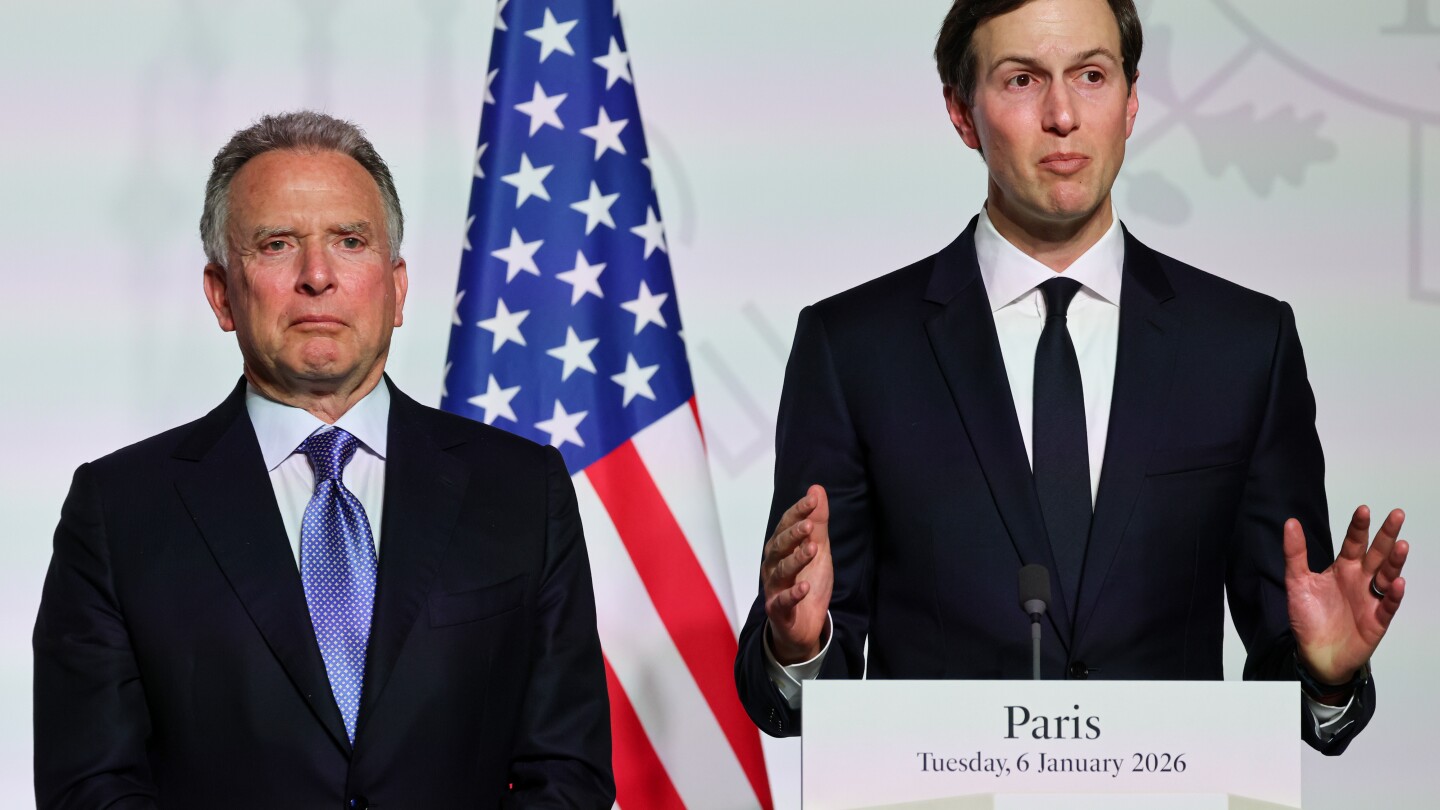
    Ukrainian President Volodymyr Zelensky has characterized his recent diplomatic engagement with Trump administration peace envoy Steve Witkoff and presidential son-in-law Jared Kushner as “highly constructive.” The high-level discussion, which included Ukrainian officials participating from Miami, focused extensively on mechanisms to ensure Russian compliance with any potential peace agreement that might emerge from ongoing negotiations.

    Despite these diplomatic efforts, Moscow shows no signs of de-escalation, continuing its intensive bombardment campaign across Ukraine. Overnight, Russian forces launched 653 drones and 51 missiles, targeting critical infrastructure including a railway hub in Fastiv southwest of Kyiv and energy facilities across eight regions, resulting in widespread blackouts. Russian authorities maintain these strikes targeted military-industrial sites and infrastructure.

    European leaders have intensified their diplomatic response, with French President Emmanuel Macron offering “full solidarity” to Ukraine in a post-conversation social media statement. Macron confirmed his participation in upcoming London talks alongside Zelensky, UK Prime Minister Keir Starmer, and German Chancellor Friedrich Merz to discuss post-war security guarantees for Ukraine. This meeting follows a previous virtual discussion about deploying a European peacekeeping force to Ukraine should a ceasefire be achieved—a proposal Russian President Vladimir Putin has vehemently rejected, warning such forces would become “legitimate targets.

    The parallel US-Ukrainian negotiations in Florida entered their third day, with both sides describing discussions as productive. A joint statement from Witkoff and Ukrainian National Security Council Secretary Rustem Umerov indicated agreement on security arrangement frameworks and deterrence capabilities necessary for sustaining peace, though specific details remain undisclosed. Negotiators emphasized that any prospect for ending the conflict ultimately depends on Russia’s willingness to take “steps towards de-escalation and cessation of killing.”