分类: politics

  • Starmer to host Zelensky for Ukraine talks in London

    Starmer to host Zelensky for Ukraine talks in London

    British Prime Minister Sir Keir Starmer is convening an urgent summit with Ukrainian President Volodymyr Zelensky in London on Monday, with French President Emmanuel Macron and German Chancellor Friedrich Merz joining the high-stakes diplomatic gathering. This emergency meeting occurs as international efforts to resolve the Ukraine conflict face significant obstacles despite reported progress in US-mediated negotiations.

    Cabinet Minister Pat McFadden emphasized that ensuring Ukraine’s security and self-determination would form the central focus of discussions, characterizing the current diplomatic phase as ‘exceptionally pivotal.’ The announcement follows three days of intensive talks in Miami where US officials indicated a potential agreement might be within reach, contingent upon Russia’s cooperation.

    According to US Special Envoy for Ukraine Keith Kellogg, negotiations have encountered particular difficulties regarding two fundamental issues: the future size of Ukraine’s military forces following the conflict’s conclusion and Russia’s ongoing control of the Donbas region. ‘If we can resolve these two critical matters, the remaining components should fall into place relatively smoothly,’ Kellogg stated in an interview with Reuters, expressing cautious optimism that parties were ‘approaching a resolution.’

    The London summit represents the latest European initiative to assume a substantive role in peacemaking efforts, with Downing Street confirming the leaders would concentrate on ‘ongoing peace negotiations and subsequent measures’ without elaborating on specific details. This development occurs alongside continued military aggression, as Russia launched extensive aerial bombardments across Ukraine throughout the weekend, deploying hundreds of drones and missiles in sustained attacks.

    The diplomatic landscape has been complicated by substantial disagreements regarding proposed peace frameworks. European leaders previously objected to preliminary versions of the US-orchestrated peace plan, criticizing its perceived favorability toward Russian interests. Subsequent revisions attempted to address these concerns, though Moscow has rejected the modified proposals outright.

    Russian President Vladimir Putin maintained an uncompromising stance, threatening to seize Donbas militarily if Ukraine refuses to relinquish control of the territory, approximately 85% of which Russian forces currently occupy. This position persists despite substantial economic sanctions and significant battlefield casualties suffered by Russian military forces.

    The geopolitical dynamic further intensified with last week’s publication of the US National Security Strategy, which notably did not classify Russia as a direct threat to European security—a characterization Moscow welcomed as ‘constructive and aligned with our strategic perspective.’ As diplomatic efforts continue, European officials have emphasized the necessity of preserving transatlantic cooperation, with Polish Prime Minister Donald Tusk asserting that maintaining historic alliances represents ‘the sole rational strategy for our collective security.’

  • Netanyahu expects Gaza truce to move to second phase ‘shortly’

    Netanyahu expects Gaza truce to move to second phase ‘shortly’

    Israeli Prime Minister Benjamin Netanyahu has indicated that the implementation of the second phase of a US-backed proposal to conclude the Gaza conflict is nearing, though critical obstacles remain unresolved. Speaking at a joint press conference in Jerusalem with German Chancellor Friedrich Merz, Netanyahu emphasized that substantial discussions with US President Donald Trump scheduled for the end of this month would be pivotal for advancing the plan’s next stage.

    The Prime Minister characterized the upcoming phase as inherently more challenging, acknowledging that while a tenuous ceasefire has reduced active combat since October 10th, persistent hostilities continue. Israeli military operations have reportedly resulted in over 373 fatalities and approximately 900 injuries due to hundreds of documented ceasefire violations.

    Central to Netanyahu’s conditions for progression is Hamas’s compliance with both the ceasefire and its stipulated commitments under the agreement, which encompass full disarmament and the demilitarization of the Gaza Strip. The initial phase, which saw Israel maintain control over 53% of Gaza territory, concluded with the exchange of 47 captives—both living and deceased—though one Israeli police officer’s remains have not been recovered.

    The envisioned second phase anticipates further Israeli military withdrawal concurrent with the establishment of a transitional governing authority in Gaza, the deployment of an international security force, and the initiation of reconstruction efforts. While a multinational coordination center has been set up in Israel, the absence of binding deadlines has resulted in stalled implementation, according to officials.

    Netanyahu also revealed that his forthcoming dialogue with President Trump would explore broader regional peace opportunities, specifically referencing US-led initiatives to normalize relations between Israel and Arab and Muslim nations. He articulated a dual-path approach: pursuing comprehensive peace with Arab states while working toward a pragmatic arrangement with Palestinian neighbors, simultaneously reaffirming Israel’s intention to retain security control over the occupied West Bank.

    The Prime Minister addressed the politically sensitive matter of West Bank annexation, confirming it remains under active consideration. This follows the Israeli parliament’s recent preliminary approval of legislation seeking to extend sovereignty to two West Bank settlements.

    When questioned about potential retirement from politics should he receive a pardon in his ongoing corruption trial, Netanyahu offered a definitive denial. Last month, his legal team formally sought presidential clemency, arguing that the judicial proceedings impair his governance capabilities and that a pardon would serve the national interest.

  • Death of Venezuelan opposition figure in custody ‘vile’, US says

    Death of Venezuelan opposition figure in custody ‘vile’, US says

    The United States has issued a sharp condemnation of the Venezuelan government following the death of opposition figure Alfredo Díaz in state custody, characterizing the incident as emblematic of the “vile nature” of President Nicolás Maduro’s regime.

    Díaz, a 56-year-old former governor of Nueva Esparta state, died under contested circumstances while detained at El Helicoide prison in Caracas. While Venezuelan authorities attribute his death to apparent heart attack complications, human rights organizations and opposition groups maintain he perished in his prison cell after enduring more than a year of arbitrary detention under harsh conditions.

    The deceased politician was initially apprehended in 2024 alongside numerous opposition figures who challenged the legitimacy of that year’s presidential election. International observers widely dismissed the electoral process as neither free nor fair, despite Maduro’s government-controlled election council declaring victory. Díaz faced charges of “incitement to hatred” and “terrorism” for questioning the official election results.

    Alfredo Romero, president of Venezuelan human rights organization Foro Penal, revealed Díaz had been held in solitary confinement with severely restricted visitation rights—only one meeting with his daughter throughout his entire incarceration. This case marks the 17th death among political prisoners since 2014 according to human rights documentation.

    Prominent opposition leader and Nobel Peace Prize laureate María Corina Machado, currently in hiding to avoid arrest, characterized Díaz’s death as part of “an alarming and painful chain of deaths of political prisoners” within Venezuela’s post-election repression context. Her planned absence from the Nobel ceremony in Oslo underscores the ongoing political persecution.

    This incident exacerbates already heightened tensions between the Trump administration and Maduro’s government. The United States has intensified its military presence in the region while conducting lethal strikes against vessels allegedly involved in drug trafficking. President Trump has personally accused Maduro of leading regional drug cartels and threatened potential military intervention “by land.”

    Venezuela has responded with military mobilization, swearing in over 5,600 new soldiers simultaneously in what defense officials termed a response to American “threats.” Simultaneously, Maduro’s government continues diplomatic outreach, announcing resumed Turkish Airlines flights following coordination with President Recep Tayyip Erdogan—a development occurring ironically on the same day as Díaz’s death and the mass military induction.

  • Macron’s China visit strengthens ties, boosts cooperation on global issues

    Macron’s China visit strengthens ties, boosts cooperation on global issues

    French President Emmanuel Macron concluded his fourth official visit to China on Friday evening, departing from Chengdu where he engaged in significant diplomatic exchanges with Chinese leadership. The visit culminated in a series of joint declarations addressing critical global challenges and reinforcing the strategic partnership between the two nations.

    In Dujiangyan, President Xi Jinping and Macron held cordial discussions focusing on mutual cooperation frameworks. The French leader’s engagement at Sichuan University highlighted the importance of international collaboration in addressing contemporary global issues. Their Beijing talks earlier produced consensus on enhancing political trust, expanding practical cooperation, and advancing global governance reforms.

    The bilateral meetings yielded five joint statements covering strengthened global governance, collaborative response to climate and environmental challenges, continued nuclear energy cooperation, agricultural exchanges, and positions on Ukraine and Palestine. International experts recognize this diplomatic achievement as a substantial advancement in China-France relations, demonstrating both nations’ dedication to multilateralism and a multipolar world order.

    Analysts worldwide emphasize the visit’s significance in promoting stability amid current geopolitical tensions. Waref Kumayha of Lebanon’s Silk Road Institute for Studies and Research noted the partnership demonstrates a balanced, responsible approach to international relations. French trade credit insurance executive Chris Murphy highlighted how the reinforced dialogue tradition provides crucial certainty during global uncertainties.

    Ivorian journalist Mohamadi Compaore observed that the high-level exchanges illustrate how strategic communication can overcome differences and build mutual trust, characterizing the Sino-French partnership as a stabilizing force in today’s volatile international landscape. Indonesian researcher Veronika Saraswati emphasized that cooperation between these influential nations injects much-needed predictability into global affairs.

    The visit also carries substantial implications for international systems reform. French academic Herve Azoulay noted the convergence reflects a shared vision for more balanced globalization, not opposing other nations but stabilizing the international system through innovation and mutual respect. Paris councillor Daniel Tran highlighted both countries’ unique position to shape global outcomes through their UN Security Council roles.

    Economic dimensions featured prominently, with business leaders noting the visit boosts commercial confidence through signed contracts and promoted industrial projects. Coface regional economist Junyu Tan emphasized how economic complementarity creates meaningful opportunities, with French companies accessing China’s vast market while Chinese firms gain European technological expertise.

    French sinologist Sonia Bressler captured the essential spirit of the partnership: ‘When two countries complement one another, they do not merely add, they amplify.’ This visit demonstrates how major nations can fulfill responsibilities that serve humanity’s broader interests through cooperative engagement.

  • South Africa cancels Palestinian visa waiver, citing Israeli ‘emigration’ efforts

    South Africa cancels Palestinian visa waiver, citing Israeli ‘emigration’ efforts

    South Africa has officially terminated its visa exemption agreement for Palestinian passport holders following a government investigation that uncovered systematic exploitation of immigration protocols by Israeli actors. The decision, announced Sunday by the Department of Home Affairs (DHA), comes in response to two controversial charter flights that transported hundreds of Palestinians from Gaza to Johannesburg under suspicious circumstances.

    The investigation revealed a coordinated effort by Israeli intermediaries linked to ‘voluntary emigration’ programs to relocate Gaza residents through chartered aircraft rather than commercial flights. According to the DHA statement, these operations involved deliberate circumvention of standard immigration procedures, with most passengers holding one-way tickets and prohibited from bringing luggage.

    The controversy first emerged in mid-November when 153 Palestinians arrived aboard a flight from Nairobi, only to be detained on the aircraft for over 12 hours due to missing Israeli exit stamps in their travel documents. President Cyril Ramaphosa had previously characterized the incident as ‘mysterious,’ suggesting the passengers appeared to have been ‘flushed out’ of Gaza by Israeli authorities.

    While Israeli officials claimed the travelers had been cleared for departure only after an unnamed third country agreed to receive them, investigations confirmed the flights were facilitated by a controversial agency working in collaboration with the Israeli military. The DHA authorized entry for the November group after receiving assurances from humanitarian organization Gift of the Givers regarding passenger support.

    A second flight carrying 176 Palestinians had previously arrived on October 28, with both operations demonstrating what South African authorities describe as a pattern of systematic abuse designed to relocate Palestinians from conflict zones without proper documentation or transparent procedures.

  • Trump criticises Democrat he pardoned over not switching political parties

    Trump criticises Democrat he pardoned over not switching political parties

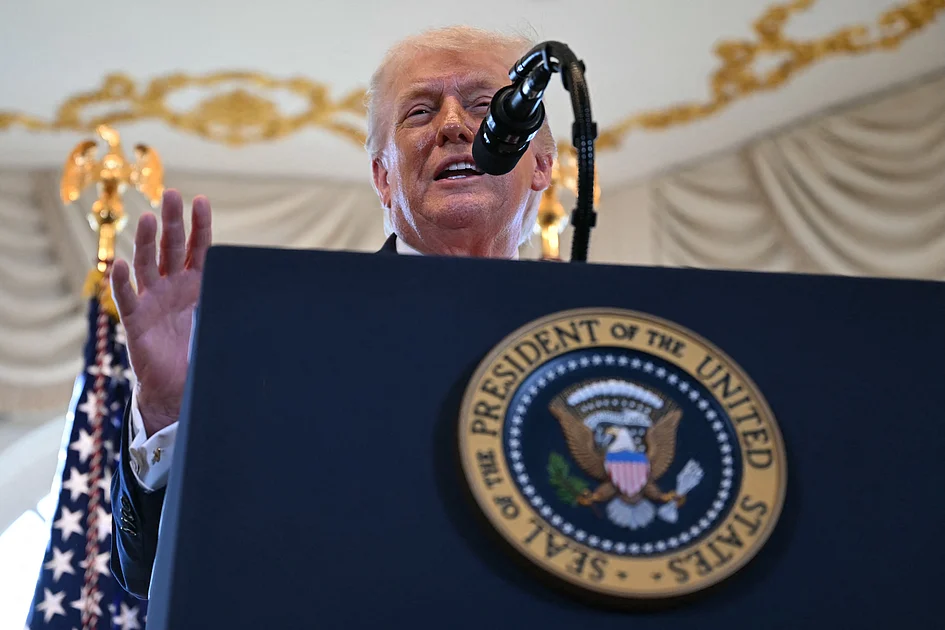
    Former President Donald Trump has publicly condemned Democratic Representative Henry Cuellar for what he termed a “lack of LOYALTY” after the Texas congressman chose to remain with the Democratic party despite receiving a presidential pardon. Trump issued the full pardon on Wednesday for Cuellar, who faced 14 federal charges including bribery, money laundering, and conspiracy related to allegations of accepting $600,000 from Azerbaijan’s state oil company and a Mexican bank.

    In his social media post, Trump expressed disappointment that Cuellar filed for re-election as a Democrat just hours after receiving clemency, thwarting Republican hopes that he would switch parties and bolster their narrow House majority. “Oh’ well, next time, no more Mr. Nice guy!” Trump wrote, emphasizing his expectation of political allegiance in return for the pardon.

    The Justice Department had accused Cuellar and his wife of acting as foreign agents by accepting payments in exchange for advancing interests of Azerbaijan and Mexico in Congress. Both maintained their innocence throughout the legal proceedings.

    Trump framed the prosecution as politically motivated, claiming Biden’s administration targeted Cuellar specifically because the moderate Democrat had “bravely spoken out against Open Borders” and supported border security measures. He described the case as an “evil quest” by “radical left” Democrats to destroy Cuellar and his family.

    Despite never having spoken with Cuellar or his family, Trump stated he “felt very good about fighting” for them because they were “treated sooo BADLY!” He particularly noted that the congressman’s daughters had written a personal letter appealing for their father’s pardon.

    Cuellar, in response to Trump’s comments, affirmed his commitment to the Democratic party while expressing willingness to collaborate across party lines. “I’m an American, I’m a Texan and I’m a Democrat in that order,” he told Fox News, adding that he had prayed for Trump and his family during church services, believing that “if the president succeeds, the country succeeds.”

    This incident highlights Trump’s longstanding emphasis on loyalty, which has previously manifested in official contexts including federal job applications that asked applicants to describe how they would advance Trump’s agenda. The expectation of political allegiance following presidential pardons represents a new dimension in this pattern of behavior.

  • Benin’s armed forces foil attempted mutiny, says interior minister

    Benin’s armed forces foil attempted mutiny, says interior minister

    COTONOU, Benin – The government of Benin has successfully suppressed a military uprising aimed at overthrowing President Patrice Talon’s administration, according to an official statement released Sunday by Interior Minister Alassane Seidou.

    The crisis unfolded when a faction of soldiers identifying as the ‘Military Committee for the Refoundation’ (CMR) seized control of the state broadcaster Benin TV and announced the president’s removal from office. The attempted mutiny triggered immediate security responses throughout the capital region.

    Minister Seidou confirmed that loyalist armed forces, ‘faithful to their oath,’ effectively contained the situation through republican measures. Government authorities have urged citizens to maintain normal activities while security operations continue.

    Eyewitness accounts from Cotonou residents described heightened military presence at strategic intersections, though daily life continued with markets remaining operational. Military helicopters conducted aerial patrols over the city while ground forces established secure perimeters around government installations.

    The epicenter of the confrontation occurred at Camp Guezo, located near the presidential residence, where exchanges of gunfire were reported. Despite initial rebel claims of controlling state media, government forces successfully reclaimed these facilities.

    President Talon’s safety was confirmed by the presidency, with Economy Minister Romuald Wadagni characterizing the situation as ‘under control’ during an interview with Jeune Afrique. ‘The mutineers are trapped,’ Wadagni stated. ‘We are clearing the area, but it is not over yet.’

    This instability emerges against Benin’s historical backdrop as one of West Africa’s most stable democracies since its 1960 independence from France. The nation maintained consistent political stability following Mathieu Kerekou’s two-decade rule that ended in 1991.

    President Talon, initially elected in 2016 and reelected in 2021, was scheduled to conclude his term after April 2026 elections. Recent constitutional amendments extended presidential terms from five to seven years while maintaining the two-term limit.

    The attempted coup coincides with regional instability, following November’s military takeover in Guinea-Bissau that ousted President Umaro Embalo after contested election results.

  • Soldiers stage coup in Benin, Presidency says situation under control

    Soldiers stage coup in Benin, Presidency says situation under control

    A faction of Benin’s military launched an attempted coup in the early hours of Sunday, declaring President Patrice Talon removed from office months before scheduled presidential elections. The group, identifying as the “Military Committee for the Refoundation” (CMR), made their announcement on state broadcaster Benin TV following reported gunshots near Camp Guezo military base adjacent to the presidential residence in Cotonou.

    According to military sources, soldiers seized control of the national broadcasting facilities while gunfire erupted in areas surrounding the presidential compound. The insurgent faction declared they had convened and reached a decision to dismiss President Talon from his official functions.

    Contrary to the military group’s claims, the Presidency issued an official statement confirming that government forces had successfully regained control of the situation. Authorities assured the public that President Talon remains secure and that constitutional order is being restored.

    This political turmoil unfolds against the backdrop of significant constitutional changes approved by Benin’s legislature in November, which extended presidential terms from five to seven years while maintaining the two-term limit. The attempted power grab also occurs amid a broader pattern of military interventions across West Africa, including the recent ousting of Guinea-Bissau’s president following contested elections.

    Benin, with a population of approximately 14 million people, has historically been regarded as one of West Africa’s more stable democracies since transitioning from Marxist-Leninist rule in 1991. President Talon, initially elected in 2016 and reelected in 2021, was scheduled to complete his final term following elections originally planned for April 2026.

  • New US security strategy aligns with Russia’s vision, Moscow says

    New US security strategy aligns with Russia’s vision, Moscow says

    The Kremlin has expressed approval of the Trump administration’s newly unveiled National Security Strategy, describing its core principles as substantially aligned with Moscow’s geopolitical perspective. Released last week, the 33-page document presents a radical departure from traditional U.S. foreign policy by reframing Europe’s challenges as existential threats while notably avoiding characterization of Russia as a direct adversary to American interests.

    Kremlin spokesperson Dmitry Peskov conveyed Moscow’s position through state-owned TASS news agency on Sunday, stating, “The adjustments we’re seeing are largely consistent with our vision. We consider this a positive step.” The Russian government indicated it would continue analyzing the document before forming definitive conclusions.

    The strategic blueprint identifies combatting foreign influence, halting mass migration, and resisting the European Union’s perceived practices of “censorship” as primary objectives. It advances controversial language suggesting Europe faces “civilisational erasure” and questions whether certain European nations will maintain sufficiently robust economies and militaries to remain reliable U.S. allies.

    European leaders and policy experts have responded with measured concern. German Foreign Minister Wadephul acknowledged the enduring importance of NATO alliances while questioning the document’s focus on freedom of expression issues. “The US will remain our most important ally in the alliance. This alliance, however, is focused on addressing security policy issues,” he stated on Friday.

    Polish Prime Minister Donald Tusk delivered a more direct message via social media, asserting to his “American friends” that “Europe is your closest ally, not your problem” and emphasizing their “common enemies.” Meanwhile, former Swedish Prime Minister Carl Bildt characterized the document as positioning itself “to the right of the extreme right.”

    The strategy advocates for re-establishing strategic stability with Russia, which European officials fear could undermine collective efforts to resolve the Ukraine conflict. It specifically criticizes the EU for allegedly obstructing American peace initiatives and endorses influencing policy through alignment with “patriotic European parties.”

    Additional components include potential military operations against alleged drug-trafficking vessels in Caribbean and eastern Pacific waters, possible intervention in Venezuela, and calls for increased defense spending from Pacific allies including Japan, South Korea, Australia, and Taiwan.

    Congressional Democrats have issued stern warnings about the document’s potential consequences. Representative Jason Crow of Colorado, who serves on House intelligence and armed services committees, labeled the strategy “catastrophic to America’s standing in the world,” while New York Representative Gregory Meeks argued it “discards decades of value-based, U.S. leadership.”

  • Foreign media urged to report truthfully on HK matters

    Foreign media urged to report truthfully on HK matters

    The Office for Safeguarding National Security of China’s Central Government in Hong Kong has issued a formal admonition to international media organizations operating within the special administrative region. During high-level discussions held on Saturday, December 7th, 2025, the office expressed serious concerns regarding what it characterized as deliberately misleading reporting on Hong Kong affairs.

    According to the official statement, the security office specifically cited two instances of problematic coverage: distorted portrayals of the Hong Kong government’s emergency response to the catastrophic Wang Fuk Court residential complex fire, and biased reporting on the recent Legislative Council General Election. The office asserted that such coverage has exacerbated social tensions, caused emotional distress to Hong Kong residents, and presented a distorted picture to the international community.

    The security authority emphasized that foreign media outlets must comply with local regulations while maintaining journalistic integrity through adherence to truth, accuracy, objectivity, and fairness in their reporting. The office simultaneously reaffirmed its commitment to protecting the lawful rights of foreign journalists operating in Hong Kong and pledged continued support for the HKSAR government in providing necessary assistance to legitimate media activities.

    This development highlights the ongoing tensions between China’s national security framework and international media operations in Hong Kong, particularly regarding coverage sensitive to China’s governance model and political processes.