分类: politics

  • European leaders walk tightrope between backing Ukraine and keeping US on board

    European leaders walk tightrope between backing Ukraine and keeping US on board

    Ukrainian President Volodymyr Zelensky convened with key European leaders in London on Monday amid growing American pressure to accelerate peace negotiations with Russia. The high-stakes meetings with British Prime Minister Sir Keir Starmer, French President Emmanuel Macron, and German Chancellor Friedrich Merz occurred against a backdrop of significant geopolitical tensions regarding Ukraine’s future.

    The discussions centered on two critical challenges: potential territorial concessions to Russia and obtaining ironclad security guarantees to prevent future Russian aggression. Prime Minister Starmer reiterated Britain’s position that Ukraine must determine its own future without external impositions, emphasizing the necessity of “hard-edged security guarantees” for any viable peace agreement.

    This show of European solidarity contrasts sharply with recent developments from Washington. The newly published US National Security Strategy explicitly criticizes European allies for harboring “unrealistic expectations” about the conflict’s resolution. European leaders privately express concerns that the Trump administration seeks a rapid settlement to redirect attention elsewhere, potentially at the expense of lasting peace.

    The security situation across Europe has intensified these apprehensions. Recent destabilizing incidents—including drone disruptions at civilian airports in Germany, Denmark, and Belgium, railway sabotage in Poland, and widespread cyber-attacks—have been attributed to Russian operations. These events have made the distant conflict feel increasingly immediate to European citizens and governments alike.

    Despite fundamental differences in approach to Moscow, European leaders maintain diplomatic caution in their public statements. Chancellor Merz acknowledged skepticism regarding certain US proposal details while emphasizing the need for continued dialogue. Prime Minister Starmer notably credited President Trump with advancing peace negotiations “the furthest we’ve got in the four years” within just weeks of his administration.

    The underlying reality remains Europe’s military dependence on the United States. Decades of defense underinvestment have left European nations incapable of supporting Ukraine independently or ensuring continental security without American intelligence, command capabilities, and air support. Even recent NATO commitments to increase defense spending cannot overcome immediate budgetary constraints faced by governments like France, which has allocated merely €120 million for Ukrainian aid in next year’s draft budget.

    This delicate balancing act—supporting Ukrainian sovereignty while avoiding alienation of their most powerful ally—represents the central diplomatic challenge for European leadership as they navigate increasingly divergent transatlantic approaches to Russian relations.

  • Secretariat for Global South alliance launched in Shanghai

    Secretariat for Global South alliance launched in Shanghai

    Shanghai’s Fudan University has become the permanent home for a new international intellectual cooperative as the Secretariat of the Global South Think Tanks Alliance was formally inaugurated on Thursday. The establishment occurred during the third Global South Think Tanks Dialogue, marking a significant advancement in South-South cooperation frameworks.

    The alliance, initially proposed during the ‘BRICS Plus’ leaders’ dialogue in Kazan, Russia in October 2024, represents a strategic initiative to strengthen collaborative networks among developing nations. Its core mission centers on advocating for a more balanced multipolar world order and promoting inclusive global governance structures that better represent Global South interests.

    Operating under the auspices of Fudan University’s School of International Relations and Public Affairs, the Secretariat will function as the central coordinating body for member institutions worldwide. It will facilitate academic exchanges, joint research initiatives, and expert personnel deployments across the alliance network. The Secretariat will additionally serve as a knowledge repository and resource hub supporting collaborative projects among participating think tanks.

    A distinctive feature of the initiative involves leveraging Fudan University’s artificial intelligence capabilities to address development challenges specific to Global South nations. The Secretariat will pioneer innovative cooperation models through technological integration, positioning AI as a transformative tool for southern hemisphere development.

    Fudan University President Jin Li emphasized the institution’s longstanding commitment to Global South studies during the launch ceremony. ‘Our university has cultivated specialized expertise in Global South research and educated generations of students dedicated to southern hemisphere development,’ Jin stated. He further committed to deepening collaboration with alliance members to advance modernization efforts across developing nations and establish a more equitable international architecture.

  • ‘Record high’ number of Palestinians died in Israeli prison as a result of Ben Gvir’s policies

    ‘Record high’ number of Palestinians died in Israeli prison as a result of Ben Gvir’s policies

    Israeli media outlet Walla has revealed a disturbing surge in Palestinian fatalities within Israeli detention facilities, documenting 110 deaths over the past two and a half years under the restrictive policies of far-right National Security Minister Itamar Ben Gvir. This figure represents a dramatic escalation when compared to historical data, which recorded approximately 187 Palestinian detainee deaths between 1967 and 2007—an average of fewer than five per year. The current rate equates to nearly one death per week, a pace described as a “record high” by the report.

    The investigation attributes this alarming mortality rate to a series of severe measures implemented by Ben Gvir. These include significantly reduced food rations, deprivation of sunlight, limitations on warm clothing and access to showers and hygienic products, and systematic violent beatings and cell raids. While Walla’s data indicates that most deaths occurred in hospitals during treatment rather than inside detention centers, the conditions leading to these medical emergencies are directly linked to prison policies.

    Human rights organizations have long documented the mistreatment of Palestinian detainees, but reports confirm that abuses have intensified sharply since the onset of Israel’s war on Gaza in October 2023. Systemic torture and abuse have reached unprecedented levels, with at least 100 prisoner deaths documented under these conditions. Both international and Israeli human rights groups, including B’Tselem, have condemned the situation, with the latter referring to the prisons as “torture camps.”

    Israel’s Public Defender’s Office recently reported on deteriorating conditions, noting that Palestinians endure extreme hunger, overcrowding, and systematic violence by prison staff. This assessment was corroborated by a UN Committee Against Torture report last month, which found the use of torture by the Israeli state to be “organised and widespread” and noted a grave intensification since October 2023.

    An estimated 9,250 to 10,000 Palestinians are currently held in Israeli prisons, with nearly half detained without charge or trial under indefinitely renewable administrative detention orders. This reporting on prison deaths emerges alongside deliberations on a new bill, championed by Ben Gvir, that would allow the death penalty for Palestinian prisoners convicted on “nationalistic” grounds—a penalty that would not apply to Israelis under similar circumstances. The bill has advanced through a preliminary reading in the Knesset, with Ben Gvir symbolically wearing a noose pendant during discussions to emphasize his commitment to the legislation.

  • ‘We got rid of a tyrant’: Syria’s tumultuous first year without Assad

    ‘We got rid of a tyrant’: Syria’s tumultuous first year without Assad

    December 8, 2024, marked a seismic shift in Syrian history as Bashar al-Assad’s five-decade dynastic rule abruptly collapsed under a lightning rebel offensive. The overnight disappearance of his regime transformed Damascus from a surveillance state to a city of liberation, with Assad’s omnipresent portraits replaced by revolutionary martyrs’ memorials.

    The initial euphoria saw prisoners emerging from notorious detention centers while citizens celebrated in streets once patrolled by leather-jacked security forces. Yet this victory remains bittersweet for families like that of content creator Abd al-Hadi Safi, whose brother vanished into Assad’s prison system in 2012. “We got rid of a tyrant, but without justice, this story isn’t finished,” Safi told Middle East Eye, echoing sentiments of thousands seeking accountability.

    President Ahmad al-Sharaa’s transitional government faces monumental challenges in reconciling sectarian divisions that erupted violently throughout the year. Alawi communities suffered retaliatory massacres despite comprising only 10-15% of the population, while July’s Sweida province operations triggered catastrophic Druze-Bedouin violence that killed hundreds and required tribal peace agreements.

    The Kurdish northeast presented different complications, with nominal reintegration agreements masking deep distrust between the Syrian Democratic Forces and Damascus. While Sharaa’s administration canceled millions of Assad-era travel bans and formed transitional justice committees, many victims’ families perceive continued impunity for former regime officials.

    Internationally, Syria’s diplomatic transformation has been remarkable. Sharaa’s pragmatic approach—dismantling Assad’s captagon empire, confronting Hezbollah supply lines, and cooperating on counterterrorism—earned him an unprecedented Oval Office meeting and gradual sanctions relief. Analyst Kamal Alam notes: “Sharaa understood the previous regime never compromised and paid the price. He has been the opposite—flexible, pragmatic.”

    One year into this transition, Syria stands between celebration and reckoning—having toppled a dictator but not yet built a fully just state from the ruins of his police regime.

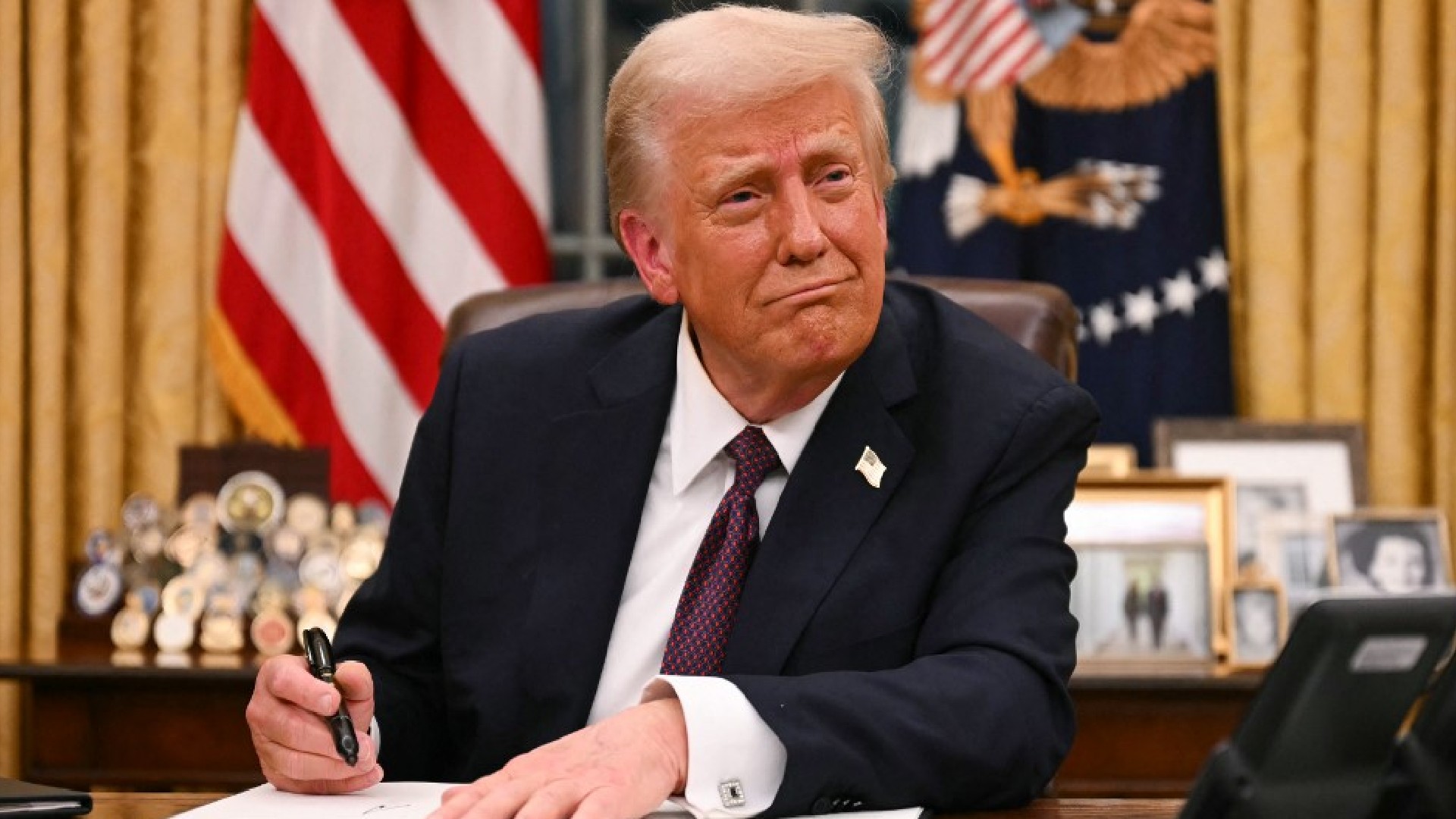
  • US Supreme Court hears fight over Trump’s power to fire federal agency official

    US Supreme Court hears fight over Trump’s power to fire federal agency official

    The U.S. Supreme Court commenced hearings on Monday in a pivotal case that challenges the traditional independence of federal regulatory agencies from presidential control. The litigation, formally designated as Trump v. Slaughter, originated from President Donald Trump’s March termination of Rebecca Kelly Slaughter, a Democratic commissioner of the Federal Trade Commission (FTC).

    Central to the legal dispute is the interpretation of statutory provisions that restrict presidential removal of FTC commissioners solely to instances of ‘inefficiency, neglect of duty, or malfeasance in office.’ Trump dismissed Slaughter citing her stance as ‘inconsistent with [the] Administration’s priorities,’ prompting her to initiate legal action against the former president.

    A lower court previously determined that Slaughter’s removal violated established law, a decision that the Trump administration subsequently appealed to the nation’s highest court. In a preliminary 6-3 ruling in September, the conservative-majority bench issued an emergency order sustaining Slaughter’s dismissal pending full judicial review.

    The case represents a significant constitutional confrontation regarding the extent of presidential authority over independent agencies created by Congress to operate with limited executive interference. Established in 1914, the FTC was designed to protect consumers from deceptive business practices and anti-competitive behavior through bipartisan leadership—its five-member commission structure prohibits more than three commissioners belonging to the same political party.

    This legal challenge revisits foundational administrative law principles established in Humphrey’s Executor v. United States (1935), wherein the Supreme Court affirmed that certain federal agencies exercise ‘quasi-judicial and quasi-legislative’ functions distinct from purely executive operations, thereby limiting presidential removal authority.

    The Court’s decision could potentially reshape the operational independence of numerous federal agencies, including the National Labor Relations Board and others with similar statutory protections. Concurrently, the justices are preparing to review a related case concerning Trump’s removal of Lisa Cook from the Federal Reserve Board of Governors, indicating broader implications for administrative governance structures.

  • How much have Europe and the US given to Ukraine?

    How much have Europe and the US given to Ukraine?

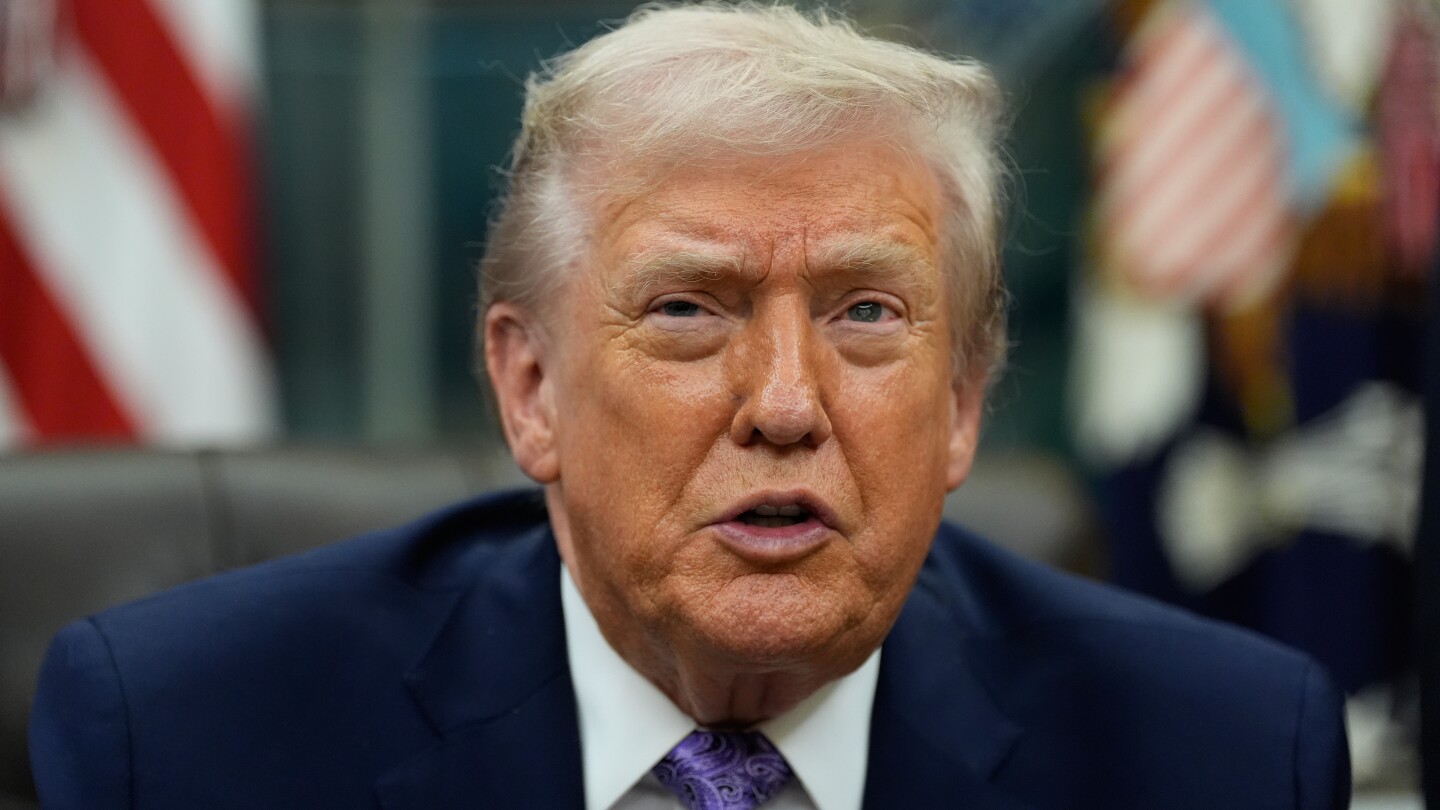
    London recently hosted high-level discussions concerning the ongoing war in Ukraine, with the leaders of the United Kingdom, France, and Germany reiterating their steadfast support for President Volodymyr Zelensky. Concurrently, US President Donald Trump expressed disappointment that President Zelensky had not reviewed his newest proposition to terminate the hostilities.

    President Trump has historically criticized European nations for their perceived insufficient contributions to Ukraine, frequently contrasting them with American expenditures. BBC Verify has undertaken a detailed examination of the financial support provided by both Europe and the United States since Russia’s full-scale invasion began in February 2022.

    According to data from the Germany-based Kiel Institute, which meticulously tracks international aid to Ukraine, the United States allocated a total of $130.6 billion between January 24, 2022, and August 31, 2025. Alternatively, the US government cites a broader figure of $187 billion appropriated for Operation Atlantic Resolve—a comprehensive response encompassing military training in Europe and the replenishment of US defense stocks—though this data only runs through June 2025.

    In July, President Trump unveiled a new strategy requiring NATO allies to purchase US weaponry for subsequent transfer to Ukraine. During a February meeting with French President Emmanuel Macron, Trump asserted, “We’ve spent more than $300bn and Europe has spent about $100bn—that’s a big difference.” BBC Verify’s analysis at the time determined these figures were inaccurate, a conclusion that remains valid ten months later.

    The Kiel Institute’s calculations reveal that while the US is indeed the largest single-nation donor, European countries collectively have committed more substantial resources. Europe’s total contribution reached $201.7 billion during the same period, surpassing US expenditures by a significant margin. This European aid comprises direct EU support alongside bilateral agreements from both member and non-member states, covering military, financial, and humanitarian assistance.

    The composition of aid has emerged as another point of transatlantic divergence. President Trump previously suggested European contributions were primarily loans that would be repaid, prompting President Macron to clarify that both Europe and the US provided a combination of grants and loans. Kiel Institute data confirms Macron’s statement, though it also indicates the US has delivered more grants while the EU has extended more loans.

    The EU reports its members have provided approximately $197 billion as of November 19, with loans constituting 35% of this total. These loans feature highly favorable terms for Ukraine, with reduced interest rates and, in certain cases, repayments funded through revenues from frozen Russian assets.

    Regarding individual European contributors, the United Kingdom ranks as one of the most significant national donors with $21.2 billion in verified support, though the UK government references a higher figure of $29 billion that includes future commitments. Only the United States and Germany have provided more substantial aid packages according to Kiel data, though both European nations’ contributions remain substantially smaller than America’s singular contribution.

  • UN chief concerned by attempted coup in Benin

    UN chief concerned by attempted coup in Benin

    United Nations Secretary-General Antonio Guterres has expressed profound concern regarding an attempted unconstitutional seizure of power in the West African nation of Benin. The UN chief’s spokesperson, Stephane Dujarric, issued an official statement on Sunday condemning the destabilizing actions that threatened democratic governance in the country.

    Guterres emphasized the critical importance of maintaining constitutional order and the rule of law in Benin, warning that such attempts to undermine democratic institutions could have far-reaching consequences for regional stability throughout West Africa. The Secretary-General’s statement called for immediate respect for Benin’s constitutional framework and democratic processes.

    In a related development, Benin’s Minister of Interior and Public Security, Alassane Seidou, confirmed that national armed forces successfully thwarted an attempted mutiny designed to destabilize the state and its governing institutions. The coordinated response by security forces prevented what could have escalated into a full-scale political crisis.

    The attempted coup comes amid growing concerns about democratic backsliding in several West African nations, where military takeovers have recently occurred in neighboring countries. Benin, once celebrated as a model of democratic stability in the region, now faces heightened security tensions following this destabilizing attempt to seize power unconstitutionally.

  • Silk Road forum highlights Xinjiang’s key role in BRI

    Silk Road forum highlights Xinjiang’s key role in BRI

    Academic and policy experts concluded the three-day 17th Silk Road Studies Forum at Shanghai International Studies University on Saturday, with particular emphasis on Xinjiang’s growing strategic importance within China’s Belt and Road Initiative framework. The gathering brought together 40 specialists from Beijing, Shanghai, and Xinjiang Uygur Autonomous Region to examine critical dimensions of China’s western development strategy.

    Forum discussions centered on autonomous knowledge production in western China’s neighboring regions, discourse system development, and quality enhancement within BRI core zones. Participants unanimously stressed that research concerning western China’s border areas must maintain alignment with appropriate political, value-based, and academic orientations to ensure strategic coherence.

    Xinjiang received significant attention as experts identified the region’s evolving function as a crucial operational nexus within the BRI infrastructure. Representatives from Xinjiang Arts University presented concrete methodologies for cultural empowerment through artistic initiatives implemented in recent years. Meanwhile, officials from Shanghai’s publicity department outlined major cultural enrichment projects that Shanghai has pioneered in Xinjiang.

    A Ministry of Education official highlighted the dual significance of western regional research, noting its fundamental role in both understanding historical Silk Road dynamics and supporting China’s contemporary diplomatic and foreign policy architecture. The forum, now in its seventeenth iteration, has established itself as one of China’s most influential platforms for BRI-related academic exchange.

    The Institute of Silk Road Strategy Studies at SISU, marking its tenth anniversary, reported substantial advancements in research covering western China’s neighboring territories. Looking forward, the institute plans to intensify exploration of China’s autonomous knowledge production pathways to facilitate high-quality BRI collaboration over the next five-year period.

  • The European Union moves ahead with toughening its migration system

    The European Union moves ahead with toughening its migration system

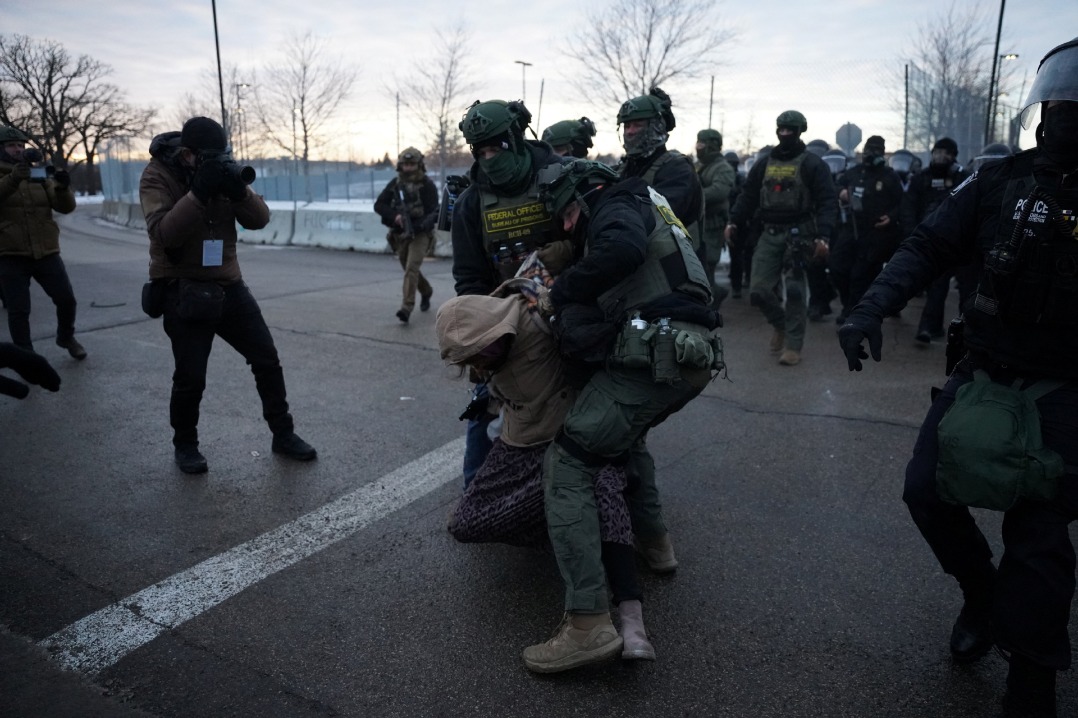
    BRUSSELS — European Union officials are implementing a comprehensive restructuring of the bloc’s migration framework, introducing accelerated deportation procedures and expanded detention capacities following years of contentious debate that has fueled the ascent of far-right political movements across the continent.

    The policy transformation reflects a significant evolution in European public sentiment since the unprecedented influx of asylum-seekers a decade ago. While migration numbers have substantially decreased from their peak levels, the political landscape has shifted toward more restrictive approaches. This hardening stance recently drew sharp criticism from former U.S. President Donald Trump, who characterized European allies as vulnerable in national security terms.

    At ministerial consultations in Brussels, representatives established a ‘safe third country’ framework alongside a standardized list of safe countries of origin. According to Danish Minister Rasmus Stoklund, this mechanism enables EU nations to deny residency claims and expedite removals of migrants who either originate from designated safe territories or could have sought protection in non-EU nations during their transit.

    ‘This system empowers us to deny entry to individuals without legitimate asylum claims while implementing procedures that facilitate accelerated returns,’ Stoklund stated. ‘Border management must remain under governmental authority rather than criminal smuggling networks.’

    Concurrently, ministers approved the creation of a ‘solidarity pool’ designed to redistribute refugee hosting responsibilities among member states. The initiative aims to accumulate €430 million ($489 million) to support nations experiencing disproportionate migratory pressure, particularly southern frontline countries including Cyprus, Greece, Italy, and Spain. This financial mechanism attempts to resolve long-standing objections from Hungary and Poland regarding mandatory migrant relocation quotas.

    Magnus Brunner, EU Commissioner for Migration, emphasized that ‘restoring public confidence in our governance capabilities remains paramount.’ The proposed reforms now advance to negotiations with the 720-member European Parliament for ratification or modification, with right-wing and far-right parties expressing unified support.

    Human rights organizations have condemned the measures. Amnesty International’s EU migration advocate Olivia Sundberg Diez compared the policies to the Trump administration’s immigration crackdown, urging parliamentarians to block provisions that ‘will inflict profound harm on vulnerable migrants and receiving communities.’ French Green lawmaker Mélissa Camara denounced the reforms as ‘a betrayal of fundamental European values and human rights principles.’

    The current changes build upon May’s endorsement of the Pact on Migration and Asylum, which advocated enhanced deportation capabilities and established ‘return hubs’—designated facilities for processing rejected asylum seekers. While the EU will not directly administer these centers, it will provide legal frameworks for member states to negotiate hosting arrangements with non-EU countries.

    According to Camille Le Coz of the Migration Policy Institute Europe, nations like Austria and Denmark will likely seek international partners for operating these legally complex and financially demanding facilities, referencing the Netherlands’ recent agreement with Uganda for refugee accommodation.

    These centers differ fundamentally from Italy’s controversial arrangement with Albania for offshore processing of maritime rescues—a plan repeatedly suspended by Italian courts despite initial praise from European Commission President Ursula von der Leyen as an innovative migration management solution.

    Mainstream political factions anticipate the migration pact will finally address divisive issues that have plagued EU consensus since over one million migrants, predominantly fleeing conflict in Syria and Iraq, entered European territory in 2015.

  • Where things stand in the talks to end Russia’s war in Ukraine

    Where things stand in the talks to end Russia’s war in Ukraine

    Diplomatic efforts by the United States to broker an end to the nearly four-year conflict in Ukraine have reached an impasse, with fundamentally incompatible positions on territorial sovereignty preventing meaningful progress. The deadlock emerged following two days of intensive negotiations between Ukrainian President Volodymyr Zelenskyy and U.S. special envoy Steve Witkoff, accompanied by Jared Kushner, former President Trump’s son-in-law.

    The discussions, which included a five-hour session on Sunday and subsequent meetings in Berlin on Monday, yielded what Witkoff described on social media platform X as ‘significant progress.’ However, neither American nor Ukrainian officials provided substantive details about the closed-door deliberations.

    Moscow’s conditions for peace remain unequivocal: Russia demands international recognition of its claimed sovereignty over four occupied regions—Donetsk, Luhansk, Zaporizhzhia, and Kherson—plus the Crimean peninsula annexed in 2014. Additionally, the Kremlin insists Ukraine withdraw forces from certain eastern territories not currently under Russian control. Further requirements include Ukraine abandoning NATO aspirations, imposing military capacity limitations, granting official status to the Russian language, and recognizing the Russian Orthodox Church. The Kremlin explicitly warned that any NATO troop deployments would be considered ‘legitimate targets.’

    Conversely, Ukraine maintains its willingness to cease hostilities along current frontlines but refuses to formally relinquish sovereignty over occupied territories. President Zelenskyy has specifically rejected a proposed American compromise suggesting Ukrainian withdrawal from Donetsk to establish a demilitarized economic zone. While expressing openness to suspend NATO membership pursuits in exchange for equivalent security guarantees from Western nations, Zelenskyy has consistently accused Russia of deliberately prolonging negotiations to consolidate territorial gains.

    The diplomatic landscape is further complicated by former President Trump’s evolving stance. Trump has demonstrated increasing frustration with Zelenskyy, publicly urging acceptance of territorial concessions to Russia based on Moscow’s perceived military advantage. Echoing Russian positioning, Trump has controversially advocated for wartime presidential elections in Ukraine—a move currently prohibited under martial law—while simultaneously receiving praise from Putin for peace initiatives despite Moscow’s rejection of certain American proposal elements.