分类: politics

  • Pushing for trade, preparing for war: A document reveals Vietnam’s dual approach toward the US

    Pushing for trade, preparing for war: A document reveals Vietnam’s dual approach toward the US

    HANOI, Vietnam — Internal Vietnamese military documents reveal significant apprehension regarding American intentions, despite the two nations formally elevating diplomatic relations to the highest level just a year prior. A report published Tuesday by The 88 Project, a human rights organization, details these documents, which label the United States a “belligerent” power and outline preparations for a potential American “war of aggression.

    The most striking document, titled “The 2nd U.S. Invasion Plan,” was authored by Vietnam’s Ministry of Defense in August 2024. It posits that while seeking to strengthen its deterrence against China, the U.S. and its allies are prepared to employ unconventional warfare, military intervention, and even large-scale invasions against nations perceived as deviating from its sphere of influence. Although the assessment concludes the immediate risk of war is low, it emphasizes the need for vigilance against Washington’s “belligerent nature” and its potential to “create a pretext” for an invasion.

    This internal perspective starkly contrasts with the public diplomatic posture. In 2023, President Joe Biden and Vietnamese officials signed a Comprehensive Strategic Partnership, elevating the U.S. to the same diplomatic tier as China and Russia. The U.S. State Department, while declining to comment on the specific military document, reaffirmed its commitment to this partnership, stating it “promotes prosperity and security for both nations” and benefits a free and open Indo-Pacific.

    Analysts interpret these documents as evidence of a profound internal divide within Vietnam’s leadership. The military and conservative party factions remain deeply skeptical of U.S. motives, primarily fearing Washington’s ultimate goal is to instigate a “color revolution” to overthrow the socialist government—a concern that outweighs even anxieties about regional rival China. This fear is rooted in historical context, including the memory of the Vietnam War and more recent actions, such as the Trump administration’s cuts to USAID programs, which disrupted critical projects like Agent Orange cleanup efforts.

    The political landscape is further complicated by the new leadership of General Secretary To Lam, who has simultaneously pursued stronger ties with the U.S., including swift cooperation with Trump-era initiatives, while presiding over a military apparatus that views America with deep suspicion. Recent U.S. military actions, such as the operation against Venezuela’s Nicolás Maduro, have provided fresh justification for conservative elements wary of Washington’s willingness to violate sovereignty. Ultimately, Vietnam continues to perform a delicate balancing act, engaging economically and diplomatically with the U.S. while its internal security apparatus prepares for a potential confrontation.

  • Trump announces India-US trade deal ‘effective immediately’ with reduced tariff plans

    Trump announces India-US trade deal ‘effective immediately’ with reduced tariff plans

    In a landmark diplomatic development, President Donald Trump has declared the immediate implementation of a comprehensive trade agreement between the United States and India. The announcement came following a substantive phone discussion with Indian Prime Minister Narendra Modi on February 2, 2026.

    The breakthrough agreement establishes reciprocal tariff reductions, with the United States committing to lower its tariffs on Indian goods from 25% to 18%. In a corresponding move, India has pledged to eliminate both tariff and non-tariff barriers against American imports, effectively reducing them to zero. This bilateral arrangement represents a significant departure from previous trade tensions between the two nations.

    Beyond commercial considerations, the dialogue addressed critical geopolitical matters. Prime Minister Modi committed to substantial energy purchases from the United States, totaling over $500 billion across multiple sectors including technology, coal, and energy resources. In a strategic shift with global implications, India agreed to cease purchasing Russian oil and instead source petroleum products from the United States and potentially Venezuela.

    President Trump characterized these energy agreements as instrumental to conflict resolution, stating that this collective approach ‘will help end the war in Ukraine, which is taking place right now, with thousands of people dying each and every week.’ Prime Minister Modi expressed gratitude on behalf of India’s 1.4 billion citizens, emphasizing the mutual benefits of strengthened Indo-American relations.

    This agreement marks a significant realignment in global trade dynamics and energy markets, potentially altering existing geopolitical alliances and economic partnerships across multiple continents.

  • Where is Evo Morales? Bolivia’s ex-leader vanishes from public view for nearly a month

    Where is Evo Morales? Bolivia’s ex-leader vanishes from public view for nearly a month

    Bolivia’s political sphere has been thrown into turmoil following the unexplained absence of former socialist president Evo Morales, whose sudden withdrawal from public life has generated intense speculation across the South American nation. The iconic leader, who has maintained an active political presence despite facing an arrest warrant for human trafficking charges, has unexpectedly vanished from his usual public engagements since early January.

    Morales’ unprecedented disappearance marks a dramatic shift for the firebrand politician who consistently maintained visibility through his weekly radio broadcasts, social media activity, and regular appearances with his coca-growing union in the Chapare region. His absence has become particularly conspicuous given his previous pattern of political engagement, even while evading judicial authorities.

    Close associates have offered dengue fever as explanation for his absence, with Dieter Mendoza, vice president of the Six Federations coca growers’ union, stating Morales has been advised to rest completely. However, the extended nature of his disappearance has fueled skepticism and alternative theories among both supporters and political opponents.

    The mystery has reignited historical tensions dating back to Morales’ 2019 resignation under military pressure following his controversial bid for a third term. Right-wing lawmaker Edgar Zegarra has boldly claimed, without evidence, that Morales has fled to Mexico, echoing the former president’s previous exile pattern. Meanwhile, police officials have cryptically confirmed only that Morales hasn’t left Bolivia through official channels.

    This political drama unfolds against Bolivia’s significant ideological shift following the October election of centrist President Rodrigo Paz, who has moved to reverse Morales’ anti-American policies by reestablishing relations with the United States, including potential DEA involvement—a particularly sensitive issue in coca-growing regions still traumatized by 1990s drug wars.

    The uncertainty surrounding Morales’ whereabouts has provided ammunition for conservative critics who accuse the government of failing to execute an outstanding arrest warrant. Former presidential candidate Jorge Quiroga has intensified pressure on the Paz administration, declaring that Morales is “making a mockery of the state” by evading justice.

    Despite the speculation, Morales retains substantial grassroots support, with loyalists vowing to resist any security operations in the Chapare region. His inner circle maintains an enigmatic stance, with former senator Leonardo Loza offering only that Morales is “doing very well” in “a corner of our greater homeland,” leaving Bolivia’s political future hanging in the balance.

  • Bill and Hillary Clinton to testify to congressional Epstein probe

    Bill and Hillary Clinton to testify to congressional Epstein probe

    In a significant reversal, former U.S. President Bill Clinton and former Secretary of State Hillary Clinton have consented to provide testimony before Congress regarding the Jeffrey Epstein investigation. This development follows months of legal resistance that nearly culminated in criminal contempt proceedings.

    The announcement came via social media from Bill Clinton’s deputy chief of staff, who stated unequivocally: “The former President and former Secretary of State will be there.” This commitment arrives just days before the Republican-controlled House of Representatives was scheduled to vote on holding the Clintons in criminal contempt for their prolonged avoidance of congressional subpoenas.

    The Republican-led House Oversight Committee had advanced the contempt measure in late January with bipartisan support, signaling growing impatience with the Clintons’ reluctance to cooperate. Committee Chairman James Comer emphasized in an official statement that this action demonstrated that “no-one is above the law” when it comes to congressional investigations.

    While photographic evidence released by the Department of Justice places Bill Clinton at Epstein’s properties, including images showing the former president swimming in a pool and relaxing in what appears to be a hot tub, Clinton has consistently denied any knowledge of Epstein’s criminal activities or any personal wrongdoing. Clinton’s spokesperson, Angel Ureña, previously characterized these images as decades old and emphasized that Clinton had severed ties with Epstein long before his sex crimes became public knowledge.

    Notably, no survivors of Epstein’s abuse have accused Bill Clinton of misconduct, and the Clintons’ legal team had previously argued that the congressional subpoenas were “unenforceable,” maintaining they had already provided all relevant information available to them about Epstein.

    The testimony commitment marks a critical juncture in one of the most politically charged investigations in recent memory, potentially shedding new light on the extent of Epstein’s network and its connections to high-profile figures.

  • Door is open to customs union talks with UK, EU says

    Door is open to customs union talks with UK, EU says

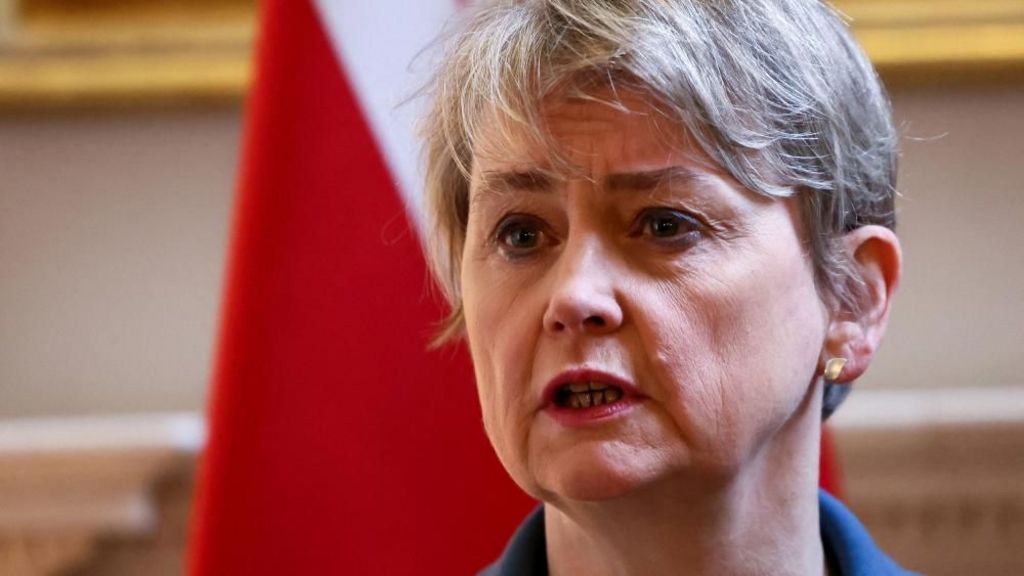
    In a significant diplomatic development, European Commissioner for Finance Valdis Dombrovskis has revealed the European Union’s willingness to explore enhanced trade relations with the United Kingdom, including potential discussions about a customs union arrangement. The announcement came following high-level talks with Chancellor Rachel Reeves and cabinet ministers in London on Monday.

    The Latvian commissioner, speaking exclusively to the BBC, emphasized Brussels’ “open-minded” approach to future cooperation, stating the bloc remains “ready to engage” should Britain seek closer economic integration. This position represents the most substantial indication yet of EU receptiveness to re-evaluating post-Brexit relations amid growing global instability.

    Dombrovskis outlined several areas of potential collaboration, notably suggesting that Britain and the EU could eliminate “most” food checks between territories if the UK aligns with EU sanitary and phytosanitary standards. Additionally, he confirmed advanced negotiations regarding a youth mobility scheme and expressed EU openness to revisiting Britain’s participation in the €150 billion SAFE defense loans program, despite previous negotiations collapsing in November.

    The meeting, which included European Commissioner for Trade Maroš Šefčovič alongside British ministers Peter Kyle and Nick Thomas Symonds, established a new diplomatic forum dubbed the “Quint” by officials. This group aims to coordinate responses to rapidly changing global trade and economic conditions through regular consultations.

    Chancellor Reeves articulated the pressing need for strengthened UK-EU cooperation, warning that “we are sliding towards a world where the rules are less clear.” She emphasized shared values and objectives between Britain and the EU regarding economic policy, trade, and security matters.

    The commissioner’s comments arrive amidst mounting pressure within the Labour party to reconsider customs union arrangements, despite the party’s manifesto explicitly ruling out rejoining either the EU customs union or single market. Justice Secretary David Lammy has previously advocated that such arrangements could stimulate economic growth.

    Dombrovskis acknowledged that single market access would require accepting freedom of movement principles, making such a scenario unlikely. However, he stressed the EU’s commitment to pragmatic cooperation where mutual interests align, particularly given recent global trade tensions that saw the European Commission threaten retaliatory tariffs against the United States before reaching a diplomatic resolution.

  • After months of acrimony, Colombia’s Petro is about to meet Trump

    After months of acrimony, Colombia’s Petro is about to meet Trump

    Colombian President Gustavo Petro is embarking on a critically important diplomatic mission to Washington for his first face-to-face meeting with US President Donald Trump, following months of escalating tensions and hostile exchanges between the two leaders. The high-stakes encounter at the White House on Tuesday will address multiple pressing issues including Venezuela’s political crisis, narcotics trafficking, oil security, and controversial US military operations targeting alleged drug vessels.

    The relationship between the two nations has been strained by Petro’s repeated condemnations of US foreign policy, including his comparison of US Immigration and Customs Enforcement agents to ‘Nazi brigades’ and accusations of American imperialistic treatment of other countries. Conversely, Trump has criticized Colombia’s anti-narcotics efforts, accusing Petro’s administration of insufficient action against cocaine flow and threatening expanded military strikes in the region.

    A significant breakthrough occurred following a January 3rd US military operation that seized Venezuela’s President Nicolás Maduro, after which the two leaders held what was described as a ‘cordial’ phone conversation that Colombian officials characterized as an ‘180-degree turn from both sides.’ US Senator Rand Paul of Kentucky played a pivotal role in facilitating this diplomatic opening, expressing his belief that relations were heading in the wrong direction and required intervention.

    Central to their discussions will be security concerns along the 1,367-mile Colombia-Venezuela border, where the National Liberation Army (ELN) guerrilla group maintains significant control over drug trafficking, extortion operations, and illegal mining activities. According to security analysts from Insight Crime, approximately 1,200 of ELN’s 6,000 members operate in Venezuela, often collaborating with corrupt elements within the Venezuelan military establishment.

    The meeting holds particular significance for US oil companies seeking to operate in Venezuela post-Maduro, as ELN forces pose substantial security threats to foreign investors and employees. Elizabeth Dickinson of International Crisis Group notes that asking Venezuelan military forces to combat ELN presents challenges due to their aligned financial interests in the group’s illicit operations.

    Despite recent tensions that led Colombia to temporarily suspend intelligence sharing with US agencies, military cooperation between the two nations has continued through the Drug Enforcement Administration and Colombian police forces. The outcome of this diplomatic encounter could significantly impact Colombia’s upcoming presidential election in August, where Petro supports Senator Iván Cepeda as his potential successor.

  • Witkoff, Araghchi expected to meet on Friday for possible nuclear deal discussions: Axios

    Witkoff, Araghchi expected to meet on Friday for possible nuclear deal discussions: Axios

    Senior American and Iranian diplomats are preparing for a pivotal meeting in Istanbul this Friday, signaling a potential breakthrough in nuclear negotiations. According to an Axios report published Monday, US Special Envoy Steve Witkoff and Iranian Foreign Minister Abbas Araghchi will convene in the Turkish capital to explore pathways toward a renewed nuclear agreement.

    The upcoming discussions, confirmed by two informed sources, represent the most significant direct diplomatic engagement between the two nations in recent months. The meeting occurs against a backdrop of escalating regional tensions and international concerns about Iran’s nuclear advancements.

    In a related development, Reuters has learned from a senior regional diplomat that several key Middle Eastern nations will participate in the Istanbul gathering. The anticipated attendance includes representatives from Saudi Arabia, the United Arab Emirates, Oman, and Egypt, indicating broad regional interest in stabilizing nuclear diplomacy.

    The planned meeting follows recent diplomatic movements, including Witkoff’s scheduled visit to Israel for consultations with Prime Minister Netanyahu. Meanwhile, Iranian officials have reportedly been evaluating diplomatic options with the United States to reduce mounting fears of military confrontation.

    This diplomatic initiative emerges as the region witnesses parallel developments, including Saudi Arabia’s recent suspension of 1,800 Umrah travel agencies due to performance issues, highlighting the interconnected nature of regional stability and economic concerns.

  • Federal officers in Minneapolis to get body cameras ‘effective immediately’

    Federal officers in Minneapolis to get body cameras ‘effective immediately’

    The U.S. Department of Homeland Security (DHS) has announced the immediate deployment of body cameras to all federal immigration agents operating in Minneapolis, Minnesota. This policy shift follows escalating tensions over the January deaths of two American citizens, Alex Pretti and Renee Good, during heightened immigration enforcement operations in the region.

    DHS Secretary Kristi Noem confirmed the rollout via social media on Monday, coinciding with the Hennepin County Medical Examiner’s classification of Pretti’s January 24th death as a homicide. The examiner’s report specified Pretti sustained multiple gunshot wounds from one or more law enforcement officers before succumbing to injuries at Hennepin County Medical Center. While homicide denotes a human killing another, it does not automatically imply criminal wrongdoing.

    U.S. Customs and Border Protection disclosed that two agents involved in Pretti’s shooting were equipped with body cameras and have been placed on administrative leave. The U.S. Department of Justice has launched a civil rights investigation into the incident.

    Secretary Noem indicated plans to expand the body camera program nationally once funding becomes available. This commitment emerges amid a partial government shutdown, with Democrats insisting on immigration reforms—including universal body camera usage—as conditions for funding legislation.

    President Donald Trump endorsed the technology, stating body cameras ‘generally tend to be good for law enforcement because people can’t lie about what’s happening,’ estimating they’re ‘80% good for law enforcement.’

    In response to the shooting, the administration replaced Minneapolis-based U.S. Border Patrol Chief Gregory Bovino with former immigration official Tom Homan. Homan has met with local leaders including Governor Tim Walz and Minneapolis Mayor Michael Frey to address community tensions. Both officials have demanded complete withdrawal of federal agents from the capital region.

    Homan acknowledged authorities are developing plans to reduce federal presence in Minneapolis, though operational changes would depend on state and local cooperation with federal authorities. The administration has criticized Minneapolis’ sanctuary city policy prohibiting municipal employees from enforcing immigration laws.

    Mayor Frey emphasized prioritizing local police focus on community safety while maintaining selective cooperation with federal authorities. The ongoing deployment of over 3,000 federal immigration officers throughout Minnesota implements President Trump’s campaign promise to intensify immigration enforcement.

  • Jordan says will not be ‘launching pad for any military action against Iran’

    Jordan says will not be ‘launching pad for any military action against Iran’

    Jordan has formally communicated to Iranian leadership that it will not permit its territory or airspace to be utilized for military operations against the Islamic Republic. The assurance came during a diplomatic phone conversation on Monday between Jordan’s Deputy Prime Minister Ayman Safadi and Iranian Foreign Minister Abbas Araghchi.

    Safadi, who concurrently serves as Minister of Foreign Affairs and Expatriates, explicitly stated that the Hashemite Kingdom would not function as ‘a battleground in any regional conflict or a launching pad for any military action against Iran.’ The declaration arrives amidst heightened regional tensions and reported U.S. threats of potential strikes against Iranian targets.

    The Jordanian diplomat further emphasized Amman’s commitment to national sovereignty, declaring that Jordan ‘will not permit any party to violate its airspace or threaten its security and the safety of its citizens.’ This position aligns with similar statements recently issued by other regional powers, including the United Arab Emirates and Saudi Arabia, who have likewise declared their unwillingness to facilitate military actions against Iran.

    The diplomatic exchange represents a significant development in Middle Eastern geopolitics, demonstrating Jordan’s cautious approach to navigating complex international relationships while maintaining its security interests. The kingdom’s stance reflects broader regional concerns about potential escalation and the destabilizing effects of military confrontation in the already volatile Middle East.

  • Iran weighs nuclear diplomacy with US to cool fears of war

    Iran weighs nuclear diplomacy with US to cool fears of war

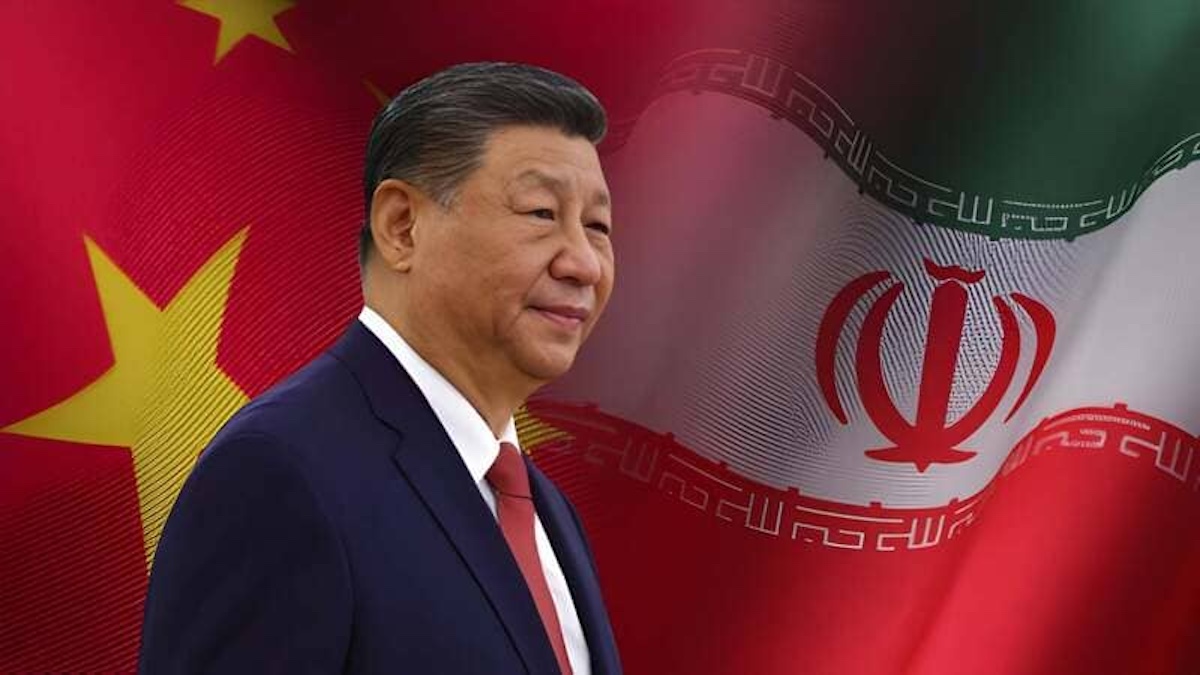
    Diplomatic channels between the United States and Iran show signs of reactivation as both nations demonstrate willingness to resume negotiations concerning Tehran’s nuclear program. According to a foreign ministry official speaking on Monday, Iranian authorities are currently evaluating the conditions for reengaging in dialogue with American representatives. This development emerges against a backdrop of escalating regional tensions, amplified by a substantial US naval presence near Iranian territorial waters following last month’s violent suppression of anti-government protests—the most severe domestic unrest since Iran’s 1979 revolution.

    Multiple sources indicate that US Special Envoy Steve Witkoff and Iranian Foreign Minister Abbas Araghchi may convene in Turkey within coming days, with Turkish officials reportedly facilitating de-escalation efforts. The potential meeting represents a significant diplomatic opening amid heightened military posturing from both sides. President Donald Trump, who previously abstained from direct intervention during Iran’s domestic crackdown, has subsequently intensified pressure on Tehran through both military deployments and demands for nuclear concessions.

    The negotiation framework remains contentious, with Washington historically insisting on three primary conditions: complete cessation of uranium enrichment, limitations on ballistic missile development, and termination of support for regional proxy forces. Iranian officials have consistently rejected these demands as violations of national sovereignty, though sources suggest Tehran might demonstrate flexibility regarding enrichment activities. Specifically, Iranian officials indicate readiness to transfer 400 kilograms of highly enriched uranium abroad and potentially accept zero enrichment under a consortium arrangement, provided the United States removes preconditions and reduces military assets near Iran’s borders.

    Satellite imagery analysis reveals preliminary reconstruction efforts at nuclear facilities in Isfahan and Natanz previously damaged during joint US-Israeli airstrikes in June last year. While new roofing appears on two destroyed structures, no comprehensive rebuilding is evident. The International Atomic Energy Agency continues seeking clarification regarding Iran’s current highly enriched uranium stockpiles, with Western nations expressing concern about potential weapons development—a claim Tehran consistently denies, maintaining its nuclear program serves exclusively peaceful purposes.

    The diplomatic impasse, stalled since May 2023 after five inconclusive negotiation rounds, centers on Iran’s insistence on maintaining domestic enrichment capabilities and retaining existing uranium stockpiles. Iranian sources suggest a potential compromise involving uranium shipment abroad and temporary enrichment pause in exchange for sanctions relief, indicating that ballistic missile programs rather than nuclear activities presently constitute the more significant negotiation obstacle.