分类: politics

  • France’s budget set to clear the way for Macron’s military spending boost

    France’s budget set to clear the way for Macron’s military spending boost

    PARIS — After months of political discord, France’s delayed annual budget is poised for final approval on Monday, paving the way for substantial increases in defense expenditure as pledged by President Emmanuel Macron. The budgetary process, characterized by parliamentary fragmentation and governmental instability, ultimately required Prime Minister Sébastien Lecornu to invoke special constitutional powers to bypass legislative gridlock and enact the legislation without a formal vote.

    The defense allocation represents a significant departure from broader austerity measures, with the military sector receiving an exceptional €6.7 billion ($7.9 billion) augmentation compared to 2025 levels. This financial injection will facilitate the acquisition of advanced military assets including a nuclear-powered attack submarine, 362 armored vehicles for army modernization, and new Aster surface-to-air missile systems. Concurrently, France is launching an expanded voluntary military service program targeting thousands of young citizens aged 18-19.

    Macron’s administration is pursuing deficit reduction targets aiming to decrease the budget deficit from 5.4% to 5% of GDP, while implementing spending cuts across most government departments. This fiscal consolidation occurs amid pressure from European Union institutions and credit rating agencies concerned about France’s debt sustainability within the Eurozone’s second-largest economy.

    The budgetary process revealed the government’s precarious parliamentary position, forcing concessions including the suspension of Macron’s controversial pension reforms that would have raised the retirement age. Corporate taxation will see increases, with an additional levy on large companies projected to generate €7.3 billion ($8.7 billion) in revenue.

    As Macron approaches the final year of his presidency, his attention has increasingly shifted toward international affairs and defense strategy. Recent diplomatic initiatives include advocating for security guarantees for Ukraine, demonstrating European solidarity with Greenland, and supporting the designation of Iran’s Revolutionary Guard as a terrorist organization by the EU. The president’s foreign policy stance gained particular attention during the Davos summit, where his remarks expressing preference for ‘respect over bullies’ were widely interpreted as a rebuke to former President Donald Trump’s tariff threats.

  • Balloons from Belarus cross into Polish airspace for a third night

    Balloons from Belarus cross into Polish airspace for a third night

    WARSAW, Poland — For the third consecutive night, Polish authorities have documented unauthorized balloon incursions originating from Belarus, marking a significant escalation in hybrid operations along the EU’s eastern frontier. The Polish Armed Forces Operational Command characterized these events as deliberate attempts by Minsk to test Warsaw’s aerial defense readiness and reconnaissance capabilities.

    Military spokesperson Jacek Goryszewski revealed that balloon-related incidents have surged dramatically in early 2026 compared to the same period last year. While the exact motivation remains unclear, officials suggest the increase could stem from either political directives within the Belarusian government or sophisticated adaptation by criminal smuggling networks evading enhanced border security measures.

    Although the Polish military maintains these aerial violations pose no direct threat to national airspace security, temporary flight restrictions have been imposed over the Podlaskie region bordering Belarus as a precautionary measure. The Belarusian embassy in Warsaw has not responded to requests for commentary regarding these allegations.

    This development occurs within the broader context of what NATO members Poland and Lithuania describe as coordinated hybrid warfare tactics employed by Belarus and its ally Russia. These tactics previously included manufacturing migration crises, alleged sabotage operations, and systematic espionage activities targeting Western nations.

    The balloon incidents follow earlier security breaches including Russian drone penetrations of Polish airspace in September and a November explosion on passenger rail infrastructure that Warsaw attributes to Moscow. Lithuanian authorities faced similar aerial provocations in December when meteorological balloons from Belarus forced repeated shutdowns of Vilnius International Airport, creating massive travel disruptions that officials labeled as deliberate hybrid attacks.

  • A Kremlin official confirms that U.S.-brokered Russia-Ukraine talks are resuming this week

    A Kremlin official confirms that U.S.-brokered Russia-Ukraine talks are resuming this week

    ABU DHABI, United Arab Emirates – Diplomatic efforts to resolve the Russia-Ukraine conflict will resume this week with trilateral negotiations scheduled in Abu Dhabi on Wednesday and Thursday, according to Kremlin officials. The talks, mediated by the United States, follow a brief postponement attributed to scheduling conflicts despite ongoing frontline hostilities and devastating long-range attacks on civilian infrastructure.

    Kremlin spokesman Dmitry Peskov characterized the discussions as “very complex,” noting that while progress has been achieved on certain issues, significant divisions remain on others. The negotiations occur as the fourth anniversary of Russia’s full-scale invasion approaches, with key sticking points including Moscow’s demand to retain occupied Ukrainian territories, particularly in Ukraine’s eastern industrial regions.

    The diplomatic push continues against a backdrop of intensified violence. Recent Russian drone and missile bombardments have resulted in substantial civilian casualties, including twelve miners killed in a single attack on Sunday. These assaults have severely damaged Ukraine’s power infrastructure, leaving populations without heating, electricity, or running water during harsh winter conditions.

    In a parallel technological development, Ukrainian Defense Minister Mykhailo Fedorov announced measures to prevent Russian forces from exploiting SpaceX’s Starlink satellite services for drone navigation. Ukraine has implemented a mandatory registration system for Starlink terminals, disabling unapproved devices within its territory. SpaceX CEO Elon Musk acknowledged the effectiveness of these countermeasures, offering further cooperation if needed.

    The talks follow discreet weekend meetings between Russian envoy Kirill Dmitriev and American officials in Miami, though details remain undisclosed. Despite sustained diplomatic engagement from the Trump administration, fundamental disagreements continue to impede breakthrough possibilities as the conflict approaches its fourth year.

  • Activist lawmakers refile impeachment complaint against Philippine Vice President Duterte

    Activist lawmakers refile impeachment complaint against Philippine Vice President Duterte

    In an unprecedented development in global political history, the Philippines finds itself with both its highest-ranking officials simultaneously confronting impeachment proceedings. On February 2, 2026, activist legislators from the Makabayan coalition refiled impeachment charges against Vice President Sara Duterte, merely fifteen days after President Ferdinand Marcos Jr. himself became subject to similar removal proceedings.

    The latest complaint represents the fifth attempt to impeach Duterte, coming after the Philippine Supreme Court previously invalidated four prior complaints on technical constitutional grounds. The Court’s decision blocking previous impeachment efforts expired last December, creating a legal pathway for renewed action against the country’s second-highest official.

    Three Makabayan legislators—Antonio Tinio, Renee Co, and Sarah Elago—leveled serious allegations against Duterte, accusing her of “gross abuse of discretionary powers” regarding 612.5 million pesos (approximately Dh38.3 million) in unaccounted funds. The complaint alleges these funds were improperly allocated toward questionable activities, including renting safe houses for intelligence operations—functions outside the normal scope of both the Office of the Vice President and the Department of Education, which Duterte oversees.

    Additional allegations include anomalous implementation of cash aid grants to individuals not recognized as legitimate indigent citizens in government registries. The previous consolidated complaint, which briefly succeeded in impeaching Duterte last year, contained even more severe accusations—including claims that she threatened to assassinate President Marcos Jr. following their dramatic political split in 2024.

    The Makabayan bloc simultaneously endorses the second impeachment complaint against President Marcos Jr., accusing him of “culpable violation of the Constitution, treason, bribery, graft and corruption, other high crimes, and betrayal of public trust.” House Justice Committee leaders indicate this complaint may be consolidated with an earlier filing by lawyer Andre De Jesus, endorsed by Representative Jett Nisay of the Pusong Pinoy Party.

    This political crisis marks a historic first for the Philippines, which previously witnessed the impeachment and eventual ouster of President Joseph Estrada in 2000-2001—a process that triggered massive protests and constitutional turmoil. The current situation presents even greater constitutional challenges, with both executive leaders simultaneously facing removal proceedings that could reshape the nation’s political landscape.

  • Envoy: youth exchanges can instill ‘vitality’

    Envoy: youth exchanges can instill ‘vitality’

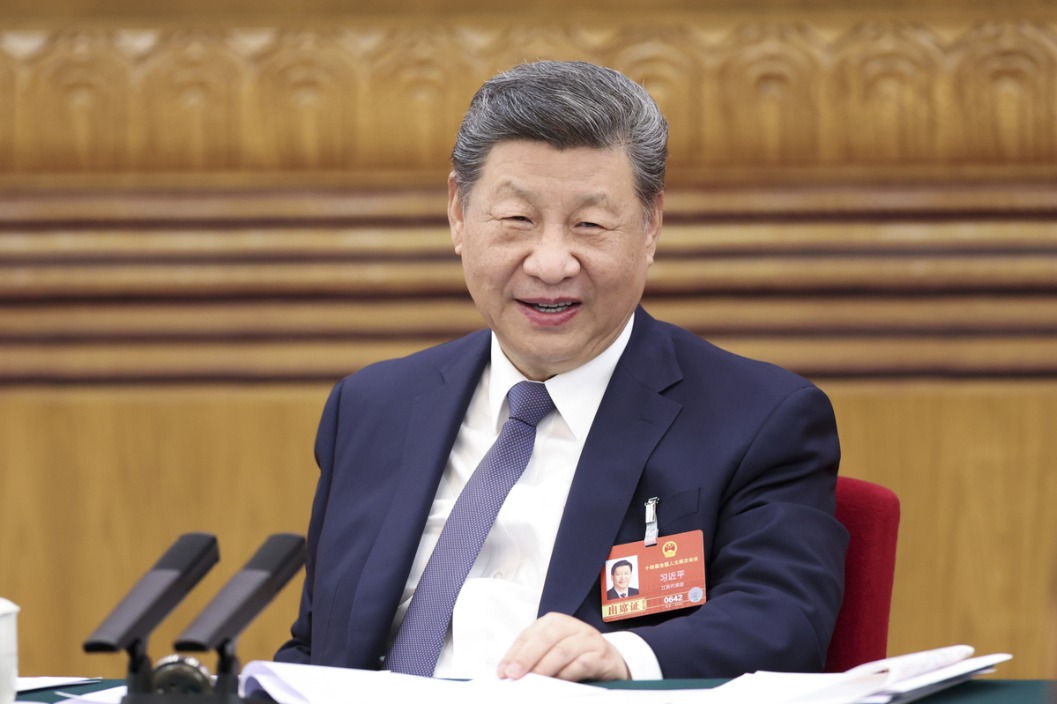
    Chinese Ambassador to the United States Xie Feng has issued a compelling appeal for Washington to faithfully implement the bilateral agreements reached during the October summit between President Xi Jinping and President Donald Trump. Speaking at the 2026 China-US Youth Spring Festival Gala held at the Chinese embassy, Ambassador Xie emphasized that youth exchanges represent the fundamental cornerstone of Sino-American relations.

    The diplomatic address highlighted remarkable progress in intercultural collaboration throughout the past year, with thousands of students participating in scientific innovation programs, athletic competitions, and educational partnerships. Ambassador Xie revealed that many participants described their exchange experiences as ‘life-changing,’ enabling them to break free from information cocoons and dispel longstanding misconceptions about each other’s nations.

    Citing the critical importance of the bilateral relationship, Xie characterized youth exchanges as ‘spring plowing’ that instills vitality into diplomatic relations. The ambassador specifically referenced President Xi’s November 2023 ‘50,000 in Five Years’ initiative, which aims to bring 50,000 young Americans to China for exchange and study programs. Current participation has already exceeded 40,000 students, creating significant people-to-people connections.

    The event featured prominent supporters including Sean Stein, president of the US-China Business Council, who emphasized that people-to-people exchange constitutes ‘not a side project but a cornerstone’ of bilateral relations. Practical examples of successful exchanges included Montgomery County Public Schools’ ‘pickleball diplomacy’ program and University of Wyoming hockey teams conducting joint clinics and competitions in China, resulting in lasting personal connections that participants maintain through daily communication.

    Ambassador Xie concluded by advocating for enhanced collaboration in cutting-edge sectors including artificial intelligence, digital economy, and green energy development, positioning the next generation as leaders in addressing global challenges through cooperative innovation.

  • Philippine vice president faces 2 new impeachment bids after surviving attempt last year

    Philippine vice president faces 2 new impeachment bids after surviving attempt last year

    MANILA, Philippines — Philippine Vice President Sara Duterte confronts renewed impeachment proceedings as activist groups filed dual complaints before the House of Representatives on Monday. The allegations center on substantial corruption claims involving 612.5 million pesos ($10.3 million) in confidential funds during her tenure as both vice president and education secretary.

    This political escalation marks the latest development in the tumultuous career of Duterte, a 47-year-old lawyer and former city mayor whom supporters view as a potential presidential candidate in the 2028 elections. The current impeachment bids follow a previous attempt that was nullified by the Supreme Court last year due to constitutional technicalities regarding impeachment frequency.

    The complaints allege systematic mishandling of government funds, with additional accusations of unexplained wealth in personal bank accounts. Notably, one filing references Duterte’s controversial November 2024 statement during an online news conference, where she reportedly threatened to have President Ferdinand Marcos Jr., his wife, and the House Speaker assassinated if she were harmed amid ongoing political disputes.

    Michael Poa, legal counsel for the vice president, issued a statement asserting their readiness to address the allegations through proper constitutional channels, maintaining that the accusations lack both factual foundation and legal merit.

    The political drama extends beyond Duterte, as President Marcos himself faces two impeachment complaints in the House, though the chamber remains dominated by his allies. The allegations against Marcos involve purported failure to veto budgetary appropriations for infrastructure projects where kickback schemes allegedly benefited both the president and allied legislators.

    This unfolding constitutional confrontation highlights the deepening fractures within Philippine politics, particularly between former allies Duterte and Marcos, whose relationship has deteriorated significantly since their previous political partnership.

  • China criticizes decision to award a Grammy to the Dalai Lama

    China criticizes decision to award a Grammy to the Dalai Lama

    China has vehemently denounced the Grammy Award recognition bestowed upon the Dalai Lama, characterizing the prestigious music industry honor as an instrument of political warfare against Beijing. The Tibetan spiritual leader, residing in exile in India since 1959, received the award for Best Audio Book, Narration, and Storytelling Recording for his work “Meditations: The Reflections of His Holiness the Dalai Lama.”

    Foreign Ministry spokesperson Lin Jian articulated Beijing’s firm opposition during a press briefing on Monday, asserting that the 14th Dalai Lama represents not merely a religious figure but rather a political exile masterminding anti-China separatist activities under religious pretexts. “We firmly oppose the relevant party using the award as a tool for anti-China political manipulation,” Lin declared.

    The Dalai Lama, perceived globally as the symbolic leader of Tibet’s autonomy movement, expressed gratitude for the recognition, describing it in his official statement as an acknowledgment of “our shared universal responsibility” which he accepted with “gratitude and humility.”

    This diplomatic confrontation occurs against the backdrop of longstanding tensions between Beijing and Tibetan exile communities. China administers Tibet as an autonomous region despite persistent allegations of cultural suppression targeting Tibetan language, traditions, and identity. The dispute extends to the contentious matter of succession planning for the spiritual leadership, with Beijing insisting the next Dalai Lama must be born in Tibet and sanctioned by the Communist Party, while the current Dalai Lama maintains his successor should emerge from a free country without Chinese involvement.

  • Minnesota bid to thwart ICE crackdown blocked

    Minnesota bid to thwart ICE crackdown blocked

    A federal court has rejected Minnesota’s emergency motion to suspend a widespread Immigration and Customs Enforcement (ICE) operation within the state, a crackdown that has resulted in two civilian fatalities and triggered nationwide demonstrations. The ruling, delivered on Saturday by Judge Katherine Menendez, determined that the balance of harms did not conclusively justify an immediate injunction against the federal agency’s activities.

    Simultaneously, in a separate legal proceeding, U.S. District Judge Fred Biery issued a stern condemnation of the government’s tactics and mandated the release of a five-year-old boy and his father detained during the raids. Judge Biery characterized the operation as an ‘ill-conceived and incompetently-implemented government pursuit of daily deportation quotas, apparently even if it requires traumatizing children.’

    The controversial ‘Metro Surge’ operation, involving masked and heavily armed agents, has led to the detention of thousands of individuals across Minnesota communities. The aggressive tactics have ignited protests from coast to coast, with tens of thousands marching in Minnesota and demonstrations organized in Southern California by the grassroots ‘50501 movement’ as part of a national ‘ICE Out of Everywhere’ day of action.

    The backlash has extended internationally, with hundreds gathering in Milan, Italy, to protest the anticipated deployment of ICE agents during the upcoming Winter Olympics. Milan Mayor Giuseppe Sala has explicitly stated these agents are not welcome in the city.

    According to data from the German publication Tagesspiegel, ICE officers have been involved in 31 firearm incidents since last summer, with at least 32 individuals dying in custody. The agency currently detains approximately 70,000 people, representing what critics describe as the tip of the iceberg regarding law enforcement violence in the United States. Research from the University of Illinois Chicago indicates approximately 250,000 people are injured annually during law enforcement encounters due to misconduct, with over 600 dying in police custody.

  • Tehran and Washington confirm dialogue

    Tehran and Washington confirm dialogue

    Diplomatic channels between Tehran and Washington remain active despite escalating military threats, as both nations confirmed ongoing communications while maintaining their defensive postures. The complex situation reveals a delicate balance between negotiation efforts and military preparedness.

    Iran’s Supreme National Security Council head Ali Larijani reported significant advancements in establishing structural frameworks for bilateral talks, directly countering media narratives emphasizing conflict. “Contrary to the hype of the contrived media war, structural arrangements for negotiations are progressing,” Larijani stated, indicating behind-the-scenes diplomatic activity.

    The United States simultaneously acknowledges dialogue while demonstrating military capability. President Donald Trump confirmed the diplomatic engagement but emphasized American naval power moving toward the region, creating a dual-track approach of negotiation leverage and military deterrence.

    Iranian leadership maintains a consistent position against initiating hostilities while promising forceful response to any aggression. Supreme Leader Ali Khamenei asserted that Iran “would not start a war” but warned that any American offensive would trigger a regional conflict with consequences for U.S. assets and allies, particularly Israel.

    Army Chief Amir Hatami reinforced this stance, declaring Iranian forces at “full defensive and military readiness” and cautioning that any military miscalculation would endanger regional security and Israel’s stability. Hatami further emphasized that Iran’s nuclear expertise “cannot be eliminated” through military means.

    President Masoud Pezeshkian articulated Iran’s diplomatic philosophy during discussions with Egyptian counterpart Abdel Fattah El-Sisi, emphasizing “dignity-based diplomacy” and conflict resolution through engagement within international law frameworks. He noted that broader military confrontation would serve neither nation’s interests.

    The fundamental negotiation impasse persists regarding Iran’s nuclear and missile programs. Washington demands uranium enrichment restrictions, missile capability limitations, and proxy support rollbacks, while Tehran insists any discussions must exclude its defensive capabilities from the agenda.

  • Partial US government shutdown enters third day as funding standoff continues

    Partial US government shutdown enters third day as funding standoff continues

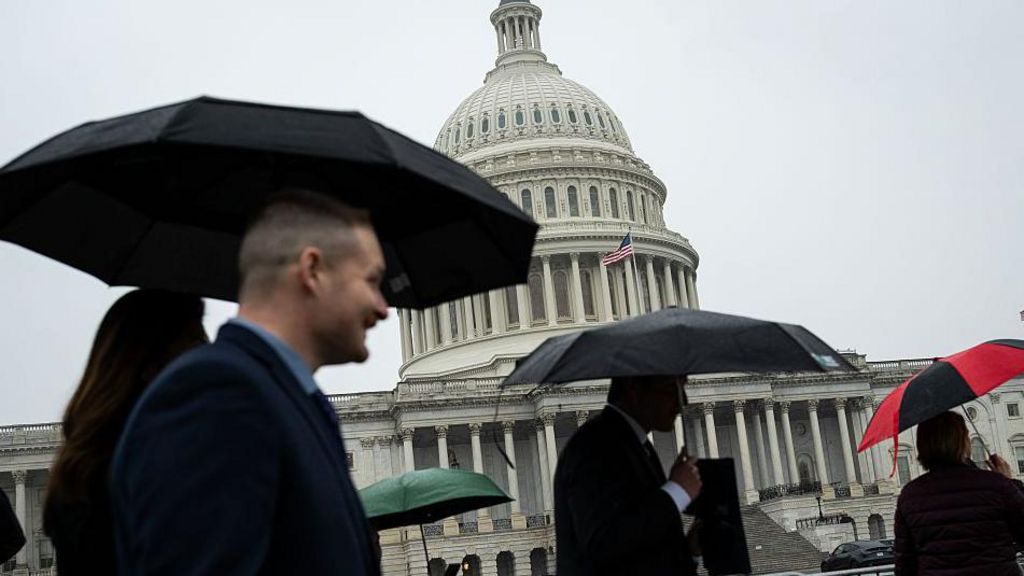
    The United States government entered its third day of a partial shutdown on Monday as legislative negotiations reached an impasse over Department of Homeland Security funding and immigration enforcement policies. The political deadlock persists despite the Senate’s approval last Thursday of a comprehensive spending package covering five key government sectors.

    Lawmakers face a critical juncture regarding Homeland Security funding after senators deliberately excluded full fiscal year appropriations for DHS from their initial legislative package. Instead, they implemented a temporary two-week funding measure specifically for the department, creating a limited window for resolving contentious immigration policy disagreements.

    The congressional stalemate centers on Democratic demands for substantial reforms to immigration enforcement protocols. These include mandatory body camera usage by agents during operations and prohibitions on facial coverings that obscure identification. The proposed changes gained urgency following recent fatal shootings of American citizens during immigration enforcement operations.

    While the Senate-approved legislation allocates full fiscal year funding through September 30, 2026 for defense, health, treasury, federal courts, and other agencies, its implementation remains pending House approval. The funding lapse technically began at midnight Saturday, though minimal immediate impact occurred due to weekend government service schedules.

    The House Rules Committee scheduled a Monday afternoon session to evaluate the legislative package, which must first overcome a procedural vote that Democrats reportedly plan to oppose. Representative Ro Khanna (D-CA) articulated progressive opposition, questioning the ethical implications of funding Immigration and Customs Enforcement without structural reforms.

    Republican leadership expressed confidence in resolving the impasse, with House Speaker Mike Johnson predicting legislative completion by Tuesday. However, practical challenges emerge from both political divisions and external factors, including winter weather complicating lawmaker travel and the Republican party’s narrow single-vote House majority.

    The funding debate occurs alongside widespread public demonstrations in Minneapolis protesting Operation Metro Surge, a Trump administration immigration initiative that has drawn criticism following recent enforcement-related fatalities. These events have intensified Democratic demands for revised ICE protocols including enhanced warrant requirements and transparency measures.

    The Department of Homeland Security’s extensive jurisdiction—spanning ICE, Customs and Border Protection, the Coast Guard, and Secret Service—has positioned it at the center of both budgetary discussions and national policy debates regarding immigration enforcement strategies and accountability mechanisms.