分类: politics

  • Thomas Massie loses to Trump-backed challenger in Republican primary

    Thomas Massie loses to Trump-backed challenger in Republican primary

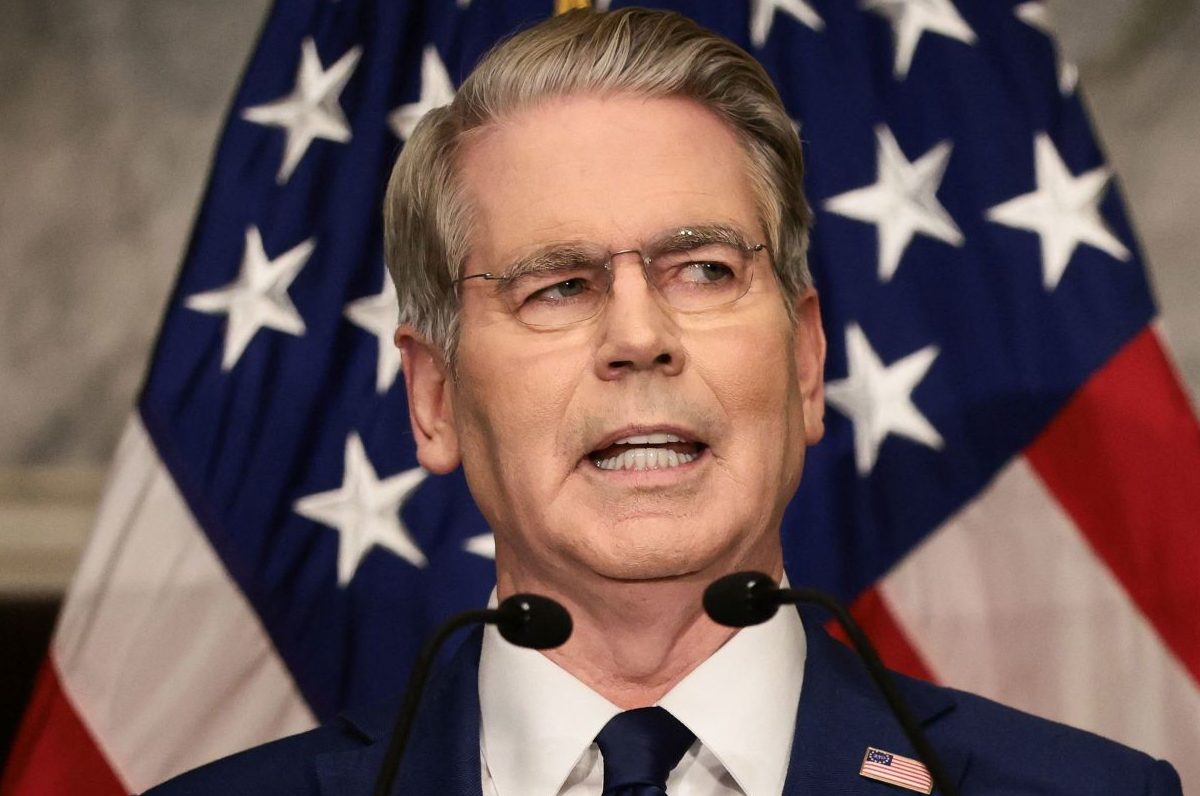
    In a result that underscores former President Donald Trump’s continued hold over the Republican Party, five-term incumbent Congressman Thomas Massie of Kentucky has been defeated in the Republican primary by Ed Gallrein, a former Navy SEAL who earned Trump’s full backing ahead of Tuesday’s vote. The high-profile contest, which became the most expensive House primary in U.S. history, was widely framed as a critical referendum on Trump’s decade-long influence over GOP loyalty and ideological alignment.

    Massie, who has served in Congress since 2012, emerged as one of the most prominent Republican lawmakers willing to break ranks with Trump on key policy issues over the past year. His most high-profile split came when he voted against Trump’s signature 2025 tax and spending package, citing longstanding concerns over soaring U.S. national debt. Massie also broke with the president to oppose expanded military operations against suspected drug trafficking vessels in the Caribbean and Trump’s escalated military posture in Iran. In a notable bipartisan move, he joined Democrats and a small group of fellow Republicans to push Trump’s Department of Justice to unseal all investigative records related to deceased financier and convicted sex offender Jeffrey Epstein.

    Trump launched a relentless public campaign against Massie in the lead-up to the primary, repeatedly attacking the incumbent across social media. Last Monday, he took to his social platforms to label Massie “an obstructionist and a fool,” and earlier described the congressman as a “major sleazebag” and “the worst Republican congressman in history.” U.S. Secretary of Defense Pete Hegseth also traveled to Kentucky to campaign for Gallrein, where he painted Massie as a consistent barrier to the Trump agenda, accusing him of “constant obstruction.”

    Massie pushed back against the attacks ahead of the vote, arguing that Hegseth’s high-profile visit to his district signaled weakness from the Trump-aligned campaign. “You don’t send the Secretary of War to Kentucky during a war if you think your candidate is up 10 points. That’s what you do when you realise your whole campaign is imploding,” he told CBS News. Massie also defended his conservative record, noting that he had voted in line with Trump’s position roughly 90% of the time during his tenure. He argued that Trump and his allies demanded absolute, 100% loyalty, rather than allowing for independent representation of constituents. “It’s only the 10% of the time they’re mad about – when I won’t vote for a war, when I won’t vote for warrantless spying and when I won’t vote to bankrupt the country,” Massie said ahead of the vote. “But in those instances, I’m doing what I told the people in Kentucky I would do.”

    With his primary victory, Gallrein will now advance to the November general election as the Republican nominee for Kentucky’s Fourth Congressional District. The outcome of the primary offers clear evidence that Trump remains the undisputed leader of the Republican Party, able to oust sitting incumbents who deviate even marginally from his agenda. This story is a developing breaking news report, with additional details expected to be released in coming updates.

  • Friendship or geopolitics? BBC breaks down Xi and Putin relationship

    Friendship or geopolitics? BBC breaks down Xi and Putin relationship

    As top leaders from Russia and China prepare to gather for a high-profile meeting in Beijing, two seasoned BBC journalists have launched a detailed examination of the nuanced, multi-layered connection between President Xi Jinping and President Vladimir Putin, probing whether the core of their partnership is rooted in personal diplomacy or driven by calculated geopolitical strategy.

    Laura Bicker, the BBC’s veteran Beijing correspondent, and Steven Rosenberg, the outlet’s long-serving Moscow-based correspondent, have combined their on-the-ground expertise from both capitals to unpack the evolving dynamic between the two heads of state. The analysis comes at a time of heightened global attention on the Sino-Russian partnership, amid shifting international alliances, ongoing Western sanctions against Russia following its full-scale invasion of Ukraine, and rising strategic competition between China and the United States.

    The correspondents outline a framework that acknowledges both the public rhetoric of “no-limits friendship” that Beijing and Moscow have embraced in recent years, as well as the underlying pragmatic calculations that shape every interaction between the two leaders. Their breakdown explores how domestic priorities, global power dynamics, and shared opposition to what both nations frame as U.S. hegemony have brought the two leaders closer together, while also noting the subtle balancing acts each side maintains to protect their own sovereign interests.

    As the meeting gets underway in the Chinese capital, the analysis offers global audiences a grounded, dual-perspective look at one of the most consequential bilateral relationships shaping 21st-century global order, giving context to what outcomes observers can expect from the latest high-level engagement between the two world powers.

  • Pentagon watchdog to evaluate US military’s boat strikes in Latin America

    Pentagon watchdog to evaluate US military’s boat strikes in Latin America

    In the wake of mounting public and congressional scrutiny over a months-long U.S. military campaign targeting suspected drug smuggling vessels in Latin American waters, the Pentagon’s independent inspector general has launched a formal evaluation to assess whether military personnel adhered to established, standardized targeting protocols during the operations that have left nearly 200 people dead.

    The review, which the oversight body confirmed Tuesday is self-initiated, centers its examination on the military’s own six-step Joint Targeting Cycle – a structured framework that outlines clear requirements for defining a commander’s core intent, developing and vetting potential targets, conducting rigorous threat analysis, securing formal approval for action, executing the strike, and completing a post-operation assessment. Details of the evaluation, first reported by Bloomberg News, were laid out in a May 11 correspondence sent to senior Defense Department leadership.

    Notably, the inspector general’s office has stated it will not investigate whether the strikes themselves violate domestic or international law, a gap that comes as the operations have drawn sharp criticism from Democratic members of Congress and independent military legal scholars. To date, the watchdog has declined to share a projected completion date for the review, leaving the timeline for any findings unresolved.

    The controversial campaign, launched by the Trump administration in early September, frames its actions as a direct war on transnational Latin American drug cartels, which officials blame for the ongoing public health crisis of fatal opioid and drug overdoses devastating communities across the United States. Since the operations began, strikes carried out in the eastern Pacific Ocean and Caribbean Sea have killed at least 193 people, according to official tallies.

    In the most recent incident on May 8, U.S. Southern Command confirmed one person survived the strike, but there remains no public confirmation that U.S. Coast Guard teams located and rescued the survivor – an outcome that could push the final death toll even higher.

    A key point of contention that has fueled criticism is the U.S. military’s refusal to release public evidence confirming any of the targeted vessels were actually carrying illicit drug shipments. In public social media statements, military officials have repeatedly relied on vague references to unspecified intelligence and the fact that the boats were traveling along well-documented narco-trafficking corridors to justify the attacks.

    The very first strike carried out in early September sparked particularly intense outcry over reported rules of engagement. Military records show nine people on the targeted vessel were killed in the initial attack, leaving two survivors clinging to the capsized wreckage. The boat was hit a second time with ordnance, killing the remaining two survivors. In a December statement, Rep. Adam Smith, the ranking Democratic member of the House Armed Services Committee, condemned the action, describing the men as “basically two shirtless people clinging to the bow of a capsized and inoperable boat, drifting in the water — until the missiles come and kill them.”

    White House officials have publicly defended the follow-up strike, asserting it was carried out in self-defense, intended to fully disable the targeted vessel, and aligned with the established laws of armed conflict.

  • Egypt pressing Al-Azhar ‘to back UAE’ against Iran, sources say

    Egypt pressing Al-Azhar ‘to back UAE’ against Iran, sources say

    Behind the public-facing statements of one of Sunni Islam’s most influential institutions lies a story of political pressure, national economic interests, and shifting regional alliances, multiple anonymous sources with direct knowledge of the matter have revealed. Egypt’s presidential administration has explicitly pressured Al-Azhar, the Cairo-based leading center of Sunni Islamic learning, to publicly align with the United Arab Emirates and other Gulf nations in their ongoing confrontation with Iran, according to security sources and insiders close to Al-Azhar’s Grand Imam Ahmed al-Tayeb.

    Since the outbreak of the latest round of regional conflict, Al-Azhar has released four official public statements, with one explicitly branding Iranian strikes on UAE territory as “the aggression of the Islamic Republic of Iran against its Muslim neighbour, the United Arab Emirates”. What is notable in all four statements, however, is the complete absence of any condemnation of American or Israeli strikes targeting Iran. This marks a clear departure from the institution’s position during 2023’s regional conflict, when it openly labeled attacks on Iran as “the aggression of the occupying entity against the Islamic Republic of Iran”.

    Sources confirm that Al-Azhar’s 2023 stance triggered significant anger from UAE officials, even though no Gulf territory had been attacked at that point. The Emirati daily Al-Khaleej publicly launched criticism of Grand Imam Tayeb over his position last year. From the very start of the current conflict, Egyptian state agencies issued a clear mandate to Al-Azhar: align unreservedly with Gulf allies and avoid any reference to U.S. or Israeli strikes on Iran, senior leadership sources within Al-Azhar told Middle East Eye.

    One senior source shared the explicit message delivered by Egypt’s presidential institution: “It was stated plainly and directly by the presidential institution that there are major interests with the Gulf and the US that we cannot sacrifice under the current economic conditions, that what happened over Gaza cannot be repeated, and that Al-Azhar would bear the blame for the Egyptians who lose their jobs in the Gulf if it takes a contrary position.” This is not the first time such pressure has been applied: MEE previously reported that Egyptian authorities used identical tactics last year to force Al-Azhar to withdraw a statement calling for global intervention to address famine in Gaza. At that time, the state threatened to hold Al-Azhar responsible for derailing ceasefire efforts and blocking humanitarian aid from entering the enclave.

    Gulf officials have also held direct meetings with Tayeb, framing their narrative of regional harm from Iranian actions, which sources describe as having been “greatly exaggerated”. A closer look at Al-Azhar’s four released statements reveals the carefully calibrated alignment that resulted. The first, issued on March 2, called for an immediate end to hostilities and an end to further bloodshed, while rejecting violations of Arab state sovereignty—but made no mention of Iran by name. The second, released March 17, explicitly condemned Iran’s “unjustified attacks” against a list of nations including all six Gulf Cooperation Council states, as well as Jordan, Iraq, Turkey and Azerbaijan. The third statement, dated April 9, warned the “occupying entity”—Al-Azhar’s longstanding term for Israel—against attempts to inflame regional tensions and violate the temporary truce, noting that a lack of international accountability had emboldened further criminal acts, but made no reference to strikes on Iranian soil. The most explicit statement, released May 5, singled out “the aggression of the Islamic Republic of Iran against its Muslim neighbour, the United Arab Emirates” for condemnation.

    Sources close to the Egyptian presidency defend the pressure campaign, arguing that Al-Azhar is an inherent part of the Egyptian state apparatus, and unifying its public position is a critical necessity tied to Egypt’s core national interests with Gulf states. Gulf governments have themselves been closely monitoring Al-Azhar’s positions and raised the issue directly during high-level diplomatic talks throughout the current conflict, the Egyptian sources added. The close personal relationship between Egyptian President Abdel Fattah el-Sisi and UAE President Mohamed bin Zayed Al Nahyan, paired with Egypt’s deep-seated economic reliance on Emirati investment and support, made a targeted statement condemning Iranian strikes on the UAE a non-negotiable requirement, they noted.

    MEE has not been able to independently verify the anonymous accounts provided by multiple sources. Requests for comment from Al-Azhar, the office of the Egyptian president, and the office of the UAE president have not yet received a response.

    Even with this shift on the Iran-Gulf confrontation, sources note that previous pressure campaigns from Egypt and Gulf governments—led by the UAE—have failed to change Al-Azhar’s longstanding stance on Palestinian armed factions, which the institution continues to publicly support. That difference of opinion has drawn pushback from Palestinian leadership: Palestinian President Mahmoud Abbas personally called Tayeb to argue that Al-Azhar’s pro-faction stance benefited political groups outside the Palestinian Authority’s official decision-making framework. Sources say the Grand Imam rejected this characterization during the call, prompting Abbas to take his complaint directly to President Sisi. The Palestinian Authority has not responded to MEE’s request for comment on the matter.

    Insiders close to Tayeb have also pushed back against claims that the UAE’s 2019 mediation of a domestic crisis surrounding the Grand Imam has influenced Al-Azhar’s current position. At that time, Egyptian media reported that President Sisi planned to remove Tayeb from his post through constitutional amendments governing Al-Azhar’s leadership, and that UAE Foreign Minister Abdullah bin Zayed Al Nahyan stepped in to mediate the dispute, preserving the existing constitutional framework in exchange for the removal of two senior officials close to Tayeb. But Al-Azhar sources say the UAE’s role in that 2019 crisis has been widely overstated.

    They explain that the UAE did not object to Tayeb’s removal in principle, but was dissatisfied with the proposed replacement candidates, judging that none could match Tayeb’s global standing in countering extremism and promoting a moderate interpretation of Islam—an area where Egypt and the UAE had once cooperated extensively. That cooperation slowed dramatically after the UAE normalized relations with Israel in 2020 as part of the U.S.-brokered Abraham Accords, and today is limited to only specific narrow policy areas, with the condition that Al-Azhar avoid taking any public stance on issues involving Israel, insiders added. In the 2019 crisis, real support for preserving Tayeb’s position came from within Egyptian state agencies, the sources confirmed.

    Those opposing agencies leaked news of the planned removal at the exact moment Tayeb was signing the landmark Document on Human Fraternity with Pope Francis, a timing calculated to frame the removal as punishment for Tayeb’s outreach and openness. The leak sparked public demonstrations in Luxor, Tayeb’s hometown and the base of his family, where protesters rallied holding the Grand Imam’s portrait. Widespread public pushback was paired with formal objections from Southeast Asian Muslim-majority nations, and private messages to Sisi from multiple African heads of state during a continental tour. This led Sisi to conclude that he had been misled by advisers hostile to Tayeb, sources say. After those advisers were removed from their posts, relations between the presidency and the Grand Imam recovered.

  • Israeli army reports rise in sexual harassment complaints

    Israeli army reports rise in sexual harassment complaints

    Newly released data from the Israel Defense Forces (IDF) confirms a notable increase in reports of sexual harassment and assault within its ranks over the 2025 calendar year, Israeli media outlets confirmed this Tuesday. The data, published by the Gender Affairs Advisor unit to the IDF Chief of Staff, records 2,420 formal complaints of sexual violence filed by service members in 2025, an increase of roughly 350 complaints compared to the year prior. Further breakdown of the figures, released by the unit that oversees female soldier welfare, shows that only 42 complaints have resulted in formal criminal indictments, while another 21 cases were resolved through internal military disciplinary measures. In more than 700 of the reported incidents, the IDF’s response was limited to what the institution labels “command-level discussions,” in which accused perpetrators receive only formal warnings or reprimands. Meirav Ben Ari, an opposition lawmaker from the centrist Yesh Atid party who called for a special hearing on the issue before the Knesset’s Foreign Affairs and Defense Committee, described the newly published statistics as deeply alarming. Ben Ari stressed that the IDF is obligated to deploy every available resource to curb the prevalence of sexual violence within the ranks, prevent incidents wherever possible, and provide consistent, long-term support to survivors throughout their military service. IDF officials have pushed back on framing the rising complaint numbers as a sign of growing crisis, arguing instead that the steady upward trend in reports over the last decade reflects increasing trust among soldiers in the military’s reporting systems, and a growing willingness of survivors to come forward with their experiences. The military reiterated its long-stated policy of “zero tolerance” for all forms of abuse, and added that it remains committed to building and maintaining a safe service environment for all personnel. A safe environment, the IDF noted, is a foundational requirement for operational effectiveness, trust between command and troops, and the overall resilience of the fighting force. This release of official complaint data comes just one week after a high-ranking IDF officer was suspended from duty over allegations that he sexually assaulted a female soldier under his command, Israeli national newspaper Israel Hayom first reported. The outlet further confirmed that complaints of sexual violence within the military have risen steadily since October 2023, when the Gaza war began. Experts and officials cited by the paper link the increase to two key factors: growing public and institutional awareness of sexual harassment in the armed forces, and a dramatic surge in total troop numbers following the mass mobilization of hundreds of thousands of reserve soldiers after the outbreak of hostilities. The rising trend of sexual violence is not limited to the IDF, however. Data collected by the Association of Rape Crisis Centres in Israel, a leading non-governmental organization working to combat sexual violence across the country, shows that incidents have been increasing across Israeli society for years. The organization recorded more than 16,000 requests for help in 2024, over 85 percent of which came from women. In 2023, the group’s crisis centers received more than 17,000 calls for support, marking a 26 percent jump compared to call volumes in 2018. While the Knesset Foreign Affairs and Defense Committee, the parliamentary body tasked with overseeing military activity, held a formal debate on rising sexual violence within the IDF’s ranks last week, the committee did not address a separate set of explosive allegations: widespread claims of systemic sexual abuse against Palestinian detainees held by Israeli soldiers and security forces, which have been documented by multiple international and independent outlets. One week prior to the committee hearing, The New York Times published an in-depth investigation detailing what it described as systematic sexual abuse of Palestinian detainees by Israeli security forces that began after October 2023. The publication sparked immediate outrage from Israeli officials, who have pushed back aggressively against the findings. Israel’s Foreign Ministry confirmed that Prime Minister Benjamin Netanyahu and Foreign Minister Gideon Sa’ar have instructed government legal teams to file a defamation lawsuit against the American newspaper. Allegations of sexual violence against Palestinian people held in Israeli detention facilities since the start of the Gaza war have been widely verified and documented by multiple human rights organizations and independent media outlets, including the London-based Middle East Eye. In December 2024, two Palestinian detainees spoke to Middle East Eye on the record, describing being raped while held in Israeli detention. One detainee reported being raped by a military dog, while a second recounted that Israeli officers raped him with sharp objects while he was held blindfolded. A United Nations independent inquiry published last year went further, formally accusing Israel of using sexualized torture and rape as an official method of war, employed to destabilize, dominate, oppress, and destroy the Palestinian people.

  • UAE paid $6m to bury damaging report on US ambassador Otaiba

    UAE paid $6m to bury damaging report on US ambassador Otaiba

    An explosive New York Times investigation published Monday has pulled back the curtain on a multi-million-dollar secret reputation management operation run by the United Arab Emirates (UAE) to bury an unflattering 2017 report linking its long-serving U.S. ambassador Yousef al-Otaiba to sex workers and human traffickers. The operation, which has cost UAE taxpayers more than $6 million since 2020, leveraged aggressive search engine optimization tactics and opaque digital tradecraft to push the damaging reporting far down Google’s search rankings, according to internal records and interviews with former insiders.

    Al-Otaiba, who has held the post of UAE ambassador to Washington since 2008 and is widely regarded as one of the most well-connected foreign diplomats in the U.S. capital, personally oversaw parts of the years-long campaign to suppress the 2017 article originally published by The Intercept. That reporting, headlined an exploration of the “sordid double life of Washington’s most powerful ambassador,” once appeared among the top results whenever users searched the ambassador’s name on Google.

    According to official filings under the U.S. Foreign Agents Registration Act, which requires disclosure of work done on behalf of foreign governments, the UAE contracted New York-based digital reputation firm Terakeet for the project starting in July 2019. The firm’s initial public mandate included promoting UAE tourism, but the secondary, unstated core task was cleaning up al-Otaiba’s public image. Four former Terakeet employees who spoke to the NYT on condition of anonymity confirmed the secret nature of the work: to avoid leaving a detectable digital paper trail, a senior Terakeet account manager permanently relocated to Washington for more than a year to coordinate the campaign in person with the ambassador.

    The campaign relied on a suite of common but controversial search engine optimization tactics to displace the damaging article. Terakeet built an official standalone website for al-Otaiba, edited his Wikipedia entry to frame him positively using an anonymous sock puppet account, and drafted glowing profiles highlighting the ambassador’s purported leadership qualities. Those profiles were then submitted to institutions that al-Otaiba maintains formal affiliations with — including Harvard University’s Kennedy School, the Milken Institute, and the Special Olympics — which published the content with embedded links to pro-UAE blogs secretly written by Terakeet staff. The linked structure boosted the positive profiles in Google’s algorithm, pushing the older negative reporting further down search results.

    Payment records show the UAE paid Terakeet more than $6 million for this work between 2020 and 2022, and the campaign remains active as of 2024. The effort has delivered on its core goal: by 2023, the original Intercept story had dropped to the second page of Google search results for al-Otaiba, and today it rests on the fifth page for most users, outside the view of the vast majority of people searching the ambassador’s name. When contacted by the New York Times for comment, al-Otaiba did not address the details of the campaign beyond confirming that Terakeet had completed contracted work for the UAE.

    The NYT’s investigation also uncovered a second high-profile reputation cleanup campaign by Terakeet that ended in failure, involving former Goldman Sachs chief legal officer Kathryn Ruemmler and her ties to disgraced convicted sex offender Jeffrey Epstein. Ruemmler, who previously served as White House counsel under former President Barack Obama, was caught up in the 2023 Epstein Files document release, which exposed her close personal and professional connections to the financier, a convicted child sex trafficker. The released records showed Ruemmler referred to Epstein as “sweetie” and “Uncle Jeffrey,” discussed planning a trip to France with him, thanked him for expensive lavish gifts, provided him informal legal advice, and expressed interest in attending private meetings with former Israeli Prime Minister Ehud Barak, one of Epstein’s closest associates.

    After the damaging documents became public, Goldman Sachs — a Terakeet corporate client — hired the firm to contain the reputational fallout for Ruemmler. The NYT reports that Terakeet deployed the same furtive, algorithm-focused digital tactics that made it one of the most expensive and exclusive players in the booming global reputation management industry. But unlike the UAE ambassador campaign, the effort to repair Ruemmler’s image failed. Ruemmler announced her resignation from Goldman Sachs in February 2024 and is set to depart the firm in June.

    In a formal statement to the New York Times, Terakeet CEO Mac Cummings defended the firm’s work, noting that Cummings has previously referenced his close personal ties to Ruemmler and has played golf with Goldman Sachs CEO David Solomon. “Terakeet’s technology is built on a simple mandate: organizations must tell their own story,” the statement read. “If they do not, third-party bias combined with generative AI will shape it for them.”

    Terakeet is no stranger to high-profile political and corporate clients: the firm previously worked on reputation and search campaigns for former President Barack Obama and 2016 Democratic presidential nominee Hillary Clinton, and counts major corporate brands including MetLife, JPMorgan Chase, Oracle, Target, Walmart, Disney, and Bain Capital among its clients.

  • Trump endorses Paxton in Texas, gambling on a challenger with baggage in a crucial race

    Trump endorses Paxton in Texas, gambling on a challenger with baggage in a crucial race

    With just one week remaining until Texas’ critical Republican Senate primary runoff, former President Donald Trump has thrown his full weight behind state Attorney General Ken Paxton, launching a direct challenge to three-term incumbent Senator John Cornyn, a longstanding fixture of the Republican Party establishment.

    The endorsement marks the latest chapter in Trump’s ongoing effort to purge the GOP of lawmakers who do not align unwaveringly with his political movement. While Paxton has been one of Trump’s most loyal allies throughout his political career, he also carries a decades-long trail of ethical controversies and legal battles that have made him a deeply polarizing figure even within his own party.

    As the state’s top law enforcement officer, Paxton famously threw his weight behind Trump’s failed 2020 bid to overturn the presidential election results. More recently, he traveled to New York City to rally in support of Trump during the former president’s 2024 hush-money criminal trial, which ended in a conviction on all counts. Like Trump, Paxton has built a political brand as a scandal survivor: he faces a lingering reputation for ethical misconduct, having settled a high-profile federal corruption indictment in 2024 without admitting any wrongdoing, survived a 2023 impeachment by the Republican-controlled Texas House of Representatives over allegations of fraud and obstruction of justice, and was recently caught up in a public divorce after his wife filed for separation amid revelations of multiple extramarital affairs.

    “I know Ken well, have seen him tested at the highest and most difficult levels, and he is a winner!” Trump shared in a post on his Truth Social platform. “John Cornyn is a good man, and I worked well with him, but he was not supportive of me when times were tough.” His endorsement hinges on resentment over Cornyn’s delayed endorsement of Trump’s 2024 presidential bid: the incumbent waited until January 2024, more than a year after Trump entered the race, to publicly back his candidacy.

    Cornyn, who has served in Senate Republican leadership from 2012 to 2024 and boasts a voting record that aligns with Trump’s agenda more than 99% of the time, pushed back against the attack in a post on X. “It is now time for Texas Republican voters to decide if they want a strong nominee to help our GOP candidates down ballot and defeat Talarico in November, or a weak nominee who jeopardizes everything we care about,” he wrote.

    During the campaign, Paxton has attacked Cornyn for his past votes in favor of expanded gun safety regulations and accused him of failing to take aggressive enough action to enforce immigration controls along the U.S.-Mexico border. Cornyn’s campaign has in turn centered its messaging on Paxton’s long list of legal and personal scandals, framing him as too toxic to win the general election in November.

    This endorsement is not an isolated incident: it fits into a broader pattern of Trump backing primary challengers against incumbent Republican senators who have broken with him. Just days before, Louisiana Senator Bill Cassidy, who voted to convict Trump during his 2021 second impeachment trial, lost his renomination bid to a Trump-endorsed challenger. On the same day Trump announced his Paxton endorsement, voters in Kentucky were heading to the polls to choose between incumbent Congressman Thomas Massie – who irked Trump by opposing key parts of his legislative agenda – and a challenger personally recruited by the former president.

    Cornyn’s candidacy has drawn broad support from sitting Senate Republicans, who have served alongside the Texan for decades and view him as a reliable ally. The endorsement of Paxton has sparked widespread dismay among the Senate GOP caucus, with multiple high-profile senators openly criticizing the choice. Maine Senator Susan Collins labeled Paxton “ethically challenged,” while Alaska Senator Lisa Murkowski said she was “supremely disappointed” by Trump’s decision.

    For Democratic operatives across the country, the prospect of a Paxton nomination is widely viewed as a rare opportunity to flip a longtime Republican Senate seat in Texas. It has been 32 years since a Democratic candidate won a statewide election in the deep-red state, but former Congressman Beto O’Rourke came within just 215,000 votes of unseating Senator Ted Cruz in 2018, and polling ahead of the 2026 general election already points to a competitive race. Democrat James Talarico, a state legislator who secured his party’s nomination outright earlier this spring, is already positioned to face the runoff winner. While Trump carried Texas by 14 percentage points in 2024, public polling suggests the general election will be a tight contest regardless of which Republican advances.

    Early voting is already underway across Texas, and polling has consistently shown the runoff race is a dead heat. In the initial March primary, Cornyn finished a fraction of a percentage point ahead of Paxton, but fell just short of the 50% threshold needed to avoid a runoff, despite outspending his challenger by more than $65 million. Political analysts now widely believe that Trump’s late endorsement could deliver a decisive blow to Cornyn’s chances of holding onto his seat, reshaping the balance of power in the U.S. Senate ahead of the 2026 general election.

  • Iran talks making ‘good progress’: US VP Vance

    Iran talks making ‘good progress’: US VP Vance

    In a public press briefing held at the White House on Tuesday, United States Vice President JD Vance offered an updated assessment of ongoing diplomatic negotiations with Iran, confirming that discussions have yielded meaningful positive momentum while reaffirming Washington’s readiness to launch new military action if a final agreement cannot be reached.

    Vance’s remarks came just hours after President Donald Trump disclosed that he had been just one hour away from authorizing fresh military strikes against Iranian targets just days earlier, and had set a short deadline of two to three days for Tehran to reach a consensus on core terms of the negotiation. When addressing reporters at the briefing, Vance emphasized that while productive headway has been made in the talks, diplomatic efforts will continue regardless of current momentum, and the outcome will ultimately hinge on whether both sides can bridge remaining differences.

    A known skeptic of military conflict with Iran who previously led a U.S. diplomatic delegation to Pakistan for related talks back in April, Vance pointed out that a non-negotiable core condition of any final deal is that Iran must abandon all ambitions to develop and possess a nuclear weapon.

    “We’re in a pretty good spot here — but there’s an option B, and the option B is that we could restart the military campaign,” Vance told reporters. “We’re locked and loaded. We don’t want to go down that pathway, but the president is willing and able to go down that pathway if we have to.” The comments add clarity to the current high-stakes standoff between Washington and Tehran, as global stakeholders watch closely to see whether diplomatic channels can resolve the long-running nuclear dispute without escalating into open conflict.

  • Israel’s Bezalel Smotrich says ICC arrest warrant request is ‘declaration of war’

    Israel’s Bezalel Smotrich says ICC arrest warrant request is ‘declaration of war’

    The simmering legal and political tensions over Israeli policies in the occupied West Bank escalated sharply this week, after far-right Israeli Finance Minister Bezalel Smotrich publicly denounced a secret International Criminal Court (ICC) arrest warrant application filed against him as a formal declaration of war, threatening immediate, harsh retaliation against Palestinian people and communities.

    Smotrich made the inflammatory remarks in a prepared speech on Tuesday, confirming earlier reporting published by Middle East Eye (MEE) one day prior. The far-right minister claimed he had been notified overnight that the ICC Office of the Prosecutor had submitted a secret arrest warrant request naming him, which he dismissed by labeling the Hague-based court ‘Anti-Semitic Tribunal’ in a bid to delegitimize its legal process.

    Per MEE’s exclusive reporting, the prosecutor’s office filed the application for Smotrich’s arrest last month, over allegations of multiple war crimes and crimes against humanity committed against Palestinians in the Israeli-occupied West Bank. The specific charges listed against Smotrich include forced displacement, which is classified as both a war crime and crime against humanity; the unlawful transfer of Israel’s civilian population into occupied territory, a recognized war crime; and charges of persecution and apartheid, both deemed crimes against humanity under international law. If the ICC pre-trial chamber approves the warrant, it will mark the first time an international court has ever issued an arrest warrant for the crime of apartheid against an Israeli official.

    Court records and insider sources indicate the application for Smotrich had been finalized for roughly one year before it was formally submitted to judges on 2 April. If approved, Smotrich will become the third senior Israeli official to be wanted by the ICC, following November 2024 warrants issued for Israeli Prime Minister Benjamin Netanyahu and former Defense Minister Yoav Gallant.

    In his address, Smotrich doubled down on his hardline stance, arguing that any ICC arrest warrant targeting senior Israeli cabinet members amounts to an act of aggression against the state of Israel. ‘Issuing arrest warrants against the prime minister is a declaration of war. Issuing arrest warrants against the minister of defence and the minister of finance is a declaration of war,’ Smotrich stated. ‘And in the face of a declaration of war, we will fight back with a vengeance.’ He went on to blame the Palestinian Authority for initiating the legal action, accusing it of starting a conflict by cooperating with the ICC to provide evidence supporting the charges.

    The minister also reaffirmed he remains unapologetic for his longstanding advocacy for expanding Israeli settlements in the occupied West Bank, which are widely deemed illegal under international law. He explicitly announced he would use his executive authority to immediately sign an order for the expulsion of Palestinian residents from the village of Khan al-Ahmar in the central West Bank, a community that has faced repeated expulsion threats from Israeli authorities for more than a decade.

    ‘From today, any economic or otherwise, anything that I can harm within the framework of my powers … will be attacked. Not talk and gimmicks – actions,’ Smotrich added, confirming he would use all levers of his finance minister role to inflict harm on Palestinian interests in retaliation for the ICC application.

    There is currently no clear timeline for when ICC judges will issue a ruling on Smotrich’s warrant application. Pre-trial judges at the court typically require several months to review and rule on warrant requests, though timelines have varied widely: the court processed warrants for Russian President Vladimir Putin and former Philippines President Rodrigo Duterte in roughly one month, while the applications for Netanyahu and Gallant took six months to approve. This means a final decision on Smotrich’s application could still be months away, as the request has not yet received formal judicial ratification.

    MEE also reported last week that an evidence review was held to assess the viability of two additional arrest warrant applications, including one for far-right National Security Minister Itamar Ben Gvir, though neither has yet been formally submitted to the court. Smotrich and Ben Gvir have already faced coordinated international sanctions over their hardline policies and explicit statements advocating for the displacement and ethnic cleansing of Palestinians, which date back to June 2024. Both politicians reside in illegal Israeli settlements in the West Bank, and both have publicly pushed for full Israeli annexation of the occupied territory and the return of Israeli settlers to the Gaza Strip.

    In June 2024, the United Kingdom, Canada, Australia, New Zealand and Norway announced coordinated sanctions against the two ministers, freezing any assets they hold within their jurisdictions and imposing entry bans. Multiple other Western countries have since implemented their own restrictions: in July 2024, Slovenia became the first European Union member state to declare both ministers persona non grata, while the Netherlands, Belgium and Spain have implemented national travel bans, with the Dutch restriction applying across the entire 29-nation Schengen Area.

    Efforts to impose EU-wide sanctions on Ben Gvir and Smotrich have been stalled for nearly two years. Then-EU foreign policy chief Josep Borrell first proposed the measure in August 2024, describing the pair’s statements as ‘incitement to war crimes’, but the proposal failed to pass due to a lack of required unanimity among EU member states. The proposal was revived by current EU foreign policy chief Kaja Kallas earlier this year, and in September 2024, the European Commission formally put forward a sanctions package that paired a partial suspension of the EU-Israel Association Agreement with targeted sanctions against Hamas leaders, violent Israeli settlers, and the two far-right cabinet ministers. However, when the EU Foreign Affairs Council voted on the package on 11 May 2025, members only agreed to sanction settler organizations and Hamas figures, removing Ben Gvir and Smotrich from the sanctions list after Germany, Italy, Austria, the Czech Republic and Hungary confirmed they would not support adding the pair.

    The United States has maintained consistent opposition to all sanctions against the two ministers, and has actively opposed the ICC’s Israel-related investigations overall. U.S. Secretary of State Marco Rubio has publicly urged allied nations to reverse their existing sanctions on Smotrich and Ben Gvir, and the current U.S. administration has imposed its own sanctions on ICC officials in a bid to halt the court’s ongoing probes into alleged Israeli war crimes.

  • Secret mission to ship uranium from Venezuela

    Secret mission to ship uranium from Venezuela

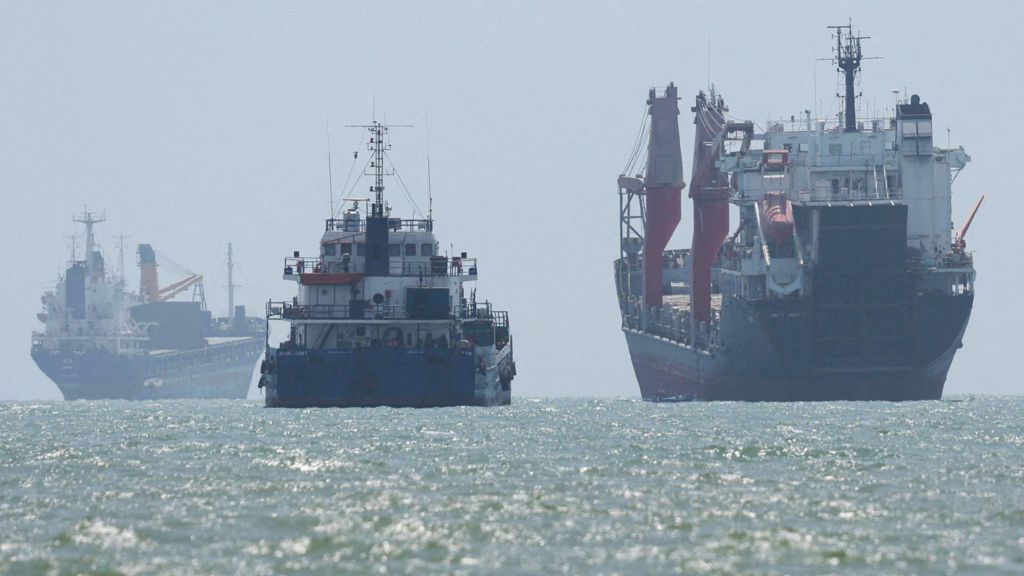
    Declassified satellite photographic evidence has brought to light a previously undisclosed joint operation that moved a shipment of uranium out of Venezuela and into United States territory, according to newly released observational data. The mission, which had been kept entirely under wraps since its execution, was only uncovered when commercial satellite analysts examining recent orbital shots of Venezuelan port facilities identified unusual cargo movement activity that did not match any recorded official shipments. Multiple independent verification checks of the imagery have confirmed that the large cargo containers documented in the shots match the profile of materials transported in cross-border uranium shipments, and the route tracked from Venezuela directly to a receiving facility in the U.S. The revelation of this secret operation has sparked immediate discussion about the undisclosed coordination between U.S. and regional partner agencies, as well as questions surrounding the origins of the Venezuelan uranium and the security protocols that allowed the entire mission to remain hidden from public and diplomatic scrutiny for an extended period. At the time of this reporting, no official government spokesperson from either the U.S. or Venezuela has issued a formal statement confirming or denying the details of the shipment operation.