分类: politics

  • Who is To Lam, the ex-cop who wants to revamp Vietnam’s success story?

    Who is To Lam, the ex-cop who wants to revamp Vietnam’s success story?

    Vietnam’s Communist Party has formally elected To Lam as its General Secretary, securing his leadership for a five-year term following his initial appointment in August 2024 after the passing of long-serving leader Nguyen Phu Trong. The 68-year-old leader now faces the formidable task of steering Vietnam toward developed economy status while navigating complex geopolitical tensions and domestic challenges.

    Lam’s vision centers on breaking Vietnam free from the ‘middle income’ trap through sweeping administrative and economic reforms. During his April address commemorating the 50th anniversary of Liberation Day (marking the end of the Vietnam War), he invoked the spirit of Vietnam’s 1975 victory and the economic transformation achieved through the Đổi Mới reforms initiated in 1986. These reforms previously propelled Vietnam from one of the world’s poorest nations to its current status as a manufacturing powerhouse.

    The new leader’s ambitious agenda requires maintaining Vietnam’s impressive 6.5% average annual economic growth rate, which would potentially triple per capita income within two decades. However, significant obstacles loom: heavy reliance on foreign-owned industry, potential crippling tariffs from ongoing trade tensions with the United States, and the delicate geopolitical balancing act between Washington and Beijing.

    Lam brings to the position a extensive background in security apparatus, having spent over four decades in the People’s Public Security Forces. He has been a major architect of the ongoing ‘blazing furnace’ anti-corruption campaign initiated by his predecessor, which has disciplined tens of thousands of officials and resulted in high-profile prosecutions including the case of Truong My Lan, sentenced to death for financial crimes totaling $44 billion. The campaign has improved Vietnam’s standing in Transparency International’s corruption perceptions index, rising from 113th in 2016 to 88th in 2024.

    Concurrently, Lam has pursued bureaucratic streamlining, eliminating approximately 100,000 civil service positions, reducing provincial divisions, and consolidating government ministries. While these measures demonstrate reformist ambitions, critics caution that the anti-corruption drive’s zealous implementation may be creating additional bureaucratic complications.

    Lam’s tenure has not been without controversy. His security background has translated into continued repression of civil liberties, with Reporters Without Borders documenting over 70 journalists imprisoned since 2016, 38 of whom remain incarcerated. Vietnam consistently ranks among the world’s worst countries for press freedom. A particularly notable incident involved the 2021 imprisonment of a noodle vendor for parodying Salt Bae after Lam himself was filmed eating a $20,000 gold-flecked steak prepared by the celebrity chef.

    In foreign policy, Lam must navigate increasingly complex relations with both China and the United States while pursuing technological advancement. He has championed ‘high-quality’ growth through technological development, quadrupling science-and-technology funding and targeting $100 billion annually from the semiconductor sector by 2050.

    Analysts characterize Lam’s leadership style as pragmatic rather than ideological, prioritizing economic development and political stability. While maintaining continuity with previous administration priorities, his actions suggest a potentially bolder, more assertive approach to governing as Vietnam seeks to transform itself into a high-income economy within a generation.

  • Trump’s MAGA movement ramps up attacks on ‘progressive white women’

    Trump’s MAGA movement ramps up attacks on ‘progressive white women’

    The MAGA movement aligned with former President Donald Trump has significantly escalated its rhetorical attacks against progressive white women in recent weeks, employing increasingly vitriolic language to characterize this demographic. This offensive follows the death of 37-year-old Renee Good, who was killed during protests against Trump’s immigration policies in Minnesota, an event that triggered a wave of harsh commentary from conservative voices.

    Right-wing commentators have developed derogatory terminology targeting these women, with radio host Erick Erickson introducing the acronym ‘AWFUL’ (Affluent White Female Urban Liberal). Vincent Oshana, a conservative comedian, asserted on social media platform X that ‘White liberal women are a cancer on the nation,’ claiming they engage in social causes due to boredom rather than conviction. Columnist David Marcus similarly dismissed women activists protesting immigration policies as ‘organized gangs of wine moms.’

    This targeted criticism occurs within a broader conservative campaign that challenges modern feminist ideals while promoting traditional masculinity. Some far-right elements, particularly Christian nationalists, have advocated for reconsidering women’s societal roles, with firebrand pastor Dale Partridge controversially declaring the 19th Amendment granting women suffrage ‘a moral and political tragedy for America.’

    According to Professor Juliet Williams, a gender studies expert at UCLA, these statements reflect a patriarchal worldview that necessitates male superiority. The Trump administration has concurrently emphasized masculine imagery, exemplified by Pentagon official Pete Hegseth’s frequent exercise videos and Health Secretary Robert F. Kennedy Jr.’s comments praising Trump’s testosterone levels.

    Despite Trump maintaining majority support among white women overall in the 2016, 2020, and 2024 elections, polling data reveals a growing generational divide. Younger white women increasingly identify as progressive, while their male counterparts show stronger conservative leanings—a demographic dynamic that contributed significantly to Trump’s recent electoral success.

    The movement’s aesthetic dimensions have also emerged, with prominent Trump-affiliated women often presenting a specific appearance characterized by stylish attire, elaborate hairstyles, and cosmetic enhancements. Katie Miller, podcast host and wife of senior adviser Stephen Miller, explicitly claimed ‘Conservative women are just hotter than Liberal women,’ linking physical appearance to political ideology and reproductive choices. This perspective coincides with several high-profile pregnancies within Trump’s circle, including the Millers’ fourth child and Vice President JD Vance’s growing family.

  • Panelists: China, US lean toward practical risk control

    Panelists: China, US lean toward practical risk control

    DAVOS, Switzerland – Leading international relations experts assembled at the World Economic Forum on Wednesday identified a significant pragmatic shift in U.S.-China relations, with both global powers increasingly prioritizing practical risk management over ideological confrontation.

    During a panel titled “US and China: Where Will They Land?” prominent scholars and diplomats highlighted how recent economic tensions have driven both nations toward establishing stronger communication channels and crisis guardrails. This development follows a period of escalated trade tensions that saw the U.S. implement substantial tariffs on Chinese goods, prompting retaliatory measures from Beijing before both parties reached a temporary truce through five rounds of high-level negotiations.

    Harvard University’s Graham Allison, who originated the concept of the “Thucydides Trap” describing how rising powers can trigger conflict with established ones, cautioned against interpreting current easing tensions as a permanent resolution. “A landing point, as if we had a permanent place to land, is not likely,” Allison stated, noting that the relationship has evolved into one of “mutual deterrence” where both recognize their capacity to inflict significant harm on each other.

    Australian Ambassador to the U.S. Kevin Rudd emphasized that the central challenge lies not in seeking a final endpoint but in constructing practical mechanisms to manage strategic competition while minimizing risks of crisis, conflict, and war. He identified three critical flashpoints that will determine the global order: tariffs, technology, and Taiwan.

    University of Southern California law professor Angela Huyue Zhang expressed measured optimism for 2026, citing three stabilizing factors: Washington’s recognition that containment strategies have inadvertently accelerated China’s technological advancement, both nations’ identification of mutual vulnerabilities during last year’s trade war, and neither side having appetite for further instability.

    U.S. Senator Christopher Coons noted bipartisan support for “clear-eyed engagement” with China while acknowledging serious security tensions, particularly regarding artificial intelligence. He highlighted the pressing need for improved military communication channels to reduce misunderstanding risks.

    Chinese scholar Zhao Hai from the Chinese Academy of Social Sciences challenged the prevailing “tech war” narrative, arguing that AI represents a shared challenge requiring bilateral regulation rather than containment. He advocated for formal, multilevel mechanisms to regulate U.S.-China ties, emphasizing that continuous dialogue between leaders remains crucial for maintaining bilateral stability.

  • Vietnam’s leader returns to power with bold promises. Can he deliver?

    Vietnam’s leader returns to power with bold promises. Can he deliver?

    HANOI – Vietnam’s political landscape has entered a definitive new chapter following the conclusion of the Communist Party Congress, which reconfirmed To Lam as General Secretary for a second five-year term. The assembly of nearly 1,600 delegates concluded ahead of schedule on Friday, a move interpreted by observers as either indicating strong consensus or effectively subdued opposition to Lam’s increasingly centralized authority.

    Professor Edmund Malesky of Duke University characterized the development as “the strongest concentration of power in one individual that I’ve seen since 1991,” highlighting the unprecedented nature of Lam’s political control.

    Since assuming leadership 18 months ago following the death of his predecessor Nguyen Phu Trong, Lam has orchestrated a remarkable pivot from his previous role as head of Vietnam’s powerful Ministry of Public Security, where he led extensive anti-corruption campaigns. Upon reaching the apex of power, he unveiled sweeping economic reforms described as the most ambitious in four decades.

    The cornerstone of Lam’s vision emerged through Resolution 68, ratified by the Politburo in May last year, which officially designated the private sector as “the most important driving force of the national economy.” This marked a significant ideological shift in officially socialist Vietnam, where state-owned enterprises have traditionally been celebrated as the economy’s foundation.

    The resolution established breathtaking targets: double-digit annual growth, doubling private businesses by 2030, and transforming Vietnam into an upper-income, knowledge-based economy by 2045 – the centenary of independence from French colonial rule. Central to this strategy is cultivating “leading cranes” – privately-owned national champions capable of global competition.

    Currently, Vietnam’s economic structure presents substantial challenges. Despite three decades of impressive growth and poverty reduction, state-owned enterprises still account for 29% of GDP through 671 entities that enjoy preferential access to licenses, funding, and resources. Meanwhile, most private companies remain small-scale, with only 2% employing over 200 people.

    The reform agenda faces complications from recent political developments. Resolution 79, passed earlier this month, seemingly walked back private sector prioritization by declaring state-owned enterprises could also serve as “leading geese” and setting ambitious targets for their regional dominance.

    Vietnam’s economic model faces external challenges as well. The country’s export-dependent manufacturing economy, particularly vulnerable to U.S. tariff policies under the Trump administration, relies heavily on foreign investment, technology, and markets. Lam himself acknowledged this vulnerability in January last year, questioning Vietnam’s position at the “lowest end of the value chain.”

    The development of national champions illustrates both promise and pitfalls. While technology firm FPT has achieved international contracts with companies like Airbus, conglomerate Vingroup exemplifies the challenges of global expansion. Despite dominating Vietnam’s domestic market through extensive political connections, its Vinfast electric vehicle subsidiary has struggled internationally, reportedly losing approximately $11 billion since 2021 while failing to gain traction in U.S. and European markets.

    Nguyen Khac Giang of the ISEAS–Yusof Ishak Institute in Singapore warned: “The main challenge remains unchanged: how to create globally competitive firms without spawning politically-connected rent-seekers. To Lam’s approach risks replacing one form of rent-seeking with another.”

    As Lam consolidates power, his administration must navigate fraught international relations while addressing fundamental structural economic challenges. Vietnam’s renowned “bamboo diplomacy” – maintaining friendships with all and enmity with none – faces severe tests in the emerging Trump II era, particularly given the country’s exceptional reliance on U.S. market access.

  • Dozens of sanctioned Russian tankers navigate Channel despite UK vow of ‘assertive’ action’

    Dozens of sanctioned Russian tankers navigate Channel despite UK vow of ‘assertive’ action’

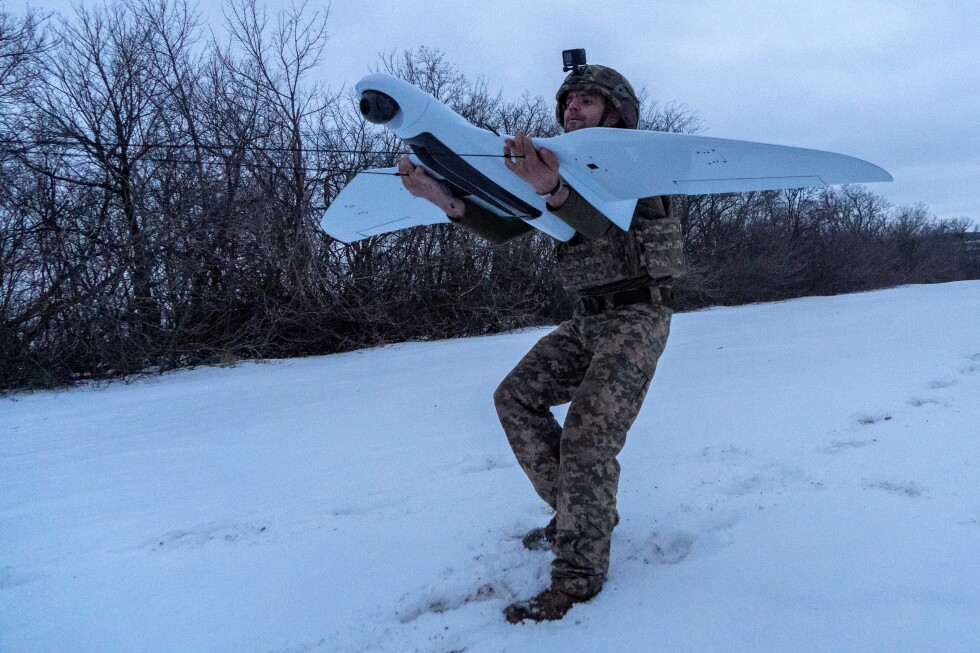
    Despite the UK government’s pledge to take assertive action against Russian oil sanctions evasion, dozens of sanctioned tankers from Russia’s shadow fleet have continued to transit the English Channel throughout January. BBC Verify tracking data reveals that 42 sanctioned vessels passed through these strategic waters even after British defense officials received legal authorization to detain such ships under the Sanctions and Money Act 2018.

    The shadow fleet—comprising hundreds of aging tankers with obscured ownership—has become Russia’s primary mechanism for circumventing oil embargoes imposed since its full-scale invasion of Ukraine. Among the vessels that transited the Channel was the Sofos, sanctioned by the UK Foreign Office in May 2025. This tanker executed a complex route: loading oil in Russia mid-November, traveling to Turkey, then proceeding to Venezuela where it disabled its tracking system. Satellite imagery confirmed its presence at Venezuela’s Jose oil terminal in late December before reappearing near Russian waters.

    Another notable vessel, the Nasledie (formerly Blint), underwent identity transformation in November 2025 by changing its name and switching from a false Comoros registration to Russian registry. This 20-year-old tanker, carrying approximately 100,000 tonnes of Urals crude, entered the Channel just days after BBC reported on the UK’s new legal authority to intercept shadow vessels.

    While the UK has assisted allied forces in seizing tankers near Iceland and in the Mediterranean, British troops have yet to independently detain any shadow fleet vessels. This inaction persists despite BBC Verify identifying six tankers operating under false flags in Channel waters—a condition that legally classifies them as stateless vessels subject to seizure under international maritime law.

    Political figures have expressed frustration with this enforcement gap. Dame Emily Thornberry, chair of Parliament’s Foreign Affairs Select Committee, stated she was ‘very disappointed’ by the lack of interceptions. Liberal Democrat MP Mike Martin, a former British Army officer, questioned the reluctance to act independently given Royal Marines’ capability for such operations.

    Russia has responded to increased Western pressure with both diplomatic warnings and military escorts. The warship General Skobelev accompanied a sanctioned tanker through the Channel on January 20, while Russian foreign ministry spokeswoman Maria Zakharova declared any vessel detention would be viewed as ‘harming Russian interests’ and violating international law.

    The economic stakes remain substantial. According to the Center for Strategic and International Studies, shadow fleet tankers transport between $87-$100 billion worth of oil annually. Recent analysis indicates 68% of all Russian crude oil was carried on sanctioned tankers in December 2025, providing critical economic support for Russia’s military operations in Ukraine.

    Despite Ministry of Defense assertions that disrupting the shadow fleet remains a government priority, enforcement challenges persist. Tankers continue employing sophisticated evasion tactics including identity changes, tracking signal manipulation, and false location broadcasts—strategies that complicate monitoring efforts and enable continued sanctions circumvention.

  • Russia, Ukraine and US to hold trilateral talks in Abu Dhabi

    Russia, Ukraine and US to hold trilateral talks in Abu Dhabi

    In a significant diplomatic development, Russian, Ukrainian, and United States negotiators are scheduled to hold trilateral talks in the United Arab Emirates on Friday. This meeting marks the first formal engagement attended by all three nations since Russia initiated its full-scale invasion of Ukraine nearly four years ago.

    The Kremlin confirmed Russian participation following preliminary discussions between President Vladimir Putin and US envoys in Moscow. Kremlin aide Yuri Ushakov characterized these initial talks as “substantive, constructive and very frank,” while reiterating Moscow’s position that territorial resolution remains prerequisite to any lasting peace agreement. “Until this is achieved,” Ushakov stated, “Russia will continue to consistently pursue the objectives of the special military operation.”

    The Russian delegation to the Abu Dhabi talks will be led by General Igor Kostyukov, director of Russia’s GRU military intelligence agency, with investment envoy Kirill Dmitriev conducting separate economic discussions with US representatives.

    Ukrainian President Volodymyr Zelensky, speaking at the World Economic Forum in Davos, emphasized that territorial control remains the central obstacle to peace. “It’s all about the land. This is the issue which is not solved yet,” Zelensky told reporters, adding that “the Russians have to be ready for compromises, not only Ukraine.” Specific disputes include Russia’s demand for Ukraine to relinquish the remaining 25% of Donetsk region still under Kyiv’s control.

    Zelensky has assembled a high-level negotiating team including National Security and Defense Council head Rustem Umerov, presidential office chief Kyrylo Budanov, and lead negotiator David Arakhamia, who will be joined in the UAE by Chief of the General Staff Andrii Hnatov.

    The Ukrainian president revealed that a US-proposed 20-point peace plan is approximately 90% complete, featuring provisions for a demilitarized free economic zone in Donbas in exchange for security guarantees for Kyiv. Zelensky confirmed reaching preliminary agreement with former President Donald Trump regarding future US security guarantees, though any final agreement would require ratification by both the US Congress and Ukrainian parliament.

    Despite these diplomatic efforts, the conflict continues to impact civilian infrastructure, with Zelensky initially considering canceling his Davos trip to address aftermath of Russian strikes on Kyiv’s power systems that have left portions of the capital without heating, water, or electricity during extreme winter conditions.

  • US considering withdrawing all its troops from Syria: Report

    US considering withdrawing all its troops from Syria: Report

    The Biden administration is actively considering a complete military withdrawal from Syria, a move originally championed by former President Trump, as shifting alliances and security realities reshape American strategy in the region.

    According to a Wall Street Journal report citing unnamed officials, Washington’s calculus has changed significantly due to the Syrian government’s ongoing offensive against the US-backed Syrian Democratic Forces (SDF) in northern Syria. President Ahmed al-Sharaa’s campaign to disarm wartime militias and integrate fighters into the national army has fundamentally altered the battlefield dynamics.

    The potential collapse of the Kurdish-led SDF, once America’s most effective ground partner against Islamic State militants, would eliminate the primary rationale for maintaining the current deployment of 800-1,000 US troops. However, officials emphasized that cooperation with the Syrian army remains unviable due to its significant number of jihadist sympathizers and personnel implicated in mass killings of Kurdish and Druze minorities.

    The deteriorating situation has created multiple security crises. Fighting between SDF and Syrian forces has already placed American personnel in direct danger, culminating in a December incident where a Syrian army member with suspected IS affiliations killed three US service members.

    Perhaps most alarmingly, the SDF’s diminishing control threatens security at detention facilities housing approximately 7,000 IS-linked detainees, including women and children from at least 50 countries. These individuals remain in legal limbo without formal charges or judicial processing as their home governments resist repatriation efforts.

    In response to the growing instability, US Central Command has initiated transfers of detainees to facilities in Iraq, with plans to eventually relocate all prisoners from Syrian camps. Secretary of State Marco Rubio endorsed this measure, stating, “The United States welcomes the Government of Iraq’s initiative to detain ISIS terrorists in secure facilities following recent instability in northeast Syria.”

    The policy shift has drawn criticism from veteran diplomats like Brett McGurk, who served as counter-IS coordinator under both Obama and Trump administrations. McGurk warned that any security breakdown at detention sites “risks international consequences” and emphasized that Kurdish forces “are steadfast partners and should be treated as such.”

    The unfolding situation has reignited debates about America’s consistency in foreign partnerships, with many observers characterizing the potential abandonment of the SDF as another in a series of Washington’s betrayals of allied forces worldwide.

  • Japan’s Takaichi set to call snap election after only 3 months in office

    Japan’s Takaichi set to call snap election after only 3 months in office

    TOKYO — In a significant political maneuver, Japanese Prime Minister Sanae Takaichi formally dissolved the lower house of Parliament on Friday, setting the stage for a snap national election scheduled for February 8. This strategic decision represents an attempt by Japan’s first female leader to leverage her substantial public approval ratings, which currently stand at approximately 70%, to strengthen her governing coalition’s legislative position.

    The dissolution of the 465-member lower chamber, officially announced by House Speaker Fukushiro Nukaga during Friday’s parliamentary session, initiates a condensed 12-day campaign period commencing next Tuesday. This electoral timeline will inevitably delay critical legislative proceedings, including the vote on a proposed budget designed to stimulate Japan’s struggling economy and address escalating consumer prices.

    Takaichi’s Liberal Democratic Party (LDP) and its coalition partners currently maintain a fragile majority in the lower house following significant electoral setbacks in recent years. The coalition lacks majority control in the upper house, necessitating opposition support for legislative initiatives. This political vulnerability has prompted Takaichi to seek a stronger mandate through early elections.

    Opposition leaders have criticized the timing of the dissolution, arguing it unnecessarily postpones essential economic measures. At a Monday press conference, Takaichi defended her decision, stating, “I believe the sovereign citizens must determine whether I should continue as prime minister. I am staking my entire political career on this election.”

    The Prime Minister intends to highlight policy contrasts with her centrist predecessor, Shigeru Ishiba, particularly regarding her administration’s fiscal spending initiatives, military expansion plans, and stricter immigration policies. However, the LDP continues to grapple with the aftermath of political funding scandals that have eroded its traditional support base, with many conservative voters shifting allegiance to emerging far-right populist parties like the anti-globalist Sanseito.

    International dimensions further complicate the political landscape. Takaichi’s recent pro-Taiwan remarks have intensified diplomatic tensions with China, triggering economic and diplomatic repercussions from Beijing. Simultaneously, the administration faces pressure from U.S. President Donald Trump to increase defense spending as both Washington and Beijing pursue military superiority in the region.

  • Gulf states fear US attack on Iran spoils chance at ‘concessions’ from weakened Islamic Republic

    Gulf states fear US attack on Iran spoils chance at ‘concessions’ from weakened Islamic Republic

    Saudi Arabia’s recent $1.5 billion arms agreement with Sudan’s military included a significant diplomatic condition: weapons would only be delivered if General Abdel Fattah al-Burhan distanced his forces from Iranian drone technology. This strategic maneuver, confirmed by Gulf officials and sources briefed on the matter, illustrates how Gulf monarchies are subtly exploiting Iran’s declining regional influence while avoiding direct confrontation.

    Tehran’s current vulnerabilities stem from a combination of military setbacks against Israel and domestic unrest fueled by economic crises. Gulf states recognize this weakness presents unprecedented opportunities to extract concessions and expand their regional influence. However, analysts and officials reveal deep concerns that potential U.S. military action against Iran could disrupt this delicate balance, potentially triggering catastrophic responses that would endanger regional stability.

    Joshua Yaphe, senior fellow at the Center for the National Interest and former State Department Gulf analyst, notes: “There is an advantage for the Gulf in a weak Iran that is not engulfed in chaos.” Gulf monarchies particularly fear that American strikes could provoke retaliatory measures across their borders or lead to further consolidation of power by Iran’s Islamic Revolutionary Guard Corps (IRGC).

    Despite Iran’s demonstrated military capabilities—including missile strikes on Tel Aviv during the June 2025 conflict and survival after nuclear facility bombings—the U.S. and its Gulf partners disagree on how to capitalize on Tehran’s weakened state. While Washington and Jerusalem see an opportunity for decisive strikes, Gulf nations prefer extracting diplomatic concessions through careful negotiation.

    Recent tensions escalated when President Trump threatened military action during Iran’s crackdown on protesters earlier this month. Saudi Arabia, Oman, and Qatar actively lobbied against intervention, though concerns persist that Trump may still authorize new strikes. The deployment of the USS Abraham Lincoln to the Arabian Sea has further heightened anxieties.

    Gulf opposition to military action stems from multiple factors: hosting vulnerable U.S. military bases, fear of unpredictable retaliation, and recognition that Iran’s weakness creates negotiation opportunities. As one Gulf source stated: “Trump had his Venezuela. What the Americans are being told is ‘this is our region. We can make a deal.’”

    Regional dynamics reveal significant divisions, however. While Saudi Arabia leads anti-strike efforts, the UAE’s position remains ambiguous due to its closer alignment with Israel and higher risk tolerance. This divergence reflects the ongoing deterioration of Saudi-Emirati relations, evident in recent confrontations in Yemen and Sudan.

    The dramatic transformation in Saudi-Iranian relations underscores the region’s shifting alliances. Since restoring diplomatic ties through Chinese mediation in 2023, Riyadh now expects Tehran to “reciprocate” by moderating Houthi aggression in Yemen. Meanwhile, Qatar emerges as a key power broker, backing Syria’s president while sharing the world’s largest natural gas field with Iran.

    Oman and Qatar are leveraging the current situation to promote renewed nuclear negotiations, finding some receptive ears in international forums. As consultant Steve Witkoff noted at Davos: “Iran needs to change its ways… if they indicate willingness, I think we can diplomatically settle this.” This diplomatic approach remains the Gulf’s preferred path forward.

  • Putin meets Trump’s envoys as Kremlin says Ukraine settlement hinges on territory

    Putin meets Trump’s envoys as Kremlin says Ukraine settlement hinges on territory

    In a significant diplomatic development, Russian President Vladimir Putin engaged in marathon overnight discussions with special envoys representing former U.S. President Donald Trump, focusing on potential pathways to resolve the ongoing conflict in Ukraine. The Kremlin negotiations, extending past 3 a.m. Moscow time on Friday, produced a critical breakthrough with the announcement of upcoming trilateral talks involving Russian, Ukrainian, and American officials in the United Arab Emirates.

    Kremlin foreign affairs adviser Yuri Ushakov, who participated in the extensive talks characterized as “frank, constructive, and fruitful,” emphasized that territorial disputes remain central to any lasting peace agreement. “It was reaffirmed that reaching a long-term settlement can’t be expected without solving the territorial issue,” Ushakov stated, referencing Moscow’s demand for Ukrainian troop withdrawal from eastern regions that Russia has illegally annexed.

    The diplomatic momentum built simultaneously at the World Economic Forum in Davos, where Ukrainian President Volodymyr Zelenskyy held a closed-door meeting with Trump lasting approximately one hour. Zelenskyy described the discussions as “productive and meaningful,” while Trump later noted that both Russian and Ukrainian leaders appear willing to make concessions to end the conflict, though acknowledging that territorial boundaries remain a persistent sticking point.

    Zelenskyy used his platform in Davos to deliver sharp criticism of European allies, accusing them of fragmented responses and inadequate support. Drawing parallels to the film ‘Groundhog Day,’ he expressed frustration that his warnings about European defense preparedness have gone unheeded over the past year. The Ukrainian leader specifically highlighted Europe’s slow decision-making processes, insufficient defense spending, and failure to effectively counter Russia’s sanctions-evading “shadow fleet” of oil tankers.

    The emerging peace process faces complex challenges amid ongoing military realities. Russia currently controls approximately 20% of Ukrainian territory gained since hostilities began in 2014 and expanded through the 2022 full-scale invasion. Ukraine faces significant shortages in both military resources and personnel, with defense officials reporting approximately 200,000 troop desertions and widespread draft-dodging affecting nearly 2 million citizens.

    The UAE-mediated talks represent the most substantial diplomatic movement in months, with a Russian delegation led by military intelligence chief Admiral Igor Kostyukov scheduled to participate. Separate economic discussions between Putin’s envoy Kirill Dmitriev and Trump representative Steve Witkoff are also planned, indicating a multifaceted approach to conflict resolution.