分类: politics

  • Norwegian journalist’s question to Modi sparks controversy in India

    Norwegian journalist’s question to Modi sparks controversy in India

    A scheduled two-day bilateral working visit by Indian Prime Minister Narendra Modi to Oslo, Norway this week has ignited a heated cross-border dispute after a local journalist posed unscripted, critical questions to the Indian leader, triggering backlash from Indian social media users and official pushback from New Delhi.

    The incident unfolded following a joint press appearance between Modi and his Norwegian counterpart Jonas Gahr Støre, an event where both leaders had pre-confirmed they would not field questions from reporters. As the two prime ministers exited the stage, veteran Norwegian journalist Helle Lyng called out repeatedly to Modi, asking why he refused to engage with the press and challenging him to respond to questions about alleged human rights violations in India. Modi did not offer a response to Lyng’s questions, and security personnel later intervened to stop her from asking follow-up questions as the prime minister departed.

    Lyng, a political correspondent for multiple Norwegian national outlets, later shared video footage of the exchange on social platform X, alongside posts raising concerns about declining press freedom and human rights standards in India. She told BBC Hindi in a post-incident interview that she saw the questions as a core part of her professional duty, noting that Modi’s long-standing pattern of avoiding unscripted press engagement left few other opportunities to raise issues of public interest. “That’s how confrontational journalism works. You have to try to interrupt, you have to try to get the answers you are looking for,” she explained, adding that her questions were based on reporting from what she called trusted global sources including Amnesty International and Human Rights Watch.

    Within hours of the incident going viral online, Lyng faced widespread harassment and trolling from Indian social media users. Many accused her of acting as a “foreign plant” or spy, framing her questions as a deliberate attempt to embarrass India on the international stage. Several prominent Indian news outlets also criticized her approach, arguing that confronting a visiting head of state in that manner violated basic standards of diplomatic respect.

    The official Indian response came shortly after the exchange, when the Indian Embassy in Norway publicly responded to Lyng’s social media post inviting her to raise her questions at a scheduled evening press briefing with senior Indian diplomats. At the briefing, Lyng repeated her core question: “Why should we trust you (India)? Can you try to stop the human rights violations that goes on in your country?”

    Senior Indian diplomat Sibi George flatly rejected the allegations, pushing back strongly against the framing of Lyng’s question. He emphasized that India’s constitution explicitly enshrines democratic protections, including freedoms of thought, expression, belief, and worship for all citizens. He also criticized foreign critics for relying on what he called inaccurate reports from uninformed non-governmental organizations, noting “People have no understanding of the scale of India. They read one or two reports published by some God-forsaken, ignorant NGOs and then come and ask questions. Don’t worry about it. We are proud to be a democracy; we are a democratic society for centuries.”

    This incident is not an isolated case: earlier in the same European trip, two Dutch journalists raised similar questions about minority rights and press freedom in India during Modi’s visit to the Netherlands, prompting an identical rebuttal from George.

    The dispute comes against a backdrop of growing international scrutiny of press freedom in India. Last month, global press freedom watchdog Reporters Without Borders released its annual World Press Freedom Index, which ranked India 157th out of 180 assessed countries. Norway, by contrast, has held the top spot on the index for multiple consecutive years, reinforcing its global reputation as a defender of aggressive independent journalism.

    Modi, who has led India as prime minister since 2014, has never held a traditional solo press conference since taking office, and has rarely taken unscripted questions from journalists during domestic or international visits. This pattern has long drawn criticism from press freedom advocates, who argue it reduces transparency and accountability for the Indian government.

  • Pakistan’s Saudi deployment reveals a new Gulf security reality

    Pakistan’s Saudi deployment reveals a new Gulf security reality

    In what geopolitical analysts are calling one of the most underreported yet consequential shifts in Middle Eastern security in recent years, unconfirmed reports of a major Pakistani military deployment to Saudi Arabia under a secret bilateral defense pact have reshaped understandings of evolving regional power arrangements. Citing anonymous security and government sources, Reuters first broke the story that Islamabad has deployed roughly 8,000 troops, a full squadron of JF-17 fighter jets, drone combat units, and a Chinese-built HQ-9 advanced air defense system to the kingdom, all under the terms of the 2025 mutual defense agreement signed by the two nations. Neither Pakistani nor Saudi officials have issued an official confirmation or denial of the deployment details, but the reported scope of the force makes clear this is far more than a limited symbolic advisory mission.

    The 2025 Saudi-Pakistan Mutual Defense Agreement was signed in Riyadh on September 17 by Saudi Crown Prince Mohammed bin Salman and Pakistani Prime Minister Shehbaz Sharif, finalized against a backdrop of rapidly escalating regional volatility. The pact’s announcement came just days after an Israeli airstrike targeting a Hamas leadership delegation in Doha, Qatar — an operation that sent shockwaves through Gulf capitals far beyond Qatar’s borders. For decades, Gulf monarchies operated under the core strategic assumption that close alignment with Washington would deter unilateral Israeli military actions on Gulf territory. The Doha strike shattered that long-held confidence, exposing deep growing uncertainty around the reliability of existing regional deterrence frameworks and Western security guarantees. It is this uncertainty, rather than an attempt to displace long-standing American military leadership in the region, that the reported Pakistani military buildup reflects.

    The deployment, if confirmed, underscores an emerging new reality: Gulf states are actively pursuing additional layers of strategic protection as doubts grow about the stability and predictability of the regional security environment. Riyadh’s move to deepen security ties with Islamabad sends a clear but understated message to Washington: if existing security guarantees grow less reliable during periods of regional escalation, Gulf nations will diversify their strategic partnership networks. Crucially, this does not mean Saudi Arabia seeks to replace the United States with Pakistan as its primary security guarantor. That misinterpretation ignores both the deep-rooted structure of Gulf security and the scale of long-standing American military entrenchment across the region. The U.S. maintains an extensive, institutionally embedded military presence throughout the Gulf: the U.S. Fifth Fleet is headquartered in Bahrain, Qatar hosts the largest American air base in the Middle East, thousands of U.S. troops remain stationed in Kuwait, and Washington holds formal strategic access agreements with Oman and the United Arab Emirates. Saudi Arabia itself still relies heavily on American military hardware, intelligence sharing, and overarching regional deterrence architecture — a role Pakistan simply cannot fill.

    Instead, Riyadh and other Gulf states are increasingly focused on supplementing existing security arrangements, rather than relying entirely on a single external power for protection. It is important to note that deep military cooperation between Saudi Arabia and Pakistan is not a new development. Since the 1970s, Pakistani troops have periodically deployed to Saudi Arabia to support training, border security, and advisory missions. Pakistani military institutions have long-standing, close ties with Gulf defense establishments, and Saudi Arabia has repeatedly stepped in to provide critical economic support to Islamabad during periods of severe financial crisis. The bilateral relationship has also extended beyond conventional defense cooperation to include unspoken broader strategic understandings. For decades, analysts have speculated that decades of Saudi financial support for Pakistan’s nuclear program created an informal expectation that Islamabad’s strategic deterrent capabilities could be called on to support Gulf security if the regional balance of power deteriorated dramatically. Public remarks from former Pakistani Defense Minister Khawaja Asif, which implied Saudi Arabia falls under Pakistan’s “nuclear umbrella”, have only reinforced these assumptions, even though no formal nuclear security arrangement has ever been publicly acknowledged.

    While Saudi Arabia has long-standing concerns about Iran’s regional expansion and nuclear ambitions, framing the new agreement solely as a counter to Iran oversimplifies the complex regional context. By the time the pact was signed in September 2025, Iran’s nuclear infrastructure had already sustained major damage during the June 2025 Israel-Iran conflict and subsequent American strikes on Iranian nuclear facilities. Instead, the timing of the agreement reflects broader anxiety across the Gulf about growing regional unpredictability, rather than just an immediate fear of Iranian expansion. The Doha Israeli strike made clear that Gulf territory itself is no longer insulated from spillover escalation from broader regional conflicts, a realization that has accelerated Gulf efforts to diversify security partnerships, build redundant deterrence capabilities, and reduce overreliance on any single security framework.

    For Pakistan, the new arrangement requires navigating an extremely delicate geopolitical balancing act. Islamabad holds two unique roles in the region: it is a formal military partner to Saudi Arabia, while also serving as a rare diplomatic intermediary between Washington and Tehran. In recent weeks, Pakistan has reportedly played a central role in brokering and maintaining the current ceasefire between the U.S. and Iran, and even hosted the only direct round of negotiations between the two parties. Few regional actors maintain open, working diplomatic channels with Riyadh, Tehran, Beijing, and Washington simultaneously. Iranian Foreign Ministry spokesperson Esmaeil Baghaei recently confirmed that indirect diplomatic engagement with the U.S. over the Iranian nuclear file remains ongoing rather than intermittent, and noted that Tehran reviewed proposed U.S. amendments to a draft agreement conveyed via Pakistani intermediaries before submitting its formal counterproposal — further underscoring Islamabad’s growing role as a critical communication bridge between adversarial powers.

    This diplomatic flexibility has emerged as one of Pakistan’s most valuable geopolitical assets in the current regional order, but balancing between rival regional and global camps carries clear risks. Iran has historically tolerated Pakistan’s defense relationship with Saudi Arabia because the relationship was limited to defensive and advisory roles. A visibly expanded Pakistani military deployment directly tied to regional confrontation could eventually undermine Islamabad’s credibility as a neutral intermediary, complicating its diplomatic work. This strategic tradeoff helps explain why Pakistani officials have remained deliberately vague and cautious in public responses to the Reuters report, as strategic ambiguity continues to serve Islamabad’s core interests.

    Beyond its geopolitical implications, the reported deployment also carries technological significance that points to shifting defense markets in the Gulf. The inclusion of Chinese-origin defense systems — the JF-17, which is co-produced with China, and the HQ-9 air defense system — highlights Beijing’s growing indirect footprint in Gulf defense ecosystems. While China remains far from replacing the United States as the dominant military power in the Middle East, and lacks Washington’s extensive alliance network, regional basing infrastructure, and expeditionary military capabilities, Chinese defense technologies are increasingly being integrated into Gulf national procurement plans. This trend is fostering a more diversified, multipolar regional defense environment.

    The development is also being closely watched in New Delhi, as Chinese-built defense systems from Pakistan are now entering Gulf security calculations. While the deployment does not fundamentally reshape the regional balance of power, it does reflect the growing strategic interconnectedness between South Asian and Middle Eastern security theaters, a shift that will have ripple effects across the Indo-Pacific.

    Ultimately, regional states are not abandoning the United States as a core security partner. Instead, they are taking deliberate steps to reduce their strategic vulnerability by expanding partnership networks and building overlapping security relationships that can adapt to an era of growing geopolitical uncertainty. In this sense, the significance of the Saudi-Pakistan defense arrangement is far more political than it is military. The pact signals the emergence of a new Gulf security order that is more flexible, layered, and strategically diversified than the post-Cold War framework that dominated the region for decades. The United States remains the central external security actor in the Middle East, but Gulf states are increasingly unwilling to rely exclusively on any single power amid intensifying regional fragmentation and shifting global great power priorities. For Pakistan, the greatest challenge will not be deploying military assets to the Gulf, but preserving its valuable strategic flexibility without being pulled irreversibly into competing regional confrontations.

    This analysis is contributed by Saima Afzal, a research scholar at Justus Liebig University in Germany, whose work focuses on South Asian security, counterterrorism, and cross-regional geopolitics across the Middle East, Afghanistan, and the Indo-Pacific.

  • Taiwan’s Lai says he would tell Trump he hopes to continue arm purchases, if given a chance

    Taiwan’s Lai says he would tell Trump he hopes to continue arm purchases, if given a chance

    As Lai Ching-te reaches the midpoint of his four-year term as Taiwan’s leader, cross-strait relations and the island’s security partnerships with Washington have emerged as the defining flashpoints of his administration, with growing pressure from Beijing and shifting rhetoric from U.S. leadership raising new uncertainty for the region. In a press briefing Wednesday, Lai laid out his vision for Taiwan’s defense and sovereignty, revealing what message he would deliver to U.S. President Donald Trump if given the opportunity to speak directly.

    Lai’s core priority, he emphasized, would be to secure continued U.S. arms sales to the island, a policy he frames as non-negotiable for maintaining cross-strait peace. He argued that peace and stability across the Taiwan Strait are foundational to global security, and went on to claim China is the primary force undermining that stability. Repeating his belief that “only strength can bring peace,” Lai noted that Taipei has steadily increased its defense budget in response to growing regional threats, and purchases of U.S. military equipment remain an essential pillar of the island’s deterrence strategy.

    “No country has the right to annex Taiwan,” Lai said. “Democracy and freedom should also not be seen as provocation.”

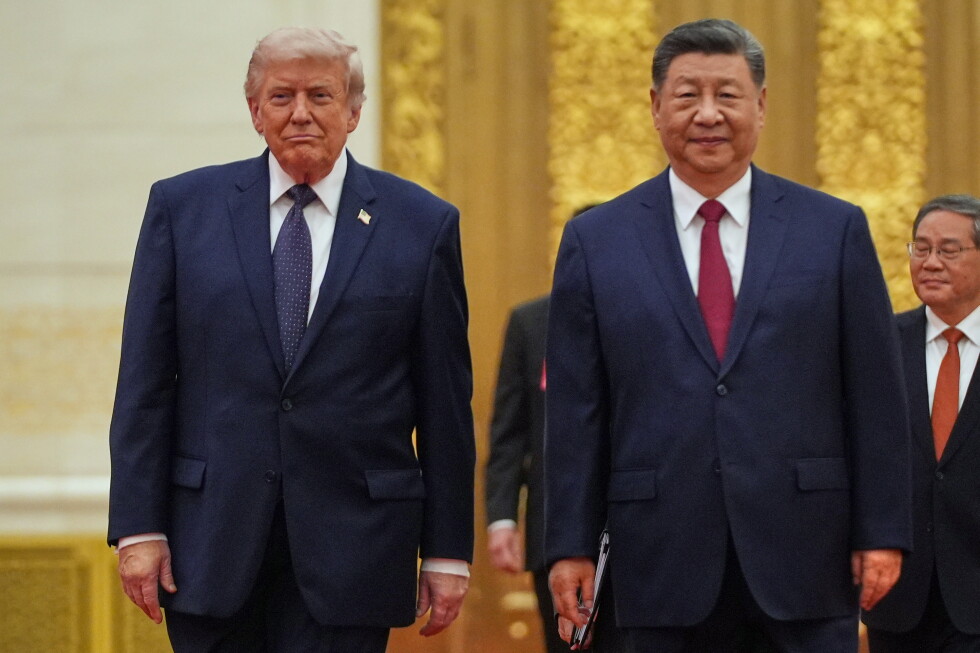
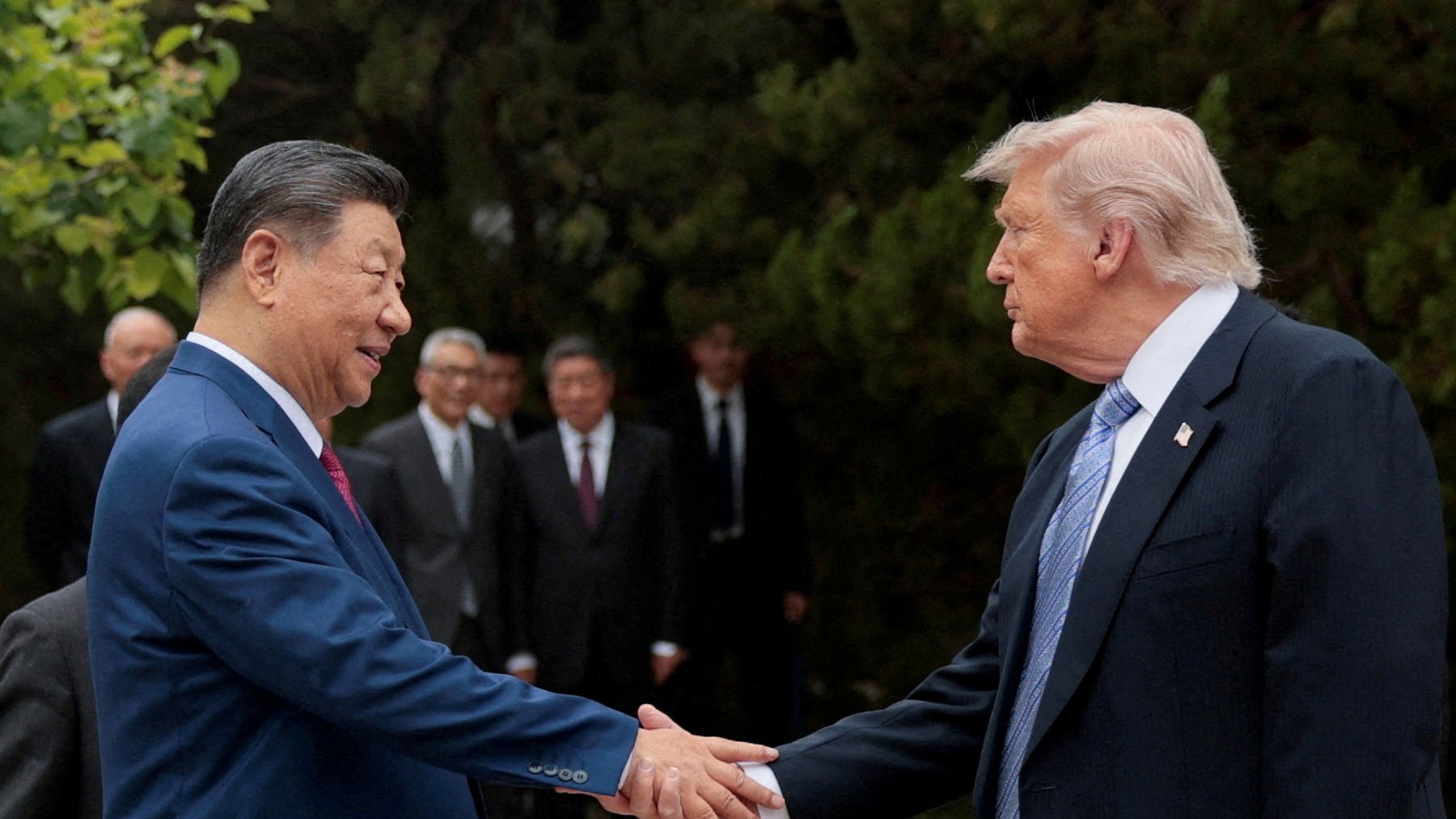
    The midterm briefing comes against a backdrop of intensifying geopolitical friction. China has long maintained that Taiwan is an inalienable part of its territory, and has ramped up diplomatic and military pressure on Lai’s administration, which Beijing labels as separatist. Just one week before Lai’s remarks, Chinese President Xi Jinping delivered a stark warning to Trump during their summit in Beijing, calling the Taiwan question the most sensitive issue in U.S.-China relations, and warning that mishandling it would lead to direct clashes and conflict between the two powers.

    Recent comments from Trump have also fueled concerns about the future of longstanding U.S. support for Taiwan, even in the absence of formal diplomatic ties. Late last year, Trump approved a historic $11 billion arms package to Taipei, but during his recent visit to China, he suggested that a proposed $14 billion follow-up arms deal would be used as a negotiating lever with Beijing, telling Fox News its approval would depend on China’s cooperation. He later added that he planned to speak with Taiwan’s leader, without naming Lai directly.

    Lai pushed back on the idea that Taiwan’s future could be determined by outside powers, stating: “Taiwan’s future cannot be decided by external forces, nor can it be hijacked by fear, division, or short-term interests.” While he said Taipei is open to peaceful, equal, and dignified cross-strait exchanges with Beijing, he firmly rejected Chinese unification overtures that frame political integration as a path to peace, calling these coercive united front tactics unacceptable.

    Beyond security and cross-strait policy, Lai also addressed domestic economic priorities, responding to concerns over Taiwan’s heavy reliance on its booming tech sector, which has surged on the back of the global AI boom. The island is the world’s leading producer of advanced semiconductors and AI server hardware, and top tech firms have posted record profits in recent quarters, but analysts have warned that overreliance on AI-related manufacturing leaves the economy exposed if the current AI boom deflates into a bubble. To diversify Taiwan’s economic base, Lai announced a NT$100 billion (US$3.1 billion) initiative to support the upgrading and transformation of small and medium-sized enterprises and traditional manufacturing sectors, with the goal of leveraging the tech industry’s growth to lift all segments of the economy.

    Beijing has rejected Lai’s framing of cross-strait tensions outright. Zhu Fenglian, a spokesperson for China’s Taiwan Affairs Office, labeled recent claims by Lai that China is responsible for altering the cross-strait status quo as a web of “lies and deception, hostility and confrontation,” according to China’s state-run Xinhua News Agency. She accused Lai of clinging to a separatist pro-independence agenda and deliberately inciting confrontation across the Taiwan Strait, countering his claim by saying that Lai himself is the true “destroyer of the status quo of the Taiwan Strait.” The remarks cap off a week of escalating verbal exchanges between the two sides, as geopolitical shifts continue to reshape the future of the region.

  • US lobbied Saudi Arabia to release funds for Gaza ‘Board of Peace’ amid cash crunch

    US lobbied Saudi Arabia to release funds for Gaza ‘Board of Peace’ amid cash crunch

    A high-stakes diplomatic push by the United States to secure long-promised funding for Donald Trump’s Gaza-focused Board of Peace initiative has come to light, with multiple regional and U.S. officials confirming to Middle East Eye that a senior American envoy traveled to Saudi Arabia in April to shore up Riyadh’s $1 billion commitment.

    The visit was led by Aryeh Lightstone, a key Trump administration appointee tasked with overseeing post-war Gaza planning, who held direct talks with Saudi Foreign Minister Faisal bin Farhan to revisit the pledge Saudi Arabia made during a February donor conference for the U.S.-led body. A close ally of Trump’s son-in-law Jared Kushner and an American rabbi by profession, Lightstone is part of a small handpicked team that includes Israeli technology industry leaders and close associates of Israeli Prime Minister Benjamin Netanyahu, all working to draft a long-term governance framework for the war-ravaged Gaza Strip.

    The Board of Peace, which currently counts more than 25 member states, is designed to place daily governance of Gaza in the hands of a committee of Palestinian technocrats pre-approved by Israel. However, MEE has learned that Saudi Arabia has publicly pushed for broader, more inclusive Palestinian representation on the body, a key sticking point that has contributed to delays in disbursing pledged funds. While Trump has committed $10 billion in U.S. taxpayer dollars to the initiative, Western and Arab officials familiar with the matter confirm the initiative’s entire funding structure is heavily dependent on contributions from Gulf Cooperation Council states.

    The U.S. pressure campaign comes as Saudi Arabia prioritizes a separate financial issue: unlocking roughly $5 billion in withheld Palestinian Authority tax revenues that Israel has frozen for months. Regional officials tell MEE that Riyadh prefers to see Israel release these critical funds to shore up the cash-strapped PA, rather than committing its own resources as an emergency lifeline without first securing meaningful political and financial reforms within the Palestinian governing body. It remains unclear whether Saudi officials are tying the two files together in ongoing negotiations.

    Details of the U.S. planning process have already sparked controversy: as of late last year, Lightstone and his team of American advisors were based out of two luxury beachfront hotels in Tel Aviv, the Kempinski and the Hilton, while drafting their post-war blueprints for Gaza. In a November interview with The New York Times, Lightstone confirmed one proposal would construct housing for thousands of pre-screened Palestinians in areas of Gaza already occupied by Israeli troops behind the so-called “yellow line” buffer zone. Other leaked plans have proposed transforming Gaza into a specialized artificial intelligence technology hub and a sprawling megaproject city – proposals that critics have decried as a deliberate effort to force ethnic cleansing of the original Palestinian population from the territory.

    The current situation on the ground in Gaza remains catastrophic more than two years after Israel launched its large-scale offensive in response to the Hamas-led 7 October 2023 attacks on southern Israel. Official counts put the Palestinian death toll from the conflict at over 72,500, the vast majority of whom are women and children, and the United Nations, dozens of leading human rights experts, and dozens of world leaders have formally categorized Israel’s military campaign as a genocide.

    The recent escalation of cross-border conflict between Israel and Iran has shifted global media attention away from Gaza, even as Israeli military operations continue. Despite a U.S.-brokered ceasefire agreement reached in October 2025, Israeli attacks have killed more than 850 Palestinians in the enclave, with ceasefire violations occurring on an almost daily basis. Meanwhile, violent acts by Israeli settlers against Palestinian communities in the occupied West Bank have grown increasingly frequent and severe. Israel has also maintained near-total restrictions on the entry of humanitarian aid and reconstruction materials into Gaza, where 90 percent of all civilian infrastructure has been destroyed in the offensive.

    In early February, Saudi Arabia, Qatar, Kuwait, and the United Arab Emirates collectively pledged more than $4 billion to support the Board of Peace, which Trump established shortly after the 2025 ceasefire. To date, the UAE – Israel’s closest Arab partner – has already begun disbursing its pledged funds, including a $100 million contribution for a U.S. and Israeli-backed Palestinian police force operating in Gaza. But Saudi Arabia and other major Arab donors have remained hesitant to follow through on their commitments, leaving the initiative with a massive funding shortfall.

    Reuters recently confirmed that the gap between total pledges and actual disbursements has become a critical crisis for the body. The Board of Peace reported total pledges of $17 billion during its February launch, and in a 15 May report to the United Nations Security Council obtained by Reuters, the board warned that “the gap between commitment (to the Board of Peace) and disbursement must be closed with urgency”.

    While Trump serves as the formal chair of the Board of Peace, day-to-day operations are managed by executive director Nickolay Mladenov, a former United Nations envoy to the Middle East who was serving as a senior academic at the UAE’s Anwar Gargash Diplomatic Academy before being appointed to the role.

  • US: Anti-Aipac congressman unseated in most expensive House primary ever

    US: Anti-Aipac congressman unseated in most expensive House primary ever

    On Tuesday, a political earthquake shook Kentucky’s 4th Congressional District as incumbent Republican Representative Thomas Massie, who had spent years challenging the influence of pro-Israel lobbying groups and opposing massive foreign aid packages, fell to challenger Ed Gallrein in a competitive Republican primary. What made this race stand out on the national stage was its record-breaking price tag: outside groups, overwhelmingly led by pro-Israel political action committees, poured more than $10 million into negative advertising aimed at removing Massie from Capitol Hill, making it the costliest U.S. House primary contest in American history.

    Shortly after the race was called by the Associated Press less than an hour after polls closed, the American Israel Public Affairs Committee (AIPAC), one of the most influential pro-Israel lobbying groups in the country, publicly celebrated Gallrein’s win in a post on X. “Congratulations to US Navy SEAL Ed Gallrein for defeating anti-Israel incumbent Thomas Massie!” the group wrote. “Pro-Israel Americans are proud to back candidates who support a strong [US-Israel] alliance and help defeat those who work to undermine it. Being pro-Israel is good policy and good politics!”

    Gallrein, a 68-year-old political novice and former Navy SEAL who had never held public office before, secured former President Donald Trump’s endorsement after pledging personal loyalty to the 2024 Republican presidential frontrunner. In a striking rebuke of the incumbent Massie just one day before the primary, Trump called Massie “the worst congressman in the long and storied history of the Republican party.” The break between the two figures, despite Massie voting in line with Trump’s policy agenda more than 90 percent of the time and aligning with the president on core conservative priorities such as restrictive immigration policies and abortion bans, is widely traced back to Massie’s long-running push for the full public release of all classified documents related to the Jeffrey Epstein case — a move that political analysts say could have posed political risk to Trump.

    Massie’s break with powerful pro-Interest lobbying groups had been building for years. For more than a decade, he refused to accept campaign donations from organizations centered on advancing Israeli policy goals, and he publicly opposed all major U.S. foreign aid packages, including those for Israel, Egypt, Ukraine, and Syria. During a Monday interview with CBS News, Massie made his position clear: “Pro-Israel groups have tried to buy my vote for 14 years, and it was never for sale. No country is special, and no country deserves my constituents’ taxpayer dollars. So I have never voted for foreign aid to Egypt, to Syria, to Israel, or to Ukraine – but the ones in Israel, since they’re the biggest recipients of it, that makes them a little bit mad.” When asked twice by reporter Ed O’Keefe if he was an antisemite, Massie flatly rejected the label, responding “Oh hell no.” He argued that anti-Zionism is not equivalent to antisemitism, saying that equating the two does a major disservice to Jewish Americans.

    In a conversation with Tucker Carlson earlier in May, Massie laid out the full scope of the outside spending against him, estimating that at least 95 percent of his opponent’s campaign funding originated from pro-Israel lobbying groups and allied billionaires with no ties to Kentucky. He specifically named AIPAC, the Republican Jewish Coalition, and Christians United for Israel, along with three high-profile billionaires — Miriam Adelson, Paul Singer, and John Paulson — who have become major players in shaping U.S. election outcomes. Massie noted that these groups uniformly back a more interventionist foreign policy, increased military spending, and unrestricted foreign aid, all positions he has consistently opposed during his time in Congress.

    “[The money] didn’t come from regular people. It’s come from billionaires, and 95 percent of it – at least 95 percent – has come from the Israeli lobby,” Massie told Carlson. “Their position is more war, it’s more strife, it’s more bombs, it’s more foreign aid, and those are the things that I’ve been voting against. So the real reason that this race is a serious race, and I may lose, is because a foreign lobby has fully funded to the extent that they’ve never done in any Republican race ever before.”

    While Massie raised roughly $5 million for his own campaign, pro-Israel groups spent double that on attack ads, including a controversial AI-generated deepfake that falsely depicted Massie meeting with members of “The Squad,” the high-profile bloc of progressive congressional Democrats, at a hotel. When Carlson asked why out-of-state pro-Israel groups would invest so heavily in a small Republican primary in Kentucky, Massie framed himself as a rare whistleblower within Congress: “If I lose on May 19, I’ll be out of Congress on January 3 next year, and nobody’s gonna follow my Twitter, nobody’s gonna go to my Facebook page to see what’s going on. I won’t be invited down into the secret SCIFs to read the secret interpretations of the laws that the executive branch is using to spy on you. The one whistleblower, if you will, in Congress, will be gone.”

    A rare bipartisan figure in an deeply polarized Congress, Massie had partnered with progressive Democratic Representative Ro Khanna of California on two high-profile initiatives: pushing for the release of the full Epstein files and limiting the president’s unilateral war powers. This is not the first time pro-Israel lobbying groups have successfully defeated sitting members of Congress; the groups previously ousted progressive incumbents Cory Bush of Missouri and Jamaal Bowman of New York in 2022 primaries.

    Following the announcement of the results, some critics of the outside spending praised Massie for retaining his principles. Joe Kent, a former director of the National Counterterrorism Center who resigned in March over his refusal to back potential U.S. military action against Iran at Israel’s behest, wrote on X that “God bless Thomas Massie. He walks out of this with his honor intact. He’s a patriot & kept his integrity. As long as the voters give their votes to whoever can run the most ads we will have politicians who are purchased by foreign governments & corporate interests.”

    Gallrein will now advance to November’s general election as the Republican nominee for the safe Republican district, setting the stage for the general election campaign this fall.

  • New Turkish ICBM signals nuclear deterrence ambitions beyond NATO

    New Turkish ICBM signals nuclear deterrence ambitions beyond NATO

    At Istanbul’s SAHA 2026 defense exhibition this month, Turkey pulled back the curtain on its highly anticipated Yildirimhan intercontinental ballistic missile, a flashy reveal that has sparked far more debate about Ankara’s long-term strategic ambitions than the technical capabilities of the weapon itself. What the public saw at the event was only a mock-up of the system, and to date, no fully operational prototype has completed the rigorous full-scale testing required to deploy the missile, leaving major questions about its actual existence as a functional weapons system.

    According to statements from Turkish officials, the 18-meter Yildirimhan is designed to carry a 3,000-kilogram warhead across 6,000 kilometers at hypersonic speeds reaching Mach 25. If these specifications are fully realized, Turkey would join an extremely small group of nations capable of fielding ICBM-class weapons that can strike targets across Europe, Africa, and Asia from Turkish territory. However, Western defense analysts and independent missile experts have cast significant doubt on the project, framing it as overly ambitious and far beyond the technological and industrial capabilities Turkey has publicly demonstrated to date.

    Beyond the missile’s technical details, the unveiling exposes a major shift in Turkish strategic thinking, shaped by a cascade of regional and global shifts: the ongoing U.S.-Israeli war on Iran, rising instability across the Middle East, and growing skepticism in Ankara about the reliability of NATO security guarantees. The ICBM project is also deeply intertwined with Turkey’s rapidly expanding domestic defense industrial base, its growing homegrown missile development ecosystem, and its parallel ambitions to develop an independent civilian space launch capability. For Ankara, the symbolic power of announcing an indigenous ICBM program matters just as much, if not more, than building and fielding an operational weapon.

    Scholars have long traced the evolution of Turkey’s missile program, which originated during the Cold War as Ankara relied entirely on NATO and U.S. nuclear security guarantees. In an April 2026 report for the International Institute of Strategic Studies (IISS), researchers Sıtkı Egeli and Arda Mevlütoğlu note that the program has transformed into a fully indigenous effort, driven by growing regional missile threats, lessons learned from the 1991 Gulf War, and a decades-long push for full defense industrial autonomy.

    The ongoing conflict with Iran has emerged as the most immediate rationale for Ankara’s push to develop a long-range deterrent like Yildirimhan. Writing for War on the Rocks in February 2026, analyst Nima Gerami points out that while U.S. and Israeli airstrikes have inflicted heavy damage on Iran’s nuclear enrichment facilities, Iran’s stockpile of highly enriched uranium (HEU) remains largely intact. Gerami cites a recent International Atomic Energy Agency (IAEA) report confirming Iran still holds 440 kilograms of uranium enriched to 60% purity—enough material to produce up to 10 functional nuclear weapons if enriched further. These stockpiles are stored in underground tunnel complexes that have remained structurally intact through multiple waves of strikes, and Gerami notes that repeated military campaigns have actually made the stockpiles harder to locate, rather than easier, allowing Iran’s nuclear program to survive through concealment, dispersal, and gradual rebuilding.

    The threat to Turkey from Iran’s capabilities became concrete in the early days of the war, when Iran launched ballistic missile strikes on Turkish territory, targeting the Incirlik Air Base, a critical joint NATO and Turkish facility that hosts between 20 and 50 U.S. B-61 nuclear bombs. As Sinan Ciddi of The National Interest reports in a March 2026 analysis, any successful strike on Turkish soil would force Ankara to retaliate with force, creating an urgent need for long-range deterrent capabilities.

    In a February 2026 interview with CNN, Turkish Foreign Minister Hakan Fidan explicitly tied Ankara’s long-range missile efforts to potential nuclear proliferation in the region, stating that Turkey would be forced to develop its own nuclear weapons if Iran moves forward with acquiring a nuclear arsenal. This push is reinforced by growing uncertainty over the reliability of long-standing U.S. security guarantees. Writing for the Council on Foreign Relations (CFR) this month, analyst Liana Fix argues that the Trump administration’s decision to withdraw 5,000 U.S. troops from Germany has severely undermined the credibility of American deterrence across Europe. On top of that, depletions to U.S. weapons stockpiles caused by the Iran War have created delays in missile and interceptor deliveries to NATO allies, further eroding confidence in alliance security commitments.

    Russia’s recent use of the Oreshnik conventional intermediate-range ballistic missile (IRBM) against Ukraine has also shaped Turkey’s approach to long-range weapons development, offering a potential template for how conventionally armed long-range systems can function as a deterrent. In an August 2025 peer-reviewed article for the Vojno Delo journal, researchers led by Nenad Miloradović argue that conventionally armed long-range missiles can provide a credible non-nuclear deterrent, capable of penetrating adversary air defenses and striking high-value targets deep inside enemy territory.

    However, other analysts have pushed back on the military utility of conventional ICBMs. In a December 2024 analysis for the Royal United Services Institute (RUSI), Sidharth Kaushal and Matthew Savill note that while conventionally armed ICBMs and IRBMs are far harder to intercept than shorter-range systems, they generally lack the precision required to reliably strike tactical military targets with conventional warheads. For point targets like individual buildings, the pair argue, cruise missiles or drones are far more effective, though large ICBM payloads can still be used against area targets like clusters of buildings despite their inaccuracy. Even so, deploying an expensive ICBM to deliver a conventional warhead makes little military or economic sense, leading many analysts to conclude that Turkey’s Yildirimhan reveal is less about conventional deterrence and more about signaling that Ankara has the capacity to deliver nuclear warheads if it chooses to pursue a nuclear weapons program.

    Skeptics of overt Turkish nuclear ambitions argue that significant constraints would block any open push for a nuclear arsenal. Writing for New Eastern Outlook (NEO) in February 2026, Alexandr Svaranc notes that as a NATO member, Turkey cannot develop nuclear weapons without formal coordination with the U.S. and United Kingdom. Svaranc adds that strong opposition from Israel and heavy diplomatic pressure from the U.S. would almost certainly block any overt Turkish nuclear program, and that a public push for nuclear weapons could even put Turkey at risk of a pre-emptive Israeli military strike. He also notes that Turkish nuclear ambitions would alarm both Russia and China, given Turkey’s NATO membership and its regional Pan-Turkic policy near Russian and Chinese borders.

    Despite these constraints, there is evidence that Turkey is laying quiet, deliberate groundwork for a potential future nuclear program. Writing for the Foundation for Defense of Democracies (FDD) in February 2025, Ciddi points to a 2024 uranium mining agreement between Turkey and Niger, which could help Ankara secure long-term uranium supplies and eventually develop an independent domestic nuclear fuel cycle. Turkey’s expanding civilian nuclear energy program, Ciddi adds, also provides critical infrastructure, technical expertise, and personnel training that could support a future nuclear weapons effort. Ultimately, Turkey’s core goal is achieving full strategic autonomy, and it seeks an independent deterrent to offset Iran’s growing nuclear capabilities in the short term.

    Beyond the Yildirimhan ICBM, Turkey already has a suite of potential nuclear delivery systems, including the Cenk medium-range ballistic missile (MRBM), the SOM air-launched cruise missile (ALCM), and Reis-class submarines modified for land-attack missions.

    For analysts, whether the Yildirimhan ever becomes a fully operational deployed weapon is ultimately less important than what the project reveals about Turkey’s long-term trajectory. Across an increasingly unstable Middle East, where the regional nuclear balance is shifting rapidly, Ankara is steadily building the industrial, technological, and political foundations for an independent national deterrent—one that will reshape regional security dynamics for decades to come.

  • Deputy British ambassador to US abruptly leaves post

    Deputy British ambassador to US abruptly leaves post

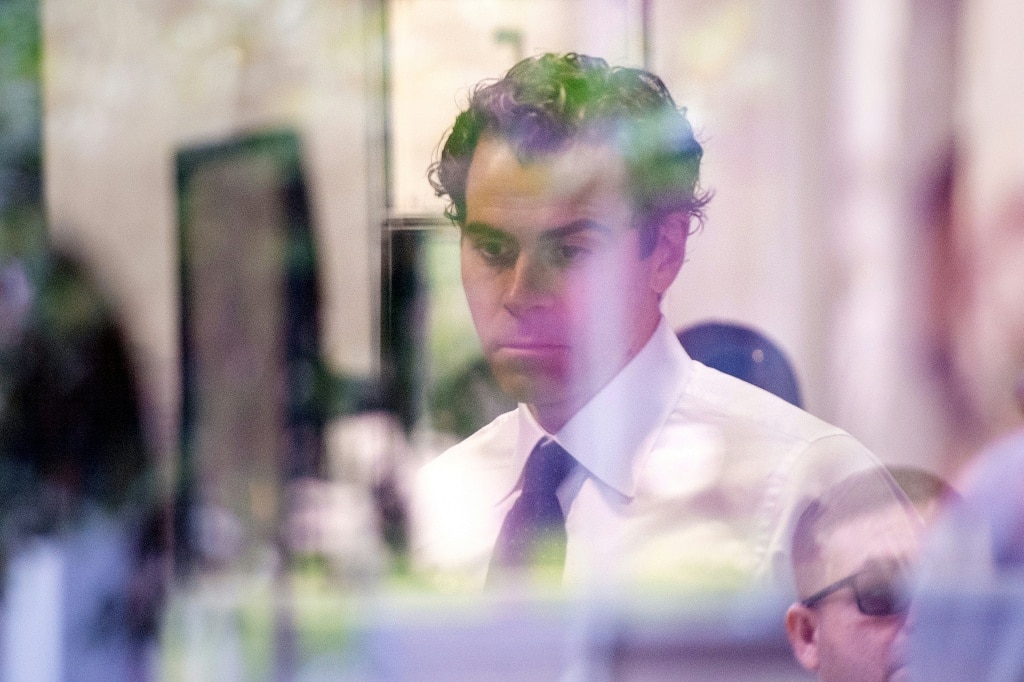
    One of the United Kingdom’s most senior diplomatic figures has stepped down unexpectedly from his key role at the British Embassy in Washington, leaving behind a swirl of unanswered questions about the circumstances of his departure. James Roscoe, who served as deputy to Britain’s ambassador to the United States, has exited his post suddenly, according to statements from the UK Foreign, Commonwealth & Development Office.

    Prior to his unanticipated exit, Roscoe occupied one of the most high-stakes, visible positions in the entire British diplomatic corps. As second-in-command at the Washington embassy, his role placed him at the center of critical UK-US diplomatic engagement at a time of shifting transatlantic relations.

    Notably, Roscoe stepped into the acting ambassador role for multiple months last year following the dismissal of Lord Peter Mandelson. He was widely viewed as a top contender to take on the ambassador position on a permanent basis, though the appointment ultimately went to another veteran diplomat, Sir Christian Turner.

    Throughout his tenure in Washington, Roscoe was central to organizing and executing major diplomatic milestones between the two nations. He played an integral part in planning and executing former U.S. President Donald Trump’s state visit to the UK, as well as coordinating King Charles III’s recent official visit to the United States.

    When pressed for details on the departure, Foreign Office officials declined to provide any formal explanation for Roscoe’s exit, only confirming that he had “left his post.” Spokespeople for the British Embassy in Washington also declined to offer additional comment on the matter. Attempts to reach Roscoe directly for his own perspective have been unsuccessful, leaving the motivation for his sudden departure unconfirmed.

  • Trump’s Greenland envoy faces uphill battle on mission to make ‘friends’

    Trump’s Greenland envoy faces uphill battle on mission to make ‘friends’

    In a highly charged diplomatic development, Jeff Landry, the dual-role Louisiana Governor and special Greenland envoy appointed by former (as of 2026) US President Donald Trump, has touched off widespread controversy after launching his first official visit to the semi-autonomous Danish territory in the Arctic, despite arriving without an official government invitation. The visit comes in the wake of a major international crisis that erupted when Trump publicly threatened to seize Greenland by force over its strategic significance to US national security, placing the Arctic island at the center of a lingering high-stakes dispute between Washington, Copenhagen and Nuuk.

    Upon disembarking from an official US government aircraft in Greenland’s capital Nuuk on Monday, Landry framed his trip as a purely constructive outreach mission. “I’m here simply to build relationships, to look, to listen and to learn,” he told assembled reporters, adding that Trump had personally instructed him to “go over there, and make a bunch of friends.” Landry’s itinerary includes participation in the “Future Greenland” business summit, a meeting with local business and community leaders, and the Thursday opening of a new US consulate building in central Nuuk. He is accompanied by a small delegation, including a US physician who told Danish broadcaster TV2 he had volunteered to evaluate local medical needs — a move Greenlandic Health Minister Anna Wangenheim has already decried as “deeply problematic.” This proposed medical assessment follows a February 2026 announcement from Trump that the US would deploy a hospital ship to Greenland, an offer immediately and flatly rejected by Greenland’s elected leadership.

    Far from the friendly outreach Landry has claimed, the visit has immediately reignited long-simmering anger and distrust among Greenlandic officials and residents, who have repeatedly drawn a hard red line against any US push to acquire the territory. Just hours after Landry’s arrival, Greenlandic Prime Minister Jens-Frederik Nielsen reaffirmed the island’s long-stated position in a press briefing: “We clearly reiterated that the people of Greenland are not for sale and that Greenlanders have the right to self-determination.” While Nielsen acknowledged the Monday meeting between Landry, US Ambassador to Denmark Ken Howery, and his team was conducted in a “good tone,” he stressed no parallel negotiations would proceed while top-level working group talks between the three governments remain ongoing.

    Greenlandic Foreign Minister Mute Egede doubled down on the government’s stance, telling Agence France-Presse that Washington has not abandoned its territorial goals. “We have our red line. The Americans’ starting point has not changed either,” he said. For many ordinary Greenlanders and public figures, the timing of the visit — coming just four months after mass protests in Nuuk against Trump’s territorial claims — is seen as deeply inappropriate. Maliina Abelsen, a Greenlandic businesswoman and former politician who declined Landry’s meeting invitation, argued that the envoy should have waited until tensions cooled significantly. “It’s only four months ago that we felt very threatened by the US, so the timing is not appropriate,” she said, criticizing the visit as an attempt to bypass established diplomatic protocols. Aqqaluk Lynge, an Inuit author and former president of the Inuit Circumpolar Council, noted that the crisis has frayed longstanding positive ties between Greenland and the US. “There is so much distrust now,” he said. “The sad thing is we have had a beautiful relationship with the people in the US, especially with the indigenous people.”

    During comments to reporters at the “Future Greenland” summit on Tuesday, Landry defended the Trump administration’s approach, claiming that prior US governments had completely overlooked the Arctic territory. “Before Donald Trump, the United States was ignoring Greenland,” he said. “When was the last time that any high-level diplomats came to Greenland? Who cares more about Greenlanders than the Trump administration and the president? Because seemingly before the president, no one cared. Greenland didn’t exist, until Donald Trump put it on the map.” When asked directly whether Trump still holds the goal of absorbing Greenland into the US, Landry deflected, telling the BBC: “You’ll have to talk to the president yourself.”

    Rasmus Sinding Søndergaard, a senior researcher of American foreign policy at the Danish Institute of International Studies, characterized Landry’s conciliatory public tone as a deliberate tactical shift from the Trump administration’s earlier open coercion. “I think it’s a change in tactics,” he explained. “The approach now is to try and befriend people, rather than coerce them.”

    The upcoming consulate opening has already become a flashpoint for criticism: the modern central Nuuk high-rise that houses the facility has already been nicknamed “Trump Towers” by local residents, and multiple high-profile Greenlandic politicians have said they will boycott the event. Naaja H. Nathanielsen, a Greenlandic MP and former business minister who will skip the opening, argued that Landry’s underlying mission remains unchanged. “Landry is tasked to help the president acquire Greenland. That is a reason why he’s here to ‘listen’ and visit, and that in itself is, I think, still very serious.”

    To date, the three-nation working group established after Trump walked back his threat of military force has not reached a final resolution to the dispute. While public tensions have eased slightly in recent months, multiple reports have confirmed the US continues to push for expanded military access to the strategically located Arctic territory, leaving the core dispute unresolved and local populations on edge.

  • Taiwan leader says ‘foreign forces’ cannot decide island’s future

    Taiwan leader says ‘foreign forces’ cannot decide island’s future

    In a carefully calibrated address marking the second anniversary of his administration on Wednesday, Taiwan’s leader Lai Ching-te delivered a clear, unwavering message: the democratic island’s future will not be dictated by outside forces, even as cross-Strait tensions and shifting U.S. policy rhetoric create new uncertainty across the Indo-Pacific region.

    Lai’s comments come on the heels of controversial remarks from former U.S. President Donald Trump, who recently floated the idea of using long-standing U.S. arms sales to Taiwan as a negotiating leverage with Beijing during conversations following his state visit to China last week. During that visit, Chinese President Xi Jinping pressed Trump to end all U.S. support for Taipei, a demand that has sent ripples through regional security circles. Beijing has for decades claimed Taiwan as an inalienable part of its territory and has repeatedly threatened to take the island by force if it formally declares independence. For decades, Washington has backed Taipei under the One China policy while providing critical security assistance to help Taiwan deter potential aggression, a framework that is now facing new questions after Trump’s comments.

    In his speech, Lai pushed back against both external interference and internal uncertainty. “Taiwan’s future cannot be decided by foreign forces, nor can it be held hostage by fear, division, or short-term interests,” he stated. Echoing the island’s long-standing framing of cross-Strait tensions, Lai repeated the position that China is the ultimate root cause of regional instability in the Taiwan Strait, and characterized U.S. arms sales as a legitimate, legally grounded commitment to defending the island’s democratic system.

    The Taiwanese leader emphasized that his administration has been ramping up defense outlays with a clear, defensive goal: preventing conflict, not provoking one. “Threats are greater than ever before,” Lai noted, adding that “Taiwan must have the capability to protect itself and to uphold peace and stability in the Taiwan Strait.” While he expressed openness to constructive, equal-footed exchanges with Beijing, Lai drew a firm line on core interests, stressing that “we will not sacrifice our sovereignty and democratic way of life.”

    Since Trump returned to the White House, his administration has pressured Taiwan to significantly increase its own defense spending and expand economic investment in the United States, a shift that has pushed Taipei to accelerate military modernization efforts. Despite billions of dollars poured into upgrading domestic military capabilities and building up a local defense industry, the island still remains heavily dependent on U.S. supplies of advanced, high-technology weaponry that would be indispensable in any conflict with China.

    Just recently, Taiwan’s legislature approved a landmark $25 billion defense spending package earmarked specifically for the procurement of U.S. arms. According to local legislative accounts, the fund will cover nearly $9 billion of the $11.1 billion arms deal Washington announced last December, as well as set aside resources for a second phase of proposed sales worth roughly $15 billion that has not yet received final U.S. approval.

    For his part, Trump has called for both Beijing and Taipei to de-escalate tensions, noting that he will make a final decision on the pending arms sales package “over the next fairly short period of time.” He has also raised the possibility of holding a direct phone call with Lai, a move that would represent a major break from decades of U.S. diplomatic protocol. Washington cut formal diplomatic ties with Taipei in 1979 when it switched recognition to Beijing, and any high-level official contact between a U.S. president and a Taiwanese leader would almost certainly trigger a severe rupture in U.S.-China relations.

    Lai addressed the prospect of this conversation directly on Wednesday, saying that if the call goes forward, he will make clear that his administration remains committed to upholding the cross-Strait status quo, and that it is Beijing that has systematically undermined peace and stability in the region. In the days following Trump’s comments on arms sales, Lai’s government has launched a public outreach effort to reassure both domestic audiences and international partners that long-standing U.S. policy toward Taiwan remains unchanged, and that Trump made no binding commitments to Beijing to restrict arms sales during his Beijing visit.

  • Trump brags his ballroom to be topped by ‘greatest drone empire’

    Trump brags his ballroom to be topped by ‘greatest drone empire’

    Facing sagging approval ratings that have dropped to the lowest point of his second term in recent public polling, former and current U.S. President Donald Trump used a Tuesday press briefing outside the White House to pivot public attention to the ongoing construction of a luxury ballroom on White House grounds, where he highlighted its unexpected integrated military defense features.

    During the exchange with reporters, Trump opened with praise for the planned venue, claiming it will stand as one of the most impressive facilities of its kind once completed. He then centered his remarks on the ballroom’s defensive capabilities, focusing particularly on rooftop drone infrastructure. “On top of the roof, we’re gonna have the greatest drone empire that you’ve ever seen,” Trump told reporters, adding that the system will serve a protective role for the entire city of Washington, D.C.

    When pressed by a reporter to offer more detail on the venue’s hidden security features, Trump expanded on the underground components of the construction project. He described the sub-surface sections as far more technically complex than the above-ground ballroom, noting that unseen lower levels house critically important facilities that the U.S. military seized the rare opportunity to develop. “Because what you don’t see are the floors that are beneath here. And they have very, very important rooms down there, very, the most important. This was the one opportunity for the military to do something,” Trump said.

    Trump added that construction is progressing ahead of the original timeline, and confirmed the venue will feature a fully sealed, drone-proof roof that doubles as a drone port capable of accommodating an unlimited number of unmanned aerial vehicles, a technology he emphasized is increasingly central to modern security operations.

    Beyond the ballroom announcement, Trump doubled down on dismissing widespread public concern over the economic fallout of his unauthorized military conflict with Iran, which has driven U.S. gasoline prices to a national average of $4.53 per gallon as of Tuesday and pushed overall inflation to its highest level since 2023. Framing the higher energy costs as a minor trade-off, Trump told reporters, “This is peanuts… And I appreciate everybody putting up with it for a little while, it won’t be much longer… But I don’t even think about that. What I think about is you can’t let Iran have a nuclear weapon, and they won’t have a nuclear weapon.”

    Notably, there is no verified evidence to support Trump’s claim that Iran was close to developing a nuclear weapon when he launched military operations against the country in late February without the required congressional authorization for war. Just one month prior, U.S. Director of National Intelligence Tulsi Gabbard testified under oath before the Senate Select Committee on Intelligence that Iran’s nuclear weapons program had already been completely destroyed in U.S.-led airstrikes the previous year, and that no efforts to rebuild the country’s uranium enrichment capability had been detected in the time since.

    Trump’s showcase of new defense-related infrastructure also comes just days after an anonymous White House official leaked an unsubstantiated claim to media outlets that Cuba was preparing to launch a drone attack on the U.S. — an allegation that was widely mocked and dismissed by both the Cuban government and independent policy analysts as absurd.

    The president’s Tuesday press briefing followed a major announcement he made Monday on his Truth Social platform, where he revealed he had agreed to delay a planned large-scale military attack on Iran at the formal request of three top Gulf Cooperation Council leaders. In his post, Trump wrote that he had been asked by Qatari Emir Tamim bin Hamad Al Thani, Saudi Crown Prince Mohammed bin Salman Al Saud, and United Arab Emirates President Mohamed bin Zayed Al Nahyan to call off the strike, which had been scheduled for Tuesday, to allow for ongoing diplomatic negotiations to move forward. The leaders have expressed confidence that a negotiated agreement acceptable to both the U.S. and all regional and global stakeholders can be reached, Trump added.

    Highlighting the core non-proliferation demand of the U.S., Trump emphasized in his post that any final deal will include a critical provision barring Iran from ever developing nuclear weapons. He went on to confirm that out of respect for the allied leaders, he has directed Secretary of War Pete Hegseth, Joint Chiefs of Staff Chairman General Daniel Caine, and the entire U.S. military to stand down from the scheduled attack. However, he added that U.S. forces remain on high alert and ready to launch a full-scale offensive against Iran at a moment’s notice if negotiations fail to produce an acceptable agreement.

    Reacting to Trump’s announcement on X (formerly Twitter), Trita Parsi, co-founder and executive vice president of the Quincy Institute for Responsible Statecraft, offered a measured assessment of the development. Parsi concluded that “once again, Trump has realized that escalation will end up badly for the U.S. That does not necessarily mean, though, that the necessary realism, discipline and creativity will be mustered for the talks.”