分类: politics

  • Fury grows over five-year-old’s detention in US immigration crackdown

    Fury grows over five-year-old’s detention in US immigration crackdown

    Minneapolis has become the epicenter of a heated national debate following the controversial detention of a five-year-old asylum seeker during extensive Immigration and Customs Enforcement (ICE) operations. Liam Conejo Ramos and his Ecuadorian father, Adrian Conejo Arias, were apprehended outside their home in Columbia Heights, triggering widespread condemnation and protests across the city.

    According to school superintendent Zena Stenvik, the child was allegedly used as ‘bait’ by federal agents to lure other family members from their residence—an accusation that ICE officials vehemently deny. Instead, Commander Marcos Charles asserted that officers acted to protect the child after his father allegedly fled from authorities, leaving the boy unattended. ‘My officers did everything they could to reunite him with his family,’ Charles stated during a Friday press briefing.

    The incident has ignited fierce political responses. Vice President JD Vance defended the operation, questioning whether agents should have ‘let a five-year-old child freeze to death’ rather than intervene. Conversely, Democratic Congressman Joaquin Castro has demanded the child’s immediate release and condemned the administration’s approach to immigration enforcement.

    Community reaction has been substantial, with hundreds of local businesses closing their doors in protest and organized demonstrations occurring throughout Minneapolis. The anti-Trump organization Indivisible Twin Cities called for a statewide day of action under the motto ‘No work. No school. No shopping,’ culminating in a major march through the city center.

    This case occurs within the broader context of intensified ICE operations in Democratic-led cities and follows the recent fatal shooting of US citizen Renee Good by federal agents on January 7. Minnesota authorities are seeking a temporary restraining order to halt the immigration sweeps, with a federal court hearing scheduled for Monday.

    Former Vice President Kamala Harris joined the chorus of criticism, describing herself as ‘outraged’ by the detention of what she called ‘just a baby.’ The United Nations human rights chief, Volker Turk, additionally urged American officials to cease the ‘dehumanizing portrayal and harmful treatment of migrants and refugees.’

    Legal representatives for the Ramos family maintain that they followed proper asylum procedures in Minneapolis, which holds sanctuary city status limiting police cooperation with federal immigration authorities.

  • Danish PM in Greenland for ‘show of support’ after Trump threats

    Danish PM in Greenland for ‘show of support’ after Trump threats

    A significant diplomatic de-escalation has emerged in the Arctic following a week of heightened tensions between the United States and Denmark over Greenland. Danish Prime Minister Mette Frederiksen traveled to Nuuk, Greenland’s capital, for urgent consultations with local leader Jens-Frederik Nielsen, signaling a shift from confrontation to dialogue.

    The breakthrough came after U.S. President Donald Trump unexpectedly reversed his previous threats of military action and economic sanctions against allied nations. Through social media, Trump announced that a “framework of a future deal” had been established following discussions with NATO Secretary General Mark Rutte at the World Economic Forum in Davos.

    Despite the positive developments, specific details of the agreement remain undisclosed, creating uncertainty about the exact nature of the understanding reached between the American administration and NATO leadership. The diplomatic pivot follows weeks of escalating rhetoric that had brought bilateral relations to a precarious point.

    Prime Minister Frederiksen, who met directly with Rutte in Brussels before proceeding to Greenland, emphasized the seriousness of the situation while striking a cautiously optimistic tone. “Now there is a diplomatic, political track that we will pursue,” she stated, characterizing her visit as essential preparation for determining subsequent actions.

    Controversy emerged when Trump revealed to Fox News that the United States would gain “total access” to Greenland for missile defense components without temporal restrictions, describing the arrangement as cost-free for America. These comments contrasted sharply with earlier reports suggesting discussions about Denmark ceding sovereignty over specific land areas for military installations.

    Both Danish and Greenlandic authorities have consistently maintained that territorial sovereignty represents an absolute “red line” that cannot be compromised. Frederiksen reiterated this position ahead of an emergency European summit, clarifying that while sovereignty remains non-negotiable, Denmark remains open to security cooperation discussions.

    The existing defense architecture, established through a 1951 pact updated in 2004, already permits American military expansion and troop deployments in Greenland. Current reports indicate potential renegotiation of this agreement, though officials emphasize that mineral rights and territorial surrender have never been consideration points.

    With approximately 150 personnel stationed at the Pituffik base in northwestern Greenland, the United States maintains a strategic Arctic presence. Danish Foreign Minister Lars Lokke Rasmussen confirmed that while no detailed plan exists currently, forthcoming negotiations will prioritize security considerations above all other aspects.

  • Why Iran is shooting protesters straight in the eye

    Why Iran is shooting protesters straight in the eye

    Iranian security forces are employing a disturbing tactic of deliberately targeting protesters’ eyes with projectiles and buckshot, according to extensive evidence and historical analysis. This systematic approach to ocular violence represents more than mere police brutality—it constitutes a calculated political strategy rooted in ancient Persian power dynamics.

    Recent protests, including the nationwide Women, Life, Freedom movement in 2022 and demonstrations in late 2025, have seen an alarming frequency of eye injuries. Nobel laureate Shirin Ebadi reported on January 9 that at least 400 people were hospitalized in Tehran alone with firearm-related eye injuries since the beginning of the year’s protests. The victims predominantly include women, youth, students, and even bystanders.

    This practice finds disturbing parallels in Iran’s political history. Ancient Persian culture historically linked vision with power—”I see, therefore I govern”—making blindness synonymous with political disqualification. The Shahnameh (Book of Kings) from the 10th century depicts blinding as narrative marker of political decline, while historical records show Persian rulers like Abbas the Great (1588-1629) and Nader Shah (1736-1747) routinely blinded relatives perceived as political threats.

    The contemporary Islamic Republic continues this symbolic violence through modern means. While authorities deny systematic blinding, the widespread use of so-called “non-lethal” weapons against demonstrators’ eyes serves similar political purposes: neutralizing dissent without killing, preventing documentation of protests, and eliminating the independent gaze that challenges official narratives.

    Women particularly face targeted ocular violence, as their liberated gaze represents a fundamental threat to the regime’s ideological control. The mutilated faces of injured protesters have become powerful symbols of resistance, transforming victims into living evidence of state brutality despite government attempts to conceal violence through internet blackouts.

    This systematic blinding campaign reveals Iran’s profound democratic legitimacy crisis, demonstrating how ancient techniques of political neutralization persist in modern repression tactics. The destroyed eyesight of protesters represents both the regime’s brutality and the resilience of those who continue to challenge its authority.

  • ‘He should apologise’: Anger of veterans and relatives at Trump Nato remarks

    ‘He should apologise’: Anger of veterans and relatives at Trump Nato remarks

    British military veterans and families of fallen soldiers have expressed profound outrage following controversial remarks by former U.S. President Donald Trump regarding NATO allies’ combat roles in Afghanistan. The dispute centers on Trump’s assertion that American allies “stayed a little back, a little off the front lines” during the conflict.

    Andy Reid, a triple-amputee veteran who lost both legs and an arm to a Taliban IED in Helmand Province, has emerged as a leading voice calling for a formal apology. “I remember working with American soldiers in Explosive Ordnance Disposal teams,” Reid stated. “If they were on the front line, and we stood next to them, clearly we were on the front line as well.” He characterized Trump’s comments as “disrespectful, inappropriate and unexpected.”

    The United Kingdom maintained the second-largest military deployment in Afghanistan after the United States, with troop levels peaking at approximately 11,000 in 2011. British forces experienced some of the most intense combat operations in the volatile Helmand region, where they faced a resurgent Taliban and devastating IED attacks that claimed numerous lives.

    Andy Allen, a Northern Ireland assembly member who lost his right leg and suffered severe damage to his left leg in a 2008 IED explosion, confirmed the frontline nature of British operations. “It was the front line in which I was injured, and it was the front line of the battle in Afghanistan,” Allen emphasized, noting that he plans to write to the White House to correct the historical record.

    The controversy has particularly affected families of the 457 British service personnel killed in Afghanistan. Diane Dernie, mother of Britain’s most severely injured surviving soldier Ben Parkinson, described Trump’s statements as “the rantings of a child.” Her son sustained catastrophic injuries when his vehicle struck a mine in Helmand in 2006 while serving from forward operating bases established near combat zones.

    Monica Kershaw, whose 19-year-old son Christopher was killed alongside five other British soldiers when their armored vehicle hit an IED in Helmand, expressed visceral anger: “I think they should put Donald Trump in a uniform and put him on the front line, instead of pushing a pen behind a desk.”

    The NATO alliance had invoked Article 5—the collective defense clause—following the 9/11 attacks, marking the first and only time this provision has been activated. Multiple nations including the UK, Denmark, Estonia, and Canada contributed forces to the Afghan campaign.

    U.S. Navy veteran Shawn VanDiver, who now leads an organization assisting Afghan allies, offered a contrasting perspective to Trump’s remarks: “We see you. We know you were right there with us. We could not have accomplished what we did without them.” Addressing British families who lost loved ones, VanDiver added: “They would likely feel betrayed. What I would say to those families is I’m sorry.”

  • Trump to sue New York Times over unfavourable opinion poll

    Trump to sue New York Times over unfavourable opinion poll

    Former President Donald Trump has escalated his ongoing conflict with mainstream media by announcing impending legal action against The New York Times. The controversy stems from a recently published opinion poll conducted jointly by the newspaper and Siena University, which reported a mere 40% approval rating for the 79-year-old Republican leader.

    Through his Truth Social platform, Trump declared the poll would be incorporated into an existing lawsuit against the publication, accusing the Times of disseminating ‘Radical Left lies and wrongdoing.’ He further intensified his rhetoric by suggesting that ‘fake and fraudulent polling should, virtually, be a criminal offence.’

    This development represents the latest chapter in Trump’s extensive history of legal confrontations with media organizations. Previous targets have included major networks such as CNN, CBS, ABC, and international broadcaster BBC, several of which resulted in multimillion-dollar settlements.

    The current legal battle originated in September 2025 when Trump filed a $15 billion defamation suit against The New York Times, alleging the publication intentionally ran false stories to damage his 2024 presidential campaign and personal reputation. Although initially dismissed by a federal judge, the lawsuit was refiled in amended form the following month.

    The Times/Siena poll, widely regarded as one of America’s most accurate political surveys, indicates significant erosion in Trump’s support base. Particularly concerning for the former president is the apparent dissolution of his 2024 coalition, with young and non-white voters who previously supported him abandoning his camp, leaving primarily older white voters as his core constituency.

    The newspaper defended its reporting practices, characterizing Trump’s legal actions as ‘an attempt to stifle independent reporting’ and ‘intimidation tactics.’ The poll findings align with multiple other surveys showing declining public approval of Trump’s handling of economic issues and his administration’s military-style crackdown on illegal immigration.

  • How Macron’s Davos sunglasses spoke to the politics of friction with Trump

    How Macron’s Davos sunglasses spoke to the politics of friction with Trump

    PARIS (AP) — French President Emmanuel Macron’s distinctive blue-tinted aviator sunglasses became an unexpected centerpiece of global political discourse during the World Economic Forum in Davos, Switzerland. While ostensibly addressing a minor medical condition affecting his right eye, the eyewear transcended its practical purpose to become a multifaceted symbol of political imagecraft, commercial opportunity, and international relations.

    The French-made Henry Jullien Pacific S 01 model (retailing at €659) generated unprecedented market reactions, with shares of parent company iVision Tech SpA surging 74% on Milan’s stock exchange following Macron’s high-profile appearance. CEO Stefano Fulchir described the phenomenon as a ‘crazy week’ of overwhelming demand and media attention, including AI-generated memes parodying the President as a Top Gun fighter pilot.

    Political communication experts noted Macron’s successful navigation of sunglasses etiquette in political contexts. University of Oslo professor Cristina Archetti observed that the 48-year-old leader appeared ‘relatively young and super cool,’ with the photogenic blue lenses complementing his backdrop. The choice contrasted with conventional political imagery while avoiding the detachment typically associated with obscured eyes.

    The sunglasses emerged as a symbolic counterpoint to Donald Trump’s contentious remarks about European relations during the summit. Trump’s public query about ‘those beautiful sunglasses’ highlighted the ongoing diplomatic tensions, while Macron’s fashion statement subtly communicated French manufacturing excellence and cultural sophistication.

    Experts analyzed the deeper semiotics of the aviator style selection over alternatives like eye patches or Wayfarers. Nottingham Trent University’s Marco Bohr noted the specific connotations of ‘pilots, about being in control,’ suggesting intentional image construction. The episode demonstrates how contemporary political communication leverages visual elements alongside verbal discourse in an increasingly mediated global landscape.

  • China, US tackle challenges differently

    China, US tackle challenges differently

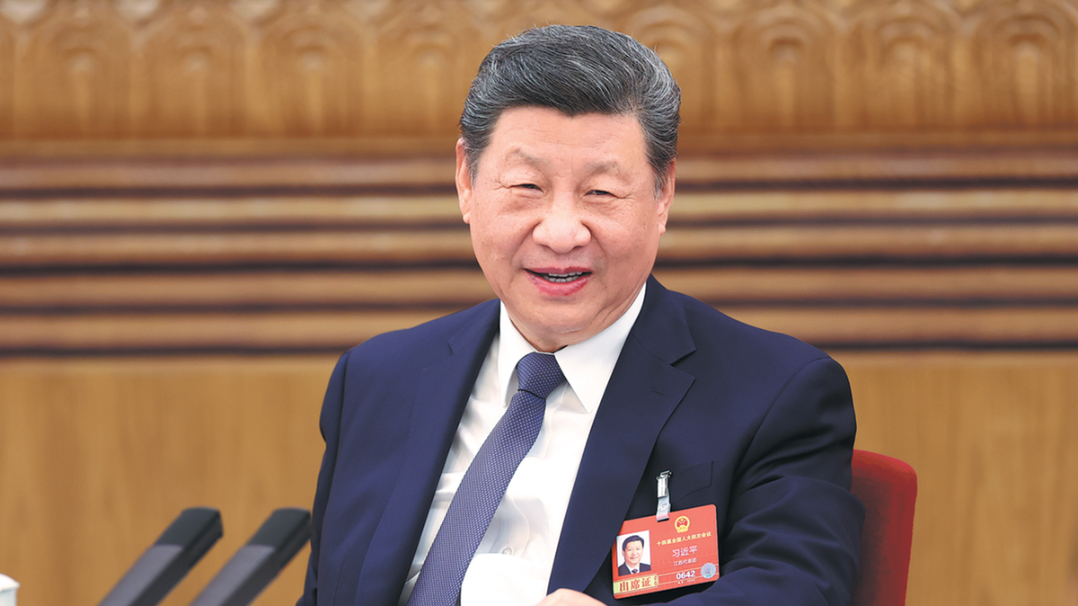
    The 56th World Economic Forum in Davos became a stage for contrasting visions of global leadership as China and the United States presented fundamentally different approaches to international cooperation. Chinese Vice-Premier He Lifeng articulated Beijing’s commitment to multilateralism and inclusive economic globalization, while US President Donald Trump emphasized nationalist priorities and questioned longstanding alliances.

    He Lifeng’s address positioned China as a stabilizing force in global affairs, advocating for cooperative solutions to shared challenges. “The world must not return to the law of the jungle, where the strong will eat the weak,” He stated, directly addressing concerns about rising unilateralism and protectionism. The Chinese delegation emphasized economic interdependence, noting that China had imported over $15 trillion in goods and services during the past five years while generating substantial tax revenue and employment opportunities abroad through overseas investments.

    The vice-premier outlined China’s domestic policy focus on boosting consumption and incomes, explicitly inviting international businesses to access the Chinese market. He further committed to cooperation in technology innovation, artificial intelligence governance, and climate action, reiterating China’s dedication to its carbon neutrality timeline.

    In stark contrast, President Trump’s appearance highlighted America’s reconsideration of traditional alliances. During his hour-long address, the president questioned NATO’s funding structure, criticized European energy policies, and revisited his controversial proposal to acquire Greenland from Denmark for security purposes. Trump asserted that European allies owed the United States for decades of protection, claiming without American intervention, Europeans “would all be speaking German and a little Japanese.”

    European leaders responded cautiously to Trump’s remarks, with French President Emmanuel Macron and European Commission President Ursula von der Leyen both emphasizing the necessity of strategic autonomy and effective multilateralism. Von der Leyen characterized current geopolitical shifts as creating “a necessity to build a new form of European independence.”

    Analysts observing the forum noted that the divergent presentations reflected broader transformations in global power dynamics. McKinsey’s China chairman Joe Ngai observed that China’s consistent messaging at recent Davos meetings positions it as a advocate for stable global order, while the US appears to be reevaluating its traditional international responsibilities.

  • Palestinian parties in Israel agree to revive Joint List ahead of elections

    Palestinian parties in Israel agree to revive Joint List ahead of elections

    In a significant political development, Israel’s four primary Palestinian political factions have reached a groundbreaking agreement to reunite under the Joint List alliance for the upcoming parliamentary elections. The landmark decision emerged Thursday following intense public pressure and widespread protests against escalating gun violence in Palestinian communities.

    The party leaders – Sami Abu Shehadeh (Balad), Ayman Odeh (Hadash), Ahmad Tibi (Ta’al), and Mansour Abbas (Ra’am) – formalized their commitment through the signing of the ‘Joint List Now’ declaration in Sakhnin, where mass demonstrations had been ongoing. This reconciliation marks a pivotal moment in Arab-Israeli politics, resurrecting an alliance that previously dissolved in 2021 when Ra’am departed to pursue independent political partnerships.

    The reunification movement gained momentum amid dual crises: the ongoing Gaza conflict and record-breaking criminal violence within Palestinian communities. According to the Abraham Initiatives NGO, 2025 represented the most lethal year on record for Palestinian citizens of Israel, with 252 fatalities from criminal incidents surpassing 2024’s 230 deaths.

    Current polling indicates a reunited Joint List could emerge as Israel’s third-largest parliamentary bloc if elections occur by October as anticipated. The agreement materialized during coordination meetings addressing expanding protest actions against gun violence and allegations of state complicity in organized crime.

    While a party spokesperson characterized the agreement as somewhat coerced by public pressure, Balad leader Abu Shehadeh celebrated the development as restoring ‘hope and spirit to our people everywhere.’ The signed pledge establishes a framework for renewed cooperation, though specific electoral details remain subject to further negotiation.

  • Trump remarks about Nato troops in Afghanistan are ‘insulting’, says Starmer

    Trump remarks about Nato troops in Afghanistan are ‘insulting’, says Starmer

    British Prime Minister Sir Keir Starmer has characterized former U.S. President Donald Trump’s comments regarding NATO troops in Afghanistan as “insulting and frankly appalling,” triggering widespread condemnation across the United Kingdom’s political spectrum. The controversy emerged following Trump’s Fox News interview where he suggested NATO allies remained “a little off the front lines” during the conflict and questioned their reliability if the U.S. required assistance.

    The remarks have particularly stung British veterans and families of the 457 UK service personnel who lost their lives in Afghanistan, the second-highest casualty rate among coalition forces. Corporal Andy Reid, who lost both legs and his right arm to an IED explosion, countered Trump’s assertions by recalling his direct combat experience alongside American soldiers: “If they were on the front line and I was stood next to them, clearly we were on the front line as well.”

    Diane Dernie, mother of severely injured veteran Ben Parkinson, described Trump’s words as “so insulting” and characterized them as “the rantings of a child trying to deflect from his own actions.” She joined growing calls for Starmer to directly confront the former president with demands for an apology.

    The political response has been notably unified, with Conservative leader Kemi Badenoch calling the comments “a disgrace to denigrate their memory” and Liberal Democrat leader Sir Ed Davey referencing Trump’s five deferments from Vietnam military service. Reform UK’s Nigel Farage, typically a Trump supporter, also broke ranks stating unequivocally that “Donald Trump is wrong” about British military participation.

    The White House has doubled down on Trump’s position, issuing a statement defending his criticism of NATO spending contributions while avoiding direct address of the apology demands. The controversy highlights ongoing tensions within the transatlantic alliance as Trump continues to question traditional military partnerships and European defense commitments.

  • Envoys travel the globe to push a US plan for ending Russia’s war in Ukraine

    Envoys travel the globe to push a US plan for ending Russia’s war in Ukraine

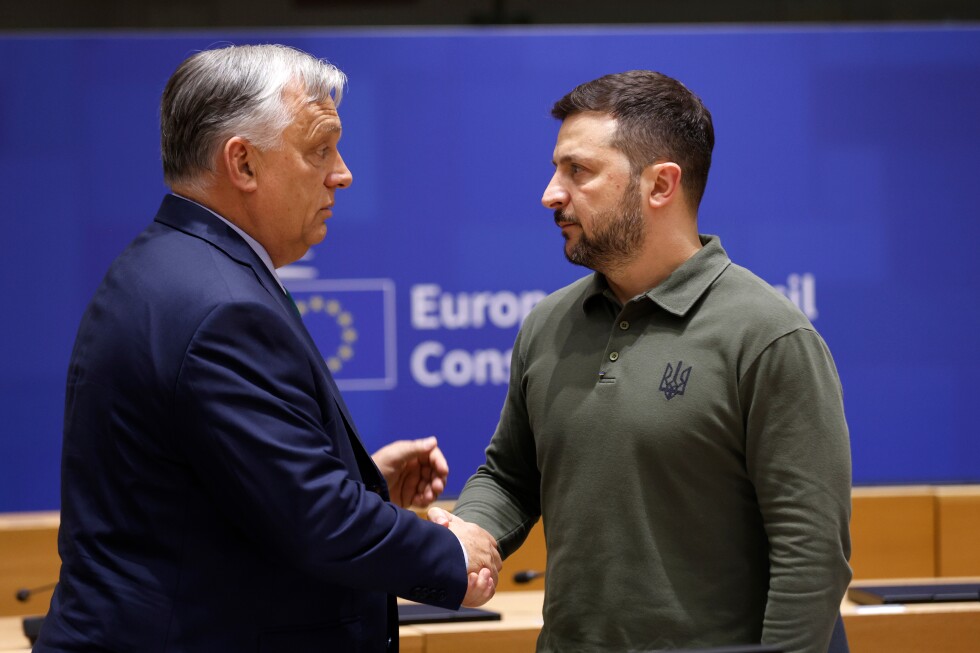
    A concerted diplomatic offensive spearheaded by the United States to terminate Russia’s protracted four-year war in Ukraine has intensified significantly since late 2025 and continues to advance into 2026. This peace initiative has triggered an unprecedented flurry of high-level meetings involving national leaders, seasoned diplomats, and special envoys across multiple global capitals.

    The diplomatic chronology commenced on November 19, 2025, when Ukrainian President Volodymyr Zelenskyy undertook a strategic visit to Turkey, explicitly aiming to reinvigorate stalled negotiations. This was swiftly followed by revelations of a comprehensive 28-point peace framework jointly prepared by American and Russian officials, which immediately drew criticism for its perceived pro-Moscow orientation.

    Subsequent days witnessed U.S. Army Secretary Dan Driscoll’s briefing of Zelenskyy in Kyiv regarding Washington’s proposed settlement terms. On November 23, Secretary of State Marco Rubio conducted productive talks in Geneva with a Ukrainian delegation led by Presidential Chief of Staff Andrii Yermak, though specifics remained confidential.

    The diplomatic dance expanded geographically when Driscoll engaged Russian officials in Abu Dhabi during November 24-25, while November 30 marked Rustem Umerov’s assumption of delegation leadership following Yermak’s resignation amid energy sector corruption allegations, meeting U.S. counterparts in Florida.

    December’s diplomatic calendar featured Zelenskyy briefing French President Macron in Paris, concurrent with a American delegation’s Moscow visit. The month culminated in a five-hour Kremlin meeting between President Putin and key Trump administration figures Jared Kushner and special envoy Witkoff, described as constructive but incomplete.

    January 2026 witnessed intensified negotiations, including a Paris summit where Ukraine’s allies pledged security guarantees against future Russian aggression. Despite renewed attacks on Ukraine’s energy infrastructure, diplomatic efforts persisted through meetings in Davos and additional rounds in Abu Dhabi, marking the first trilateral discussions involving all conflict parties under U.S. administration mediation.