分类: politics

  • Rubio offers Cubans ‘new path’ in special video address

    Rubio offers Cubans ‘new path’ in special video address

    In a pre-announcement video address delivered Wednesday, U.S. Secretary of State Marco Rubio, a second-generation Cuban-American, laid out a purported “new path” for the Cuban people, just hours before the U.S. Department of Justice was scheduled to unseal criminal indictments against former Cuban President Raul Castro.

    Speaking directly to Cuban citizens in Spanish, Rubio launched sharp criticism at Cuba’s ruling communist government, leveling accusations of systemic theft, deep-seated corruption, and widespread political oppression. As the child of Cuban immigrants who built a life in the United States, Rubio framed the proposal as an initiative backed by the Trump administration: “President Donald Trump is offering a new path between the U.S. and a new Cuba, a nation where you will hold the real power to choose your leaders, and vote them out if they fail to deliver for you.”

    Worsening bilateral friction has defined relations between Washington and Havana in recent months, sparked by two key escalations: a U.S.-backed military operation that ousted long-time Cuban ally Nicolas Maduro from Venezuela’s presidency, followed by a sweeping U.S. energy blockade that has compounded already severe economic struggles on the Caribbean island. Trump has repeatedly hinted that the current Cuban government is the next target for regime change, and earlier this month made an extraordinary public statement claiming the U.S. would “take over” the island — located just 90 miles off the coast of Florida — “almost immediately.”

    Per an official English translation of the speech released by the State Department, Rubio emphasized that Washington was prepared to reset relations between the two countries. “In the U.S., we are ready to open a new chapter in the relationship between our people and our countries, and currently, the only thing standing in the way of a better future are those who control your country,” he said.

    Rubio reserved particular criticism for GAESA, the military-linked business conglomerate that analysts estimate controls roughly 40 percent of Cuba’s total economic activity. He described the entity as a “state within the state” that operates with no accountability to the Cuban public, hoarding profits from its vast commercial holdings to benefit a tiny ruling elite while ordinary Cubans bear the cost. Rubio added that the nominal Cuban government’s primary function is to force continued public sacrifice and crack down on any dissenting voices that speak out against the status quo.

    The 94-year-old Raul Castro, who succeeded his older brother Fidel Castro as Cuba’s head of state and oversaw the landmark 2015 normalization of diplomatic relations with Washington under the Obama administration — a deal Trump reversed after taking office — was set to face criminal charges announced by the U.S. Justice Department Wednesday. According to reporting from CBS News, which cited unnamed U.S. officials briefed on the investigation, the pending indictment centers on the 1996 downing of two civilian aircraft flown by anti-Castro activists.

  • Watch: Did Trump and Putin get the same treatment in China?

    Watch: Did Trump and Putin get the same treatment in China?

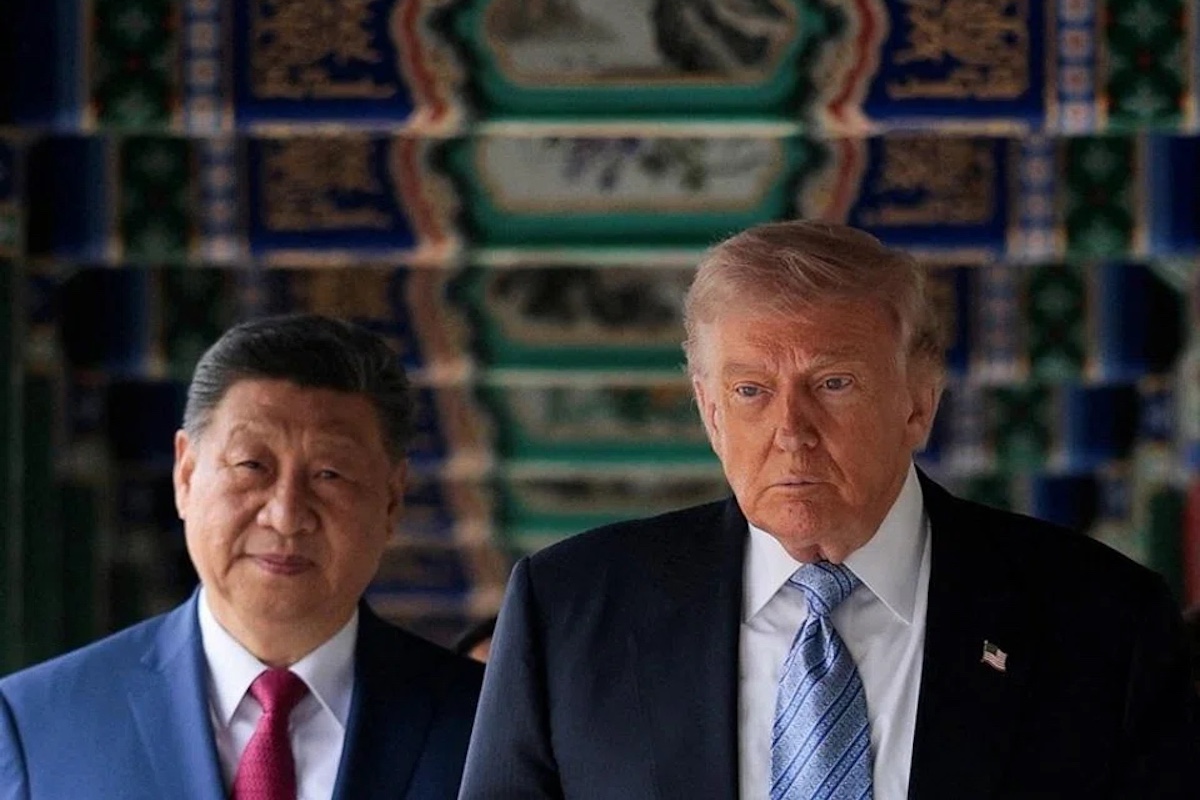
    When it comes to diplomatic protocol, the order of a state visit often follows established, consistent standards that apply equally to leaders from all major nations. Recent observations have highlighted that when Chinese President Xi Jinping welcomed Russian President Vladimir Ping to Beijing, the official welcoming ceremony bore a striking similarity to the one extended to former U.S. President Donald Trump during his visit just one week prior.

    Diplomatic analysts note that this level of uniformity in ceremonial arrangements is not unusual for Beijing’s hosting of foreign heads of state, as the country adheres to strict standardized protocols to ensure equal respect for every visiting leader, regardless of their country’s geopolitical alignment. The identical pageantry includes the same arrangement of honor guards, the same playing of national anthems, and the same formal welcoming process that marks a standard high-level state visit.

    This consistency in diplomatic practice underscores China’s commitment to upholding equal diplomatic treatment for all visiting world leaders, reflecting its long-standing approach to state-to-state interactions based on mutual respect and standardized protocol. Experts point out that such uniform ceremonies are a core part of diplomatic etiquette, designed to avoid any perception of preferential treatment or bias, and to maintain the dignity of all participating nations.

  • Poland welcomes U.S. statements that troop reduction there is temporary

    Poland welcomes U.S. statements that troop reduction there is temporary

    In a development that reshapes current discussions of U.S. military posture across Europe, Polish government leaders confirmed Wednesday that they have accepted Washington’s clarification that the canceled deployment of 4,000 American troops to the Central European nation is only a temporary hold, rather than a permanent drawdown.

    The announcement came after a wave of surprise and unease rippled through Warsaw last week, when officials learned that the 2nd Armored Brigade Combat Team of the U.S. Army’s 1st Cavalry Division — originally scheduled to rotate into Poland, a frontline NATO member sharing a border with war-torn Ukraine — would not arrive as planned. The reaction set off heightened transatlantic tensions, coming on the heels of the Trump administration’s previously announced plan to cut U.S. troop levels stationed in Germany, a decision that already stirred criticism and anxiety on both sides of the Atlantic.

    By Tuesday evening, top U.S. defense officials moved to ease those concerns. Pentagon chief spokesperson Sean Parnell framed the halted deployment to Poland as a “temporary delay,” adding that Warsaw has long served as a “model U.S. ally” within the NATO alliance. Poland currently stands out among NATO members for its defense spending commitment, allocating roughly 4.7% of its national GDP to military outlays in 2025 — the highest proportional share of any alliance member.

    Parnell explained that the delay stems from a broader restructuring of U.S. ground forces in Europe, where the Pentagon is reducing the number of active brigade combat teams from four to three, and is still in the process of finalizing new basing assignments across the continent. U.S. Vice President JD Vance also pushed back against assumptions of a permanent drawdown in Poland, telling reporters Tuesday that “That’s not a reduction. That’s just a standard delay in rotation that sometimes happens in these situations.”

    Top Polish leaders echoed the U.S.’s framing on Wednesday. Prime Minister Donald Tusk said he was pleased to receive “Washington’s declaration that Poland will be treated as it deserves.” Polish Defense Minister Władysław Kosiniak-Kamysz, who held a call with U.S. Defense Secretary Pete Hegseth Tuesday night, noted that the updated U.S. assurances confirm that the overall “U.S. presence is maintained” in Poland. He added that shifting rotational deployments into a permanent U.S. troop presence has long been a Polish priority, and such an outcome would be “always much better.”

    Currently, around 10,000 U.S. troops are based in Poland, the vast majority of whom serve on rotational deployment cycles. Polish officials also confirmed that Warsaw will be included in all upcoming discussions about the ongoing restructuring of U.S. military forces across Europe. To date, U.S. officials have not publicly disclosed how long the deployment delay will last, and Kosiniak-Kamysz said he expects to receive additional clarification on the future U.S. troop footprint in the coming weeks.

    Even as Warsaw accepts the temporary delay, Tusk warned that European nations cannot afford to ignore the clear signal from Washington that the U.S. intends to reduce its long-term military footprint on the continent, and that European states must increase their own defense commitments to fill the gap.

    NATO Secretary-General Mark Rutte backed that assessment Wednesday, noting that alliance members have been aware for roughly a year of the Trump administration’s plan to withdraw some U.S. troops from Europe. Rutte said it is “rightly” expected that European nations and Canada will take on greater responsibility for conventional deterrence and defense across the NATO alliance, particularly in its European theater. While the U.S. “will stay involved” in transatlantic security, Rutte acknowledged that over time, Washington may reorient its military resources to other global hotspots.

    The Trump administration has repeatedly warned European allies in recent months that they must take greater ownership of their own security, including the defense of Ukraine against Russian aggression. The planned drawdown of at least 5,000 U.S. troops from Germany followed public comments from German Chancellor Friedrich Merz, who claimed the U.S. had been “humiliated” by Iran’s leadership and criticized what he called a U.S. “lack of strategy in the war” in the Middle East.

    Associated Press correspondent Lorne Cook contributed reporting from Brussels, Belgium.

  • Xi basks in spotlight as he hosts Putin days after Trump

    Xi basks in spotlight as he hosts Putin days after Trump

    Over the course of just seven days, Beijing rolled out the full red carpet for two consecutive heads of state: first former U.S. President Donald Trump, followed by Russian President Vladimir Putin. Each arrival mirrored the other in ceremonial grandeur: cheering crowds of schoolchildren, full military honor guards, cannon salutes, and marching bands escorting the visiting leaders to the Great Hall of the People. For China’s top leader Xi Jinping, this back-to-back display of high-profile diplomacy was far from a coincidence – it was a deliberate projection of a new global posture: Beijing is open to dialogue with all major powers, and bound to none.

  • US test fires mobile rocket system near Mount Fuji in rapid ‘shoot and scoot’ drill

    US test fires mobile rocket system near Mount Fuji in rapid ‘shoot and scoot’ drill

    GOTEMBA, Japan — In a high-stakes military demonstration focused on bolstering operational readiness in the Indo-Pacific, U.S. Marines carried out a test firing of 12 rockets from a mobile HIMARS launcher Wednesday at a training range tucked into the foothills of Mount Fuji, Japan’s most recognizable natural landmark. The exercise was designed to maintain proficiency with a weapons system that has rapidly grown in strategic importance for the United States military.

    The High Mobility Artillery Rocket System, better known as HIMARS, is a wheeled launcher mounted onto a heavy-duty military truck, engineered for rapid deployment and stealth operations. Its core tactical advantage lies in its ability to be pulled out of hidden cover, unleash its payload, and reposition to an alternative site in minutes to evade enemy counter-battery fire. This “shoot and scoot” strategy has grown even more critical in modern warfare, as the widespread use of reconnaissance drones on battlefields has left stationary artillery positions far more vulnerable to detection and attack.

    U.S. armed forces have already deployed HIMARS in combat operations across Iraq and Afghanistan. Most recently, U.S. Central Command confirmed the system was used in an opening strike against Iranian targets, where it utilized a new precision-guided long-range missile capable of hitting targets hundreds of miles away from its launch position.

    This live-fire exercise carries outsized strategic significance for the U.S. in the Pacific region, where Washington’s top defense priority is deterring a potential Chinese military operation to seize control of Taiwan. China claims the self-governing democratic island as an inalienable part of its territory and has repeatedly refused to rule out the use of force to achieve unification. If HIMARS systems equipped with the latest long-range missiles are deployed on Japanese territory or other nearby allied islands, the system would easily be able to strike targets across the entire Taiwan Strait, according to defense analysts.

    Despite this strategic context, the Camp Fuji exercise only utilized dummy projectiles, as the system is most commonly configured to field shorter-range rockets for standard training operations. Located roughly a two-hour drive from Tokyo, Camp Fuji is a permanent U.S. military training facility in Japan. This test marked only the second time U.S. forces have conducted HIMARS trials at the base, and the drill was planned and executed in close coordination with Japan’s Self-Defense Forces. As a safety precaution, local authorities closed a public roadway that ran between the launch site and the target impact zone for the duration of the exercise.

  • Indonesia tightens state control over exports of vital commodities

    Indonesia tightens state control over exports of vital commodities

    As one of the world’s most critical hubs for globally traded natural resources, Indonesia is embarking on a transformative policy shift that will tighten state oversight over its key commodity exports, mandating that all shipments of palm oil, thermal coal, iron alloys, and related critical minerals be handled exclusively by state-owned enterprises starting later this year.

    Speaking before Indonesia’s parliament on Wednesday, President Prabowo Subianto revealed that the nation has lost an estimated $908 billion in potential revenue over time due to systemic undervaluation of unprocessed and processed commodities sold to international buyers. He framed the widespread practice of underreporting export values to cut tax obligations as outright fraud and deception, arguing that expanded state control will direct billions in additional revenue into public government coffers to fund domestic programs and infrastructure development.

    “The core goal of this new framework is to strengthen oversight and monitoring, while cracking down on three major systemic issues: under-invoicing, abusive transfer pricing, and the illegal diversion of export proceeds,” Prabowo told lawmakers, emphasizing that the policy centers on reclaiming sovereign control over resources that belong to the Indonesian public.

    Indonesia holds an unparalleled position in global commodity markets: it is the world’s top exporter of palm oil and thermal coal, and holds the planet’s largest proven reserves of nickel—a mineral critical to manufacturing electric vehicle batteries and renewable energy storage systems that both China and the United States have actively sought to secure reliable access to. Prior to this new regulation, state-owned enterprises only managed a small fraction of the nation’s exports of these high-value commodities, according to industry analysts.

    Dinita Setyawati, a researcher at Singapore-based energy think tank Ember, noted that centralized state control will strengthen Indonesia’s hand in future bilateral and multilateral negotiations with major global powers competing for access to its resource reserves. She added that the new regulatory framework could also help address decades of unregulated overexploitation that has driven severe environmental degradation across Indonesia’s resource-rich regions—though tangible progress on this front will depend entirely on consistent, transparent implementation.

    “A core question around this policy is one of public trust,” Setyawati explained. “Corruption has long plagued Indonesia’s resource sector, and close oversight will be required to ensure the policy delivers on its promised benefits rather than being captured by special interests.”

    This latest move builds on a series of aggressive resource policy reforms the Indonesian government has rolled out in recent years. Over the past several months, authorities have carried out widespread crackdowns on unlicensed illegal mining operations across the archipelago. Since 200, the government has prioritized building out domestic refining capacity for key commodities including nickel and coal, banning exports of raw nickel ore that year to force international firms to invest in local processing infrastructure.

    Putra Adhiguna, an analyst with the Jakarta-based Energy Shift Institute, called Prabowo’s announcement the most significant step the Indonesian government has ever taken to exert direct, centralized control over the nation’s commodity sector. He explained that the new policy is also timed to address immediate fiscal pressures: increased state revenue from regulated exports will help offset budget shortfalls created by expanded consumer fuel subsidies, which the government implemented to shield households from global energy price spikes linked to ongoing geopolitical conflict in Iran.

    On the same day as Prabowo’s announcement, Indonesia’s central bank enacted a 50 basis point increase to its key benchmark interest rate, lifting it to 5.25% in a move aimed at stemming recent depreciation of the national rupiah currency against major global currencies.

    The transition to the new state-controlled export system will unfold in a phased rollout. From June through August, private commodity firms will transfer all existing import and export transaction responsibilities to approved state-owned enterprises. By September, all cross-border trade transactions between domestic Indonesian producers and international buyers will be managed exclusively by state entities, according to the government’s timeline.

    Prabowo reiterated that the policy is designed to unlock full value for Indonesia from its natural resource endowment. “We will optimize tax revenue, government revenue, and the overall sustainable management of our natural resources,” he said. “We refuse to accept that our nation earns the lowest possible revenue from our own resources simply because we lack the courage to manage what rightfully belongs to the Indonesian people.”

  • Ukraine ally Britain eases sanctions on Russian oil as fuel prices surge over Iran conflict

    Ukraine ally Britain eases sanctions on Russian oil as fuel prices surge over Iran conflict

    LONDON – In an unannounced policy shift aimed at insulating British households from skyrocketing living costs driven by the closure of the Strait of Hormuz, the British government has relaxed key sanctions targeting Russian crude oil, official documents confirm. A new trade authorization that went into force Wednesday explicitly allows imports of Russian-origin oil that has been processed into jet fuel and diesel in third-party countries including India and Turkey, a carve-out not permitted under the original sanctions regime implemented after Russia’s 2022 full-scale invasion of Ukraine.

    The policy change comes amid a global energy market upheaval triggered by Iran’s closure of the Strait of Hormuz, a critical maritime chokepoint that typically carries roughly 20% of the world’s daily oil supplies. The closure, which followed the escalation of U.S.-Israeli military action against Iran, has sent global fuel prices into a sharp upward spiral and stoked widespread fears of imminent jet fuel shortages across Europe, including the U.K.

    U.K. Treasury officials have framed the adjustment as a narrow, temporary measure. “These changes are for a time limited period and on a very specific issue,” said Treasury minister Dan Tomlinson, emphasizing that the government’s broader commitment to harsh sanctions on Moscow remains unchanged. Britain has positioned itself as one of Ukraine’s most steadfast military and political allies since the 2022 invasion, and the government continues to assert that its Russia sanctions are among the strictest enforced by any Western economy.

    But the move has already drawn sharp criticism from cross-party political figures, who warn it will undermine the global pressure campaign to weaken Russia’s war economy. Emily Thornberry, chair of Parliament’s Foreign Affairs Committee, argued that the reversal would leave Ukrainians feeling betrayed. “Ukraine’s allies should keep squeezing Russia’s oil industry, because it is absolutely crippling their economy,” Thornberry said.

    The U.K.’s policy shift aligns with a similar easing of sanctions by the United States, which earlier this week extended a 30-day sanctions exemption that allows U.S. entities to facilitate purchases of Russian oil cargoes already en route by sea. The coordination between the two countries on easing comes even as Western powers publicly reaffirm their commitment to maintaining pressure on Russia. On Tuesday, finance ministers from the Group of Seven wealthy nations, which includes both the U.S. and the U.K., released a joint statement reaffirming “our unwavering commitment to continue to impose severe costs on Russia in response to its continued aggression against Ukraine.”

    The dual messaging – public commitments to harsh sanctions paired with quiet adjustments to soften energy trade rules – underscores the growing tension Western governments face between sustaining their campaign against Russia and avoiding domestic political backlash from surging energy costs for consumers.

  • Trump’s portrait hits New Delhi traffic as US Embassy rolls out ‘Happy Birthday America!’ rickshaws

    Trump’s portrait hits New Delhi traffic as US Embassy rolls out ‘Happy Birthday America!’ rickshaws

    Against the backdrop of roaring, congested traffic in New Delhi, where the rear panels of three-wheeled auto-rickshaws have long served as inexpensive, high-visibility mobile advertising space for local businesses, a surprising new campaign has captured public attention in recent weeks: portraits of former U.S. President Donald Trump greeting commuters across the Indian capital.

    Beneath Trump’s printed image, a bold slogan reads “Happy Birthday America!” marking a little-known public outreach initiative tied to the 250th anniversary of U.S. independence. Roughly 100 auto-rickshaws now carry large graphics pairing Trump’s portrait with the Statue of Liberty, a striking departure from the usual advertisements for obscure fertility clinics, English language courses, and herbal remedies that dominate the city’s three-wheeler ad space.

    The unconventional campaign was formally launched last month by Sergio Gor, the U.S. ambassador to India, as part of a global series of events, cultural programs, and public engagement efforts hosted by the United States to celebrate its 250th year of independence. The U.S. Embassy leaned into the playful, mobile nature of the project in a social media announcement, writing “Freedom is on the move … literally!” and encouraged Delhi residents to seek out the decorated rickshaws, teasing “Catch them if you can — they’ll be popping up all over Delhi soon.”

    This public outreach effort comes as the U.S. works to repair and stabilize bilateral relations with India, which frayed after Trump-era tariff policies imposed new duties on a range of key Indian exports. The diplomatic push will continue this weekend, with U.S. Secretary of State Marco Rubio scheduled to arrive in New Delhi for official talks.

    While the campaign serves a clear diplomatic goal, for most of the auto-rickshaw drivers displaying the posters, the initiative carries little political or symbolic meaning. Ganesh Kumar, one driver hosting the Trump graphic, told reporters he initially turned down organizers’ request to place the poster on his vehicle. “I told them I didn’t want it,” he explained, but changed his mind after organizers offered a small but valuable incentive: a free packet of tea.

    Another driver, Pradeep Kumar, said he agreed to the poster primarily because it covered a torn canopy on his auto-rickshaw, solving a practical problem for him at no cost. When asked what he knew about the content of the advertisement, Pradeep Kumar acknowledged only basic recognition: “I know he is Trump. Don’t know much other than that.”

  • UK loosens Russian oil sanctions as fuel prices rise

    UK loosens Russian oil sanctions as fuel prices rise

    Against a backdrop of soaring fuel prices and growing global energy supply uncertainty triggered by tensions in the Strait of Hormuz, the UK government has rolled back a set of strict sanctions targeting Russian crude refined into diesel and jet fuel in third-party nations. The temporary waiver, which took effect on Wednesday, also rolls back some restrictions on the maritime transportation of Russian liquefied natural gas (LNG), marking a sharp shift from the UK’s long-standing stance as a leader of international economic pressure on Moscow over its full-scale invasion of Ukraine.

    The policy adjustment comes just one day after the UK joined a G7 statement reaffirming its unwavering commitment to imposing severe economic costs on Russia, and just months after London announced plans to fully ban imports of Russian-origin refined oil products processed in third countries. The revised sanctions framework will remain in place indefinitely, with periodic reviews to adjust or revoke the waiver as needed. The temporary LNG transportation licence, by contrast, is time-limited, expiring on January 1 next year.

    Officials frame the move as a targeted, necessary adjustment to protect domestic energy security amid growing supply disruptions tied to the Israel-Iran conflict that has choked the critical Strait of Hormuz shipping lane. “This small and specific change is designed to protect the security of supply for foundational goods that our economy depends on, like jet fuel,” Treasury minister Dan Tomlinson told BBC Breakfast. “We remain fully committed to supporting Ukraine, but we have to make sensible decisions for British families struggling with the cost of living crisis.”

    The change will effectively reopen UK markets to jet fuel refined in major processing hubs like India and Turkey, both of which import large volumes of Russian crude for refining. Supply disruptions have sent global jet fuel prices soaring: prices more than doubled immediately after the outbreak of the latest Middle East conflict, and remain 50 percent higher than pre-crisis levels. Domestically, UK petrol prices hit a new post-2022 war high of 158.52 pence per litre for unleaded fuel as of Monday, according to motoring organisation the RAC, and multiple international airlines have been forced to cancel flights and raise ticket prices to offset sky-high jet fuel costs.

    But the policy shift has drawn fierce criticism from across the political spectrum and from international allies. Opposition foreign affairs committee chair Dame Emily Thornberry said Ukrainian officials had expressed deep disappointment with the move overnight, noting that Ukraine has long looked to the UK as one of its most steadfast allies. “Just because other countries are making the wrong choice does not mean we have to follow them,” Thornberry said, pushing back on the argument that the UK was aligning with existing policy changes from the US and Spain. Even senior Conservative leader Kemi Badenoch condemned the move, pointing out that “after 18 months of standing up to Putin, the government has quietly issued a licence allowing imports of Russian refined oil” – a contradiction, she argued, after the recent parliamentary vote against new domestic North Sea oil and gas drilling that leaves the UK importing Russian energy instead of producing it at home.

    Energy experts have also questioned the necessity and impact of the waiver. Robin Mills, chief executive of Dubai-based energy consultancy Qamar Energy, told the BBC that the adjustment is unlikely to bring down domestic fuel prices and sends a damaging message that Western sanctions on Russia can be eroded by regional crises. “There was never any real prospect of a physical jet fuel shortage in the UK,” Mills argued. “This measure is unnecessary, it won’t lower prices, and it undermines the entire sanctions framework.”

    The UK’s move follows a similar adjustment from the United States, which extended a waiver first introduced in March that allows trade in Russian oil already loaded onto vessels at sea. US officials have framed that policy as a short-term measure to keep global energy markets stable, but it has drawn widespread pushback from European allies. French President Emmanuel Macron has explicitly stated that the Strait of Hormuz tensions do not justify rolling back sanctions on Russia, while Ukrainian President Volodymyr Zelensky has repeatedly emphasized that “every dollar paid for Russian oil is money for the war.”

    UK officials have pushed back against criticism, stressing that the overall sanctions regime against Russia has actually been tightened in recent weeks. A government spokesperson noted that the UK has introduced a new wave of restrictions, including bans on Russian uranium trade and new maritime service restrictions that will progressively cut off Russian LNG from UK shipping and insurance services. “Our support for Ukraine is unwavering,” the spokesperson said. “These additional sanctions will further cut Russian revenues and degrade its ability to wage Putin’s illegal war.”

  • Nigeria arrests former minister in hiding after corruption conviction

    Nigeria arrests former minister in hiding after corruption conviction

    Nigeria’s top anti-graft body has apprehended a former federal power minister more than a week after a court handed down a substantial 75-year prison sentence for his role in diverting public funds earmarked for critical energy infrastructure, in a rare high-profile win for the West African country’s embattled fight against institutional corruption.

    The Economic and Financial Crimes Commission (EFCC) confirmed that Saleh Mamman, who held the power minister portfolio from 2019 to 2021 under former President Muhammadu Buhari, was taken into custody in the early hours of Tuesday in northern Nigeria’s Kaduna State. The arrest followed weeks of coordinated surveillance and intelligence work by the agency’s operatives, after Mamman evaded authorities by going into hiding immediately following his conviction at an Abuja court earlier this month.

    Mamman was tried in absentia after he failed to appear for his ruling, and was found guilty on 12 separate criminal charges connected to the siphoning of billions of naira allocated for two major hydroelectric power projects. Presiding judge established that prosecutors had successfully proven the charges beyond a reasonable doubt, documenting that Mamman and his network of associates used shell proxy companies to divert at least 22 billion naira, equal to roughly $14 million or £10 million, from the public infrastructure projects. The judge labeled the misappropriation a gross violation of the public trust placed in the former minister, noting that the stolen funds were intended to expand and improve Nigeria’s chronically unreliable electricity grid.

    In a public statement following the arrest, EFCC Chairman Ola Olukoyede reaffirmed the agency’s commitment to ensuring the convicted former official serves out his full sentence. The multiple charges carried individual prison terms that are set to run consecutively, adding up to a total 75-year custodial sentence. “For us, getting the convict to serve his jail terms is extremely important in view of the seriousness with which we are tackling corrupt practices,” Olukoyede said.

    The arrest marks an unusual example of follow-through in Nigeria’s campaign against high-level public corruption, where convictions of senior government officials remain extremely uncommon. Mamman also faces a separate ongoing corruption trial in Abuja centered on allegations of fraud involving an additional 31 billion naira, and an arrest warrant was already issued for him in that case earlier this month after he failed to appear for hearings.

    Mamman’s conviction and arrest have reignited public anger over Nigeria’s persistent electricity crisis, a issue that the former minister had pledged to resolve during his time in office. Despite holding status as one of Africa’s largest energy producers, Nigeria continues to grapple with widespread, frequent blackouts that disrupt daily life for residential users and cripple business operations across the country. Millions of Nigerians rely on expensive private fuel generators to meet their power needs, a burden that has grown heavier in recent years amid skyrocketing global fuel prices.

    This report was originally sourced from BBC Africa coverage of Nigerian affairs.