分类: politics

  • Iran wants to make deal rather than face military action, Trump says

    Iran wants to make deal rather than face military action, Trump says

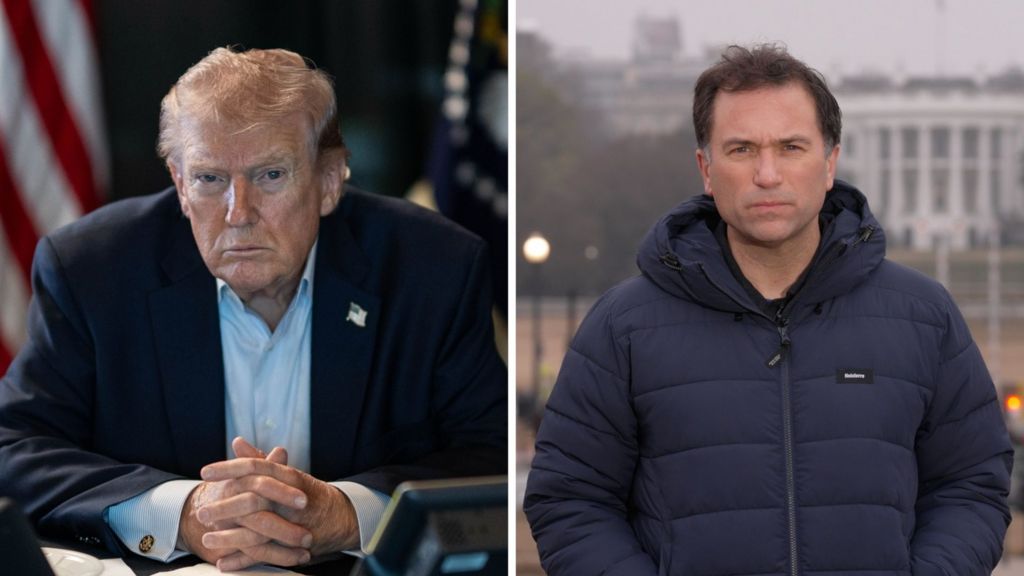
    In a tense geopolitical standoff, U.S. President Donald Trump has declared that Iran ultimately desires a negotiated settlement to avoid potential U.S. military action. This assertion, made during a White House press briefing on Friday, directly contradicts Tehran’s firm position that its missile defense systems are “never” to be included in any negotiations.

    When questioned about the significant buildup of U.S. naval forces in the Persian Gulf, President Trump stated, “I can say this, they do want to make a deal,” though he provided no specific evidence or details to support this claim. This follows his Wednesday warning to Iranian leadership that time is “running out” to reach a new agreement concerning its nuclear program, a threat underscored by the deployment of a major naval armada to regional waters.

    The Iranian government maintains a starkly different public stance. Foreign Minister Abbas Araghchi reiterated that the country’s missile systems are non-negotiable and repeated official assertions that Iran’s nuclear ambitions are purely peaceful. He did, however, leave the door open for talks predicated on “mutual respect” and trust, while noting no current discussions are scheduled with American officials.

    Amidst this diplomatic friction, Iran’s top security official, Ali Larijani, met with Russian President Vladimir Putin in Moscow. The Kremlin confirmed the meeting, stating the leaders discussed pressing “Middle Eastern and international issues,” signaling Russia’s continued engagement in the regional power dynamic.

    President Trump explicitly outlined two primary conditions for Iran to avoid a military confrontation: complete abandonment of its nuclear weapons ambitions and an immediate cessation of violence against domestic protesters. This comes in the wake of widespread anti-government demonstrations that began in late December, which have been met with a severe crackdown. Independent monitoring groups, including the U.S.-based HRANA, report a confirmed death toll exceeding 6,300, with the Norway-based Iran Human Rights organization warning the final figure could surpass 25,000 casualties.

    Refusing to commit to a withdrawal timeline for the U.S. fleet, President Trump remarked with characteristic ambiguity, “We’ll see how it all works out. They have to float someplace, so they might as well float near Iran,” keeping military pressure as a central component of his negotiation strategy.

  • Iran will not negotiate under threat: Iranian FM

    Iran will not negotiate under threat: Iranian FM

    Iranian Foreign Minister Seyed Abbas Araghchi delivered a firm stance on diplomatic engagement during his appearance in Istanbul on Friday, asserting that while Tehran remains open to dialogue, it will not enter negotiations while facing external threats.

    Addressing international relations in the region, Araghchi clarified Iran’s position: “The Islamic Republic has no inherent objection to diplomatic discussions and actively seeks peaceful resolution through dialogue. However, the foundation of any meaningful negotiation must be built on mutual respect and sovereign equality, not under the shadow of ultimatums or coercive measures.”

    The minister’s remarks come amid ongoing regional tensions and reflect Tehran’s consistent foreign policy approach that prioritizes national dignity in international dealings. Araphchi’s statement reinforces Iran’s long-standing position that productive diplomacy cannot occur when one party attempts to dictate terms through pressure tactics.

    This declaration from a senior Iranian diplomat signals the country’s continued resistance to what it perceives as Western attempts to force concessions through economic and political pressure. The Istanbul appearance provided a significant platform for Iran to communicate its diplomatic red lines to the international community.

    The foreign minister’s comments arrive at a time of complex geopolitical dynamics in the Middle East, where multiple nations are navigating delicate power balances and alliance structures. Iran’s insistence on threat-free negotiations establishes clear parameters for any future diplomatic engagements with Western powers.

  • Turkey FM calls on US, Iran to come to negotiating table, says talks are ‘vital’

    Turkey FM calls on US, Iran to come to negotiating table, says talks are ‘vital’

    Turkish Foreign Minister Hakan Fidan has issued a compelling appeal for renewed diplomatic engagement between the United States and Iran during a high-level meeting with Iranian counterpart Abbas Araqchi in Istanbul on Friday. The top diplomat emphasized the critical importance of restarting nuclear negotiations between the two nations to alleviate mounting regional tensions.

    Fidan articulated Turkey’s firm opposition to foreign intervention in Iran while specifically addressing concerns about potential military action. The minister revealed intelligence indicating Israeli efforts to persuade Washington to launch strikes against Iranian facilities, warning that such actions would inflict ‘great harm’ on an already fragile region.

    ‘We observe Israel actively lobbying the US administration to authorize military operations against Iran,’ Fidan stated during a joint press conference. ‘We strongly hope American leadership will exercise prudent judgment and prevent this dangerous escalation from materializing.’

    The diplomatic intervention comes amid heightened tensions in the Middle East, with Turkey positioning itself as a regional mediator advocating for peaceful conflict resolution. Fidan’s remarks underscore Ankara’s strategic interest in stabilizing the region and preventing further military confrontations that could disrupt regional security and economic stability.

    This development follows recent cross-border attacks between Iran and Israel, and increasing international concern about Iran’s nuclear program. Turkey’s mediation attempt represents a significant diplomatic initiative to bridge the gap between the longstanding adversaries through dialogue rather than military action.

  • What military assets does the US have in the Middle East?

    What military assets does the US have in the Middle East?

    The United States is significantly enhancing its military posture across the Middle East as diplomatic rhetoric intensifies between Washington and Tehran. Recent declarations from the Trump administration regarding a ‘massive armada’ movement toward Iranian waters have catalyzed preparations for potential regional conflict.

    According to defense analyses, approximately 40,000 American troops are currently stationed throughout the region, distributed across at least 19 military installations. The strategic al-Udeid Air Base in Qatar serves as the tactical headquarters for US Central Command (Centcom), hosting nearly 10,000 personnel and extensive aerial assets. Bahrain maintains the US Navy’s Fifth Fleet headquarters with 9,000 troops, while Kuwait stations around 13,500 soldiers across multiple facilities including Camp Arifjan and Ali al-Salem Air Base.

    The naval reinforcement centerpiece involves the nuclear-powered USS Abraham Lincoln carrier strike group, which has redirected from the South China Sea to the Arabian Sea. This formidable force includes Arleigh Burke-class destroyers equipped with Tomahawk cruise missiles capable of reaching deep into Iranian territory, accompanied by 5,680 crew members and multiple aircraft squadrons.

    Electronic warfare capabilities are being augmented with the deployment of RC-135W Rivet Joint surveillance aircraft to Qatar and EA-18G Growler jets transiting toward the region. Additional reinforcements include F-15 fighter squadrons at Jordan’s Muwaffaq Salti Air Base and anticipated THAAD missile defense systems.

    Regional allies exhibit cautious positioning, with both the UAE and Saudi Arabia publicly refusing permission for their territories to be used for offensive operations against Iran. Qatar, Oman, and Turkey have similarly advocated against military action, reflecting concerns about potential retaliatory measures. Iranian-aligned groups including Yemen’s Houthis and Iraqi paramilitaries have threatened counterstrikes against US bases should hostilities escalate.

    The complex geopolitical landscape underscores the delicate balance of power, where military preparedness intersects with diplomatic maneuvering across one of the world’s most volatile regions.

  • Civil rights investigation opened into Alex Pretti shooting

    Civil rights investigation opened into Alex Pretti shooting

    The U.S. Department of Justice has initiated a civil rights investigation into the fatal shooting of Alex Pretti, a 37-year-old intensive care nurse, by federal immigration agents in Minneapolis. Deputy Attorney General Todd Blanche characterized the move as a standard procedural response to such incidents, though he emphasized the investigation would thoroughly examine all circumstances surrounding the shooting.

    The Federal Bureau of Investigation will lead the probe with support from the DOJ’s Civil Rights Division, according to Department of Homeland Security officials. This development follows the earlier handling of the case by Homeland Security Investigations within Immigration and Customs Enforcement (ICE).

    Pretti, a U.S. citizen working at the Minneapolis Veterans Affairs hospital, was killed during an altercation with federal officers. A preliminary DHS report submitted to Congress indicates that two officers discharged their weapons during the confrontation, contradicting initial accounts that alleged Pretti had brandished a firearm.

    The shooting occurred just weeks after another fatal incident in Minneapolis on January 7, when Renee Good was shot dead by an ICE agent. Both deaths have ignited widespread protests across Minnesota and drawn bipartisan criticism from lawmakers. Minnesota Governor Tim Walz and Minneapolis Mayor Jacob Frey have jointly called for the complete withdrawal of federal agents from the state’s capital region.

    In response to the escalating tensions, the state has petitioned a federal judge to halt Operation Metro Surge, a DHS immigration enforcement initiative involving approximately 3,000 officers that commenced on December 1.

    The Trump administration has signaled potential de-escalation, with President Trump stating his administration would ‘de-escalate a little bit’ in Minnesota. Border policy advisor Tom Homan clarified that any drawdown of federal forces would be contingent on cooperation from local officials, emphasizing that the administration was ‘not surrendering our mission at all, we’re just doing it smarter.’

    Two agents involved in Pretti’s shooting have been placed on administrative leave pending investigation, according to U.S. Customs and Border Protection.

  • Iran says Europe to ‘suffer consequences of foolish act’ after Guards terror listing

    Iran says Europe to ‘suffer consequences of foolish act’ after Guards terror listing

    Iran’s judiciary chief Gholamhossein Mohseni Ejei issued a stark warning to European nations on Friday, declaring that the European Union would face significant repercussions for its decision to designate the Islamic Revolutionary Guard Corps (IRGC) as a terrorist organization. The strongly worded statement, broadcast through Iranian state television, characterized the EU’s action as a “hostile measure” that would not remain unanswered.

    Ejei asserted that European countries would ultimately “suffer the consequences of their foolish act,” though he provided no specific details regarding the nature or timing of Iran’s planned response. The declaration represents the first official Iranian reaction to the EU’s landmark decision, which marks a significant escalation in tensions between Iran and Western powers.

    The Islamic Revolutionary Guard Corps, established following the 1979 Islamic Revolution, serves as a critical military, political, and economic force within Iran’s power structure. The organization maintains substantial influence over Iran’s security apparatus and controls strategic economic sectors through its extensive network of affiliated enterprises.

    This development occurs against a backdrop of deteriorating relations between Iran and European nations, particularly concerning Iran’s nuclear program, regional activities, and military cooperation with Russia. The EU’s designation follows years of diplomatic pressure and represents one of the most severe international actions taken against Iran’s military establishment.

    Analysts suggest that Iran’s response could manifest through various channels, including potential escalations in regional proxy conflicts, adjustments to nuclear negotiation stances, or economic countermeasures targeting European interests. The situation underscores the continuing deterioration of EU-Iran relations and raises concerns about further destabilization in an already volatile region.

  • Labour peer who had sanctions lifted by China says it’s ‘meagre return’ for UK

    Labour peer who had sanctions lifted by China says it’s ‘meagre return’ for UK

    In a significant diplomatic development during Prime Minister Sir Keir Starmer’s landmark visit to Beijing, China has removed sanctions against seven British parliamentarians previously blacklisted for their criticism of China’s human rights record. The move marks the first prime ministerial visit to China since 2018 and represents an attempt to reset strained UK-China relations.

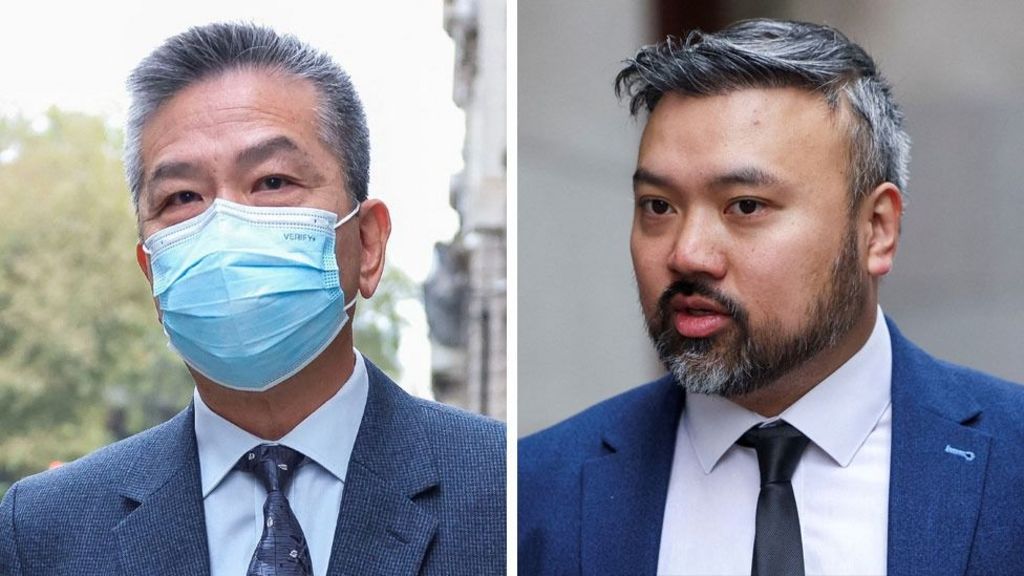
    Among those removed from the sanctions list is Baroness Helena Kennedy KC, a Labour peer who characterized the development as a “meagre return” on the diplomatic mission. While acknowledging the concession, Kennedy emphasized that securing the release of British citizen and media tycoon Jimmy Lai—currently imprisoned in Hong Kong under controversial national security laws—would have represented a more meaningful outcome.

    The sanctioned parliamentarians, including four sitting Conservative MPs and crossbencher Lord Alton, were originally penalized in 2021 for their vocal criticism of China’s treatment of Uyghur minorities through their association with the Inter-Parliamentary Alliance on China. The group has since criticized what they term the “selective lifting of sanctions,” maintaining that they will “take no comfort” in the decision while Lai remains imprisoned and Uyghur concerns persist.

    Prime Minister Starmer confirmed to BBC that he raised both the Lai case and Uyghur treatment during discussions with President Xi Jinping “as you would expect.” The visit yielded additional agreements, including a commitment to halve import taxes on British whisky effective next week, though details on visa-free travel arrangements for British citizens visiting China remain unresolved.

    The diplomatic reset has faced criticism from multiple quarters. Former security minister Tom Tugendhat, despite being among those removed from the sanctions list, characterized the deal as “frankly extraordinary and unbelievably bad” for Britain’s global standing. Liberal Democrat MP Wera Hobhouse, who was previously denied entry to Hong Kong under circumstances she believes were intended to silence criticism, questioned the authenticity of a reset that ignores “the existence of secret bans.”

    The UK government confirmed it has not reciprocated by lifting sanctions on any Chinese individuals, maintaining its position on human rights concerns even as it seeks to rebuild diplomatic and trade relations with Beijing.

  • ‘We can offer hope’: Greens’ Hannah Spencer on tackling Reform in crucial by-election

    ‘We can offer hope’: Greens’ Hannah Spencer on tackling Reform in crucial by-election

    A pivotal by-election in Greater Manchester’s Gorton and Denton constituency is shaping up as a dramatic ideological contest between environmentalists and right-wing populists. The Green Party has officially nominated local councillor Hannah Spencer as their candidate, setting the stage for a direct confrontation with Reform UK’s controversial nominee, GB News presenter Matt Goodwin.

    The political showdown gained intensity when Labour’s leadership blocked Greater Manchester Mayor Andy Burnham—a perceived potential challenger to Prime Minister Keir Starmer—from contesting the seat. This development has effectively transformed the election into a two-way battle between emerging political forces.

    Hannah Spencer, 34, brings a distinctly local perspective to the race. A lifelong Greater Manchester resident, she serves as the Green Party leader on Trafford Council and works professionally as a plumber while training to become a plasterer. Her political awakening occurred post-pandemic, driven by frustration with growing wealth inequality and underrepresentation of working-class voices in Parliament.

    In sharp contrast stands her opponent Matt Goodwin, a 44-year-old former academic from St Albans who has built a career studying and writing about national populism. The GB News personality has generated considerable controversy through his statements on ethnicity, Islam, and British identity, including assertions that millions of British Muslims hold values ‘fundamentally opposed to British ways of life.’

    Green Party leader Zack Polanski has publicly condemned Goodwin’s record as demonstrating ‘anti-Muslim bigotry,’ pointing to his controversial social media posts questioning what constitutes British identity. These comments carry particular significance in Gorton and Denton, where 44% of residents belong to ethnic minorities and 79% identify as British.

    Spencer framed the election as a referendum on divisive politics: ‘This is a chance for people to reject the usual stuff from the same old parties. We need to show that Reform only care about protecting their own interests and fuelling division, blaming migrants and Muslims.’

    Beyond its local significance, political analysts are watching the by-election as a critical test for both Reform UK’s electoral viability and the Green Party’s ability to breakthrough in traditional Labour strongholds. The outcome may signal shifting political allegiances in post-industrial Northern constituencies and potentially reshape Britain’s political landscape.

  • Mali lawmaker jailed in Ivory Coast for insulting president

    Mali lawmaker jailed in Ivory Coast for insulting president

    In a case highlighting ongoing diplomatic tensions between West African neighbors, Malian transitional parliament member Mamadou Hawa Gassama has been sentenced to three years imprisonment in Ivory Coast for publicly insulting Ivorian President Alassane Ouattara. The controversial verdict was delivered after prosecutors successfully argued that Gassama’s characterization of the 84-year-old leader as a “tyrant” and “enemy of Mali” during media interviews and social media posts constituted deliberate institutional undermining rather than legitimate political criticism.

    Gassama, known for his outspoken political stance, was arrested during a July visit to Abidjan while serving in Mali’s junta-established transitional government. His legal representative, Mamadou Ismaila Konate, condemned the sentencing as “excessive and severe” in statements to AFP, highlighting the disproportionate nature of the punishment.

    The case occurs against a backdrop of deteriorating relations between the two nations since Mali’s 2020 military coup. President Ouattara, maintaining close ties with former colonial power France, has been consistently critical of military takeovers throughout West Africa. Notably, Malian authorities have maintained official silence regarding Gassama’s detention and subsequent sentencing.

    This diplomatic friction echoes earlier tensions when Mali sentenced 49 Ivorian soldiers to 20 years imprisonment for alleged state security violations in 2022—an incident that Ivory Coast claimed involved personnel deployed as part of a United Nations peacekeeping mission against Islamist militants. Those soldiers were eventually released through Togolese mediation efforts.

    Concurrently, Mali’s military leadership has pursued significant foreign policy shifts, overseeing the withdrawal of UN peacekeeping forces and French military units that had been combating jihadist insurgencies since 2013. In their place, Malian authorities have strengthened security cooperation with Russia, engaging Russian mercenary groups to address persistent instability throughout the Sahel region.

  • Syrian government and SDF agree ceasefire and integration deal

    Syrian government and SDF agree ceasefire and integration deal

    In a landmark development for Syria’s protracted conflict, the Damascus government and the Syrian Democratic Forces (SDF) have finalized a comprehensive ceasefire agreement culminating in military and administrative integration. This resolution follows intense weeks of hostilities that significantly diminished the SDF’s territorial control.

    The accord mandates the deployment of Syrian interior ministry security forces to urban centers in Hasakah and Qamishli, northeastern cities presently under Kurdish-led administration. This strategic arrangement addresses immediate security concerns while facilitating administrative harmonization.

    The conflict’s recent phase has substantially reversed territorial gains made by the SDF since Syria’s civil war erupted in 2011, now largely constraining the group to Kurdish-majority regions. A central component of the integration plan involves establishing three new Syrian army brigades from existing SDF formations.

    The SDF, originally constituted in 2015 from primarily Kurdish People’s Protection Units (YPG) and allied Arab militias, played a pivotal role in combating Islamic State with substantial U.S. military support. However, the coalition’s aspirations for autonomous regional governance have been effectively neutralized through combined military pressure from Syrian government forces and shifting U.S. foreign policy priorities.

    The current Syrian administration, established following the overthrow of Bashar al-Assad in December 2024, has consistently opposed any devolution of power from Damascus. This agreement reinforces their centralization strategy while accommodating certain regional security realities. Complicating the dynamic, Turkey—a key government ally—maintains its designation of the YPG as inextricably linked to the Kurdistan Workers’ Party (PKK), which has waged an autonomy campaign against Turkish authorities since 1984.