分类: politics

  • Young leaders stress need to strengthen Sino-US ties

    Young leaders stress need to strengthen Sino-US ties

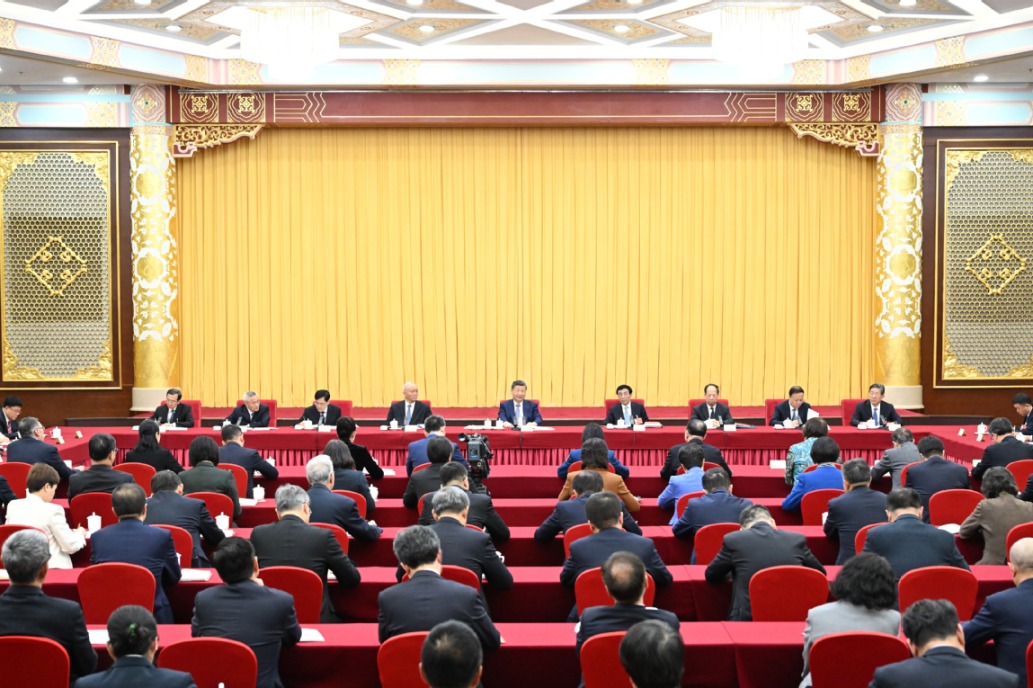
    A new generation of leadership advocates for reinvigorated Sino-American relations through sustained engagement and collaborative action. During a recent symposium at Beijing’s Tsinghua University, emerging leaders from both nations emphasized the critical importance of face-to-face diplomacy in an era of increasing technological mediation.

    The dialogue brought together students from Harvard University, New York University, Peking University, and Tsinghua University to address pressing global challenges. Discussion panels focused on science and technology innovation, social governance frameworks, and sustainable development strategies, creating a platform for cross-cultural problem-solving.

    This event forms part of President Xi Jinping’s ambitious “50,000 in Five Years” initiative, designed to facilitate educational exchange by bringing 50,000 young Americans to China. The program represents a significant investment in track-two diplomacy, recognizing youth engagement as fundamental to navigating complex bilateral challenges.

    Zhao Xiuye, a Tsinghua PhD candidate with extensive experience in both countries, highlighted the transformative power of personal connection. “Our happiness and sorrows do connect,” he noted, recalling shared experiences during the Beijing 2008 Olympics and US presidential campaigns. “There’s far more that we share than that differentiates us.”

    Harvard Business School student Lily Bailey emphasized the potential of “subnational collaboration” between US states, cities, and universities with their Chinese counterparts. “We are a federal society,” she stated. “There are many people and companies excited and interested in continuing cooperation.”

    University and government officials expressed strong support for these efforts. Tsinghua Vice-President Bai Benfeng invoked both Chinese philosophical tradition and Western poetry to express optimism about future relations, while Education Vice-Minister Ren Youqun reported that 45,000 young Americans have already visited over 200 Chinese cities, fostering substantial people-to-people connections.

  • A US warship is making a friendship visit to a Cambodian naval base upgraded with China’s help

    A US warship is making a friendship visit to a Cambodian naval base upgraded with China’s help

    In a significant diplomatic development, the USS Cincinnati has become the first U.S. Navy vessel to dock at Cambodia’s Ream Naval Base since its Chinese-funded renovation was completed in early 2024. The Independence-class littoral combat ship arrived Saturday for a five-day visit through January 28th, marking a potential warming in U.S.-Cambodia military relations after years of tension.

    The base’s modernization, financed primarily by China, had raised substantial concerns in Washington about potential exclusive Chinese military access. Controversy has surrounded the facility since 2019 amid reports of a proposed 30-year agreement granting China special privileges at the strategic Gulf of Thailand location. Cambodian officials have consistently denied any such exclusive arrangement exists.

    Prime Minister Hun Manet, who presided over the base’s reopening ceremony in April 2025, has maintained that Ream remains open to all friendly nations for joint exercises, provided visiting vessels conform to the facility’s size limitations. The newly constructed pier and dry dock facilities can accommodate ships similar in scale to the Cincinnati, which is specifically designed for operations in shallow coastal waters.

    During the port call, the ship’s crew of approximately 100 personnel will participate in sporting events and cultural activities in nearby Sihanoukville. The visit coincides with scheduled meetings between U.S. Indo-Pacific Command leader Admiral Samuel Paparo and Cambodian Defense Minister Tea Seiha, signaling continued diplomatic engagement.

    This development represents the latest step in rebuilding military ties that had cooled considerably. Relations began improving with Defense Secretary Lloyd Austin’s 2024 visit, followed by the USS Savannah’s port call at Sihanoukville’s civilian facility in December 2024—the first U.S. military ship visit in eight years. According to Cambodian Navy records, 37 U.S. warships have visited Cambodian ports between 2003 and 2026.

    Deputy Base Commander In Sokhemra emphasized the inclusive nature of the facility, stating: ‘Our government has worked diligently to construct this port to welcome all foreign vessels wishing to dock in Cambodia. We have succeeded in this effort, and we are open from this moment forward for American, Australian, Japanese, or any other ships that wish to visit.’

  • Prominent Saudi academic accuses UAE of being Israel’s ‘trojan horse’

    Prominent Saudi academic accuses UAE of being Israel’s ‘trojan horse’

    In a remarkable public denunciation, a distinguished Saudi academic has launched a blistering critique against the United Arab Emirates, accusing the Gulf neighbor of embracing Zionism and functioning as “Israel’s Trojan horse in the Arab world.” Dr. Ahmed bin Othman al-Tuwaijri, former dean at King Saud University and ex-member of the consultative Shura Council, articulated these charges in a provocative column published by Saudi newspaper Al Jazirah.

    Dr. Tuwaijri contends that Abu Dhabi’s leadership, driven by “hatred and jealousy,” has deliberately pursued policies designed to undermine Saudi Arabia and establish Emirati regional dominance. The academic specifically targeted Mohammed bin Zayed, Abu Dhabi’s crown prince and a noted opponent of political Islam, alleging the UAE has engaged in “hostile plots under the guise of diplomacy” that threaten regional stability.

    The critique outlines multiple theaters of alleged Emirati interference, presenting a comprehensive indictment of UAE foreign policy. In Yemen, Tuwaijri accuses Abu Dhabi of supporting separatist Southern Transitional Council factions that challenged the Saudi-backed government, triggering military confrontations between the Gulf allies. The article further charges the UAE with fragmenting Libya through financial and military support to eastern factions, spreading chaos in Sudan by arming the Rapid Support Forces, and undermining post-Arab Spring transitions in Tunisia.

    Regarding North African affairs, the academic claims the UAE has leveraged its financial influence to dominate key sectors in Egypt while simultaneously supporting Ethiopia’s Grand Renaissance Dam project despite potential harm to Egyptian water security. The critique further alleges Emirati efforts to split Somalia and establish Israeli influence in the Horn of Africa to control the strategic Bab el-Mandeb Strait.

    The deteriorating relations between these traditional allies represent a significant geopolitical shift in the Gulf region. Tensions escalated notably following Crown Prince Mohammed bin Salman’s November visit to Washington, where he reportedly lobbied against Emirati activities in Sudan. The rift has since expanded with Saudi Arabia courting Pakistan for military partnerships while the UAE strengthens ties with India, and diverging positions on Somaliland further highlight the growing divide between these former partners who once collaborated closely during the Qatar blockade.

  • ‘A natural partner’: US treasury secretary weighs in on Alberta separatism

    ‘A natural partner’: US treasury secretary weighs in on Alberta separatism

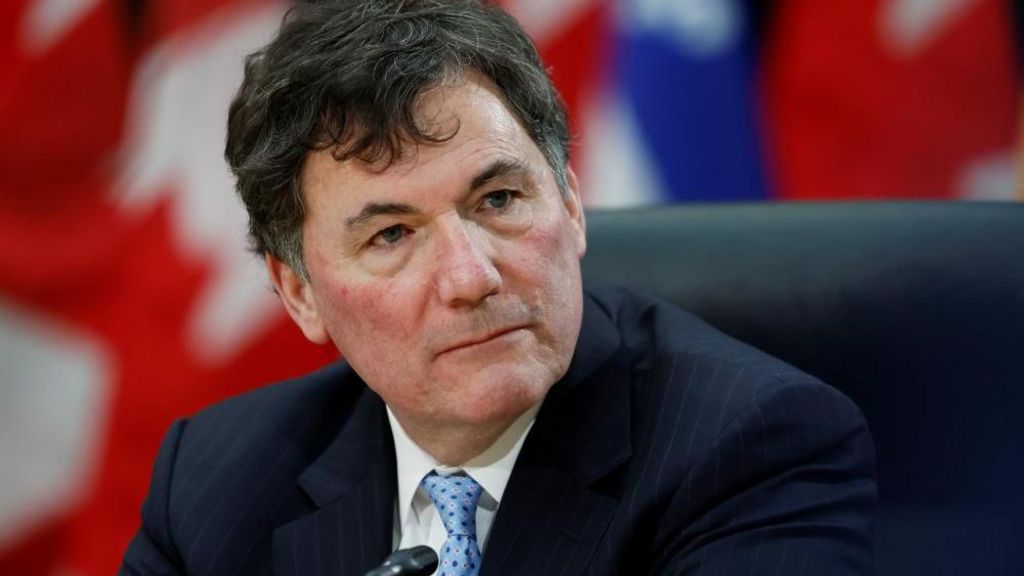
    In a remarkable diplomatic intervention, US Treasury Secretary Scott Bessent has openly sympathized with separatist sentiments in Alberta, describing the western Canadian province as a “natural partner for the United States” during an interview with right-wing commentator Jack Posobiec on Thursday.

    The comments emerge amidst significantly strained relations between the two neighboring nations and coincide with an active signature collection campaign in Alberta seeking an independence referendum. Bessent specifically criticized Canadian energy policies, noting that “Alberta has a wealth of natural resources, but they won’t let them build a pipeline to the Pacific,” while praising Albertans as “very independent people.”

    Canadian Finance Minister Francois-Philippe Champagne delivered a sharp rebuke on Friday, stating he would tell Bessent “thanks but no thanks, we will do our own things.” Champagne highlighted Canada’s capability to develop its natural resources domestically and referenced a recently signed agreement between Prime Minister Mark Carney and Alberta that facilitates an oil pipeline to the Pacific coast—a long-sought project facing substantial implementation challenges.

    Alberta Premier Danielle Smith’s office issued a measured response, expressing support for pipeline expansion “west, east, north, and south” while maintaining collaboration with US partners. However, the statement emphasized that “the overwhelming majority of Albertans are not interested in becoming a US state.” This position is supported by recent polling data and a 430,000-signature petition from late last year advocating for a united Canada.

    Referendum organizer Mitch Sylvestre clarified to CBC that his movement seeks independence from Canada rather than annexation by the United States, though he acknowledged the obvious energy trading relationship between Alberta and the US. Some separatist organizers have reportedly traveled to Washington for meetings with Trump administration officials.

    The diplomatic friction extends beyond Alberta, with US-Canada trade negotiations currently suspended. Tensions escalated following Prime Minister Carney’s speech at the World Economic Forum in Davos, where he criticized “great powers” for weaponizing economic influence. President Trump responded pointedly: “Canada lives because of the United States. Remember that, Mark, the next time you make your statements.” Commerce Secretary Howard Lutnick further accused Canada of “arrogance” and characterized Carney’s stance as domestically-motivated anti-Americanism.

  • Abu Dhabi hosts trilateral talks on Ukraine: 5 previous attempts to end war

    Abu Dhabi hosts trilateral talks on Ukraine: 5 previous attempts to end war

    Abu Dhabi has positioned itself as a pivotal diplomatic arena for high-stakes trilateral discussions aimed at resolving the ongoing Ukraine conflict. On January 23, 2026, senior officials from Ukraine, Russia, and the United States convened in the UAE capital to deliberate on a American-proposed peace framework, despite persistent disagreements over territorial sovereignty.

    This latest diplomatic initiative represents the sixth major attempt to broker a cessation of hostilities since Russia’s full-scale invasion in February 2022. The current negotiations follow five previously unsuccessful diplomatic endeavors:

    The initial negotiations occurred mere days after the invasion commenced, with meetings near the Belarusian border. Russian delegates presented ultimatums including Ukrainian recognition of Russian sovereignty over Crimea and the Donbas regions—terms immediately rejected by Kyiv as unacceptable.

    Subsequent talks in Antalya and Istanbul during March 2022 showed tentative progress, with Russia offering partial troop withdrawals and Ukraine considering neutral status. These discussions collapsed following the discovery of mass civilian casualties in Bucha after Russian forces withdrew from the Kyiv suburb.

    Diplomatic efforts remained dormant throughout 2023-2024 until President Donald Trump’s return to office in January 2025. The new administration reversed previous policies of isolating Moscow while simultaneously suspending military assistance to Ukraine. Despite direct engagement with Vladimir Putin, Trump’s administration secured only a temporary—and frequently violated—commitment to avoid targeting energy infrastructure.

    Further negotiations in Istanbul during May 2025 yielded limited success, resulting solely in prisoner exchanges without achieving a ceasefire agreement. The subsequent Trump-Putin summit in Alaska marked the Russian leader’s first visit to Western territory since the invasion began, yet concluded without tangible concessions or progress toward ending hostilities.

    The current Abu Dhabi negotiations represent a continuation of months of shuttle diplomacy conducted by American envoys between Moscow and Kyiv. While President Trump has expressed optimism about reaching a settlement, fundamental disagreements regarding territorial control continue to present significant obstacles to any comprehensive peace agreement.

  • Trump administration’s defense strategy tells allies to handle their own security

    Trump administration’s defense strategy tells allies to handle their own security

    The Pentagon has unveiled a transformative National Defense Strategy that fundamentally reorients U.S. military priorities toward hemispheric dominance while compelling American allies to assume greater responsibility for their own security. The 34-page document, released late Friday, represents the most significant shift in defense policy since 2022, explicitly criticizing European and Asian partners for their historical reliance on U.S. military subsidies.

    The strategy framework emphatically declares an end to what it characterizes as decades of neglect toward American interests, opening with the stark assertion: ‘For too long, the U.S. Government neglected — even rejected — putting Americans and their concrete interests first.’ This philosophical foundation translates into concrete policy changes that will require allied nations to take primary responsibility for countering threats from Russia to North Korea.

    Geopolitical tensions surrounding strategic assets emerged as a central theme, with the document specifically highlighting U.S. intentions to guarantee military and commercial access to the Panama Canal and Greenland. This focus follows President Trump’s recent confirmation of ongoing negotiations for ‘total access’ to Greenland through a framework agreement with NATO leadership, though Danish officials maintain that formal negotiations have not yet commenced.

    The strategy markedly departs from previous administrations’ approach to China, no longer identifying the Asian power as America’s ‘pacing challenge’ but rather as an established regional force that requires deterrence rather than domination. Notably absent is any mention of security guarantees for Taiwan, contrasting sharply with the Biden administration’s 2022 strategy that explicitly supported the island’s asymmetric self-defense capabilities.

    European allies received particularly direct messaging, with the document asserting that NATO members are ‘strongly positioned to take primary responsibility for Europe’s conventional defense’ against Russia, which the strategy classifies as ‘a persistent but manageable threat.’ This assessment comes amid confirmed U.S. troop reductions along NATO’s eastern borders, raising concerns among European partners about potential security vulnerabilities.

    The comprehensive strategy document reinforces the Trump administration’s ‘America First’ philosophy throughout, emphasizing bilateral relationships based on mutual interest rather than traditional alliance structures, while maintaining the Pentagon’s role in supporting—but not leading—regional security architectures worldwide.

  • US threatened to block Iraq from its Federal Reserve deposits over Iran-aligned politicians

    US threatened to block Iraq from its Federal Reserve deposits over Iran-aligned politicians

    The United States has issued a stark financial ultimatum to Iraq regarding the formation of its next government, according to confirmation from an Iraqi official to Middle East Eye. Washington has threatened to sever Baghdad’s access to its oil revenue reserves held at the Federal Reserve Bank of New York if Iranian-aligned paramilitary figures are incorporated into the new administration.

    This financial pressure campaign emerges as political negotiations intensify following Iraq’s November parliamentary elections. The Financial Times initially reported the specific threat to cut off Iraq’s dollar deposit supply—a crucial mechanism that has existed since the 2003 U.S. invasion. Under this arrangement, Iraq’s oil export proceeds are stored in the U.S., with monthly shipments of hard currency airlifted to Baghdad, providing Washington with significant economic leverage.

    The Trump administration has previously demonstrated willingness to utilize this financial weapon. During the 2020 crisis following the assassination of Iranian commander Qassem Soleimani, when Baghdad threatened to expel U.S.-led coalition forces, American officials similarly threatened to restrict Iraq’s access to its dollar reserves.

    Joshua Harris, the chargé d’affaires at the U.S. embassy in Baghdad, has personally delivered these warnings to Iraqi officials and influential Shia leaders. The absence of a formal ambassador—with Trump appointing Mark Savaya, a former legal cannabis dealer from Michigan, as special envoy—has placed Harris as the top-ranking State Department official in Iraq.

    The tension escalated particularly after the election of Adnan Fayhan as first deputy speaker of parliament last month. Fayhan, a former member of the Iranian-backed Asaib Ahl al-Haq (AAH) militia, represents the type of political figure Washington seeks to exclude. The U.S. embassy reportedly suspended meetings with officials who supported Fayhan’s election and provided Iraqi counterparts with a list of unacceptable MPs.

    Despite these pressures, Iraq’s political landscape remains complex. Prime Minister Mohammed al-Sudani’s coalition emerged victorious in November’s elections but lacks sufficient seats to independently form a government. Meanwhile, the U.S. military presence has significantly diminished, with recent announcements of “full withdrawal” from Iraq’s military facilities excluding the Kurdish region, where approximately 1,500 troops remain stationed.

  • How Jared Kushner’s Gaza plan would erase Palestinian culture

    How Jared Kushner’s Gaza plan would erase Palestinian culture

    A dystopian cartoon titled “Gaza Beach 2030” by award-winning Dutch artist Peter de Wit portrays parents sunbathing on a Gazan beach while their toddler unearths human skulls from the sand. This haunting imagery now intersects with real-world geopolitical plans as Jared Kushner, former U.S. President Trump’s son-in-law and special envoy, unveiled a controversial vision for Gaza’s future at the World Economic Forum in Davos.

    Kushner’s proposal envisions a transformed Gaza Strip featuring gleaming skyscrapers, coastal tourist attractions, and commercial districts operating under “free market economy principles” modeled after Trump’s America. The presentation included AI-generated renderings depicting a cityscape resembling Gulf Arab states rather than traditional Palestinian architecture, complete with cultural inaccuracies such as Arabic text written in the wrong direction.

    Analysts universally condemned the proposal as colonial capitalism exploiting tragedy. Daniel Levy, a British-Israeli analyst and former peace negotiator, characterized it as continuation of profit-seeking from genocide, noting that over 71,500 Palestinians have been killed in the conflict recognized as genocide by UN experts and human rights organizations.

    Palestinian political analyst Abed Abou Shhadeh invoked Naomi Klein’s “The Shock Doctrine” to explain the phenomenon, stating: “They see the death of people as an opportunity to take their land, to take their apartments, and to take the rights over their land.” He predicted profiteers would include not only American and Israeli interests but also Arab businesspeople and wealthy Palestinians, while excluding the Palestinian people collectively.

    Renowned British-Israeli academic Avi Shlaim called the plan “preposterous and obscene,” noting its “total denial of any Palestinian agency.” Critics highlighted the irony of Kushner promoting this vision while his private equity firm had received substantial investments from Gulf states including UAE, Qatar, and Saudi Arabia after leaving the White House.

    Practical implementation appears unlikely according to most analysts. Annelle Sheline, a former State Department official who resigned over the Gaza war, noted the prerequisite of Hamas’s complete disarmament would be improbable given Israel’s military failure to achieve this despite extensive operations. She warned Trump should remember American failures in Iraq and Afghanistan when considering forced transformations of foreign territories.

  • Watch: ‘It’s just plain incorrect’ – Afghanistan veterans react to Trump Nato remarks

    Watch: ‘It’s just plain incorrect’ – Afghanistan veterans react to Trump Nato remarks

    Military veterans with extensive combat experience in Afghanistan have issued strong rebuttals against recent statements by former President Donald Trump regarding NATO allies’ participation in frontline operations. The veterans’ responses came after Trump suggested that NATO member nations systematically avoided combat engagements during the Afghanistan conflict.

    Multiple decorated veterans have come forward with firsthand accounts contradicting these assertions, providing detailed testimony about international coalition forces’ active combat roles. Their evidence includes documentation of joint operations where NATO partners sustained significant casualties while fighting alongside American troops.

    Military analysts corroborate the veterans’ positions, pointing to official Pentagon records showing that numerous NATO countries suffered combat fatalities throughout the twenty-year campaign. Defense experts emphasize that international forces operated under unified command structures and shared combat responsibilities across various regions of Afghanistan.

    The controversy has sparked broader discussions about international military cooperation and the importance of accurate historical accounting of multinational combat operations. Several veterans organizations have called for greater recognition of allied contributions to counterterrorism efforts in South Asia.

  • UAE President meets heads of delegation at US-Russia-Ukraine trilateral talks

    UAE President meets heads of delegation at US-Russia-Ukraine trilateral talks

    In a significant diplomatic development, Abu Dhabi has become the stage for high-level trilateral negotiations aimed at addressing the prolonged Ukraine conflict. UAE President Sheikh Mohamed bin Zayed Al Nahyan personally met with delegation leaders from the United States, Russia, and Ukraine on Friday, January 23, 2026, demonstrating the Emirates’ commitment to facilitating peaceful conflict resolution.

    The high-stakes discussions brought together prominent figures including US presidential envoys Steve Witkoff and Jared Kushner, alongside Russian military representative Igor Kostyukov and Ukrainian officials Kyrylo Budanov and Rustem Umerov. This gathering represents one of the most direct diplomatic engagements between the conflicting parties in recent years.

    President Sheikh Mohamed articulated his earnest hope that the negotiations would yield successful outcomes capable of contributing to the termination of the years-long hostilities. He emphasized the UAE’s consistent foreign policy approach that prioritizes constructive dialogue and supports all initiatives aimed at advancing diplomatic solutions to international crises.

    The UAE leader further reinforced his nation’s stance by affirming support for all peaceful endeavors seeking to resolve the Ukraine crisis in a manner that respects the interests of all involved parties while promoting global stability. The meeting was attended by senior UAE officials including Abu Dhabi Crown Prince Sheikh Khaled bin Mohamed bin Zayed Al Nahyan and other prominent members of the royal family and government, underscoring the importance the Emirates places on these negotiations.

    This diplomatic initiative positions the UAE as an increasingly influential neutral mediator in complex international disputes, building on its growing reputation as a hub for diplomatic engagement and conflict resolution efforts.