分类: politics

  • Trump says UK soldiers in Afghanistan ‘among greatest of all warriors’

    Trump says UK soldiers in Afghanistan ‘among greatest of all warriors’

    A diplomatic firestorm erupted following former U.S. President Donald Trump’s controversial characterization of NATO allies’ contributions to the Afghanistan conflict, triggering widespread condemnation from military families, veterans, and political leaders across multiple nations.

    During a recent Fox News interview, Trump asserted that NATO forces historically avoided front-line combat roles, stating: ‘We’ve never needed them. They’ll say they sent some troops to Afghanistan… they stayed a little back, a little off the front lines.’ These remarks immediately drew fierce criticism from international officials who characterized them as factually inaccurate and deeply offensive to fallen soldiers.

    The backlash intensified when Prince Harry issued a rare public statement emphasizing that NATO’s Article 5 collective defense provision had been invoked specifically following the 9/11 attacks, marking the only time in the alliance’s history that members were formally obligated to support U.S. military operations. ‘Thousands of lives were changed forever,’ the Afghanistan veteran noted. ‘Those sacrifices deserve to be spoken about truthfully and with respect.’

    Statistical data reveals the substantial human cost borne by coalition partners: over 3,500 coalition fatalities occurred during the conflict, with British forces suffering 457 deaths—the second-highest toll after American casualties. Veterans like Corporal Andy Reid, who lost three limbs to an IED explosion, provided firsthand accounts contradicting Trump’s assertions: ‘If [American soldiers] were on the front line and I was stood next to them, clearly we were on the front line as well.’

    The political response proved equally forceful. UK Opposition Leader Keir Starmer condemned the remarks as ‘insulting and frankly appalling,’ while Polish Foreign Minister Radosław Sikorski—among 33,000 Polish troops deployed to Afghanistan—declared that ‘no one has the right to mock the service of our soldiers.’ Canadian Defense Minister David J. McGuinty emphasized his nation’s participation stemmed from moral conviction rather than obligation.

    Following a Saturday conversation with UK Prime Minister Rishi Sunak, Trump posted a modified statement on Truth Social acknowledging British soldiers as ‘among the greatest of all warriors’ and recognizing their 457 fatalities. While stopping short of a direct apology, this revised messaging represented a notable softening of his initial position. Conservative leader Kemi Badenoch welcomed the acknowledgment while maintaining that ‘it should never have been questioned in the first place.’

    The episode highlights ongoing tensions regarding NATO’s strategic future and the complex legacy of multinational military cooperation in prolonged conflicts, with diplomatic relationships showing strain despite Trump’s subsequent attempt to mitigate the damage through revised praise for allied forces.

  • Federal agents shoot dead another person in Minneapolis

    Federal agents shoot dead another person in Minneapolis

    Minneapolis became the epicenter of renewed civil unrest on Saturday following a fatal shooting involving federal immigration agents, marking the second such incident involving civilian casualties within three weeks. According to official statements from the Department of Homeland Security (DHS), agents were conducting a targeted operation to apprehend an undocumented individual wanted for violent assault when the confrontation turned deadly.

    DHS claims its officers acted in self-defense after an individual approached Border Patrol agents brandishing a 9 mm semi-automatic handgun. The agency stated that during attempts to disarm the suspect, who allegedly resisted violently, an agent fired defensive shots fearing for his safety and that of fellow officers. Despite immediate medical attention, the individual was pronounced dead at the scene.

    Contradicting this narrative, Minneapolis Police Chief Brian O’Hara revealed preliminary information suggesting the deceased was potentially a lawful gun owner with valid permits. Minnesota state law permits open carry of firearms with proper authorization.

    The incident triggered immediate demonstrations, with law enforcement deploying tear gas and establishing road blockades using dumpsters in the densely populated south Minneapolis neighborhood. Authorities declared the gathering an unlawful assembly as tensions escalated.

    Minnesota Governor Tim Walz condemned the shooting as ‘horrific’ and demanded state-led investigation into the matter. In a social media statement, Walz directly addressed the White House: ‘Minnesota has had it. This is sickening. The President must end this operation.’

    Minneapolis Mayor Jacob Frey joined the criticism, urging President Trump to withdraw federal operations from the city: ‘This is a moment to act like a leader. Put Minneapolis, put America first in this moment.’

    The shooting occurs amidst heightened tensions following the January 7th killing of US citizen Renee Good by Immigration and Customs Enforcement officers during similar operations. That incident was officially classified as homicide by medical examiners, though the involved agent remains neither suspended nor charged. Recent detention of a five-year-old child during enforcement actions had already renewed public outrage prior to Saturday’s events.

    Democratic Senator Amy Klobuchar echoed the growing criticism, addressing federal authorities directly: ‘Donald Trump and all your lieutenants who ordered this ICE surge: watch the horrific video of the killing today. The world is watching.’

  • Trump praises UK troops as row over his NATO comments grows

    Trump praises UK troops as row over his NATO comments grows

    A transatlantic diplomatic crisis has erupted following controversial remarks by former US President Donald Trump regarding NATO allies’ contributions in Afghanistan. The situation intensified as European leaders issued sharp rebukes against what they characterized as deeply offensive comments questioning allied military sacrifices.

    Trump initially provoked international condemnation during a Fox News interview aired Thursday, suggesting NATO forces remained cautious during Afghan operations and implying conditional US support for alliance members. These assertions triggered immediate backlash across European capitals.

    British Prime Minister Keir Starmer led the criticism, labeling Trump’s statements “appalling” and expressing concern for affected military families. In an apparent partial reversal, Trump subsequently praised UK forces on his Truth Social platform Saturday, describing British soldiers as “among the greatest of all warriors” and emphasizing their “bond too strong to ever be broken” with America.

    This qualified apology failed to placate other NATO members. Danish Prime Minister Mette Frederiksen declared Trump’s comments “unacceptable” on Facebook, highlighting Denmark’s significant per capita losses in Afghanistan. French President Emmanuel Macron’s office dismissed the remarks as “unworthy of response,” instead emphasizing gratitude to fallen soldiers’ families.

    Italian Foreign Minister Antonio Tajani honored Italy’s 53 casualties, while German Defense Minister Boris Pistorius underscored Germany’s readiness to support US operations despite paying a “heavy price.” The Danish Veterans’ Association announced plans for a silent protest march in Copenhagen on January 31, stating members were “at a loss for words” over Trump’s claims.

    The controversy emerges against a backdrop of recent US-Danish tensions regarding Trump’s expressed interest in purchasing Greenland, though those concerns appeared resolved earlier last week when the former president withdrew threatened tariffs on European goods.

  • Turkey pro-Kurd party urges end to Kobane siege

    Turkey pro-Kurd party urges end to Kobane siege

    Turkey’s pro-Kurdish Peoples’ Equality and Democracy (DEM) Party has issued an urgent appeal for the immediate lifting of the military blockade encircling the Kurdish-majority city of Kobane in northern Syria, characterizing the situation as a rapidly deteriorating humanitarian disaster. The warning came following a delegation visit to northeastern Syria, where intensified Syrian military operations have created severe humanitarian conditions.

    DEM co-chair Tulay Hatimogullari reported that the city, also known as Ain al-Arab, faces complete isolation with critical infrastructure failures. “During our visit, we encountered knee-deep snow with no electricity, internet, or running water,” Hatimogullari stated at a press conference. “This constitutes a profound humanitarian tragedy.”

    The Syrian military offensive has forced Kurdish forces to withdraw from surrounding areas, triggering massive displacement as villagers flood into Kobane. With supply routes severed, the city faces catastrophic shortages of food, medicine, and heating fuel. The party confirmed four children had frozen to death on Saturday alone due to extreme cold and inadequate shelter.

    Hatimogullari called on international “guarantor countries,” particularly the United States and Western allies who historically supported the Kurdish-led Syrian Democratic Forces (SDF), to fulfill their responsibilities in lifting the siege. This appeal comes as Damascus demands the SDF’s dissolution, while Washington signals that its alliance with the force has served its purpose.

    The city holds profound symbolic significance for Kurds, having been liberated from Islamic State control in 2015 by SDF forces with U.S. backing. Turkey, however, considers the SDF an extension of the Kurdish PKK militant group and has supported Damascus’s current offensive. President Recep Tayyip Erdogan praised the operation, stating it addresses “sources of trouble for our country.”

    Meanwhile, tensions escalated in Istanbul as riot police clashed with approximately 300 demonstrators protesting the siege. Police employed riot control measures including projectiles and pepper spray, resulting in injuries and arrests according to local reports, including a DEM lawmaker who required hospitalization.

  • Minnesota governor slams ‘another horrific shooting’ by federal agents

    Minnesota governor slams ‘another horrific shooting’ by federal agents

    Minnesota’s political landscape faces renewed turmoil as Governor Tim Walz publicly condemned federal immigration authorities for what he termed ‘another horrific shooting’ in Minneapolis. The incident occurred less than three weeks after the fatal shooting of civilian Renee Good by federal agents, further escalating tensions in the region.

    According to eyewitness accounts and circulating unverified footage, the altercation involved multiple gunshots near the intersection of 26th Street W and Nicollet Avenue. The video evidence suggests at least one individual wearing law enforcement gear marked ‘POLICE’ was present during the disturbance where a person appeared to be shot.

    The Minneapolis city administration confirmed awareness of the incident involving federal law enforcement personnel but withheld further details pending investigation. Governor Walz utilized social media platform X to express his outrage, stating: ‘I just spoke with the White House after another horrific shooting by federal agents this morning. Minnesota has had it. This is sickening.’

    The governor issued a direct appeal to presidential leadership, demanding: ‘The President must end this operation. Pull the thousands of violent, untrained officers out of Minnesota. Now.’ This statement references the substantial deployment of Immigration and Customs Enforcement (ICE) agents to the Democratic-led city as part of President Donald Trump’s nationwide initiative to detain and deport undocumented immigrants.

    The current crisis builds upon existing community unrest stemming from the January 7th shooting of Renee Good, a United States citizen, by federal agents. Medical examiners classified Good’s death as a homicide, though this designation doesn’t inherently imply criminal wrongdoing. Officer Jonathan Ross, who discharged the fatal shots, remains on active duty without suspension or criminal charges.

    Public outrage intensified further this week with the detention of a five-year-old child during an operation targeting his father, adding another layer to the ongoing controversy surrounding federal immigration enforcement tactics in Minnesota.

  • Trump threatens Canada with 100% tariffs over China trade deal

    Trump threatens Canada with 100% tariffs over China trade deal

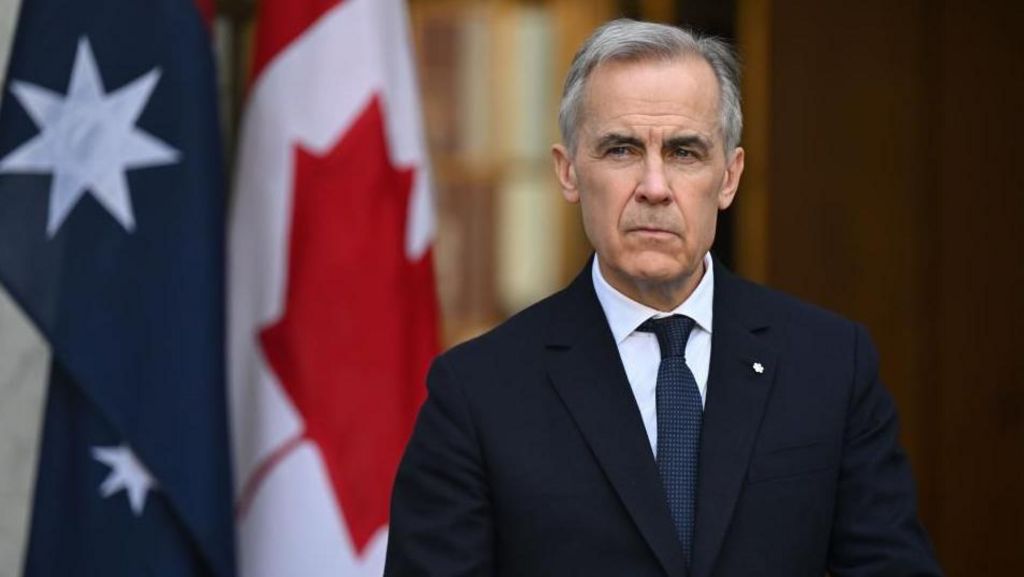
    In a significant escalation of diplomatic tensions, former U.S. President Donald Trump has threatened to impose 100% tariffs on all Canadian goods should Prime Minister Mark Carney finalize a trade agreement with China. The warning was issued via Trump’s Truth Social platform on Saturday, where he specifically targeted Canada’s potential role as a transit point for Chinese products entering the United States.

    The confrontation follows Carney’s recent address at the World Economic Forum in Davos, Switzerland, where he criticized great power politics without directly naming Trump. The Canadian leader’s subsequent meeting with Chinese President Xi Jinping resulted in announcements of a bilateral trade agreement covering electric vehicles and agricultural products—a development Trump initially praised but now vehemently opposes.

    Trump’s rhetoric has intensified considerably, referring to Carney as ‘Governor Carney’ and reviving previous characterizations of Canada as America’s ’51st state.’ This linguistic framing accompanies substantive policy threats, including the withdrawal of Canada’s invitation to join the newly formed ‘Board of Peace,’ an international conflict resolution body proposed by the Trump administration.

    The underlying tensions reflect broader strategic disagreements, including Canada’s opposition to Trump’s proposed missile defense system in Greenland (dubbed ‘The Golden Dome’) and fundamental differences regarding NATO and international governance structures. Carney’s assertion that Canada’s relationship with China has become ‘more predictable’ than its relationship with Trump’s America highlights the profound shift in North American dynamics.

    Trade experts observe that Canada’s diplomatic recalibration toward China stems from persistent uncertainty in U.S.-Canada relations, particularly since Trump’s return to office last year brought new tariffs on Canadian goods. The ongoing review of the countries’ free trade agreement adds another layer of complexity to these developments.

    Both the White House and Carney’s office have declined to comment on whether the referenced China-Canada trade agreement has been formally implemented, leaving the precise catalyst for Trump’s latest threat unclear.

  • Wife of Uganda’s opposition leader recounts how armed men attacked her at her home

    Wife of Uganda’s opposition leader recounts how armed men attacked her at her home

    KAMPALA, Uganda — The residence of Ugandan opposition figure Bobi Wine became the scene of a violent intrusion Friday night as armed men in military attire forcibly entered the property seeking information on his whereabouts. Barbara Kyagulanyi, the politician’s wife commonly known as Barbie, sustained injuries during the confrontation and is currently receiving medical treatment at Nsambya Hospital in Kampala.

    According to eyewitness accounts from Ms. Kyagulanyi, approximately two dozen uniformed personnel breached the security perimeter of the compound while the opposition leader remained in hiding following recent presidential elections. The assailants allegedly subjected her to physical assault and intimidation tactics in an attempt to extract information regarding her husband’s location.

    The incident occurred amidst heightened political tensions following the January 15 electoral process that saw President Yoweri Museveni declared victor with 71.6% of ballots. Wine’s National Unity Platform (NUP) party has formally rejected the official results, citing widespread irregularities and alleging electoral manipulation.

    Digital evidence captured during the raid, subsequently circulated on social media platform X, depicts moments of the altercation that culminated in Ms. Kyagulanyi losing consciousness. Medical reports indicate she received treatment for physical trauma and acute anxiety following the episode.

    Political analysts have raised concerns regarding escalating patterns of intimidation against opposition members. General Muhoozi Kainerugaba, current army chief and presidential son, has previously engaged in inflammatory rhetoric targeting Wine through social media channels, though no direct evidence links him to Friday’s events.

    International observers including United Nations Secretary-General António Guterres have called for restraint and adherence to constitutional principles. The electoral process was previously marred by nationwide internet restrictions and technical failures in biometric voting systems, particularly affecting opposition strongholds.

    President Museveni, who will now commence his seventh term extending his rule toward five decades, maintains support from constituents who credit his administration with maintaining regional stability. Meanwhile, NUP leadership reports numerous party members remain detained or unaccounted for since the election.

  • Trump threatens Canada with 100% tariff if it completes China trade deal

    Trump threatens Canada with 100% tariff if it completes China trade deal

    In a significant escalation of North American trade tensions, former US President Donald Trump has issued a stark warning to Canada regarding its potential trade agreement with China. Should Prime Minister Mark Carney finalize the proposed trade deal with Beijing, Trump has pledged to impose comprehensive 100% tariffs on all Canadian goods entering the United States.

    The diplomatic relationship between the neighboring nations has deteriorated substantially since Trump’s return to the White House in January 2025. The current friction stems from Carney’s recent visit to China, where he announced a preliminary trade agreement aimed at reducing tariffs between Ottawa and Beijing. Trump responded vehemently on his Truth Social platform, asserting that Canada would become a ‘Drop Off Port’ for Chinese products destined for American markets if the agreement proceeds.

    Trump’s rhetoric intensified with dramatic claims that China would ‘completely devour’ Canada, potentially destroying its business sector, social fabric, and way of life. This exchange represents the latest development in an ongoing war of words between the two leaders that began at the World Economic Forum in Davos. There, Carney received a standing ovation for his critique of the ‘rupture’ in the US-led global order—a remark widely interpreted as targeting Trump’s unconventional foreign policy approach.

    The confrontation has extended beyond trade matters, with Trump rescinding Carney’s invitation to participate in his proposed ‘Board of Peace’—an initiative initially conceived to address postwar Gaza but now apparently expanding into a broader international conflict resolution body that some observers view as a potential rival to the United Nations.

    Despite the heated rhetoric, Canada maintains substantial economic dependence on its southern neighbor, with over 75% of Canadian exports destined for US markets. While previous Trump tariffs affected key Canadian industries including automotive, aluminum, and steel sectors, the existing North American free trade framework has somewhat mitigated the economic impact. With negotiations to revise this agreement scheduled for this year, Trump’s repeated assertions that the United States doesn’t require access to Canadian products suggest potentially sweeping consequences for Canada’s economy.

    The situation remains particularly volatile given Trump’s additional threats of Canadian annexation, recently symbolized by a social media post depicting Canada, Greenland, and Venezuela under the American flag. This developing diplomatic crisis unfolds as both nations, along with Mexico, prepare to co-host the upcoming World Cup.

  • ‘Trump Always Chickens Out’: What is TACO trade and why is it back?

    ‘Trump Always Chickens Out’: What is TACO trade and why is it back?

    Financial markets experienced significant volatility this week as President Donald Trump’s threats of imposing tariffs on multiple European nations—including Germany, France, Britain, and Denmark—triggered widespread uncertainty. The market turbulence stemmed from these countries’ resistance to Trump’s controversial proposition to acquire Greenland, Denmark’s autonomous territory.

    The situation took an unexpected turn on Wednesday when the President abruptly retracted both his tariff threats and ambitions to forcibly seize the Arctic island from the NATO ally. This reversal catalyzed what analysts have termed the ‘TACO trade’—an acronym for ‘Trump Always Chickens Out’—prompting one of the most substantial market rallies witnessed in recent months.

    According to Fawad Razaqzada, market analyst at Forex.com, this pattern has become characteristic of Trump’s approach to international negotiations. The terminology originated among Wall Street analysts in May 2025, describing the President’s tendency to establish aggressive tariff deadlines in April only to substantially moderate them as deadlines approached.

    The TACO phenomenon resurfaced dramatically during the Davos summit, where Trump initially delivered an uncompromising reaffirmation of his claims over Greenland, which he described as a ‘big piece of ice.’ However, he subsequently surprised attendees by declaring, ‘I won’t use force,’ acknowledging this concession as ‘probably the biggest statement I made.’ Hours later, he announced via Truth Social that he had negotiated a ‘future deal’ regarding the Danish territory and would lift sanction threats against eight European nations.

    California’s Democratic Governor Gavin Newsom promptly characterized this reversal as another TACO moment, drawing parallels to Trump’s relaxation of ‘Liberation Day’ tariffs the previous April. Some analysts suggest this pattern reflects the ‘art of the deal’ strategy Trump outlined in his 1987 book, involving extreme initial demands to secure unexpected concessions.

    The uncertainty surrounding this negotiation technique continues to concern U.S. allies, particularly given Trump’s statement regarding Greenland: ‘You can say yes, and we will be very appreciative. Or you can say no and we will remember’—a comment compared by New York Times commentator Bret Stephens to dialogue from mafia classic ‘The Godfather.’

  • Trump threatens Canada with 100% tariffs over its new trade deal with China

    Trump threatens Canada with 100% tariffs over its new trade deal with China

    In a significant escalation of diplomatic tensions, former President Donald Trump issued a stark warning to Canada through social media on Saturday, threatening to impose 100% tariffs on Canadian imports should the nation proceed with its recently negotiated trade agreement with China. Trump asserted that Prime Minister Mark Carney would be “sorely mistaken” if he believed Canada could serve as a transit point for Chinese goods entering the United States.

    The threat emerges amidst already strained relations between the two NATO allies, further complicated by Trump’s persistent interest in acquiring Greenland and his controversial remarks suggesting Canadian absorption into the United States. Trump’s provocative language extended to referring to Carney as “Governor Carney”—a derogatory nickname previously used for former Prime Minister Justin Trudeau—highlighting the deterioration in their diplomatic relationship.

    This development occurs against the backdrop of Canada’s strategic move to lower tariffs on Chinese electric vehicles in exchange for reduced import taxes on Canadian agricultural products. Ironically, Trump had initially characterized this agreement as a positive step for Canada. The former president subsequently revoked Carney’s invitation to participate in his proposed “Board of Peace,” an initiative aimed at addressing global conflicts.

    The ongoing trade friction between the nations continues despite the protective framework provided by the Canada-U.S.-Mexico Agreement, which is scheduled for review this year. The situation represents a critical juncture in North American relations with potential implications for global trade dynamics and international diplomacy.